Brian Hales examines the “gap” between Joseph Smith’s documented abilities in 1829 and the skills required to dictate the Book of Mormon. Using historical evidence, he contrasts Joseph’s limited education and composition skills with the complexity, length, and literary sophistication of the Book of Mormon, arguing that its creation is best explained as a miraculous event rather than a naturalistic process.
This talk was given at the 2021 FAIR Conference on August 6, 2021.

Brian Hales is a leading researcher on Joseph Smith and the origins of the Book of Mormon, having authored multiple books on Church history and apologetics. Today, he will examine the remarkable gap between Joseph Smith’s documented abilities and the complexity of the Book of Mormon.
Transcript
Brian Hales
Introduction
It is a pleasure for me to be with you today.
Anyone who’s ever been to England to the subway knows that warning: “mind the gap.” And today I want to talk about a different gap. Not between the subway car and the platform, but something else that can help us as we go through mortality.
The Gap
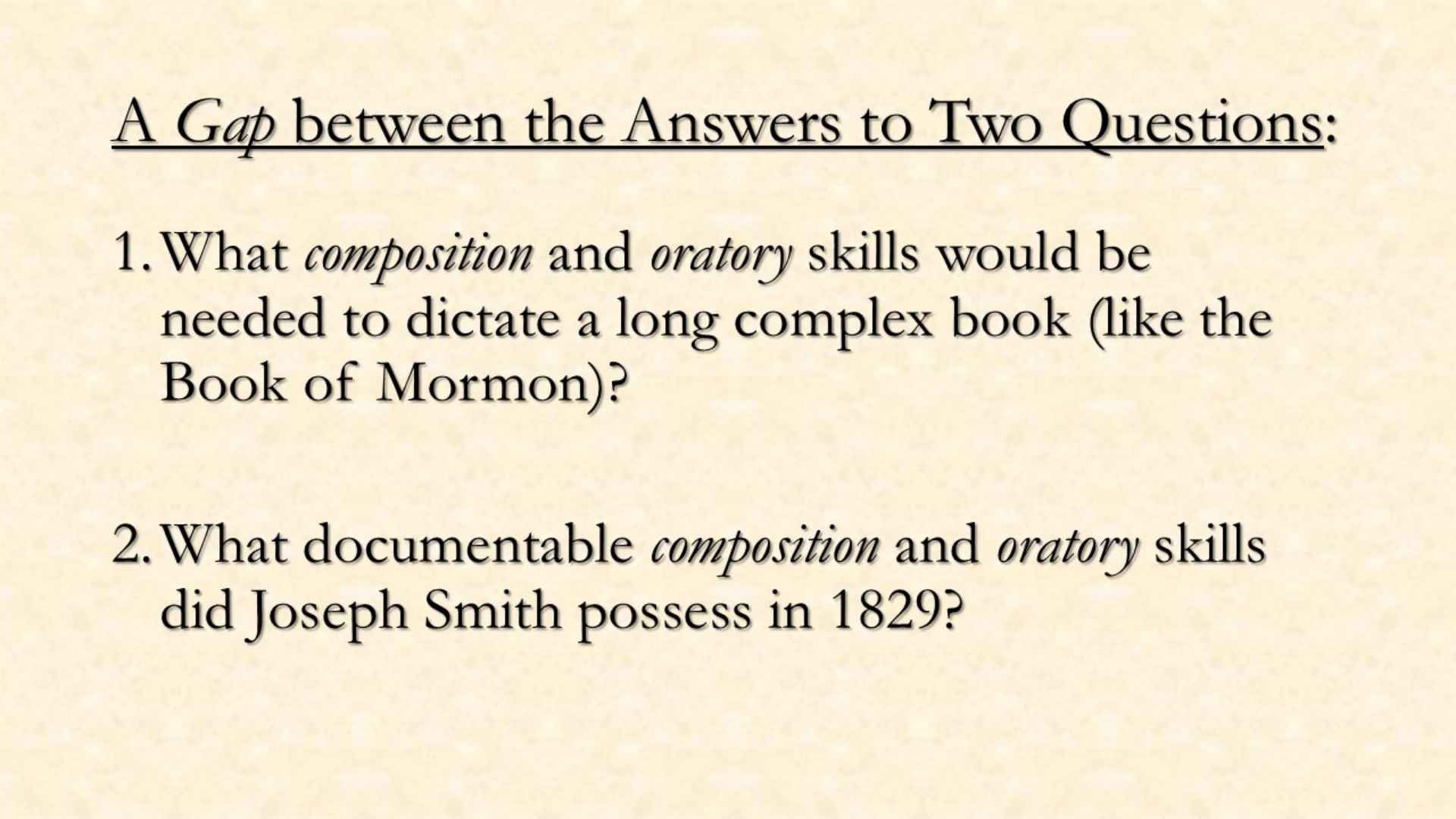
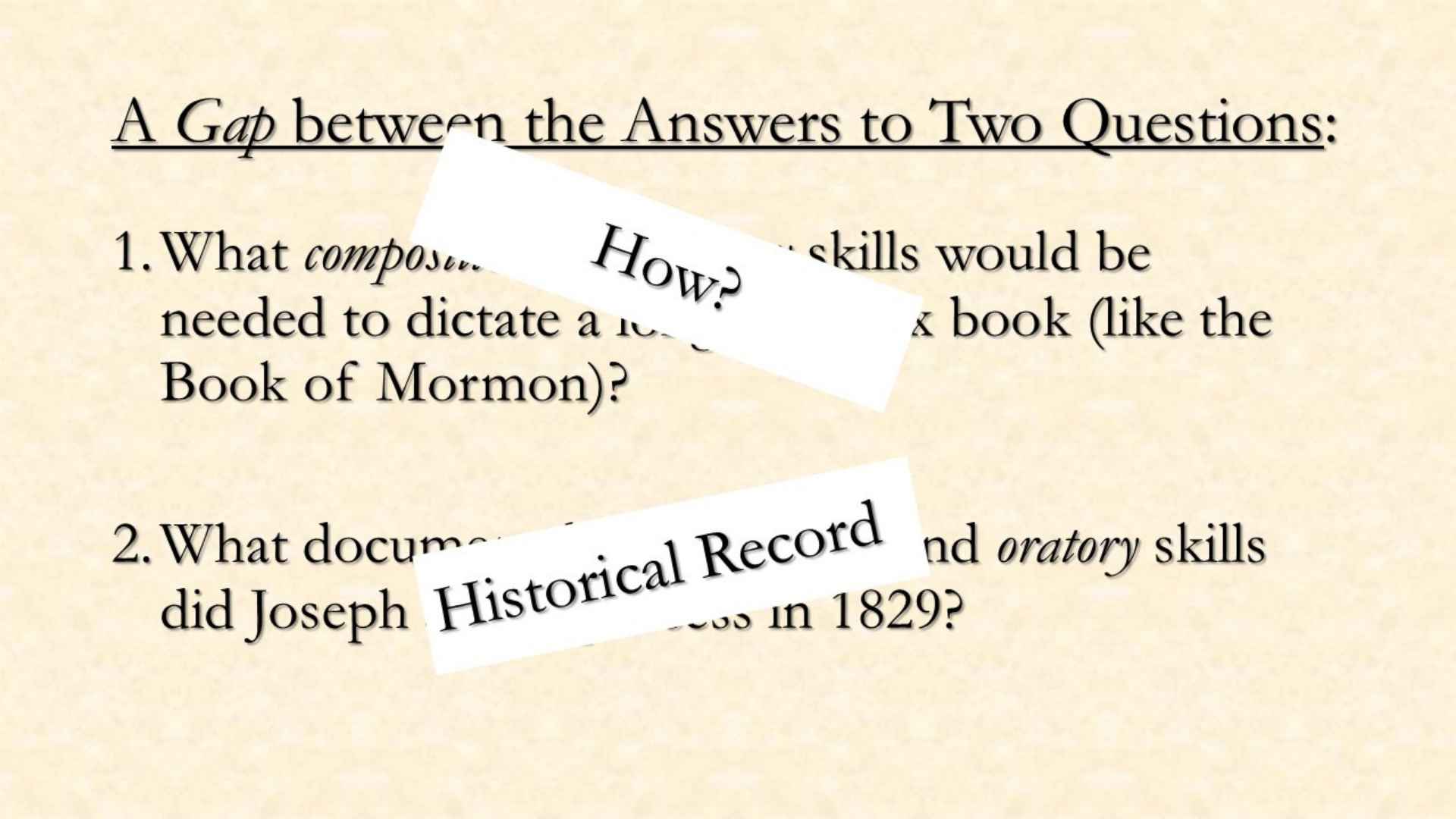
And it’s a gap between the answers to these two questions: What composition and oratory skills would be needed to dictate a long complex book like the Book of Mormon? And the answer to this question: What documentable composition and oratory skills did Joseph Smith possess in 1829?
You have this handout, and for those on the video, I just uploaded it to my Facebook page, it’s public, and if you want to download a PDF, just go there, and there’s an easy link. But it contains a lot of the research and conclusions that I’ve been working on for the last few years. We’re going to talk about a lot of these things, but not everything.
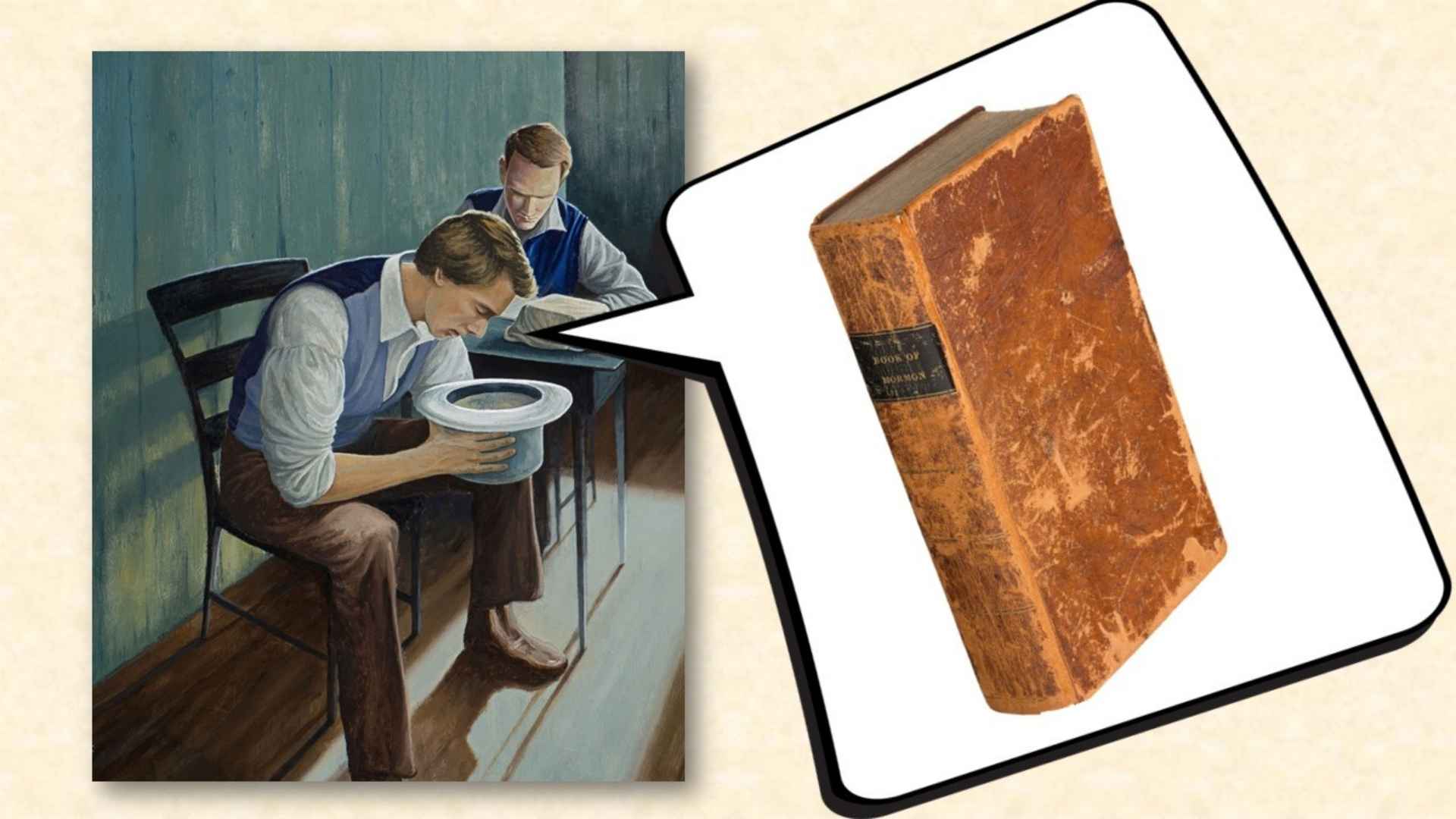
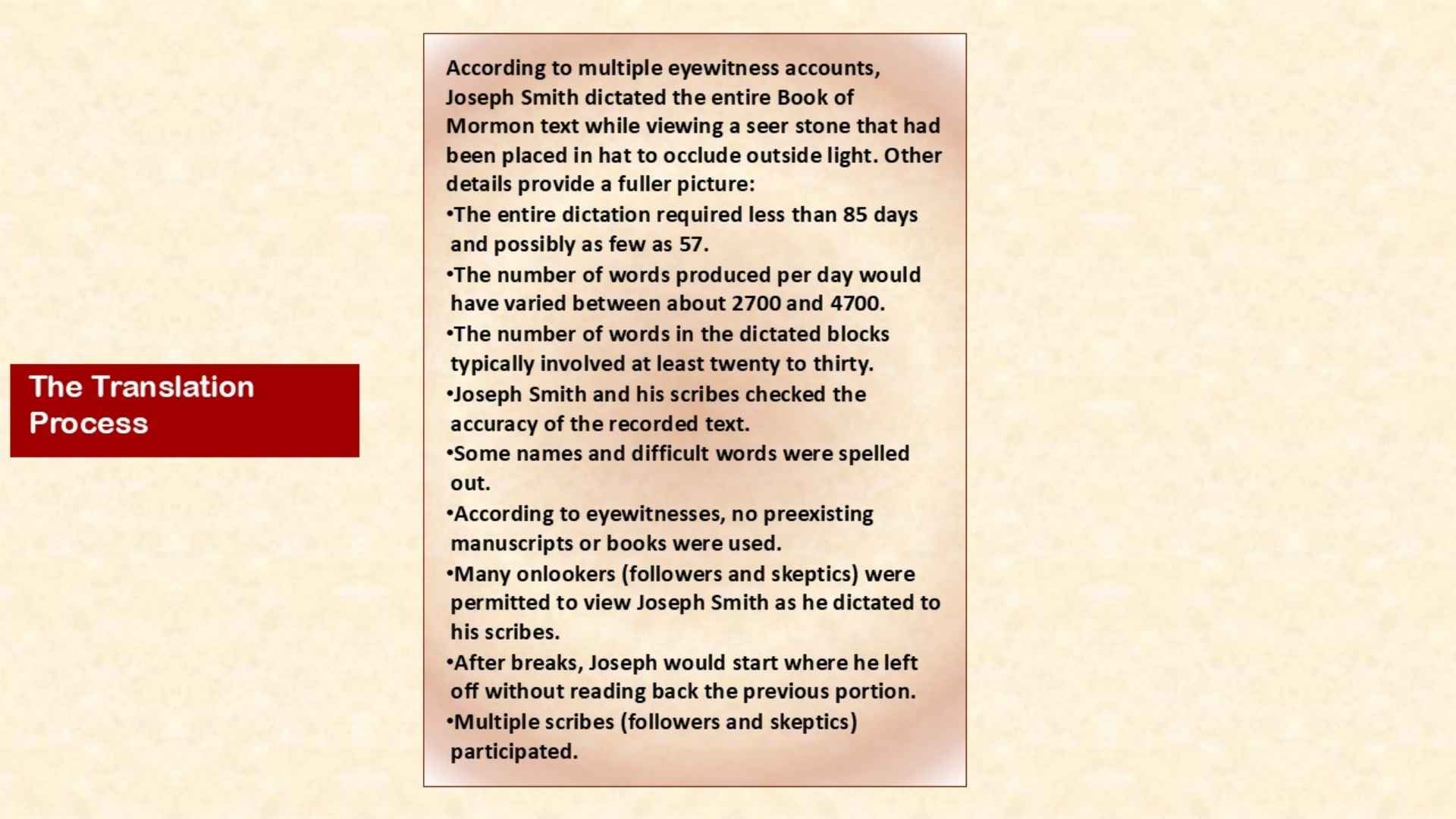
We know that Joseph Smith dictated the Book of Mormon. He created that stream of words that went straight to the printer. He dictated while he was looking at a seer stone in a hat. (Now, that’s weird, but we know that God uses physical objects at times to accomplish His purposes.)
The entire dictation required somewhere between 85 and 57 days. Jack Welch has looked at this and given us some really good numbers. That means that each day, they were producing 2,700 to 4,700 words, and Joseph would dictate blocks of words that were at least 20 to 30 words long. Then they’d stop, and they would check spelling.
Dictation
Joseph did spell out some of the difficult words and names. And then, according to eyewitnesses, there were no manuscripts or books, and we do know that Joseph would leave the translation. At least one day, he had a quarrel with Emma, and he left and came back an hour later, and it may have happened at least one other time, but he wasn’t leaving to go out and pray or consult a set of manuscripts or something. There’s no evidence for this. This is a dictation that he made, and they allowed both believers and unbelievers to watch what was going on. And after breaks, Joseph would start anew without any reading back of where they were in the dictation. And then there were multiple scribes, and some of them, like Reuben Hale (Emma’s brother), he was not a believer.
Two Questions
So, with that background, we go back to the two questions, and we look at these two, and the second question is really a question we can answer by just looking at the historical record.
We’re grateful to my friend Dan Vogel; he made the five volumes of early Mormon documents. You go in there, there’s lots of people remembering Joseph Smith’s intellectual abilities.
But how are we going to answer the first question?
Reverse Engineering
Well, we’re going to use something called reverse engineering.
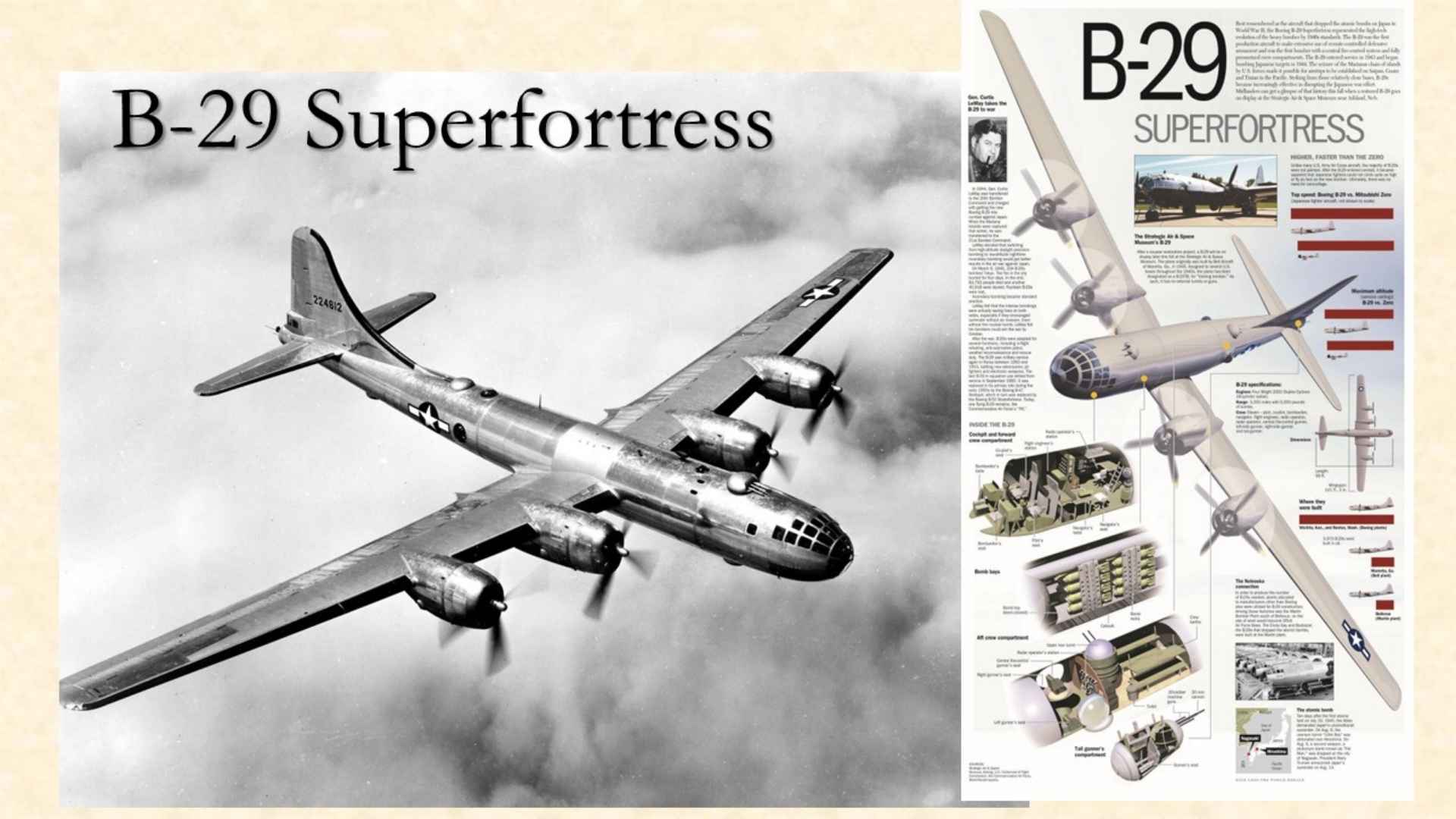
To understand what that is, let’s go back to World War II. I’m a big fan of World War II. And, there was the B-29 Superfortress. Now, this airplane was a long-range bomber, and we were the only nation in the world at the time to have a long-range bomber. It could go 3,000 miles round trip, and it did.
Mechanical Problems
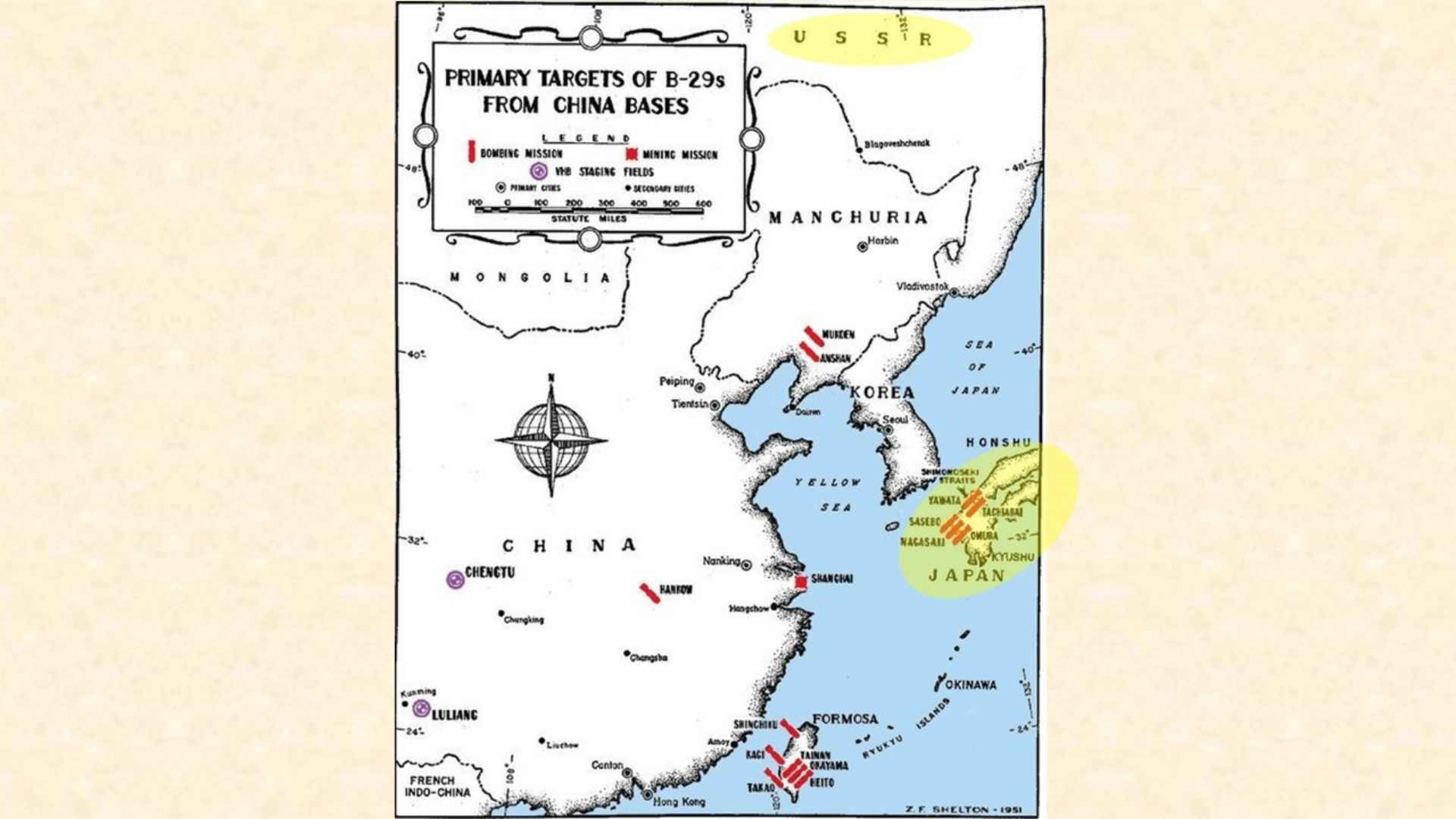
It launched from airports far away from Japan, and then it would drop its payloads there over Japan and then return. But three of these airplanes were having mechanical problems, and so they flew on, over Manchuria, which was Japanese-held, and they landed in the USSR. Now, Stalin was our ally in the European war; he wasn’t our ally in the Pacific war, not yet.
And so, one of these planes crash-landed; the other two landed and were able to be restored. He had to make a decision: do I want to keep going with the long-range bomber that’s just on the drawing board, or do we want to try to reverse engineer one of these planes that we have from the US? And the US didn’t miss them; we made almost 4,000 of these airplanes before they stopped production. And so, that’s exactly what they decided to do. They kept one functioning, and they took the other one, and they took it apart piece by piece.
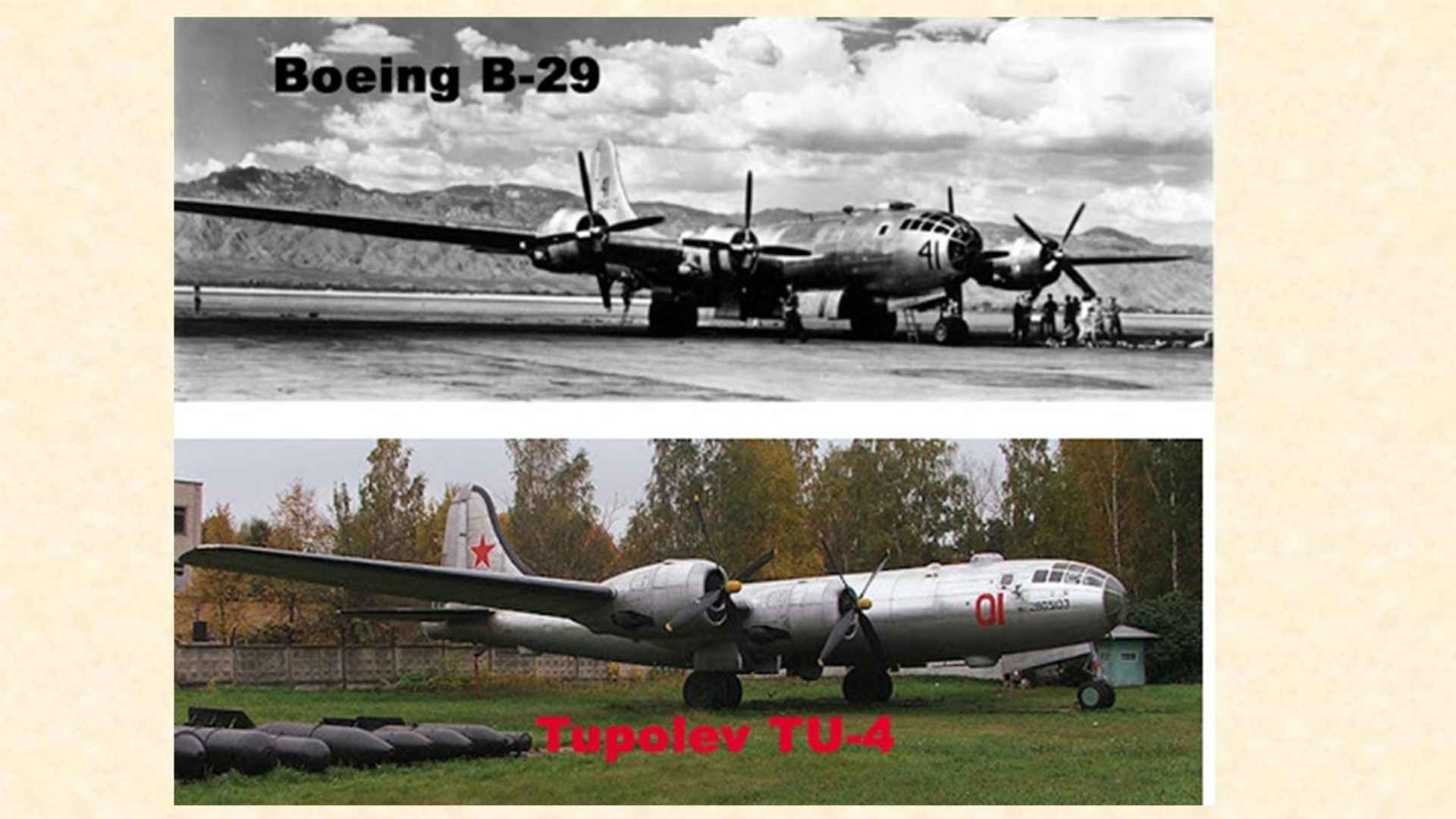
They made up their drawings and they analyzed the parts, and they eventually mobilized almost a thousand factories across the USSR to build all these parts.
Then they brought them together into a hangar; this is actually the B-29 hanger, but they did the same thing so that they could construct what is called the Tu-4.
It’s not identical to the B-29, but it’s very similar; it’s a very good facsimile. They use their own engines and their own guns and things, but it’s a very good facsimile.
Literary Characteristics of The Book of Mormon
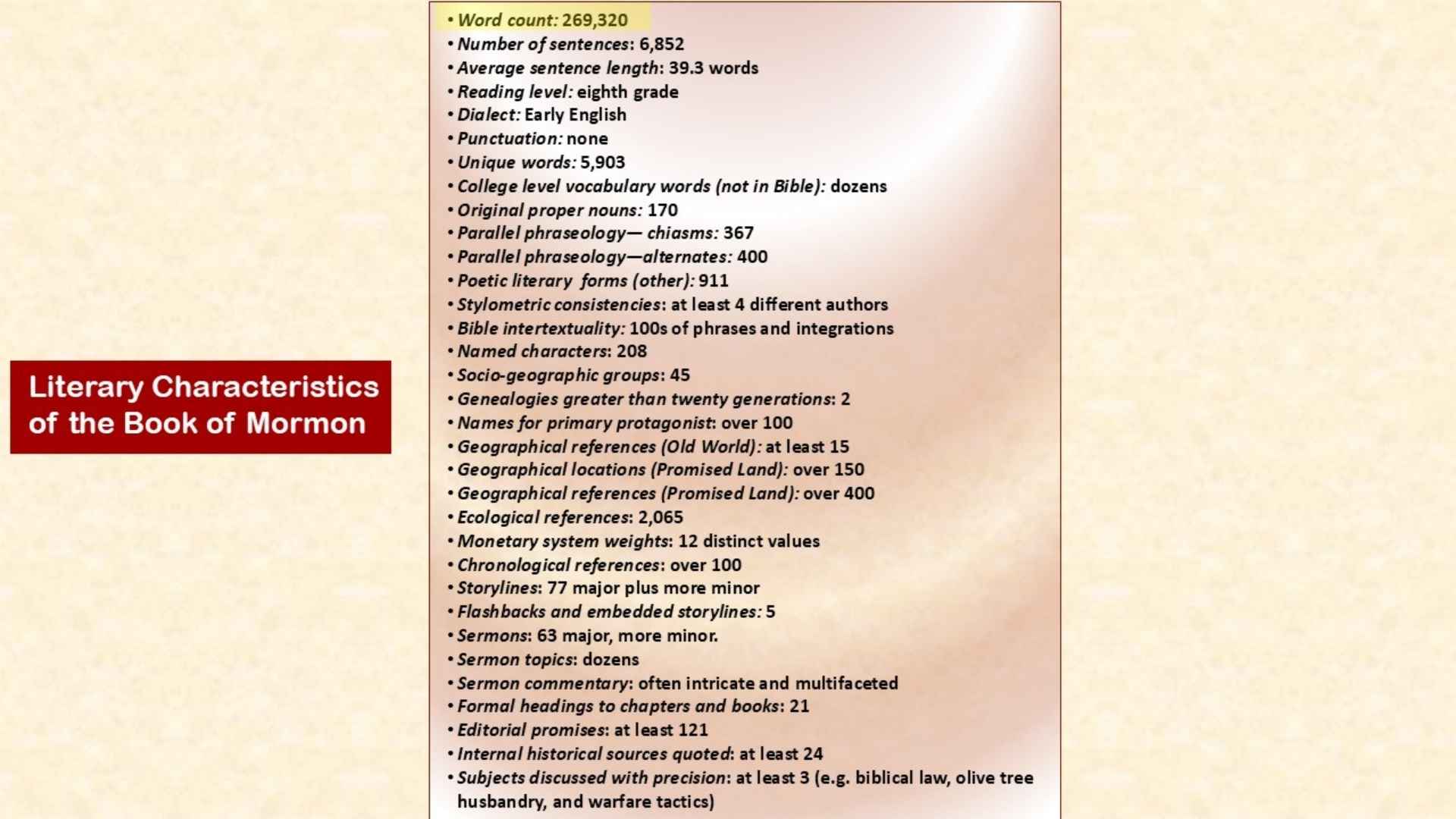
Now, the Book of Mormon is not an airplane, and of course, we could take it apart physically, and then we just have a bunch of pages with words on them. But what we really want to do is (you all have the list on your handout) let’s look at the literary characteristics of the Book of Mormon and then anticipate the types of preparations and skills that a person would need to duplicate Joseph Smith’s effort.
I’m going to make you all product managers; you’re in charge of reproducing what Joseph Smith did in that three-month period. Now you can decide to have yourself do it, or you can commission somebody else, but one way or the other, you’re in charge of reverse engineering the creation of the Book of Mormon and duplicating Joseph Smith’s efforts.
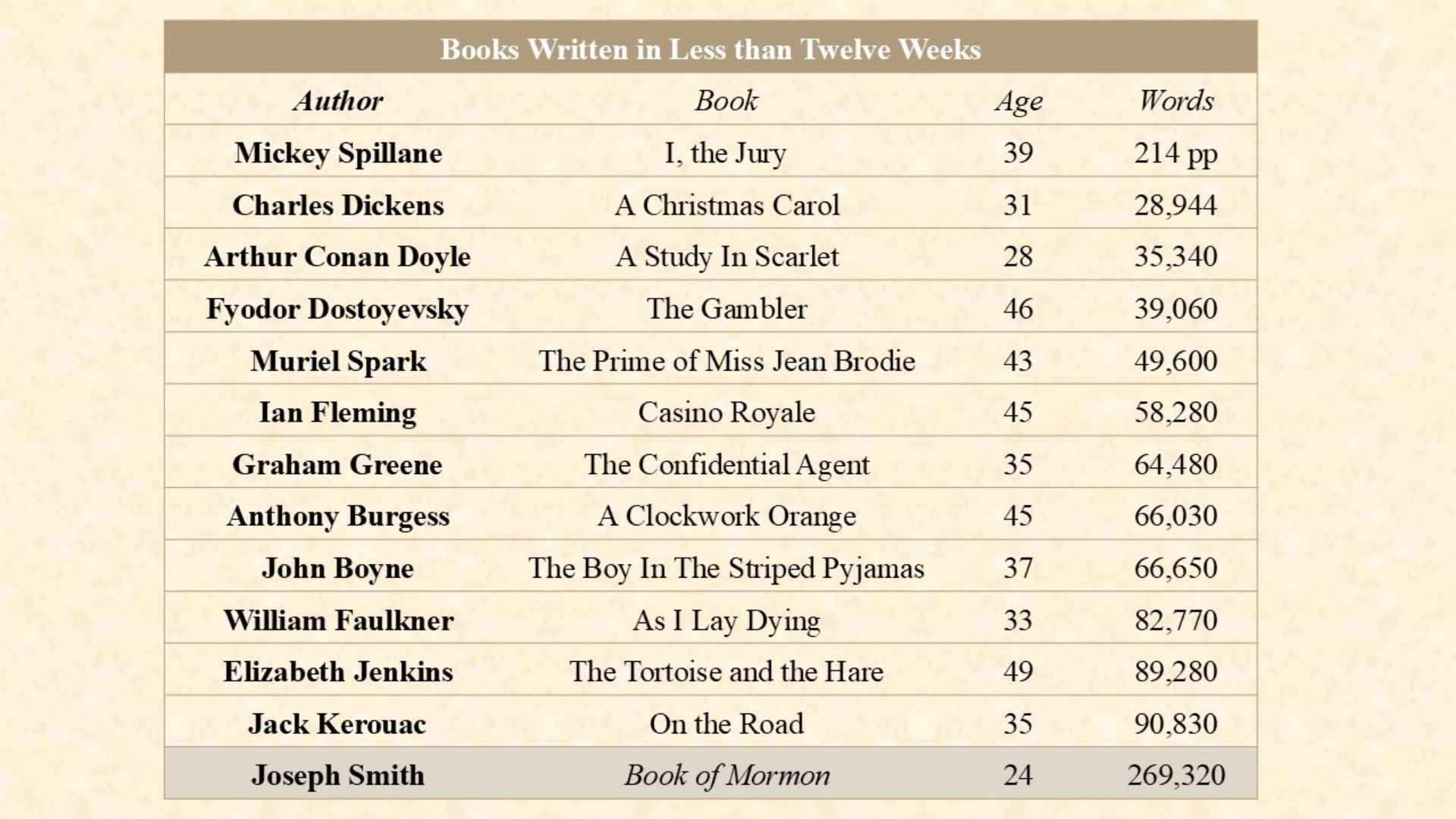
So, let’s look at the literary characteristics, these are kind of the parts, the nuts and bolts, of the Book of Mormon text. It has 269,320 words;that’s quite a few words. In fact, for books that are written in a short period of time, it’s a lot of words, and so plan on a really compressed production schedule.
Sentences
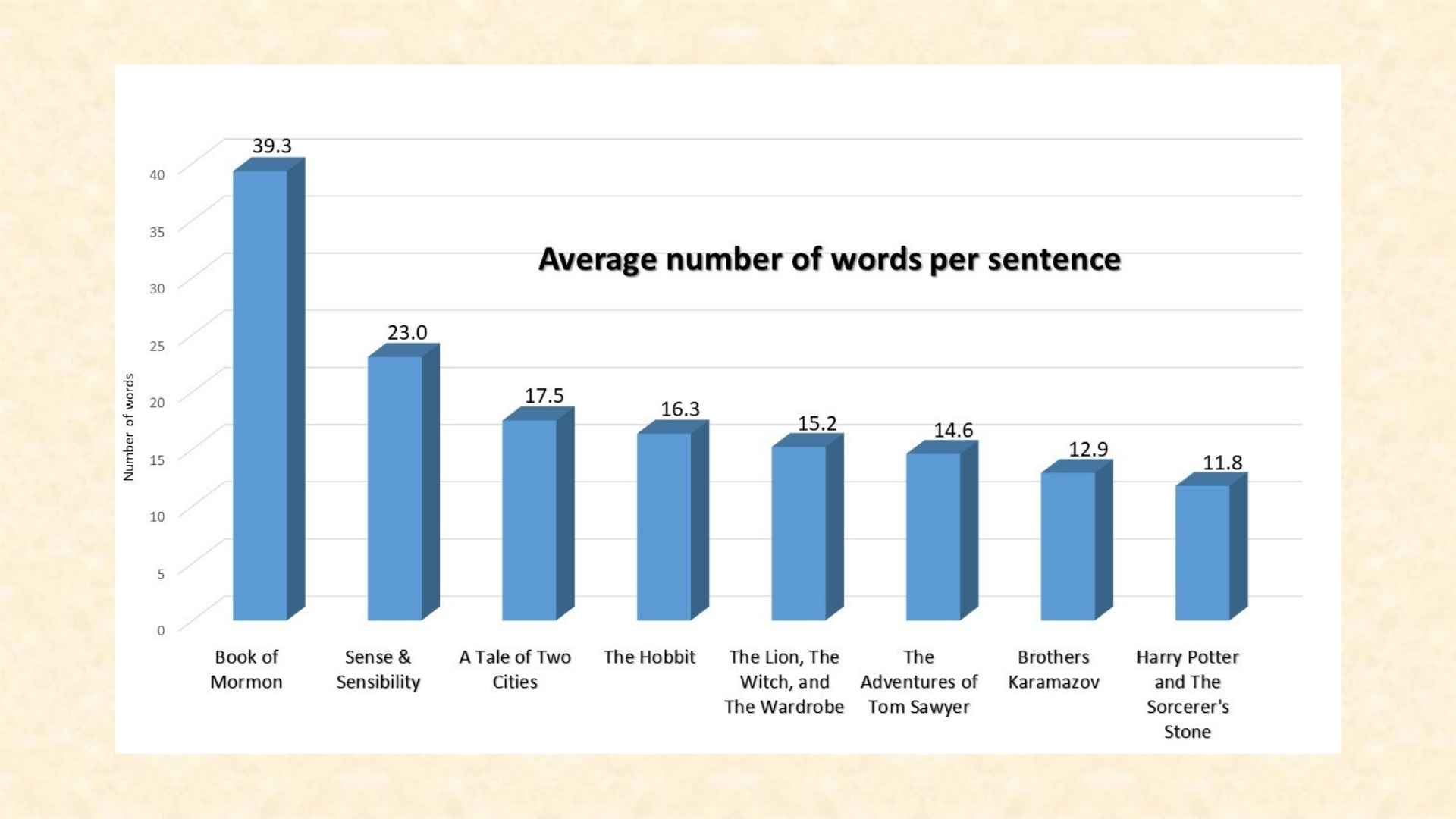
There are 6,852 sentences, which works out to a sentence length of about 39.3 words.
Now, most writers, as you can see, prefer to give you a short sentence with a period, and then another short sentence and a period, kind of on average. Well, the Book of Mormon doesn’t necessarily approach it that way.
There are short sentences, but there’s also one that’s almost 400 words long. And what that means is you’ve got an idea, and an embedded idea, and then maybe another one; and then you come back to the original. It becomes, I think, harder: but people have pushed back on that when I draw that conclusion.
But whatever you want to do, if you want to emulate Joseph, you have to dictate long sentences.
Education Needed
The book needs to be spoken at an eighth-grade level, and all of you have an eighth-grade education at least, so that won’t be hard for this group.
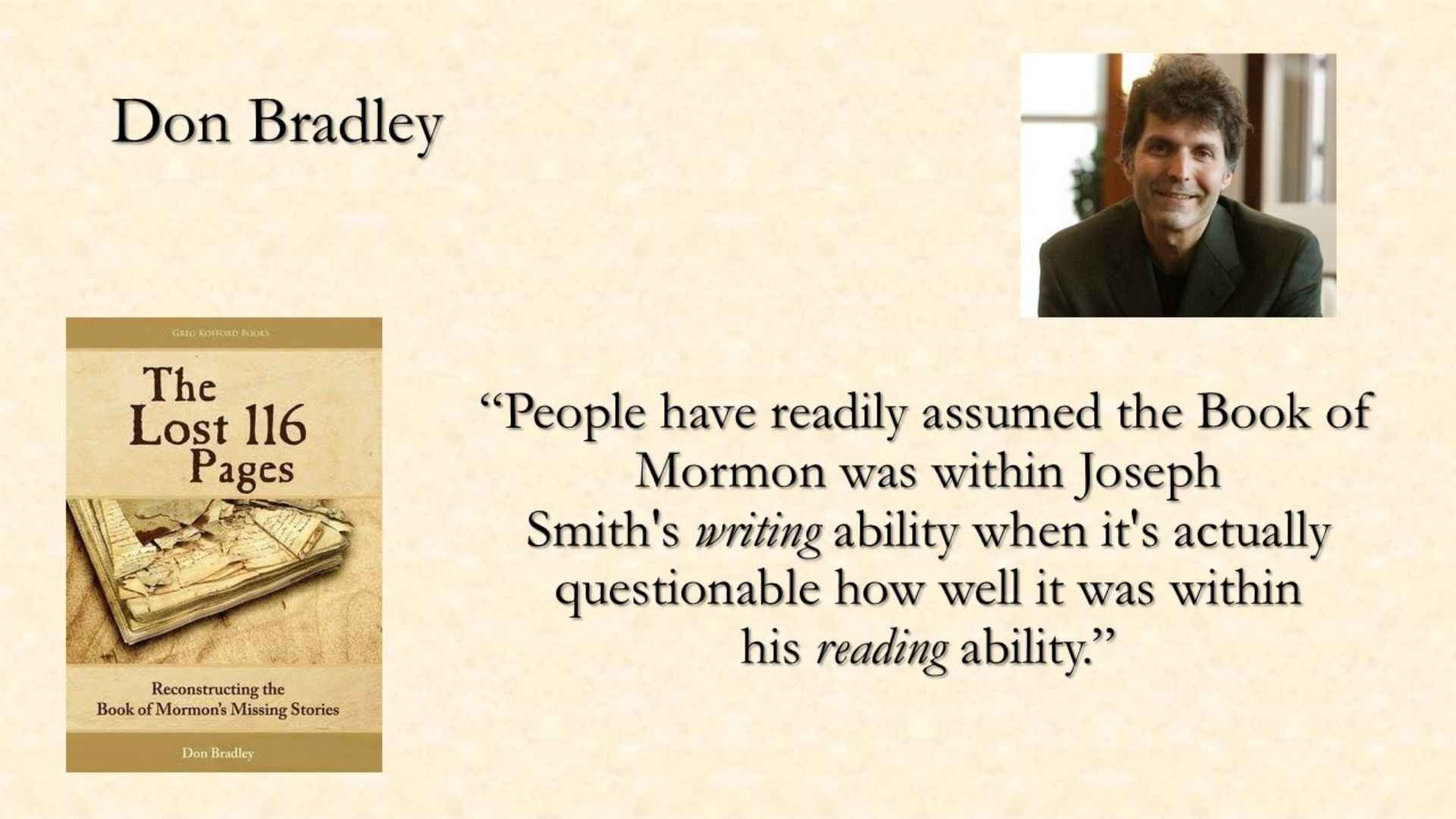
But for Joseph Smith, my dear friend Don Bradley said this: he said,
People have readily assumed the Book of Mormon was within Joseph Smith’s writing ability when it’s actually questionable how well it was within his reading ability.”
Dialect
You’re going to be speaking in a dialect that’s not your everyday speech.
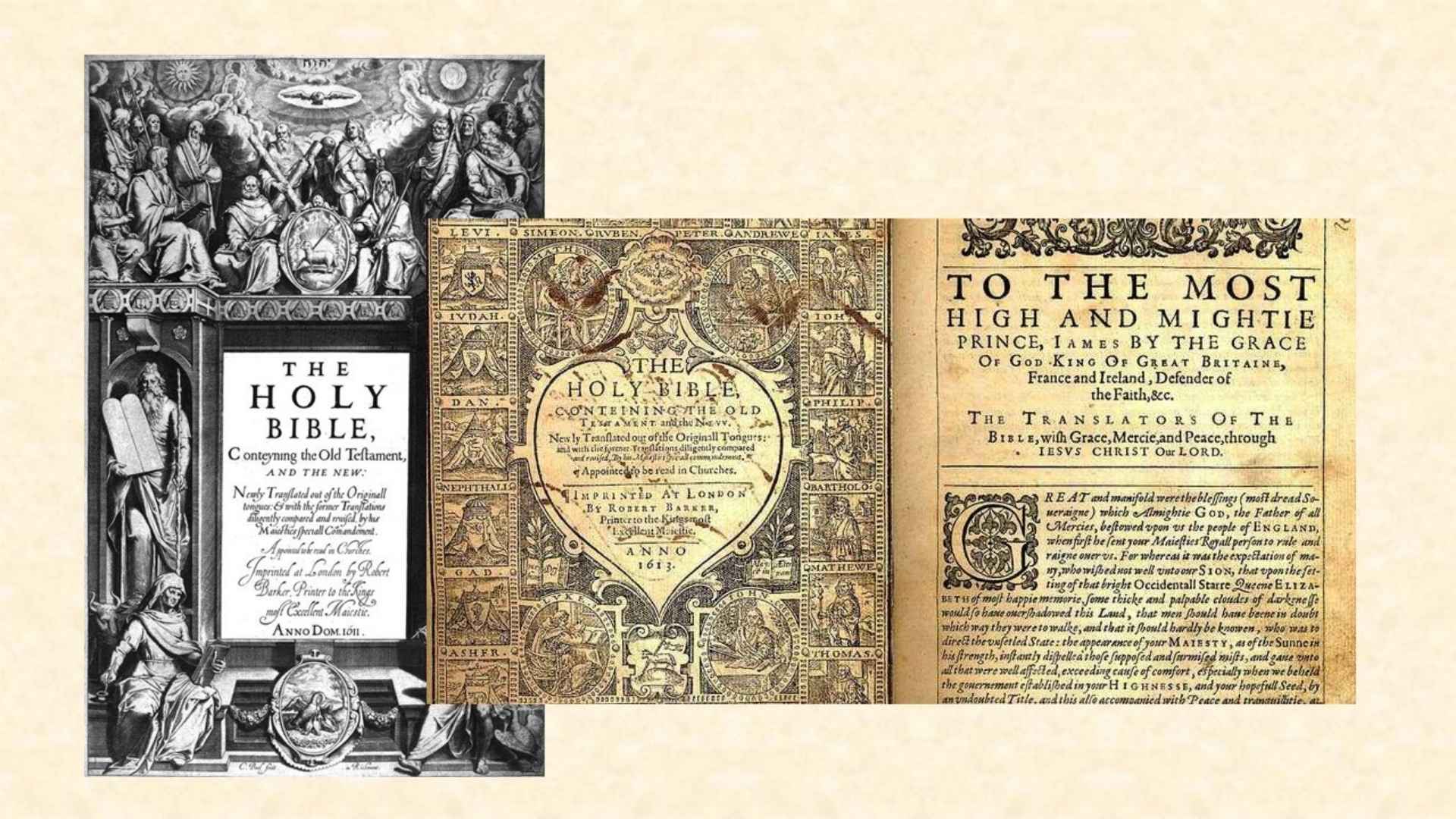
And Joseph Smith, of course, dictated the Book of Mormon in a language that’s very similar to the King James Bible. Stan Carmack tells us that it’s actually an earlier form of English, or at least has lots of those characteristics.
So, plan to be speaking not in your regular everyday speech. The Book of Mormon does have some upstate New York vernacular, but you have to look pretty hard to find it. It’s very consistently in this earlier form of English, and that’s how you’re going to be dictating.
Punctuation
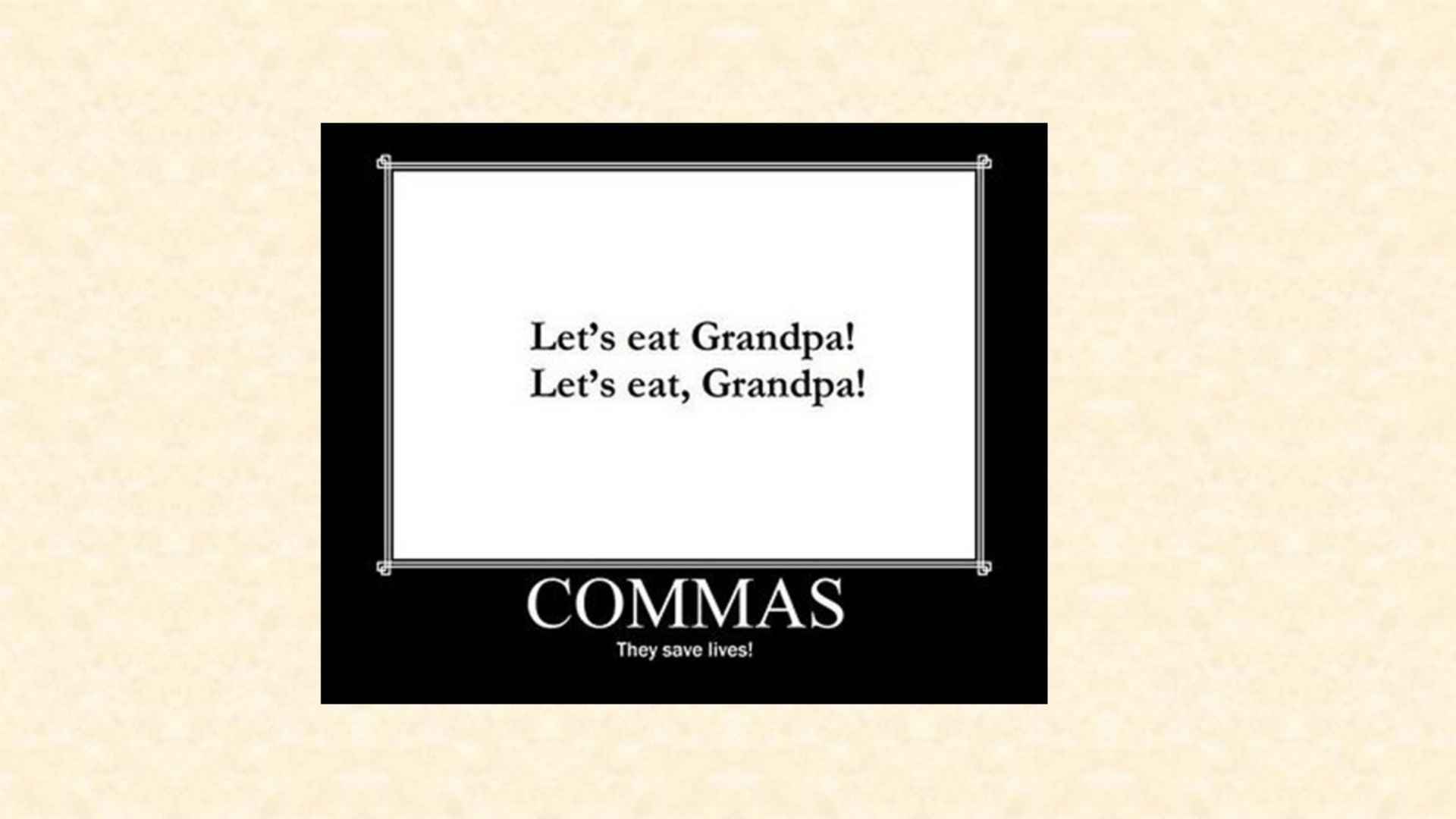
There’s no punctuation, and you can decide if that makes it harder or easier.
I think it makes it harder, but the next time you dictate a long text message, just don’t put any punctuation and then see how that goes. But you can’t use any punctuation for your dictation.
Unique Words
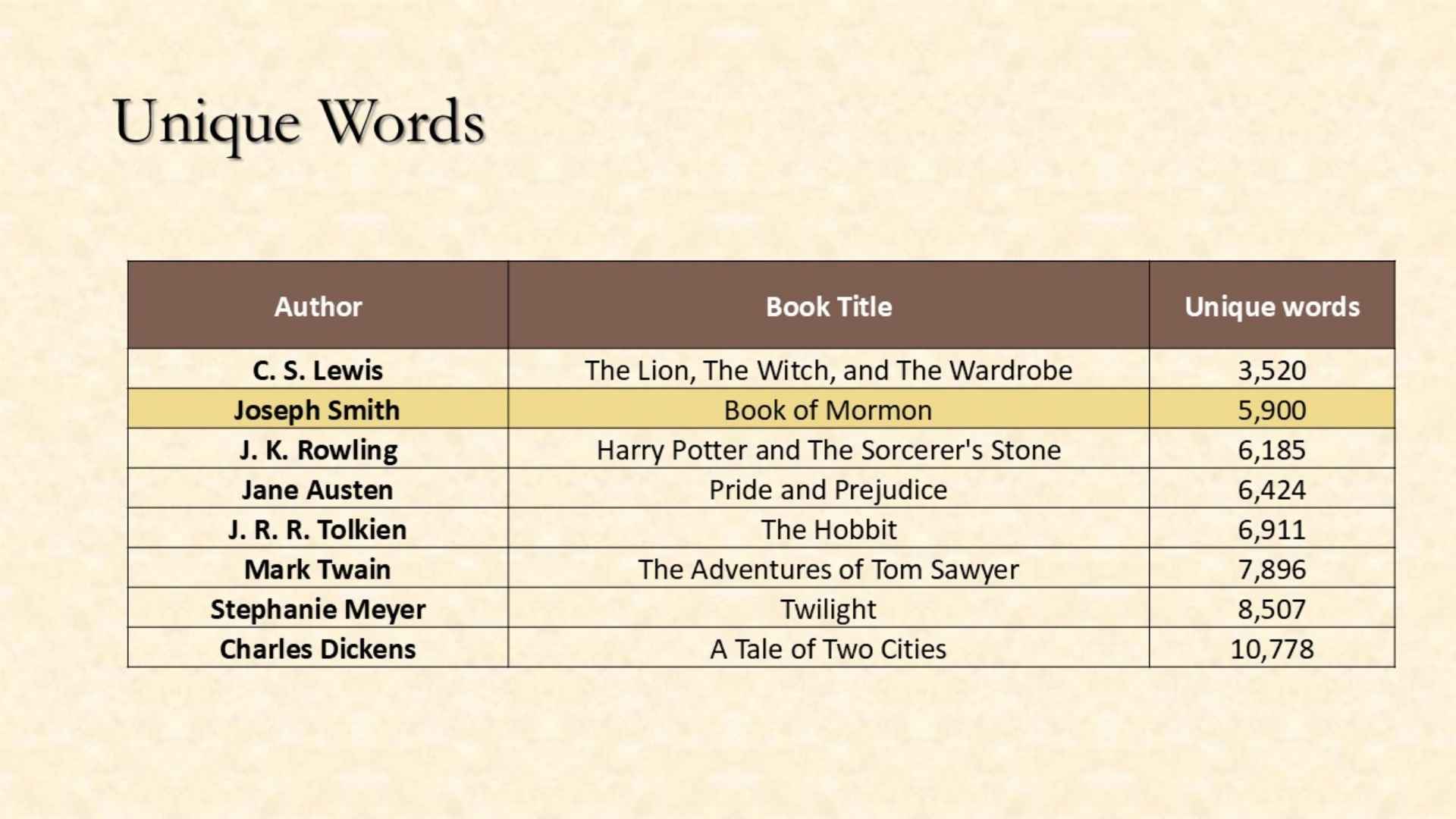
There are around 5,900, and I may have overestimated this, 5,700 different words in the Book of Mormon, and that’s good news.
That’s not impressive; that is a diversity of vocabulary that is not going to require a lot of extra preparation.
Vocabulary Words
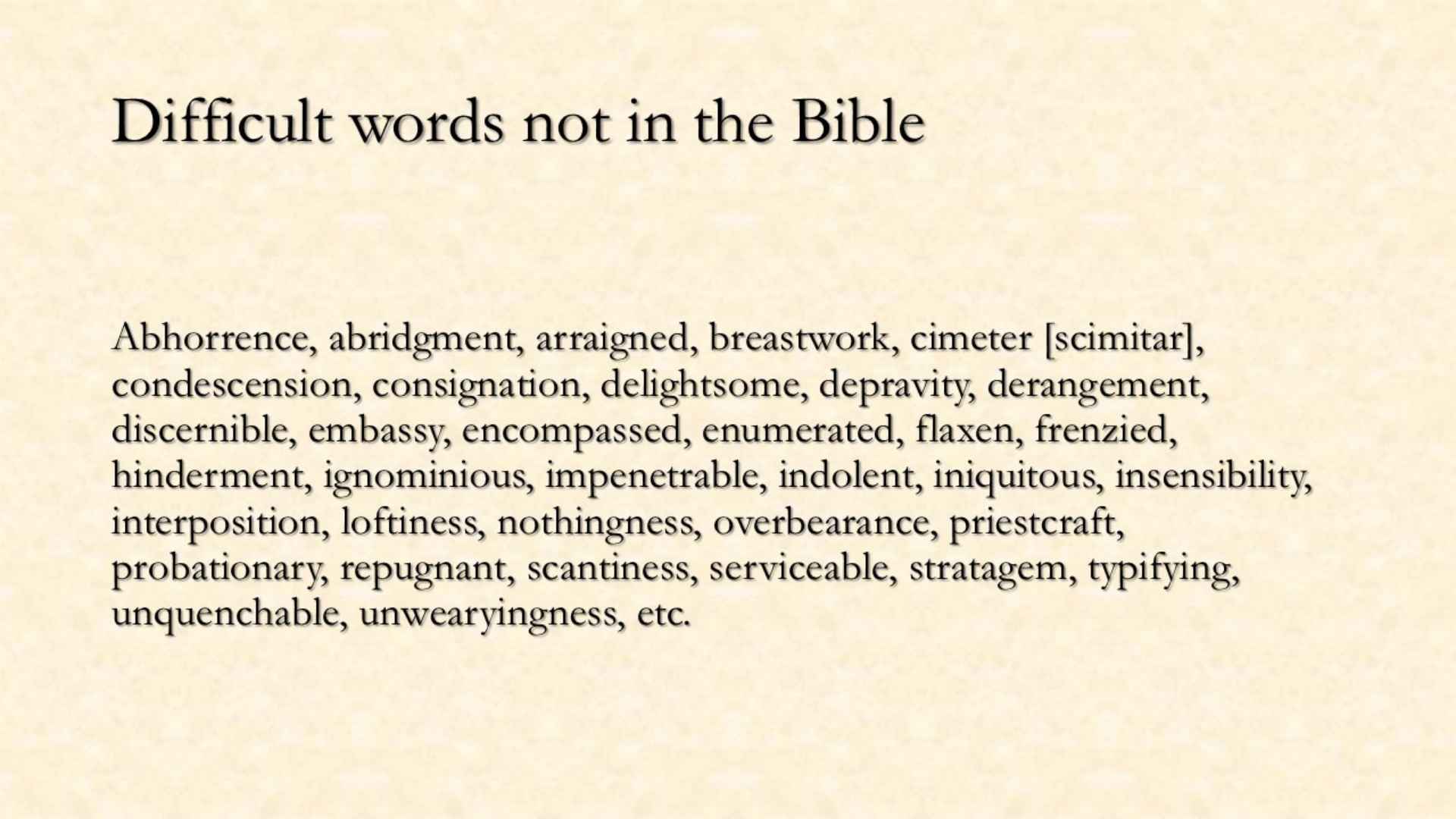
There are, though, some college-level vocabulary words that are not in the Bible.
Joseph Smith would not have learned these by reading the Bible, and if you look at the second line down, second word over, just yesterday I was going online, how do you even say that word? Consignation? You know, you tell me, but make sure you can use these words better than I can right now if you’re going to include these college-level words in the dictation.
Original Proper Nouns
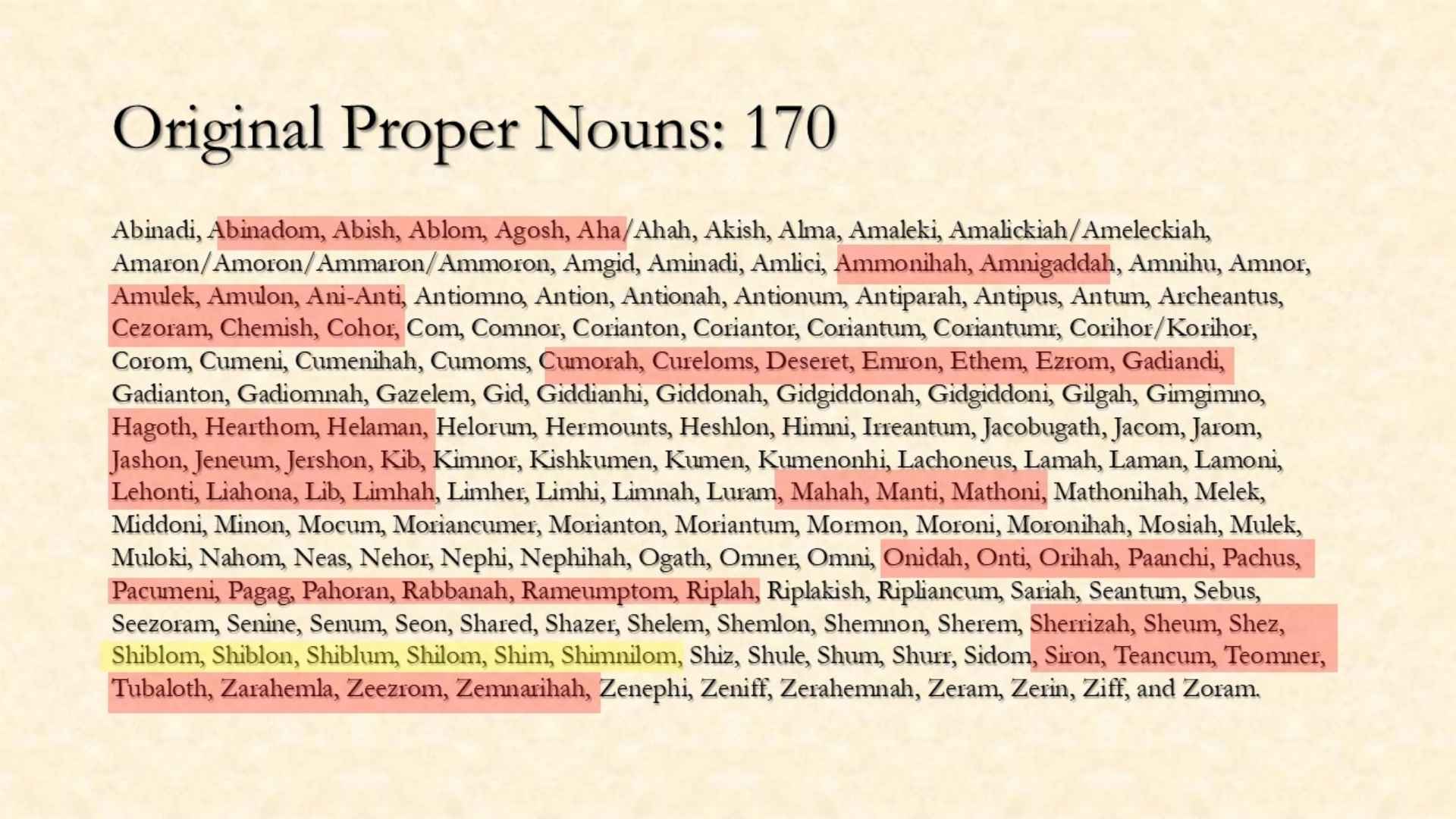
There are 170 original proper nouns, and what this means is before the Book of Mormon was dictated, these words did not exist in the English language.
Now, there’s a higher number, 188 that’s used. I looked at those and kind of pared it down because I thought some of them actually did exist, but these are proper nouns that are not going to create themselves. You’re going to have to make them sound like a real name. They don’t sound like gibberish or blabbering; they’re an actual name. And Brad Wilcox has written articles on the difficulty of creating names that sound like real names. So, this is probably something you’re going to have to do ahead of time, and 170, that’s quite a few.
As you can see in the yellow, you can probably riff on a few words, but the vast majority, and like those in red, are not that similar to the words next to them. So, some people have said it would be easy to make up these words because they’re just riffing on words similar to them, and that’s true in some cases, but not by any means a majority.
PARALLEL PHRASEOLOGY
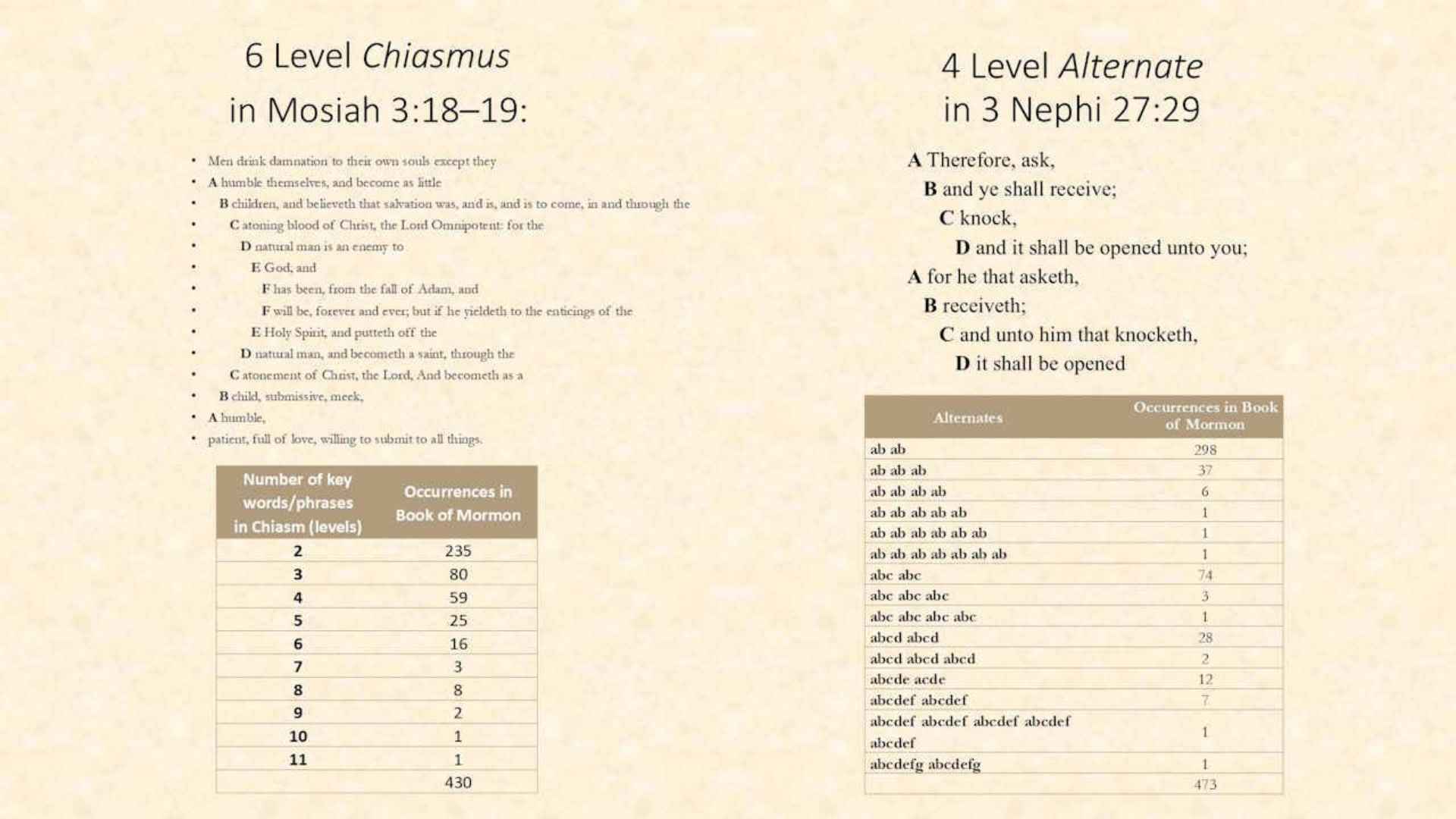
There is parallel phraseology in the Book of Mormon, and we’ve heard a lot about this in FAIR speeches over the years.
You know what I’m talking about; it’s chiasm. There’s hundreds of these, and so you’re going to have to gain a skill to be able to format the word stream to comply with different chiasms, where the topics come in one direction and then they go back backwards through the next part. And some of these chiasms encompass, you know, hundreds of words. So, that’s a skill to really work on.
And some people, I’ve read, say you can learn to speak in chiasms, and maybe that’s true. But a few years ago, I wrote an article that was published by Interpreter, and I’m so grateful for Dan Peterson and The Interpreter, they’re doing such great work, and I appreciated that they would publish it, but the title was Changing Critics’ Criticisms of Book of Mormon Changes. It’s a two-level chiasm, and it took a minute for me to put that together; which word do I want first, which do I want second? I mean, it wasn’t something that just rolled out of my mouth. So, that’s a skill that I think people are gonna have to really work on.
There are also something called alternates, and they are where you present the topics one direction and then present them in that same direction later. There are hundreds of these as well and other poetic forms in the Book of Mormon.
Bible Intertextuality
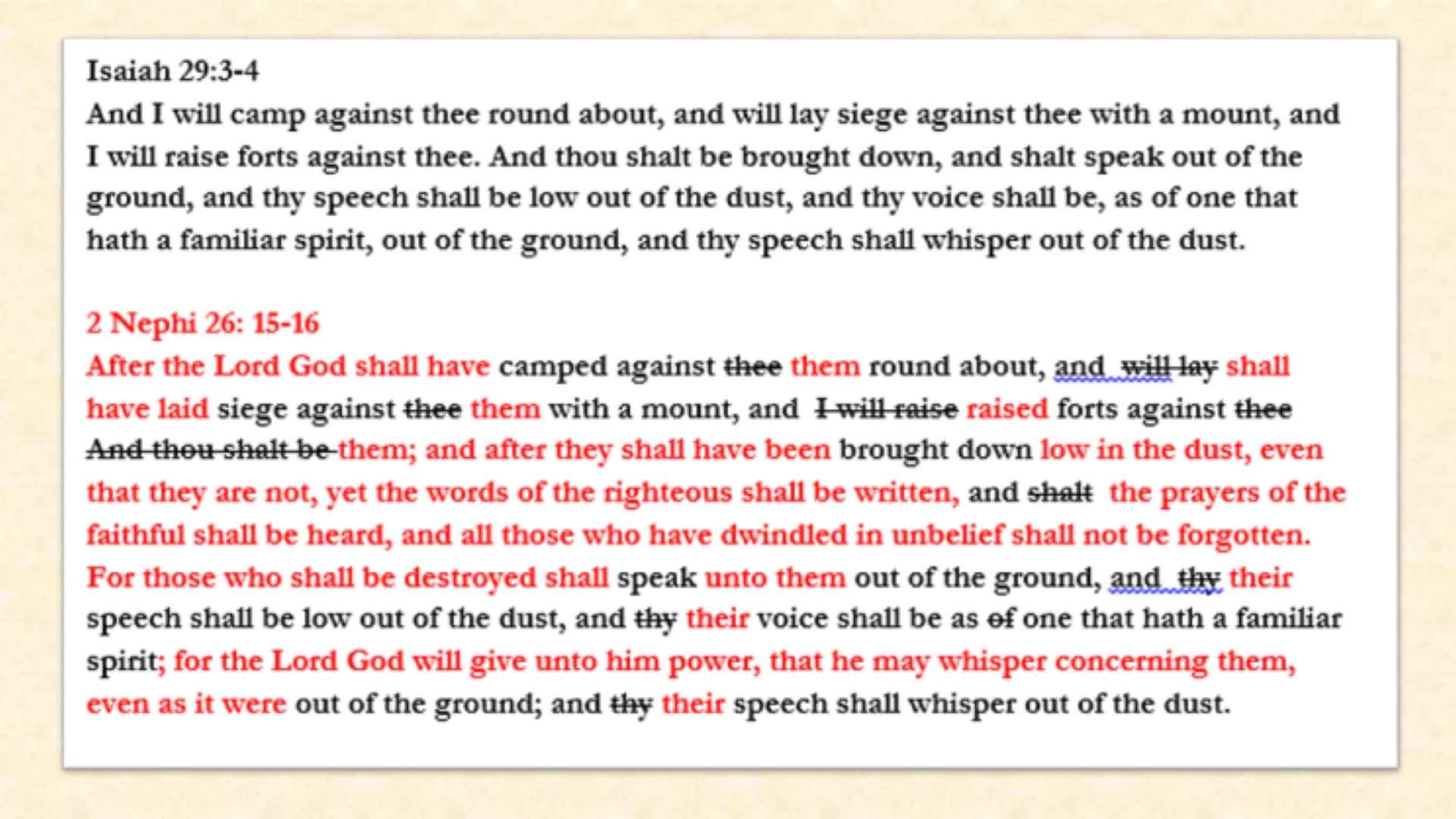
Now there is a thing called the Bible intertextuality, and what that means is that there are parts of the Book of Mormon that just are very much integrated into the text of the King James Bible. Here’s an example:
This is Grant Hardy’s work, and you’ll see the King James scripture up above, and then you’ll see how it’s integrated in the Second Nephi scripture down below. And the best way probably to be able to do this is to memorize the book that is going to be the one that you’re intertextually related to. The problem with Joseph Smith is we have eyewitnesses who said he wasn’t that familiar with the Bible.
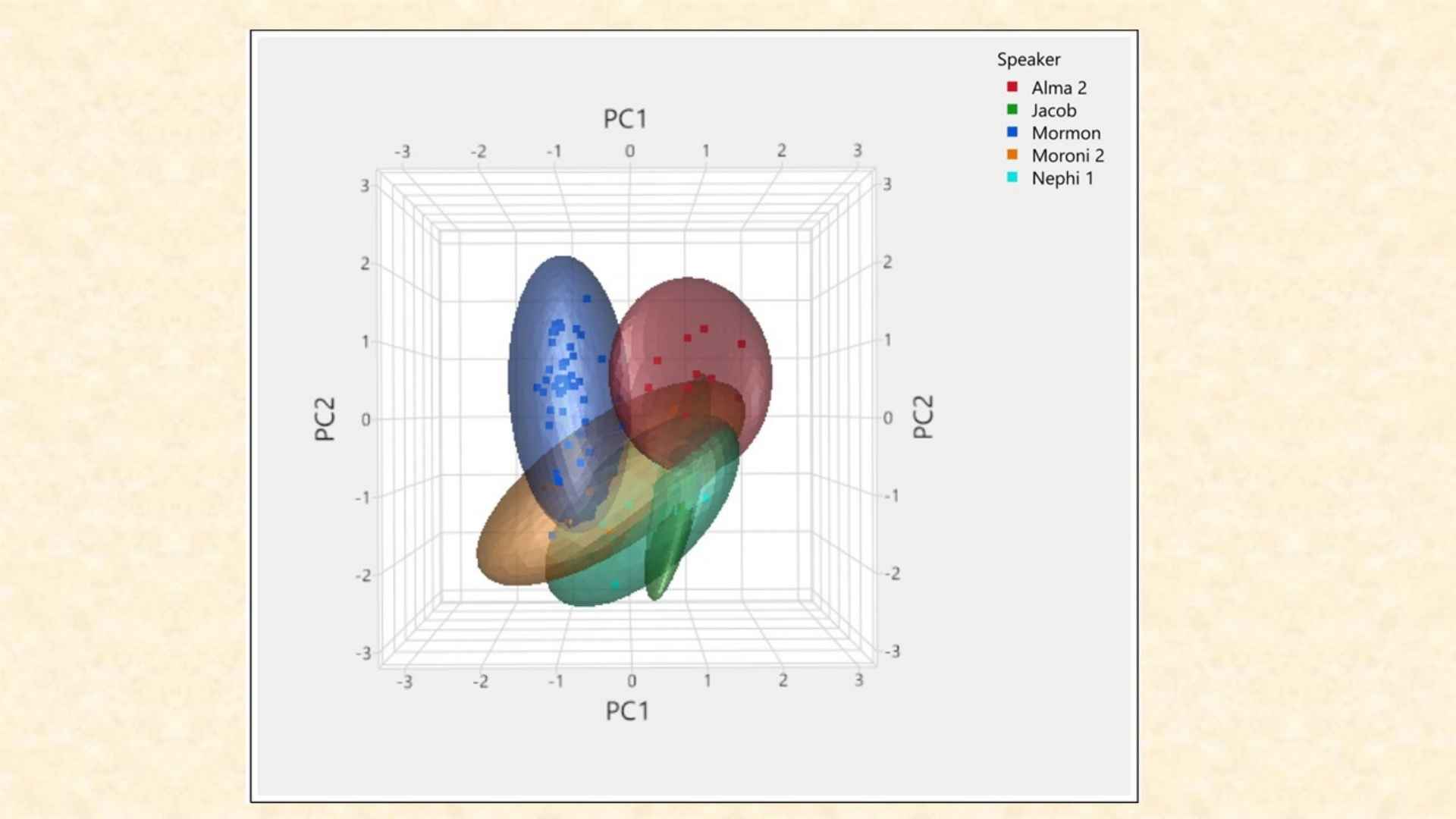
And then we have stylometric concerns, and I think we heard about this from Paul Fields that anyone who’s read the Book of Mormon knows that Nephi just has a different style of writing. His voice is different than, say, Mormon.
They’ve applied computer algorithms and things to this. And they really come up with a number of different voices in the Book of Mormon.
So, as you’re dictating or as you’re coaching somebody to be able to do this, make sure that he or she remembers whose voice is talking at the time that they’re doing their dictations.
I did want to mention that Nick Frederick has done a lot of good work with intertextuality. We’re going to hear more about that in the future I’m sure.
Characters
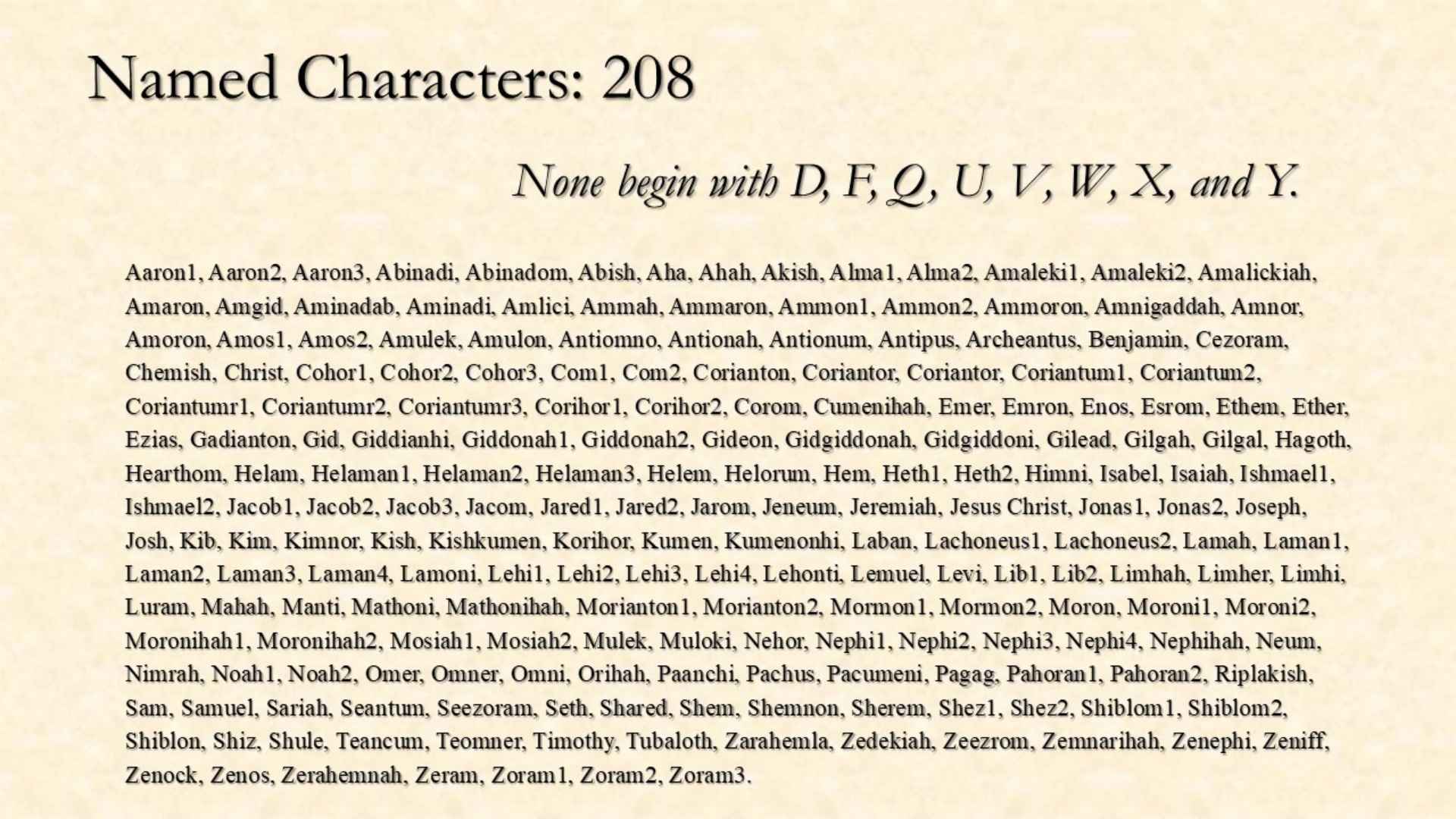
There are 208 named characters. None of them starts with those letters there at the top, and this is quite a few characters.
For each one of these, remember you’re going to be speaking in real-time without manuscripts, without notes, so you’ll probably want to create a profile for each of these. You see some of the names are used more than once.
Probably, a suggestion as you’re planning to do your own dictation is to create profile pages for each of these and examine when they’re going to be there, where they’re going to be, what’s going to be their contribution, what are their biases, and these kinds of things for all 208.
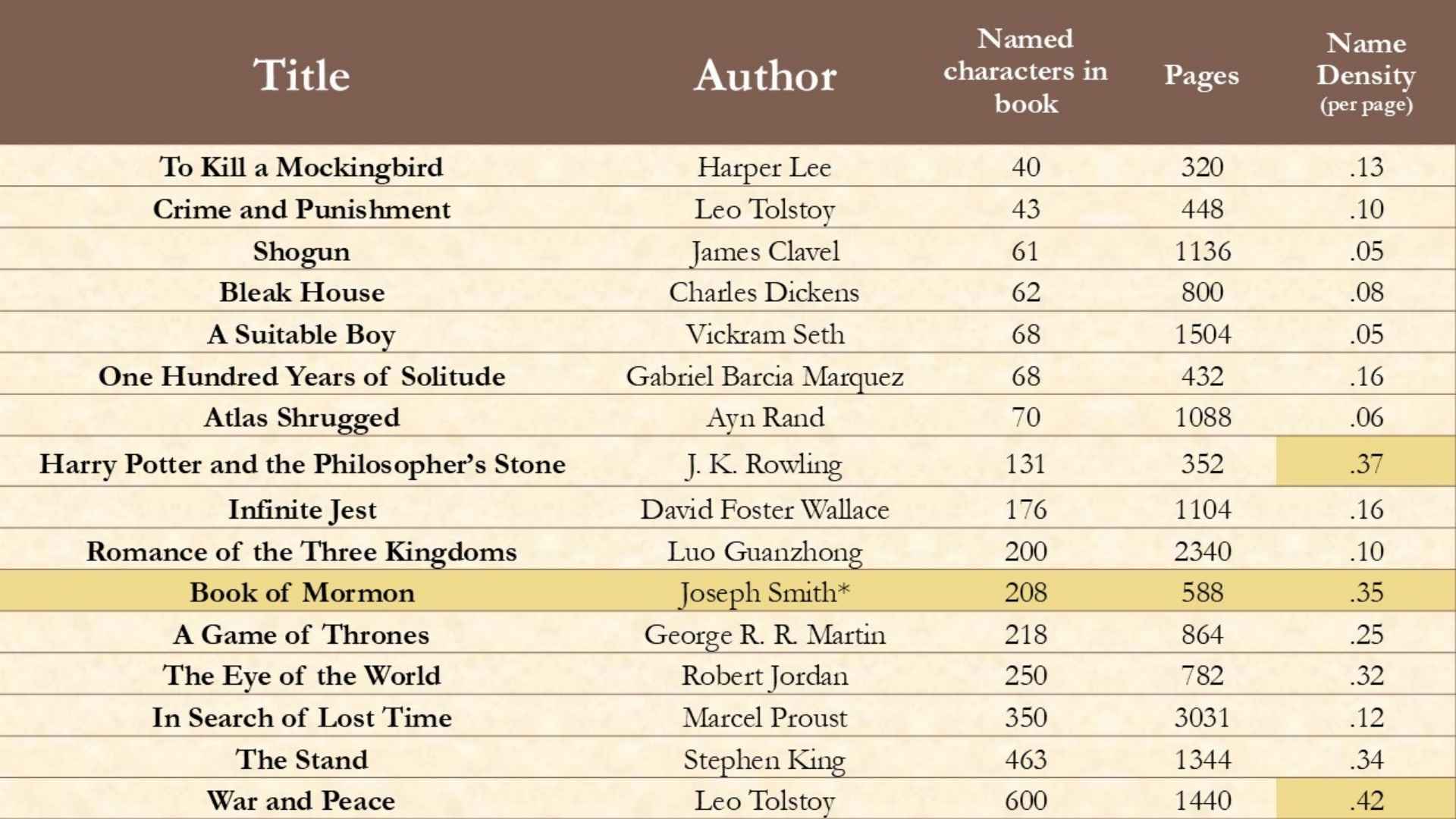
And, as we look at the density of names in the Book of Mormon, what we find is that there’s 0.35 new character names per page. Now, that’s pretty high. It’s not as high as War and Peace by Tolstoy, but it’s quite a bit higher than Crime and Punishment by Tolstoy, for example, as you can see there.
There will probably have to be some extra effort in preparing for all 208 of these characters. Some, of course, come and go fast; but many of them hang around and interact. Keeping their characters straight will require some preparation.
Social Geographic Groups
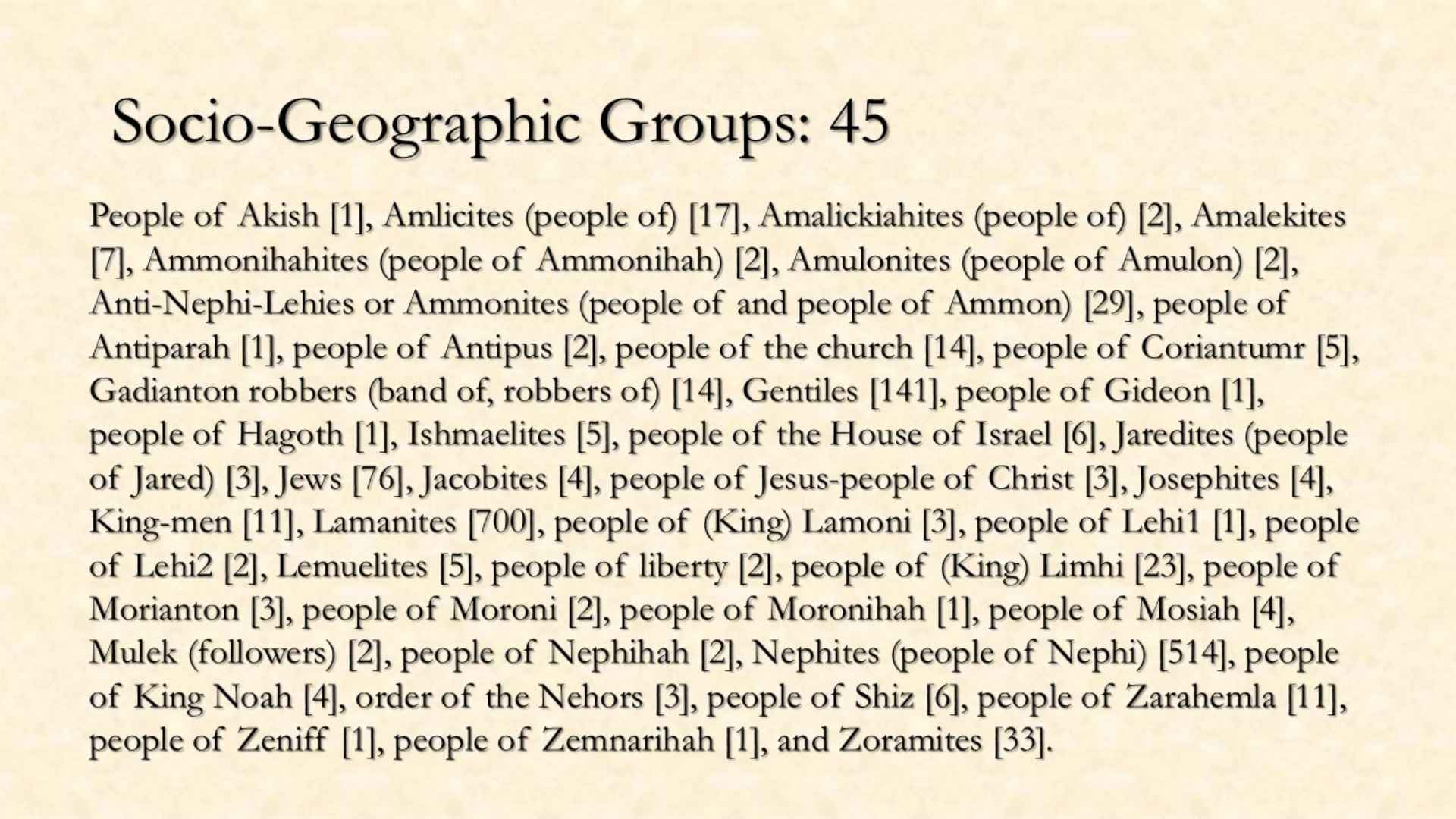
There are 45 social geographic groups. The brackets tell us how many times they’re mentioned. Some are mentioned once, some are mentioned dozens of times — or hundreds.
But again, as these groups are presented in the text, just remember who makes them up and what is their position. Why do we even need these people? Why are they segregated out from others in the text? Again, you need to anticipate these types of things.
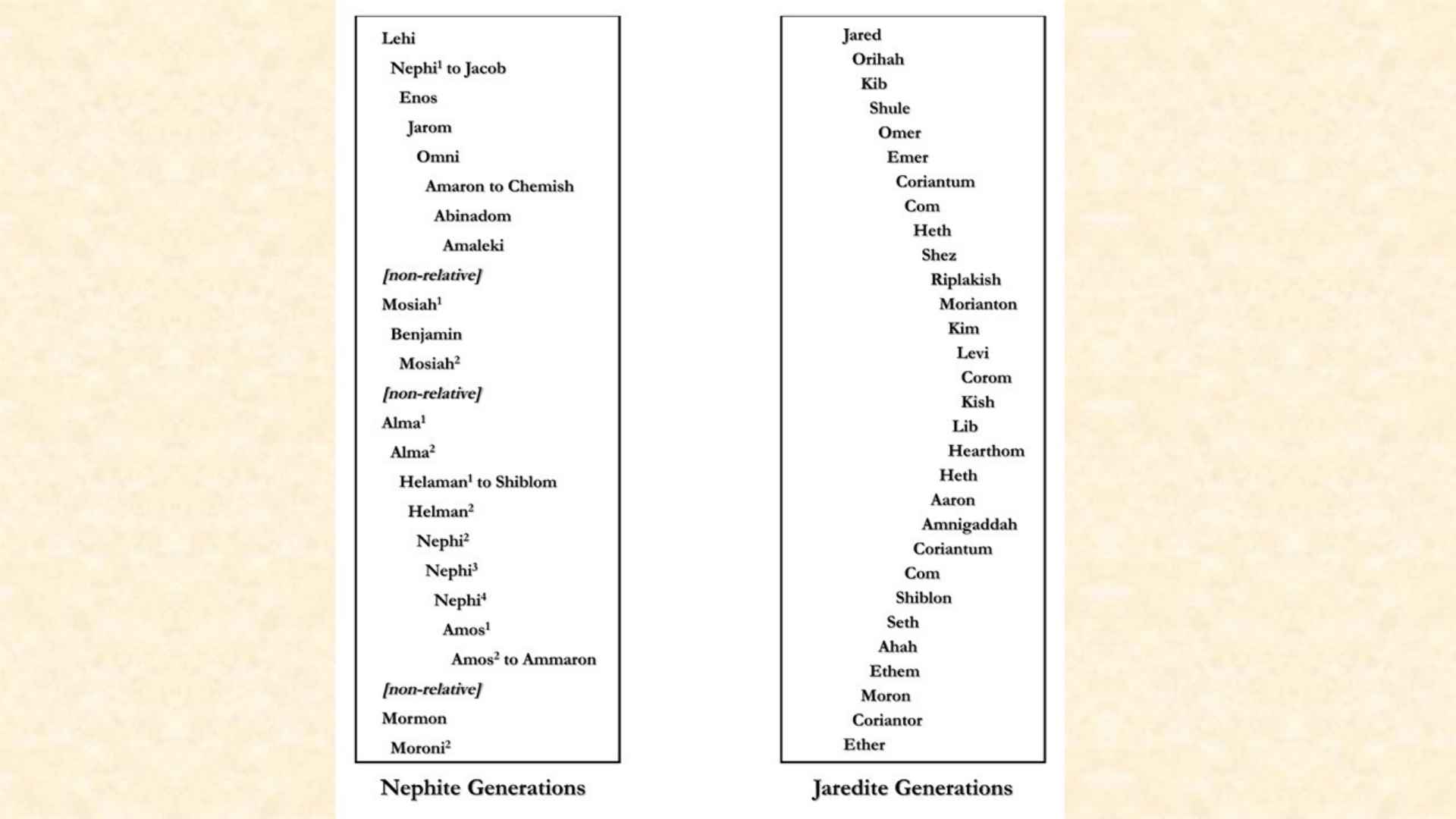
Genealogies
There are a couple of genealogies. We’re all aware of the record keepers among the Nephites, and then there’s 30 generations among the Jaredites.
Just keep them straight. That’s all, as you’re going through and dictating and remembering everything else. Make sure we keep these genealogies straight.
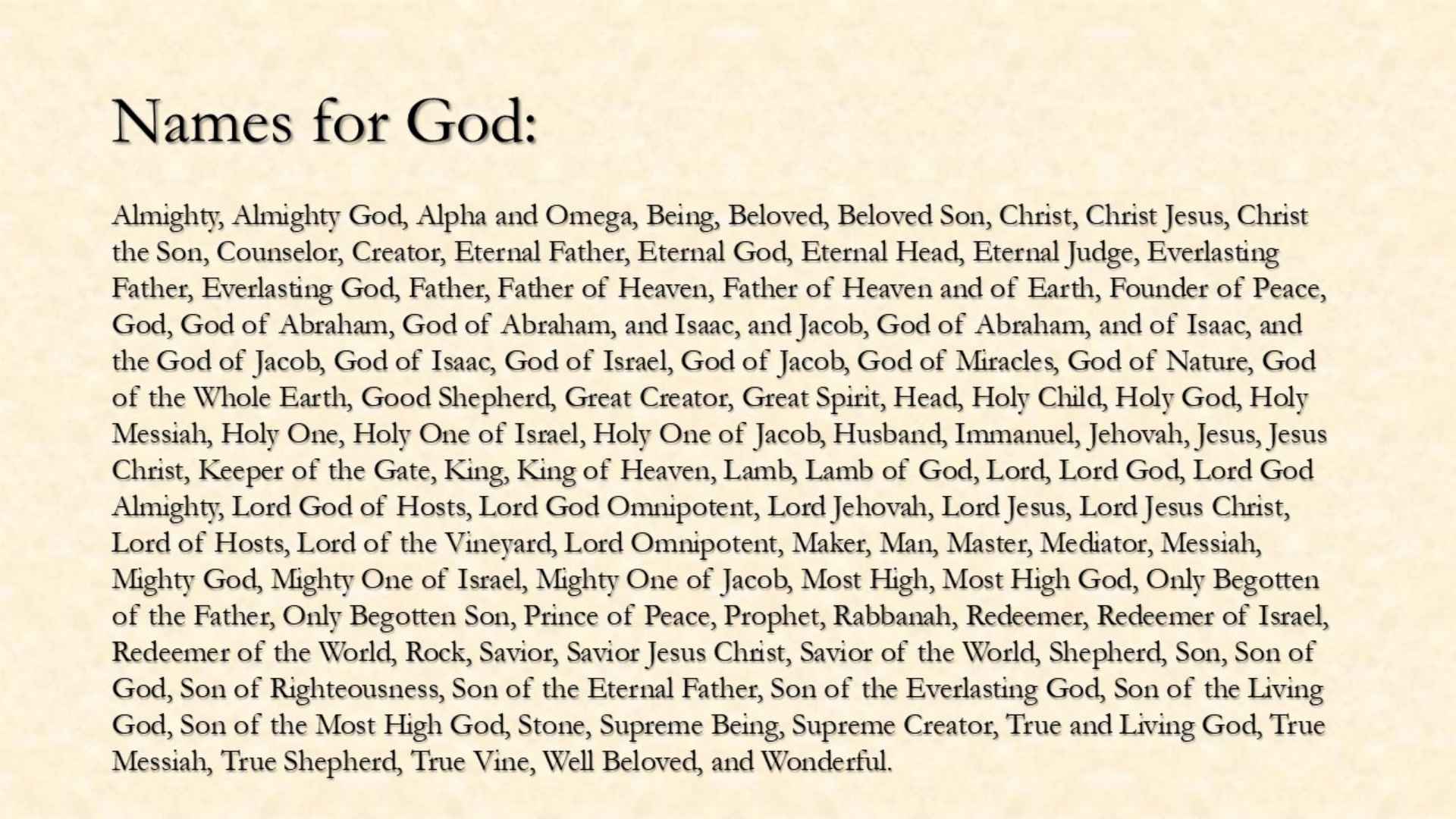
Primary Protagonist
There are quite a number of names for the primary protagonist. This is kind of a surprise, and a number of people have done work on this.
But there is an emphasis in the Book of Mormon to give extra reverence or something to the primary protagonist, who is God, because the book refers to God in over a hundred different ways.
It’s not just a half a dozen or even a dozen different ways, it’s this many. So, just probably want to anticipate that, take, you know, a little preparation, commit these things to memory so you can include them as you’re dictating.
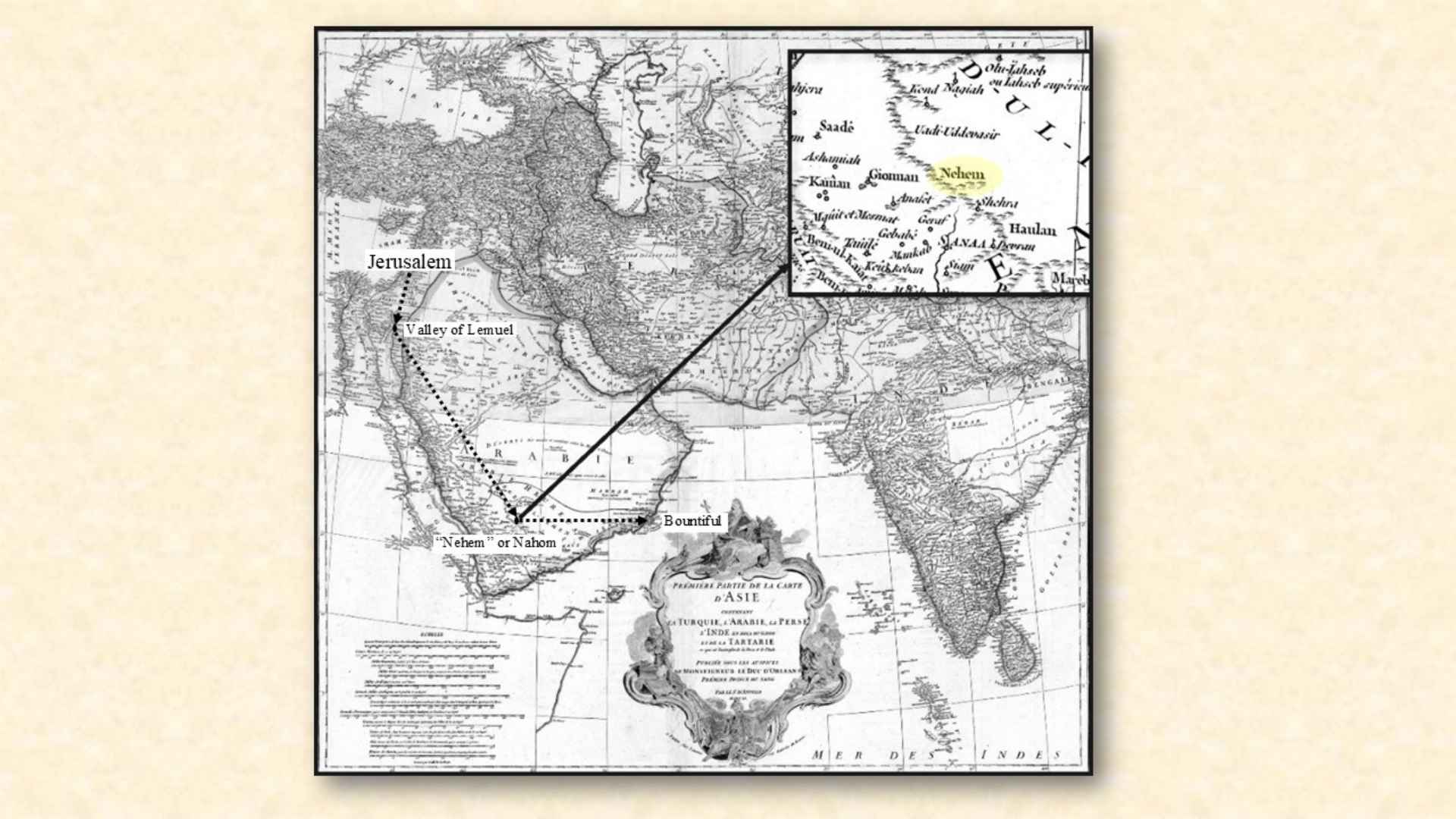
The Old World
Now we have references to the old world, and what I mean by that is there are spots that are on a real map.
And so, if you’re going to start in Jerusalem and then dictate a direction for a period of time, it is wise to make sure that these travels will actually correlate with a real map.
And everybody’s heard, I’m sure, about Nahom and things of this nature. But these are the things that will need to be done, is to confer with real maps if you’re going to talk about anything that is on a real map, as Joseph did starting in Jerusalem and then ending up at the wadis on the coast of Oman.
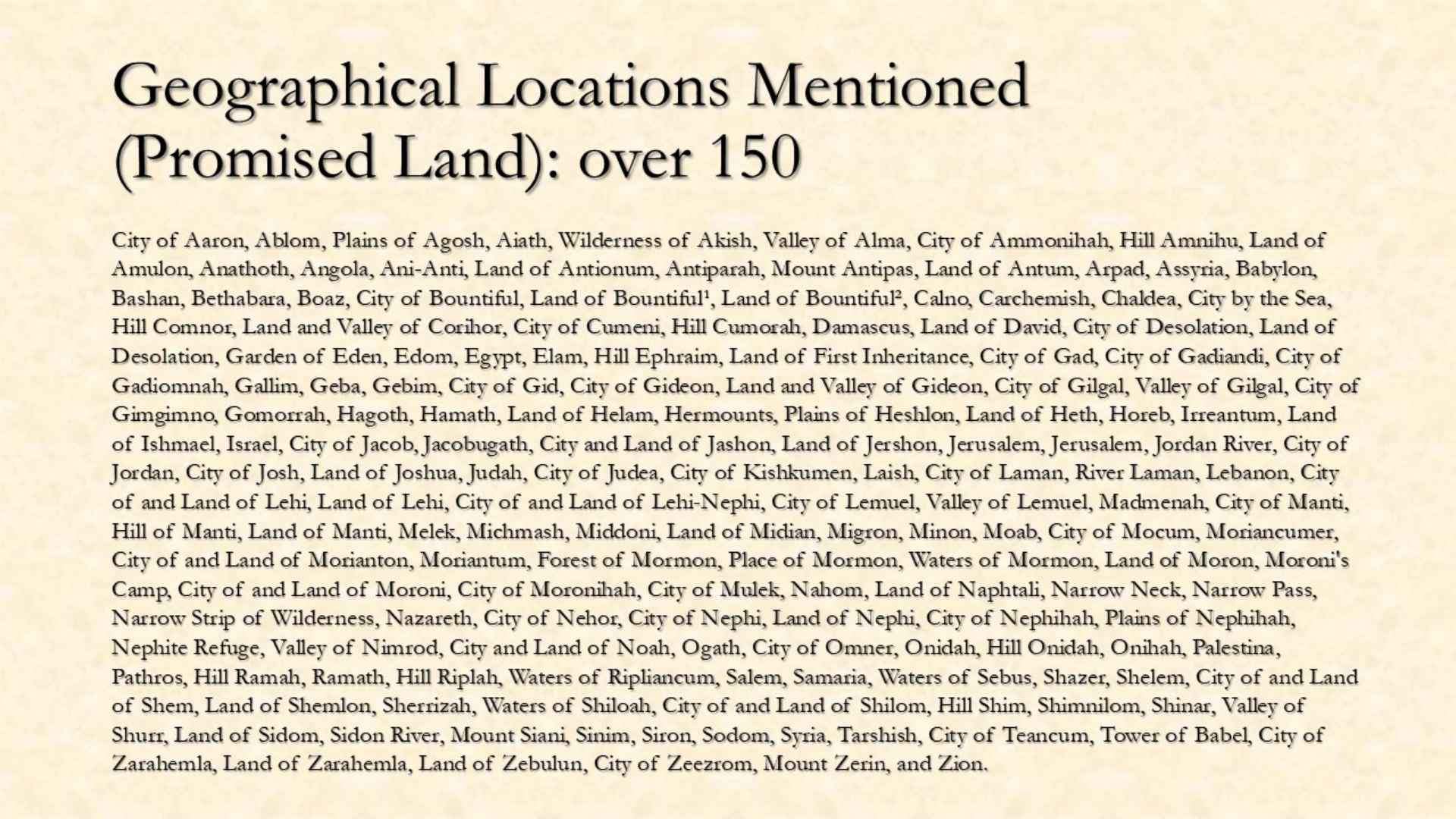
The Promised Land
In the promised land there is a geography there, and I think this is going to take a lot of preparation too because there’s over 150 locations here.
This is the names of all the places in the promised land where your saga is going to occur. There’s over 400 references to directions and movements, so there’s a lot of movement. And there are people checking you. I am told that I think a couple of the movements might be off, but that’s still over 99% accurate.
So, as you’re going through, you may want to mentally create this 3D topography with all of these places on it so that as you’re dictating, this is just second nature, and you’re able to maintain all of these places very, very strictly according to the geography.
Ecological References
Now, there are some ecological references; you might want to not put palm trees and evergreens on the same hillside, that kind of thing. There’s also a monetary system with 12 weights that’s just thrown in there so that we have a way to, I guess, to make exchanges of resources.
Chronological Systems
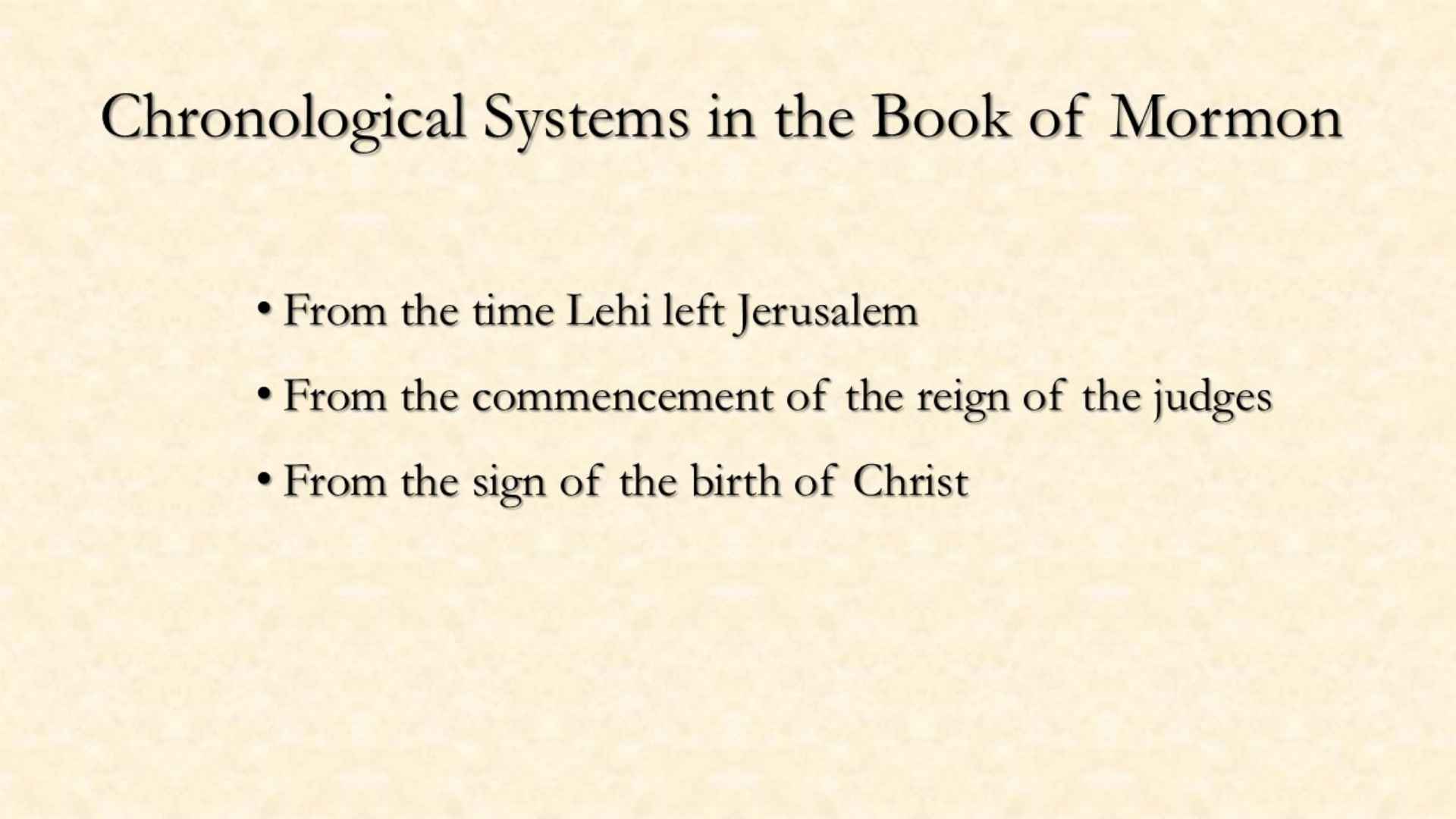
And then there’s over a hundred chronological references. So, as you’re dictating along, keep the chronology straight as well. And there are three different time systems: there’s the time since Lehi left Jerusalem, the commencement of the reign of the judges, and then there’s the sign of the birth of Christ. And they do overlap a little, but mostly they just hand off one to the other. But again, the emphasis is, as you’re dictating this stream of words, keep the chronology straight.
Storylines
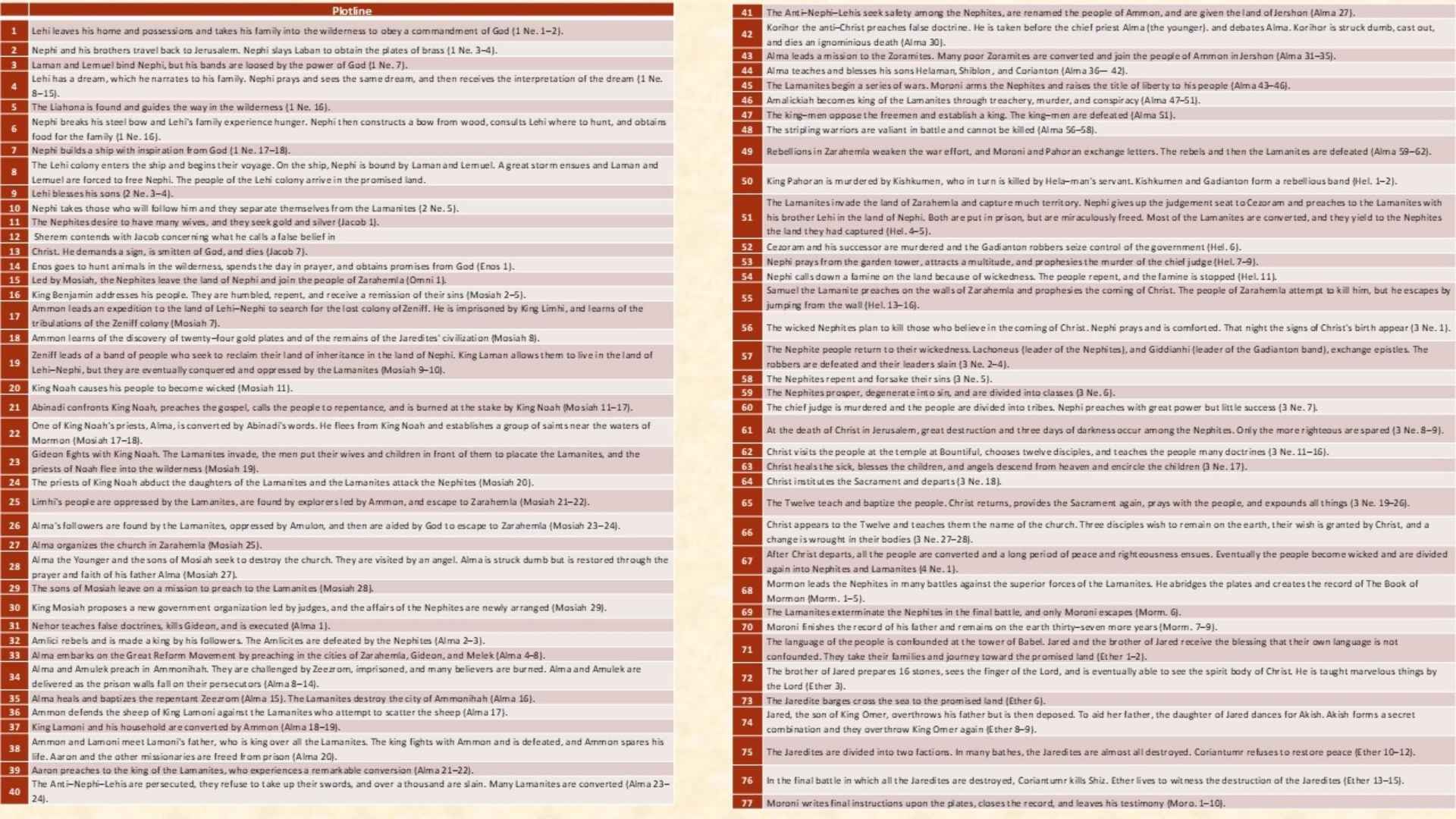
There are, in the Book of Mormon, a lot of storylines, and this is from James Duke.
Quickly memorize it because there will be a quiz. I’m just kidding, but if you look at it, just pick one out and look at it. There’s a lot that would go into making up that story, some more than others, but you’re probably not going to be able to use a lot of imagination and creativity in real-time because, as we’re going to talk about in a minute, your bandwidth isn’t going to allow it. So, you know, make these storylines up, get the details straight, what characters are involved, those kinds of things.
Flashbacks
There are some flashbacks, so when those pop up, make sure that the details are correct.
Major Sermons
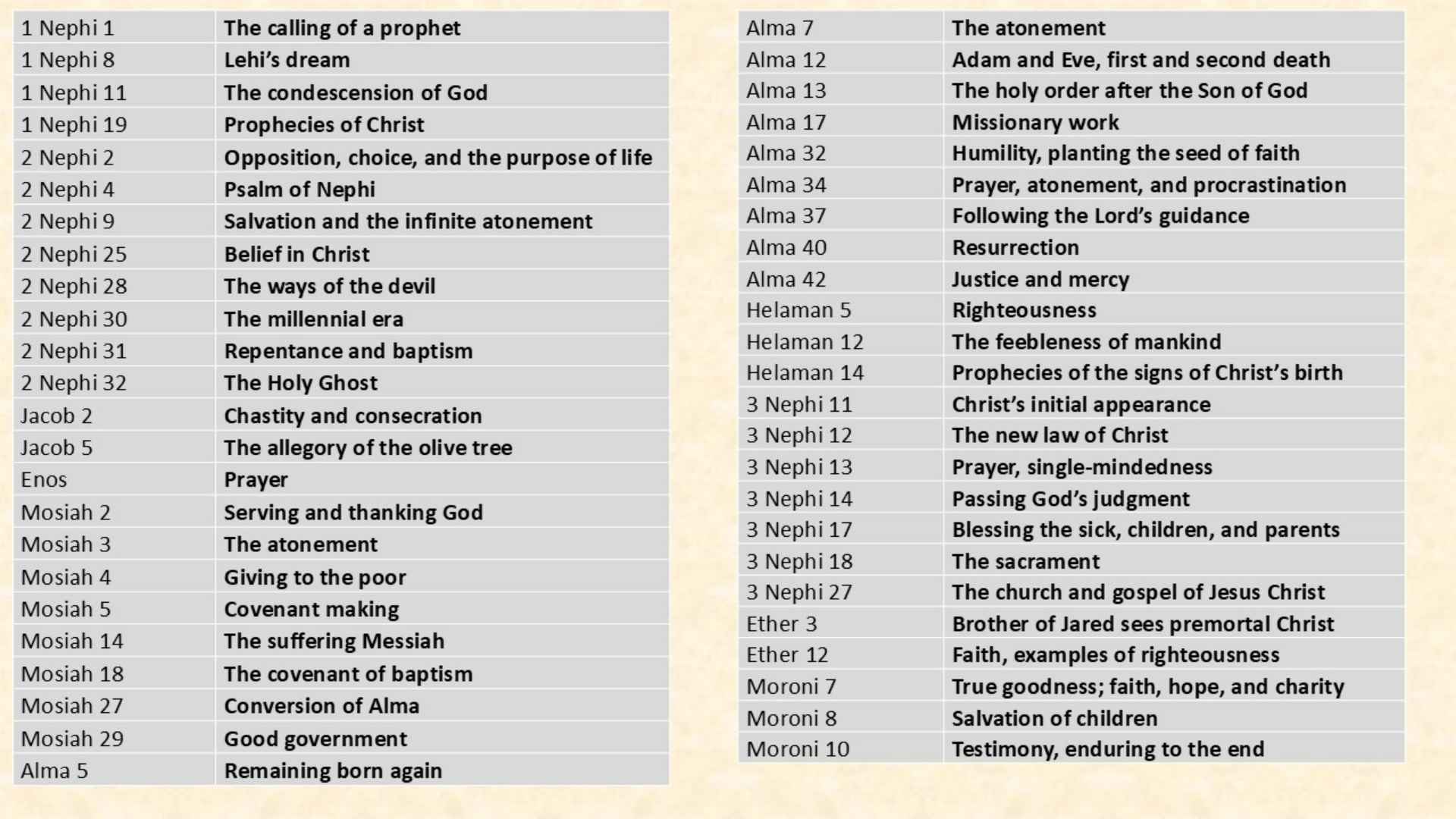
And then we also have 63 major sermons.
Now, most of us here have probably given talks in church; we probably used a piece of paper to help us with it. Well, you don’t get a piece of paper. Some of these are shorter, but we do have something like Alma 5, and in the 1830 Book of Mormon, Alma 5 has 48 separate questions one right after the other. So, these sermons that you’re going to throw into the text as you’re dictating, make sure you get those straight so that you can keep it rolling in a very smooth manner.
Editorial Promises
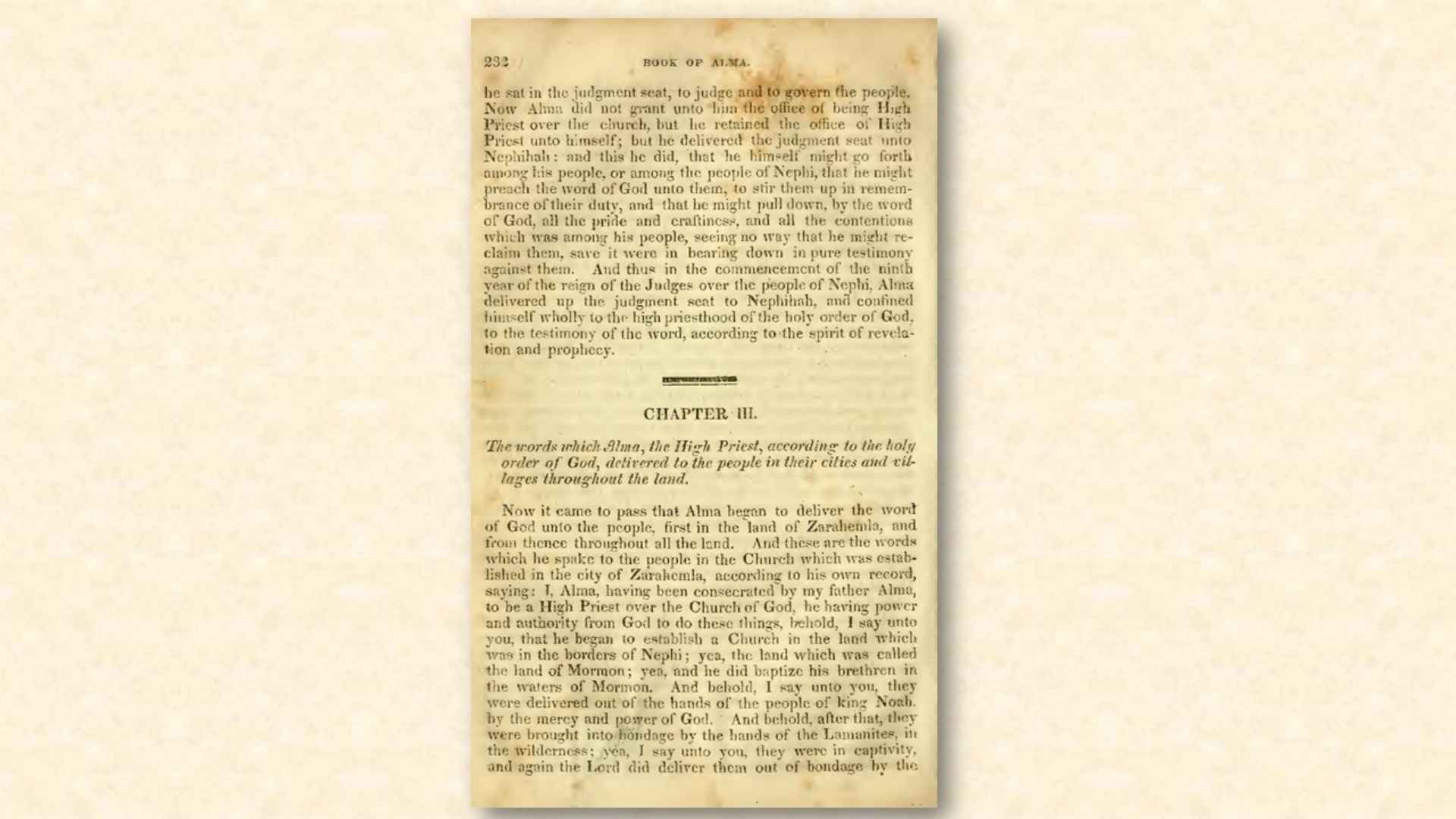
There are some formal headings and editorial promises. Now, an editorial promise is where the text will say we’re going to talk about something here in a minute, and it does.
But the headings are right here; you can see this one in the Book of Mormon. These have become more important in the last year or so because of this book.
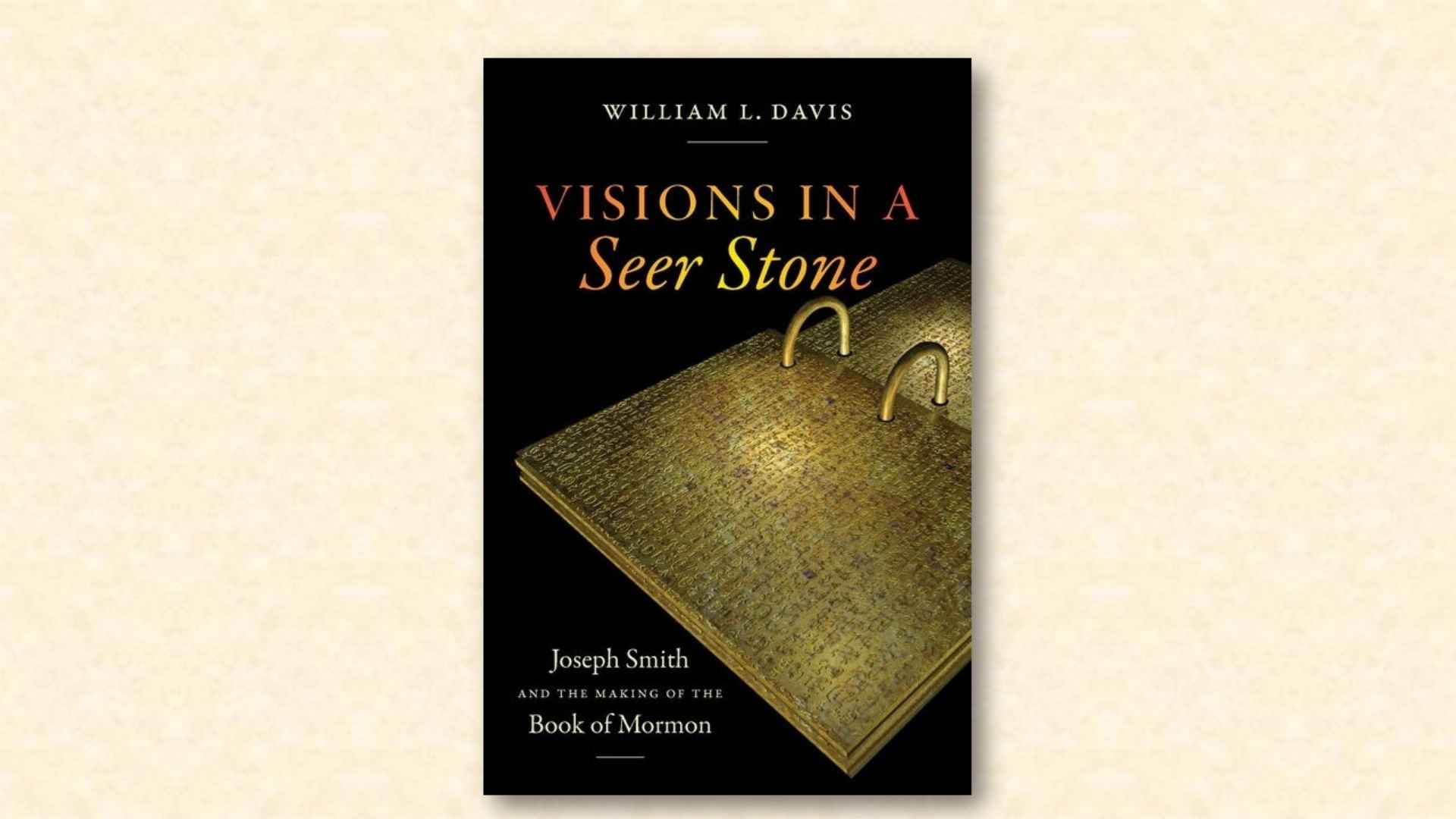
And this book is by William Davis, and honestly, I commend Bill Davis because he’s the first person in 190 years to try to tell us how Joseph used his natural abilities to dictate the Book of Mormon. Every other person has just kind of brushed past it, but Bill is actually trying to get into Joseph’s head and telling us what is going on there. So, I commend him for that.
The problem is that Bill says that these headings are a 19th-century phenomenon and that they show the Book of Mormon came from the 19th century. The problem is that that’s just not true.
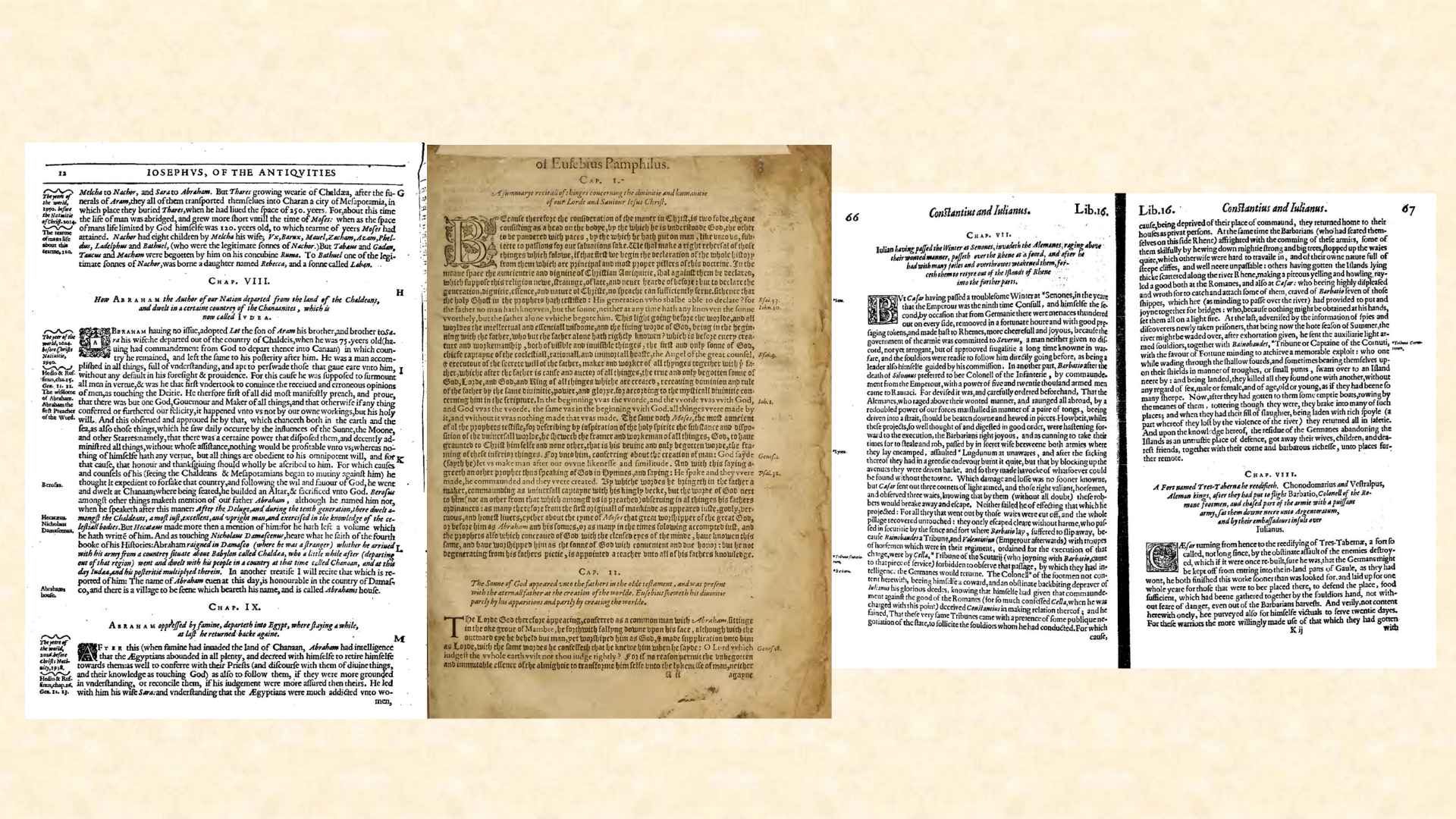
This is Josephus, first century A.D. Here’s Eusebius a few centuries later. Here’s 1600. So, it’s kind of intuitive to use headings. And as we’re seeing, the theory that Bill promotes is that Joseph became very familiar with these headings, and then all of the other words just kind of flowed out. Okay, he just memorized the headings, and then he had the skills to just do all of the rest. Well, all of the rest is a lot, and that’s kind of what we’re looking at. So, I don’t think just ignoring the rest of what would be required is a very complete explanation of what was going on in Joseph’s mind if he was doing it naturally.
Internal Historical Sources
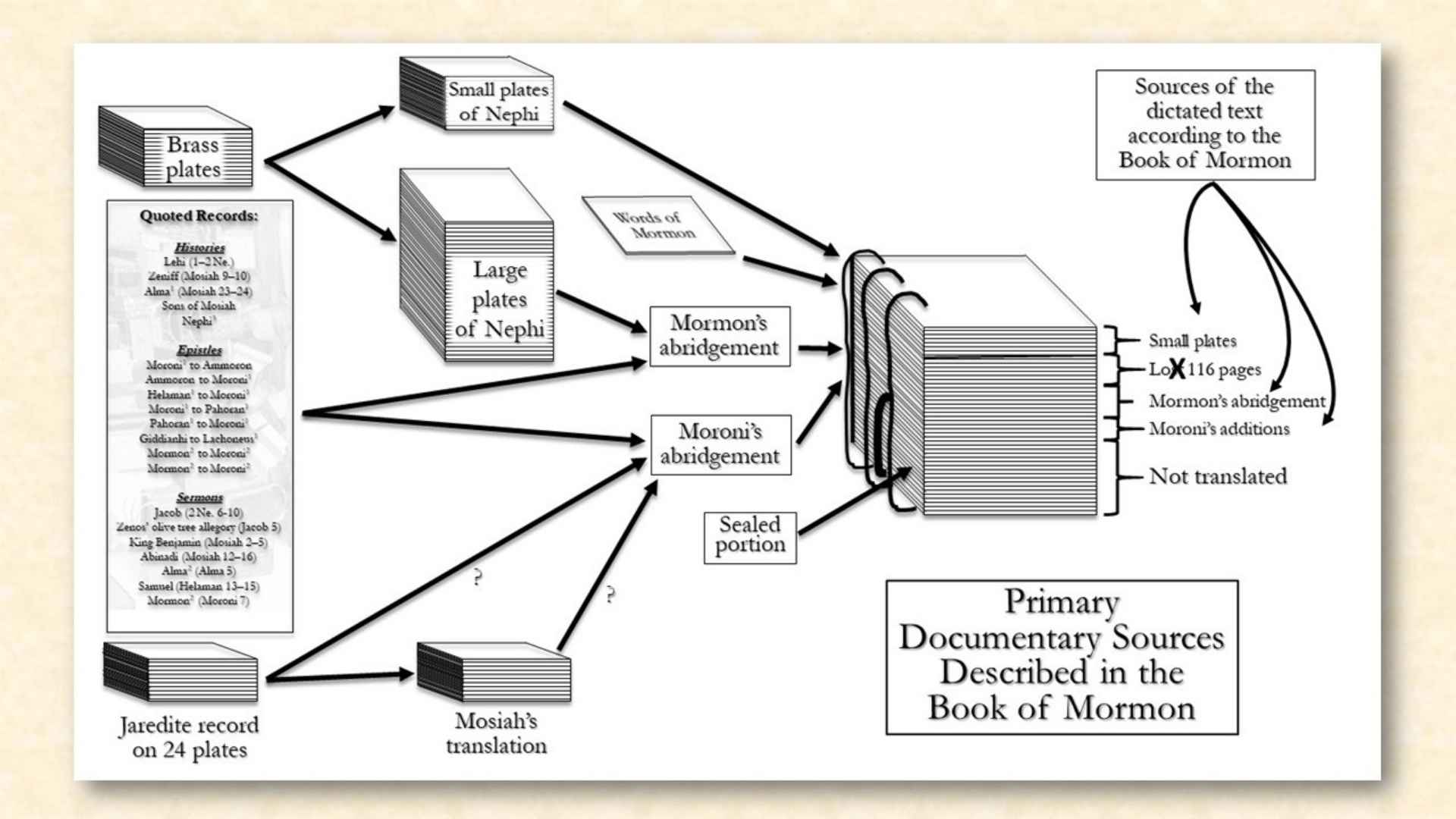
There are some internal historical sources, I’m grateful to Don Bradley, who went over this with me.
It’s kind of a complicated slide, but I include it because if you’re going to have complex things within the 588 pages, just make sure you keep them straight. There are 24 internal sources here that are mentioned, some of them several times, that you just have to be consistent in as you’re referencing them.
Expertise
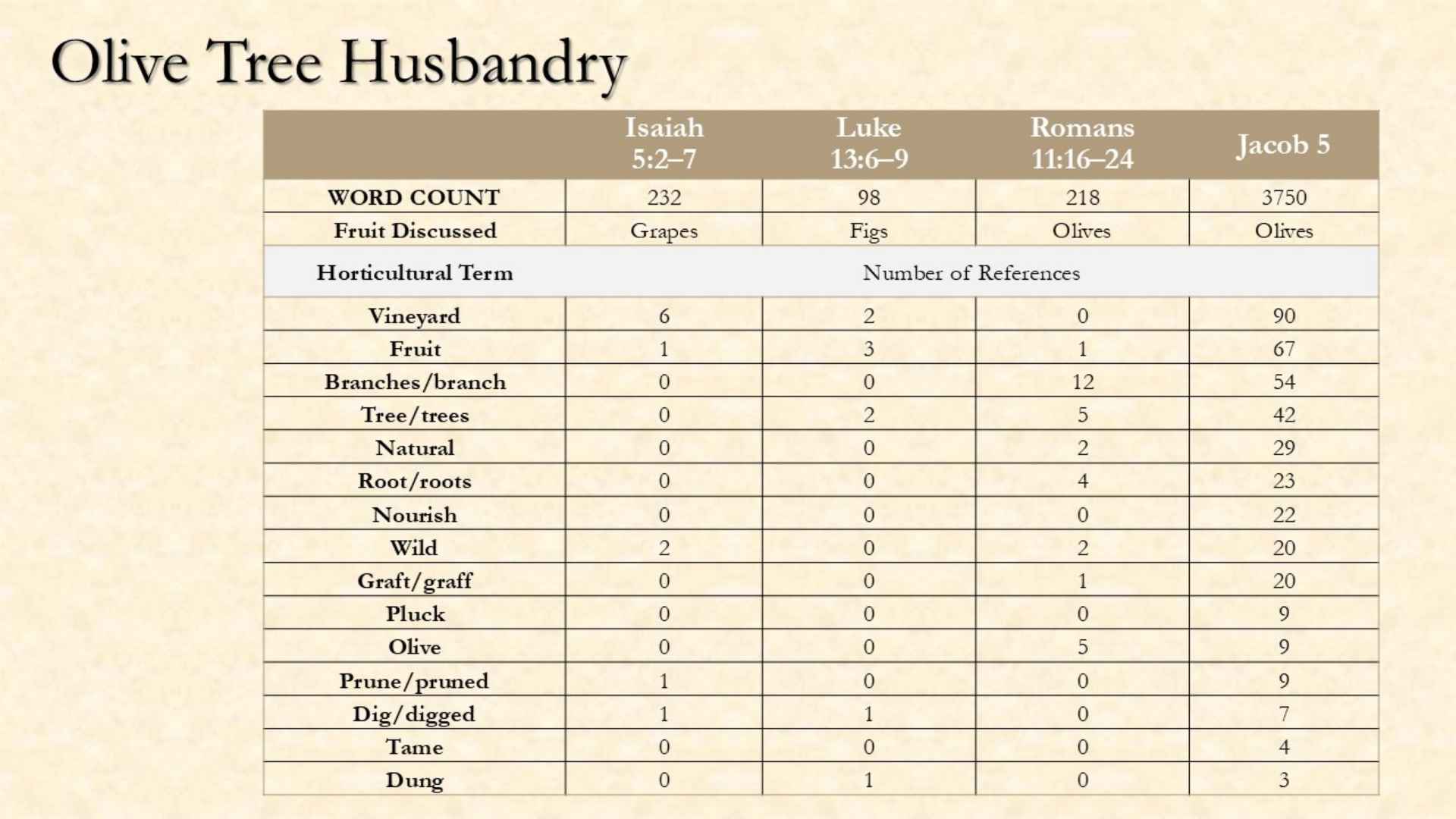
And then lastly, there are several subjects that are mentioned with a degree of expertise that Joseph probably would not have gathered from his district schooling or from reading the Bible. Three examples:
First, we have olive tree husbandry, and of course, grapes are mentioned in Isaiah, and Luke mentions figs, Romans mentions olive, but look how brief those are. Then Jacob Chapter 5 has 3,750 words talking about olive trees, with a level of expertise again that Joseph wouldn’t have gotten because he’d probably never seen an olive tree. They didn’t grow where he was raised in upstate New York.
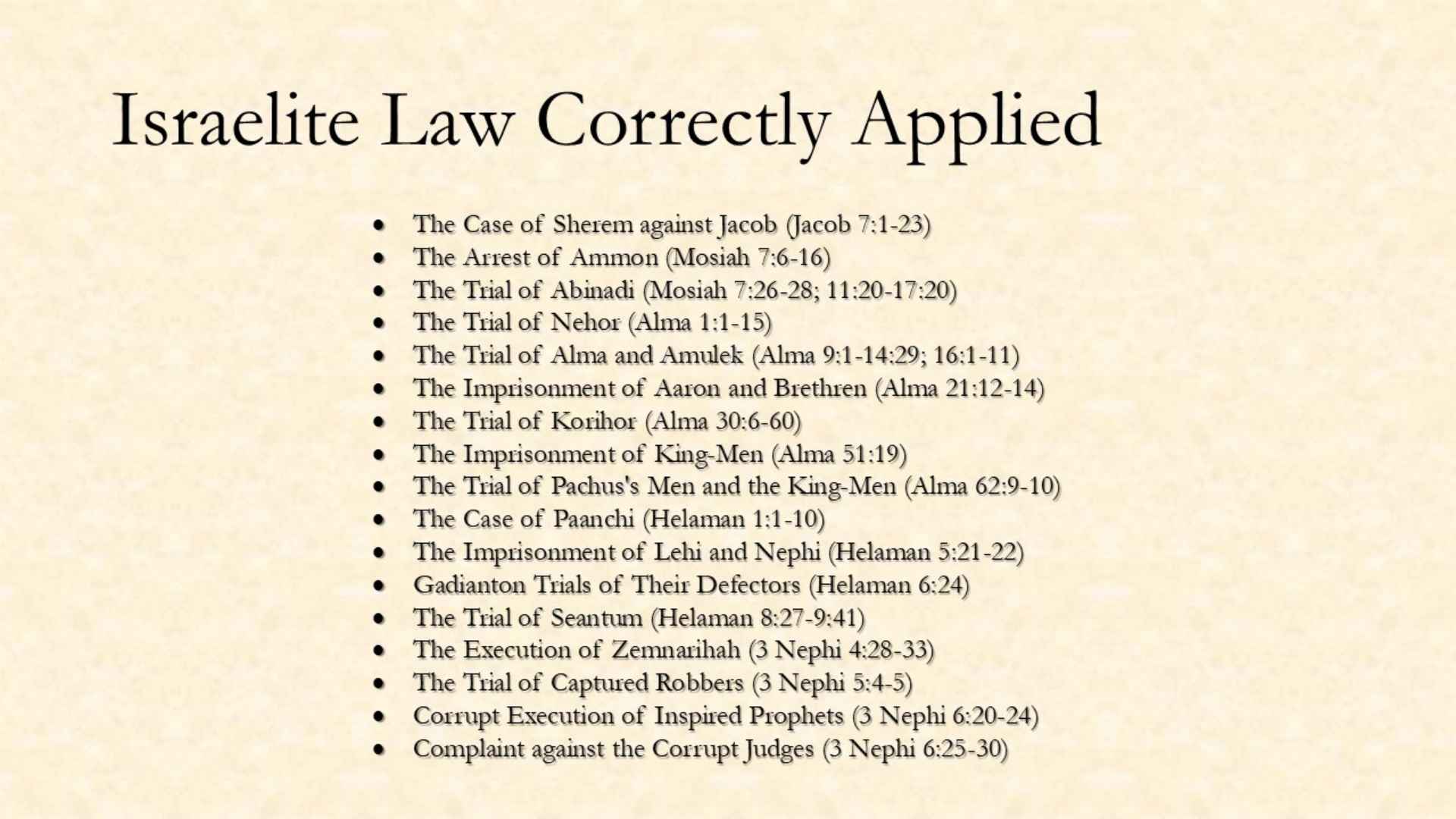
A second example is Jack Welch has written an entire book on this, but the Israelite law is correctly applied throughout the Book of Mormon. And here’s over a dozen of these cases. Again, you’d have to have some pretty intense understanding of the Bible or some external source to be able to portray these accurately.
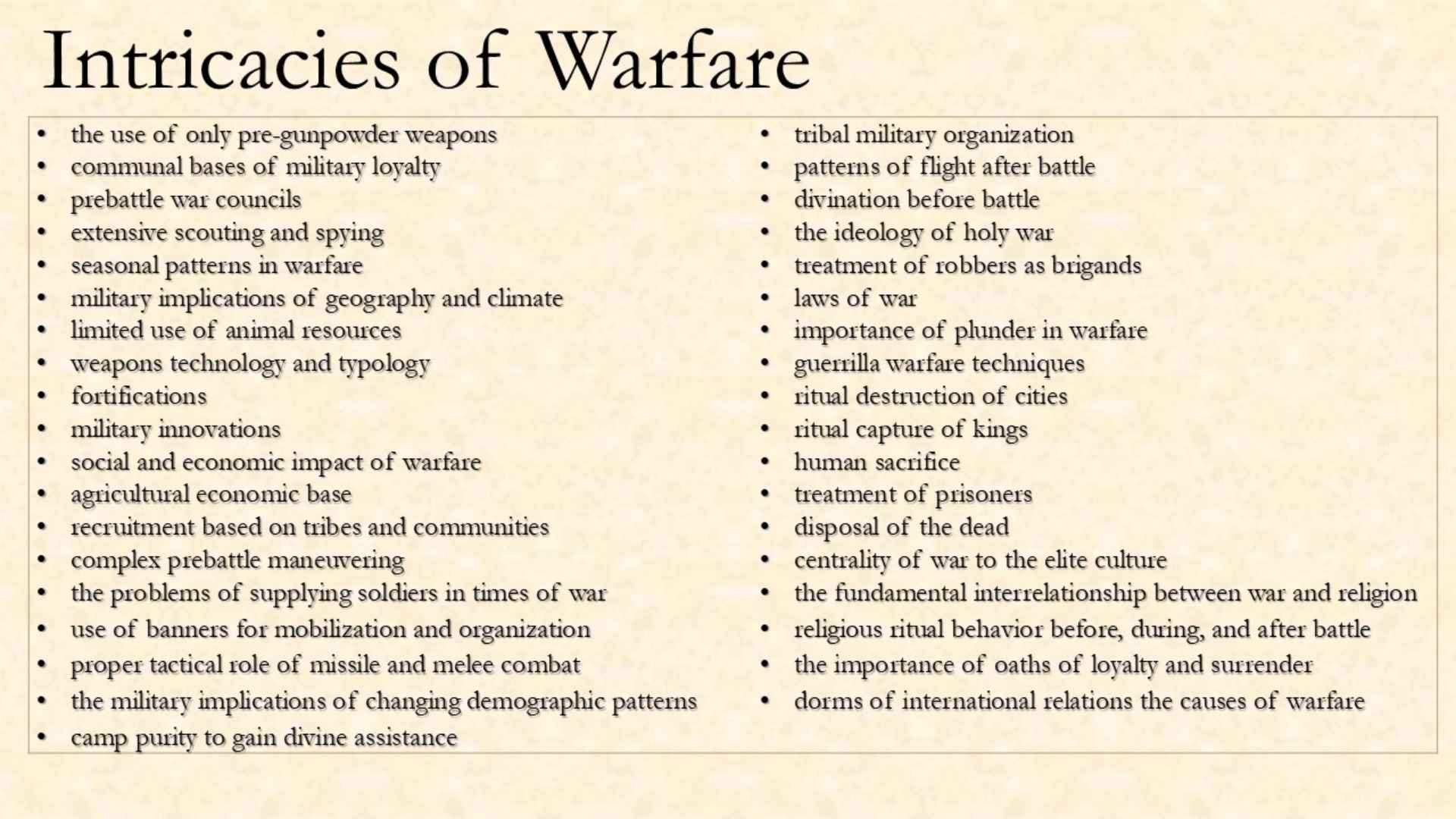
And then lastly, this from Bill Hamlin: the intricacies of warfare as they are explained in the Book of Mormon give you the feeling that the writer is actually experienced in warfare. They’re highly nuanced things that somebody just reading books or imagining may not actually get to that level of detail.
So, here we have all of the literary characteristics of the Book of Mormon. We know that they all came out of Joseph’s mouth. That’s just a stream of words that went straight to the printer.
Reverse Engineering The Book of Mormon
As we ask the question, well, what kind of preparations and what kind of skills would be needed? Now, to answer that question, we get to go into something that I think is a lot of fun.
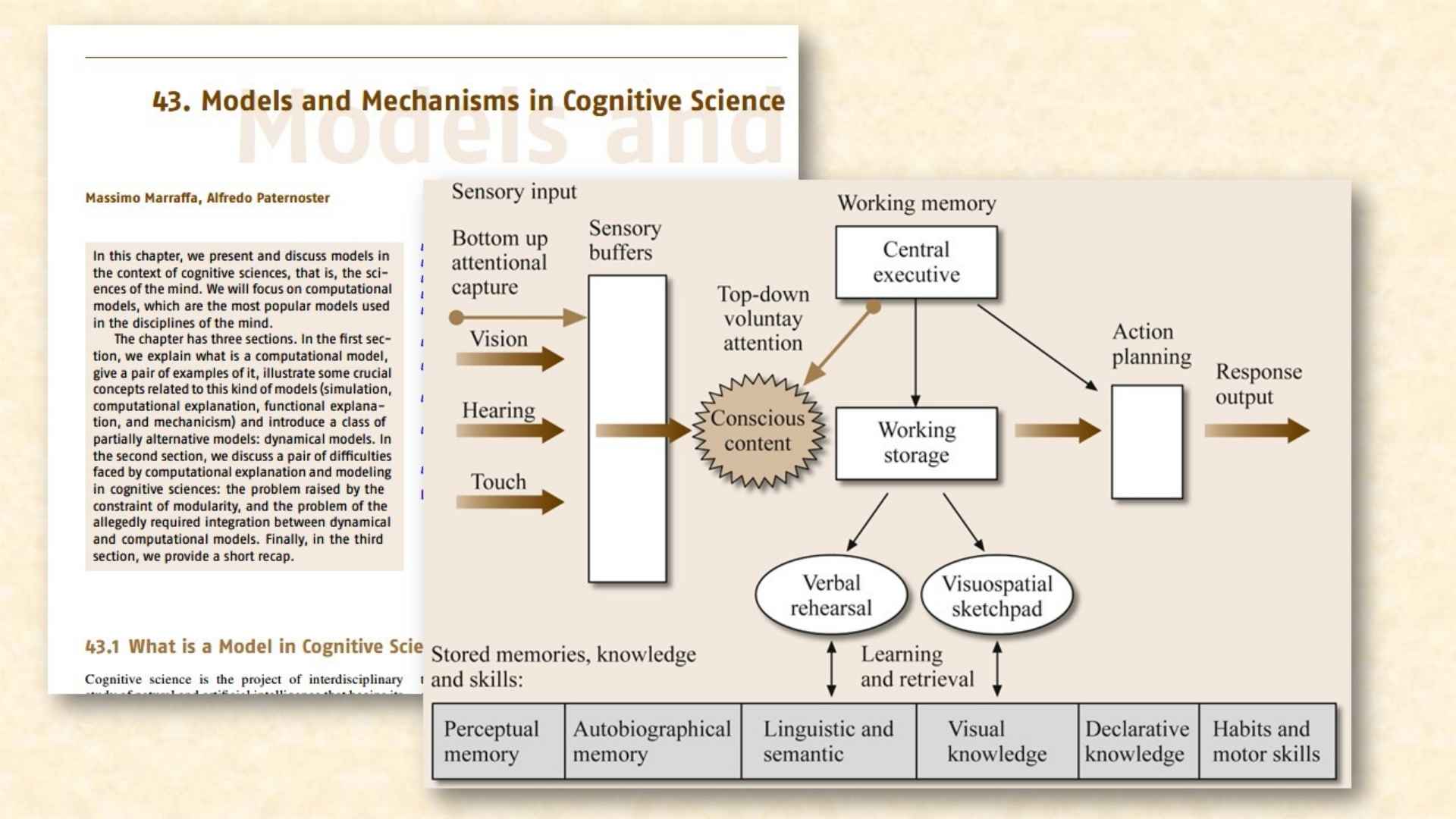
I hope it doesn’t bore you, but it has to do with modeling the cognitive functions of the human mind.
And this is one of my favorites; it’s about 10 years old, but lots of different models have been promoted over the past.
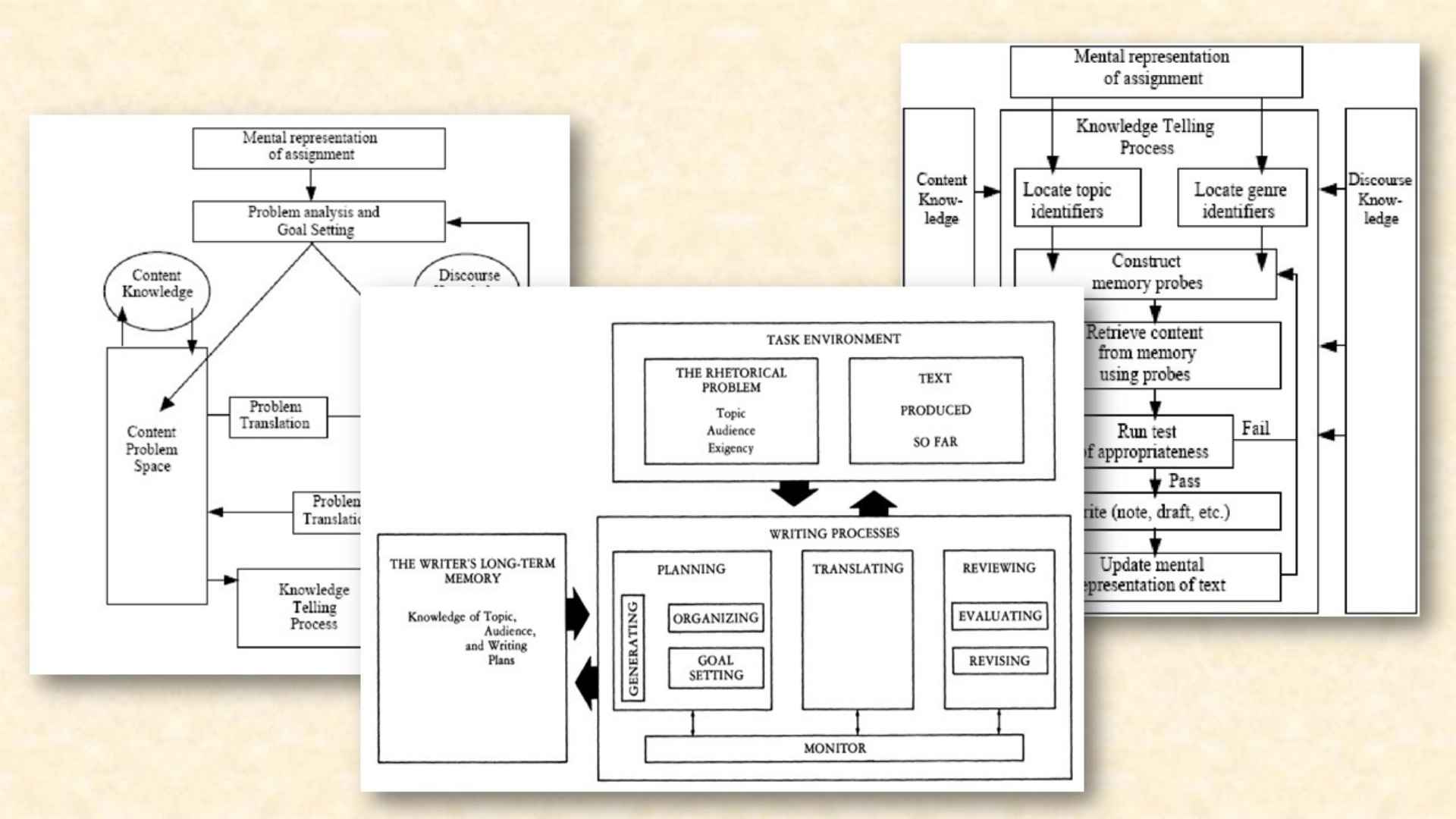
The one here in the middle is what’s going on in the mind of a creative writer of a long article or book. And lots of science actually goes into making these drawings and writing the articles that are associated with them.
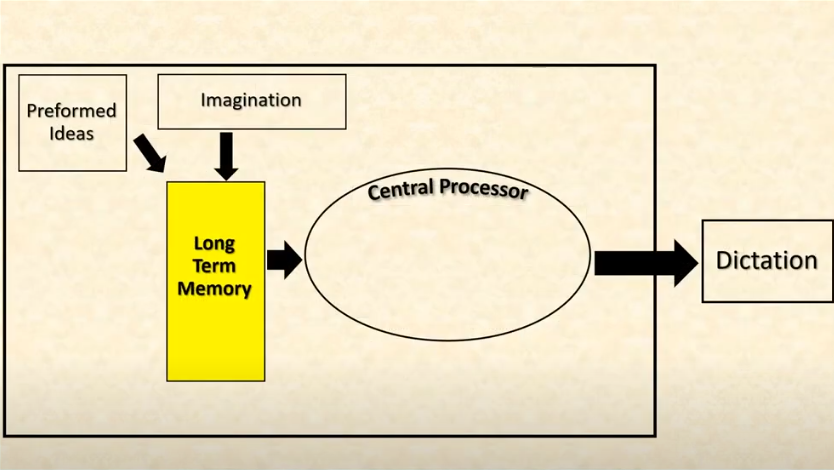
Intense Preparations
If we try to model what’s going on inside Joseph Smith’s mind or inside your mind or the person you commissioned to repeat what Joseph did, we find that there’s actually going to be some pretty intense preparations.
Now, we’ve alluded to this already, but if you’re going to make up 170 new proper nouns, you’re probably going to want to do that ahead of time and then put them in long-term memory.
There probably isn’t bandwidth to do this in real-time, as we’re going to see. If you’re going to do 208 name characters, maybe want to do profiles for each one of them. You know when, where, and what are they going to be doing in there, and get that in your memory as well.
And then the social-geographic groups: why are they there? How do they interact? How do they function in the text? Put them in your long-term memory.
Further Preparation
The names for God, kind of an unexpected thing with your primary protagonist. You’re going to create this emphasis on this being by using lots of different ways to refer to him or her.
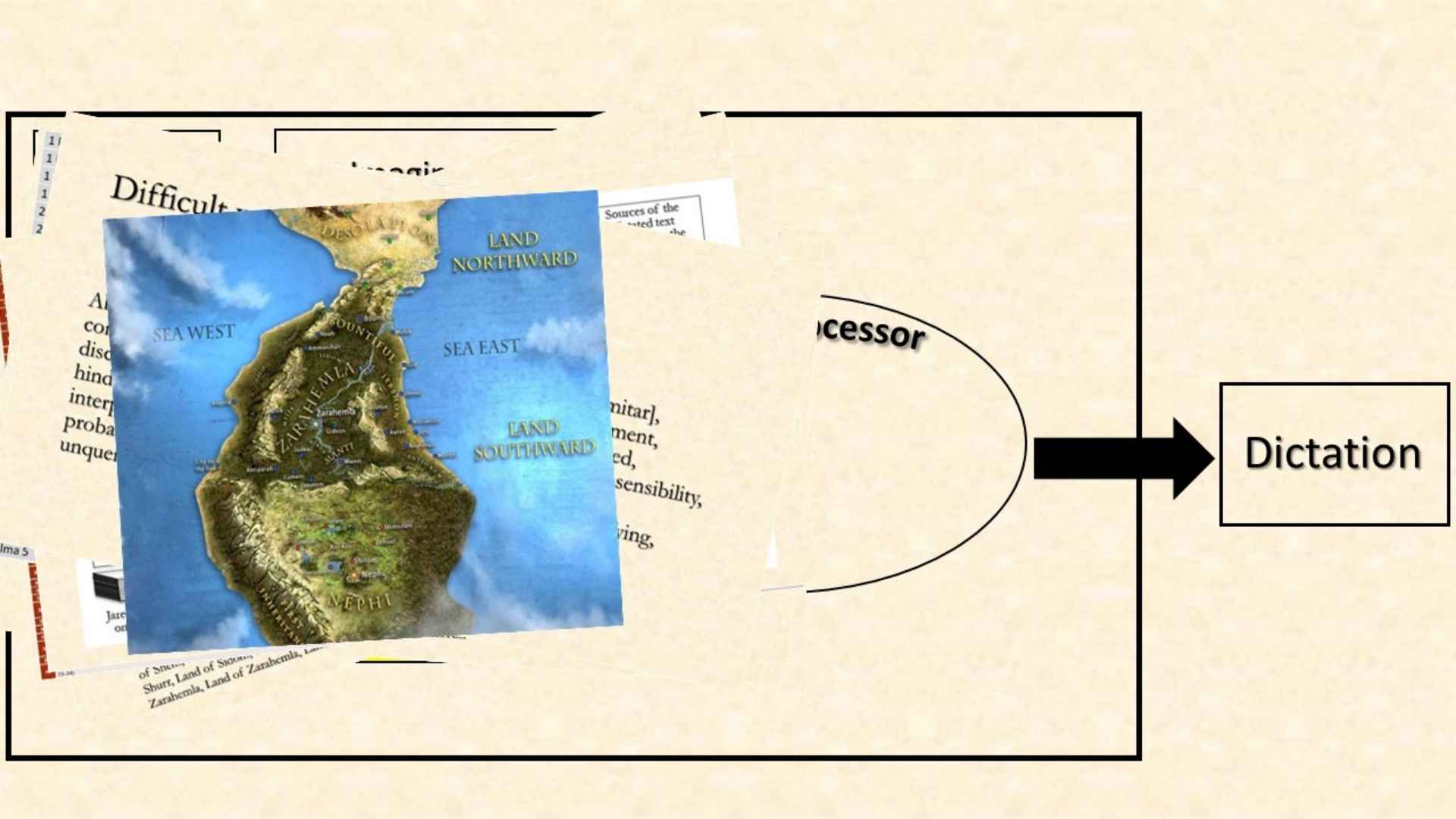
The maps – make sure you do the research for the geography that does exist, and besides the stuff that you’re making up, make sure you create all of these places and get them all put into your memory, and the whole 3D version of this so that as you’re dictating, you know where you are at all times.
And then there’s the 77 storylines. Again, probably better put them in there, get them in your memory too because doing that in real time is going to be tough. The sermons, same thing.
And then any other complex aspect of the text that you want to include, make sure that you anticipate that and get that well entrenched in your memory so you can refer to it without making mistakes as you’re dictating.
And then don’t forget about those difficult words. Write your vocabulary sentences so you can say those and use those correctly.
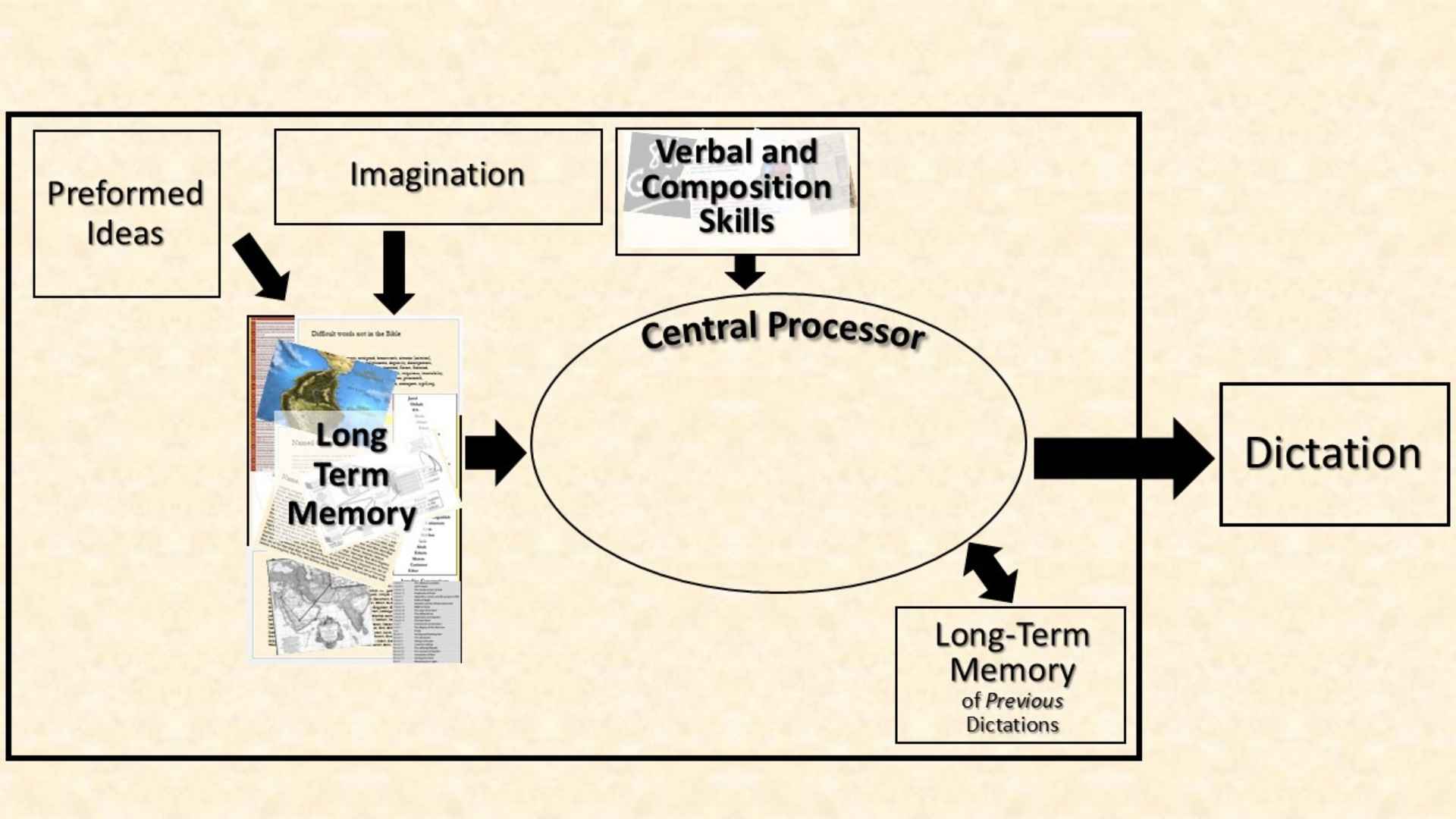
Now with those preparations, that’s only kind of the beginning. I think the work actually gets harder from here on out because there are some verbal and composition skills that you’re going to have to acquire.
We talked about dictating at the eighth-grade level. That’s not college level though some of the algorithms say the Book of Mormon is a college-level text, but at least eighth grade.
And then you’ve got to do it in another dialect, so practice that. If you’re not going to do it in Early English, you could do it in Southern or something else but just choose a dialect and be very consistent as you’re speaking.
Complicated Literary Tools
We have the different voices of the authors that you have to keep in mind as you’re dictating so you don’t make Mormon sound like Nephi right in the middle of a span of Nephi speaking.
And then the chiasms, and you know a lot of talk is about chiasms—are these evidence of antiquity? And it’s a discussion that I’m personally not too interested in because for me, the most amazing thing about the chiasms in the Book of Mormon is that Joseph Smith was able to format these very long sections of sentences and phrases, and he did it all in real time. Now that’s a skill, as we mentioned, you’re going to have to develop, and I don’t exactly know how you’re going to do that because it involves moving around phrases and sentences and keeping all of these very broad, long-worded strings together and keeping them straight and doing it seamlessly throughout the dictation.
We’ve got the alternates as well, hundreds of those, and then the intertextuality. That’s probably easy—just memorize whatever text the Bible or Quran or whatever text you want to be similar to. If you have it truly memorized, it’ll just flow out of your mouth. Again, there’s no evidence Joseph did that, but this is a way we could reproduce that element in your dictated text.
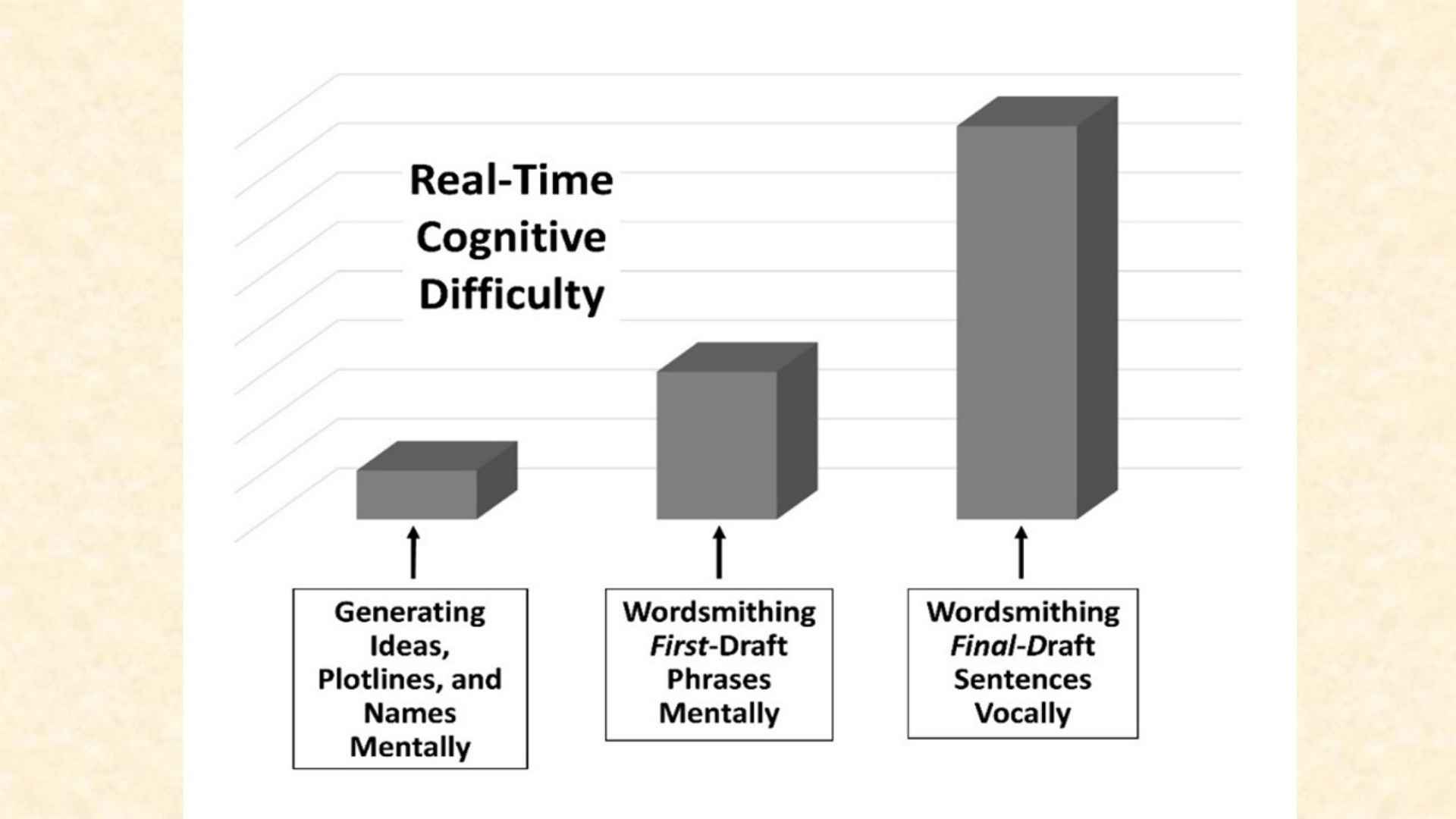
Challenges
Now, we’ve talked about these two challenges. There’s a third one that I think is even greater than anything that Joseph Smith had to do and that you will have to do as you’re going to reverse engineer the text of the Book of Mormon.
And what it is is coming up with a few plot lines and names that’s tough but it’s doable. But in real-time dictating a first draft phrase that is also WordSmith as a final draft, to me, that is going to demand a lot more cognitive effort than anything else that Joseph Smith did or that you will have to do.
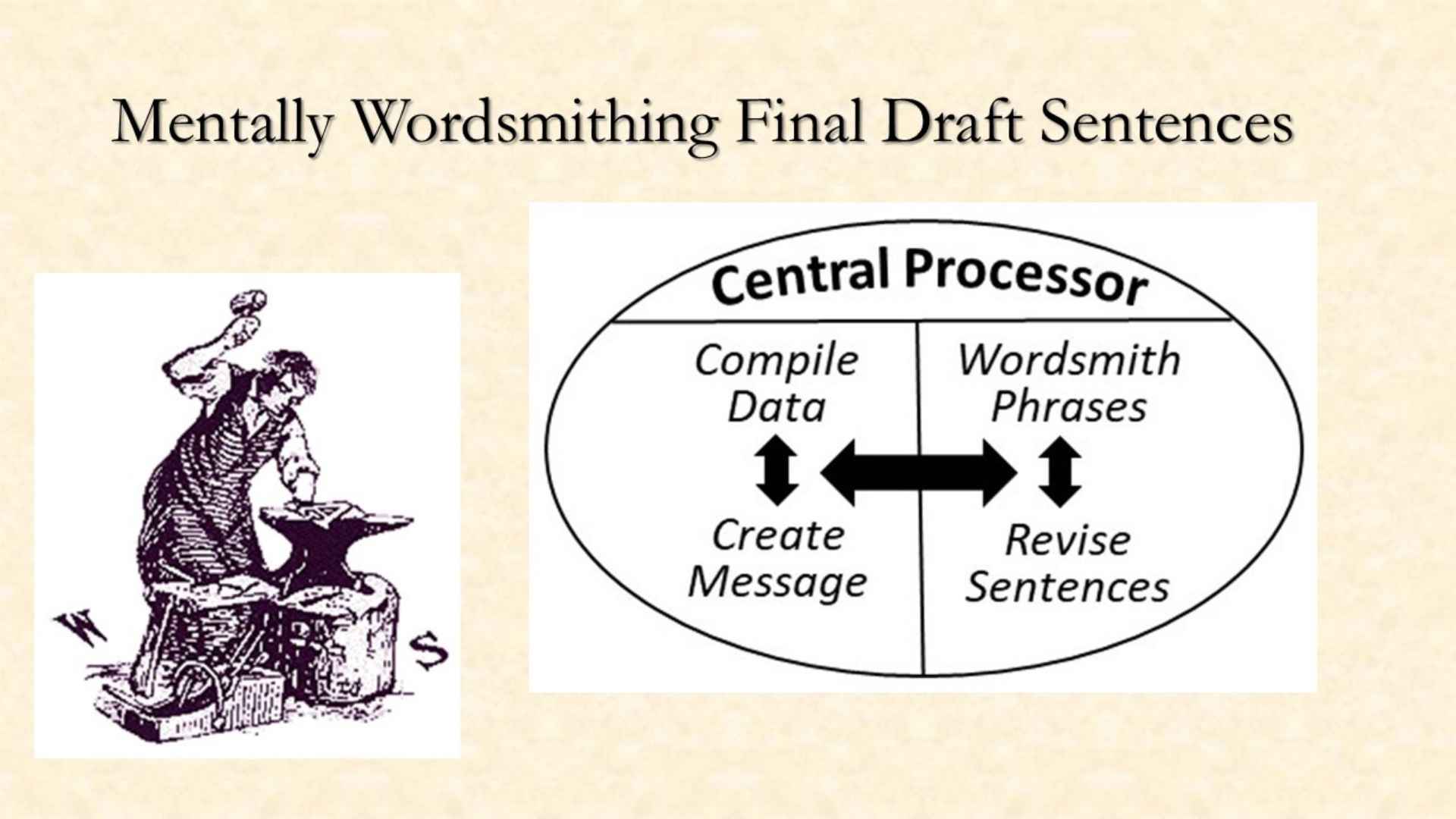
Wordsmithing
Let’s look at that for just a second. While we’re WordSmithing final draft sentences, our brains are compiling the data and they’re creating a pre-language message. And then they’re WordSmithing a phrase that’s kind of a first draft, and then for Joseph to be able to do that final draft, all in his head, is representing a pretty grand, I guess you could say, intellectual function.
So, the skill to dictate a first oral draft that is the final draft quality to me is the most difficult thing Joseph Smith ever did if all the things he did were using his natural abilities. For those who think Joseph’s a fraud and that he was just faking it, then I would argue that throughout his whole life, this was the most difficult thing that he ever did, was consistently through 7,000 very long sentences dictating the sentences that were so highly refined he didn’t have to resequence a single sentence to keep this very coherent and complex text moving forward for his readers.
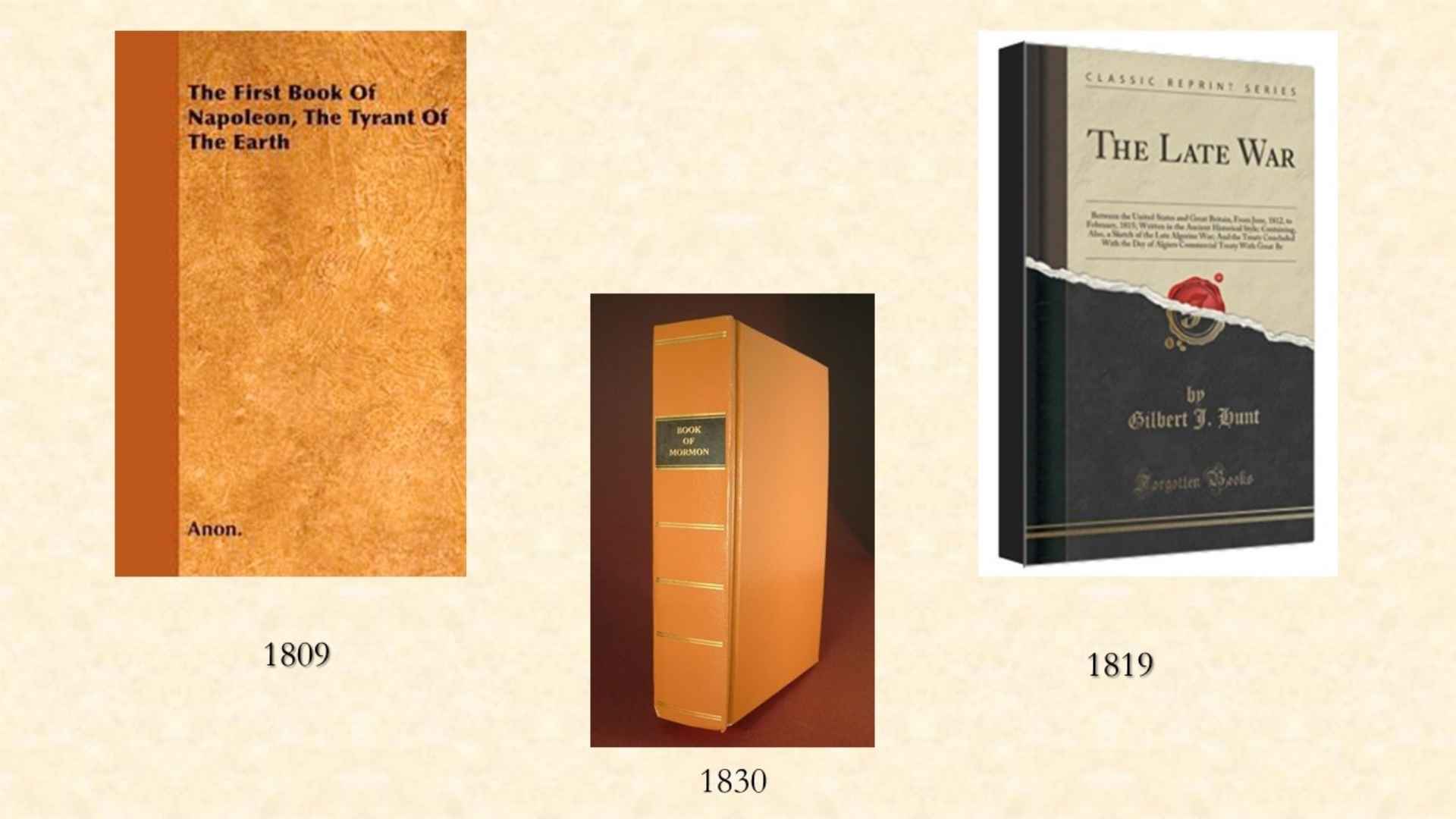
The Late War
Now, I just threw this slide in here. Can we just stop talking about The Late War? I mean, how could reading a book like The Late War, Napoleon’s first book, possibly help Joseph Smith with the heaviest lifting of the dictation? There’s a leap of logic in there by our critics that we just need to expose for what it is. There’s just no way that the most difficult part of the dictation was going to be assisted in any way by so many of the theories that have been put forth.
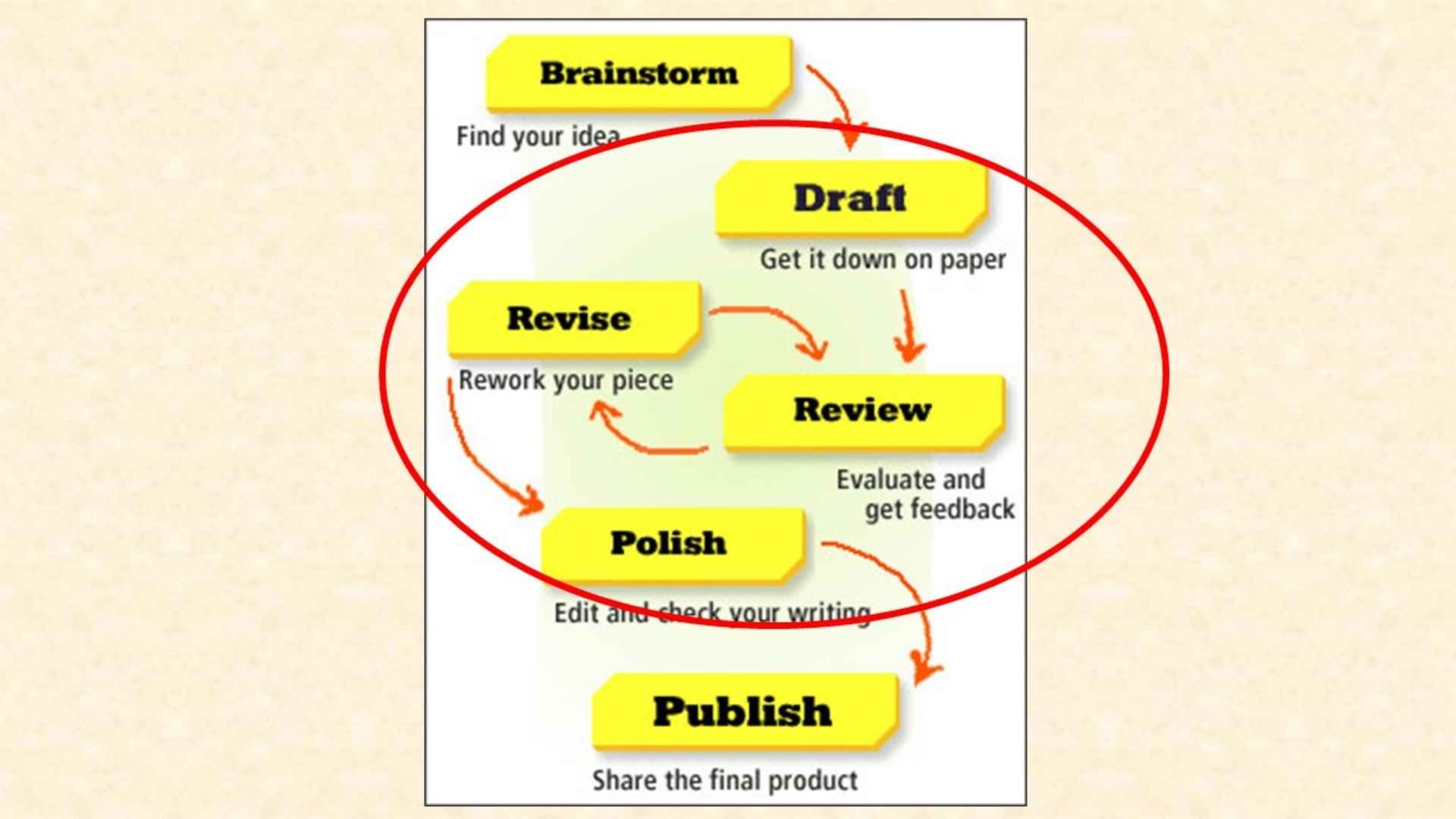
And I put this slide in here too, notice that you start with an idea that you brainstorm. The bottom one is you publish it, but Joseph Smith did all of these things in his head. That’s the skill that you have to develop in order to repeat and to reverse engineer the Book of Mormon.
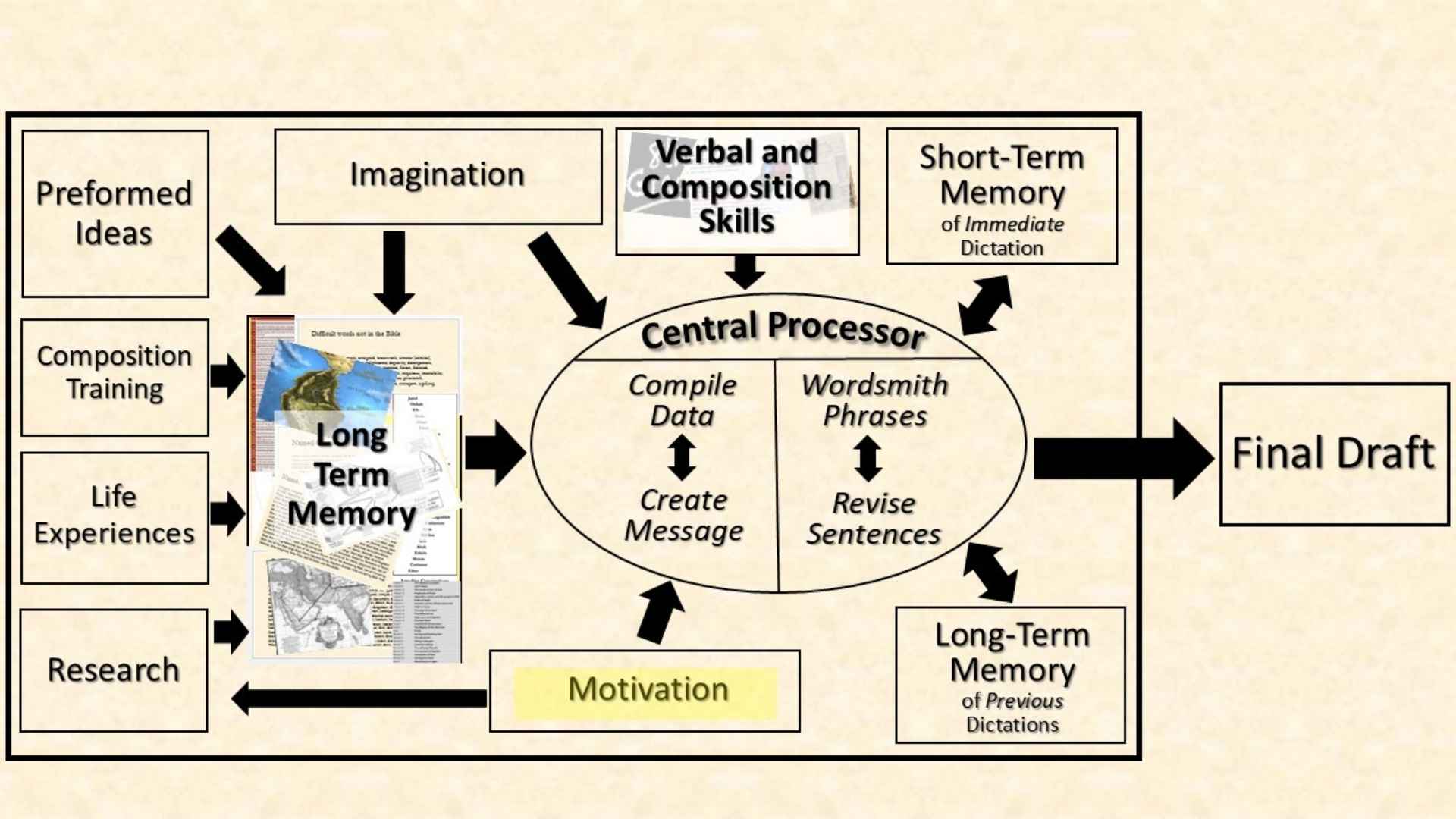
Dictating Something so Complex
This is a completed version, this is one I have come up with to try to model what’s going on inside Joseph Smith’s head or in the head of somebody who’s dictating a long complex book. And we haven’t even talked about motivation; what would make someone want to go through all of this work, again, is a discussion for another day.
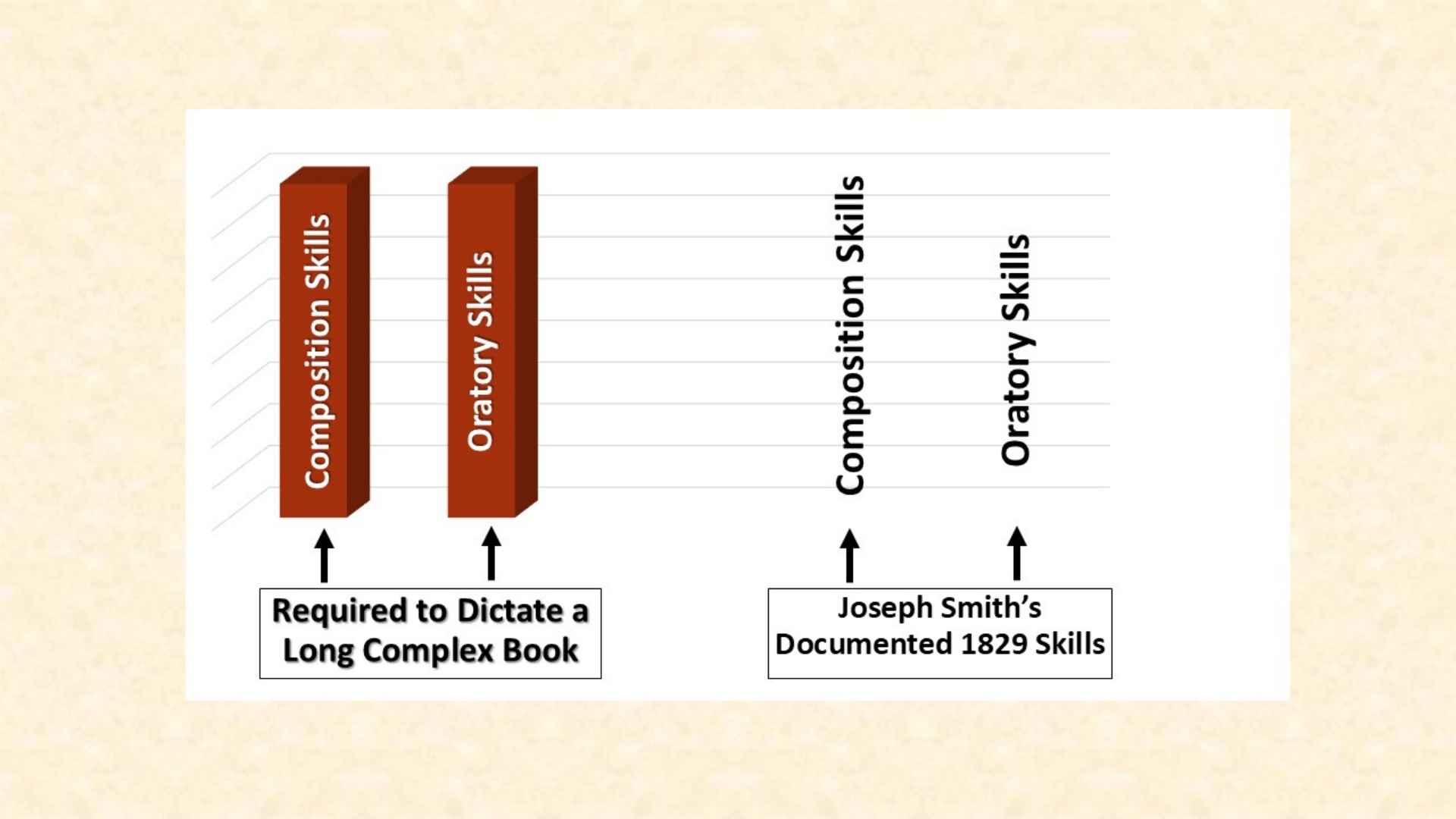
So, you can’t quantitate with numbers how hard it would be, but I am arguing that the composition skills and the oratory skills to dictate a long complex book like the Book of Mormon would be fairly high.
So let’s take a minute and look at what Joseph Smith’s composition skills were.
Natural Abilities
You have this on the handout; I’m just going to kind of summarize. Now please don’t think that I’m saying Joseph wasn’t intelligent. Joseph Smith was intelligent, but I’m saying he wasn’t intelligent enough to dictate the Book of Mormon using his natural abilities. Joseph said that he was just taught in arithmetic and writing and had a very limited education, and this is corroborated by multiple other witnesses.
And it’s an important point that district schools in upstate New York in the early 1820s did not teach composition. Joseph Smith never wrote out a five-page story and handed it to the teacher for the teacher to correct and then hand back. They didn’t have paper, they didn’t have inkwells; they didn’t even have slates at that point, and they didn’t have blackboards. It was all oration and standing up and reading and learning from books by repeating what’s in those books.
We have several people talking about Joseph. Isaac Hale mentioned that he was not very well educated. John Gilbert, who typeset the Book of Mormon, was asked, “Could these guys have been the authors of this?” He said, “There’s just no way,” and that they didn’t know anything about punctuation.”
In Palmyra, Palmer Tucker said that Joseph read dime novels; well, there you’d get a little bit of experience with composition, I guess, or at least how books are put together. But Palmer Tucker also said that Joseph was uneducated and ignorant.
Abilities
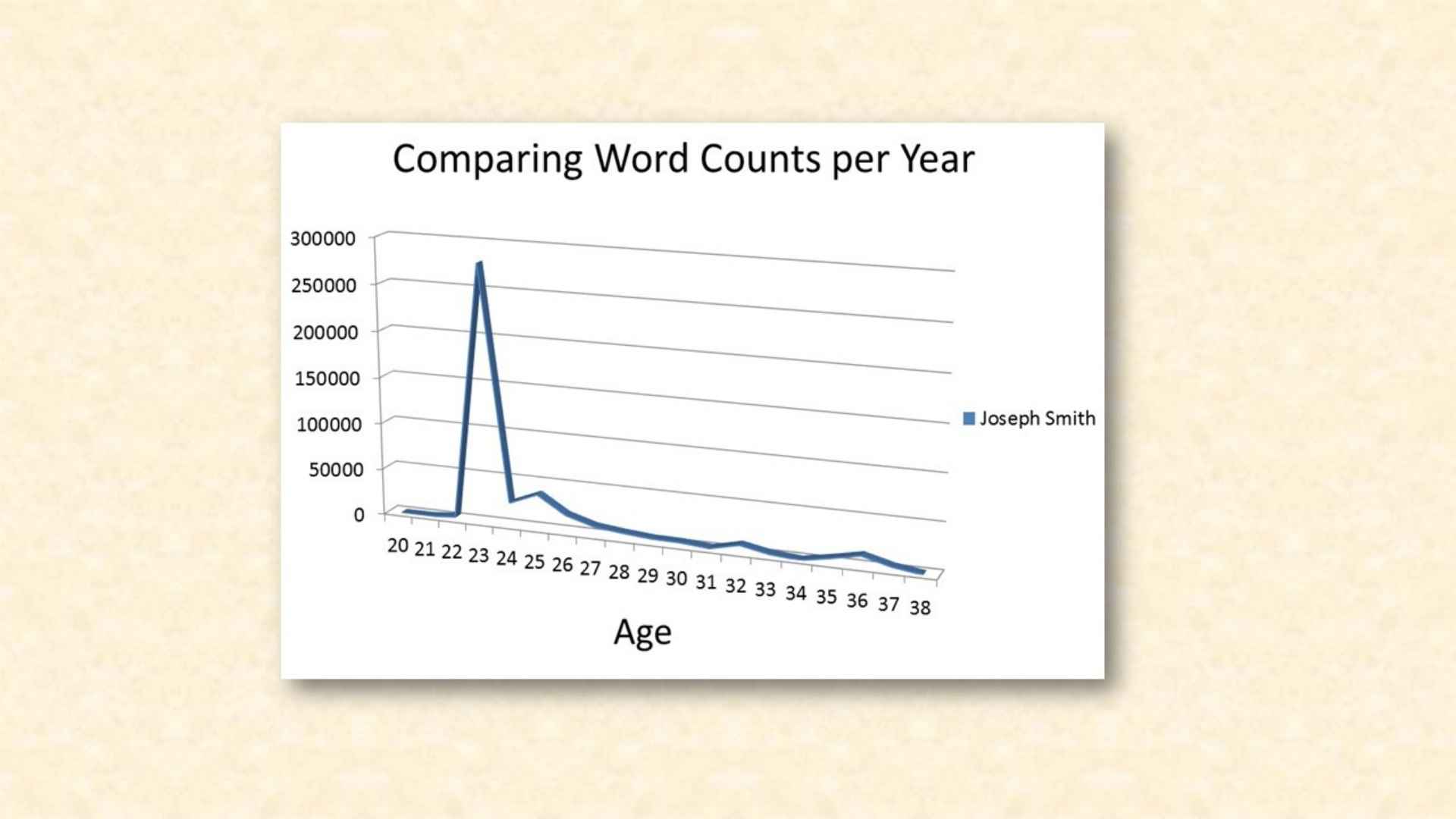
In 1830, the Palmyra Reflector reported that Joseph Smith’s mental powers appear to be extremely limited, and from the small opportunity that he had at school, he made little or no proficiency. Joseph’s mother Lucy said that he seemed much less inclined to the perusal of books than any of the other children.
And then his younger brother William, who knew Joseph obviously very well, said that Joseph was illiterate to some extent as admitted, but that he was entirely unlettered is a mistake. These aren’t cherry-picked out of the historical record. Go ahead and find your own, but there’s no one who knew Joseph Smith who thought he had the ability to write the Book of Mormon.
The Book of Mormon just comes out of the blue; we think Joseph may have written a couple of letters and he dictated a few revelations before the Book of Mormon recitation, but it really is something that has no preliminary training or education that we can identify in the historical record.
Oratory Skills
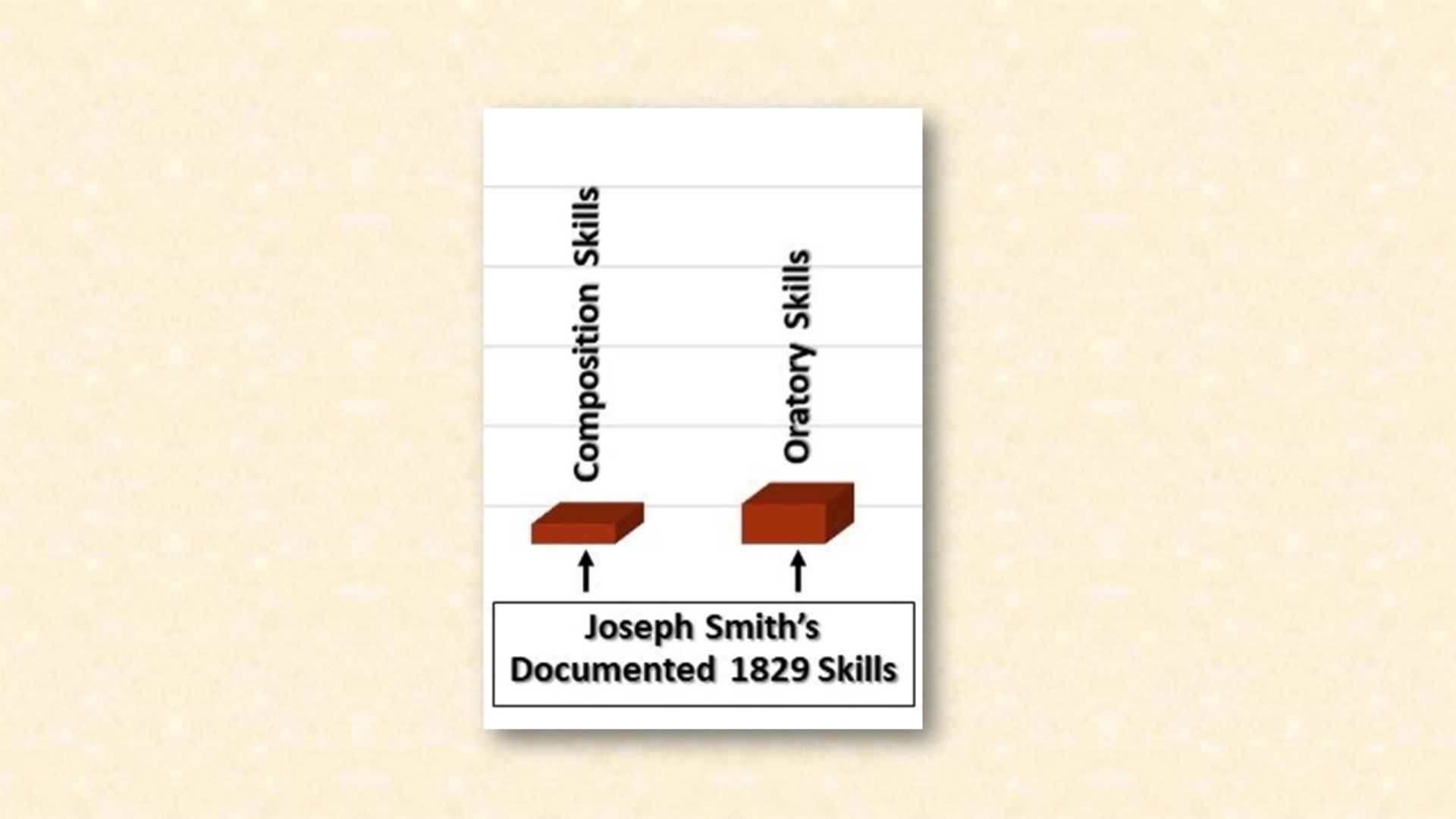
What about Joseph’s oratory skills? Lucy Max Smith mentioned that in 1823, Joseph would occasionally give us some of the most amusing recitals that could be imagined. Now the problem is that nobody else remembered these, and some of Lucy’s details are an error, but there’s just no one saying that I remember Joseph practicing storytelling or something like this.
And then we do have Orsimus Turner, who is often quoted by the skeptics. Orsimus Turner remembers Joseph Smith participating in the Juvenile Debate Club and as a Methodist exhorter. One Ph.D. dissertation mentioned his involvement with the debate club almost a hundred times; that’s how inflated it became. The same author wrote a book where he talked about the Methodist exhorting 20 times about all the great experience Joseph would get, which is all a fantasy; it’s all speculation. And the sad thing is in neither the dissertation nor the book does the author tell us what Turner said about Joseph’s intellect. He said he was possessed of less than ordinary intellect. So talking about him as a great debater or something is abusing the quotes from Orsimus Turner.
Richard Bushman said that Joseph is not known to have preached to a sermon before the Church is organized in 1830; he had no reputation as a preacher.
So I rate Joseph Smith’s composition skills and oratory skills as less, not very much.
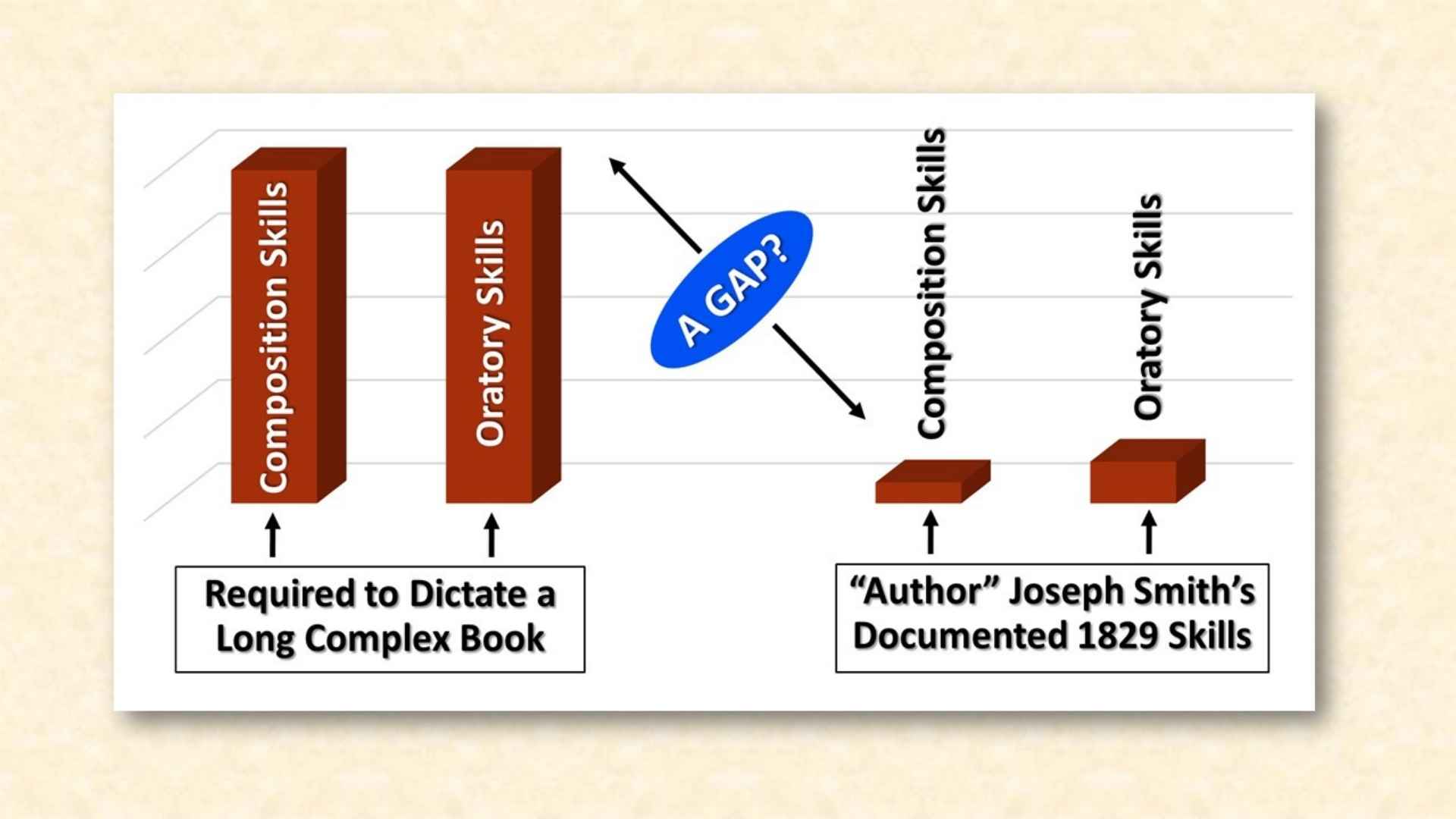
A Gap
And so as we look back on the gap between these two, I think we’re identifying something that is real, and that I hope in the future members and the critics we can all just come to say, yeah, there’s a gap there. And then maybe we can start talking about what does that mean?
This is my friend Garrett Dirkmaat, and he said:
Academics when they’re writing about the Book of Mormon today, most of them simply let the question of text creation pass without comment. You know, they’ll say Joseph claimed he produced the book, and because there’s not a good argument to make, they just don’t make one at all.”
In the handout, I have given you a list of some of the theories. None of these actually gives us any kind of explanation for how Joseph would have created the Book of Mormon, and we won’t talk about those now, but I do think the gap is something that’s real and something that I hope from here on out we can start allowing it to be useful to us.
God of the Gaps
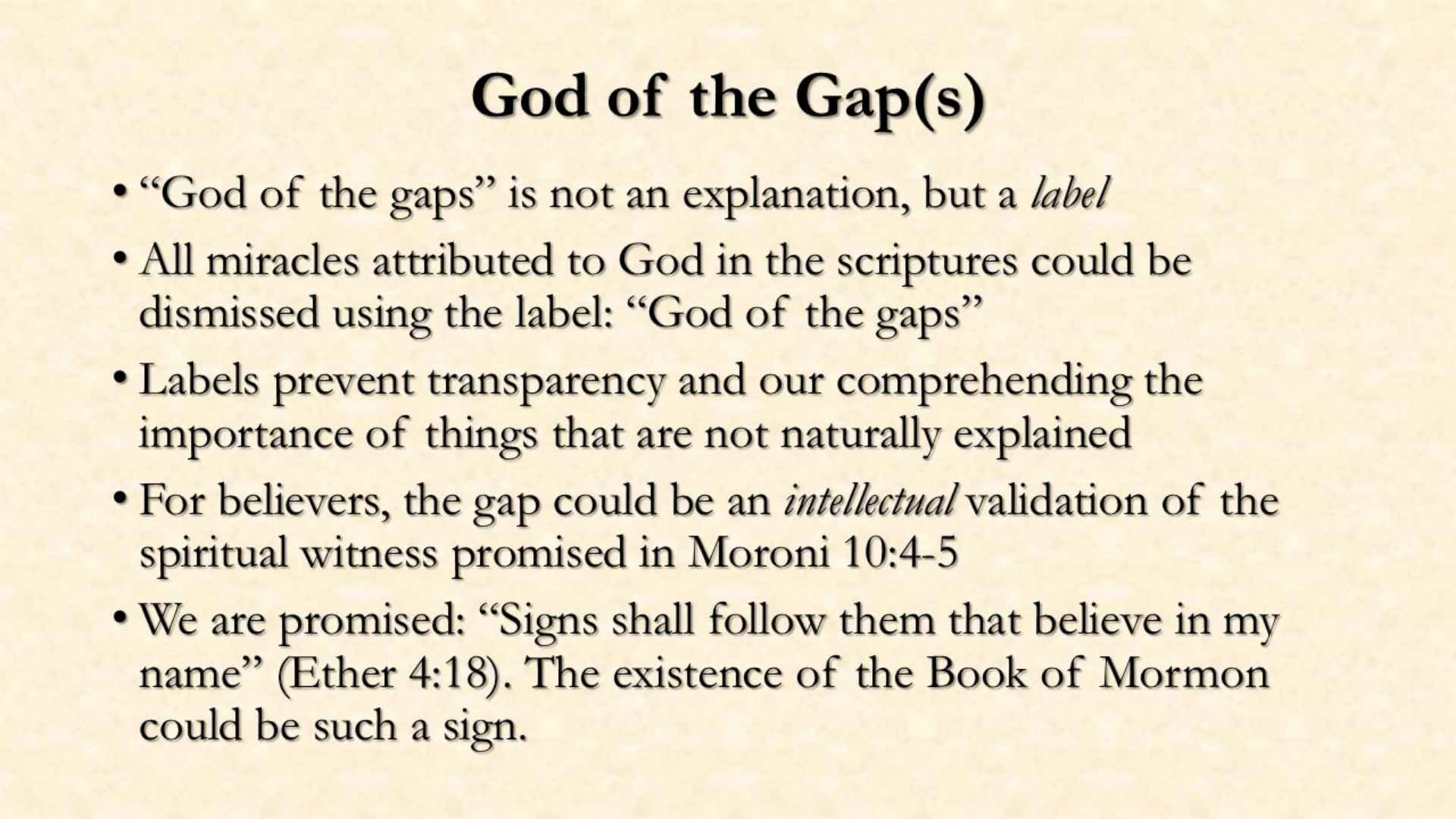
There are people that are going to excuse it as “God of the Gaps,” and the way that works is that the God of the Gaps is a label that people will put on things and say,
Well, science hasn’t filled in that gap yet, but they will. So why don’t we just play like it’s already filled in?”
That’s kind of what putting this label on, and these people have great faith that the gap will be filled in by science. So they kind of want us to just dismiss the gap altogether because they’re sure it will be filled in.
It’s a label; it’s not an explanation, and all of the miracles attributed to God in the scriptures could be dismissed using the label God of the Gaps. But the label prevents transparency in our comprehending the importance of things that are not naturally explained.
For believers, a gap could be an intellectual validation of the spiritual witness promised in Moroni. We are promised “Signs shall follow them that believe in my name.” The existence of the Book of Mormon could be such a sign.
In Closing
Now just in closing, I think we’ve all had family or friends, loved ones who have recently left the faith. They’ve been stalwart, and then they just leave, and my experience is that as they leave, they usually just give up the supernatural world almost totally. The natural world becomes their only world, and they may retain some belief in the supernatural, but it isn’t a supernatural that’s going to get involved in their lives or demand anything, as long as they’re not ax murderers, that kind of a thing.
And the reason that I mention this is that I think the origin of the Book of Mormon is a pretty strong evidence of the existence of the supernatural. I don’t think the natural world is ever going to deliver a plausible explanation for how Joseph Smith created that stream of words. In fact, my belief that it’s pretty strong evidence, I’m not alone.
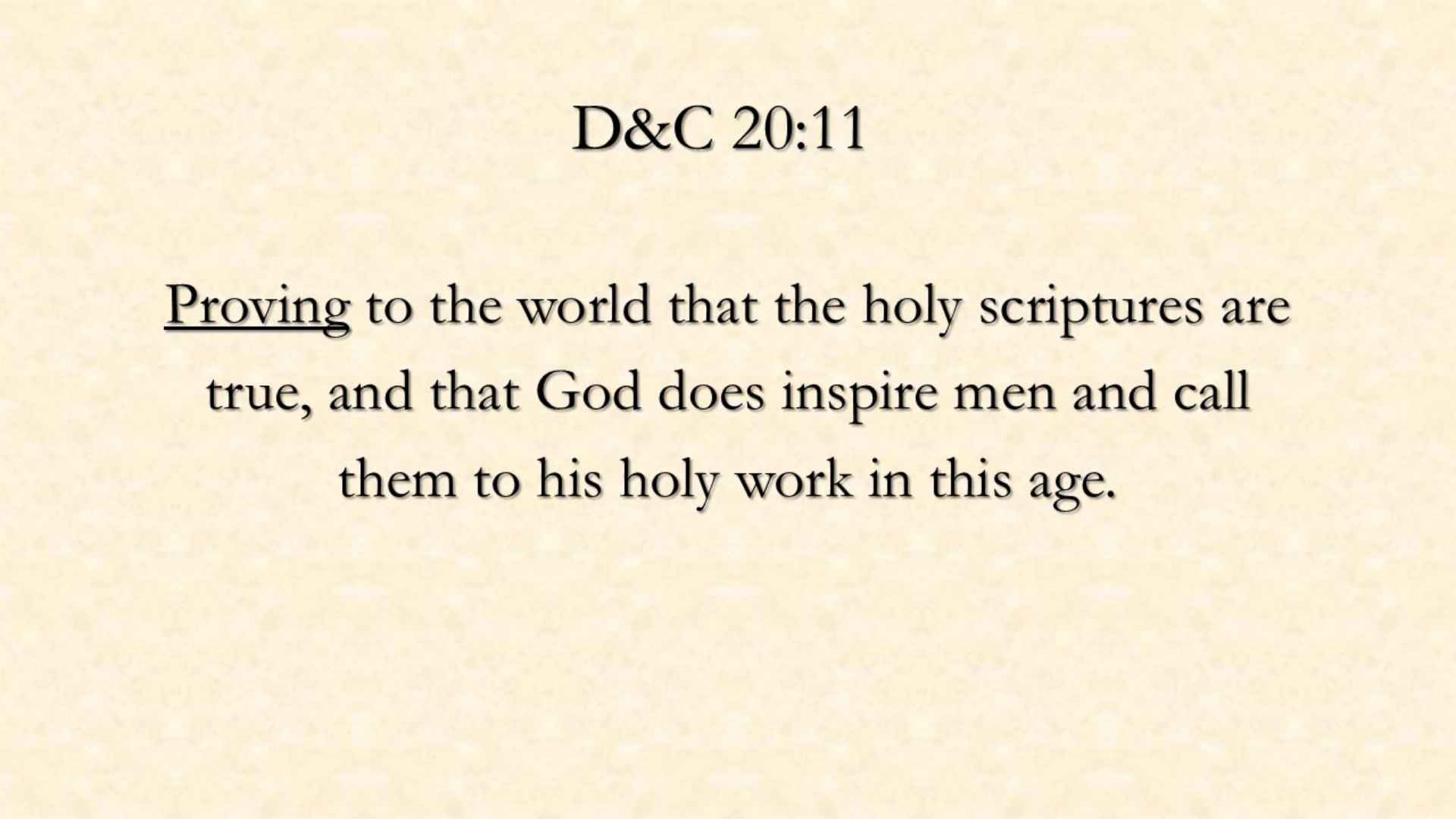
The Book of Mormon
In the Doctrine and Covenants section 20 verses 6 through 10 the Lord reviews the coming forth of the Book of Mormon and then he says this:
Proving to the world that the holy scriptures are true and that God does inspire men and call them to his holy work in this age.”
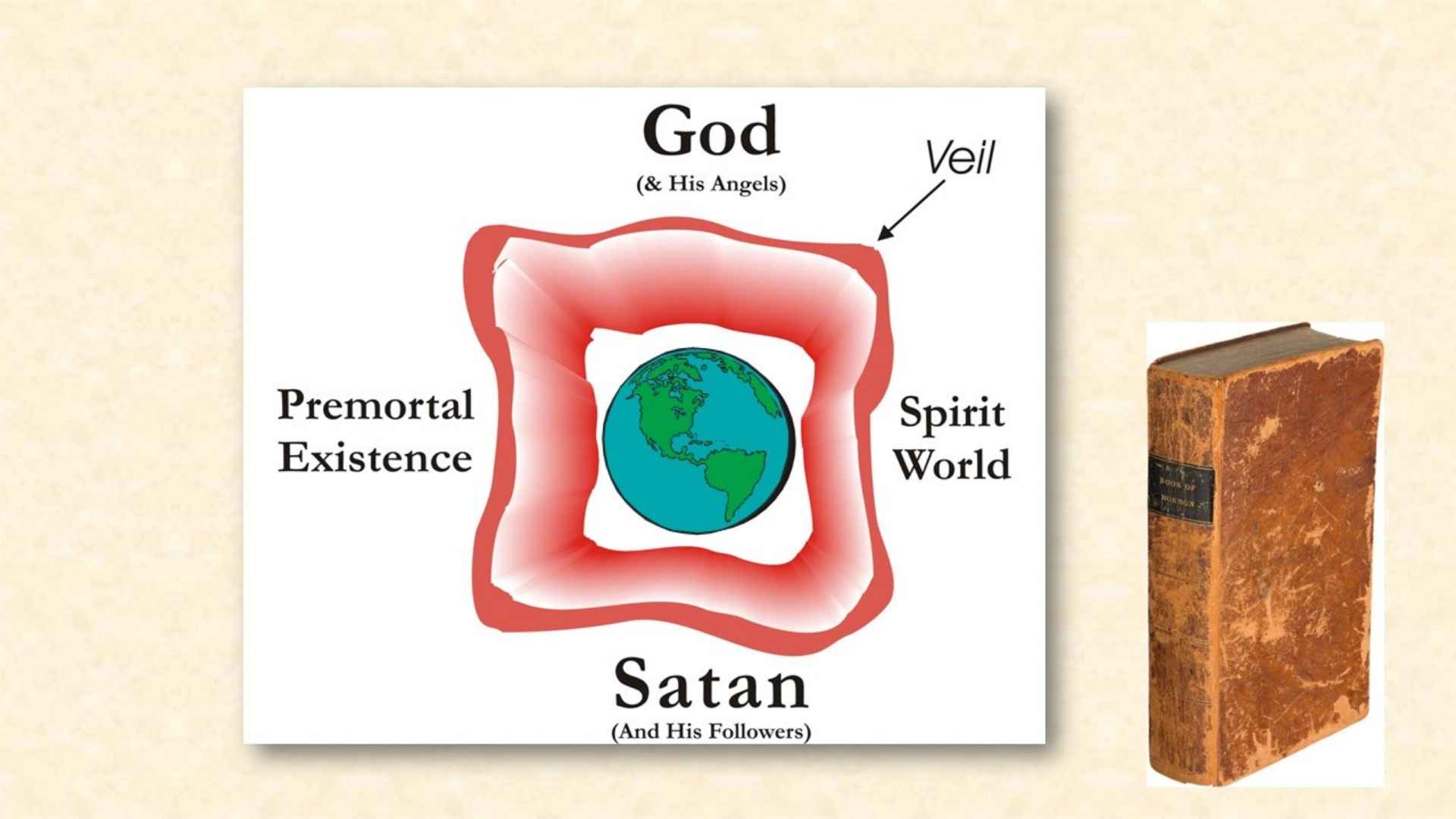
Again, the reason I mention that is as we look at all of the different supernaturalisms, if somebody wants to believe in the supernatural, there are all kinds of flavors, right? There’s religions, cosmologies, there’s mysticisms.
But then I think the best description of the supernatural is what we find inside the Book of Mormon. It may not be complete, but I believe that it is the best description because it tells us that there is a God, and life has a purpose. And I also think it’s the best because I believe it is true. Thank you.
Scott Gordon:
Well, thank you very much. As always your presentation was wonderful and informative and thought-provoking as well. I’m from an area that grows olives; that’s one of the major crops in our area. And so, I’ve always been fascinated by the story of the olive trees growing in the vineyards of olive trees in the Book of Mormon. Growing up, I was saying, like, olive trees don’t grow in vineyards. Well, it turns out they do. They typically would put them together, the olive trees and the vineyards, because they grew in the same kind of soil, and it protected the olives from wind and such. And I thought, just how did Joseph Smith know that that was a farming practice of olives?
But anyway, one person wants to get your presentation, I’m sure we can arrange that. In speaking of names, you listed a number of characters that were not used to start names with. Is there any historical significance to this in regards to the Near Eastern languages?
Brian Hales:
I am not an expert; I wish Dan had come up, he could probably tell us about it. There’s lots that’s written, and I just have to plead that I’m ignorant exactly of that. And you probably noticed that I am grabbing from research from lots and lots of other people. In an earlier version, I was giving the names of everybody, and I had to shorten it and then shorten and shorten it. So I wasn’t able to share that, but I believe there is a tie, but I haven’t gotten into that level of detail.
Scott Gordon:
Have you found this line of argumentation, the gap between Joseph and the Book of Mormon, effective with people who are going through a faith crisis?
Brian Hales:
Do you know this idea came to me when I was writing the FAIR Mormon blog for D&C 20. I was grateful for that assignment because it was the D&C 20 scripture that I quoted. And so it’s a new idea to me, and time hasn’t tested it. So whether you’re, maybe impressed is the wrong word, but whether you find it to be a valid way to look at this, if it’s an intellectual validation of our spiritual testimonies, remains to be seen. I don’t think it’s going to influence unbelievers. I have no belief that somebody who’s left the Church, you can say “See we got the proof of the supernatural; Joseph Smith couldn’t have done this.” That’s not it; it’s a sign for those of us who believe. It’s something else we can put into our testimony because we are bombarded if not daily, weekly, with intellectual reasons to disbelieve.
And I was thinking on this. When I was a kid in Logan, Utah, there was a reverend who every week would take out a little area of the Herald Journal and he would write anti-Mormon things in there. And it really bothered me. But as a kid, that was the only intellectual assault I ever experienced on my belief. Well, we’re getting this now every single day. And personally, I wouldn’t be surprised if God wanted to give us some intellectual reasons to disbelieve the critics and hang on to our testimonies, even if it’s not all spiritual.
Scott Gordon:
Well we really appreciate all the work you’ve done; you’ve done seminal work in the polygamy area, in the fundamentalist Mormon area, in the automatic writing area the last time you came in, and now in this area. And we really appreciate everything you’ve done for the members of the Church. Thank you very much.
Brian Hales:
Thank you, Scott. Thanks to FAIR.
coming soon…
Was Joseph Smith capable of writing the Book of Mormon?
Historical records suggest he lacked the literary and oratory skills necessary to produce such a text, especially in the dictated format described by witnesses.
Could the Book of Mormon be the product of a natural process?
The book’s literary and structural sophistication, combined with the rapid dictation process, make a purely naturalistic explanation highly implausible.
The complexity of the Book of Mormon as evidence of divine origin.
Evaluating naturalistic explanations and their limitations.
How historical documentation strengthens faith in the Restoration.
Share this article
