Summary
LaCour discusses the relationship between faith and reason within the context of Latter-day Saint theology. He explores the concept of natural theology, which seeks to understand God and religious truths through reason and observation of the natural world, and how this concept can be integrated into the teachings and beliefs of The Church of Jesus Christ of Latter-day Saints.
This talk was given at the 2021 FAIR Annual Conference on August 4, 2021.
Disclaimer: Although Tarik LaCour was a faithful member of The Church of Jesus Christ of Latter-day Saints when he delivered this presentation, he has since left the Church to pursue Catholicism. The talk itself reflects an LDS perspective and sound reasoning consistent with Latter-day Saint theology.

Tarik LaCour is a Ph.D. student in philosophy and a master’s student in neuroscience at Texas A&M. He combines rigorous academic training with a deep interest in Latter-day Saint theology, especially where it intersects with reason and philosophy.
Transcript
Introducing Tarik LaCour
Scott Gordon: Our next speaker, Tarik Lacour, is a Ph.D. student in philosophy and a M.A. student in neuroscience at Texas A&M. So, I think he says he’s a neurophilosopher. With that short introduction, we’re going to turn the time over to Tarik.
Tarik LaCour: Thank you. All right, well, I’ll just warn you ahead of time, I’m a high counselor, so if I put you to sleep, you have been forewarned.
Tarik LaCour
Intro to Mormon Natural Theology
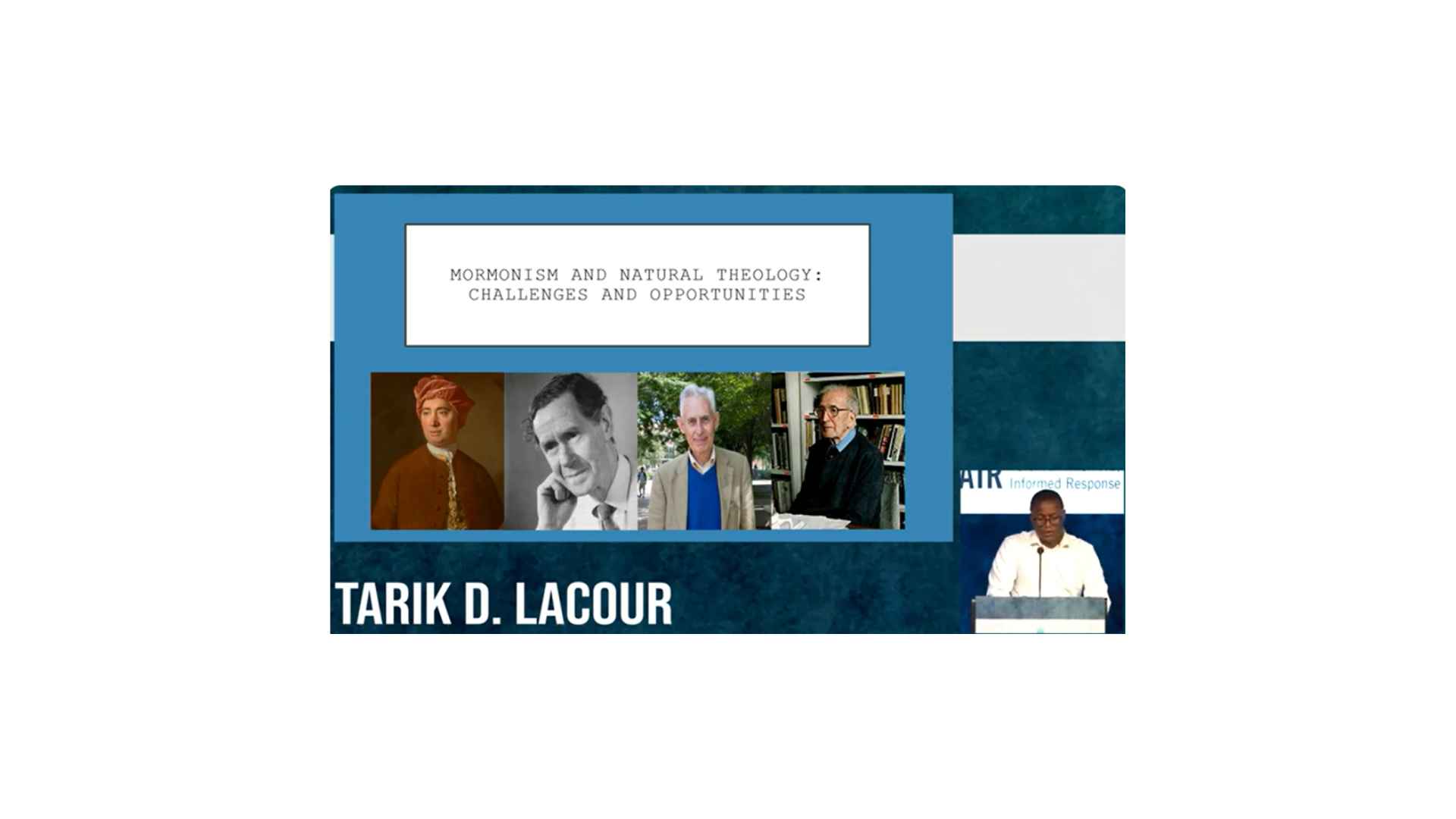
Some Influential Philosophers
Before I start my talk, I want to talk a little bit about the men that are on this slide. They were very influential on how this talk came about. So, on the far left in the turban is David Hume. He’s my favorite philosopher and hero; I think the best philosopher of all time, but people will dispute that, wrongly. To his left is J.L. Mackie, he’s one of the great atheist philosophers of the 20th century. He’s another hero of mine, not for that reason obviously, but still a great thinker and you’ll hear from him in this talk.
Next to him is Richard Swinburne. Richard Swinburne is a professor emeritus at Oxford, perhaps the greatest Christian philosopher still living. Both atheists and Christians hold him in very high regard. In fact, Mackie, when writing his book The Miracle of Theism, the person that he basically is fighting against the whole time is Swinburne, and sometimes he even says, “Yeah, he just wins on that one.”
And on the far corner there is Antony Flew. Flew was an atheist as well, but he converted to Deism towards the end of his life, and as he was the world’s most notorious atheist, that made all the rounds back when that happened. So, all right.
New Atheists
In the early part of this millennium, the world was introduced to the so-called new atheists, a collection of individuals including but not limited to evolutionary biologist Richard Dawkins, the late journalist Christopher Hitchens, and neuroscientist Sam Harris. While the new atheists gave very little to the world in terms of arguments for atheism — one will search in vain for any such arguments in the writings of Harris or Hitchens; Dawkins at least makes an attempt, albeit a very poor one, in The God Delusion — they did have the following effect on the world at large: rather than seeing the existence or non-existence of God as something that an advocate on either side would have to defend, the burden was shifted to the theistic side as having the burden of proof, while the non-believer simply lacked belief in the proposition that God exists.
So, there was no burden of proof on their side of the ledger, as Harris writes,
Atheism is not a philosophy. It is not even a view of the world. It is simply a refusal to deny the obvious.”
The Obvious
Unfortunately, we live in a world in which the obvious is overlooked as a matter of principle. The obvious must be observed and re-observed and argued for. At this point, he probably should have figured out this wasn’t obvious, that’s why he was arguing for it, but I guess he missed that part.
This is a thankless job. It carries with it an aura of pensionless and insensitivity. It is, moreover, a job that the atheist does not want. Dawkins takes this idea a bit further, saying that we are all atheists, as we do not believe in certain gods. So, an atheist just goes one god further. This is a view very different from that of the atheist philosophers of the 19th and 20th centuries.
Good and Bad News
As one of my favorite philosophers, J.L. Mackie has written,
It is my view that the question whether there is or is not a God can and should be discussed rationally and reasonably, and that such a just discussion can be rewarding in that it can yield definite results. This is a genuine meaningful question and an important one, too important for us to take sides about it casually or arbitrarily. Neither the affirmative nor the negative answer is obviously right, but the issue is not so obscure that the relevant considerations be brought to bear upon it.”
There is both good and bad news here.
First, the good news: while the new atheists certainly have had quite a reverberation on the general public to an extent, though even that seems to be dying out now, this type of thinking has not made much headway in the field of philosophy. Graham Opie, one of the most prominent defenders of atheism in philosophy today, likely had Dawkins and his legion in mind when he said,
Some people relativize atheism to particular gods or particular classes of gods. Such people say that a person is an atheist with respect to a given god no matter what attitudes that person has to other gods. So, for example, these people say Christians are atheists with respect to the Norse gods. This way of thinking is misguided. No one says that a person is a vegan with respect to those occasions on which they sit down to a meal that contains no animal products.”
But don’t rejoice just yet.
Personal Anecdotes
The new atheists certainly have had a cultural effect in that they have brought to the forefront the fact that many view belief in God and religious belief as merely matters of faith or tastes rather than a conclusion based on evidence and rationality. Two personal anecdotes are useful in demonstrating this.
This past week on Twitter, a follower of mine tweeted to me that he had asked the missionaries online to bring him a copy of the Book of Mormon, which they happily did. During their conversation, my friend asked the missionaries this question: “What good reason is there to believe in God?” The missionaries thought a minute, but then responded, “Good question, I don’t know.”
As a convert to the Church, I am not entirely surprised at this. I received similar responses when I asked questions that were not trivial. More troubling, though, is this story: I have a close friend who was serving as a member of the stake presidency. During the time that he served in that capacity, two parents came to his office to chat with him. Their son had read some of the material that the new atheists had produced and lost his faith. He had told his parents, echoing Harris, that there is no evidence or reason to believe in God. His parents had no way to answer his questions, so they went to my friend. After listening to their plight, my friend said, “Your son is correct. There is no evidence that God exists or that the claims of the Church are true. That is why we have faith.”
Argument and Evidence
My contention in this paper is that is the same as that of Mackie: the question of the existence of God has no obvious answer and should be based on argument and evidence rather than unsubstantiated assertion. While it is true that the answer will be inconclusive, that is no reason to merely take aside without giving evidence for or against it. And for this reason, Latter-day Saints in the 21st century need to study and do their own version of natural theology.
Natural Theology
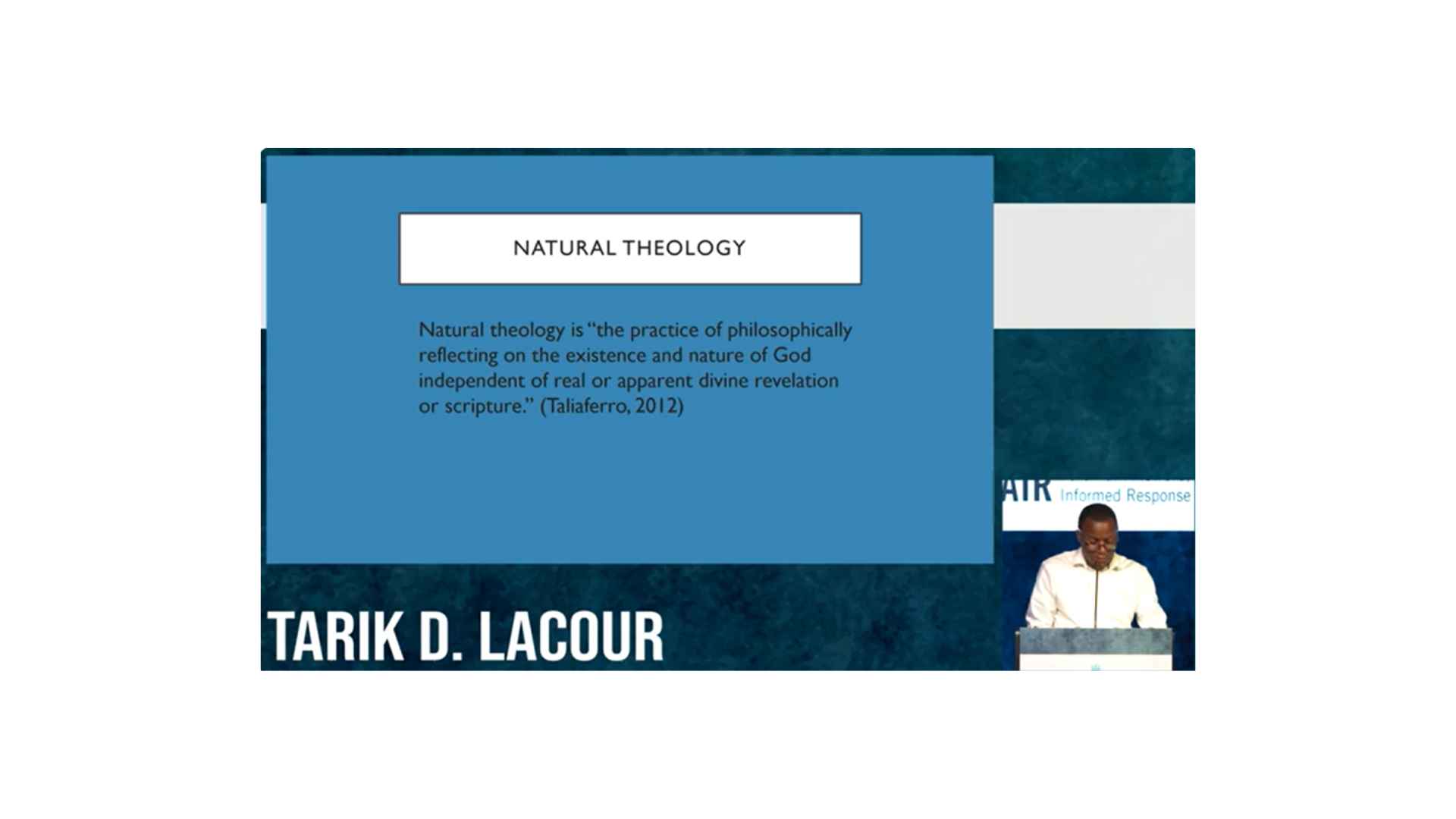
Natural theology is the practice of philosophically reflecting on the existence and nature of God independent of real or apparent divine revelation or scripture. So, this type of theology requires engagement in philosophy and unlike most apologetics can be done without the aid of scripture or revelation, though as we’ll see later, not entirely. Latter-day Saints up to this point have not done much natural theology, in part because Latter-day Saints do not engage in theology much, and what has been done has not been very technical. Well, there’s been some, but not much.
The field has a long and steady history with ancient philosophers such as Plato and Aristotle engaging in it, medieval philosophers such as Thomas Aquinas, Saint Augustine, and Saint Anselm, modern philosophers such as Descartes, Leibniz, Spinoza, Locke, and Hume, and contemporary philosophers such as Richard Swinburne, Alvin Plantinga, William Lane Craig, Alexander Prus, Edward Feser, and Robert Adams. Basically, a who’s who list in philosophy shows that many heavyweights have investigated and contributed to the field.
While most people have probably never read any of these technical arguments, they are likely familiar with some of the arguments of natural theology, such as the cosmological argument, which argues that God is the best explanation for the existence of the cosmos; the teleological argument, which argues that God is the best explanation for the design and purpose we find in the world; the moral argument, that God is the best explanation for the existence of moral values and duties, and many others. So, while the details may be new, the overall picture is one that theists and non-theists of all varieties will basically grasp.
Definition of God
Before getting into the challenges and opportunities that later natural theology affords to Latter-day Saints, it is imperative that we define what we mean by the term “God.” In different religious contexts, the word means different things, and even people within the same religious group define God differently, which can lead to the problem of equivocation, which is using the same words but with different meanings.
For example, within our religion, we refer to God or the Godhead to mean: one, the Father alone; two, Jesus of Nazareth alone; three, the Godhead united for the council of gods before the world was. Those are just a few examples. Latter-day Saints typically do not define God, but we can, in some sense, learn from how thinkers in other traditions define God.
In his book The Coherence of Theism, the philosopher Richard Swinburne defines God as, “a person without a body, that is a spirit present everywhere (omnipresent), the creator of the universe, perfectly free, able to do anything (omnipotent), knowing all things (omniscient), perfectly good, a source of moral obligation, eternal and unnecessary being, holy, and worthy of worship.”
My Definition
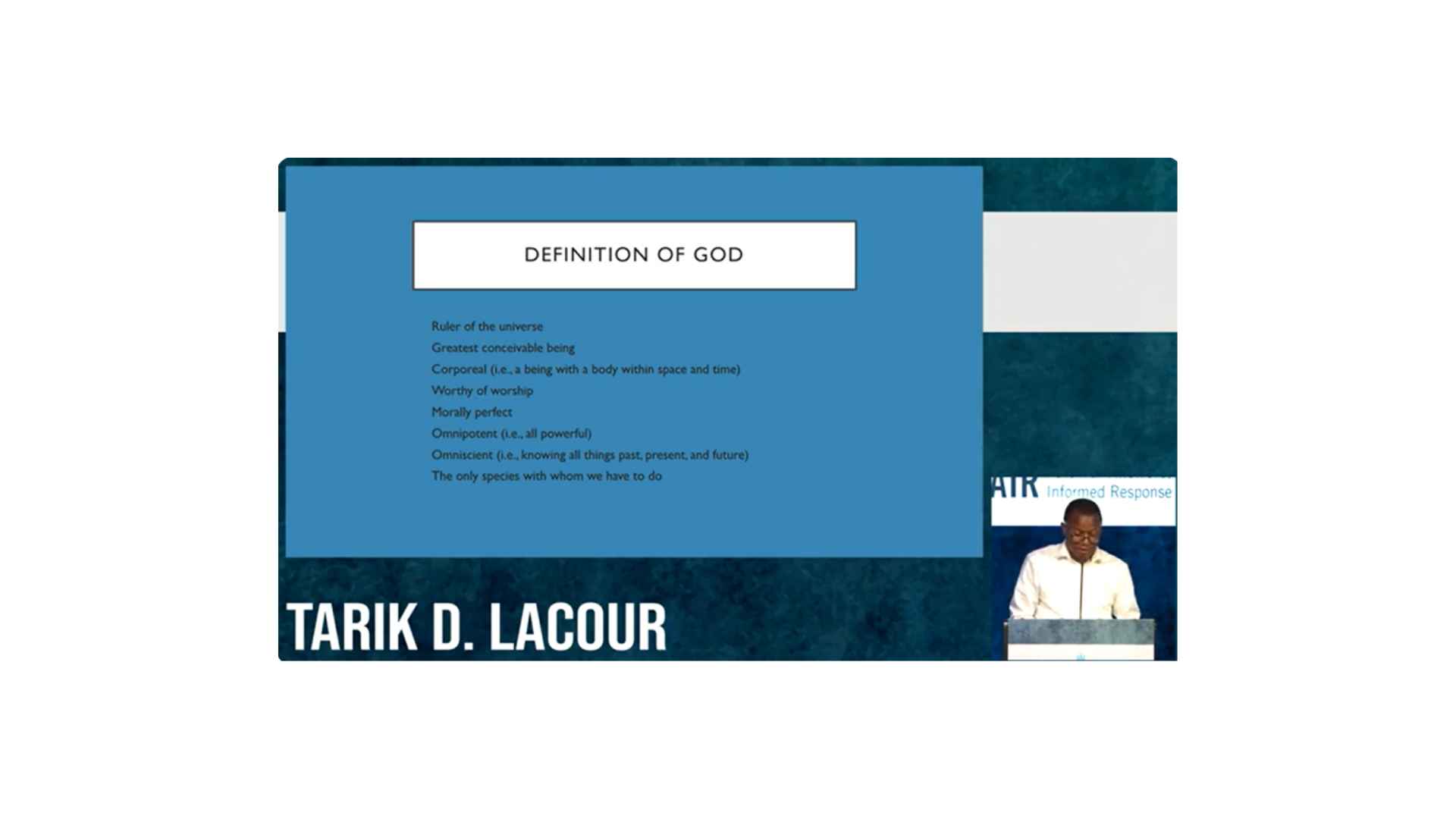
In the definition I offer, I mean to refer to the Father, or more specifically, the type of being that the Father is. By God, I take it that Latter-day Saints mean something like the following: the ruler of the universe, the greatest conceivable being, corporeal (that is, a being with a body within space and time), worthy of worship, morally perfect (that is, the person whose characteristics we would consider to be the best and would most like to replicate), omnipotent (that is, all-powerful), omniscient (that is, knowing all things past, present, and future down to the minutest detail), and the only being of his species with whom we have to do. That is, while acknowledging that there are beings of the same class, we only worship this particular being. This is not to say that this definition must be accepted by Latter-day Saints, only that it is a plausible one.
Different Latter-day Saint philosophers, insofar as they are willing to define what they mean by God at all, will likely differ with certain facets of what I’ve outlined here. For example, my friend Robert Boylan, who is an open theist, would say that God knows all that has happened in the past and present but does not have knowledge of what will occur in the future, since the future will be carried out by free agents whose actions cannot be known in advance.
Criticisms of Natural Theology From Non-Latter-day Saint Philosophers
This talk is subtitled “Challenges and Opportunities for a Natural Theology.” Like any area of inquiry, the field of natural theology has its critics coming from both within and without those who advocate the restored gospel. I will focus on the challenges from non-Latter-day Saints that address the criticisms of natural theology from Latter-day Saint philosophers.
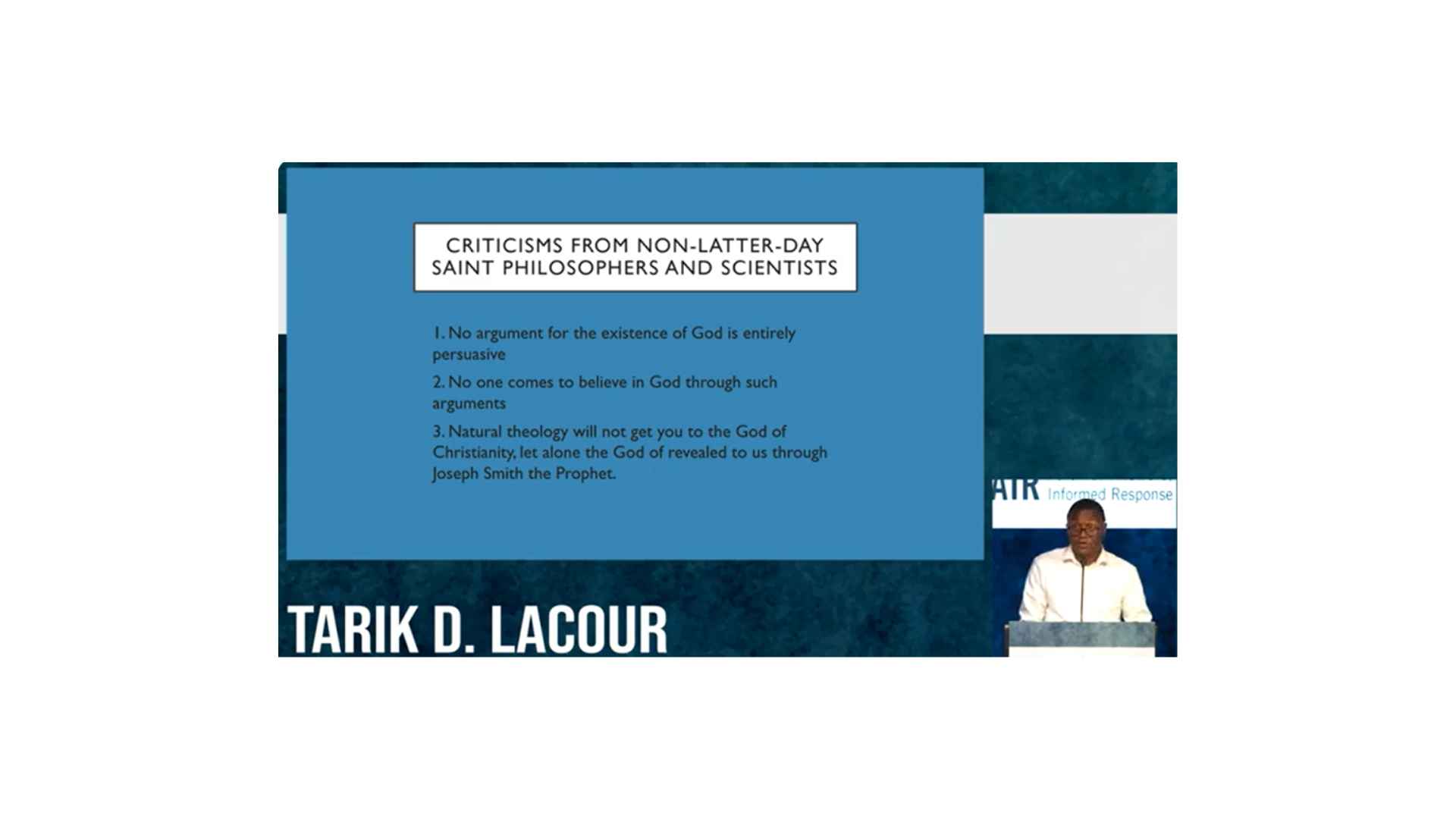
Criticisms of natural theology from non-Latter-day Saint philosophers and scientists are numerous, but allow me in our time together to address the following three:
- 1) No argument for the existence of God is entirely persuasive;
- 2) No one comes to believe in God through such arguments;
- 3) Natural theology will not get you to the God of Christianity, let alone the God revealed to us through the Prophet Joseph Smith.
If by “entirely persuasive” a person means that any reasonable person upon hearing a certain argument will be immediately convinced, then yes, no argument of natural theology is persuasive. However, this would also be true of any argument in science, politics, economics, or any other field of inquiry. There will always be rebuttals and counters to certain arguments, and new evidence may come that overthrows what you might have thought was firmly established.
Build Plausible Propositions
For example, the move from classical mechanics to quantum mechanics in the 20th and 21st centuries after many people thought that Newton had completed physics in the 17th and 18th centuries. What you aim to do in the case of natural theology, as with anything else, is to build a good inductive case, a case that leaves your proposition as being more plausible than its negation. To quote Mackie again,
Where several different arguments bear upon the same issue, they may have a cumulative effect. It will not be sufficient to criticize each argument on its own by saying that it does not prove the intended conclusion, that is, put it beyond all doubt, that follows at once from the admission that the argument is non-deductive, and it is absurd to try to confine our knowledge and belief to matters which are conclusively demonstrated by sound deductive arguments. The demand for certainty will inevitably be disappointed, leaving skepticism in command of almost every issue. But also, it will not be sufficient to say, though it may be true, that each argument on its own leaves the conclusion less likely than not, leaves the balance of probability against it, for a set of arguments, each of which, on its own, this adverse comment is true, may together make the conclusion more likely than not.”
This is plain in a legal case, where a party may rely on the joint effect of a number of considerations, each of which, on its own, would be too weak to justify a decision in that party’s favor, but whose combined effort may justify such a decision. This holds equally in historical and scientific contexts.
Reaching the Conclusion of God’s Existence
It is very likely that most people who are theists, whether they be Latter-day Saints or not, have not come to their belief in the existence of God due to rational argument and evidence. It is likely they simply accepted God’s existence due to the culture and family in which they were raised and didn’t give it much thought beyond that. Belief in God, to such a person, is like speaking their mother tongue or using their limbs. It is something that is a given until there’s good reason to question it. Having said that, there are those who come to believe in God’s existence due to arguments, and these people cumulatively have a mass effect upon the world at large.
Antony Flew
Allow me to use three examples: Antony Flew, Alister McGrath, and myself. The name Anthony Flew may not ring a bell amongst the non-philosophical crowd, but throughout his career, he was considered the leading defender of atheism in the English-speaking world. In fact, the New Atheists, in a way, are descendants of Flew, as Flew’s primary argument was that we should presume atheism until empirical evidence of God comes along, and that atheism is simply a lack of belief in God rather than the belief that there are no gods.
However, like a good philosopher, Flew was never dogmatic. He followed the Socratic maxim, following the evidence where it leads, even if it leads to a place that we are not comfortable with. After years of contemplating, Flew became a theist at the age of 81, crediting thinkers such as Richard Swinburne for his conversion. Flew died not long after converting, but he did say he was open to claims of religion at the end of his life, though he did not believe in an afterlife. If natural theology can convert such a man as this, it is nothing to scoff at.
Alister McGrath
McGrath, for those who know him, is a professor of theology at Oxford. However, he began his career as a biophysicist. Like Dawkins, McGrath assessed that a serious scientist would not believe in God. He later read works of theology that gave him reason to do serious rethinking and is now perhaps the heir of C.S. Lewis, in that he is an atheist who has turned to Christianity late in life, in part as a result of natural theology, among other things.
Myself
Speaking for myself, I’ve always been a bit of a skeptic. For those who disbelieve me, I recommend you talk to Steven Smoot. I grew up in a non-denominational Christian church and was skeptical of the existence of God, the afterlife, and the resurrection of Jesus for most of my youth and into my teenage years. However, I was fairly conversant with natural theology, and this gave me reasons for belief rather than just deciding to believe. One instance of this was reading David Humes Dialogues Concerning Natural Religion and The Natural History of Religion, where he makes the point that if the argument to design is correct, it is more likely that multiple finite deities were responsible for the creation of the cosmos than just a single mind, a view that is echoed by John Stuart Mill in his book Three Essays on Religion and not unlike what has been revealed to us in the Book of Abraham.
I am no Flew or McGrath, but I have been able to show my philosophical friends that a naturalistic version of theism is perfectly consistent with the current direction of analytic philosophy and modern science. So, natural theology is something that can keep doors open that otherwise would be closed. There is no one-size-fits-all solution.
Natural Theology Alone
Finally, it is true that natural theology alone will not get you to the God of Christianity or the God of the Restoration. This point is made by Emmanuel Kant when he discusses the cosmological argument in his magnum opus, A Critique of Pure Reason: The proof could at most establish a highest architect of the world who would always be limited by the suitability of the material on which he works, but not a creator of the world to whose idea everything is subject, which is far from sufficient for the great aim that one has in view, namely, that of proving an all-sufficient original being. If we want to prove the contingency of matter itself, then we should have to take refuge in a transcendental argument, which, however, is exactly what was supposed to be avoided here.
Points of Thought
A similar point is made by Hume in the aforementioned Dialogues:
If we see a house, we conclude with the greatest certainty that it had an architect or builder because this is precisely that species of effect which we have experienced to proceed from the species of cause. But surely you will not affirm that the universe bears such a resemblance to a house that we can with the same certainty and for a similar cause, or that the analogy is here entire and perfect. The dissimilarity is so striking that the utmost you can pretend to is a guess, a conjecture, a presumption concerning a similar cause.”
Hume and Kant
Hume’s point is that since the universe is a singular case, it is not clear that we can infer by analogy to the nature of its cause, though he certainly believes, in the Dialogues and elsewhere, that the cosmos had a cause, which he is happy to call God. Kant’s point is different in that while he thinks the cosmological argument works, it does not get you to the type of being that classical theists considered to be God, that is, an omniscient, omnipresent, omnipotent, immaterial mind or consciousness. This is of no concern to Latter-day Saints.
The type of God that Kant concludes follows from the cosmological argument is very similar to the God I’ve outlined previously. However, both he and Hume missed the mark here. Kant being wrong should come as no surprise, as Hannah Seariac, who we just listened to, would tell you: the safest generalization in philosophy is that Kant was wrong about everything and Hume was right about almost everything.
An Argument of Natural Theology
The point of natural theology is not to prove that any particular religion is correct; rather, it is to demonstrate that God exists and that atheism is false. So, for an argument of natural theology to be successful, there is no need to connect it to the claims of any revealed religion because it is not concerned with that primarily. Also, natural theology is a way to take theism seriously in the first place, which is a prerequisite to talking about any revealed religion. If God does not exist, then all revealed religions are false as there is no one to reveal them, and they are the artifacts of human ingenuity and cleverness.
If God does exist, it is possible that he has revealed himself or itself, and then revealed religions are again back on the table. This is perhaps the most important reason to do natural theology: to harbor an intellectual climate where belief in God and in revealed religion can be seen as a serious option for thinking men and women today. Enough of criticisms from non-Latter-day Saints.
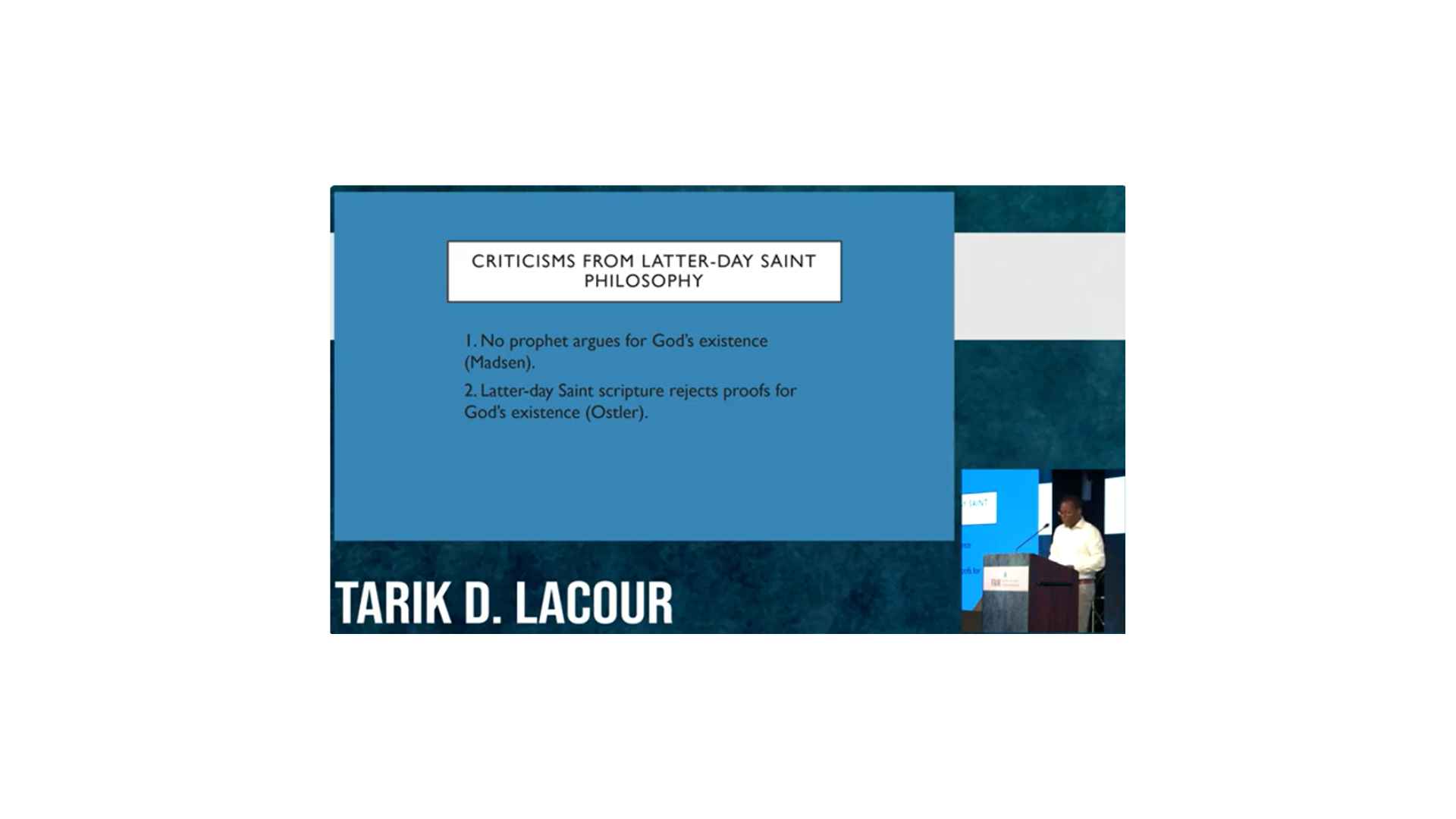
Criticisms of Natural Theology From Latter-day Saint Philosophers
Allow me to address some criticisms of natural theology that come from those within our tradition. I will focus here on criticisms that come from the philosopher Truman G. Madsen and his pupil Blake Ostler. In his work Joseph Smith the Prophet, which is well known among Latter-day Saints, Madsen makes the point that Joseph Smith and other prophets never make arguments for the existence of God:
You can’t find one argument in Joseph Smith for the existence of God. Why not one? Answer: Because one does not begin to argue about a thing’s existence until serious doubts have arisen. The arguments for God are kind of whistling in the dark. In the absence of experience with God, men have invented arguments to justify the experience of the absence of God. They have built a rational tower of Babel from which they comfort themselves with ‘We haven’t heard from God, but he must still be there.'”
The inference here is that since prophets don’t make arguments for the existence of God, then neither should we. But this is a category mistake. Philosophers are not doing the same thing as prophets. Prophets tell us what God’s will is; they presume God’s existence. Philosophers make no such presumptions; they are asking if God exists. So, the philosophers, like John the Baptist was for Jesus of Nazareth, are clearing the path so that people have good reason to listen to the prophets when they come.
Atheism Rising
In Joseph Smith’s time, basically everyone believed in God. That is not the case in the world today, with atheism rising across the globe. This point is well made by C.M. Leworski in his book Atheism Considered. Were atheism a religion, it would be the third most popular religion in the world. Over a billion people claim no godly commitments. The question of God’s existence can no longer simply be assumed; there must be good reason to believe in His existence rather than taking it as a given.
Ostler’s view is a bit different. In his book Exploring Mormon Thought: The Attributes of God, he points out that the Lectures on Faith reject proofs of God’s existence and that Mormons don’t engage in natural theology. It is certainly true that the Lectures on Faith are not a work of natural theology, though whether they explicitly reject it is another question. Frankly, it does not matter whether they do or do not because the Lectures on Faith are not part of our canon any longer, and their object is something quite different.
Faith is trust and commitment to something based on good reason. The lectures are more concerned with how one forms a relationship with God rather than whether God exists. Like the prophets, the lectures assume God’s existence. However, before we can have faith in God or even contemplate it, we need to know whether God exists and what type of being He is. This is a prerequisite of faith, so natural theology will be the first stop on the building block of faith.
Possibilities of Natural Theology
Thus far, I have dealt only with criticisms. Now let me speak of possibilities. In doing natural theology, Mormons do not have to reinvent the wheel; they merely need to look at how natural theology has been done in the past two millennia and adapt it as they are able. To be sure, the type of God that many who have done natural theology describe is very different from our conception of God, but, as I will show in a moment, that is not a major concern. For some arguments, the Latter-day Saint conception of God is a better fit than the God of classical theism, as Kant pointed out a bit earlier.
While I pointed out the criticisms of natural theology from our side of the ledger, here’s a bit of optimistic news: Latter-day Saints already do natural theology; they just don’t know that they do. Madsen makes the point that prophets don’t argue for God’s existence. And while that normally is the case, it is not universally so, as Alma uses a version of the cosmological argument when conversing with Korihor in Alma Chapter 30. But often in sacrament meetings or when discussing our faith, we talk about certain experiences we have had that led us to believe in God, Jesus, Joseph Smith, the Book of Mormon, etc. Unawares, we are using a prominent argument in natural theology: the argument from religious experience.
Phenomenal Conservatism
In recent years, Richard Swinburne, William Alston, and Kaiman Kwan have defended this argument. While it has several formulations, the basic argument follows from the principle of phenomenal conservatism: if something appears to you to be a certain way, then in the absence of any defeater or negation of that claim, you are justified in believing what you have experienced. So, while you will have questions lodged at you, such as how do we distinguish vertical religious experience from non-vertical religious experience, or what kind of being follows from this experience, we are already on our way to doing natural theology. We may not generally call it that, but that is what we are, in fact, doing.
Design
Another argument for Latter-day Saints to look at is the argument from fine-tuning, which is perhaps the most respected argument of natural theology today. Even prominent atheist philosophers such as Peter Milliken admit that the argument has a lot going for it and needs to be taken seriously. In rough form, the argument from fine-tuning says that since there are certain constants in the universe that must be a certain way in order for there to be life of any kind given the laws of physics, this can only be due to either chance, necessity, or design, and design is the most likely of the three alternatives.
Where Latter-day Saints can make a difference has to do with the role of causation at play here. As I mentioned earlier, most natural theologians assert that God is immaterial. The problem here is that no one has been able to show how an immaterial thing can interact with the physical world. For this reason, most philosophers of mind, for example, assume some version of physicalism rather than dualism. But Mormonism has no problem with God being a spatial-temporal physical being; that is the type of God they do believe in. So, where most natural theology theologians have a wide gap that they have failed to make it across, the Latter-day Saint natural theologian has a better answer and can be of help to this debate.
Contingency Argument
I should caution here, however, that this is not to say that all arguments of natural theology are open for Latter-day Saints to use. arguments such as the contingency argument, which argues that there must be some necessary being that brought about all contingent beings, would not be available to Latter-day Saints. The reason is that Latter-day Saints see both God and man as necessary beings, so there will be no such contingency to explain or be, depending on how one reads and interprets the King Follett sermon. God and man can both be seen as contingent. So, God couldn’t be the necessary being that brought about all contingent beings. Also, the moral argument seems as though it will not be effective for Latter-day Saints. In our view, God is subject to moral laws, so He cannot be the cause or sufficient reason for them. If moral laws exist, they would not be due to God.
Conclusion
In conclusion, Latter-day Saints have the great commission to preach the gospel to every creature. In every era that the gospel is preached, there are obstacles to overcome. One of our obstacles is showing that God exists. So, we should put our shoulders to the wheel in showing that it is reasonable to believe that He does, along with our other projects and endeavors. This is not an idle endeavor, as the gospel is not heard in isolation from our culture at large.
Jay Gresham made this case pointedly: “False ideas are the greatest obstacles to the reception of the gospel.” We may preach with all the fervor of a reformer and yet succeed only in winning a straggler here and there if we permit the whole collective thought of the nation to be controlled by the ideas which prevent Christianity from being regarded as anything more than a harmless delusion. There will always be obstacles to belief, but natural theology can help to give the honest seeker one less obstacle, which is all that we can hope for. Thank you.
Audience Q&A
Scott Gordon:
Thank you, Tarik. As you were giving your talk, I was thinking about our current culture, and it seems like, if you were having this conversation back in the 1970s or even the 1960s, I think there was a presumption of God. And yet today, do you think the people in the 20 to 35 age group have the biggest presumption that there is no God?
Tarik LaCour:
I don’t know if that’s the biggest presumption, but it’s certainly becoming a more common presumption, especially among those who haven’t read much philosophy or theology, which you don’t tend to do, not just in the Latter-day Saint Churches, but in most Sunday schools. That isn’t talked about. So, they just assume that belief in God is just a choice like, “Well, it works for you, that’s fine, but it doesn’t work for me, and there’s no real evidence one way or the other, so I prefer to live my life as though there’s no God.” That’s certainly becoming more prevalent.
Scott Gordon:
So, here’s a question: Do you see spiritual experiences as a valid way to come to a belief in God?
Tarik LaCour:
Yes.
Scott Gordon:
Okay. So, follow-up question: Since you mentioned that you came to believe through rational argument, was spirituality a factor in your conversion?
Tarik LaCour:
Since I kind of threw my mentor Blake Ostler under the bus a little bit in my conversation, let me point back to him. He also talked in this conference about a spiritual experience that led him to belief. I haven’t had that kind of experience. I think I’m unlikely to have it, but I think God works through other ways for different people. And there’s something about it too, I thought about this: If I had the experience, I’m not sure what it would do. I think I would be more confused and skeptical of it, so maybe that’s why it hasn’t happened. But I’m just one person among many. God can work however He wants with whoever He wants, I think, right? I think we’re all different, and God works with us differently.
Scott Gordon:
So, do you think natural theology can be helpful for people who are going through an LDS faith crisis but are unfamiliar with theology and philosophy?
Tarik LaCour:
Yes, I do. Now, of course, where they’ll start will differ depending on if they’ve read any philosophy or not, so, but yes, it can certainly be helpful. Because when people have faith crises, sometimes their crisis isn’t about God, it’s just about Church claims. It can lead them later to “Does God exist?” but not always. So, yes, it can be helpful. I don’t think it has to be the go-to option for everything, I don’t think that’s the problem, but among the culture at large where we’re seeing agnosticism and atheism creep in, we need to be prepared to defend our basic belief in God before we can get to more of the claims of the restoration.
Scott Gordon:
Thank you very much for your time.
Endnotes & Summary
In Intro to Mormon Natural Theology, Tarik D. LaCour explores the relationship between faith and reason, showing how Latter-day Saints can use philosophical reasoning to build a rational case for God’s existence. Drawing on thinkers like David Hume, Richard Swinburne, and William Lane Craig, LaCour examines arguments for theism that align with LDS theology and proposes ways to engage in meaningful dialogue in an age of rising atheism. This thoughtful presentation encourages Saints to integrate reason with revelation as they defend belief in God.
⚠️ Disclaimer: Although Tarik LaCour was a faithful member of The Church of Jesus Christ of Latter-day Saints when he delivered this presentation, he has since left the Church to pursue Catholicism. The talk itself reflects an LDS perspective and sound reasoning consistent with Latter-day Saint theology.
📖 Books Referenced in the Talk:
- The Miracle of Theism by J.L. Mackie
- The Coherence of Theism by Richard Swinburne
- Dialogues Concerning Natural Religion by David Hume
- A Critique of Pure Reason by Immanuel Kant
- Exploring Mormon Thought: The Attributes of God by Blake Ostler
All Talks by This Speaker
coming soon…
Talk Details
- Date Presented: August 4, 2021
- Duration: 32:55 minutes
- Event/Conference: 2021 FAIR Annual Conference
- Topics Covered: Tarik LaCour FAIR talk, Mormon natural theology, LDS apologetics faith and reason, CES Letter philosophy responses, Mormon Stories LDS philosophy, atheism and LDS belief, Mormon apologetics arguments for God, Richard Swinburne LDS theology, Blake Ostler Mormon thought
Common Concerns Addressed
Natural theology won’t prove the God of Mormonism.
Natural theology is not meant to prove any specific theology but to make belief in God plausible and defendable.
Latter-day Saints don’t need philosophy because we have prophets.
LaCour shows that prophets assume God’s existence, whereas philosophy opens the door to belief for those outside faith.
Apologetic Focus
Building bridges between faith and reason.
Combatting secular assumptions with philosophical rigor.
Helping members navigate faith crises with intellectual tools.
Explore Further
coming soon…
Share this article
