Summary
George L. Mitton explores how Joseph Smith’s prophetic calling involved overcoming “magical” or ritual contests—similar to those faced by biblical prophets—that challenged his divine authority. Drawing parallels to biblical figures, he emphasizes how these contests often involved counterfeit powers opposing true revelation. Joseph Smith’s success in navigating and triumphing over these challenges, Mitton argues, reinforces his role as a prophet and the divine origin of the Restoration.
Introduction
Scott Gordon: We’re pleased to have George Mitton. George was raised in Logan, Utah. He received his education at Utah State University, the University of Utah, and Columbia University. He assisted for a decade as an associate editor of the FARMS Review and published there, as well as in Dialogue and BYU Studies Quarterly. He is a founding member of the Board of Advisors for Interpreter and has published in its journal. George and his wife have four children, 20 grandchildren, and 37 great-grandchildren. Gosh, if we had them all here, they’d fill our whole conference hall! With that, I’m going to turn the time over to George Mitton.
Presentation
George Mitton: Evidence of Joseph Smith’s prophetic calling can be seen in his encounters with counterfeit authority, and how he won in ritual contests similar to those experienced by biblical prophets. My published essay on this topic, in the festschrift for Daniel Peterson, concerns this type of encounter, and is titled “Joseph Smith and the Magical Contest.”[1] I will briefly discuss some important aspects of that study.
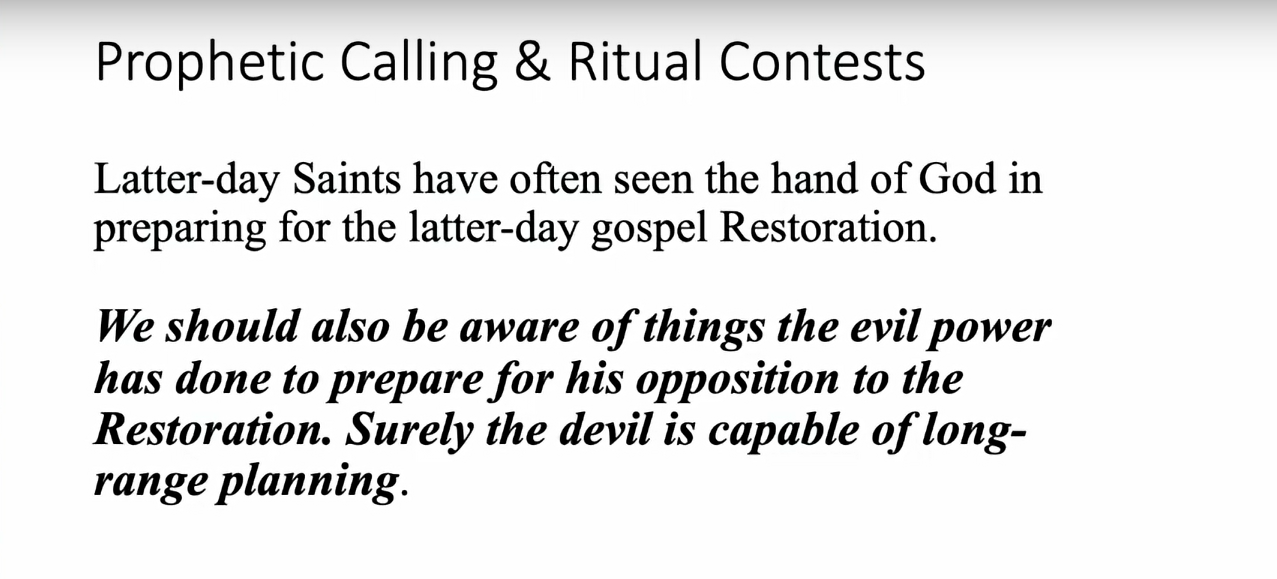
The evil power prepared to oppose restoration of the gospel by setting the stage for ritual (that is, magical) contests to be arrayed against the Prophet to discredit him and the work. It will also be seen that as a prophet of God Joseph beat the Adversary at his own game, so to speak. Latter-day Saints have often seen the hand of God in preparing for the latter-day gospel Restoration. We should also be aware of things the evil power has done to prepare for his opposition to the Restoration. Surely the Devil is capable of long-range planning. Joseph was confronted by such things. Two significant experiences will be considered — his encounter or contest with the ritual of folk magic with its treasure hunting; and the ritual of Freemasonry.
The Magical or Ritual Contest
In biblical times, prophets had what some scholars refer to as a “magical contest.”[2] Magic is difficult to define, especially as it relates to religion.[3] I use the term magical because of its use in scholarly literature consulted, but to clarify what I am trying to examine, it could be termed a ritual contest.
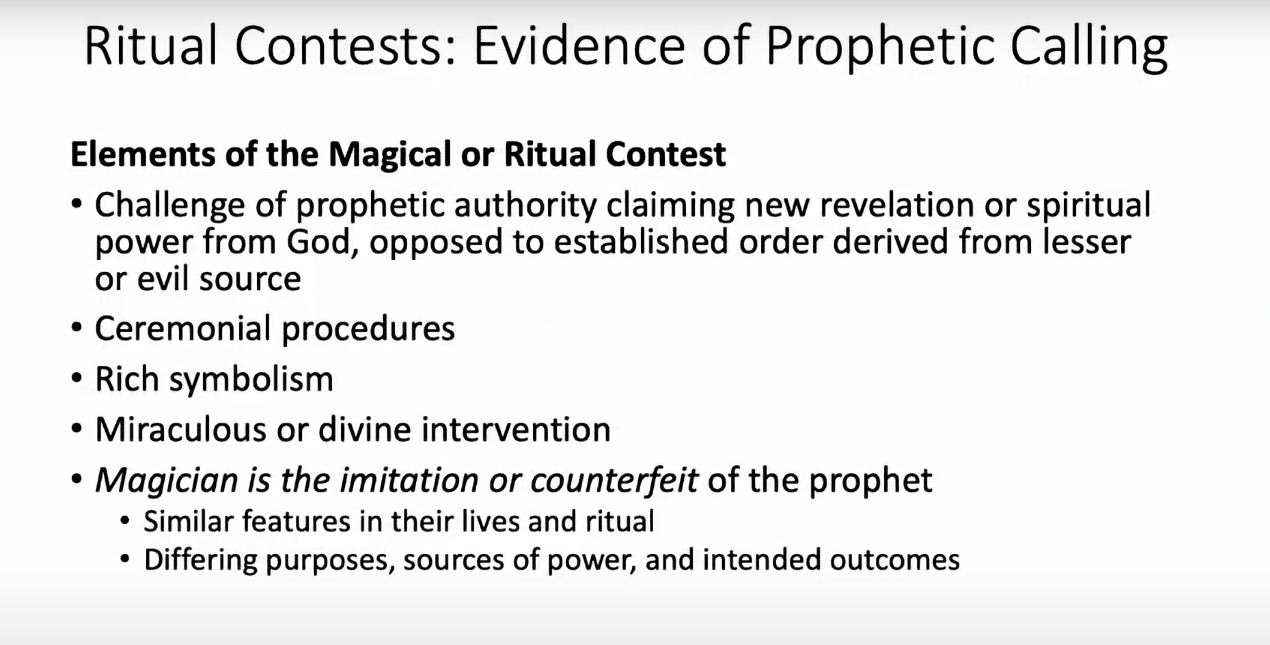
Normally, in the type of encounter being considered, ritual or ceremonial procedures are involved, and rich symbolism may be present. These can also include the miraculous, or divine intervention, which can be confused with magic. The magician can be the imitation or counterfeit of the prophet, and hence there may be similar features in their lives and ritual, but with differing purposes, sources of power, and intended outcomes — as Christ taught: “Ye shall know them by their fruits” (Matthew 7:16). Counterparts in their lives have caused misunderstanding. Prophets have been falsely accused of using magic or evil power.
In ritual contests Joseph Smith had, there was much common purpose and result as with biblical prophets. This is important evidence of his prophethood, and a significant way he was like them. Some magic or ritual encounters in biblical times could involve the following:
Magic/ritual Encounters in Biblical Times:
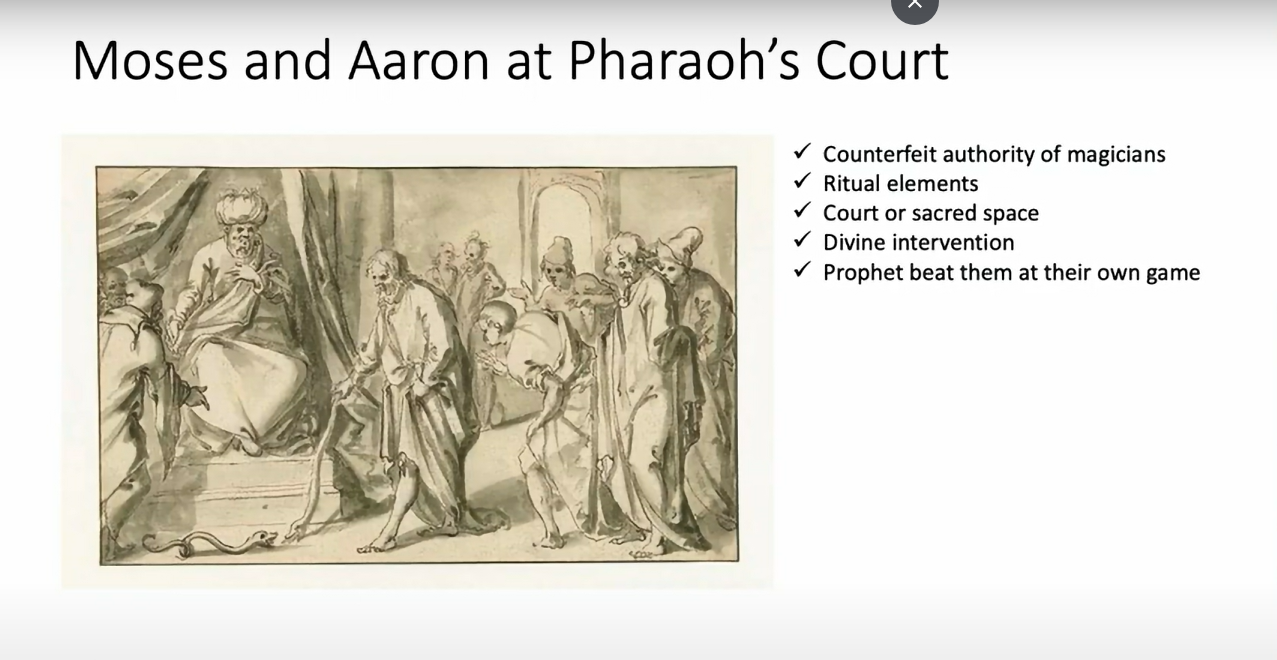
● Moses and Aaron with the magicians of Pharaoh’s court.
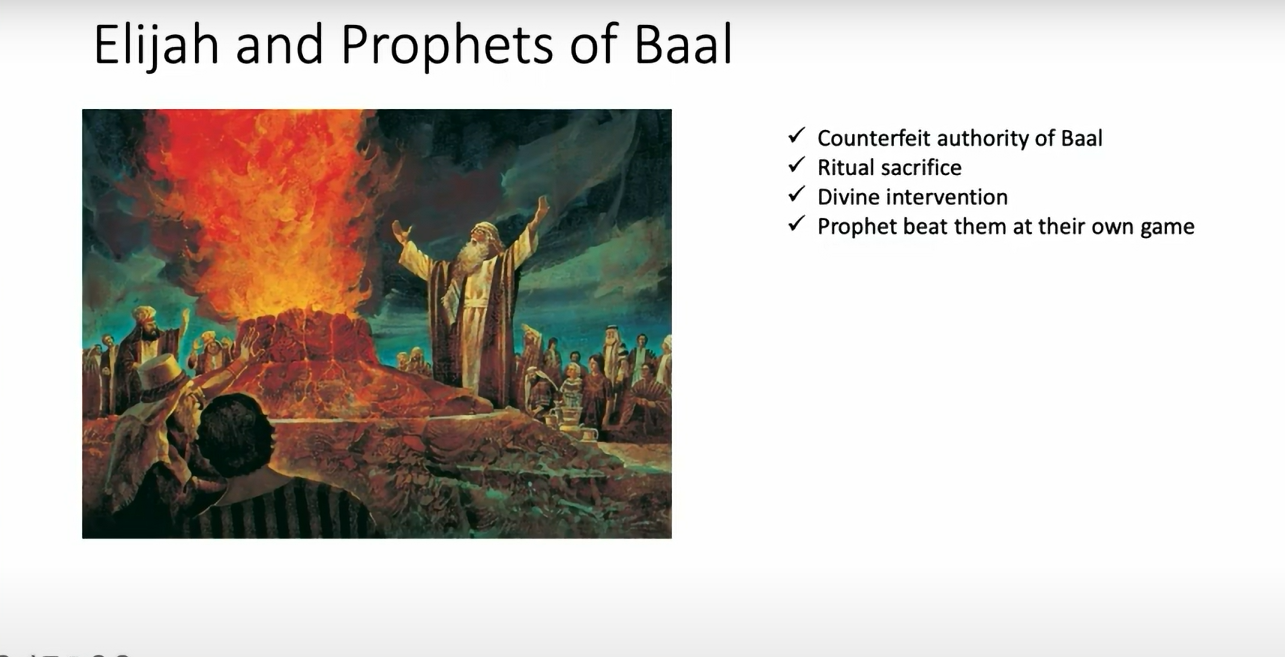
● Elijah and Elisha with the “prophets” of the false god Baal.
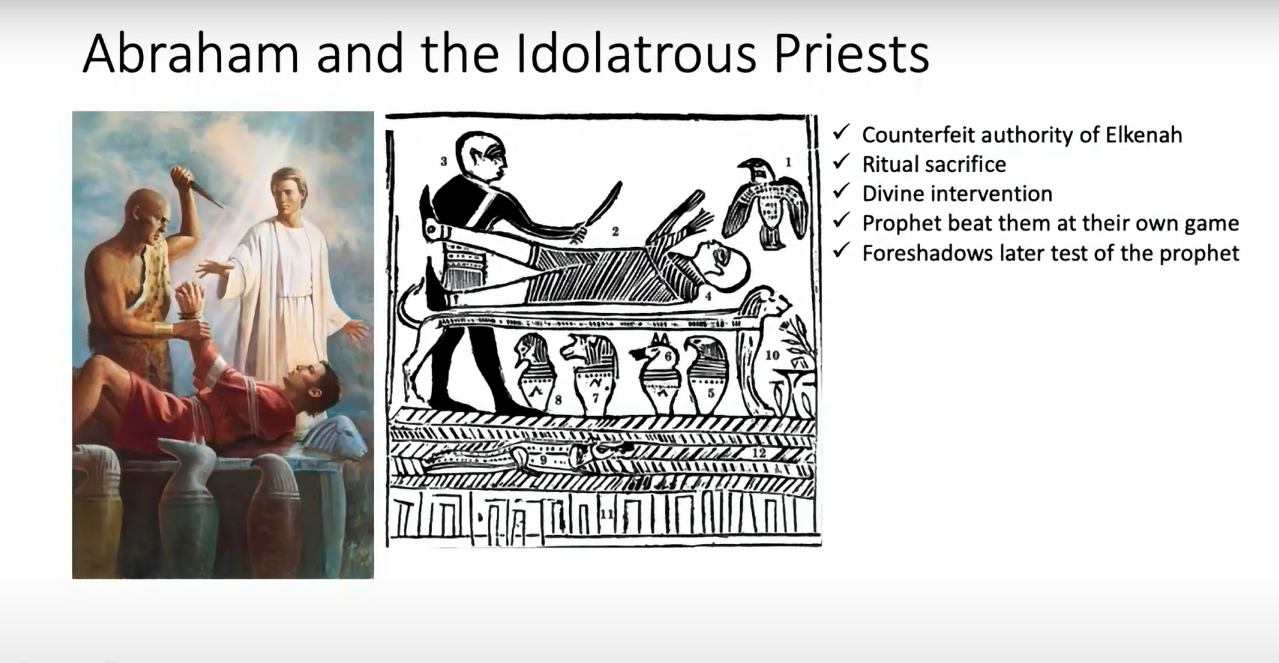
● Abraham and idolatrous priests. The Book of Abraham says they placed him on the lion couch for a ritual form of sacrifice. Through prayer and angelic intervention, tables were turned and the priests died.[4] Also, the Dead Sea Scrolls say that Abraham healed Pharaoh by the ritual laying on of hands after his magicians failed to do so.[5]
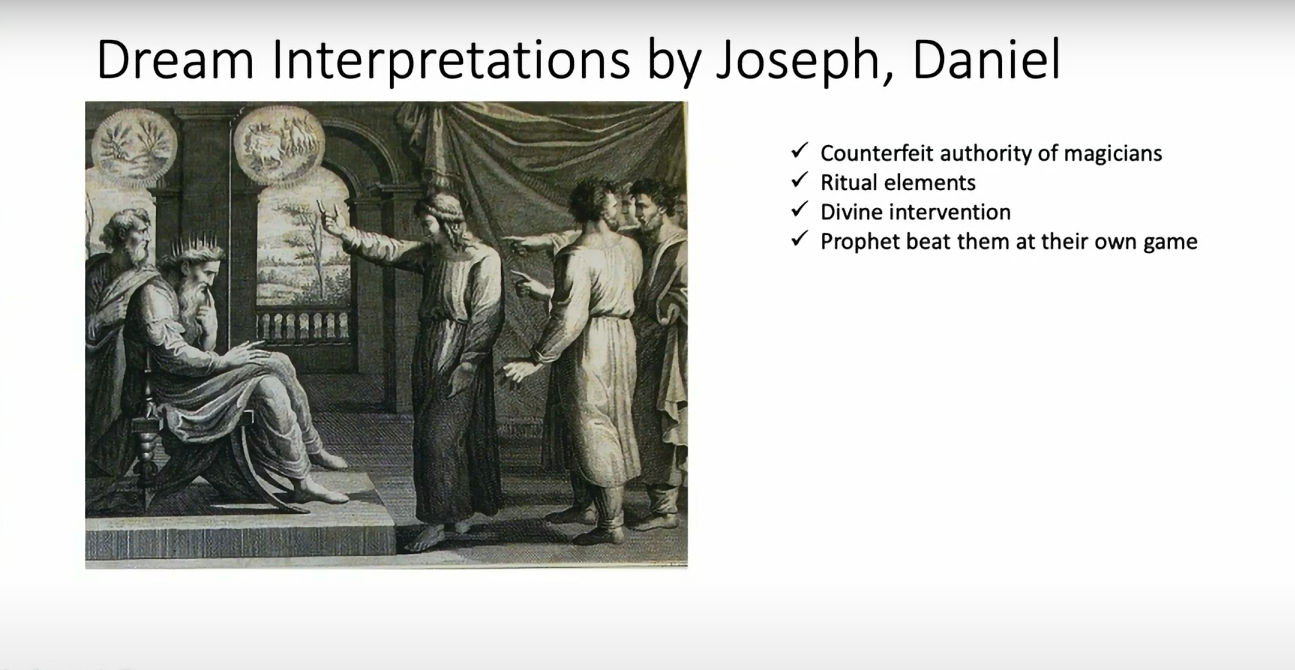
● Joseph of old and Daniel each interpreted dreams of the monarch when magicians failed.
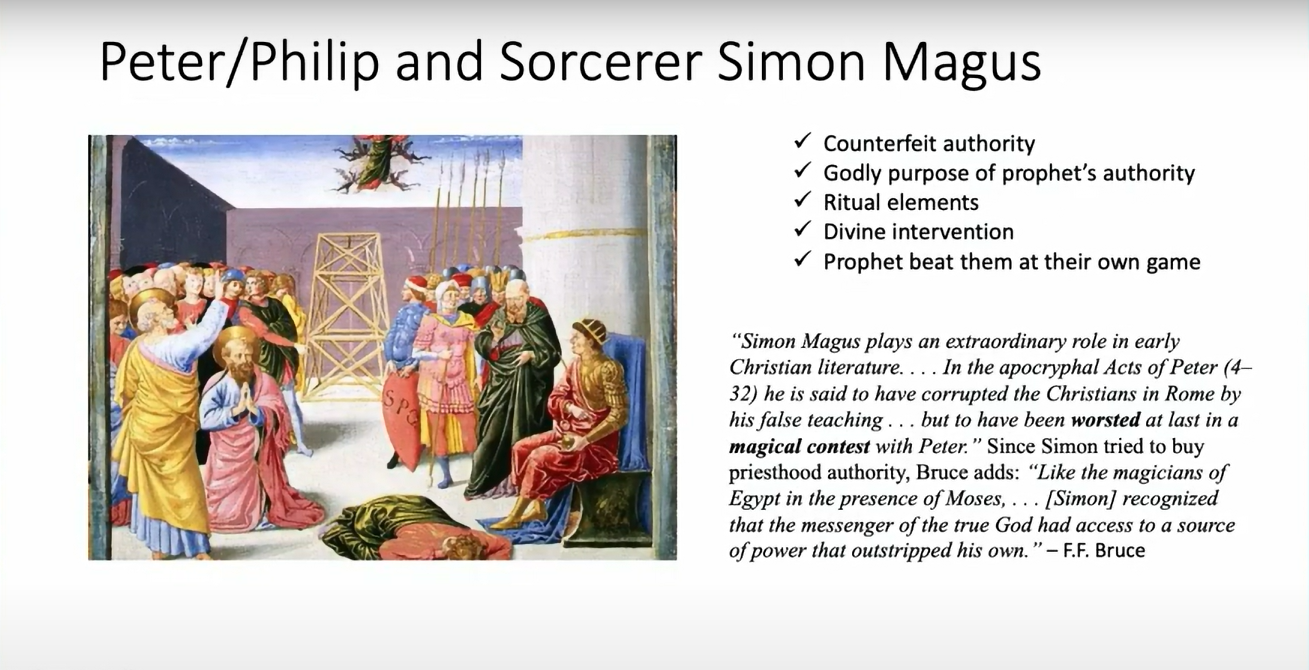
● Peter and Philip had encounters with sorcerer Simon Magus in the Book of Acts (Acts 8:9–11). F. F. Bruce, noted biblical scholar, observed: “Simon Magus plays an extraordinary role in early Christian literature. . . . In the apocryphal Acts of Peter (4–32) he is said to have corrupted the Christians in Rome by his false teaching . . . but to have been worsted at last in a magical contest with Peter.” Since Simon tried to buy priesthood authority, Bruce adds: “Like the magicians of Egypt in the presence of Moses, . . . [Simon] recognized that the messenger of the true God had access to a source of power that outstripped his own.”[6]
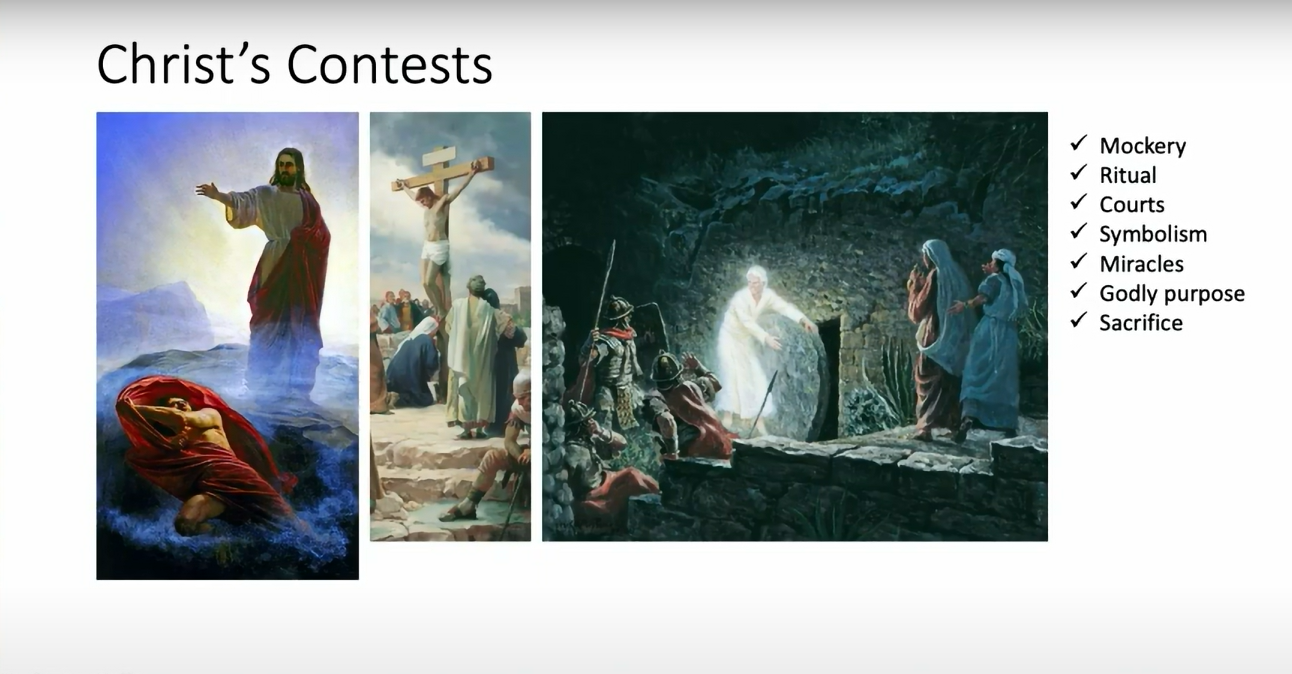
● Christ the Savior requires careful consideration to understand encounters He had — some of supreme importance. There is the temptation by the Devil at the beginning of Christ’s ministry. Next, Christ’s miracles and claims of somewhat similar things done by magicians or sorcerers at the time, cause some critics to raise questions of purpose and source of power.[7] Most important, in the Crucifixion there is a great ritual contest won by Christ in the Resurrection.
Common Elements in Magical / Ritual Contests
In the published essay I offer my compilation of fifteen elements or motifs present in contests reviewed from biblical times. I urge others to review these for accuracy and completeness. It is important to consider together the accounts of the contests — to “boil them down” to see what they have in common. No contest will have all the elements, but each should have a significant representation. The result gives a basis for considering Joseph Smith’s contests and to help evaluate them for similarity to those of biblical prophets.
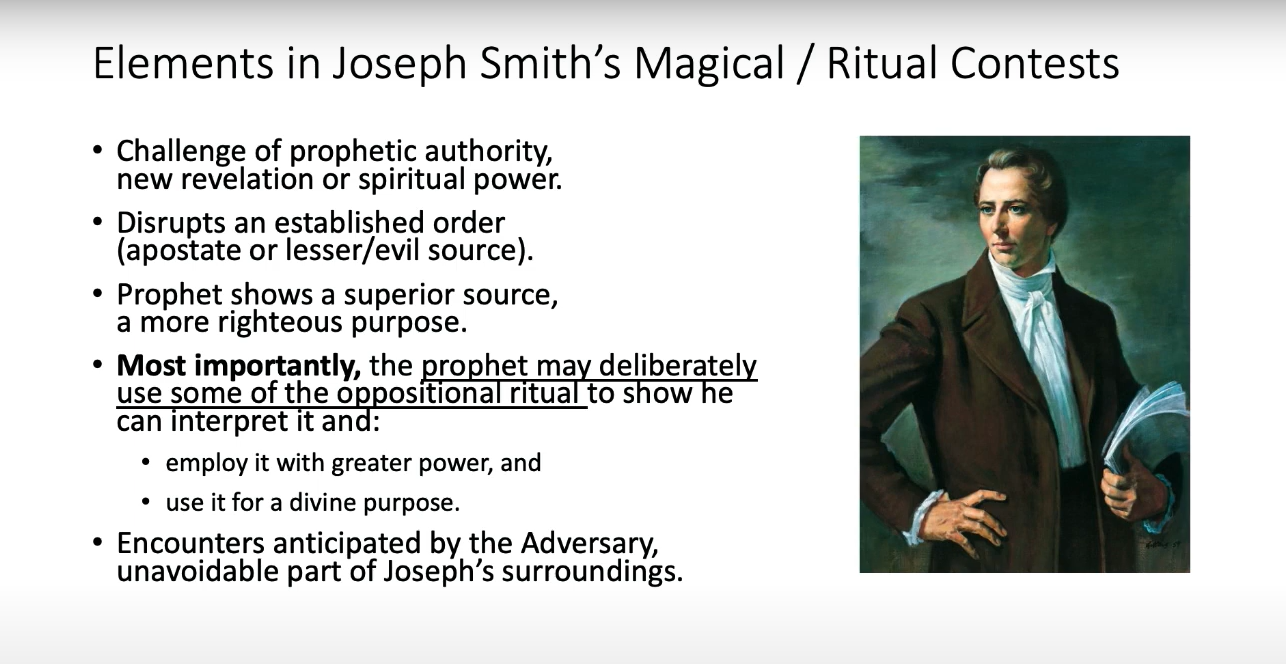
While we have not time to discuss them in detail, it is important to note they are contests of authority and spiritual power. There will be miracles. The contests involve the challenge of prophetic authority claiming new revelation or spiritual power from God, as opposed to an established order which may derive, at least in part, from a lesser or evil source. Both sides may display power, but the prophet shows a superior source and, in the end, a godly purpose.
Most importantly, the prophet may deliberately use some of the oppositional ritual to show he can interpret and employ it with greater power, purpose and righteousness.
I will consider two important confrontations Joseph had in which the Prophet’s involvement could be anticipated by the Adversary over a long period, and his opposition developed, even in a subtle way, to later be an unavoidable part of Joseph’s surroundings.
Joseph Smith’s Encounter with the Ritual of Folk Magic and Treasure Hunting
Joseph Smith was born and raised in a family that participated in common folk magic of his time.[8] Like the Smiths, many believed that such practices were compatible with Christian belief. It may be thought today that Joseph’s experience with them was foolish and nonsensical, but it was not so in his day. Although ridiculed by some, it was a serious matter in the practice and belief of many. This was the peculiar circumstance in which Joseph was affected by a form of magic prevalent at his time and place.
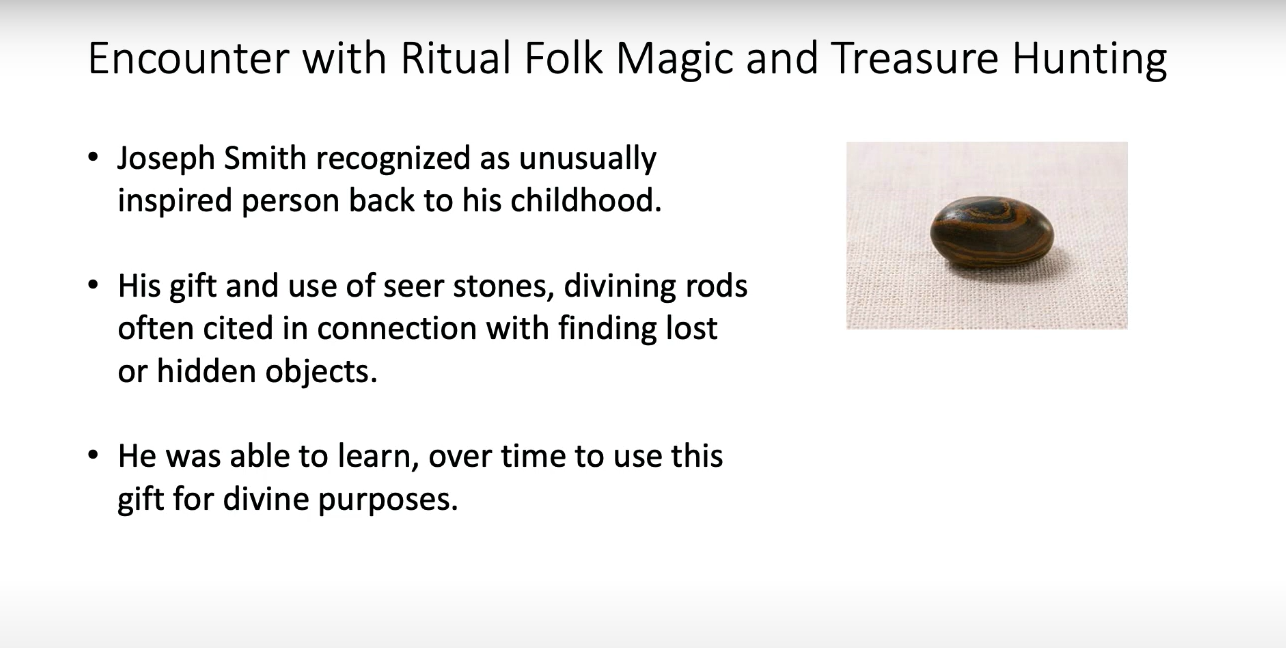
Joseph was recognized as an unusually inspired person back to his childhood. Much has been written about manifestations of his gift of seership during his early years and how he was able to learn, over time, to use this gift for divine purposes. His gift and the use of seer stones and divining rods in his youth are often cited in connection with his attempts to find lost or hidden objects, and assist those trying to find buried treasure by ritual and spiritual procedures.
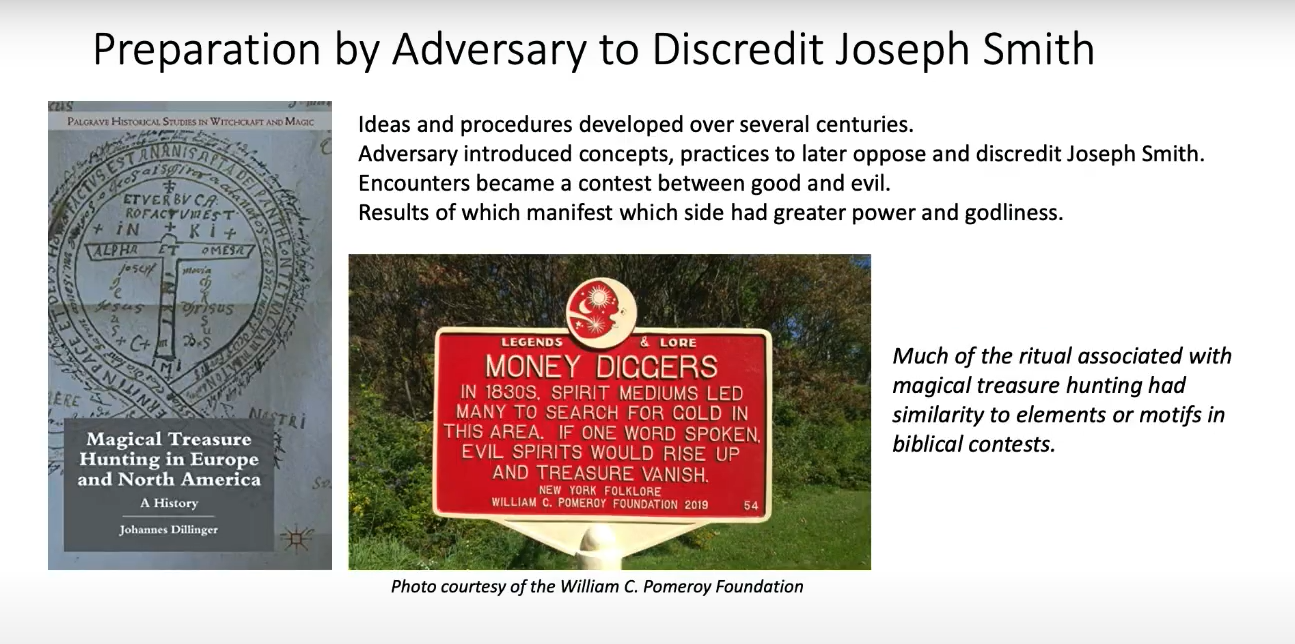
An exceptional study of the origins and background of that activity is provided by historian Johannes Dillinger in his book Magical Treasure Hunting in Europe and North America: A History.[9] He traces development of these ideas and procedures over several centuries. This would afford the Adversary opportunity to introduce concepts or practices designed to later oppose and discredit Joseph Smith.
Some with whom Joseph had associated caused him serious trouble as they sought to find and obtain the Book of Mormon plates after he received them — claiming they had as much right to them as Joseph.[10] They showed a strong hope and belief that it could be possible to obtain buried treasure by ritual and spiritual means, and thought that Joseph may have done so when he got the plates.
Many opposed to Joseph as he received the Book of Mormon plates had involvement in the treasure seeking ritual, and were often called “money diggers.” For the young prophet, his encounters with treasure hunting became a contest between good and evil, the results of which were better exposed by the results of the ritual, manifesting which side had the greater power and godliness. The Lord revealed to Joseph that without ritual or ordinances, “the power of godliness is not manifest to men in the flesh” (Doctrine and Covenants 84:20-21). Much of the ritual associated with magical treasure hunting had similarity to elements or motifs in biblical contests. In my essay, I provide examples of these rituals.[11]
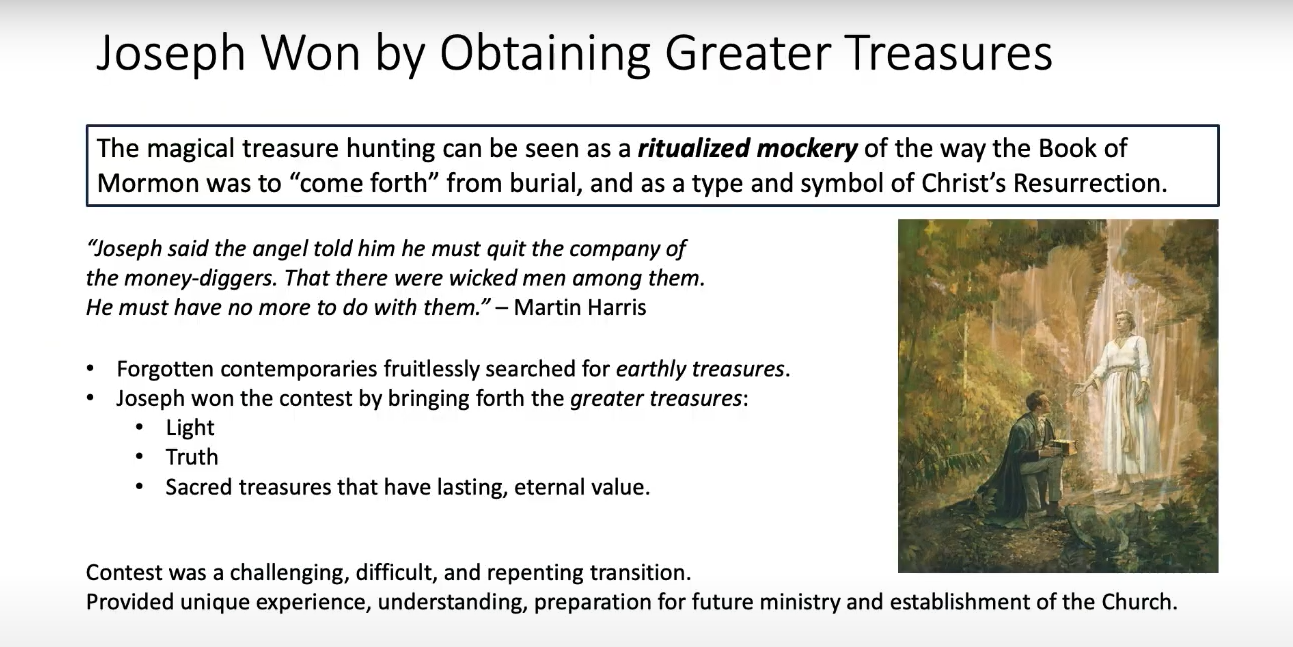
Over time, Joseph received direction from the angel Moroni, who helped him overcome participation in these activities and to use procedures commissioned by God. Martin Harris recalled that “Joseph said the angel told him he must quit the company of the money-diggers. That there were wicked men among them. He must have no more to do with them.”[12] However, some things directed by the angel can be recognized as having counterparts in treasure hunting rituals, but used with divine authority, purpose and marvelous results. Significantly, the magical treasure hunting can be seen as a ritualized mockery of the way the Book of Mormon was to “come forth” from burial, and as a type and symbol of Christ’s Resurrection.[13]
While his now all-but-forgotten contemporaries were fruitlessly searching for earthly treasures, Joseph eventually won that contest by bringing forth the greater treasures: the heavenly treasures of light and truth in the Book of Mormon. Unlike his opponents, Joseph obtained sacred treasures that have lasting, eternal value.
Joseph’s transition from using his gift of seership trying to better his family’s impoverished condition, to instead bring forth truth and righteousness for the Lord, was a challenging, difficult, and repenting transition. It can be recognized as a great achievement in his life.[14] It provided unique experience and understanding to help prepare him for his future ministry and establishment of the Church.
Joseph Smith’s Encounter with the Ritual of Freemasonry
The subject of Freemasonry is vast and complex. The ultimate origins are obscure, and Masonic historians have been as perplexed as anyone in trying to explain them. 
Frances Yates, the noted English historian of the Renaissance, commented that the origin of Freemasonry “is one of the most debated, and debatable, subjects in the whole realm of historical inquiry.”[15] And, as to Joseph Smith’s encounter, Jeffrey Bradshaw observes: “Because Joseph Smith became a Mason not long before he began to introduce others to the Nauvoo endowment, some suppose that Masonry must have been the starting point for his inspiration on temple matters. The real story, however, is not so simple.”[16] Bradshaw has recently published a detailed book discussing Joseph Smith’s temple rites and Freemasonry.[17]
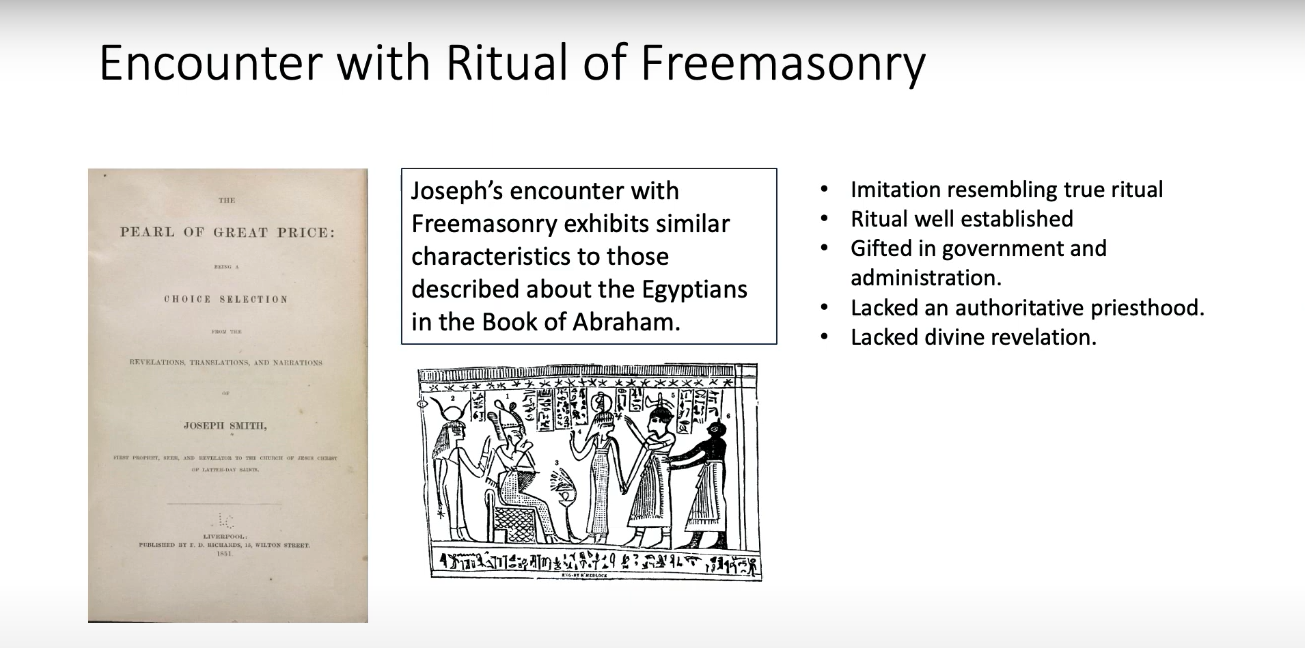
There are informative passages in the Pearl of Great Price, which in many respects came as a preparation for temple ordinances soon to be introduced.[18] It appears from these scriptures that ancient prophets had to contend with unauthorized imitations or “secret combinations,” which in some respects would resemble true rituals but differed greatly in purpose and were without divine authority.[19] Temple rituals were stolen, misused and abused.
Joseph Smith’s encounter with Freemasonry exhibits some similar characteristics to those described about the Egyptians in the Book of Abraham. He was required to restore an ancient temple ritual against the backdrop of Freemasonry, a popular and well-established order and ritual to which many Latter-day Saints at Nauvoo belonged when Joseph’s revealed temple ceremonies were introduced. He had to establish ordinances that would stand the test of time and be in harmony with information about ancient temples to be discovered in future times.
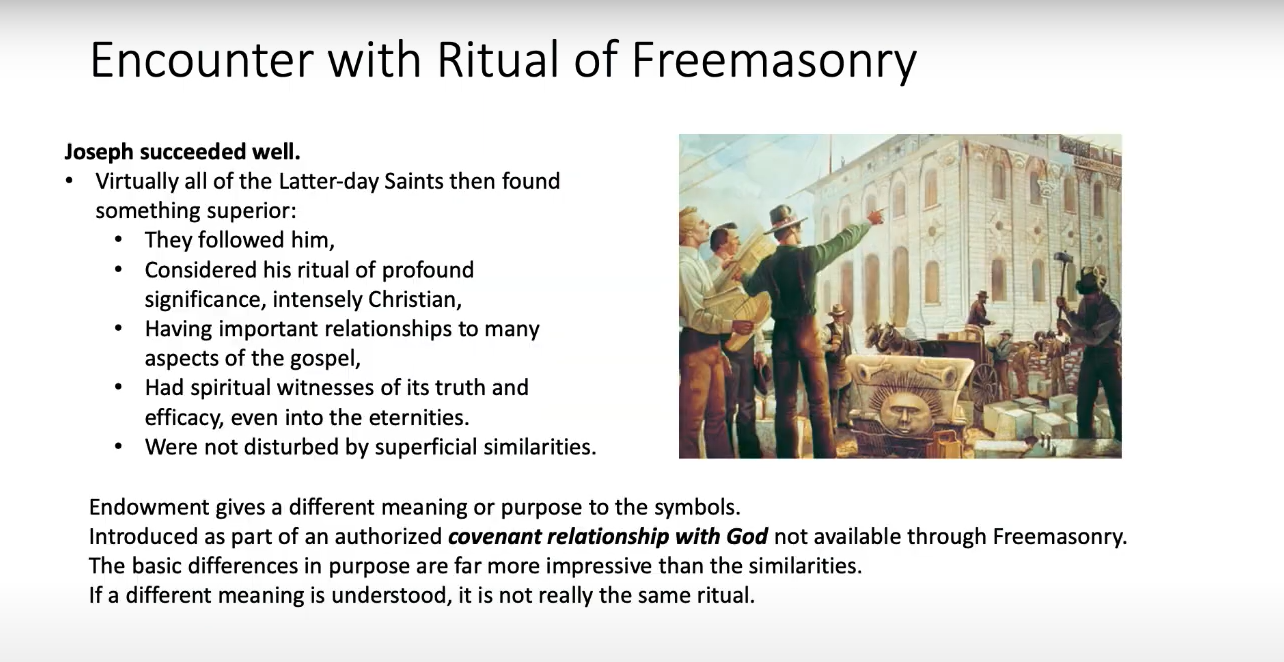
Significant elements in biblical magical contests were present as the temple endowment was revealed alongside Joseph’s encounter with Freemasonry. 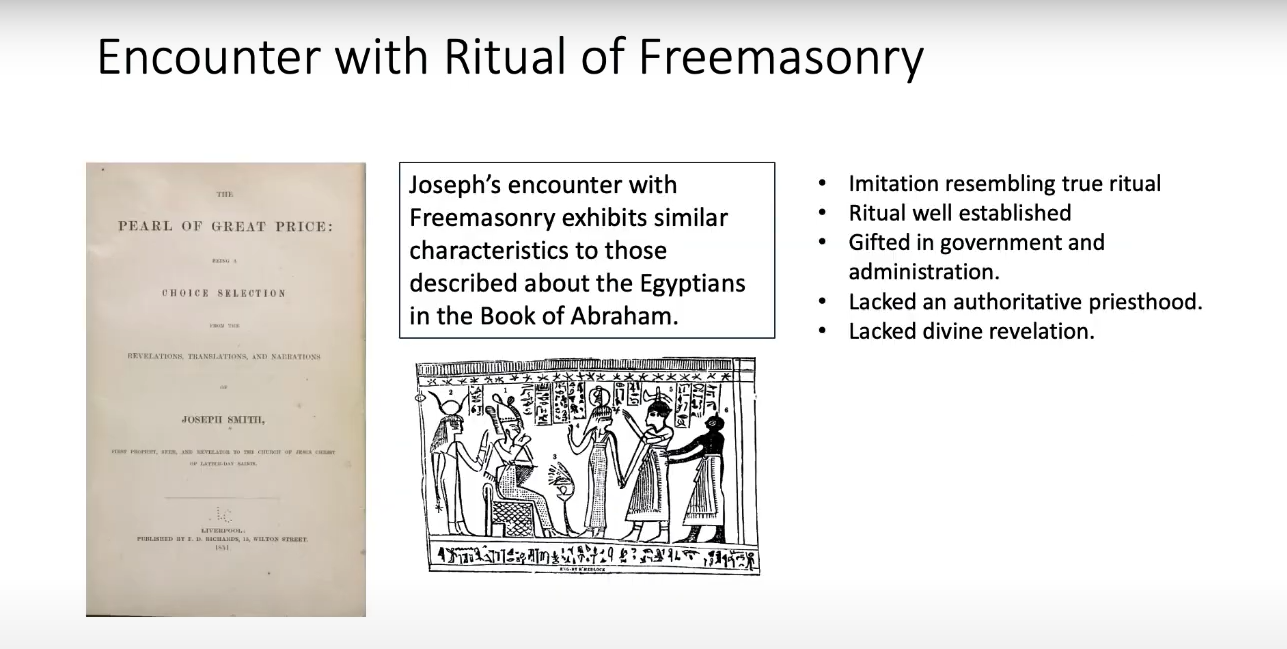
According to the Book of Abraham, the Egyptians were gifted in government or administration but lacked an authoritative priesthood and divine revelation. Freemasonry was comparable. Remarkable organization and much wisdom and statesmanship had been apparent in this movement. However, in Freemasonry no directly revealed priesthood, revelation, or religious organization was to be widely established as Joseph Smith was called to do. Masons relied on human philosophy and tradition along with biblical influence and things of unknown origin. The Book of Abraham helps us understand the relationship Joseph had to Freemasonry. He was required to introduce revealed priesthood ceremonies when the other ritual was already well-established in the world.
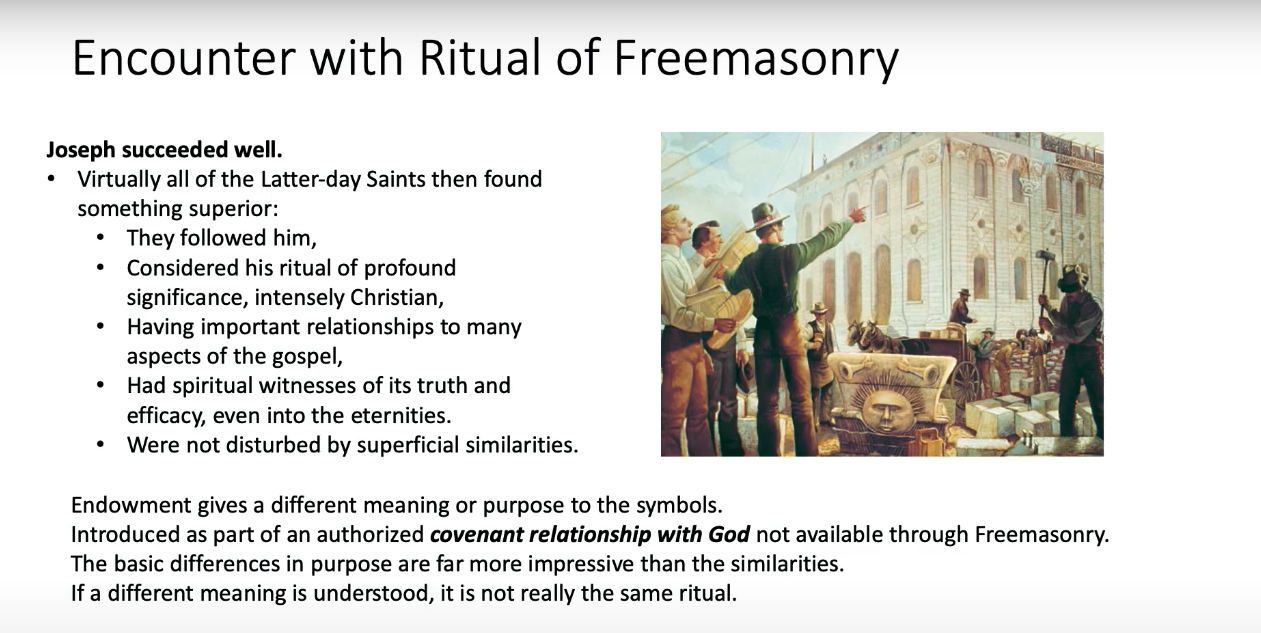
Joseph Smith succeeded well. He explained that Freemasonry had an apostate form of ancient temple ritual, just as sectarian churches had incomplete and changed forms of other doctrines and teachings.[20] It appears that virtually all of the Latter-day Saints then found in Joseph’s ritual something superior. They followed him and considered his ritual of profound significance, intensely Christian, and having important relationships to many aspects of the gospel. They had spiritual witnesses of its truth and efficacy, even into the eternities.[21]
Freemasonry did not provide such rich religious relationships. Indeed, it did not claim to be a religion at all.[22] And while some “Masonic” type symbols appear in both rituals, it is most important to note that the endowment gives a different meaning or purpose to the symbols. In the Latter-day Saint ceremonies, they are introduced as part of an authorized covenant relationship with God not available through Freemasonry. The basic differences of purpose are far more impressive than the similarities. This is most significant, because in ritual the meaning of the symbol is all-important. If a different meaning is understood, it is not really the same ritual.
There is a large literature attempting to show the origins of Freemasonry. From this it is evident that it developed from many sources. A frequent claim is that it goes back to the Temple of Solomon.[23] This is not traceable. The biblical allusions can be compared, but not legendary claims. Some have thought Masonic ideas were brought back from the Holy Land by Crusaders.[24] Alchemy is also a claimed source,[25] as is the ceremonial magic tradition,[26] and the secretive Rosicrucian society.[27] Any of these or other such sources could have conveyed “scattered fragments” of true ordinances from the ancient past, but they would not have the accuracy, completeness, purpose or authority restored to Joseph by direct revelation from God.[28]
As in the development of magical treasure hunting, the long and complex development of Freemasonry should be seen as providing the Adversary with much opportunity to introduce some concepts or procedures which could be used later to oppose and discredit Joseph Smith. As a consequence, it has been asserted by critics that he was a plagiarist of ritual and did not receive it by revelation, but from the Masons. However, the favorable reaction of Latter-day Saints who were familiar with detail of both the Masonic ritual and Joseph’s when it was introduced, is an important witness of his prophetic gifts and power. If any might be disturbed by the superficial similarities, it would be those at the time who were well acquainted with both rituals. Joseph Smith clearly won that ritual contest.
From our perspective today, Joseph’s temple ceremonies have proven to be most durable and meaningful to more and more people as events unfold. It is not my purpose to criticize the Masons, for they do much good. However, it should be obvious to Latter-day Saints that Joseph Smith established a marvelous revealed order with lasting and eternal significance — a covenant order that brings about much selfless service, many remarkable spiritual experiences, and much long-term satisfaction.
The Crucifixion as the Primary Ritual Contest
The most enduring and important ritual contest of all time was won in the Crucifixion, Resurrection, and eternal redemption provided by the Savior Jesus Christ.
Virtually all of the elements or motifs common in the contests being considered are represented in the atoning sacrifice of Jesus Christ: (ritual, courts, intense symbolism, miracles, challenge to authority, godly purpose, mockery, sacrifice, death and resurrection, angelic assistance, etc.). The Savior voluntarily submitted to a barbaric Roman execution ritual. It brought great agony and the mockery and scorn of his judgeship and kingship.[29] This so He could descend below all things[30] and, as He said, be “lifted up upon the cross . . . that I might draw all men unto me, that as I have been lifted up by men even so should men be lifted up . . . to stand before me, to be judged of their works” (3 Nephi 27:14). Thus, each of us is a participant in the primary ritual contest. Do we acknowledge and look to the Savior as the One who “beat them at their own game” in the Crucifixion by overcoming the world to emerge from this contest resurrected with all power given Him in heaven and earth (Matthew 28:18)? Or do we side with those who fall away and crucify Him afresh (Hebrews 6:6)? This is an ongoing contest as we each learn to judge, discern, and make choices between the two powers.
Note: I express appreciation for assistance from my son John P. Mitton.
[1] George L. Mitton, “Joseph Smith and the Magical Contest,” in Steadfast in Defense of Faith: Essays in Honor of Daniel C. Peterson, ed. Shirley S. Ricks, Stephen D. Ricks, and Louis C. Midgley (Orem, UT: Interpreter Foundation; Salt Lake City: Eborn Books, 2023), 247-69.
[2] See, e.g., E. M. Butler, The Myth of the Magus (Cambridge, UK: Cambridge University Press, 1979), 3.
[3] The problem is discussed, along with various definitions of magic, by Stephen D. Ricks and Daniel C. Peterson in “Joseph Smith and ‘magic’: Methodological Reflections on the Use of a Term,” in To Be Learned is Good If . . ., ed. Robert L. Millet (Salt Lake City: Bookcraft, 1987), 129-47.
[4] Book of Abraham 1:12–19 and Facsimile no. 1.
[5] Genesis Apocryphon, column 20.
[6] F. F. Bruce, The Book of the Acts, rev. ed. (Grand Rapids, MI: Eerdmans, 1988), 166-67; emphasis added.
[7] Cf. Morton Smith, Jesus the Magician (San Francisco: Harper & Row, 1978).
[8] Cf. D. Michael Quinn, Early Mormonism and the Magic World View (Salt Lake City: Signature Books, 1987).
[9] Johannes Dillinger, Magical Treasure Hunting in Europe and North America: A History (Basingstoke, UK: Palgrave Macmillan, 2012). See Alan Taylor, “The Early Republic’s Supernatural Economy: Treasure Seeking in the American Northeast,” American Quarterly 38, no.1 (Spring 1986): 6-34.
[10] Martin Harris, in “Mormonism–No. II,” Tiffany’s Monthly 5, no. 4 (August 1859): 167.
[11] For references to 18th and 19th century rituals, I am indebted to Joseph Trevor Antley for his works available on the Internet: A Topical Guide of Treasure-Seeking Rituals—From the American Northeast during the 18th and 19th Centuries (August 2011), and his companion Guide to Treasure-Seeking.
[12] “Mormonism–No. II,” Tiffany’s Monthly 5, no. 4 (August 1859): 169.
[13] Cf. George L. Mitton, “The Book of Mormon as a Resurrected Book and a Type of Christ,” Interpreter: A Journal of Latter-day Saint Faith and Scholarship 42 (2021): 371-398.
[14] Mark Ashurst-McGee, “A Pathway to Prophethood: Joseph Smith Junior as Rodsman, Village Seer, and Judeo-Christian Prophet” (master’s thesis, Utah State University, 2000); Brant A. Gardner, The Gift and Power: Translating the Book of Mormon (Salt Lake City: Greg Kofford Books, 2011), 3-102.
[15] Frances A. Yates, The Rosicrucian Enlightenment (Boulder, CO: Shambhala, 1978), 209.
[16] Jeffrey M. Bradshaw, “Freemasonry and the Origins of Modern Temple Ordinances,” Interpreter, A Journal of Latter-day Saint Faith and Scholarship 15 (2015): 159.
[17] Jeffrey M. Bradshaw, Freemasonry and the Origins of Latter-day Temple Ordinances (Orem, UT: Interpreter Foundation; Salt Lake City: Eborn Books, 2022).
[18] Jeffrey M. Bradshaw, “The Book of Moses as a Temple Text,” in Tracing Ancient Threads in the Book of Moses: Inspired Origins, Temple Contexts, and Literary Qualities, ed. Jeffrey M. Bradshaw, David Rolph Seely, John W. Welch and Scott A. Gordon (Orem, UT: Interpreter Foundation; Salt Lake City: Eborn Books, 2021), 1:421-68.
[19] See Book of Moses 5:29, 51, 53; 6:27–29.
[20] Cf. Benjamin F. Johnson, My Life’s Review (Independence, MO: Zion’s Printing and Publishing, 1947), 93.
[21] Bradshaw, “Freemasonry and the Origins of Modern Temple Ordinances,” 174.
[22] Jeremy L. Cross, who was a most influential Masonic author and lecturer in the United States during the subject period, observed: “Those who elevate masonry to a level with revealed religion, and those who rank it below the standard of pure morality, are equally unacquainted with its true object.” Jeremy L. Cross, The True Masonic Chart or Hieroglyphic Monitor, 4th ed. (New Haven, CT: Self-published, 1826), preface.
[23] Cf. Alex Horne, King Solomon’s Temple in the Masonic Tradition (London, UK: Aquarian Press, 1972).
[24] Albert Mackey, Freemasonry and the Crusades (New Orleans, LA: Cornerstone Publishers, 2011).
[25] Timothy Hogan, The Alchemical Keys to Masonic Ritual (Denver, CO: Privately published, 2007).
[26] Jaime Paul Lamb, Myth, Magick & Masonry: Occult Perspectives in Freemasonry (Phoenix, AZ: Laudable Pursuit Press, 2018). See esp. sec. 1, “The Integral Relationship between Freemasonry and Ceremonial Magick.”
[27] Yates, The Rosicrucian Enlightenment, 42.
[28]An insight of Hugh Nibley is pertinent: “Latter-day Saints believe that their temple ordinances are as old as the human race and represent a primordial revealed religion that has passed through alternate phases of apostasy and restoration which have left the world littered with the scattered fragments of the original structure, some more or less recognizable, but all badly damaged and out of proper context. The early fathers of the church gave such an explanation for the disturbingly close resemblances between Christianity and other, notably Egyptian, beliefs and practices — all are the remnants of another age.” Nibley, The Message of the Joseph Smith Papyri: An Egyptian Endowment, 2nd ed. (Salt Lake City: Deseret Book; Provo, UT: FARMS, 2005), xxvii; emphasis added.
[29] George L. Mitton, “The Crucifixion as a Mockery, Witness, and Warning of the Judgment.” Interpreter, A Journal of Latter-day Saint Faith and Scholarship 32 (2019): 39-52.
[30] Doctrine and Covenants 88:6, 122:8.
