Summary
In this inspirational talk, Sonrisa Hasselback explores how lasting confidence is not based on appearance, popularity, or success, but on our covenants with Jesus Christ. Using scriptural stories and personal experience, she testifies of a “higher and holier” confidence grounded in discipleship and divine identity.
This talk was given at the 2024 FAIR Annual Conference at the American Heritage School, Salt Lake City, Utah on August 9, 2024.

Sonrisa Hasselback is a religious educator and spiritual coach passionate about helping others find Christ-centered confidence.
Transcript

Higher and Holier Confidence
I am just so excited to talk about this. I’m super passionate about this topic because I’ve struggled with it the most. And it’s funny how, when you struggle with something the most, that is the thing that hopefully you will learn the most.
I was talking with a friend just a few months ago – and I’m sure you’ve all had this experience, where you’ve heard people online share, “I’m actually really happy I’ve left the church” – and this friend had actually left the church. She was telling me, “I am super happy. I’m more confident than I have ever been and I don’t need the church, I don’t need God to be happy.”
I’m sure they have felt happy and confident. Who am I to tell someone that they aren’t happy or not? There are so many things that can contribute to an overall sense of happiness and even confidence.
God has given us this life and this world to experience joy and to grow our talents, and to pursue our interest and feel confident in those things.
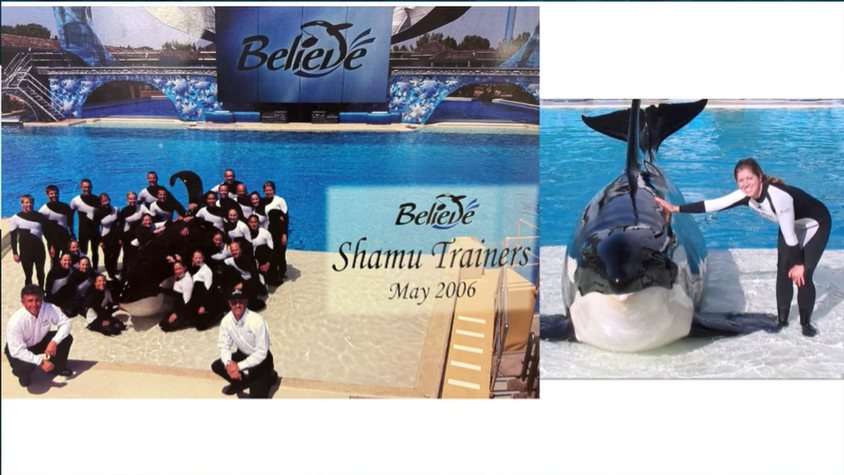
My experience at Sea World
One of the greatest joys and moments of confidence I had is when I was working at SeaWorld as an apprentice animal trainer. This dream only became possible after working hard for seven years. And a whole lot of help from Heavenly Father to make it happen.
And for me, this was my ‘confidence moment’. Nobody could take this away from me. This was a good moment.
Is There a Higher Kind of Confidence?
But I have wondered… I would like to pose this question: Could there possibly be a kind of confidence that is different from anything else we have experienced?
Is it possible that there may be a higher kind of confidence? I’m not talking about a conceited or prideful or ‘better than anyone’ or higher kind of confidence, but a kind of confidence — and these are the three questions I want you to think about:
- A kind of confidence that has no expiration date on it.
- It is not dependent on success or failure.
- It is not influenced by another person’s approval or love or something physical or tangible.
From a teenager’s perspective, I have asked this question to over a thousand kids at FSY.
I asked them, “If you have ever not felt confident in an area of your life, will you please stand?” And it’s always interesting to see who’s going to be the first person that stands up. And there’s always one that stands up – and thereafter, almost everybody in the room will stand up.
But there’s always at least one or two people that don’t stand up. And those are the people that I hand the microphone to and say, “please do tell me, what is your secret?” “Because I need to know, how are you confident? You mean you’ve never not been not confident?”
And do you know what they say? They say their secret is they just don’t care what other people think.
I love that. And I believe that some of those youth have been given the gift to not care what the world or others think.
But even so, there always seems to be a moment or challenge or responsibility or a weakness that we discovered that we aren’t so confident in.
And can all the happiness, success, beauty and recognition, good times, and popularity in the world truly give someone the kind of confidence that never expires?
Can someone go their whole life and not just care what people think? Maybe, but maybe not.
As human beings, we have always reached far and deep to achieve great things, to reach new heights. Look at the Olympics. Look how many world records are broken.
The fact that when you started this conference at the beginning till now, we’ve all learned something, right? We’re continuing to grow in knowledge.
So, what about confidence? Is there a higher kind of confidence? Maybe even a holier type – as Elder Soares and Elder Uchtdorf talked about this last general conference – that we have truly yet to understand or even reach.
There are many things that can contribute to this deeper kind of confidence. And it is said—I’ve heard this, just this last week—that when you have friends and family that unconditionally love you, it is the greatest way to feel loved and accepted. And I truly believe that.
But what if people you love betray you? What if someone you lose was your greatest advocate? Who loved you unconditionally?
What if you’re that introvert who has a hard time making those deep friendships ;or thrown into a situation, or calling or job or you’re just not confident in. And it sure seems like everyone else is doing it a lot better than you.
How does someone then feel confident?
Over the last ten years, I have pursued this question based off my own experiences, my own trials, and my own weaknesses.
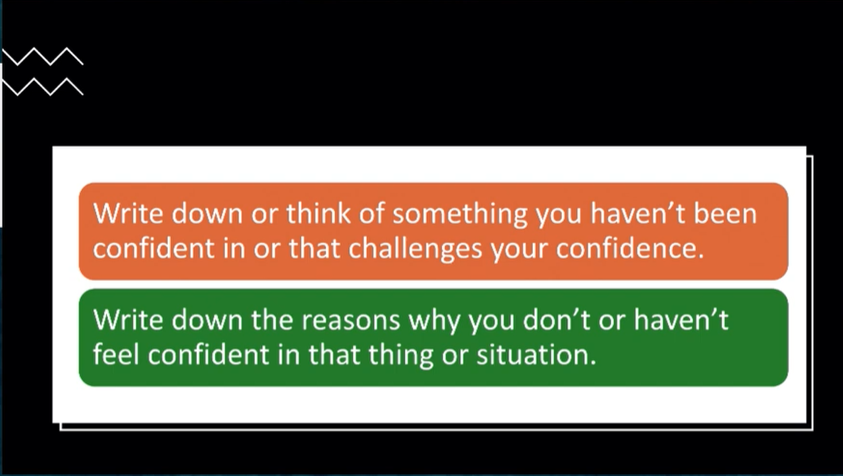
Personal Reflection Exercise
Okay, so as part of this talk, I’m gonna ask you to think about something that you have not felt confident in. And I—whether you write it down or not—but it’s important as we get to the end that you understand and pull this all together.
So think about something that you have not been confident in, specifically in an area of your life, and then write down the reasons why you don’t feel confident in that situation or thing.
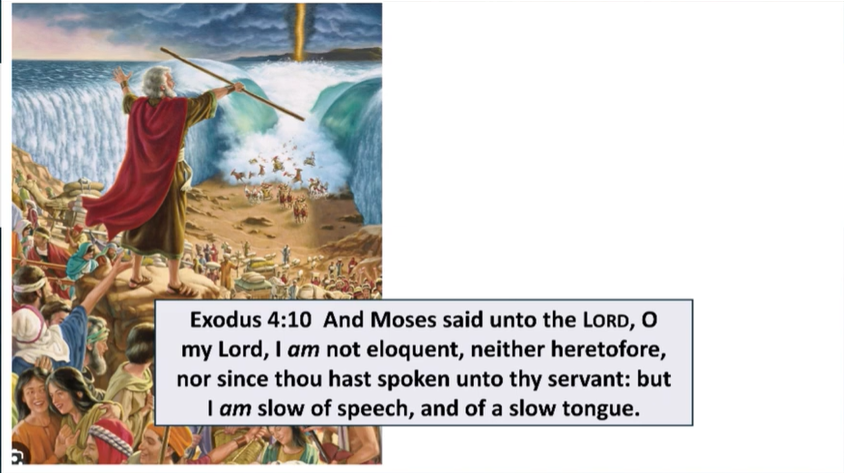
Scriptural Examples of Insecure but Confident Saints
One of my favorite stories is of this guy Moses. Gosh, he’s parting the Red seas, leaving an exodus of people, and he’s a pretty cool dude. But yet, what he says is, Oh, Lord, I am not eloquent. Neither heretofore nor since the house spoken into thy servant.I am so slow of speech and slow of tongue.
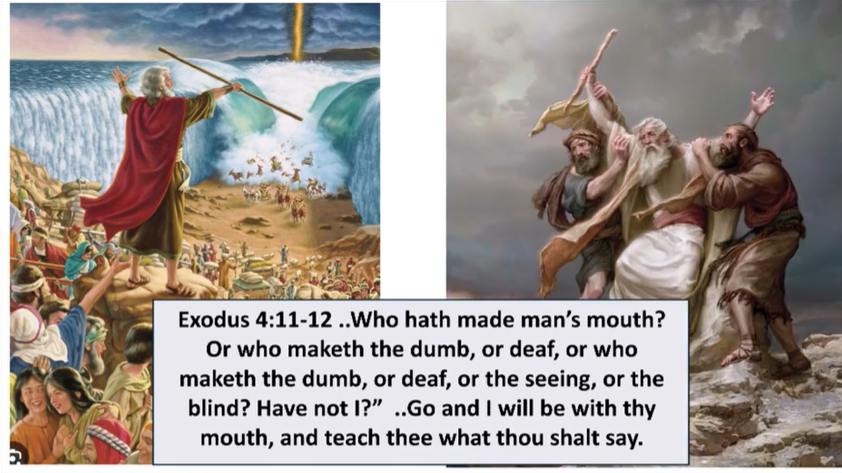
And I love what the Lord tells Moses. He says, “Who hath made man’s mouth, or who maketh the dumb, or deaf, or the seeing, or the blind? Have not I?… Go, and I will be with thy mouth, and teach thee what thou shall say.”
The key words here: I will be with thee. I will be with thy mouth. And teach what thou shalt say.
The scriptures have so many stories of people not entirely confident with their abilities. Yet it is so interesting to see how the Lord responds to each one of them.
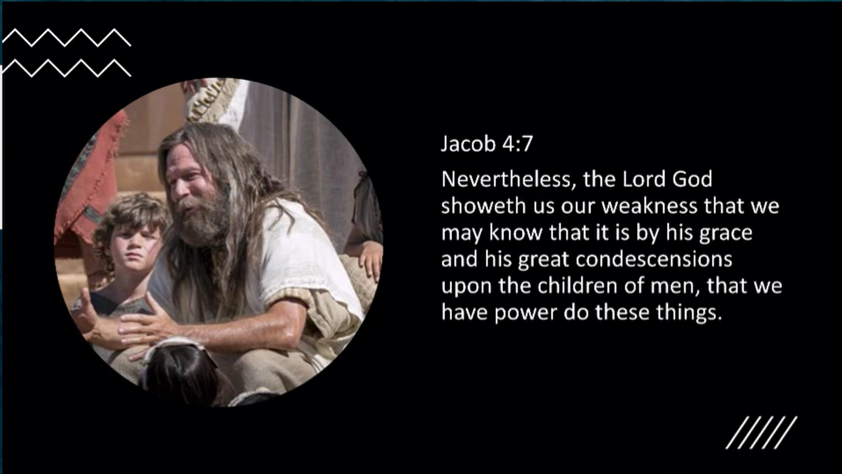
Look at Jacob here: “Nevertheless, the Lord God showeth us our weakness that we may know that is by his grace and his great condescensions upon the children of men that we have power to do these things.”
Is this confidence? Being weak in something? I don’t know. I’ve been thinking about this for the last ten years.
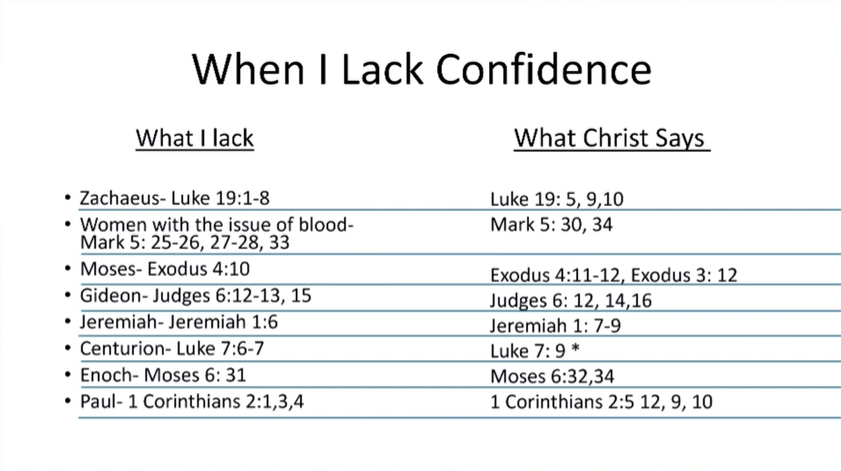
Confidence Despite Weakness
You might want to take a picture of this because we’re not going to cover all of this, but let’s cover a couple of them. But when you lack confidence, if you look here on the left side, all these people were not confident in something.
But yet, what does Christ say to each one of them? And you’re going to find that there’s interesting things that he says to each one of these people.
One of my favorite stories is Gideon. He’s like, I am the least in my father’s house. And the Lord says, I will be with thee. The Lord shows us by proving to him that he didn’t need an army to win.
Okay, so how about Paul? Famous Paul, who says I’m not excellent in speech or wisdom when it comes to declaring his testimony. He’s afraid he’s weak, but he reminds the people to have faith in God’s power and not the wisdom of men.
So all these people—Jacob, Moses, Gideon, and Paul—so many others teach us beautifully that weakness is part of feeling confident. Confident in what the Lord can do with us and what we can do through him. That our faith matters more than our weakness or ability.
The Blind Man’s Bold Faith
Okay, there’s a beautiful story in Mark 10 about a blind man who teaches us that faith and confidence and confidence in the Savior is more important than what he was lacking. This blind man – he hears Jesus is passing by and he calls out, “Thou Son of David, have mercy on me.” And people around him—you can picture this – are saying “shhhh! Just be quiet. You’re nothing. He’s everything. Don’t bother him.”
But he does not listen to those people. Instead he calls out again, “Thou son of David, have mercy on me!” And Christ calls him to come. And the blind man, without hesitation, comes to Christ. But the Scripture says, he first takes the thing he probably depended on for a very long time—his garment—and cast it aside and rose.
Jesus asked, “What shall I do for you?” And the man says, “May I receive my sight?” And it was then the Lord says, “Your faith has made you whole.” This man of faith, who lacked so much—his physical sight to see Jesus—yet he had the spiritual eyes to see who the Savior was and what he could do for him.
This blind man chose to have faith to leave the old behind. This clothing left behind was his identity. It was his security. It’s what people knew him as and what he himself knew he was a blind man. But he chose to leave that thing. And to this dependance on security, warmth in a way that when people tossed coins added, he probably caught it with that, that garment.
And he began to seek a higher and holier way—something or someone who would never expire or wear out. And could he find his confidence in this new way of life, this new identity with Christ? He cared more about what Christ had to offer. Only in hope. No guarantee of a miracle. Not yet, at least.
But it seems he rose confidently in faith that day, a higher kind of confidence through the Savior. He saw Christ spiritually, and in turn was able to see so much more, including himself for the very first time, or at least in a long time.
Elder Massimo de Feo says “I promise, as we hear the Lord and allow him to guide us in the Savior’s covenant path, we will be blessed with clear vision.”
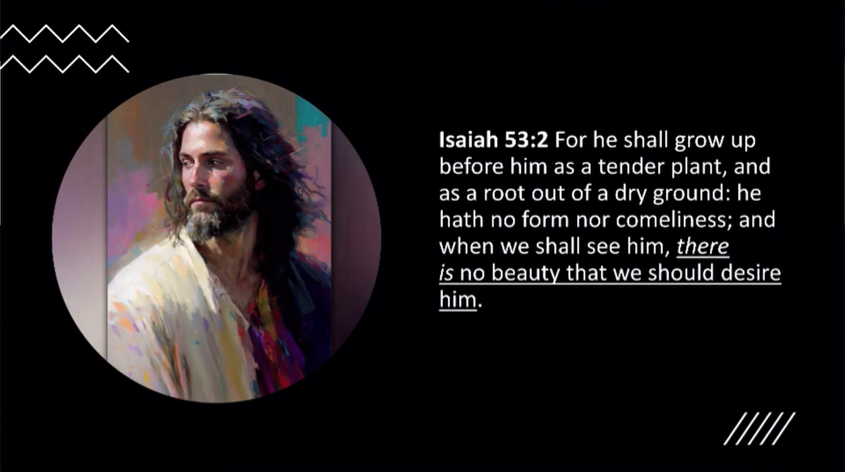
The Savior’s Appearance and Confidence in Rejection
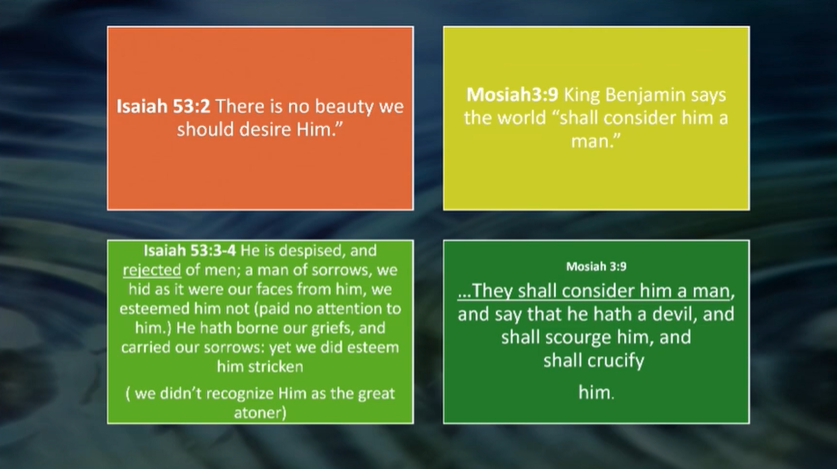
This scripture right here hits home to me. Isaiah is describing the Lord in this way, “For he shall grow up before him as a tender plant, and as a root out of a dry ground: he hath no form nor comeliness; and when we shall see him, there is no beauty that we should desire him.”
If you go to your scriptures and click on that footnote, “a beauty”, the Greek translation is ‘there’s no physical appearance that we should desire him.’ Literally, the Jews, when they saw Christ, they looked at him and thought, there is nothing about him that we desire; he is not the man that we’re hoping and looking for.
And yet we wake up every day trying to aspire to what the world puts before us. And yet here is the Savior. There’s nothing that people even wanted to be like him or desire of him.
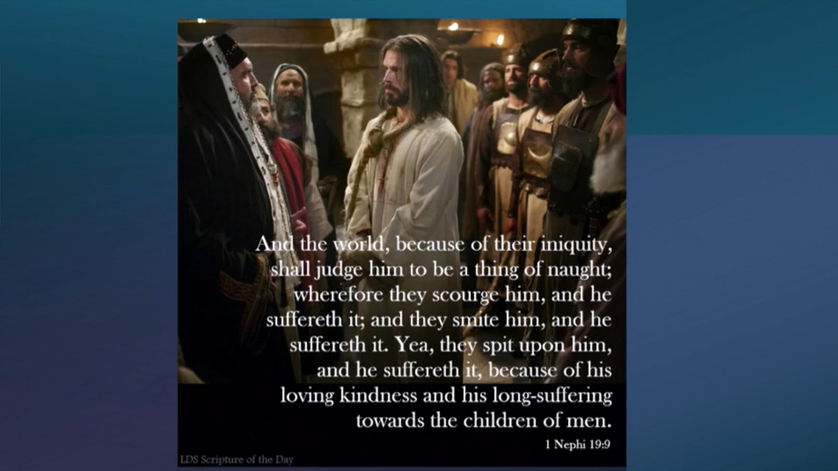
And just as a reminder of what people thought about him – “Because of their iniquity, shall judge him to a thing of naught; wherefore they scourge him, and he suffereth it; and they smite him, and he suffereth it. Yeah, they spit upon him, and he suffereth it.”
I don’t know if anybody here has ever been spit on. It’s not a great experience.
What if you were in the grocery store and people started spitting at you. How confident would you be to go back to that store, or how confident would you be to walk down those halls? Yet Christ continues to suffer it because of his loving kindness towards the children of men.
What Was Christ Famous For?
So there’s nobody that we should desire him. King Benjamin says the world’s going to consider him a man. He’s despised. He’s rejected. We hid, as it were, our faces from him. We esteemed him not, paid no attention to him. He has borne our griefs and carried our sorrows. But we didn’t esteem him.
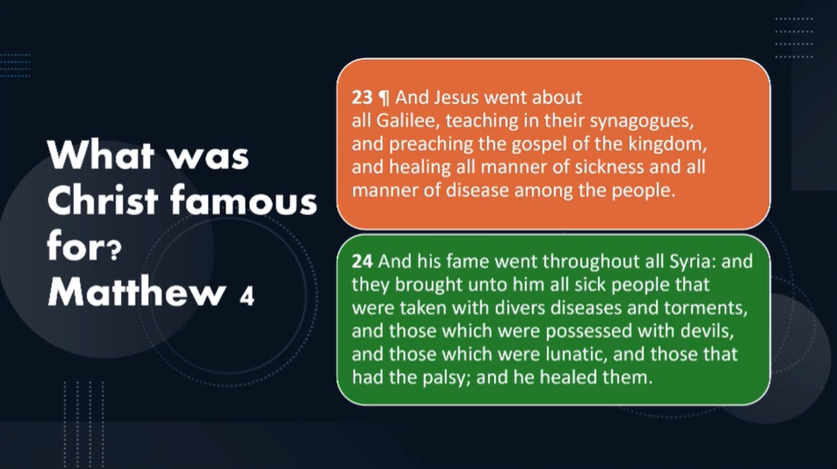
What was Christ famous for, then? He did all those things. So then what was he famous for? Now, if you read your scriptures, you can see so many examples of what Christ was famous for. This is just two verses – and all of the verses in the Book of Mormon and the Bible (Old Testament, New Testament) what Christ was famous for.
Will you, on your paper, write down the first thing that stands out to you what Christ is famous for, just from these two verses. What’s the first thing that came to your mind? And it may not even been here. Maybe this is something that popped into your head.
What’s the first thing that came to your mind? What was Christ famous for? He healed people. He healed all people. His teachings were unique. Whose teachings were they, by the way? Were they his own? He was “about His father’s business.’ His father’s business. Good.
Okay, everyone. Write down on the paper. What was the first thing that came to your mind? What was the first thing that Christ was famous for?
What It Was Not About for Christ
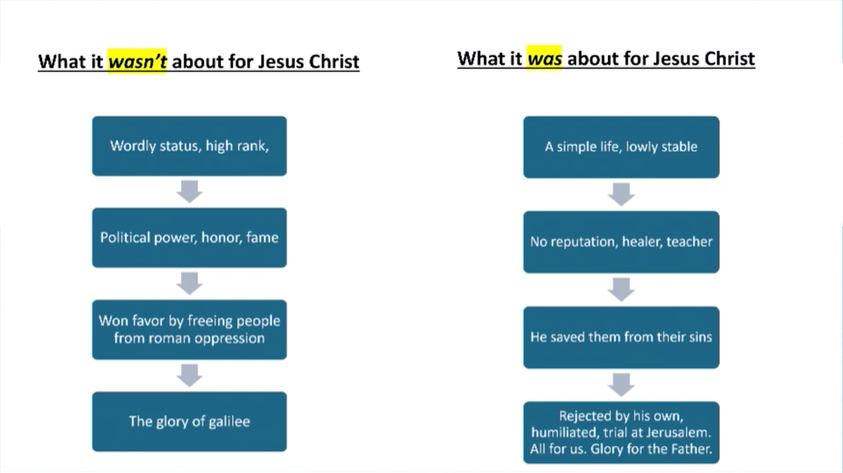
Okay, so this is what it wasn’t about for Christ. And in your head, think about this. What was it not about for Jesus Christ? It was not about worldly status, high rank, political power, honor, favor won by freeing people from Roman oppression. No, he wasn’t about that at all. The glory of Galilee? Nope.
What was it about for him? A simple life, no reputation. But he was a healer and he was a teacher. He saved them from their sins and he was rejected by his own. He was humiliated at a trial at Jerusalem. But it was all for us. It was glory for the father. This is what it was about.

Confidence in Daily Life
So this is the best part. This is the best part. I love this and this is what’s been really key for me. When the—sometimes when you will look in the mirror and you wake up, you’re like, I don’t like the way I look today.
Or maybe something really said something to you and you’re like, yeah, I guess I am like that. Or maybe you’re like, face to face with the weakness and you’re like. Like, I was like, guys, I signed up for a gym, Vasa Fitness. That was—that was challenging for me. And I had to fill my water bottle up.
If anybody’s been the boss of fitness, you know, the water fountain was all the way across the other side, and I had to walk by, you know, all the macho guys and even the macho girls. You know, it was a moment where I was not feeling confident. Okay, I went to this real life scenario.
Okay. What was it about for Christ?
What It Was Never About for Christ
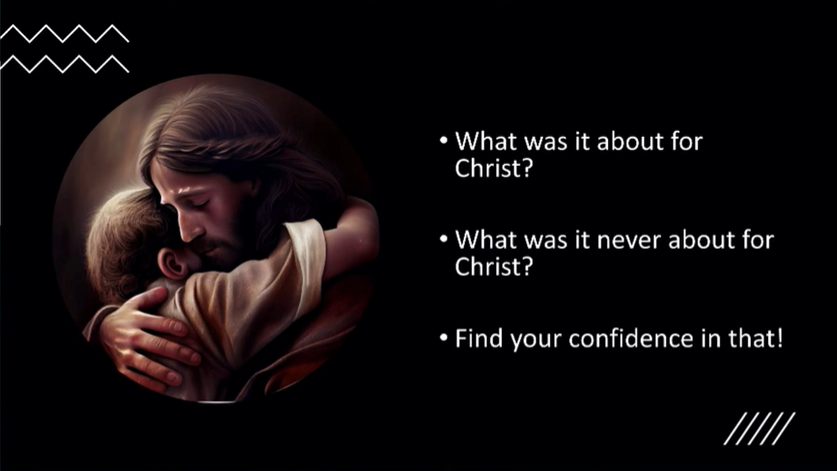
The first thing that comes to your mind? Loving people, helping people, serving people, healing people. What was it never about for him? Whatever you put down, it was never about the fame. It was never about the popularity. It was never about looking the best.
So with this in mind, I’m thinking as I’m walking across a massive fitness floor, I’m just going to smile at people because Jesus loves them. And I just held my head up high and walk really fast, thinking about it and walk back. But I smiled at them and I was like Jesus in my mind, okay, it works fine. Your confidence in that.
It wasn’t about the fame, the popularity, the money, the best job team, being the best, good looking. It was about serving and loving people. And that is what you’re going to find your confidence in. Any situation that you’re in.
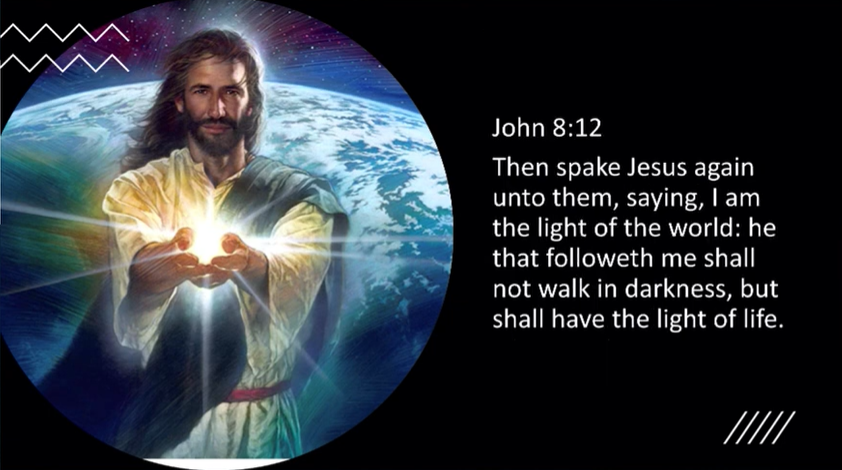
Hold up your light that it may shine into the world. Because I am the light. What you shall hold up, that he may see your good works, but glorify your father which is in heaven.
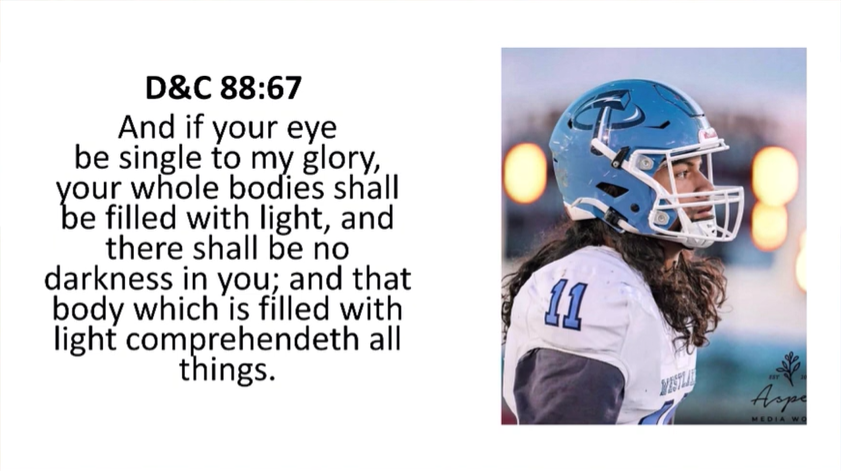
Glorifying God
Oh, hold on. Okay, you guys, I’m going to show you a little clip from New News. He’s taught me a lot about what it means to glorify my father in heaven. He comes to class, I teach seminary, and he’ll come to class. He goes, he’s probably going to go pro. He’s going to be, he’s a D1 athlete. He’ll be at Stanford next year.
He’s not even a member of the church. He hasn’t been baptized yet, but he comes to seminary and he sits down and he’s just, like, deep in the scriptures. And I’m just like, what is he thinking? Like he’s gotta be thinking of something like it. Just this look. And I’m like, no. So you got to tell us, like, what did you study? Like, what are you what are you thinking about?
And he goes, oh, Sister Hasselback. He’s like, I’m just glorifying God right now. I’m like, well, what do you mean by that? He goes, I just glorify God because he’s done so much for me. I just want to read the scriptures to bring honor to him.
I’m like, what? You’re—because like, sometimes when I read scriptures—and there’s nothing wrong with this, by the way—I want to find my answers and I want to find revelation, like when I go to the scriptures. And, I do do that.
And he goes, well, yeah, but it’s mainly just to give glory to him. I just tried to give glory to him. On every single social media post that he would post of an offer that he got from his D1 school, he would say, Glory to God. I get choked up about this because I love to see people do this. To glorify their father in heaven.
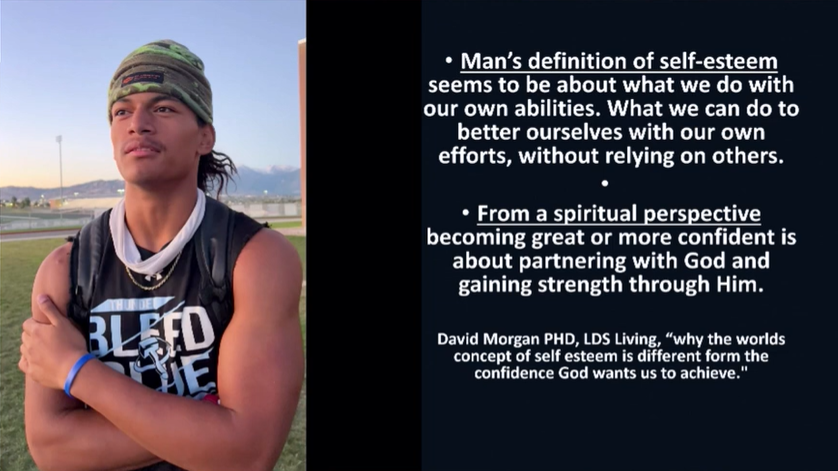
And I got news. He’s like, can you tell us about what you’re what you’re thinking in your head? Can you just give us a little spiel? And you guys, he’s just such a humble dude. Listen to what he says. Most of my life. I wasn’t really. I wasn’t very confident. But that’s just. I wasn’t honed with my abilities. I didn’t know what I could actually do, you know? But once I actually understood my potential and knew the impact that I made around people, I understood, you know, and it gave me more confidence in myself.
And the more I lift to God, the more confident I was and the more I wasn’t ashamed of myself. So it’s just experiences what I try to you. I brush them off and I try to build myself. It only bring me stress, anxiety, you know, just, you know, depression, things like that. You know, once I found myself just following him more, giving it, giving it back to him, I found myself being more happy and, giving back to others, you know, and really being serving do all those things.
I kind of shake off my confidence. Everything that I’ve heard you say, give glory to God. Like, what does that mean to you? He’s a sovereign God. You know, he rules over all of us. So and just knowing that I couldn’t do it myself, all these opportunities I have, you know, you can take a million any time, you know, if you want it to but he keeps you going, you know, stuff like that.
He gives me the strength, energy to, keep my teammates going and keep myself going. Not just to football, but through life.
I see moments in my day where I just thank him, you know? You know, when I’m cooking food or something, I just thank him for, you know, blessing me with his food. You know, I give it back to him because, yeah, I definitely wouldn’t be able to do without him.
So I say thank you, God or all glory to God. You know, so I don’t say nothin more I thank you, my give all glory back to him, you know he deserves it. I deserve none of it. I just got to stay humble, stay. You know, keep going down his path. So it’s good, you know?
That’s why I say what I say. So. Yeah. That’s why I say what I say. Glory to God. I just want to be like him in so many ways. When you’re full of charity, you guys, your confidence is going to walk strong. The Lord says this, right? He revealed this to Joseph Smith and this revelation. It’s a big deal. Like it’s real. All right.
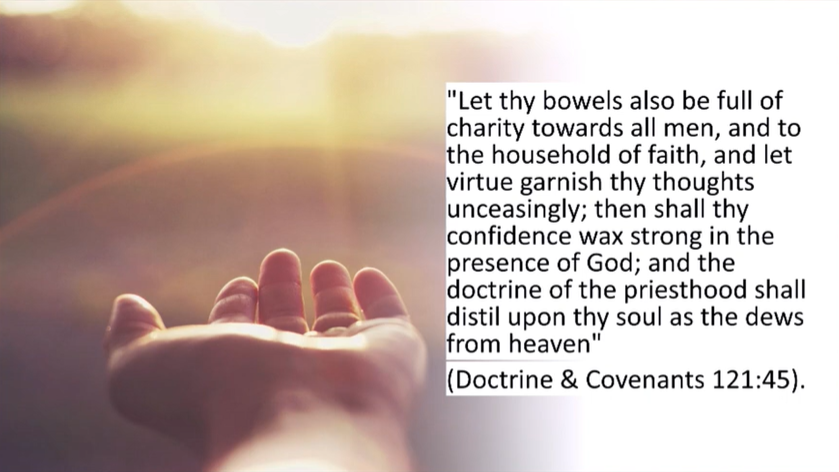
Higher and Holier Confidence Through Covenants
And then. Okay, so where do we learn to have a higher and holier confidence? Like, this is where it leads to, like when you got baptized. Like, these are the covenants that you made: to love your fellow man, to love God. And then it’s just a higher and holier way in the temple.
The House of Lords, where we can be transformed, formed in a higher and holier way. And I assure you that having the sphere of the Lord’s house in us changes us completely and transforms us, and fills us with confidence in our holy covenants made through Jesus Christ.
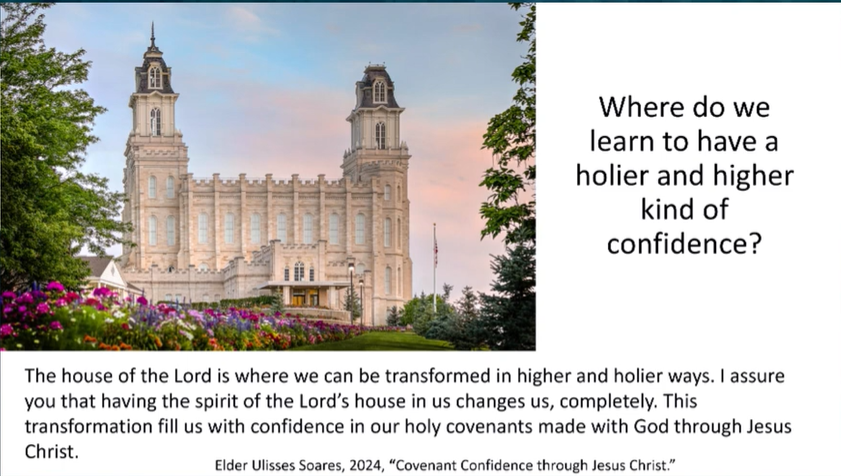
That was so well talk today by Haley. Just she nailed it. Like that truly is where our confidence comes from, right? Those covenants—I truly believe that those who gain genuine confidence in the covenants made in the house of the Lord Jesus Christ possess one of the most powerful forces that we can access in this life.
A Personal Lesson in Identity and Obedience
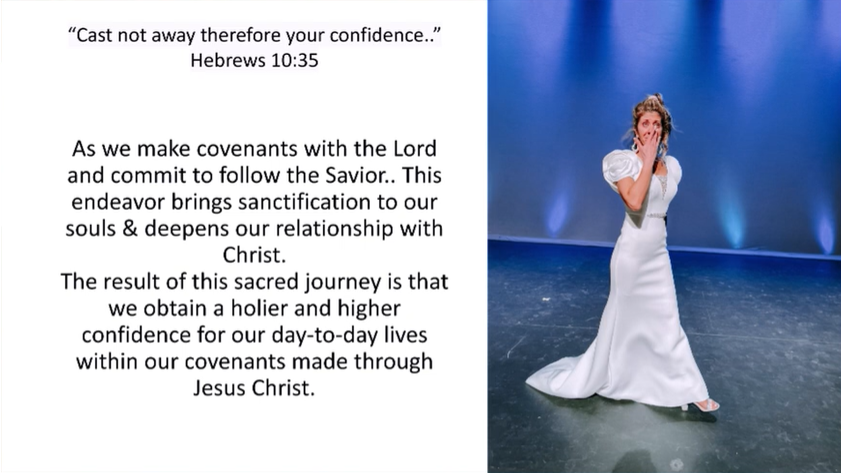
I love Elder Suarez and Luke Dorff and, what’s the sister’s name? They did such a great job. I just want to just really quick, just show this embarrassing picture of my hair not done. And in this dress, because this is a moment that I learned that, confidence is not—is so much more.
You know, I—a couple year and a half ago, I had this started this pageant. I never considered—would ever consider—a pageant. I just got my braces off, you guys, like, last month I was in braces. Okay? And I’m like, Lord, this is your hat. You’re funny. I’m not going to do a pageant in braces. And he’s like, no, you are.
And I just went. I was like, well, I don’t know what to do. Like, what do you mean? He’s like, I want you to do this for me. I really felt like I had to do it for him and I didn’t even know what that meant.
And at the time I was like, well, I guess what if I did this and I did it and wore my garments the whole time? Like, what if I were like, found a dress that I could wear, that covered them and it was the hardest thing to do, like nine months of trying to find a dress. And this dress right here. I had to alter it even, and the ladies were like, it’s fine. The mesh looked like skin. I was like, no, no—if I’m going to do this all the way, I need to do it all the way, you know? And this whole time I thought it was about modesty, but it was something different.
I walked out on stage and the first time I put this dress on—and it was just the pre-show practicing—as I walked out on stage. And I didn’t know this camera girl had this camera on. I can’t tell you the feeling that I felt. And it was just like—you did it.
This wasn’t just about a dress. This was about your relationship with me. Because in that nine months of trying to do this, God became the most important person. More than a fashion trend, more than anything else.
I didn’t win anything. I didn’t win a crown. But it didn’t matter because I felt like the Lord—just honoring those covenants – And that relationship that I developed with my Savior was the best thing ever.
Final Reflection and Challenge
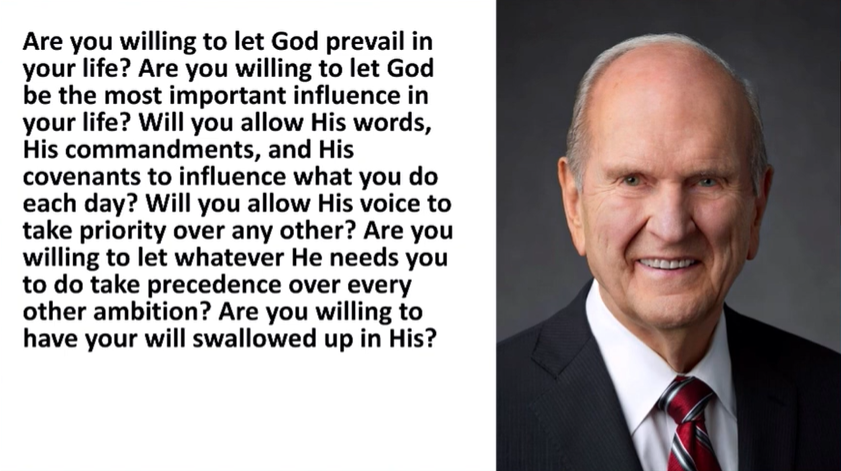
And President Nelson, he says, are you willing to let God prevail in your life? Are you willing to let him be the most important influence in your life?Will you allow his words, his commandments, his covenants to influence you, what you do each day?Will you allow his voice to take priority over any other? Are you willing to let whatever he needs you to do to take precedence over every other ambition? Are you willing to have your whole will hold up in his?
And I just want to testify that as you and I do this—this is how we find our confidence.
I truly believe that. I want to find confidence that doesn’t expire. And your covenants—they don’t expire. Jesus Christ doesn’t expire.
And I would like to leave you with three questions as you ponder. To seek your confidence in your life:
- Is the thing that you lack or struggling with something that God can help you with?
And most likely the answer, of course, is yes. - If you were to be confident in that thing, who would receive the credit?
- Who are you pointing others to and who are you focused on becoming most like?
And I say that in the name of Jesus Christ, Amen. Thank you.
Endnotes & Summary
In Higher and Holier Confidence, Sonrisa Hasselback examines the difference between worldly self-assurance and enduring spiritual confidence from a Latter-day Saint perspective. Through scriptural analysis of figures like Moses, Gideon, Paul, and the blind man in Mark 10, she shows how individuals with clear limitations were empowered by divine partnership rather than personal capacity. Hasselback integrates personal experiences—including a pageant rooted in covenantal modesty and an interaction with a spiritually mature seminary student—to demonstrate how faith and obedience foster true confidence. Her thesis proposes that the most powerful and lasting confidence is found not in achievement or approval but in honoring temple covenants and seeking to glorify God. This talk challenges cultural narratives of self-worth and redirects listeners toward a Christ-centered identity that transforms fear and weakness into spiritual strength.
Talk Details
- Date Presented: August 9, 2024
- Duration: 23:57 minutes
- Event/Conference: 2024 FAIR Annual Conference
- Topics Covered: faith crisis, confidence, self-worth, modesty, LDS women, spiritual identity, temple covenants, covenant discipleship, grace, weakness, worthiness, gospel culture, performance-based religion, healing through Christ, mental health, Mormonism, Mormon Church, Mormon guilt, Mormon standards, Mormon rejection, toxic perfectionism, Church expectations, deconstruction, spiritual transformation
Common Concerns Addressed
Concern: “I don’t feel good enough in the Church.”
Clarification: This talk acknowledges that feelings of inadequacy are common—even among prophets like Moses, Gideon, and Paul. Rather than dismissing those feelings, Sonrisa reframes them as sacred opportunities to develop a deeper partnership with the Savior, whose strength is made perfect in weakness.
Concern: “Religion makes me feel judged or unseen.”
Clarification: Rather than striving for worldly beauty, acclaim, or perfection, Sonrisa invites listeners to recognize that Jesus Christ was “despised and rejected,” and still fulfilled the greatest mission of all time. Through scriptural reflection, she gently dismantles performance-based spirituality and emphasizes divine love over external validation.
Concern: “I’m more confident and happy since leaving the Church.”
Clarification: Sonrisa compassionately engages this sentiment, affirming that worldly happiness and confidence can be real—but not always enduring. She introduces the idea of a “confidence that never expires,” one rooted in eternal covenants and a relationship with Christ, not temporary success or societal approval.
Concern: “The Church puts pressure on women to conform to certain standards.”
Clarification: Through a personal story of participating in a pageant while honoring her covenants and wearing temple garments, Sonrisa reframes modesty as a matter of personal discipleship, not social pressure. Her story models how women can exercise agency and devotion simultaneously, finding confidence in covenantal identity rather than conformity.
Concern: “I’ve never felt like I belong at Church.”
Clarification: Referencing both teenagers and adults who struggle to feel confident or accepted, this talk offers reassurance that divine worth is not earned through social standing. Instead, it is discovered through trust in God’s promises and the Savior’s atoning power, which lifts and qualifies the humble and unseen.
Apologetic Focus
Topic: Covenant identity and divine worth
Concern: Some wrestle with the idea that their value in the Church is tied to performance, callings, or personal achievement.
Clarification: Sonrisa teaches that true confidence is not contingent on success, appearance, or popularity, but is found in our covenants with Jesus Christ. This talk emphasizes that temple covenants are a source of enduring strength and transformation, offering access to a divine confidence that transcends worldly standards.
Topic: Weakness and prophetic inadequacy
Concern: Critics often highlight flaws in prophets or scriptural figures as proof that they are unqualified to lead or speak for God.
Clarification: This talk affirms that God consistently calls imperfect people—Moses, Gideon, Paul—because His power is revealed through their humility and dependence on Him. It draws attention to the scriptural pattern of divine strength manifesting in mortal weakness.
Topic: Modern discipleship and modesty
Concern: Some view teachings about modesty as repressive, especially toward women, interpreting them as shallow dress codes rather than spiritually significant choices.
Clarification: Sonrisa offers a deeply personal account of choosing to participate in a public pageant while honoring temple garment covenants, reframing modesty as an act of devotion rather than obligation. Her experience models confidence grounded in integrity and divine purpose.
Topic: Confidence and identity outside the Church
Concern: Detractors often argue that Church teachings suppress individuality or self-expression, leading people to find greater confidence only after distancing themselves from faith.
Clarification: Rather than rejecting that people may feel confident outside the Church, Sonrisa invites a deeper inquiry: is there a higher and holier confidence—one not dependent on success or others’ approval? She presents discipleship as the path to a more lasting, eternal kind of selfhood.
Topic: The nature of Christ’s mission and rejection
Concern: The suffering and social rejection of Jesus Christ are sometimes used to question His divinity or authority.
Clarification: Sonrisa reminds listeners that Isaiah prophesied Christ would be overlooked and undesirable by worldly standards—and yet He fulfilled His divine mission perfectly. The talk affirms that discipleship is not always glamorous or admired but is aligned with the Savior’s path of humility and redemptive love.
Explore Further
coming soon…
Share this article
