Introduction by Scott Gordon
For our next speaker, we’re excited to have Brandon Mull. Brandon Mull is the number one New York Times bestselling author of the Fablehaven, Dragonwatch, Beyonders, Five Kingdoms, and Candy Shop War series. He lives in a happy little valley with his wife Erlyn and their blended family of 11 kids. So, with that, I’m going to turn the time over to Brandon Mull. [Applause]
Overcoming the Disappointments of this Life
Overcoming Disappointments
All right. Hello. I am happy to be here with you today. And it’ll be nice to kind of have all of our disappointments behind us after this talk. You know, it’s just something—it’ll be good to just see all that in the rearview mirror.
What I’ve learned about overcoming disappointments in life has come from the school of life. And sometimes when we face hard things, one of the best consolations is that we learn some stuff we can share. So hopefully I can share some things that are useful. I’m sure anyone could get up here and talk about what they’ve learned in life.
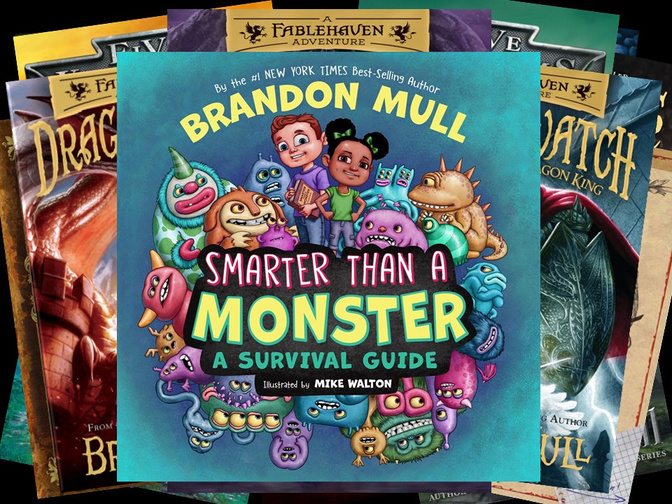
I write fantasy books for my job. I write a series called Fablehaven and The Candy Shop War and Pingo and the Beyonders series and Spirit Animals and Dragonwatch—just a bunch of crazy fantasy books. So, my life is in the land of make-believe. You’d probably think that I would come up here to talk about a little-known gospel topic, which is centaurs. But no—that’s not what we’re about today.
Some of my more recent books are the Dragonwatch series and Tales of Newel & Doren—about satyrs. You can get a little bit of satyrs in Isaiah, I think. But usually, you save that stuff for my crazy books.

I do have some kids. In that picture you have Sadie, Chase, Rose, and Calvin.
Things Don’t Always go as Planned
And I’m like—I have an obvious fact up there on the screen, which is that sometimes things fail to go as planned in life. That has been part of the story of my life. I’m sure it’s sometimes the story of your life.
I want to share about a couple of things that happened to me in my life that were difficult and challenging and also helped bring me to Christ in ways I hadn’t been brought. And then maybe talk a little about some things that have helped me in my journey trying to come to Christ—some principles I’ve learned. Hopefully there’s some value there.

A Messy Beginning
When I was younger—when I was getting ready to get married—I found myself in a situation that I didn’t plan. One of my big fears of writing fantasy books was that maybe no one would marry me because they’d be afraid we would starve, which is a very reasonable fear. I would kind of hide the fact that I wanted to write fantasy books because of that fear.
But I found myself in a situation where my first really serious girlfriend was after my mission. I wasn’t Mr. Casanova as a young guy—nor as an old guy. But I ended up falling in love with two girls at the same time. And I didn’t know how to get out of it. I was really stressed out, because I knew it was not a situation that could be sustained.
Every time I would break up with somebody, it would hurt so much that I’d think, “Oh, I must have done the wrong thing.” And then I’d get back together. So, I just ended up in this place where it was a teenage soap opera. It was a real mess.
I was praying very hard: How do I fix this? How do I get out of this?
Revelation Through My Dad
The answer came through my dad. My dad is a guy who likes baseball and tennis. He was a marketing executive. He’s not a poet; he’s not a mystic. But every now and then he gets real revelation from God.
In this situation, he took me up the canyon and said, “Hey, God has a message for you—because He told me He couldn’t get through to you. And here’s what He wanted me to tell you.”
Courting was when the problem happened. But this is what he told me:
You Have to Choose
He said, “God wants you to know this. Both these girls are wonderful. You have to pick one. You have to pick one now. And they’re both wonderful, but there’s one that’s a better fit for you than the other. And if you use these three things that God told me to tell you, it’ll make sense who to pick.”
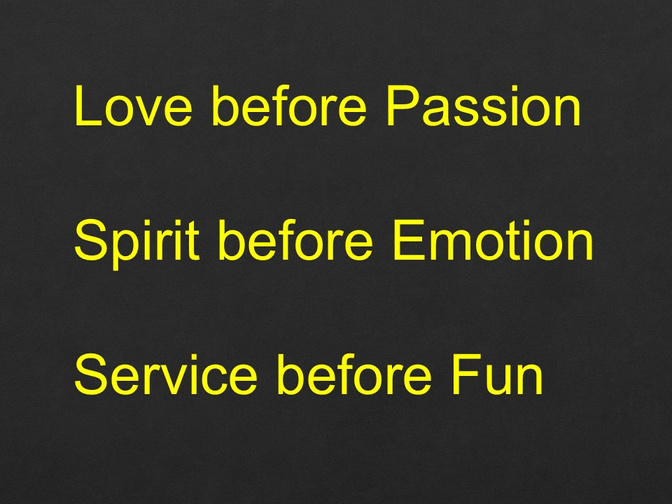
He told me:
- Love before passion
- Spirit before emotion
- Service before fun
When he told me that, it became very clear which of the two relationships was the right one. I felt pretty clear what I should do.
For me, this was like my “lost 116 pages” experience—because I did not immediately make that choice and stick to it. I dragged out the situation for probably another year. And because I dragged it out, I ended up married—with a broken heart on my wedding day, feeling like I was letting somebody down while I married somebody else.
I wish I could go back in time and slap myself in the head and say, “Dude, when it breaks up, it hurts. That doesn’t mean it’s wrong.” But I can’t do that. So, I went through it messy and stumbly. I started my marriage off on a weird foot—where my heart was broken.
I was totally faithful throughout my marriage. I really was. Except that I started it with this messed-up heart, because I didn’t listen to what God had told me a year before through my dad.

Marriage That Slipped Away
Now, my marriage to Mary was awesome. She was supportive and great. We had four beautiful kids. And they reached a point where things weren’t working anymore. And when I say things weren’t working anymore—it was that they weren’t working for her.
I honestly think for years our marriage got better and better—until it didn’t. For me, I thought it was getting better and better the whole time. I really did. I was surprised when she was as dissatisfied as she was. But that happened. It was real. And suddenly I had to face it.
When I felt this divorce coming, I started going to the temple weekly—trying to figure out, How do I save this? What do I do? As I did that, I had experiences where the Lord gradually showed me some of the things I was doing wrong in the marriage—things in my character I could improve.
And I was trying to learn. I thought, If I can be a good enough dude—if I can be a good enough guy—maybe I can save this, right?
And yet, no matter how hard I tried, no matter what I learned—and I really was growing as a person—I was not able to save that situation.

Feeling Broken
I remember talking to her mom and talking to my mom about what I should do. They were like, “Just double down on holding to the rod. Double down on God. Keep hanging in there.”
And I’ll tell you this: I felt so broken. It’s my belief that if we are gods in embryo, an eternal marriage is a celestial kingdom in embryo. I wanted to someday be part of a heavenly kingdom with my wife and kids. I wanted that to come true. I wanted that to happen.
It was the most important thing to me. It was what I had put first in my heart and in my efforts. And I felt it slipping away.
A Wound That Wouldn’t Heal
I remember feeling so wounded. The feeling was this—I’ll give you a few of the feelings, because it’s important to understand.
“No success in life can compensate for failure in the home.” That’s a pretty true statement. But it’s also a wonderful suicide note when your marriage is ending. I don’t say that to criticize the statement—I think it’s true. But it hurts because it’s true. If it wasn’t true, it wouldn’t hurt.
I felt like if eternal marriage could be the source of eternal joy, then to lose it was an eternal wound that would never heal.
I remember being so frustrated, talking to God: If I had these weaknesses, why not show me earlier so I could fix them? I would have done anything to save this. Why am I only realizing these weaknesses now—when it feels too late to save it?
Anger at God
I remember being incredibly angry. It’s embarrassing to admit how angry.
I was so angry that when I pictured the crucifixion of Christ, I was kind of like, “Yeah—at least you know how it feels.” A little bit of anger. A little bit of snarky anger. And I felt the Spirit say: “What—would you add some nails?”
I had to back down from that thought. I didn’t want to add nails. It wasn’t His fault. But I was mad. I thought, You would spare me from this, right?
I found that with all the anger, there was no benefit to getting angry at the healer.
A Desperate Plea
As I turned from that, I remember a really special prayer. I knelt down and said:
“Heavenly Father, please help me save this marriage. I’m going to fast. I’m going to go to the temple tomorrow. I need You to show up.”
I remember going out to my driveway, closing my eyes, and holding out my hand:
“I need You to show up. For real. Right now. Come and appear. Be here. I need You now.”
And He didn’t show up like that. But I felt seen inside. I felt Him saying, I see you reaching. I felt that. And that was a lot.
Remembering God
Since my mission, I’ve had a knowledge of God. I’ve known He exists. I had confirming experiences with the Spirit that told me He was there.
So, I tried to take that to God. And to be honest, this had been happening over the course of a year—or maybe two. I’d been trying to take it to Him that whole time, making incremental steps closer.
But on this night—I meant it so hard. And it was on top of a lot of other nights of meaning it so much.
Just Love Her
The next day, I woke up with this very clear impression. I just woke up with it like a gift: just love her.
That might sound trite, but at the time what I felt God was telling me was, So much of you has been trying to show her she’s making the wrong choice, or show her what you’re going to be, or try to stop her. You don’t have to catch her. You don’t have to teach her. Just love her. That’s it. Just love her. That’s all.
And in a way, the idea of just loving her felt like laying down a heavy burden—of me having to be the guy that fixed it or saved it.
As I showered that morning, I thought, I think I’ve got my answer. I think I’ve got it. And part of me—the lazy, natural man part of me—was like, Well, maybe now I can stop my fast. I don’t have to go to the temple. But then I thought, No, no, no. I’ve got to live this out.
A Sacred Experience
So I went to the temple. And during the endowment, it felt like this truth was being reinforced in my mind.
Toward the end of the endowment, I had an experience I cannot fully relate—because it was too sacred. But I can say a little.
My grandma had been dead a couple of years, and I heard her voice say my name—with my physical ears, not my spiritual ears. I had been waiting my whole life to have an experience like that—to hear a physical voice inside the temple.
And when it came, it wasn’t that big a deal—because I was so hurting. You know what I mean? On another day, it would have been the coolest thing ever. But in the situation I was in, it was just like a footnote. An awesome footnote. I look back on it with so much gratitude. But at the time—it was just a footnote.
Healing at the Veil
I also had a vision while I was awake—the first time, and maybe the only time, I had a really clear vision while awake. And it involved the Lord.
And then, when I went up to go to the veil at the end of the endowment—when I was at the veil—it was a proxy, but it was not a proxy. There was a different spirit there.
And when I went through the veil that time—for whatever reason—I got healed.
When I went into the celestial room, I was just fixed. The pain that I thought was going to be an eternal companion was gone. I had all the same problems, but the pain was gone.
A Pain Taken Away
It was inexplicable. I’ve lived on this planet for a while, and usually the only way to get rid of pain is to work through it gradually and let time do its thing—or to numb it with sin, alcohol, or whatever. But when you numb the pain, you end up not feeling anything. And when you work through the pain, it takes a while.
In this case, the process was entirely shortcut. He just took it.
And when I say He took it—you know how sometimes you might hear a great talk in church, or read something inspiring in the scriptures, and in that moment, you feel the Spirit and lose all desire to do evil? You’re like, The Spirit’s with me. And then a half hour later, you’re yelling at the kids.
That’s how it usually works in my life. These little moments. And then I’m back to natural man Brandon—as imperfect as ever.
But in this case—the pain was taken. And it never returned. It did not come back. He took it, for real, in actuality.
Empathy Granted
He did other things in that moment that only I can fully understand.
My whole life, I’d had low empathy. Almost like maybe on a spectrum, but definitely low empathy. I didn’t even realize how low it was—until I felt empathy granted to me that day.
From then on, I could see shades of emotion in others—something I had been utterly blind to.
For a little while, I thought I was the most empathetic man in the world—that I had been granted this “uber stat.” With time and experience, I learned I just had normal empathy.
But that’s how empty it had been before. That’s how gone it was. It was blind—and now I could see.
Empathy and Peace
My wife is a more empathetic person than I am—hands down, even with the help I got. But at least it was something. I could see shades of emotion in my children after that.
I could see that my youngest, Calvin, just wanted to be heard. I could appreciate that feeling—and I could respond to it—which I had been blind to before.
Also, my whole life I had been plagued by high anxiety. And in that moment, the Savior just turned down my anxiety knob in a way that nothing else ever had. And it stayed down.
So the empathy stayed up, the anxiety stayed down, and heaven was suddenly a little closer. I could hear spiritually a lot better. And it happened in a moment.
A Born-Again Experience
That moment left me realizing—the way to overcome the heartbreak and disappointments of this life was to actually come to Christ. To push toward Him until He responded. That was it.
It had almost nothing to do with anything else. Because after He took that action on my heart, all I could say was, “Thank You.”
It wasn’t just a realization. It was a change.
For me, when I hear people or the scriptures talk about a born-again experience—that was mine. Because after that moment, I was a different person for the rest of my life. I had been changed in fundamental ways.
And I know from talking to friends that this can show up in different ways, with different amounts of increment… incrementation? Is that a word? But for me, that’s how it showed up—feeling that change inside me.
From then on, throughout the rest of my life—since this was, what, seven years ago?—I’ve gone through the world as a different person.
Infancy in Christ
At the start—after feeling that change—I thought, Oh goodness, my life test is over.
But I learned that right after an experience like that with Christ, there is a little bit of an infancy period. You are born again, and you have this infant-like protection—this holy bubble. And then life wears that down pretty fast, after a few weeks.
But you can go back. You can revive. There’s more to it.
Still, that experience left me with a new reverence for the Atonement—and a personal understanding that what makes the hardships of this life okay is that eventually, when He chooses, when the time is right, He can just fix it.
A God Who Re-creates
And when I say He can fix it—I mean He re-creates you as if the harm never happened.
There are no scars. There’s just everything you learned from the experience—and the state of being healed from it.
That was something I didn’t know until it happened. And it’s something I would encourage anyone on this planet to seek with all their hearts—because there’s no better feeling.
You can never get enough of that which does not satisfy. But coming to Christ—successfully—satisfies in the way you hoped everything else would, and it never did.
Goodness, I will spend the rest of my life testifying of that. I’m trying my best to testify it to you.
It’s tricky, because I can look at myself and I still see the handprint—the impression—the change in me that happened that day and never went away.
I can’t deny the reality of the Atonement, the reality of a personal Savior.
And I know that me testifying of it cannot help you feel it—but hopefully it helps you glimpse a little of what I felt, because it’s really important.

Reordering Priorities
One of the things I learned is that I had gone all in on the wrong thing. I had put my family, in some ways, above God.
And that’s why—when I was facing divorce—I was mad at God, instead of realizing He was my top priority.
Going all in on my family was a good thing—as long as it wasn’t above God. Does that make sense?
I had to do some reordering. Because putting God first elevates everything else. If you love your family, the thing to do is put God first. You’ll do a better job loving your family.
That’s what some hard experience taught me.
A Broken Heart and a Contrite Spirit
So, what made that work? What made it finally happen?
I thought about that scripture in Nephi 9:
“And ye shall offer up unto me no more the shedding of blood. … Your sacrifices and your burnt offerings shall be done away, for I will accept none of your sacrifices and your burnt offerings. And ye shall offer for a sacrifice unto me a broken heart and a contrite spirit. And whoso cometh unto me with a broken heart and a contrite spirit, him will I baptize with fire and with the Holy Ghost.”
One Meaning Among Many
Looking back on that experience, I feel like I got insight into one thing this verse can mean. And I say one thing it can mean because one of the mortal mistakes is that when we learn something, we think we now understand everything. So often when I see one of God’s purposes—when I see one reason He did something—I say, Oh, I found the reason.
And the voice I hear inside is, You found a reason. I have 150,000 others in this instance. You saw one. Stay open for the rest. Because sometimes we find one of them, and then we close down. We think, Now I know. And He’s like, You don’t know. You only barely know something. Stay wide open. There’s so much more to teach you.
A Broken Heart
One of the things this verse means is this: in life, the broken heart isn’t just about being humble. Sometimes it literally means your heart gets totally smashed and broken. And you don’t have to work at that—life will take care of it for you. When those moments come—when life smashes your heart, when you’re destroyed, when you’d rather be dead or never have existed—you stay contrite inside of that.
If, when your heart is broken, you stay contrite—humble—if you go to God for help instead of cursing Him and wanting to die—you keep that covenant. And Christ can enter in and do miracles. Promise. That was part of what enabled that experience to happen for me. When your heart is broken—turn to God. That was one of the takeaways.
Another Chance
After that experience, there were years of basically not wanting to be in a singles ward in my 40s. Years of not wanting to relive my adolescence in my mid-40s. And yet—there I was, wondering about another partner. I didn’t actually end up doing much singles-ward stuff, but I did meet someone amazing. And interestingly, when I met her, she seemed like I had created her on a computer—with a wish list or something. It was ridiculous.
But when I met her, my heart got tangled up with two girls at the same time.
And I know what you’re thinking: You must be a really good kisser. And I’d love to leave you with that thought. I don’t think that’s the case. I’m just a mess. But here’s what happened: sometimes, when you make a mistake, God will let that circle back so you can do it better the next time. And when that situation circled back, I did it so much better. I did the right thing—the thing I said I wished I could go back and do. I got my chance, and I did it the right way.
A New Marriage, A Big Family
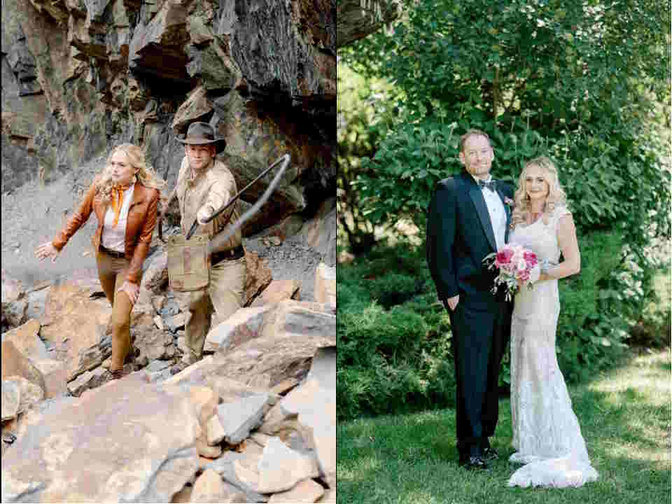
That was our engagement photo—because for both of us it was our second marriage, so we decided to have some fun with it. And that was our wedding photo.
And that’s why I now have eleven kids.

That’s also why—when you pray for a bigger family—don’t pray too hard. Pray a medium amount. Because that’s a lot of kids.
But here’s the thing: when I didn’t have any kids, I was like a ghost roaming around my house. A ghost with zero kids. I like being a dad. Though I joke about having too many kids now—and it’s funny because it’s true—it’s also been beautiful.
And I could not have done this marriage had I not had that leveling-up experience with Christ. It was through the changes that happened there that I was even capacitated to give this a shot.
And we’re doing pretty good. We’re five years in. She’s over there someplace—wave, honey. She’s still with me. Proof.
Life is still hard. There are still new things, new challenges. But we just keep pushing forward.
Come Unto Me
After that experience, my relationship with Christ changed. I learned some things that helped me be closer to Him. And one of the key things is this invitation:
“Come unto me, all ye that labour and are heavy laden, and I will give you rest.
Take my yoke upon you, and learn of me; for I am meek and lowly in heart:
and ye shall find rest unto your souls.
For my yoke is easy, and my burden is light.” (Matthew 11:28–30)
There have been times in my life when I’ve prayed, When’s the Second Coming going to happen? When are you going to come? Tell me when you’re going to come.
And what He almost always says to me in my heart is: Come to me. Don’t wait for me to come. Come to me. My invitation is to come to me. You can be with me sooner than if you wait for me to come. Come to me.
And so yeah—that’s been my life. A process of trying to do that.

Coming to Christ
And I—and I have learned that what saves us from the disappointments of this life— actually coming to Christ is the only thing I know about that saves us from the disappointments of this life.
Our job is not to wait for Christ to come to us. Our job is to come to Him.
Christ and the Church
The difference between Christ and the Church—this is important. So, the Church is there to help bring us to Christ, to point us to Christ, right?
And—and one way to imagine this is—imagine we’re in this wasteland full of signs. And these signs maybe are different religions. And these signs have different information about how to find Christ, right?
And our religion—the Church of Jesus Christ of Latter-day Saints—is, in my experience, the premier sign with the best instructions on how to come to Christ. But we get there by following the instructions and going to Him. We don’t get there by mastering a study of the sign. Does that make sense?
I don’t want to die being an expert on the sign that points to Christ. I want to die being a guy who followed the directions and went to Him. Does that make sense?
Ordinances as Pointers
And if you read the sign that we get in the Church through the ordinances—which are all there to successfully help us bring ourselves into a position where we can try to come to Christ and to make the promises that help that happen—the Church will point us to the temple.
And the temple will point us to the veil.
And the veil says: Hey, have a direct relationship with the Lord through the veil. Learn to hear Him until the day comes when He tutors you enough that you can enter His presence.
And that is how it works, right? Let the Church lead you to the temple. Let the temple lead you to the veil. And then work your tail off trying to have a relationship with Christ. And it is tricky.
A Broken Heart and a Contrite Spirit
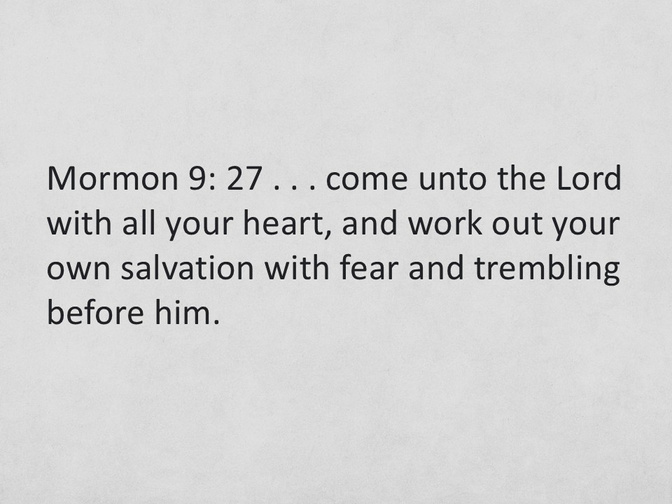
We need to come to the Lord with all our heart, and work out our own salvation with fear and trembling before Him—just to say, Hey, go work it out directly with Him as we use these tools we have, right?
I love this from 2 Nephi:
“Behold, my soul delighteth in proving unto my people the truth of the coming of Christ; for, for this end hath the law of Moses been given; and all things which have been given of God from the beginning of the world unto man, are the typifying of him.” (2 Nephi 11:4)

All that stuff, all the ordinances, everything’s there to help us come to Him. And there are serious hints in the temple that help push us toward this.
Hearing His Son
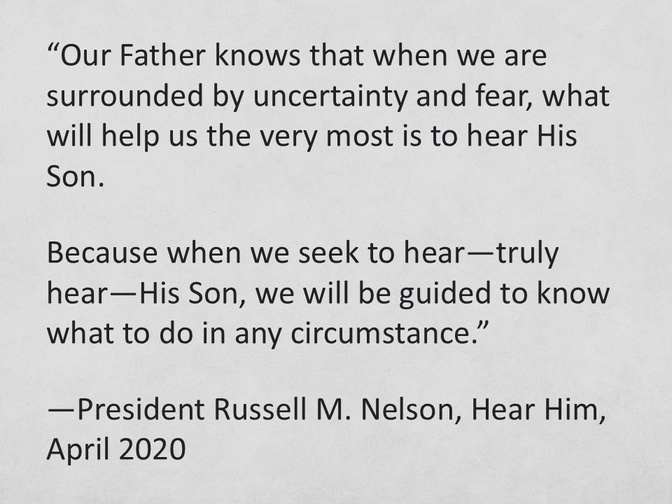
And—our Father knows (this is Russell M. Nelson)—”Our Father knows that when we are surrounded by uncertainty and fear, what will help us the very most is to hear His Son.”
“Because when we seek to hear—truly hear—His Son, we will be guided to know what to do in any circumstance.” (President Russell M. Nelson, Hear Him)
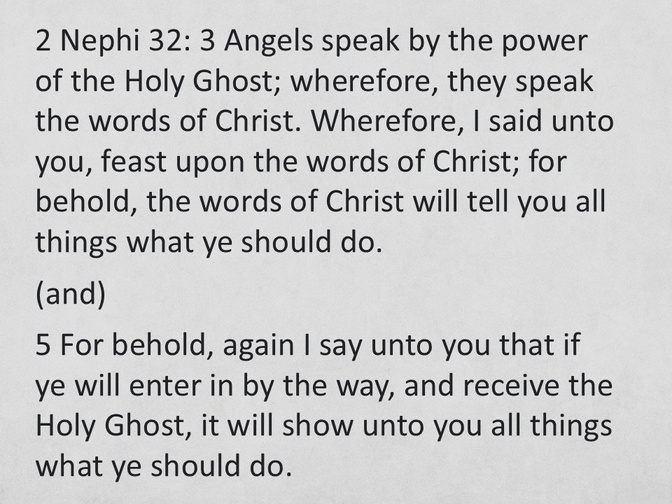
And then this one—2 Nephi, right? Basically, the words of Christ are delivered by the Holy Ghost. That’s me summarizing this verse, right?
And so, we work with the Holy Ghost to hear what Christ wants to tell us.
An Imperfect Church
Okay—what the Church is—the Church is here to teach us how to come to Christ. But then our job is to actually do that, right? And there’s a bunch of things that build the confidence to do that in real life.
(I’m trying to go where—where I feel like I’m supposed to go. I’m supposed to skip this. I’m supposed to skip this. Supposed to skip that.)
So—this is important. This is important.
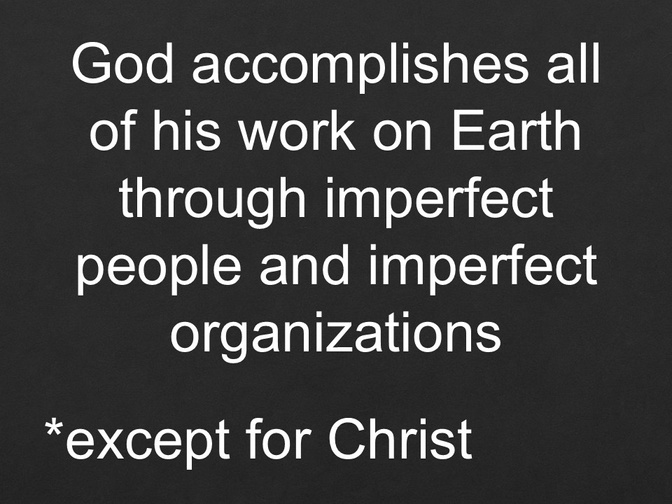
The Church is imperfect. The Church is full of imperfect people. The Church is full of me and you. I feel like sometimes we do a disservice to the Church if we pretend to ourselves or pretend to others that it’s too perfect. Is the Church of God? Yes. Is Joseph Smith a prophet? I believe that with all my heart. Is the Church perfect—in my experience— no. It’s not. It’s imperfect people.
We don’t believe in the Church because it’s Perfect
And why is that important? Because—it’s important because if you think, I believe in the Church because it’s perfect—someday you’re going to be disappointed. Because everyone in the Church is imperfect, and the Church overall is imperfect sometimes. And if you scour its history, you will find actual imperfections. You really will.
And—the thing to remember is that God accomplishes all of His work on earth through imperfect people and imperfect organizations. He always has. The only exception is Christ, right?
Use Imperfection to draw you to Christ
And so, we work with an imperfect spouse to try our best to someday have a perfect marriage. We work with an imperfect Church—imperfect people all coming together, trying to use what God gave us as best we can—to use that imperfect Church to come to Christ.
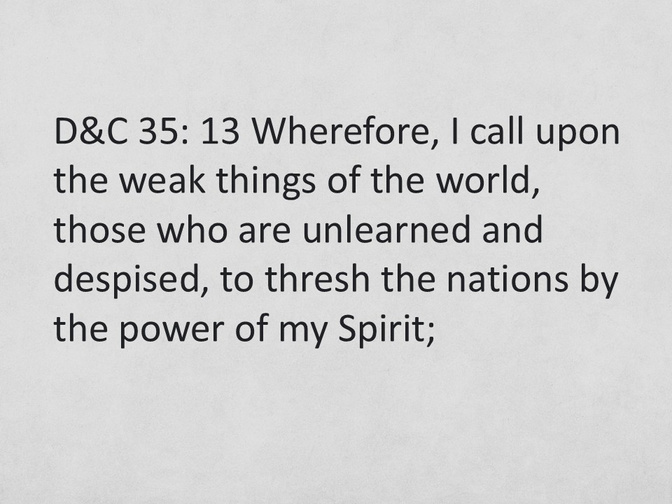
If somebody tells me, Your Church had an imperfection, I’m like, Yeah, of course. That doesn’t mean I hate it. It just means it’s imperfect—and I know that. In some ways, that protects the Church—to realize it’s got its imperfections. I’ve never heard a leader once say, I am perfect. I’ve heard them say the opposite a lot: I am an imperfect guy in an important calling.
That kind of thing, right? And when we give them that grace to be imperfect, it leaves some space for us to not get hung up on weird stuff, right? And say—overall, we’re trying to come to God, and let’s forgive each other our imperfections as we do. Something like that, right? I don’t know if I’m saying that well.
But yeah—don’t place the burden of perfection on the Church. That’s the thought there.
Do They Really Want a Relationship with Me?
So here’s the thing. One of the questions you could ask as you’re trying to enter into a personal relationship with God in Christ is, Do they want that? Do they want to have a relationship with me? Right? But John 17 says:
“This is life eternal, that they might know thee the only true God, and Jesus Christ, whom thou hast sent.” (John 17:3)

But do they want to know me? Is this a realistic thing? Am I having delusions of grandeur to think I can connect to them? I’ve definitely thought that at times in my life.
Abraham’s Test
Almost Sacrificed as a Child
But let’s look at the story of Abraham. Abraham, as a child, is almost sacrificed. His dad tried to have him sacrificed to some false god, right? And only the deliverance of an angel saved him. That’s how his life starts. He decides he wants to dedicate himself to God. And he wants to learn about the priesthood of his forefathers or whatever. And he embarks on it. And God calls him out of the land that he’s in. He bravely goes on this epic adventure. Eventually, he ends up making a covenant with God. And part of that covenant that he makes with God is, “The Savior’s going to come through your lineage”. Also, “You’re going to have a son so that the Savior can come through your lineage.”
The Miraculous Son
And Abraham keeps living out his life—no son, right? He keeps living—as his wife’s getting old. She’s too old to have kids. He’s too old. Still no son. A couple of times God doubles down on it: “Yeah, you’ll have a son.” He has some sons through other means, but no son with his wife Sarah. And then finally a son. Miracle of miracles. She’s way too old, but miraculously a son is conceived. He takes that son and he’s so happy about it. And finally, all his long waiting is over, and it all came true.
And what does God ask him to do? “Abraham, take that son and sacrifice him.”
And I can only imagine if you were Abraham—the feeling of, Wait, this is what my dad almost did to me. This—this is what you saved me from. You want me to go sacrifice my son?
And God’s like, “Yeah.”
God Intercedes
And—incredible demonstration of faith—Abraham takes his son Isaac. The son’s willing too. Takes him up to the mountaintop. About to kill him. God’s like, “Wait, that was enough. You showed me your heart. We’re not going to make you actually drop the knife.” And He intercedes.
The Knife That Dropped
Guess what? There’s one time when that knife got dropped. When the dad had to kill the son—where it wasn’t an Abraham thing. That was only Heavenly Father (that I know of) that did that one. He dropped the knife on His Son. That’s how much He loves you.
And that informs this verse, when you think of it through that lens:
“For God so loved the world, that he gave his only begotten Son, that whosoever believeth in him should not perish, but have everlasting life.” (John 3:16)
And I’m not a perfect dad, but I know this: I’d rather die than kill my son. And I’m sure Heavenly Father felt the same way. What—what He did was harder, right, than if it was Him on that altar.
Greater Love
And then there’s also—you can go to Christ and ask, Well, were you okay with that?
Well, He says:
“Greater love hath no man than this, that a man lay down his life for his friends.” (John 15:13)
And I know this. I know that Christ—what He did for you and for me—was very personal.
I know that He lived through His Atonement. He experienced your whole life. He experienced every high and low. He experienced all the pain. He experienced all the sin and mistakes and the self-hate and the self-doubt. He experienced all the suspense and tension about things you’re hoping for that aren’t happening. He experienced it all.
It’s important that He experienced it for everybody. But maybe in some ways it’s extra important to remember He experienced it for you. Because part of what that means is that everything you experience in this life—every disappointment that happens, every hard thing that doesn’t come to pass that you wanted or needed—He lived that. He experienced it all.
And when He resurrected, He came back from that whole and healed. And what that means is—He knows the way back for you, whole and healed, from your specific circumstances. And He can apply that at will. And that’s a powerful thing to understand.
Just for You
I have asked Him: Would you have done it just for me? You did it for everybody, but would you have done it just for me? And He turned my mind to the parable of the Good Shepherd. He’s like, Yeah. I go after the one when that’s needed. I would have done it just for you. I was happy to do it for everybody. Me doing it for everybody does not make it less personal for anybody.
My Witness
I have a witness that Jesus Christ is our Savior. And I have a witness that we can come to Him and have a personal relationship with Him.
Listen to Your Conscience
Listen to your conscience. If in doubt, that little voice that tells you right from wrong—pay attention to that. As you pay attention to that, let that grow. As you heed it and do what it says, it’ll grow into that principle that lets you hear Him better. All effort to do that gets returned.
Draw Near to Me
His state is—He is already your friend. He is inviting you to catch up. When He says, “Draw near to me, I will draw near to you” (James 4:8), He’s inviting you to catch up to how He already feels about you. And as you can lay down your own self-doubt and all that stuff, He will show up. And He will be your Savior.
I know He’s done this for me. I trust Him to keep doing it for me. I trust Him to do it for everybody. That is why I love Him and follow Him.
And I say that in the name of Jesus Christ, amen.
[Applause]
Q&A with Brandon Mull
[Brandon Mull]
And it’s really funny to say, “in the name of Jesus Christ, amen”—and have applause. That’s like a rare churchy experience. Yeah. Little bit of couch time, little bit of talk show. Here we go.
Scott Gordon: Favorite Genres
[Scott Gordon]
That’s great. Yeah. So, I appreciate your thoughts and comments. To disclose a little bit about myself that I don’t disclose very much is that I’m a huge fan of sci-fi and fantasy novels. I read a lot.
[Brandon Mull]
Cool.
[Scott Gordon]
Yes. So, I probably supported your family a little bit.
[Brandon Mull]
Yeah.
[Scott Gordon]
In fact, I know I have.
[Brandon Mull]
Good. Star Wars shoes, right? It’s a special event if I have my Star Wars shoes and my Haunted Mansion socks.
[Scott Gordon]
Excellent.
Uh, I find that a lot of authors in the sci-fi and fantasy realm are not believers in Jesus Christ and often—often not—not even God. Do you—have you found that yourself, or do you—have you even noticed that?
[Brandon Mull]
There’s a mix. There’s both. Yeah. Like here’s the thing—I write in kind of the Harry Potter category, right? So, kind of like uh young main characters having big adventures. And being in that category—like, like—that—that’s in the Narnian tradition where we’ve got, like, C. S. Lewis. He was definitely a believer, you know. You’ve got—you’ve got those that were and those that weren’t, is how I’ll sum it up.
Audience Question: Putting God First vs. Neglecting Family
[Scott Gordon]
Yeah. Yeah. So I have a question here from the audience. It said, “What would you say to those critics who believe that putting God first neglects your family?” Any insights on that?
[Brandon Mull]
Yeah. Well, there’s like a—a Stephen R. Covey talk about how—from at BYU, back when I was at BYU—and he—he said it so well. Cuz he was like, most things in life, if you fixate on them, you become a specialist in that thing you’re fixating on, right?
If I fixate on being a talented writer, I can—to the detriment of other things—I can specialize in that, right, by fixating on that.
But he said—and I agree—that the cheat code for that problem is to center yourself on God. Because God is the one thing where, when you fixate on that, it works to the benefit of all the other categories. It elevates all things, right?
And so, in my experience, the best time I ever spend is the time I spend trying to have a relationship with God. Trying to hear Him. Trying to hear my Savior. Trying to write what I think He’s trying to tell me.
And as a spillover—as a consequence of that—I end up having things go better in all other categories in a way that’s different than if I focus on anything else.
Audience Question: Staying in the Church After Trauma
[Scott Gordon]
So obviously you went through great trauma in your life with your divorce and such. What do you think—and what advice would you give to people—that helped you stay in the church? Because a lot of people go through trauma and they—like you said, there’s alcohol, something else, or they just say like, “I’m done,” and they drop out completely. I mean, it’s hard to go to church as a divorced person sometimes.
[Brandon Mull]
Um, yeah. Yeah. Yeah. Yeah. I mean, here’s what I would—would tell you. Like, it is hard.
Is the church good at helping mentor divorced people? Not in my experience.
But—but here’s what I have saw. I saw lots of people trying—trying, right? I saw people trying, and that meant a lot.
But like—that’s partly why I emphasize, like, when that heart is broken—when you’re smashed—do not curse your healer, right? Like—like—like when you’re smashed, be really, really humble.
It’s so hard cuz you’re so mad and you want to blame somebody. But when you’re smashed, be really humble and go to God with that brokenness, and He will lead you forward.
And for me, it didn’t look like going to a singles ward. And for someone else, it might look like going to a singles ward. I just kept going to my family ward with my kids, right?
But I just tried to listen to what God was telling me. Cuz the church didn’t really have answers for me—like, like, for that problem, right? Like—not—and it might be somewhere, you know, but—but I wasn’t encountering it.
But what I did encounter was this reality that—hey, like, the general authorities are going to give us lots of general guidelines and tell us the general way to Christ.
Relationship with God
But to specifically know your next step—to specifically know my next step—that comes from a relationship with God. Christ always knows my next step. If I ask Him—one of the questions I most regularly get answered by God is if I say, “Hey, what’s my next step to get closer to You?” Or if I say, “Hey, what do You want to teach me today?”
When I say, “What’s my next step to get closer to You?” I just pay attention to what surfaces in my mind, and I trust that’s of God.
Generally, as I do that and pay attention to what surfaces in my mind as I ask those questions, I get a path that I can follow.
And sometimes what surfaces in my mind might be a little off, but as I believe that, and as I try to apply that, He can always course-correct if I keep believing what I think He’s telling me. Does that make sense?
When Broken, Stay Open
And so to me, the key is like—staying really open. You’re really broken, but instead of like shutting off and saying like, you know, forget this. And believe me, I’ve talked to my wife Erlyn about—when we were divorced, one of our first impulses was like, let’s just go to Hawaii and live like hermits and like never see another living person.
Cuz you just want to—you understand why deer drag themselves away to a hiding place to die when you go through a divorce. You understand that impulse, right?
And—and instead it’s like, hey, you know what? Instead—um, stay open and go to God for healing and say, “Hey, what’s my next step to get closer to You?”
If you use that question—“What’s my next step to get closer to You?”—like, in the end, you will get there.
Closing Words
[Scott Gordon]
Really appreciate your words. Thank you so much.
[Brandon Mull]
Yeah, sure. Thanks. Thanks for having me here.
[Applause]
[Scott Gordon]
So, for those of you with grandkids or kids, Brandon has agreed to stay and go into the bookstore area and sign some books. And I would really recommend that—it’d be a great gift for them. Your kids will be really excited. Your grandkids will be really excited to get one of his signed copies of his books.
But I ask a favor. We have lunch now. If you would let him go and get his lunch first, and then he can—then he can—then he can, um, you know, he can eat with his wife and then he can go up into the bookstore area and sign some books for you.
[Brandon Mull]
This is truly one of the greatest situations of my life. So yes, lunch first.
