FAIR Resources for Come, Follow Me – Restoration Scripture
Week 13: March 23 - 29: "I Have Remembered My Covenant"

Exodus 1-6

Doctrinal Focus

  • Key doctrines addressed in this week’s reading

In Exodus 2:24, the Lord “remembered his covenant with Abraham, with Isaac, and with Jacob.” This teaches us that even when circumstances seem dark, God never forgets His covenants or His people. His timing may not always align with ours, but His promises are sure.

In Exodus 6:6–7, God promised to redeem Israel “with a stretched out arm, and with great judgments.” This demonstrates that covenantal deliverance is both temporal and spiritual, pointing us to Christ’s redeeming power in our lives.

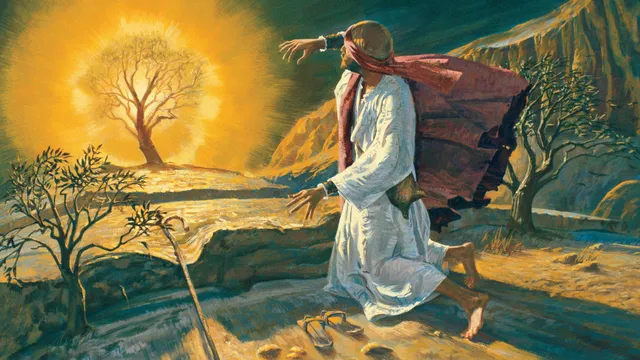
In Exodus 3:10, God called Moses to deliver Israel from Egypt. This shows that prophets are chosen instruments to bring deliverance, guidance, and God’s word to His people. Their calling is divine, not man-made.

When Moses doubted his ability to speak, the Lord reassured him in Exodus 4:10–12, promising to “be with thy mouth.” This emphasizes that God qualifies those He calls, and His power compensates for human weakness.

  • In Exodus 56, despite Pharaoh’s resistance, God declared His supremacy and His intent to deliver Israel. This illustrates that no worldly power can ultimately stand against God’s will.
  • Moses learned that his role was not to rely on his own strength but on God’s. This principle reassures us that when we trust in the Lord, we can face trials, opposition, and even the “Pharaohs” in our lives with confidence and faith.

Historical & Contextual Insights

  • Insights in this week’s study
  • The Israelites were living in Egypt after the time of Joseph, having multiplied into a large population (Exodus 1:7). Pharaoh, fearing their numbers, enslaved them and imposed harsh labor.

Egypt was one of the most powerful civilizations of the ancient world, and slavery was a common method of controlling conquered peoples. The oppression of Israel set the stage for God’s dramatic deliverance through Moses, a deliverance that would shape Israel’s covenant identity.

  • This historical moment emphasizes that God does not forget His covenant people, even when they are oppressed for generations. The Exodus became Israel’s defining story of salvation, retold throughout scripture as evidence of God’s power and faithfulness.
  • Just as God remembered His covenant with ancient Israel, He remembers His promises to us today. Even when we feel forgotten or weighed down by hardship, God’s timing and power are sure.
  • When God called Moses to deliver Israel, Moses hesitated, citing his lack of eloquence and ability (Exodus 4:10). God assured him that He would provide strength and words, showing that divine power is made perfect in weakness.
  •  
  • Moses’ reluctance highlights the very human tendency to focus on our inadequacies. Yet, God consistently chooses leaders not for their perfection but for their willingness to rely on Him.
  •  
  • This same principle applies today. Modern prophets and everyday disciples are strengthened by God in their weaknesses, reminding us that our inadequacies are not barriers but opportunities for God to manifest His power.
  • In Exodus 6:4–8, God reaffirms His covenant with Abraham, Isaac, and Jacob as the reason He would redeem Israel from bondage. Their deliverance was not only an act of mercy but also a fulfillment of divine promises made generations earlier.
  •  
  • This shows that God’s actions in history are purposeful, consistent with His eternal covenants. He was not acting randomly but in harmony with promises that tied Israel’s identity to their ancestors.
  •  
  • For us, this teaches that God’s covenants today—such as baptism and temple covenants—anchor His promises in our lives. When challenges arise, we can take courage knowing God is bound by covenant to sustain and redeem His people.

If you have questions on this week’s reading, please email your questions to us here.

Apologetic Application

  1. Claim: “The Exodus story is a myth invented by later writers.”
  2.  
  3. Response:
  4. Historical Evidence: Archaeological records confirm Semitic peoples lived in Egypt during the time traditionally associated with Israel’s enslavement, often as laborers in construction and agriculture. Egyptian texts also mention groups like the “Habiru,” which some scholars connect to Hebrews.
  5.  
  6. Eyewitness Support: The Bible itself preserves early traditions, retold in Psalms (e.g., Psalm 105106) and prophetic writings, indicating a long-standing memory of deliverance from Egypt.
  7.  
  8. Spiritual Confirmation: The Holy Ghost testifies to readers of the truthfulness of the Exodus, making it more than just a historical claim—it is a spiritual reality.
  9.  
  10. Logical Analysis: Israel’s national identity was built on the Exodus. It is unlikely a people would invent a humiliating backstory of slavery if it were not true, especially as their central defining narrative.
  • Claim: “If God truly chose Moses, He wouldn’t have picked someone with speech problems and doubts.”
  •  
  • Response:
  • Historical Evidence: Ancient leaders often emphasized divine calling over personal charisma. Moses’ weaknesses align with ancient traditions where God’s power is shown through unlikely leaders.
  •  
  • Eyewitness Support: The biblical record itself acknowledges Moses’ insecurities (Exodus 4:10–12) and then documents how God sustained him with miracles, revelation, and Aaron’s support.
  •  
  • Spiritual Confirmation: Modern prophets also testify that God strengthens His servants in their callings. The Spirit confirms to believers that leadership is divinely appointed, not self-made.
  •  
  • Logical Analysis: Choosing a weak vessel like Moses highlights God’s power, not man’s. If the story were fabricated, the writers would likely have portrayed Moses as flawless rather than hesitant and dependent.
  • Claim: “If God really cared, He wouldn’t have let Israel suffer in slavery for so long.”
  •  
  • Response:
  • Historical Evidence: Ancient covenants were not nullified by delays; rather, fulfillment often came after long waiting periods (e.g., Abraham and Sarah’s posterity).
  •  
  • Eyewitness Support: Scripture shows God was always aware (Exodus 2:24–25). The record emphasizes that His timing prepared Israel spiritually and temporally for deliverance.
  •  
  • Spiritual Confirmation: Many believers today testify that God remembers His promises even after long waiting. The Spirit reassures us of His awareness and perfect timing.
  •  
  • Logical Analysis: Delay in deliverance does not equal abandonment. God uses time to refine His people, making the eventual fulfillment more meaningful and transformative.

Practical Applications

Practical solutions for someone in faith crisis:

Action Step: Record a covenant promise you’ve made with God (such as baptism or temple covenants) and pray for strength to live it more fully.

When life feels difficult or prolonged trials weigh us down, remembering God’s covenants provides hope and assurance that His promises will be fulfilled.

  1. – Review scriptures that describe God’s covenants (e.g., Exodus 6:6–8).
  2. – Write down the covenants you’ve personally made.
  3. – Pray daily to recognize how God is fulfilling His promises in your life.
  4. – Share with a loved one or in a journal an example of God’s faithfulness.

Encouraging Thought:

God will always keep His promises. He cannot do otherwise. He is God!

Action Step: Identify one personal weakness or fear and invite the Lord to help you overcome it, just as He helped Moses.

We often feel inadequate when called to serve or lead, but relying on God’s strength transforms weakness into capacity. Moses’ story reminds us that God doesn’t need perfect people—just willing ones.

  1. – Reflect on an area where you feel insufficient.
  2. – Read Exodus 4:10–12 and mark God’s promises.
  3. – Pray specifically for help in that area.
  4. – Take one small step of faith to act despite your weakness.

Encouraging Thought:

God will take you as you are and make you more than you ever imagined.

  • Action Step: Write down one situation where you feel like you’re standing before a “Pharaoh” (a challenge, authority, or fear) and plan one faithful action you can take.

Pharaoh’s opposition mirrors the resistance we face from worldly pressures. Like Moses, we can learn that God’s power is greater than anything opposing us.

  1. – Identify your “Pharaoh”—a challenge that feels overwhelming.
  2. – Read Exodus 5:1–2 and note Moses’ courage.
  3. – Pray for strength to act in faith.
  4. – Take a bold but faithful step this week toward resolution.

Encouraging Thought:

  • When we deal with matters of principle, stand like a rock.

Ideas for Teaching

Objective: Help learners see that God always remembers His covenants and His people.

Small slips of paper, pens/pencils, a box or jar.

Activity Steps:

  1. Introduction (5 min): Invite learners to write down a time when they felt forgotten or overlooked. Place the slips in a box/jar as a symbol of burdens.
  2.  
  3. Scripture Discussion (5 min): Read Exodus 2:23–25. Discuss how Israel may have felt forgotten, yet God “remembered his covenant.” Connect this to how He remembers us.
  4.  
  5. Application (5 min): Invite learners to think of one way God has remembered them recently. Share examples (if comfortable). Contrast feelings of being forgotten with reassurance of God’s promises.

Follow-Up Question: How does remembering God’s covenants strengthen your faith during hard times?

Objective: Show learners that God strengthens His servants despite weaknesses, as He did with Moses.

A piece of string and a strong rope.

Activity Steps:

Introduction (5 min): Show the string and rope. Ask which one is stronger. Compare the string to human weakness and the rope to God’s power.

Scripture Discussion (5 min): Read Exodus 4:10–12. Discuss Moses’ feelings of inadequacy and God’s reassurance.

Application (5 min): Have learners share one weakness or fear where they could invite God’s help. Emphasize that when we “tie” our weakness (string) to God’s power (rope), we gain strength.

Follow-Up Question: When have you seen God strengthen you in your weaknesses?

Objective: Teach learners to face opposition with courage by trusting God.

Paper and markers to draw or list “Pharaohs” (representing challenges).

Activity Steps: 

Introduction (5 min): Ask learners to write or draw something that feels like a “Pharaoh” in their life—an obstacle, fear, or opposition.

Scripture Discussion (5 min): Read Exodus 5:1–2 and 6:6–7. Contrast Pharaoh’s defiance with God’s promises of deliverance.

Application (5 min): Invite learners to write next to their “Pharaoh” one way they can trust God’s help this week. Share examples of courage and faith.

Follow-Up Question: How can remembering God’s promises help you stand firm when facing your own “Pharaohs”?

QUICK REFERENCE

  • God always remembers His covenants and His people (Exodus 2:24–25).


  • He raises up prophets, like Moses, to deliver His children and speak His word (Exodus 3:10).


  • God strengthens His servants in their weaknesses and qualifies them for His work (Exodus 4:10–12).


  • No earthly power, even Pharaoh’s, can stand against God’s purposes (Exodus 6:6–7).
  • Why trust modern prophets?
    • Just as God called Moses to guide Israel out of bondage, He continues to call prophets today to deliver His word and help His people navigate spiritual challenges. Prophets are not self-appointed; they are chosen by God and strengthened by Him to fulfill their callings.
    •  
    • Why does God allow mistakes?
    • God allows agency, which includes mistakes, opposition, and even long periods of waiting. Just as Israel endured centuries of slavery before deliverance, God’s timing refines His people and magnifies His power. Delays and human failings are not signs of God’s absence but opportunities for Him to show His sustaining mercy.
  • Exodus 2:24 — “God remembered his covenant with Abraham, with Isaac, and with Jacob.”


  • Exodus 4:12 — “Now therefore go, and I will be with thy mouth, and teach thee what thou shalt say.”

True to the Faith (sections on “Prophets” and “Covenants”).