
FAIR is a non-profit organization dedicated to providing well-documented answers to criticisms of the doctrine, practice, and history of The Church of Jesus Christ of Latter-day Saints.
FAIR › Scripture Study Resources: Supplement Your Come, Follow Me Study › Study Resources for the Old Testament & Pearl of Great Price › Week 28 There Is a Prophet in Israel
2 Kings 2-7
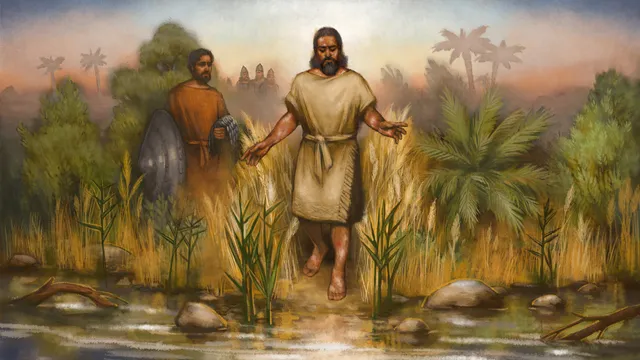
Elijah passing his mantle to Elisha and the miracles that follow show prophetic authority in action (2 Kings 2:9–15). Additional examples, such as prophetic healing and divine intervention, reinforce that God guides His children through chosen servants (2 Kings 4:33–36). These accounts invite learners to recognize prophetic leadership as part of His pattern of revelation.
When Elisha’s servant feared surrounding enemies, the prophet prayed that his eyes would be opened to heavenly help, illustrating how divine perspective replaces fear (2 Kings 6:15–17). This supports encouraging learners to seek understanding through faith and follow inspired direction, even when circumstances seem uncertain.
The widow’s oil being multiplied demonstrates that obedience and trust enable divine abundance (2 Kings 4:1–7). Likewise, feeding many people from a small offering shows the Lord’s power to provide beyond human limitation (2 Kings 4:42–44), helping learners see that He is mindful of both temporal and spiritual needs.
Naaman was healed only after setting aside pride and following simple prophetic counsel (2 Kings 5:1–14). This account teaches that blessings are often conditioned on humility and willingness to act on God’s direction, even when expectations differ from reality.
Accounts such as the recovery of the lost axe head illustrate that the Lord is mindful of both small and large concerns (2 Kings 6:1–7). Reflecting on these experiences can help learners develop remembrance and confidence in God over time, aligning with principles of steady spiritual growth taught in supporting materials.
28 The Power of Spiritual Momen…
The lepers who moved forward despite uncertainty discovered miraculous provision and deliverance (2 Kings 7:1–16). Teaching this principle encourages learners to act in faith, trusting that consistent reliance on the Lord builds spiritual momentum and deeper discipleship.
Israel was experiencing spiritual decline marked by idolatry and inconsistent covenant faithfulness, yet God continued to send prophets to guide and protect His people. Prophetic miracles occurred among everyday challenges—warfare, famine, poverty, and disease—showing divine involvement in both national crises and personal struggles.
If you have questions on this week’s reading, please email your questions to us here.
Practical solutions for someone in faith crisis:
Action Step: Intentionally ask for divine direction before making an important decision this week.
The scripture block repeatedly shows individuals receiving protection and clarity when they trusted prophetic or divine direction. Practicing this habit builds reliance on God rather than fear or impulse, strengthening long-term spiritual confidence and discernment.
Encouraging Thought:
Trust grows when exercised. As learners act on guidance, they begin to see evidence of God’s awareness in their lives, reinforcing continued faith.
Action Step: Choose one simple spiritual instruction (service, scripture study, prayer) and follow it consistently this week.
The readings illustrate that blessings often came after individuals accepted simple direction without pride or resistance. Small acts of obedience cultivate humility, preparing the heart for deeper spiritual growth and receptiveness.
Encouraging Thought:
Growth rarely comes from dramatic gestures alone — steady, humble effort invites meaningful change over time.
The accounts in this scripture block show divine involvement in both large crises and small needs. Recording such moments trains attention toward gratitude and awareness, building spiritual momentum and resilience during challenges.
Encouraging Thought:
Objective: Help learners recognize God’s presence and support even when circumstances feel uncertain.
Activity Steps:
Follow-Up Question: How can we train ourselves to notice spiritual help even when we don’t immediately see it?
Objective: Demonstrate how humble obedience and small efforts invite meaningful outcomes.
Activity Steps:
Introduction (5 min): Show a small container and ask learners what they think could be accomplished with something that limited.
Scripture Discussion (5 min): Read about the widow’s oil and discuss how following simple instructions led to unexpected provision.
Application (5 min): Invite learners to identify a small action they could take this week (service, prayer, encouragement) and discuss possible impacts.
Follow-Up Question: Why do you think God often works through simple, humble actions instead of dramatic ones?
Objective: Encourage learners to act courageously even when outcomes are uncertain.
Activity Steps:
Introduction (5 min): Present a scenario where someone must choose between staying comfortable or taking a risk. Invite brief responses.
Scripture Discussion (5 min): Read about the lepers deciding to move forward and discuss their reasoning and results.
Application (5 min): Have learners write one positive step they could take this week despite uncertainty, then share voluntarily.
Follow-Up Question: What helps you find courage to move forward when you don’t know what will happen?
For the Strength of Youth — Applying gospel principles in daily decisions
Gospel Library — Access to scriptures, manuals, and study tools for personal and family study
FAIR is a non-profit organization dedicated to providing well-documented answers to criticisms of the doctrine, practice, and history of The Church of Jesus Christ of Latter-day Saints.
We are a volunteer organization. We invite you to give back.
Donate Now