FAIR Resources for Come, Follow Me – Restoration Scripture
Week 42: October 12 - 18: "The Redeemer Shall Come to Zion"

Isaiah 58-66

Doctrinal Focus

  • Key doctrines addressed in this week’s reading

Isaiah rebuked those who observed the outward forms of fasting while neglecting justice, compassion, and charity (Isaiah 58:3–7). The Lord explained that the fast He has chosen includes “to loose the bands of wickedness,” “undo the heavy burdens,” “deal thy bread to the hungry,” and care for the poor. True worship is never merely ceremonial—it changes the disciple and blesses those around them. President Henry B. Eyring taught that fasting combined with generous fast offerings blesses both the giver and the receiver. He explained that fast offerings not only provide food and clothing but also “heal and change hearts,” demonstrating that discipleship is measured by Christlike love expressed through sacrifice.

Isaiah promises remarkable blessings to those who worship with genuine devotion: “Then shall thy light break forth as the morning,” “the Lord shall guide thee continually,” and “thou shalt be like a watered garden” (Isaiah 58:8–11). These promises illustrate that obedience is not transactional but transformational. As we align our lives with God’s purposes, He strengthens us spiritually and emotionally. These blessings are ultimately centered in Jesus Christ, who is the Light of the World. As disciples seek to follow Him through sincere fasting, compassionate service, and covenant faithfulness, they experience His healing power and become instruments through whom His light reaches others.

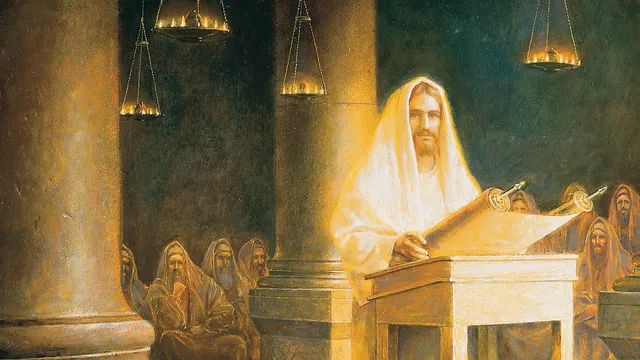
  • Isaiah 61:1–3 contains one of the clearest messianic prophecies in scripture. Centuries later, Jesus Christ read these verses in the synagogue at Nazareth and declared, “This day is this scripture fulfilled in your ears” (Luke 4:21). Isaiah’s prophecy teaches that the Savior’s mission extends beyond forgiveness of sins to include healing emotional wounds, comforting those who mourn, and bringing hope to every soul willing to come unto Him. Isaiah also describes Christ as the divine Intercessor who brings salvation when no one else can (Isaiah 59:16–21). Humanity cannot overcome sin through its own efforts; redemption comes only because Jesus Christ willingly entered mortality, performed the Atonement, and conquered death through His Resurrection.

Isaiah repeatedly describes the Lord gathering His people, clothing them with righteousness, and establishing Zion (Isaiah 60; 62). These promises continue to unfold through missionary work, temple worship, family history, and covenant discipleship. The Restoration of the gospel is part of Isaiah’s vision of the Lord preparing the world for His return. Bonnie H. Cordon taught that disciples of Christ are to let their light shine in ways that help others “see the way to Jesus Christ.” As we intentionally point others toward the Savior, we participate in the gathering of Israel and help fulfill Isaiah’s prophetic vision of Zion becoming a light to the nations.

Isaiah looked beyond the troubles of his own generation and saw a future when the Lord would create “new heavens and a new earth” (Isaiah 65:17–25). In that glorious day, sorrow, violence, and injustice will ultimately give way to peace under the reign of Jesus Christ. These prophecies remind disciples that God’s purposes extend beyond present difficulties to His eternal plan of redemption. Isaiah repeatedly invites God’s people to rejoice because the Lord keeps His covenant promises. The Millennium represents the fulfillment of God’s work to redeem both the earth and His children through Jesus Christ.

Isaiah does not present the Second Coming merely as a future event to anticipate but as a motivation for present discipleship. Those who honor the Sabbath, care for the poor, seek righteousness, and remain faithful to their covenants demonstrate that they are preparing to receive the King of Kings (Isaiah 58; 6566). Modern prophets have likewise invited members of the Church to prepare spiritually by strengthening faith, participating in temple worship, gathering Israel, and becoming more like Jesus Christ. Every act of covenant faithfulness helps prepare both individuals and the world for the Savior’s glorious return.

Historical & Contextual Insights

  • Insights in this week’s study
  • Isaiah 58–66 was written during the latter part of Isaiah’s prophetic ministry as he addressed the Kingdom of Judah during a period marked by spiritual decline, social injustice, and looming judgment. Although portions of these chapters look beyond Isaiah’s lifetime, they speak both to his contemporaries and to future generations awaiting the Messiah and the ultimate redemption of Zion.

Many in Judah continued participating in religious rituals such as fasting and Sabbath observance while neglecting justice, mercy, and covenant faithfulness. Isaiah called the people to sincere repentance by showing that true worship changes the heart and leads to compassion for others. At the same time, he offered hope through remarkable prophecies of the coming Messiah, the gathering of Israel, the Restoration of Zion, and the future Millennial reign of Jesus Christ.

  • These chapters form one of Isaiah’s strongest prophetic testimonies of Jesus Christ. They connect covenant living, social righteousness, and future redemption into one unified message, showing that God’s ultimate purpose has always been to redeem His children through the Messiah.
  • Isaiah reminds modern disciples that genuine religion is measured not merely by outward observance but by transformed hearts centered on Jesus Christ. His promises encourage us to live faithfully today while looking forward with hope to the Savior’s Second Coming.
  • Modern readers sometimes separate personal spirituality from service, but Isaiah consistently combines the two. Fasting, Sabbath observance, and prayer are never presented as isolated religious duties; they are intended to deepen one’s relationship with God and produce greater compassion toward His children. Isaiah teaches that true covenant living transforms both our relationship with heaven and our relationships with others.
  •  
  • Isaiah’s teachings challenge the idea that religion is merely private or individual. Genuine conversion naturally produces generosity, justice, forgiveness, and concern for the poor because these qualities reflect the character of Jesus Christ.
  •  
  • This principle remains foundational in the restored gospel today. Service, ministering, humanitarian aid, temple work, and missionary work all demonstrate that love for God and love for neighbor cannot be separated.
  • Isaiah’s writings often have multiple layers of fulfillment. Some prophecies addressed the circumstances of ancient Judah, while others pointed directly to Jesus Christ’s mortal ministry, the Restoration of the gospel, the gathering of Israel, and the Millennium. Recognizing this prophetic pattern helps readers understand why New Testament writers, the Book of Mormon, and modern prophets repeatedly quote Isaiah.
  •  
  • This “multiple fulfillment” pattern explains why Jesus could declare Isaiah 61 fulfilled during His earthly ministry while other portions of Isaiah’s vision continue unfolding today through the Restoration and gathering of Israel.
  •  
  • Understanding Isaiah in this way encourages readers to see themselves within God’s ongoing covenant work. His prophecies are not only ancient history but invitations to participate in preparing the world for the return of Jesus Christ.

If you have questions on this week’s reading, please email your questions to us here.

Apologetic Application

  1. Claim: Fasting merely deprives people of food and does not benefit individuals or society.
  2.  
  3. Response:
  4. Historical Evidence: Isaiah 58 demonstrates that biblical fasting was never intended to be an empty ritual. Instead, the Lord associated fasting with caring for the poor, relieving oppression, and increasing generosity (Isaiah 58:6–11). Ancient Israel understood fasting as an act of covenant renewal that combined personal humility with compassionate service.
  5.  
  6. Eyewitness Support: President Henry B. Eyring shared modern examples of fast offerings blessing individuals around the world, including Saints in Vanuatu and Sierra Leone whose lives were sustained through the generosity of faithful Church members. These firsthand accounts illustrate that fasting continues to produce measurable temporal and spiritual blessings.
  7.  
  8. Spiritual Confirmation: The Lord promises that sincere fasting invites revelation, guidance, healing, and increased spiritual light (Isaiah 58:8–11). Countless disciples testify that fasting, accompanied by prayer and sacrifice, strengthens faith and deepens their relationship with Jesus Christ.
  9.  
  10. Logical Analysis: If fasting only involved skipping meals, Isaiah’s promises would make little sense. The scriptural pattern shows that fasting combines sacrifice, prayer, generosity, and dependence upon God, producing both personal transformation and tangible blessings for those in need.
  • Claim: Isaiah 61 is not genuine prophecy but a retroactive attempt to make Jesus appear to fulfill Old Testament scripture.
  •  
  • Response:
  • Historical Evidence: The Book of Isaiah predates the birth of Jesus Christ by several centuries. The discovery of the Great Isaiah Scroll among the Dead Sea Scrolls confirms that Isaiah’s writings existed long before the New Testament period, demonstrating that these messianic prophecies were already part of the Hebrew scriptures.
  •  
  • Eyewitness Support: According to the Gospel of Luke, Jesus Himself read Isaiah 61:1–2 in the synagogue at Nazareth and declared that the prophecy was fulfilled in Him (Luke 4:16–21). His disciples consistently testified throughout the New Testament that Jesus fulfilled Isaiah’s messianic promises through His ministry, Atonement, and Resurrection.
  •  
  • Spiritual Confirmation: Believers continue to experience Christ as the One who heals broken hearts, comforts mourners, and delivers people from spiritual bondage exactly as Isaiah described (Isaiah 61:1–3). These ongoing experiences reinforce Isaiah’s testimony that Jesus is the promised Redeemer.
  •  
  • Logical Analysis: The detailed nature of Isaiah’s messianic prophecies—including Christ’s mission to heal, comfort, redeem, and establish Zion—fits a prophetic pattern that extends across multiple centuries. Their preservation before Christ’s birth significantly strengthens the case that they are genuine prophecy rather than later invention.
  • Claim: The Church’s teachings about gathering Israel and preparing for the Second Coming go beyond what Isaiah intended.
  •  
  • Response:
  • Historical Evidence: Isaiah repeatedly prophesied that the Lord would gather His covenant people, establish Zion, and make Jerusalem a light to all nations (Isaiah 60; 62). These themes appear throughout both the Old Testament and later prophetic writings, demonstrating that the gathering of Israel has always been central to God’s covenant purposes.
  •  
  • Eyewitness Support: Book of Mormon prophets frequently quoted Isaiah to explain the latter-day gathering of Israel, and modern prophets have consistently connected missionary work, temple work, and covenant making with these ancient prophecies. This continuity reflects a long-standing prophetic interpretation rather than a recent innovation.
  •  
  • Spiritual Confirmation: Millions of converts have testified that accepting the restored gospel has brought them into a covenant relationship with Jesus Christ and His Church. These experiences mirror Isaiah’s vision of people from every nation coming to the Lord’s light.
  •  
  • Logical Analysis: Isaiah’s prophecies consistently look beyond his own generation toward worldwide events involving all nations. The worldwide spread of the restored gospel, temple worship, and missionary work closely aligns with Isaiah’s descriptions of Zion becoming a light to the world.

Practical Applications

Practical solutions for someone in faith crisis:

Action Step: During your next fast, intentionally pray for someone in need and give a generous fast offering.

Isaiah teaches that true fasting changes both the individual and those they serve (Isaiah 58:6–11). Combining prayer, sacrifice, and generosity helps us become more like Jesus Christ while blessing others in meaningful ways.

  1. – Prayerfully identify someone who needs help.
  2. – Begin your fast with a specific purpose.
  3. – Study Isaiah 58 during your fast.
  4. – Contribute a thoughtful fast offering.
  5. – Look for an opportunity to minister personally afterward.

Encouraging Thought:

“Your fast offering will do more than help feed and clothe bodies. It will heal and change hearts.” —President Henry B. Eyring

Action Step: Intentionally help one person take a small step closer to the Savior this week.

Isaiah envisioned Zion becoming a light to the nations (Isaiah 60:1–3). Small acts of testimony, kindness, and invitation allow others to better see the Savior through our example.

  1. – Pray for guidance each morning.
  2. – Notice someone who may need encouragement.
  3. – Share a scripture or testimony naturally.
  4. – Invite them to participate in a gospel-centered activity.
  5. – Continue supporting them afterward.

Encouraging Thought:

Bonnie H. Cordon taught that we are to focus our light so “others may see the way to Jesus Christ,” just as a flashlight illuminates the path ahead rather than simply shining into the darkness.

  • Action Step: Choose one covenant habit to strengthen this month, such as daily scripture study, temple worship, or Sabbath observance.

Isaiah’s vision of the Millennium encourages disciples to prepare spiritually rather than merely anticipate future events (Isaiah 65:17–25). Consistent covenant living builds faith, hope, and readiness for Christ’s return.

  1. – Prayerfully identify one area to improve.
  2. – Set a measurable weekly goal.
  3. – Record your progress in a journal.
  4. – Seek the Lord’s help through prayer.
  5. – Review your growth at the end of the month.

Encouraging Thought:

  • Every small act of faithfulness today prepares us to joyfully welcome the Savior tomorrow.

Ideas for Teaching

Objective: Help learners discover that true fasting combines worship, compassion, and service.

  1. – Scriptures
  2. – Whiteboard
  3. – Paper and pens
  4. – Optional: images of humanitarian service

Activity Steps:

  1. Introduction (5 min): Ask learners to list words they associate with fasting. Compare their ideas with Isaiah’s descriptions in Isaiah 58.
  2.  
  3. Scripture Discussion (5 min): Read Isaiah 58:6–11 together. Create two columns labeled “Outward Religion” and “True Worship,” placing Isaiah’s teachings into the appropriate column.
  4.  
  5. Application (5 min): Invite everyone to identify one practical way they can bless another person during their next fast.

Follow-Up Question: How can our fasting become more focused on loving God and serving His children?

Objective: Help learners understand their role in helping others come unto Christ.

  1. – Flashlight
  2. – Darkened room (optional)
  3. – Scriptures

Activity Steps:

Introduction (5 min): Use a flashlight to demonstrate how light illuminates a path rather than simply shining randomly.

Scripture Discussion (5 min): Read Isaiah 60:1–3 and discuss Bonnie H. Cordon‘s story about guiding Elder L. Tom Perry safely with a focused light.

Application (5 min): Invite participants to write the name of one person they can help take a step toward Jesus Christ this week.

Follow-Up Question:

  • What does it look like to intentionally help someone “see” the Savior in everyday life?

Objective: Strengthen faith in Jesus Christ’s promised Second Coming.

  1. – Scriptures
  2. – Whiteboard
  3. – Paper for reflection

Activity Steps: 

Introduction (5 min): Ask participants what future event they most look forward to and why hope changes present behavior.

Scripture Discussion (5 min): Study Isaiah 65:17–25 and identify every description of peace, joy, and restoration under Christ’s reign.

Application (5 min): Invite learners to choose one habit that will better prepare them to meet the Savior and write a personal commitment.

Follow-Up Question: How does believing in the Savior’s return influence the choices you make today?

QUICK REFERENCE

  • True fasting changes hearts and blesses others (Isaiah 58:6–11). Genuine fasting includes caring for the poor, relieving burdens, and seeking the Lord with sincere intent.
  •  
  • The Sabbath is meant to be a delight (Isaiah 58:13–14). Honoring the Lord’s day strengthens our relationship with Him and brings spiritual joy.
  •  
  • Jesus Christ is the promised Redeemer (Isaiah 59:16–21; 61:1–3). Isaiah prophesied that the Messiah would heal the brokenhearted, proclaim liberty, and bring salvation through His Atonement.
  •  
  • God’s people are called to be a light to the world (Isaiah 60:1–3; 62:1–2). As disciples live the gospel and make covenants, they help gather Israel and lead others to Jesus Christ.
  •  
  • The Lord will establish peace during the Millennium (Isaiah 65:17–25; 66:22–23). Isaiah’s vision reminds us that Christ’s Second Coming will fulfill God’s promises of redemption and restoration.
  •  
  • Covenant discipleship prepares us for the Savior’s return (Isaiah 58–66). Faithful worship, compassionate service, and enduring obedience prepare us to rejoice when Jesus Christ comes again.
  • Why trust modern prophets?
  • Isaiah repeatedly teaches that the Lord reveals His will through chosen servants who call His people to repentance, covenant faithfulness, and hope in the Messiah (Isaiah 58–66). Modern prophets continue that same divine pattern by testifying of Jesus Christ, inviting the world to gather Israel, strengthen families, care for the poor, and prepare for the Savior’s Second Coming. Their teachings consistently align with ancient scripture and point disciples toward Christ rather than themselves.
  •  
  • Why does God allow mistakes?
  • Isaiah acknowledged that God’s covenant people often fell short despite receiving divine guidance (Isaiah 59:1–15). Scripture demonstrates that God works through imperfect people while accomplishing His perfect purposes. Human weakness does not invalidate divine revelation; instead, it highlights God’s mercy, patience, and ability to accomplish His work through those who humbly follow Him.
  • Isaiah 58:6–14 — The Lord’s teachings on true fasting and honoring the Sabbath.
  • Luke 4:16–21 — Jesus declares the fulfillment of Isaiah 61 and identifies Himself as the promised Messiah.