
Unmasking the Strategies of the Enemy
Throughout history, The Church of Jesus Christ of Latter-day Saints has faced a variety of attacks. The details may change, but the objective remains the same.
Satan, our ultimate adversary, does not particularly care whether people leave the Church because of scripture, history, politics, social issues, or personal offense. He simply wants them to lose faith in Jesus Christ and His restored gospel and leave.
He often does this by disrupting trust in faithful sources. The enemy leads us down a path where we end up trusting negative or sensational claims, assigning negative motivations, and engage in mind reading of current and historical figures. What we want to do is unmask his strategies and recognize them for what they are: Satan’s strategies.
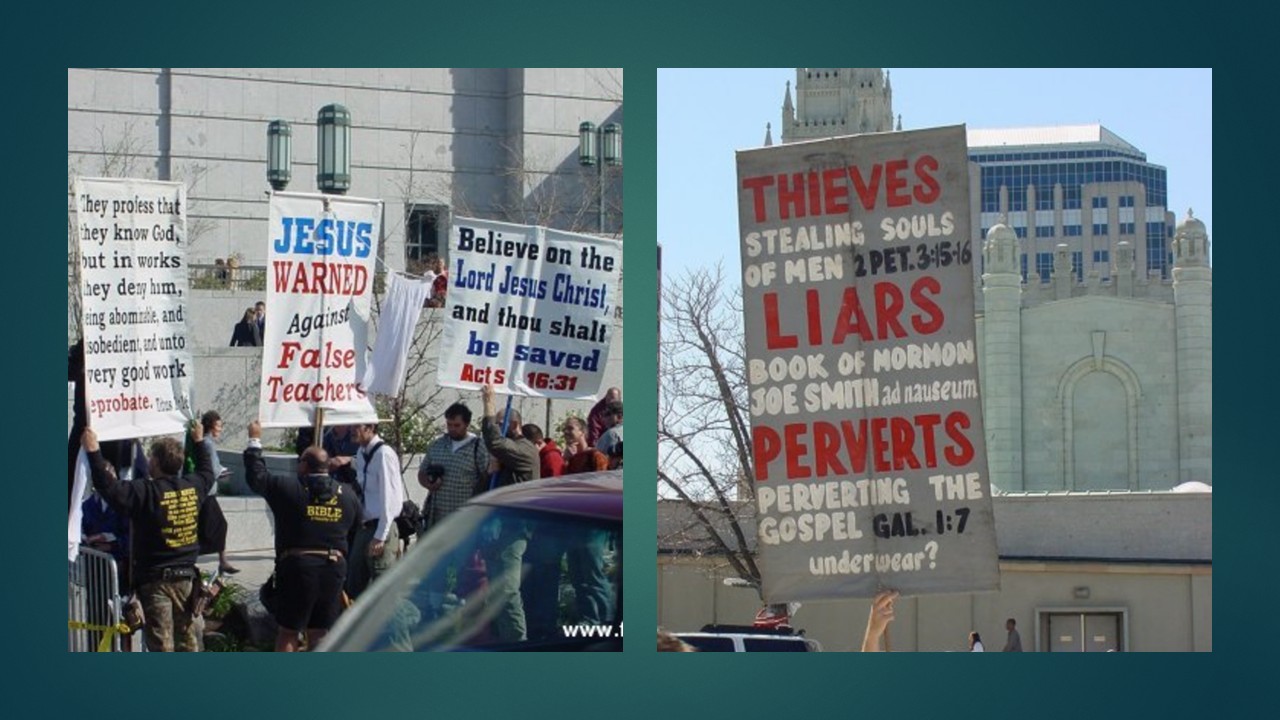
Bible Bashing and Debating Myself
When FAIR started in 1997, the discussions online were mostly limited to what is affectionately referred to as “Bible bashing”.1 FAIR, as a policy, now avoids debates. So, I thought I would debate myself to illustrate what it was like.
Given my limited time, this will not be a full discussion of all the points, and some things merit much more in-depth discussions. As I am debating myself, I am optimistic I might possibly win. But we’ll see. But just imagine, in this next discussion, in the next few minutes, that I’m two people here talking.
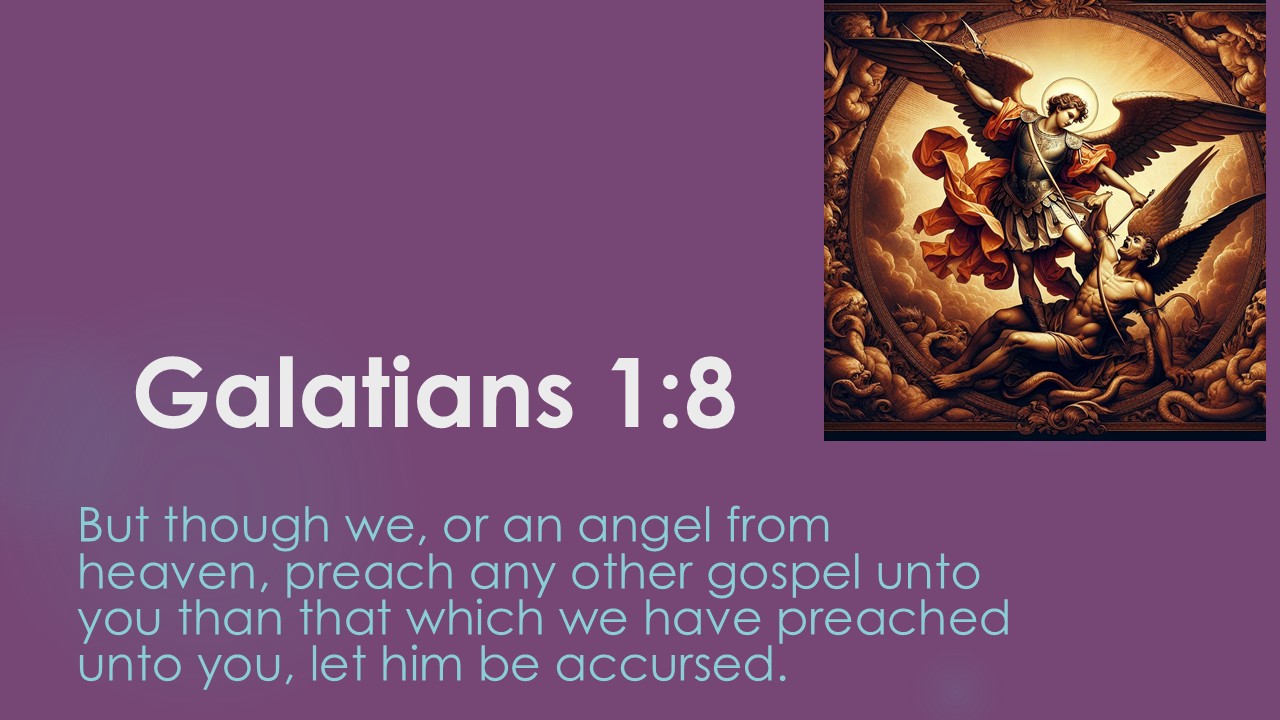
Critic: What about Galatians 1:8?
Mormonism is not true because of Galatians 1:8, which says, “But though we or an angel of heaven preach any other gospel unto you than that which we have preached unto you, let him be accursed.” You have the Book of Mormon. You have another gospel.
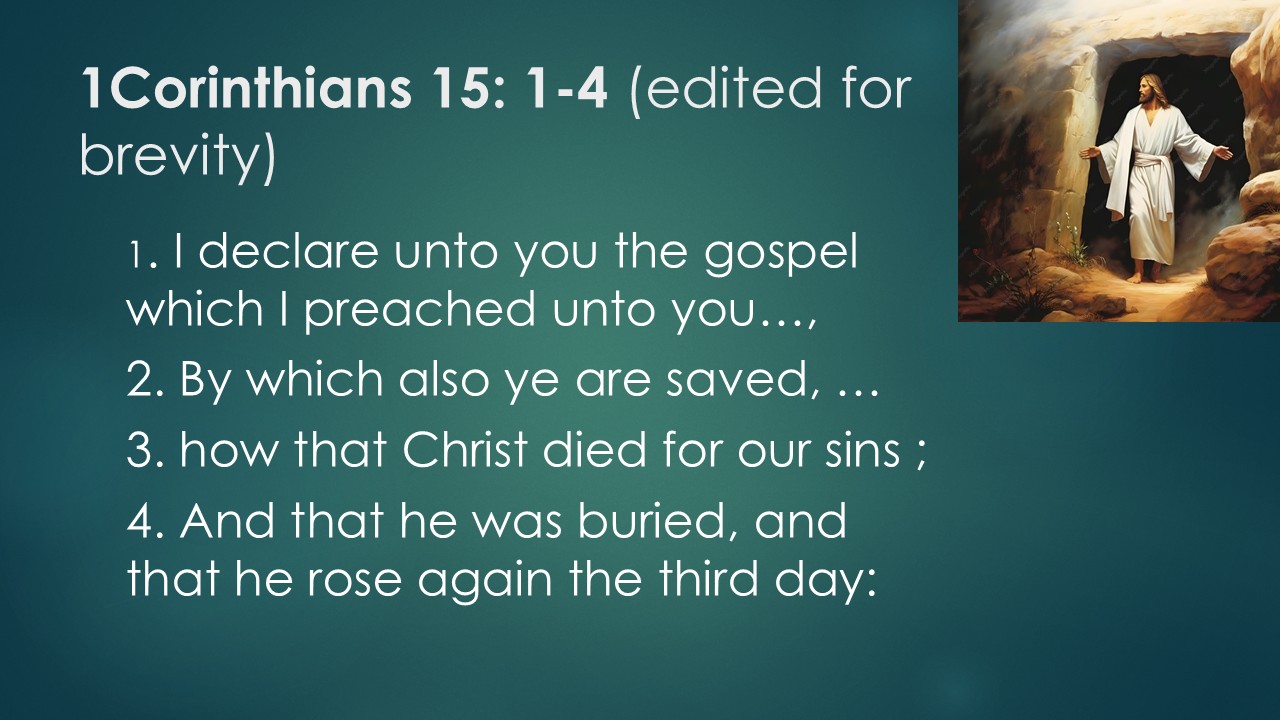
Defender: Is the Book of Mormon “Another Gospel”?
The Book of Mormon is not ‘another gospel’. Let’s look at Paul’s definition of “gospel” in 1 Corinthians 15:1–4, which it says,
Moreover, brethren, I declare unto you the gospel which I preached unto you…By which also ye are saved, if ye keep in memory what I preached unto you, unless ye have believed in vain…how that Christ died for our sins according to the scriptures; And that he was buried, and that he rose again the third day according to the scriptures:
That is the gospel we preach.
Critic: Galatians 1:8 Forbids Angels
But what about the angel? You have Moroni, and Galatians 1:8 says we aren’t supposed to receive the gospel from angels.
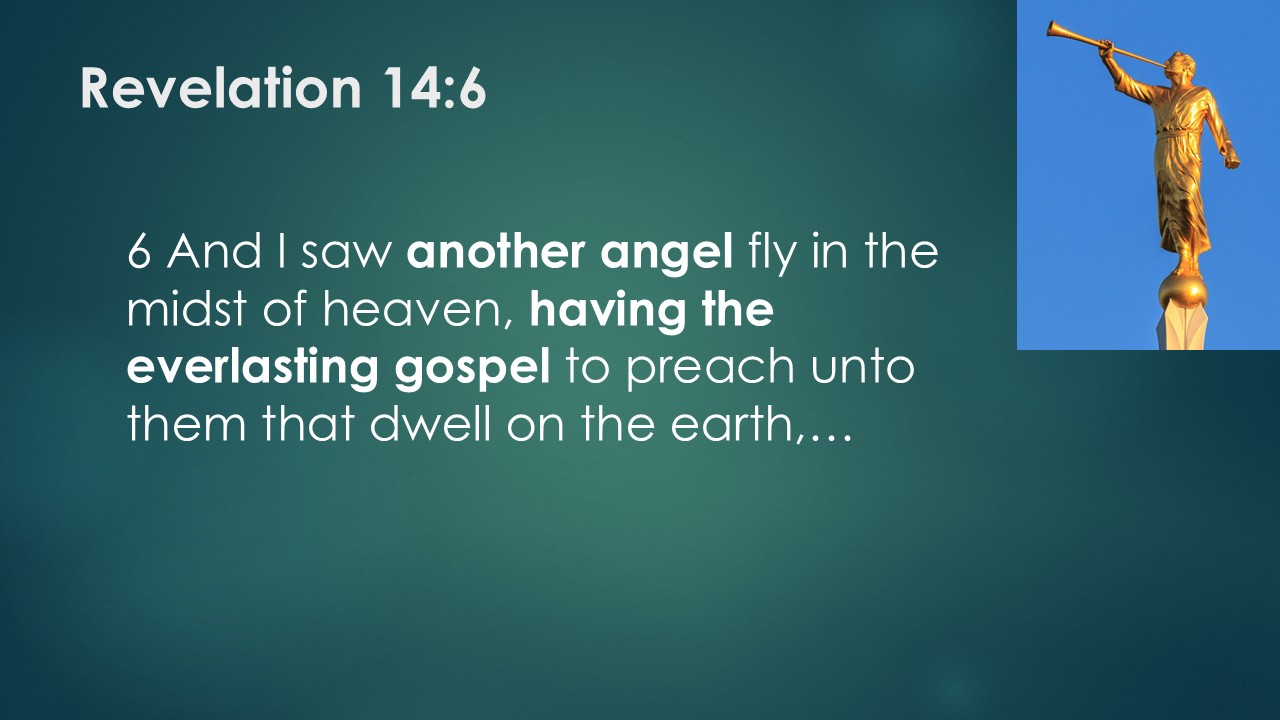
Defender: What About the Angel in the Book of Revelation?
Oh, like the angel in Revelation 14:6?
That verse says,
“And I saw another angel fly in the midst of heaven, having the everlasting gospel to preach unto them that dwell on earth.”
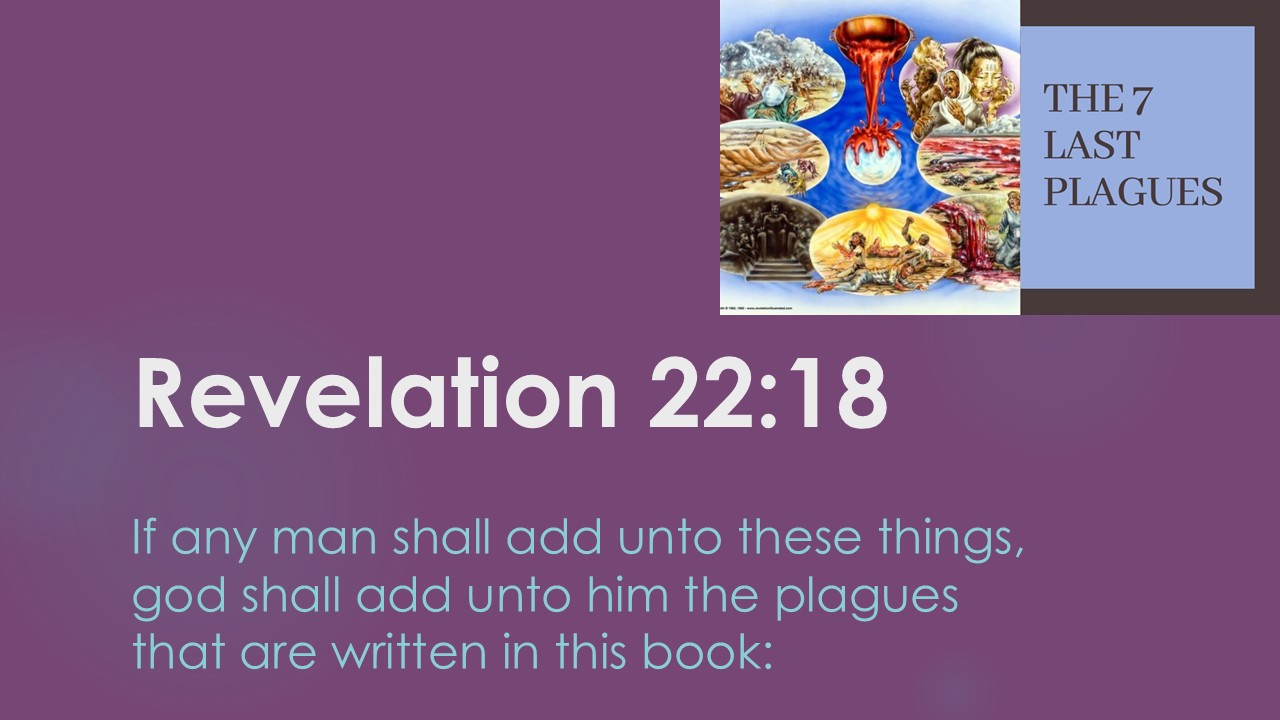
Critic: You Can’t Add to the Bible
But your Book of Mormon adds to the Bible. And how can you believe that when it explicitly says in Revelation 22:18, “If any man shall add unto these things, God shall add unto him the plagues that are written in this book.”

Defender: Does the Book of Mormon Add to the Bible?
Well, the scripture doesn’t say what you think it says.
The Greek word being used here for the book you shouldn’t add to is biblon, which means small scroll, singular.2 It’s talking about the scroll of this prophecy. It’s talking about the book of Revelation. It isn’t talking about the Bible.
The word for Bible is ta biblia, meaning the books, plural. 3
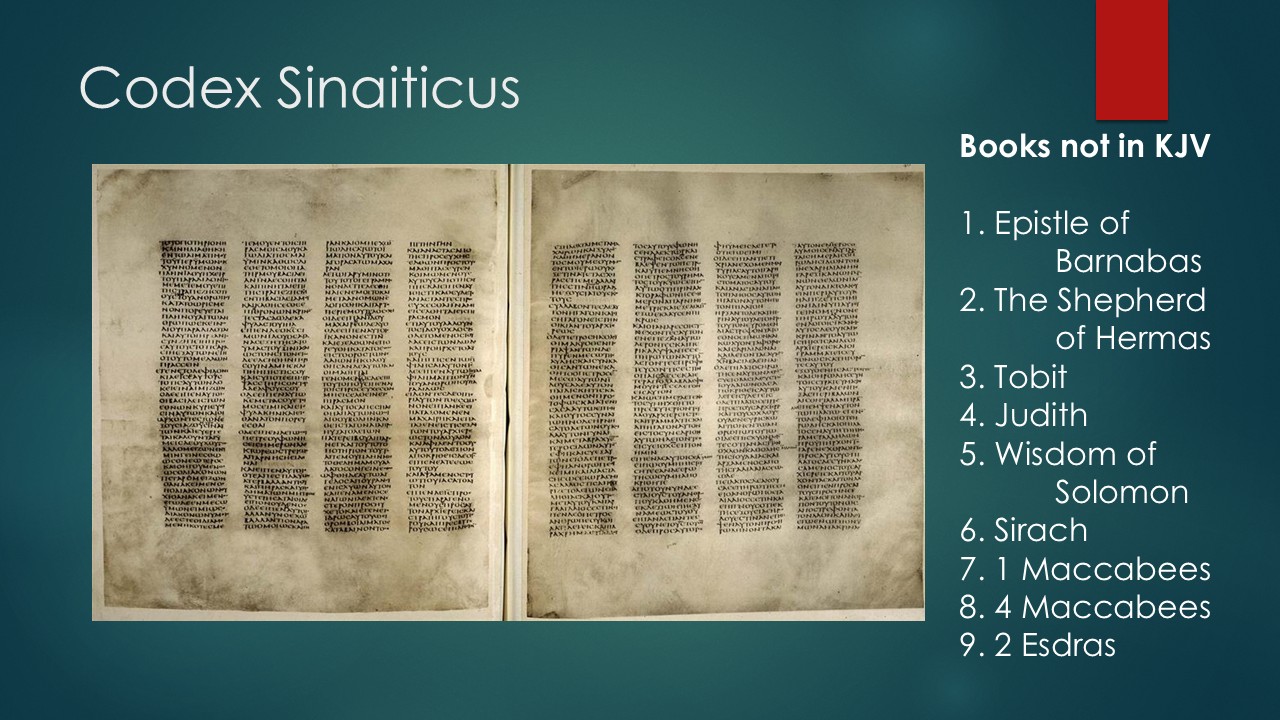
The Bible did not start out as a single book. It was a collection of scrolls or books until the 4th century AD. The first known instance of what looks like our modern Bible is Codex Sinaiticus, written around 330 AD. And it has books not included in our King James Bible.
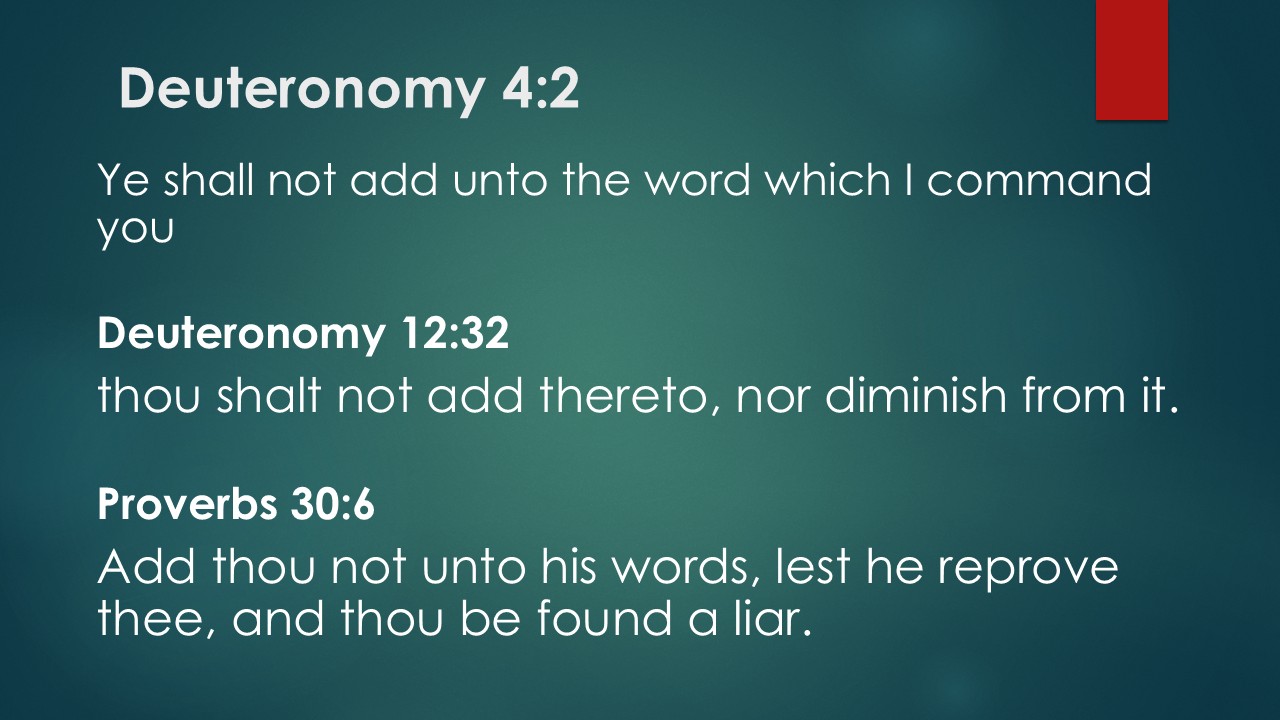
We read in Deuteronomy 4:2,
“You should not add unto the word which I command you.”
If we apply your logic here, everything after Deuteronomy is added to the Bible, and therefore should not be there. That includes the New Testament.
Other similar scriptures include Deuteronomy 12:32 and Proverbs 35 and 6.
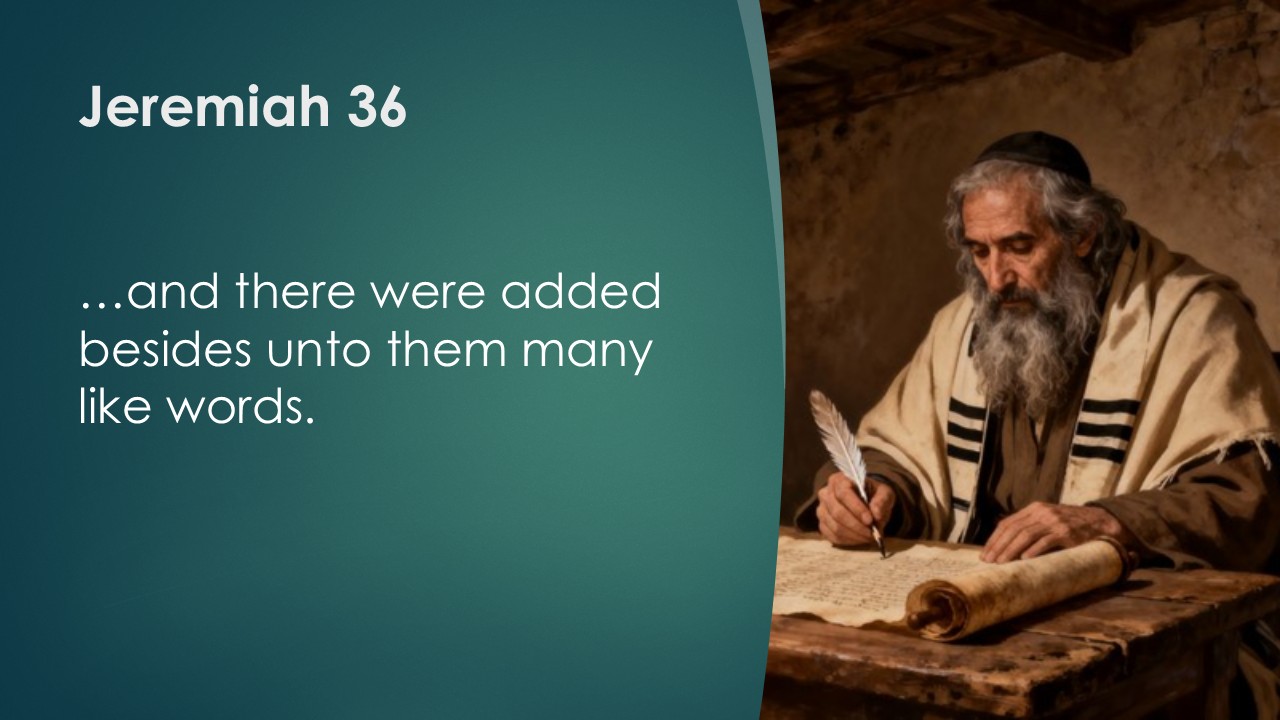
Jeremiah and Adding to Scripture
My favorite is the story of Jeremiah.
Jeremiah 36, where King Joakim burns the book of scripture. So the prophet Jeremiah rewrites the scripture, and then in verse 32 it says,
“And there were added besides unto them many like words.”
This is what scriptures are: writings of the prophets adding to what prior prophets have written.
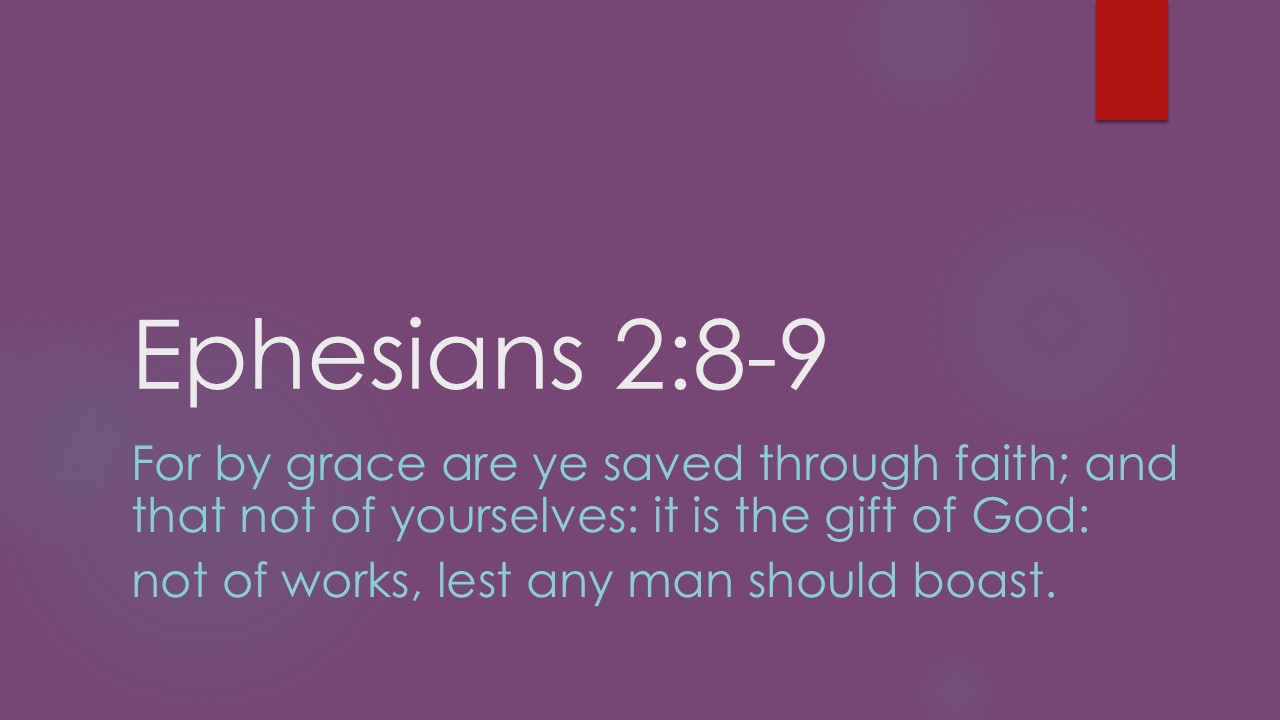
Critic: You Think You’re Saved By Works
Well, what about your belief? You work your way to heaven, or you earn heaven through your works. In Ephesians 2:8–9 it says, “For by grace are ye saved through faith, not of yourselves. It is a gift of God, not of works, lest any man should boast.”
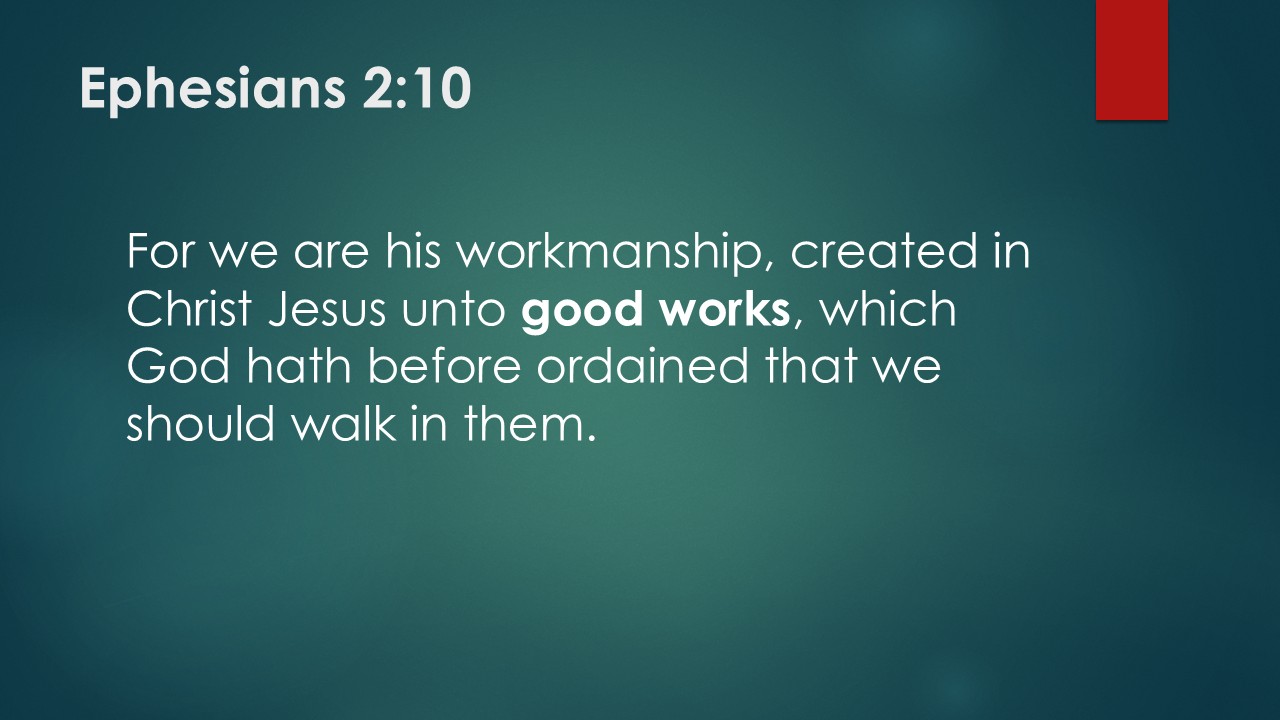
Defender: Grace, Faith, and Works
Well, first of all, we don’t believe we work our way to heaven. It is only through the grace and atonement of Jesus Christ. We have faith in Him, repent, follow Him, and do what He asks of us.
Secondly, you quote verses 8 and 9 and fail to quote verse 10, which states, “For we are his workmanship, created in Christ Jesus under good works.”
Faith Without Works Is Dead
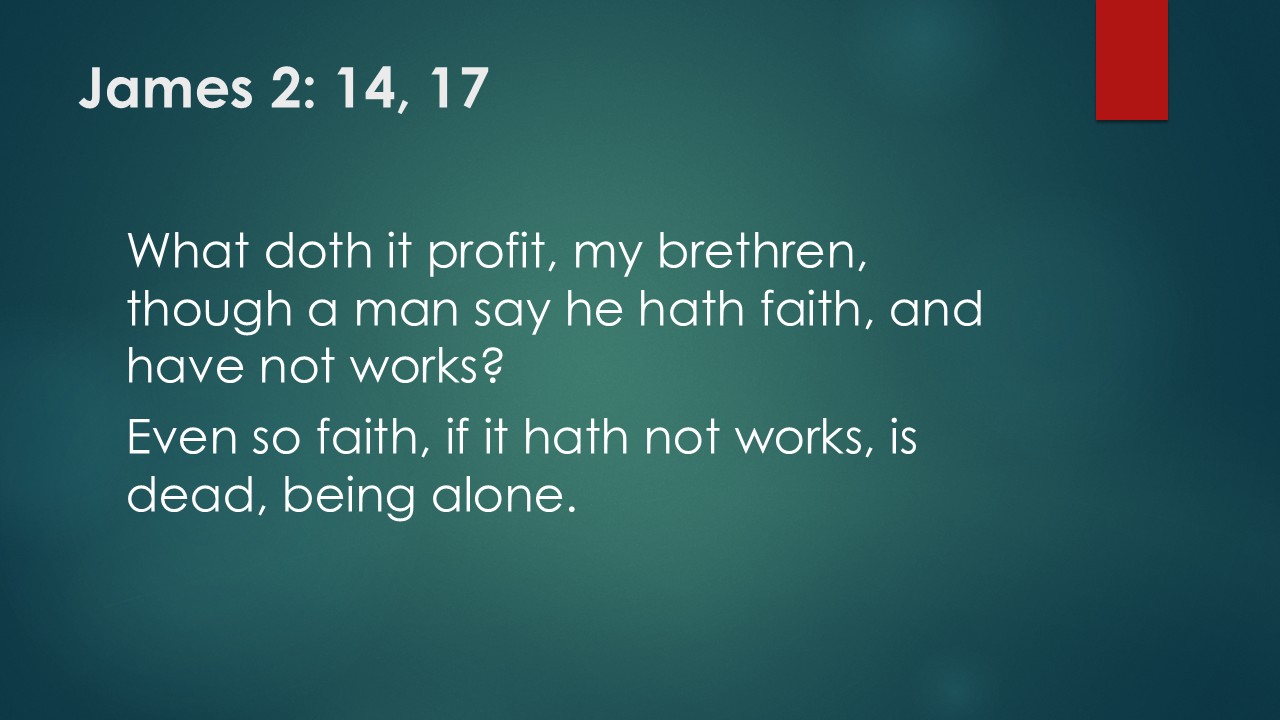 And then in James 2:14–17, it says, “What does it profit, my brethren, that a man say he hath faith and hath not works?” Skipping to verse 17, “Even so faith that hath not works is dead, being alone.”
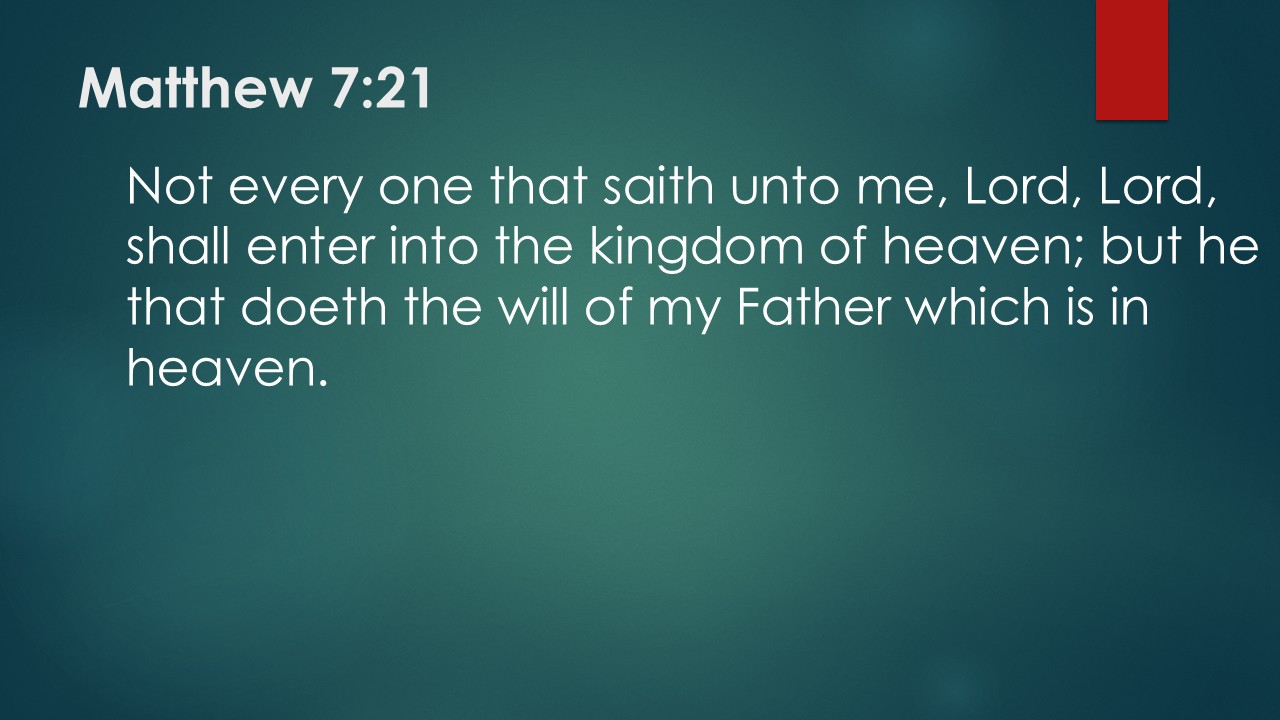
Matthew 7:21: “Not everyone who that saith to me, Lord, Lord,” shall enter the kingdom of heaven, but he that doeth the will of the Father which is in heaven.
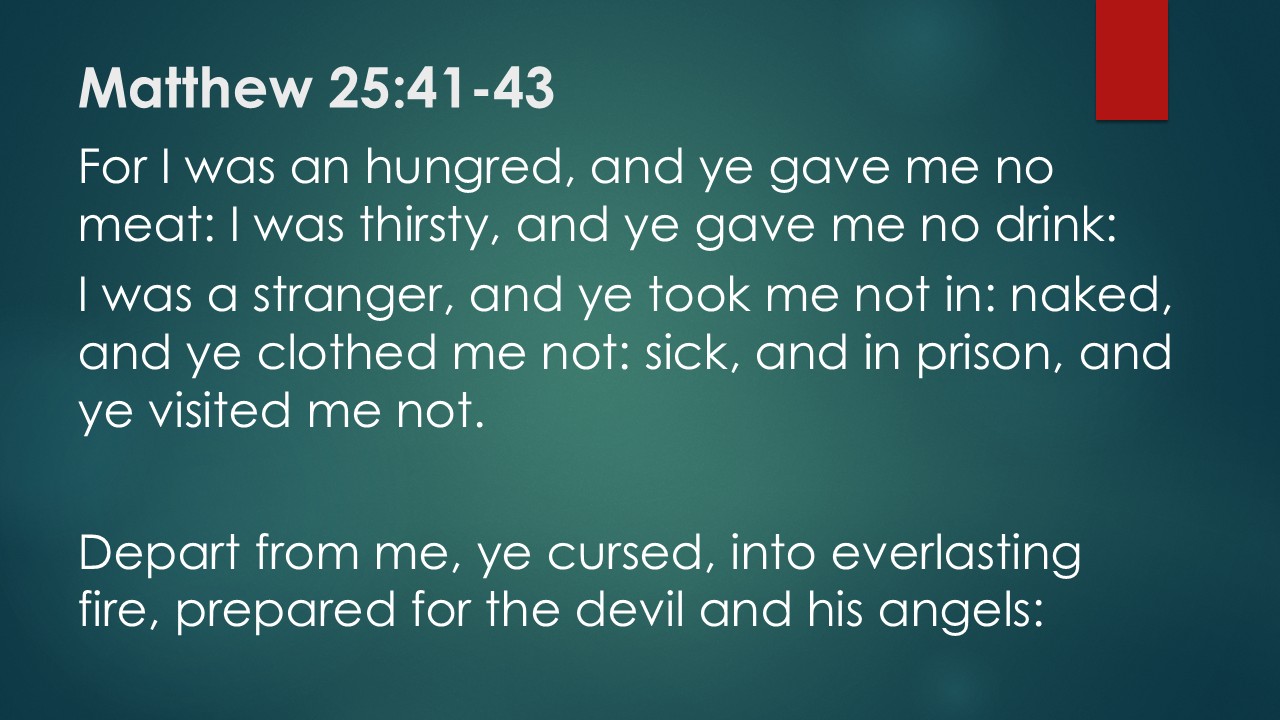
Matthew 25:42: “For I was in hungered, and you gave me no meat. I was thirsty and you gave me no drink. I was a stranger and you took me not in. Naked and you clothed me not. Sick and in prison and you visited me not.”
In verse 41, He says what He thinks of that: “Depart from me, ye cursed, into the everlasting fire prepared for the devil and his angels.”
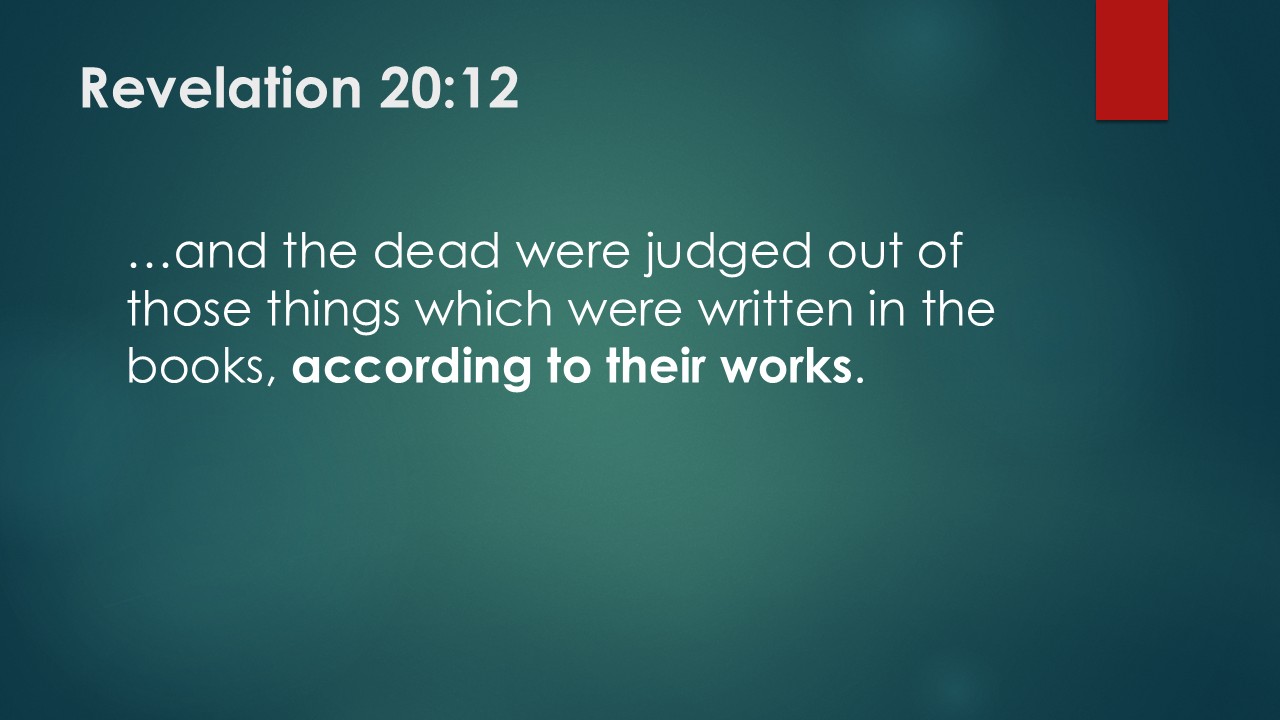
In Revelation 20:12, “And the dead were judged of those things which are written in the books according to their works.”
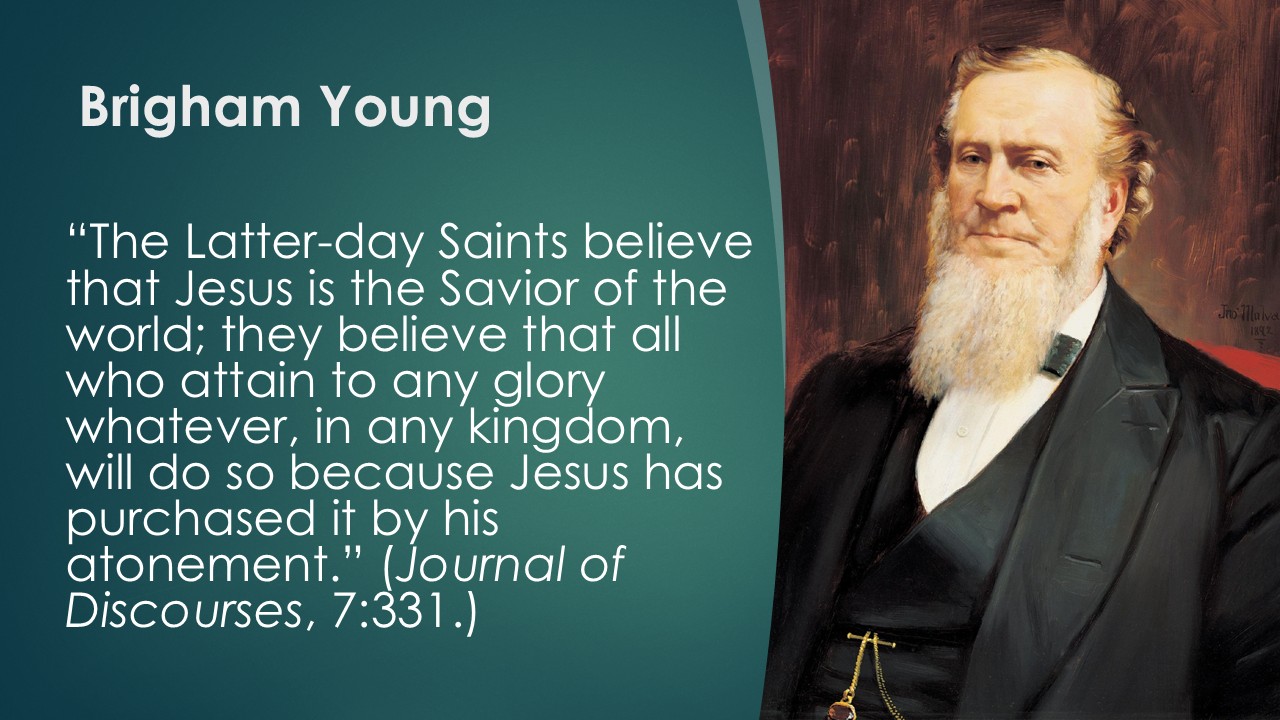
Brigham Young on Salvation Through Christ
Brigham Young sums this up.
“The Latter-day Saints believe that Jesus is the savior of the world. They believe that all who attain to any glory whatever in any kingdom will do so because Jesus has purchased it by his atonement.”
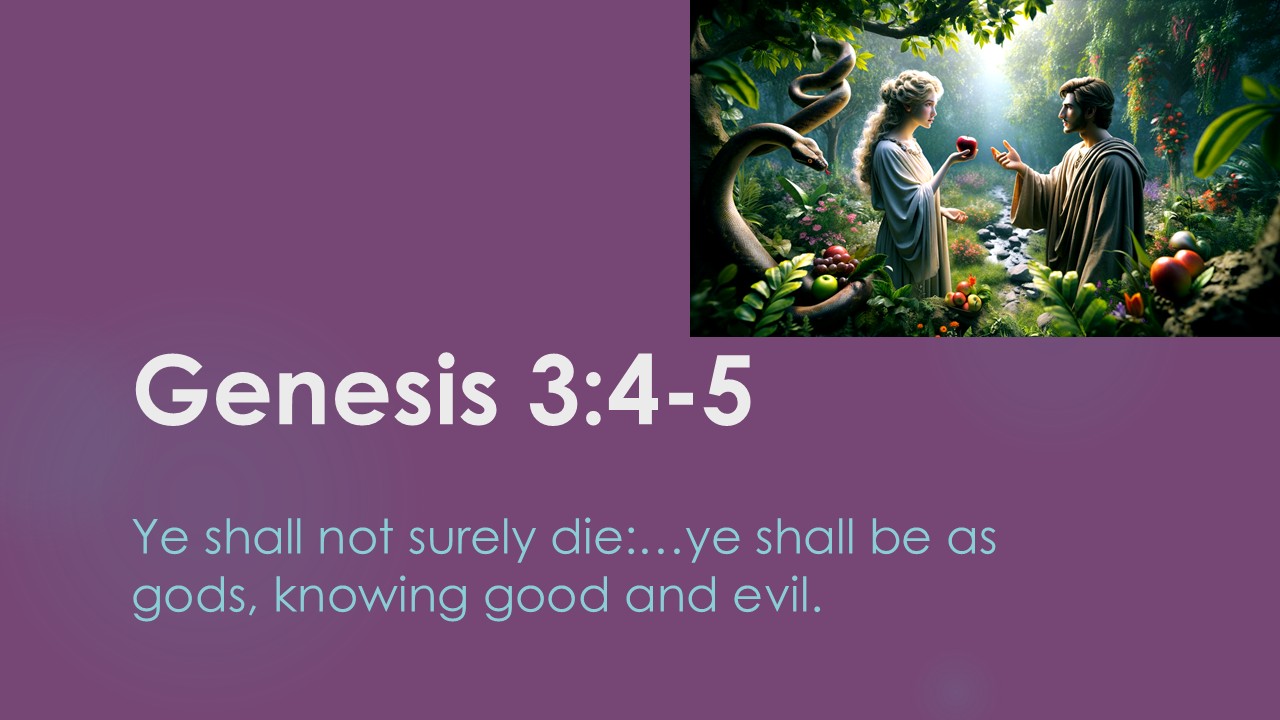
Critic: Humans Becoming Gods is Satan’s Plan
Okay. But you believe that you can become gods. That’s Satan’s plan. Satan said so in Genesis 3:4 and 5: “You shall not surely die. You shall be as the gods, knowing good and evil.”
Defender: Can Human Beings Become Gods?
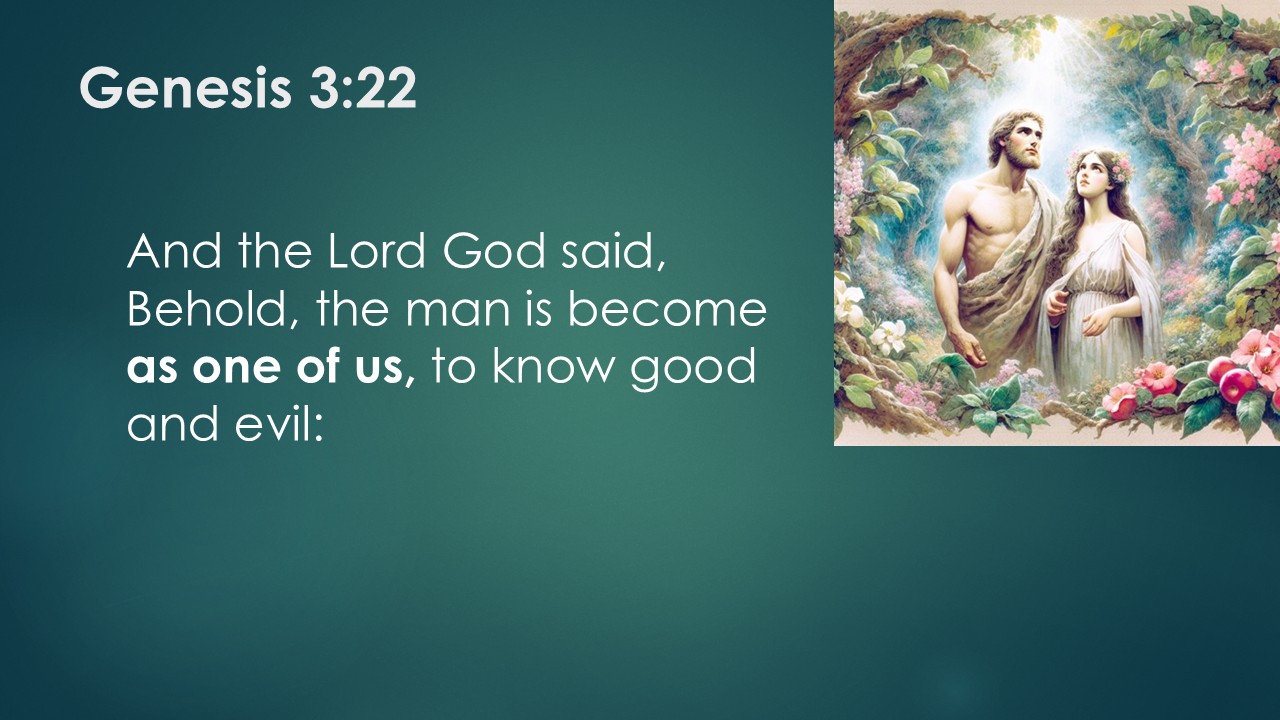
But you failed to turn the page to see God’s response to this, where He says in verse 22 of the same chapter,
“And the Lord God said, behold, the man has become as one of us, to know good and evil.”
Satan speaks in half-truths. Half of what he said here was true, as it was repeated by God.
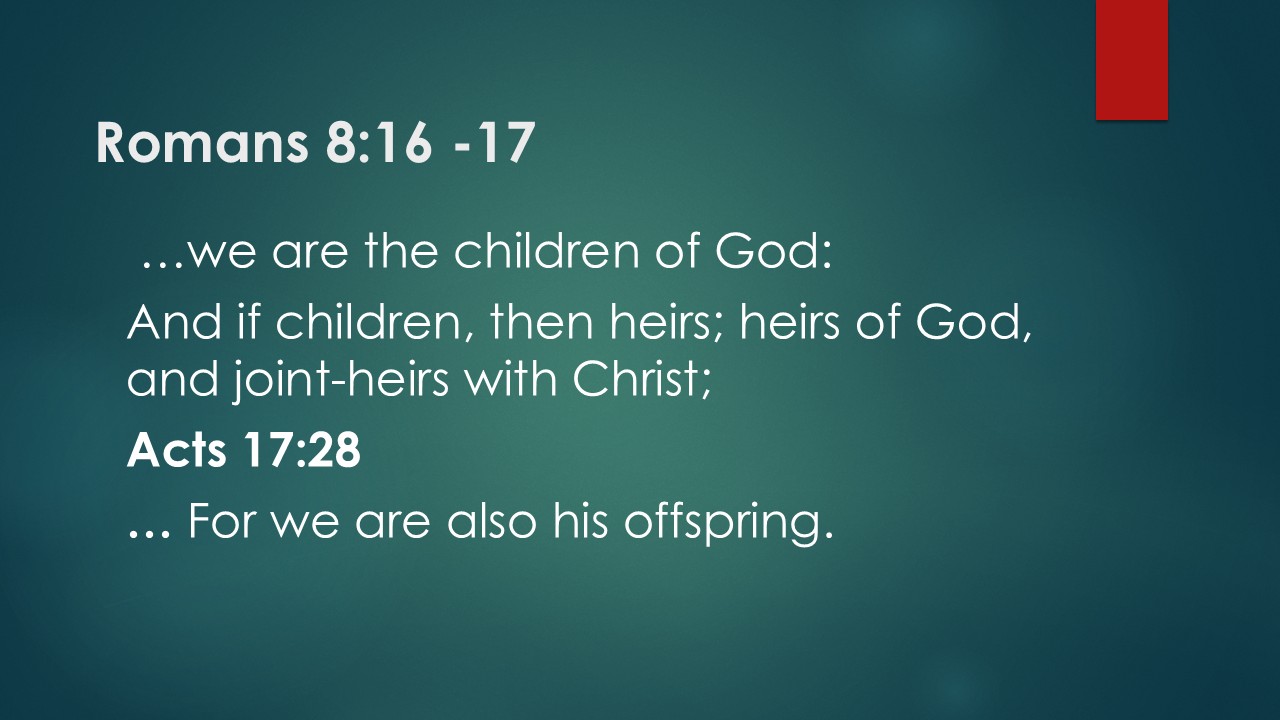
He talks about this in Romans 8:16–17, where he says,
“we are children of God, and if children, then heirs—heirs of God and joint heirs with Christ.”
And Acts 17:28 says, “For we are also his offspring.”
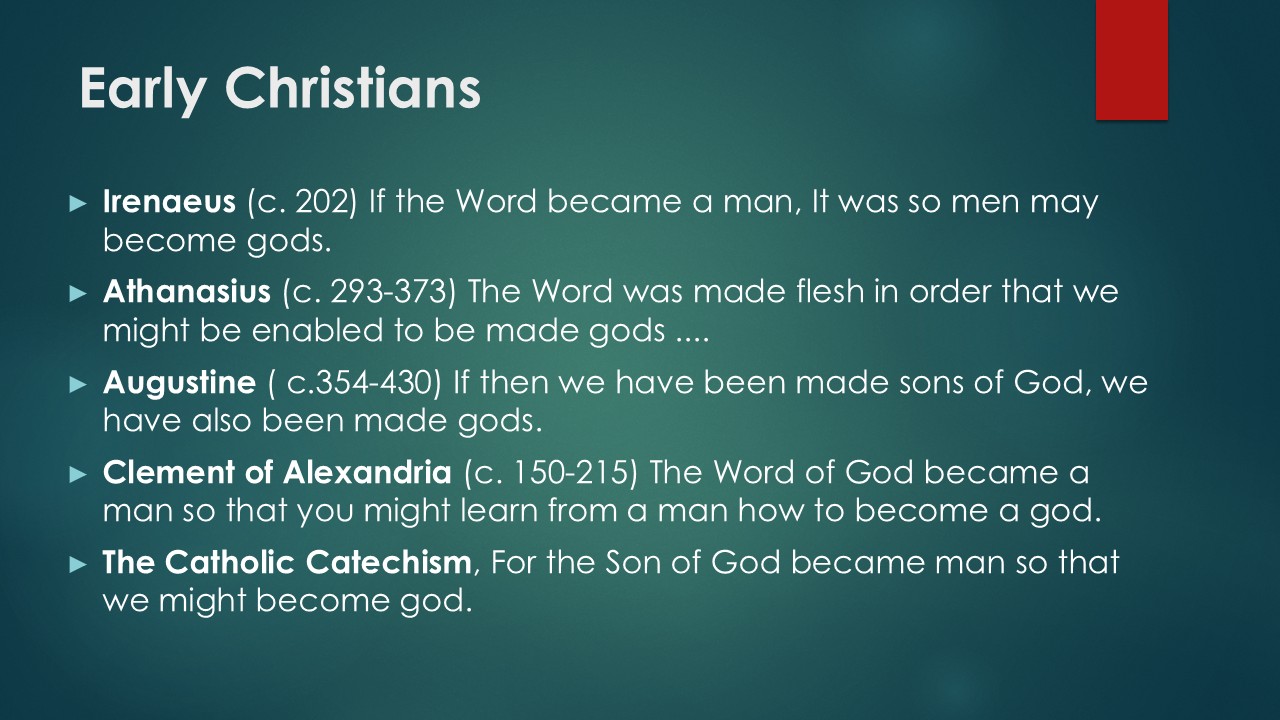
Early Christians and Becoming Gods
Even the early Christians wrote about this.
- Irenaeus: “If the Word became a man, it was so men may become gods.”
- Athanasius: “The Word was made flesh in order that we might be enabled to be made gods.”
- Augustine: “If then we have been made sons of God, we have also been made gods.”
- Clement of Alexandria: “The Word of God became a man so you might learn from a man how to become a god.”
- The Catholic Catechism says, “For the Son of God became man so that we might become God.”
If the Bible says it, and the early Christians repeat it, the real question becomes, why don’t you believe it? And — how did Joseph Smith know what those early Christians taught?
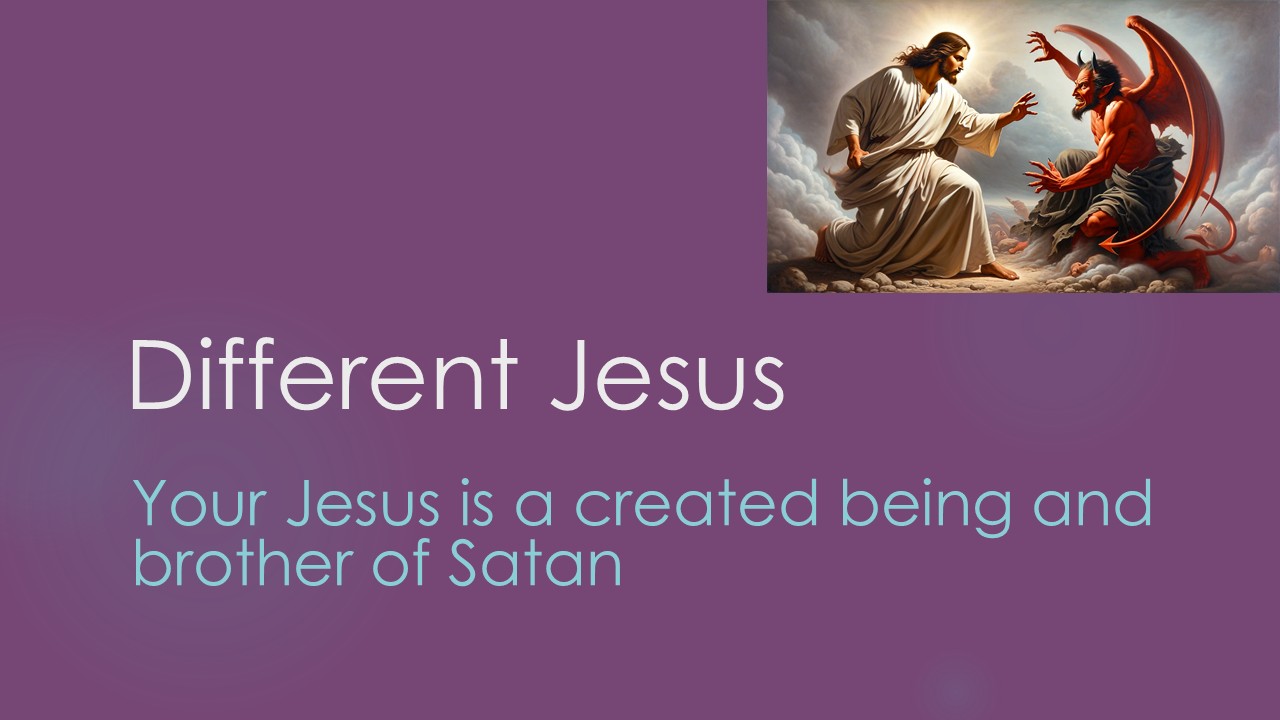
Critic: You Believe in a Different Jesus
Well, you believe in a different Jesus. Your Jesus is a created being and the brother of Satan.
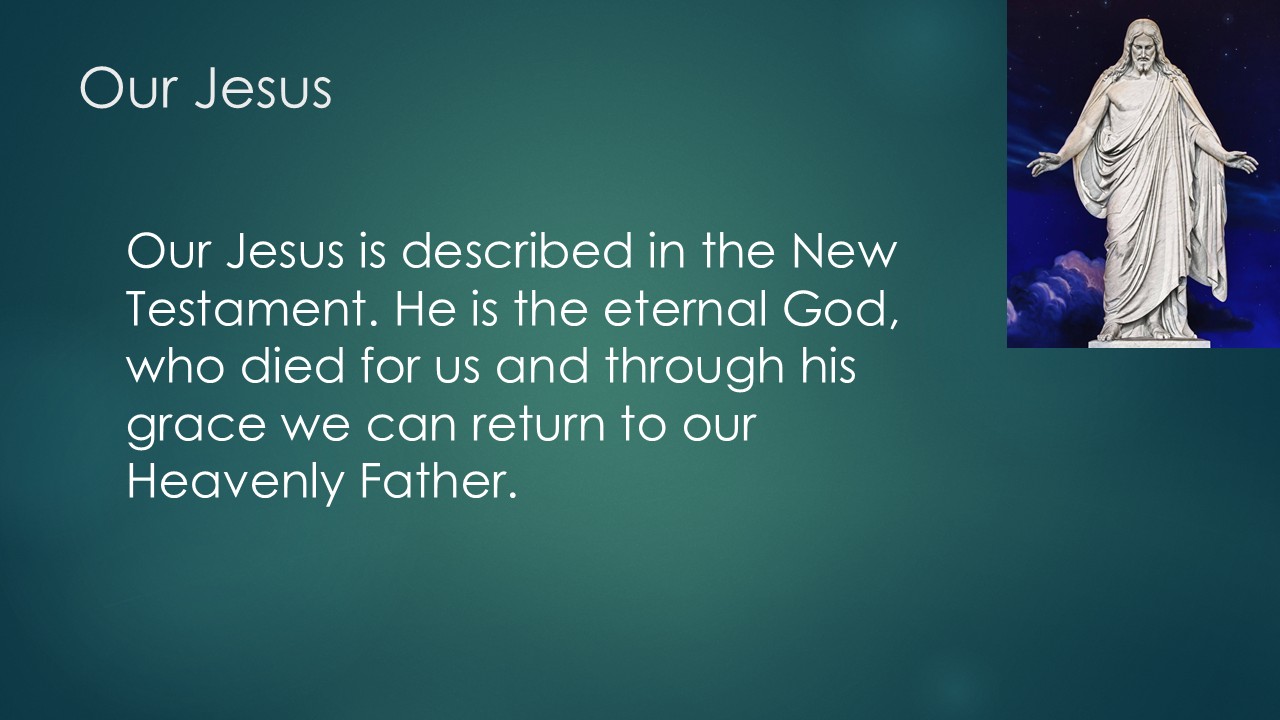
Defender: Different Jesus? It’s Not That Simple
All right, I have to pause here for a moment and note there’s a lot behind this statement, including the idea of who is a created being and who is an uncreated being and what that even means. The argument shows a lack of understanding about Latter-day Saint beliefs of pre-earth life and our eternal nature. But I usually just respond thus:
I’m sorry to hear you believe in a different Jesus than we do. Our Jesus is described in the New Testament. He is the eternal God who died for us, and through His grace we will return to our Heavenly Father.
At this point, the following question usually gets brought up again:

But what about Galatians 1:8? Which is back to the beginning, and on it goes.
What Biblical Apologetics Can—and Cannot—Do
You will note here in my discussion that nobody was convinced. So don’t plan on many conversions coming from this kind of discussion. But knowing these responses can demonstrate the strength of our position and help youth, newer members, and young missionaries strengthen their confidence and faith while removing stumbling blocks that often come from family members and church pastors.
On the other hand, I’ve seen people get really good at this method of apologetics and use it as a weapon to bludgeon the enemy. But the people we’re talking to are generally not our enemies and should not be treated as such. They should be treated with love and compassion.
To use a Star Wars analogy: if this form of apologetics is used in anger, it could lead you to the dark side.

The Return of Biblical Arguments
There was a shift away from these arguments in 2008 and 2012 when Mitt Romney ran for president and the evangelicals put their biblical swords down for the presidential cycles. The biblical arguments became very infrequent. So much so that I had one scholar tell me we shouldn’t even be talking about biblical arguments anymore.
I disagree, as we still have missionaries serving in Tennessee and Texas, and even in my hometown in California, who still have to deal with these arguments. Plus, if you go on X today, this form of argument is coming back with a vengeance.
I gave a fireside to some youth, and they said they are hit with arguments at school. So, our youth should be fluent with these responses.
Attacks on Church History and Character
While the biblical arguments have decreased, attacks on our history and our character have increased. Great effort has gone into trying to show the Church is dishonest in our portrayal of history.
One foundational reading source frequently recommended by critics is the 1945 book No Man Knows My History, written by Fawn Brodie. Now, I’m sure you’re thinking, “That book is too old. Nobody uses it anymore.” But you will find snippets of her arguments strewn across the internet.
This book is promoted by several prominent podcasts, websites, and message boards that promote leaving the Church. One popular podcaster just made an audiobook reading of this book. Plus, if you go to any Barnes & Noble bookstore today, you will find this book is highly recommended.
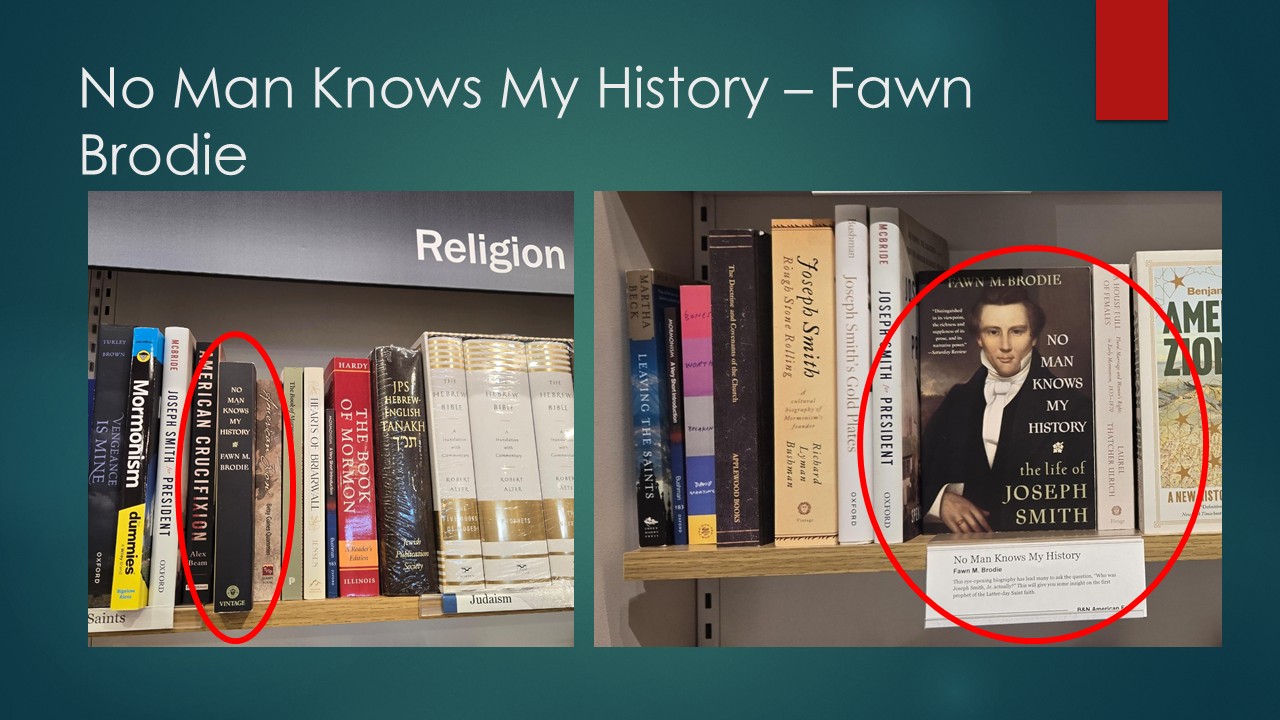
No Man Knows My History in Bookstores Today
Here is a picture of the religion section in my bookstore in Redding, California, where it has long been a prominent book and a bestseller for as long as I can remember.
And here is a picture of the bookstore—the religion section in the American Fork, Utah, Barnes & Noble. You will notice that there’s a recommendation card from the American Fork Barnes & Noble staff.
Brodie approached her subject with dated and now widely rejected psychological theories. She started with the predetermined conclusion that Joseph Smith was a fraud. She relied heavily on hostile sources and made factual errors. Including quoting fabricated stories that are still repeated today.
Brodie writes with obvious literary skill. But even scholars who agree with her position acknowledge her personal bitterness and methodological weakness undermine the work.
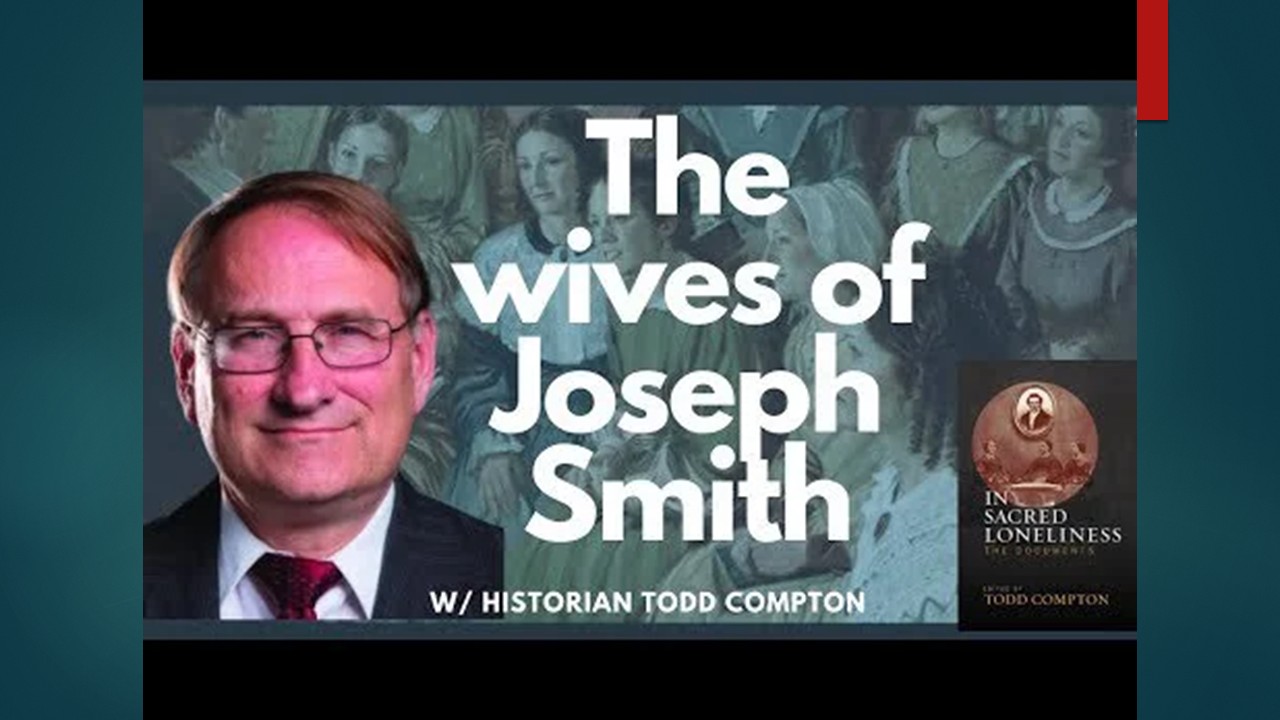
Todd Compton on Brodie’s Use of Sources
For example, Todd Compton, a major writer on Joseph Smith polygamy—and probably not someone you’re going to invite to speak at your next stake conference—praises her innovation, but takes her to task for her poor use of sourcing.
He writes,
“A striking aspect of Brodie’s list of Joseph Smith wives is her frequent use of printed anti-Mormon sources, which she often cited as if they were authoritative. However, every source in Mormon history, pro-Mormon or anti-Mormon, must be viewed skeptically and must be submitted to searching critical judgment.”
He goes on to say,
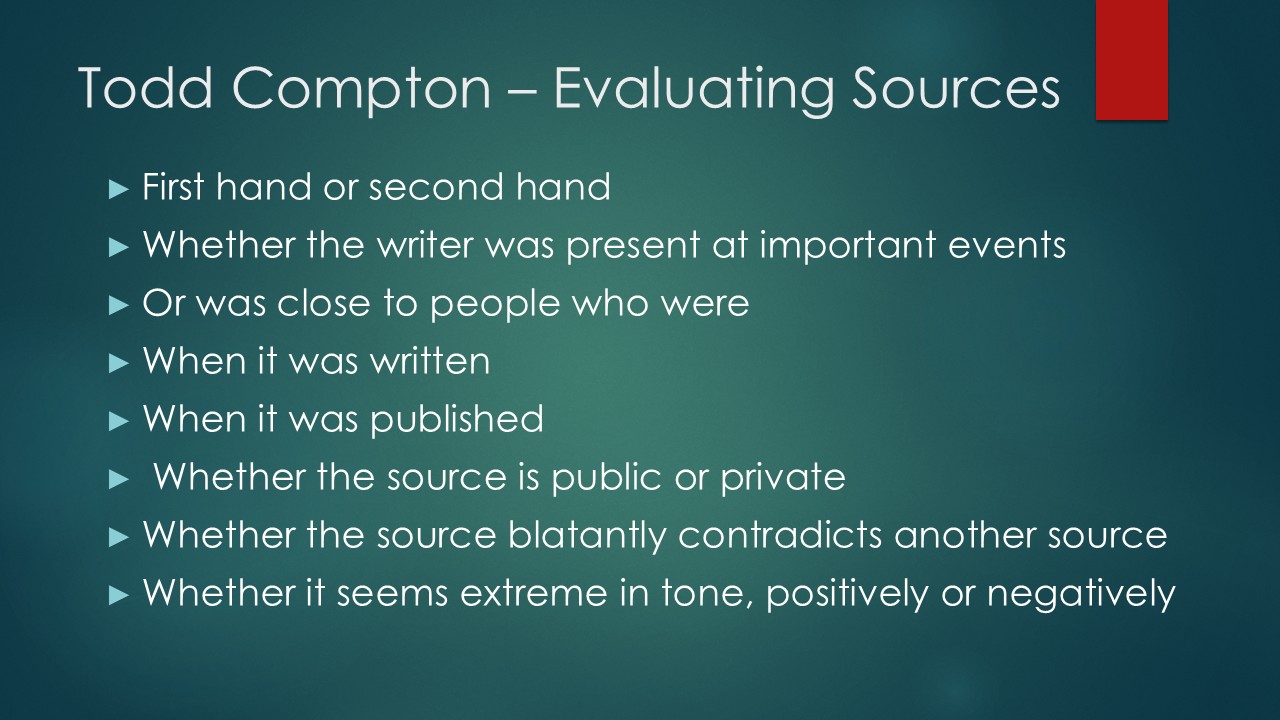
“One must ask whether the source is firsthand or secondhand, whether the writer was present at important events or was close to people who were, when it was written, when it was published, whether the source is public or private, whether the source blatantly contradicts another source, whether it seems extreme in tone, positively or negatively.”
Compton further writes,
“One receives the impression in reading Brodie’s treatments of Joseph Smith’s polygamy that she did not ask these questions sufficiently of her antagonistic evidence.”
Compton states, for example, Brodie quoted the following passage from William Hall’s The Abominations of Mormonism Exposed. Sounds like a good book, right? Easy reading. A source containing major factual errors.

Testing Brodie’s Sources
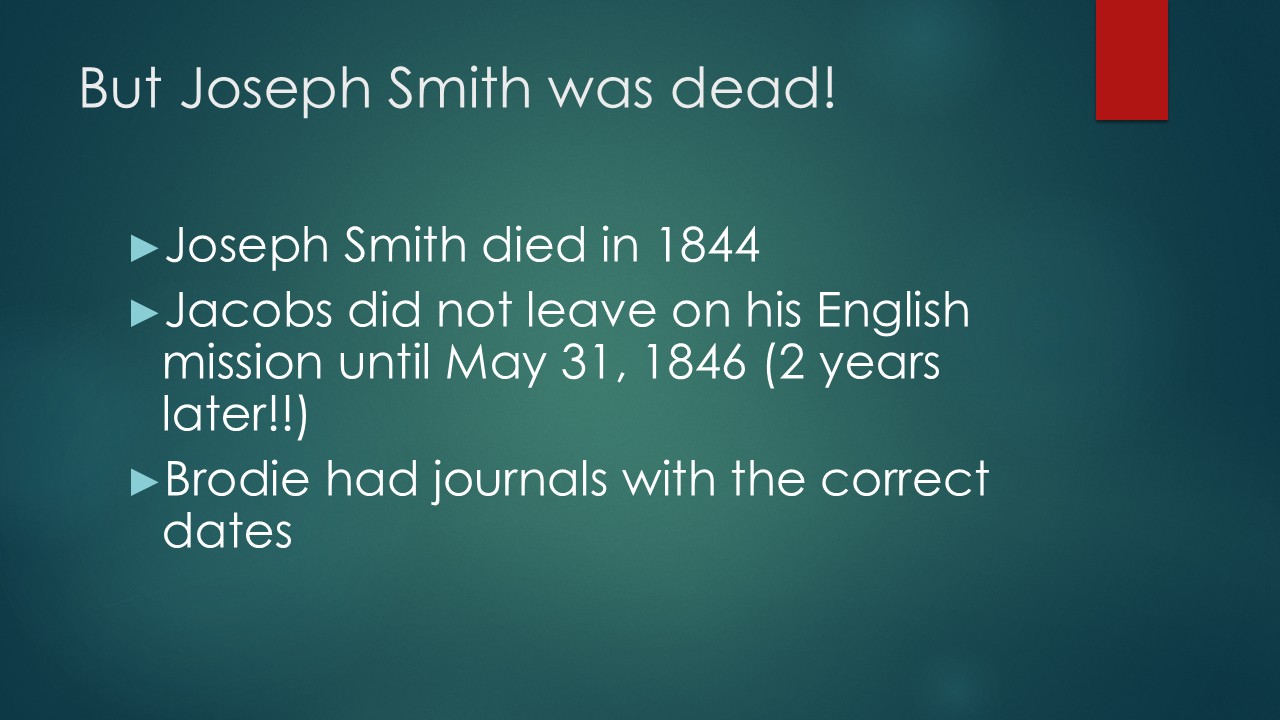
“A missionary, Henry Jacobs, had his wife seduced by Joe Smith in his time during a mission to England. She was a very beautiful woman, but when Jacobs returned, he found her pregnant by Smith. Jacobs put up with the insult and still lived with her.”
Compton then explains,
“In fact, Joseph Smith did not seduce Zina Huntington Jacobs while Jacobs served a mission to England. Joseph was already dead at that time. Joseph Smith died in 1844. Jacobs did not leave on his English mission until two years later, May 31st, 1846.”
Fawn Brodie knew that. Compton says Henry’s mission to England is documented in its entirety by Zina Huntington’s brother, Oliver, who recorded it day by day in his extensive diaries. And we know Brodie had access to those diaries, as she cited them frequently.
Brodie also writes,
“It is said that Eli Johnson demanded that the prophet be castrated, for he suspected Joseph of being too intimate with his sister Nancy Miranda.”
But Nancy Miranda had no brother named Eli.
This particular false claim gets repeated in Jon Krakauer’s book Under the Banner of Heaven, which can also be found in your Barnes & Noble bookstore.

The Case of Mrs. Edward Blossom
Another claim Brodie makes is her description of wife number 37, a Mrs. Edward Blossom.
There we go. “A” Mrs. Edward Blossom. She notes that she was the wife of “a Mr. Blossom”, a high councilor in Nauvoo and an apostle under Brigham Young. Brodie then admits to the fact there never has been a Mormon apostle named Blossom. Yet, she still leaves Mrs. Blossom on her list of Joseph Smith’s wives.
I have often been puzzled by the lack of accuracy in anti-Mormon sources. It isn’t just Fawn Brodie. The same lack of accuracy shows up in other sources as well.
The CES Letter and Checking Critical Claims
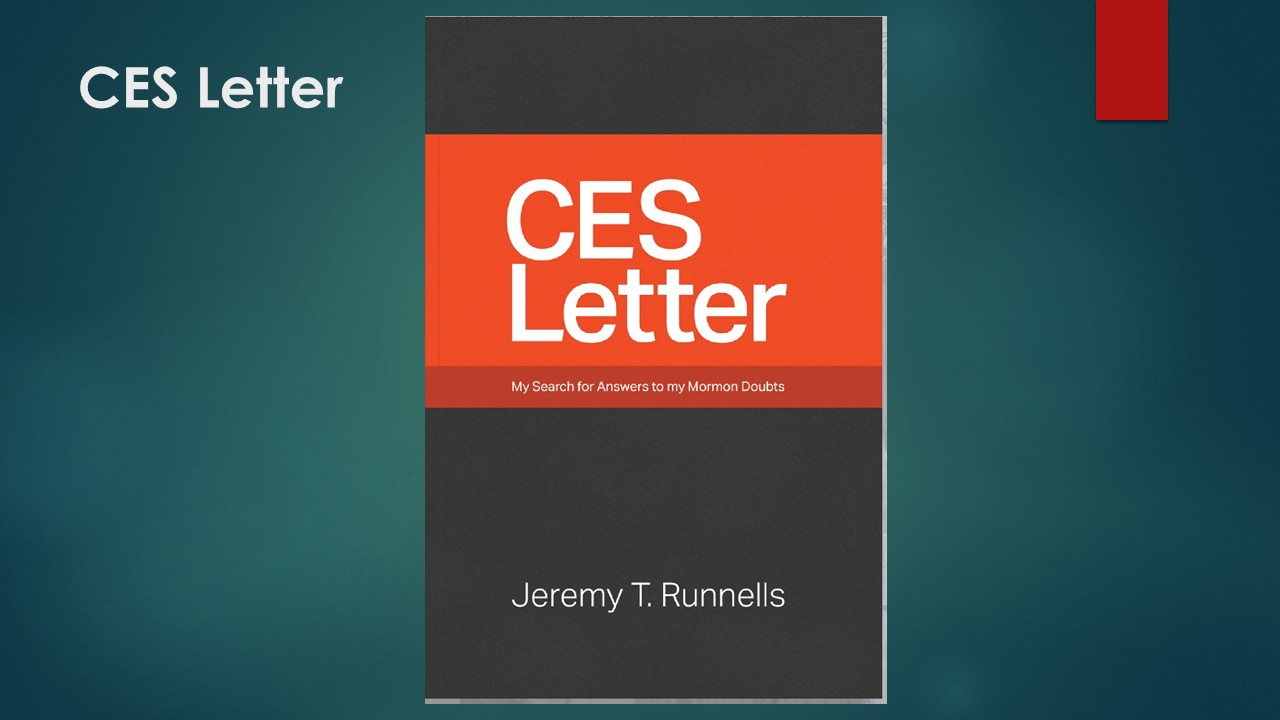
A few years ago, the former Latter-day Saint community started passing around what some claimed was the holy grail of anti-Mormon books. A man named Jeremy Runnells compiled a list of questions in a book called the CES Letter and was very successful in marketing the book all over the world.
That book drew many people out of the Church, and many former believers used it as a missionary tract to show their families why they left and why their family members should leave too. I spoke on this in a 2019 FAIR Conference talk where I showed the unreliability of many of his claims.
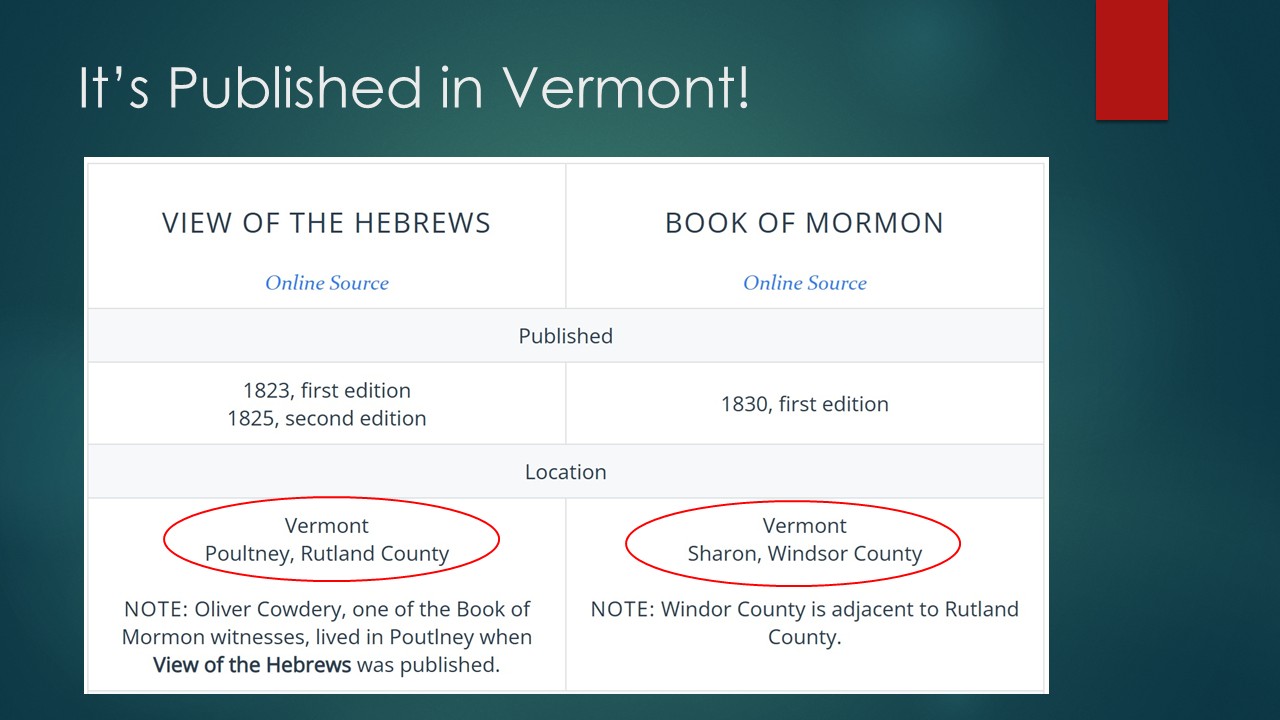
As an example, the picture on this PowerPoint slide is directly from his book. One of his claims is that the book View of the Hebrews should be seen as a probable source for the Book of Mormon.
View of the Hebrews and the Book of Mormon
In his list of reasons why we should accept this claim, he states that View of the Hebrews was published in Poultney, Vermont, and the Book of Mormon was published practically right next door, only 65 miles away in Sharon, Vermont.
Now, I’m sure there’s going to be a number of Church missionaries serving in the Palmyra, New York, Grandin print shop, located 256 miles away from Sharon, Vermont, who are going to be very disappointed to discover this fact.

Notwithstanding that every known source, history, and journal has the Book of Mormon published in that Grandin print shop in Palmyra, New York. Who knew that all the firsthand information is wrong and I should throw away my faith for this Reddit-like claim?
I found the reliability of many other claims in the book to be just as poorly supported. They certainly sound credible, but they tend to fall apart under scrutiny.
Most people don’t want to check the claims because they don’t know how, don’t have the time, or they support the end goal of the book.
The Godbeites and a Different Kind of Challenge
Now, I’m going to jump to another type of attack on the Church. This one involves members of the Church in 1869.
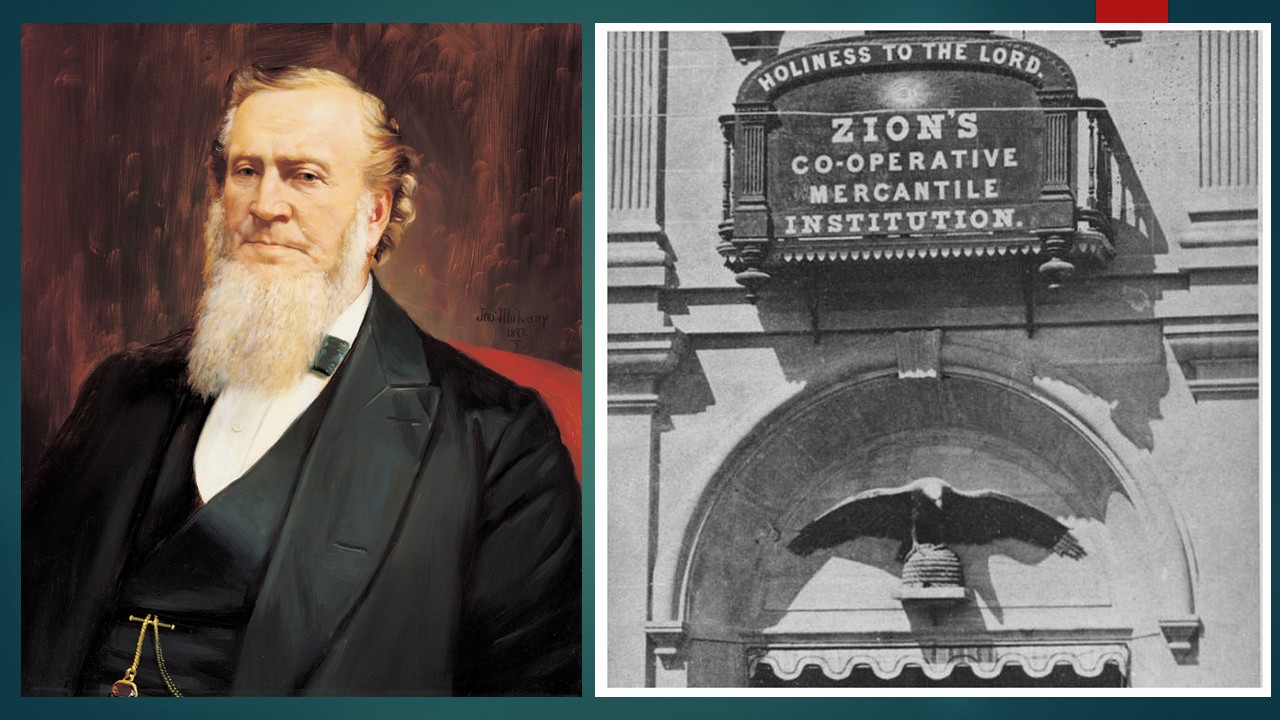
At this time, Brigham Young was concerned that some merchants were charging very high prices for imported goods. He encouraged local communities to pool their resources, manufacture their own goods, and sell them in cooperative stores at inexpensive prices.
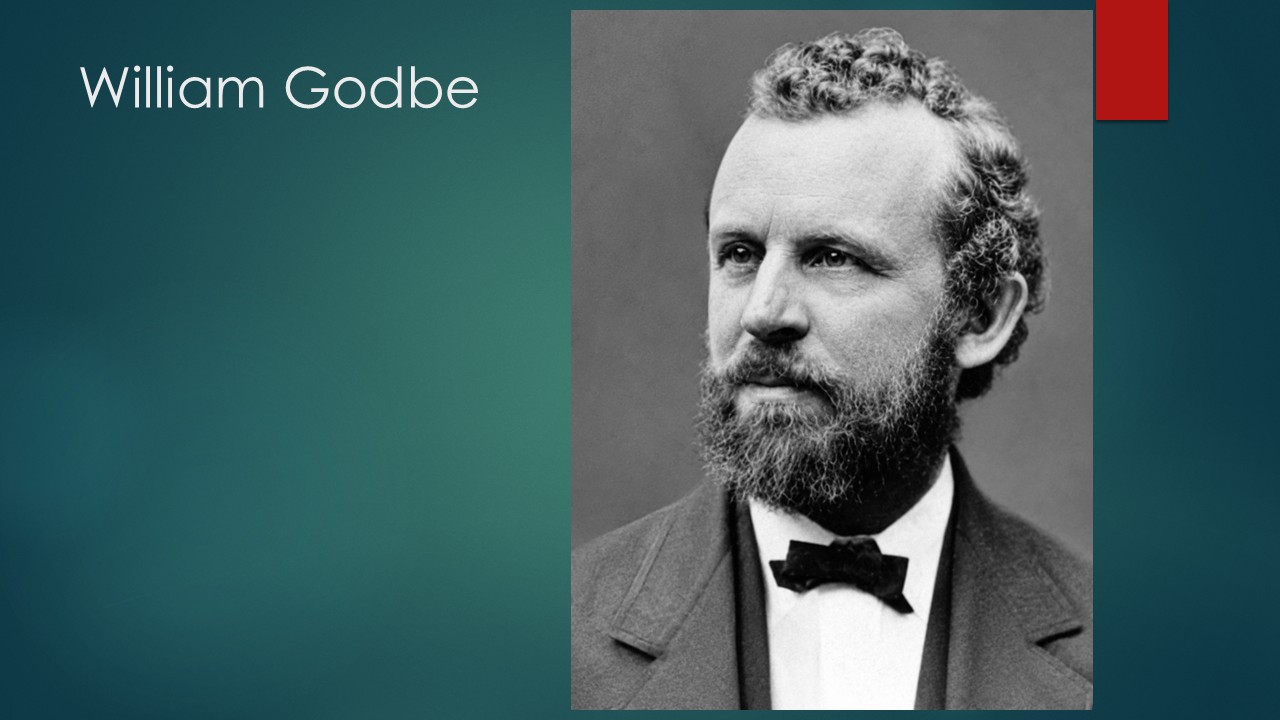
A wealthy Salt Lake City merchant named William Godbe objected to the Church’s interference in economic matters and lack of support for good old-fashioned capitalism. He organized some of the mostly British-born Saints into a group called the New Movement.
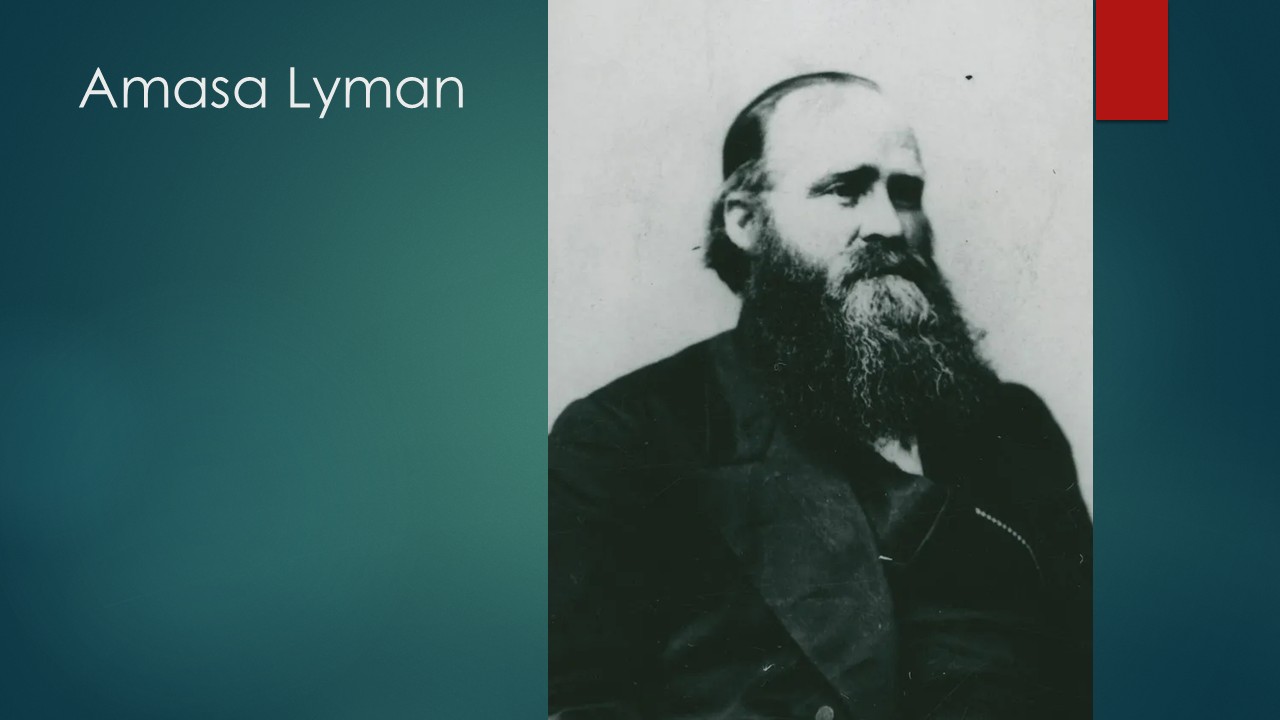
Eventually, they attracted the interest of a recently released and later excommunicated apostle, Amasa Lyman, who joined their group and helped organize a new church called the Church of Zion.

Spiritualism and the Godbeite Movement
To understand how this happened, you have to know what was going on nationally. At the time, there was a heightened interest in spiritualism, mediums, and séances. Godbe claimed that Joseph Smith and others had spoken to him through these séances and directed him to reform the Church.

The Godbeite movement founded a local newspaper, later known as The Salt Lake Tribune. But by 1890, the leaders of the Godbeites had all died and the movement disappeared, leaving only the newspaper as a reminder.
On a more positive note, Amasa Lyman was the great-great-grandfather of Apostle James E. Faust. So, we know someone in the family came back to the Church.
Modern Movements and Claims of Spiritual Authority
I bring up the Godbeites because we seem to have several modern-day groups that are following the same model. These groups claim increased spiritualism, personal direct communications with Christ, and the Church being led astray and needing to be reformed or corrected by them.

Of course, some members are following a gentleman known as Denver Snuffer. He teaches the Church of Jesus Christ has drifted from its original divine mission and that you must personally encounter Christ through revelation.

Some follow another group that Chad and Lori Daybell belonged to. Chad taught multiple mortal probations, possession of evil spirits, end times, and a special group of the elect. They became famous when Chad and Lori were convicted for killing Lori’s children and Chad’s wife.
Redemption of Zion
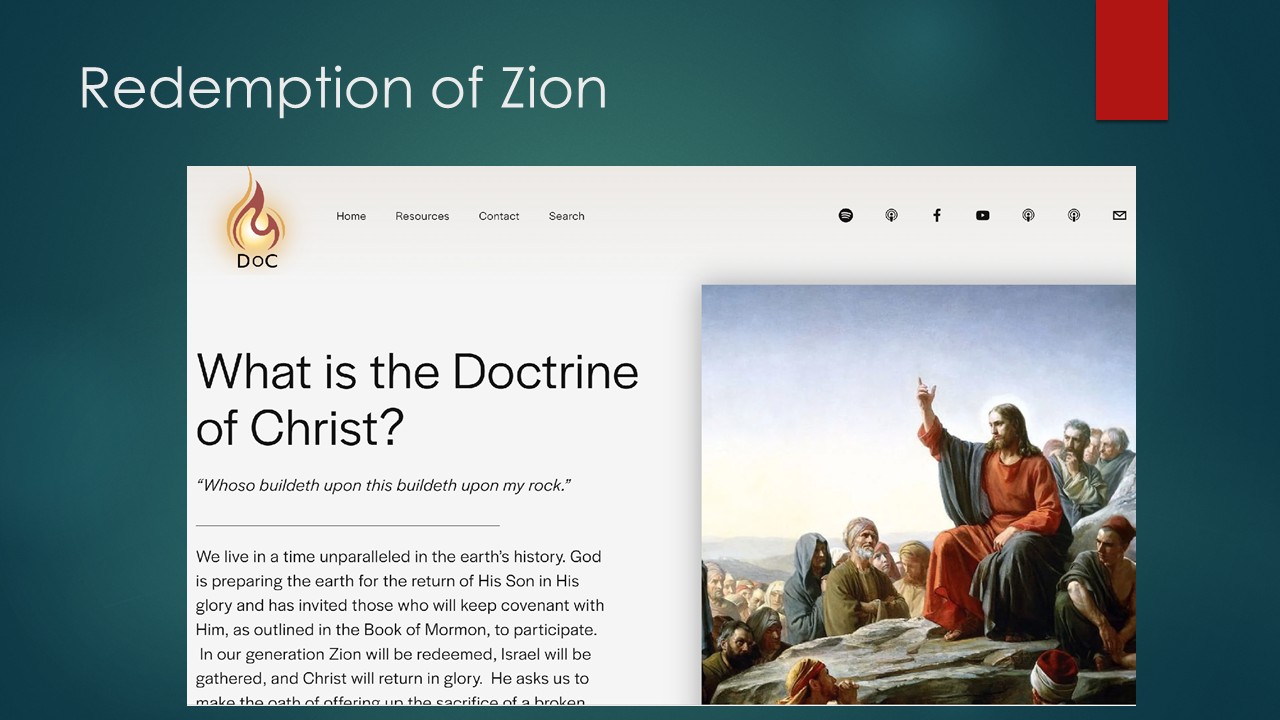
There’s a new movement led by Phil Davis called Redemption of Zion. This one seems to have started after COVID, with concerns about the government and the vaccine and a major focus on who qualifies as being one of the elect.
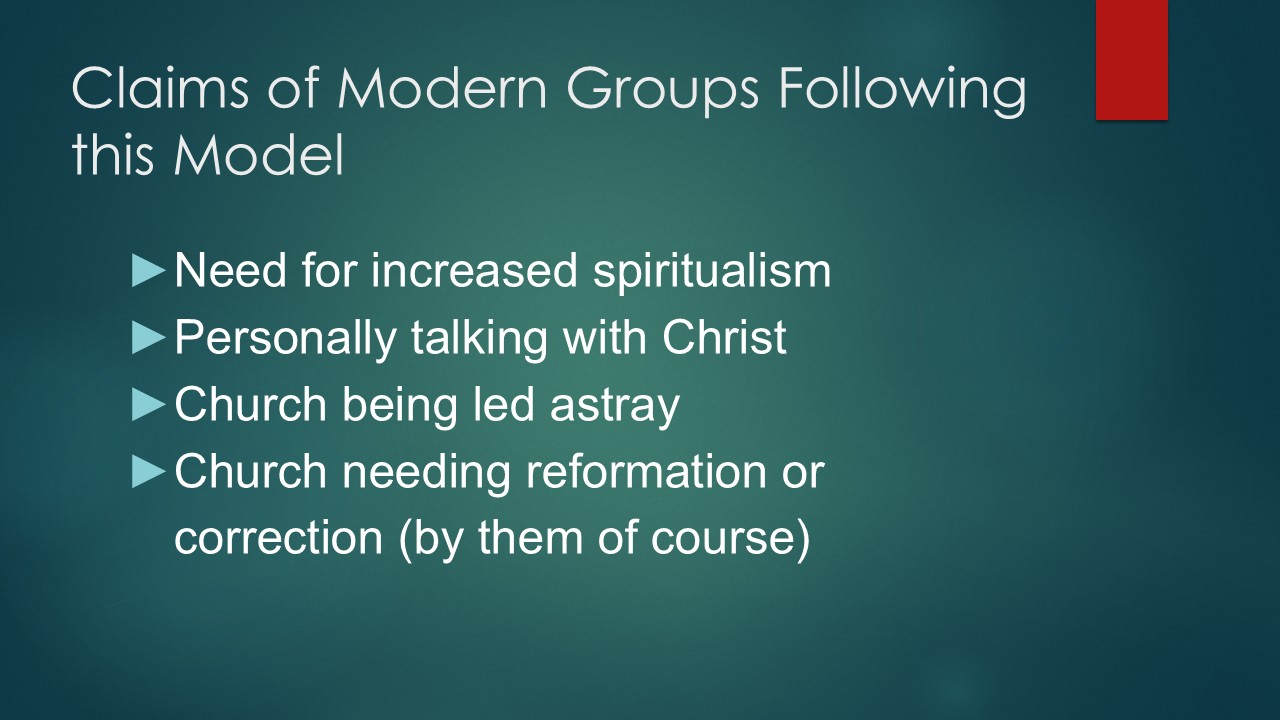
All of these groups seem to emphasize:
- claims of direct communication with Christ
- dissatisfaction with Church authority
- the idea the Church has gone astray or has been misled, and
- the promotion of spiritual gifts and visionary experiences.
Now, you may shrug and simply say, “These are simply extreme groups, so there’s no need to worry.” And yet you can find their beliefs being quietly propagated on the internet, with podcasters claiming:
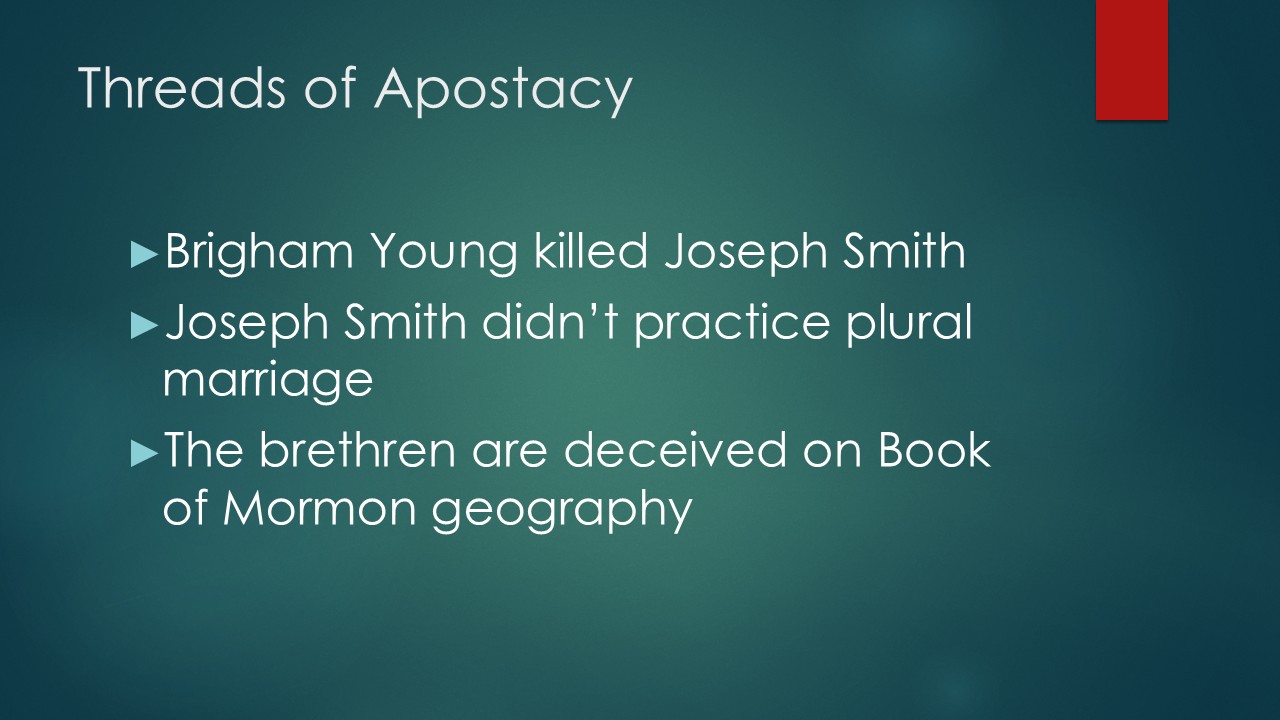
- the historically unsupported claim that Brigham Young tried to assassinate Joseph Smith,
- the idea that Brigham Young instituted plural marriage and not Joseph Smith, or
- the idea that BYU scholars have led the Brethren astray about Book of Mormon geography.
When a Testimony Depends on a Particular Theory
Now, I’m not advocating a Book of Mormon location. What I object to is the idea that some people put forward that the Brethren are being led astray, or that your testimony hangs on where the Book of Mormon took place or who instituted polygamy. These beliefs are a step on the path to apostasy.
Politics, Church Leadership, and the Path to Disaffection
I just talked with a faithful couple whose returned-missionary children have got involved with the Phil Davis group and have left the Church. Then, just last month, a young couple who were active in the LDS community on X, formerly known as Twitter, decided to leave, and they actively tried to recruit others.
They told people to check their patriarchal blessings for words about being one of the elect. They said that meant they were supposed to be in their group. How did they get into this frame of mind?
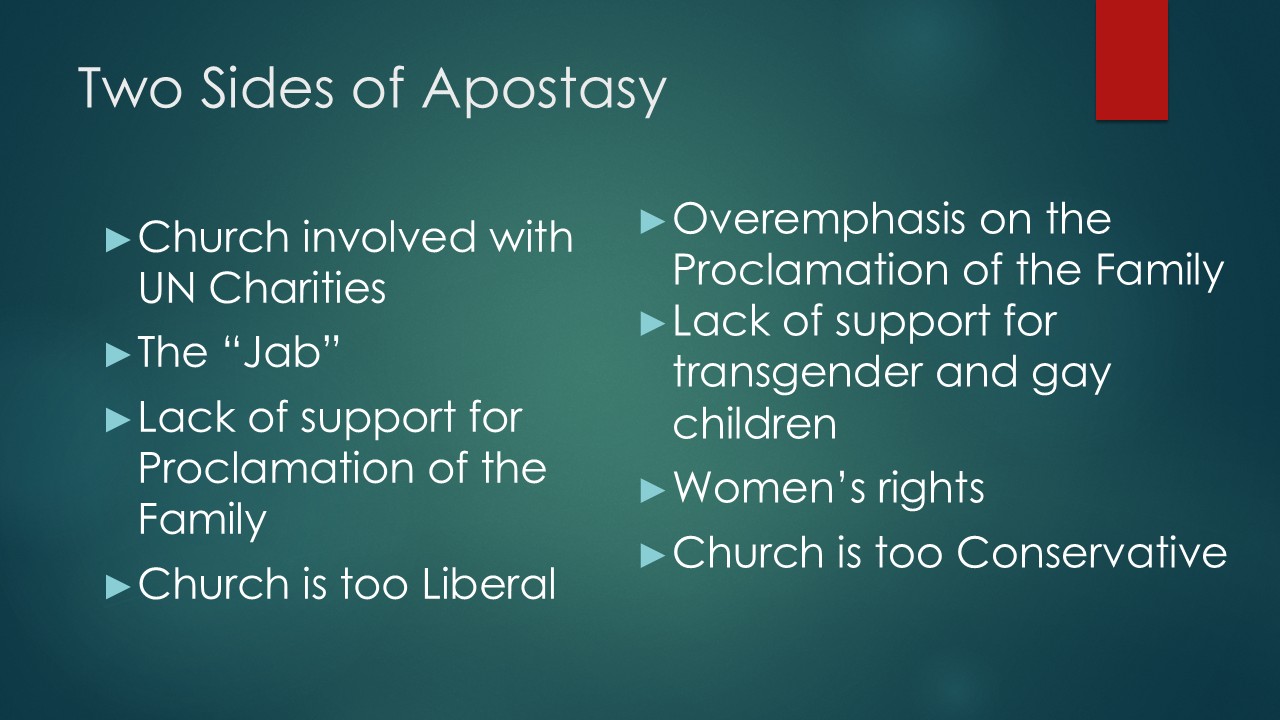
Well, it was mostly dissatisfaction with Church leadership over politics. They saw Church involvement with UN charities, the Church’s support of the vaccine—or the jab, as they call it—the perceived lack of support for the Proclamation on the Family, and a perceived lack of alignment with their political beliefs.
Disaffection Can Come From Either Political Direction
On the other side, I know individuals who have left the Church because they see exactly the opposite. They see an overemphasis on the proclamation on the family and a lack of support for their transgender and gay children.
They’re often sure that transgender people and people who are gay will be marrying in the temple soon. And it’s only the bigotry of members and the apostles that prevents Church leaders from getting the revelation that they themselves have already received.
They perceive a lack of support for women’s rights. They also perceive strong Church support for the political party that they don’t belong to.
Now, as I’m talking about people, I’m not saying everyone in these groups, but I’m saying a select few.
When Political Convictions Become a Stumbling Block
I’m reminded of a young man I once taught as a ward missionary. He believed the Book of Mormon was true. He loved coming to Church, but he couldn’t get over the fact that the Church didn’t condemn the income tax, which he felt was clearly unconstitutional.
I mean, wasn’t the Church about proclaiming truth? So, he never did get baptized.
I went to a religion newswriters conference and met with a small group of nuns. The nuns were also unhappy with us. They couldn’t believe that we would state there could be some, albeit few, instances when an abortion might be prayerfully considered and felt that we were then aligning ourselves with Satan.
Now, you may disagree with the Church on a political or social position, but that disagreement probably comes from the Church trying to achieve a different goal than the one you’re working on.
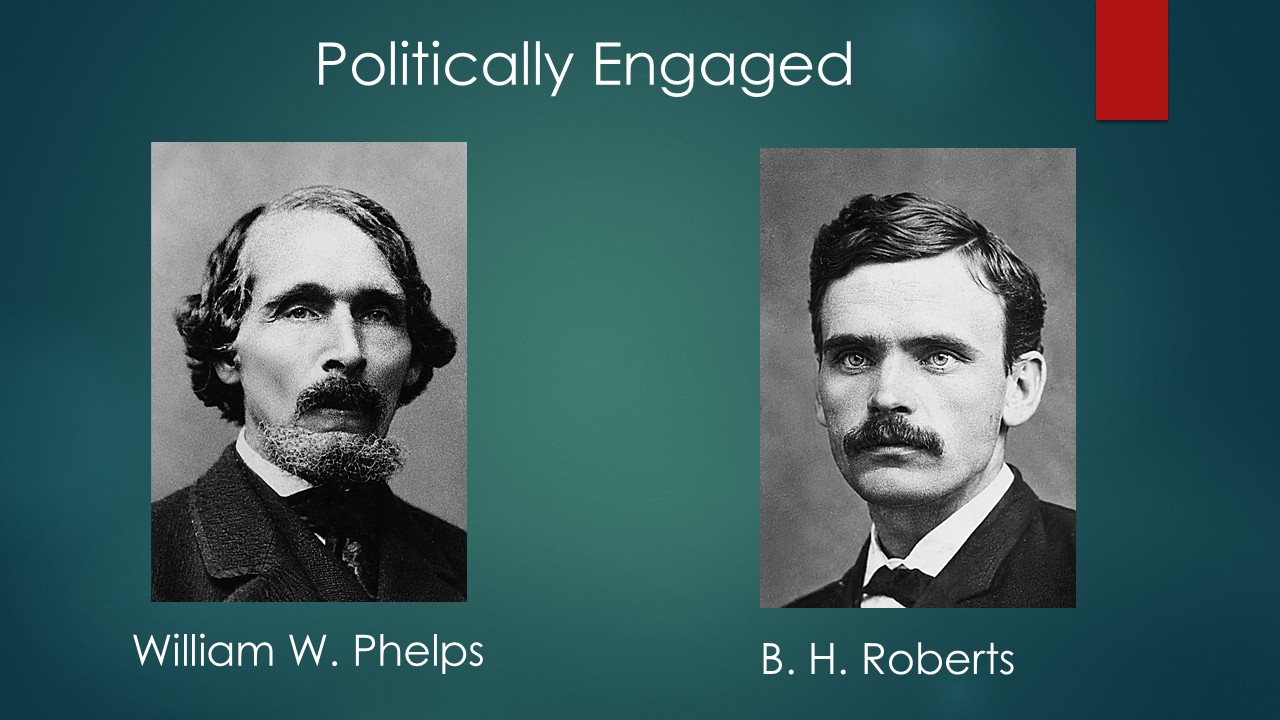
W. W. Phelps, B. H. Roberts, and Political Differences
Now, you may think you’re the only one who has differences with the Church’s perceived political positions. But W. W. Phelps was the editor for his political party’s newspaper. He belonged to the Anti-Masonic Party, a party that was once somewhat popular.
And yet Joseph Smith encouraged people to join the Masons in Nauvoo to gain some protection from hostile neighbors. How do you think Phelps felt about that?
We know he felt strongly about his positions, as his conflicts with Joseph Smith—not necessarily masonry, but other issues—got him excommunicated.
He afterwards humbled himself and came back in Nauvoo, donating $1,000 to building the temple. He was an ordinance worker there, as well as being Joseph Smith’s scribe and newspaper editor.
B. H. Roberts and Joseph F. Smith
B. H. Roberts was a member of what we now call the Presidency of the Seventy when he became a candidate for the United States Congress, but he failed to ask permission from the First Presidency to run for political office as a Church leader.
President Joseph F. Smith censured him publicly before the election. Roberts then lost the election and was upset about it, and he blamed President Smith for his loss, and he was probably right about that.
Both of these men struggled, but they pushed through their struggles to follow the Brethren.
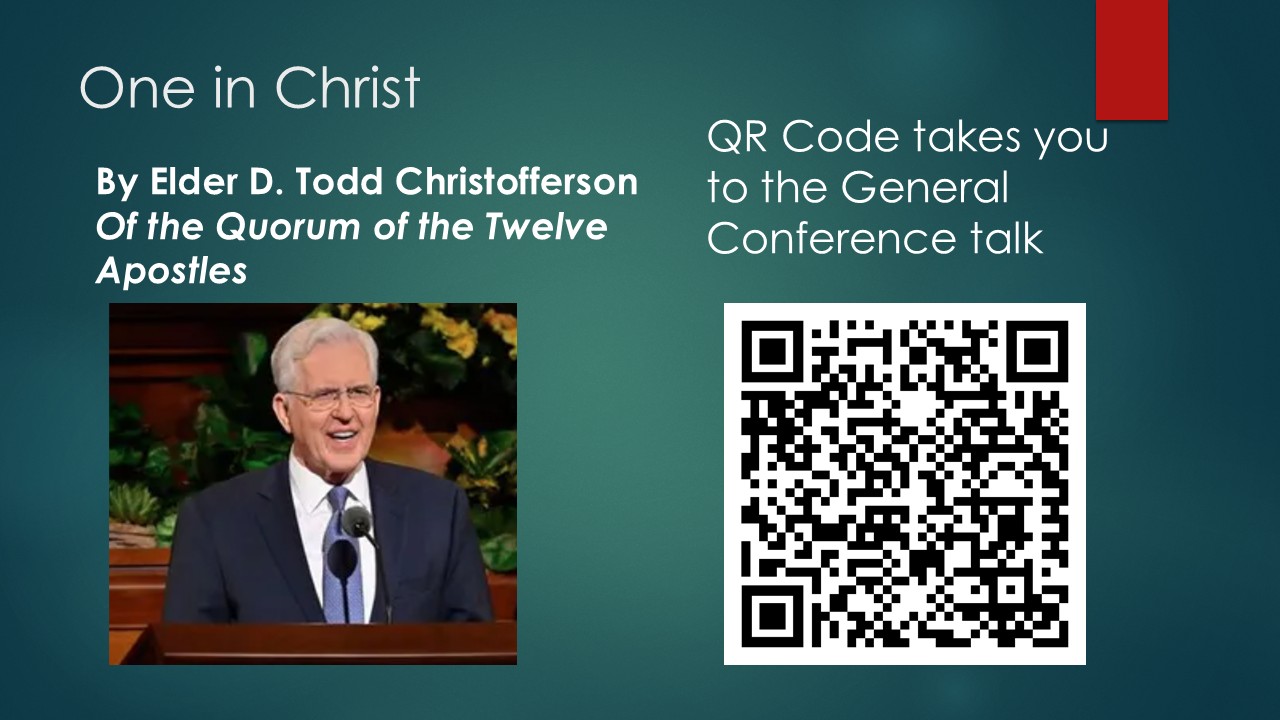
Being One in Christ
In April conference 2023, Elder D. Todd Christofferson spoke on being one in Christ. I recommend going back and reviewing that talk. He reminds us that being one is a recurring theme in the Savior’s teachings.
Jesus said, “I say unto you, be one; and if ye are not one ye are not mine.”
When Christ appeared to the Nephites, He commanded, “There shall be no disputations among you, as there have hitherto been.”
“The Church Has No Borders”
We had one Church leader in our area who’s known to lean to the conservative side. And during some of the national immigration debate, in a Church meeting, he stated, “The Church has no borders. Every individual is seen as a child of God.”
He commented that his views might surprise some in view of his politics. So he went on to clarify that governments may have reason to establish and enforce borders, but the Church has no borders.
Governments are important, but they have very different goals than the Church does. The Church, however, strives to obey, honor, and sustain the law in the many countries in which it operates.
The Church’s Mission Is to Bring People to Christ
Sometimes we get so wrapped up in reading posts on X, Instagram, Facebook, and TikTok that we forget the Church is there to bring people to Christ, not to support our political position. That may mean they make decisions that go against our current political beliefs.
When it does, I hope we don’t go down the path of William Godbe, and instead we go with W. W. Phelps and B. H. Roberts, where they eventually came out—and that is to humble ourselves.
Be wary of criticizing the Lord’s Church. Don’t criticize the Brethren because they may be doing something for a purpose you can’t see or don’t understand. Don’t criticize your fellow ward members who you don’t agree with politically.
If I had more time, I could give a whole different talk about my fellow ward members who belong to different political parties, but each have their own strengths, and each is needed in our congregation.
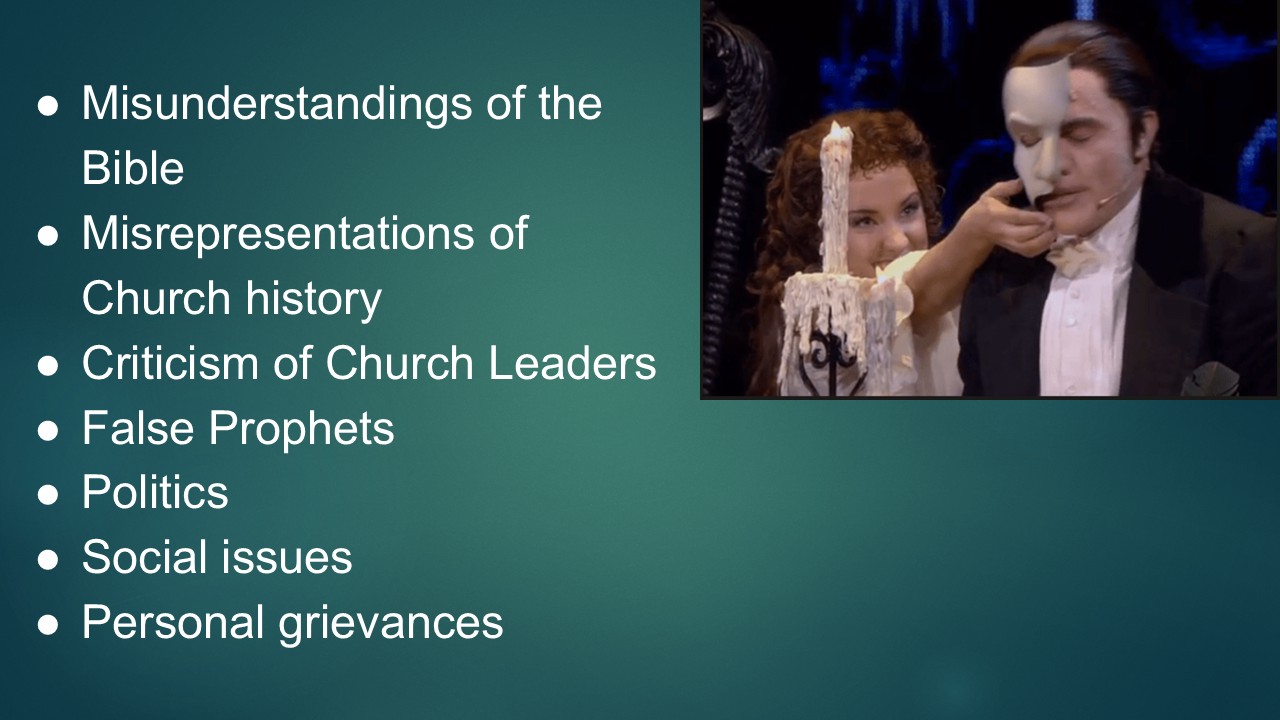
Recognizing the Strategies of the Adversary
Let’s take on the admonition of Jesus Christ and “be one”.
Let us learn to unmask and recognize the strategies of the adversary.
- In one instance, he may use misunderstandings of the Bible to attack the Church.
- In another, he may use misunderstandings of Church history, criticisms of Church leaders, or establishing false prophets.
- In another, he may use politics, social issues, or personal grievances.
The tools change, but the objective remains the same: to create distrust, division, and ultimately a loss of faith in Jesus Christ and His restored gospel.
Choosing Humility, Patience, and Charity
In many ways, it’s fashionable to criticize the Church online because it generates clicks and possible revenue. But rather than being critics of the Church, its leaders, or one another, let us choose humility, patience, and charity.
There will be times when we do not fully understand a decision, a policy, or even a fellow ward member’s perspective. In those moments, we must trust the Lord, seek the guidance of the Holy Ghost, and remember that unity in Christ is more important than winning an argument.
Neal A. Maxwell, quoting non-Latter-day Saint William Law, wrote, “If you have not chosen the kingdom of God, it will make in the end no difference what you have chosen.”

The Answer Remains the Same
Instead, the names change, the controversies get repackaged, the tactics get recycled, but the answer remains the same: faith in Jesus Christ, loyalty to His restored gospel and united voices of the apostles, and love for one another.
May we remain firmly anchored to Him and united in His work of bringing souls unto Christ. I say this in Jesus’ name. Amen.