FAIR Resources for Come, Follow Me – Restoration Scripture
Week 17: April 20 - 26: "All That the Lord Hath Spoken We Will Do"

Exodus 19-20; 24; 31-34

Doctrinal Focus

  • Key doctrines addressed in this week’s reading

In Exodus 19:5–6, the Lord told Israel they would be a “kingdom of priests, and an holy nation.” The Hebrew word segullah—translated as “peculiar”—means treasured possession. This shows that God’s covenant with His people is deeply personal and rooted in love, not merely obedience. President Russell M. Nelson taught that being identified as God’s peculiar people is “a compliment of the highest order.”

When Israel declared, “All that the Lord hath said will we do” (Exodus 24:7), they showed a desire to live by divine law. Although they later faltered, their covenant commitment became the pattern for discipleship. Likewise, modern covenant keepers show their devotion through obedience, repentance, and enduring faithfulness.

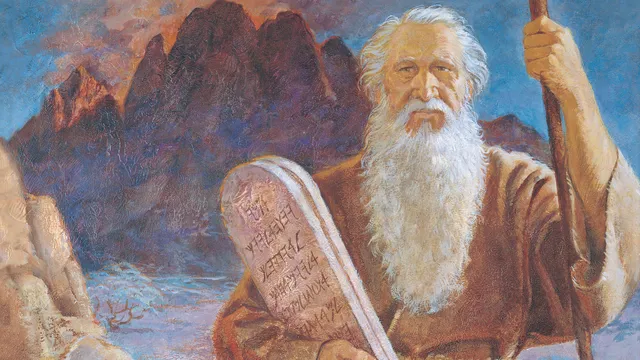
The Ten Commandments, given audibly by God to all Israel (Exodus 20:1–17), served as the moral foundation of their covenant. They were not restrictive but protective, outlining principles of love toward God and neighbor. Jesus later affirmed these same laws when He summarized them as two great commandments—to love God and to love others.

As Elder Dallin H. Oaks taught in No Other Gods,” God’s laws help us prioritize eternal values over worldly distractions. When we put God first, we experience peace, clarity, and joy. Obedience transforms commandments from duty into devotion, creating a covenant relationship rooted in trust.

After Israel’s sin with the golden calf, the Lord initially declared judgment, but Moses interceded in behalf of the people. God responded with compassion, declaring Himself “merciful and gracious, longsuffering, and abundant in goodness and truth” (Exodus 34:6). His mercy demonstrates His commitment to redemption over rejection.

Despite Israel’s idolatry, God commanded Moses to hew new stone tablets (Exodus 34:1–2), symbolizing restoration. This teaches that repentance opens the way for renewed covenants and divine companionship. God never abandons His people—He invites them to return and be made whole again.

Historical & Contextual Insights

  • Insights in this week’s study
  • The Israelites had recently been delivered from Egypt and were encamped at the base of Mount Sinai (also called Mount Horeb). The Lord invited them to enter into a covenant relationship—a defining moment marking their transition from a group of freed slaves into a covenant nation under divine law.

Moses ascended Mount Sinai multiple times (see Exodus 19–34), acting as mediator between God and Israel. During these visits, God revealed the Ten Commandments, detailed laws, and instructions for building the tabernacle. Meanwhile, the Israelites—still heavily influenced by Egyptian culture—struggled to abandon idolatry. Their crafting of the golden calf occurred while Moses was on the mountain receiving further revelation from God.

  • This event represents the formal establishment of Israel as God’s covenant people. The giving of the law symbolized the Lord’s desire to dwell among them and prepare them for His presence. The episode of the golden calf, however, revealed humanity’s recurring struggle between faith and fear, commitment and impatience.
  • God invites each of us to come unto Him through covenants that allow His presence in our lives. Like ancient Israel, we must continually choose between worldly substitutes and divine relationship. Despite our weakness, the Lord remains merciful and patient, offering us new “tablets” of covenant when we turn back to Him.
  • In ancient Near Eastern culture, covenants between rulers and people included promises of loyalty and obedience in exchange for protection and blessings. The Lord’s covenant at Sinai followed this same pattern—He identified Himself as the Deliverer (“I am the Lord thy God, which have brought thee out of Egypt,” Exodus 20:2) and then gave stipulations (the commandments) that defined Israel’s loyalty.


  • The Ten Commandments served as covenant terms rather than mere moral guidelines. They established Israel’s identity as God’s people and were engraved on stone to symbolize permanence and divine authority.
  •  
  • Understanding this covenantal framework reveals God’s relational intent—He was not a distant lawgiver but a protective King. For modern disciples, temple covenants follow this same divine structure, binding us to God through obedience and offering His protection and power in return.
  • When Moses shattered the first tablets (Exodus 32:19), it visually represented Israel’s broken promise to obey God’s commandments. Yet in Exodus 34:1–2, God commanded Moses to create new tablets, signifying that the covenant could be renewed through mercy and repentance. The Joseph Smith Translation adds that the first tablets contained higher priesthood ordinances, while the second represented a lesser law suited to Israel’s spiritual state.


  • This moment illustrates the pattern of falling away and divine renewal found throughout scripture—seen again in the Restoration, when God renewed covenants and priesthood power through the Prophet Joseph Smith.
  •  
  • On a personal level, the two sets of tablets teach that repentance does not erase our relationship with God but refines it. Even after serious mistakes, God invites us to return, rebuild, and recommit ourselves to His higher purposes.

If you have questions on this week’s reading, please email your questions to us here.

Apologetic Application

  1. Claim: “The Israelites didn’t receive divine revelation—they adapted preexisting moral systems.”
  2.  
  3. Response:
  4. Historical Evidence: While ancient law codes existed, the Ten Commandments differ in purpose and tone—they are covenantal and relational, not civil or punitive. They begin with God’s identity (“I am the Lord thy God”), establishing moral law as a reflection of divine character rather than human policy.
  5.  
  6. Eyewitness Support: The account of the Israelites hearing God’s voice (Exodus 20:18–19) and the subsequent preservation of these commandments in sacred ritual (the Ark of the Covenant) provide evidence of national testimony, not isolated myth.
  7.  
  8. Spiritual Confirmation: The Spirit affirms that God continues to reveal moral law for His covenant people. Modern revelation confirms that these principles—love, fidelity, honesty, and worship—are eternal truths, not cultural artifacts.
  9.  
  10. Logical Analysis: Even if moral parallels exist across civilizations, that does not undermine divine revelation; it supports it. A universal moral sense points to a common divine source, illustrating that truth can echo across time while still being revealed anew through prophets.
  • Claim: “The Israelites’ apostasy shows that the Exodus miracles were exaggerated or fabricated.”
  •  
  • Response:
  • Historical Evidence: Ancient cultures emerging from polytheism often reverted to familiar religious imagery. The Israelites’ crafting of a calf reflected Egyptian iconography, not disbelief in deliverance. Archaeological parallels confirm such syncretism was typical among newly converted peoples.
  •  
  • Eyewitness Support: The record of Aaron’s participation (Exodus 32:2–6) and Moses’ later intercession are preserved with unflinching honesty. The text does not glorify Israel’s behavior—it indicts it, a hallmark of authentic historical reporting rather than mythmaking.
  •  
  • Spiritual Confirmation: The episode demonstrates divine mercy. God forgave and renewed His covenant, showing that revelation is not invalidated by human frailty. Modern believers can find hope that God’s patience extends to all who repent.
  •  
  • Logical Analysis: Expecting immediate, perfect obedience from a nation recently freed from generations of idolatry ignores human nature. Rapid relapse does not disprove the miracle; it highlights humanity’s need for continuing revelation and repentance.
  • Claim: “There was no actual communication from God, just psychological or meteorological events.”
  •  
  • Response:
  • Historical Evidence: Ancient records describe divine manifestations using the cultural language of fire, cloud, and voice—symbols of majesty rather than literal weather reports. The Sinai theophany follows consistent prophetic motifs found across scripture.
  •  
  • Eyewitness Support: The entire nation witnessed the manifestations at Sinai (Exodus 19:16–19). The collective experience, later rehearsed in Deuteronomy, argues for communal revelation rather than personal delusion.
  •  
  • Spiritual Confirmation: Modern revelation continues to describe God’s presence through light, power, and voice (Doctrine and Covenants 110:1–3). The Spirit bears record that God manifests Himself according to our capacity to perceive His glory.
  •  
  • Logical Analysis: To reduce the event to natural forces ignores the personal and covenantal context. The revelation at Sinai was accompanied by intelligible communication, covenant terms, and enduring moral transformation—outcomes inconsistent with mere natural phenomena.

Practical Applications

Practical solutions for someone in faith crisis:

Action Step: Set aside time each day to prepare your heart and mind before spiritual experiences such as prayer, scripture study, or temple worship.

Preparation opens the heart to revelation and transforms routine worship into sacred encounter. Just as the Israelites had to sanctify themselves before approaching Mount Sinai (Exodus 19:10–11, 17), we must also prepare spiritually to feel God’s presence.

  1. – Identify a daily spiritual experience (e.g., prayer, sacrament, or temple visit).
  2. – Before it begins, pause to ponder what you hope to receive or learn.
  3. – Read a short scripture or hymn to center your thoughts.
  4. – Approach the experience with reverence and a willing heart.

Encouraging Thought:

President Russell M. Nelson taught, “Sacred experiences require preparation.” The Lord’s presence is not accidental—it comes to those who come prepared to meet Him.

Action Step: Identify one worldly distraction or habit that may be competing with your devotion to God, and replace it with a daily act of worship or service.

Modern “idols” can take many forms—work, entertainment, materialism, or status. Re-centering our priorities restores spiritual balance and peace. Keeping the first commandment deepens our covenant loyalty and aligns our desires with God’s will.

  1. – Pray to identify what might be taking priority over God in your life.
  2. – Choose one concrete adjustment (e.g., reducing screen time, dedicating Sunday more fully to the Lord).
  3. – Replace the habit with a sacred action—reading scripture, serving someone, or spending time in quiet reflection.
  4. – Record spiritual impressions that follow as you make the change.

Encouraging Thought:

Elder Dallin H. Oaks taught, “Our greatest priority should be to love the Lord. If we truly love Him, everything else will fall into its proper place.”

  • Action Step: When you recognize a mistake or weakness, immediately turn to God in prayer, seek forgiveness, and recommit to your covenants.

Like Israel, we all “turn aside quickly” at times (Exodus 32:8). Yet God’s response to their failure—renewing the covenant and giving new tablets—reveals His patient mercy. Repentance restores our confidence in God’s love and allows His Spirit to dwell with us again.

  1. – Acknowledge what went wrong without self-condemnation.
  2. – Pray sincerely for forgiveness and strength to change.
  3. – Take one small step of obedience or restitution.
  4. – Partake of the sacrament or study a passage about mercy (e.g., Exodus 34:6–7).

Encouraging Thought:

  • God will never tire in His efforts to help you return. His compassion and love are infinite. Like the second set of tablets, repentance is proof that renewal is always possible.

Ideas for Teaching

Objective: Help learners understand that sacred experiences require preparation of heart, mind, and action.

Small mirrors or reflective paper, marker pens, and scriptures (Exodus 19:10–11, 17).

Activity Steps:

  1. Introduction (5 min): Hand each participant a mirror or reflective paper. Ask them to look at their reflection and quietly consider: “How do I prepare to meet God each week?” Share examples (e.g., preparing for temple, sacrament, or prayer).
  2.  
  3. Scripture Discussion (5 min): Read Exodus 19:10–11, 17. Discuss what it meant for the Israelites to “sanctify themselves” before meeting the Lord. Ask: “Why does the Lord require preparation before spiritual experiences?”
  4.  
  5. Application (5 min): Invite participants to write one way they can better prepare for sacred experiences (like setting aside time for reflection before sacrament meeting).

Follow-Up Question: What does it mean for you personally to “be ready” to meet God in your daily life?

Objective: Inspire learners to examine modern “idols” that may compete with their devotion to God.

  1. Whiteboard or poster, markers, paper hearts, tape, and scriptures (Exodus 20:3–5; Dallin H. Oaks, “No Other Gods”).

Activity Steps:

Introduction (5 min): Draw a large heart on the board and invite participants to list modern distractions or “gods” people sometimes put first (e.g., career, entertainment, social media). Tape paper hearts over the list as symbols of giving our hearts back to God.

Scripture Discussion (5 min): Read Exodus 20:3–5 together and ask, “Why do you think this was the first commandment?” Share a brief quote from Elder Oaks: “Our greatest priority should be to love the Lord.”

Application (5 min): Invite participants to choose one “false god” in their life to set aside this week. Encourage them to fill that time or focus with something that draws them closer to the Savior.

Follow-Up Question: What helps you recognize when something good is beginning to replace what’s most sacred?

Objective: Teach that repentance is renewal—a divine opportunity to begin again, not a punishment.

Two sets of stone or paper “tablets” (one set whole, one torn or crumpled), scriptures (Exodus 32:19; 34:1–2, 6–7).

Activity Steps: 

Introduction (5 min): Hold up the “broken” tablets and explain that Moses shattered the first set when Israel turned to idolatry. Ask: “What might broken tablets represent in our lives?” (broken promises, mistakes, lost faith).

Scripture Discussion (5 min): Read Exodus 34:1–2, 6–7. Discuss how God asked Moses to make new tablets and renew the covenant. Highlight His mercy and willingness to start again.

Application (5 min): Give each participant a paper “tablet.” Invite them to write one area where they need a new start, fold it, and take it home as a reminder of God’s mercy.

Follow-Up Question: When have you felt God give you a “new tablet” in your own life? How can you help someone else feel that renewal?

QUICK REFERENCE

  • God invites His people into a covenant relationship so that He can “dwell among them” (Exodus 25:8).


  • The Ten Commandments are expressions of divine love that protect our spiritual freedom and happiness (Exodus 20:1–17).


  • Sacred experiences—like temple worship and sacrament—require deliberate preparation of heart and mind (Exodus 19:10–11).


  • God’s mercy is greater than our mistakes; He renews His covenant with us when we repent (Exodus 34:1–10).


  • The Sabbath is a divine sign between God and His covenant people, reminding us of our loyalty and love for Him (Exodus 31:13–17).
  • Why trust modern prophets?
  • God has always revealed His law and covenant through living prophets—from Moses on Mount Sinai to prophets today. The consistent pattern of divine instruction across dispensations confirms God’s unchanging nature. Modern prophets, like ancient ones, teach covenant principles that invite us to holiness, not control. Their human imperfections do not negate their divine calling; rather, they show that God works through humble servants to accomplish His purposes.
  •  
  • Why does God allow mistakes?
  • The golden calf incident shows that God allows human error to teach spiritual maturity. Israel’s failure led to repentance, humility, and eventual renewal of the covenant (Exodus 32–34). God’s mercy refines His people through experience. By allowing weakness, He helps us grow in dependence upon His grace—showing that His love is steadfast even when ours falters.
  • Exodus 19:5–6 – God’s people are His “peculiar treasure” when they keep His covenant.


Exodus 34:6–7 – The Lord is “merciful and gracious, longsuffering, and abundant in goodness and truth.”

Teaching in the Savior’s Way — “Help Learners Act in Faith” and “Invite the Spirit to Teach” (sections on preparing hearts for revelation).