• Skip to primary navigation
  • Skip to main content
  • Skip to primary sidebar
  • Skip to footer

FAIR

My Account Search
  • Start Here
  • Find Answers
  • Scripture Study
  • Blog
  • Events
    • FAIR Conference
    • Virtual Conferences
    • Special Events
  • All Presentations
  • FAIR Books
  • About
    • Media & Apps
  • Get Involved

FAIR

René Krywult

Media Literacy • Comparative Theology • Early Christianity

René Krywult, FAIR speaker and organizer of European apologetics conferences

René Alexander Krywult is a native of Vienna, Austria, and has been involved with FAIR for more than two decades. He played an instrumental role in establishing FAIR’s German-speaking outreach and has contributed to the organization’s efforts to provide thoughtful, well-documented responses to questions about The Church of Jesus Christ of Latter-day Saints.

A software developer and project manager by profession, René has a longstanding interest in religious apologetics, particularly comparisons between Latter-day Saint beliefs, traditional Christianity, and the teachings of early Christians. His interest in responding to criticism of the Church began when he encountered anti-Latter-day Saint literature as a teenager. Since then, he has focused on evaluating the reliability of religious information and helping others strengthen their faith while engaging with challenging questions.

René’s published work includes “Mormon Deification Compared to Orthodox Christian Theosis,” which appeared in Spirituality in East and West. He has also written for FAIR and organized four FAIR conferences in Germany between 2009 and 2015, speaking at each of them. He presented at the 2019 FAIR Conference in the United States and at FAIR’s 2024 European lecture series in Salzburg.

He has served in numerous Church callings, including ward Sunday School president, ward mission leader, elders quorum president, seminary and institute teacher, and counselor in a bishopric.

René and his wife, Gabriele, have four children and, as reported in his 2024 FAIR biography, five grandchildren.

Bio last reviewed:

Contributions at FAIR

Statement of Faith

Statement of faith coming soon.

Date of Statement of Faith

Scott A. Gordon

FAIR President • Apologist • Educator

Scott Gordon, president of FAIR

Scott Gordon has served as president of FAIR since 2001. He earned both his bachelor’s degree and MBA from Brigham Young University.

Professionally, Scott teaches business at Shasta College in Redding, California, and has taught online business courses through BYU–Idaho and BYU–Pathway Worldwide.

He has served in numerous callings in The Church of Jesus Christ of Latter-day Saints, including bishop, ward mission leader, seminary teacher, member of an elders quorum presidency, and ward temple and family history leader.

Scott and his wife have five children and 15 grandchildren.

Bio last reviewed:

Contributions at FAIR

Statement of Faith

Statement of faith coming soon.
Date of Statement of Faith

I Learned it on the Internet: Maintaining Faith in Today’s Online World

Start Here

Question
How can I tell if what I read about the Church online is true?

Short Answer
Not everything online is reliable, especially when it comes to Church history and doctrine. The best way to find truth is to start with trusted sources, seek balanced and well-documented information, and approach questions with both faith and careful evaluation. Many misleading claims come from incomplete or distorted presentations of real history.
Key Takeaways
  • Many online claims are based on partial information or lack proper context
  • Trusted sources include the Church, professional historians, and faithful scholarship
  • Viral or emotionally charged content is often designed for clicks, not accuracy
  • Evaluating both the source and your own spiritual receptiveness is essential
  • Focusing on core gospel truths helps avoid being distracted by secondary issues
Question
Did the LDS Church lie about its history?

Short Answer
No—most claims that the Church “lied” about its history stem from misunderstandings, incomplete information, or shifting expectations about how history should be taught. Historical details, including complex or less-discussed topics, have long been available in primary sources and Church publications. The real issue is often not concealment, but how and where people encounter the information.
Key Takeaways
  • Many controversial historical details were publicly available long before they became widely discussed online
  • Accusations of “lying” often arise from differences between simplified teaching and detailed historical records
  • Online sources may present selective or misleading information without full context
  • Faithful scholarship and Church resources provide more complete and balanced explanations
  • Evaluating both the source and intent behind claims is essential for finding truth

Summary

Summary

Scott Gordon uses a personal story about repairing a truck to illustrate how not everything found online is reliable. He applies this lesson to common criticisms of the Church, particularly regarding the Book of Mormon translation process, showing that these issues have long been publicly available and are often misunderstood rather than hidden.

The talk emphasizes that while historical details can be interesting, they are secondary to the core truth claims of the gospel—especially the Book of Mormon. It encourages individuals to seek answers from trusted sources, remain spiritually grounded, and respond to doubt or criticism with patience and faith. The speaker concludes by bearing testimony and urging love and understanding toward those who struggle or leave the Church.

TL;DR

TL;DR (Too Long; Didn’t Read)

Not everything online is true—especially claims about Church history. The speaker shows that controversial topics like the seer stone were never hidden, just misunderstood. Focus on trusted sources, stay grounded in faith, and remember that the truth of the Book of Mormon is what matters most.

A Simple Story About a Pickup Truck

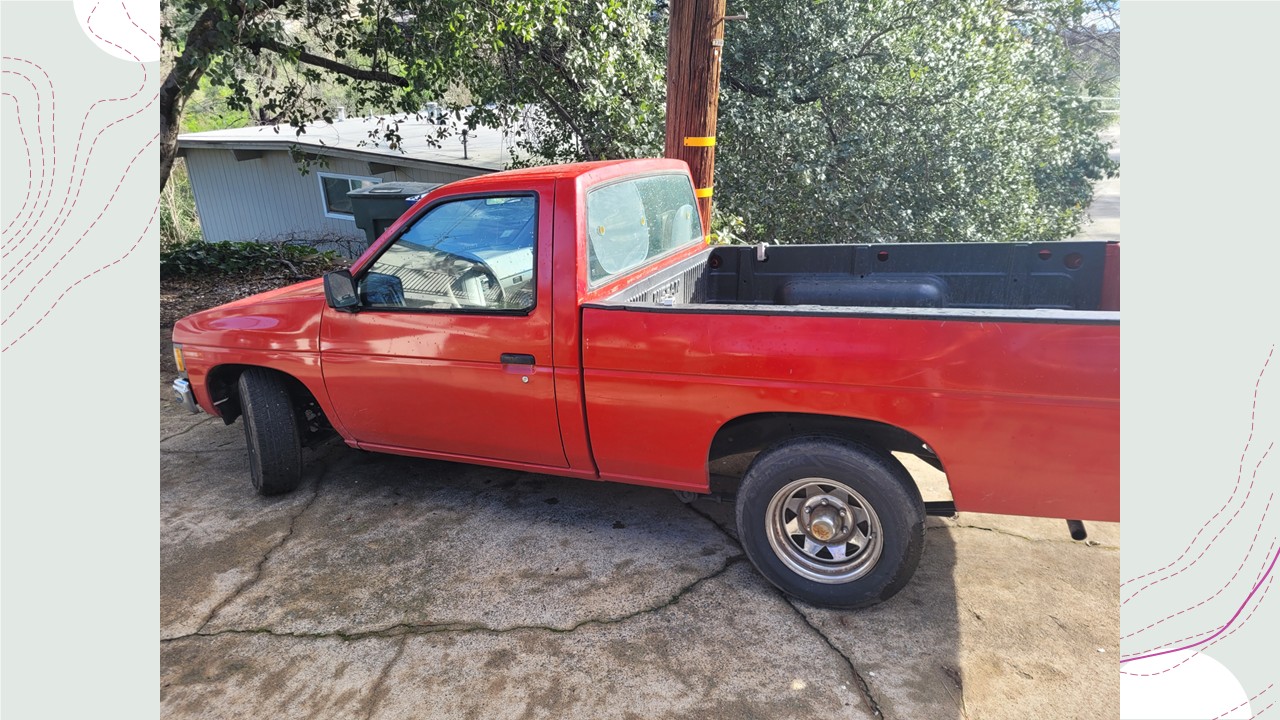
So this—this is my pickup truck. I bet you didn’t expect to see that in a conference, right?

It was my father’s. I inherited it from him, and in case you don’t notice, it’s really old—like, it’s older than some of the people sitting in the audience here. And many of the plastic parts on it were broken and damaged by the sun.

In fact, when I touched the tail light, my finger went all the way through the plastic lens because it was so corroded by the sun.

Trying to Fix What Was Broken

So I decided I wanted to fix it up and make the truck just a little bit nicer. So I tried to replace all of the plastic parts on it, and I replaced—it was going really well—and I would replace most of them until I tried to replace the air vents.

This is the “after” picture, not the before. I didn’t think to take a “before” picture. I mean, the before picture was just kind of a square hole—that is what it was.

So when I tried to replace those air vents, I looked for the parts, and I discovered there were no parts in the United States. Didn’t exist—too old.

Turning to the Internet for Answers

So I had to order parts from Malaysia and wait for them to come, and it took a whole month. And so I finally got them, and with excitement I went down to my truck, and I realized I didn’t know how to put it in. I had no idea.

So where did I go to get the answers? YouTube, right? YouTube has the answer to everything related to car repairs.

So I looked at YouTube, and I found a video that explained exactly how to do it. And what it said is you could take a couple of butter knives, and there’s like a button on the ends of these vents, and all you have to do is put the butter knives in on each end and press it in, and it’ll just slip right into the hole.

And I thought, like, well, that sounds pretty easy—I’ll do that.

When Internet Advice Goes Wrong

Okay, and so I put the knives on each end, and I pushed in.

And the vent completely collapsed and fell apart.

So I went back to YouTube, and I looked around again, and I found a different video. And this new video started by saying, contrary to what some other videos claim, you can’t simply bend the parts and slip them in—you have to take the dashboard apart.

So I had to buy new parts from Malaysia, wait for them to be shipped to me, and try again. And this time, it did work.

Not Everything Online Is True

So why am I telling you this story?

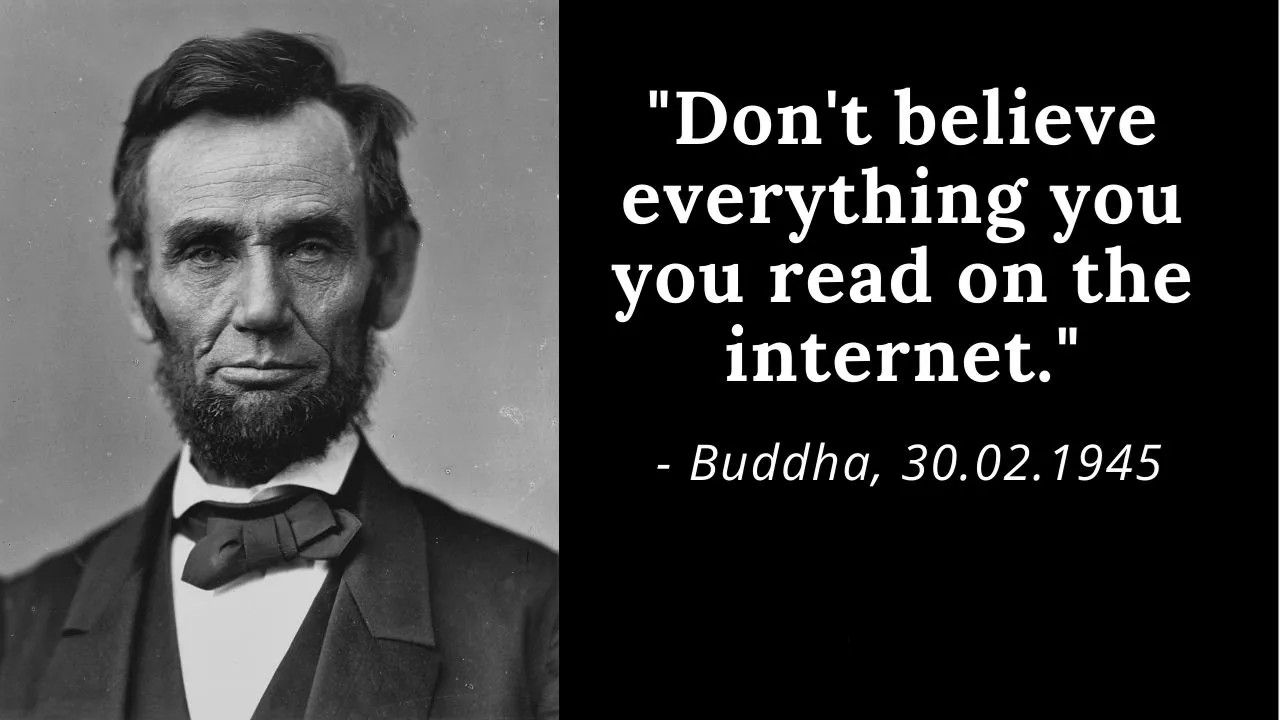
Well, it’s to illustrate that not everything we learn on the internet is true. In our mind, we say, of course I know that—but in our heart and in our soul, sometimes we’re afraid that the things we read on the internet might be true.

And we occasionally panic when we read things that go against our beliefs. And the fear that it could possibly be true can sometimes shake our faith—we stop listening, we stop exploring, we simply take it as fact.

When People Encounter Church History Online

Every day I get emails from people saying they just learned something about the church on the internet, and they wonder why they didn’t know it before. And they often assume the church has hidden it from them.

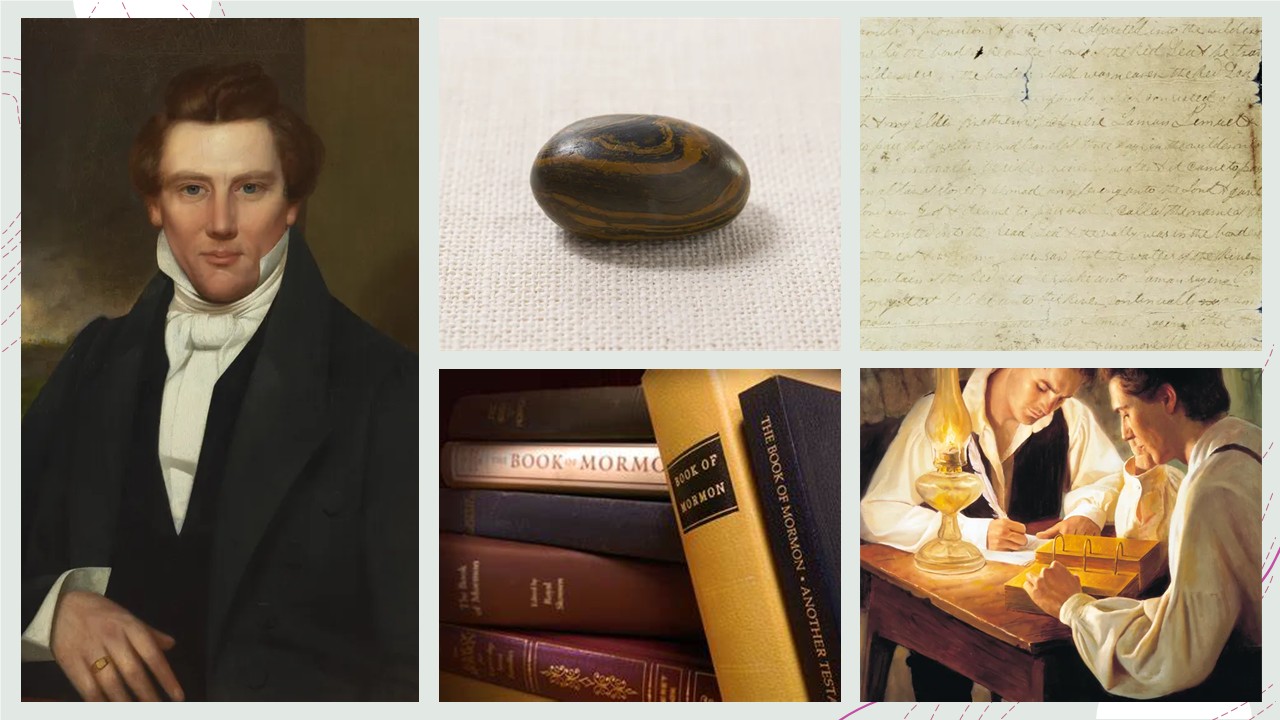
For example, I’ve seen several people on TikTok and YouTube who are very upset that there’s a claim that Joseph Smith used the Nephite breastplate, known as—or often referred to as—the Urim and Thummim when he started translating the Book of Mormon, but later shifted to using a small, dark-colored stone called the seer stone.

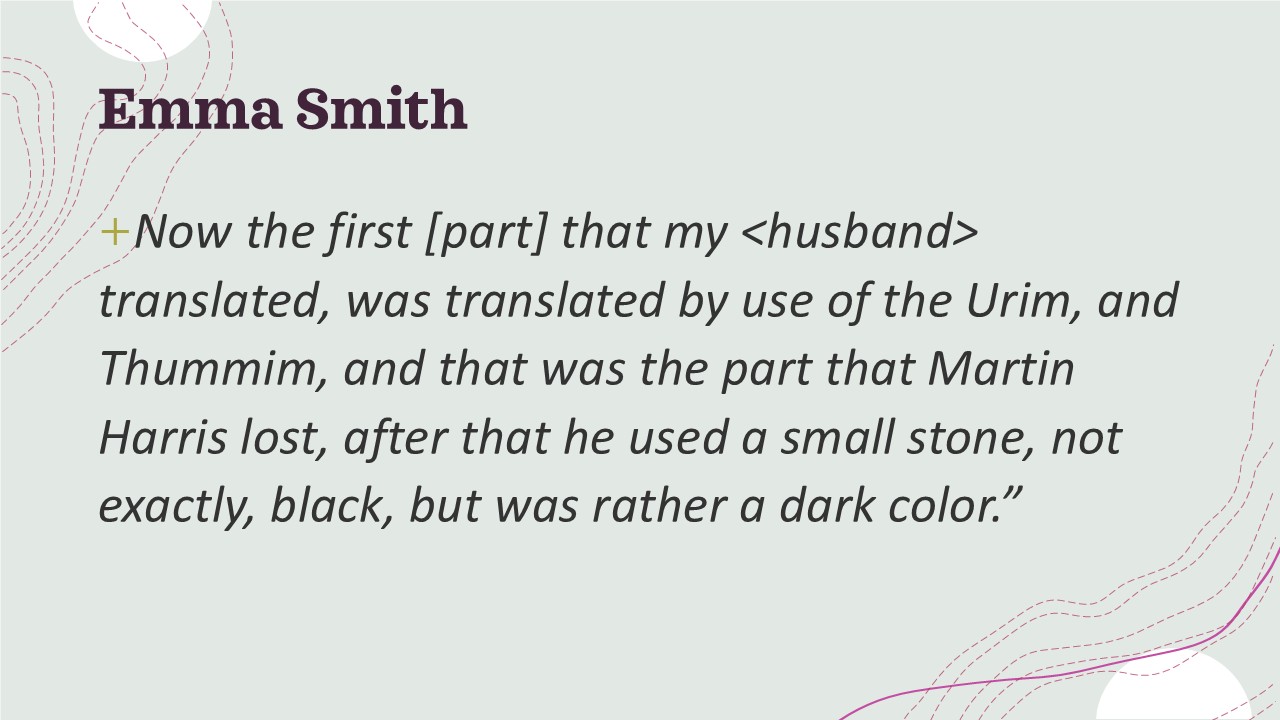
And in 1870, in talking about the Book of Mormon translation, Emma Smith said,

“Now the first part that my husband translated was translated by use of the Urim and Thummim, and that was the part Martin Harris lost. After that, he used a small stone, not exactly black, but was rather dark in color.”

The Question Critics Raise

Well, I’ve been told the church has hidden this fact for many years.

One prominent church critic—who was discussed earlier in an earlier presentation—brings up this issue seven times in his booklet. Clearly he thought it was important, if not devastating. Perhaps it was a smoking gun.

So what happened? Why did the church hide this for so long?

The Information Was Never Hidden

Well, the answer is—they didn’t.

The information has been around and accessible for a long time. Martin Harris, Oliver Cowdery, and Emma Smith all spoke about it. Their quotes can easily be found on this matter using Google.

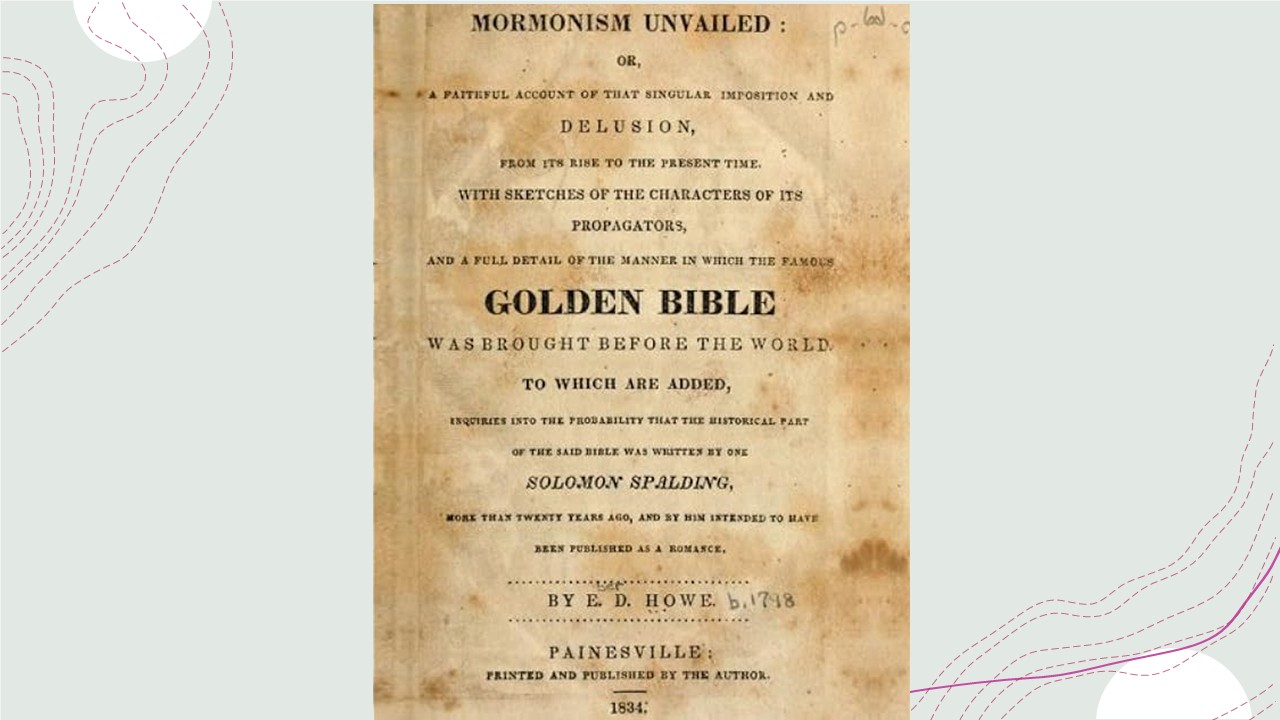
You can even read about it in the anti–Latter-day Saint book Mormonism Unvailed, written in 1834, which can also be found online.

Where This Has Been Published

It has been published in several places:

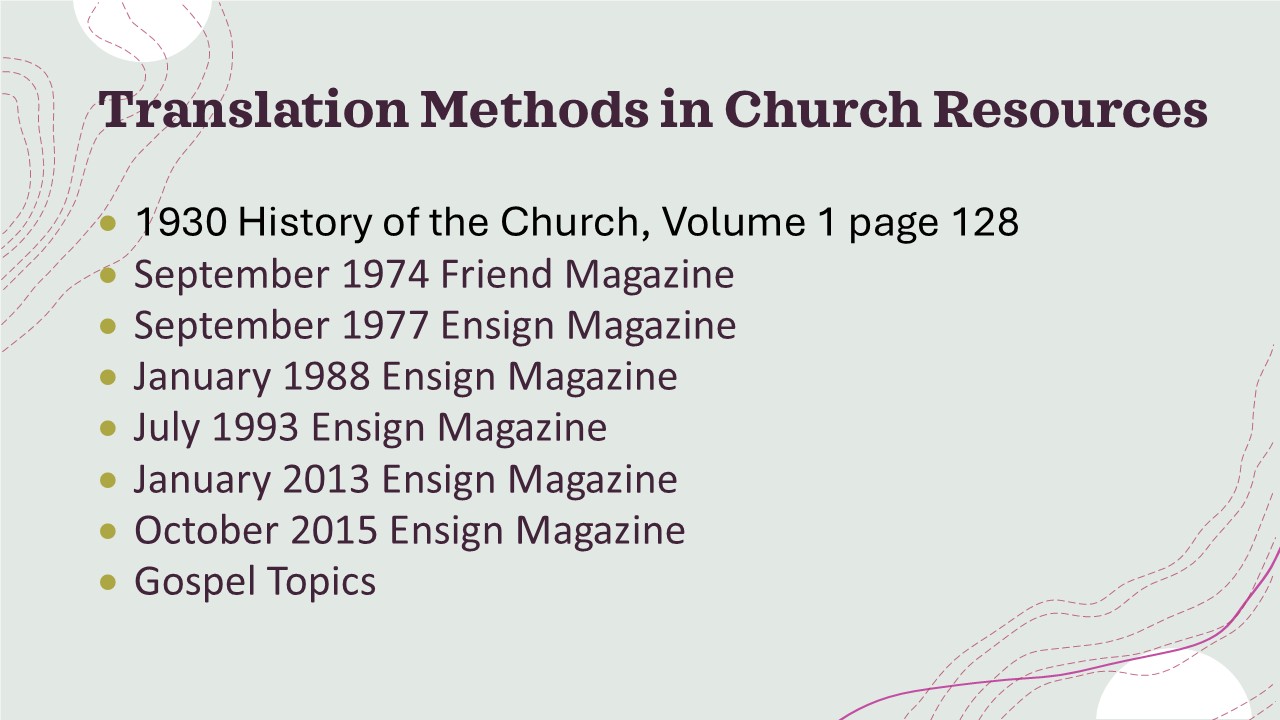
  • the 1930 History of the Church, volume 1, page 128;
  • March 1974 New Era magazine;
  • September 1974 Friend magazine;
  • September 1977 Ensign magazine;
  • January 1988; July 1993;
  • January 2013;
  • October 2015—
  • and it’s discussed on the Church of Jesus Christ website in the Gospel Topics section.

The 1993 Ensign article was written by—this, the writer might be somewhat obscure to you—his name was Russell M. Nelson.

So clearly, this information can easily be found and is not hidden.

“Lazy Learners” and Common Criticisms

It is the ease of finding examples like this that can bring up the admittedly disliked moniker of “lazy learners.”

When I brought up this example recently, the response I got back was that we only mentioned it eight times in 40-plus years, and the paintings about the translation didn’t show it exactly that way, so that proves the Church was trying to hide it.

Well, it clearly isn’t a secret. It was in Church magazines—but admittedly, it also isn’t taught in most Church Sunday School classes.

Why Isn’t This Taught in Sunday School?

If it’s not a secret, why don’t we teach it in Sunday School?

Well, first, Joseph Smith was questioned several times on translation, and he would simply repeat the phrase that it had been done by the gift and power of God. And one time he added, “It is not intended to tell the world all the particulars of the coming forth of the Book of Mormon.”

So it is not Joseph Smith—it is other witnesses who talk about the method of translation. Joseph Smith obviously didn’t think the method was very important.

A Historical Detail, Not a Doctrinal Issue

Secondly, exactly how the Book of Mormon is translated is not really relevant to our living the Gospel of Jesus Christ. It is simply a historical detail.

Whether that detail is right or wrong does not change the Gospel of Jesus Christ.

And in our Sunday School classes, we’re really not a Sunday School class of historical details—we try to teach Sunday School classes to help people better follow Jesus Christ and improve their lives.

Critics and the Focus on Method

It seems that critics don’t like the method of the Book of Mormon translation, but they ignore the results.

Or, if he used the right method, the Church failed to tell us about it—and the proof is the illustration from the Book of Mormon that doesn’t show the stone.

But he did use the method that’s in the illustration—he just didn’t use it for the whole book.

Plus, illustrations are not meant to be photographs and are seldom historically accurate.

A Note on Illustrations

Feel free to go to your local community college—I happen to know a community college really well, I work at one—and have a conversation with the art teacher there about it.

Or you could type it into ChatGPT—and I tried that—and it comes back that no, illustrations are not generally historically accurate.

The “Stone” Criticism

In a recent discussion I had on this topic, it occurred to me that the critics were complaining that to aid in the translation, Joseph Smith may have used a stone he found.

I should say he may have used the stone that he found instead of, as they previously believed, two stones found by a previous prophet.

So to summarize this: two stones from a different prophet are okay, but one stone from Joseph Smith proves the Church is false.

A Story About Perspective

The attitude of the critics on this topic reminds me of a situation I heard from a man during a priesthood meeting discussion.

He said that after he had been married for a few years, he decided he did not like his wife. They were not getting along. He thought she was overly critical of him and thought it was a mistake that he’d ever married her.

But before he divorced her, someone—and I believe, if I remember right, it was actually his attorney—told him to start a daily journal.

Learning to See the Good

And each day, he should write down one good thing about his wife—one good thing she had done or said or that he noticed.

And he said the first week it was almost an impossible task. He didn’t notice anything worthwhile, but he dutifully wrote down some small things that she did.

She did wash the dishes, and she prepared lunches for the children.

A Change of Heart

And as he did this daily, it became easier and easier to see the good things that she was doing and to recognize what a wonderful person she was.

One day, while he was away at work, his wife found his journal. And she didn’t say anything—she decided it was a good idea, so she started her own journal.

And they are now happily married, and they’re the best of friends, and they still keep their journals.

Seeing Only the Negative

Sometimes I think the critics, just like this man, could see no good in his wife. Critics sometimes can see no good in the Church.

Everything—even innocent behavior from members of the Church—must have some nefarious motive.

But when you only look for the bad, you only find the bad. When you look for the good, you find the good far exceeds any negative things you struggle with, and you live a much happier life.

The Reality of the Book of Mormon

So, okay—the method of translation is certainly interesting to discuss, but as I said before, it really is simply a historical detail.

No matter what the translation method is, we have a Book of Mormon. It’s a tangible object. It’s real.

And you can’t simply explain it away. As you read it, you recognize the miracle of that book.

The Influence of Online Voices

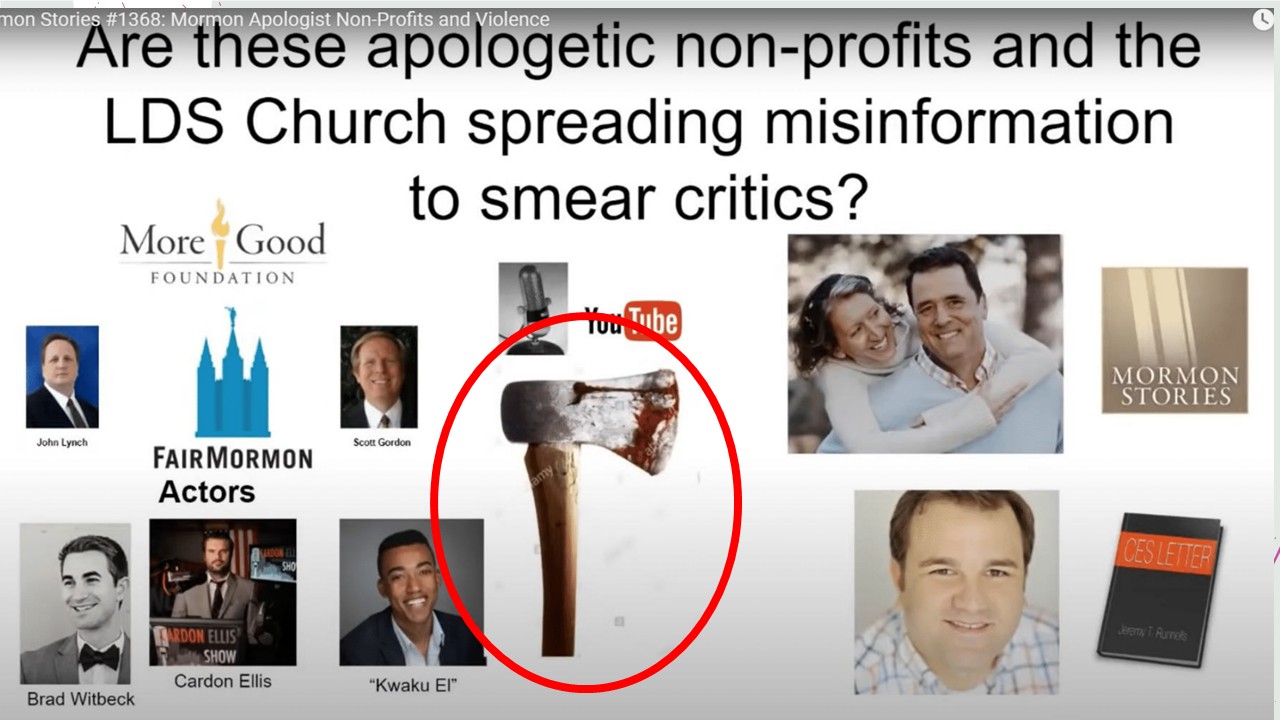
Online influencers simply want clicks on their online videos—we heard about that today—and the more outrageous the claim, the more clicks you get and the more money they make.

And they often make sure each claim is as controversial as possible to maximize the clicks. Notice the bloody ax gratuitously included in this slide to increase interest.

To many people, it seems that a random person on TikTok is more authoritative than any real historians or scholars, and must be believed if they can make a good video.

The Rise of the “Citizen Journalist”

The citizen journalist has become the harbinger of truth, even when that person may be simply repeating old, long-ago refuted rumors and old anti-Mormon books.

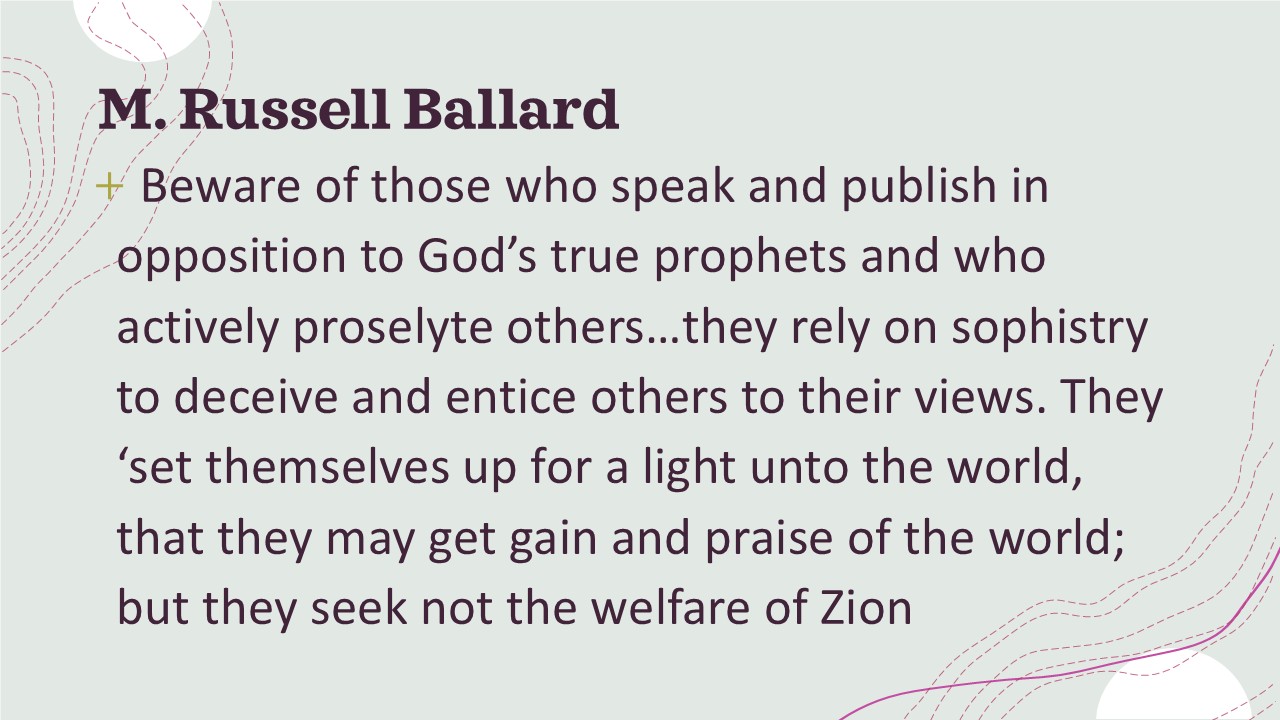
Elder Russell M. Ballard has said,

“Beware of those who speak and publish in opposition to God’s true prophets and who actively proselytize others. They rely on sophistry to deceive and entice others to their views. They set themselves up for a light unto the world, and they may get gain and praise to the world.”

FAIR’s Role and Approach

So FAIR is here to provide basic information and facts related to many of these topics.

We’ve often been dismissed by the critics—”oh, they simply engage in ad hominem attacks!” I hear. But when I ask, “where?” (and I have asked) the critics haven’t been able to find examples.

That’s because we go to great lengths to talk about the arguments and not the people.

Staying Focused on Arguments, Not People

That’s not to say we’re perfect at it. There have been occasions when we’ve grown frustrated with people making absurd claims without evidence, and I have questioned the honesty of the author or podcaster.

But it’s always in context of the facts, and it’s never simply a dismissal based on who they are.

FAIR is here to cut through the propaganda, the repeating of rumors, and the arguments that would often not make it through a freshman English writing class.

Improving the Quality of Discussion

Now, before anyone jumps on me for that statement, there are also apologetic writings defending the Church that would also not pass that bar.

I have seen that in arguments related to Book of Mormon geography, race in the priesthood, and plural marriage.

All I can say is I hope the arguments get better on both sides, actually.

Global Impact of FAIR

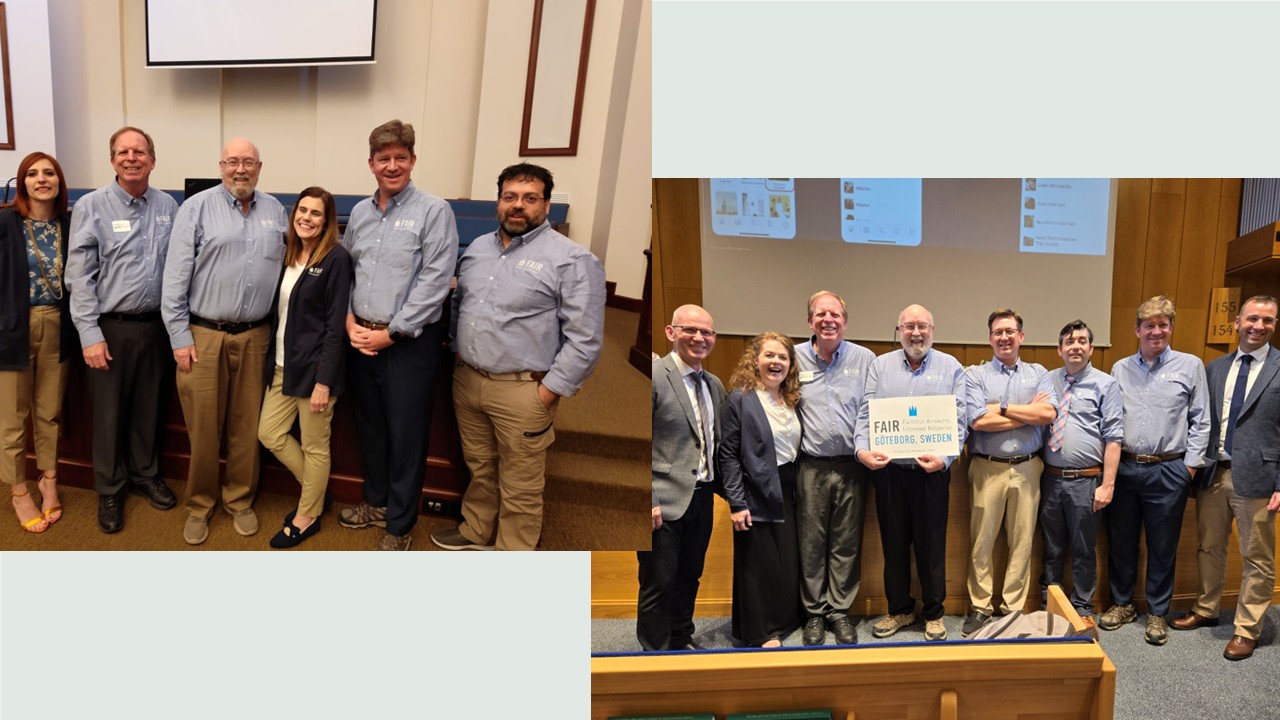
But FAIR is here to strengthen testimonies. We recently had a donor who paid for a few people to travel to Europe for some conferences and firesides.

In Salzburg, we met a sister who had traveled all the way from Hungary to read our talks or to see our talks. She was frustrated that because of the language barrier it wasn’t available to many of her fellow Hungarians.

In Bulgaria, I met a man from Turkey who had many questions that were preventing him from joining the Church. He found FAIR, found his answers, and was baptized.

The Growing Need for Resources

But we have a problem. FAIR is honestly made up of simply a few volunteers, backed up by several outsiders willing to give their expertise at our conferences.

People ask us to respond to questions, videos, and websites. We have a 10,000-page website that needs to be updated.

We have people who want us to do firesides or conferences in other areas.

The Challenge of Keeping Up

So far, we’ve relied on faith and small donations to get us through.

As technology has become more and more complicated, we find that we need more resources to keep up.

Without people donating to us, we wouldn’t be able to keep up. So far, FAIR has been operating on a budget that’s less than the salary of one of the podcasters who attacks the Church.

A Call for Support

Now granted, he’s one of the more famous podcasters—but his salary is more than our entire budget.

How can we hope to keep up?

Let me share with you this clip given by Elder Pearson at a previous FAIR conference:

“Independent voices are needed in reaching out to those among us who are struggling to find and sustain faith, and in responding to those who unfairly criticize, misrepresent, distort, and demean the Church, its history, doctrine, and leadership. More needs to be done to increase awareness of, access to, and confidence in these independent, trusted resources by Latter-day Saints and seekers of truth. These are valued, trusted resources, and they need more support. They need more financial support, among other things, given the enormity of the challenge. Good people of faith are going to have to think about what they want to use their resources to put against, and FAIR Mormon cannot possibly engage at the level they’re capable of without more financial resources.”

A Final Note on Support

Okay, of course you’d expect a donation ad from me—but it’s true.

And he spoke also about—he also included other organizations that are represented at the conference here in his talk.

Teaching a New Generation

So each year I finish my semester teaching students in accounting who are easily completing their homework—they understand the principles I’m teaching them.

Then the new semester starts, and a new group of students stare blankly at me and act as if they’ve never heard the subject matter before. That’s because they haven’t heard it before, and I have to start over and teach the new class the same information from the very beginning.

Gospel Learning Works the Same Way

The same is true with gospel learning and for evaluating critical arguments.

Each generation is a new group of students learning again why the gospel is true. And I hear it over and over again where people will have a question, and people will respond with, “Oh, that old thing—that’s already been discussed.”

No, it hasn’t been discussed—not with a new generation. It’s only been discussed with us older folks, I guess.

Key Differences in How People Learn

But there are a couple of differences with my students and with people with gospel questions and such.

First, even though I’m giving my students new information they have not heard before, it is really rare for them to say that since they haven’t heard it before, I must have been hiding it.

Secondly, unlike my students who typically go to class to learn from me, those struggling with gospel questions quickly turn to the internet and follow whosoever has a good video, regardless of their qualifications.

Where People Turn in a Faith Crisis

They’ve done studies with people who have a crisis of faith—do they first turn to the Church or their loved ones?

No. They usually first go to the internet and do their own research, not realizing that many of the online sources are not trustworthy.

I’m saddened when I see people leave the Church because of what they read or see on these deceptive websites.

The Danger of Misinformation

How would you feel if you left the Church and then found out you were lied to by the person who is telling you the Church was lying?

So how do you avoid being led astray?

Start with Trusted Sources

First, focus on using trusted sources.

Your first trusted source is the Church and professional Church historians. From there, you can expand your circle to include BYU Studies and other faithful resources like FAIR, Interpreter, and Scripture Central.

In all of that, be careful of anyone who claims to know more than the Church or claims that the Church has been deceived—that is a sure indication that something is wrong.

Your Personal Receptiveness to Truth

Then we have the issue of your personal receptiveness to the true truth.

  1. Are you spending excessive time on social media,
  2. getting angry with everyone—even in defense of the gospel? Anger will drive away the Spirit and leave you susceptible to doubts.
  3. Are you involved in any behavior that’s not in keeping with the commandments—
  4. or maybe you have not broken any of the commandments, but you would like to and spend lots of time thinking about it?

What Are You Surrounding Yourself With?

On the other hand:

  • are you spending your time attending church,
  • studying scriptures,
  • listening to uplifting talks and music?

Are you engaged in:

  • service,
  • visiting the temple, and
  • seeking the Lord’s guidance in prayer?

In short, with whom and what are you surrounding yourself?

Staying Focused on the Core Question

It’s easy to get sidetracked on various criticisms of the Church.

Most of these issues we run into on social media or on the internet are simply distractions.

I can say that because most questions really come down to the question about the Book of Mormon.

The Central Truth Claim

If the Book of Mormon is true, then Joseph Smith was a prophet of God.

If he was a prophet, then the priesthood keys that the Lord said would never be taken again from the earth are still here, held by President Russell M. Nelson.

And this is the Church of Jesus Christ today.

A Common Criticism: Archaeology and the Book of Mormon

Let me give you an example of a criticism that repeatedly comes up—but research provides answers for.

Archaeology—doesn’t archaeology prove the Book of Mormon as false?

Well, in 2019, Matt Roper, building on previous work done by archaeologist Dr. John Clark, examined many books claiming to prove the Book of Mormon false through archaeology.

Examining the Evidence

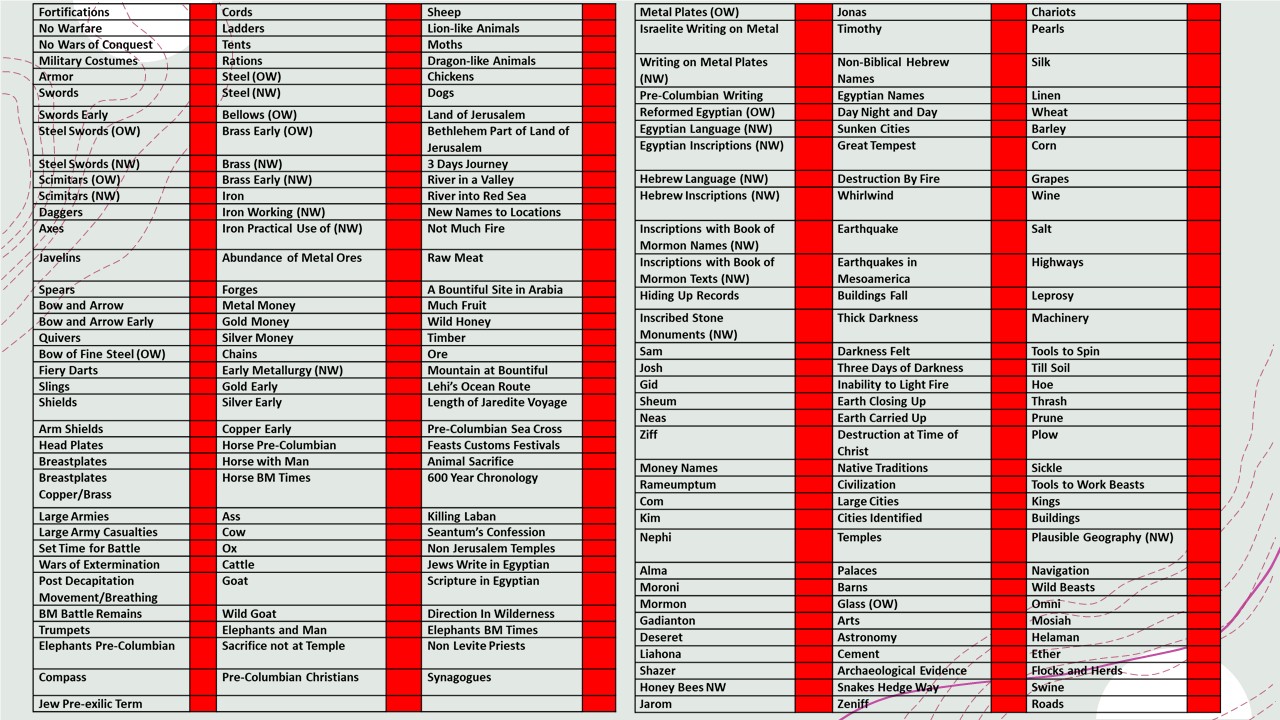
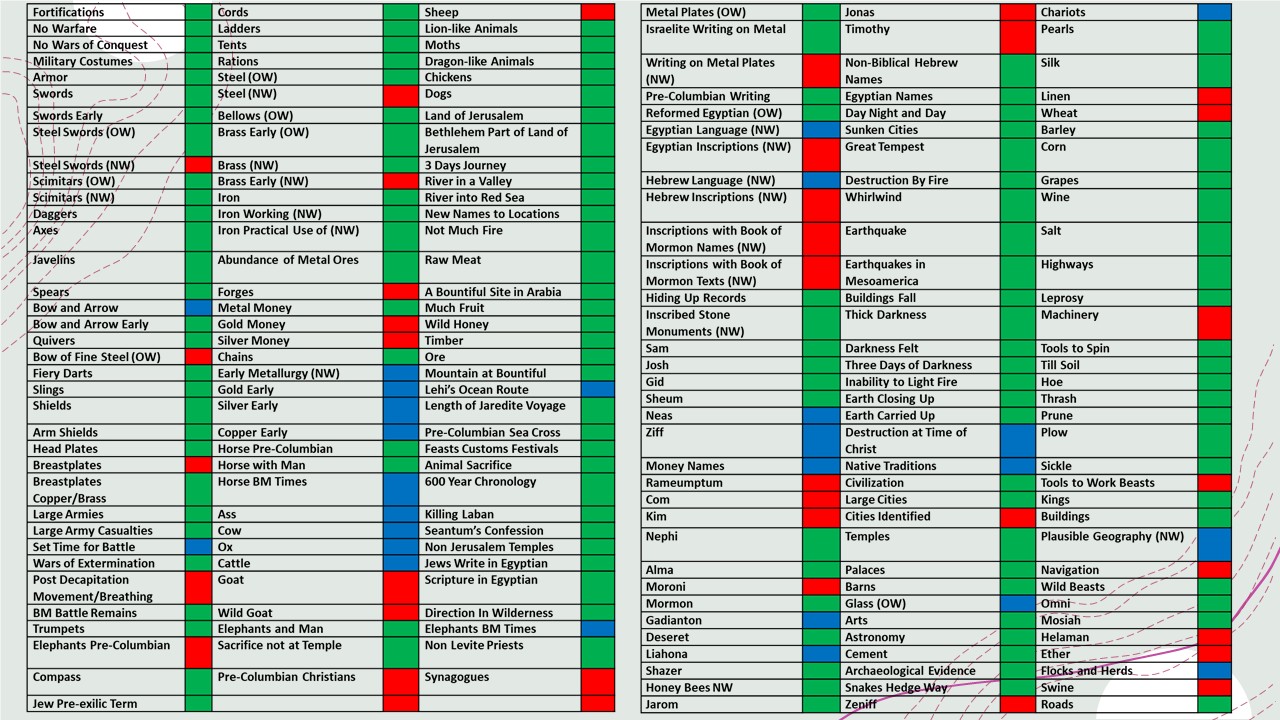
He presented his results in a FAIR conference such as this one, and he identified every archaeological evidence listed against it. Then, he produced the following list of 200 items.

Matt then looked at modern archaeology and found the claims that were supposed to prove the Book of Mormon false are now supported by archaeological evidence.

Where there is no archaeological evidence, he used red. Where there’s accepted archaeological evidence, he used green. And where there is evidence but still disagreement on it—or uncertainty on it—he used blue.

What the Data Shows

The Book of Mormon was written in 1830, but in 2019, 81% of the things that were supposed to prove the Book of Mormon was a fake are either confirmed to be true or trending in the direction to be true.

Had Joseph Smith used the archaeological beliefs of his day to author the Book of Mormon, it would have been wrong.

Instead, people criticized the book for more than 190 years for things we now know to be true.

Why Old Criticisms Persist

Unfortunately, on the internet, they’re still repeating a lot of those old claims.

To me, this shows if you have questions, in faith, answers will come. They may not come right away—as some of these criticisms have gone on for 190 years—but they do come.

Scholarship and Discipleship

We do not talk about these things much in church. Knowing this information does not change our behavior.

The Church is trying to make us disciples of Jesus Christ and not necessarily scholars.

Being a scholar does not make you a better person—but if you want to study scholarship, the information is there. FAIR, Interpreter, Scripture Central, and other organizations are there to help you with those intellectual reasons to stay.

Counsel from President Nelson

In April Conference 2022, President Russell M. Nelson gave a talk on spiritual momentum. He said we should learn about God and how He works.

He also said we should pray always and study our scriptures.

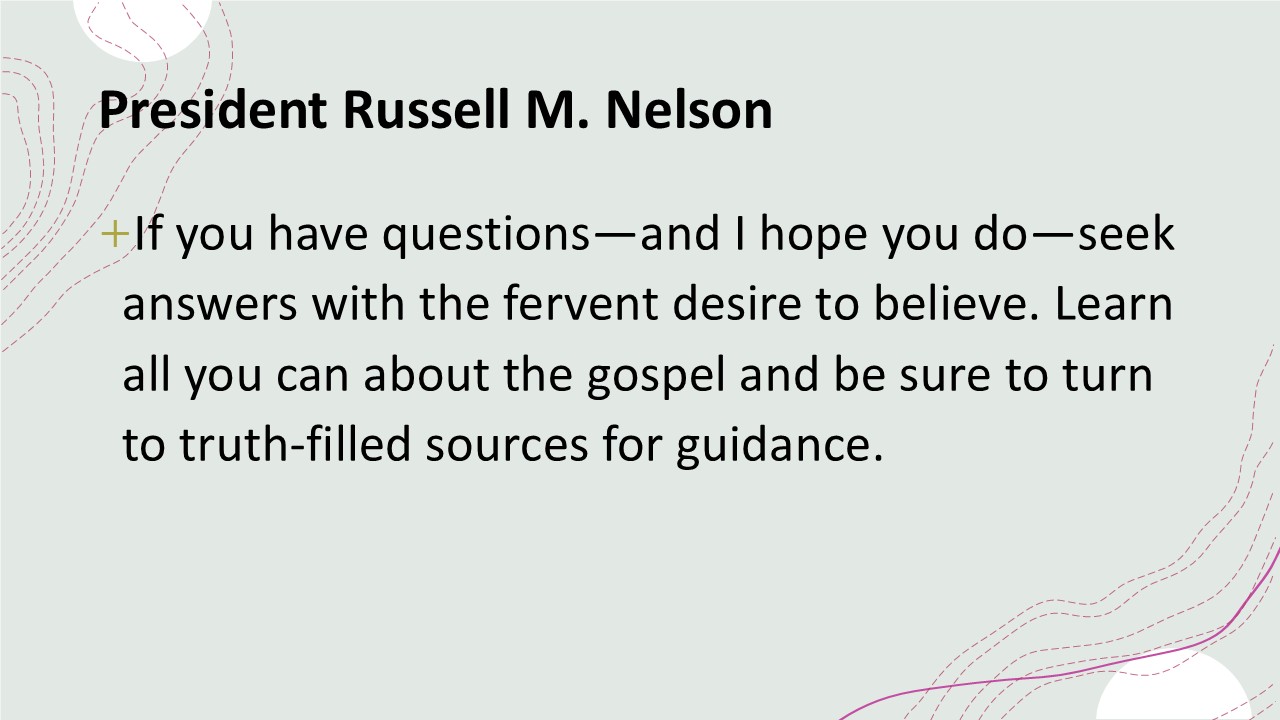
And then in a 2022 devotional, President Nelson said that:

“If you have questions—and I hope you do—seek answers with a fervent desire to believe. Learn all you can about the gospel, and be sure to turn to truth-filled sources for guidance.”

Seeking Truth from the Right Sources

As you go through your life, you will hear good things and bad things about the Church—that is the nature of social media, and that’s the nature of the internet.

But know that I have spent many years reading criticisms of the Church. My testimony of the truthfulness of the gospel is stronger today than it has ever been.

Anchored in Jesus Christ

My anchor is Jesus Christ and the book that testifies of Him—the Book of Mormon.

Living the principle is not always easy, but if we do, we will be blessed.

When Loved Ones Leave the Church

So one more thought—what do we do if we have family or friends who leave the Church, or people who study the gospel and don’t join?

My experience says you should love them.

You do not try to convince them they’re wrong—I’m sure you’ve seen how well that works in politics. It doesn’t.

Responding with Love and Patience

  • You wait for them.
  • You answer their questions as they come up, and
  • You hold on to what you know.

Remember, life is eternal, so change may come for them sometime later—perhaps not even in this life.

We are eternal beings in temporal bodies, but we can still hold on to the truthfulness of the gospel.

Love Without Agreement

To love others, we do not have to agree with them.

We can know it is true, and we can love our neighbor and our family as Jesus commanded us to do.

Final Encouragement

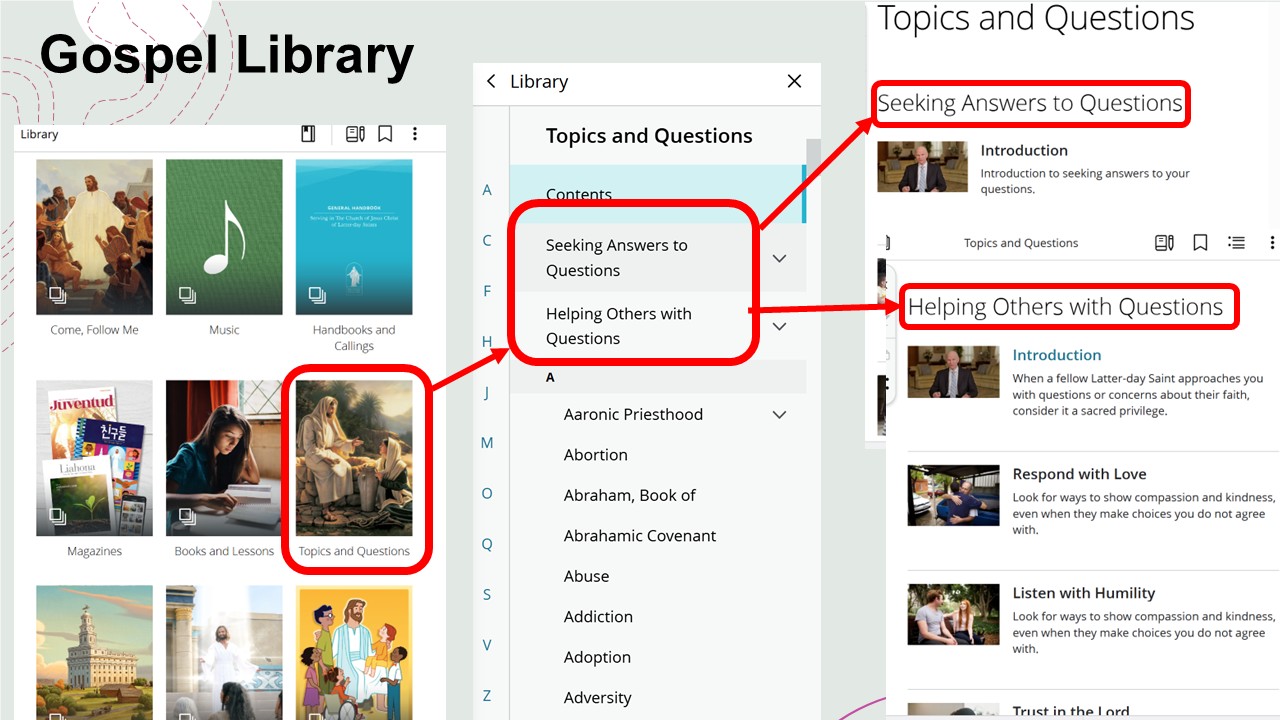
So I want to point out one more thing—in the Church Gospel Library app, if you pull up your Gospel Library app, they’ve created a new section to give additional guidance to you if you’re struggling with questions yourself or if you’re trying to help someone struggling with questions.

What you don’t want to do is get angry with them or drive them away—you want to love them, listen to them, and trust in the Lord.

Testimony

I know that Jesus is the Christ. He is my Savior. He loves us and wants the best for us.

He’s given us the Bible and the Book of Mormon. I know the Book of Mormon is true, and this is His Church.

And I say these things in the name of Jesus Christ, amen.

Changes in the Book of Mormon

I want to do several things today. I’m first going to describe the critical text project, some of its major findings. Then I would like to turn to the issue of changes in the text to the Book of Mormon.

Critical texts have previously been prepared for important historical and literary works but until fairly recently not for the Book of Mormon. The first critical text of the Book of Mormon was published by the Foundation for Ancient Research and Mormon Studies, or FARMS, in 1984-86. That first version, although preliminary helped to establish criteria for the current project, especially the need for direct access to the original and printer’s manuscripts as well as the clearest photographs of those manuscripts. A critical text shows all the substantive changes that a written work has undergone from its original version to its present editions.

The word critical is derived from the Greek word krites meaning judge. When referring to a critical text, the term means that notes accompany the text so that the reader can see how the work has changed over time and thus judge between alternative readings.

There are two main goals for a critical text to the Book of Mormon. The first is to determine to the extent possible the original English language text of the book, that is, the text that Joseph Smith received by means of the interpreters and the seer stone. The second purpose is to establish the history of the text, including both accidental errors and editorial changes that the book has undergone as it has been transmitted down through time in its many editions.

The current critical text project of the Book of Mormon began in 1988 with major support from FARMS. Initial work concentrated on studying the two manuscripts of the Book of Mormon, namely the original manuscript and the printer’s manuscript. The original manuscript, as we have it, was produced in the spring and early summer of 1829 by scribes who wrote down Joseph Smith’s dictation of the text. In 1841 the original manuscript was placed in the cornerstone of the Nauvoo house. When removed in 1882 most of the manuscript had been destroyed by mold and water seepage. Today only 28% of the original manuscript is extant. Most of the surviving leaves and fragments–25% of the 28%–are held by The Church of Jesus Christ of Latter-day Saints. The remaining 3% are fragments owned by the Wilford Wood Foundation, the University of Utah and various individuals.

The printer’s manuscript is the copy of the original manuscript that scribes produced from August 1829 to the early part of 1830. For the most part, the 1830 printer set the type from the printer’s manuscript. Although for 1/6 of the text–from Helaman 13 through the end of Mormon–the type was set from the original manuscript.

The printer’s manuscript is virtually 100% extant and is held by the Reorganized Church of Jesus Christ of Latter-day Saints, now renamed the Community of Christ.

As a part of the critical text project, a typographical facsimile has been prepared for each of the two manuscripts. This kind of transcription represents an exact reproduction of the text in typescript. The text is transcribed line for line and without any corrections or expansions. Original spellings and miswritings are retained, all scribal changes in the manuscripts whether cross outs, erasures, overwriting or insertions are reproduced.

In May 2001, the transcripts of the two manuscripts were officially published by FARMS, now a part of Brigham Young University. They are the original manuscript of the Book of Mormon typographical facsimile of the extant text. Out there, there are copies of it, they’re in shrink wrap, I brought some open ones if some of you wish later to look at a copy. This is the original manuscript, 28% of it is extant.

The second one is the printer’s manuscript of the Book of Mormon typographical facsimile of the entire text in two parts, so there are two volumes for that. These are fairly heavy, you don’t want to lug them to Church. (Laughter)

Both volumes contain introductions that present a brief history of the manuscripts, the symbols used in the transcription system and a physical description of the manuscripts. These two volumes present the earliest textual sources for the Book of Mormon; all known fragments of the original manuscript have been identified, interpreted and pieced together to the extent possible. A continuously running text for the extant portions has been provided with conjectured text placed sub linearly, or below the line.

The transcript of the original manuscript includes numerous fragments from the Wilford Wood Collection; these fragments from 58 pages of the original manuscript were discovered in 1991 and were conserved and photographed for the critical text project. In addition, minor fragments now held by others were also discovered as a part of this project. A number of forgeries were also identified and thus avoided in the transcript of the original manuscript.

With the publication of these two volumes all the legitimate manuscript sources for the Book of Mormon text are now accessible. Using the first three editions of the Book of Mormon along with these transcripts, scholars now have all the available information for studying the text of the Book of Mormon. This publication is intended for scholars of all faiths and persuasions, LDS, RLDS and all others interested in the text. Both LDS and RLDS versifications have been provided in the identification of manuscript pages and photographs.

The critical text project is a scholarly one; it has not involved any ecclesiastical approval or endorsement. The transcripts and the textual interpretations represent the editor’s own scholarly work but have involved peer review from other scholars.

The design and typesetting is the work of typographer Jonathan Saltzman, presents the text in an appealing form, one appropriate to the importance of the Book of Mormon.

Ultimately there will be four printed volumes and one electronic collation in the complete critical text. In addition to the two now published volumes there will be 3) The History of the Text of the Book of Mormon; 4) Analysis of Textual Variance of the Book of Mormon; 5) a complete electronic collation of the Book of Mormon.

The third volume will discuss the transmission of the text, from the manuscripts through the major editions. The fourth volume will discuss cases of textual variance and will attempt to determine the original English language reading of the text. The electronic collation will be a lined-up comparison of the important textual sources and will specify every textual variant in the Book of Mormon including punctuation, capitalization and spelling. The collation will include the readings of the two manuscripts and twenty editions of the Book of Mormon. The editor’s plan is to have volumes three and four and the electronic collation available within the next three years.

Now let us consider some of the more important findings of the project.

1. In copying from the original manuscript to the printer’s manuscript, Oliver Cowdery and other scribes made an average of two to three textual changes per manuscript page. The term textual change means an alteration in the wording, however minor, or a consistent change in the spelling of a name. In general these transmission errors have not been caught by later editors of the text except by reference to the manuscripts themselves.

2. As a part of this project the editor has completed a preliminary analysis of variation in the text of the Book of Mormon. This analysis provides evidence for about 1,500 potential changes to the current text. The large majority of these textual changes involve minor variation in phraseology. For instance (in the next overhead) in more than a few cases the indefinite article ‘a’ has accidentally been omitted, especially when the article is repeated in a coordinate construction.

In the following list we have eight examples involving a pair of coordinated adjectives followed by a noun. For each case, the addition in which the repeated ‘a’ was first dropped is listed in parentheses. So for example in the first one, Omni 1:28, the original text reads “…a strong and a mighty man,” the ‘a’ is repeated. This is not normal for English, it’s much more natural just to delete the second ‘a’ and this happens; it’s rather persistently occurring but randomly and occasionally. So in 1852 this was set by the typesetter as “…a strong and mighty man.”

In the next one we have one where ‘a’ dropped out in the 1840 edition, the next one 1837. And so currently in the text there are eight of these, in the LDS text there are a few more different ones in the RLDS where this repeated ‘a’ has accidentally dropped out. And this is… this represents eight of the 1,500. Most of the changes are like this.

In contrast to cases of minor variation, about 100 newly discovered changes are semantically significant. These proposed changes lead to differences in meaning, ones that would show up when translating the text.

3. Scribal corrections in the original manuscript supports statements made by witnesses of the translation that Joseph Smith sometimes spelled out the unfamiliar Book of Mormon names, at least on their first occurrence.

4. The original text is more consistent in phraseology and word usage. Many errors have led to various wrinkles in the text. One example is the phrase “…the word of the justice of the eternal God,” and if we could have the next one (overhead). This is found in 1 Nephi 12:18 which in the original manuscript read “…the sword of the justice of the eternal God,” and here (overhead) we have the two manuscripts in the writing as the scribes wrote them and the original has “And a great and a terrible gulf divideth them, yea, even the sword of the justice of the Eternal God”. When Oliver copied this, he accidentally misread the ‘s,’ it was difficult to actually read and he ended up replacing it by ‘word.’ Elsewhere the Book of Mormon refers only to the ‘sword’ of God’s justice never to the ‘word’ of God’s justice; and here we have eight examples… no seven, and the last one is particularly interesting. In Ether 8:23 it has the exact same phraseology as the original one in 1 Nephi 12:18: “the sword of the justice of the Eternal God.”

5. The original text that is the English language text that Joseph Smith saw is not fully recoverable by human effort. Textual errors are generally not found except by discovering the correct reading in the manuscripts. Unfortunately most of the original manuscript is not extant. Conjecture based on internal analysis of the Book of Mormon text has largely been unsuccessful in recovering the correct reading. Still some conjectures are probably correct as in the next (overhead)… maybe I don’t have that example, let me see… (pause) Okay.

6. Even if we had the entire original manuscript there could still be errors in the text namely because the original manuscript itself has some errors. For instance… in the next one (overhead), in 1 Nephi 7:5 the original manuscript reads “…Ishmael, and also his hole hole” an impossible reading. The correct reading must be something else, when copying into the printer’s manuscript Oliver Cowdery amended this phrase to “…Ishmael, and also his household,” and here (overhead) you have the two manuscripts as they were written. The original manuscript is not Oliver Cowdery, an unknown scribe; printer’s manuscript is Oliver Cowdery copying it.

Usage elsewhere in the text suggests the word household always occurs with a universal quantifier, either ‘all’ or ‘whole’ or ‘none at all’ in negative sentences and here (overhead) I give some examples. Note the last one Ether 13:22 is a universal quantifier which means that the whole family goes along: “…Coriantumr repented not, neither his household.” If you had written there neither ‘all’ of his household then it might imply that some of them maybe did but by the negative sentences you can’t have a quantifier to get the universal meaning.

The really interesting one here is the use of “…his whole household” in Alma 22:23, the fourth one down (overhead). This suggests that the original text for 1 Nephi 7:5 probably read “Ishmael, and also his whole household” where the first ‘hole’ in the original manuscript is a homophone for ‘whole’ and the second ‘hole’ stands for the ‘hold’ of ‘household’ with the loss of the final ‘d’ in pronunciation.

7. The systematic nature of the original text and the spelling out of Book of Mormon names support the theory that the text was revealed to Joseph Smith word for word and even letter for letter. On the other hand all subsequent transmissions of the text appeared to be subject to human error. At each stage the accuracy of the transmission is dependent upon the carefulness of the transmitter, whether Joseph Smith, his scribes or later editors and typesetters. This caveat of course equally applies to the critical text itself, although all have tried to do their best, every transmission of the text appears to have led to some mistakes, yet none of these errors significantly interfere with either the message of the book or its doctrine.

These textual errors have never prevented readers of the book from receiving their own personal witness of its truth.

Let me give one other point that… I might point out this just appeared… published this week by FARMS, it’s a history and the major findings of the critical text project and I’ve brought a few here and they’re available out here. FAIR is selling… I only brought a few copies but if they run out you can get them from FARMS next week.

But in this I want to read one other statement and this deals with the changes in the text. The editing of the text, including Joseph Smith’s for the 1837 edition, should in nearly all instances be viewed as translating the text into a more standard variety of English. Moreover, in his editing of the text Joseph acted as human editor, his 1837 and 1840 revisions do not represent any kind of final authorial intent since Joseph Smith is first of all not the author of the Book of Mormon. Nor is there any evidence that his editorial revisions represent inspired corrections to the text, especially since he left unchanged dozens of substantive errors that the scribes originally made when they copied from the original manuscript to the printer’s manuscript.

The main point that I’m making is there is only one revealed stage in the transmission of the text and that’s what Joseph Smith received from the Lord. All other transmissions show human transmission and apparently, as far as we can tell, no intervention from the Lord. My conclusion here, there has been a spiritual dimension also to my work although my own testimony of the Book of Mormon is not based on this work on the Critical Text Project but rather on my own personal witness of over twenty years ago that this book records events which really happened. Nonetheless, it has been a delight to have discovered evidence in the original manuscript to support what witnesses said about how Joseph Smith translated.

The Book of Mormon is truly a marvelous work and a wonder and there’s considerable textual evidence that it was a word for word revelation to Joseph Smith from the Lord. With that I would like to turn to, I think, one of the most astounding findings of the Critical Text Project. When I first worked on reading the manuscripts, there’s always this thrill when you find the occasional error. (Laughter) You know, textual critics have to prove their value and the way they do it is by finding errors, but as I studied these errors I discovered something much more important and ultimately I realized that by human means I wasn’t going to find all the errors, 28% of the text is extant, what about the rest of it? And there are even errors in the original manuscript. One of the really surprising things is that in many cases, over 100 I’ve discovered, the original text was without exception in its phraseology; that over time we’d had occasional errors, one or two in a given phrase, so that the current text has what I call wrinkles in it. They don’t prevent you from understanding and reading but if you look at these phrases you discover the original was astoundingly systematic. And I wanted to give a few examples of these.

In a sense this is… we have to be grateful for the mistakes people have been making because these mistakes then allow us to discover how systematic the text originally was. The next twelve or so (overheads) will just be examples that I’ll go over briefly.

In referring to the present time the Book of Mormon always says ‘this time,’ it’s in the singular, it is never in the plural, even though we say in these times: original text is 61 to 0, however the current text is 60 to 1. The one mistake in 1 Nephi 10:19 “as well in this time as in times of old, and as well in times of old as in times to come” notice the past and the future are in the plural and because of those occurrences of the plural nearby the 1830 printer accidentally set the present in the plural but the Book of Mormon never does this.

The next one, the word ‘whatever’ never occurs in the original text, it’s only ‘whatsoever’: original text 74 to 0, current text 72 to 2. We have them both; the 1830 printer put in ‘whatever,’ once in Jacob and elsewhere in Helaman. These are just accidental errors; notice he didn’t replace all 74, he just accidentally replaced two.

The next one, people in the Book of Mormon do ‘iniquity’ they never do ‘iniquities’ in the plural: the original text 22 to 0, now it’s 21 to 1. Jacob 2:35 “ye have done greater iniquity than the Lamanites” accidentally changed to the plural by the 1830 printer.

The next one, to have hope, the Book of Mormon in the original text has the main verb ‘have’ followed by the direct object ‘hope’–18 to 0, there is one occasion where this is actually due to editing by Joseph Smith, he changed it to ‘to have hoped’ he made the ‘have’ into what we call an auxiliary verb, the perfect, and he basically made the noun into a verb. He did this in Jacob 5:46 he left all the other examples. This is an example of his own editing showing that he is not the author of the text. He himself did not realize how systematic the original text was.

The next one, ‘if it so be that’: 38 to 0. Changed in two cases to ‘if it be so that’ mixing up the order, occurs in the 1852 and the 1849 editions.

The Nephites and the Lamanites, the ‘the’ is always repeated: 15 to 0. But, in the 1830 edition, in one place the additional ‘the’ was dropped so the current text reads “and I saw wars between the Nephites and Lamanites”. This is the kind of expression which we might expect.

The Book of Mormon only has, originally, ‘to observe to keep the commandments’ never ‘to observe the commandments’: 11 to 0. But, in the 1837 edition the words ‘to keep’ were accidentally dropped out in one case.

‘To set a mark upon’ someone, never ‘to set a mark on’ someone, that’s what we really expect in modern day English: 9 to 0 in the original, it’s now 8 to 1, an 1837 change.

‘Thus ended a period of time’, they are all in the past tense. We have four places now where it’s in the present ‘Thus endeth a period of time’ and these are in the accounts in Alma–one in the 1830, 1837 for another one, two of them in 1849. It gives a sort of immediate presence in the accounting but the actual text never does this.

In the Book of Mormon you only ‘meet’ people, you never ‘meet with,’ meeting with people sounds like a modern-day bureaucratic system. In any event this one accidentally occurred–1830 edition–Alma is traveling and he… the sons of Mosiah are coming back from their missionary labors with this difficult problem that the… their converts are being murdered. In any event he ‘met’ the sons of Mosiah on the road he didn’t ‘meet with’ them.

‘Conditions’ never ‘condition’, there is no singular condition in the original text, it’s always plural: 14 to 0. We have two in the current text: “and we will guard them from their enemies by our armies on conditions that they will give us a portion of their substance” this was changed in the 1920 edition, it was a conscious change, it is marked in the Committee copy. The other one in the 1830 is an accident. We in English expect the singular; it’s actually a tribute to the typesetters that they have kept 12 of them because it’s so unusual in English to have this plural use for us at least today.

And finally, ‘into’ one’s hands never ‘unto’ one’s hands: the original text was 56 to 0, the current one is 55 to 1. This is one that the 1920 Committee copy isn’t marked, it is a typo by the typesetters in Chicago. “Therefore they yielded up the city into our hands” is the original and it was misread as ‘unto’ so “therefore they yielded up the city unto our hands”. When you think about it, it is a little strange it’s just a misreading.

Well, these are twelve examples. There are over 90 more, probably over a hundred. I haven’t really counted them but it’s amazing to me how systematic the text was. And even Joseph Smith couldn’t understand how systematic it was.

Now we come to the big topic that so many people are exercised over: how many changes are there in the Book of Mormon text? I don’t know and I’ll tell you why it’s hard to count them. In my computerized collation of the two manuscripts and 20 significant editions of the Book of Mormon, I can count the number of places of variation. These are places where in some place in the text there’s a variant, whether it’s spelling, punctuation, words missing, added, grammatical change. There are 105,000 places of variation.

For your information there are 270,000 words or so in the Book of Mormon, but even this number of 105,000 is misleading. If you take an example… let’s see what we have (overhead)…

Suppose you have an example where the manuscripts have no punctuation and the 1830 put in a semi-colon and a later edition made it a colon and then it’s been made a period but later it was changed back to a semi-colon, this is all one variant, it’s a place of variation but maybe within it there could be 4-5 changes.

So the real issue, borrowing from Proverbs, is “with all thy counting get understanding.” (Laughter) Let us begin with the kinds of variants there are. The first one is with bookkeeping or referencing: chapters and verses. The chapters are actually… the word chapter and the numbers are not original to the text of the Book of Mormon. As Joseph Smith was dictating he apparently could see the end of a section and he would tell the scribe, ‘write the word chapter,’ which the scribe did. The ink level is the same. The numbers added are added later in heavier ink, sometimes the wrong number and in many places the word chapter is in the wrong place. It belongs where something ended but it may be the beginning of a new book and yet the word chapter is written at the beginning of a new book, right before the name of the book and these had to be corrected. So there are variations of course in chapters, the numbers assigned to them and there are five versification chapter systems in the text. The RLDS have three of them in their first, second and third editions. They kept… they had long ones and they broke up their verses more and broke them more even more.

In 1852, Franklin Richards and his brother Samuel numbered the paragraphs, they were long, it’s a kind of versification.

In 1879, Orson Pratt changed the chapter system and broke up the chapters, they were much longer originally and we have more than twice as many chapters than the original text had and then he put verses… verse numbers in. All of these are variants. Well, we won’t count those, okay?

Then there are accidentals. The term accidental is one that comes from Aristotle; it refers to distinctions which do not change the essence of something. In other words, they change the form but not the substance. Well what are some of these?

Paragraphing: Paragraphing was added in the 1830 edition. Paragraphs you can think of have been replaced by versification but even verses are little paragraphs, every one of them is a little paragraph and breaks up the ability to read the text in a flowing manner.

Punctuation: For the most part punctuation is an accidental. You can basically read the Book of Mormon text without punctuation. In the original manuscript we only find evidence for a few dashes in the book summaries, otherwise there is no punctuation. The original text itself probably had no punctuation at all. Most of it was added by the 1830 printer, it has been changed to… in some places it was probably wrong… in only a few places is there really any debate over whether the punctuation makes a difference in meaning. Those would not count as accidentals. If the punctuation makes a real difference in meaning then we put it under a different category, but the vast majority, and I would like to say those who wish to count punctuation changes as changes need to realize that every punctuation mark is a change because the original manuscript didn’t have any except for a few dashes and those have all been changed so every punctuation mark is a change. We are way beyond 4,000 and yet we haven’t got to one of any substance yet.

Spelling of common words: We have variant spellings in the editions and the manuscripts, labor versus labour. The ampersand, you use the ampersand that’s a change if you write it out. Etc. was always written as ‘ampersand s.’ Misspellings, these (overhead) are a couple of Oliver’s: ‘intrigue’ and ‘kept’. Slips of the pen: Nephi and pass, where the vowel just acts… these are generally found, and then of course there are lots of typos.

Capitalization: Most capitalizations, many of the names were not even capitalized in the manuscripts, depending on the scribe. So here we have ‘river sidon’ versus ‘river Sidon’ this was in the 1830 edition. Deseret, editors have debated whether this should be capitalized or not. And ‘i’ even ‘i’, one scribe just doesn’t like capitalizing his ‘i’s. Should something be in all caps or in regular capitalization? Jehovah is sometimes put in all capitalization in some editions.

These all clearly show that the transmission of the text is occurring through humans. It has all the signs of human transmission but the original revelation to Joseph Smith I would submit, because he could see the spellings… he could produce specific phraseology over and over, suggests that that is indeed what he received.

Well, in contrast to accidental changes we have substantive changes and here are a few. Changes in the words, forms of the words, phrases and sentences, spellings that make a difference in meaning, this includes names, here are four of them that the manuscripts are very clear should be: Gaddianton with two d’s, someone will have to change their talk, Morionton with all o’s, Zenock is ‘ch’ like Enoch it is not ‘ck’ this is Oliver Cowdery’s scribal error that he just has the darndest time trying to avoid and ultimately the editions have ended up with ‘ck’, however the list by the way at the back has ‘ch’. Don’t know what this means but the pronunciation list has the correct one for some reason and Kishkumen has a ‘c.’ Remember the city of ‘Cumeni’ or however it’s pronounced; it’s got a ‘c,’ sort of interesting.

Then there’s also spellings that deal with homophones, you have to figure out what word was intended. Is the word right ‘rite’, the ‘rites’ of their religion, the current text has it ‘rites’ is that correct? ‘Straight’ is one that’s caused considerable debate is it the one with the ‘gh’ or the one without? Does it mean narrow or not crooked? And ‘travel’ versus ‘travail,’ Oliver Cowdery apparently pronounced them ‘travel’ both, this is the common pronunciation for both words and we have to figure out which ones are ‘travel’ – the ‘travels’ of the Jews? Or the ‘travails’ of the Jews? And you can’t tell by the spellings of the scribes.

Okay, grammatical usage. The Book of Mormon has been edited basically from dialectal English into standard English, from Geneva-Rhodes English into BYU English. (Laughter) Yeah! Some of this editing is accidental, it occurred accidentally in… going between the manuscripts and into the 1830 edition, it wasn’t intended, but beginning with the 1837 edition this was consciously done, attempting to remove dialectal things that would be considered non-standard such as ‘they was’ to ‘they were,’ ‘them days’ to ‘those days.’

The most significant kind of grammatical change though, in the Book of Mormon text, has been to remove King James Version language. The most prominent is changing ‘which’ to ‘who’, “Our Father which art in heaven” was the original reading for the Lord’s prayer in 3 Nephi edited to “Our Father who art in heaven” which is what we would expect at least with respect to that relative pronoun. ‘Because that’ changed to ‘because’ “because that he came” this is not Standard English but it’s in the King James Bible and ‘he sayeth.’ In lots of narratives in the Bible, especially in the New Testament, it’s in the present, this gives an immediacy to it and these have been edited basically to ‘said’ and so when Amulek and Zeezrom are going at each other the original text says “and he sayeth, he sayeth, he sayeth” and these have been edited to “he said.”

There are examples of phraseology and these are more accidental and I gave some examples of the repeated ‘a.’ Note that the examples that we’ve… these examples, virtually all of these that I’ve been talking… well some of them, the grammatical at least, thus far would not show up in a translation for the most part. Most of these grammatical things, whether you use ‘which’ or ‘who’ if you’re translating another language that language will tell you which relative pronoun to use, so these things really aren’t that significant from a meaning point of view. But there are meaning ones and we saw some examples like ‘the sword of the justice of God’ being accidentally changed to ‘the word‘ and these clearly would show up in translating and these are about the highest level we’re going to get though in terms of meaning changes.

Finally, we have a group of items that we could call clarifications. Joseph Smith, in his editing, for the first 100 pages, every time he did it, 1837, 1840, we also know he was doing it a third time in about 1842. He works very assiduously and pretty carefully for about the first 100 pages and then the demands on his time make it so that he apparently cannot continue doing the editing at that level of detail and so he doesn’t continue. He does a more rapid and getting only the essential changes that he wanted, the grammatical ones that would be clearly non standard.

For example, in these two (overhead), these are 1837 changes made by Joseph Smith in his own hand and notice they’re really clarifications, perhaps, I mean we can… ‘he pitched his tent in a valley beside a river of water’, and he changed it to ‘by the side of a river of water’ even though ‘beside’ does mean ‘by the side of’ historically. Or in the account of the dream ‘methought I saw a dark and dreary wilderness’ and Joseph added ‘in my dream’. It’s really not necessary but it’s a clarification just in case you didn’t remember that he was describing the dream.

Finally we come to the five chestnuts, the ones that everyone seems to be exercised over. The point is there… first of all, aren’t too many and when you compare with other texts and people debating over what the text should read. The first one is one that was discussed yesterday… the example… the first one ‘the mother of God’ changed in the 1830 edition to ‘the mother of the Son of God.’ I view these myself as in the clarification mode. These kinds of changes are found only in the first part of the text. There are later ones that Joseph Smith could have changed, ‘God’ to ‘Son of God’ but he did not. I also added in the extra one here of ‘Jesus Christ’ being changed to the ‘Messiah.’ These are, I think, clarifications.

We can’t be really absolutely sure what was in Joseph Smith’s mind. A lot of people are speculating as to the theological reasons, or the attempts to make the text more consistent or something. Joseph Smith made the changes; he didn’t leave any notes or explanation. Maybe for example, he didn’t like the Catholic sounding ‘mother of God?’ In any event, these in my mind are clarifications.

The next one is one that’s probably a scribal error, the ‘Son of the Only Begotten of the Father.’ I suppose one could say if they really believed this that somehow this must mean Jesus had offspring. Well it is probably a scribal error, it occurs in the… we don’t have the original manuscript; it is in the hand of scribe two of the printer’s manuscript. Apparently, the scribe, hearing a lot of ‘ofs’ put in too many, put in an extra one ‘the Son of the Only Begotten of the Father’ ‘after the order of the Son of the Only Begotten of the Father’, we have these extra ‘ofs’ Joseph Smith removed them in the second edition and quite correctly. These probably are just simple scribal errors.

The third one is this ‘white and delightsome’ changed to ‘pure and delightsome.’ There has been more ink on this one than any one and it’s all about modes and it’s really, I think, an embarrassment. First of all the textual evidence, this change appears in the 1840 edition, we presume that it was made by Joseph Smith but we can’t be sure, it just appears. It is probably not a typo, a misreading, because ‘white’ and ‘pure’ look so different, it probably was consciously done.

In preparing the 1981 edition, the Committee at the Church considered this reading in the 1840 edition and they made the change based on the 1840 edition. It is in my mind quite clear that there was no political motivation; they were not trying to remove racism from the Book of Mormon text. The reason this is very clear is there are eight other passages they did not touch which quite clearly could be identified as making the same preference for white skin and those are not removed. The brethren, I presume, and they’ve never said why, but… looked at the actual text of the 1840, decided that it was Joseph Smith’s change–I think it probably was–and decided to follow that. It was a very conservative change and could not have really been motivated by political considerations. As far… we don’t have the original manuscript here, the internal evidence suggests that ‘white’ is the original reading and it is because the word ‘white’ co-occurs with ‘fair and delightsome’ and refers with reference to skin color six times in the text. ‘White’ co-occurs with ‘pure,’ but only when referring to a state of heavenly perfection like in the resurrection; that’s four times. So we don’t know why the change was made by Joseph Smith. The 1981 was probably made out of deference to that change that they assumed that Joseph had made.

We had some discussion yesterday about Benjamin in Mosiah… I will not repeat that I think John Tvedtnes really gave much of the evidence for what the slight problem might be in the chronology.

The last one, is was the brother of Jared a polygamist? This is one that is still in our current text, the original text reads basically that the brother of Jared had a family, Jared his brother had a family and they had… brother of Jared had his friends, more than one and each of them have a family, and Jared has friends and each of them have a family. The 1830 printer in reading one of the families apparently let his eye glance down to the next line and he caught one of the plurals and accidentally set it as ‘families’ this is just a typo by the 1830 editor. The really sort of sad thing about this is that when the Church changes this back to the singular there will be this outrage, this claim quite… absolutely falsely that the brethren are doing it to hide polygamy in the text. This is perhaps one advantage for having an independent scholarly approach, the evidence is very clear that it is in the singular.

Errors have crept into the text but no errors… I’m concluding… errors have crept into the text but no errors significantly interfere with either the message of the book or its doctrine. These textual errors have never prevented readers of the book from receiving their own personal witness of its truth–every sincere reader. In fact, as I pointed out, errors have been helpful in studying the Book of Mormon text. We have discovered the systematic nature of the text because of the occasional errors. How many other cases of systematic phraseology have not yet been discovered because the transmission has been error free? The errors in transmission help us find them… these systematic readings.

All of this worry over the number of changes is specious. There are many more variants per word in the New Testament text and many more highly debated variants. Does this variation mean that the New Testament is false? That it is not God’s word because humans have made errors in its transmission? The word of God still comes through both the New Testament and the Book of Mormon despite the occasional errors in transmission. Thank you.

Primary Sidebar

Faithful Study Resources for Come, Follow Me

Subscribe to Blog

Enter your email address:

Subscribe to Podcast

Podcast icon
Subscribe to podcast in iTunes
Subscribe to podcast elsewhere
Listen with FAIR app
Android app on Google Play Download on the App Store

Pages

  • Blog Guidelines

FAIR Latest

  • Come, Follow Me with FAIR – Isaiah 58–66 – Jennifer Roach Lees
  • Come, Follow Me with FAIR – Isaiah 58–66 – Part 1 – Autumn Dickson
  • Jesus Lives to Lift
  • Come, Follow Me with FAIR – Isaiah 50–57 – Part 2 – Autumn Dickson
  • Come, Follow Me with FAIR – Isaiah 50–57 – Jennifer Roach Lees

Blog Categories

Recent Comments

  • Willie Louise Truitt on The Joy of a Covenant Relationship with God
  • Katrina on In memory of Chandler “Chuck” Hendry
  • Nancy Farmer on Come, Follow Me with FAIR – Psalms 49–51; 61–66; 69–72; 77–78; 85–86 – Part 1 – Autumn Dickson
  • Nicko De Leon on In memory of Chandler “Chuck” Hendry
  • Becky Matson on In memory of Chandler “Chuck” Hendry

Archives

Follow Us

  • Facebook
  • Twitter
  • iTunes
  • YouTube
Android app on Google Play Download on the App Store

Footer

FairMormon Logo

FAIR is a non-profit organization dedicated to providing well-documented answers to criticisms of the doctrine, practice, and history of The Church of Jesus Christ of Latter-day Saints.

Donate to FAIR

We are a volunteer organization. We invite you to give back.

Donate Now

Site Footer

The use of the temple in past and current logos and the name "Mormon" are licensed for use by The Church of Jesus Christ of Latter-day Saints.