by Amber Rothamer
I’ve always treasured the account of Israel’s miraculous exodus out of bondage in Egypt and the recorded events and miracles that followed. It is a portion of ancient history that has always fascinated and humbled me. There are numerous parallels between this account and that of the one found in the New Testament when the God of Israel, Jesus Christ himself came down to yet again save His covenant people.
Moses as a Type of Christ
Moses, the prophet, from one perspective can be viewed as an example of the forthcoming Messiah, in that he rescued the people of Israel from bondage. This great nation was held captive for so long that it took great faith, miracles, and earnest obedience on the part of the people of Israel before they found themselves completely free from their bonds. Likewise how often do we, as God’s latter-day covenant people find ourselves in bonds too strong to break? Bonds that cannot be broken except through our own personal duty to God. It is through diligent obedience to His commandments and covenants, and faith in His mercy and redeeming love; such efforts on our part produce the miracles that set us free. And still, after all that God the Father, and Jesus Christ do for us, their work of love is never done.
Such is the case of ancient Israel. After they’ve fled Egypt by the miracles of God, crossed the Red Sea by the power of God, eaten manna from Heaven because of the compassion of God, drank water by the hand of God, and arrived at the foot of Mount Sinai through the deliverance of God, God still plans to do more wonders on behalf of and for His people. Not only did and does God care for the physical well-being of His children, but also (and especially) their spiritual well-being.
God’s Covenant People
The spiritual blessings God covenanted with and bestowed upon ancient Israel, today extend far beyond just one nation or people. God’s plan has always been to have all of His children become His covenant people, to “obey [His] voice indeed, and keep [His] covenant” (Exodus 19:5), for He shows His mercy “unto thousands of them that love [Him] and keep [His] commandments” (Exodus 20:6).
The Lord’s covenant people are a treasure to Him. He desires all of us to be prepared for sacred experiences wherein covenants can be made between us and Him. Part of this preparation involves preventing sin or spiritual harm. President Russel M. Nelson has taught that an affliction like sin can cripple or even destroy the spirit. He suggested that the ravages of sin require a means of prevention and that the only way to “immunize against iniquity” comes from the Lord’s spiritual protection. “Jesus chooses… to indoctrinate. His method…utilizes the teaching of divine doctrine to protect the eternal spirits of His children” (Children of the Covenant, April 1995 General Conference). And God was about to indoctrinate the children of Israel in such a way that the world still discusses at length and strives to live by His teachings that followed.
Prepare to Hear Him
In order to prepare the children of Israel for the teachings and covenants God had planned at the foot of Mount Sinai, he commanded Moses to “Go unto the people, and sanctify them to day and to morrow, and let them wash their clothes.” (Exodus 19:10) On the subject of purification, there were various purifying ceremonies practiced by the people back then. Bathing the flesh and the clothes in running water was used, and sufficed in the simplest cases such as this one. The people were then commanded to be ready by the third day. For on the third day, the Lord planned to come down in the sight of all the people upon Mount Sinai.
How do we prepare to become immunized from sin as President Nelson has suggested? Israel needed to be prepared before they could “meet with God” (Exodus 19:10-11,17) and keep a covenant with Him. In what ways do we prepare now for sacred experiences such as attending the temple or renewing our covenants by partaking the sacrament each Sunday? Our preparation and how we do so, can affect the kind of experience we have.
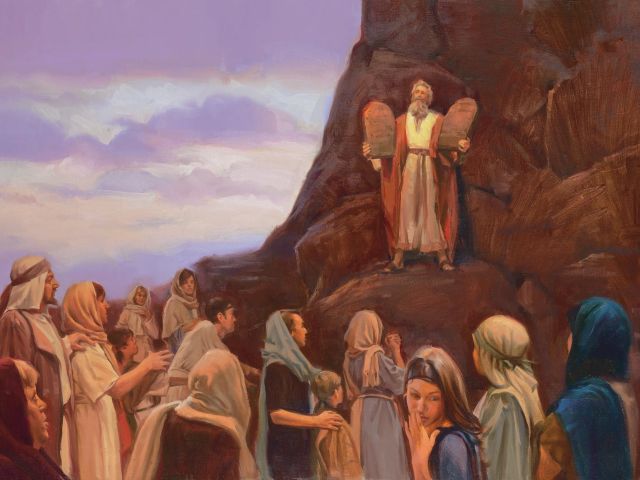
So Moses prepared the people for the coming of the Lord and on the third day, in the morning, there was thunder and lightning and a thick cloud upon the mountain, and a voice like a trumpet so exceedingly loud that all the people in the camp trembled in fear. But still they went with Moses to the foot of the mountain. And there, God met with Israel. God provided a sacred experience for the children of Israel when He spoke words by way of commandment we’ve become so familiar with, yet often find ourselves neglecting to remember. Except perhaps when we sit in Sunday school -or, heaven forbid – we feel tempted to judge someone else for trespassing the following commandments from God:
Other Gods
“Thou shalt have no other gods before me” (Exodus 20:3). We often think this means that we shouldn’t worship any other deity except our God, such as Odin, or Zeus or Brahma. But when we neglect to place God and the work of His kingdom first in every aspect of our lives we break this commandment. Do we spend more time fixating on our work, or hobbies, or social activities, or the praise of others, or even our families than we do God? When was the last time we offered heartfelt prayer and actually had a conversation with God instead of kneeling down and giving a “written” presentation of requests to him? Did we seek to ponder the words of prophets or were we just reading and going through the motions so we could carry on with our day?
Graven Images
“Thou shalt not make unto thee any graven image” (Exodus 20:4). This commandment elaborates the first to have no other gods before Him and identifies what should be the ultimate priority in our lives as His children. Our hearts, bodies, minds, and souls should be in complete devotion to the God of the universe. We must not place anyone or anything in heaven or earth at higher importance than Him. The commandment also adds that we “shalt not bow down thyself to them, nor serve them” because we offend God when we “serve” other gods or when we have other first priorities than Him. Possible priorities being served in our day may include cultural and family traditions, political correctness, career aspirations, material possessions, recreational pursuits, power, prominence, or prestige. God should be our ultimate priority.
The Name of the Lord
“Thou shalt not take the name of the Lord thy God in vain” (Exodus 20:7). Meaning we should never profane the name of God nor swear by His name, or utter any oath or make any promise using the Lord’s name without valid purpose.
The Sabbath Day
“Remember the sabbath day, to keep it holy” (Exodus 20:8). The Lord has consecrated and sanctified the seventh day of the week, which in these latter-days has been made to be Sunday. On this day we should refrain from work, as should everyone else in our family and the world. Everyone deserves and has been blessed by God to receive a day to rest from work including the woman at the cafe, and the man on the customer service line.
Honor Parents
“Honour thy father and thy mother” (Exodus 20:12). When we place respect and value on our elders, we create relationships of trust and communication that bless us with learning, understanding, and wisdom.
Taking Life
“Thou shalt not kill” (Exodus 20:13). Murder and the shedding of blood are a heinous crime in the eyes of God. He values life and demands the sanctity of it.
Adultery
“Thou shalt not commit adultery” (Exodus 20:14). This includes the commandment for God’s people to be chaste, never fornicate, or engage in sensual or sexually immoral activities. “God has commanded that the sacred powers of procreation [and might I add, the feelings both physical and emotional in conjunction with such acts] are to be employed only between man and woman, lawfully wedded as husband and wife” (The Family: A Proclamation to the World). The importance we attach to the law of chastity explains our commitment to the pattern of marriage given to Adam and Eve.
Steal
“Thou shalt not steal” (Exodus 20:15). Anything that does not belong to us is not ours to take.
False Witness
“Thou shalt not bear false witness” (Exodus 20:16). Bearing false witness includes the act of gossiping, lying, making slanderous statements, and acting and/or speaking overall dishonestly.
Covet
Thou shalt not covet” (Exodus 20:17). Desiring or taking pleasure in our neighbor’s house, spouse, employees, tools, pets, etc. is breaking a commandment from God because it is not how God lives.
God gave the world these ten major commandments as a segue into living a higher, more holier life. A life of freedom. When we can more perfectly keep these commandments we are on our way to becoming the chosen, covenant people and children of God He expects, and has planned for us to become.
True Freedom
These commandments, Moses explained to the people when they feared dying in the presence of God’s voice, were and are meant as God’s test to try and prove themselves and ourselves unto Him. By eradicating sin from our lives, we are found worthy of God’s kingdom. This is the great purpose of our mortality. To prove ourselves herewith that we are capable of overcoming the nature of mankind to live with reckless abandon and to govern ourselves and our actions in such a way that is akin to living like God would. This is true freedom.
Consider the blessings that come to those who obey the commandments given. These blessings show God’s mercy and love for each of us. It is important to put the Lord first in our lives. Making Him, His commandments and teachings a priority can help us with the other things of importance. I often tell my family that when we place God first, everything else will and does fall into place because that is essentially what God has promised (see Romans 8:28). I pray that we may all be inspired starting now to increase our focus on Heavenly Father and Jesus Christ.
Part of the Plan of Happiness
The Ten Commandments just reviewed are fundamental to our Christian faith and values. They direct our worship and priorities. God’s commandments are based on and inseparable from God’s plan for us, His children. This is His great plan of salvation and happiness for us, His plan for our freedom. They are the conditions of mortality. If we do not establish our priorities in accordance with His plan, we are in danger of breaking every single one of these commandments given by the mouth of God at the foot of Mount Sinai.
May we not let the temporary challenges of mortality cause us to forget the great commandments and priorities we have been given by our Creator and our Savior. We must remember our eternal destiny. We have a clear responsibility. We must never deviate from our paramount desire, which is to have eternal life with God. Only by remembering our innate godly desires can we make a way for us to be truly free.
 Amber Rothamer currently operates as the Project Manager at FAIR, streamlining the volunteer application process and organizing the many operations of FAIR into easy to manage teams led by its volunteer base. Amber has over 5 years experience spearheading marketing campaigns for radio and social media as a social media marketing manager, and specializes in written and visual content creation. She has a Bachelor of Science degree from Brigham Young University Idaho where she majored in Broadcast Journalism with a minor in music and worked for both the school paper and the school radio station. Amber is driven by a passion to connect people through effective communication both professionally and personally. At home she focuses on building her young family of herself, her husband, and infant son, on open and honest communication. When Amber is blessed with free time, she enjoys traveling with her family, family history, and singing songs for her son.