Summary
2009 FAIR Conference
The 11th annual FAIR (The Foundation for Apologetic Information & Research) Conference was held on August 6 and 7, 2009 at the South Towne Exposition Center in Sandy, Utah.
The FAIR Conference is an annual event that brings together scholars, apologists, and interested individuals from a variety of areas. Each comes with a unique perspective on history, science, or theology, and all come with a desire to help defend the gospel and share evidences of its truth.
The 2009 FAIR Conference gathered scholars, apologists, and faithful members to engage some of the most pressing questions surrounding the history, doctrine, and practices of the Church of Jesus Christ of Latter-day Saints. Presenters examined difficult topics with scholarly rigor and spiritual conviction, modeling how apologetics can both defend the faith and nurture discipleship.
A wide range of issues were addressed: from historical controversies such as Joseph Smith’s role in the Kirtland Safety Society, the reliability of Church-produced history, and Brigham Young’s statements on Adam, to theological explorations of cosmology, the temple, and prophetic translation methods. Several talks emphasized the need to distinguish between speculation and doctrine, cautioning against overstatement while affirming the continuing role of revelation. Others addressed sensitive topics such as plural marriage and children leaving the faith, offering frameworks that balance honesty, compassion, and faith in God’s redemptive power.
The conference also reflected on the practice of apologetics itself. Talks by FAIR leaders and apologists outlined both the imperatives and the perils of defending the gospel, stressing humility, reliance on the Spirit, and the centrality of Jesus Christ. Collectively, the presentations underscored that scholarship and discipleship are not at odds; rather, when used together, they strengthen the Saints’ ability to “confound false doctrines and lay down contention” while sustaining faith.
The 2009 FAIR Conference thus offered more than a set of responses to critics. It provided a vision for faithful scholarship rooted in humility, historical awareness, and eternal perspective—equipping Latter-day Saints to face questions with confidence, charity, and enduring trust in the Savior.

Wade Miller
Science and the Book of Mormon
Abstract
In this presentation, paleontologist Wade E. Miller explores the intersection of scientific inquiry and the claims of the Book of Mormon.
Drawing on decades of fieldwork in North America, Mexico, Australia, and elsewhere, Miller addresses long-standing criticisms that the text references anachronistic plants, animals, and technologies.
He reviews the historical objections of institutions such as the Smithsonian and presents evidence suggesting that materials such as steel, linen, silk, barley, and horses may indeed have existed in the pre-Columbian Americas, or that translation and terminology issues complicate simplistic dismissals. Miller further evaluates possible identifications for obscure Book of Mormon animals (cureloms and cumoms) and highlights paleontological data that extends the survival of mammoths, mastodons, and horses into more recent timeframes.
The lecture frames science not as a threat but as a potential ally in defending scriptural claims, while affirming that ultimate testimony of the Book of Mormon rests on the witness of the Holy Ghost rather than empirical data.
Bio
Wade E. Miller is a professor of geology and paleontology, retired from Brigham Young University. He earned his MS in geology from the University of Arizona and his Ph.D. in Paleontology from UC Berkeley. Besides teaching at BYU, Wade has taught at Fullerton Junior College and at Santa Ana College. He has served, at various times, as paleontological advisor for the US Bureau of Land Management, the State of Utah, the Las Vegas Natural History Museum, the University of Mexico, and the University of Hidalgo (Mexico). During his career Wade published or co-published over 80 scientific articles or books. He is currently a research associate at the Natural History Museum of Los Angeles County. Wade has served in numerous callings, including as a teacher and a bishop. He is married to the former Patricia Haws and is the father of three children (all sons).


Abstract
Vickey Taylor draws on the example of Sariah, mother of Nephi, to explore the anguish and spiritual growth parents experience when children lose faith. Through scripture, personal reflection, and modern prophetic counsel, she frames the “Sariah dilemma” as one familiar to many parents in the Church who ask themselves, “What did I do wrong?”
Taylor emphasizes that such moments of heartbreak are not indicators of parental failure but invitations to lean more fully on Christ. By looking to Sariah’s endurance in the wilderness and Lehi’s family dynamics, parents can see that even the most righteous families have children who wander.
Taylor provides eight guiding principles for parents:
- maintaining sanity
- focusing on personal spiritual growth
- feeding the good
- cultivating humor and optimism
- separating our role from the Savior’s
- keeping sights on the Plan of Redemption
- continuing in prayer
- holding fast to belief
She underscores that our children’s agency is real, but so is God’s redemptive power. Ultimately, endurance, prayer, and hope in Christ enable parents to find peace despite sorrow, with confidence that the Shepherd will, in time, gather His sheep.
Bio
Vickey Taylor is a songwriter/producer, vocalist, and professional speaker, and has performed and/or taught in numerous venues. Her compositions include the theme songs for the Special Olympics program (state by state selection), the Make A Wish Foundation, the Especially For Youth program of the Church, and the Families In Focus program. She is a Billboard award-winning songwriter, with hundreds of songs to her credit.
Vicky has enjoyed participation in the Church Education System’s youth and family programs for two decades, having taught for Know Your Religion, Campus Education Week at BYU-Provo, BYU-Hawaii, and BYU-Idaho, Especially for Youth, Best of Especially for Youth, BYU Conferences and Workshops, and women’s conferences. She works with FAIR’s Rising Generation youth group and writes a weekly column, “Can Do Youth,” for Meridian Magazine.
Vickey joined the Church as a teenager, growing up in Virginia. She holds a masters degree in interpersonal communications and currently resides in the Salt Lake Valley. She is married to Dean Taylor. They have eight children and two grandchildren.

John Gee
The Larger Issue
Abstract
In this presentation, Egyptologist John Gee addresses the complexity of debates surrounding the Book of Abraham, urging apologists to focus on the “larger issue” rather than peripheral skirmishes.
He highlights how critics often misrepresent or contradict themselves, particularly in conflating nineteenth-century eyewitness accounts with modern Egyptological assessments.
Gee cautions against defending every rumor or mistaken theory, emphasizing instead the defense of central truths: the existence of God, the divinity of Christ, ongoing revelation, and the reality of the Atonement.
In his view, the Book of Abraham is important, but not foundational; the Church does not rise or fall on its historicity.
Gee situates the Book of Abraham within its ancient context by discussing evidence of Egyptian presence in northern Syria during Abraham’s day, ritual human sacrifice, and the astronomical teachings in Abraham 3. He argues that the text aligns with cultural and religious understandings of the Middle Kingdom and offers implicit challenges to Egyptian theology.
For Gee, the crucial apologetic task is to defend the doctrines that matter most, recognizing that how Joseph Smith produced the text is less significant than how well it corresponds to Abraham’s historical milieu.
Ultimately, he calls for clear-headed prioritization in apologetics: to avoid bad arguments, to not overstate claims, and to keep perspective on what is central to the restored gospel.
Book of Abraham criticism, LDS Egyptology, Mormon apologetics, Abraham in Syria, Kolob and Egyptian astronomy, historicity of the Book of Abraham.
Bio
John Gee received his Ph.D. from Yale University. He is the William (Bill) Gay Associate Research Professor of Egyptology at the Neal A. Maxwell Institute for Religious Scholarship at Brigham Young University and the author of A Guide to the Joseph Smith Papyri.

Ugo A. Perego
Haplogroup X in Light of Recent Book of Mormon Claims
Abstract
…
Bio
Ugo A. Perego, MSc, is a senior researcher with the non-profit Sorenson Molecular Genealogy Foundation located in Salt Lake City, Utah, and a PhD student in human genetics at the University of Pavia in Italy. In his nine years with the Foundation, Ugo has supervised the worldwide collection of more than 110,000 DNA samples and corresponding genealogical records and given nearly 150 lectures on DNA and how it relates to ancestry, history (including LDS history), and population migrations. Ugo has also authored and co-authored a number of publications, including: “Distinctive Paleo-Indian Migration Routes from Beringia Marked by Two Rare MtDNA Haplogroups” (Current Biology, 2009); “Resolving the Paternities of Oliver N. Buell and Mosiah L. Hancock through DNA” (John Whitmer Historical Association Journal, 2008); “The Phylogeny of the Four Pan-American MtDNA Haplogroups: Implications for Evolutionary and Disease Studies” (PLoS One, 2008); “Mountain Meadows Massacre: A Mitochondrial DNA Examination” (Journal of Mormon History, 2006); “The Science of Molecular Genealogy” (NGS Quarterly, 2005); and “Reconstructing the Y-Chromosome of Joseph Smith: Genealogical Applications” (Journal of Mormon History, 2005).
Ugo is married to Jenna and they are the parents of three boys and a girl.

Abstract
R. McKay White examines the controversial history of the Kirtland Safety Society, addressing common myths and criticisms that have long been used to undermine Joseph Smith’s prophetic calling.
Critics often depict the institution as an illegal “wildcat bank” designed to enrich Joseph Smith and Sidney Rigdon. White dismantles these narratives by analyzing contemporary legal statutes, economic conditions, and newly referenced historical sources.
He shows that the oft-cited 1816 statute prohibiting private banking was likely obsolete by 1837, making the conviction of Joseph and Sidney more a case of religious persecution than legitimate legal judgment.
White also situates the Safety Society within the broader economic challenges of frontier America, highlighting the scarcity of specie (gold and silver) and the necessity of banking institutions to support a rapidly growing economy like Kirtland’s.
Joseph Smith’s personal sacrifices—including significant financial losses, additional loans, and even the sale of property to stabilize the bank—contrast with claims of fraud.
Ultimately, White argues that the collapse of the Safety Society resulted from deliberate attacks by antagonists and the embezzlement of officer Warren Parrish, rather than prophetic failure or mismanagement. The Prophet’s warning that the institution could not stand unless operated on righteous principles was, ironically, fulfilled.
Kirtland Safety Society, Joseph Smith banking scandal, Mormon history and economics, LDS Church financial controversies, Warren Parrish embezzlement, wildcat bank myth.
Bio
R. McKay White is pursuing his Ph.D. in economics at the University of Alberta. He completed his BA in economics and his MA in economics and finance, being awarded both degrees with distinction. His academic research interests include portfolio theory, competition policy, insurance economics, and economic growth. McKay and his wife, Paula, live in Edmonton, Alberta, with their four children. He has served in various Church callings, presently serving as a ward missionary.

Ronald O. Barney
The Reliability of Mormon History Produced by the LDS Church
Abstract
Ron Barney, longtime Church historian and archivist, addresses the perception that the Church of Jesus Christ of Latter-day Saints has obscured or minimized difficult aspects of its past.
Tracing developments since the 1970s, Barney highlights the professionalization of the Church History Department and the emergence of projects like The Personal Writings of Joseph Smith and the expansive Joseph Smith Papers. He emphasizes the painstaking editorial rigor applied to these publications, which are designed to withstand scholarly scrutiny through extensive peer review, transparency, and outside validation.
Barney points to initiatives such as the Selected Collections from the Archives of the Church, a seventy-four DVD set of over 450,000 scanned documents, as evidence of an unprecedented level of accessibility for researchers.
Barney also discusses landmark works such as Massacre at Mountain Meadows and the Teachings of Presidents of the Church: Joseph Smith manual, noting that both were produced with extraordinary care to ensure historical accuracy and credibility.
He details the classification system created for evaluating sources attributed to Joseph Smith, drawing comparisons to similar methods in Lincoln scholarship.
By contextualizing Church efforts alongside broader historical practices, Barney argues that the LDS Church is committed to forthright, “bullet-proof” history that invites confidence rather than suspicion.
Ultimately, he affirms that faith is strengthened, not threatened, when historical inquiry is pursued with honesty, rigor, and openness.
Reliability of Mormon history, Joseph Smith Papers, LDS Church history transparency, Mark Hofmann forgeries, Massacre at Mountain Meadows scholarship, Teachings of Joseph Smith manual.
Bio
Ronald O. Barney received his Masters in American History from Utah State University in Logan, Utah. He is employed with the Church History Department where he focuses on special projects. Ron served as volume editor for the Joseph Smith Papers project (Documents, Volume 5, 1839-1840) and as Executive Producer of the Joseph Smith Papers television series (KJZZ-TV). He has authored numerous books, including The Mormon Vanguard Brigade of 1847: Norton Jacob’s Record (Utah State University Press, 2005), One Side By Himself: The Life and Times of Lewis Barney, 1808-1894 (Utah State University Press, 2001), and the forthcoming W. Mack Watkins: A Biography (2009). He has won multiple awards, including Best Documentary Book in Utah History (Utah State Historical Society, 2006), Best Biography Award (Mormon History Association, 2002), and the Evans Biography Award (Mountain West Center for Regional Studies, 2002).
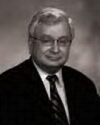
Abstract
Robert B. White reflects on the divine mandate and inherent challenges of modern Latter-day Saint apologetics. Drawing from scripture, Church history, and personal experience, he argues that FAIR and similar organizations fulfill three revealed imperatives:
- to confound enemies of the Restoration (Doctrine and Covenants 71)
- to strengthen the faith of those who doubt through diligent study and teaching (Doctrine and Covenants 109)
- and to be anxiously engaged in defending truth as a righteous good work (Doctrine and Covenants 58).
White emphasizes that while the institutional Church cannot engage directly in apologetic disputes, independent faithful scholarship provides a necessary shield for those whose testimonies might otherwise falter.
He also warns of the spiritual perils of apologetics. Citing C.S. Lewis, White acknowledges that the act of defending doctrine can sometimes make truth feel abstract, requiring apologists to continually fall back on Christ Himself rather than arguments alone.
He urges caution against pride, contention, or treating apologetics as inoculation rather than spiritual transfusion—reminding that conversion ultimately comes through faith, repentance, covenants, and the witness of the Holy Ghost.
White concludes with gratitude for FAIR’s role in saving souls by standing as a protective “thin red line” against criticism while affirming the reality of Jesus Christ and the prophetic mission of Joseph Smith.
LDS apologetics, FAIR Conference, Robert B. White apologist, Doctrine and Covenants apologetics, dangers of apologetics, faith and scholarship.
Bio
Robert B. White, Q.C., served a mission in Eastern Canada after which he returned to Edmonton and received degrees in finance (with distinction) and law (with distinction and the Silver Medal) at the University of Alberta. He is a senior partner and litigation practice group leader in a large, multi-national law firm with offices across Canada and in Japan. Robert works exclusively in trials and appeals and loves the law. He is listed in each of the three published, peer reviewed “Best Lawyers in Canada” lists. He was hired as an adjunct professor in law while in my third year of law school, and while practicing he taught for 18 years. He has written four law books, all published by Canada Law Book, with a second edition of one under way. Robert has served in many Church positions, including bishop, stake president, and area seventy. He is married to Lonni. They have six children and twenty grandchildren.


Abstract
John Lynch, co-founder and chairman of FAIR, reflects on lessons learned from over a decade of involvement in defending the Church of Jesus Christ of Latter-day Saints. He identifies common “Uh oh!” moments that arise in apologetics—missteps in tone, strategy, or overconfidence—that can undermine otherwise strong arguments.
Lynch contrasts these with “Ah ha!” moments, in which humility, preparation, and Spirit-led insight allow apologetics to foster genuine faith and understanding. His central message is that the goal of apologetics is not to win debates but to help seekers and struggling members reframe doubts as opportunities for deeper conviction.
Drawing on scriptural imperatives and FAIR’s history, Lynch underscores the importance of foresight in anticipating criticisms, prioritizing what truly matters doctrinally, and engaging in respectful dialogue. He warns against the perils of contention, intellectual arrogance, or treating apologetics as a substitute for testimony.
Instead, he urges a Christ-centered approach that blends scholarship with discipleship, cultivating patience, empathy, and reliance on the Holy Ghost. By doing so, defenders of the faith can turn apologetic crises into faith-building experiences and provide a faithful model for future generations of Saints.
John Lynch FAIR, LDS apologetics, defending the Church, faith crisis resolution, apologetics foresight, turning doubt into faith.
Bio
John Lynch is a Silicon Valley sales and marketing executive specializing in high-tech startup ventures. He is a member of the Board of Directors of FAIR and serves as its Chairman.
Having served in many missionary callings, including twice as a Stake Mission President, multiple times as a Ward Mission Leader, and having worked at the Provo Missionary Training Center as a teacher and trainer, John has seen the impact of both well-prepared and poorly prepared defenders of the faith.
John is currently the Young Men’s President for the Los Gatos Ward, Saratoga California Stake.
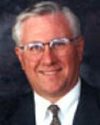
Brant A. Gardner
Joseph the Seer, or Why Joseph Translated with a Rock in His Hat
Abstract
Brant A. Gardner addresses the oft-criticized claim that Joseph Smith translated the Book of Mormon using a seer stone placed in a hat. Gardner situates this method within a broader historical and cultural framework, noting that revelatory devices are well attested in scripture and ancient practice, including the biblical Urim and Thummim.
He explains that rather than undermining Joseph’s prophetic role, the accounts of translation illustrate God’s willingness to work through familiar cultural forms to accomplish divine purposes.
Gardner also emphasizes the distinction between process and product. While the mechanics of translation may appear unconventional to modern readers, the focus should rest on the resulting scripture: the Book of Mormon. Its doctrinal coherence, complexity, and transformative spiritual impact are the true evidences of its divine origin.
Gardner further argues that questions about the stone and hat often reflect anachronistic assumptions about how revelation “should” look. By reframing the discussion, he shows that Joseph’s translation fits comfortably within the spectrum of ancient seeric traditions and should be seen as an authentic manifestation of God’s interaction with humanity.
Brant Gardner, seer stone, Joseph Smith translation, Book of Mormon seer stone, stone in the hat, LDS apologetics, ancient seer traditions.
Bio
Brant Gardner’s academic background includes work towards a Ph.D. in Mesoamerican Ethnohistory at the State University of New York, Albany. His published works on Mesoamerica include an analysis of classical Nahuatl kinship terminology, an ethnohistoric investigation into the identification of the use of Coxoh to designate a people and language in Southern Mexico, and an examination of the Aztec Legend of the Suns. He has written articles that have appeared in the FARMS Review, and his widely acclaimed six-volume commentary on the Book of Mormon, Second Witness: Analytical and Contextual Commentary on the Book of Mormon, is published by Kofford Books.
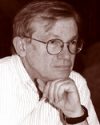
Ron Hellings
Joseph Smith and Modern Cosmology
Abstract
Physicist Ron Hellings examines Joseph Smith’s teachings in light of modern cosmology, exploring how prophetic statements about the nature of matter, spirit, and the universe intersect with contemporary science.
Hellings highlights Joseph Smith’s declarations that all spirit is material, that matter and intelligence are eternal, and that the universe is infinite—concepts strikingly resonant with today’s conservation of matter-energy and multiverse theories. He situates these teachings against the backdrop of 19th-century cosmology, noting that Joseph’s views diverged sharply from creation ex nihilo theology dominant in his era.
Hellings also reviews developments from the Big Bang model through inflationary cosmology, addressing how criticisms that the Big Bang undermines Mormon theology have already been overtaken by scientific revisions.
He points to unresolved problems in standard cosmology, such as dark energy, dark matter, the horizon problem, and the flatness problem, showing how contemporary physics remains full of uncertainty. Proposing a “spirit metric” framework, Hellings suggests that spirit matter might operate beyond the light-speed limit, allowing God to act within the universe in ways that reconcile scientific puzzles with revealed doctrine.
His central conclusion is that both science and religion demand humility: cosmologists and believers alike must recognize the limits of their understanding.
Joseph Smith cosmology, LDS theology and science, Mormon view of the universe, matter and spirit eternal, Big Bang and Mormonism, Ron Hellings FAIR.
Bio
Ron Hellings was born and raised in Pasadena, California. After serving in the French East and Franco-Belgian missions, he returned to marry his sweetheart, Dee, and complete a BS in Physics at BYU, an MS at UCLA, and a Ph.D. at Montana State University-Bozeman. He has taught Physics at Southern Oregon University, University of Nevada-Las Vegas, Cal Poly-Pomona, and Harvey Mudd College.
Ron spent 25 years as a research scientist at NASA’s Jet Propulsion Laboratory before moving back to Bozeman in 2001 to work as a research professor in the Physics department. For a period of 3 years during his time at Montana State University, he was actually on loan to NASA Headquarters in Washington DC to act as program scientist for the Astrophysics Theory Program.
His research interests are alternative theories of gravity, experimental relativity, solar system dynamics, gravitational wave astronomy, pulsar timing, and relativistic cosmology.
In the Church, Ron is basically a Gospel Doctrine teacher, having spent a total of 25 years in that calling in various wards. He has also recently served as bishop of the Bozeman University Ward. Ron and Dee have three married children and four grandchildren.

Matthew B. Brown
Brigham Young’s Teachings on Adam
Abstract
Matthew B. Brown provides a careful historical analysis of Brigham Young’s controversial statements on Adam, particularly the so-called “Adam–God theory.”
Brown traces the origins of Young’s remarks, situating them in the theological climate of the mid-19th century and examining how they were received by both contemporaries and later Church leaders.
He argues that much of the confusion arises from selective quoting, ambiguous terminology, and failure to distinguish between speculative teaching and settled doctrine.
Brown highlights evidence that Brigham Young himself did not intend to formalize these teachings as binding revelation, nor did the Church adopt them institutionally.
Brown further reviews statements from subsequent leaders, including President Spencer W. Kimball’s 1976 clarification, affirming that the Adam–God theory is not a doctrine of the Church.
He emphasizes the importance of evaluating prophetic statements within their historical context, recognizing the line between prophetic authority and personal speculation. Ultimately, Brown concludes that Brigham Young’s comments on Adam are best understood as exploratory theological reflection rather than official doctrine, and that the episode underscores the necessity of grounding faith in continuing revelation through living prophets and the standard works.
Brigham Young Adam God theory, LDS doctrine on Adam, Matthew B. Brown FAIR, Adam God controversy, Mormon theology history, prophetic speculation vs doctrine.
Bio
Matthew B. Brown holds a B.A. degree in history from Brigham Young University in Provo, Utah. He is the author of nine books (with one more forthcoming) which explore topics such as the First Vision, the life of the Prophet Joseph Smith, ancient and modern temples, prophecies, the Book of Mormon, the gifts of the Spirit, and the Plan of Salvation. He has also had articles published in the FARMS Review and the Journal of Book of Mormon Studies. Matthew has lectured at a number of seminars, symposiums, and firesides and has been featured on several radio and TV programs. He has done some writing for FAIR projects and has been a speaker at three previous FAIR conferences.

Abstract
Gregory L. Smith provides a nuanced examination of plural marriage in early Latter-day Saint history, addressing common criticisms, misunderstandings, and the emotional weight surrounding the practice. He notes that discussions of polygamy often spark discomfort because they challenge modern cultural assumptions about marriage, intimacy, and family structure. Smith emphasizes that before evaluating the practice, one must acknowledge the broader religious framework in which it was introduced: Joseph Smith taught plural marriage as a commandment from God, not a social innovation. It was instituted reluctantly, under spiritual pressure, and frequently at great personal cost to its participants
Everything You Always Wanted to…
.
Smith systematically addresses controversial elements, including Joseph Smith’s sealing practices, the ages of some plural wives, the distinction between eternity-only and time-and-eternity marriages, and allegations of coercion. He highlights the need for accurate historical context, noting that many sensational claims are based on misreadings or selective sources. For Smith, plural marriage ultimately served as a theological laboratory for principles of sacrifice, covenantal loyalty, and trust in God’s direction. He concludes that while polygamy is no longer practiced, grappling honestly with its history allows for greater appreciation of the faith and devotion of early Saints.
Mormon polygamy history, Joseph Smith plural wives, LDS plural marriage apologetics, eternity-only sealings, Gregory L. Smith FAIR, polygamy controversies in Mormonism.
Bio
Gregory L. Smith studied physiology and English at the University of Alberta, but escaped into medical school before earning his degree. He then did his medical residency in Montréal, Québec, learning all the medical vocabulary and all the French Canadian slang that he didn’t learn during his LDS mission to Paris, France. He is now an old-style country doctor in rural Alberta with interests in internal medicine and psychiatry. A clinical preceptor for residents and medical students, he has been repeatedly honored for excellence in clinical teaching.
A member of FAIR since 2005, Greg helps manage the FAIR wiki. Due to his research interest in plural marriage, he has spoken to the Miller-Eccles study group and been published in the FARMS Review on this and other topics. With twelve years of classical piano training, he is a life-long audiophile and owns far too many MP3 files. He lives happily with his one indulgent wife, three children, and four cats.
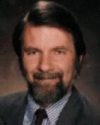
Richard Sherlock
Mormonism in the Public Square
Abstract
…
Bio
Richard Sherlock is a Professor of Philosophy at Utah State University. During his career he has written 90 books, book chapters, articles, and book reviews touching on the topics of moral philosophy, applied ethics, history of philosophy, philosophy of religion, political philosophy, and Mormon History. He is currently writing the book Mormonism and the Moral Life, forthcoming from Kofford Books.

Daniel C. Peterson
The Temple as a Place of Ascent to God
Abstract
Daniel C. Peterson explores the temple as both a symbolic and literal place of ascent into the presence of God. Drawing from scripture, comparative religion, and ancient traditions, he situates the Latter-day Saint temple within a global context of ascension motifs.
Peterson highlights parallels in biblical accounts such as Paul’s vision of the third heaven (2 Corinthians 12), Jacob’s Ladder, and the experience of the Three Nephites, alongside Islamic, Jewish, Christian, and Mithraic traditions that envision ascent through heavens, veils, or cosmic mountains.
These patterns suggest that temples worldwide functioned as symbolic gateways linking heaven and earth.
Peterson emphasizes that the temple represents more than ritual symbolism—it is a model of cosmic reality. Ancient and modern temples alike employ imagery of water, gardens, mountains, veils, and sacred architecture to enact spiritual transformation.
He stresses that the restored temple endowment reflects this ancient heritage: baptismal cleansing, clothing, ascension through sacred space, and entrance into God’s presence.
Ultimately, Peterson argues that Joseph Smith’s restoration of temple ordinances fits seamlessly into this universal pattern, offering Saints not only apologetic defense against criticism but also a reminder to treasure the temple as a divine gift pointing toward exaltation.
Daniel C. Peterson temple, LDS temple ascent, ancient temple motifs, cosmic mountain and temple, ascension in world religions, Book of Mormon temple symbolism.
Bio
A native of southern California, Daniel C. Peterson received a bachelor’s degree in Greek and philosophy from Brigham Young University (BYU) and, after several years of study in Jerusalem and Cairo, earned his Ph.D. in Near Eastern Languages and Cultures from the University of California at Los Angeles (UCLA). Dr. Peterson is a professor of Islamic Studies and Arabic at BYU, where he has taught Arabic language and literature at all levels, Islamic philosophy, Islamic culture and civilization, Islamic religion, the Qur’an, the introductory and senior “capstone” courses for Middle Eastern Studies majors, and various other occasional specialized classes. He is the author of several books and numerous articles on Islamic and Latter-day Saint topics–including a biography entitled Muhammad: Prophet of God (Eerdmans, 2007)—and has lectured across the United States, in Europe, Australia, and New Zealand, and at various Islamic universities in the Near East and Asia. He served in the Switzerland Zürich Mission (1972-1974), and, for approximately eight years, on the Gospel Doctrine writing committee for The Church of Jesus Christ of Latter-day Saints. He also presided for a time as the bishop of a singles ward adjacent to Utah Valley University. Dr. Peterson is married to the former Deborah Stephens, of Lakewood, Colorado, and they are the parents of three sons.
Speakers
Ron Barney, Matthew Brown, John Gee, Brant Gardner, Ron Hellings, John Lynch, Wade Miller, Ugo Perego, Richard Sherlock, Greg Smith, Vickey Taylor, Daniel Peterson, Robert White, McKay White
Topics
Adam–God theory, apologetics, Book of Abraham, Book of Mormon animals, Book of Mormon science, Book of Mormon translation, children and faith crises, Church history transparency, cosmology and Mormonism, Kirtland Safety Society, LDS plural marriage, Mormon economics, Mormon history reliability, Mormon polygamy, Mormon temple theology, prophetic authority, seer stone, temple ascent, translation methods
John Taylor Award
Each year, FAIR awards the John Taylor Defender of the Faith Award to a volunteer who made meritorious contributions to FAIR’s mission and outstanding personal efforts in helping defend The Church of Jesus Christ of Latter-day Saints.
 In 2009, the John Taylor Defender of the Faith Award recipient was Roger Nicholson.
Roger is a native of the San Francisco Bay area. He currently works as the Software Quality Assurance Manager for a high-tech semiconductor equipment company based in northern California. He received a Bachelor of Science in Electrical Engineering from Brigham Young University in 1985 and a Master of Science in Computer Engineering from Santa Clara University in 1993. Roger is married, has five children and is currently serving on the high council in his stake.
Roger became involved with FairMormon in April 2008 when he became an editor and administrator on the FairMormon Answers Wiki after spending several years editing LDS-related Wikipedia articles. Since that time he has worked to restructure and expand the FairMormon Wiki in order to make it as comprehensive and easy to navigate as possible. He received FairMormon’s “John Taylor Defender of the Faith Award” at the 2009 conference in recognition of these efforts.