LDS and Popular Polygamy Stereotypes by Craig Foster
Summary
Craig Foster explores the enduring misconceptions and stereotypes surrounding Mormon polygamy. He highlights how, since the introduction of plural marriage, Latter-day Saints have been subject to negative portrayals, ranging from lascivious, controlling men, to downtrodden or immoral women. These stereotypes have persisted through literature, film, and media, often conflating historical LDS polygamy with modern fundamentalist practices. Foster argues that ignorance about this history, both inside and outside the Church, perpetuates these misconceptions and calls for Latter-day Saints to learn, teach, and appreciate their past rather than avoid or downplay it.
Introduction
We have two names listed for the next presentation, Steve Mayfield and Craig Foster.
Steve works for the crime lab and was called away to do some court things today, so Craig has agreed to present Steve’s part and take the whole hour. Steve and Craig worked together on the whole presentation, anyway.
So, with that, I’ll read Craig’s introduction.
Craig Foster is a research specialist in library public affairs at the Family History Library of Salt Lake City, Utah. He earned a bachelor’s degree in history with a minor in political science at BYU in 1986, then a Master of Arts in history and a Master of Library and Information Science at BYU.
Craig is a prolific author and has a number of books in our bookstore. He has also had books published, not just Church-wide, but on a more national basis, dealing with religion, politics, and similar topics.
So, with that, we’ll turn the time over to Craig Foster.
Presentation
Craig Foster: Let me quickly explain that this is actually a very small part of a larger essay that will appear in the third volume of the work that a friend and I are co-editing.
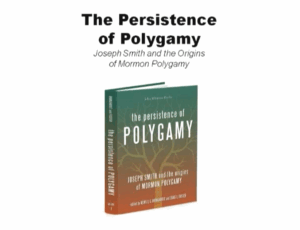
The name of the series is The Persistence of Polygamy. The first volume, which is Joseph Smith and the Origins of Mormon Polygamy, should be out by the end of September. And then the next two volumes we hope to have out by the end of next year. So without further ado, I’ll start today’s presentation.
A Childhood Experience About Polygamy
One day when I was in fifth or sixth grade, a classmate came to my central California elementary school and said, “You’re a Mormon, right?” I answered in the affirmative and he then announced, “My father says Mormons can have more than one wife. Is that true?”
I thought he was joking. I thought everyone knew we no longer practice plural marriage, so I played along with him. “Sure,” I said, “my dad has three.” Unfortunately, he believed me and it took a little bit of explaining for him to finally believe I had actually been joking and members of the LDS Church no longer practice plural marriage.
That was my introduction to the fact that there are a lot of misrepresentations and misperceptions about Mormons, and especially about their polygamous past. Unfortunately, this is certainly not a new phenomenon. Since the introduction of plural marriage, Latter-day Saints have been the victim of misunderstanding, stereotyping, and prurient curiosity.
Stereotyping
Stereotyping is a natural process of human nature as people attempt to simplify, categorize and understand each other and aspects of this complex world. Various levels and forms of stereotyping occur everyday and, for the most part, is a healthy, positive way of synthesizing life.
Unfortunately, stereotyping can also be negative and is often used to create and reinforce bigotry.
The Church of Jesus Christ of Latter-day Saints and its adherents have been stereotyped since their very beginning. Most of these stereotypes have been negative and a number of them regard the nineteenth-century practice of plural marriage, more commonly known as polygamy.
Other Forms of Animosity
Because plural marriage was so strikingly contrary to Victorian American norms, the LDS practice engendered a significant amount of animosity from outside society.
From the 1860s through 1887, the year D. W. Meinig described as the height of American intolerance of ethnic identity, the LDS Church and its members were the target of federal legislation aimed to force their submission.1
The Edmunds Act of 1882 was followed by the Edmunds-Tucker Act in 1887, which western historian Howard Lamar described as “one of the most far-reaching pieces of federal legislation ever passed in peacetime history.”2 Legal historians Edwin B. Firmage and R. Collin Mangrum were even more critical of the legislation:
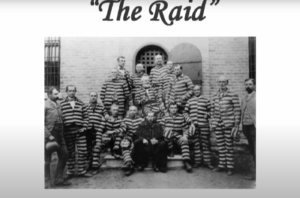
“Even under the most generous standards of legislative latitude, the Edmunds-Tucker Act skirted the boundaries of constitutionality. It was legislation that nakedly attacked a religious institution and imposed civil punishments on an entire group of people solely for their religious beliefs.”3
The End of Plural Marriage Among the Mormons
After several tumultuous decades in which the LDS Church and its members faced a gauntlet of social and legal persecution, the Church announced the end of practicing plural marriage. Admittedly, Latter-day Saint cessation of plural marriage was a slow, painful process which, unfortunately, left many members confused and ambiguous about “The Principle,” as it was called, and encouraged continued practice by some members and continued stereotyping from the outside.
Outside media fascination regarding plural marriage has continued to the present.4 The stereotypes and imagery created in the nineteenth-century regarding Mormons and plural marriage had several themes, three of which were the depiction of Mormon men being lustful and lascivious; of downtrodden Mormon polygamous wives victimized by lustful men; and, ironically, of Mormon polygamous wives being immoral and insatiable harlots. These themes have continued to the present and will be highlighted in this paper.
“Lustful and Lascivious” Mormon Men
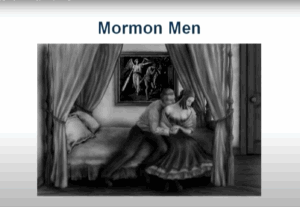
Early critics of the LDS Church helped shape the Mormon image with their descriptions of the “evils and horrors and abominations of the Mormon system.”5 They portrayed Mormon men as “lecherous old scamps”6 6 and “panderers to … lusts” 7 who used sexual magnetism and hypnotism to seduce unsuspecting women. 8 “The image of Mormon sensuality was common throughout the polemical literature on Mormon polygamy…” And to Victorians, the Mormon polygamist was “both a villain and a threat to human decency.”9
The Mormon Steryotype: From Writing to Movies
These same themes of gross sensuality, sexual magnetism, hypnotic powers, insatiable lust and deep-rooted evil carried over into the twentieth-century and into different mediums of communication. The anti-Mormon stereotypes of the printed page came to life with inaccuracy and malice in the early movies. These movies “generally depicted [Mormons] as bearded, depraved and violent cultists who abducted wholesome American women into polygamous marriages.”10
Stereotyping in movies is, of course, nothing new. As one film critic wrote:
Hollywood deals in stereotypes. Ask a lawyer, doctor, psychiatrist, policeman or stockbroker how they feel about the way their professions are portrayed in movies and on television, and they’ll all likely say the same thing – Hollywood never gets it right.
Or in the case of ethnic stereotypes, ask American Indians or Asians or Jews – or women – the same question.
Similarly, culture and religion are frequently misrepresented, whether for the sake of a plot device or a one-line gag. 11
Ironically, the first movie made about Latter-day Saints and plural marriage was a 1905 Edison produced, short nickelodeon-type film titled, A Trip to Salt Lake City. The film, “inspired largely out of humorous curiosity,” was made for laughs. 12
It depicted a henpecked polygamous father with “an abundance of children and multiple nagging wives.” 13
In spite of this initial humorous approach toward Mormons and plural marriage, the majority of the films gave a much darker portrayal.
The Negative Steryotype in Film thru History
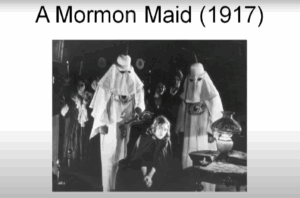
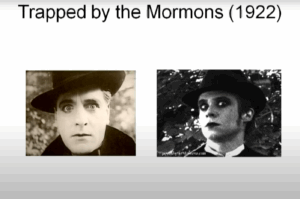
Among the better known films produced in the first few decades were A Mormon Maid (1917) and Trapped by the Mormons (1922).
A Mormon Maid
A Mormon Maid was of “extreme high quality”14 for that era and used certain motifs that reinforced the public’s negative perception of Mormonism.
It took some of the Victorian themes of Danites, strange temple ceremonies and lustful Mormon men, and added visually to them by including Ku Klux Klan-like Mormons, secret rituals, and insidious plots to abduct and deflower the heroine.15
A Mormon Maid was “designed to incite fear in the viewer of the Mormon characters” by drawing “upon elements of the horror genre in order to fulfill that effect.”16 A foundation of the horror film is “separation between difference and normality” in which “normality is threatened by the monster.” Representing Mormons as monsters, isolated, and mysterious was popular in the literature of the Victorian Era” and films like A Mormon Maid which enhanced the monstrous stereotype.17
Trapped by the Mormons
Trapped by the Mormons, which was adapted from the book, A Love Story of a Mormon, by British anti-Mormon Winifred Graham, also portrayed Mormon men as monsters. The movie opened to “a white, gaunt face with enormous eyes and the pulsating eyebrows of a hypnotist” and the Mormon villain in the movie used his unearthly powers of hypnotism to confuse and try to make the heroine his plural wife.18
Inacurate but Influential
In spite of their over-the-top portrayals of Mormon men as polygamous monsters, both Trapped by the Mormons and A Mormon Maid were extremely influential in their time.19 This was especially since they played on “popular fears of Mormonism and polygamy” and “Eastern exhibitors openly stressed the alleged historicity of the photoplay with extravagant copy.”20 By the 1930s, however, the vitriolic nature of media portrayals all but disappeared; this was mostly because of enforcement of the Hollywood Production Code which lasted until the 1960s.
Visual stereotypes in films and on television have continued to reinforce outsiders’ perceptions of Mormons, including mistaken views of plural marriage. 1969’s Paint Your Wagon, for example humorously portrayed the Mormon man “operating a monstrous form of polygamy through treating women as property in his act of buying and selling.”21 In fact, polygamy was portrayed or referenced for laughs in films like They Call Me Trinity (1971),

The Dutchess and the Dirtwater Fox (1976), and Peggy Sue Got Married (1986).

Sensationalized Sexual Gratification
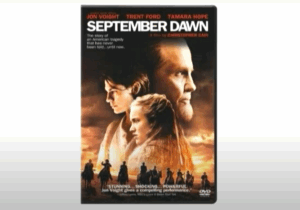
September Dawn (2007) was a throwback to the sensationalized depictions of plural marriage in silent films like A Mormon Maid. Plural marriage in this lamentable film is portrayed as dehumanizing in over-the-top — almost laughable — ways.
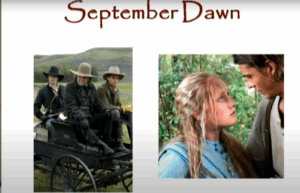
For example, one of the Mormon characters boasted “about the pleasures of having two bodies in his bed” but did not feel love for either of his wives. Thus plural marriage, as portrayed in September Dawn, “is incapable of producing human feelings beyond sexual gratification.”22
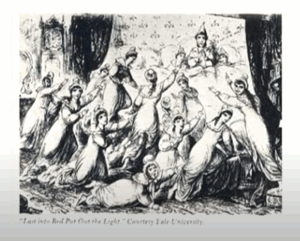
The image of more than one woman in a bed with a man appeared in nineteenth-century cartoons of women fighting to see who would be next to Brigham Young in an unbelievably large bed.
Soap Opera or Real-Life Drama?

This image was used again in the twenty-first century with Big Love.
The HBO series, which the producers claimed to have spent three years researching plural marriage in preparation, premiered in March 2006.23
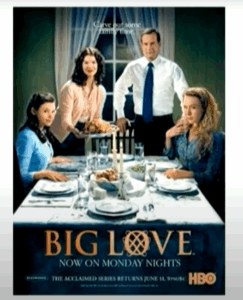
The series, which is, quite frankly, nothing more than a soap opera, has taken a number of real life events and incorporated them into the show.
Thus we have the Juniper Creek compound which is supposed to represent Colorado City; the Lost Boys; conflict between rival polygamous groups; LDS temple ceremonies and other such subject matter. Unfortunately, the show is also filled with clichéd stereotypes.
Mormon Polygamous Wives Downtrodden and Victimized
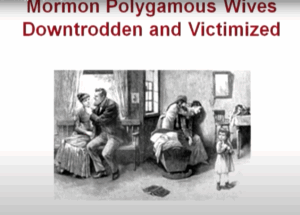
Negative imagery and stereotyping of Mormon women involved in plural marriages has been around since the mid-nineteenth century. Victorian literature portrayed the women as innocent victims, usually with big eyes, soft skin and beautiful hair, seduced by the immoral men and then held captive. Usually their prison was a Mormon harem.
Villianizing Mormons and Muslims
In fact, comparisons between Mormons and Muslims was a sub-theme that ran throughout the different types of media portrayals, usually involving polygamy, concubines and harems. William Jarman from the 1880’s, published a pamphlet describing “fresh young girls” led into “Mormon Harems” where many died young, either by suicide or “of a broken heart.”24
Despair and Loss of Innocence
The overarching theme in this type of stereotyping is the subjugation of girls and women through plural marriage and, in the process, despair and the loss of innocence. From the sensationalized exposés of the Victorian Era to the recent romantic novels of Marian Wells (which described the misery and despair of polygamous life in 1800’s 25) and even the movie September Dawn, this theme has been shaped and reinforced. Non-fictional studies of early Mormon and also Fundamentalist plural marriage have also used the stereotype of the subjugated, pathetic plural wife.
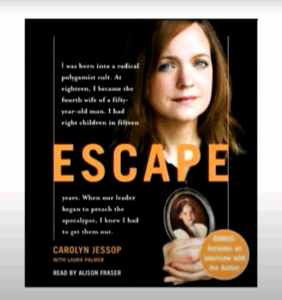
Carolyn Jessop’s Escape, as well as Elissa Wall’s Stolen Innocence, and Daphne Braham’s 2008 book, The Secret Lives of Saints, among others, described the same themes of trials, feelings of despair, and loss of innocence of Fundamentalist women.25

Mormon Polygamous Wives Immoral and Insatiable
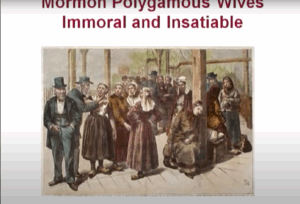
In stark contrast to the portrayal of downtrodden, long-suffering plural wives is the last of the three types of stereotyping, which is that Mormon plural wives were immoral and sexually insatiable. In spite of the obvious irony of the two extremes, this was, nevertheless, a very popular stereotype used in the nineteenth-century and beyond. 
Indescriminate Prostitution?
Some examples were John Benjamin Franklin’s claim in the mid 1800’s, that plural marriage was “but another name for indiscriminate prostitution.”26
An evangelical minister at the turn of the century described Salt Lake City as a “bedlam, brothel, sink of iniquity, Hades, and a vortex of moral ruin,” where “each family is a house of prostitution and all liars, thieves, drunkards, libertines, and subjects of any and all delusions.”27
The HBO series Big Love is filled with clichéd stereotypes, including over-sexed wives vying for the husband’s attention. In episode two of the first season, the episode is titled “Viagra Blue” and one of Bill Henricksen’s three wives’ “lack of inhibition” and how it bothers the sister- wives who insist on their share of alone time. This appears to be a recurring theme in the series. 28
Impact on Modern Latter-day Saints
A common thread among these three stereotypes was gross Mormon sensuality. “The image of Mormon sensuality was common throughout the polemical literature on Mormon polygamy [in the 19th century].”29 While these stereotypes were definitely over-the-top, aspects of all three have, nevertheless, continued up to the present.

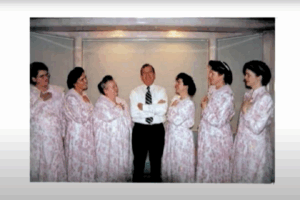
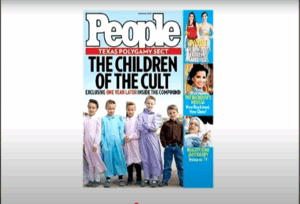
Polygamy and the associated themes of sexuality are too tempting for people outside the LDS Church to ignore. This almost prurient interest in past Mormon plural marriage and, presently, Fundamentalist plural marriage, is present in many news stories regarding the LDS Church. In fact, even stories regarding the FLDS Church and other Fundamentalist groups often mention the LDS Church, thus associating modern Mormons with Fundamentalists. In Europe they did a study and the churches are interchangeable for them. They do not realize that there is a difference. This helps perpetuate inaccurate stereotypes about Latter-day Saints.30
Polygamy and … the Olympics?
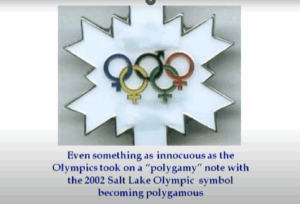
Here is an example: The Salt Lake Olympics. Even something as innocuous and innocent as the Olympics took on a polygamy note, with the 2002 Olympic symbol becoming a polygamous family there. So, it continues to haunt Latter-day Saints.
All of these things — our history of plural marriage with its ups and downs; the continued practice of plural marriage by Fundamentalists; media and other outsiders’ interest in Mormon polygamy; and the continued existence of stereotypes that paint Latter-day Saints in broad, if not always accurate strokes – have caused discomfort among many Latter-day Saints; at all levels.

Why are Members Uncomfortable About Polygamy?
The reasons for discomfort, naturally, vary by person, with some reasons having more significance than others. The depth of discomfort also varies per person. Many Latter-day Saints are simply unaware of the church’s past practice of plural marriage or do not understand it. In fact, most do not understand Mormon history and the significant role plural marriage played. The sad thing is most members of the LDS Church are not interested enough in history to find out about plural marriage or much else in their Church’s past.
Unfortunately, at times the Church doesn’t seem to want their members to know about potentially controversial aspects of Church history like plural marriage. I realize this seems like a strong statement but a few examples will support it.
Several years ago the priesthood/Relief Society manual on the teachings of Brigham Young included a timeline of significant dates in his life, including his first and second marriage, after the first wife died. There was not, however, any mention of Brigham Young’s plural marriages. And, later, the Priesthood/Relief Society lesson was about Doctrine and Covenants section 132 and celestial marriage but did not mention plural marriage.
A whole lesson on Doctrine and Covenants 132 and not one mention of plural marriage? 

“Don’t Mention Polygamy”
Furthermore, missionaries giving tours at the Beehive House in Salt Lake City are specifically told not to discuss plural marriage. I would gather that’s the same message given at other Church historical sites.
I remember being about fifteen or sixteen and visiting Brigham Young’s Winter Home in St. George. The sister missionary was giving the tour to what appeared to be a non-member family and myself (my parents were attending a session and marriage in the temple and I was entertaining myself). This missionary was telling how Brigham Young’s wife would keep house and so, I naturally wondered which wife. So I asked.
She got a deer in the headlights expression on her face and said, “well, his wife.” “Okay,” I answered, “which wife?” “Well, his wife.” I finally realized she did not want to discuss Brigham’s plural wives, especially if this really was a non-member family, and dropped the subject.
Another example; I work at the Family History Library where part of my job is to host VIPs and other special guests. A number of years ago we had four special visitors from the British Library. They were in Salt Lake for a series of important meetings and I was asked to host them, not only at the library, but also other places on and around Temple Square that I thought would be of interest to them.
I made a couple of phone calls setting things up. One call I made was to Church Hosting where I spoke with a missionary. When I suggested taking the guests to the Beehive House she immediately said, “Oh you don’t want to do that.” I asked why not and she gave a nervous laugh and said, “well, you know.” “I know?” I said, somewhat puzzled.
Avoiding or Embracing Questions About Polygamy
She gave another nervous laugh and again repeated that I know and continued, “they might ask questions.” “About plural marriage?” I asked. “Yes,” she responded. “Well,” I replied, perhaps a little too sarcastically, “we wouldn’t want them to do that.” “No,’ she answered. I thanked her and hung up.
Ironically, two days later when I guided these four British guests through the library and then the Museum of Church History and Art, they tentatively (almost apologetically) asked me about how plural marriage started and what it was like. I told them I would be glad to answer any question they had. We spoke for at least forty-five minutes during which time I was very open and honest about aspects of plural marriage, including my own family’s history.
They thanked me for being willing to so openly and comfortably talk about plural marriage. They’d asked other Mormons about plural marriage and had been met with embarrassment, silence, and awkwardness. And they were not alone.
Plural marriage is an extremely complex topic that causes strong emotions in most members – even among defenders of the faith. It is remarkable that something that has officially been over for 120 years (and yes, I am well aware that it did not end in 1890 – thank goodness, or I wouldn’t be here), anyway, it is remarkable that something from so long ago can still cause such strong emotions and, for some, pain. But it does.
What Should We Do?
So, what should Latter-day Saints do about their polygamous past? Because I’ll tell you right now, it’s not going away. No matter how much we officially or unofficially ignore it. Our polygamous heritage is here to stay.
How then should we (as a church and as individuals) treat the theoretical two crazy aunts in the attic? Should we continue to hide them in the Church’s attic, cringing in fear whenever the subject comes up? Should we hem and haw, swallow hard and start looking for a quick exit if we are asked about polygamy? That really doesn’t seem to be the best route that either the Church or its members should take, because plural marriage will continue to come up until the bitter end.
Curiosity is Human Nature
Let’s face it, it’s human nature to be curious about lifestyles that differ from our own. I will readily admit that I would love to go spend a week with an Amish family. Heck I’d like to do the same with some of the Fundamentalist families, just to see what life, structure and intra-family dynamics are like.
I’m fascinated by family relationships and dynamics and for me, both the Amish and Fundamentalists would be fun to observe from the perspective of a fly on the wall. And then, as I contemplate something like that, embarrassment catches up to me and I ask myself what the heck am I thinking? These are human beings, for heaven’s sake, not lab specimens. Nevertheless, the curiosity is still there.
I also think it’s human nature, to one degree or another, to deep-down enjoy watching people be uncomfortable and twist in the wind (although, happily enough, most people keep this baser trait under control). And there will always be those who will continue attacking the LDS Church and being critical of our past and our beliefs. But they are in the vast minority. Most people, innocently, are just curious.
So what do we do? As an active member of the LDS Church I do not have any inclination, nor do I feel I’m in a position to lecture Church leaders, or even the regular membership, for that matter. So, instead, I will just offer a few gentle suggestions.
Learn Our History
First, learn our history. Ignorance is not bliss. It is potentially destructive and we cannot understand nor defend our church if we don’t know our history. We must know our history, warts and all. And yes, that includes plural marriage.
Teach Our History
Second, teach our history. Worse than ignorance is stumbling upon difficult or questionable information about something we have put our faith and our very lives into, and having our faith tested or even destroyed. We are having too many people, young and old, who are stumbling upon unflattering half truths, maybe even mostly truths, and they are being blown away. Their faith is destroyed. We must teach our history.
Just this past weekend I was talking with one of my daughter’s 16 year old friends, as a few of us were driving down to southern Utah, and mentioned in passing, Joseph Smith’s plural wives. Her eyes bugged out, mouth dropped open, and she asked in a weak voice, “Joseph Smith had more than one wife?” We spent about an hour discussing this, in a very faithful way, and still she repeated several times that she was blown away.
Can you imagine what her reaction would have been if she had stumbled upon that on the internet, or if some anti-Mormon had given her a tract when she went to a temple open house or something?
The Source of Learning Matters
We must teach our members about plural marriage rather than wait for them to find out through critical and unfriendly sources. It is better and easier to teach in a faithful setting than to try to explain afterwards. There is nothing too bad, too scary, or too embarrassing in our history that doesn’t warrant a truthful examination.
Juanita Brookes, who wrote one of the first, at least decent scholarly works about the Mountain Meadows Massacre (and she received a lot of flack from that even from members) once commented, “nothing but the truth is good enough for the Church to which I belong.” We, here at FAIR, are defenders of the faith, but wouldn’t it be better if sometimes we were teaching rather than defending?
Appreciate Our History
Third, appreciate our history. We may not understand or even like plural marriage, but we can still appreciate it and the sacrifices made by our forbearers. Let me explain. Do we or do we not believe this was a commandment from God? We may not like some aspects of 19th century plural marriage, but we can move beyond the stereotypes that even some Mormons begin to accept, and be proud of our heritage, recognizing that these people were doing their best in what they believed God had commanded them to do.
Relax and Embrace our Heritage of Plural Marriage
Finally, we need to relax and embrace our heritage of plural marriage. If this was really a commandment from God, then why the embarrassment? We can still have our issues with plural marriage, but why the embarrassment? When I’m asked about plural marriage, I always proudly announce that my great-grandfather had five wives and thirty children and that I come from the 5th wife, 27th child. After a few exclamations of surprise or amusement and a few questions or comments, the conversation quickly and smoothly moves on to other subjects.
If we, as a Church, approached it with straightforward pride, I think there would be less curiosity and interest in this part of our rich heritage. Stereotypes will probably always be around, but if we face our past head on and with pride, these stale stereotypes about plural marriage will fade to the background.
Thanks.
Q&A
How many schisms of Mormonism are still viable, and of those, how many practice polygamy?
Craig: Oh, I can’t even begin to tell you. We have so many out there in terms of schisms. There’s a fantastic book by Steve Shields that I would recommend to anyone who really is curious about the various schisms. But there are numerous. Of those, I would say the ones that practice plural marriage—at least larger ones that are worth mentioning— other than, you know, two families gathering together or something like that– I would say that there’s the FLDS, who have at least four schisms from them.
There’s a number of others. There’s the Allred group, of course, the LeBarons. I would say that it’s at least 20, 30, or more schisms that practice plural marriage.
Polygamy is not sociologically viable over time. What’s your opinion as to why the early Saints were commanded to practice plural marriage?
Brian Hales brought out some excellent points yesterday and, to be honest, I was writing as fast as I could, and I plan on talking with Brian a little bit more about that.
As for plural marriage not being viable, there’s a good portion of the world that might argue with that. But, as for us, perhaps it isn’t viable. I’m going to basically say, look at what Brian said yesterday as for why plural marriage was practiced. I thought he gave some great reasons.
As a current docent at the Museum of Church History and Art, we are working to correct this important omission.
Excellent! We need to do more of that. That’s great.
How does the Church regard plural marriages performed after the Manifesto was issued?
There have been several works regarding that. One of the more obvious ones was an article that D. Michael Quinn wrote that appeared in Dialogue magazine back in 1983 or ’84, somewhere right around there, and it was about post-Manifesto plural marriage.
I’m not trying to hype my own stuff, but I wrote an essay in a book that I would recommend every one of you get because it is an excellent book. It’s called Scattering of the Saints, and it’s published by John Whitmer Books, and it looks at the various schisms—so back to the earlier question. I wrote an essay in there about Barr White Musser and his plural wife, using them as an example, but then I brought in other information of people who practiced plural marriage, but somehow or another were under the radar and stayed within the Church in decades after the Manifesto.
Those are a couple of things that you can look at to answer that.
What is a quick answer that I give to a person who asks how plural marriage began?
I basically say that it was a commandment given to Joseph Smith. That it began in Nauvoo but really blossomed once we got out here to Utah. And depending on how interested they are—by that point, if their eyes have already started to glaze over—I leave it at that.
If they are a little more interested, I’ll go into a little bit more detail.
How do you do this in a faith-promoting way?
How do I do it in a faith-promoting way? Well, I firmly believe that Joseph Smith was commanded to practice plural marriage, that it was from God, and so I always emphasize that.
Polygamy seems to be one of a very few commandments that changed due to political pressure. Why did it change?
Well, I personally think there are a number of reasons, some of which will be addressed in one essay or another in the three volumes of the book that we’re putting out.
But, to sum up really quickly, yes, there were significant political pressures, and I think that was a major reason why we stopped. I think there were some other reasons, but, you know, you have to ask yourself: do you want the Church to continue or not? And it really had reached that point where the whole Church itself—particularly our temples—they weren’t going to continue. And so, you know, there you go.
Leonard Arrington, in The Mormon Experience, suggests polygamy helped establish the Church by creating solidarity, close connections between the major families, leaders, by providing husbands, children, etc. Any comments?
I firmly believe that plural marriage was significant in our social and familial makeup. You have connections that could never have been made if you only have a certain amount of children and one wife. You know, you can only make so many marriages, connections through marriage, etc.
The dynamics of early Mormon families is incredible. I’ve actually done quite a bit of research, and I hope to someday—if I stop getting all these little projects that come along—I hope to do a book about what I refer to as second echelon elite, in other words, the families that were right below the General Authorities in terms of prominence, you know, in business, church, other things like that.
The family connections created through plural marriage are just unbelievable. So yes, I think it played a very significant role in what we are today in terms of marriages and relationships.
In parts of the world where the practice of plural marriage or polygamy is legal, if a family wanted to join the Church, could they?
Yes, but they would have to stop living with—the gentleman would have to stop living with his other wives. He could no longer have anything to do with them other than to support them financially. Otherwise, no, they would not be able to be baptized.
The irony is that the RLDS Church—now the Community of Christ—which, a great part of their existence, was to fight that horrible thing, polygamy, they do accept people in India and Africa and allow them to continue to live with their plural wives. So the irony is kind of amazing there.
The Learning Channel is doing a show called Sister Wives, a polygamy reality show along the lines of Jon and Kate Plus 8. Has gay marriage increased the interest? Why do people seem to care so much?
I think there’s a couple of reasons. Obviously, gay marriage has increased the interest because of the references that have been made to the fact that, well, if you accept gay marriage, soon polygamy will be legal. So that’s part of it.
But also, the raid on the FLDS down in Texas really, you know, heightened the interest. And one other thing—and I don’t know if this is true—Steve Mayfield and I have talked about this, but we weren’t able to find any good documentation.
So if anyone has any or is aware of it, please let us know, but, from what I understand, Big Love, one of the reasons why they created that show— I guess, the executive producers are gay, and they wanted to break down some of the barriers toward gay marriage. And they thought that if they demonstrated something like modern polygamy, that might help. That’s what we’ve heard.
Steve Mayfield and I have talked back and forth, but we have searched and we haven’t been able to find anything concrete. So there’s no way that is going in the essay unless I find documentation.
So that’s it. Thank you.
TOPICS
- Polygamy
- Gay Marriage

