Introduction by Scott Gordon
Brad Witbeck is a writer, speaker, and media producer focused on Latter-day Saint apologetics and faith-building content. He has contributed to multiple organizations including FAIR, the B. H. Roberts Foundation, Mormonr, and Ward Radio, where he helps create engaging, accessible responses to common questions and criticisms.
He has a lovely family. And with that, I’m going to turn the time over to Brad.
Opening Remarks
Thank you very much, Scott. Thank you for that good introduction.
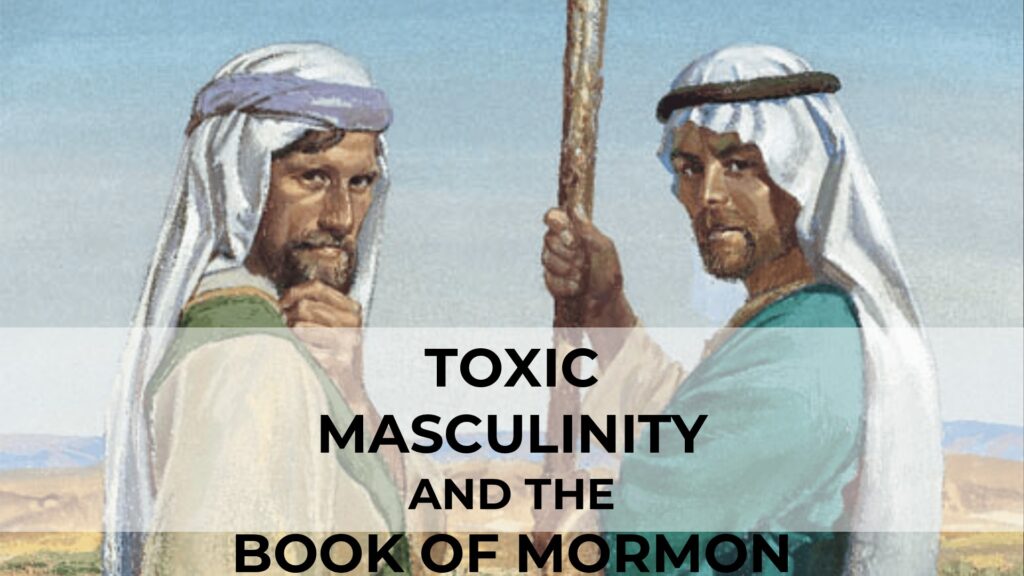
As Scott said, my name is Brad Witbeck. I’m going to be speaking to you today on—oh, sorry guys. That’s my presentation for the Mormon History Association: Toxic Masculinity in the Book of Mormon. That was a genuine mistake.
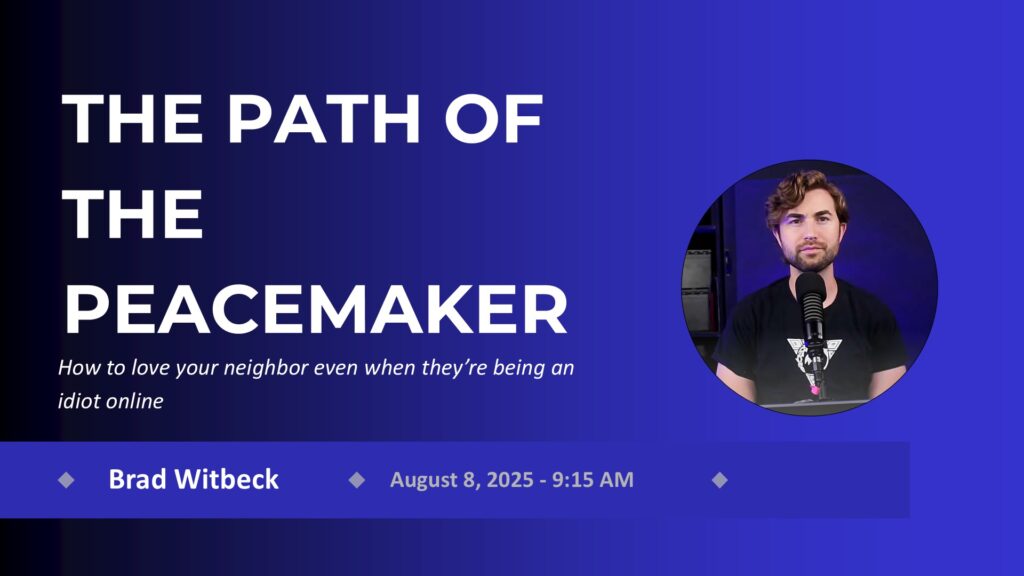
Here is my actual talk: The Path of the Peacemaker.
Why This Topic?
This is something I wanted to talk about because as I was trying to decide what would be useful to share at the FAIR Conference, I kept feeling that I needed to work on this.
As I prayed and pondered about it, I thought again and again: I need to work on being a better peacemaker. If I could put together a presentation on this, I would at least learn what I needed to be doing better. Hopefully I can share that with others, and they can learn something as well.
Know that as I share this with you, it is not from a place of having always done this right. It comes from my years of struggling with how to appropriately interact with others and be a peacemaker online.
Questions Welcome
Something I generally do in all of my callings—as a Sunday School teacher or elders quorum teacher—is ask questions and get responses from the audience. So please be prepared to give me your responses.
How many of you have ever gotten into a fight online? By raise of hands?
Fighting Online
It seems a lot of us have. I was talking with my wife and realized she never has. Not everyone will have fought online. I don’t think it is required of anyone.
But we can still be defenders of the faith online in ways that are pleasing to God and to those we interact with. What would it look like if our interactions with those we disagreed with left them happier for having talked with us? That’s part of what I’d like to discuss as we go through The Path of the Peacemaker today.
I also want to put one pin in this idea of fighting online: we shouldn’t necessarily get involved in fights, but the way we fight matters just as much as what we’re fighting for.
Humor and Ward Radio Background
Moving on—Toxic Masculinity in the Book of Mormon, the fake presentation I’m not giving.

Exploring the benefits of having a form of godliness while denying the power thereof.

Sorry, that’s another fake one. This was for Sunstone: How to Be a Gigachad Like Captain Moroni.

And this one? Just the next Ward Radio episode.
I am known to procrastinate every once in a while, but I promise I didn’t put this presentation together last night.
My wife did.
Why I’m Speaking Today
I think I’m here because of Ward Radio. We began in 2019 as Midnight Mormons and have been going ever since, doing what we can to make a positive space online for members of the Church of Jesus Christ of Latter-day Saints.
When we decided to start creating content on YouTube, the landscape offered two extremes:
- Devotional content for members of the Church.
- Highly antagonistic content, often veiled as “helpful,” but using misleading titles and stories.
We were sick of that, so we decided to do something about it—and to do it imperfectly. We hoped that maybe it would even inspire others to start channels out of spite, thinking, I can do better than that.
And it has! We’ve seen people launch new channels, and ever since, there has been growth—pressing the truth forward online in a way people can understand.
Reaching Different Audiences
What’s been interesting to me is the way each show reaches a different audience in a different way. I’d invite you to consider how you individually can reach people differently than anyone else might.
That’s part of being a peacemaker. Your unique interactions will be something others need and will be impacted by.
My Role on Ward Radio
On Ward Radio, I’m sometimes referred to as “the reasonable one.” This may be a consequence of being Canadian. Perhaps that’s why I felt drawn to apologetics.
This is important for us to consider: how do we fit into the conversation, and how can we do our best to be Christlike in ways that are true to who we are?

Author Background
Another bit of introduction: my wife and I are also fantasy authors. It’s fun to see the divine comedian → fantasy author → FAIR speaker pipeline going strong, with people like Brandon Mull yesterday.
We’ve written The Skystone Chronicles. If you’re a fantasy nerd, feel free to follow us under our pen names, Blake and Raven Pen. That’s my beautiful wife, Riley. Yes, “Pen” names. (Yes, hilarious.)

Why the Path of the Peacemaker?
Why focus on the path of the peacemaker? President Russell M. Nelson has not spoken about this just once. In 2023, he gave a talk called Peacemakers Needed and then reiterated some of those principles in the October 2023 talk Confidence in the Presence of God.
Becoming a peacemaker is not easy. It requires effort and persistence. Sometimes it helps to begin by understanding what being a peacemaker is not. That is part of what I want to demonstrate to you today—not only by example, but also by the things I have pondered and studied while preparing this talk.
Online Contention vs. In-Person Respect

This is what arguing online looks like. Then, in person, we step back into real life, only to get online again and start fighting.
We forget that the other person is a human being and often treat them poorly. In person, it is easier to remember their humanity.
You and I have agency: to choose contention or reconciliation. I urge you to choose to be a peacemaker now and always.
President Nelson taught:
“You have your agency to choose contention or reconciliation.”1
That guidance stood out to me. We must rely on the Spirit to know how to move forward in our conversations, because it will not always look the same.
Being a Peacemaker Isn’t Easy
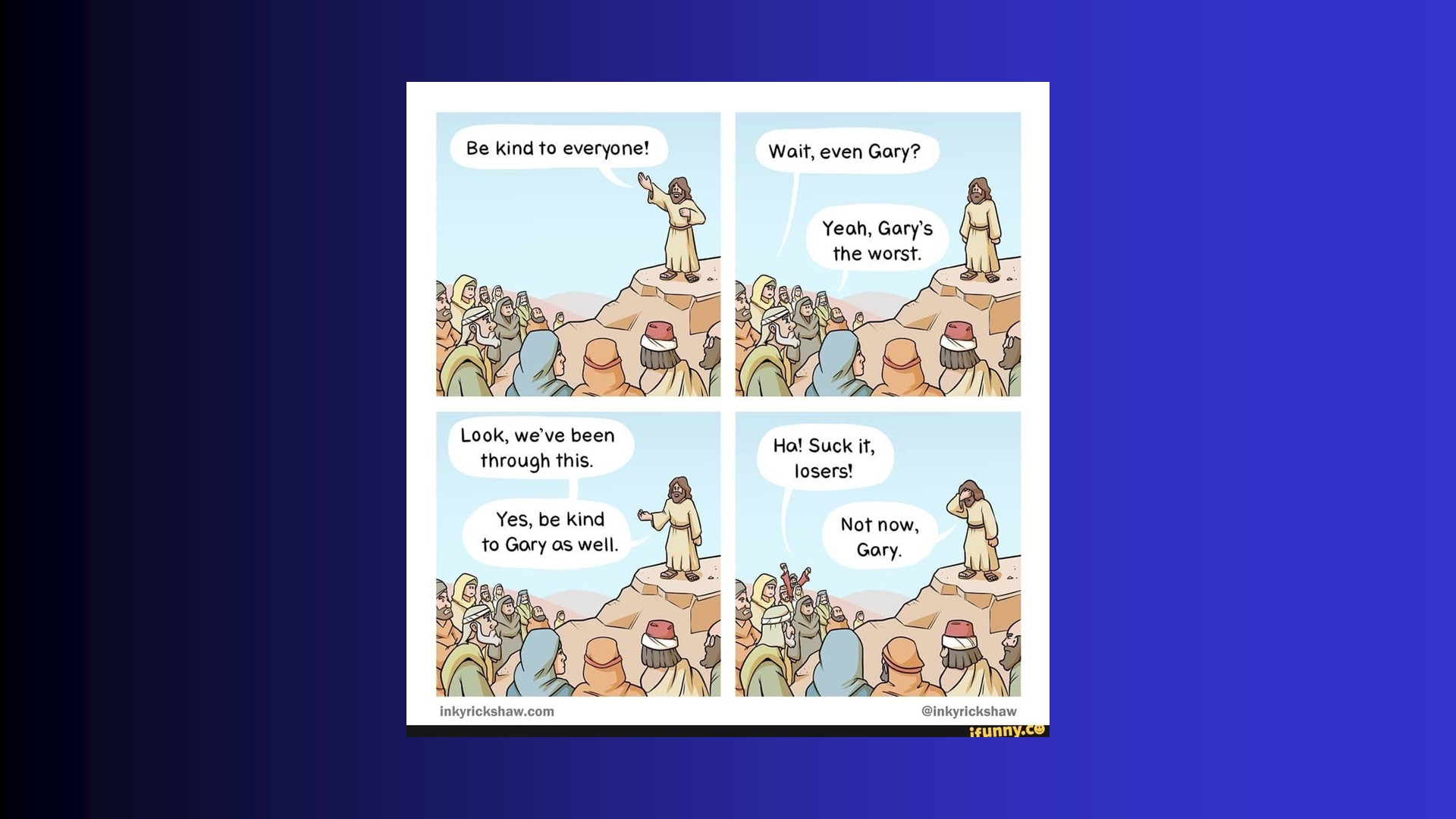
The meme reads:
Jesus: “Be kind to everyone.”
Crowd: “Wait, even Gary?”
Jesus: “Yes, be kind to Gary as well.”
Gary: “Ha, suck it, losers!”
Jesus: “Not now, Gary.”
Being a peacemaker isn’t easy. You will find yourself defending people who then immediately undermine you. You will face difficulties you did not anticipate. All of us are imperfect.
President Nelson taught:
“Anger never persuades. Hostility builds no one. Contention never leads to inspired solutions.”
2.
This defines one boundary of the path of the peacemaker: do not let anger drive what we say or how we say it.
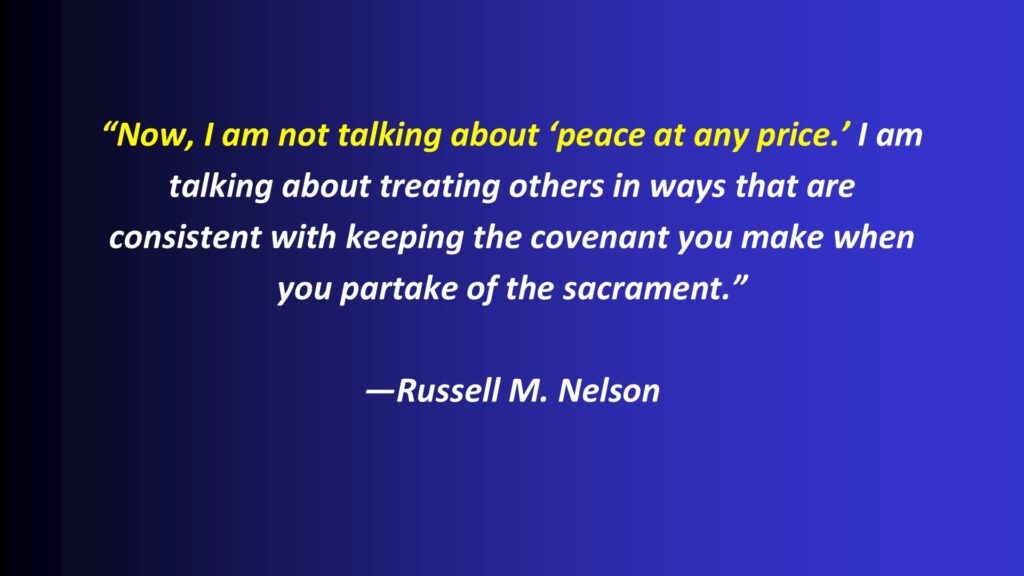
On the other end of the spectrum, President Nelson also said:
“Now I am not talking about peace at any price.”
Some misinterpreted this as if he were saying, “Never stand up for truth again—we’re done with that.” That is not what he meant. I invite you to reread the talk, reflect on how you interact with others in person and online, and recognize that President Nelson was not calling for peace at any price.

Guided by the Spirit on the Path of the Peacemaker
I want to share a story from my mission to show how the Spirit can guide us.
I served in South Manhattan, living in an apartment with four missionaries. One day after district meeting, we passed a rambunctious group of homeless men with large dogs—tattooed dogs, even! They heckled us with obscenities, including one man shouting, “I remember the day I accepted the Dark Lord as my personal savior!”
As we walked away, I thought about how we would pass them again and how uneasy that felt. Appeasement—just ignoring them—didn’t feel like peace.
On the way back, they mocked us again. But the Spirit prompted me to do something unexpected. I walked into a doughnut shop, bought a dozen doughnuts, handed them to the men, nodded, and walked away.
My 21-year-old self would never have thought to do that. My instinct was either to ignore them or embarrass them. But the Savior, through the Spirit, provided a third option.
As I walked away, I overheard one say: “Oh man, now I feel like an a-hole.” (He didn’t use that word.)
After that, they never heckled us again. I hope it changed their attitude toward missionaries.
This is the kind of unexpected response the Spirit can inspire when we are willing to listen.
The Boundaries of the Path of the Peacemaker
I think of the path of the peacemaker as bounded by two extremes:
- The Path of the Pushover
- The Path of the Punisher
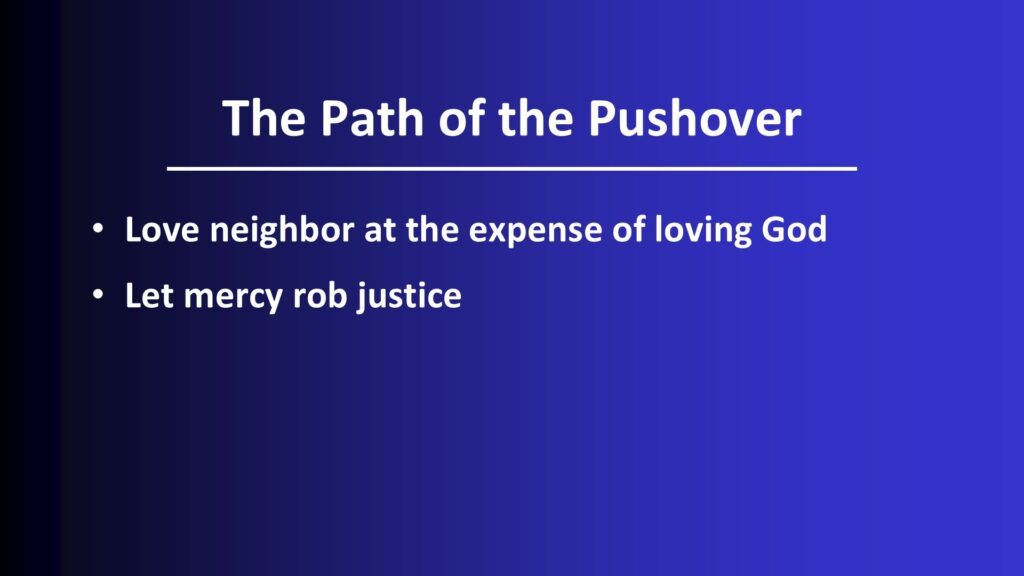
The Path of the Pushover
The path of the pushover is characterized by rolling over—letting truth be trampled without standing up for it.
This path suggests you can love your neighbor at the expense of loving God. But true love for neighbor must be guided by love of God. Otherwise, it breeds a “niceness culture” where truth is avoided out of fear of offending.
This mindset can excuse harmful behaviors by claiming people are only products of their environment. It denies agency and leaves people unchanged, without power to draw closer to God.
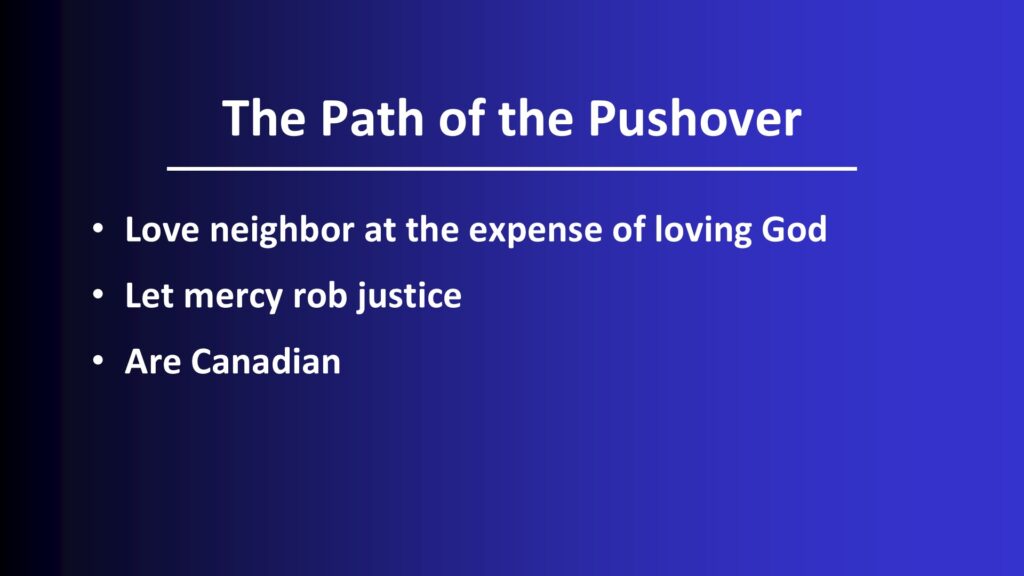
Canadians aren’t all pushovers—only most of us. That’s why half the country speaks French.
I say this jokingly, but it’s also my personal tendency. When I stray from the peacemaker’s path, I usually fall into being a pushover.
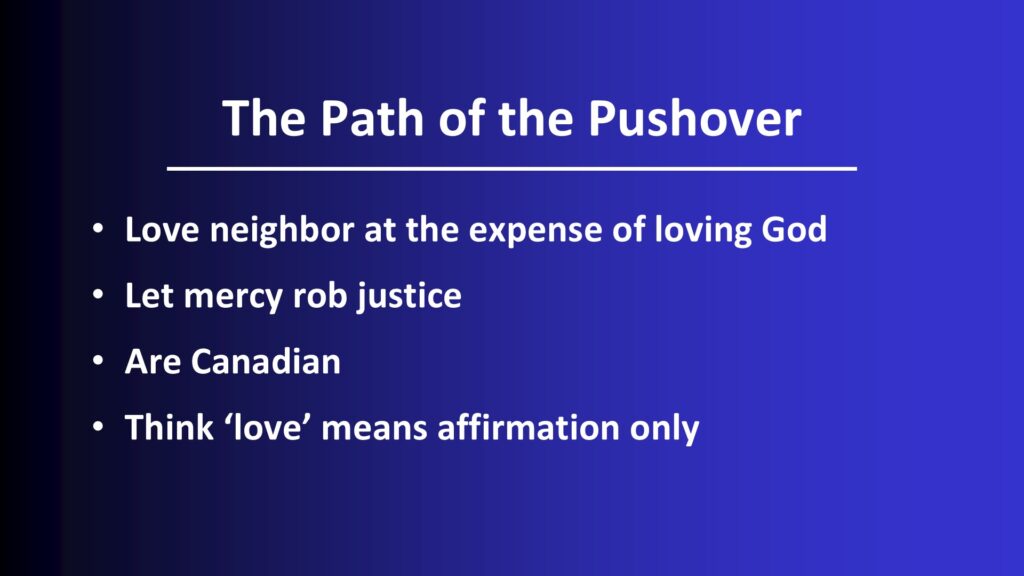
Those who equate love with affirmation only are like parents letting their children eat ice cream for every meal. True love teaches principles—even when correction is needed.
Our interactions with others should not be condescending, but enabling sin or error does not serve God or His children.
By raise of hands, how many of you find yourselves leaning toward the pushover path?

This was how I thought when I first got involved online—that everyone was just misunderstood. But evil ideas do exist, and we are called to stand against them.
The Path of the Punisher
On the other side lies the path of the punisher: loving God at the expense of loving your neighbor.
You might think this isn’t possible, but it is. Loving God helps us know how to love our neighbor best—but it still requires effort to act in love.
When we neglect this, we risk pushing people away.
The Path of the Punisher (What a Peacemaker Is Not)
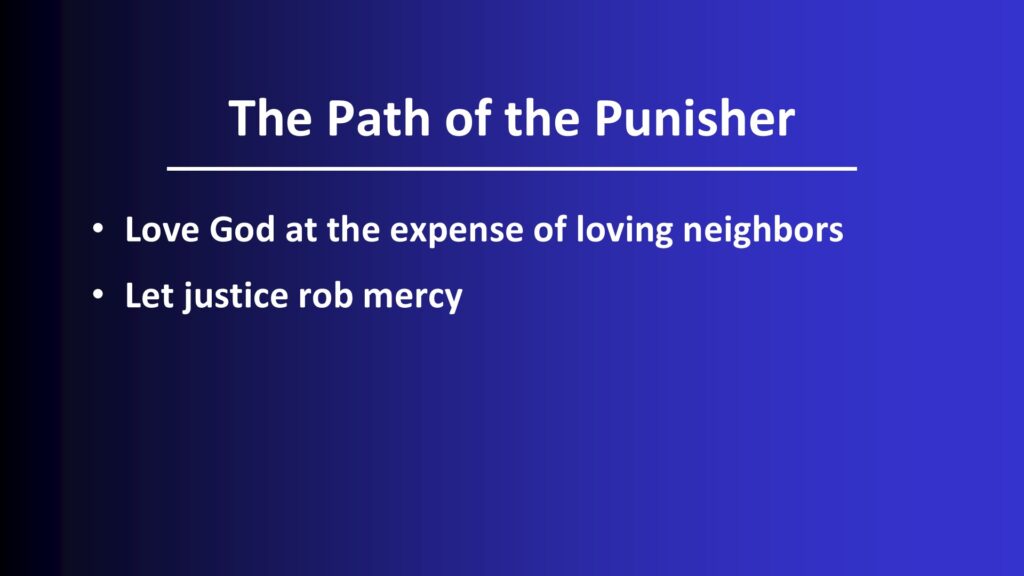
This can breed an unhealthy “purity culture” that is quick to condemn. It lets justice rob mercy—condemning people in ways that do not allow repentance, pushing them down in a way that might make the punisher feel good for a moment but does not serve God or the person you are speaking to.
Mercy Cannot Rob Justice
When we let justice rob mercy, we become too quick to condemn. In contrast to those on the path of the pushover—who think environment is all that matters—people on the punisher path may think environment does not matter at all, as if agency alone explains everything. That is not true. Recognizing how environment shapes people helps us understand them and have meaningful conversations.
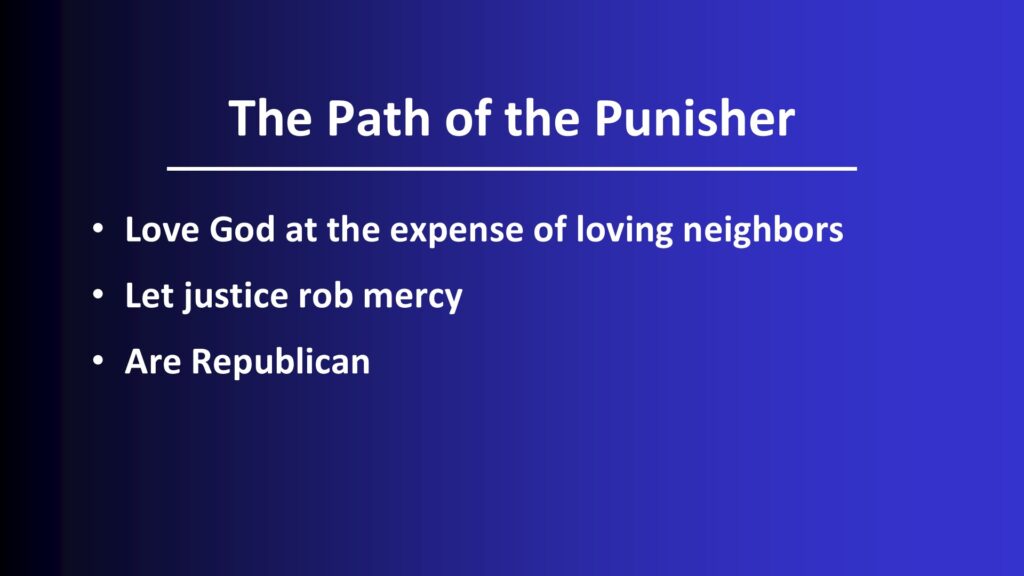
This is a test. Who got angry when they saw, “Oh, a Republican—my political party—these are the punishers”? No. That is not true. You find punishers and pushovers on both ends of the political spectrum. This is a joke to make you laugh.
Love as Correction
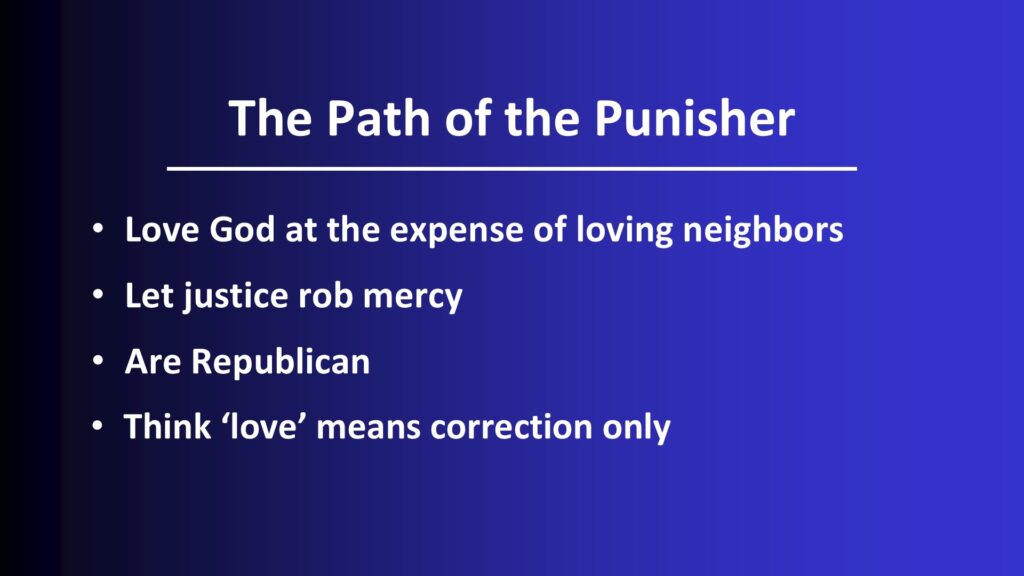
People on this path may think love means correction only. If 90% of your interactions with someone are correcting them and telling them how their behavior is wrong, you might be on the path of the punisher. Correcting error is not the same thing as testifying of truth. We can end up focusing more on the error than on the truth. Consider how to focus more on truth than on the errors near you.
How many might err on the side of the punisher? Raise hands. Cardon, where’s yours? Yeah.
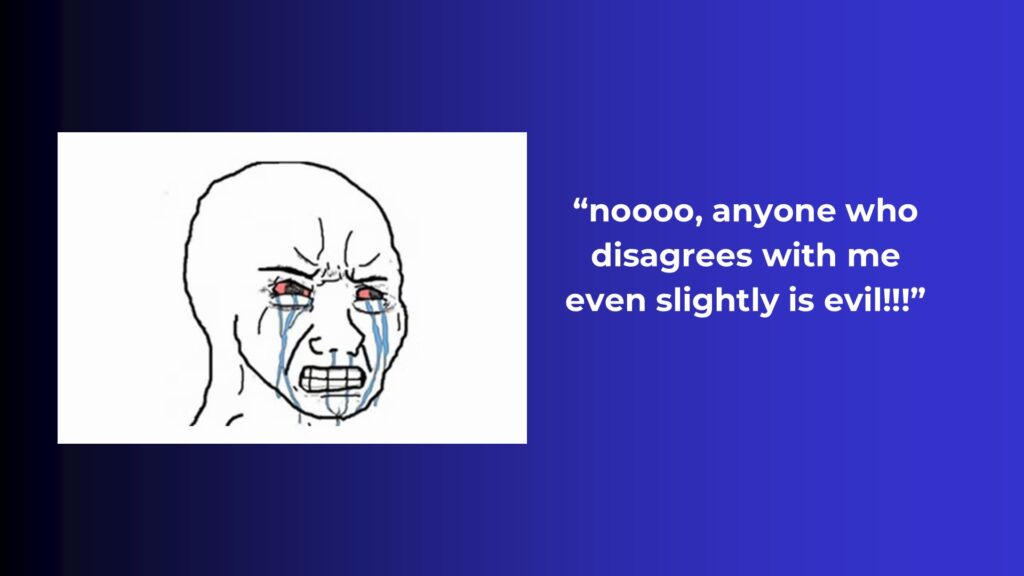
This is a real-life picture of someone on the path of the punisher: “Anyone who disagrees with me slightly is evil.” That’s the danger. We make enemies where we had none. We start expecting things of people we didn’t need to. “Sure, they agree Jesus Christ is our Savior. Sure, they agree we should serve and love our neighbor. But because we disagree on a tiny piece of what I think is central, it’s not enough.”
One Heart and One Mind
I don’t think that is the way to build the kingdom of God. We need to build on the things we agree on. When we think of who was successful in the scriptures, we see Enoch:
“The Lord called his people Zion, because they were of one heart and one mind.” 3
I do not think this means they never disagreed. Being “of one heart and one mind” suggests a shared purpose—to bring souls to Christ—and a shared goal—salvation and exaltation for the whole human family.
Consider that in your communication with others.
What Pushovers and Punishers Have in Common (A Peacemaker Insight)
Both paths misunderstand repentance. It’s easy to do—I did on my mission. At a zone conference, a visiting Seventy asked me, “Elder Witbeck, do you wake up every day excited to repent?”
“Uh… no.”
“Then I don’t think you completely understand how great a gift repentance is.”
That sunk into my soul. I had been viewing repentance the way Satan wants us to: as punishment, rather than a glorious opportunity to try again to be like the Savior.
- Pushovers think, “I’d never want to punish anyone by calling them to repentance.”
- Punishers think, “I’m excited to call everyone to repentance so I can punish them.”
Neither is right.
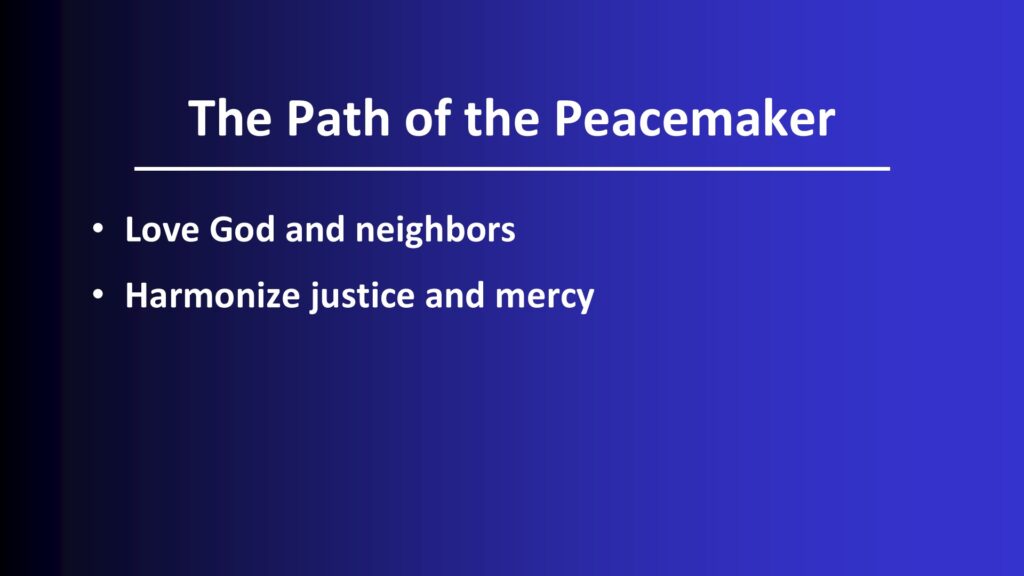
The Path of the Peacemaker (Loving God and Neighbor)
This is where we love God and love our neighbors. It is difficult but possible—and required. Love of God shows us how to love our neighbors; love of neighbor is what we must then do each day. This harmonizes justice and mercy.
Once, in Union Square, two Buddhist monks, two Latter-day Saint missionaries, and a professor of critical thinking began talking. The professor posed a paradox of justice and mercy using a Catholic and a Jewish man who each lived their law as best they could. If only one is “right,” where is mercy? If both are saved, where is justice?
I taught him the restored gospel—degrees of glory 4 and the plan of salvation. He was blown away. We sometimes forget: mercy cannot rob justice 5. When we are quick to condemn or quick to excuse, we unbalance both.
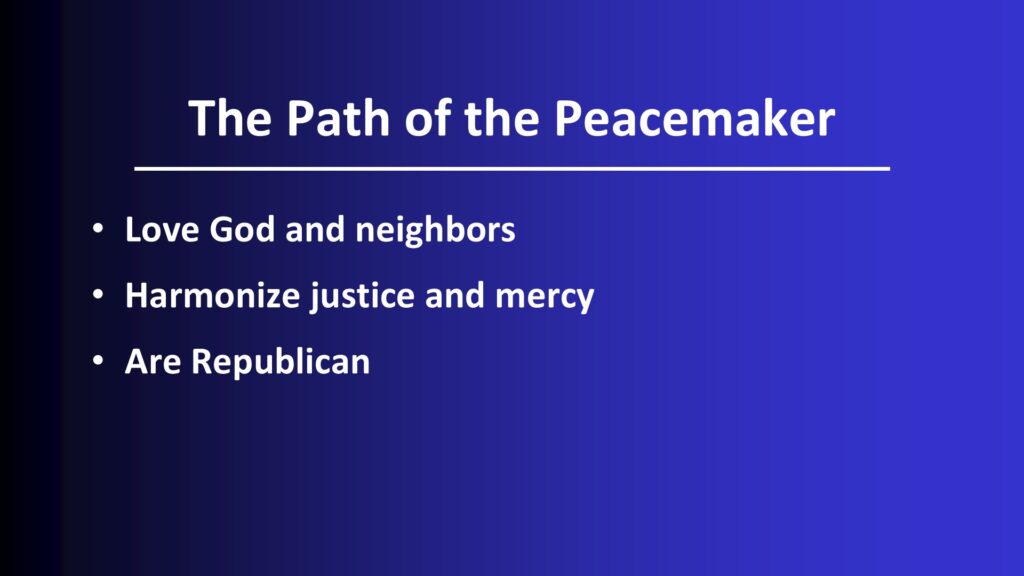
If you felt a surge of pride—“Yes, we are the true peacemakers”—repent. You can do it.
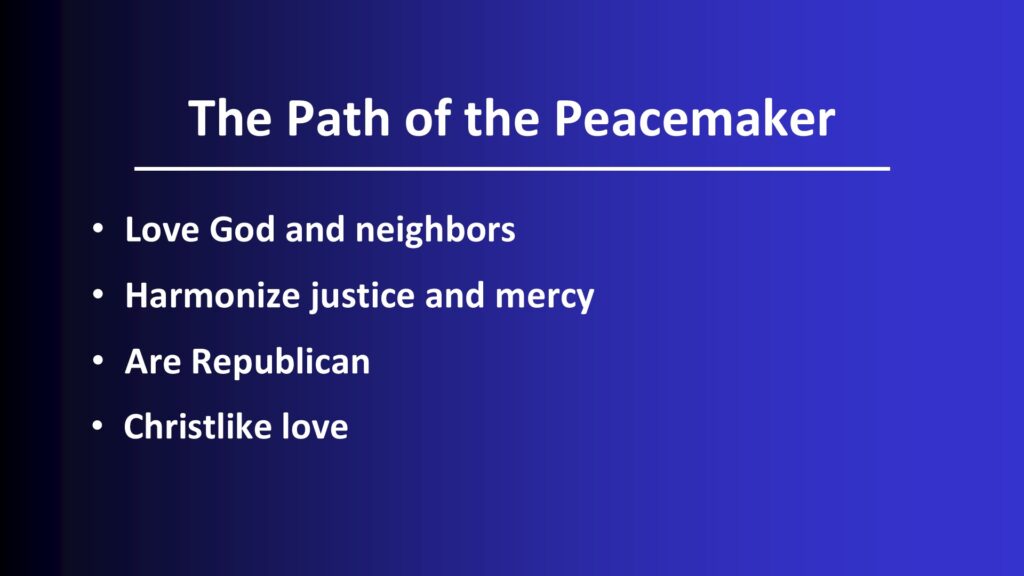
The path of the peacemaker is characterized by Christlike love that draws you to the Savior and helps you truly love one another.
Peacemaker Pattern in Scripture — “Neither Do I Condemn Thee… Go, and Sin No More”
Consider the woman taken in adultery. The Pharisees tried to trap Christ into the path of the punisher.
“He that is without sin among you, let him first cast a stone at her.” …
“Woman, where are those thine accusers? … Neither do I condemn thee: go, and sin no more.” 6
The alternate paths only hear half the sentence:
- Pushovers hear: “Neither do I condemn thee,” and stop.
- Punishers hear: “Go, and sin no more,” and forget mercy.
The peacemaker remembers both.
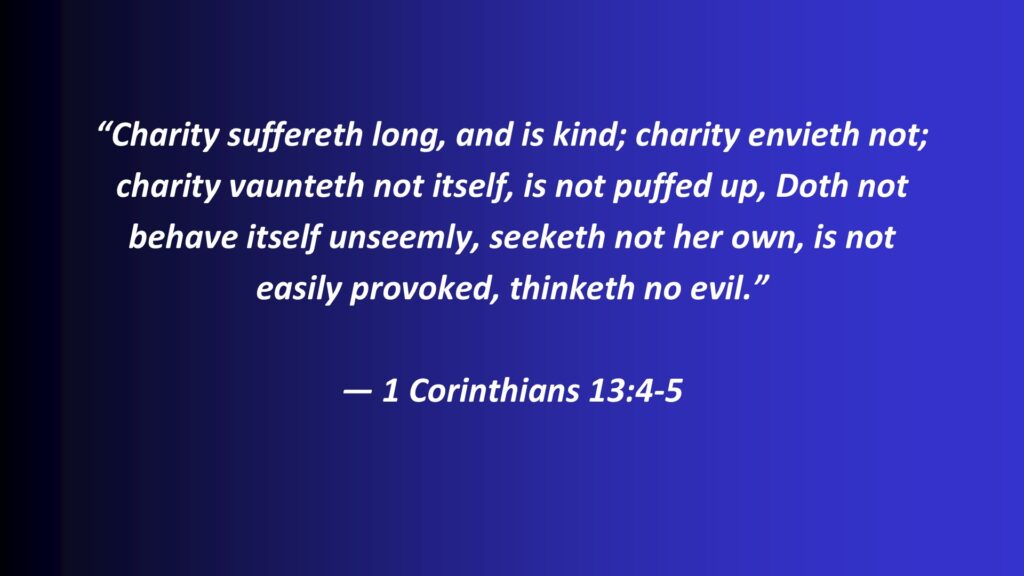
Peacemaker Charity
“Charity suffereth long, and is kind; charity envieth not; charity vaunteth not itself, is not puffed up, doth not behave itself unseemly, seeketh not her own, is not easily provoked, thinketh no evil.” 7
Online, this is harder. It is difficult not to be easily provoked by things that are genuinely wrong. But we are here to learn how to navigate that.

I love this image of the Savior. The covenant path brings joy when we live it correctly. Consider: Are my actions bringing true joy to people around me—not merely avoiding conflict? Peace is not merely the absence of conflict.
President Nelson’s Counsel for Peacemakers
“You covenant to always remember the Savior. In situations that are highly charged and filled with contention, I invite you to remember Jesus Christ. Pray to have the courage and wisdom to say or do what He would. As we follow the Prince of Peace, we will become His peacemakers.” 8
I promise that as you seek to be more like Jesus—reading His words, understanding who He is, and putting those things into who you are—God will magnify your efforts.

Quick Aside
This has nothing to do with my talk. I have no issue with this quote; it’s kind of nice. But Jesus never said that, and I needed to tell a room full of people. Thank you for indulging me.
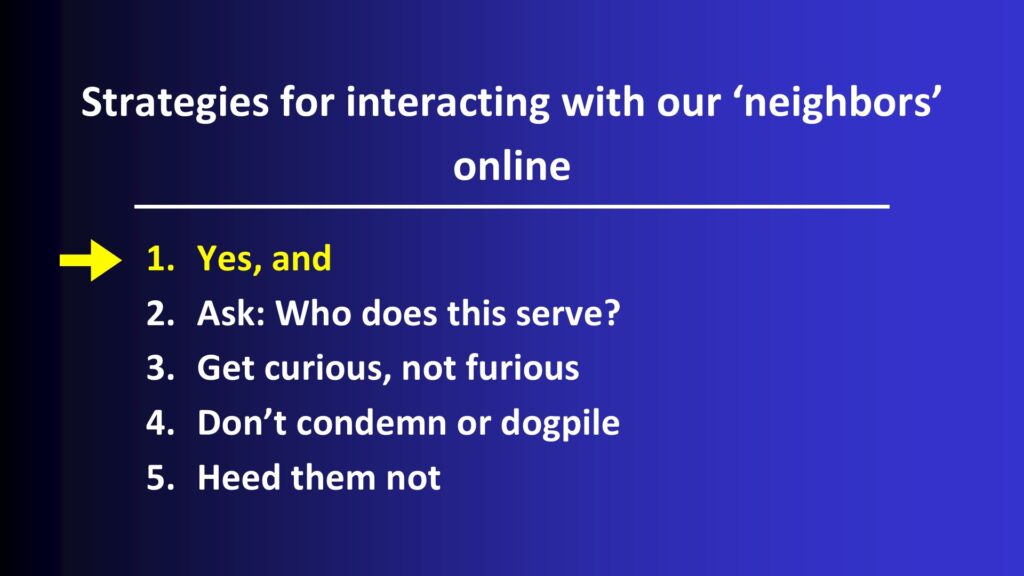
Peacemaker Strategies
I promised we would talk about strategies to interact with our neighbors online. Here they are. They’re all right there. We will talk about each one individually, but you can take a picture of the slide if you want to.
“Yes, And” — A Scriptural Peacemaker Principle
We’re starting off with a principle of comedy that is actually in the scriptures. It’s a principle called “Yes, and.” This is core to improv—at least good improv. Early improvisers break this rule, and it looks like this:
Someone starts a scene, “Welcome to our restaurant, may I take your order?” and their scene partner says, “No, this is a farm, and I’m your boss, and I have a gun.” That scene goes nowhere. It is frustrating to have a scene partner who does not play by “Yes, and.”

It is also scriptural. Check Alma 18:27–28. Ammon is speaking with King Lamoni, teaching him the gospel. He asks, “Believest thou there is a God?” King Lamoni says he doesn’t know what that means. Ammon asks, “Believest thou that there is a Great Spirit?” He says, “Yea.” And Ammon says, “This is God.”
Notice what Ammon does. He does not divert to correct how the concept of the “Great Spirit” differs from God. Instead, he focuses on truth and builds on the shared belief they have. He builds on what Lamoni believes and lets that be the foundation.
I invite you to do the same in your online interactions. Everyone has truth in their beliefs—that’s why they fight for them. It’s the error between those truths that gets us caught up and fighting in unproductive ways. When we focus on truth and build from there, we build bridges and avoid contention.
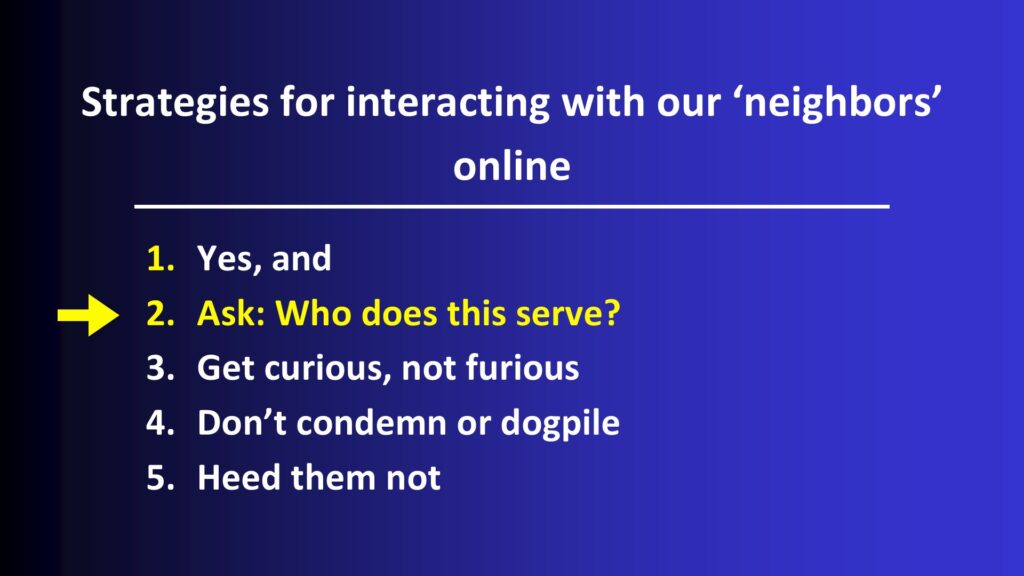
Peacemaker Discernment — “Who Does This Serve?”
Ask: Who does this serve? Some options are good; others are not.
- If this is serving God, you are in the right.
- If it is serving your own pride, you are not.
- If you are actually serving the other person, you are serving God.
- But you are not serving them if you excuse behavior in ways that do not help them grow, or if you condemn their behavior in ways that halt their growth.
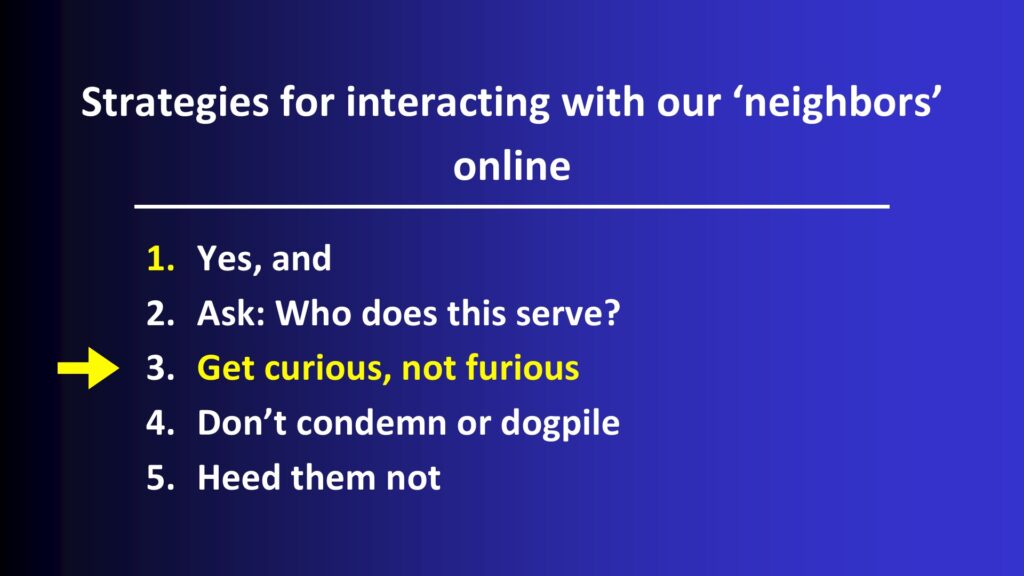
Get Curious, Not Furious
My dad says: “Get curious, not furious.” It is easy to get furious online because some people say ridiculous things. Instead, ask sincere questions. Try to understand why they believe what they believe.
Sometimes those questions lead them to understand their beliefs are poorly founded. You will never get there by telling them their beliefs are poorly founded. They can discover it for themselves when you patiently ask questions.
Do Not Condemn or Dogpile
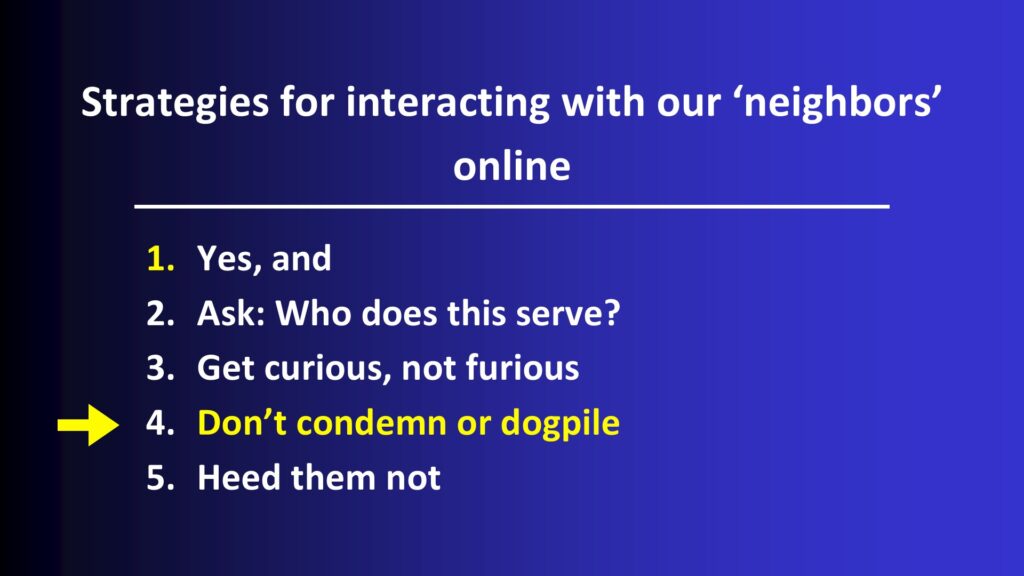
Do not condemn or dogpile. It is tempting to tell people, “This guy’s bad—everyone pile on.” That will not build that person. It might feel good in the moment, but consider if it feels good to God.
“Inasmuch as ye have done it unto one of the least of these my brethren, ye have done it unto me.” 9
This does not only mean the poor or the less fortunate. It also applies to our enemies. When Christ tells us to love our enemies, He means it 10. The way we treat our enemies can reflect how we would treat Christ.
Peacemaker Option — “Heed Them Not”
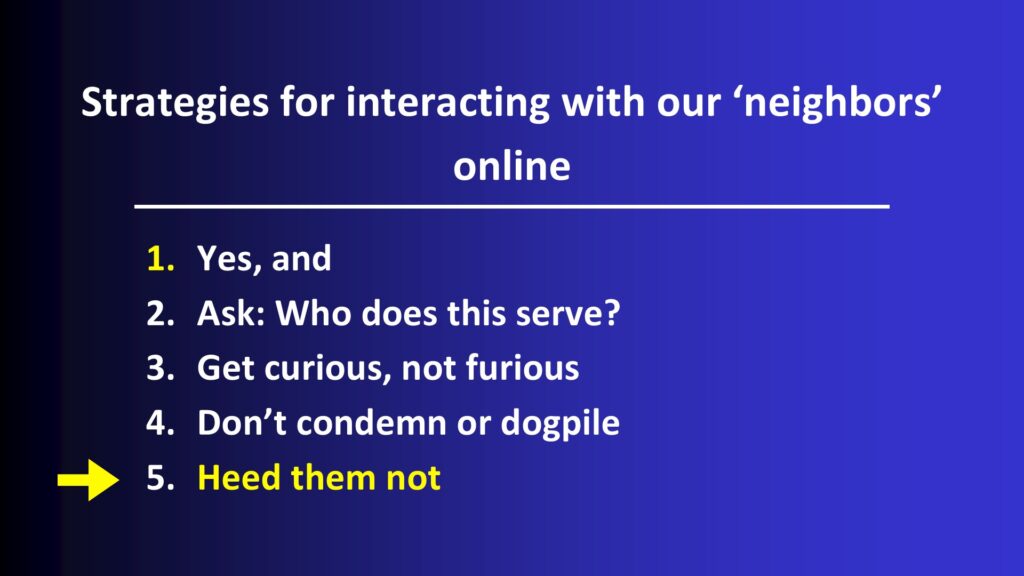
A valid strategy is to heed them not. I often feel like I cannot ignore anyone and must engage with everybody to give them an opportunity to repent. But some people have made their decision, and we are not necessarily called to them.
We talked about the parable of the lost sheep: sometimes we are called to the ninety and nine; sometimes to the one 11. There are also ravening wolves seeking to devour 12. Those are whom you need not heed.
Lehi also “heeded them not” in his vision 13. There are situations where Christ showed it is appropriate to heed people not.

Bonus Peacemaker Strategy — “Are You Open to the Idea…?”
Keep this question in your back pocket: “Are you open to the idea…?”
You might be discussing, “Did Hyrum Smith go to Dartmouth College?” As insane as it feels to entertain that, ask, “Are you open to the idea that Joseph Smith really is a prophet?” Depending on the conversation: “Are you open to the idea we really have prophets today?” “Are you open to the idea the Book of Mormon is authentic ancient scripture?”
People may not be open to those ideas. If you learn that early, you can find common ground and avoid fighting over places where they are closed.
Bonus Peacemaker Strategy — Be Disarming (Like Ammon)
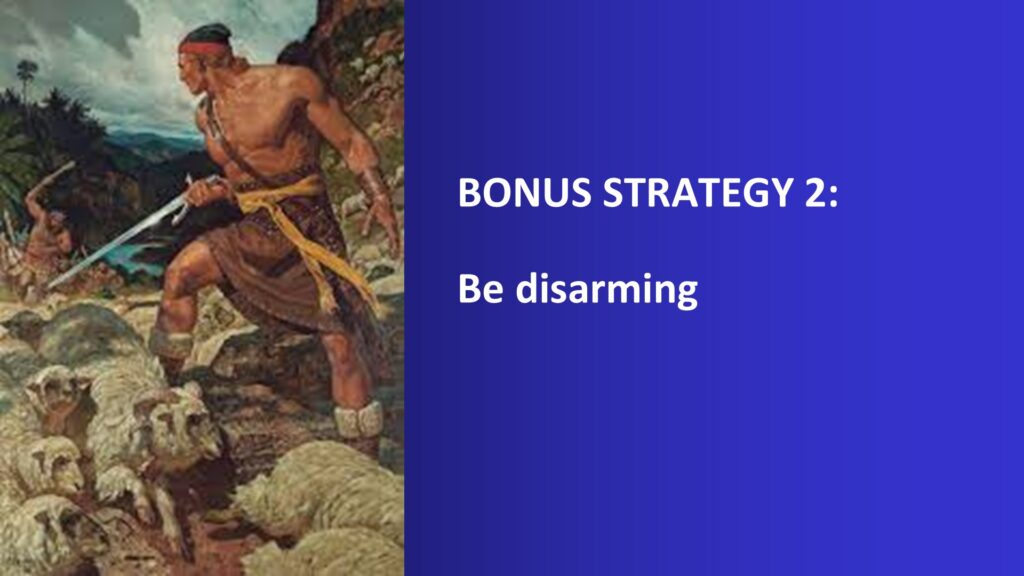
Be disarming—not physically, or you’re going to jail—but by understanding other people’s arguments. When you sufficiently understand the weapons of those who oppose you, you can more easily disarm them.
Ammon shows unmatched skill: he disarms opponents—whether that means removing their arms or just their weapons 14. Develop skills for interpersonal interactions that disarm without demeaning.
Use Comedy Righteously
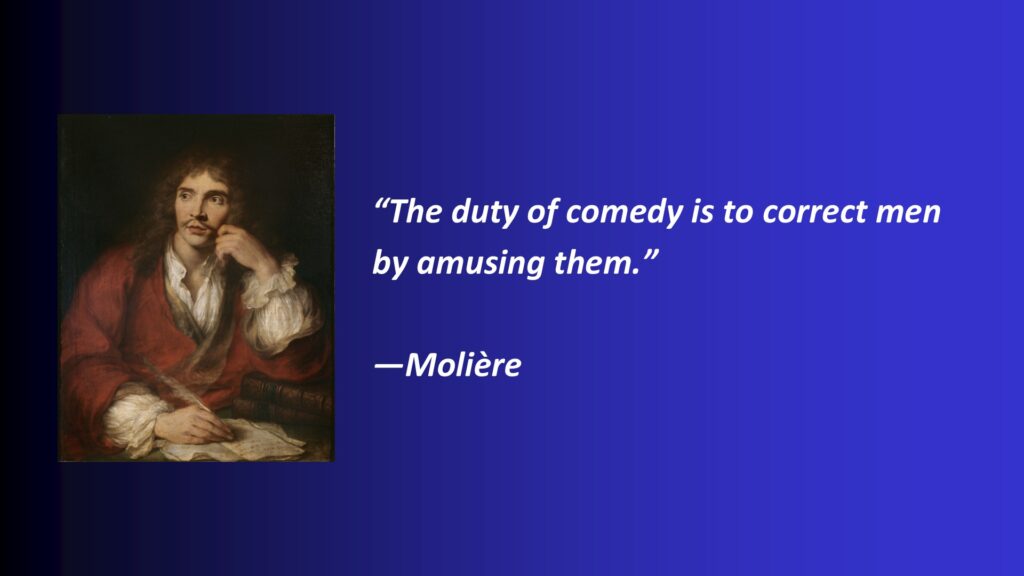
“The duty of comedy is to correct men by amusing them.”
We have had comedians who, instead of poking fun at truths to help people see more truth, just make fun of those who disagree. That does not lead anywhere and becomes siloed. Comedy is close to my heart, and I invite you to bring levity in constructive ways.

Contention Is of the Devil (Not a Peacemaker’s Tool)
“Contention serves the devil—and if you disagree, I will fight you.”

This scripture—“dunk on thy enemies, clown on those who curse you, mold15 at the haters, and go feral on them which despitefully use you and persecute you”—was never said. This is not what Jesus told us to do.
“He that hath the spirit of contention is not of me… but is of the devil.”
16
I have done my share of “malding.” We need to repent as a group and come closer to God.
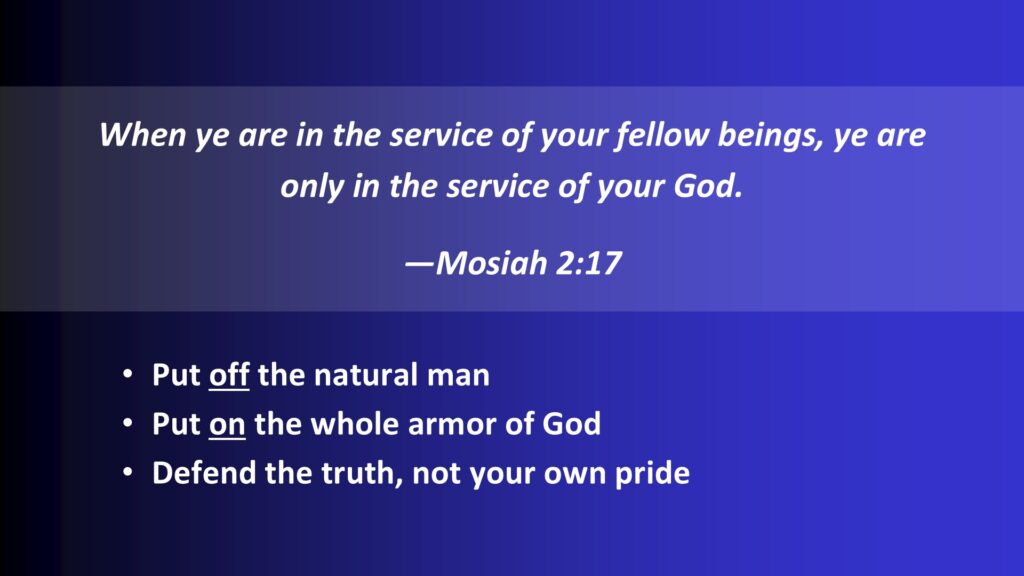
Peacemaker Service and the Armor of God
“When ye are in the service of your fellow beings ye are only in the service of your God.” 17
It is required that we put off the natural man—natural defensiveness, anger, and pride—and put on the whole armor of God 18.
Do not wield the sword of revenge or the sword of pride. Wield the sword of the Spirit. Defend truth and allow the Spirit to give you a third option.
Back to my missionary experience: I could have been a pushover and ignored the hecklers, and it never would have stopped. I could have gotten angry and yelled and been eaten by their dog. Instead, the Savior spoke to my heart and showed me the path of the peacemaker—a third option I would not have considered. This is what happens when we defend truth and not our pride.
President Nelson’s Invitation — Become Instruments for Peace
“Let us plead with our Heavenly Father to fill our hearts with greater charity, especially for those who are difficult to love. For charity is a gift from our Heavenly Father for true followers of Jesus Christ. The Savior is the Prince of Peace, and we are to be His instruments for peace.”
(Peacemakers Needed, April 2023 — https://www.churchofjesuschrist.org/study/general-conference/2023/04/42nelson)
In the same talk, President Nelson invites us to develop virtue. You can see how the two great commandments—love God and love your neighbor—are housed in that counsel: virtue in love of God and charity in loving your neighbor.
My invitation in closing is to let us be instruments of peace by approaching difficult conversations as opportunities to serve God. Will you do this? Yeah. Awesome.

Oh, Canada as the Promised Land. Sorry—this was supposed to be my talk for the Firm Foundation! [laugh] Thank you so much.
Audience Q&A with Brad Witbeck
Question 1
“It is said that diplomacy is the ability to tell someone to go to hell in such a way they actually look forward to the trip. Your response?”
Brad Witbeck:
Absolutely. I think there is a way to do that. If people can see that we care about them and that we actually want them to be happy in the end, then when we say their actions are taking them down that path, they will understand where we’re coming from—and we can build.
Question 2
“Is agreeableness DNA-encoded? If genes control 50% of the characteristic, how does that color this issue?”
Brad Witbeck:
This hearkens back to what I said about environment and agency. There’s a temptation to say our environment alone is responsible for our actions. That is an antichrist idea, because our agency matters. But it’s also antichrist to say that agency is the only factor. Christ recognizes the difficult situations people go through. It must be balanced.
Question 3
“What if we disagree with a topic discussed by one of the hosts on Ward Radio?”
Brad Witbeck:
Then just wait for the next host on Ward Radio to disagree with them! That happens a lot.
Also, send us questions—things you want us to talk about. We want to hear different perspectives and show how they bring people closer to God.
One reason we started Ward Radio was to show diverging viewpoints. Critics said members are “brainwashed” and believe the exact same things. Cardon, Quaku, and I don’t agree on everything. But we do all agree on the Restoration and on Christ.
We wanted to prove critics wrong simply by having disagreements in love. We still hang out, we’re still good friends, even when we disagree. That’s something we should all strive for.
Comment from Audience
“A 1960s Southern comedian, Brother Dave Gardner, said, ‘Love your enemies and drive them nuts.’”
Brad Witbeck:
I guarantee that if you are living the path of the peacemaker, you will drive your enemies nuts. Think back to the homeless man I mentioned earlier. His reaction wasn’t pleasant, but it was good. It drove him a little bit nuts—but in a way that was beneficial for him and for us.
Scott Gordon (closing remarks):
If you want to see Brad again, you can watch him in the film Escape from Germany, where he did an awesome job playing one of the characters. His book The Skystone Chronicles is also for sale in our bookstore under the pen name “Penn.”
Brad Witbeck:
Yes, our first book is Dragon Thief. My wife Riley and I will sign it for you if you get a copy—maybe during the break right after the next speaker.
