Ron Rhodes | 2026 FAIR Conference
Understanding the Faith Crisis Industry
Thank you, Jan. It’s great to be with you today to address a topic that I think is important to every member of the church, that is, understanding the faith crisis industry and how doubt is monetized.
Imagine for a moment a faithful member of the church scrolling through YouTube one evening. He watches one video disparaging Joseph Smith, then another, then another. Three hours later, he’s convinced that there are things the church never told him. Six months later, he stopped attending church altogether.
Now, most people would assume that this is primarily a story about church history or doctrine. But today I’d like to suggest it’s really a story about economics and financial incentives. 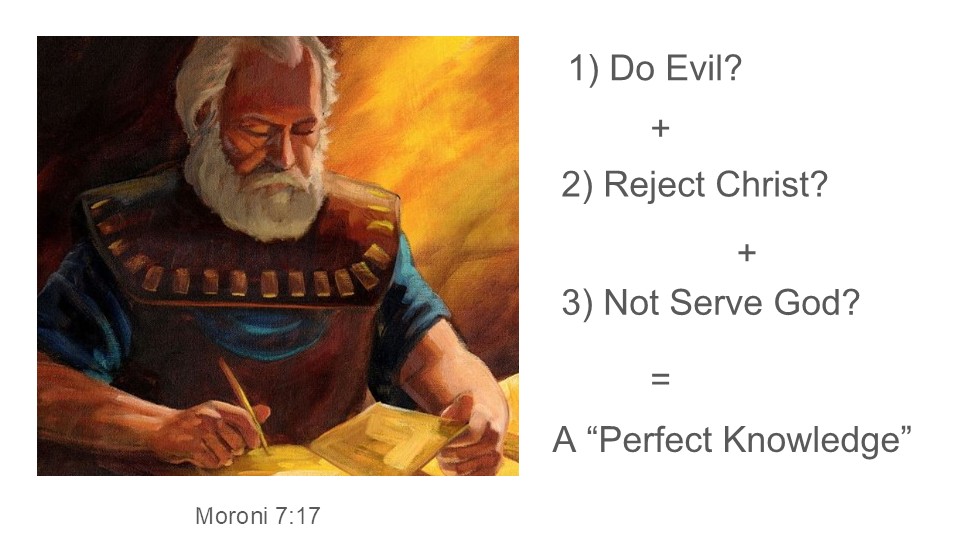
Applying Mormon’s Test
Before jumping in, though, the prophet Mormon taught that if something or someone tries to persuade us to do evil or to reject Jesus Christ, or turn away from serving God, then we can know with a perfect knowledge that it is of the devil.
That’s a pretty straightforward test. So do organizations that are critical of our faith try to persuade us to do evil, to reject Christ, or stop serving God? Well, today we’re going to examine exactly that.
We’ll look at key facts using publicly available data: not rumors, not speculation, but verifiable financial and social media metrics for some of the more prominent critical organizations.
I won’t be disclosing the names of people or entities. This isn’t about ad hominem attacks. But if we are going to apply Mormon’s criteria, then we need to know something about these critical organizations and what they do. We’ll circle back at the end and see how they stack up. 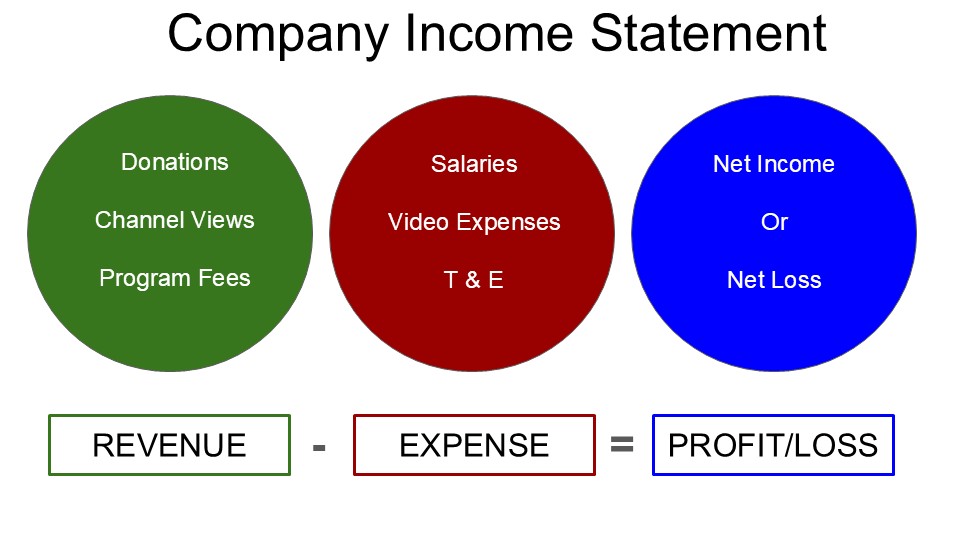
The Faith Crisis Industry as a Business Model
So let’s jump in. The faith crisis industry is, in fact, just that. It’s an industry. It includes observable business models with verifiable revenues, expenses, and key metrics that drive the success or failure of the company. 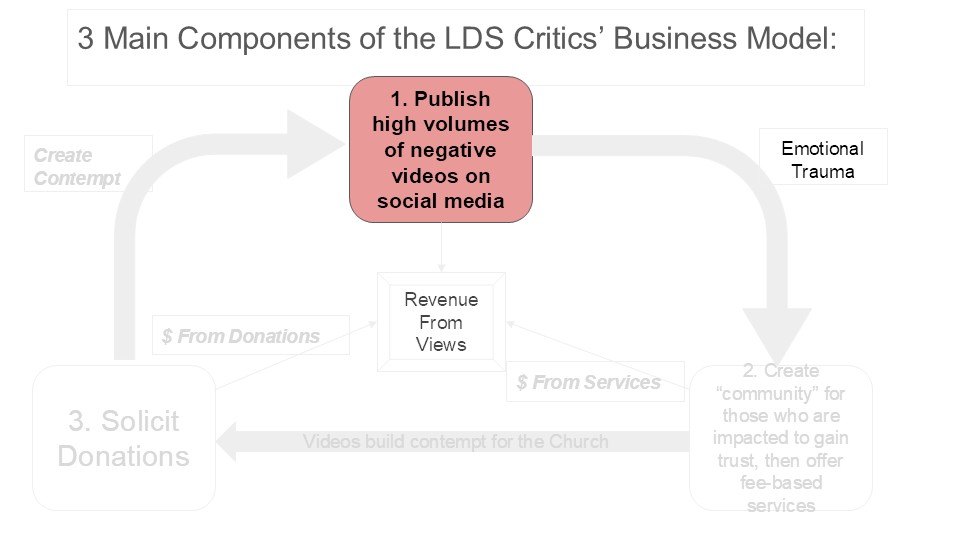
But when you step back and look at how critical organizations conduct business, a pattern emerges. The most financially successful critical organizations tend to follow a three-part business model.
Part One: Publishing High Volumes of Negative Content
Part one is to publish high volumes of negative content toward the church. 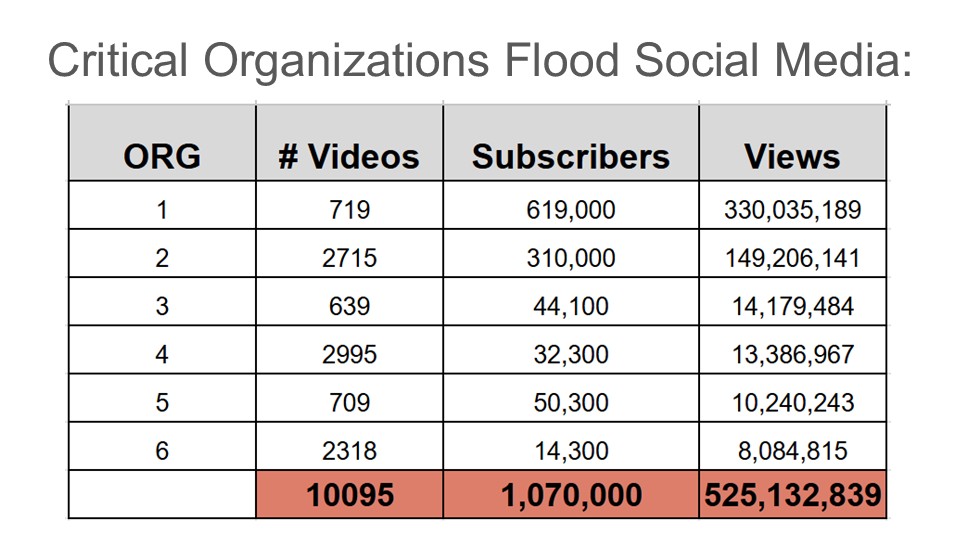
For example, just the top six most prominent critical organizations have published a combined total of over 10,000 videos on YouTube alone, generating more than 525 million views. That’s more than the entire population of the United States. Those are staggering numbers.
But remember, that’s just YouTube. That doesn’t include Instagram, Facebook, TikTok and others. Social media provides an ideal distribution channel for critical organizations because their message spreads exponentially through algorithms.
If you watch one video, then the platform algorithm serves you ten more. Add to that a strong word-of-mouth element through family and friends, and you don’t even have to be on social media to be impacted by critics’ information.
So the saturation effect of these negative videos is really powerful. 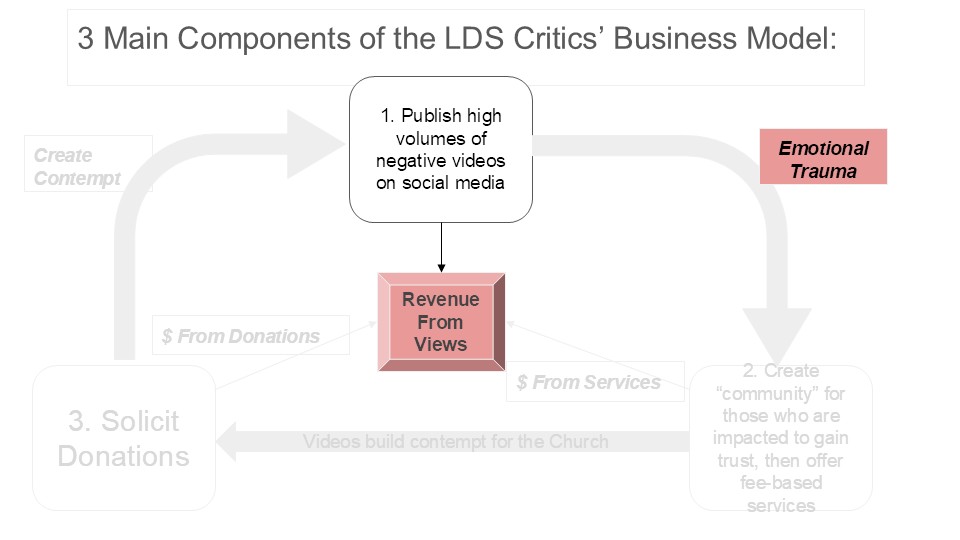
Part Two: Creating Community Around a Faith Crisis
Now, like most faithful sites, critical channels earn revenue from YouTube for each view they receive, and most people assume this is where they get the bulk of their revenue.
But revenue from views is minor compared to the future payoff in donations. So the short-term goal of their videos is simply to produce shock, betrayal, confusion, even anger. 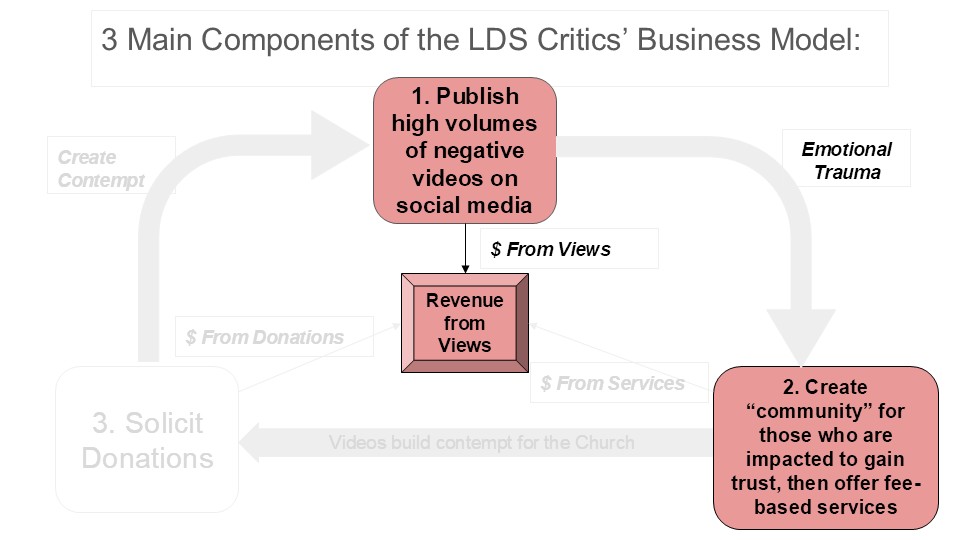
And that emotional trauma is a key element because it facilitates component number two, that is, creating community for those impacted by their videos.
A faith crisis is deeply painful, so critical organizations lean into that moment with a powerful message: We understand you’re not alone, and we’ve been there. 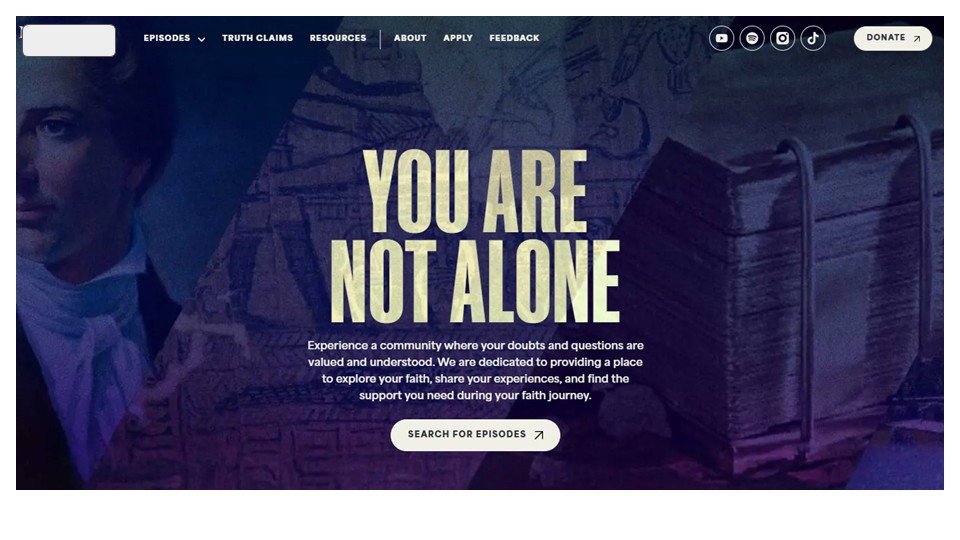
In fact, this slide is the homepage of the number one critical organization’s website. Note that their message is really clear. You’re not alone, and you have a built-in community of people you can trust who understand your feelings.
That sense of belonging is real and it’s meaningful. Community is powerful. And in many cases, members who have been impacted by critics’ content sincerely feel helped by these organizations. 
Financial Incentives and Faith Crisis Services
Now, there’s nothing wrong with providing community. But when critics use misinformation (which is well documented on the FAIR website) to help fuel a faith crisis, then charge for services to help deal with the trauma of that crisis, it raises legitimate questions about incentives.
It’s like a doctor intentionally infecting a patient with a disease, so that they can then charge that patient for treatment.
This slide demonstrates just a few examples of the top critic offering coaching services on their website for significant fees to help people navigate the trauma of a faith crisis, which, ironically, their own videos helped cause.
Now, obviously, fees from these services also result in revenue, but once again, that revenue pales in comparison to the revenue generated by the third component: the solicitation of donations. 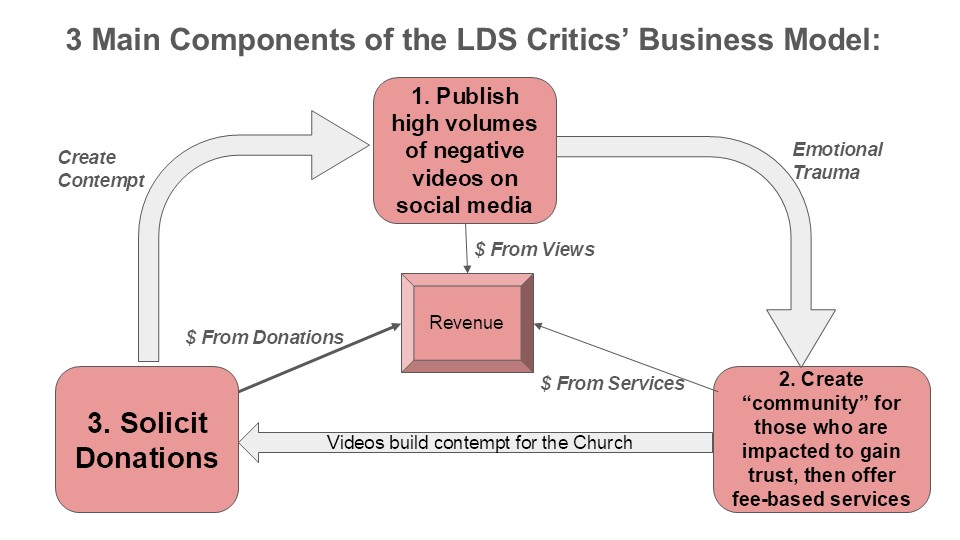
Part Three: Donations as the Financial Engine
Donations are the financial engine for LDS critical organizations. For the top critic, donations accounted for 74% of their overall revenue, and the second was 87%.
Donations are clearly their primary source of revenue, and although there may be some exceptions, it’s reasonable to conclude that many donors are individuals who come to believe they were betrayed by the church (which is a central theme in many critics’ videos) and then who donate after finding community in those same organizations.
So the critic’s business model is very simple:
- Videos produce trauma.
- Trauma becomes community, and
- Community becomes revenue.
And that is how doubt is monetized. 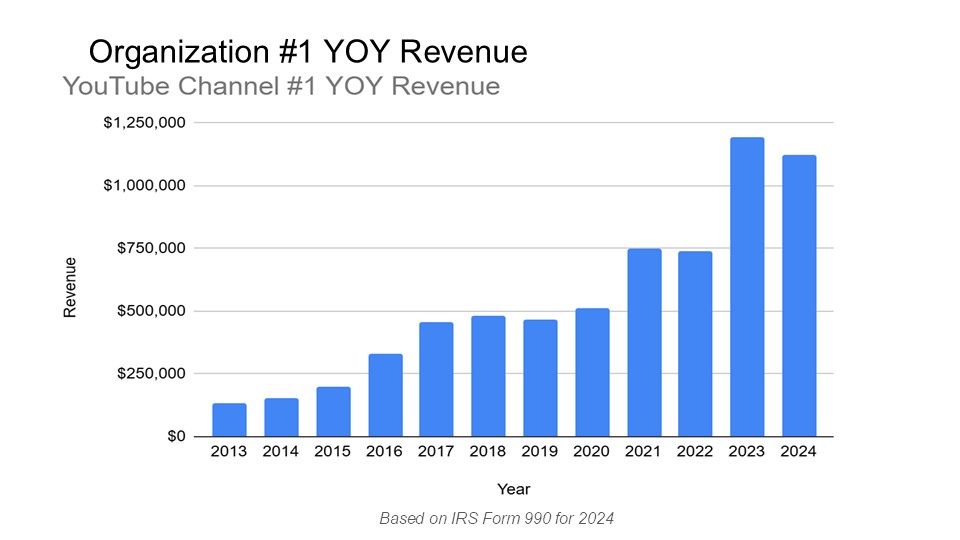
How Much Money Does the Faith Crisis Industry Generate?
So how much money do they make?
Well, the largest organization grew from roughly $150,000 in revenue in 2013 to a peak of $1.2 million in 2023, then back to 1.1 million in 2024.
Now, here’s the uncomfortable reality regarding revenue.
Since critics’ revenue depends primarily on donations from people experiencing a faith crisis, in order to continue making money, they have to expand the population of members in a faith crisis.
Hence, they produce tens of thousands of videos specifically designed to do exactly that.
Very literally, brothers and sisters, the more faith they shake, the more money they make.
It’s a simple cause-and-effect model. 
Examining IRS Financial Filings
Now, I promised there would be no speculation. The revenue we just discussed is based on actual data from the IRS.
What you see here are the IRS filings for the top critical nonprofit organization.
So you can see on line 12, their total revenue in 2024 was $1.1 million. Line eight shows that 828,000 of that, or 74%, came from contributions.
The remaining 289,000 on line nine came from program services, which were the fee-based services we talked about earlier, and it includes their revenue from YouTube as well. 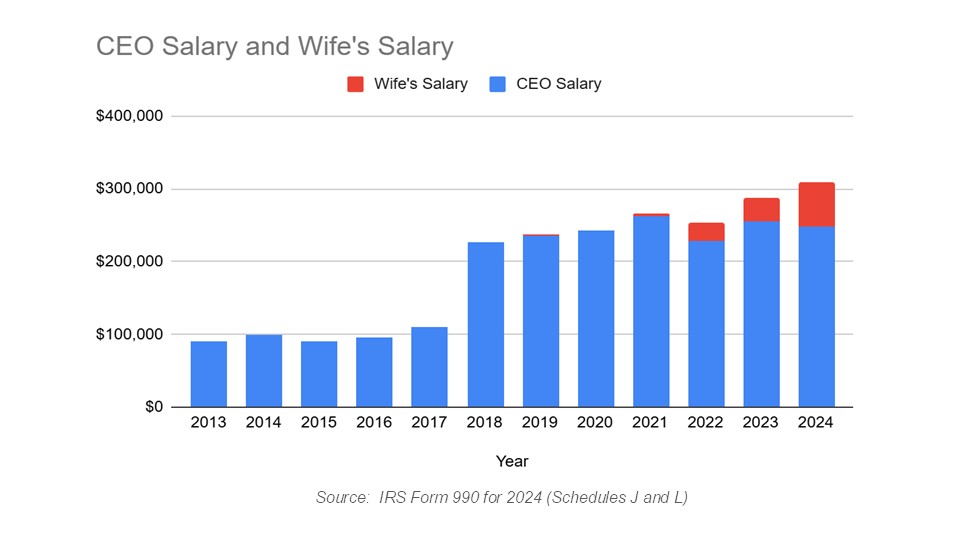
Financial Compensation in Critical Nonprofit Organizations
Now, this is a good time to point out that the term nonprofit is something of a misnomer. While a nonprofit organization is not set up to make money for its shareholders, the CEO can make as much money as their board of directors allows.
This slide demonstrates that in the case of this largest organization, the CEO and his wife made over $308,000 in 2024, according to the IRS.
I included the wife’s salary to demonstrate a nuance this organization used in 2024. If you recall from a revenue perspective, this company actually did slightly worse in 2024, and the CEO salary alone, which is in blue, reflects that drop, which is appropriate.
But by doubling the wife’s salary that same year, their household revenue continued to climb by over $21,000, even though the company itself did worse. 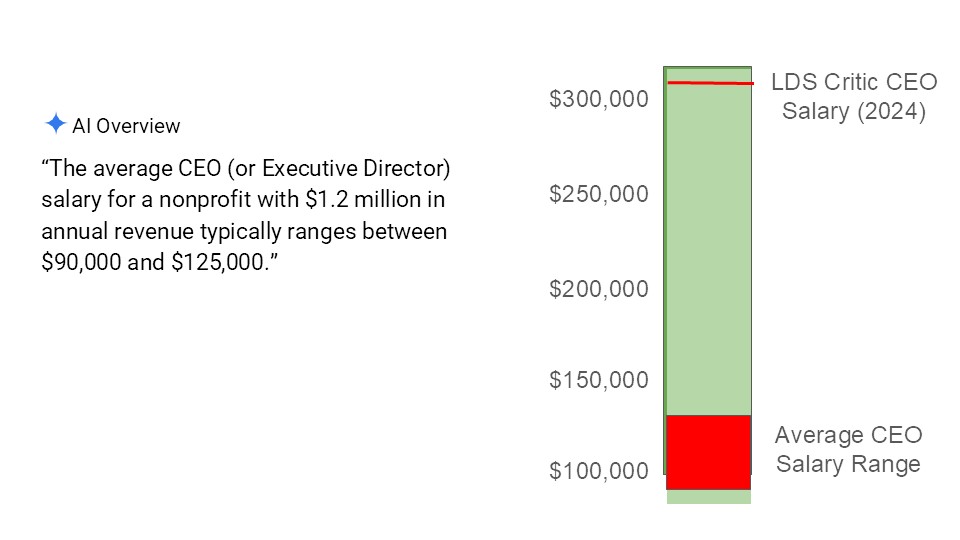
Comparing Nonprofit CEO Compensation
By contrast, I don’t blame them. By contrast, the average CEO salary for this size nonprofit entity across the nation ranges anywhere from 90 to $125,000.
Also, by contrast, the CEOs for both FAIR and the Interpreter Foundation have a salary of exactly zero, according to the IRS. They didn’t ask me to say that. I looked it up on their IRS filings.
They do it because they want to help people. So if you see them walking around today, be sure to thank them for everything they do.
And yes, there are faithful nonprofit organizations where the CEO does make money. But these two directly address critics’ claims. 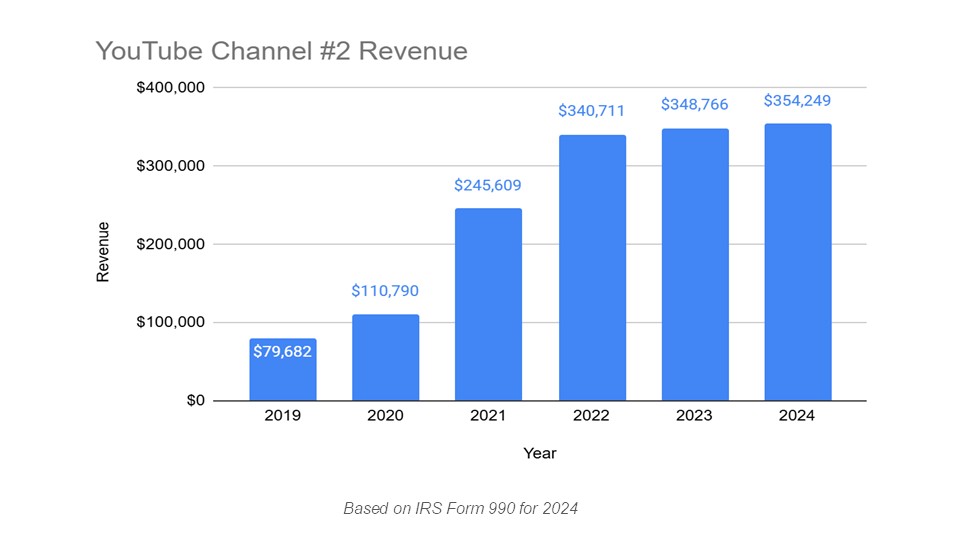
Revenue and Salaries at a Second Critical Organization
The second most wealthy critical organization is a distant second in terms of overall revenue. But they’ve also been in business less time by about 14 years.
They started in 2019 at 80,000. They grew quickly but peaked at roughly 350,000 in 2024, with around 87% of that in donations.
The CEO salary here has been at $100,000 since 2022, so not nearly as financially rewarding as the first business. But still, he makes $100,000 a year making videos that disparage the church.
Financial Incentives and the Question of Trust
Now, to be clear, making money doesn’t automatically mean they are lying about the church.
But the reality is salaries are directly connected to the organization’s revenue, and revenue is directly tied to how many people they can persuade to enter a faith crisis and ultimately donate.
So the question each member of the church must answer for themselves is this:
Since prominent LDS critics personally profit from members experiencing a faith crisis, can you and I really trust that their videos present accurate and unbiased information about our church?
I’ll let you draw your own conclusions. 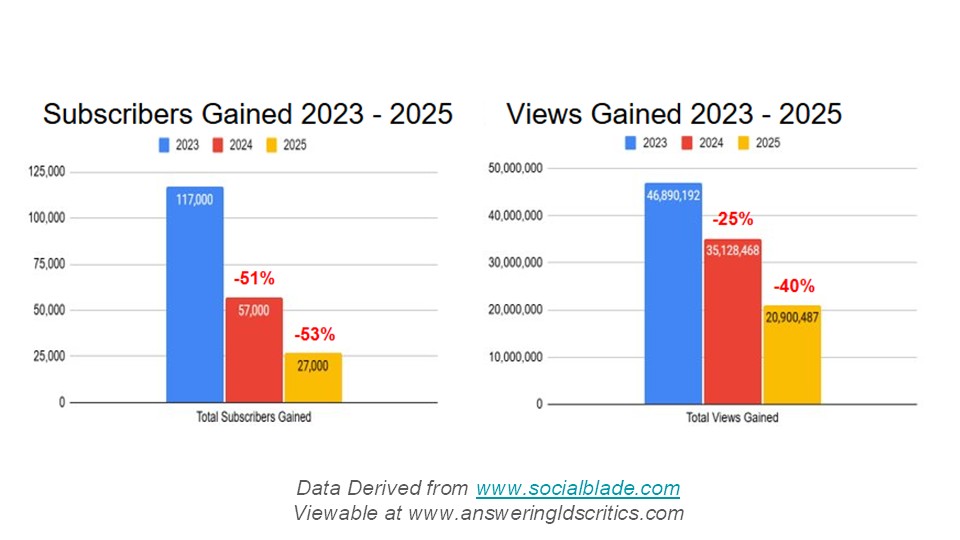
Examining Social Media Growth and Decline
Now let’s leave the financial statements for a moment and look at something I found even more interesting. I will confess, the data nerd came out in me when I built these graphs, but their message is important.
Social Blade is an independent website not affiliated with the church, that provides key metrics on social media channels.
These charts show the subscribers gained and views gained trends for the wealthiest critical organization on YouTube.
YouTube, TikTok, and Instagram Metrics
In 2024 this organization experienced a 51% decline in subscribers and new subscribers compared to the previous year, followed by another 53% decline in 2025.
Views gained told a similar story, dropping 25% in 2024, an additional 40% in 2025. That is a significant decline. 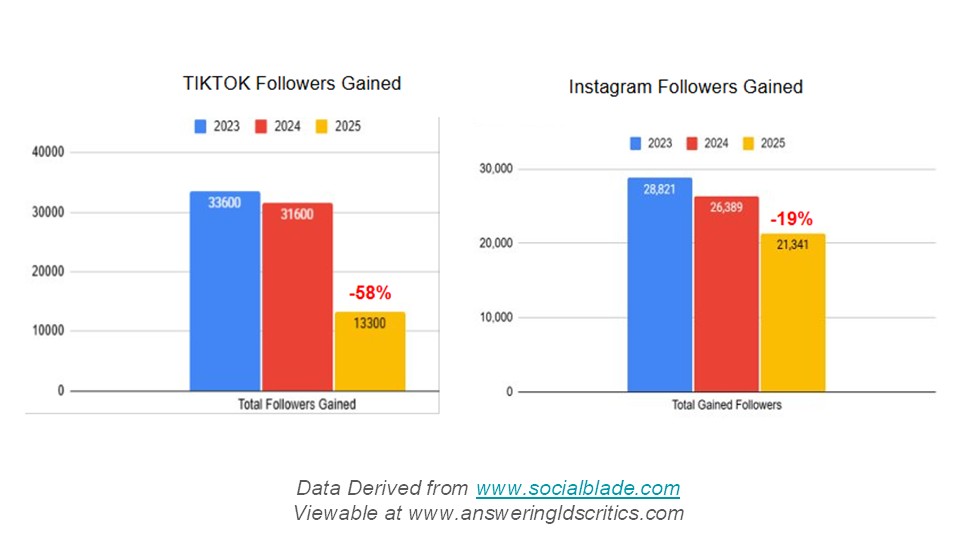
The same organization’s TikTok and Instagram metrics didn’t fare much better, losing followers gained by 58% and 19%, respectively.
Bottom line: This is not good news for this company.
Trademark Litigation and Financial Incentives
In April of this year, this organization was sued by the church for trademark infringement. Before filing suit, the church proposed a very easy solution that would have avoided litigation, but the organization declined.
I believe the data we just reviewed is a plausible reason why they rejected that fix. Had they accepted it, this downward trend in subscribers and views would likely have continued. And ultimately they may go out of business.
But by allowing the suit to proceed, the organization gained an opportunity to publicly portray itself as being targeted by the church, (which, by the way, they have done widely on social media) and by making that claim, they receive an infusion of donations from their sympathizers.
Public conflict often generates attention, engagement and financial support in ways that cooperation may not do. 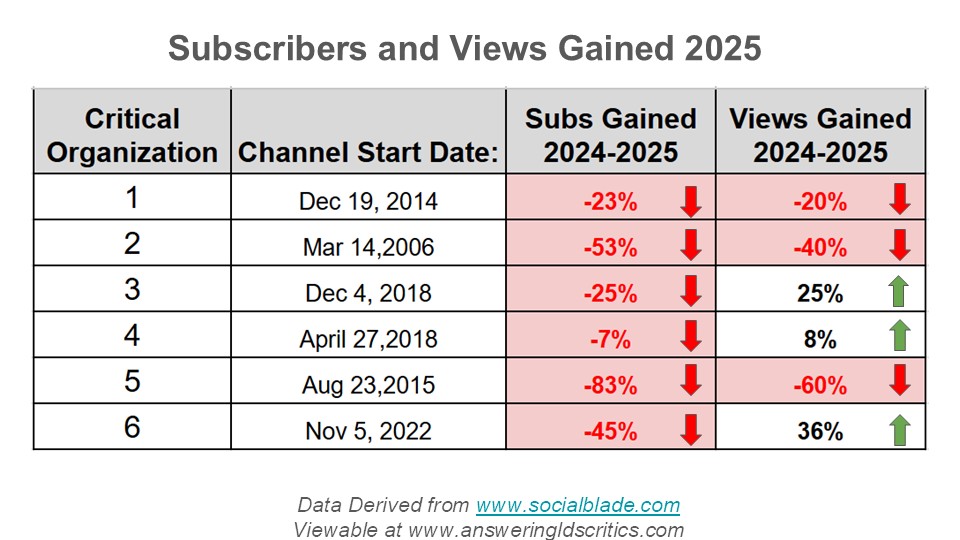
Declining Growth Across Critical Organizations
So what about the remaining organizations?
Well, for the first time ever, all six of the top organizations critical of our faith saw a decline in subscribers gain growth in 2025, ranging from 7% all the way to 83%, and half of them saw a reduction in views gained.
This is a significant recent shift within the faith crisis industry.
So the obvious question becomes, why are these companies losing ground on social media?
Well, the data points us to three plausible reasons. And note that the actual reason is likely a combination of all three. 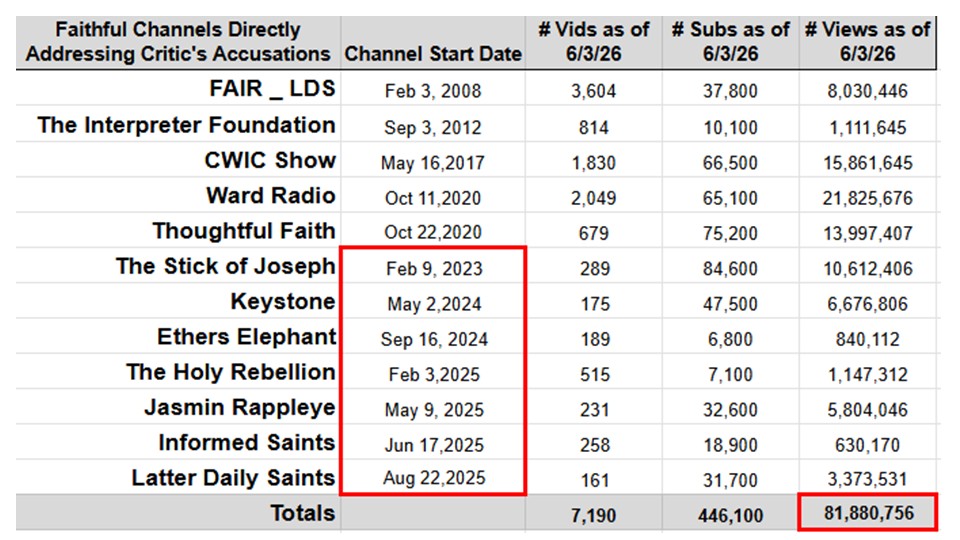
The Growth of Faithful Social Media Channels
First, there has been a significant increase in the number of faithful channels that directly address critics’ claims. Made by critical organizations.
This slide identifies 12 of those channels. Seven of those 12 didn’t exist two years ago.
And that growth closely parallels the declines we’re seeing for the critics.
All of these faithful channels make finding answers to critics’ claims far more available on social media than they have been in the past.
That said, we still need more. As you can see, these channels make up 81.8 million views compared to the 525 million views on our critics’ channels.
Now, it’s not a contest, of course, but we need to ensure that our brothers and sisters who are impacted by critics’ videos can just as easily find accurate information. 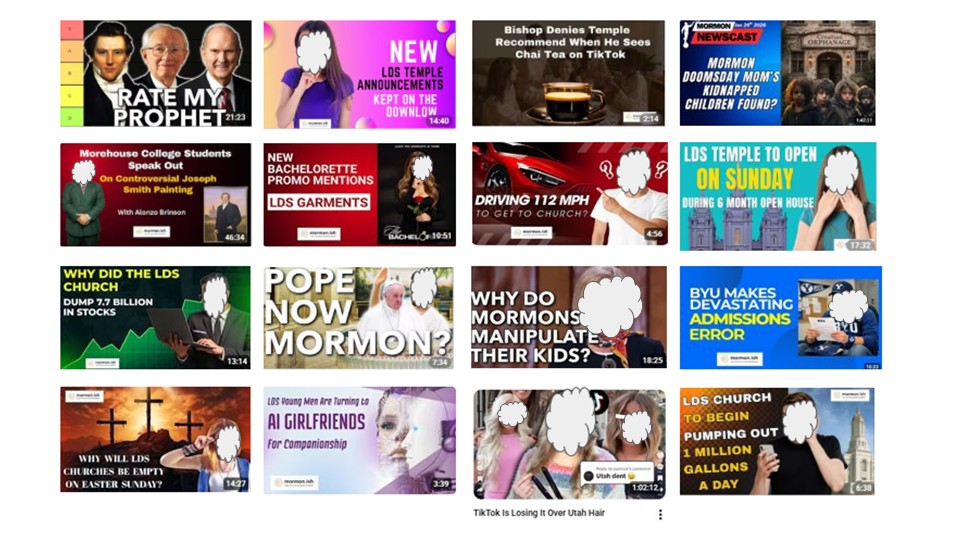
Content Saturation and Repetitive Criticism
The second plausible reason critics’ metrics are declining is simply that there are a finite number of reasonable accusations our critics can make before their topics become redundant.
So critics must turn to topics that are increasingly insignificant.
For example, based on these video titles, there are now videos that talk about how The Bachelorette show mentions garments, how someone apparently drove 112mph to get to church or something to do with Utah hair.
I’m not even sure what that is.
The point is, when criticism expands to increasingly minor or unimportant grievances, credibility tends to erode.
Now, on this topic, just a personal pet peeve. 
Criticism of the Church’s Giving Machines
This critical organization has published no less than eight videos that criticize the giving machines the church puts out at Christmas.
Maybe it’s just me, but I don’t know how you find fault with the Christmas giving machines. I love those machines. Where else can I buy a chicken to help someone support their family?
If there were ever a prime example of trying to persuade us to not serve God by serving our fellow man, this might be it.
And I think even for these channel supporters, things like this chip away at the credibility of these critical organizations. 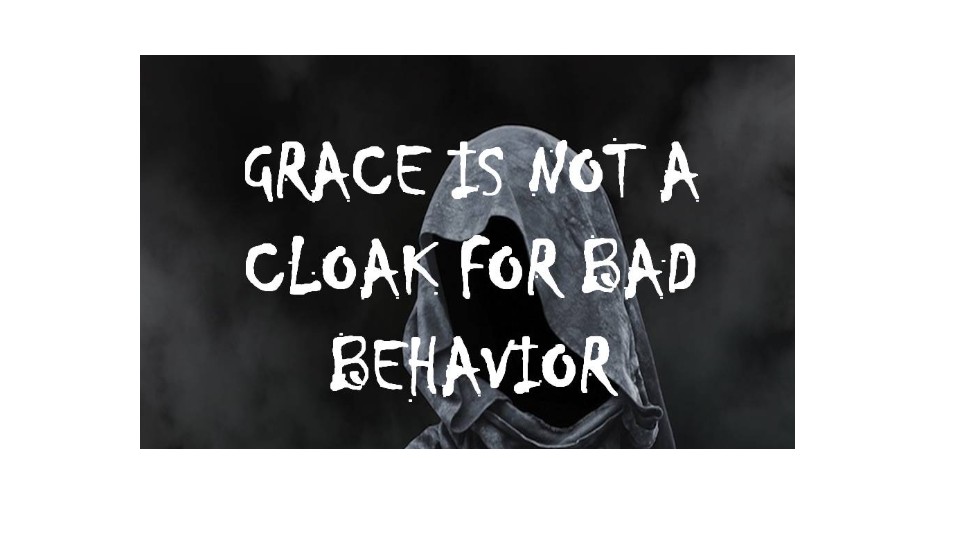
The Behavior of Critical Organizations
Now, the third plausible reason critics’ metrics are declining is the critical organization’s own behavior.
Now, I want to preface this with a reminder that critics are children of God, so we need to give them grace. But grace for our critics and clarity about what they do and say can coexist.
Since these organizations have published over 10,000 negative videos about our church, as members of that church, we have the right to determine if they are coming from a place of honesty and integrity.
And the fact is, they have published some highly questionable content that brings that into question. And it also is likely influencing their subscriber rates.
So let’s consider just a few of those behaviors. 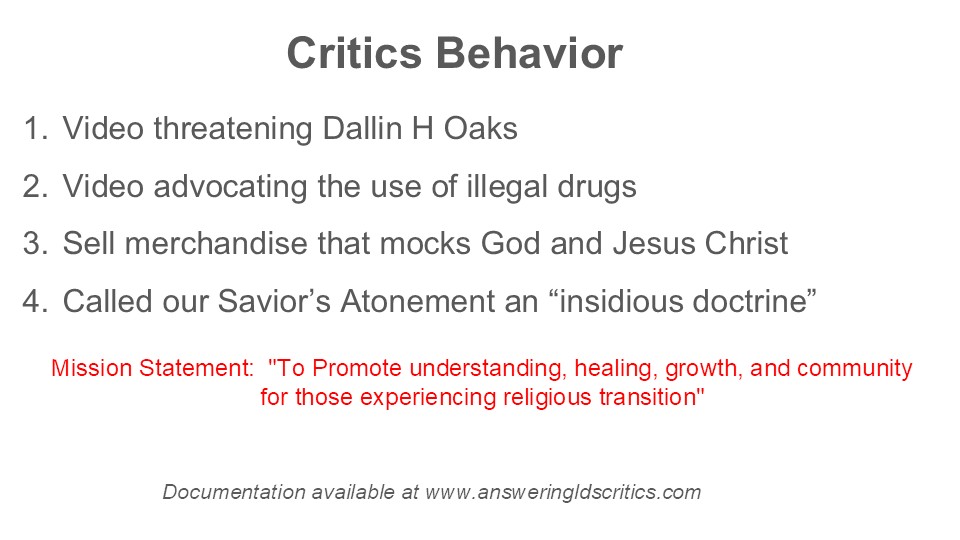
Examples of Content That Raises Questions
One organization released a video featuring a guest who threatened physical violence against Dallin H. Oaks. He threatened to punch him.
Another published a YouTube video advocating the use of illegal drugs. I mean, we have these recordings.
Another organization sells vile merchandise that openly mocks God, mocks Jesus Christ, and mocks our sacred temple ceremony.
In yet another case, the CEO published a video describing our Savior’s atonement as an insidious doctrine.
These behaviors and dozens, dozens more, stand in stark contrast to their own mission statements, which claim that they, “promote understanding, healing, growth and community for those experiencing religious transition.”
It’s unclear to me how releasing a video where a guest threatens to punch Dallin H. Oaks is promoting healing or understanding.
These behaviors matter because they help us understand two important realities.
The Importance of Healthy Communities During a Faith Crisis
First, they call into question the ability of organizations that are demonstrating this level of hate to provide objective, unbiased information about the church.
Second, and by far the most important, these are the organizations that many of our brothers and sisters are turning to to find community.
That’s not a healthy environment. When someone is hurting spiritually, hate doesn’t heal.
It only deepens the wound. And if the first people that offer them community are people promoting hate, then you and I, as disciples of Jesus Christ, have some work to do. 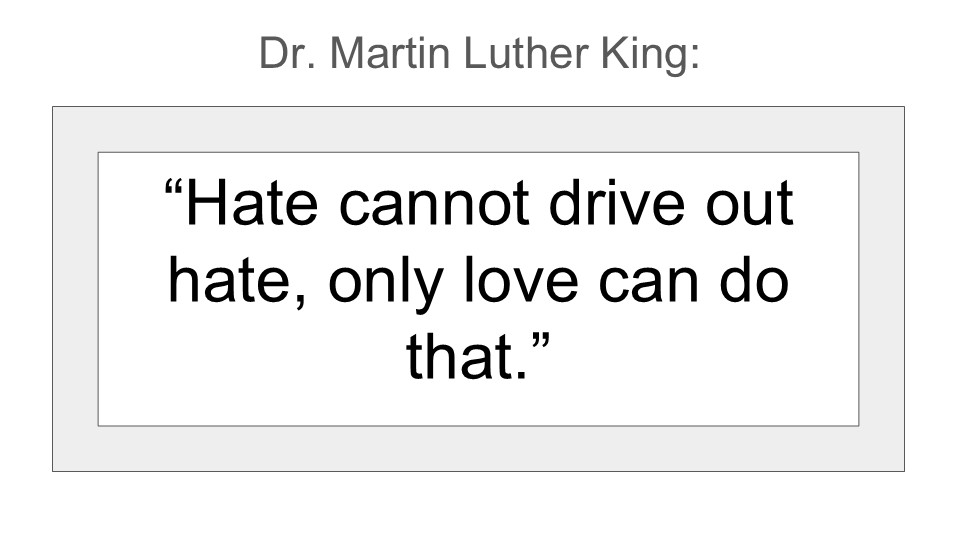
Responding to Religious Criticism With Love
So when we feel hate coming from comments on social media, from critics’ followers, we now have a reference as to where it comes from. And we only make it worse if we respond with additional hate.
Doctor Martin Luther King said “Hate cannot drive out hate. Only love can do that.”
And of course, the Savior himself invited us to love one another as he loves us.
Brothers and sisters, let’s instead respond with love. We start by offering to listen to them. We give them a voice. We let them express their feelings.
Then we can respond with truth, kindness, and love.
If we need help with the answers, the FAIR website is a great resource.
The real issue isn’t whether critics create community. The real issue is whether disciples of Christ create a better one.
People in faith crises are not projects to fix. They are people to love. With this understanding, I’ve had to repent and change the way I respond to people online.
And I’m far from perfect at it. 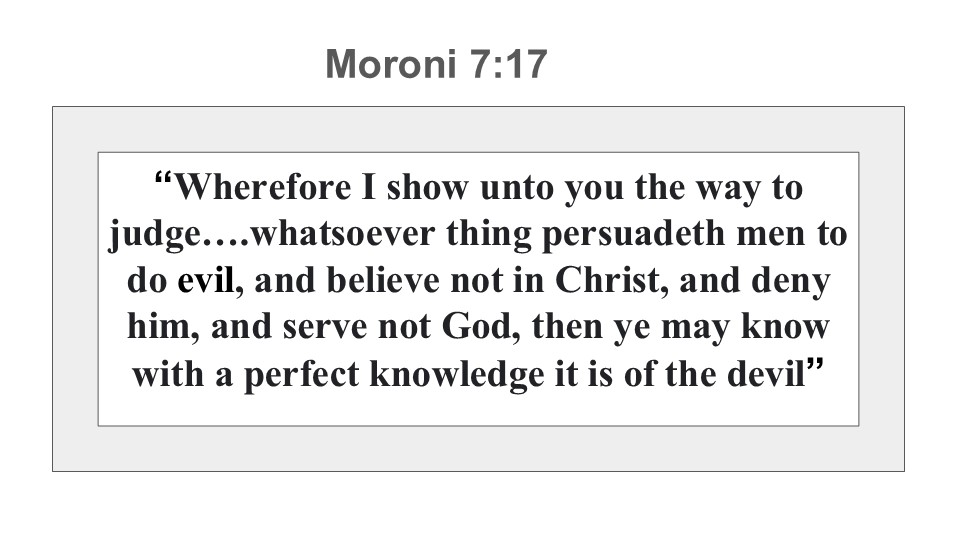
Applying Mormon’s Test to Religious Criticism
So let’s circle back and see how our critics stack up against the warning given to us by the prophet Mormon.
Remember, he was speaking to members of the church in our day. He was speaking to us, and he said,
“Wherefore, I show to you the way to judge;… whatsoever thing persuadeth men to do evil”
– And I would add, like publishing videos that threaten violence or promote illegal drugs,
“and believe not in Christ, and deny him,”
– like calling our Savior’s atonement and insidious doctrine and sowing vile products that directly mock our Savior–
“and serve not God,”
–Like criticizing the giving machines and other philanthropic work that the church does–
“then ye may know with a perfect knowledge it is of the devil.”
A perfect knowledge. 
Recognizing Deception and Drawing Closer to Christ
Notice that Mormon did not say we would need a PhD in church history to recognize deception. He said we could judge by what critics try to persuade us to become.
- Do they point us toward Jesus Christ or away from him?
By their own admission, it’s away from him.
Is it any wonder, then, that President Oaks just recently invited members of the church to overcome doubts and uncertainties by drawing closer to our Savior?
Conclusion: Clarity, Charity, and Compassion
In summary, then, understanding that critics are financially motivated to destroy our faith helps us
- look more critically at their claims,
- knowing their channel metrics are declining, helps us understand their aggressive attacks and most importantly,
- understanding they are persuading men to reject Jesus Christ and His atonement
gives us the perfect knowledge that we need to avoid deception by their claims and instead reach out in compassion and love.
Mormon knew exactly what he was talking about.
So my testimony is simple.
Truth does not need sensationalism. Christ does not need algorithm manipulation.
And you and I, as disciples of Jesus Christ, need not fear claims made by critics who no longer follow him.
If we respond with clarity, charity and compassion, we can strengthen testimonies, including our own, and still extend love and kindness to our brothers and sisters who have become victims of the faith crisis industry.
In the name of Jesus Christ, Amen.
