Opening Remarks
Good morning. (faint “good morning” echoed back from the audience) You guys learned a little bit from yesterday, President Darius’ talk. Good morning! (Good morning echoed back stronger.) There you go! I want to make sure you’re awake here. Aloha. Buenos dias and all that other stuff. O genkidesu-ka, for anybody Japanese.
I am grateful to be here today, especially to speak on this topic. This topic is one that actually almost kept me from joining the church. And I wanted to make sure that no one else left the church, would not join the church, or struggled in the church as a result of not having the information that I was seeking.
And so I thought, let me study this thing. So, I’ve been studying this subject for 17 years now. I am not by any means an expert on it. I just know what I know and what the Lord has guided me and directed me.
Purpose of the Study
I found that if we keep this talk to the scriptures, you get less people trying to refute what you’re saying. But the biggest reason that I study this is to help others into the gospel. There are many who won’t take the time to learn this information, and that’s all right for them.
But I want to help those who do want to have some of this information, and the church has given us plenty of guidance. So again, I’m no expert: I’m no scholar, I’m no scriptorian. I’m just a man who loves the Lord and will do anything he wants me to do.
And sometimes that finds me in trouble. But I’m willing to take it.
So, how do we reach African-Americans in and outside of the church? You have the formula down already, and you’re already doing it. 
Understanding Culture and Language
You just have to apply it to this group of people. See, because when you go into the MTC, what do you do? You learn the language and the culture of the people you are going to serve. You learn Spanish. You learn a little bit about the Spanish culture.
You learn Japanese, a little bit about the Japanese culture. You go to an American or English-speaking mission, no language to learn, but you learn a little bit about the communication skills so that you don’t offend and turn people off from the church.
Well, that’s the exact same way that you would actually reach African-Americans. You need to learn and understand the language and the culture of the people. So, what is the language of African-Americans in regards to Latter-day Saints? Okay. 
The Reality to Address
Now, the language—this is reality. This is what African-Americans feel and know. Most African-Americans believe:
- that Mormons are racist
- that they have a long history of racism
- that they even have it built in the doctrine.
That’s what African-Americans feel.
If you want to reach them, you have to deal with that reality. You’ve got to get to the point where you can hear that. That’s what we feel. 
What is the culture? Well, the culture is every African-American, regardless, is going to have to deal with this issue at some point.
- Some of us deal with it before discussions,
- some during the discussions, and
- some after baptism,
- sometimes many years after baptism.
But we do have to deal with it.
Real-Life Impact
I’m just working with a brother now who has been a member of the church for seven years and is just now dealing with it. He’s been inactive for the last year over this issue. And now since we’ve shared with him what I’m going to share with you today, he is back in the church.
So the fruits—by the fruits you shall know them. First of all, be honest. We know the first thing we can do with this issue is admit—we try to deny the history that we have.
We have a history in this country of inequality, of racism, of prejudice – and that includes the church members as well. Church members, church leaders—we have that. 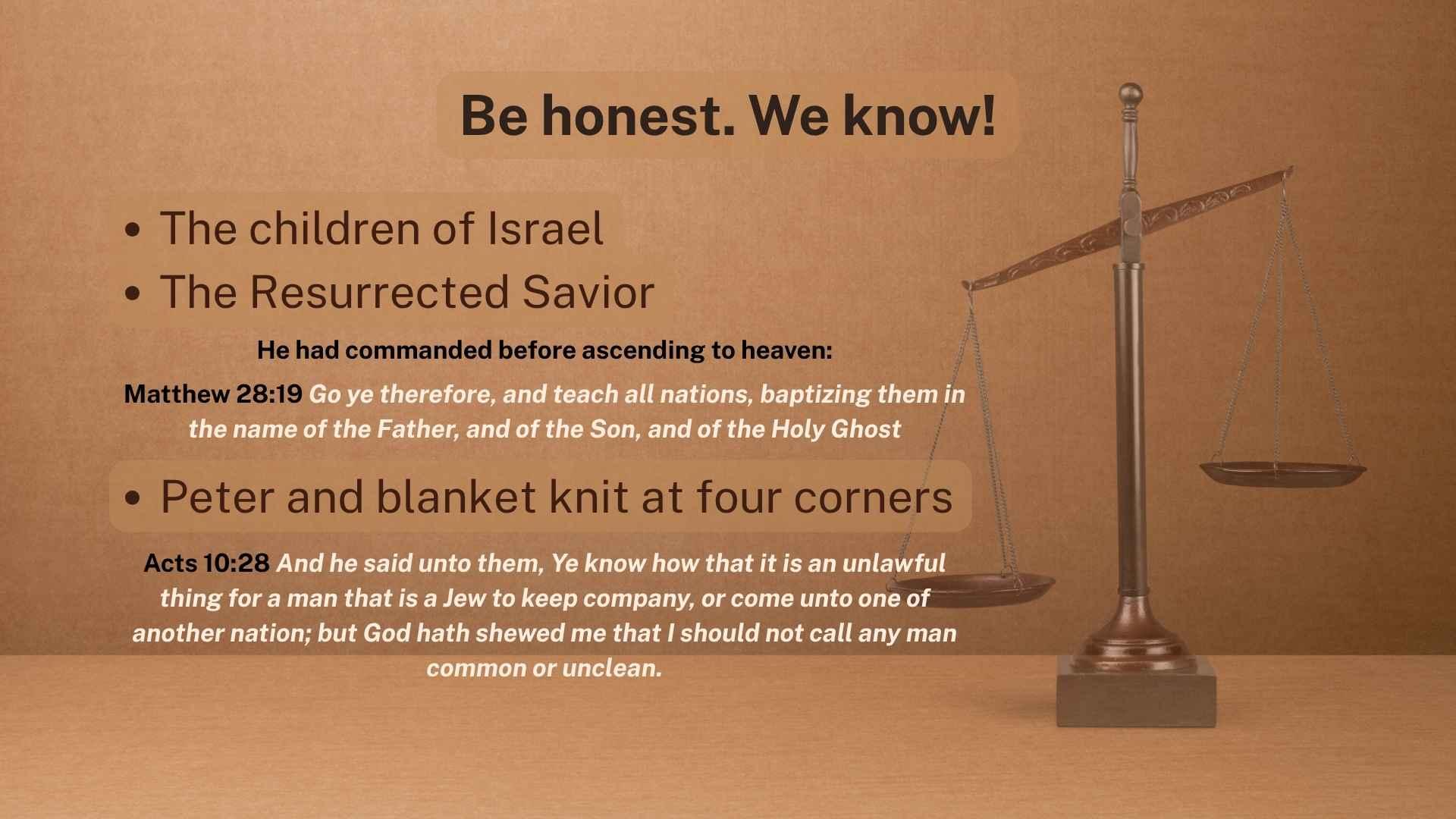
Being Honest About the Past
Until 1964 and The Civil Rights Act, the law of the land was discrimination. So, we only varied in our degree of it. So, be honest.
No one is going to believe you have the truth if you can’t be honest about the past or your involvement.
Scriptural Parallel
It reminds me of the children of Israel. They were in bondage for 400 years.
And when they got out of bondage – when Moses and Aaron freed them, the instruments of the Lord to free them out of bondage – the Lord wanted them to get to know Him. To start serving Him more.
And it was so difficult for them to do that. So they had this law of Moses given to them, this simple law to help them to be able to abide the entire law.
And it would take them many years to be able to do it before Christ would come and fulfill and give them a new way of doing things.
The Great Commission
Also, we see this with the resurrected Savior, with the last command recorded in Matthew. The resurrected Savior stood before them. Ate with them, met with them, and said, “Take the gospel to all the world.” Okay. 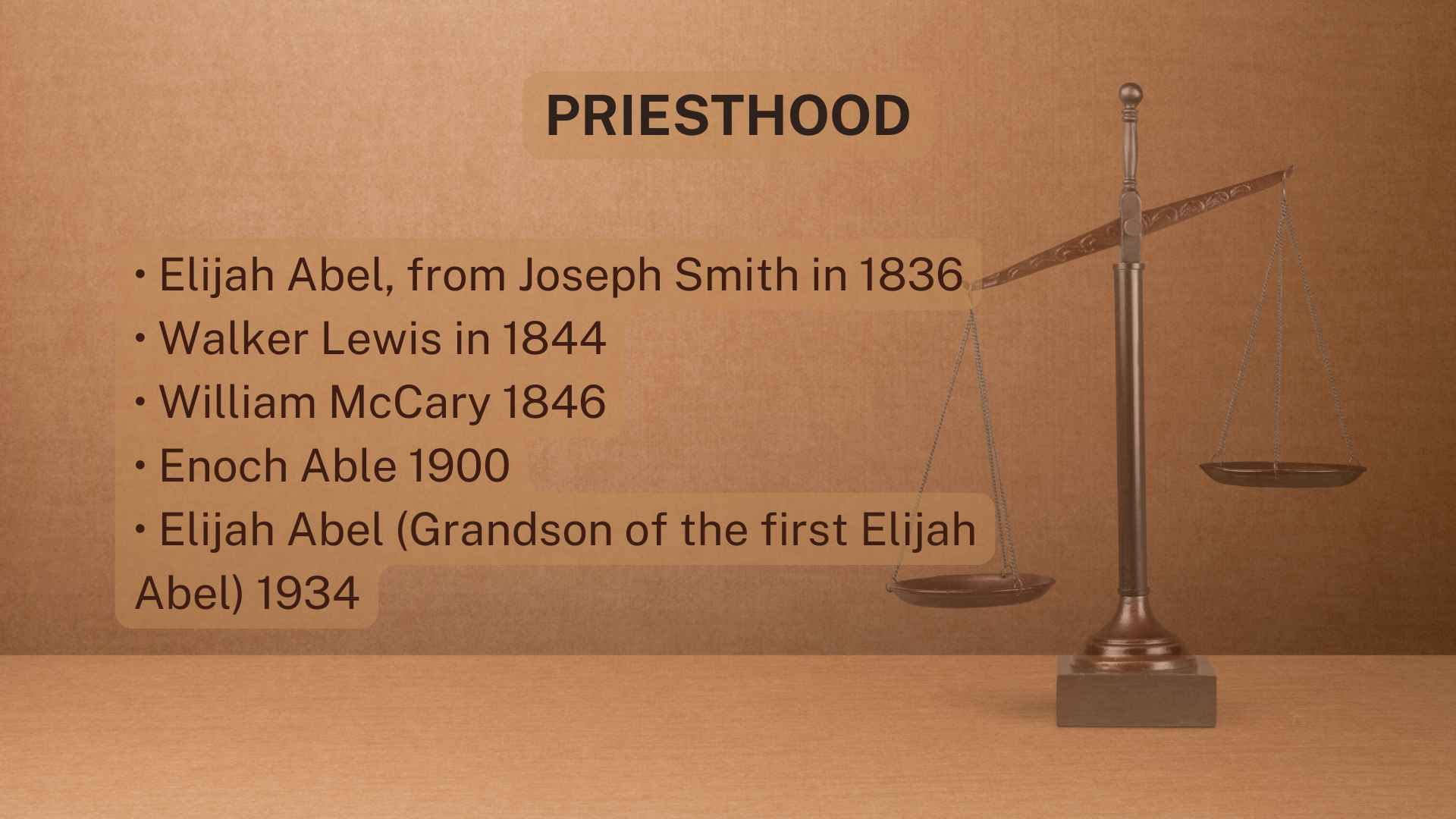
Early Priesthood History
So, let’s talk a bit about priesthood. Many don’t know that when the church was first restored that anybody could hold the priesthood. And there were Black men holding the priesthood.
Joseph Smith gave it to Elijah Abel in 1836. Walker Lewis was ordained in 1844. William McCary. (Some people don’t like to mention William McCary because he didn’t do good things, but I’ll mention him.) William McCary got it in 1846.
William McCary might be the reason why Blacks didn’t hold the priesthood—and if you want to know about that, you go study it. William McCary or Black Pete. Enoch Abel received it in 1900. And that’s something.
And Elijah Abel, grandson of the first Elijah Abel, received it in 1934.
When Did the Issue Begin?
As a matter of fact, until about 1954, many people didn’t know there was an official policy on priesthood. I mean, many Blacks didn’t mix with the church, and it just wasn’t that much of an issue.
If Blacks are holding the priesthood, why was that? There wasn’t an issue. When did the issue begin? Well, let’s hear a few statements on priesthood that we have from our church leaders. 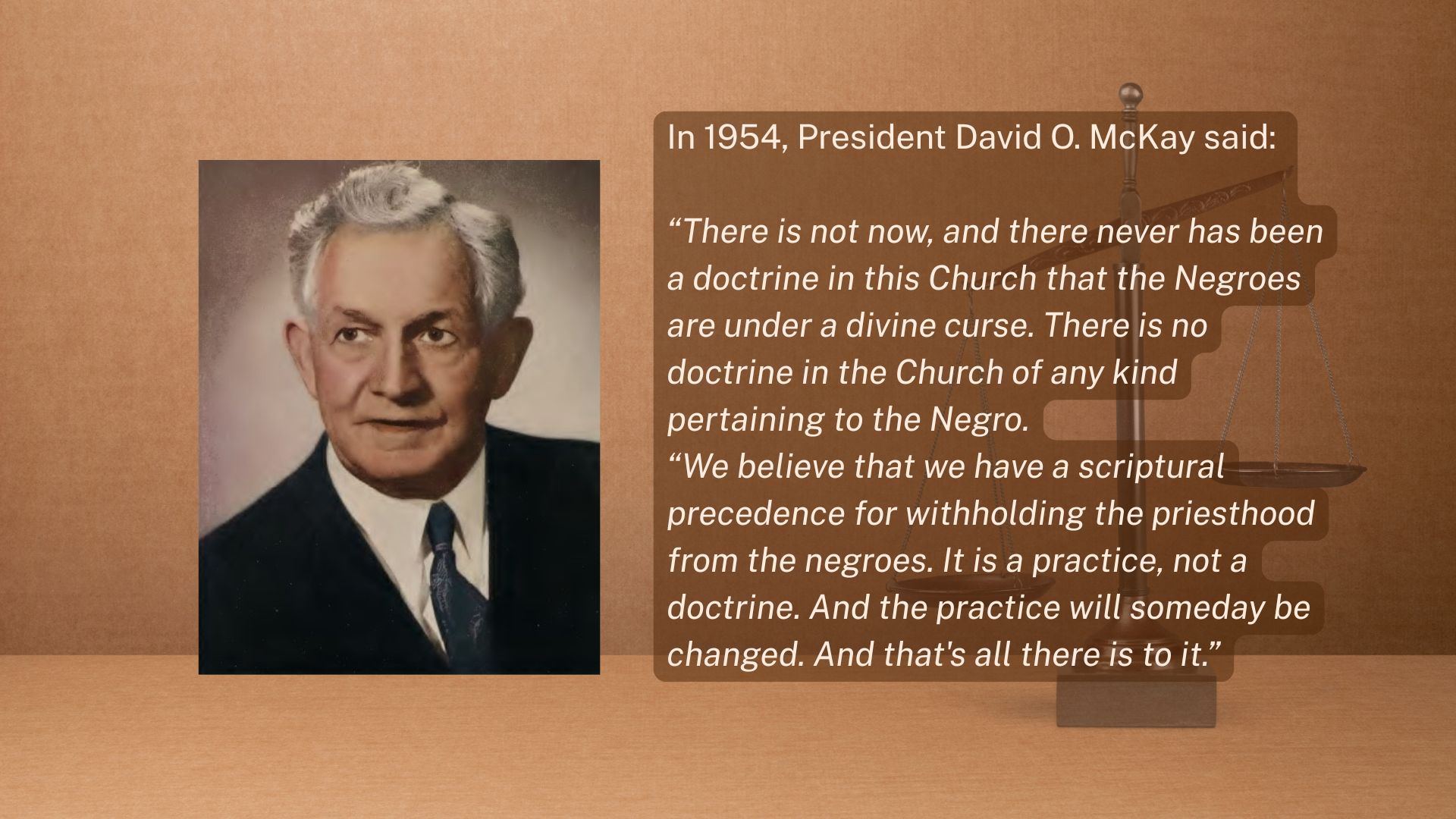
Statements from Church Leaders
David McKay. In 1954, David McKay is quoted as saying:
“There is not now and there never has been a doctrine in this church that the negroes are under a divine curse.There is no doctrine in the church of any kind pertaining to the negro.”
I’m going to repeat that. There is no doctrine in the church of any kind pertaining to the negro.
“We believe that we have a scriptural precedence for withholding the priesthood from the negroes. It is a practice, not a doctrine. And the practice will someday be changed. And that’s all there is to it.”
President George Albert Smith is also quoted as having said the same thing. 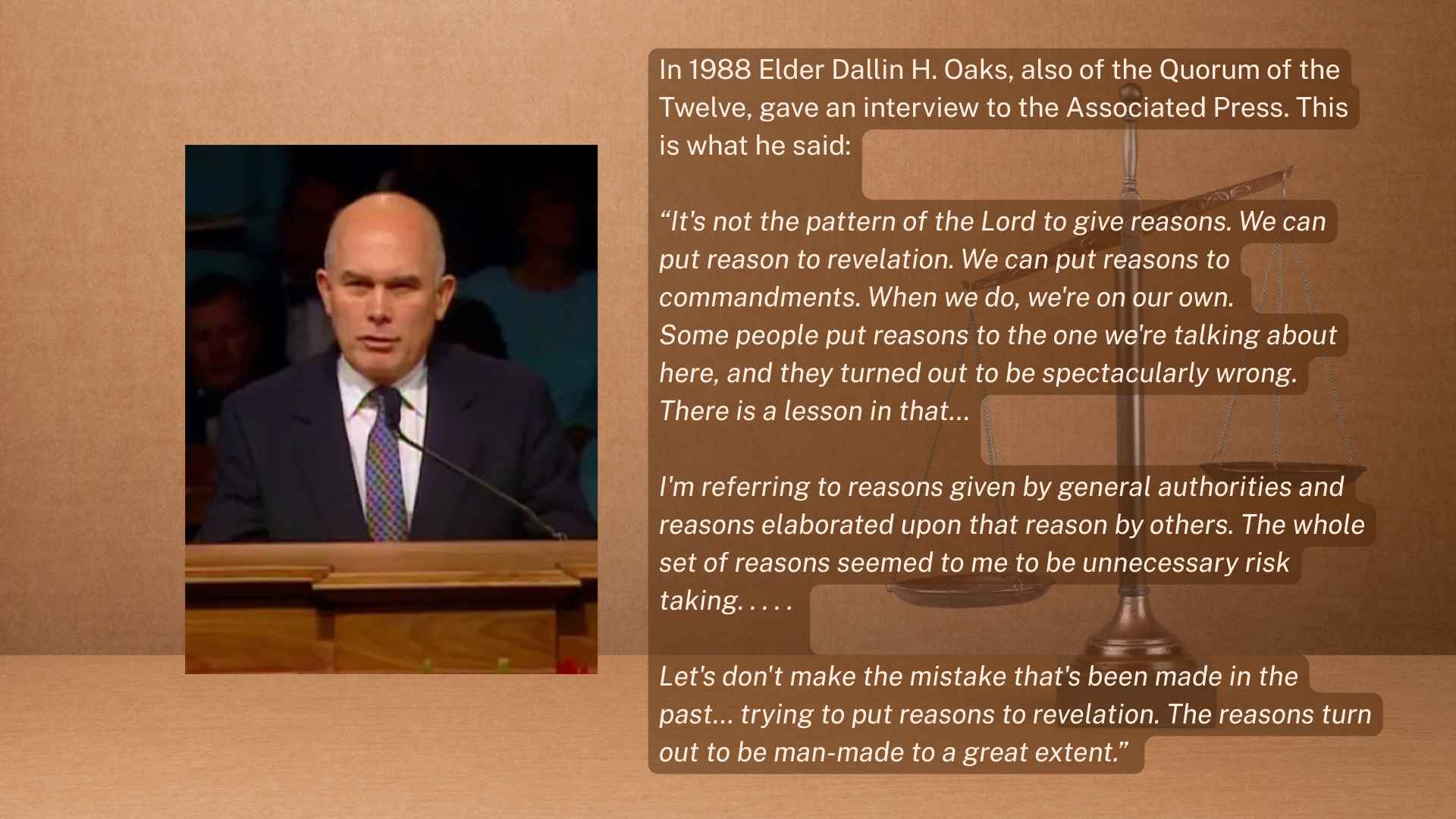
On Reasons and Revelation
Elder Dallin H. Oaks said in an interview,
“It is not the pattern of the Lord to give reasons. We can put reasons to the commandments.”
“When we do, we are on our own. Some people put reasons to the ban and they turned out to be spectacularly wrong. There is a lesson in that… I am referring to reasons given by general authorities and elaborated on by others.”
“The whole set of reasons seem to be unnecessary risk taking… Let’s not make the mistake that’s been made in the past …here and in other areas trying to put reasons to revelations. The reasons turn out to be man-made to a great extent.”
A New Day — 1978 Revelation
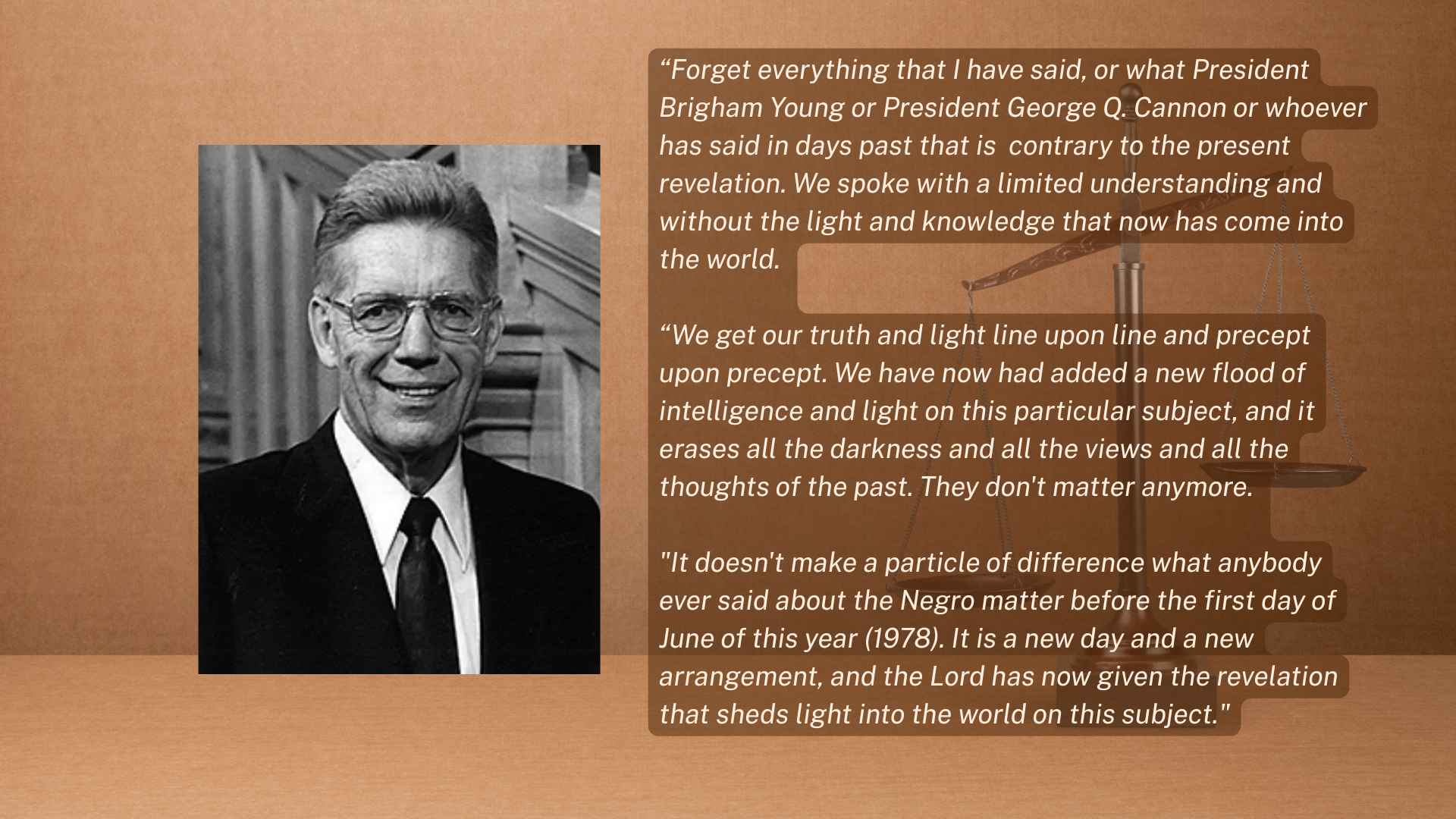
Elder Bruce R. McConkie, one of my favorite statements here:
“Forget everything that I’ve said or what President Brigham Young or President George Q. Cannon or whoever has said in the days past that is contrary to today’s revelation. We spoke with a limited understanding and without the light and knowledge that is now coming to the world. We get our light and truth line upon line, precept upon precept. And we have now had added a new flood of intelligence and light on this particular subject, and it erases all of the darkness and all of the views and all of the thoughts of the past. They just don’t matter anymore.”
So if you’re going to study this issue, you’ve got to forget everything you’ve heard and start from scratch. And where is the best place to start? Forget the philosophies of men and go straight to the scriptures.
Scripture Updates and Understanding
There’s enough guidance in the scriptures for you to understand this—for us to understand this.
“It doesn’t make a particle of difference what anybody has ever said about the negro matter before the first day of June of this year (1978). It is a new day and a new arrangement, and the Lord has now given revelation to shed light into the world on this particular subject.”
Now, we’re going to talk a great deal more about that light. Because with that light and that knowledge – that flood – it wasn’t just a revelation that reversed the priesthood. But it was a flood of intelligence that came, as Elder McConkie said, that helped correct the views and the thoughts of the past.
Continuing Revelation in Scripture
And the brethren actually did something with that flood. They actually updated our scriptures in 1981.
So if you look at an older version of your scriptures and then go to 1981, you’ve got a newer version with footnotes and word changes to help us to understand the issues that were misunderstood before, give us new guidance.
And every single scripture that I could find in the Book of Mormon and Doctrine and Covenants that we misunderstood regarding this issue, has a footnote. Giving clarification and new understanding. 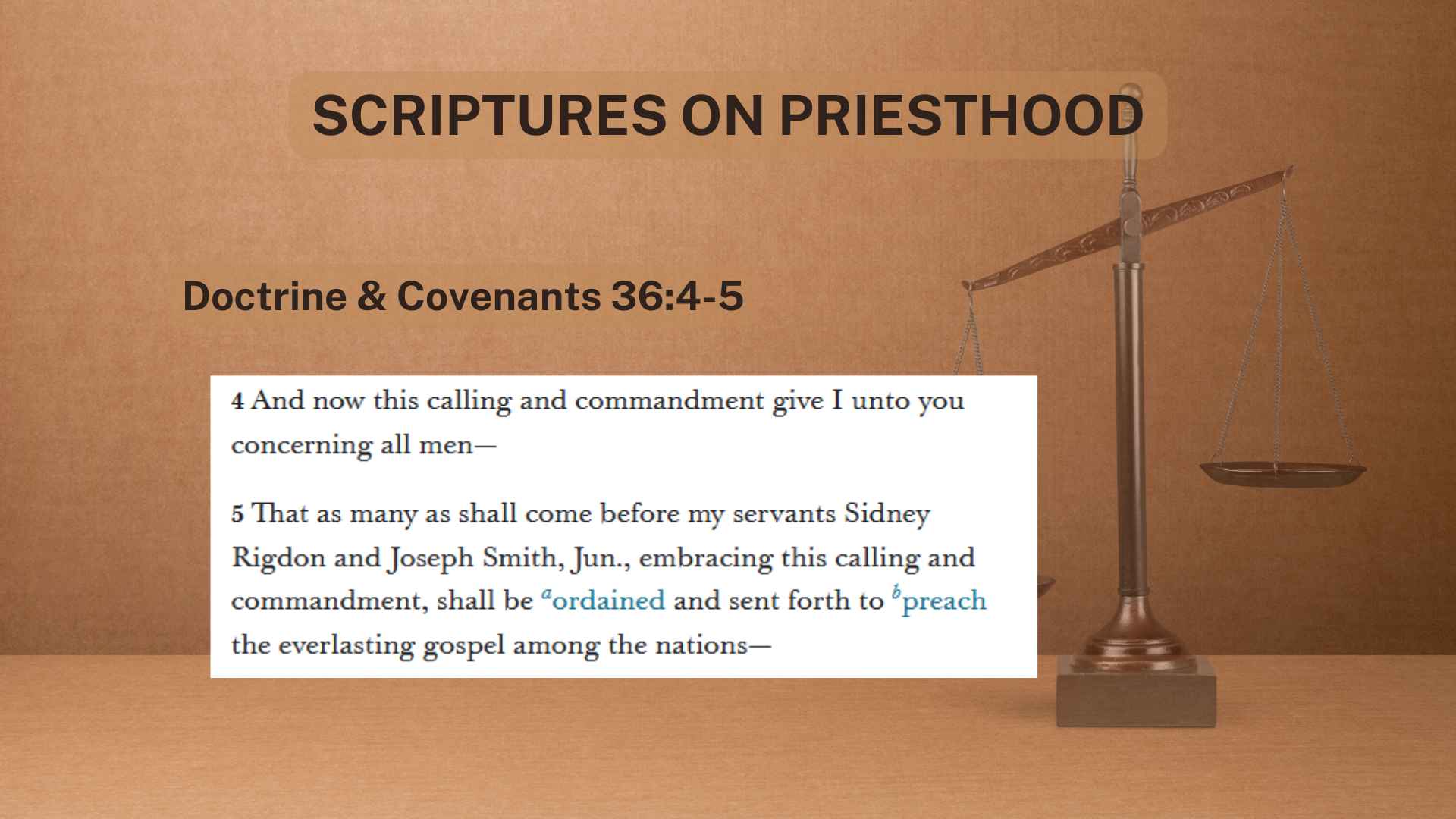
Scriptural Foundation
Let’s consider D&C 36:4-5.
“And now this calling and commandment give I unto you…”
Concerning who?
“concerning all men (emphasis added) that as many as shall come before my servants Sidney Rigdon and Joseph Smith Jr. embracing this calling and commandment shall be ordained and sent forth to preach the everlasting gospel among the nations.”
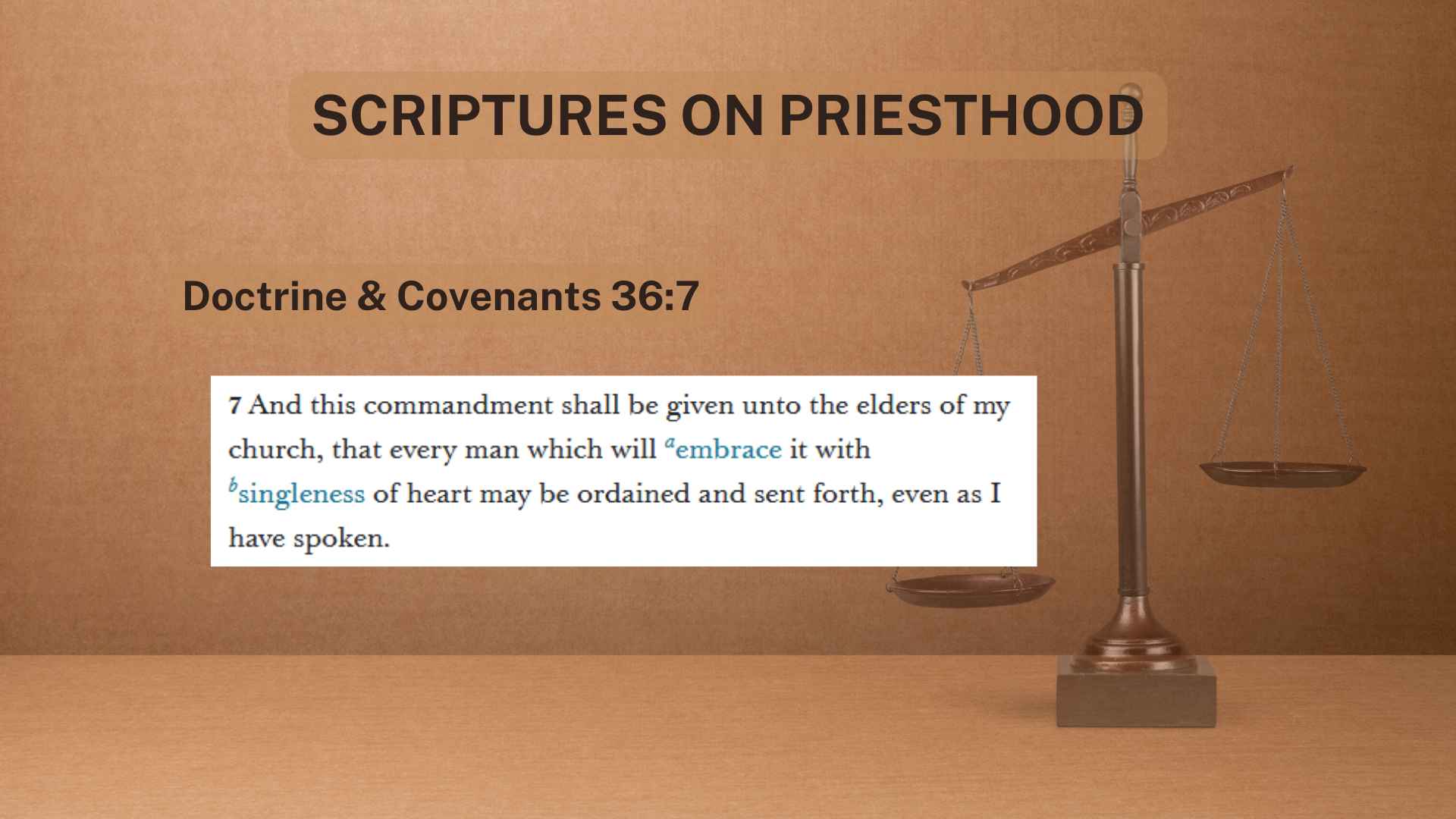
“And this commandment shall be given unto the elders of my church, that every man which will embrace it with singleness of heart may be ordained and sent forth, even as I have spoken.”
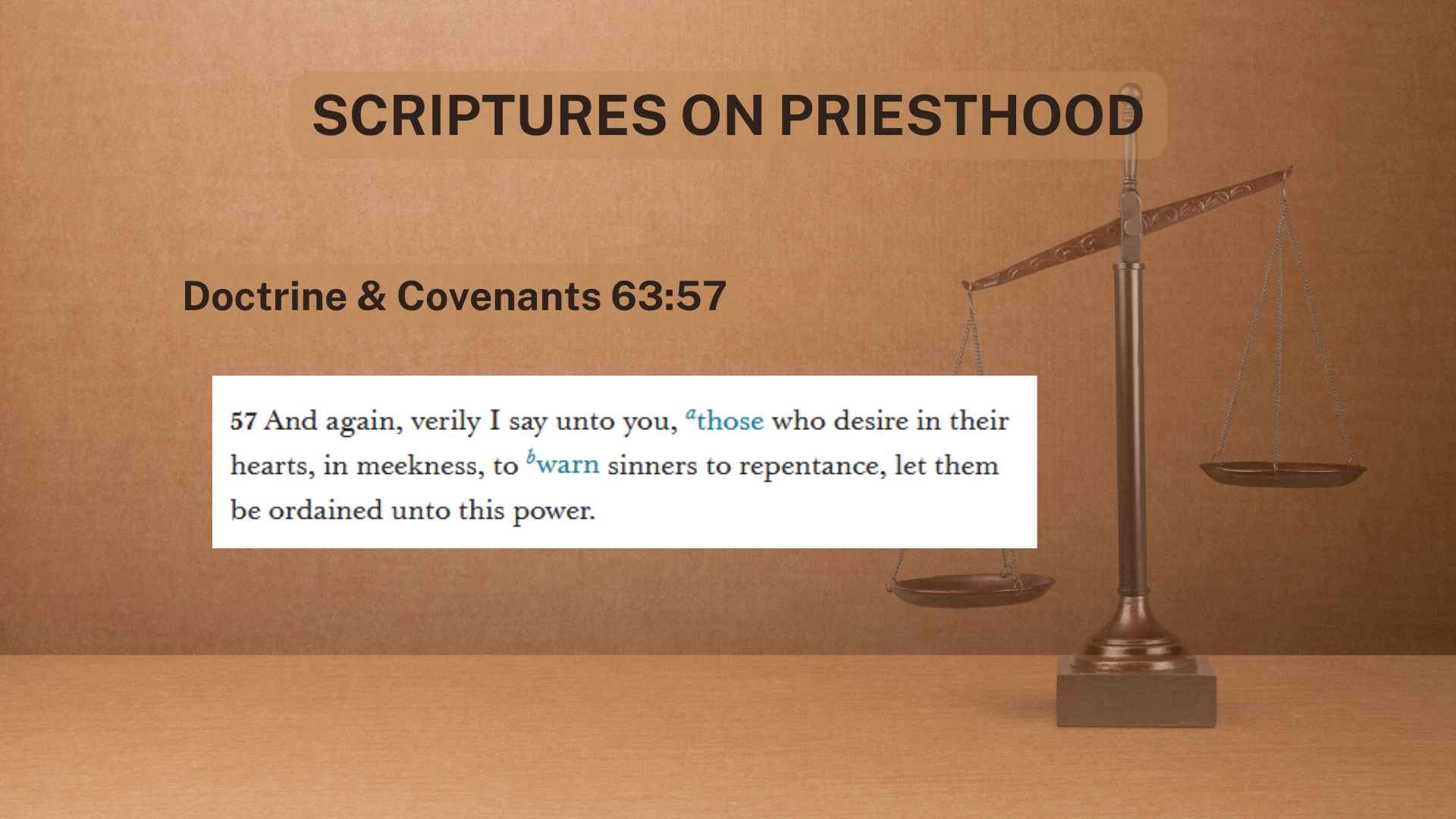
“And again, verily I say unto you, those who desire in their hearts in meekness to warn sinners to repentance, let them be ordained unto this power.”
The Inclusive Nature of Priesthood
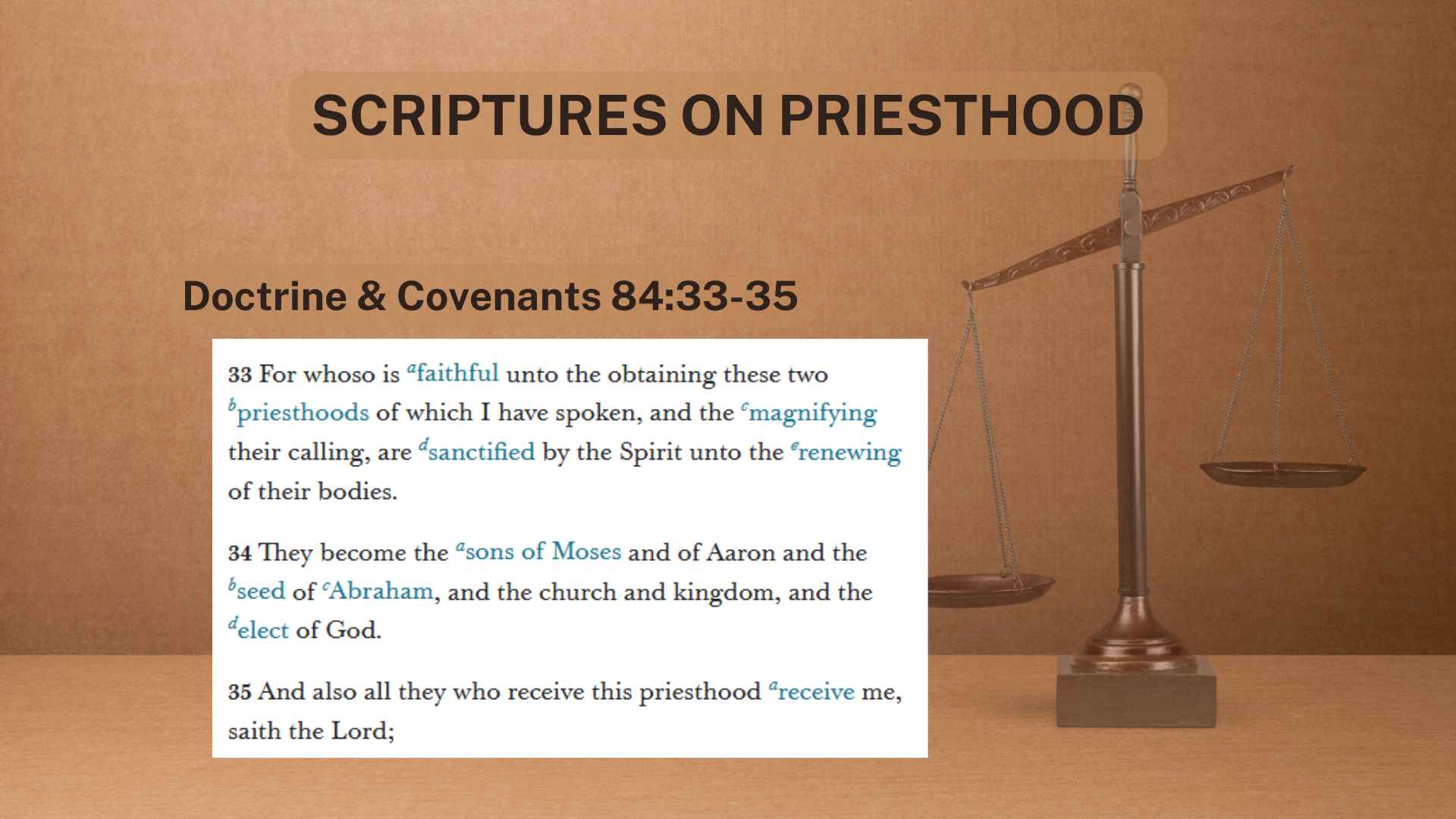
“And whoso is faithful unto obtaining these two priesthoods…
I mean, the Lord has plenty of time to give us a restriction, a division, but he doesn’t do it. He’s—it’s all inclusive. All right.
“And whoso is faithful unto obtaining these two priesthoods of which I’ve spoken and the magnifying their calling are sanctified by the spirit unto the renewing of their bodies.
“They become the sons of Moses and of Aaron and the seed of Abraham, with rights to the priesthood and the church and the kingdom and the elect of God.
“And also all they who receive this priesthood receive me.
 Accountability and Scripture Concerns
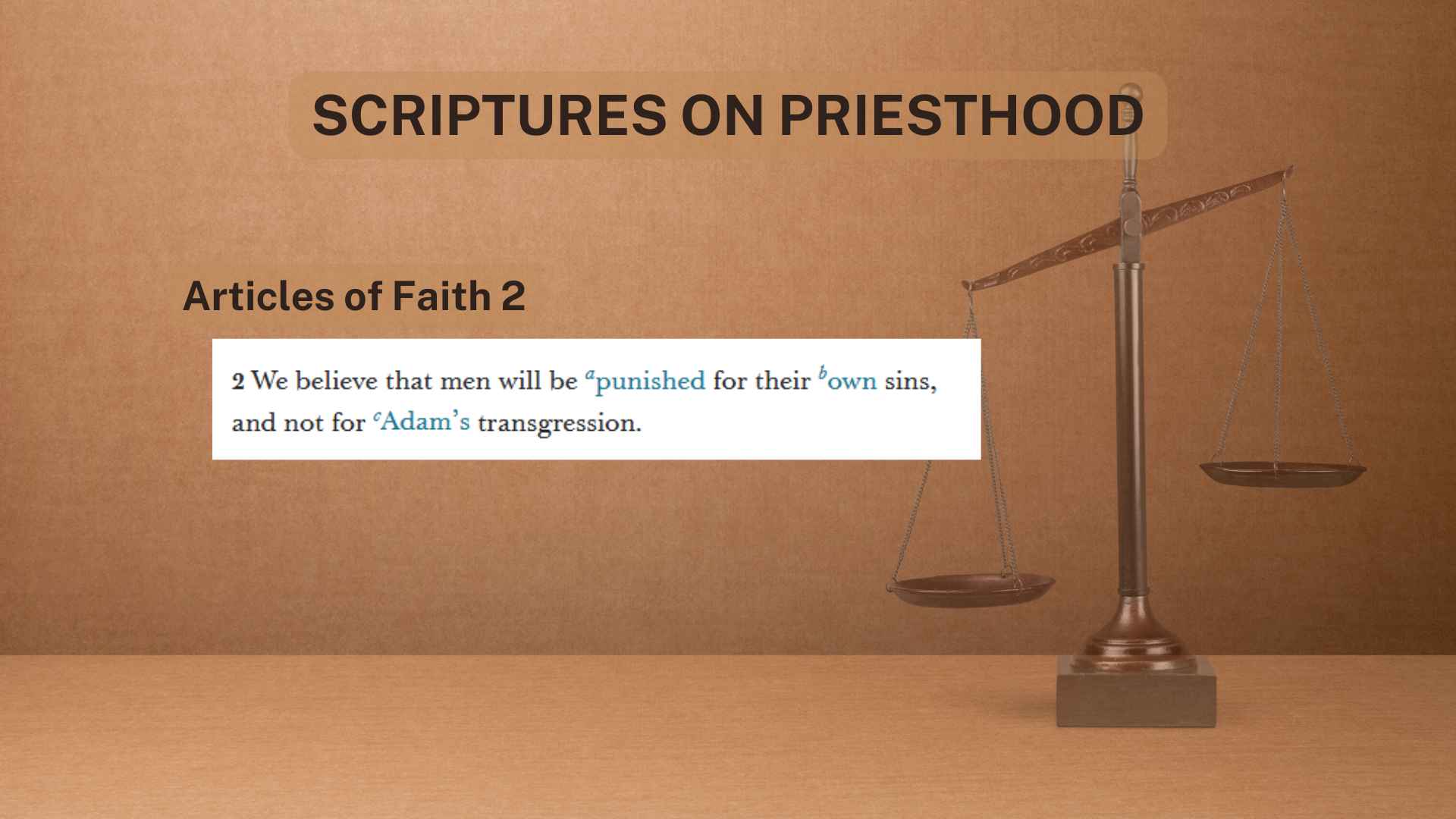
We believe that men will be punished for their own sins and not for Adam’s transgressions.
2 Nephi 5:21 is a big one because that’s when most blacks, African-Americans, and a lot of other cultures stop reading the Book of Mormon. Like, “okay, what? You can’t believe this.” Because it looks like it’s right in the doctrine. 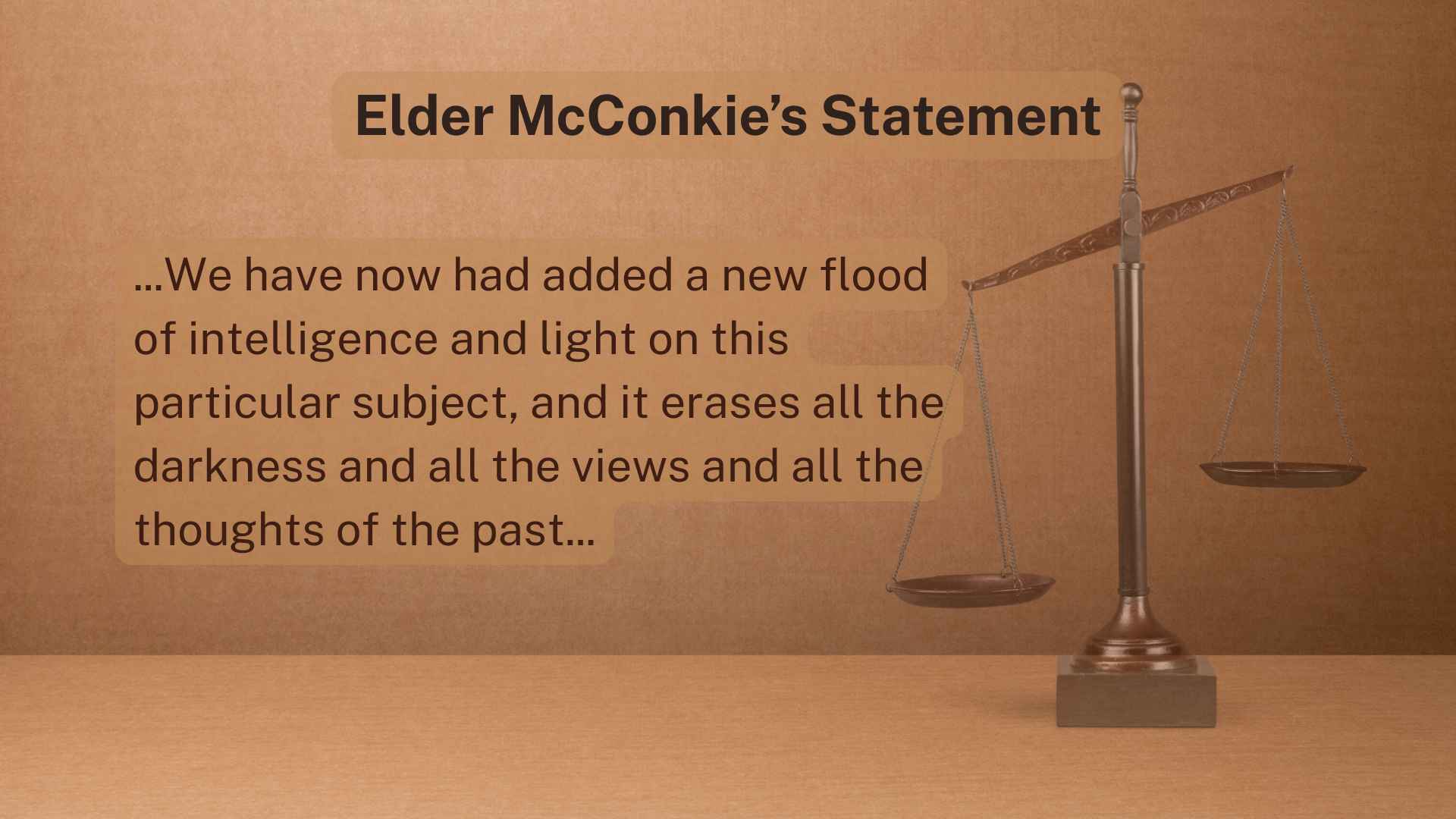
Understanding “Skin” and “Darkness”
And again, we’ll go back to Elder McConkie’s statement—that flow of light and intelligence on the subject. It’s going to help us to understand. They put new footnotes in here to help us to get past that. 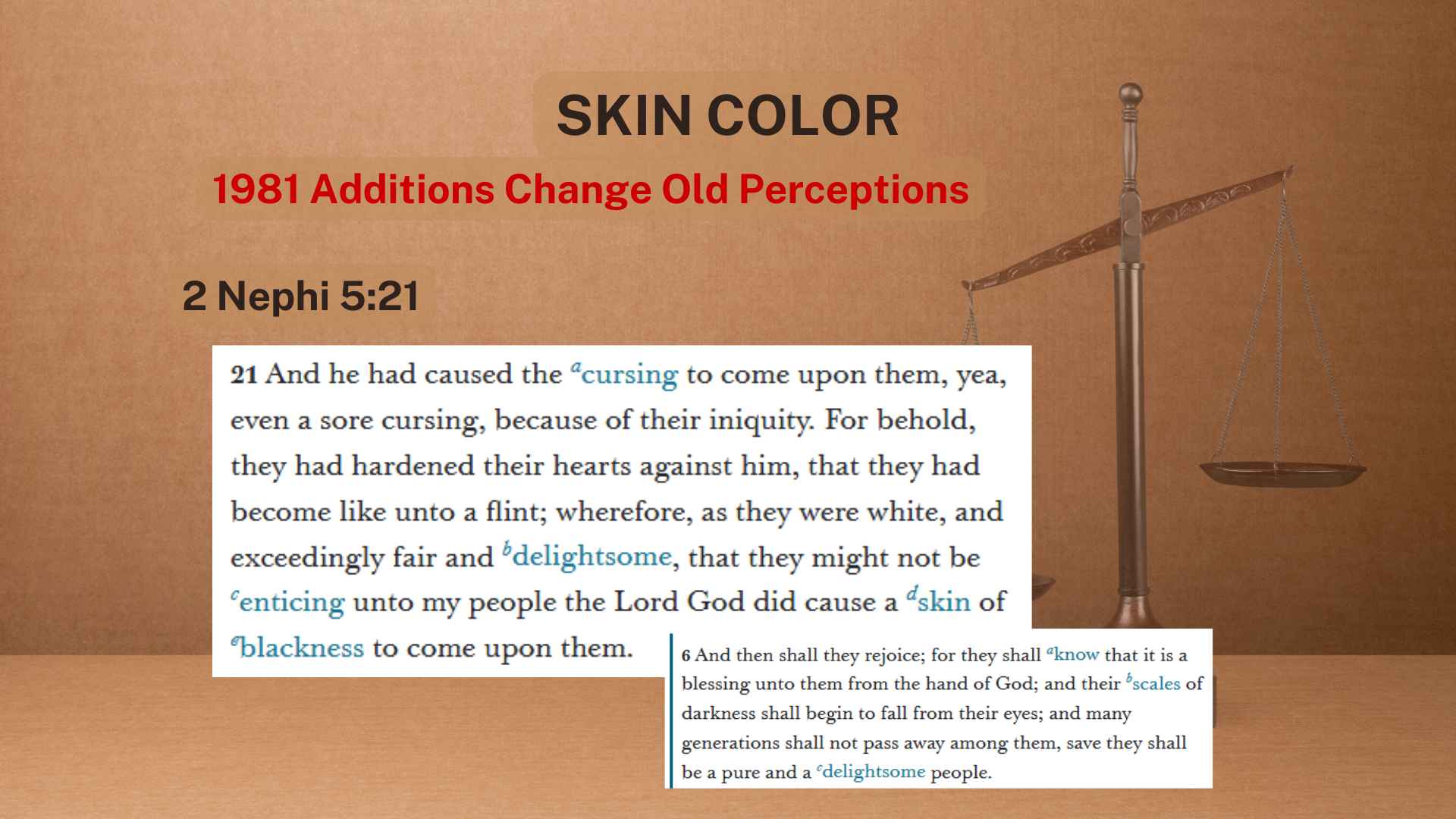
“And he had caused a cursing to come upon them…”
Now, we understand the cursing—a separation from God because they were sinners, they wouldn’t live the law of God—
“…to come upon them, yeah, even a sore cursing, because their iniquity. For behold, they had hardened their hearts against him, that they had become like unto a flint. Wherefore, as they were white and exceedingly fair and delightsome, that they might not be enticing unto my people, the Lord God did cause a skin of blackness to come upon them.
Now, before 1981, there was no footnote on the word skin. The brethren put one in there. What do they want us to understand about skin? They directed us to 2 Nephi 30:6.
Clarifying Through Footnotes
2 Nephi 30:6 reads,
“And then shall they rejoice, for they shall know that it is a blessing unto them from the hand of God, and their scales of darkness shall begin to fall from their eyes, and many generations shall not pass away among them, save they be a pure and a delightsome people.”
And so what do they want us to know from skin? Well, some of us can get an impression that they’re talking about more of a spiritual darkness. But if you follow the footnote—you don’t even have to guess at it. They made it crystal clear.
If you follow the footnote for “scales” down to the bottom of the page, it says clearly “topical guide darkness—spiritual, spiritual blindness.”
Changes in Language and Meaning
So this is the direction that they are giving us. And notice the word pure. Before 1981, that word read white. And they changed it to pure, saying that it actually closer fit the meaning of the phrase.
All right. So, let’s get a little more scriptural support. Now, every scripture in the Book of Mormon that made you think that the Lamanites had a darker skin than the Nephites, it actually has a new footnote on it.
Now, I don’t know anything about the DNA and what color they were when they got here. I don’t know anything about that. Okay. 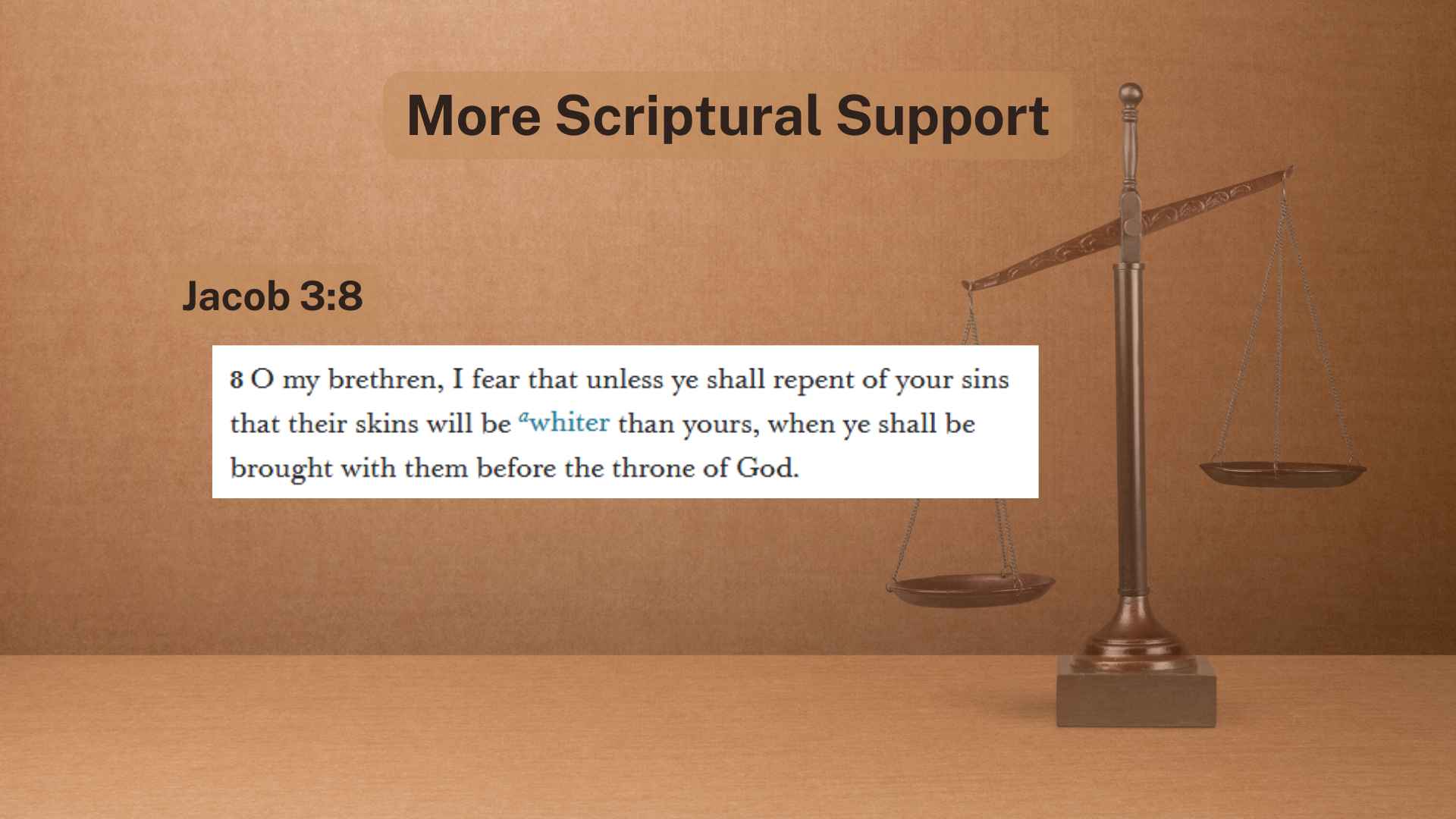
Judging by the Heart
All I know—and this is all I preach when we’re helping people in the church stay in the church—I just point to what the brethren have given us.
And in Jacob 3:8, you’ve got,
“O my brethren, I fear that unless you repent of your sins, that their skins,”
speaking of the Lamanites,
“will be whiter than yours when ye are brought before the throne of God.”
Brought before the throne of God to be judged. Here I am. What is he going to judge me on? Is he going to judge me on my physical appearance, my outer skin? Does that represent my righteousness? No. You know better than that. 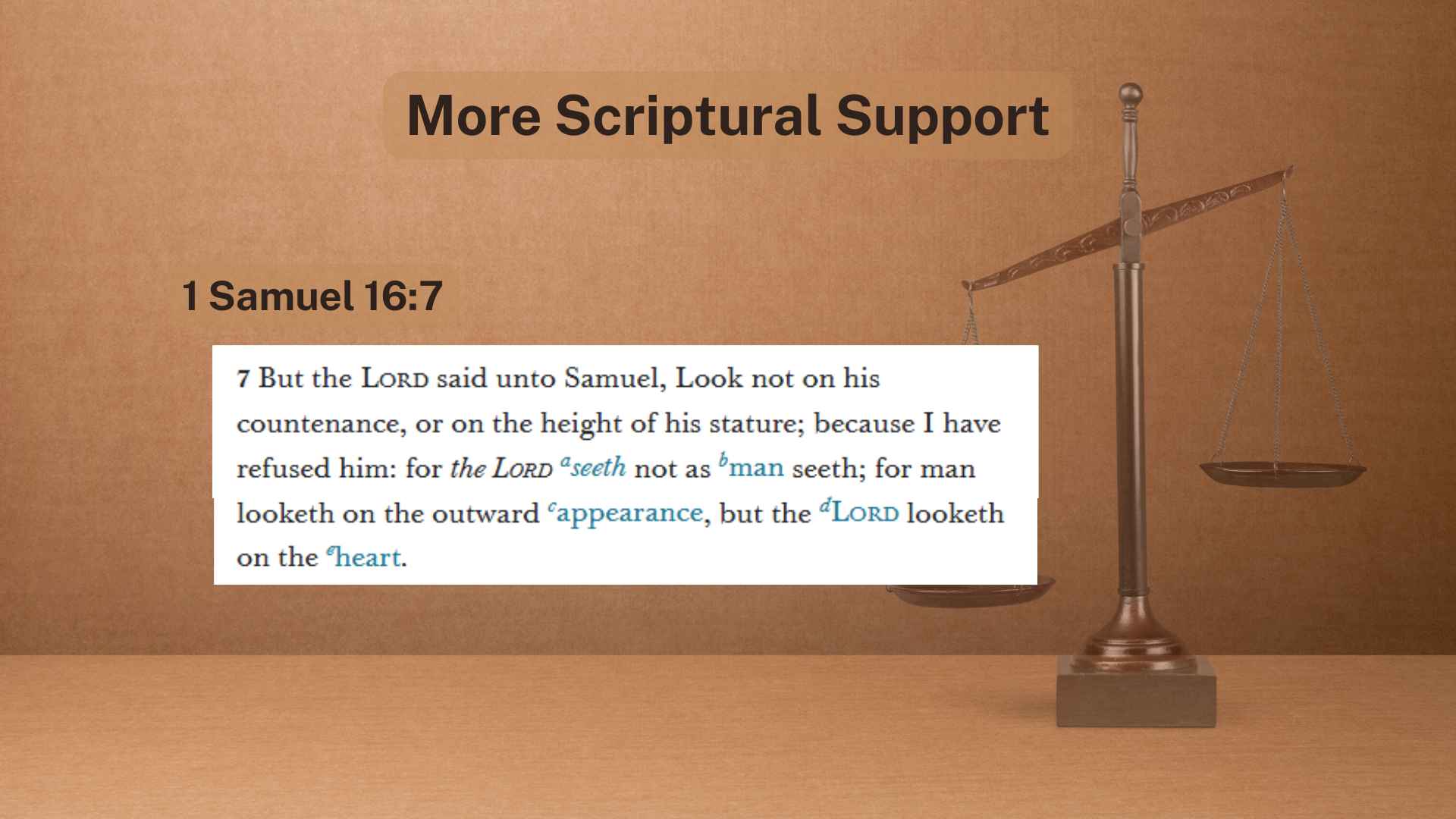
The Lord Looks on the Heart
The Lord gave us, in 1 Samuel 16:7, direction on that.
“But the Lord said unto Samuel, Look not unto his countenance, or the height of his stature; because I have refused him: for the Lord seeth not as man seeth; for the man looketh on the outward appearance, but the Lord looketh on the heart.”
So if the Lord is going to judge us based on whiter and darker skins, it must be something other than a physical or literal skin.
And the guidance that the brethren have given us clearly in the scriptures is that they’re talking about a spiritual darkness. 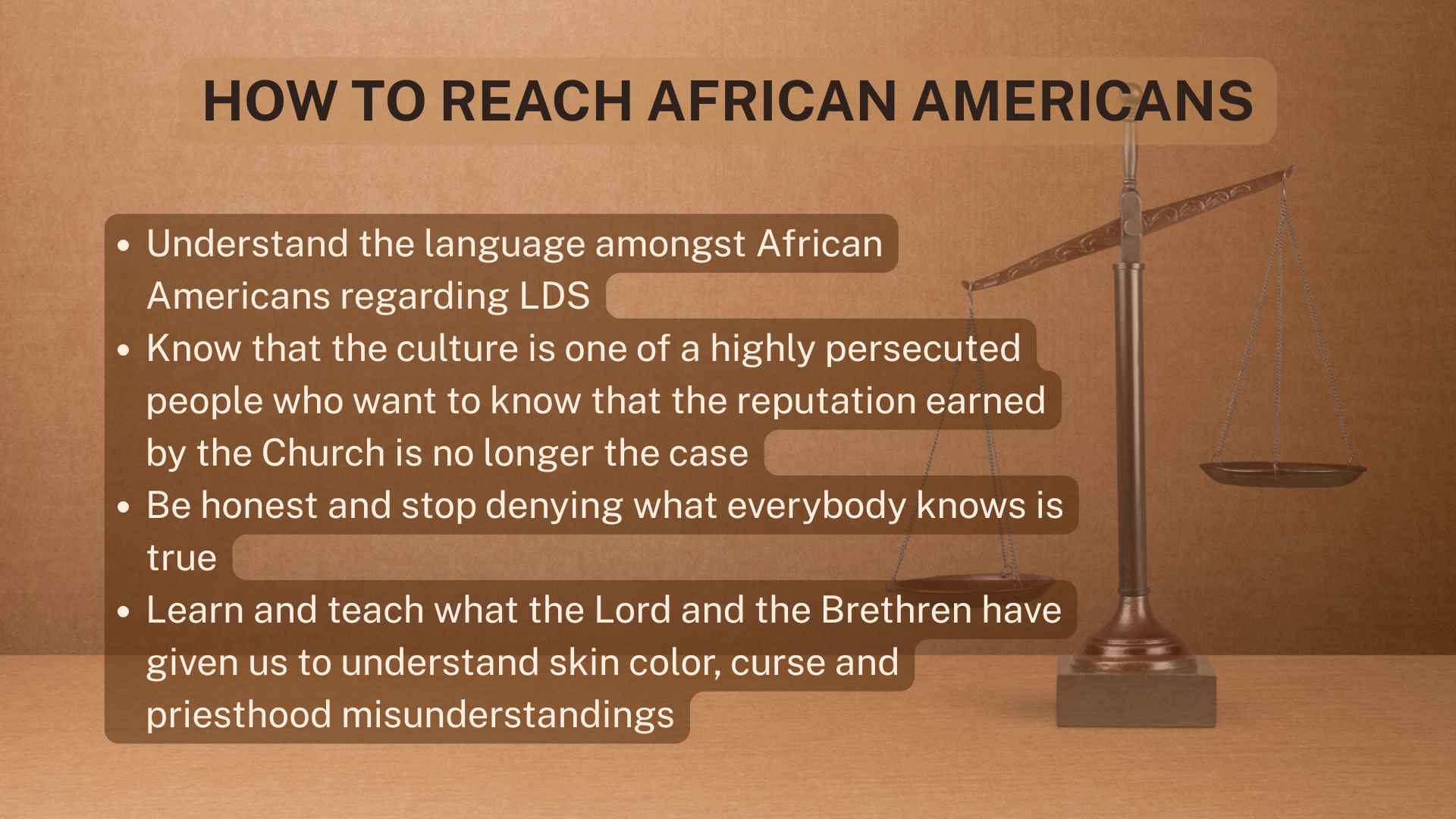
Applying the Teaching
How do we reach African-Americans? We’ve got to understand the language and the culture of African-Americans regarding our LDS culture.
Number two, we need to understand that this is a culture of highly highly persecuted people that have plenty of written documentation that we need to explain somehow. We just can’t wish it away.
Teaching with Honesty and Scripture
We need to be honest and stop denying what everybody knows to be true. It’s like walking in with a milk mustache. “I didn’t have milk. I didn’t have any milk.”
Learn to teach what the Lord and the brethren have given us. You don’t need the philosophies of men on this issue.
You can go to the scriptures, study them out. I recommend that you don’t take my word for anything, but that you actually go to the scriptures and get on your knees for everything that you don’t understand. He’ll give it to us. He really will. 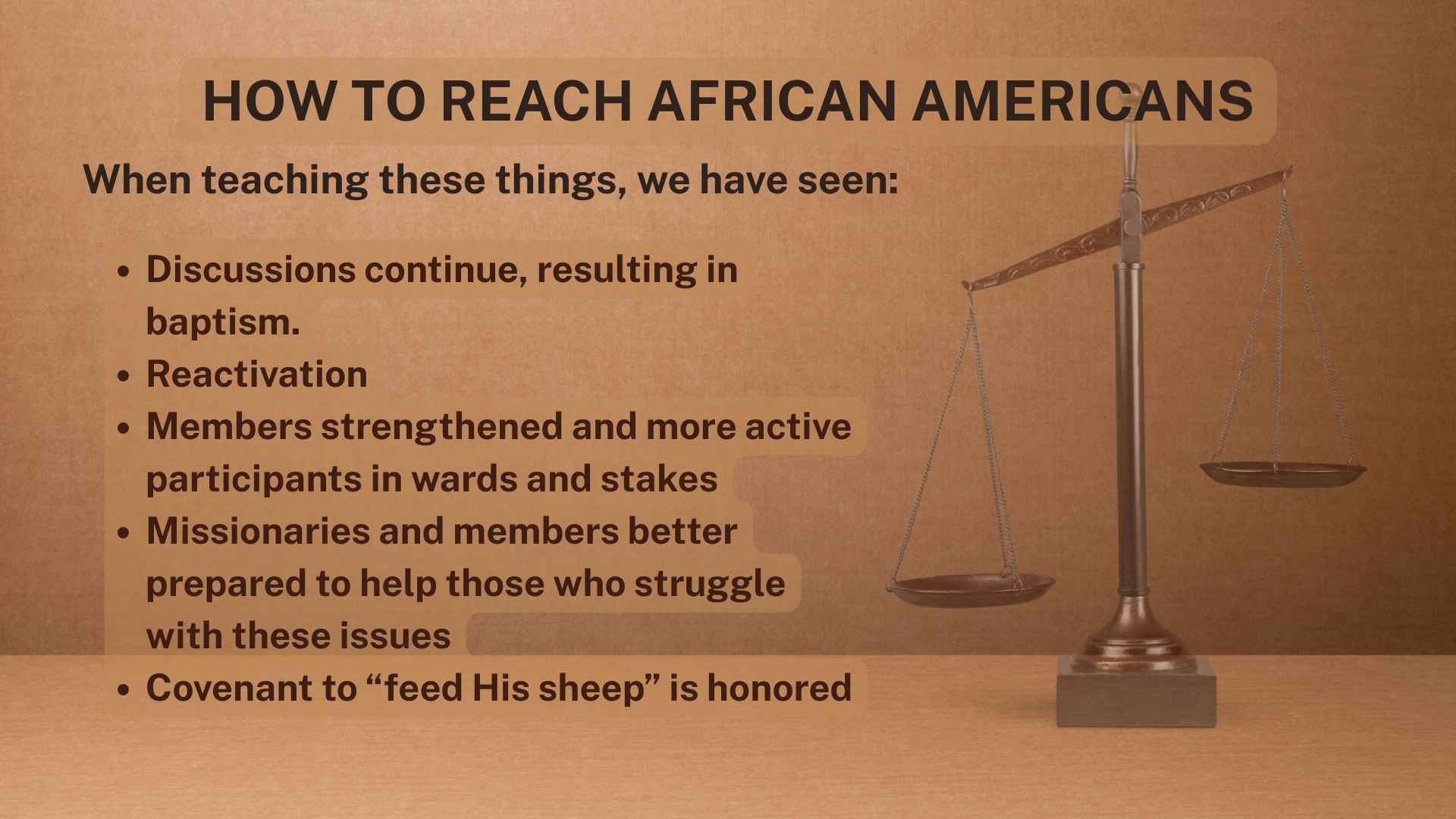
The Results of This Approach
And as a result of learning this information, what happens? Well, this is what we’ve seen when we’ve taught from the scriptures this new direction that the brethren have given us.
The discussions continue resulting in baptism.
Brothers and sisters of color—of all colors—come back into the church as a result of now feeling more comfortable.
Strengthening the Church
Members are strengthened and more active participants in their stakes and their wards.
Missionaries are armed and members are armed. They go out with knowledge on how to deal with these issues, and now they can actually help someone.
And finally, you are able to keep your covenant to feed the Lord’s sheep.
Final Warning and Testimony
Woe unto the shepherds who feed not the sheep. How do you think the Lord would feel if we as a church ignored these people?
Especially when we have the pattern—we have the pattern of studying the language and the culture of people before we go out to try to reach them—but yet putting no effort forth for this group of people, I think that he would be very displeased with us.
But I know that if we do this, if we study these things and just only study the language and the culture of the people and what the brethren have given us, that we will see a flood of African-Americans come in the church.
And I leave these things with you in the name of Jesus Christ. Amen.
