Introduction: Joseph Smith and the Legal Trials of His Life
Well, have you learned enough about Adam? I don’t believe I’ve heard that much in my whole life. And I’m looking forward to reading it again.
But we also need to know more and think more about the spiritual father of our own time. And so I hope you’re not tired of hearing about Joseph Smith. We’ll have some unique aspects here today that we can consider.
But first we look back on last year and we see that it was really quite a time for Joseph. Before 2005, I suspect that Brigham Young was far better known than Joseph Smith, certainly to historians and to those who read western books.
But 2005 changed all of that. Starting with a series of seminars, the Library of Congress being most notable, studies of Joseph went around the world literally. He made the cover of Time and Newsweek magazines. Wonderful books were written during the year.
Claudia Bushman, who’s been here throughout the day, actually was one of those responsible for mounting a heroic bronze statue in a very prominent place in a park in Manhattan, of all places.
So he is now being known for good and evil throughout the world as he never has been before.
Well, from my years of research, as you’ve just heard, I’ve gained a new and deeper appreciation for what he had to endure despite years of unrelenting legal proceedings.
A Life Shadowed by Legal Proceedings
Let’s do this.
Now he, as you know, faced many tribulations throughout his life and, in fact, his ministry was shadowed the entire time through a series of legal proceedings which resulted in his incarceration and ultimately his death.
The team that I’m on with the Joseph Smith Papers, and some of the members are here in our group, have identified approximately 175 lawsuits that he was involved in in one way or another—suits brought against him, or that he had to bring against others, or that he was a witness in some cases, or as judge.
Yes, in Nauvoo he was the presiding judge of the municipal court and was the justice of the peace for the mayor’s court.
So all of these took time and assets and a great deal of attention. Any of you who have ever been involved in a lawsuit, or have friends or family who have been, know that it is draining, totally all-consuming.
Lawyers spend night and day preparing for their cases. And while it was different 150 years ago—you could have a charge brought one day and the case heard the same day or the next day—still, it was a very demanding process.
We’ll focus just a little bit. Now, this is a panoramic survey. Really, we don’t have time to spend a lot of detail on any of these cases.
But there were approximately 50 cases which he had to defend that were brought against him as criminal charges that could have taken his liberty or his life and actually finally did. 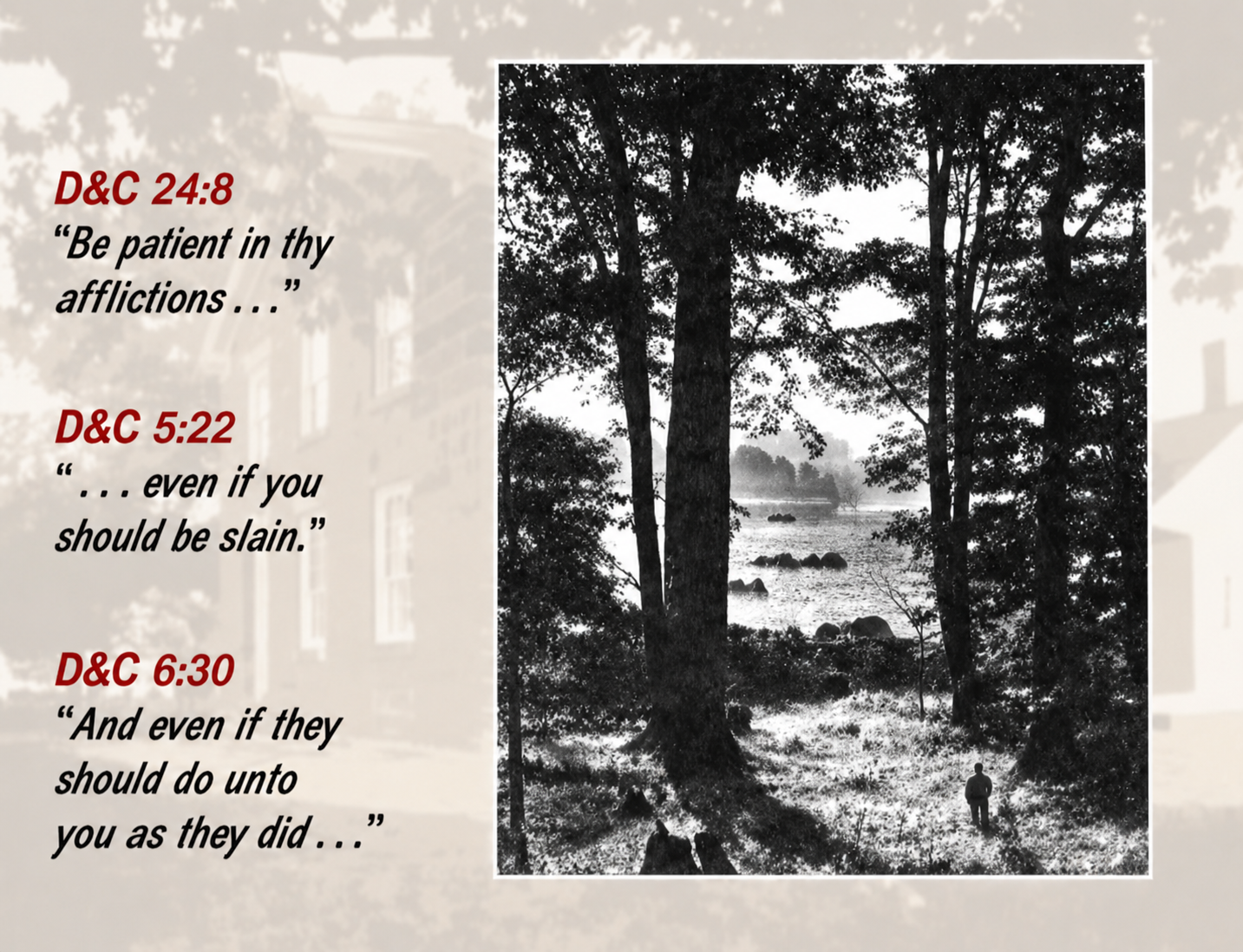
Early Warnings and Afflictions
From the very beginning, the Lord warned Joseph when he was called to the ministry that he would need to be patient in his afflictions, for he would have many, and that he should keep the commandments and he would be glorified even if he should be slain.
And finally, “even if they should do unto you as they have done unto me, blessed are you, for you will be crowned with glory.”
Now, that’s quite a way to start your mission.
He said he got used to swimming in deep water, and that was certainly true from the legal aspect.
The 1826 “Glass Looker” Case
The first of the cases brought against Joseph actually started the year before his ministry. You might say his ministry actually began when Moroni visited and then brought the plates. 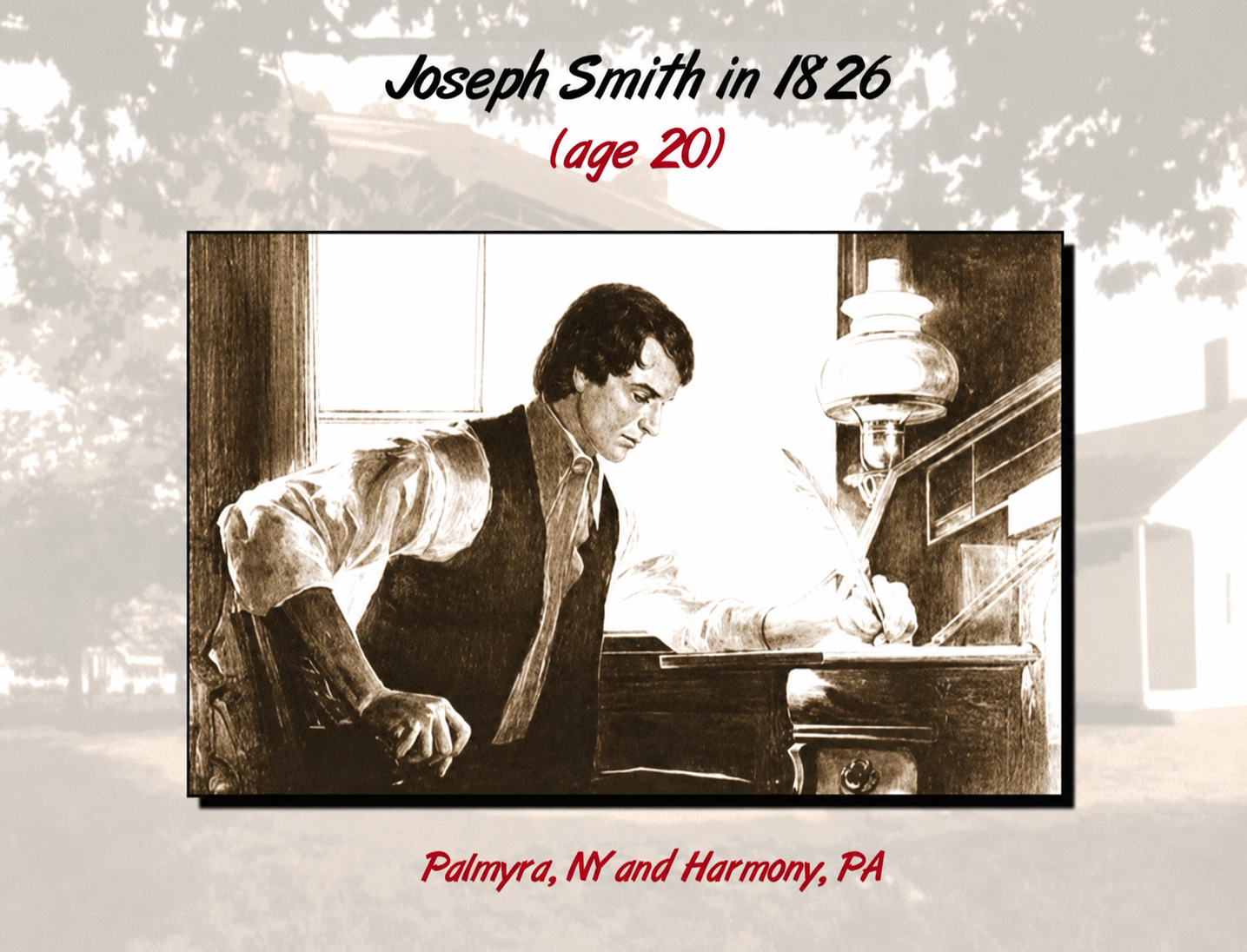
Here he is at age 20 in 1826. And this is a rather notable case. A lot of print has been spilled on this case, and it’s thought by some even today that it turned out badly for Joseph.
There are three accounts of this case, and two of them were by medical doctors who were bystanders, and one was by the justice himself, the justice of the peace who kept some notes.
His niece inherited those, and they were finally published about 50 years later during the peak of the polygamy persecutions.
This case came in Harmony when he was living in Harmony, Pennsylvania. That’s one of several oxymorons that I’ll mention here.
And earlier someone mentioned the cases, the documents that have been found in a basement in a New York jail. 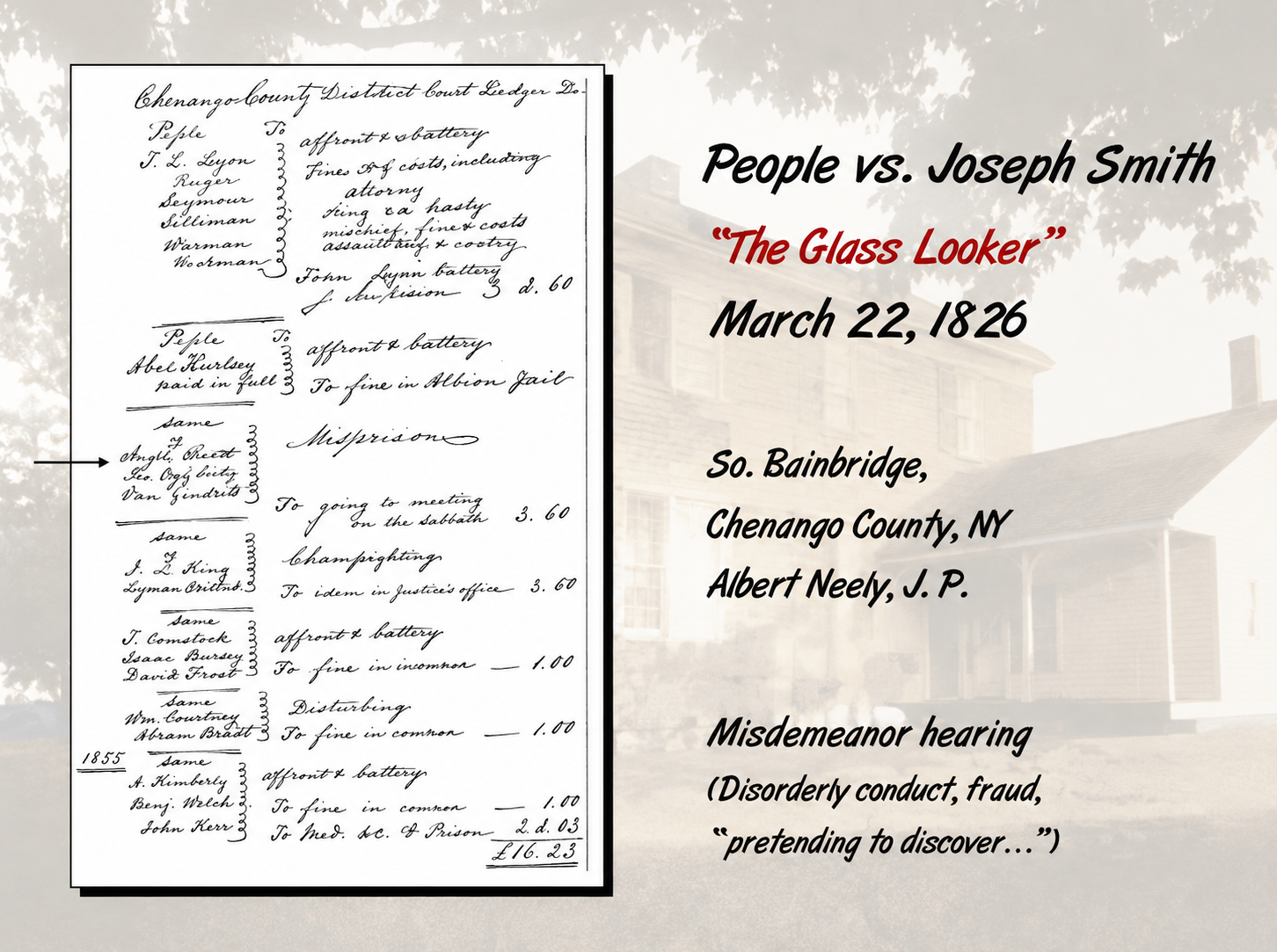
A justice of the peace named Neely first made a record of People versus Joseph Smith and described him as the “glass looker.”
Now, that was not the criminal charge, but actually it was a form of disorderly conduct, a misdemeanor under the statute of the time. It was for falsely pretending to discover lost goods.
Now, in one of the versions, actually the one that the niece inherited from the justice, the way it supposedly comes out is that he was arrested, posted bail, jumped bail, had to be rearrested, brought back, was convicted, and then either exiled or allowed to escape.
Treasure Digging for Spanish Gold
Joseph himself, before we get to Constable DeZeng, kept an account saying that for some period during this winter of 1826, he and his father were hired by Josiah Stowell, who had an old Spanish treasure map and knew that these men were good hard workers, but also heard that Joseph had some supernatural gifts—the ability to discover things that had been lost.
After about a month of working hard looking for this treasure, Joseph, according to his mother’s history, finally discouraged Josiah Stowell and he gave the whole thing up.
While they didn’t discover that buried treasure, he discovered his greatest treasure in life, which was his wife Emma. He was then living with the Hales.
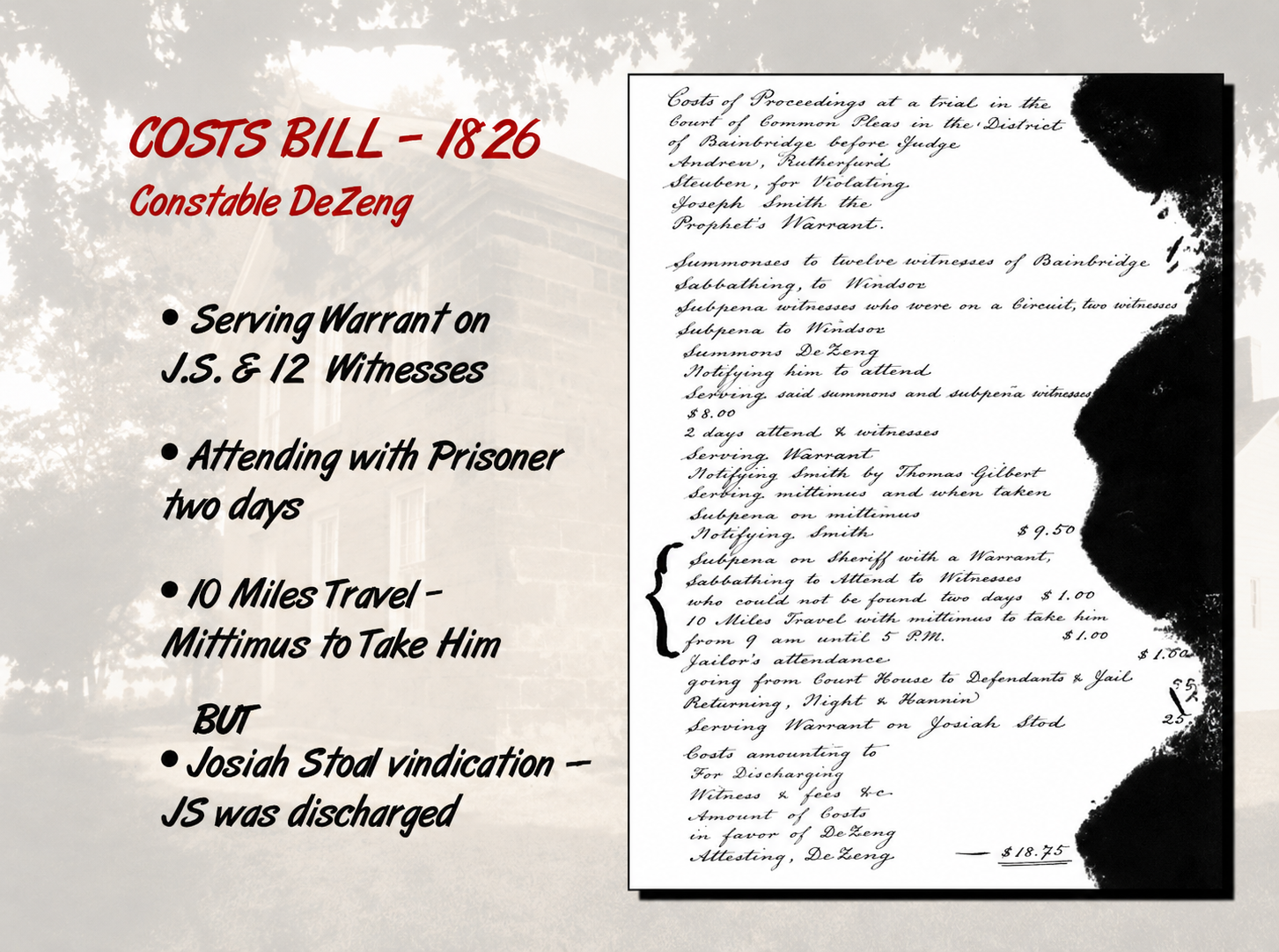
Now, according to Dr. Purple, one of the two medical doctors who also published his version of this, what Constable DeZeng actually meant by what he said here—serving a warrant on Joseph and 12 witnesses and then attending with the prisoner for two days and then 10 miles of travel with a mittimus to take him—wasn’t to take him out of the jurisdiction and exile or expel him, but to take him to the hearing. 1
Now, the result of this, according to Dr. Purple, is that these 12 witnesses testified, including Joseph and his father and Josiah Stowell and several others.
Josiah Stowell’s Testimony
Stowell was the last witness, and he was supposed to clinch the case for the one who brought the charges, a disgruntled nephew who thought that Joseph was cheating his uncle.
But Josiah Stowell turned the tables and came to Joseph’s defense, vindicated him as a hard worker who never did what he wasn’t paid to do.
And so he was discharged according to Dr. Purple.
We think that he was vindicated and discharged. Gordon Madsen has spent a lot of time studying this case, and he has 10 other reasons why he thinks he was acquitted and not convicted.
This was the first case and the closest call, you might say, to a criminal conviction.
The 1830 Arrests Following the First Baptisms
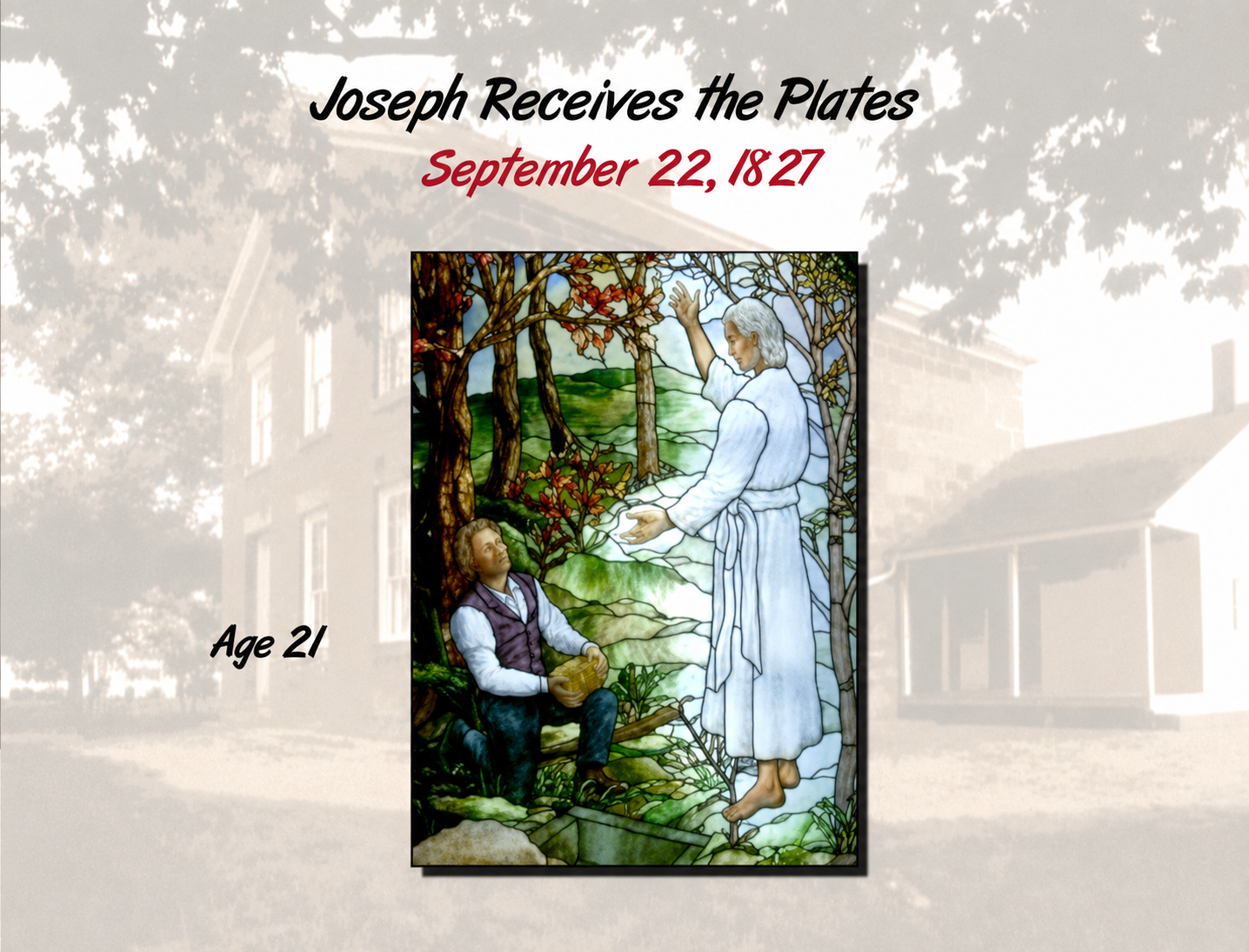
The next year, Joseph received the plates. The ministry begins at age 21, and the next case is the following year.
There is not time to discuss the intricacies of that case, a very interesting case. We know that the first 116 pages were lost. They were taken by Martin Harris to show people that had to be convinced that he was not wasting his time or money.
One of those was his wife, Lucy Harris. And as it turns out, she’s the one who sues Joseph for cheating her husband. But I won’t get into that one.
The Church is now restored in April of 1830, and just two months later—and we have the priesthood restored and the first baptisms, which did not include Emma, as she was still back at Disharmony, or Harmony, Pennsylvania.
And so Joseph goes down to baptize her and the Joseph Knight family and several others in the same area.
So this next case comes when they had just completed the baptisms. The mob, about 50 vigilantes, had torn out a dam where they had performed the baptisms, and they were successful in disrupting the confirmations.
Joseph once said that you might as well baptize a bale of hay as to baptize a person without the confirmation for the gift of the Holy Ghost.
Now a constable came with a writ to arrest Joseph for, again, disorderly conduct, disturbing the peace, and this time it includes setting the countryside in an uproar by preaching the Book of Mormon.
A Courageous Constable
Now the constable was part of a plan to do some harm to Joseph. He was supposed to get Joseph away from his friends and put him in a wagon. Then, as they got out of sight around a bend, he was to slow down. So, those who were lying in wait could come out and ambush him.
But as so often happened, the constable was impressed by Joseph. He actually came to like him and was impressed that he was not at all what he had been told.
So, instead of slowing the wagon down as they came around that bend, he whipped the horses into a faster pace. They were making good time as they ran away from the mob, who were now saddling up and trying to come in hot pursuit.
The wagon loses a wheel just at this moment, though. I’m not making this up.
So Joseph is propping up the wagon while the constable is putting the wheel back on, and here comes the mob riding as fast as they can.
They get back in the wagon. These must have been really good horses because they outran the mob, and they get to the end where the court will be held the next day.
Lack of Formal Courthouses
Back in those days they didn’t have really formal courthouses for the most part. They were held in justice of the peace parlors. Or, if it needed a larger place, then in a tavern or an inn. And that’s where they went this time.
I mentioned that this constable was quite courageous because he not only ran away from the mob, but he told Joseph:
“Now there’s only one bed in this room. You take the bed. I’ll lie here on the floor with my musket beside me, and I’ll prop my feet against the door so they can’t get in and you can try to get a good night’s sleep.”
The First Trial
The court started the next morning at 10:00 a.m. This is about midnight now. Okay, you hadn’t prepared your case. You hardly know what the case is. But Joseph Smith so often relied on others to finance these defenses and to bring these lawsuits.
Two farmer friends of the Knight family, John Reid and James Davidson, who also happened to be lawyers, were impressed into duty.
So at 10:00 the next morning, the court begins. And again, twelve witnesses, similar charges to what he had before. And it had nothing to do with treasure seeking this time. It was just:
- general disorderly conduct,
- vagrancy statutes,
- lack of visible means of support.
This went on till about midnight, and Justice Chamberlain uttered those words that they waited to hear:
“Not guilty.”
Immediately as they walked out the front door of the courthouse—or the little tavern—John Reid, the attorney, said that they were seized by some fiends from hell from the next county over.
So the case is not over. Now it’s time to go to Colesville, Broome County.
The Second Trial in Colesville
Well, this constable is not nearly as considerate as the last one. He actually chained himself to Joseph. He fed him bread and water, and that’s all he had.
And as they tried to rest, whenever Joseph would move, he would jerk him to make sure he wasn’t trying to get away.
Now this time the charges are very similar. Except they added to it “casting out a devil” as a version of disorderly conduct.
Newel Knight was the recipient of that benefit.
And one of the questions that was put to Knight as they had this exchange was:
“Well, Mr. Knight, is it true that the devil was cast out of you?”
And he said, “Well, that’s correct.”
“Well then, did you see the devil?”
“Yes, sir, I did.”
“Well, would you please describe the devil to this court?”
He said, “Well, maybe I could first ask you a question.”
There’s objection, of course, and, “You need to answer the question.”
He says,
“I’ll answer the question if you’ll first answer my question. Do you believe in spiritual things that cannot be seen with a visible eye?”
And he said,
“Well, of course not. I’m a lawyer.”
And so he said,
“Well, then it would do no good to describe the devil to you because it would only be discerned by those who can see things spiritually.”
So they changed the subject and went on with 40 other witnesses.
Josiah Stowell came back, and many others.
Forty Hours of Testimony
And this went on for 18 hours. So it’s now been a total of 40 hours in a period of two days. And again, the result this time from a three-judge panel was “Not guilty.”
So this time the disgruntled participants decided that they needed to administer their own version of rough justice.
So they’re out front fashioning something to apply their own version to Joseph. And the two lawyers, and by now the repentant constable and the judge, hatch a plan.
So what they’ll do: one lawyer will go out front with the constable and detain the mob, while the other lawyer and the judge will go to the back room, open the window, and let Joseph and Oliver out through the woods.
And so they run the rest of the night, arriving home the remaining 15 miles, totally exhausted and ready to get out of New York.
Leaving New York
I guess although Joseph was exonerated in both trials, malicious rumors came to Emma’s parents, and they invited them to leave.
They basically disowned Emma and Joseph, and she never saw her parents again.
So here is where all of this happened. Harmony is the lower dot, and then just across the border is South Bainbridge, and Colesville is right next to it.
Palmyra is upstate, as you know.
The Move to Ohio
I didn’t mean to hit that one quite yet.
So it’s now time to start the westward movement. On New Year’s Day of 1831, the Lord told Joseph it’s time to go to Ohio, and there He will endow him with power and reveal the law of the Lord.
So now we’re in Ohio, and how did things go there?
During the seven years that Joseph and most of the Saints lived in Ohio, things went very well. The lawsuits that they brought and defended were done very successfully, but there were more suits there than anywhere during Joseph’s life.
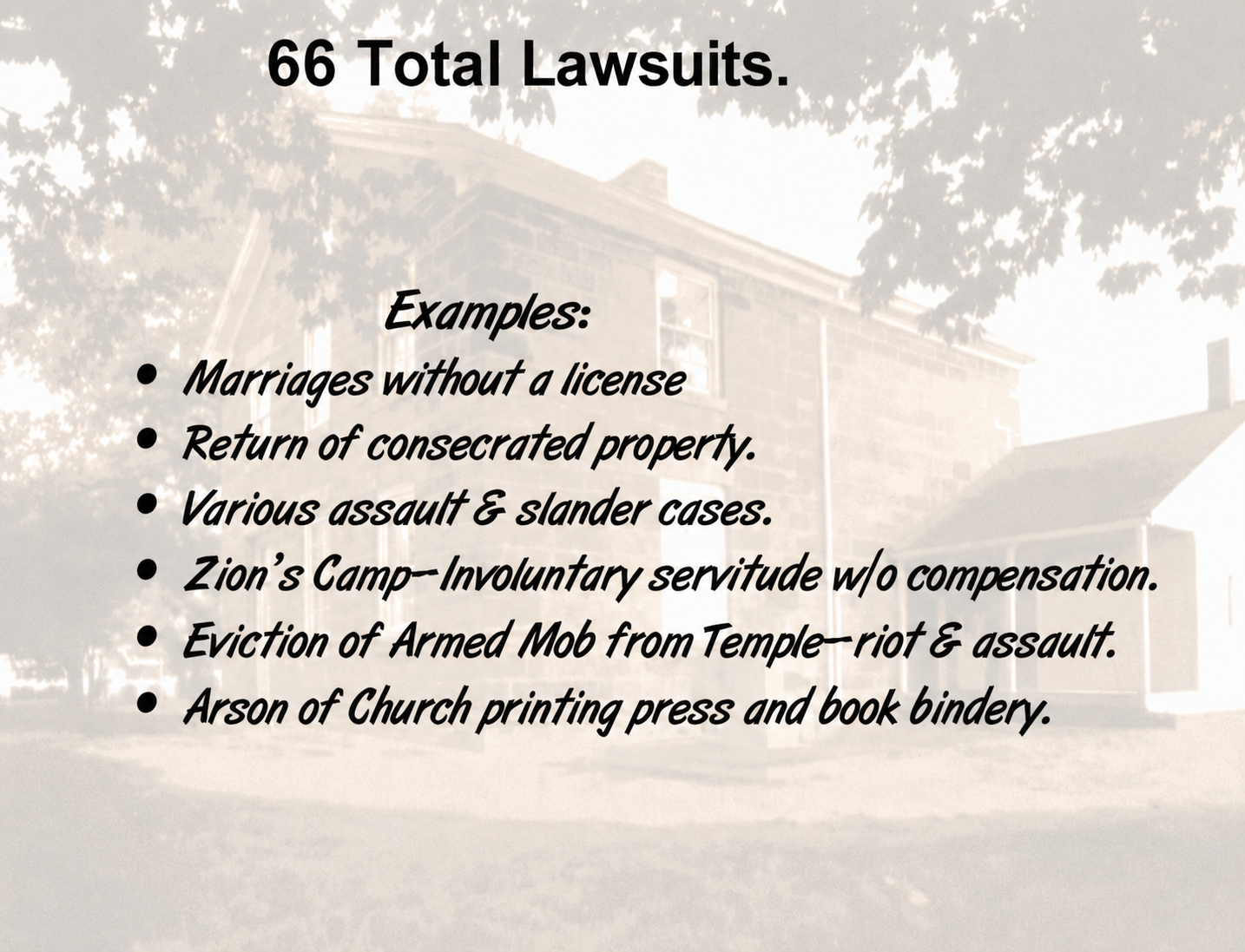
A total of 66 if you count all the suits against the Kirtland Temple Committee.
Legal Successes in Kirtland
And these are just a few examples, ranging from performing marriages without a license to having to evict an armed mob from the temple.
They were charged with riot and assault. This is Joseph Sr. and some of the other family members, and they were acquitted by a justice of the peace named Oliver CCowdery, which was helpful.
The next week there was an arson of the printing press and the bookbindery next door.
Some mob was brought in, and not all cases were brought successfully. They did not have sufficient evidence to convict those five men.
The Kirtland Safety Society
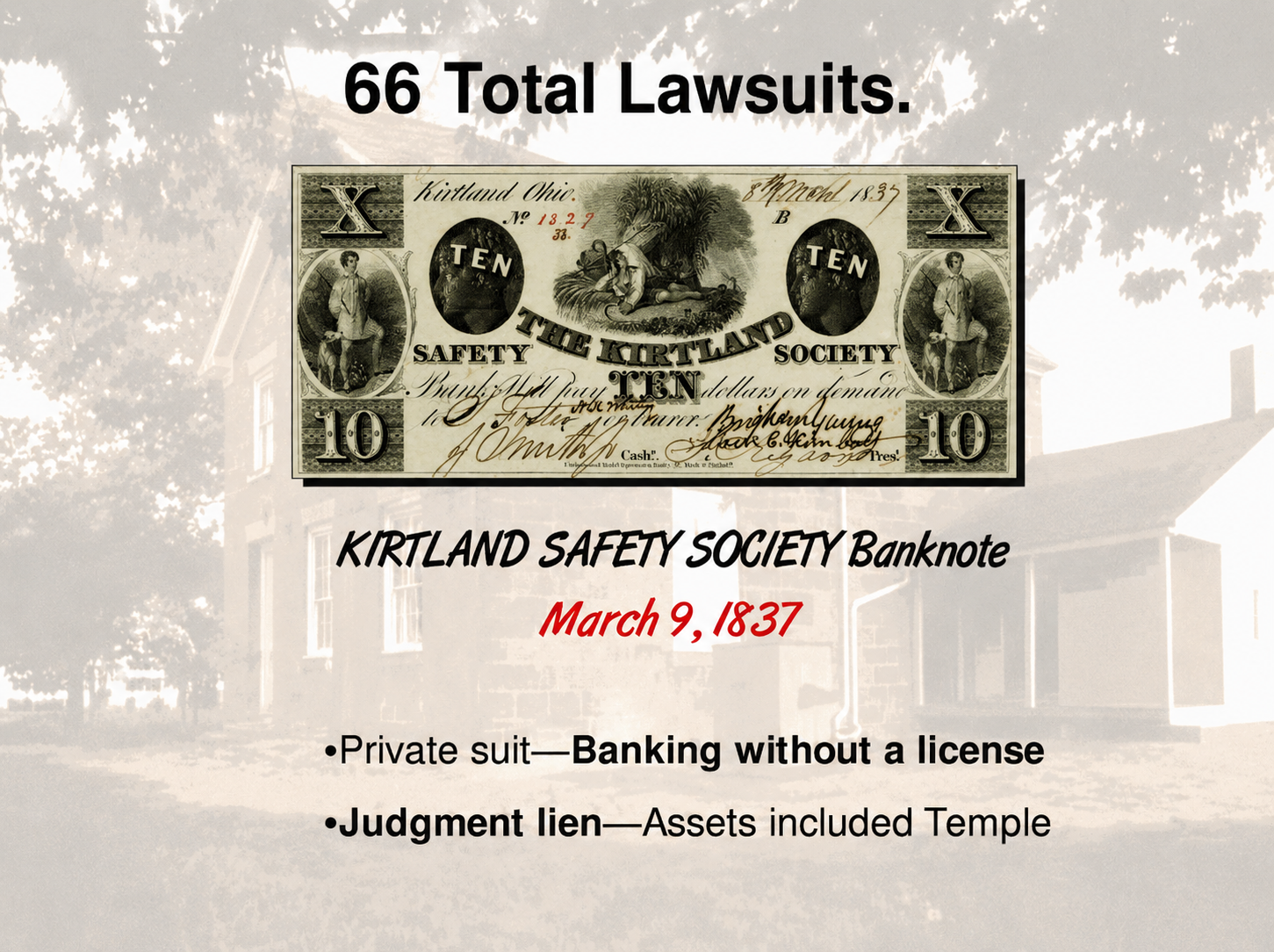
The most serious case, though—the business disaster of Joseph’s life—involved another oxymoron: the Kirtland Safety Society. 2
This is a copy of the bank note that I have in my possession, March 9, 1837.
Now, this resulted from very difficult times on the western frontier. Credit was tight. Many banks were being formed that could issue their own bank notes so that there was more currency.
And like the others, the Saints got their own bank and got their press and started printing their notes. But unlike the others, they did not get a license. It was denied to them at the very last minute.
So they just stamped “Anti-Banking Safety Society,” and that was not quite sufficient.
A private suit was brought against them for banking without a license.
Six Lawsuits in a Single Day
And before I get to this, I need to tell you about while they were waiting for the case to be heard.
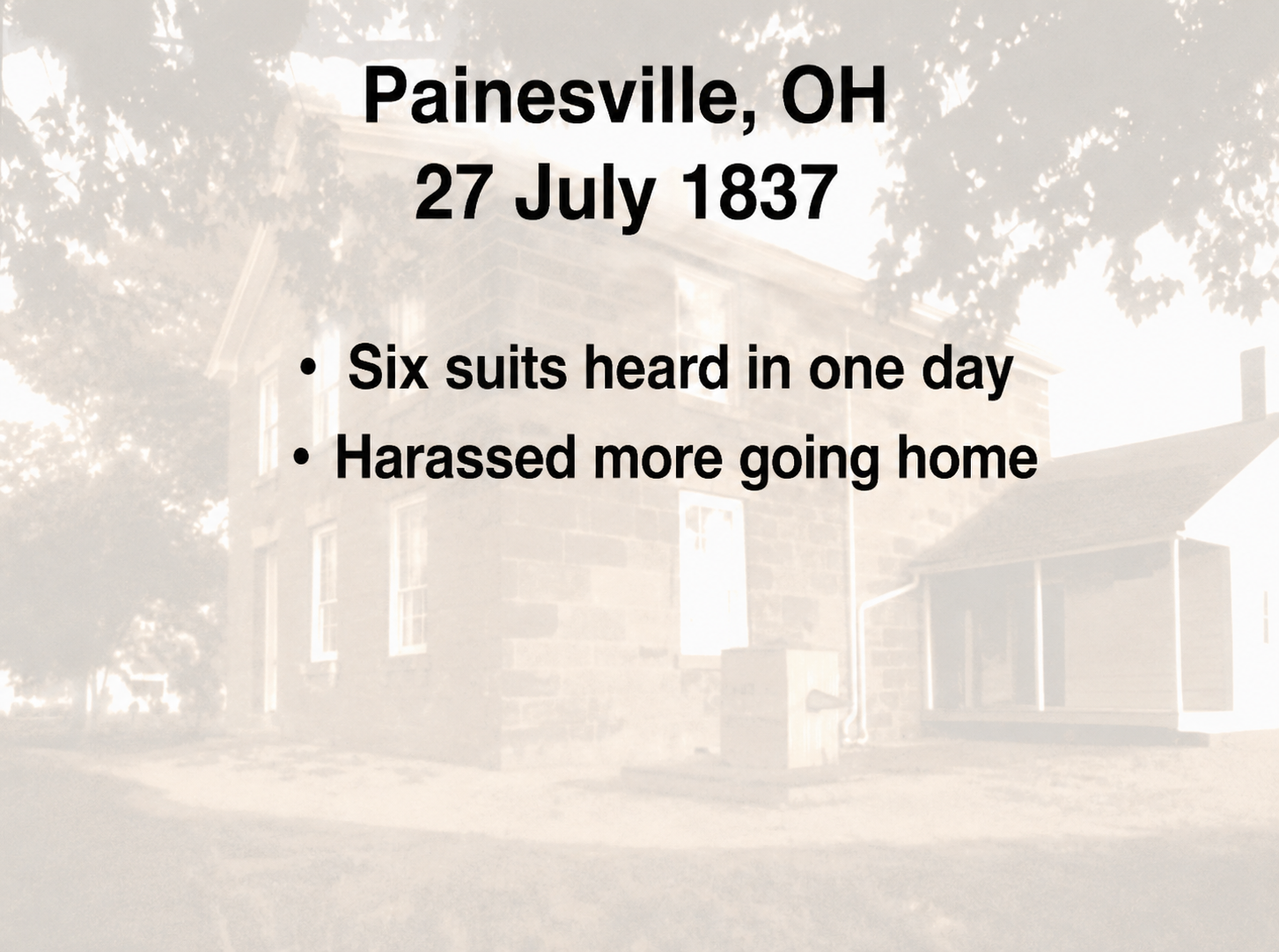
On the 27th of July, six suits were brought the same day against Joseph. And four of the six were actually heard that same day.
Here’s how he described the last thing that happened during the day as they were leaving town, having disposed of five of these:
“At sunset, I got into my son’s carriage to return home. At this moment, the sheriff sprang into our carriage, seized my lines, and served another writ on me, sworn out by a man who just a few weeks previous had brought a new-fashioned cooking stove to Kirtland and wished me to test it for him.”
That man thought that now would be a good time to get paid for it.
“I had to give my watch up to the officer for security, and then we all returned home.”
And as far as we know, he did not go through Painesville again. He found a way to circumvent Painesville, having endured that much harassment.
The Aftermath of the Safety Society Case
Now the next October is when this Safety Society case was heard.
It was apparently resolved against Joseph and some of the other officers, but they appealed the case. And while it was still pending, they moved from Ohio to Missouri.
It finally ended up in a default judgment against the assets of the Church that remained at that time. Through a various sequence of things, that included the Kirtland Temple. And some 25 years later, through this suit, it actually passed hands to the present owners in possession of the temple.
Often a charge that’s made against Joseph and the Saints is that the reason they fled out of Kirtland the way they did was to avoid their debts.
And it’s true that they were huge. $52,000 back then was a huge amount. 3
But Gordon Madsen and Jeff Walker, who work on our team, have determined that over 90% of that was paid, much of it long after they had left Ohio and their beloved temple.
Missouri: From Courts to Mob Rule
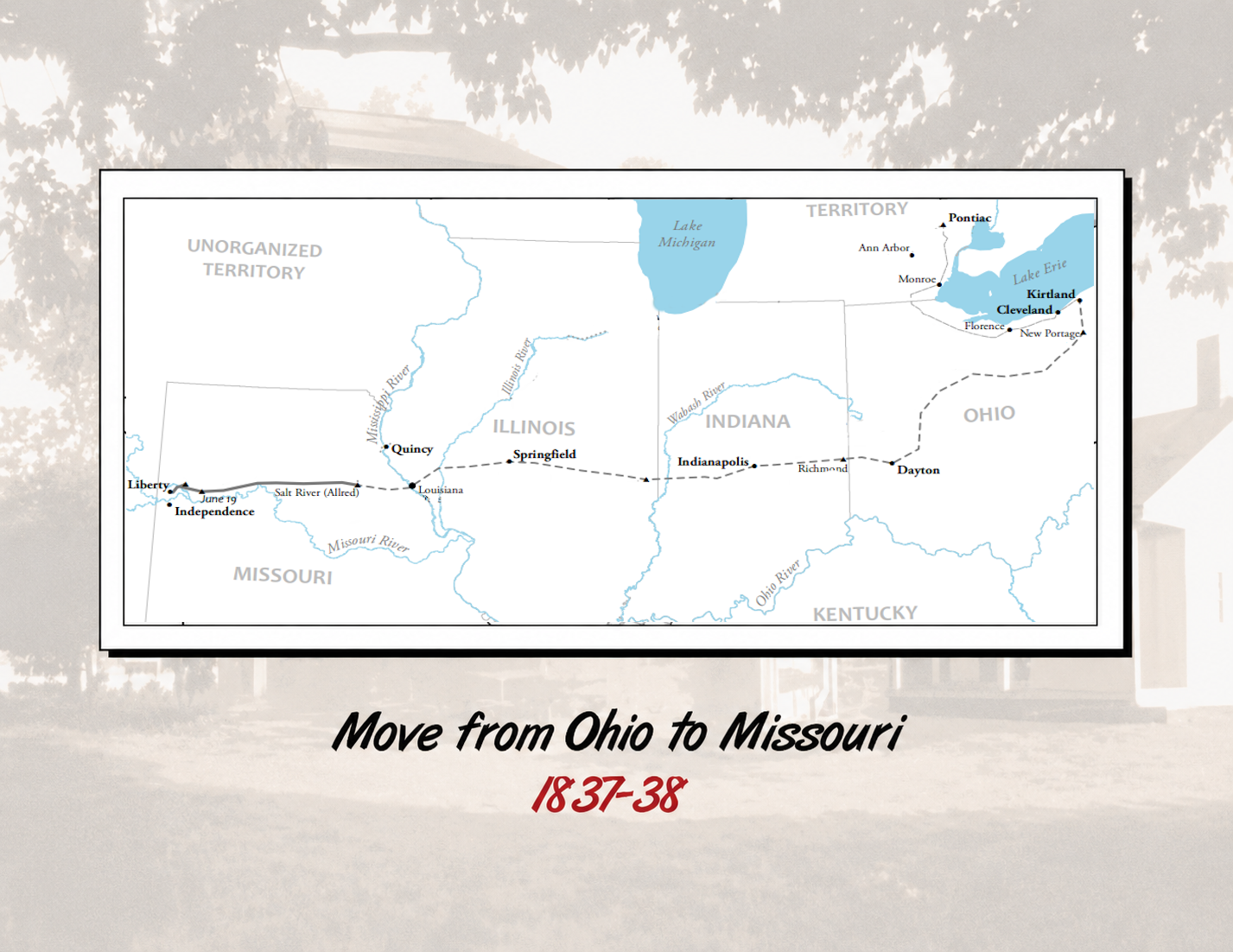
So now it’s on to Missouri. And you can see that this is a sweep across six states. How did things go in Missouri? Well, not very well.
We call it mob rule. They called it people in action, popular sovereignty.
The Mormons were very unpopular for a lot of reasons in Missouri.
- They were considered religious fanatics.
- They were taking the place over, coming in very large numbers.
- They felt threatened in every possible way.
- But the last straw was probably the fact that they were Northerners in a slave state.
The Destruction of the Morning and Evening Star
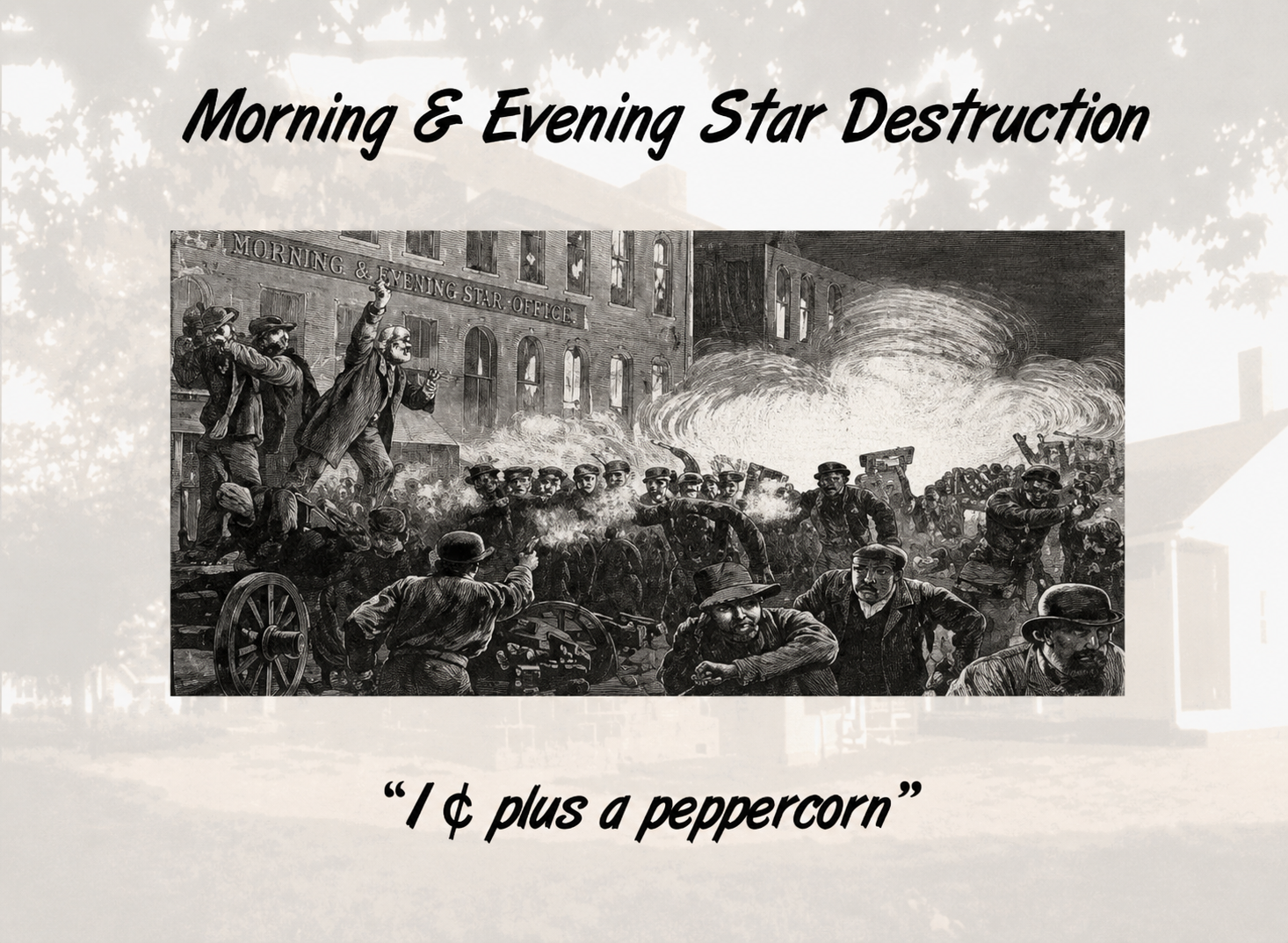
And in July of 1833, the publisher of the Morning and Evening Star published an issue describing the requirements for bringing freed-state slaves into Missouri.
The Missourians did not take kindly to that. This was an affront to their culture. It was certainly not illegal to bring freed slaves there, but they did not take well to that.
And so they took some matters into their own hands and decided that they would do this to the press and to the entire building. They dragged Bishop Partridge around. They tarred and feathered him, dragged him around the town square.
A Hollow Court Victory
So, the closest that the Church came to any success in court while they were in Missouri the entire time—and they brought many cases.
None were ever brought against them, by the way. There was no need. They simply took things into their own hands.
But the closest the Church came was when Bishop Partridge and W. W. Phelps sued the perpetrators of this civic action. And they went to court. And as usual, the defendants claimed self-defense.
The lawyers properly pointed out that there were two men against about 200. And that’s not much of a self-defense. So the judge had to agree that that’s correct.
And on the merits, then, they were upheld on their arguments. But they were awarded a total of one penny plus a peppercorn, which is the legal equivalent of an insult.
In other words, “We agree with you. You’re right on the law and on the merits, but get out. We don’t like you.” 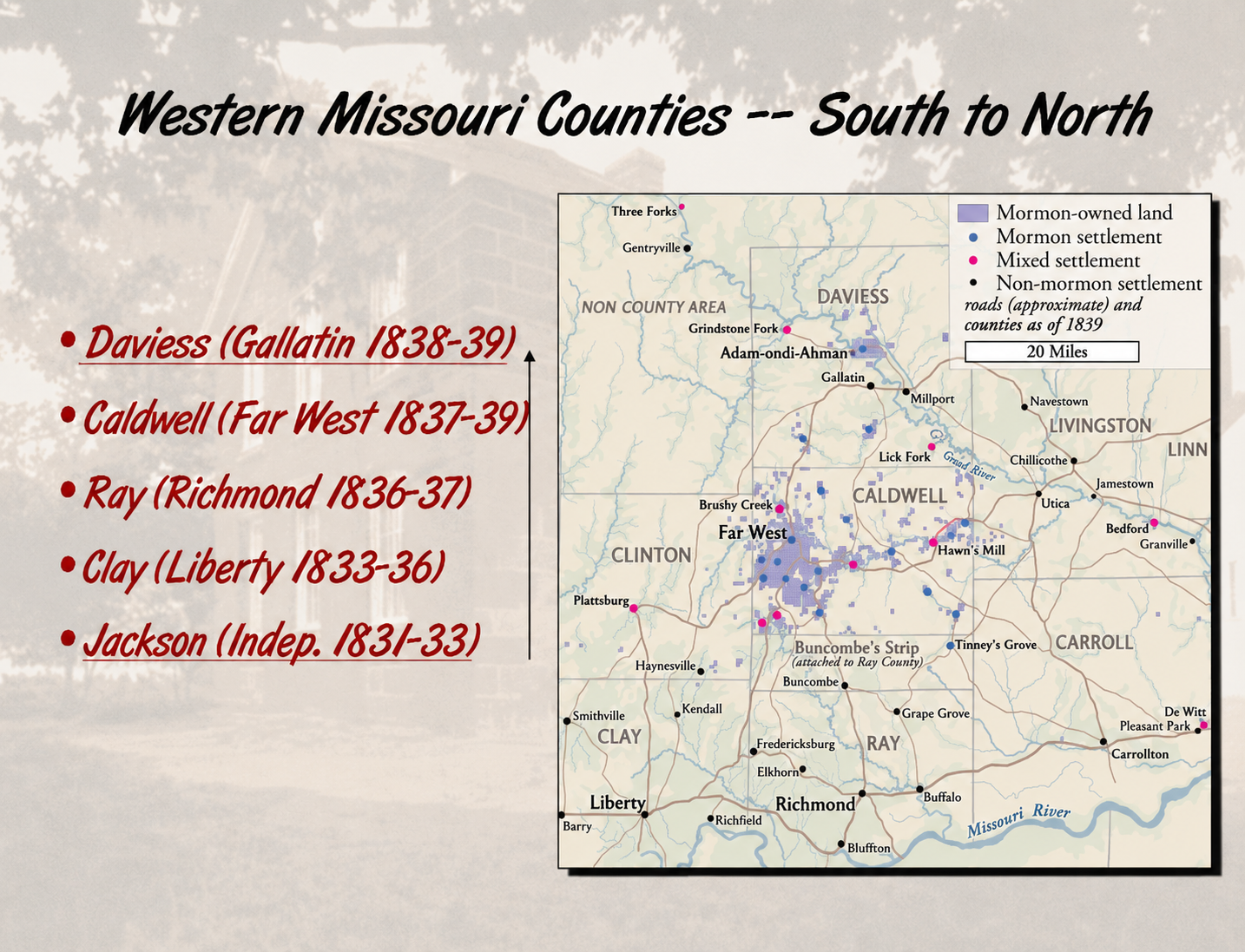
Expulsion from Missouri
So from Jackson County they were expelled that same year. Actually, they were expelled twice from Missouri:
- once from Jackson County,
- and then later from the entire state.
These other locations were all really quite friendly to them.
Clay County, Ray County, Caldwell County was a county formed for themselves. It was a quarantine for the Mormons. Go there and maybe people won’t bother you if you stay put.
But they kept going, and many settled in Daviess County. So that was formed in that territory.
The Road to Liberty Jail
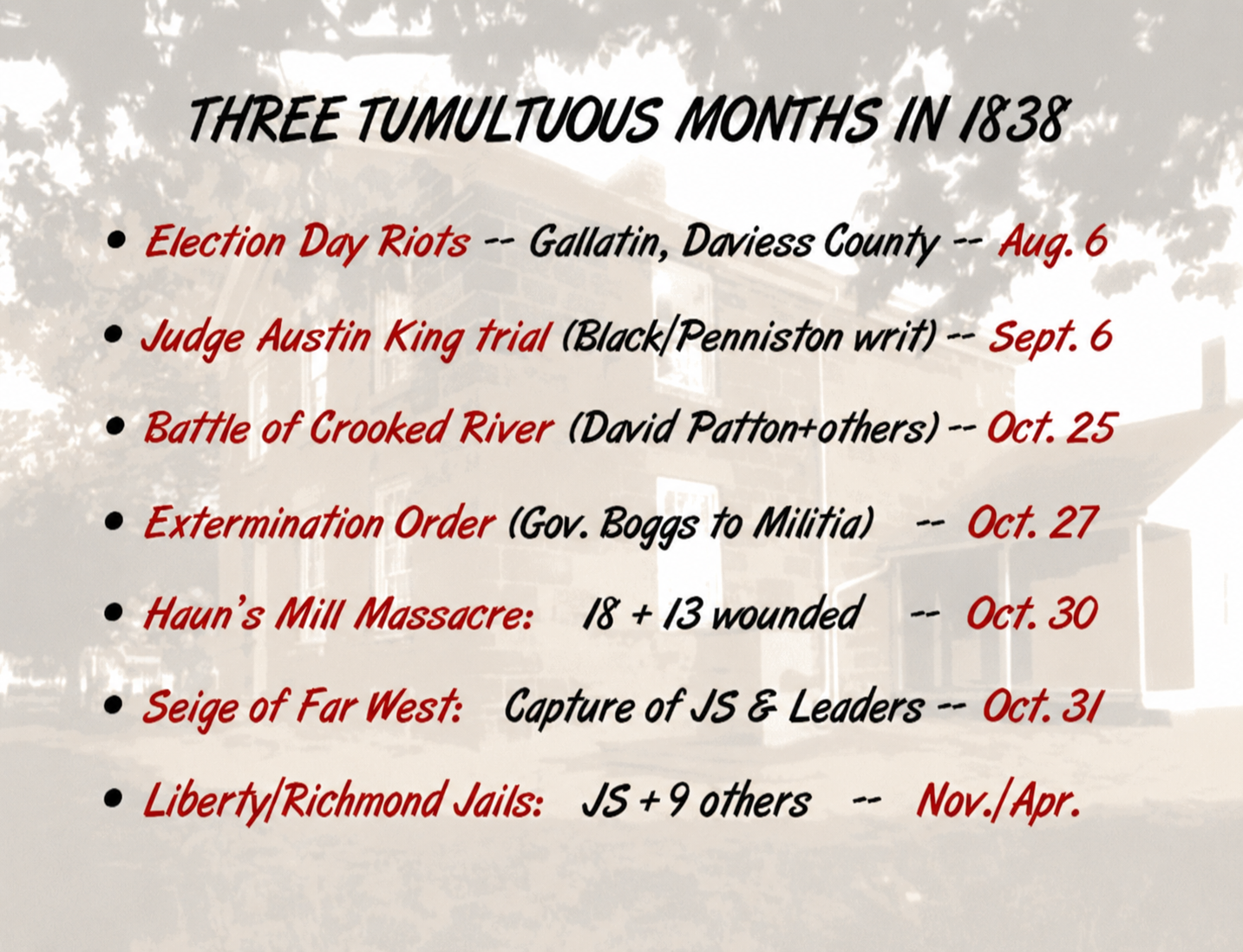
They formed Daviess County. And the real trouble that put Joseph in Liberty Jail (there’s another oxymoron) was Election Day in Daviess County. The first election in Gallatin. We won’t go through all of the details there.
But the short of it was Joseph and about 15 others had heard that after the Election Day riots, some of the Mormons were killed and left to rot, and no one could move the bodies. They would be picked clean by the buzzards.
And they did not take well to that. So they retaliated in a form that was peaceable, all parties thought. And yet they were sued and brought before an old enemy of theirs named Austin A. King from Jackson County.
And this was the beginning, really, of the so-called Mormon War of 1838.
The 1838 Mormon War and the Extermination Order
Through a series of events, this then resulted in the Extermination Order of October 27th. Almost everything really bad after Jackson County happened in a three-month period in 1838. 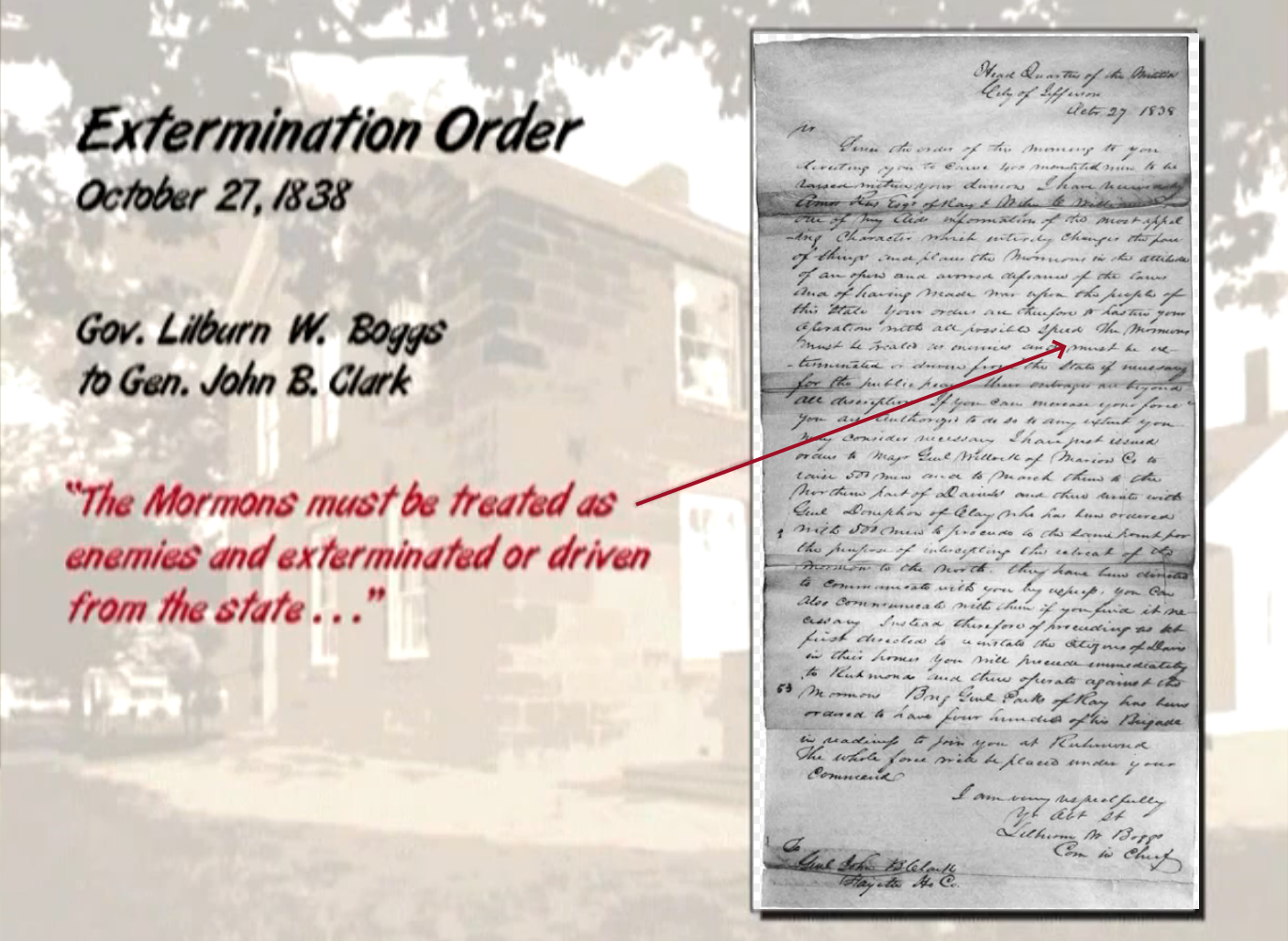
Here is Governor Boggs’s order to the commander of the Northern Militia after several hearings and false affidavits from disaffected leaders of the Church.
And here’s the famous statement:
“The Mormons must be treated as enemies and exterminated or driven from the state.”
That was rescinded, by the way, in 1976, exactly 30 years ago, by Governor Bond.

Haun’s Mill and the Fall of Far West
Now, just three days later, we had the Haun’s Mill Massacre. Then we had the siege of Far West on Halloween Day, appropriately, just the next day.
It wasn’t enough to have the Haun’s Mill Massacre. Now we need to surround the city and threaten total destruction of the entire city and everyone in it unless peace could be made.
And through various means, Joseph was captured with Hyrum and several of the leaders. They were ordered to be shot the next day.
Their former lawyer, who defended them in some of this action there in Missouri, Alexander Doniphan, was the one commanded to shoot them at the town square at noon the next day.
His answer was:
“What you have ordered is cold-blooded murder, and I will not perform it. And should you do that, I will see you brought before the judgment bar of God. So help me God.”
And so he backed down and remanded everyone over to that same Austin King. He then saw that they had a comfortable lodging in Richmond and then in Liberty.
Liberty Jail
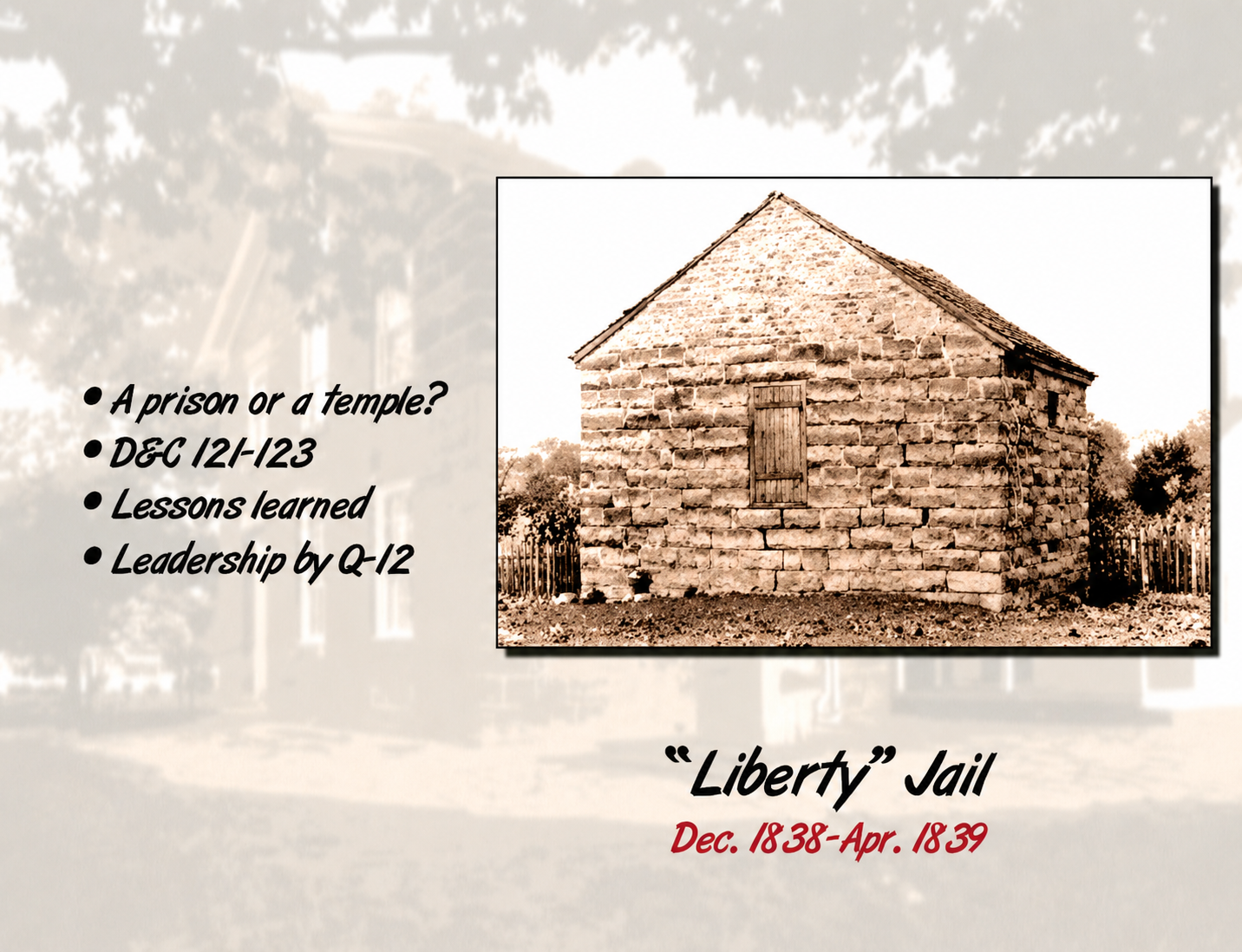
Now, Liberty, of course, was a horrible place. But it was a bigger jail than they had anywhere else in Missouri at that time.
And so that’s where they spent almost six months. The worst six months of Joseph’s life, I would say, the longest time he was incarcerated. The entire First Presidency of the Church was in jail.
And why wasn’t the Twelve in jail? Well, because they were considered irrelevant.
A Prison and a Sacred Place
While Joseph was there, though, in this horrible prison, a dungeon of a prison, he also considered it a sacred place. And some of the most inspiring revelations came while he was there.
He wrote a 16-page letter home that became Sections 121, 122, and 123 of the Doctrine and Covenants.
And if you ever feel sorry for yourself:
- feel like life is not fair
- and it’s not treating you right
- and it should do you better
read any of those sections and you’ll have a second thought.
Many of the lessons Joseph learned endured through the end and sustained him in Illinois.
The Saints Flee Missouri
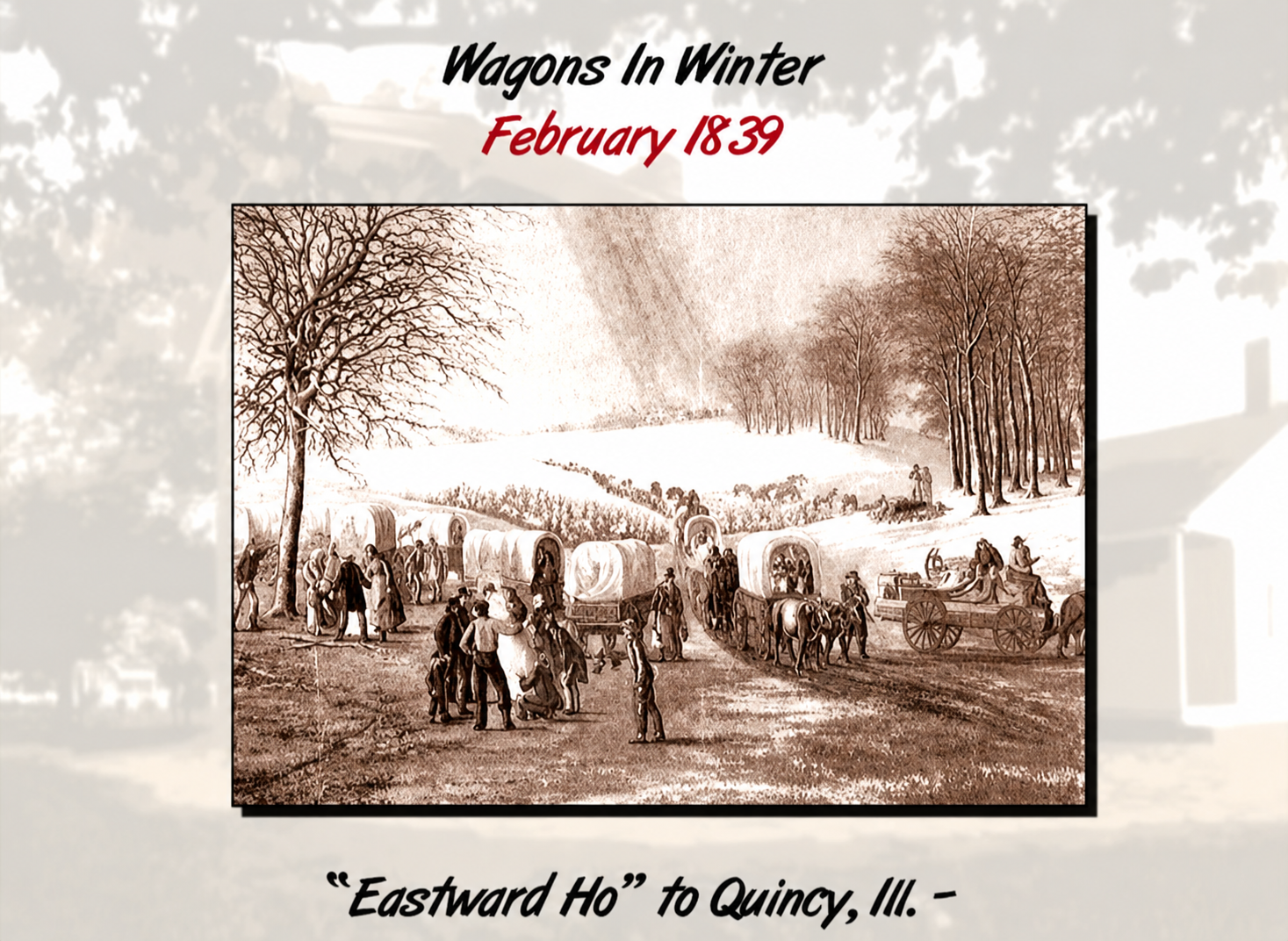
Now, leadership, such as it was, was being provided by the Twelve. And who was the head of the Twelve after Thomas B. Marsh was gone?
Well, Brigham Young. And he had the experience of the first mass evacuation of the Saints. He was in charge, and they went east.
The thought was always to go west, but circumstances did not allow that. Joseph had talked about it. Brigham had planned for it. It was not to be. They went east, back across the river to Quincy, where again kind people received them.
Joseph Escapes and Rejoins the Saints
Well, now Joseph gets to escape during a change of venue from Liberty up to Boone County.
He finally gets to this new settlement that had been arranged by Brigham and Joseph and several others, this bend in the river.
And we know much about that. It’s not so much legal as physical and spiritual.
Nauvoo and a New Beginning
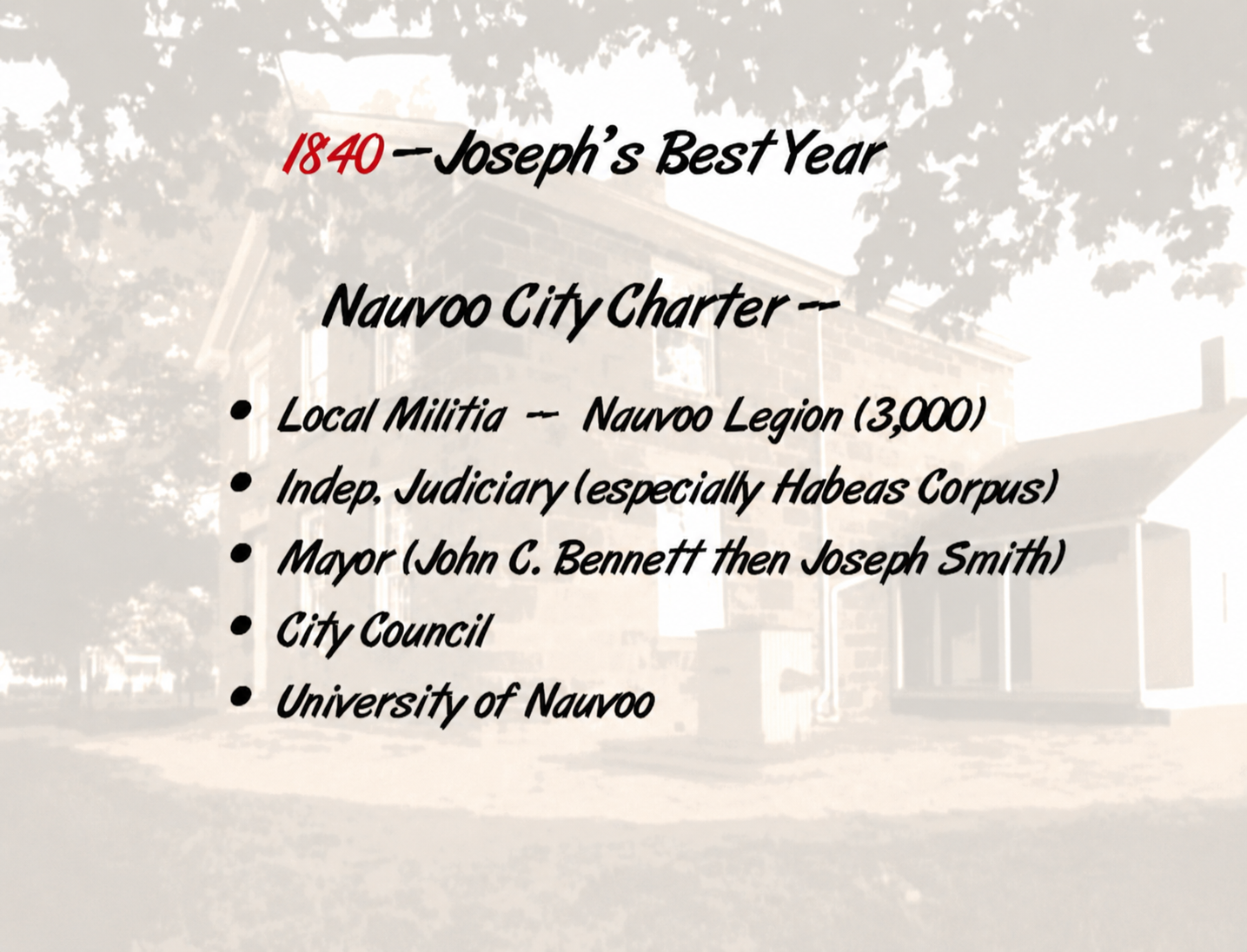
The next year, 1840, was probably Joseph’s best year of his life. He didn’t have a single lawsuit all year. He was out of jail.
They did not have a lot of success going to D.C. to get some redress from the federal government. But they got the Nauvoo Charter before the end of that year. And this was an amazing thing.
Three other cities had similar charters. But none of them implemented it quite as effectively as Nauvoo did.
They were basically given their own army, a local militia 3,000 strong. The Nauvoo Legion was the terror of southern Illinois. Now, it was never utilized except for ceremonial things, but it was always armed and dangerous, ready for action. Joseph saw to that, and this was well known.
The Power of Habeas Corpus
They were given their own independent judiciary.
And legally speaking, this is probably the most important thing in the city charter. Because they had the power of habeas corpus, which simply means if you’re arrested by somebody that you think is going to kill you or do you some serious harm, you send word.
You have one of your colleagues go to the nearest court that has this power. And that court can issue a writ of habeas corpus, which means stop everything. “Bring the body here”. We want to talk to this prisoner to see if he’s been falsely arrested and see what this is all about.
So, it’s a chance to have a second examination.
And this was used effectively over and over by Joseph, much to the chagrin of the neighbors, and was the main reason they wanted to repeal the Nauvoo Charter.
A City-State on the Mississippi
They were given their own mayor, John C. Bennett. (That’s another story.)
We have a city council. We even had a University of Nauvoo. This was really a very complete program. A little city-state is what we had in Nauvoo.
John C. Bennett and William Law
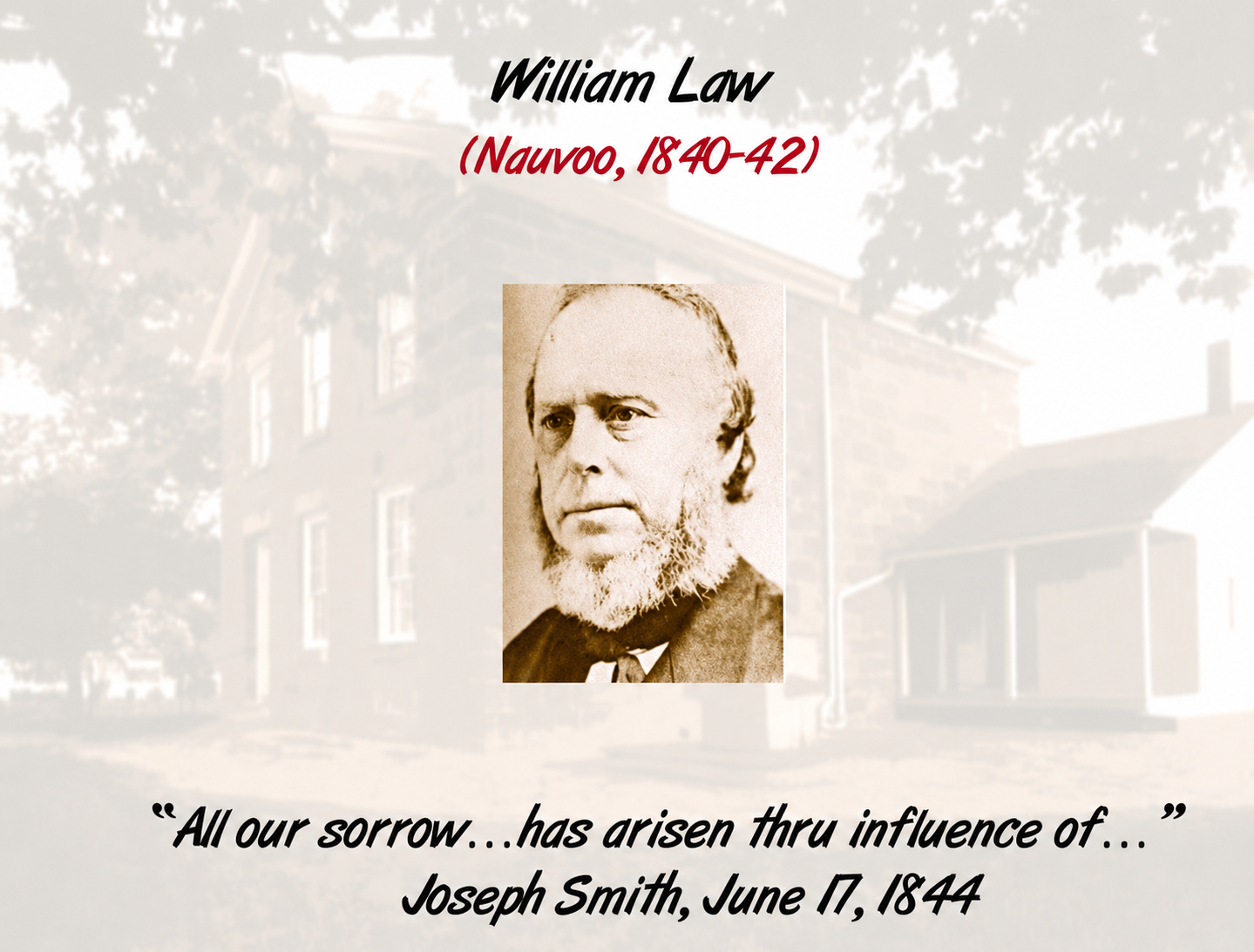
And legally things went very, very well. Starting with this man, John C. Bennett, who started off quite well. He was given some great promises in Section 124, but all of them were highly conditional.
And as it turns out, he was a saintly scoundrel. He was Joseph’s Judas.
Now, he was companioned with this man, who went to the First Presidency the very same week that John C. Bennett became the mayor. These two were kindred spirits.
And Joseph later, one week before he died, said that “all of our sorrows as a family have arisen through the influence of that one man.”
I had always attributed more to John C. Bennett than I had to William Law.
The man was converted to the gospel by John Taylor, who later said he was one of the most calculating and deceptive, but gracious and courteous, men that you would ever meet.
Internal Corrosion in Nauvoo
So we’ll put him out of the picture for now. Back to better things.
Those two were the start of the internal corrosion that finally brought the end of the Saints, Joseph, and Nauvoo.
But they were successful in electing their own man for governor. A good-looking man, very fair Supreme Court justice, far better than any governor they’d had before, Tom Ford.
Stephen A. Douglas and the First Extradition Case
They also were treated well judicially. Here’s Stephen A. Douglas. He’s the one on your right, not the left. This habeas corpus was not only used in Nauvoo, but it was also effectively applied when they were outside of Nauvoo.
On one occasion, Joseph was seized on the old writs that I told you about when they were still in Missouri. He left under the cover of night and got back across the river. So now they wanted him extradited back to Missouri.
Joseph had good legal counsel that made an effective case before Judge Douglas, and he acquitted Joseph. Joseph thanked him and then later blessed him and prophesied some famous things.
He said:
“Judge, you’re a good man. You’ve been a friend of the Saints. The day will come that you will aspire to the presidency of the United States. But if you should ever lift your hand against me or the Latter-day Saint people, the Almighty, you will feel the weight of the hand of the Almighty upon you, and you will remember this conversation to your final days.”
This was the first extradition case, and it did happen just that way when, in 1860, he ran against Lincoln. He was highly favored. Lincoln was a nobody, and Douglas finished fourth in a field of four.
The Steamboat Case and Joseph’s Bankruptcy
Now, not all the cases turned out well. The one that Elder Oaks and I researched for 10 years, starting when I was a third-year student at the University of Chicago Law School, started off harmlessly enough.
It was a simple business transaction in 1840 at Commerce.
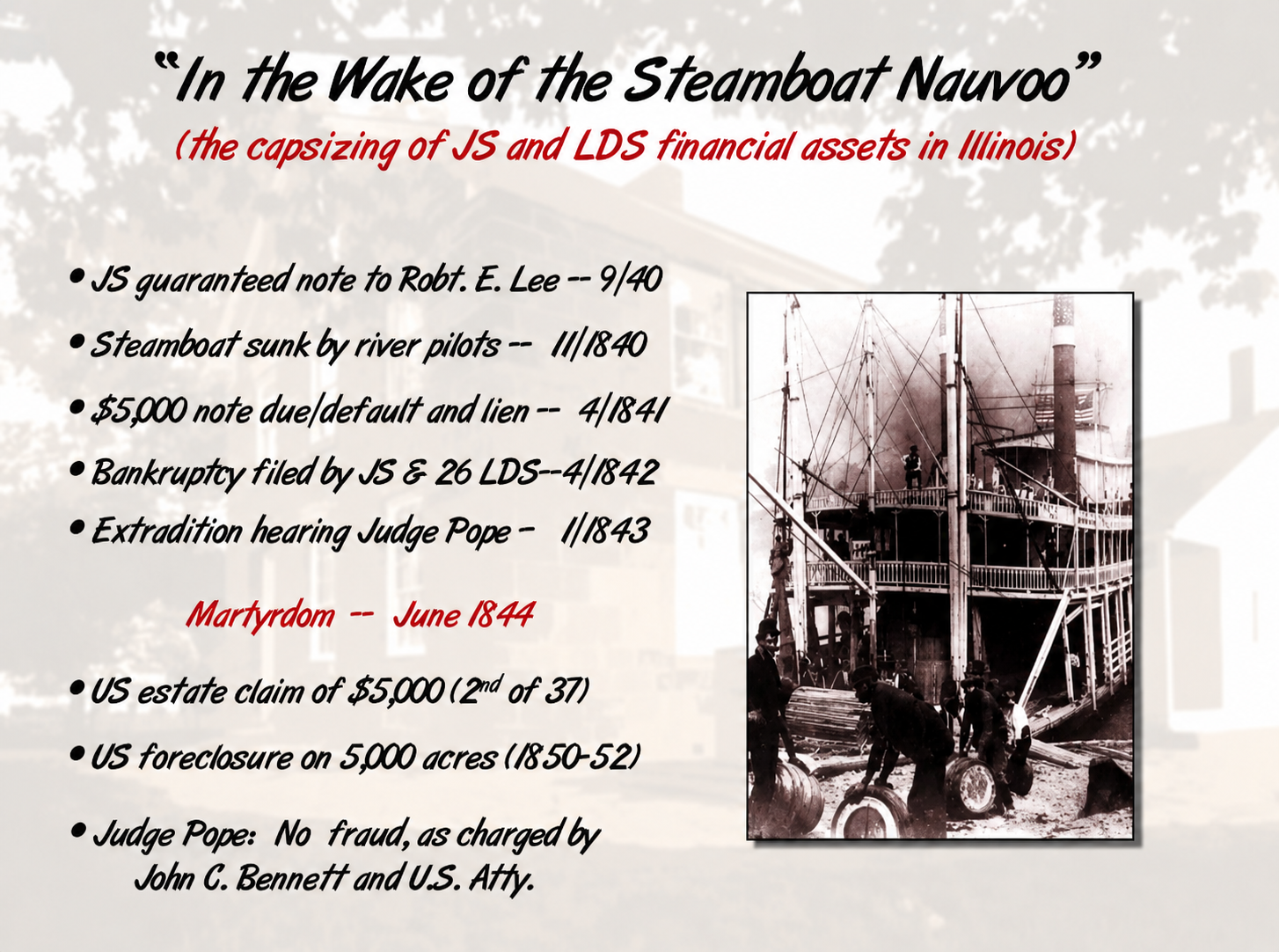
Joseph and Hyrum and two others, including the Presiding Bishop, cosigned as guarantors for a businessman’s obligation to buy a steamboat.
The one who sold the steamboat was Robert E. Lee, who was then in charge of the river engineers to dredge the Mississippi.
With tensions growing over the war with Mexico, Lee was sent east to West Point and to New York Harbor, I should say. And he was told to auction off all of his equipment.
So the Mormons bought it. This was to be the first Mormon enterprise.
Unfortunately, before the note for $5,000 came due the next spring, the steamboat was sunk, and with it sank the fortunes of Joseph Smith financially.
The Bankruptcy Proceedings
About the same time that note came due, a bankruptcy law was passed. The first bankruptcy law in the history of the world where a person could go in and voluntarily rid himself of his own debts. And Joseph was amazed.
But the lawyer said, “It’s true. Everyone’s doing it. All of the people that owe you money are getting discharged. So you need to do this to protect yourself.”
So Joseph and about 26 others went to Springfield and they filed for bankruptcy. And all the others were released. Joseph was the only one that was singled out to not receive a discharge in bankruptcy.
And the reason was this same obligation.
By now, Robert E. Lee is writing letters saying, “I’m a little embarrassed. The note wasn’t paid. I thought it was well secured. The only one left now is Joseph Smith, who is thought to have the most assets. So, hold him back.”
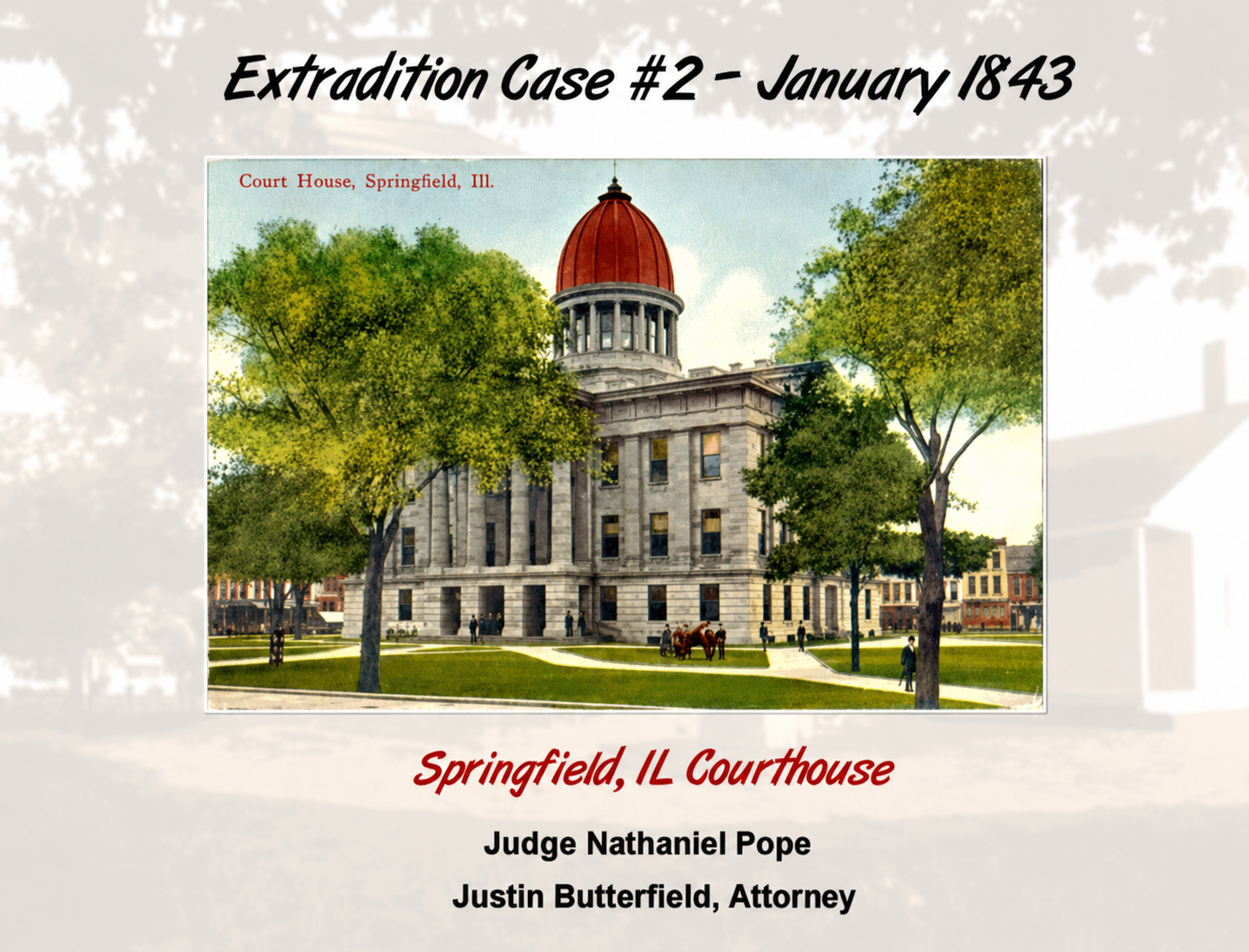
The one who did that was the U.S. Attorney in Illinois, Justin Butterfield.
And I’ll tell you something about the second extradition case in just a minute that involved Butterfield and the judge who had jurisdiction over bankruptcy, Judge Pope, who was thought to be the best federal judge in Illinois.
The Second Extradition Case
That case came up at the end of 1842. All through May of 1842, a fellow named Boggs was shot in Missouri, and Orin Porter Rockwell was seized and put in jail.
They asked him later if he’s the one who shot Boggs, and he said, “He’s still alive. How could I be the one that shot him? He wouldn’t be alive if I had anything to do with it.”
So writs went out at Boggs’s request.
John C. Bennett was involved. Joseph was to be arrested and hauled back to Missouri as an accomplice before the fact, and Rockwell being the one who pulled the trigger.
It was never proved, but he was in hiding most of that year.
And finally, at the end of the year, he and Governor Ford arranged something where he could go before Judge Pope in the second extradition case and be heard.
And his lawyer, as I say, was Justin Butterfield.
Justin Butterfield’s Defense
Now, Butterfield was quite an effective advocate, as we’ll see. Judge Pope was a good, fair judge, and this was the most notorious case up to then in the history of Illinois.
This was the case to send the Mormon prophet back to Missouri, and everyone knew if he went back, he would be killed. So the town turned out for this show. The courtroom was absolutely packed.
And so the judge said, “I’ll invite all the women in the room to come up and sit by me.” So there were chairs up front in this big, beautiful courthouse. And so all the women are up front, including Mary Todd Lincoln.
So Butterfield, in his opening remarks, steps forward and addresses Judge Pope in this way:
“Your Honor, I come before the judge in the presence of these angels to defend the prophet of the Lord,”
which he did.
And that was a very successful case.
The Third Attempted Extradition
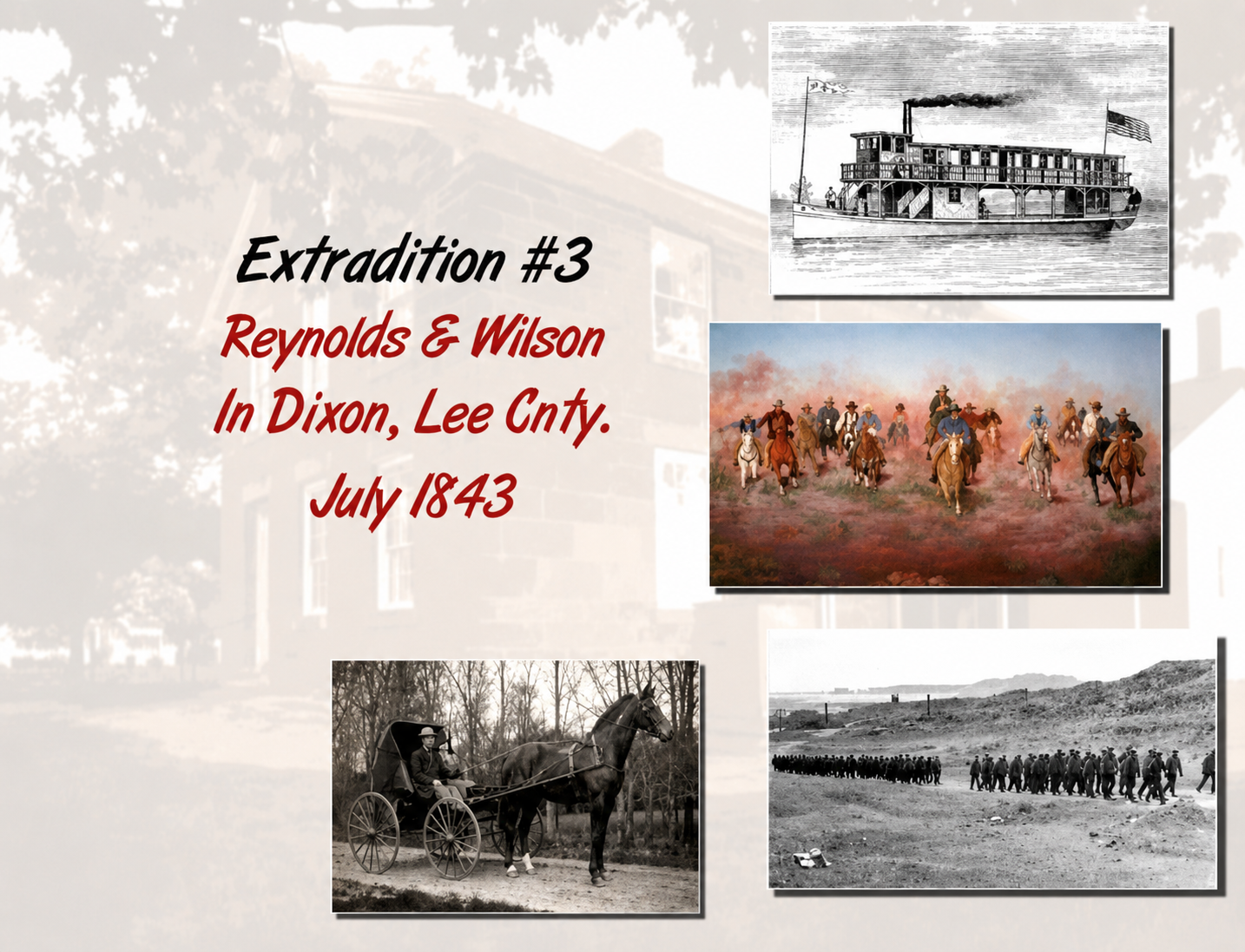
Not quite as happy was the third attempted extradition. Boggs was no longer able to do anything. That was decided by Judge Pope. But now they get a reindictment for those old Missouri charges.
And now Governor Ford agrees that Constable Wilson from Carthage can join with Constable Reynolds from Missouri, and they can take care of Joseph in their own way.
So they happened to seize Joseph while he’s out of his safe harbor in Nauvoo, up visiting family in Dixon in July of 1843.
The word came back in a very hurried way that Joseph had been seized and he was being bundled off to Missouri, and he may even be kidnapped and bound and gagged and on the river as they spoke.
So they sent the Maid of Iowa up and down the river to stop all the boats and search them to see if he was already on board.
And others went by land, out scurrying around.
The Nauvoo Legion Responds
But it was Hyrum who got the Nauvoo Legion mobilized, and they came out in force.
And so what we have here is these two constables who have Joseph in their custody, and the constables are in the custody of the Nauvoo Legion.
So the prisoners are prisoners of the prisoners.
And they all go marching back to Nauvoo except Joseph and Emma, who get to have a nice carriage ride. And when they reach Nauvoo, he goes to court. Of course, the habeas corpus does the usual job, and he is exonerated.
So that’s the third attempt. But at this point, things are really boiling over.
This is July 1843. This is when the word goes out that the Mormons are beyond the law. There is no way that you could ever get Joseph to answer for all his crimes and his past misbehavior as long as that city charter is protecting them.
Building the Temple Amid Increasing Opposition
Now, the other side of Joseph’s spiritual life, though, was focused primarily on the temple.
With all of these other escapades going on in the background, and fearing for his own safety and his well-being, he still pressed ahead with all that he had to build the temple.
And this was a five-year process.
He did not see it through to conclusion.
The King Follett Discourse
But his last general conference was the first week in April 1844. And this is when he preached his monumental King Follett Discourse and had so many spiritual experiences.
It was a beautiful, gorgeous spring day. They were out of doors on the banks of the river. The flowers were budding and the birds were singing.
And Joseph called this “the best and most glorious five consecutive days ever enjoyed by this generation.” 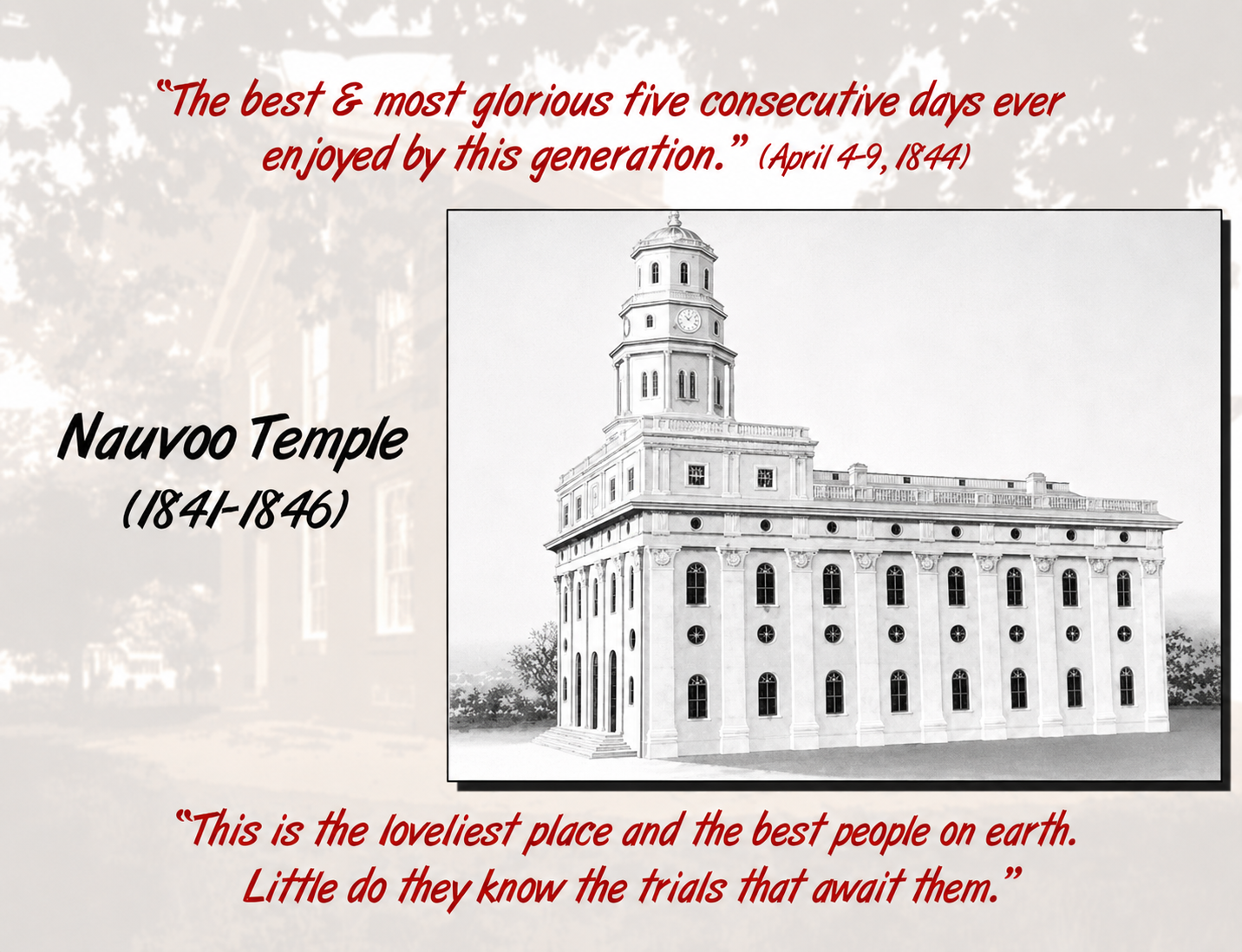
But then later, as he passed the temple on his way to Carthage, he said:
“This is the loveliest place and the best people on earth. Little do they know the trials that await them.” 
The Nauvoo Expositor and the Road to Carthage
Well, here are the trials.
Just within days, a trio of brothers were excommunicated. Some already were out, actually.
And this was the Laws, two brothers, the Higbees, who were sons of one of Joseph’s dearest friends, Judge Elias Higbee, who was a revered and honorable man, and then two others, the Fosters.
And right now, one of the projects I have with the Joseph Smith Papers team is to trace a series of suits that these and other disaffected members brought against Joseph that whole year of 1844.
The Reformed Church and the Printing Press
But in April, just after general conference, they, now being cut off from the Church, met and organized their own reformed church with William Law as the president, Wilson as a counselor, and the Fosters were apostles—or one of the Higbees, one of the Fosters.
The next thing they did was to acquire a printing press.
And Francis Higbee said, “We’ll do this so that we’ll cause its own destruction. We want the press destroyed because the moment they lay a hand on the press”—this is his quote—”that will mark the downfall of Joseph Smith and all of Nauvoo.”
Very prophetic.
Now, this was the culmination, as I say, of this series of harassing suits. There were a dozen suits in 1844, all for the purpose of hauling Joseph out of Nauvoo to Carthage, where he could be killed in one way or another.
Joseph in Carthage One Month Earlier
So exactly one month to the day before he was killed, he was in Carthage answering some of these suits.
There were two grand jury indictments, and Francis Higbee had two other cases going, and three other disaffected members you wouldn’t even recognize had suits all going against Joseph at the same time.
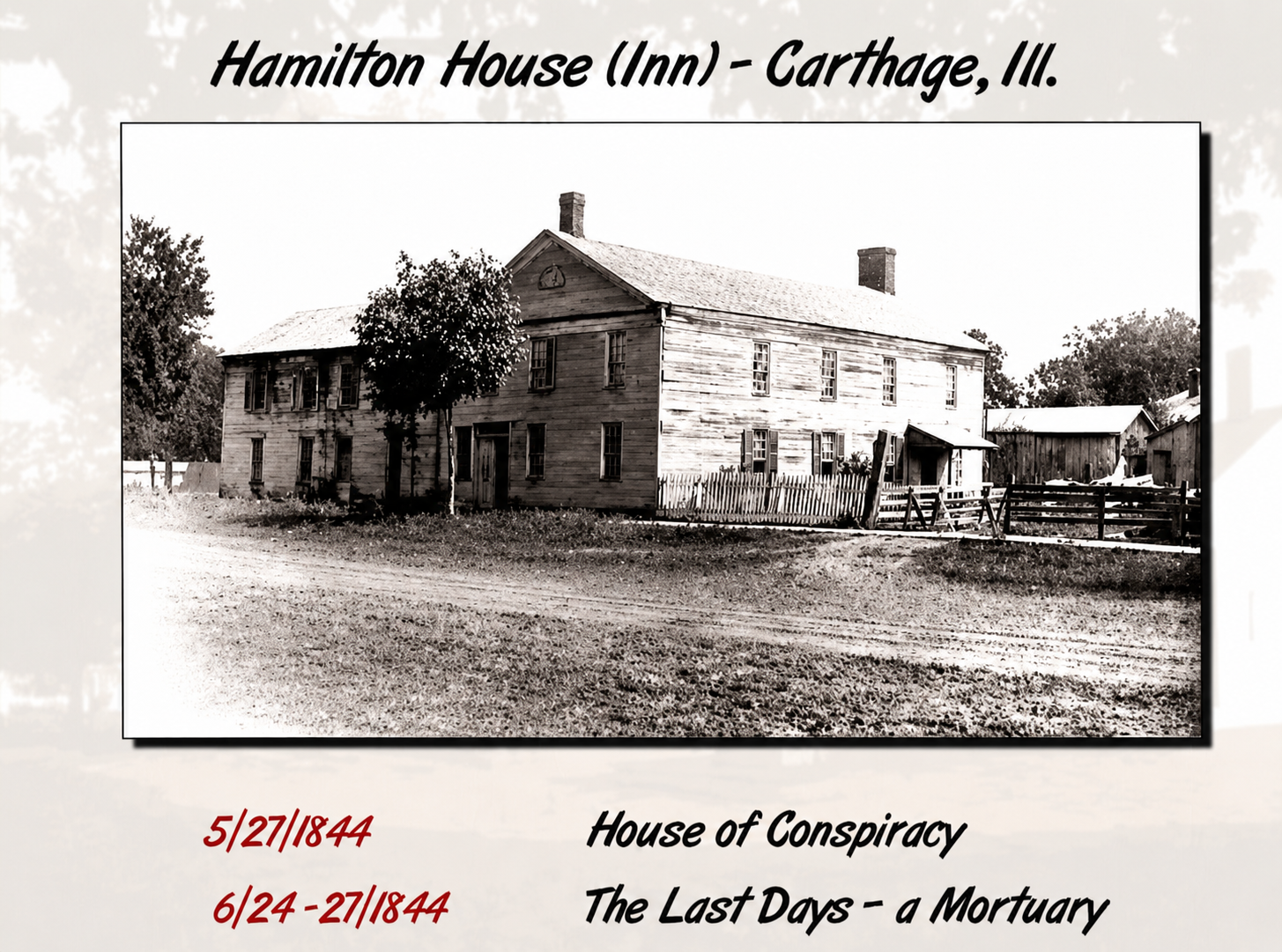
So here he is at this Hamilton House, and we’ll get back to that in a little minute here. This is the only hotel in town.
The proprietor at first was thought to be unfriendly to the Mormons because, well, this is Carthage and everyone hates the Mormons here, and he had the patronage of his own people as well as those from out of town.
As we’ll see, though, he was a bit of a hero in his own right, Mr. Hamilton.
On the 27th of May, Joseph was there with Hyrum and others answering these charges, and he was warned that there was a conspiracy afoot to kill him.
The next day he would go to court, and either before or during or afterwards, Joseph Jackson was there with his arms and ammunition, and there were others that were prepared to kill him.
So now Samuel Smith, a member of the city council, gets into action with Hyrum, and they gather the friendly troops, well armed, and they escort Joseph to court.
The case is put over for lack of a witness, and they go back peaceably to Nauvoo.
But they learned, and their enemies learned, some key lessons from that experience.
One month later, of course, he’s back here again, and this house became not only an inn but also a mortuary for Joseph and Hyrum. 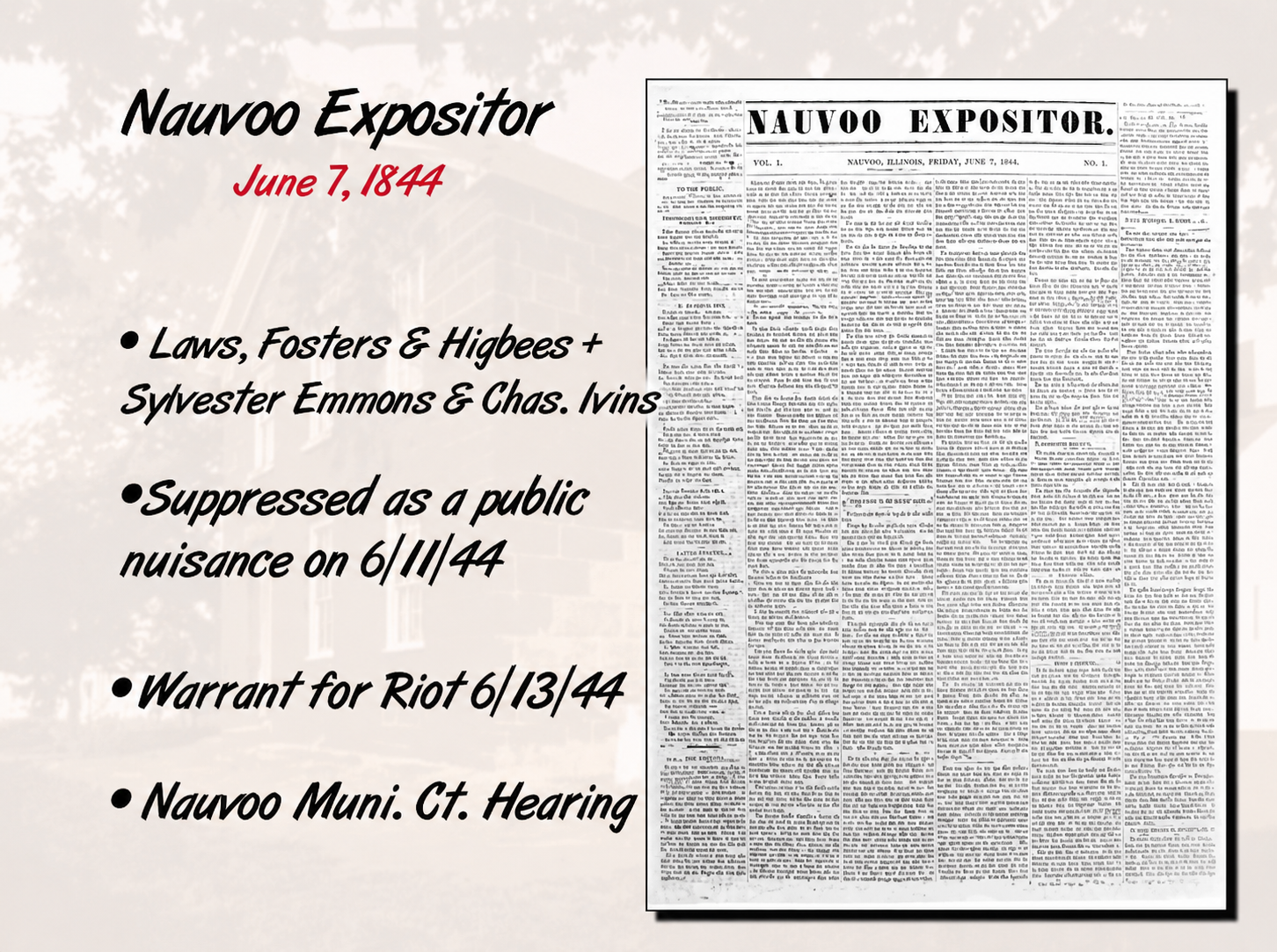
The Nauvoo Expositor Crisis
Now, I mentioned that the printing press came. And it was for the purpose of printing as many newspapers as necessary to cause its own destruction. And this didn’t take long.
On June 7th, the one and only issue was printed. The publishers were named right in the paper: the two Laws, the two Fosters, the two Higbees.
The editor was Sylvester Emmons, who actually was a non-member, and he was part of the city council. And Charles Ivins, who’s a distant relative of mine. My middle name is Ivins.
In any case, the city council took this very seriously.
- They called their best legal counsel.
- They consulted the legal authorities of the time.
- They reviewed the cases.
- They reviewed their own statutes, the State of Illinois, the First Amendment, Blackstone on Law from the Laws of England, the common law.
And their advice was that if they did not suppress the Expositor, there would be a riot, and there would be bloodshed, and there would be commotion. The whole town would be in turmoil. They took it very seriously.
And this issue, while we would read it today and say, “Well, this isn’t so bad,” they thought it was. So the best course, they thought, based on their legal advice, was to suppress it as a public nuisance. And this was done four days later, on the 11th of June.
Arrest Warrants and Habeas Corpus
Now, it didn’t take long to get a warrant for the arrest of Joseph and Hyrum and the entire city council. This writ was sworn out by Francis Higbee in Carthage, and a constable from Carthage, who Joseph called a very wrathful person, came.
And he was wrathful because Joseph said, “Well, we’ll go to our favorite court and have a habeas corpus hearing.”
And so that’s what they did, and the usual result occurred.
At this point, the editor of the Warsaw Signal—now we always think of Carthage because that’s where he was killed. But the real trouble came out of Warsaw, and it was largely because of the editor of the Warsaw Signal.
The same day that they had this habeas corpus hearing where everyone was exonerated, he called for the extermination of all Mormon leaders.
So this is bad.
Judge Jesse Thomas and the Final Hearing
The presiding judge of Illinois for that area at the time was a very great man, as Joseph described him, named Jesse Thomas.
And he said, “Now you’ve gone through your habeas corpus motions, and you see where it got you. I strongly urge you to have a full trial on the merits with witnesses, the whole nine yards, before a non-Mormon outside of Nauvoo.”
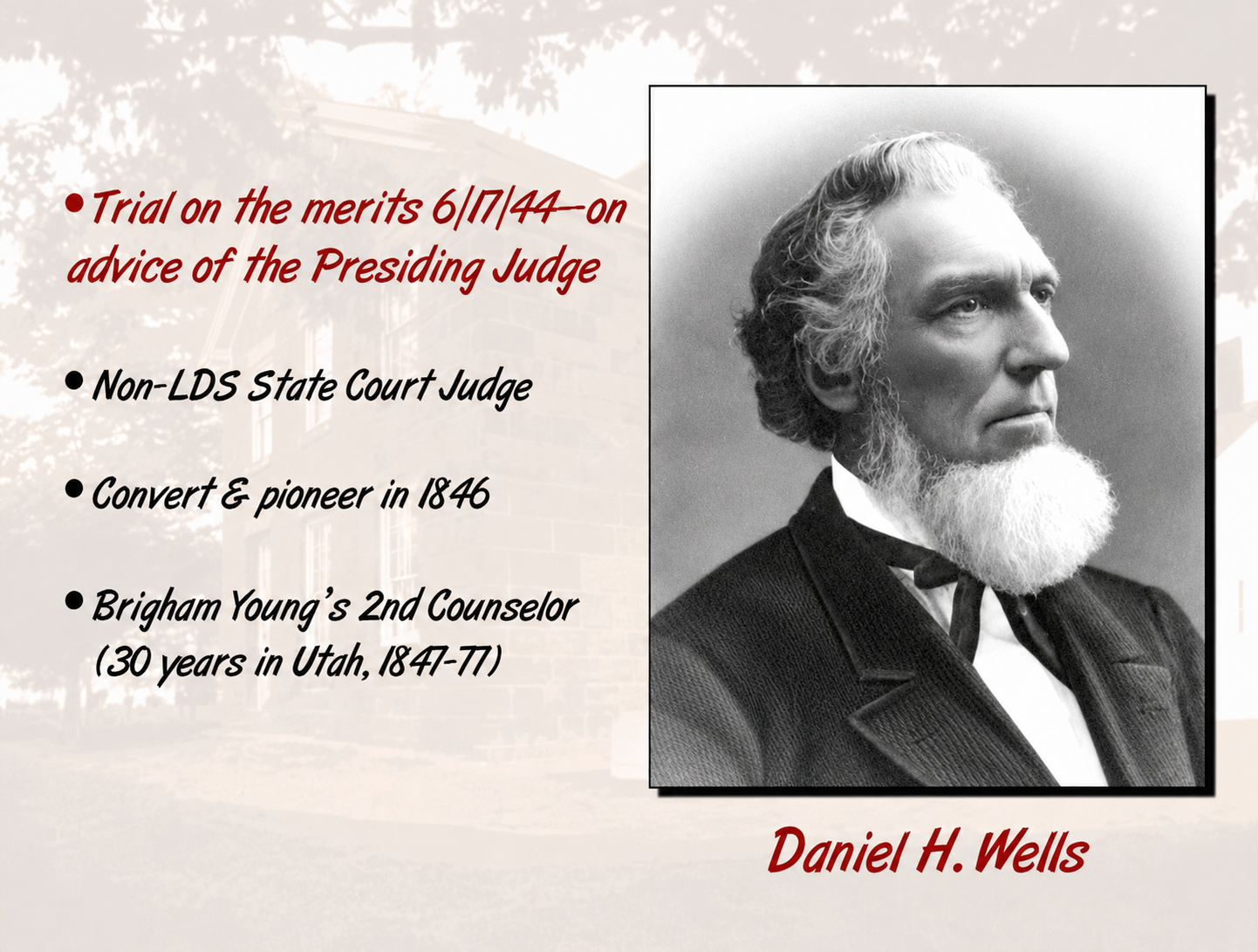
And he recommended Daniel H. Wells, who was a very prominent jurist and lived just outside of Nauvoo. And so at his rather stately home, a hearing was held.
He later did join the Church and went with the pioneers west and became Brigham Young’s counselor for 30 years.
But at the end of a very long day, the same decision was reached, and the entire city council was exonerated.
Now the Signal calls for the extermination of all Mormons everywhere in Illinois.
Forces Gathering Against Nauvoo
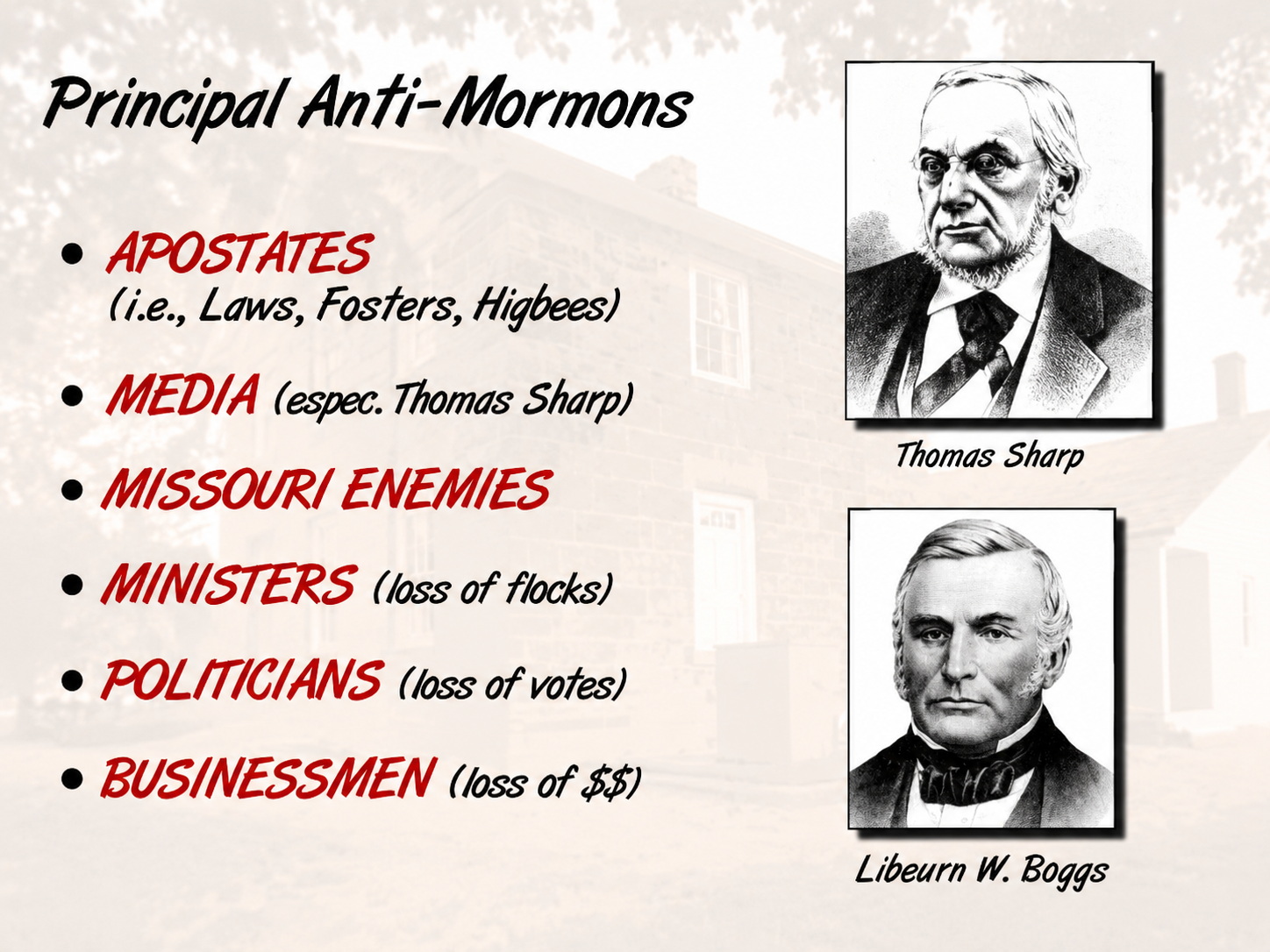
So here are the principal groups that are bringing this about.
It all starts and, in some ways, ultimately finishes with these three sets of brothers and others, the apostate group. Then we’ve got the media under the charge of this friendly fellow, Thomas Sharp, the Warsaw Signal.
What did he have against Joseph and the Mormons?
Well, I’m indebted to Brother Bushman for this little note in his book. We’re not really sure. He has no great history of this. He bought a losing newspaper, and I’m sure he felt that selling papers was his first charge.
And if you turn people against the Mormons and stir things up, that’ll sell a lot of newspapers. It always does.
Bad news will do that.
Joseph Smith and Thomas Sharp
But here’s something that Bushman put in his book. This is Joseph’s letter to him. He first invites Sharp to the groundbreaking of the Nauvoo Temple. They have a grand ceremony. Everybody’s very excited, and Joseph expects a wonderful column in the Warsaw Signal.
There’s Sharp right on the front row, grandstand seats. He’s wined and dined, literally, at the Smith home.
And then he goes back the next day and prints a very tame column.
He says,
“Well, they had a nice event, but I’m going to keep my eyes on those Mormons because they’re talking political things now. And if church and state are combined, I’m going to see that I can do all in my power to prevent that.”
So reading that, Joseph sends him this letter:
“Sir, you will discontinue my paper. Its contents are calculated to pollute me. To patronize your filthy sheet, that tissue of lies, that sink of iniquity, is disgraceful to any moral man. Yours with utter contempt, Joseph Smith.”
“P.S. Please publish the above in your contemptible paper.”
Well, he did.
Now, do you know anyone that ever won a name-calling contest with a newspaper editor?
So Sharp has his own revelation to give, and he says, “Yes, I will reveal that Joseph Smith has failed to pay for his subscription, the last that he has just cancelled.”
And so it went. The war was declared, and that’s Mr. Sharp.
The Final Days
Then, of course, we have the ever-lurking Missouri enemies.
Boggs is still there, and Bennett’s over there, and they’re stirring things up every way they know how, and they’re starting to come across the river.
Several ministers were very unhappy about the loss of some of their adherents to the Mormons. Actually, one of those who was tried for the murder was a very prominent Baptist minister.
Some politicians were also unhappy with the Mormons. Two of those were tried for the murder. They had been losing votes to the Mormons.
And then you had two businessmen who lost money to the Mormons in various ways. I won’t go into that.
So now things are reaching the end. The winding-up scene is near. Missourians are coming across in a big way, bringing arms, ammunition. Several large cannons seem to have been crossing the river. And then attacks are starting on the outlying settlements.
Joseph Appeals to Governor Ford
So now it’s time to get some help. And Joseph does two things.
One is to write a letter to Governor Ford saying, “You’ve never been to Nauvoo. You need to come and see this place for yourself and help me keep the peace.”
The second thing that he did as an interim measure was to declare martial law, which means it’s now under the charge of the Nauvoo Legion. They’ll keep an eye on everything that’s happening.
Everybody goes to bed at an early hour, off the streets, curfews, the whole thing. That turned out to be a very prudent but fateful move on Joseph’s part.
Conclusion
I cannot go there without emotion, and neither can you.
Well, today, as we go back to Nauvoo, we see that there are better times. That gorgeous temple has been rebuilt and was dedicated in 2002.
And we should all join where President Hinckley went back for that, as he has done so many other things, in saying:
“God be thanked for Joseph Smith and the greatest instrument of our restoration.” 4
The martyrs are in a place where “traitors and tyrants now fight them in vain.”5
Thank you.
