Summary
Steve Mayfield, a retired crime scene technician and one of the foremost experts on the Mark Hofmann forgeries, reflects on Hofmann’s crimes, the Netflix documentary “Murder Among the Mormons,” and the wider implications of the forgeries on Latter-day Saint history. Drawing from decades of investigation, collecting, and first-hand interviews, Mayfield offers insights into Hofmann’s manipulations, the Church’s role in the investigation, and how deception can entangle communities of faith.
This talk was given at the 2021 FAIR Annual Conference at the Experience Event Center, Provo, Utah in August 2021.
Steve Mayfield, a retired Salt Lake City crime scene photographer and historian, is one of the leading lay experts on the Mark Hofmann forgeries. His private archive of related materials is among the most comprehensive in the world.
Presentation begins at 9:00 minutes.
Introducing Steve Mayfield
Introducing Steve Mayfield
Craig Foster: All right. Well thank you to those of you who have remained to have a little discussion with Steve Mayfield. He’s going to be discussing Mark Hofmann. I’m going to give just a little bit of background about Steve to kind of explain where he’s coming from, why the interest in Mark Hofmann and all of that.
Background on Steve Mayfield
Stephen L. Mayfield is one of, if not the number one expert on Mark Hofmann and the Hofmann case, so we’re going to discuss Hofmann in last year’s Netflix miniseries about him titled Murder Among the Mormons. But first, just a little bit of background about Steve. He was born and raised in the Bay area of California and served a mission in Colorado and Nebraska between 1971 and 1973.
Then he was employed as a file clerk and supervisor of the clerk area for the Federal Bureau of Investigation in San Francisco from 1973 to 1977.
During that time ,he worked on such high-profile cases as the attempted assassination of President Gerald Ford and the kidnapping of Patty Hearst by The Symbionese Liberation Army.
He then moved to Utah. He graduated from Weber State College in 1980 with a bachelor’s degree in police science and then worked for almost 10 years as a deputy sheriff in Jefferson County, Colorado.
Steve then moved back to Utah and he worked for the Salt Lake City Police Department for 25 years as a crime scene photographer and crime lab technician. During that time, he worked on a number of important cases such as the Elizabeth Smart kidnapping, Lori Hacking murder, the shooting at KSL, the shooting at the Family History Library, and a special assignment that he had for 11 years to take photographs of the Street Preachers.
He did that because of the federal lawsuit by the Street Preachers against Salt Lake City.
Involvement in the Hofmann Case
So for 10 years during Steve’s time at the police department, Steve’s manager of the Salt Lake City Police Department crime lab was George Throckmorton, one of the forensic document examiners who exposed the forgeries of Mark Hofmann. During that time, Steve learned more about the Hofmann investigation from firsthand witnesses, and he assisted Mr. Throckmorton on a number of post-Hofmann conviction forgeries. In other words, over time various documents would surface and people wanted to find out “is this is a forgery or not?” etc. And so Steve Mayfield assisted on that and also on the artifact that became known as the “Dead Lee Scroll.” He’ll explain a little more about that.
George Throckmorton paid Steve probably the ultimate compliment when he wrote in an email to Steve, “I agree with Van Hale when he said he believes you know more about the Hofmann case than anyone else, and that also involves me. What I know, I know very well, but you know about so many more things than I do.”
Steve retired from the Salt Lake Police Department in 2019 and has continued to be a documentation collector, collecting books, old and new newspaper clippings, old newspapers including newspapers published during the lifetime of Joseph Smith, as well as memorabilia and audio and video recordings. He has also for years taken photos at scholarly conferences including FAIR, John Whitmer Historical Association, Mormon History Association, Sunstone, and the Utah State Historical Society. Steve even received a special commendation, special citation for all of his service there.
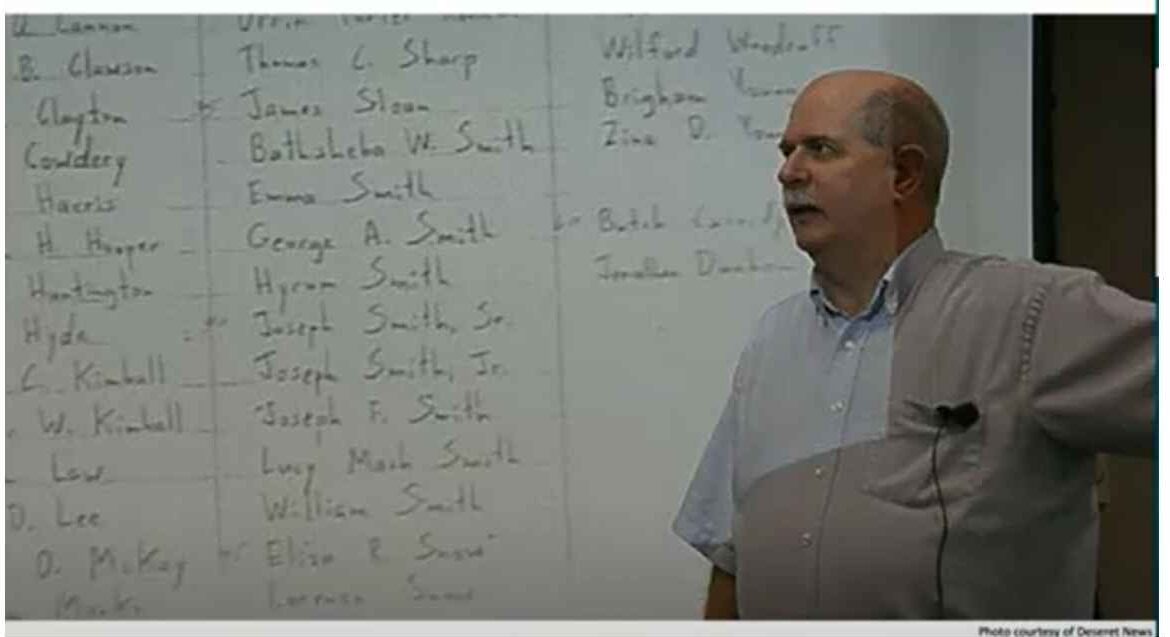
There’s a picture of him in one of his lectures.
Top 10 Mormon History Controversies
So as one who has over the years carefully followed just about anything dealing with the LDS Church, he has a list of the 10 top controversies for Mormonism which I’m going to read. Okay, here we go, the top 10 controversies.
- Number one, I’m sure this will surprise everyone, polygamy past and present.
- Number two, the Mountain Meadows Massacre.
- Number three, blacks and priesthood or the race issue in general.
- Number four, women’s issues, ERA, Ordain Women, etc.
- Number five, Mark Hoffman.
- Number six, the gay and lesbian issues and gender issues.
- Number seven, Are Mormons Christian?, and also within that would be Mormon scripture, Book of Mormon.
- Number eight, Mormon power and wealth.
- Number nine, famous or infamous Mormons, anywhere from Butch Cassidy to Mitt Romney.
- And finally, number 10, anything that happens at BYU.
So that’s his list of the ten controversies.
Transcript
Murder Among the Mormons
Okay, let’s get into Mark Hofmann and Murder Among the Mormons. So first of all, the one thing that Steve wants everyone to make sure that they know is that Steve was not an investigator during the Hofmann murders and investigation. He’s not a forensic expert. He is trained in aspects of that, but he is certainly not a George Throckmorton. But what Steve has done, which has been remarkable, is he has become, like I said, if not the expert, certainly one of them. I personally think the expert on the Hofmann case because he has spent years gathering information about Hofmann, about the case. He’s interviewed people when they were living, a number of them have passed away now, that were involved in the investigation. So he really has an incredible knowledge about it.
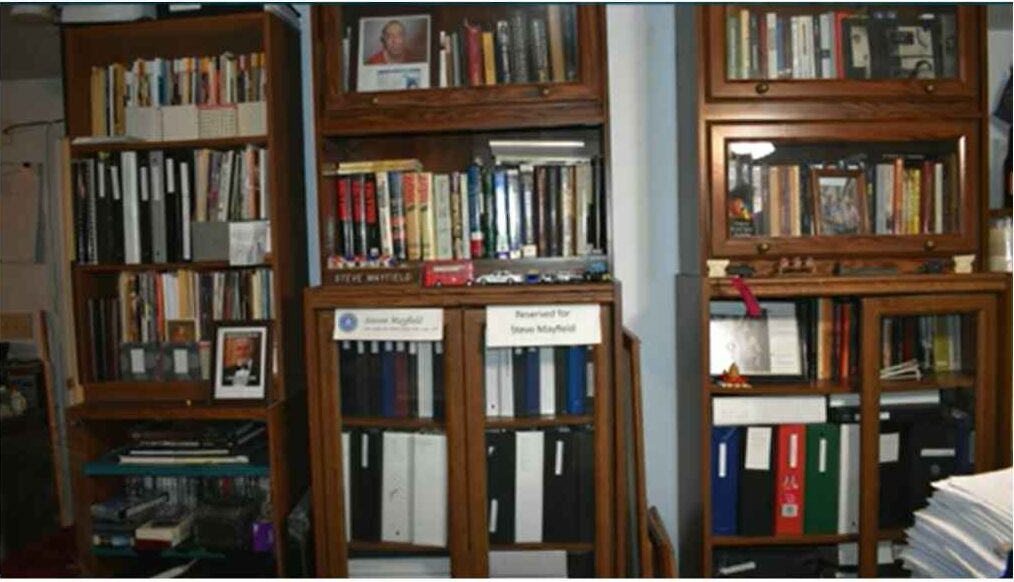
Steve’s Hofmann collection, I might add that Steve has a huge collection overall and a good portion of it is now at Brigham Young University and the rest will go there eventually. But his Hofmann collection alone includes three bookcases as you can see, 30 to 40 binders, and 25 boxes of material.
So now I’m going to ask Steve, let’s talk about this a little bit. We’re going to talk about Murder Among the Mormons, but first of all, let’s talk about Mark Hofmann and the case. Why, after 35 years, is this still an important topic?
Steve Mayfield: Well, I noticed that during the Under the Banner of Heaven on social media, his name kept coming up once in a while. They give people interested in talking about aspects of Mormon history.
Mormon History
They always bring up these negative things and cases, and Hofmann continues. It was such for a period of time there in the ’80s, Hofmann was the talk of the town in the media, in the history community of Mormonism, and even beyond that when he got into Americana forgeries. And of course, collectors and book dealers, they love that stuff. It was for a lot of time the historians would say we love it, but people outside don’t want to talk about or do it. Its history is boring to them. Well, they had something new to talk about, something to write about as more documents were being produced.
Craig: Right. In fact, something that you’ve mentioned to me before is that here in the Mormon community, we talk about Hofmann and the impact that he made on Mormon document collection, Mormon history, you name it. But Hofmann also impacted Americana. He had forgeries of a number of different famous Americans that are still floating around out there. And then from what I understand, and you’ve told me about this too, is that now people like to buy genuine Mark Hofmann forgeries.
Steve: Well, I was one. I bought one. There was a document known as the Sidney Rigdon/Solomon Spalding Connecticut land deed. And if I could tell the story about that. This is a legitimate document that he found apparently back east, and he noticed it was a document dated 1792 in which a gentleman named Asa Spalding sold some of his Connecticut land to his wife’s cousin, Jesse York. Well, it doesn’t take long to figure out this Asa Spalding turns out to be a distant cousin of Solomon Spalding.
The Issue
We know the issue between the argument of that, that Joseph supposedly borrowed the manuscript found written by Solomon Spaulding, and that Sydney Rigdon was the one that stole it or borrowed it and gave it to Joseph to produce the Book of Mormon. And even Joseph and Sydney said “we have nothing to do with that, that’s not true.”
But he added the names Solomon Spalding and Sydney Rigdon to the document as witnesses. So that would prove that oh, they did know each other, or they were around each other. But the problem is it was dated 1792, and Sydney wasn’t born until 1796. So he changed it. He changed it in 1822 and put a little bit at the top. The only problem with that is Spalding died in 1816.
William McClellan Collection
However, he claimed this was part of a larger cluster known as the William McClellan collection that he was trying to buy or get a hold of down in Texas. And he had this document. He went to Elder Pinnock of the Council Seventy and says, “Here’s one of the documents I’d like to buy, but I need the money.” And so he convinced Elder Pinnock to arrange a loan of $185,000 from the First National Bank to purchase this. Unfortunately, he forfeited on the loan, and Elder Pinnock had to pay the money back. And a couple of weeks later, he sold the same document to Cosmic Aeroplane for $400.
During the investigation, that was turned over to the investigation where George Throckmorton looked at it and said “Yeah, good document, but you can tell the changes he made.” And then in 2000, the owner of Cosmic Aeroplane, gentleman of the last name of Roberts, sold it to his former partner Ken Sanders of Ken Sanders Books. And in August 2004, I got crazy and I thought I’d buy it. So I did. And in 2004, I donated it as part of beginning my donations to BYU, which is apparently the only Hofmann forgery that BYU has.
Getting Into Murder Among the Mormons
Craig: Okay, so let’s get into Murder Among the Mormons. How many of you out there last year saw that show? Oh, I see a number of hands being raised. Well, very good. So first of all, Murder Among the Mormons. I would love for you to tell your connection to that.
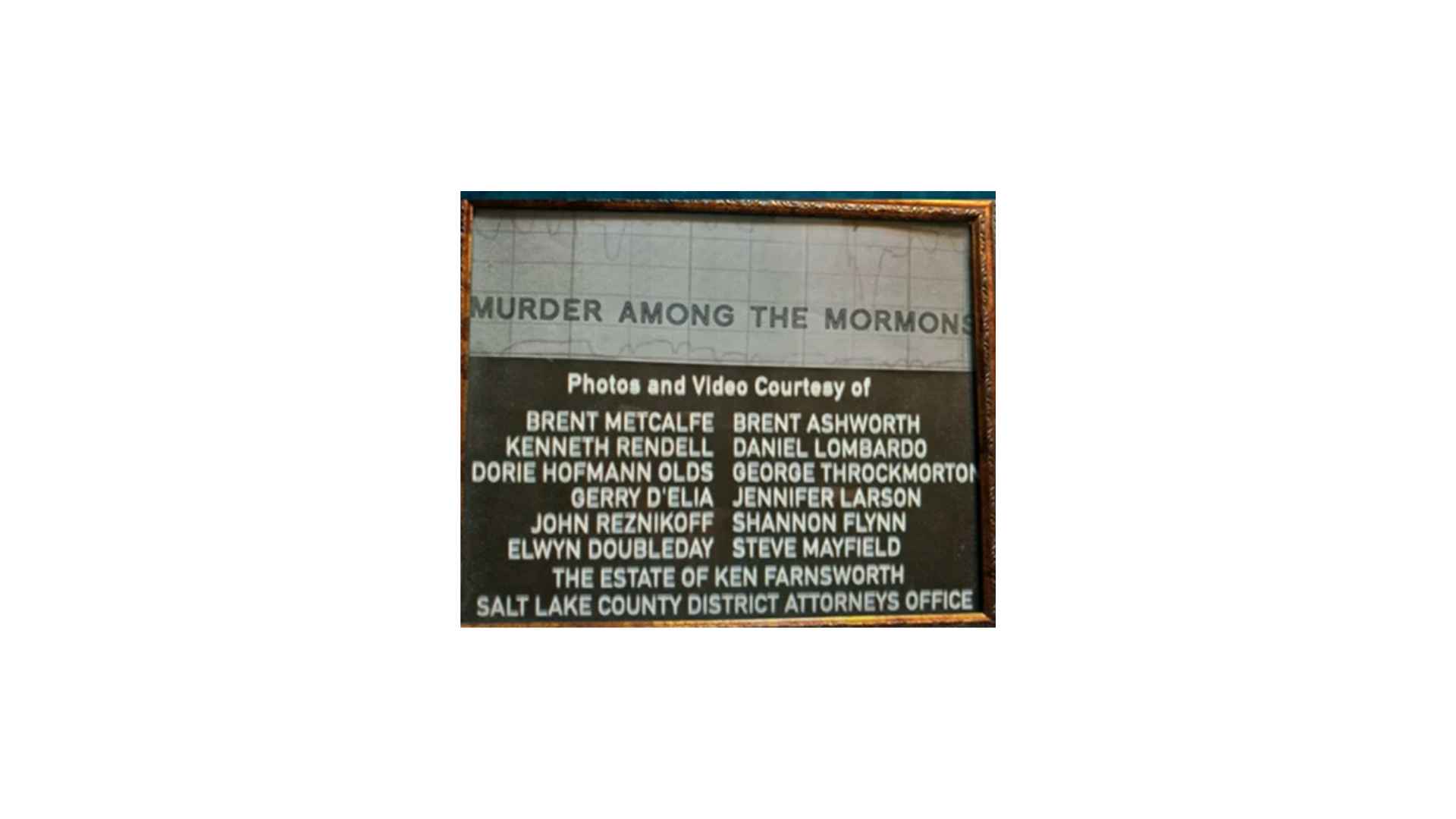
And then also, why don’t you tell us how accurate you would say Murder Among the Mormons is.
Tyler Meeson
Steve: About five years ago, Tyler Meeson, one of the makers of the film, ran to me at the Utah State Historical Society conference, and he said I wanted to talk to you because I understand you got stuff on Hofmann. He’d apparently approached Lindsay Hansen Park over at Sunstone, who then said go talk to Ken Sanders, and he went to Ken and said, “You got to talk to Mayfield. He’s got all this stuff” as he saw the picture of my library. So for a four or five year period, I worked closely with Tyler Meeson providing him with materials, photos, documents, and so I was pretty well up on what was going on.
Unfortunately, both he and Jared Hess, who came on later to help make the film, must have filmed between six to ten hours of interviews. It would have been great if they used all 10 hours, but unfortunately, Netflix says “Nah, just too much time, not enough money to handle it, and you’ll probably bore people.” I don’t know why, but so they were cut to three hours. Plus, because of cutting, they left out some information, they didn’t include certain documents, and they left out any discussion of one of the associates of Mark Hofmann, Lynn Jacobs, who played a very big part in this time period.
I would, because I’m a little biased here, but I would give a very solid B in spite of its shortcomings because it covered a lot more than any other. There’s been 17, 18 documentaries on Hofmann, sometimes a half an hour, maybe 45 minutes that don’t cover it as much as Murder Among the Mormons did.
The Hofmann Investigation
Craig: Alright, now I made it very clear that you were not involved in investigating the Hofmann investigation, but you do have a connection. So could you tell us about your being interviewed not once but twice?
Steve: Yeah, I know that Scott just mentioned it, and on the program, it says I was not an investigator. And this is not the first time. When I did a two-hour presentation up at Weber State in 2010, and the person doing it said I was the criminalist that worked on the case, and it kind of makes me nervous when they say that because I was in Colorado when it happened.
But somebody, apparently a friend, I don’t know who, contacted the investigators, and I got a call one day over in Colorado from Bob Stott, the lead prosecutor in the case. And the reason they wanted to talk to me is because I was friends, prior to my removal to Colorado, with Lynn Jacobs and Brent Metcalf, one of the other persons involved. And so I had a nice hour interview over the phone, and another time when I came to visit my parents, I met them in the office.
The reason they were looking at these with people is that during the investigation, they would get word from people who knew Mark saying, well, he’s not that smart, he’s not that brilliant, he had to have someone helping him. So obviously, a good police investigation is going to check to see if there were any other co-conspirators or participants in his activities. Beyond that, that was my part of that.
Mormon History Association Conference
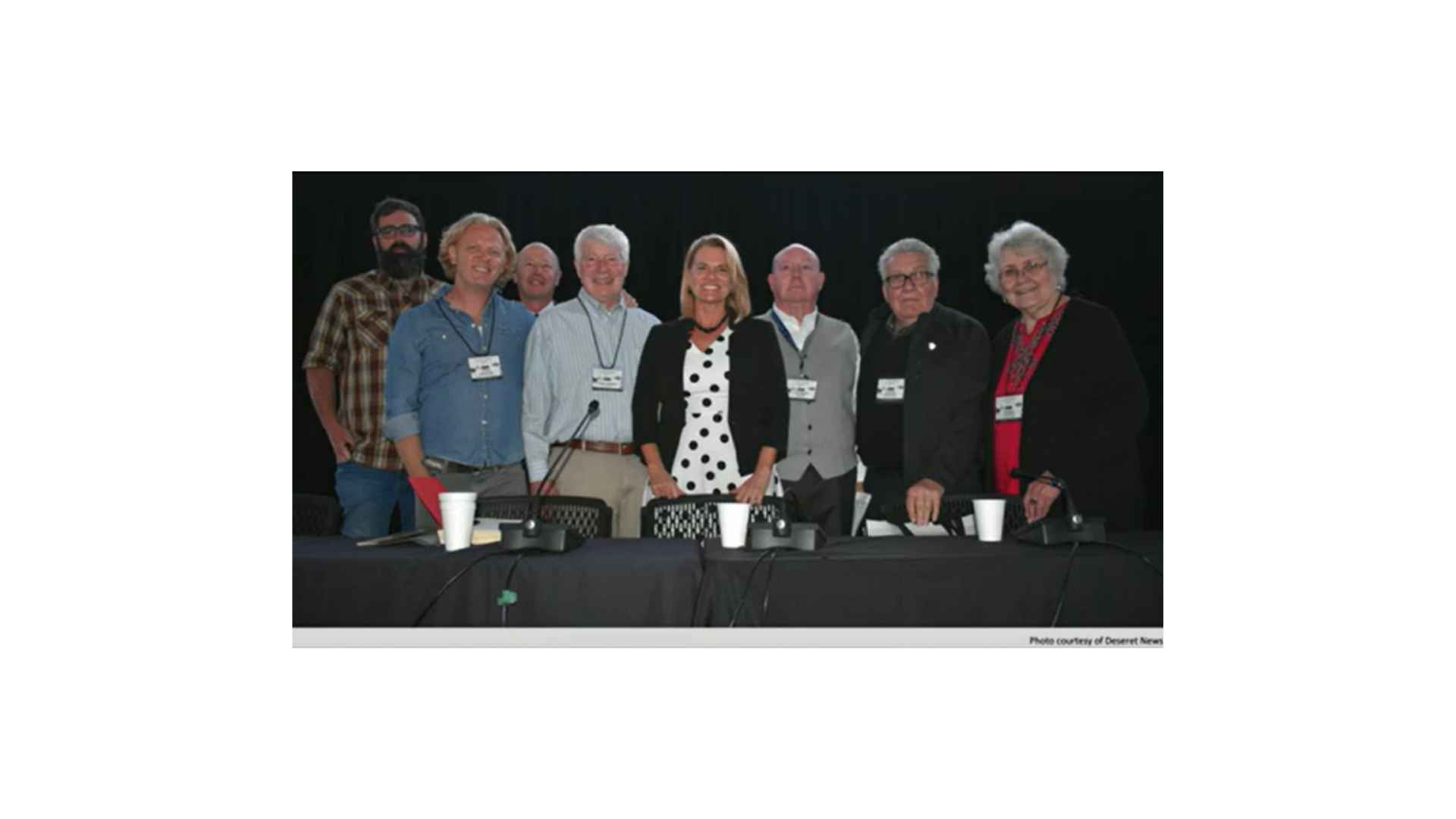
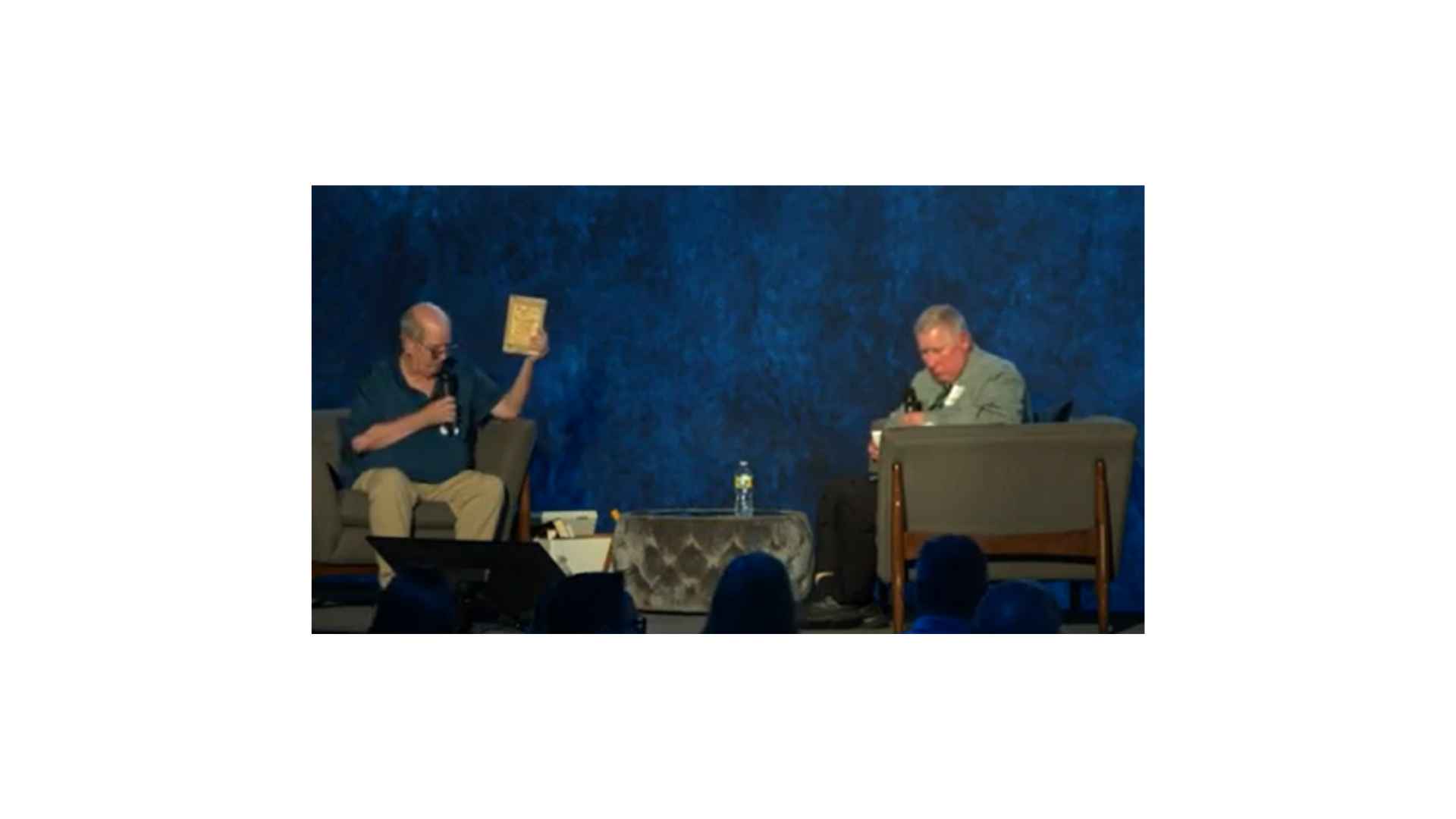
Craig: Alright, we have on the screen this is a picture from last year’s Mormon History Association conference. Could you identify the people and kind of explain any connection there?
Steve: This is up at Park City, a little panel discussion. On the left is Jared Hess and Tyler Meeson, bald guy in the background is Rick Turley, Kirk Bench, Barbara Brown, Shannon Flynn, Jeff Johnson, and then Sandra Tanner on the far side.
Since this has come out, both Shannon Flynn and Kirk Bench passed away. Kind of a sad event because of their not involvement, but Kirk Bench was a very prolific dealer of books and dealt with Mark Hofmann on a personal basis. And a very fine panel. They also had by phone Alan Roberts, the author of the book Salamander.
Craig: Why don’t you mention your connection to the book?
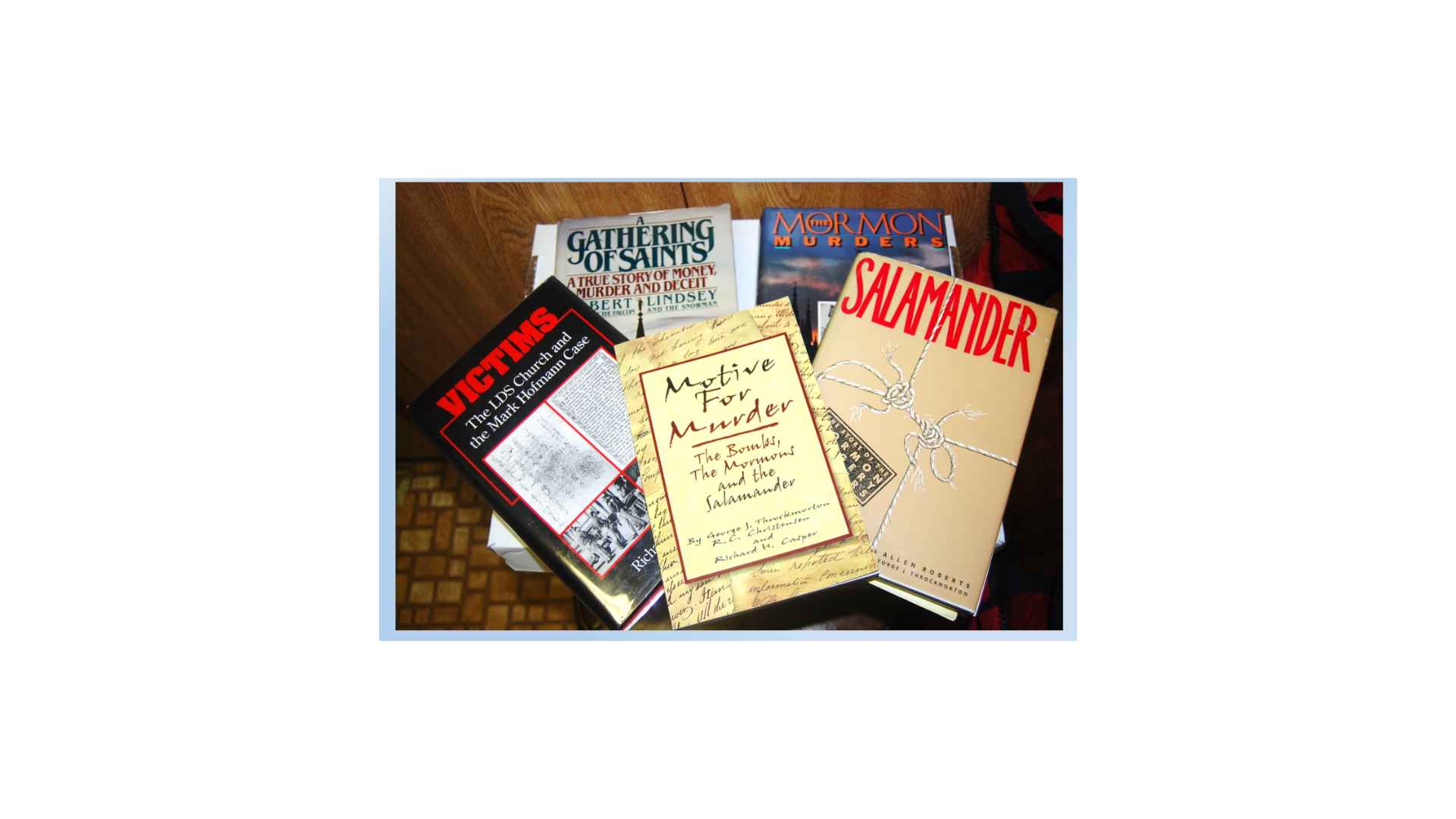
Steve: Oh, the Salamander. Yes, you have these various books, here in the box, he had Mormon Murders, Gathering of Saints, Salamander, and Victims. I shared my news clippings with Alan Roberts and Linda Solito, so I get a little footnote, “thanks for the clippings.” As you saw in that one picture, my library has expanded since that time.
Elder Oaks’ Role in the Investigation
Craig: I want you to explain about President Dallin H. Oaks, then Elder Oaks, because he played a very important role in the investigation, particularly dealing with the Church’s relations with the investigative team.
Steve: Let me share with one of the books; we’ll talk about the books here in a second. This is a book called Motive for Murder properly published. It’s written by George Throckmorton. It’s not like you would find most history books with footnotes, but it’s kind of his telling his story. And during the early parts of the investigation, both he and Bill Flynn, the other document examiner, needed to look at some legitimate, real, historical documents out of the Church archives. But it seemed that middle management people and the lawyers said they’re sick or we can’t give them to you. In fact, one of the attorneys for the Church says, “I’m here to protect the Church and President Hinckley, and we’re not going to help.”
Well, that frustrated them and the prosecutors, and they were trying to find a way to do it. So there was a meeting with Elder Oaks, who was basically one of the newer members of the Quorum of the Twelve, and they negotiated with him. And he came forward and said we need to give them what they want. And it was made that they could look at the documents, but they had to do it within the Church Administration Building. You can’t take them out of the historian’s office.
Mike George
So arrangements were made where a room would be set up where the equipment could be brought in, and that George and Bill Flynn could sit there and examine these documents. They could sign form them and so forth. Later on, Utah Attorney General Wilkinson, Ernie Wilkinson, came and talked to George and says, “I’ve talked to Elder Oaks, and if you have any problems, you know, just go to him because he’ll take care of it.” He pushed it through.
Another interesting statement was made here back in March. Bob Stott, the lead prosecutor in the case, a brilliant man, very good at prosecuting very prominent cases, passed away, and at his funeral, the first speaker was Mike George, one of the investigators in the case.
Now, Mike George is not LDS, but he got up and had high praise for Elder Oaks because whenever Oaks got involved, it opened the door for us to look at the documents and do the investigation.
Mark Hofmann’s Dealing with the RLDS Church
Craig: Alright, now there’s kind of an interesting story that in 1981 Mark Hofmann contacted what was then the Reorganized Church of Jesus Christ of Latter-day Saints and is now the Community of Christ. He contacted them about a blessing, the Joseph Smith III blessing, which made it appear that Joseph Smith had ordained his son to be the next leader and therefore the RLDS Church had the legitimate claim to Authority, etc., etc.
So what happened was Mark Hofmann contacted the RLDS Church, and Steve has a recording; unfortunately, we don’t have it with us, but the recording is amazing. It’s kind of like watching or listening to a con man in action because Mark Hofmann called, and this really kind of an innocent, oh golly gee, shucks, attitude, “Hi, my name is Mark Hofmann, and I’m calling because I found a letter that I think you might be interested in, blah, blah, blah.”
Steve: That was a good impersonation there, and I’ve listened to it.
Opening Relations
Craig: But needless to say, obviously, people were pretty excited. The lady that answered, she’s going, “Oh my, oh.” And so in short order, Grant McMurray got on the phone, Dick Howard did, and they talked with Mark and they arranged to fly to Salt Lake and meet him and to purchase the letter if it was legitimate, etc. But between the time that they talked with him on the phone and they arrived in Salt Lake, he contacted the Church and sold them the letter, thus double-dealing. This was an incredibly embarrassing experience for the Church, not knowing that he had dealt with the RLDS first. And remarkably, it kind of opened up relations between the RLDS and the LDS church because they exchanged the letter. What was it for, was it for a Book of Commandments?
Steve: After they realized what was going on, and because the Utah Church felt that it’s more related to their history than ours, they traded it for the Book of Commandments. And after it was found to be a forgery, we gave the Book of Commandments back to him. Although they said, “Hey, a deal’s a deal, we were taken,” but the Church said, “No, we’ll give it back to you.”
Craig: So it really did kind of open up relations. But Steve has a really fun story about that.
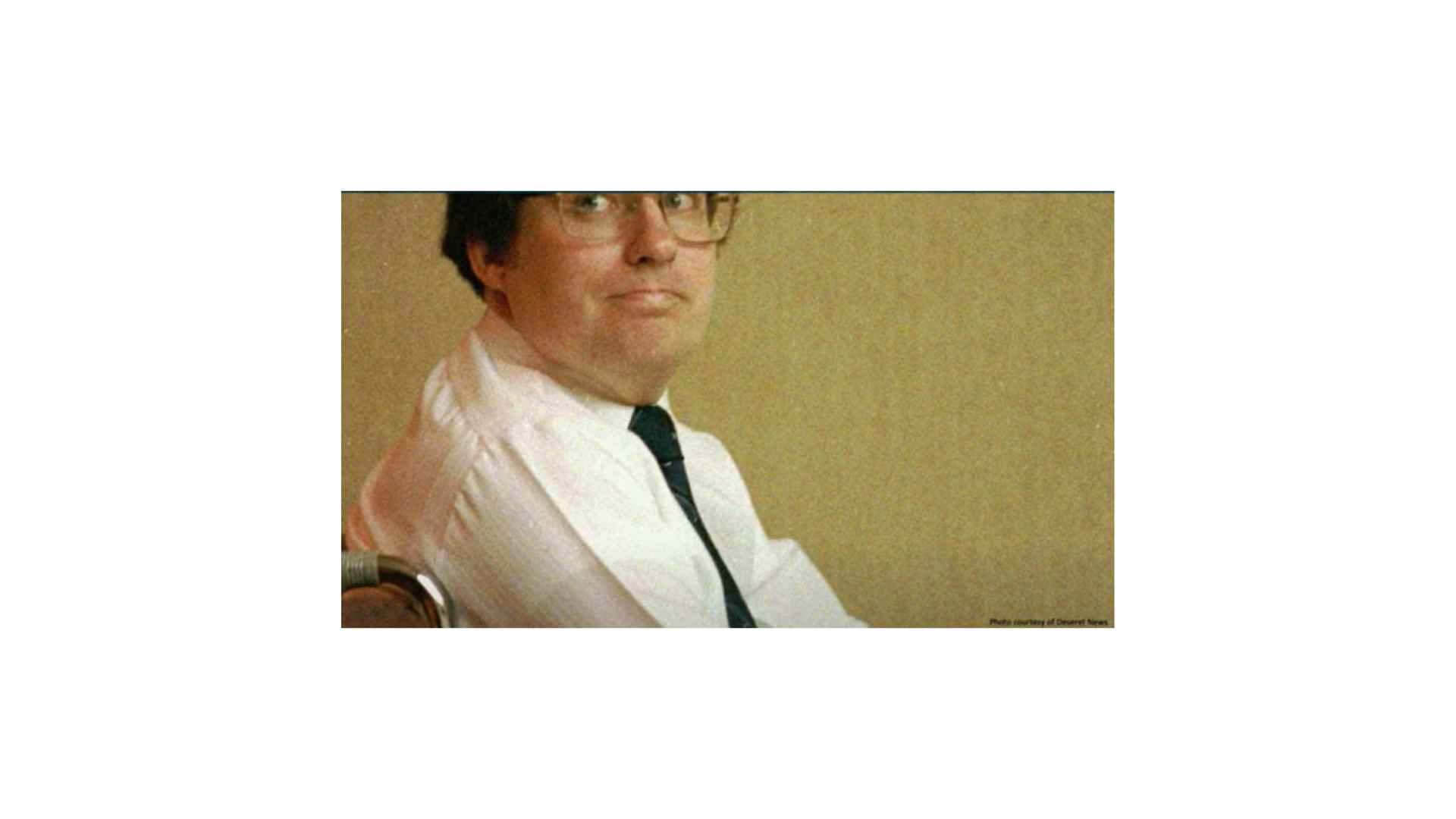
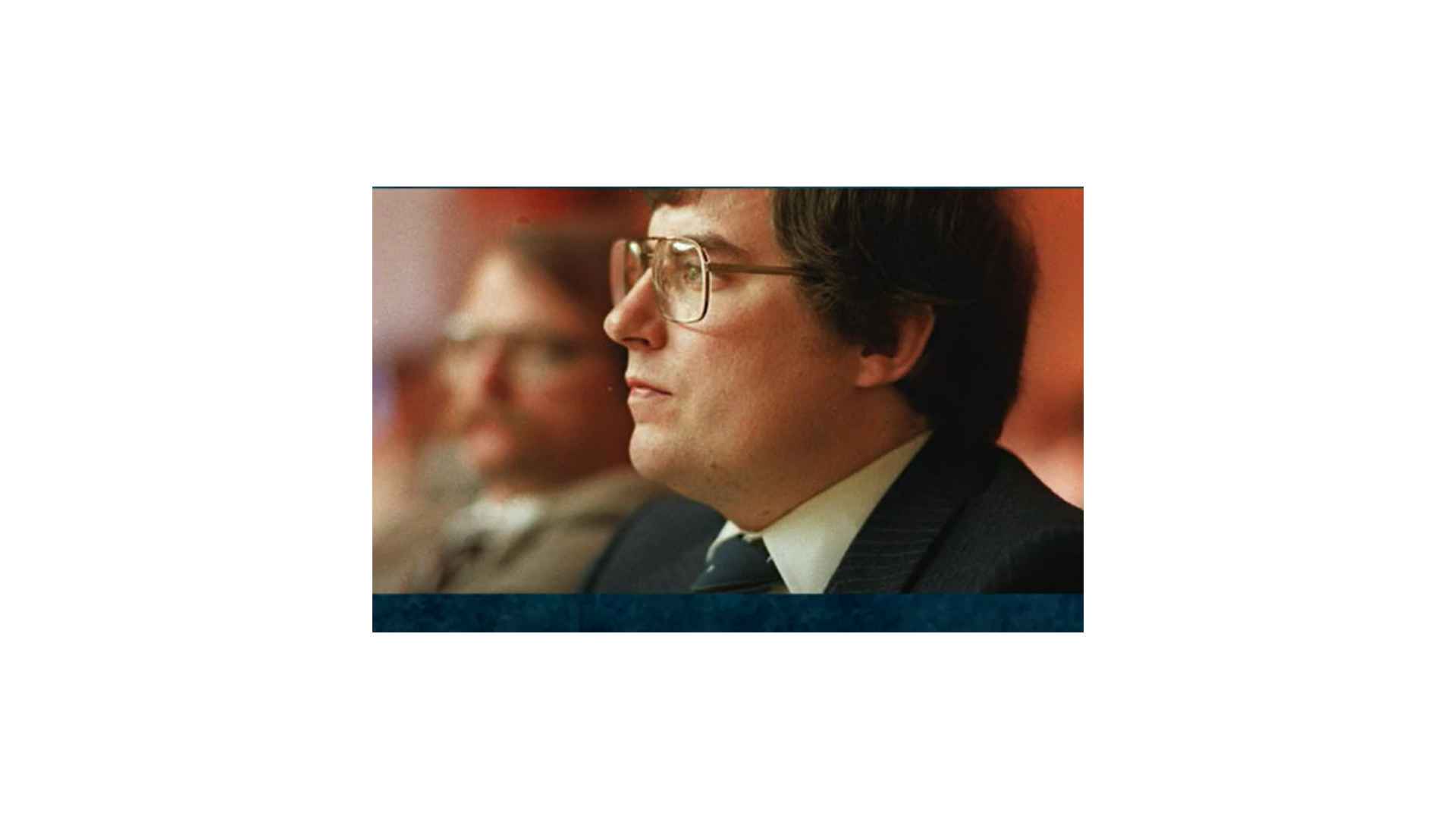
Steve: Yeah, after he double-dealed with the Community of Christ folks, they made a very wise decision. They said, “We’ll never deal with that man again.” That should have been a sign that you can’t trust the man.
Double-Dealing
But one of the aspects through the whole investigation is that a lot of people saw things. Sometimes he’d buy a document, somebody says, “I don’t think it’s real,” and then he’d buy it back for more money, kind of double-deal on that one. He would bounce checks. He had a lot of checks that you could hear all around the world bouncing. But as Brent Ashworth, one of his victims, said to me one time, “I really didn’t like the man, but I needed him because he gave me what I wanted.” And if you don’t know who Brent Ashworth is, he’s an attorney who lives down here. Great collection of documents; he has a little bookstore downtown Provo, knowing Mormon stuff, Americana. And another person that we can talk later who suffered, was a victim of this, besides the documents.
Anyway, after the arrangements were made, the Community of Christ had it checked out, examined, and the people that examined it used the best technique with the best knowledge at the time, comes into play later on. And they went so far that when it was authenticated, they put it in their scriptures in their Doctrine and Covenants, and made a good thing. Well, this is 1981. In 1982 at the Mormon History Association conference in Ogden, they had this meeting in the Institute chapel. And so they had a panel discussion, and Mark got up there and said, “Yes, and this is what happened.”
Well, I’m out in the audience with a group of my friends from the Reorganized Church, including Richard Howard.
Craig: We need to explain. He was the church historian for the RLDS Church. I should have explained that earlier, sorry.
A Master at Work
Steve: And I was sitting there in the back where they were, and there was some giggling and laughing going on, kind of looking, and all during Mark Hofmann’s conversation, Richard Howard in a not so silent voice of going BS, BS, BS, and he used the whole word. Then later on in 2011, when I played this phone conversation, I played it back in Nauvoo, and he got up again and said, “And that’s what I said,” and he used the real word and through the whole thing, which I liked the man because he did that.
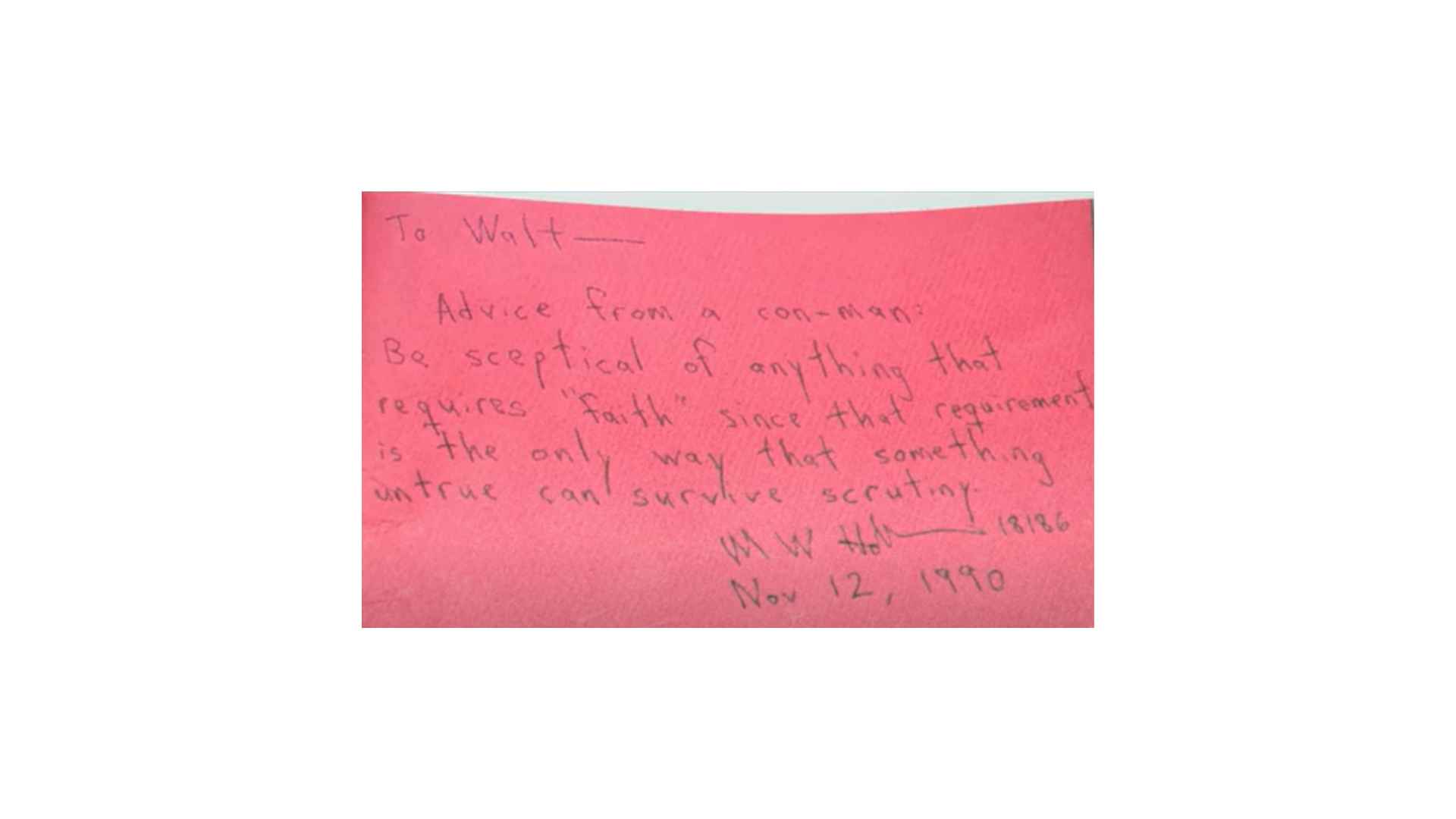
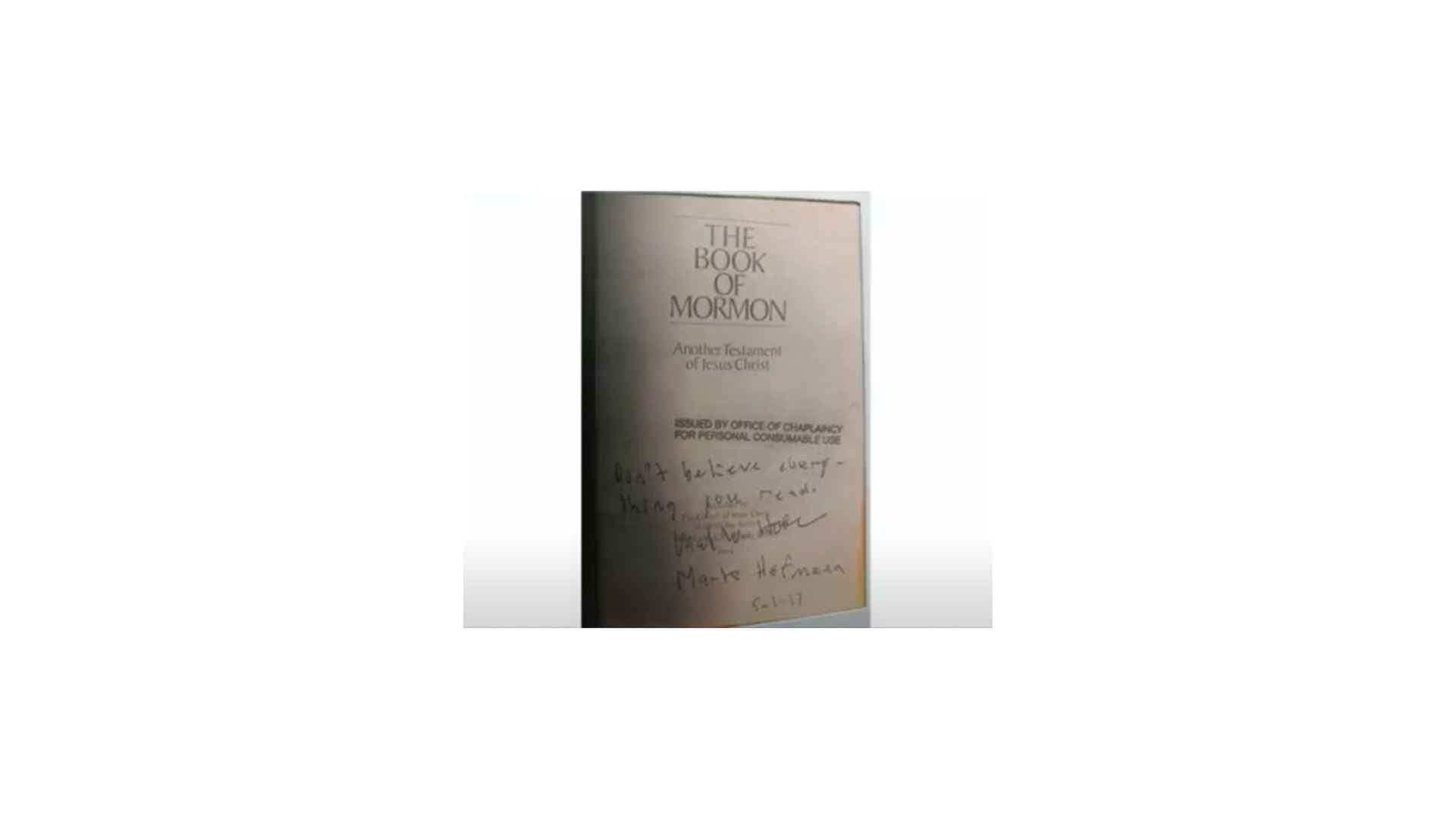
By the way, this tape recording of the phone call, in 2011, Brent Ashworth invited George Throckmorton and myself down to his store. You got to listen to something. So he puts his CD on, and you can hear it’s Mark calling them, talking about this document. It was an hour long, and it’s like again, I have ears for law enforcement, so does George, we’re silent, we’re just picking this stuff up, realizing here, here’s the master at work. You can hear him conning these people. It’s just amazing how he can do it. And I forgot to bring it today, or we’d play part of it for you. Maybe I can bring a copy of it and give it to folks here at FAIR, and they can, if they want, put it out on their Facebook page or something.
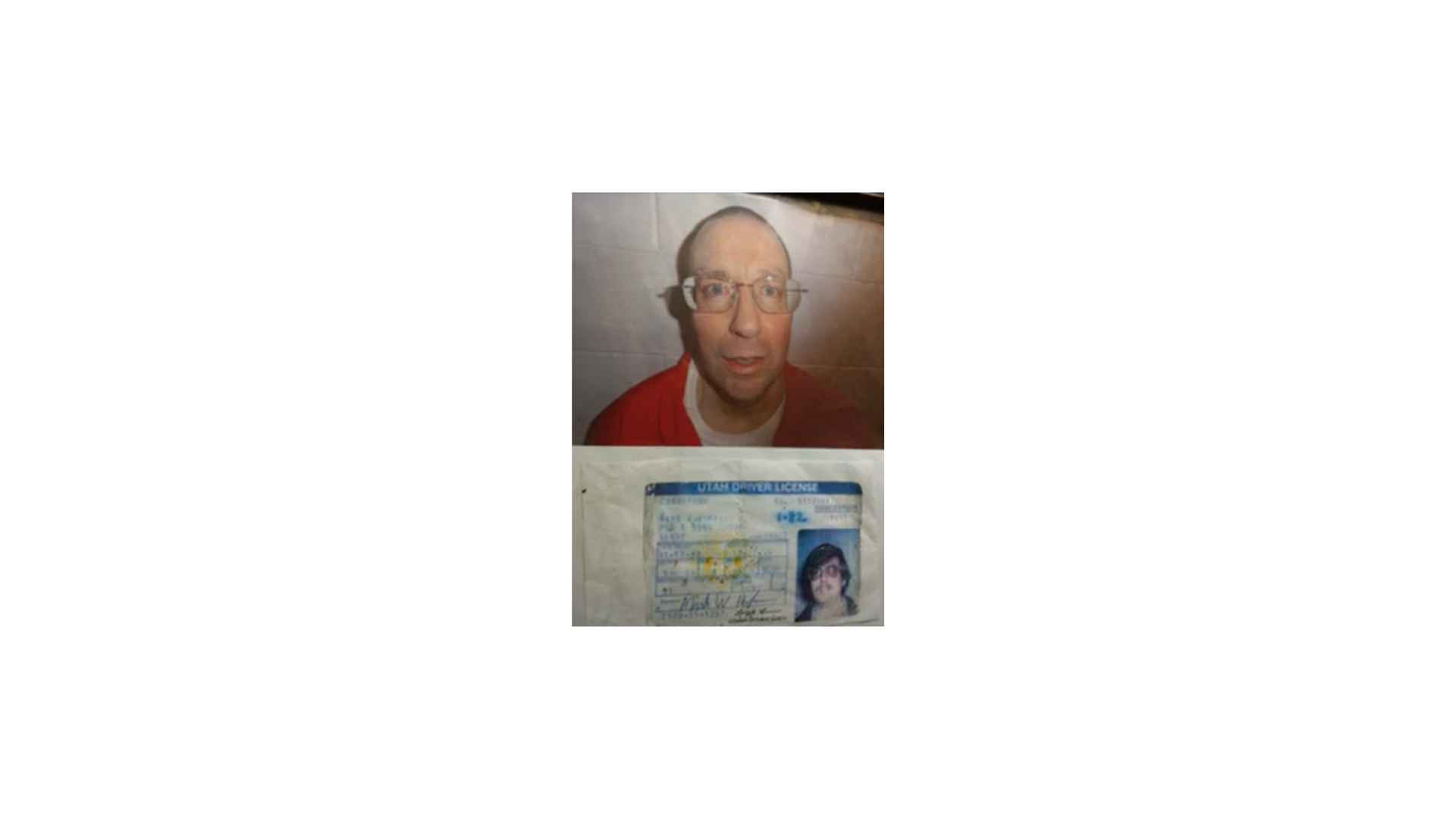
But again, it was one of those things that we knew from the beginning that he wasn’t trustworthy. But he gave people what they wanted, so the media, the collectors, historians, they loved it, and that’s what kept him going.
The Story of Brent Ashworth
Craig: So as we start to wind up, I do want you to tell the story about Brent Ashworth because, yeah, this was tough.
Steve: One of the things that happened at this Mormon History Association in Park City as they were talking, they were kind of telling some jokes. Barbara Brown forgot to introduce the producers, they got up and kind of jokingly walked out, and everybody was laughing. And Alan Roberts got on and brought us back down to earth. Alan said, “I know there’s a lot of laughter and joking, but you’ve got to realize this man killed two people. He ruined families and his own family. He ruined Brent Ashworth’s family, and Brent lost probably over half a million dollars in cash and legitimate documents to the man.”
Details of the Bombings and Tragic Consequences
During the time of the bombings, well, we had these first two bombs, Steve Christians and Kathleen Sheets were the first day. The next day, of course, Mark had gone with a box with another bomb. He was supposed to meet Brent Ashworth at a bookstore, but Brent’s wife, bless her heart, says, ‘I don’t think you should go up today. Let’s stay home.’ So they stayed home, watched movies, and ate pizza.
So after he didn’t show up, Mark went back to where his car was behind the Deseret gym, and that’s where it went bad on him. Because he claims he got in and found a box, got in the car, shut the door, and it blew up. Well, the ATF gentleman said it can’t happen. If that blew up, you’d be dead. What happened is the door was open, and he blew up and blew him back out.
Well, Brent, having associated with him, was there was a concern. So he and his wife decided to skip town for a while to get away from things. His young son Sam liked to go ride his bike outside, but he was never riding the street. Well, whoever was watching him forgot to keep an eye on him, and he got hit by a car, was in a coma, and lasted, oh, six, seven months before he died. And Brent Ashworth says, “I blame him for that. If he hadn’t done these things, I would have been there to keep an eye on my son.” So he ruined a lot of people’s lives and families.
Questioning Hofmann
Craig: Yep, he did. And that, you notice, these are some things that Steve has pictures of or actual things, and you know, Hofmann, yeah, he really is quite the con man all the way along.
As we wind up, Steve, do you have any other comments about the Hofmann case, about Hofmann from what you have learned over the years, maybe some things that people usually don’t hear about?
Steve: Well, now, I’ve had a couple of times to try to correspond with him and to try I have two questions for him. One is a document we haven’t mentioned, but “Do you have anything to do with the Dead Lee Scroll?” And two, “This Sidney Rigdon/Solomon Spalding manuscript, where’d you get it?” I’d like to be able to trace it back to where he found it. I’ve written him a few times over the years. Two months ago, I asked, he won’t answer me. I even one time talked to his attorney, Ron Yangich, and I said, ”If I give you a letter, will you give it to him?” He says, “I’ll be glad to do it, but I can’t make him answer you. He is very picky about who he talks to.”
Can We Trust Anything?
There have been some letters of correspondence, but I know that I talked to Jack Ford. He used to work at KSL, became the public spokesman for the Department of Corrections, and he said “When I was there, three or four times a month, I get asked from somebody in the media, ‘Can we talk to him?’” And he’d go down and, you know, “Uh, Mark, you want to be interviewed?” “No.” He doesn’t have to.
And we’ve got people involved who have written about it, talked about it, and so forth. What we’re missing is Mark’s talking about it. The problem with that is it’s been 35 years, so his memory is not going to be like it should be, and he’s a liar. Can we trust anything?
The Plea Bargain
Now, as part of the plea bargain, let’s understand something, a couple of issues come up. A) “The Church was buying these documents to hide them.” Not true at all. Even the Salamander letter, as Craig says, people were talking about long before he came around to the Church. But Mark Hofmann went to Don Schmidt, the librarian at the Church history office, and Don Smith said, “Not for 40 grand.” He had doubts about it. So he sends it on to Jacobs, who’s a lot more hard to sell, won’t buy it. But then they got in contact with Steve Christensen. He said he would buy it, he would examine it, and then donate it to the Church. But this was talked about long before, so the idea of the Church was buying the Salamander letter and hiding it, or hiding these documents. No.
A lot of the documents that he forged weren’t faith-threatening. They’re simple. Yes, the Salamander letter, the Joseph Smith blessing, but historians were able to explain those things pretty well.
So, Mark isn’t obligated to talk. But part of the plea bargain that people claim the Church forced the district or the County Attorney to do the plea bargain, “We don’t want President Hinckley or anybody else to testify.” In fact, President Hinckley told Bob Stott, “I really don’t want to get involved with this,” you know, because he was considered a victim. But Bob Stott says, “This is a murder case. If we need you, you will testify.” But they understood. They went to Ron Yangich. He says, “If we don’t need him, President Hinckley, to testify, will that be alright?” Ron’s smart, you know, “We don’t need one of the Church leaders up there.”
The Most Serious Charges
You got to understand, what were the most serious charges that Mark had? They were the murders. The documents and the forgeries were secondary. Question is, what could President Hinckley have testified about the murders? What he saw on TV? What he read in the paper? So his was secondary.
What happened is towards the end of ’85 into ’86, there was a scandal in the County Attorney’s office. The county attorney is now the district attorney. Ted Cannon was the county attorney, the head of the thing. But he got involved in a scandal, and he had to resign. So they brought in David Yocum who immediately came in and said two things: “Bob Stott, this is going to cost too much, we don’t have the money, it’s not on my desk, clear it.” Then he turned to George Throckmorton and says, “You’re low man on the totem pole, I gotta cut budget, so you’re gone. The man just gave you the incentive, the reason why to cover up the forgeries. But, by the way, you’re gone, you’re fired.”
Part of the agreement was that after he was sentenced and went to prison, he would agree to be interviewed. And the county attorney’s office came up with about two volumes of these interviews. And towards the end, Mark just decided, “You can’t do anything to me, so I’m going to not talk to you.”
Manipulation
He was very manipulative even through those. People were supposed to be at the interviews, like George Throckmorton, but he says, “I don’t want Throckmorton in here with me.” So George would be down the road and they’d go out and ask him questions, he’d come back, they’d have to keep doing that with other people, and finally one day, Mark says, “There’s no more.” And they couldn’t do anything because he’d already been sentenced. Some of the prosecuting attorneys said we should have done that before the sentencing.
Now, if you ever read those interviews, the Mark Hofmann confessions, kind of an insight here that George Throckmorton gave me. If they ask him a question, he elaborates, he talks long and this and that and bores you to death with his story, he’s lying. If he answers the question yes or no, very quick answer, that’s when he’s telling the truth. So think about it if you ever get interested in reading that.
Current Situation and Speculation on Release
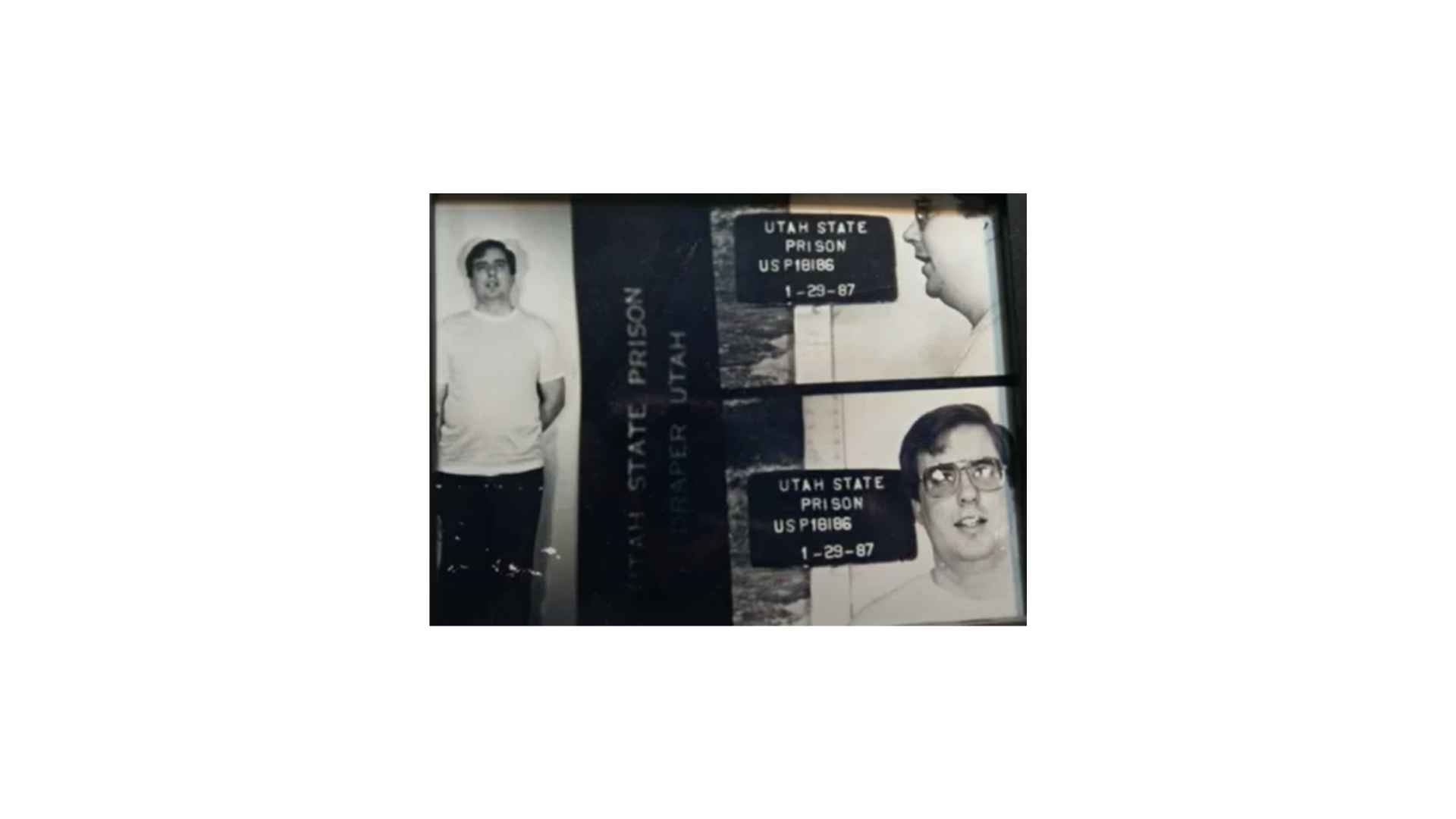
Mark, as of this morning, is still down at the state prison in Gunnison. He was transferred down there in December of 2015. He hasn’t been moved to the new one. His former cellmate, Dan Lafferty, is out of the new prison. Another interesting character, Mark Hacking, is down at Gunnison. Tyler Measom, who did Murder among the Mormons, put himself on the visiting list for Mark Hofmann, and he was about to go down to Gunnison to talk to him, and he got notified that Mark took you off the list, he doesn’t want to talk to you. He picks and chooses and he no longer communicates with his ex-wife Dora Lee. She divorced him, and that’s been 25 years. His kids still go there, and I believe his mother still visits.
Now, Dora Lee once told me that it frustrates her because his kids will go visit him, and he’ll talk to them or brainwash them about all the lies that have been said about me, “I wasn’t that bad, I didn’t do these things, and you can’t trust anything your mother says.” And so, he continues, after 35 years, continues this deception.
He’s in for life for the two murders. A parole board back in ’88, said, “You’re here forever, don’t even think about it.” But I was told that there’s a possibility that they could do a humanitarian release. He’s 88, 89 years old, they don’t want to take care of him. So they say, “Old man won’t do anything, let him go.” But unless that happens, he’ll pass away in the Department of Corrections.
Audience Q&A
Craig Foster:
All right, does anyone have any questions for Steve?
Audience Member:
Yes, explain about the Deadly Scroll.
Steve Mayfield:
During the Winter Olympics a National Park Service worker named Alan Malmquist, who’s down at the fort at Lee’s Ferry, he was a regular school teacher during the year but during his off time, he was called ‘the Interpreter’ for Lee’s Ferry. So he was cleaning the fort, you know, dust, dirt, bat stuff on the floor, and he noticed there was a rolled-up piece of metal. He thought it was a can or something like that. And he opened and unrolled it, and he saw engraved a statement by John D. Lee who kind of pointed the finger at Brigham Young and George A Smith. Well, this was “whoa, wow,” you know. Well, of course, National Park Service people were very interested. It made a big story.
It was first shown to Bill Flynn in Phoenix, and he examined it, it was brought up to the Salt Lake City Police Department Crime Library where George
Throckmorton looked at it. Now George knew I was hungry to see this thing because he knows my interest in history. So he went into the one room, shut the door, locked the door, and looked at it. And after he got done, he asked the archaeologist for the Park Service, is it okay if he [Steve] looks at it?… “Oh he could have looked at it from the beginning.” Thank you George. So I was able to go in and take pictures.
Craig Foster:
You need to mention there was a question, did Hoffman make it? Because I know that went back and forth.
Steve Mayfield:
Well, we’ve got to the point now in 35 years, any time there’s a suspicious document the question is, was Hoffman or any of his associates around it? And his associates were Shannon Flynn Brent Metcalfe and Lyn Jacobs. In fact this recent thing from a couple weeks ago, about the daguerreotype photo that they think might be Joseph Smith, I saw it on Facebook and social media. Did Hoffman have anything to do with this? You know you’re always going to have that question.
Another document I’m thinking of is an affidavit that came out in, I think, 2011. It was called the Bishop Edwards affidavit. William Edwards, was a young man down there at Mountain Meadows, and he was a 15-year-old kid, I guess holding the horses when the thing went down. Well he was the last surviving person involved from the perpetrators or the victims, so according to this affidavit, typewritten on a letterhead from the judge, he talks about this.
And it was 1924 when it was typed and signed. Well this document was used by both Rick Turley and Will Bagley in their books on the Mountain Meadows Massacre. Well when somebody did a review of Will Bagley’s book, lady up in Seattle area said, “You got a problem” because according to somebody in the state archives, Gary Topping, he remembers that document came to the archives through the hands of Lyn Jacobs. Lights go off.
So George came in and worked with the people in the Church archives and they determined that the signatures were traced. You put the paper down and you kind of write over it. But the big coup de grace on it was it was taken back to New York to a gentleman named Peter Teitel who in the forensic business is the typewriter guy. Now this was 1924 when it was supposedly dated, but he determined it was a 1950 Royal typewriter that was used to type this letter. So they’re still out there.
There’s a lot more we talk about the Deadly Scroll, we don’t know of anything that was written by John D. Lee that Mark forged, however, when they pulled him out in the late 80s to ask him about some possible threats of hiring somebody to kill somebody from the parole board and George Throckmorton, they did a search of his cell and they came up with a one-page yellow sheet and he wrote on top “Americana I forged” and on the other side Mormon I forged.” John D. Lee’s name is there. We don’t have anything else of John D. Lee that he may have done. So is the Deadly Scroll a Hoffman forgery? Don’t know.
Craig Foster:
All right, thank you.
Endnotes & Summary
In this riveting presentation, Steve Mayfield—one of the foremost experts on the Hofmann forgeries—examines Mark Hofmann’s fraudulent documents, the resulting murders, and their profound impact on Latter-day Saint history. Mayfield provides unique insights from his decades of research, including behind-the-scenes details about the Netflix documentary Murder Among the Mormons. He explores the implications of Hofmann’s actions for Church history, apologetics, and the ongoing efforts to authenticate historical documents.
📖 Books mentioned in the talk:
- The Mormon Murders by Steven Naifeh and Gregory White Smith
- A Gathering of Saints by Robert Lindsey
- Salamander: The Story of the Mormon Forgery Murders by Allen Roberts and Linda Sillitoe
- Victims: The LDS Church and the Mark Hofmann Case by Richard Turley
- Motive for Murder by George Throckmorton
All Talks by This Speaker
coming soon…
Talk Details
- Date Presented: August 2021
- Duration: 45:16 minutes
- Event/Conference: 2021 FAIR Annual Conference
- Topics Covered: Mark Hofmann forgeries, Steve Mayfield FAIR talk, Mormon Murders Netflix, LDS apologetics Hofmann case, Mormon Stories Hofmann critique, CES Letter Salamander Letter, LDS Church history controversies, Mormon document forgeries, Mormonism and crime
Common Concerns Addressed
Why didn’t the Church detect Hofmann’s forgeries earlier?
The forgeries were sophisticated and fooled experts across religious and academic institutions. Once suspicions arose, the Church cooperated fully with investigators.
Did the Church try to cover up the Hofmann case?
Mayfield and other witnesses affirm the Church’s cooperation. Elder Oaks was instrumental in enabling forensic analysis.
Apologetic Focus
Faith can withstand challenges from deception when supported by transparency, scholarship, and context.
The importance of documentation, evidence-based research, and institutional humility.
Explore Further
coming soon…
Share this article
