Skepticism and Moral Intuitions
So, if you’re feeling brave, I want—when you initially saw the title of this presentation—if you’re feeling brave, how many of you had an initial skeptical reaction to how I would address this topic? Anyone brave wants to raise their hand?
That’s okay. A couple. I just wanted to know who I need to watch out for [laugh].
But no, I think that is very common, and I think it is understandable to have that reaction. And if I’m being honest, I have the same reaction when there is someone in this space of, you know, LGBTQ or however you want to frame it within a gospel context.
I am always initially skeptical and a little bit worried that they are going to preach something that is going to destroy faith. I’m always— that’s kind of my starting point, and maybe it shouldn’t be. But that is something that I just had to admit.

Skepticism is Normal
I think there is some utility in having a skeptical reaction when someone or something could be preaching something that is going to detract from values that you hold dear. I think that is a normal reaction to symbols that we have in our culture.
When we encounter enough examples of people trying and failing to find a proper balance with this issue, it’s understandable that we would have a reaction that may not be overly positive to different symbols that we see, or different ideas, or different words or phrases or acronyms.

A couple years ago, Jeffrey Thayne, who’s presenting tomorrow, gave a wonderful address on moral intuitions, which he defines as our moral taste buds—the initial reaction that we have to some sort of symbol or stimuli or message, just our initial gut level reaction we have to things.
And when, as I mentioned, when we encounter someone who could potentially preach something we believe is harmful, whether spiritually or otherwise, it’s very normal to have that sort of initial kind of reaction to that symbol.
Barriers to Belonging Without Breaking the Gospel
So the question is how do we maintain the healthy aspect—aspects—of that moral intuition without disrespecting or isolating others or wrongfully judging them.
How can we maintain our moral intuition and values without casting a sort of broad net, broad assumptions about individuals based on maybe the labels they use or the people they hang around?
Simply put, how can we recognize the barriers causing Latter-day Saints with an experience that is sometimes described as LGBTQ?
- How can we identify those barriers?
- How can we recognize when maybe we are those barriers?
- How can we gracefully acknowledge some barriers that might be self-inflicted?
- How can we address those?
And how can we break down those barriers without breaking down the scaffolding—scaffolding—of the gospel? The reason that it exists in the first place.

What We Mean by LGBTQ
I think it’s important, or it would be helpful, to maybe first define what we mean by LGBTQ.
There’s a lot of “what does this mean?” It can mean a lot of different things in a lot of different settings.
And words have—I think they have intrinsic meaning, but they also assume the shape that we assign them, that we give them, that our culture creates for them.
Eventually words shift, and how we use them changes. They develop political baggage and cultural baggage.
Language is an imperfect tool we have to communicate one with another.
This specific acronym has come to be used as a shorthand to identify sexual minorities and people experiencing some sort of gender incongruence, dysphoria, or even genetic abnormality. It’s kind of this big umbrella term, acronym.
And the upside of that is it’s a shorthand, and so it’s easy to use. It’s easy to market.
Most people have some level of understanding of what you mean when you say LGBTQ.
Obviously the downside is sometimes we may communicate something we don’t intend when we use this acronym.
It can implicitly signal a soft support or a full support for the political movement tied to the acronym. It kind of depends on how we use it.
So for example, let’s see, saying we need to love our LGBTQ brothers and sisters implicitly excludes those who have an experience that could, you know, be described by this acronym but who don’t use the acronym themselves, and that can cause issues in research.
Those who don’t identify with this may not choose to involve themselves with research that classifies individuals with the acronym.

Identity Labels and Mixed-Orientation Marriage
For example, I don’t really consider myself LGBTQ. I experience same-sex attraction.
I am in what you could call a ‘mixed-orientation’ marriage. Although sometimes it feels weird adding a qualifier to my marriage just because it feels like it’s just my marriage, you know? It’s my wife. We’re just—we’re married, and we love each other.
But I also understand that it is an easy and quick way to explain to others what our situation is, to some extent. And so there’s kind of this push and pull of identity labels, which I’ll talk about a little bit later.
But I experience same-sex attraction, like I said, and I sometimes do use the label ‘gay’ to mean the same thing as ‘same-sex attracted’.
But there is also some baggage with that term, and I’ve kind of wrestled and gone back and forth about the pros and cons of using that.
The initial title of my presentation was removing barriers to LGBTQ belonging. A lot snappier, a lot more marketable.
But I posted that a few months ago and got a little bit of push back, a little bit of, yeah, a little bit of push back about the title, because it frames the sort of LGBTQ in the context or in terms of identity language.
And I took that to heart and I realized that even I can get lazy with this topic.
As much as I’m involved in this conversation, as much as I think about this topic, I can get lazy and I can start to implicitly say things that I don’t mean to say.
Updating the Title and the Balance With Labels
So, I eventually ended up changing the title to faith promoting LGBTQ conversations and removing barriers to belonging.
A lot wordier, but it’s more concise in what I am actually trying to say.
When we talk about an individual or a group as “LGBTQ”, that is to use an identity based language. Obviously, we’re welcome to do so. But we have to weigh the pros and cons of doing so.
I’m going to talk about this a little bit more later, but I guess the question is: how can we respect those who decide to use this as an identity label without—while also, I guess, remembering the warnings from our prophet in his talk about labels that has been quoted here today.
He said a few different things about labels. He said if any label replaces your most important identifiers, the results can be spiritually suffocating. And I think that is a very strong statement.
But I have felt that personally, and I believe that he also said any identifier that is not compatible with these three basic designations—child of covenant, disciple Jesus Christ, child of God—will ultimately let you down.
And so that’s the sort of balance that we have to strike here.
How We Communicate Shapes Reality
I think how we communicate matters, and like I said, I get lazy. I get complacent. I want to easily communicate, especially on social media.
But I think how we communicate is more than just connecting with people.
- It shapes how we view reality.
- It shapes the cultural narrative of our day, and
- It ultimately shapes how future generations will talk and think about all of these things.

Barrier Number One: We Don’t Talk About It Enough
So what are some of these barriers?
I think barrier number one, we don’t talk about it enough. We fear this topic more than I think any other. And rightfully so. I mean, there are high stakes in this conversation. There are strong feelings on both sides, understandably.
There are individuals in our own lives who are wrestling with these things, and it becomes a very personal thing, and we just kind of exhibit this sort of paralysis where we are terrified to talk about this thing.

I get this message quite a bit, some variation of this message. I get this on social media.
“Thank you for all you do to bring clarity to this topic. I wish I could do the same.
And I always appreciate the support. I always appreciate this, and I love hearing from others, but sometimes I wish I could reach through the phone and shake them a little bit. Because you can talk about these things. And we should, obviously, find tactful, loving, and good ways to do so.
I’m not the only one that has the license to talk about the eternal family identity. All of these principles that we all have experience with regardless of, you know, what our situation is.

Avoidance, Wistfulness, and Wanting Simpler Times
As I mentioned a little bit ago, paralysis—we can become overwhelmed.
There’s so many different ways to go about this. How can we address this tactfully, or should we address this? And it can become scary.
I know I have been on many
- committees and
- conversations and
- email chains and
- personal interactions
spending hours talking about whether or how or if to address this topic.
And obviously, careful consideration is good and is positive. I think we should all be very careful and consider how we are going to address this topic if we are going to do so.
And not every organization, not every individual in every situation should talk about this. That’s not what I’m saying. But I think avoidance sometimes becomes our starting point rather than a sort of exception.
I think we can and should find ways to incorporate this topic into our gospel advocacy. Or our conversations with others. We shouldn’t fear talking about this.

Wistfulness. That was a good word I found. Essentially, yearning for simpler times. We want to maintain the innocence of our children for as long as possible. And I think that is a worthy goal to have.
At the same time, we want to be the first to bring up these things with our children. Because if it’s not us, it’s going to be
- a media figure
- an influencer
- somebody who may have a lot to say
– and may have a more intriguing message that is not as rooted in the truth.
Nostalgia and the Comfort of Simplicity

Nostalgia. This one might seem like kind of a stretch, but I really don’t think it is.
 I’m hopelessly nostalgic for a sort of fairy tale-like representation of a time that I never lived in—the 1950s, 1960s. That time is very appealing to me. I love the aesthetic, but also I kind of wish we could go back to that simplicity.
Obviously, it wasn’t a perfect time. One glaring imperfection is that I wouldn’t be able to be open about my experience with samesex attraction and be received as well as it is today. And that’s obviously a glaring one.
But I think we want the comfort of simplicity over the challenge of having to shape our culture. We want the sort of beautiful simplicity without doing the work of navigating this complex world. And I know I am guilty of that.

Barrier Number Two: We Talk About It Too Much
So barrier number two—and this may sound like a contradiction—but we talk about it too much.
It may sound like a contradiction, but I am specifically talking about how different groups may address this.
But yeah, we talk about it too much. As I mentioned earlier, we talk about it in terms of identity, and it becomes something that is core to who we are.

As I mentioned earlier, this is President Nelson’s three core identities that he urged us to focus on: Child of God, child of the covenant, disciple of Jesus Christ.
And what starts to happen in this conversation is we have all of these other labels that are more—the word that I like to use is orbital.

Orbital Experiences and Core Identity
A friend of mine, Preston Jenkins, who’s also in a mixed orientation marriage, talks about his experience with samesex attraction as something that’s orbital. Something that is kind of floating across the sky and coming and going. Sometimes it’s right there in his face, and other times it’s completely gone and he’s not thinking about it.
- That resonates more with me.
- It’s a piece of who I am.

But what starts to happen when we adopt labels and symbols is this one kind of sneaks its way into the core of our identity—or that is the temptation. And we see that quite a bit.
And as you know, you can understand the sort of pull and the sort of desire to do so. I don’t think you have to be malicious or be a bad person to experience this or want to adopt that as more of your identity.
But as President Nelson mentioned, I think it can be spiritually suffocating, and it can really limit your growth and become something that replaces your true identity as these three things.

Symbols, Flag Waving, and Unintended Messages
When we adopt labels and symbols—we immediately join an “it.” I think what Elder Holland would talk about as “flag waving” in his BYU devotional.
And again, you can understand the pull to want to alleviate the distress that those trying to wrestle sexuality in the context of faith are experiencing. You can understand the desire to want to relate with them and want to connect.
And I think that is a good, Christlike, valuable thing to want.
I think we should just be careful about what symbols we do adopt because, as I mentioned earlier, they may communicate something that we don’t necessarily intend.

Overzealous Advocacy
Another reason for barrier number two is overzealous advocacy. We talk about it too much, and it becomes overzealous advocacy.

I know we’ve all experienced some version of this. And it happens on either side.You have the sort of “repent or perish” paradigm, or you have the “accept me or lose me”.

That sort of ultimatum that you see here is one that I ran across recently: I wouldn’t change my children for the world, but I am changing the world for my children.
This is what I call a “yes, but.”
It’s a nice sentiment. I think it is rooted in wanting something good for our children, but it’s also incomplete and maybe has some implicit messages in it.
Some of the implicit messages could be:
- My child is gay and wants to pursue a samesex relationship, but my religious community does not accept that.
- And because gay is a core piece of my child’s identity, my religious community doesn’t accept my child.
- Therefore, my religious community is an unsafe environment for my child, and they would be better off leaving.
You can kind of see that chain of reasoning.

Cynicism and Misread Intent
Cynicism, I think, is another one. Harkening back to joining different sides. We see that we could perceive the other side to be our enemy. This is something I came across recently, and I think there are more implicit messages in here.

Considering who posted this and all that—the context—I think the word homophobe in this context would mean that believing samesex relationships are sinful is akin to being homophobic.
So those things were kind of one and the same.
And because
- all LGBTQ experiences are akin to identities, and
- the behaviors typically tied to those identities are inevitable,
to disavow the behaviors is to disavow the individual.

Barrier Number Three: We Talk About It Poorly
Barrier number three—we talk about it poorly. We are tactless with how we address this. And I’m included in this. I’m not just preaching—I’m in on this, and I have wrestled with all of these things.
But we are blunt and tactless and unkind in our online discourse.
We feel that “as long as I am saying something that is truthful, it doesn’t matter how I say it or who I offend in doing so.”
I think we should find the balance of not seeking to offend (as Becky mentioned earlier) but not being afraid of that inevitability.
Just because of the nature of our culture and the gospel that we’re preaching, people are going to take offense. But at the same time, we can do our best to present the gospel to them in a way that we don’t become unnecessary roadblocks.

Emotional Manipulation and Misguided Platitudes
Emotional manipulation. This is something I mentioned a little bit earlier.
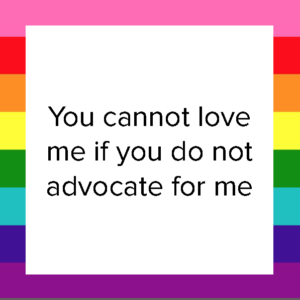
This is the
- support me using the criteria that I set, or find yourself cut out of my life.
- You cannot love me if you do not advocate for me.
That sort of idea.

Misguided platitudes. This is one that I like deconstructing on social media.
I think the most famous one would be love, don’t judge.
Again, it’s the sort of flowery, undefined principles and platitudes with mixed messaging.
My adjustment to “love, don’t judge” is “love your neighbor by judging righteous judgments”.
 Focusing on the Doctrine
So, how can we talk about this? I’m giving all of this doom and gloom and these barriers, but how can we overcome them? How can we talk about these things?
Number one: focus on the doctrine.
We’ve heard this echoed today.

Elder Packer—I’m sure many of you have heard this quote:
True doctrine understood changes attitudes and behavior. The study of the doctrines of the gospel will improve behavior quicker than a study of behavior will improve behavior. That is why we stress so forcefully the study of the doctrines of the gospel.
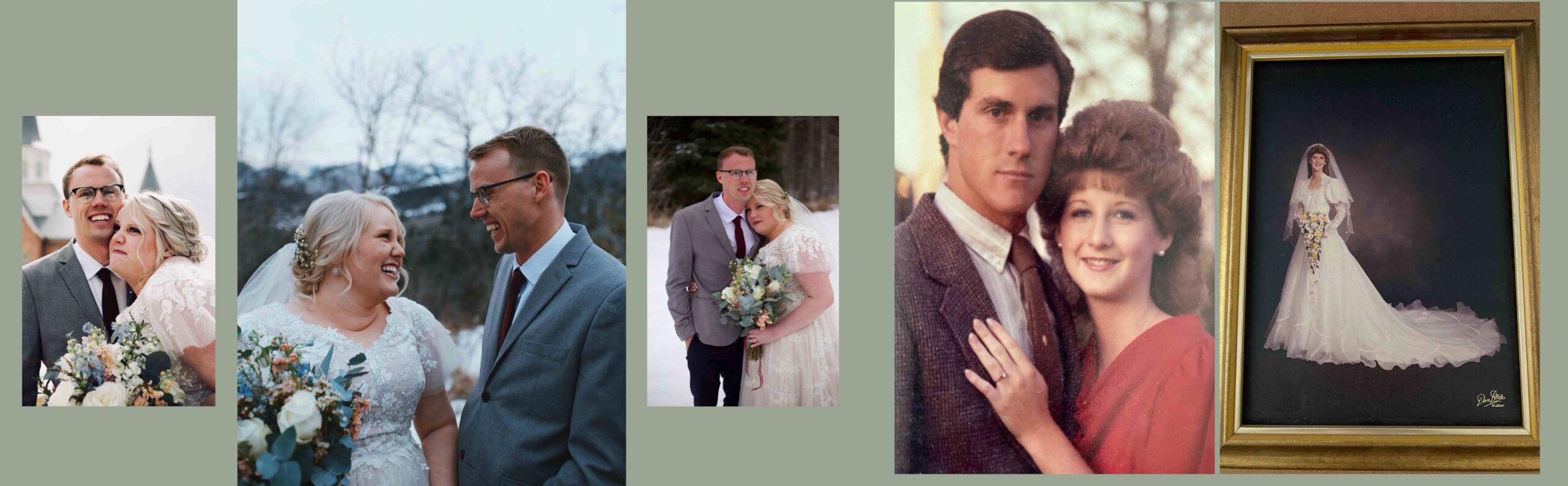
No one had to force me to pursue a temple marriage to my wife. No one had to hold a gun to my head and force me to do that. The more I learned about the gospel, the more I had–not a full, but a fuller–understanding of what the gospel was and how I fit into it.
The more positive examples I had in my own life with my parents, the more I desired to fit into that framework and to build for myself the eternal marriage and eternal family that I so desperately wanted.
Mixed-Orientation Marriage and Personal Choice
As I say these things, it gets a little bit messy when we talk about mixed orientation marriages and what that is and what that means.
I am always careful not to prescribe my choices to others. I think if it is a desire of yours, it is a good and valuable thing to pursue. But obviously that is a personal choice, and you have to be open and honest and all of those things.
I always give that disclaimer.

What We Mean by “The Doctrine”
When we talk about focusing on the doctrine in the context of LGBTQ conversations, when we say the doctrine, I think oftentimes this is what we imagine. And it’s just kind of relegated to just this.
Obviously the family proclamation is a big part of the doctrine and is a big part of the picture. It is a beautiful and essential and undervalued and demonized part of the picture, but it is just part of the picture.

What I mean when I say the doctrine is a more full, more complete understanding of the full teachings of Jesus Christ through ancient scripture and modern prophets.

Don’t Get Lost in the Weeds
So in these conversations, with the doctrine, it’s very easy to get lost in the weeds. And what I would define as the weeds is kind of the lesser controversies of our day.
Obviously there is a time and a place to address the weeds. Weeds need to be addressed. We need to identify them and wrestle with them and pull them out.

But if we spend all of our time just addressing the weeds, we’re not going to have much to show for it.

We have to cultivate the garden—the more full picture of the gospel—in order to end up with something beautiful.
Lessons From Podcasting and Higher Principles
I have a podcast that I do myself on some of these topics, and I started it with my friend Preston, who I mentioned earlier.
When we first started it, I was kind of getting my footing of what I wanted the podcast to be.
We were experimenting with some things, and we tried a few episodes where we focused more on the more topical, lesser controversies—something that happened at BYU or in the Church related to these topics.
And again, I think it is good to address those things. We need to address those things.
But for us specifically, it didn’t feel right for the format of the podcast to spend so much time on the lesser controversies without getting to the higher principles. So eventually we kind of moved out of that. And I feel like—hopefully—the fruits of that are obvious.
What Makes Conversations Meaningful
I want you to think of the best conversations that you have had in life, whether it be with someone personally or maybe in a church setting. Think about what it was that made those conversations so meaningful or so impactful to you.
Some of the things that I have recognized in the conversations that I’ve had is that they were rooted in truth—or at least the pursuit of truth.
There was room for exploration. There wasn’t just a solid—you know, some things are solid black and white—but there was also a lot of room for exploration. It’s the difference between me telling my daughter what to do and walking her through the process of discovery.
In that process of discovery, it might be frustrating. It might be more time-consuming. You might have to watch her try and buckle her shoe for five minutes when you’re eager to leave for church. And it’s more frustrating. But the fruits are more productive.

Engaging Other Perspectives
Another thing that we can do to address these topics is not shut ourselves off from other perspectives. This is something that I struggle with. I know I have my go-to media figures and shows that I want to keep going back to.
I get kind of comfortable in my own little bubble and want to remain in that. Without even engaging with other perspectives. Or sometimes, even engaging with others who share my perspective.
Sometimes it’s hard to get out of that even smaller bubble. But I think that is a big step in understanding one another.

Seeing the Person, Not the Caricature
This is my sister-in-law Katie.

This is not actually her—this is the ugliest version of her that AI would produce for me—because the annoying brother archetype never left me. It was just transferred to my sister-in-law.
But this is Katie—not actually Katie.
- We have the same humor.
- We have a lot of the same traits.
- We have the same personality, but we couldn’t be more polar opposite in our opinions.

If I were to engage with her like the predominant narrative in our culture tells me to, this is how I would view her. This is how I would interact with her.
I would treat her as this evil caricature of who she is rather than who she actually is.

But in reality, I know her heart. We’ve been through tragedy together. We have wept together after my son Milo passed. She came out in the hall with me and comforted me as I made some rather difficult phone calls to family members. I know she is a good person.
And in personal interactions—personal relationships—it’s a lot easier to see the full picture of who the individual is.
But when you can’t, it’s hard to give that same benefit of the doubt when it is someone that you vaguely know on social media or a complete stranger.

Practicing Charity in Real Conversations
I don’t think we can bring all of these dynamics to all conversations, but we can try.On social media, in church settings, family functions, or one-on-one, we can do our best to think of best practices for fruitful conversations and bring that to our conversations.

Harkening back to this post earlier, it’s tempting to see each other in the worst light possible—seeing things in as cynical a light as possible.
I think it means that you’re usually wrong.
Sometimes you’re going to be right, but malicious people obviously exist. They’re out there.
But most of us—especially, I think, members of the Church—most of us are relatively selfish because that’s human nature, but we’re also overcoming it, and we want the best for one another.
And that’s sort of what drives us.

Seeking Understanding, Not Winning
My goal isn’t to manipulate you into agreeing with me. My goal is to be as clear as possible with where I stand and understand where you stand, and hopefully create a setting conducive to where the Spirit can be there and can teach both of us.
If you don’t agree with me on how I frame LGBTQ issues in a faith context, I don’t think you’re a bad person. That’s not where I immediately go. I think you’re probably fueled by passion for things that you care about based on experiences that you’ve had or people in your life.
And because our experiences are so diverse, I think it’s tempting to again see each other in the worst light. But also to believe that truth is as diverse and subjective as we are.

Truth Comes From Above
But as we know, truth comes from above. Whether it is with LGBTQ issues, or gospel principles, or generalized life advice. Truth comes from above.
And no one of us has access to all the truth. But we do have access to the One who does.
I like to think of truth as a third party that we can observe and discover. It’s not something that we can shape for ourselves.
It’s something that we
- look at
- observe
- discover, and
- apply to our unique situation within our lives.
But again, it’s not something that we ourselves can shape.

God Removes Barriers—We Often Create Them
Going back to Elder Kieran’s talk that’s been mentioned today already:
God does not put up roadblocks and barriers. He removes them. He does not keep you out. He welcomes you in.
Now, I love that first part of it. But what I’ve seen on social media is that it often just stops there—which, in and of itself, is a true statement. But obviously he qualifies it, and he gives more context to that statement.
Does this mean that anything goes with regard to how we live our lives? That the way we choose to use our agency doesn’t matter? That we can take or leave God’s commandments? No, of course not. Surely one of Jesus’s most consistent invitations and pleas during His mortal ministry was that we change and repent and come unto Him.
The Son tells us Himself, “For I came down from heaven, not to do mine own will, but the will of him that sent me.”
So:
- God has standards.
- He has commandments.
- He has requirements.
- He doesn’t put up barriers
But we often do. We often stand in the way of others finding truth.
When We Become the Barriers
We become the barriers for others to seek Christ, to learn of Him, and to make the necessary changes in their lives in order to become more like Him.
In an LGBTQ context, we either overemphasize or we ignore the experience of Latter-day Saints who experience samesex attraction or have some sort of experience that you could—again going back to labels—describe using LGBTQ.
- We see the worst in each other.
- We’re overzealous in our advocacy.
- We manipulate each other.
- We overzealously seek to destroy the system upholding God’s commandments to alleviate the real or perceived distress of others.
That is a very real dynamic that I witness quite a bit. And it’s understandable. If we see someone suffering, we want to take away whatever is perceived to be causing them that suffering.

Counterfeits of Christlike Attributes
I think we just need to remember Christ—the One we are called to emulate—did none of these things.
All of these principles that I’ve outlined are counterfeits of true Christlike attributes.
- Overzealousness could be a counterfeit of diligence.
- Avoidance could be a counterfeit of humility.
- Tearing down the standards and commandments because we perceive them as burdens for us or others could be counterfeits of charity and love.
Grace, Truth, and the Ultimate Goal
Focusing and learning the doctrine can help us to overcome that. That is where truth lies.
That is how we can fully understand our part in the picture—whether for ourselves or for those who we have stewardship over.
It will allow us, as we focus on lower goals and ambitions less and more on the ultimate goal, to find power in becoming more like our Savior through making and keeping covenants with God.
That is the ultimate goal, and it is something that I am seeking to find in my own life.
This sort of balance of grace and truth (when it comes to ourselves or those whom we love) is a difficult balance. But I think it is one of the most important to find. And obviously our great Exemplar was the perfect One to find that balance. That is where we can truly understand how to achieve that.
Thank you.
