
Introduction and Purpose
It’s a joy to be here at this conference and to be given a topic that is both timely and timeless as well. And thank you to all the messages we’ve heard so far, particularly to the powerful panel that we just heard from.
While I’m not representing or speaking on behalf of the Correlation Department of The Church of Jesus Christ of Latter-day Saints or the First Presidency and the Quorum of the 12 Apostles, which make up the Church’s Correlation Committee, I wish rather to independently share with you some truths and considerations that may assist you in your own personal gospel study, or as you create and share gospel related content.
Some History
Harvard and the Drift from Original Purpose
Let me begin with a piece of history. In 1636, just 16 years after the pilgrims landed at Plymouth Rock, the Puritans of Massachusetts founded Harvard College. Its mission was clear: to train godly ministers who would uphold and spread the truths of the Christian faith in the New World.
The founders believed that the health of the church and society depended on a well-educated clergy.
Harvard’s original motto was Veritas Christo et Ecclesiae, “Truth for Christ and the Church.” “Every student studied the Bible, theology, and classical languages. The college’s rules stated that every student should consider well that the main end of his life and studies is to know God and Jesus Christ.”
But over time, subtle shifts began to occur and enlightenment thinking began to influence the faculty, leading to a gradual departure from Orthodox Christian views.
Eventually, Harvard abandoned its Christian identity altogether. Today, Harvard is a prestigious secular institution, but its original mission to train ministers faithful to Christianity has been lost.
The Restoration and the Name of the Church
Allow me to present now another aspect of history that will be even more familiar to you. In March 1830, the Book of Mormon was published. Days later, on April 6th, 1830, the Lord restored his church to the earth through the Prophet Joseph Smith.
The Lord revealed that his church should be called The Church of Jesus Christ of Latter-day Saints, identifying it as his restored church. In the latter days, this church was established as the Kingdom of God on earth, where his covenant people would be gathered in him in preparation for his millennial reign.
Additionally, the Lord repeatedly referred to members of his church as “my Saints,” a name that has direct implication of divine and eternal identity.
The Impact of Nicknames and Misnomers
In the early days of the great period of restoration, some began referring to Christ’s covenant people as Mormons. This nickname, derived from the title of the Book of Mormon, was gradually used even by Church members and leaders, and eventually seemed to take on a life of its own.
This shift in nomenclature, even among Latter-day Saints, had a significant spiritual reverberation.
Nicknames like “Mormon Church” and “LDS Church,” gradually obscured the central figure of our faith, Jesus Christ, and led to confusion about the Church’s divine identity and mission.
For individuals sincerely seeking Jesus Christ, these misnomers created some confusion and even made it difficult for some to recognize where Jesus Christ’s restored gospel and authority reside.
Prophetic Correction and Doctrinal Clarity
In 2018, however, through revelation, President Russell M Nelson reaffirmed the Lord’s command to correct this serious doctrinal drift by urging everyone to use the name the Lord himself gave the Church.
President Nelson emphasized that the correction to align the Church with the revealed word of the Lord was not inconsequential, but rather non-negotiable. President Nelson taught that using the correct name is a matter of doctrine, not branding.
This call was not merely about semantics. It was about restoring the Savior’s name to its rightful place at the center of his Church.
Since then, the church and Latter-day Saints around the world and others have made significant efforts to align, or correlate, all references to the Savior’s Church with this inspired prophetic direction, helping to clarify to the entire world the true identity and mission of The Church of Jesus Christ of Latter-day Saints.
Guiding Questions
Now, these moments in history raised two questions that will guide our time together.
- First, why does doctrinal purity matter? And
- Second, how can we avoid doctrinal drift?
Why Does Doctrinal Purity Matter?
Let’s begin with the first question: why does doctrinal purity matter? The Lord revealed in Doctrine and Covenants, section 131:6 that it is impossible for us to be saved in ignorance.
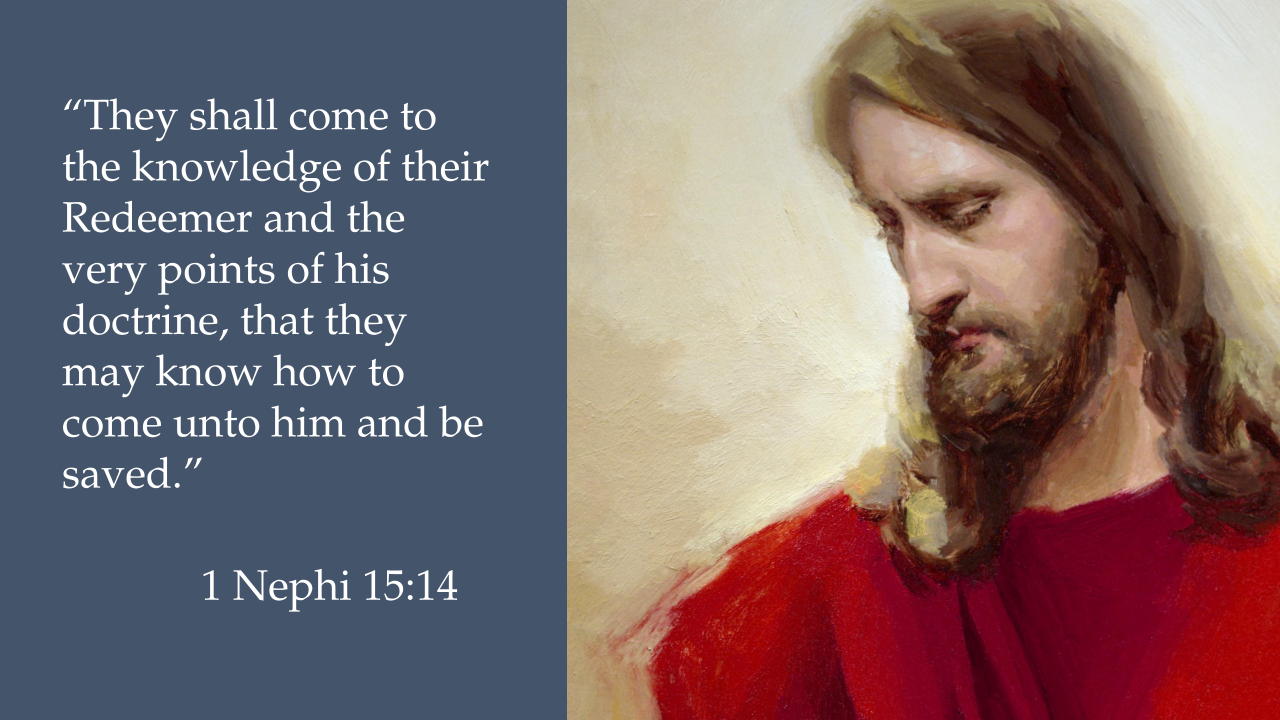
And the Book of Mormon teaches that salvation is connected to having a knowledge of our Redeemer and understanding the very points of his doctrine. Nephi stated that these are the means by which we can know how to come unto Christ and be saved.
The doctrine of Christ is not an abstract theory, rather, it is the revealed map to eternal life.
The Power of Pure Doctrine
Pure doctrine invites the converting power of the Holy Ghost. The Savior promised that the spirit would guide you into all truth.
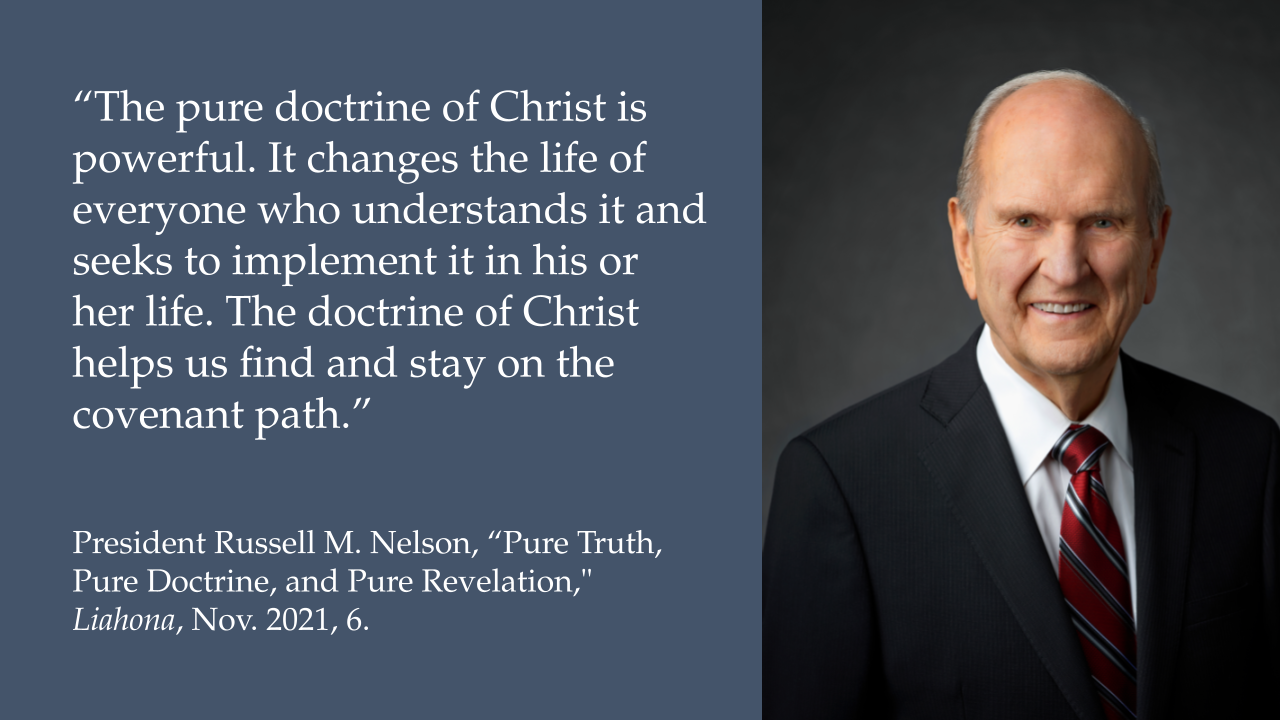
President Russell M Nelson has said:
“The pure doctrine of Christ is powerful. It changes the life of everyone who understands it and seeks to implement it in his or her life. The doctrine of Christ helps us find and stay on the covenant path in a world of shifting values and moral relativism.”
Doctrinal purity anchors us to eternal truth. In other words, it anchors us to Heavenly Father in Jesus Christ.
Warnings Against Doctrinal Drift
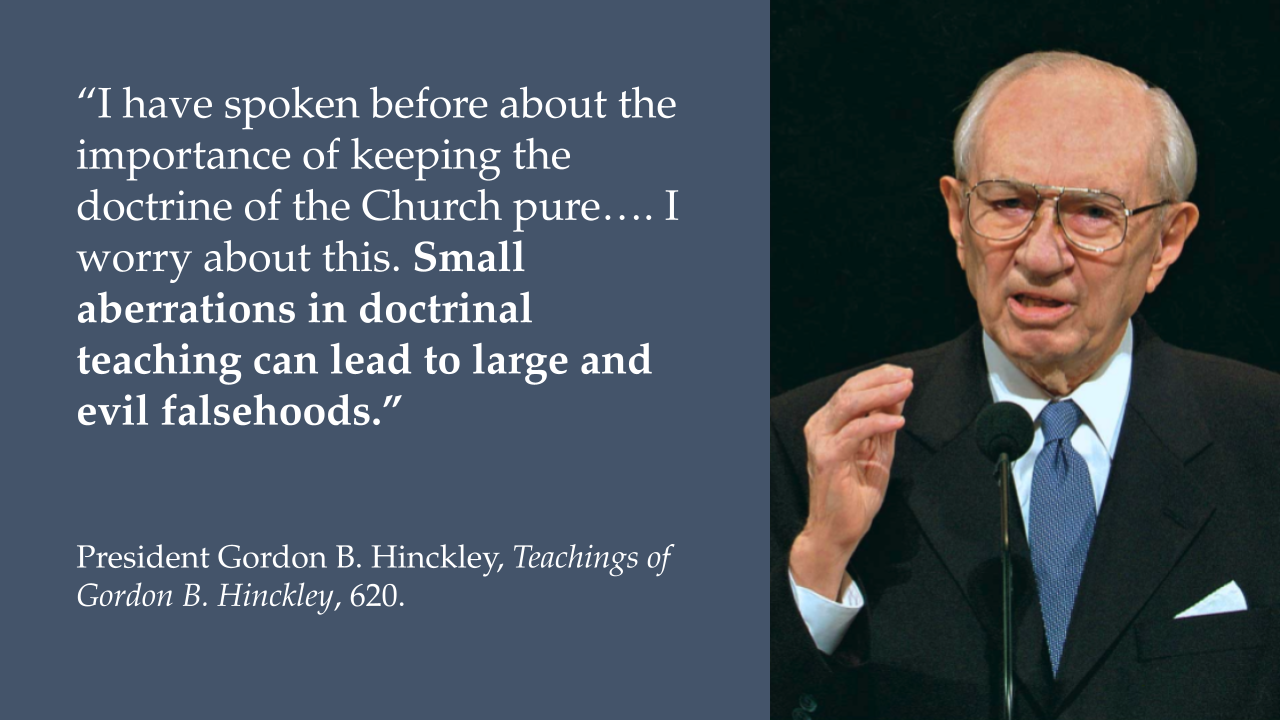
Conversely, President Gordon B Hinckley warned that “Small aberrations in doctrinal teaching can lead to large and evil falsehoods.”

Satan’s strategy has always been to distort or dilute truth, to pull God’s children away from the purity of his word. Nephi prophesied that plain and precious truths were removed from the gospel record to pervert the right ways of the Lord, that they might blind the eyes and harden the hearts of the children of men.
Paul foresaw a time in the latter days when people would no longer tolerate sound doctrine. Instead, they would surround themselves with teachers or influencers who tell them what they want to hear, turning away from the truth to follow fables.
He prophesied that in our day some will abandon the faith, listening to deceiving spirits and embracing false teachings, and that such teachings will have a form of godliness while denying its true power—leading individuals in our day to always learn, yet never be able to arrive at the knowledge of the truth.
Defining Doctrinal Drift
Doctrinal drift happens when people move away from gospel teachings revealed through prophets, apostles, and scripture. Even if unintentional, it can threaten faith, unity, and spiritual progress.
Consequences of Doctrinal Drift
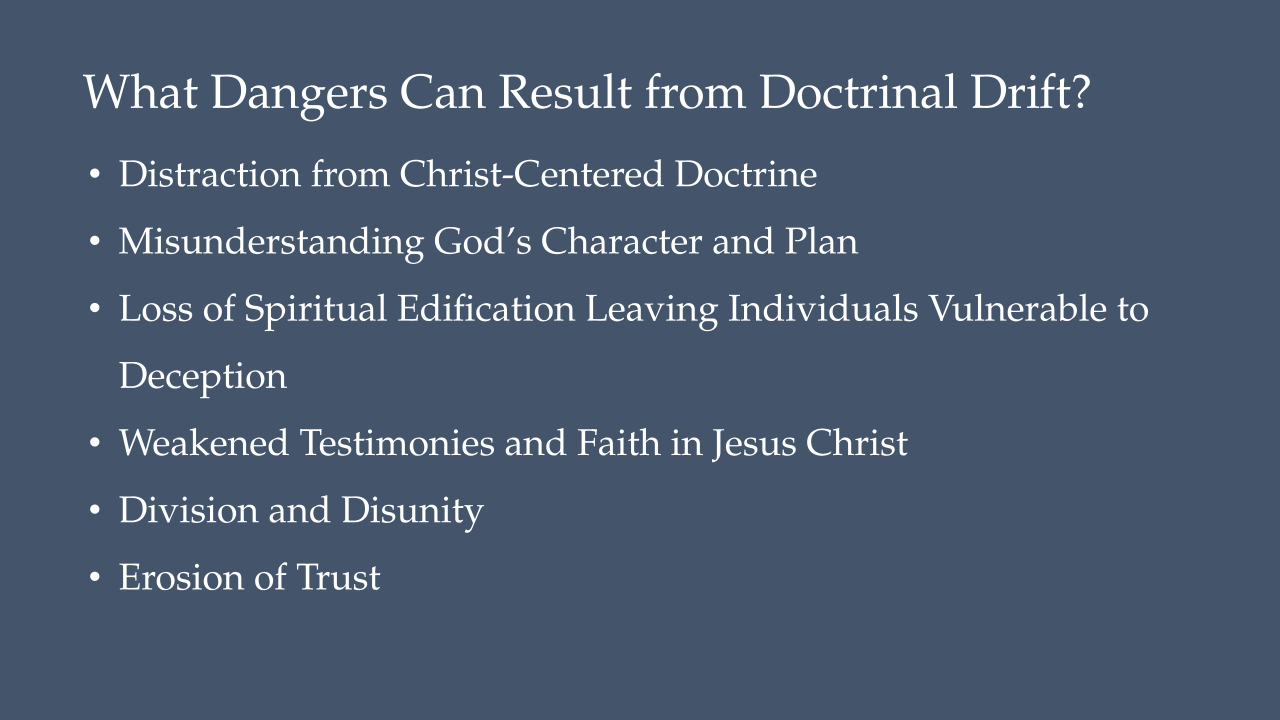
Here are some key consequences, just a few that can result from doctrinal drift.
- Distraction from Christ centered doctrine. Focusing on peripheral topics or institutional practices without anchoring them in Christ, can obscure the Gospel’s core message and divert attention from God’s work of salvation and exaltation.
- Misunderstanding God’s character and plan. Departing from prophetic and scriptural sources, dilutes the Gospel’s message, often presents only partial truths, and leads to confusion and difficulty discerning truth from error, and even a distorted understanding of God.
- Loss of spiritual edification leaving individuals vulnerable to deception. Straying from pure doctrine, results in no power to inspire, edify, and invite the Holy Spirit, which is essential for true conversion. This can lead individuals away from Christ, leaving them susceptible to spiritual deception.
- Weakened testimonies, and faith in Jesus Christ. Speculation and error, including personal opinions and trends, can introduce doctoral inaccuracies and mislead others, often resulting in damaged testimonies and weakened faith in Jesus Christ.
- Division and disunity. Conflicting beliefs erode unity, which is vital for building Zion and preparing for the Savior’s return.
- Erosion of trust. Inconsistent or unauthorized teachings can diminish confidence and weaken faith in God, His church and His gospel.
By adhering to prophetic and scriptural sources, individuals can remain anchored in truth, inviting the spirit and ensuring that their faith and doctrine are built upon a sure foundation.
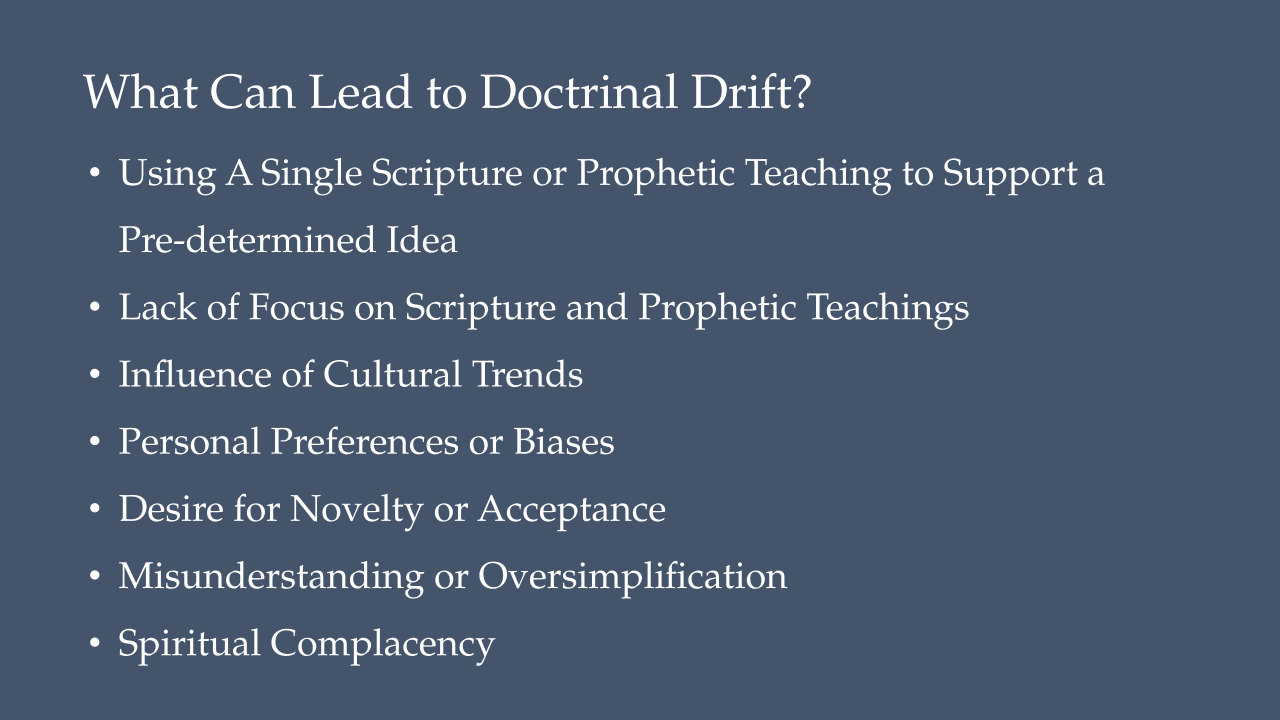
What Leads What Can Contribute to Doctrinal Drift?
There are several factors that can contribute to doctrinal drift or lead us into drifting in our gospel teaching and our personal study.
These could include:
- Using a single scripture or prophetic teaching to support a predetermined idea. Relying on a single scripture or prophetic quote to support a predetermined idea, known as “proof texting” can lead to presenting only partial truth or wholly inaccurate teachings. With tools like AI these risks can increase exponentially.
- Lack of focus on Scripture or neglect of prophetic teachings. When individuals don’t regularly study the scriptures or base their teachings on prophetic guidance, they become more likely to misunderstand or misuse core doctrine.
- Instead of relying on divine authority, they may turn to human reasoning or popular opinions. This can lead to spreading personal interpretations or ideas picked up from others, including well-known influencers.
- Influence of cultural trends. Societal values and philosophies can sometimes conflict with eternal principles. And when cultural voices seem more persuasive than revelatory truth, some may unconsciously adapt or reinterpret doctrine to fit modern expectations.
- Personal preferences or biases. Teachers and learners may unintentionally emphasize ideas that align with their own experiences, philosophies, or preferences, rather than adhering strictly to revealed truth.
- Desire for novelty or acceptance. The quest for new insights, popularity, or intellectual recognition can lead some to depart from established doctrine in favor of speculative or unauthorized interpretations.
- Misunderstanding or oversimplification. Complex gospel principles can sometimes be oversimplified or misunderstood, leading to incomplete, distorted, or imbalanced teachings.
- Spiritual complacency. Without ongoing spiritual diligence and humility, even well-meaning disciples can drift from the anchor of pure doctrine.
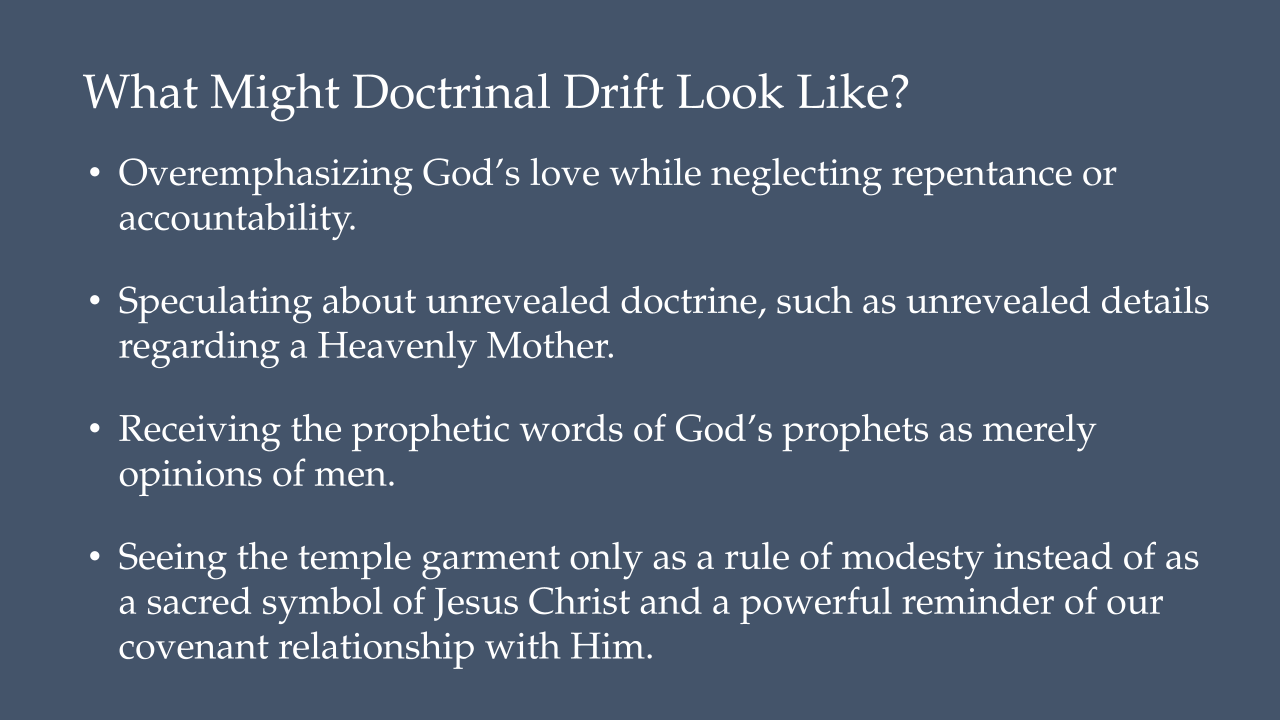
What Might Doctrinal Drift Look Like?
We see doctrinal drift today in various forms. I list here only a very small sampling.
- Overemphasizing God’s love while neglecting repentance or accountability.
- Speculating about unrevealed doctrine such as unrevealed details regarding a Heavenly Mother.
- Receiving the prophetic words of God’s prophets as merely opinions of men.
- Seeing the temple garment only as a rule of modesty, instead of as a sacred symbol of Jesus Christ, and a powerful reminder of our covenant relationship with him.
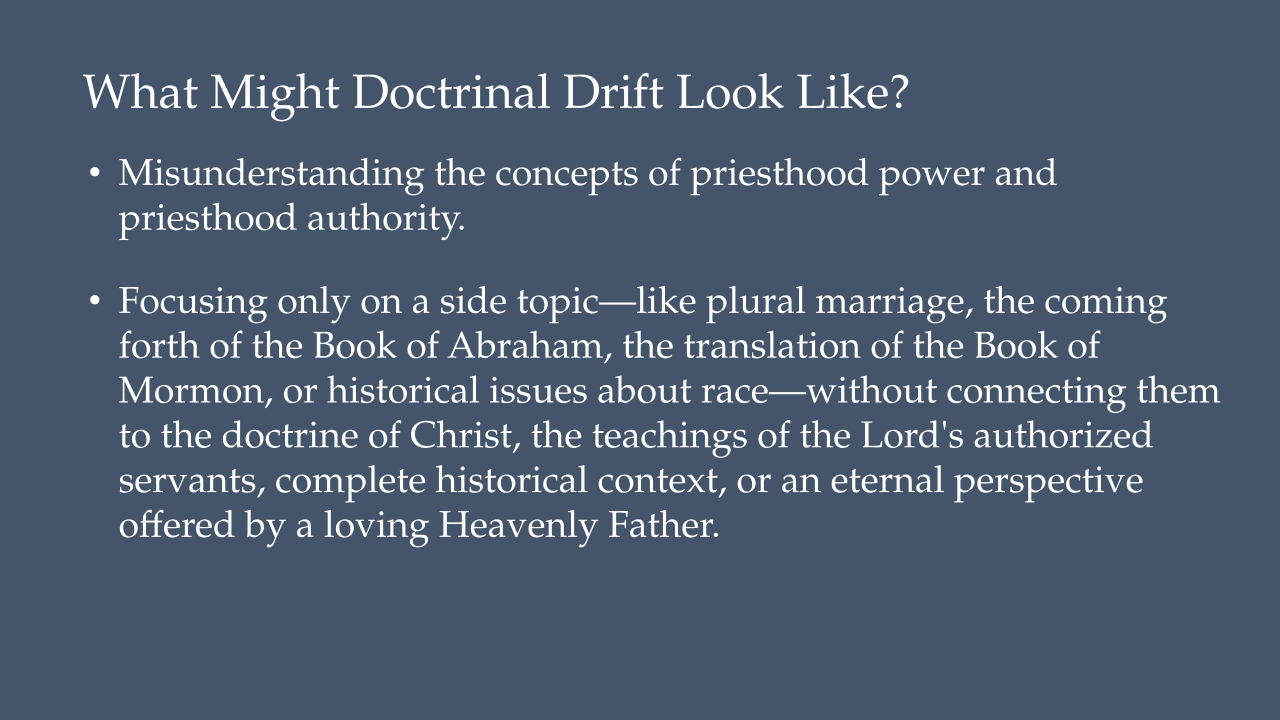
- Misunderstanding the concepts of priesthood power and priesthood authority.
- Focusing only on a side topic–like plural marriage, the coming forth of the Book of Abraham, the translation of the Book of Mormon, or historical issues about race–without connecting them to the doctrine of Christ, the teachings of the Lord’s authorized servants complete historical context or an eternal perspective offered by a loving Heavenly Father.
If our salvation is anchored, as Nephi said, in coming to a knowledge of our Redeemer and the very points of his doctrine so we know how to come unto Him and be saved, then doctrinal drift will place fog along the path, and even divert the children of God from coming to really know Him or the salvation that He offers.
Moses chapter one, verse 39, reminds us that God’s work and glory is to bring to pass the immortality and eternal life of man.
Doctrinal purity is not about rigidity. It is about alignment with God to allow the realization of His eternal work and glory.
How to Avoid Doctrinal Drift
So how do we avoid doctrinal drift? First, we follow the Savior’s pattern for teaching the gospel, His gospel. Jesus Christ, is the perfect example of doctrinal fidelity.
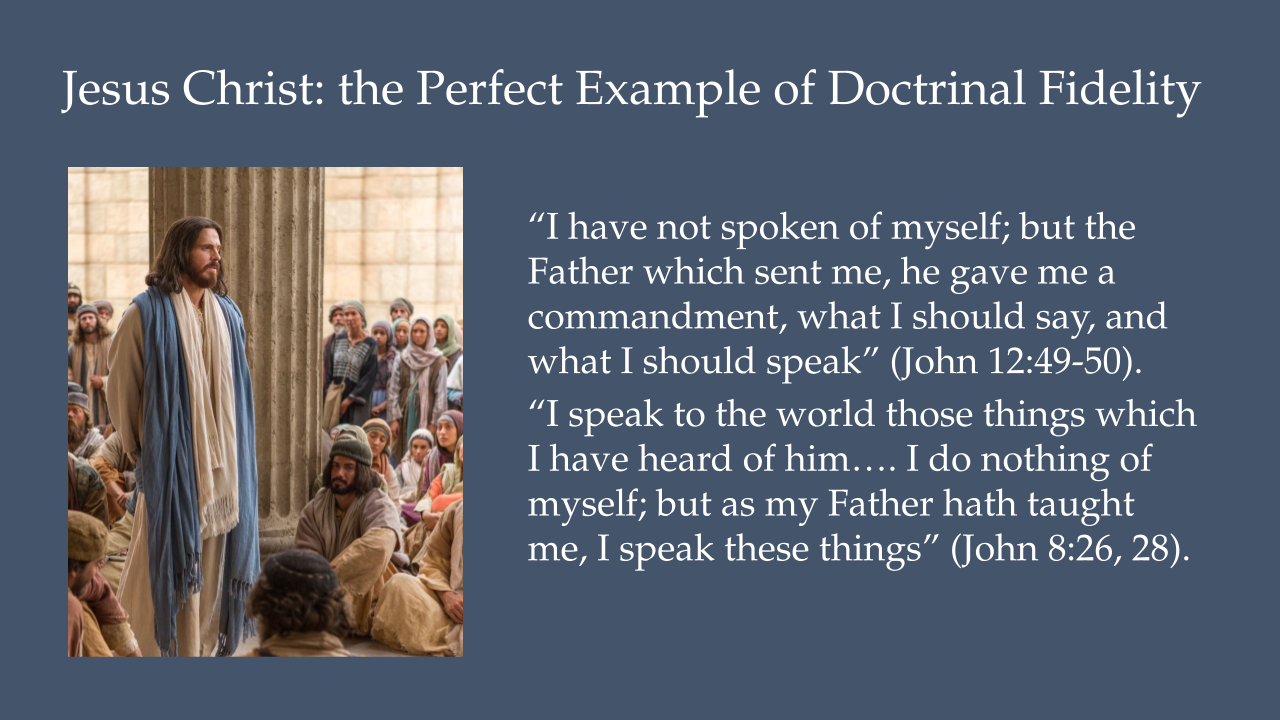
He taught only what His Father directed, saying,
“I have not spoken of myself, but the Father which sent me. He gave me commandment, what I should say and what I should speak.”
He also said,
“I do nothing of myself; but as my father hath taught me, I speak these things.”
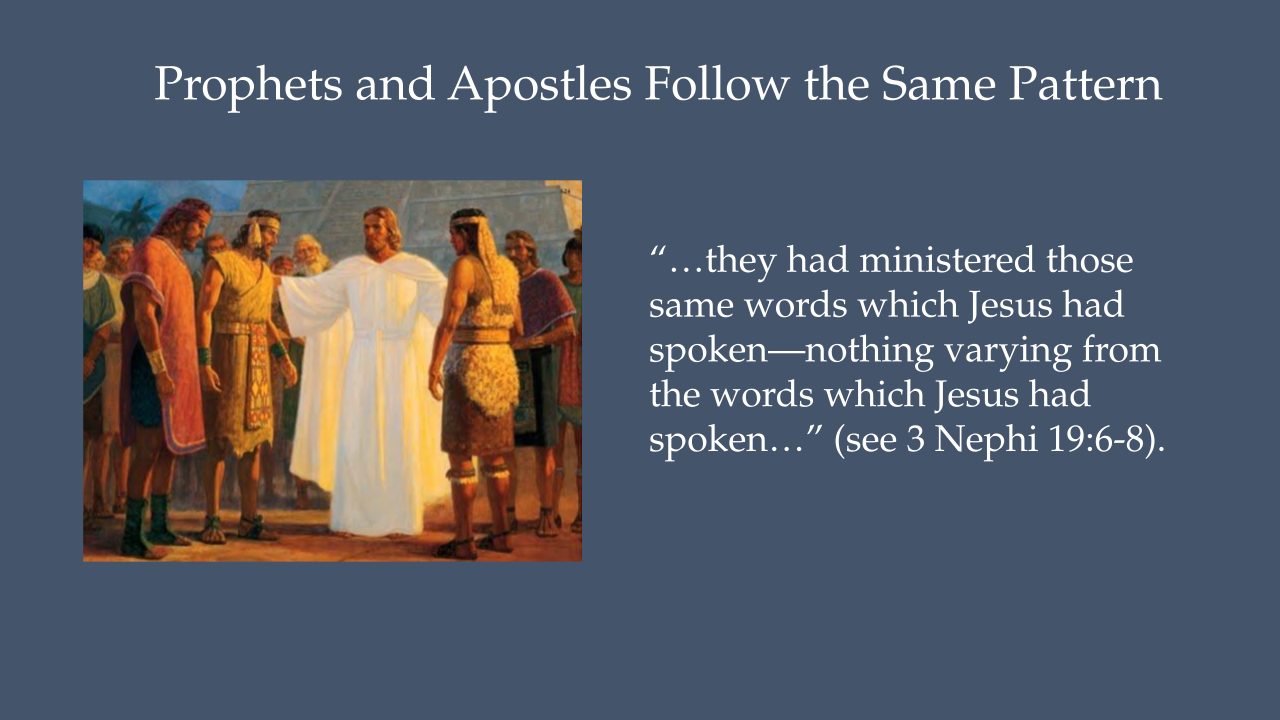
Teaching After the Pattern of Christ
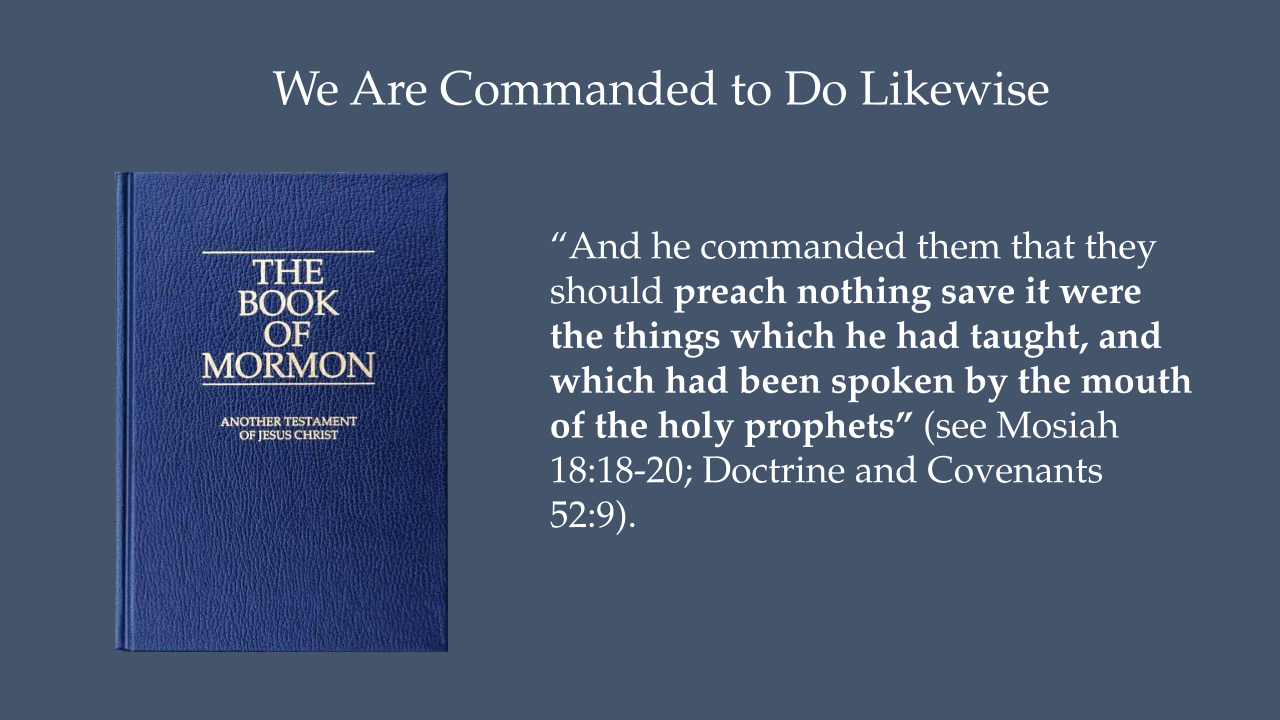
Similarly, the 12 Nephite disciples taught exactly what Jesus had taught, “nothing varying from the words which Jesus had spoken.”
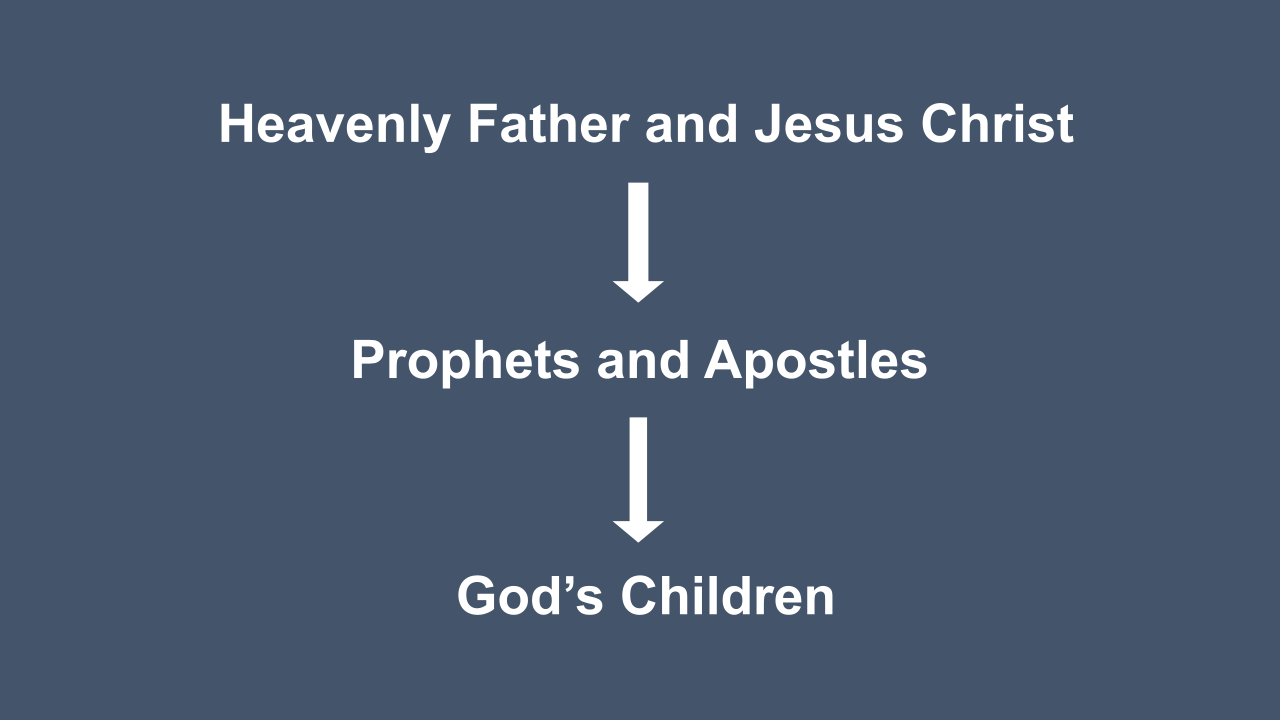
This pattern, teaching only what the Father and the Son have revealed, ensures that God’s plan and the doctrine of Christ are shared with clarity and purity through his prophets.
Prophetic Teaching and Moral Courage
President Russell M Nelson has declared,
“Sometimes we as leaders of the Church are criticized for holding firm to the laws of God, defending the Savior’s doctrine, and resisting the social pressures of our day.
But our commission as ordained apostles is to go into all the world to preach his gospel unto every creature. In doing so, sometimes we are accused of being uncaring, as we teach the father’s requirements for exaltation in the celestial kingdom. . . .
But wouldn’t it be far more uncaring for us not to tell the truth–not to teach what God has revealed? It is precisely because we do care deeply about all of God’s children that we proclaim His truth.
We may not always tell people what they want to hear. Prophets are rarely popular, but we will always teach the truth!”
Teaching the Gospel Today
In both ancient times and today, prophets aren’t the only ones called to teach the gospel.
Full time missionaries, Sunday School teachers, parents, and local Church leaders are also called to teach, and many others share gospel messages through online platforms and printed materials.
Anyone who teaches or engages with the gospel or its content can benefit from following the Lord’s pattern for teaching truth.
Teaching After the Lord’s Pattern
Jesus taught only his Father’s words, and the prophets have followed that example. Likewise, others, past and present, are commanded to teach only with the prophets and apostles have taught, which the spirit will confirm through prayer.
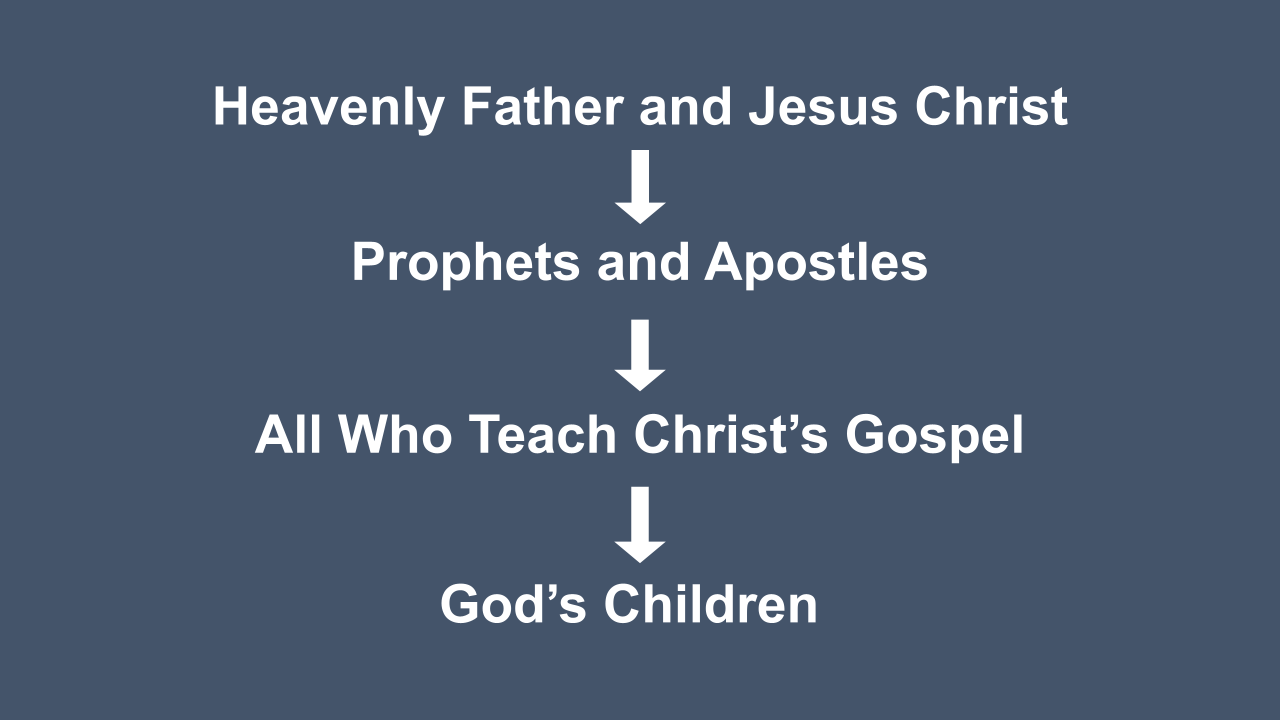
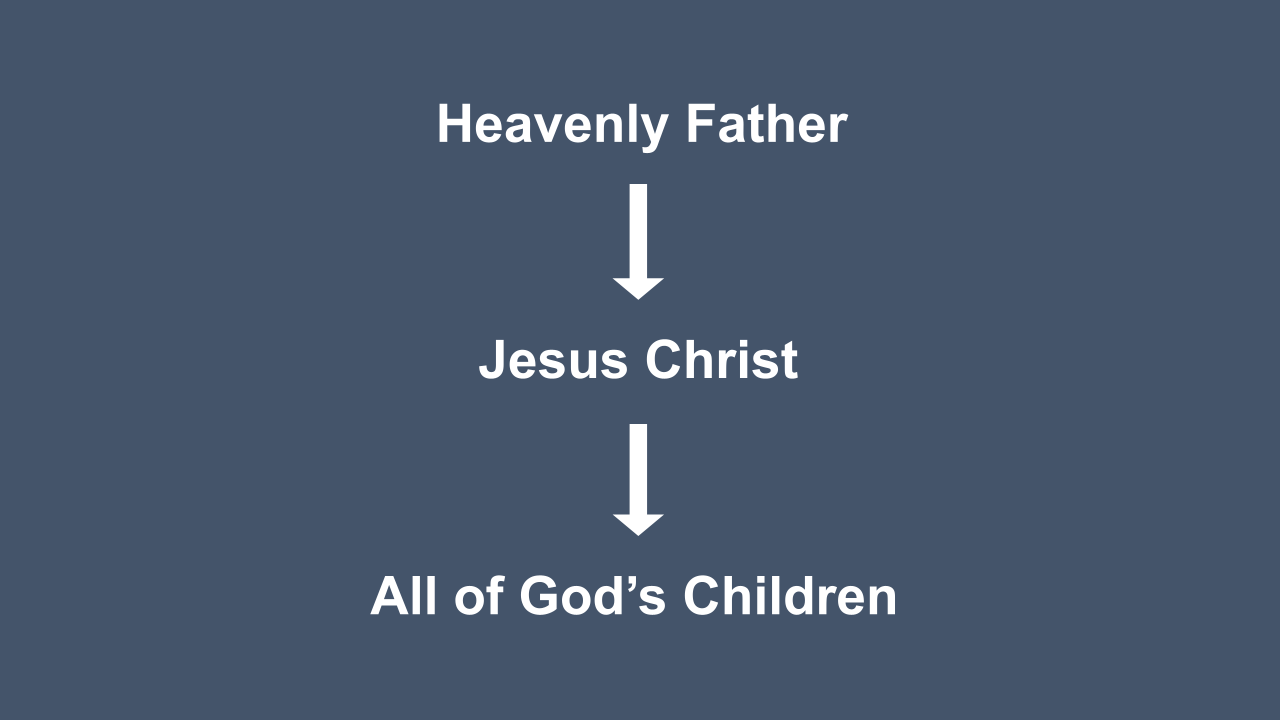
When we follow the Lord’s pattern, teaching His doctrine only what prophets and apostles have written, light and truth can flow from Heavenly Father and Jesus Christ to all of God’s children in purity.
This allows the spirit to confirm truth and guide God’s children on a clear, undiluted path to Jesus Christ, the captain of our salvation.
Safeguards for Doctrinal Purity
Recognizing that sacred responsibility to teach only what God has revealed through his chosen messengers, we should consider practical ways to uphold this standard in our own study and teaching.
To stay anchored in truth and avoid doctrinal drift, the Lord has provided safeguards to preserve the purity and clarity of the doctrine of Christ. These are practical, actionable, and deeply rooted in Scripture and prophetic counsel.
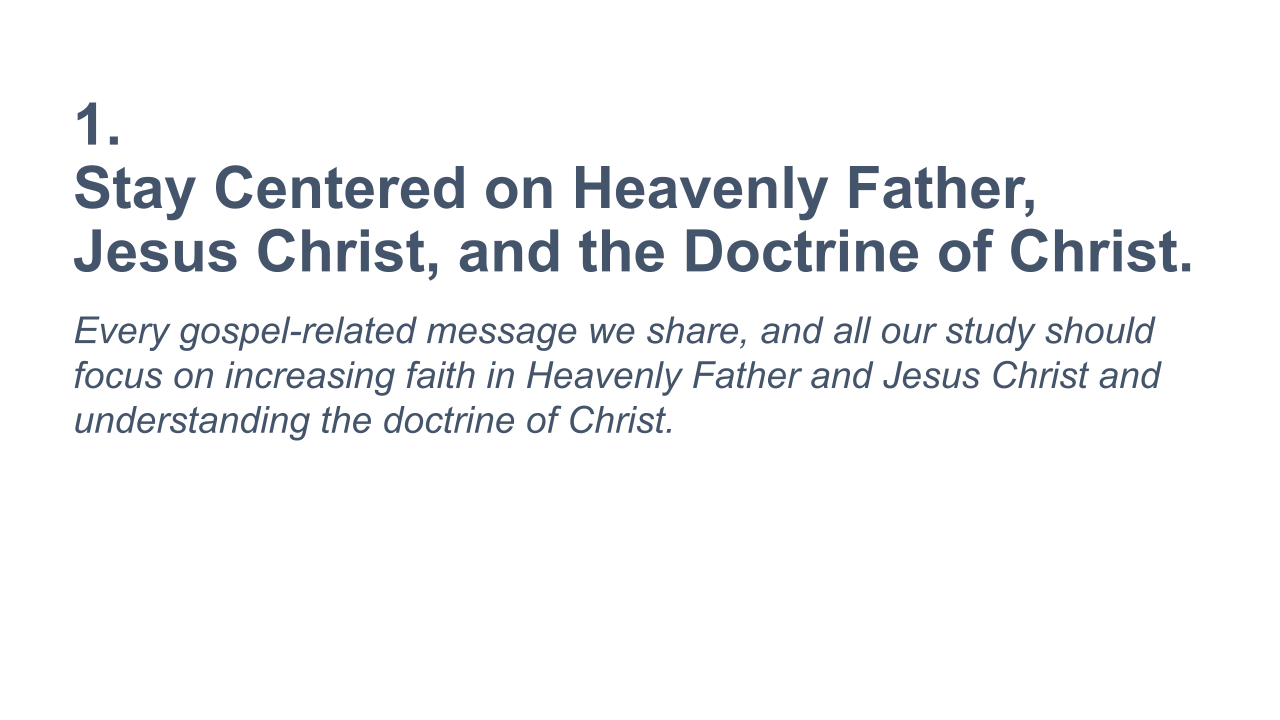
Safeguard Number One—Stay Centered on the Doctrine of Christ
Safeguard number one—Every gospel related message we share and all our study should focus on increasing faith in Heavenly Father and Jesus Christ and understanding His doctrine.
This is not a rigid rule but a powerful opportunity for disciples of Jesus Christ to align all our efforts with the divine purpose of his gospel.
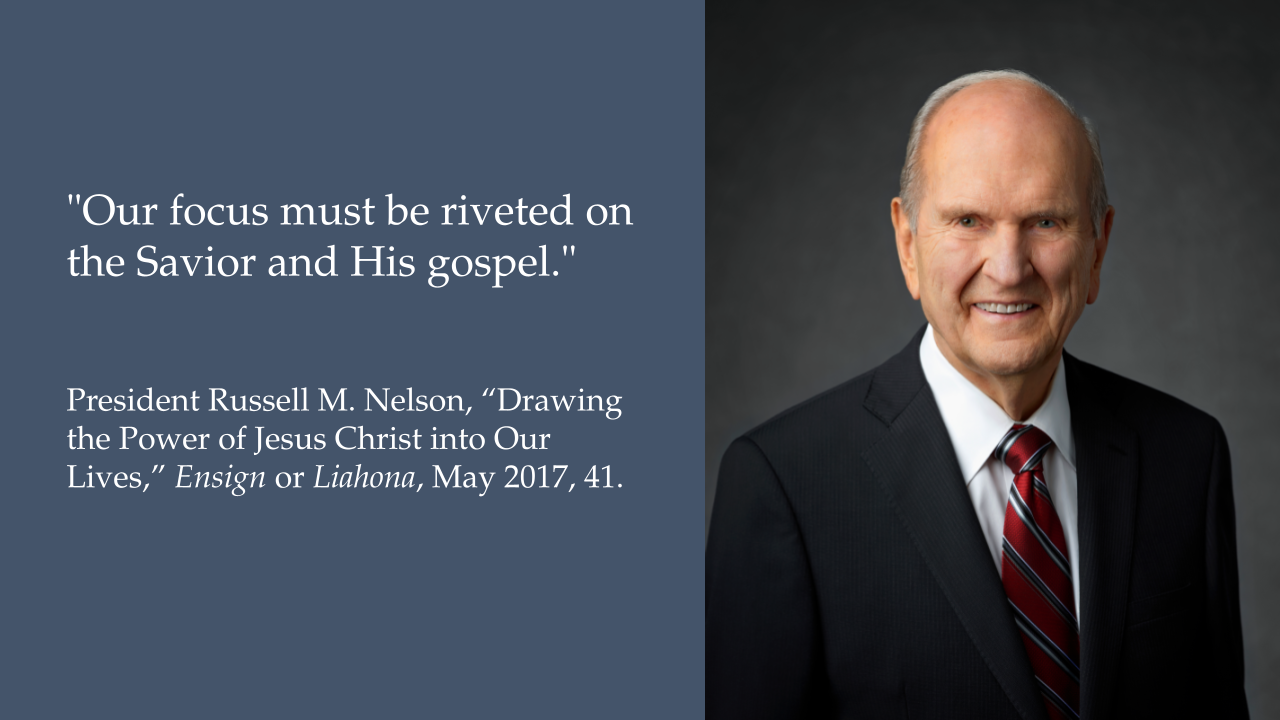
President Russell M Nelson emphasized, “Our focus must be riveted on the Savior and his gospel,” and Elder David Bednar added that our purpose in sharing the gospel is to invite all to come unto Christ, receive the blessings of the restored gospel and endure to the end through faith in the Savior.
Being centered on Heavenly Father and Jesus Christ doesn’t mean every word must be about them directly. Rather, it means that the core message, the spiritual root, should always connect back to them and their doctrine.

Core Doctrine and Peripheral Truths
Elder Dieter F. Uchtdorf offered a helpful metaphor:
“Not all truths are equal. Some are core, essential, at the root of our faith, while others are appendages or branches. Valuable, but only when they’re connected to the fundamentals.”
As the Prophet Joseph Smith said, all other truths are appendages to the prophets’ testimonies of Jesus Christ. Like the branches or leaves of a tree, all gospel related messages must be rooted in Christ in order to bear fruit.
One example of new Church content that does this very well are the new Church and Gospel Questions, which are written as Q & A pages on some difficult gospel related topics.
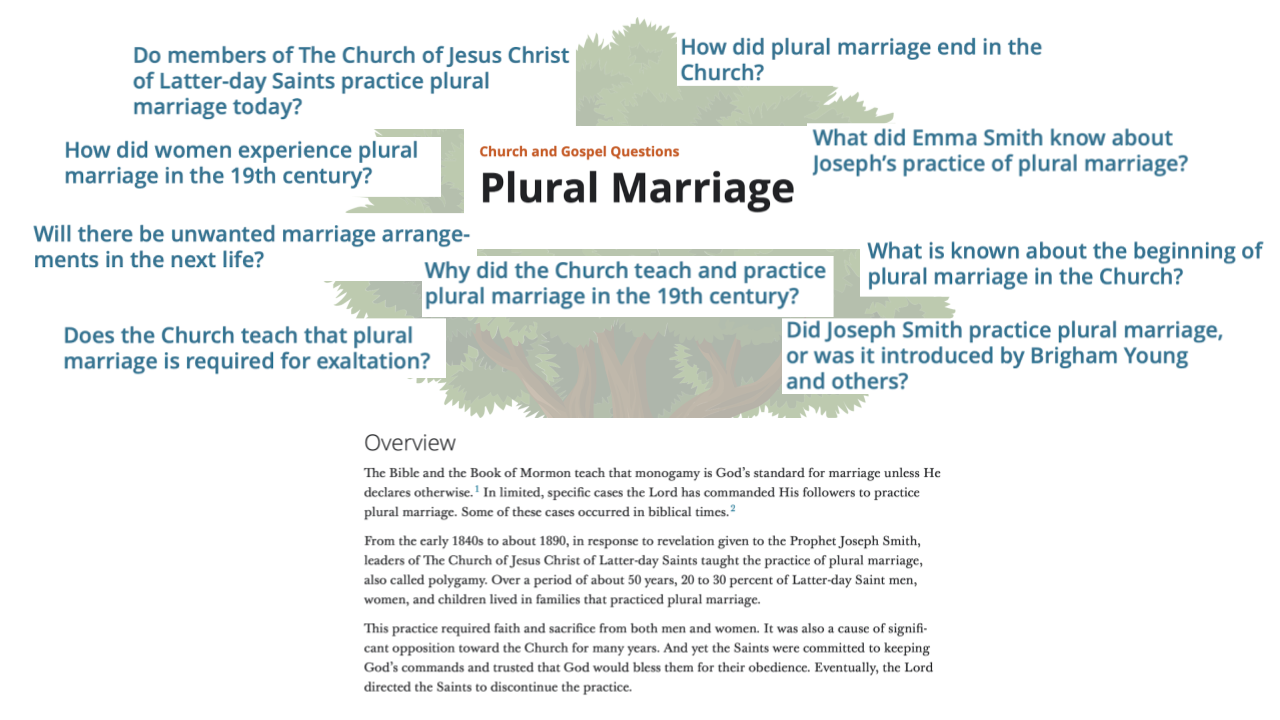
Many of the frequently asked questions related to those topics would be considered the leaves or outer branches on the tree, but each published topic begins with an overview that connects the general topic to the core trunk of the tree, Heavenly Father’s plan and the doctrine of Christ.
Then, couched within that rooted context, specific and more peripheral questions can then be addressed.
Conversion, Not Just Information
When our content and study is centered on Christ, the Holy Ghost can fulfill his role to testify of truth. This leads to real conversion, not just information.
As the Savior taught, “This is life eternal that they might know Thee, the only true God, and Jesus Christ, whom thou hast sent.”
Even personal stories or practical advice can be framed in a way that reflects his influence and invites others to come unto Him.
Even if the content is otherwise uplifting, without this foundation, people may miss the path to salvation.
Practical Applications of Safeguard 1
So here are some examples of questions you might ask as you create or study gospel related content.
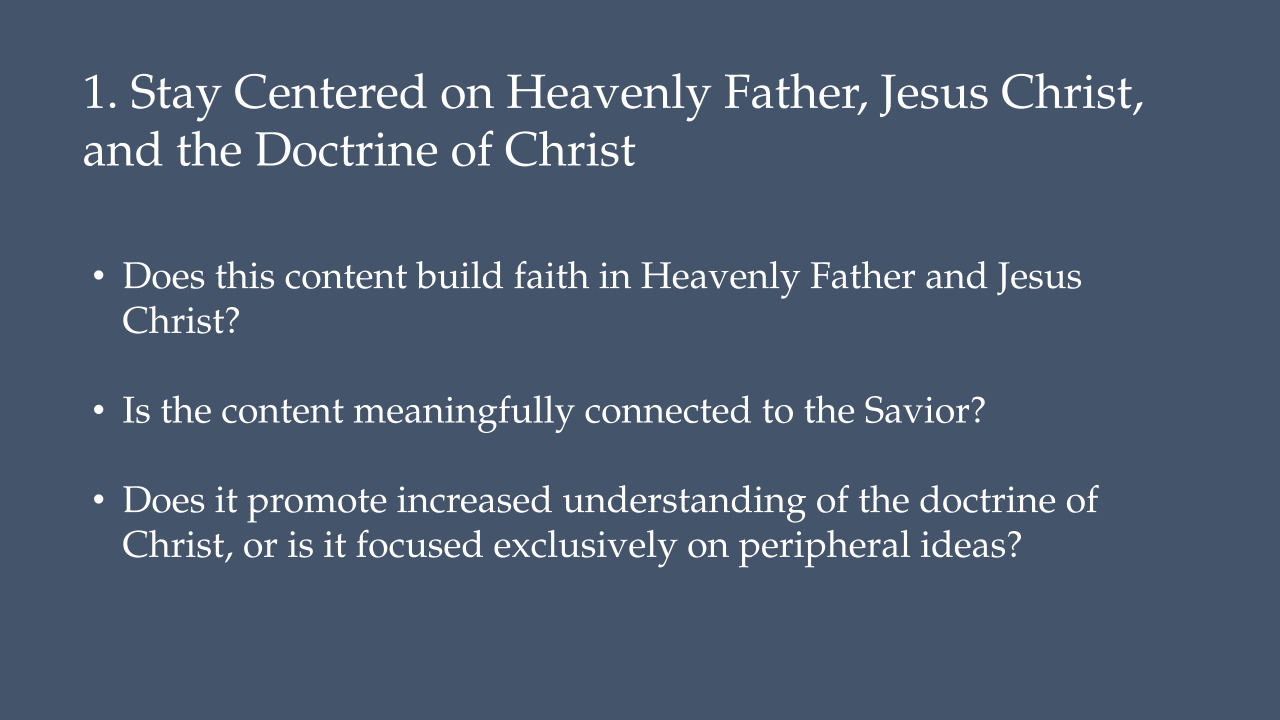
Stay Centered on Heavenly Father and Jesus Christ
- Does this content build faith in Heavenly Father and Jesus Christ?
- Is the content meaningfully connected to the Savior?
- Does it promote increased understanding of the doctrine of Christ, or is it focused exclusively on peripheral ideas or information?
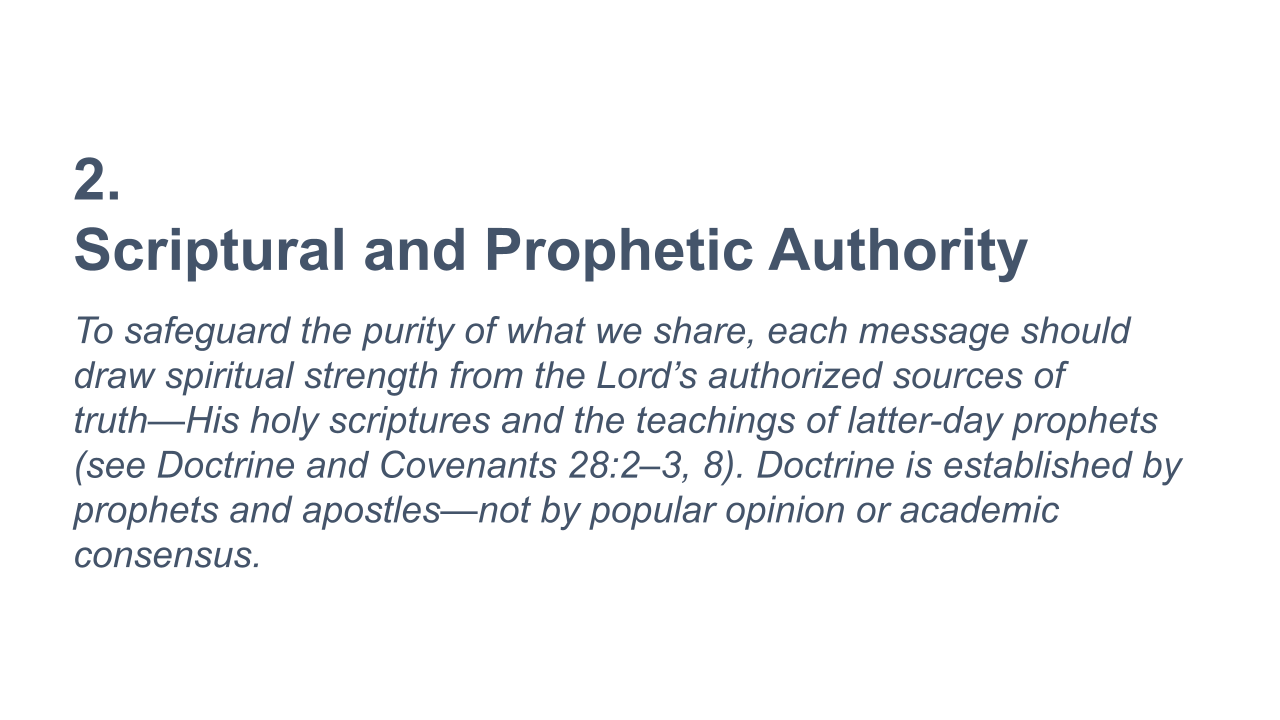
Safeguard Number Two—Scriptural and Prophetic Authority
Safeguard number two—Each message should draw spiritual strength from the Lord’s authorized sources of truth, his Holy Scriptures, and the teachings of Latter-day prophets.
Doctrine is established by prophets and apostles, not by popular opinion or academic consensus.
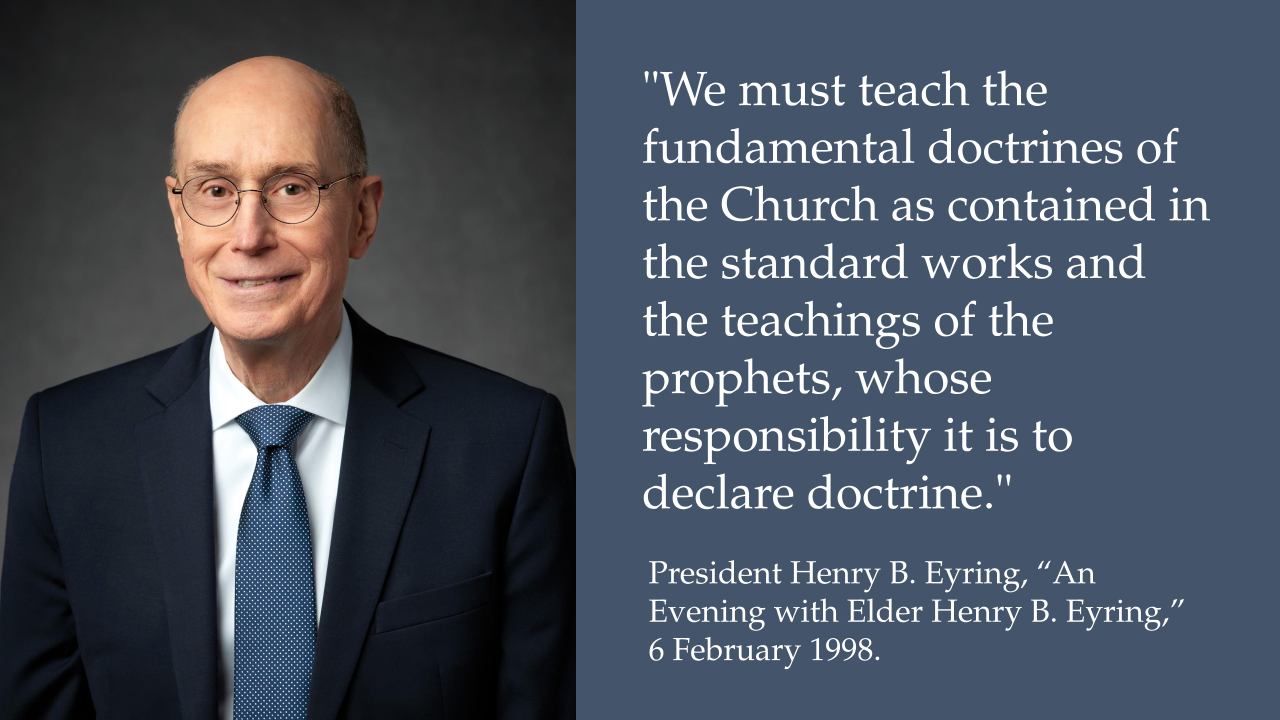
President Henry B. Eyring taught:
We must teach the fundamentals of the doctrine of Christ, as contained in the standard works and the teachings of the prophets, whose responsibility it is to declare doctrine. In the early days of the restoration, the Savior himself instructed that the gospel principles be taught from the Bible and the Book of Mormon in the, which is the fullness of the gospel.
Why Prophetic Authority Matters
Why does this matter? Because the Lord declared, “Whether by mine own voice or by the voice of my servants, it is the same,” giving prophetic words, divine authority.
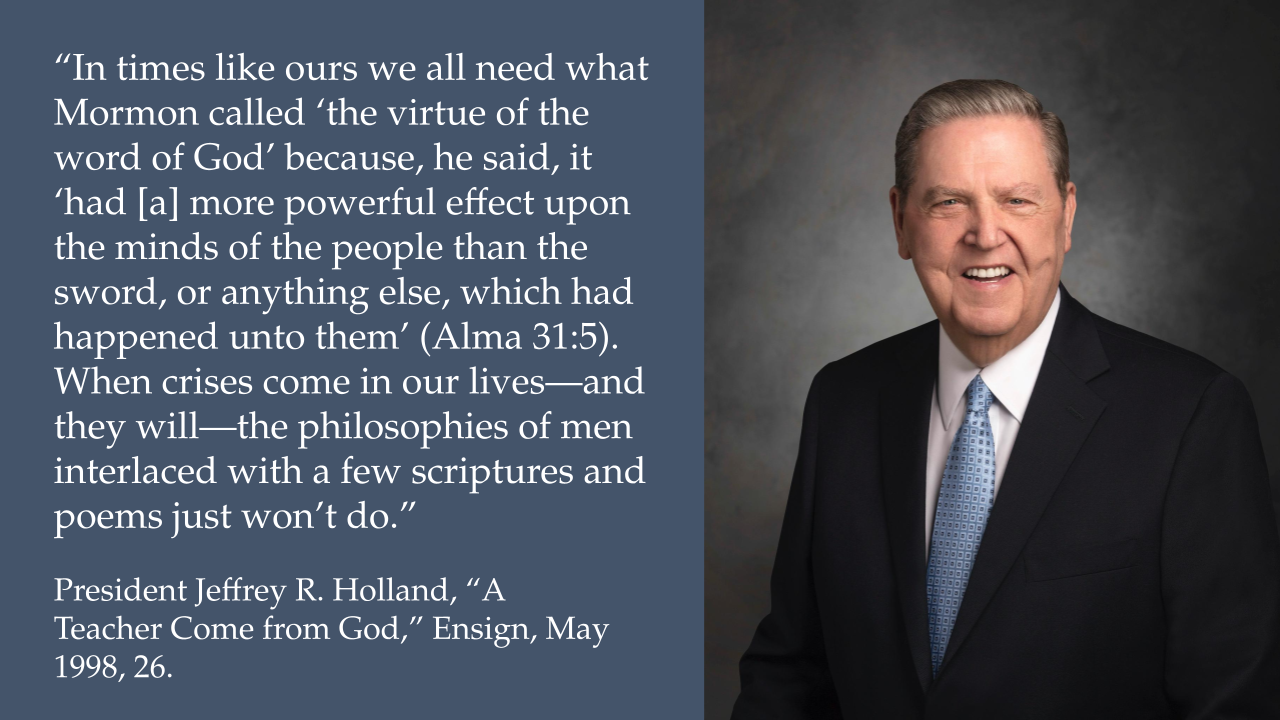
As President Jeffrey R Holland warned:
In times like ours we all need what Mormon called the virtue of the Word of God because, he said it had a more powerful effect on the minds of the people than the sword or anything else which had happened unto them.
When crises come in our lives, and they will, the philosophies of men interlaced with a few scriptures and poems just won’t do.
Scriptures are not supplemental. They’re foundational. They teach doctrine, reveal truth, and carry intrinsic power when quoted directly.
Likewise, the teachings of living prophets provide the Lord’s guidance for our time.
Apostolic Stewardship of Doctrine
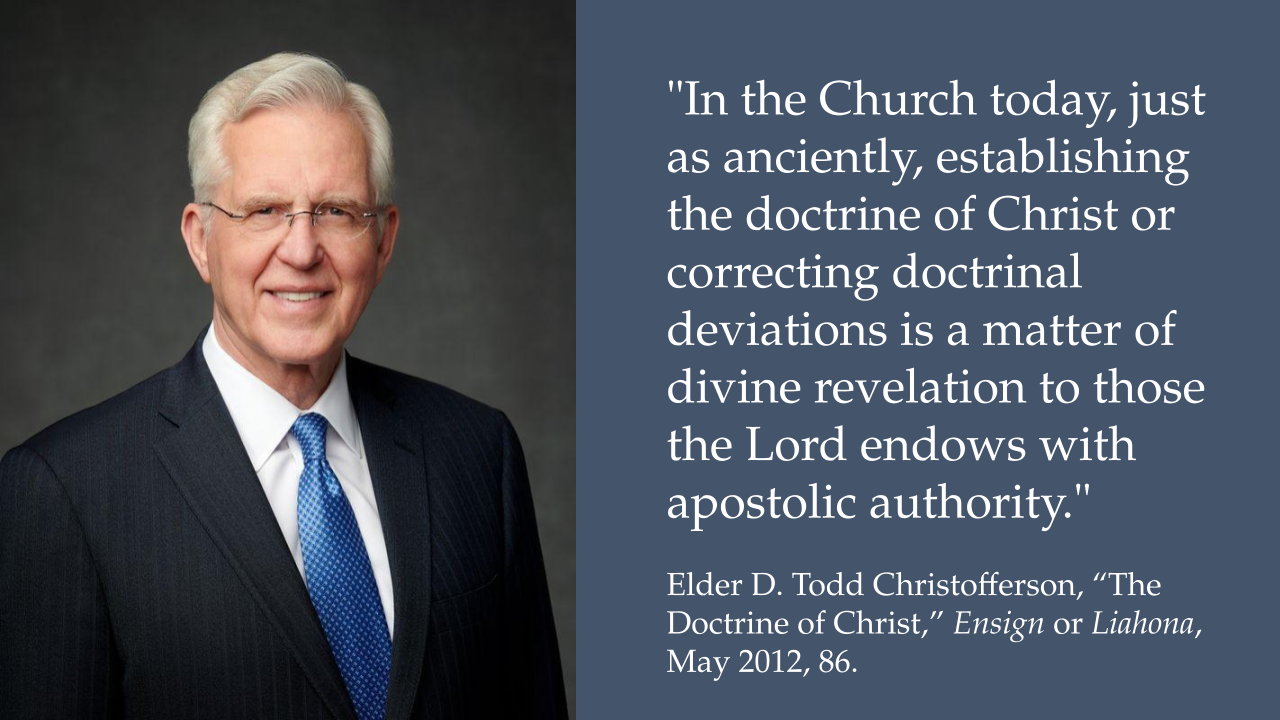
Elder D. Todd Christofferson testified that:
In the Church today, just as anciently, establishing the doctrine of Christ or correcting doctrinal deviations is a matter of divine revelation to those the Lord endows with apostolic authority.
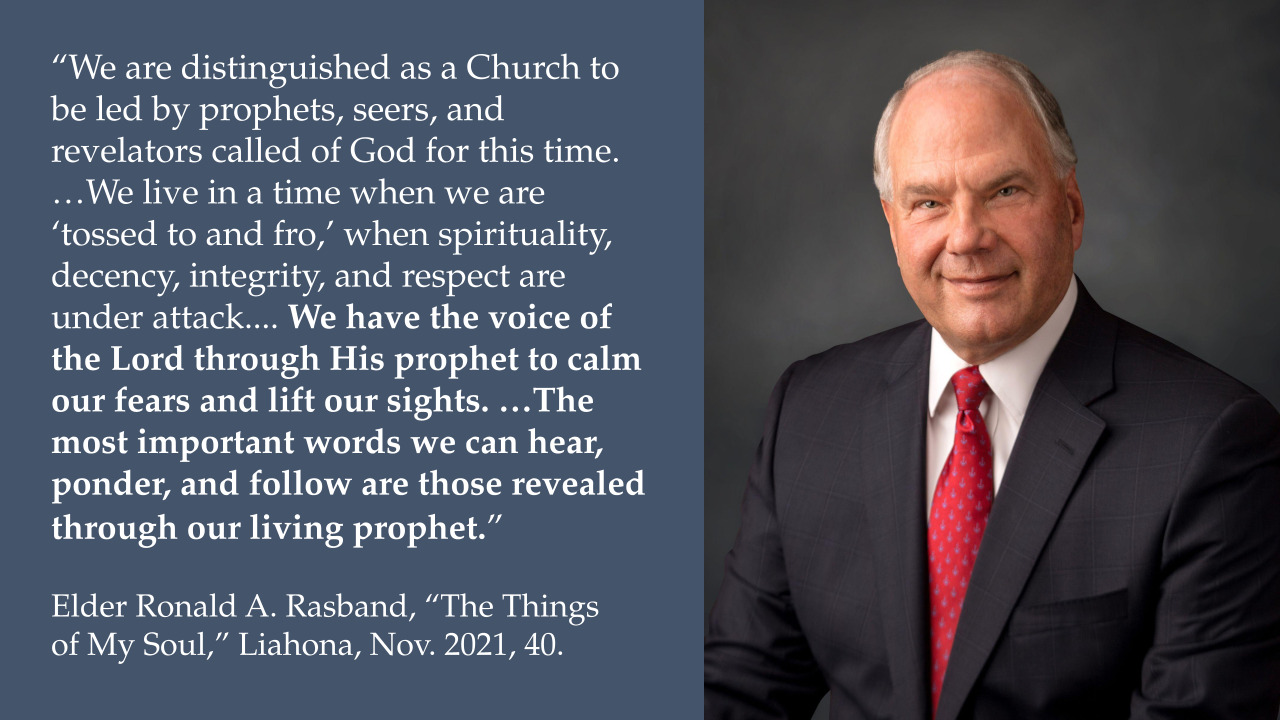
Elder Ronald A. Rasband reminded us that:
In a world of confusion, we have the voice of the Lord through his prophet, to calm our fears and lift our sights. . . . The most important words we can hear, ponder, and follow are those revealed through our living prophet.
Practical Applications of Safeguard 2
Here are some practical applications and questions you might consider as you create gospel content or study the gospel.
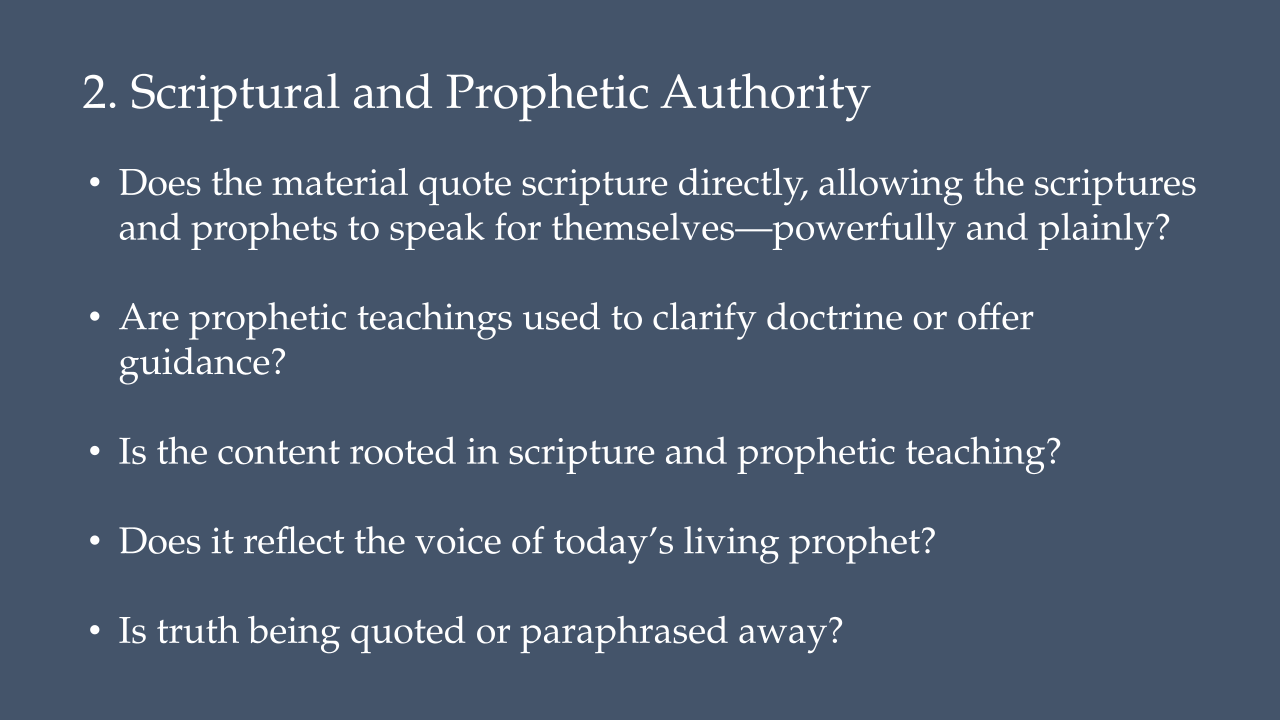
- Does the material quote scripture directly, allowing scriptures and prophets to speak for themselves–powerfully and plainly?
- Are prophetic teachings used to clarify doctrine or offer guidance?
- Is the content rooted in scripture and prophetic teaching?
- Does it reflect the voice of today’s living prophet?
- Is truth being quoted or paraphrased away?
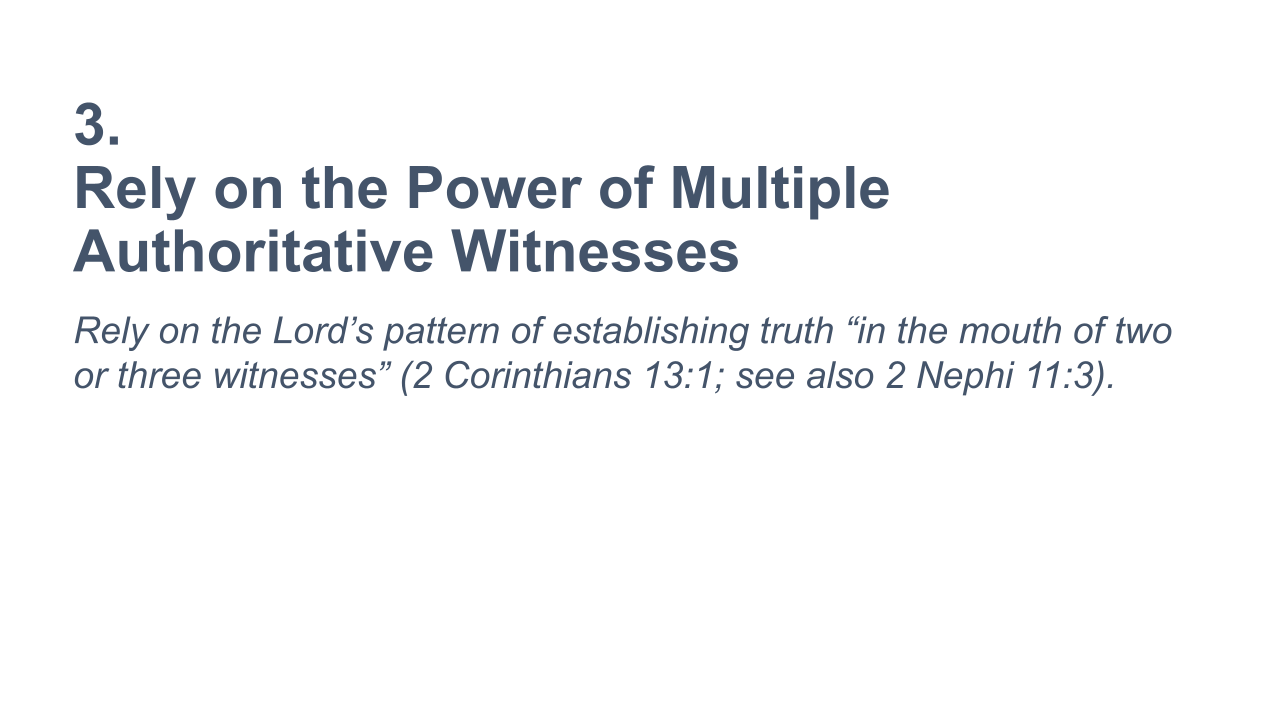
Safeguard Number Three—Rely on the Power of Multiple Witnesses
Safeguard number three—Rely on the power of multiple witnesses.
What if we made it a habit to teach only that doctrine, which the Lord has confirmed through multiple authoritative voices? This safeguard encourages us to rely on the Lord’s pattern of establishing truth in the mouth of 2 or 3 witnesses.
President Russell M. Nelson explained that multiple scriptural and prophetic witnesses give divine doctrine, credibility and clarity.
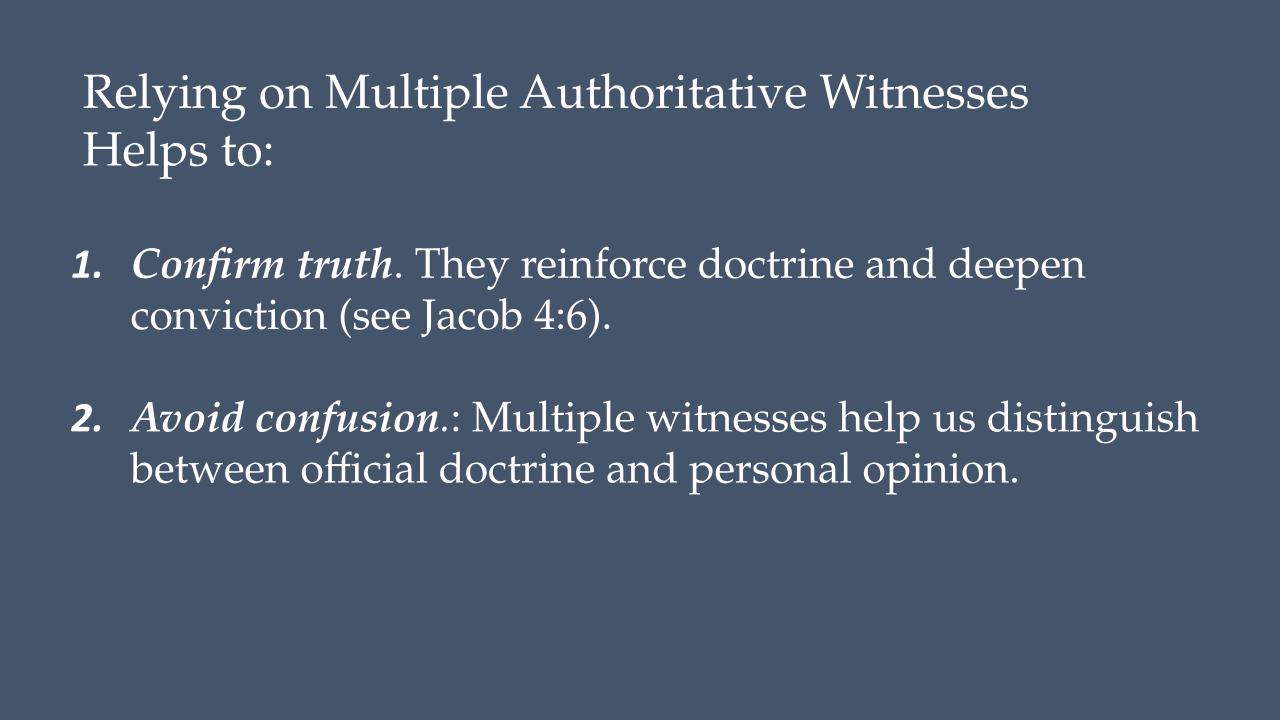
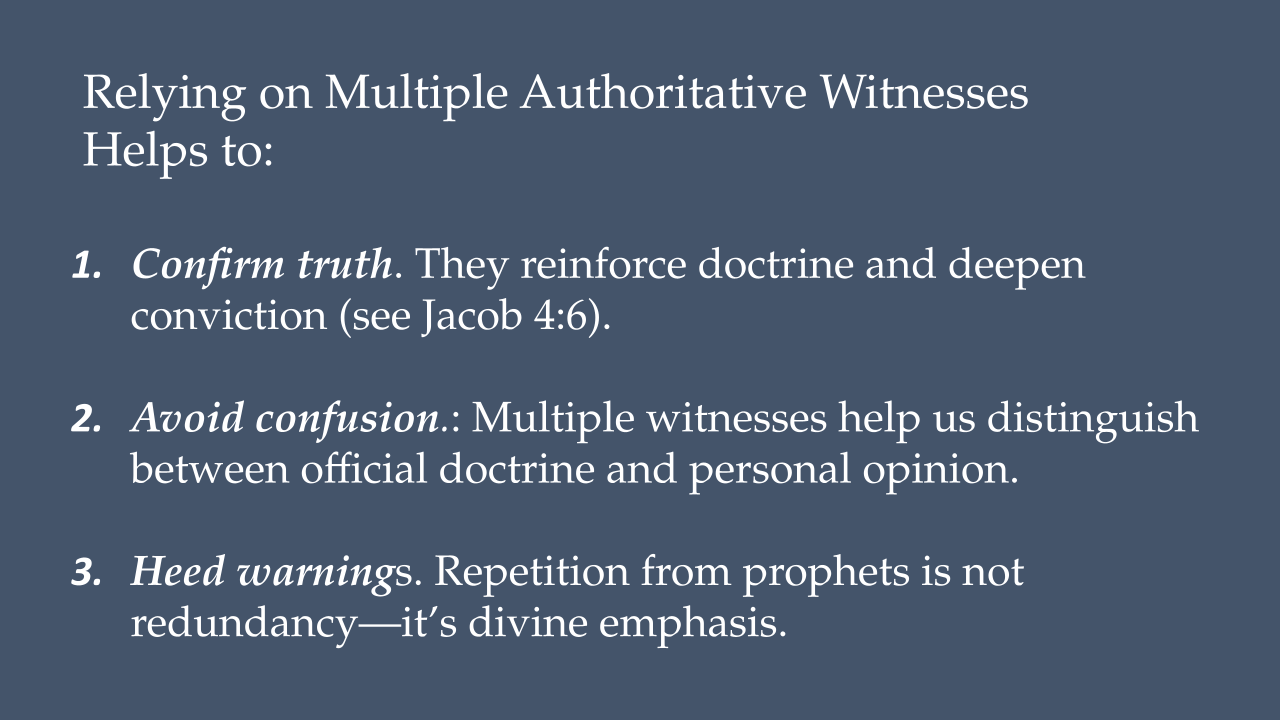
Why does this matter? Because multiple witnesses help us confirm truth, they reinforce doctrine and deepen conviction, and they help us avoid confusion.
Multiple witnesses helps us distinguish between official doctrine and personal opinion.
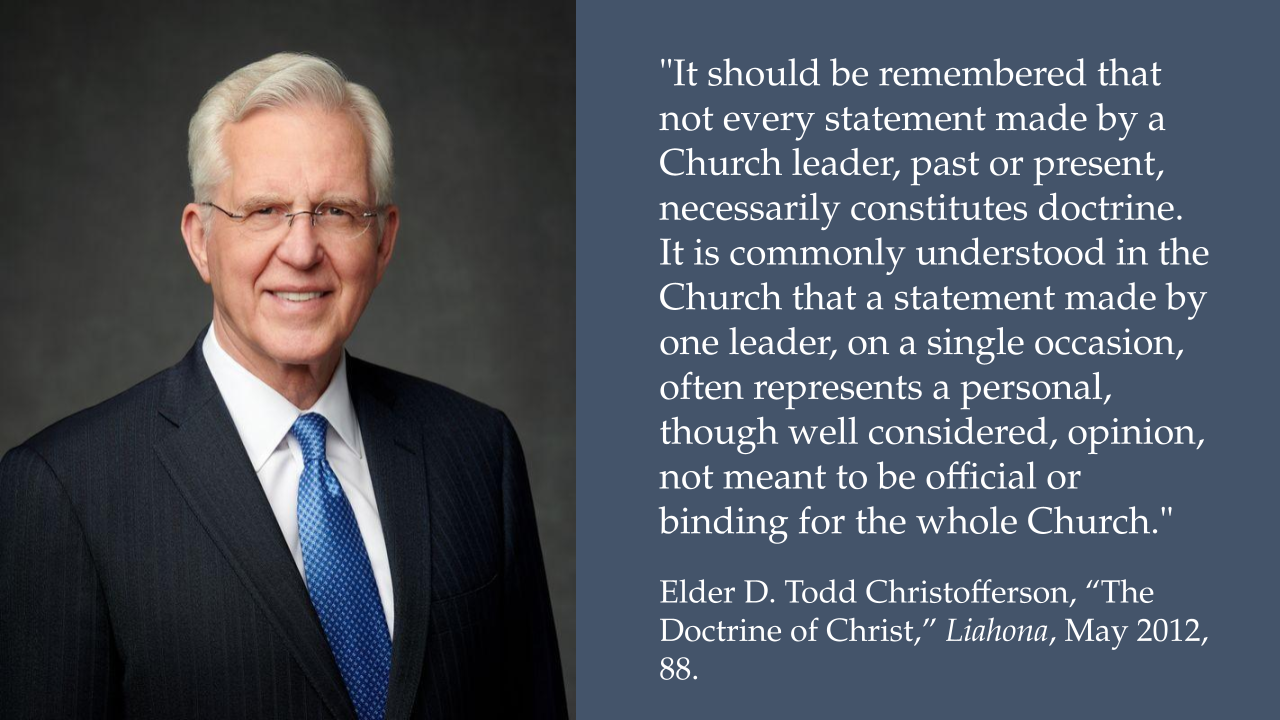
As Elder D. Todd Christofferson taught:
It should be remembered that not every statement made by a Church leader, past or present, necessarily constitutes doctrine. It is commonly understood in the Church that a statement made by one leader on a single occasion often represents a personal, though well considered, opinion, not meant to be, official or binding for the whole Church.
Elder Neil L. Andersen further noted,
“The doctrine is not hidden in an obscure paragraph of one talk. True principles are taught frequently by many.”
Repetition as Divine Emphasis
Multiple witnesses also help us heed warnings. Repetition from prophets is not redundancy, it’s divine emphasis.
President Henry B. Eyring indicated that another reason the Lord uses multiple witnesses is to amplify warnings of danger and point the way to safety.
Elder David A. Bednar likewise affirmed “The consistency of prophetic counsel over time, creates a powerful concert of clarity and warning, and a warning volume far louder than solo performances can ever produce.”
Practical Applications of Safeguard 3
When creating or studying gospel related content, it can be helpful to ask:
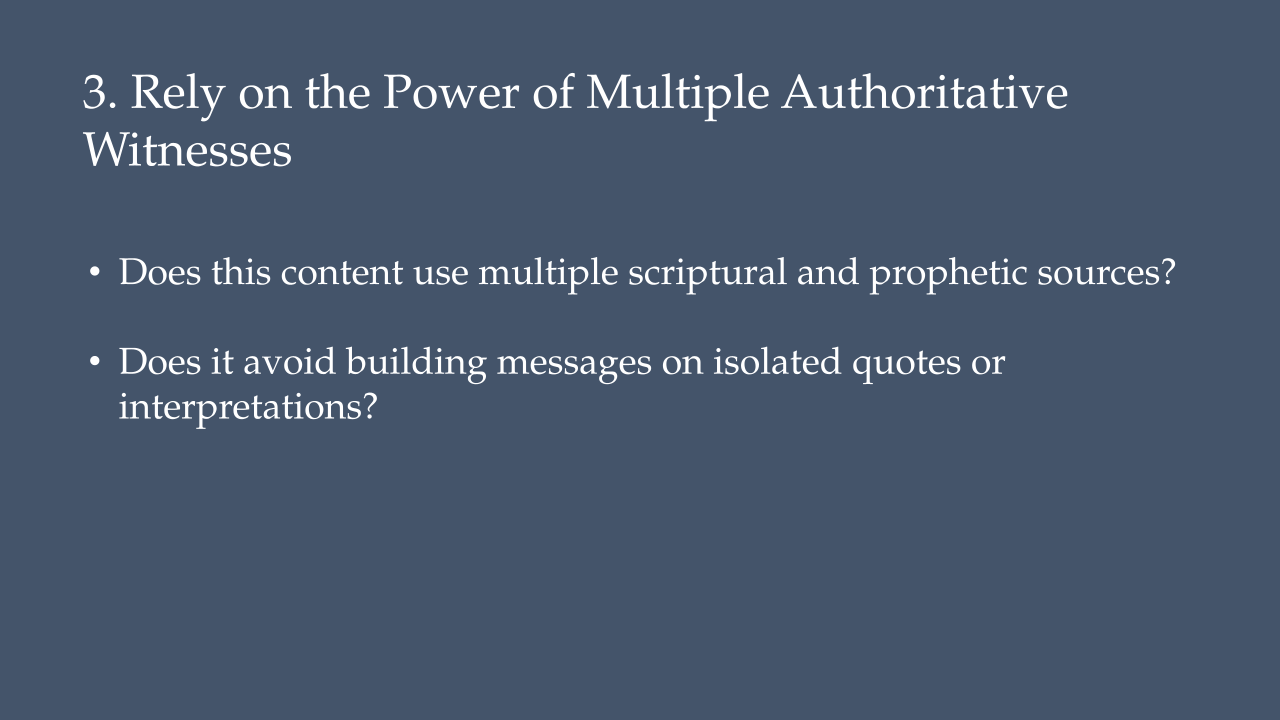
Does this content use multiple scriptural and prophetic sources?
Does it avoid building messages on isolated quotes or interpretations?
By following this pattern, gospel related content in our own study and in what we create can confidently present truth with divine authority.
Safeguard Number Four—Avoid Speculation
Safeguard number four—Avoid speculation.
What if we focused more on what God has revealed and less on what he hasn’t? This safeguard encourages us to teach only the truth the Lord has established, avoiding speculation, personal opinions or worldly philosophies that can distort God’s truth.
The Savior warned that “Whoso shall declare more or less than this is not built upon my rock.”
Elder Neil L. Andersen echoed this caution. “Be careful to stay within the bounds God has established, avoiding the errors that come through speculation and non doctrinal personal ideas.”
President Dallin H. Oaks added that “While it’s okay to wonder or discuss questions privately, let us not teach or use as official doctrine what does not meet the standards of official doctrine.”
Why is this so important? Because even small doctrinal errors can lead to significant misunderstandings.
President Gordon B Hinckley warned, remember that small aberrations can lead to large and evil falsehoods.
Elder Dieter F. Uchtdorf noted that even minor drifts from doctrine can bring sorrowful consequences.
The Dangers of Explaining the Unrevealed
Speculation often arises when we try to explain things the Lord hasn’t revealed.
President Oaks advised, “It’s not the pattern of the Lord to give reasons. We mortals can put reasons to revelation. We can put reasons to commandments. When we do, we’re on our own. Let’s don’t the make the mistake of trying to put reasons to revelation.”
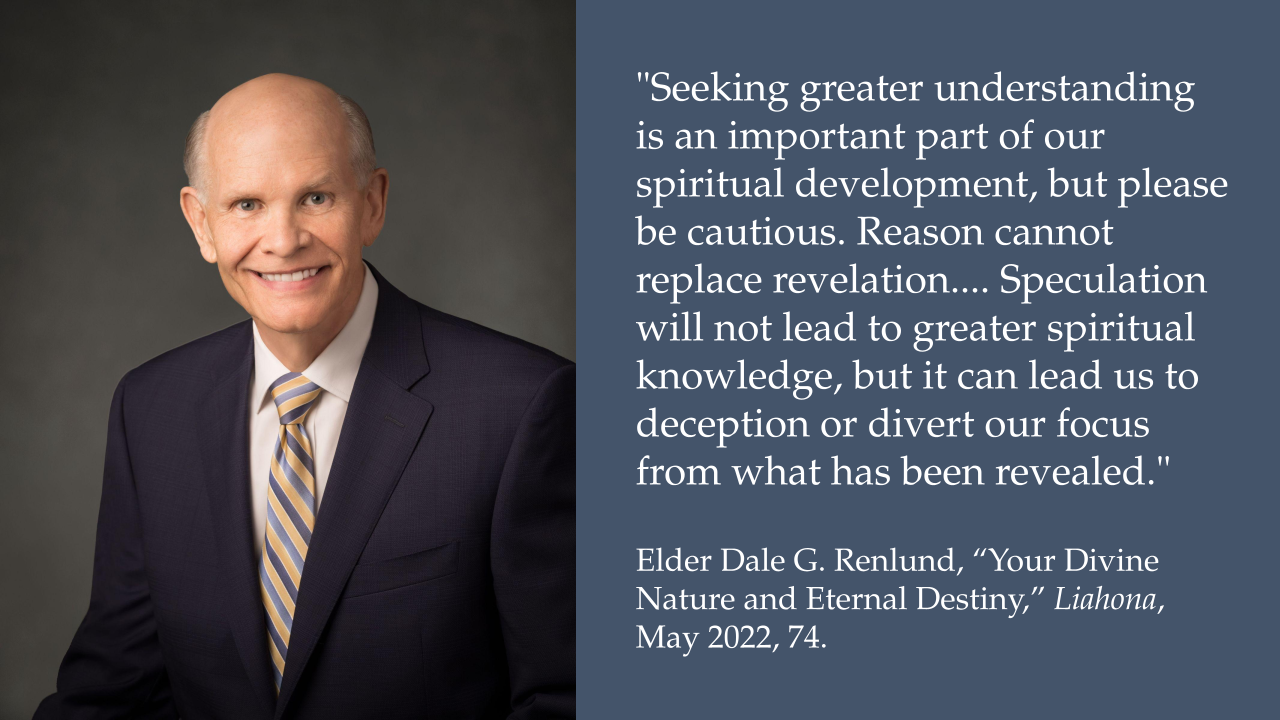
In addition, Elder Dale G. Renlund counseled:
Seeking greater understanding is an important part of our spiritual development. But please be cautious. Reason cannot replace revelation. Speculation will not lead to greater spiritual knowledge, but it can lead us to deception or divert our focus from what has been revealed.
Personal opinions and worldly ideas, while sometimes well-intentioned, can confuse and mislead.
Practical Applications of Safeguard 4
To apply this safeguard in what you study and create, you might ask yourself:
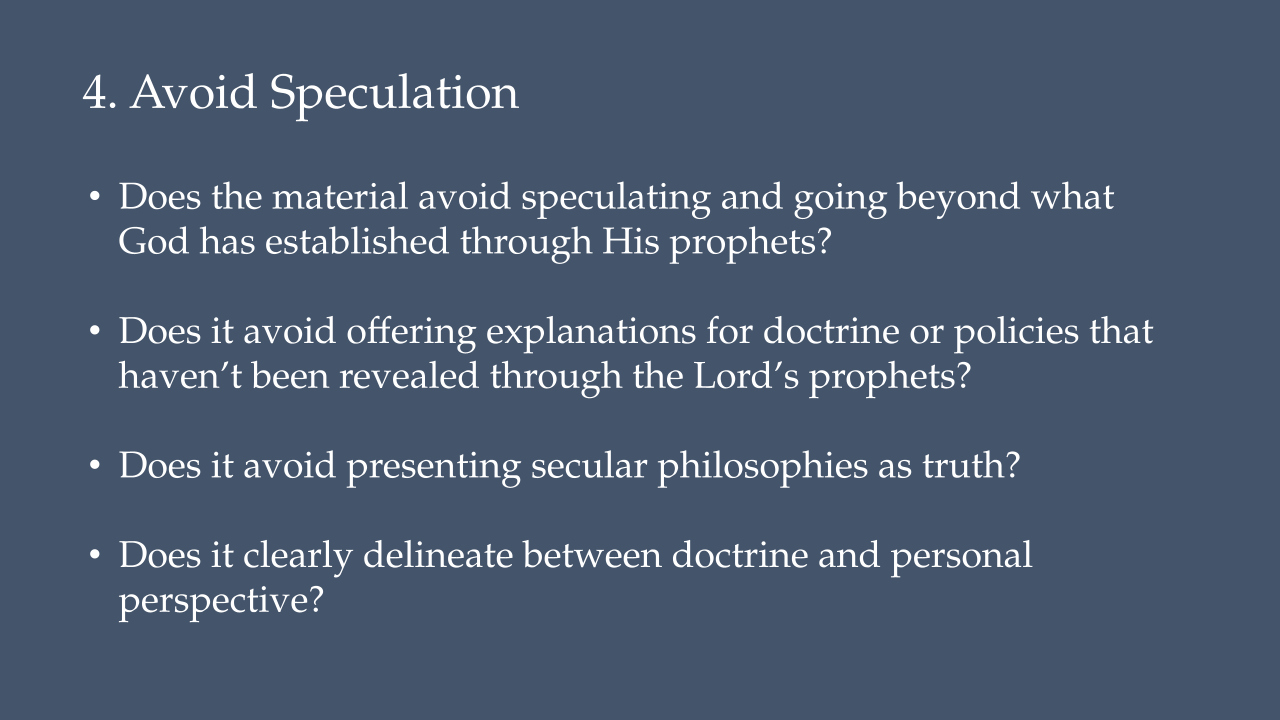
- Does this material avoid speculating and going beyond what God has established through his prophets?
- Does it avoid offering explanations for doctrine or policies that haven’t been revealed through the Lord’s prophets?
- Does it avoid presenting secular philosophies as truth?
- Does it clearly delineate between doctrine and personal perspective?
By teaching only true doctrine we invite the Holy Ghost and allow testimonies to be built upon the sure foundation of the Savior’s truth.
Safeguard Number Five—Prioritize Spiritual Edification
Safeguard number five—Prioritize spiritual edification.
What if every message we shared didn’t just inform or entertain, but it left others feeling uplifted, inspired, and closer to Jesus Christ.
This safeguard encourages us to create and study content that invites the Holy Ghost and builds faith in Heavenly Father and Jesus Christ. Content that edifies rather than tears down or attacks others beliefs or perspectives.
The Savior taught that the gospel truth should be communicated by the spirit of truth, so that all may understand one another and be edified and rejoice together.
Edification Through the Spirit
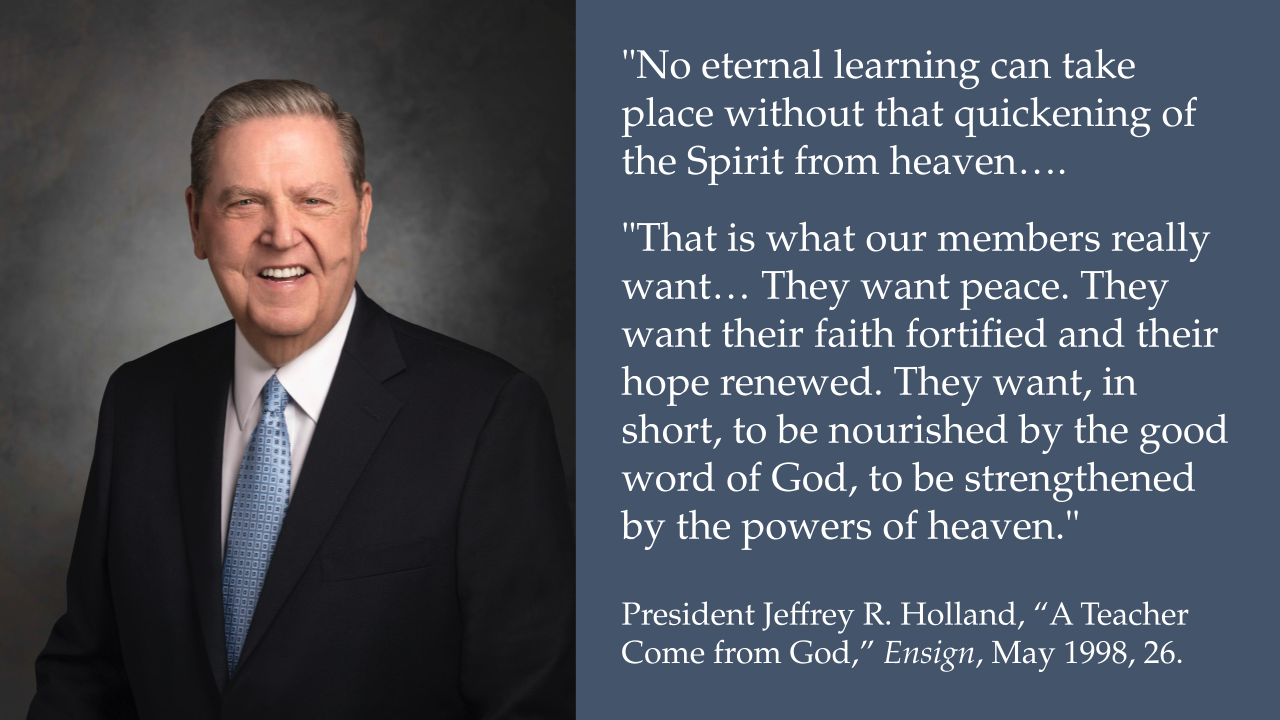
President Jeffrey R Holland emphasized that:
No eternal learning can take place without that quickening of the spirit from heaven. That is what our members really want.
- They want peace.
- They want their faith fortified and their hope renewed.
- They want, in short, to be nourished by the good Word of God to be strengthened by the powers of heaven.
To edify means to build and strengthen. True spiritual edification happens only through the Holy Ghost, who testifies of truth and helps us grow in faith and love for the Lord.
But edification can be hindered. Tone matters. Gospel related content to reflect the reverence and respect modeled by living prophets. Flippant, casual, or critical language can offend the spirit.
Elder D Todd Christofferson reminded us that sacred things, including the names and roles of deity, must be spoken with care.
Pointing to Christ, Not Ourselves
To allow the influence of the Holy Ghost to accompany the content we create or study, such content should also strengthen testimonies of the Lord’s chosen servants and his Church.
Even personal stories can spiritually edify when they point to Christ and not to ourselves.
As John the Baptist said, He must increase and I must decrease.
When shared appropriately, personal experiences can illustrate gospel truths and can glorify God.
Practical Applications of Safeguard 5
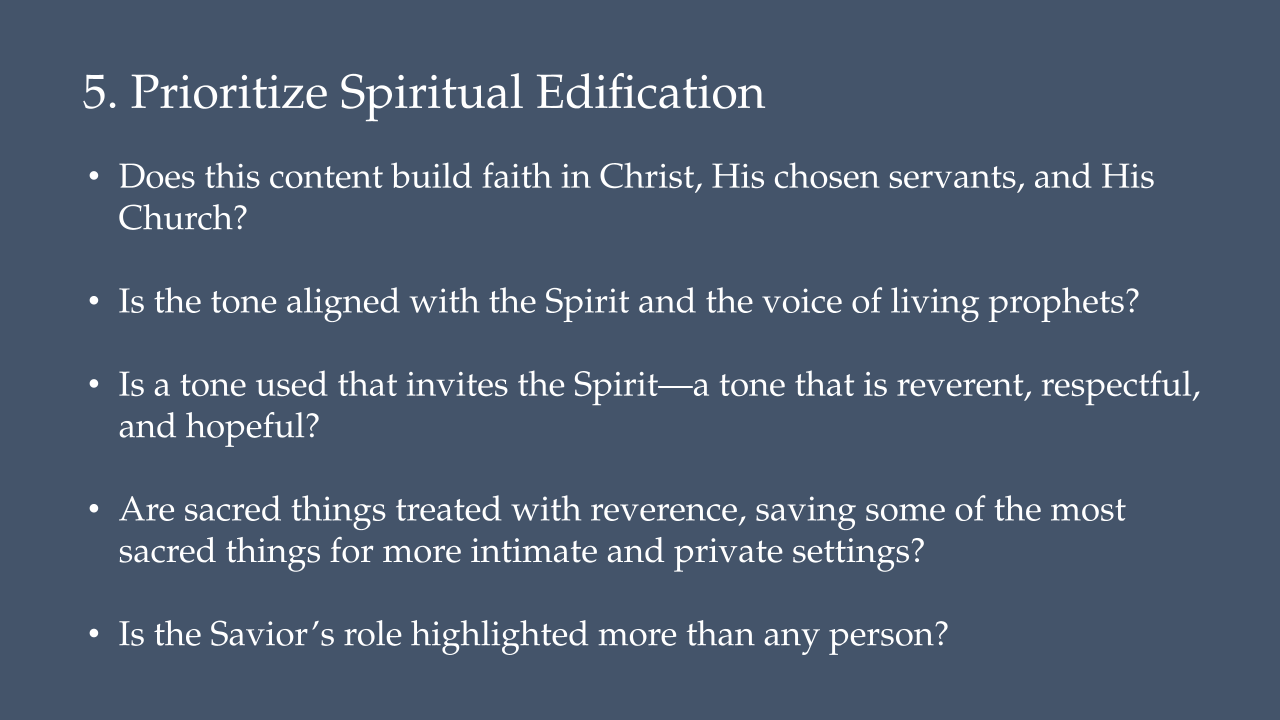
To apply this safeguard of spiritual edification you might consider the following questions.
- Does this content build faith in Jesus Christ, his chosen servants, and his Church?
- Is the tone aligned with the spirit and the voice of living prophets?
- Is a tone used that invites the spirit, a tone that is reverent, respectful, and hopeful.
- Are sacred things treated with reverence? Saving some of the most sacred things for more intimate and private settings.
- Is the Savior’s role highlighted more than any person?
Safeguard Number Six—Maintain Doctrinal Balance
Safeguard number six. This safeguard is to present doctrine in balance, giving appropriate weight to each truth in the context of others, so no single principle overshadows the rest.
The Savior reproved the Pharisees for emphasizing tithing while neglecting the weightier matters of the law, judgment, mercy, and faith.
Similarly, President Joseph F Smith warned against isolating one gospel truth and making it a special hobby, detached from the broader plan.
Elder Quinten L Cook added that even worthwhile principles can become distorted if they’re elevated above others.
Doctrinal balance means presenting gospel truths in harmony. For example, Alma taught that justice and mercy are both fulfilled through Christ’s atoning sacrifice.
Without balance, distortion can creep in.
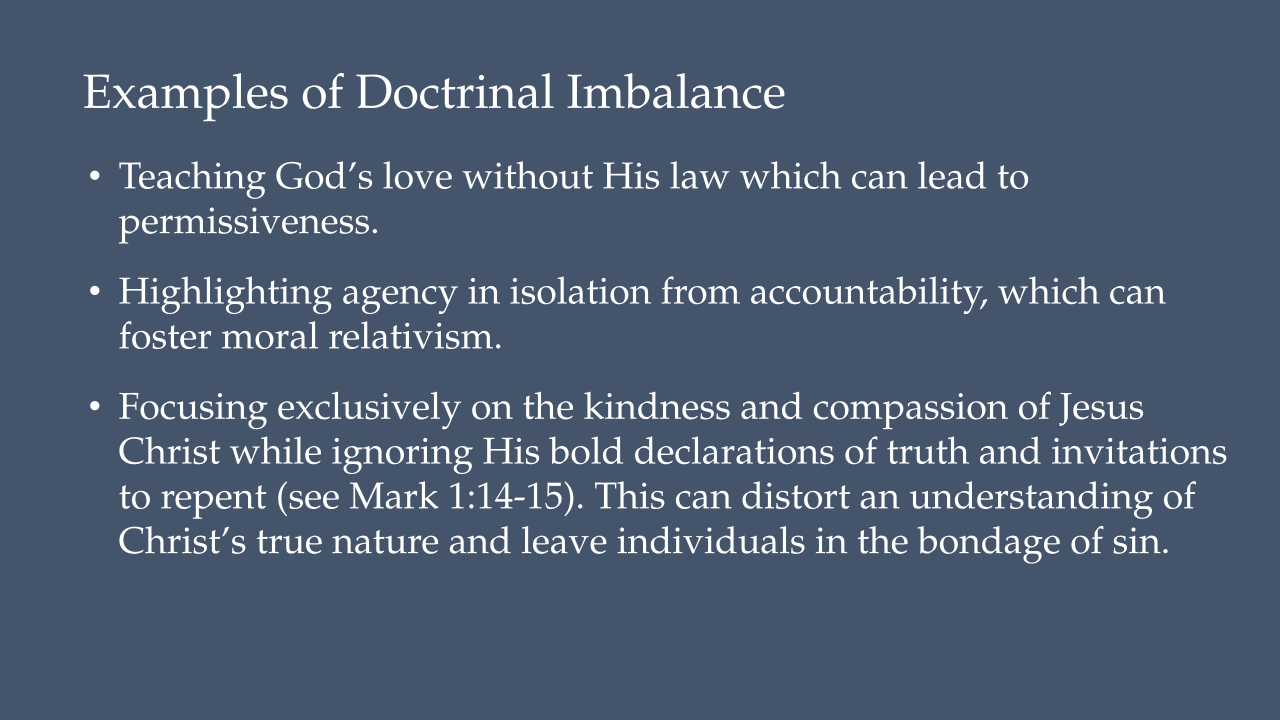
Examples of Doctrinal Imbalance
Just a few examples of this include:
Teaching God’s love without his law, which can lead to permissiveness.
Highlighting agency in isolation from accountability, which can foster moral relativism.
Focusing exclusively on the kindness and compassion of Jesus Christ while ignoring his bold declarations of truth and invitations to repent. This can distort an understanding of Christ’s true nature and leave individuals in the bondage of sin.
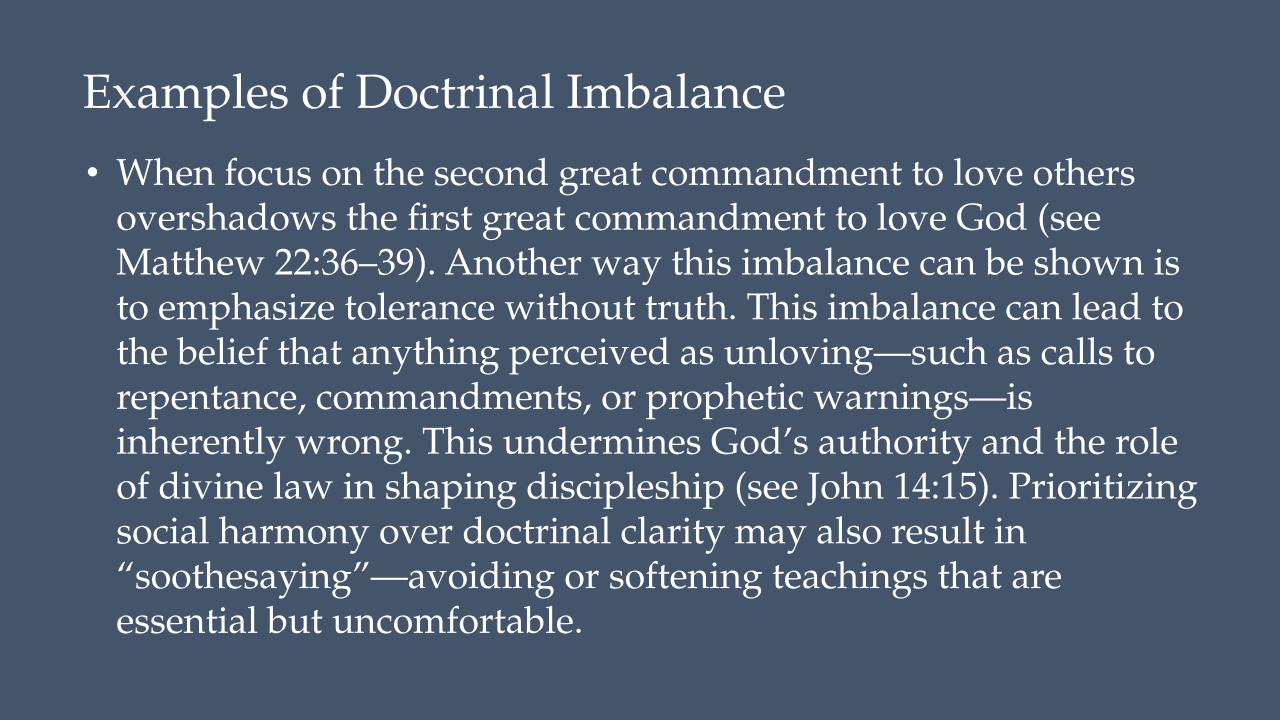
When focus on the second great commandment to love others overshadows the first great commandment to love God.
Another way this imbalance can be shown is to emphasize tolerance without truth. This imbalance can lead to the belief that anything perceived as unloving, such as calls to repentance, commandments, or prophetic warnings, is inherently wrong.
This undermines God’s authority and the role of divine law in shaping discipleship. Prioritizing social harmony over doctrinal clarity may also result in sooth saying, avoiding or softening teachings that are essential but uncomfortable.
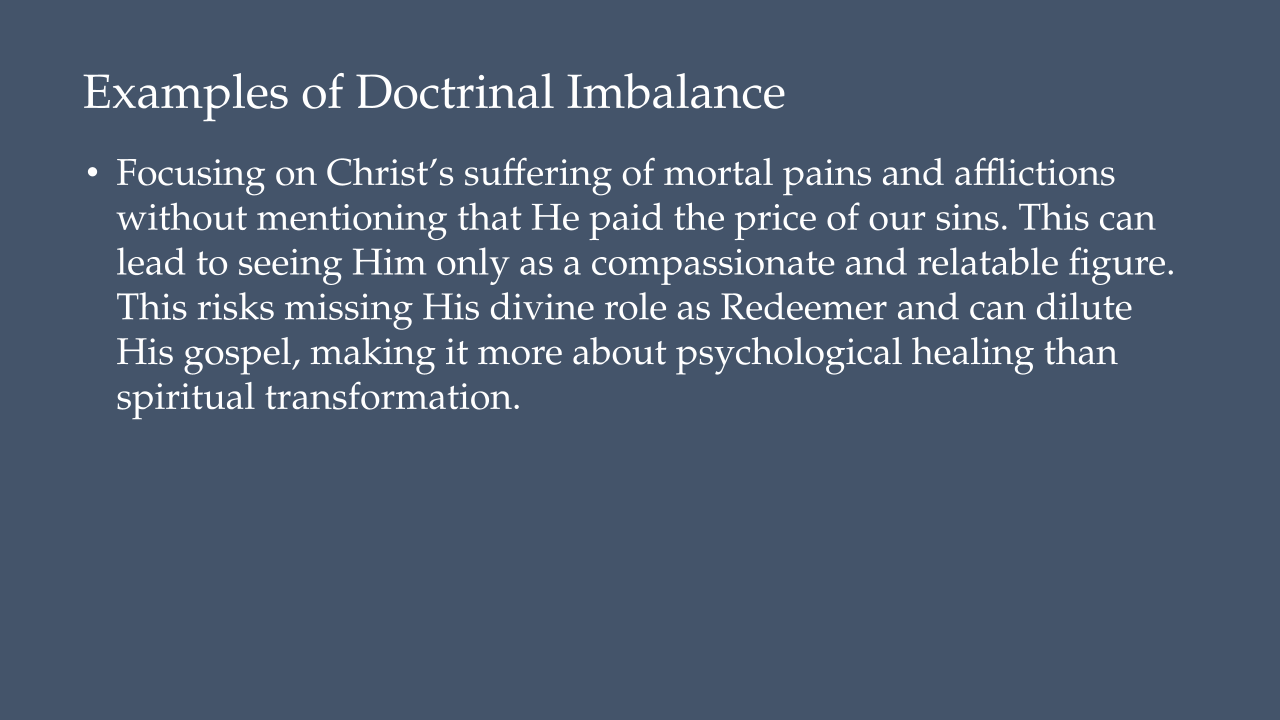
Focusing on Christ’s suffering of mortal pains and afflictions without mentioning that he paid the price of our sins. This can lead to seeing him only as a compassionate and relatable figure.
This risks missing his role as our Redeemer and can dilute his gospel, making it more about psychological healing than about spiritual transformation.
These and many other imbalances may seem minor at first, but they can erode the foundation of all gospel understanding.
Elder Neil Maxwell described gospel truths as “a fabric where principles keep each other in check. When we teach them together, they strengthen and clarify one another.”
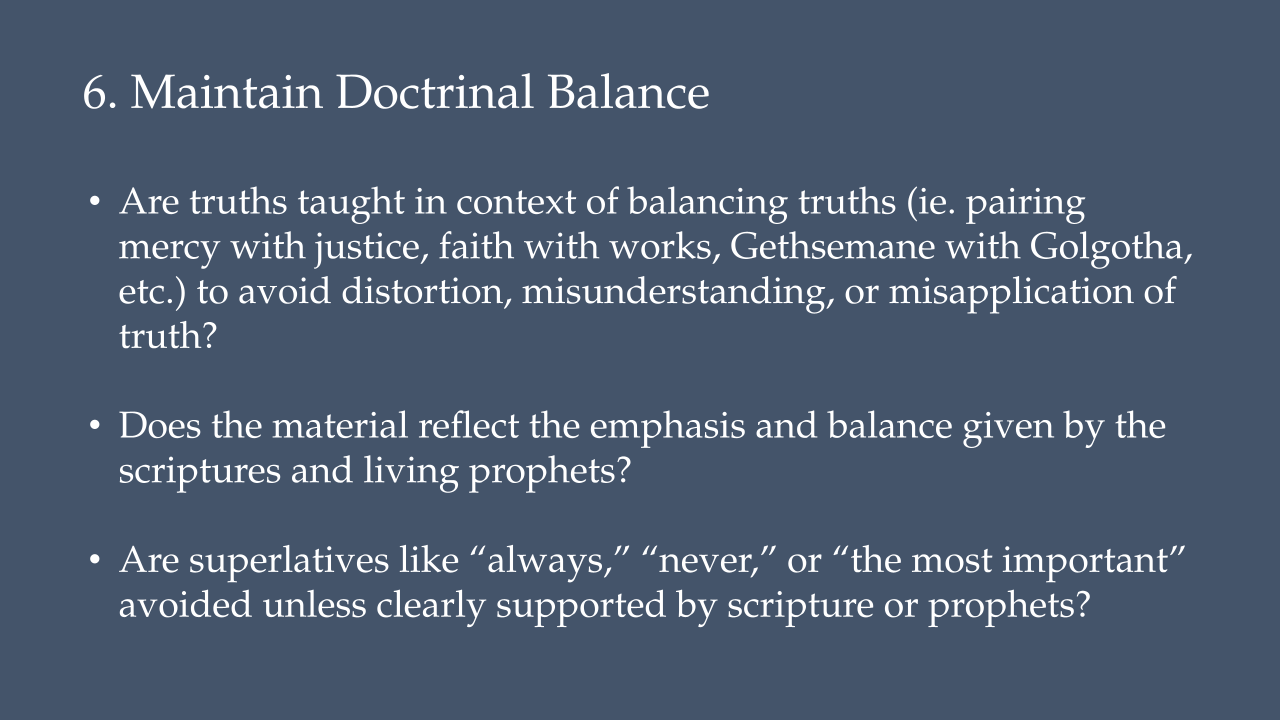
Practical Applications of Safeguard Number 6
To apply this safeguard, you might ask:
Are truths taught in context of balancing truths to avoid distortion, misunderstanding, or misapplication of truth?
Does the material reflect the emphasis and balance given by the scriptures and living prophets?
Are superlatives like always, never, or the most important avoided unless clearly supported by Scripture or prophets?
Safeguard Number Seven—Communicate Truth Clearly
Next, safeguard. What if gospel truths were always taught so plainly that no one could miss their meaning?
This safeguard encourages us to communicate with clarity so that understanding increases, the spirit can testify, and confusion can be avoided.
Alma rejoiced that the gospel was taught in plain terms, that we may understand that we cannot err.
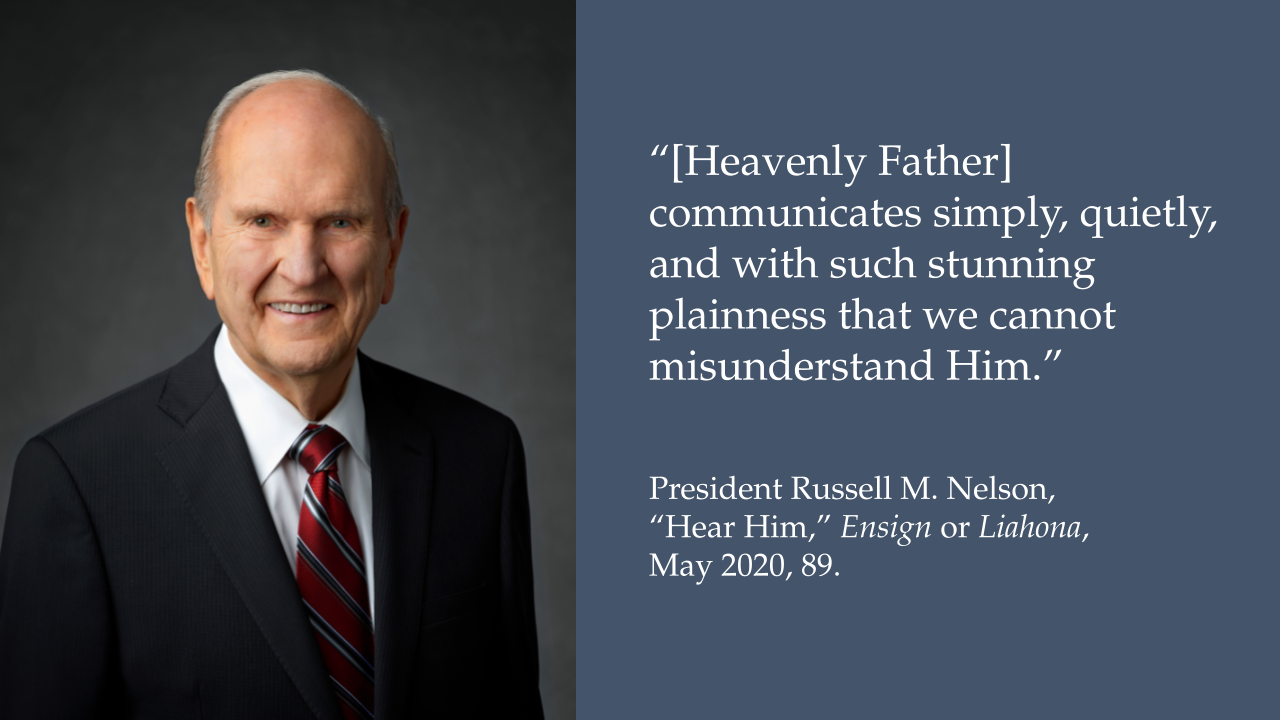
President Russell and Nelson similarly testified that God speaks with such stunning plainness that we cannot misunderstand Him.
When creating or publishing gospel related content, we should align with that same principle.
Clarity is about being direct and easy to understand. Nephi delighted in plainness so his people could learn. Elder Bednar clarified that the word plain there means clear, not ordinary.
Why Clarity Matters
Why is this so important? Because clarity invites the Holy Ghost. There’s a pattern there.
President James E. Faust quoted Elder B.H. Roberts saying, “The clearer and more complete the statement of truth, the better the opportunity for the Holy Spirit to testify.”
Clarity also protects against misinterpretation, especially in a world where critics may twist or misunderstand.
Two Important Cautions
Two cautions associated with this safeguard are:
- First, don’t oversimplify. Sometimes clarity requires more detail, not less.
- Second, don’t overinterpret. If a prophetic or scriptural statement is ambiguous, let it remain so unless clarified by multiple authoritative sources.
Practical Applications of Safeguard 7
To further apply this safeguard of presenting messages with clarity you might ask yourself:
- Does this material use language that is straightforward and easily understood?
- Is there anything that might lead to a doctrinal misunderstanding or a misinterpretation?
Safeguard Number Eight—Keep it Accurate
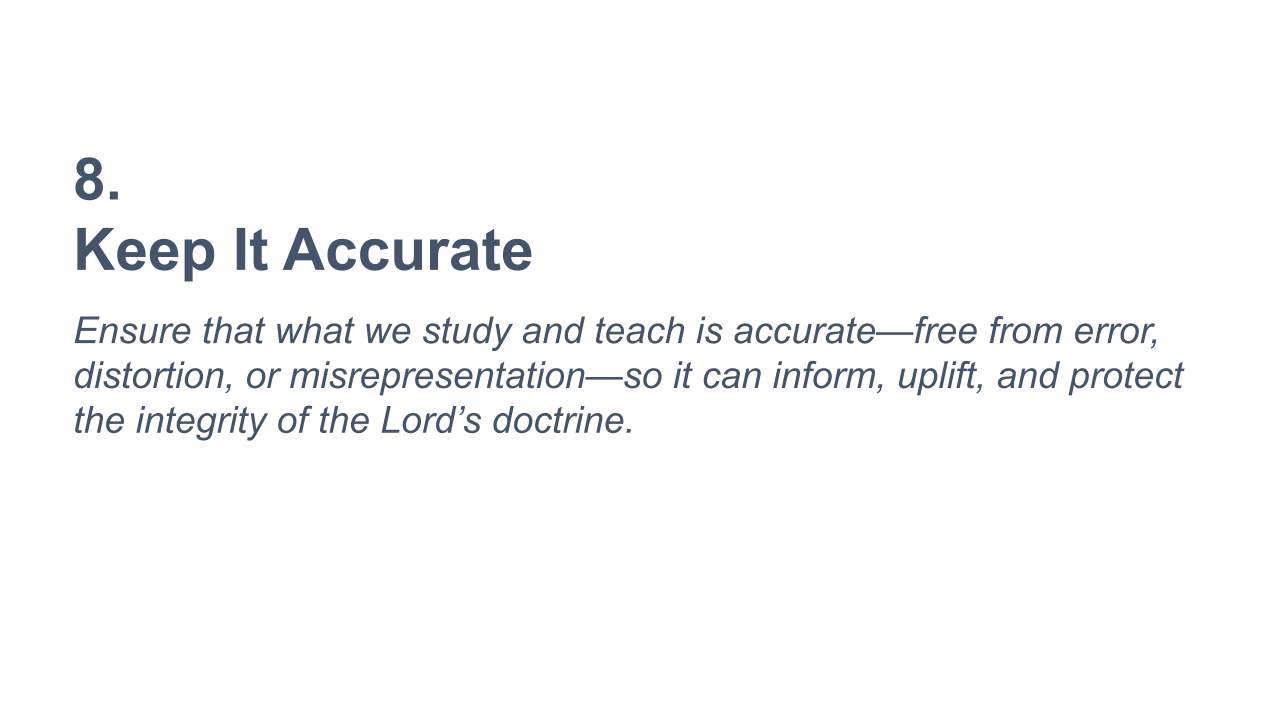
The next safeguard invites us to ensure that what we study and teach is accurate, free from error, distortion, or misrepresentation, so that it can inform, uplift and protect the integrity of the Lord’s doctrine.
The Savior declared, truth is “knowledge of things as they are. as they were, and as they are to come.”
Only when truth is presented accurately can the Holy Ghost confirm it to the hearts of God’s children.
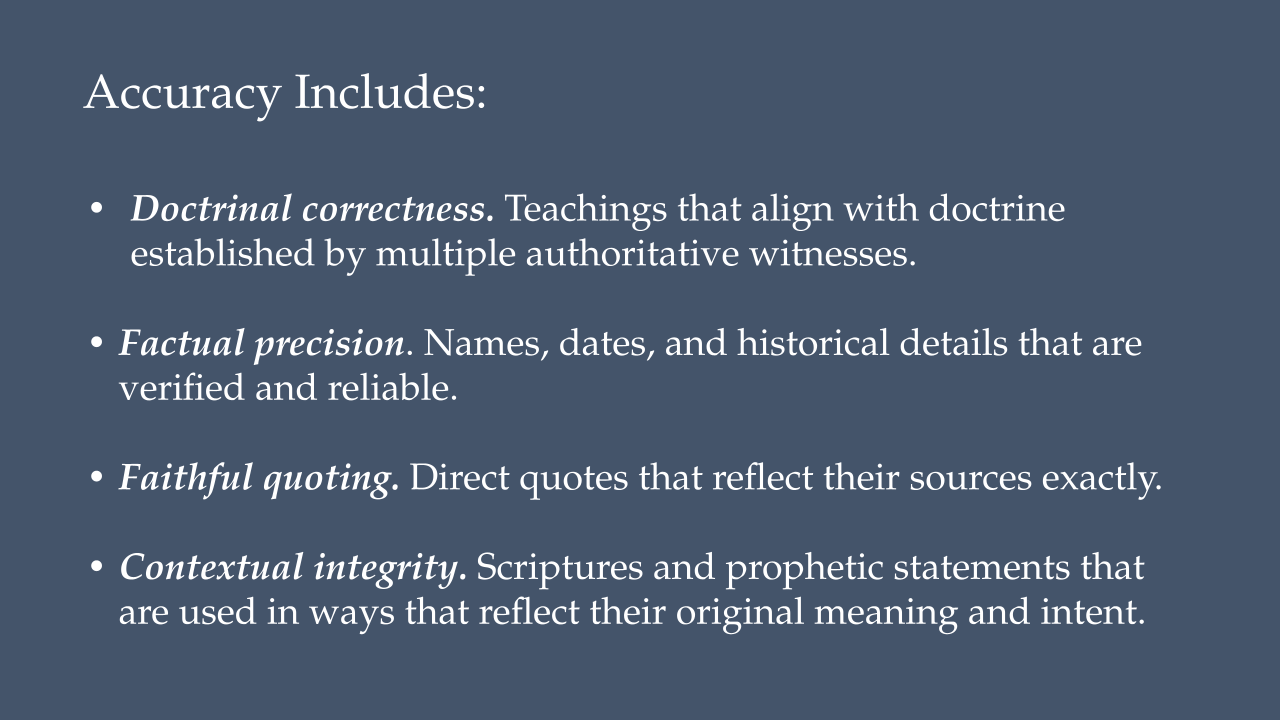
Accuracy includes:
- Doctrinal correctness.
- Factual precision.
- Faithful quoting.
- Contextual integrity.
Even unintended distortion can lead to misunderstanding.
Examples of Inaccuracy
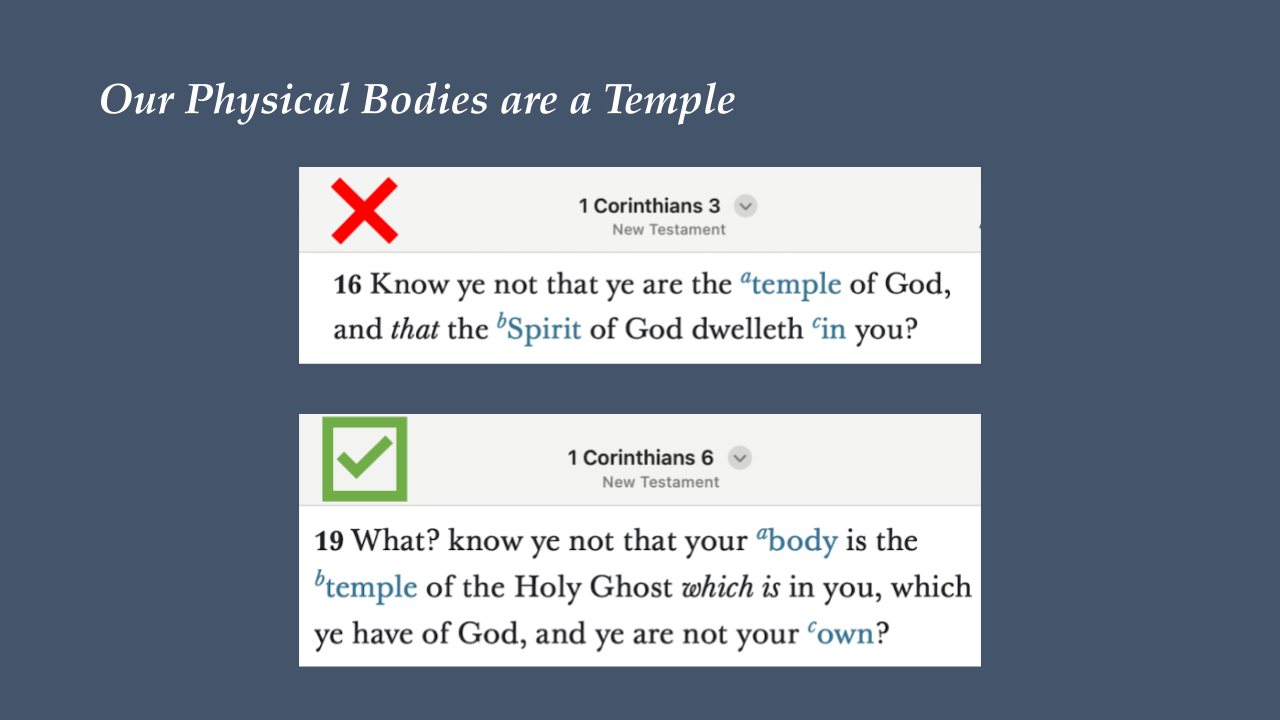
For example, teaching that our physical bodies are a temple by quoting Paul in First Corinthians 3:16, where he said, “Ye are the temple of God” is inaccurate.
In this verse, he was speaking of the Church collectively. A better verse for that principle is First Corinthians 6:19.
Even factual statements can mislead if they leave out spiritual context.
An Example: Plural Marriage
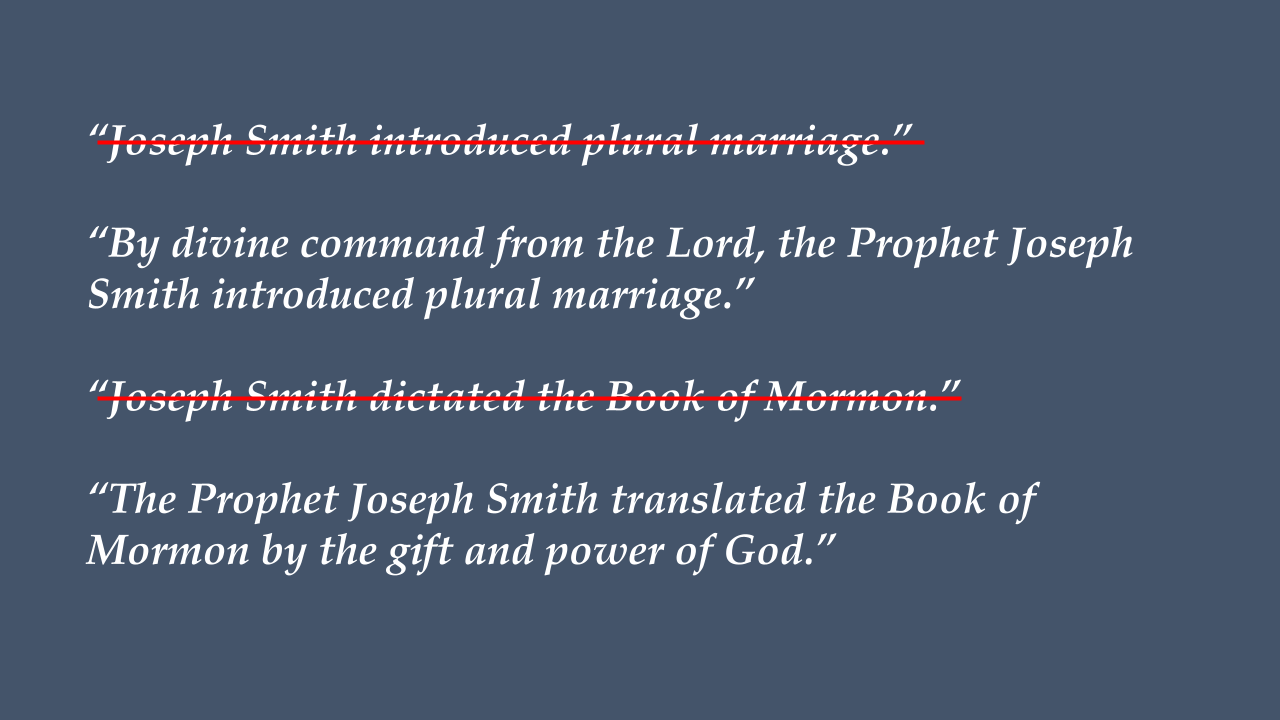
For example, saying that “Joseph Smith introduced plural marriage” omits the fact that it was by divine command.
Likewise, stating that “Joseph Smith dictated the Book of Mormon” could be more doctrinally accurate if stated, “The prophet Joseph Smith translated the Book of Mormon by the gift and power of God.”
Accuracy requires avoiding exaggeration, oversimplification, or relying on sources with doctrinal bias.
While distortion can happen unintentionally, President Dallin H. Oaks cautioned against those who select a few sentences from the teachings of a prophet and use those to support their political agenda or other personal purposes.
He added that doing so is to try to manipulate the prophet, not to follow him.
Practical Applications of Safeguard 8
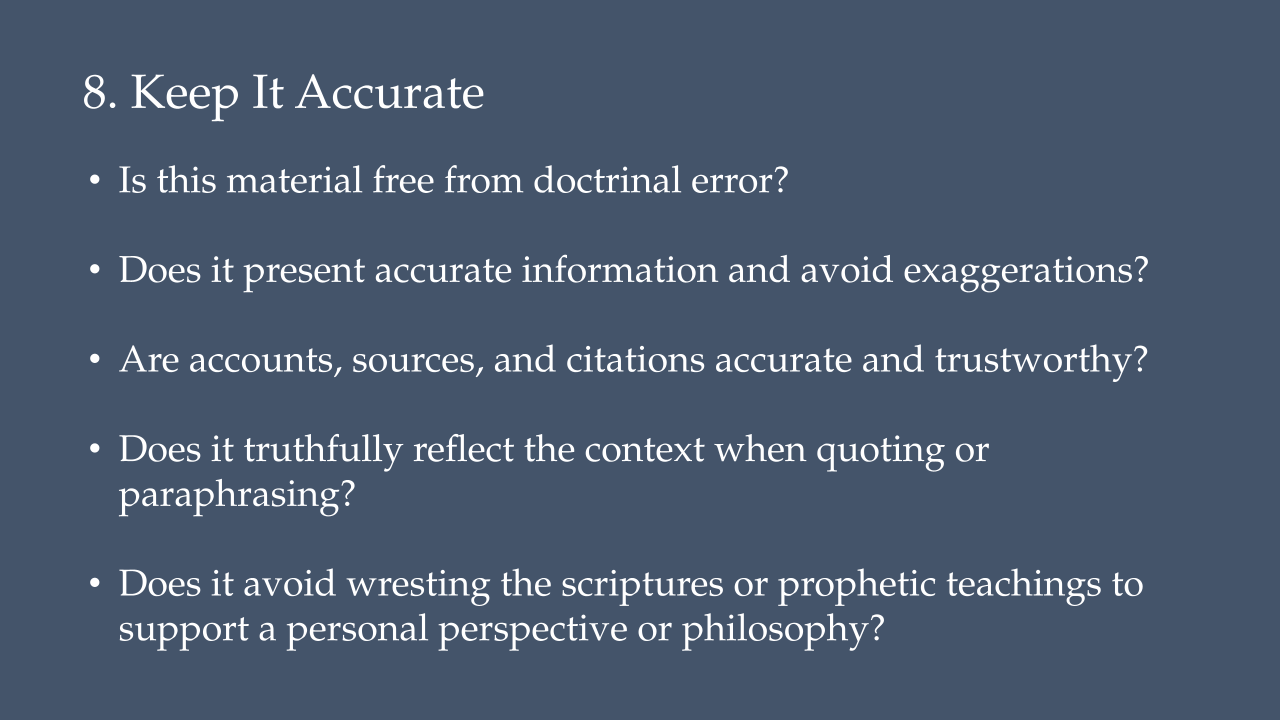
To apply this safeguard, you might consider asking the following:
- Is this material free from doctrinal error?
- Does it present accurate information and avoid exaggerations?
- Are accounts, sources, and citations accurate and trustworthy?
- Does it truthfully reflect the context when quoting or paraphrasing?
- Does it avoid wresting the scriptures or prophetic teachings to support a personal perspective or philosophy?
Safeguard Number Nine—Avoid Distractions
Safeguard number nine—Avoid distractions.
The last safeguard encourages us to remove distractions from gospel related content and our study, so that the spirit can teach and testify without interference.
I recall attending a mission conference as a young missionary in Montevideo, Uruguay, where then Elder Russell M. Nelson presided.
In a question and answer series with the missionaries, he spoke of this principle of non distraction and shared with us that at that time, when he was on assignment as an apostle of the Lord Jesus Christ, he felt he ought not to wear any jewelry, including tie tacks or lapel pins, so that he could avoid drawing attention from anyone that would draw them away from the message the Lord sent him to deliver.
President Dallin H. Oaks taught this principle using the sacrament as an example, stating that those administering the sacrament should not do anything that would distract any member from his or her worship and renewal of covenants.
The same applies to all gospel related content. Anything that diverts attention from Christ and His doctrine can weaken the message of spiritual impact.
Common Forms of Distraction
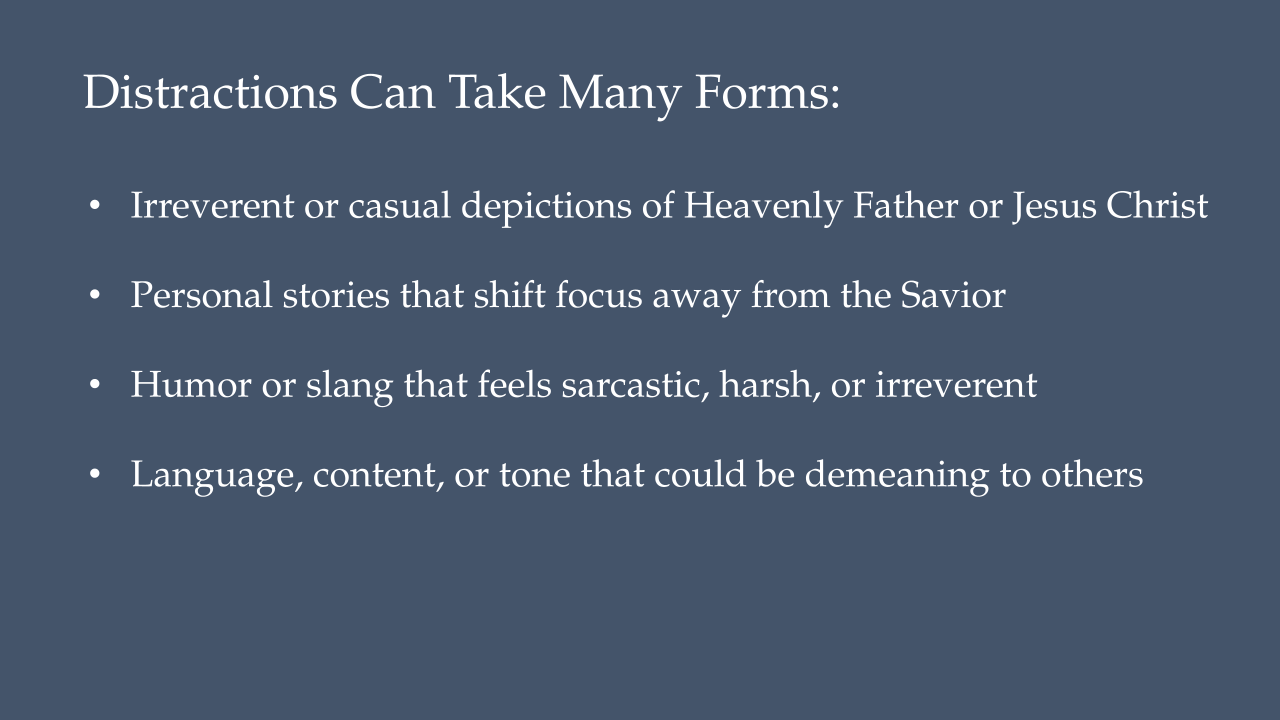
Distractions can take many forms.
- Irreverent or casual depictions of Heavenly Father or Jesus Christ.
- Personal stories that shift focus away from the Savior.
- Humor or slang that feels sarcastic, harsh or irreverent.
- Language, content or tone that could be demeaning to others.
Even good intentions can distract if they focus from Christ to us or anything else.
Like Peter, we falter when we take our eyes off the Savior.
Practical Applications of Safeguard 9
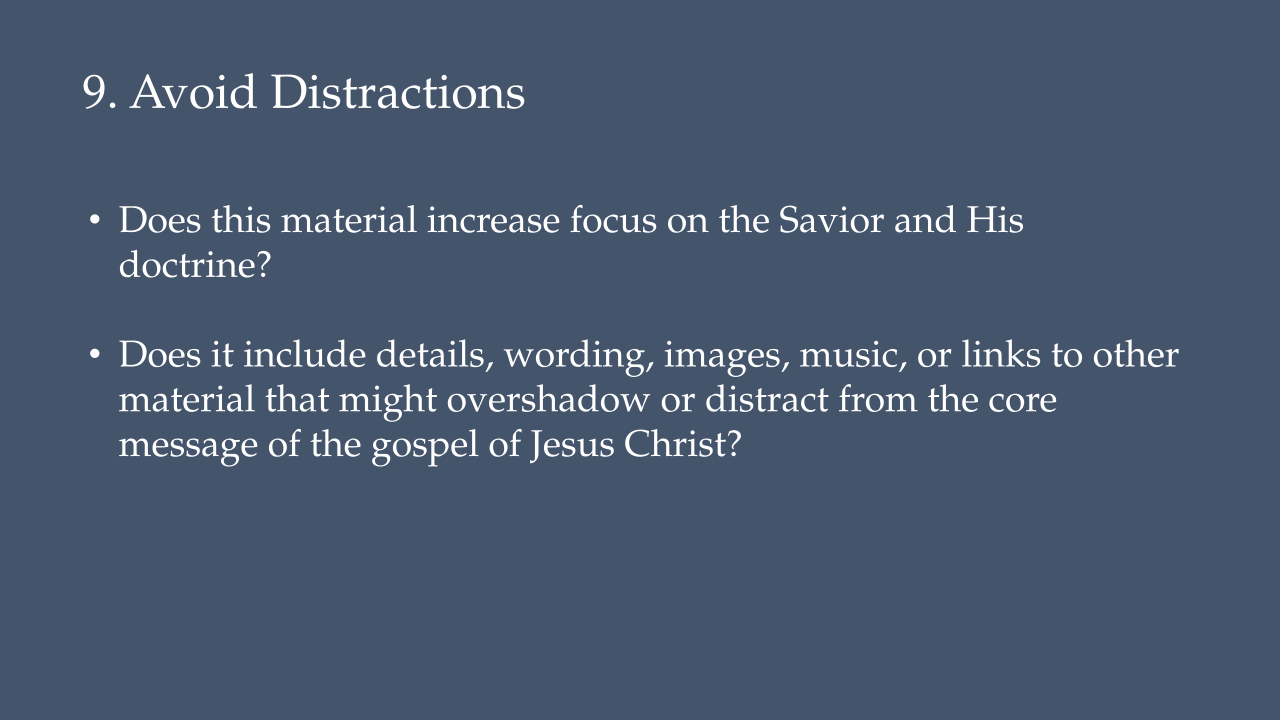
As you seek to apply this safeguard, you might ask yourself:
- Does this material increase focus on the Savior and His doctrine?
- Does it include details, wording, images, music, or links to other material that may overshadow or distract from the core message of the Gospel of Jesus Christ?
Conclusion
These safeguards we’ve discussed are not just editorial guidelines. They are spiritual disciplines.
They’re the scaffolding that supports the sacred work of teaching, writing, and proclaiming the doctrine of Christ in a way that will accomplish the Father’s work of salvation and exaltation.
As we apply them, we become not just communicators, but guardians of truth.
Doctrinal purity isn’t about dogmatism. It’s about being faithful and holding fast to the Word of God as he has revealed it.
I applaud the efforts of the FAIR organization and many of you and others who work so diligently to amplify the Lord’s words in purity.
Remember that President Nelson taught that pure doctrine is powerful. It changes the life of everyone who understands it and seeks to implement it in his or her life.
The doctrine of Christ helps us find and stay on the covenant path.
Let us be guardians of his doctrine. Let us teach with clarity, humility, and reverence.
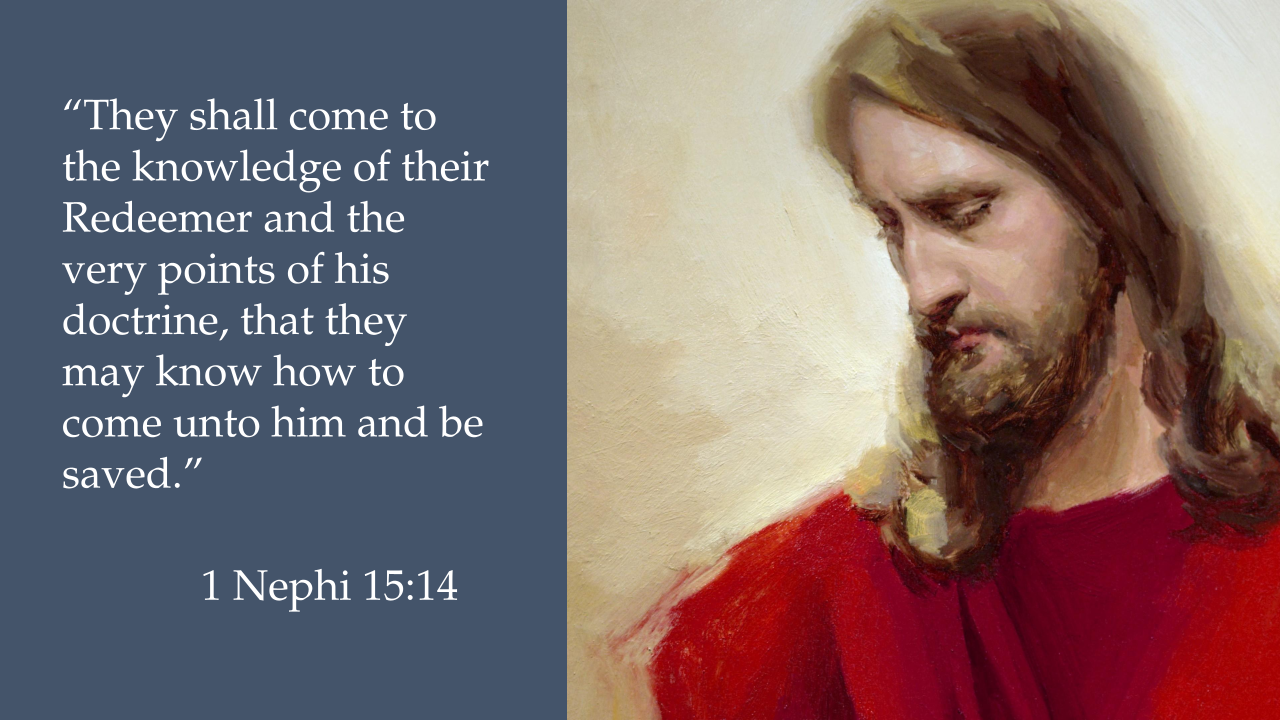
And let us remember the promise of Nephi that if we do, the we and those we influence, may by the Holy Ghost come to know a true knowledge of our Redeemer and the very points of his doctrine, that we may know how to come unto him and be saved.
I share these words with you and my witness, that Jesus Christ is the risen Lord, and that he leads his Church through his divinely appointed servants.
In the name of Jesus Christ, Amen.
