Jeffrey M. Bradshaw
Senior Researcher • Latter-day Saint Apologist • Writer & Podcaster
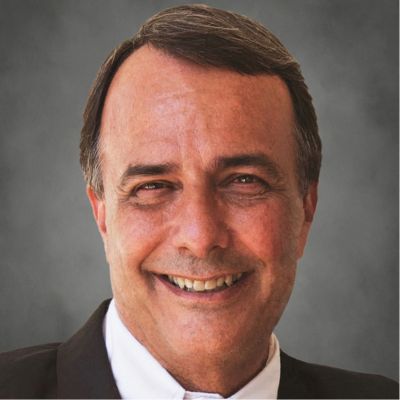
Jeffrey M. Bradshaw is a Senior Research Scientist at the Florida Institute for Human and Machine Cognition (IHMC) in Pensacola, Florida. He graduated from the University of Utah and earned a PhD in Cognitive Science from the University of Washington. His professional writings have explored a wide range of topics in human and machine intelligence, and his career has included research leadership at The Boeing Company and the Fred Hutchinson Cancer Research Center. Jeff has been the recipient of several awards and patents and has been an adviser for initiatives in science, defense, space, industry, and academia worldwide. 1 2
Jeff has written extensively on the Book of Moses, Genesis, and temple themes in the scriptures. His publications include In God’s Image and Likeness, a detailed scholarly commentary on the Book of Moses, and his work has appeared in BYU Studies and other publications. He has presented at FAIR conferences and meetings in the United States and Europe. 3
Jeff was a missionary in France and Belgium from 1975 to 1977, and his family has returned twice to live in France. He and his wife, Kathleen, are the parents of four children and sixteen grandchildren.
From July 2016–September 2019, Jeff and Kathleen served missions in the Democratic Republic of Congo Kinshasa Mission office and the DR Congo Kinshasa Temple. They currently live in Nampa, Idaho.
As a church service missionary for the Church History Department, Jeff is writing histories of temples in the DR Congo and the Republic of the Congo. For The Interpreter Foundation he is working to document the history of the Church in Africa on film. 4
Bio last reviewed:
October 7, 2026
Contributions at FAIR
Statement of Faith
Jeffrey M. Bradshaw’s statement of faith
I grew up in a loving Mormon home in Salt Lake City, with faithful parents and a close relationship to my brothers and sisters. Books were always important to me. I have loved the scriptures since I was a child, and continued study over the years has given me additional “reason[s] for the hope that is within [me].” 5
In retrospect, I have realized that the relationship between scripture and personal experience operates in both forward and backward directions: not only do the stories of scripture guide daily life but, in addition, what we have lived conditions our understanding of scriptural accounts. This has been especially true for me: it has been through direct participation in repeated experiences of God’s power and help from my childhood that the scriptures have become both intelligible and credible. I like what the Catholic scholar Timothy Luke Johnson 6 says about the immediate nature of the sources for one’s personal conviction of the historical authenticity of New Testament scripture:
For those living in a community where “signs and wonders” done in the name of Jesus are a regular occurrence, hearing of such deeds attributed to Jesus in the Gospel narratives is no surprise or scandal…
For those living in a community where the “Word of the Lord” [is] proclaimed through [men and women of God],… it is no surprise or scandal to hear… words [spoken in the same spirit] attributed to Jesus in the Gospels, for it is the same Jesus who speaks in both places…
For a community that lives in the presence of the resurrected [Christ], it is beside the point to debate whether Jesus “back then” predicted His death and resurrection, for His death and above all His resurrection are confirmed as real precisely by this community that lives by His power [today]. It is equally silly, in this context, to debate whether Jesus “back then” predicted His return, for that return is predicated on His being the living and powerful Lord, and it is in the light of that truth that we await God’s final triumph through Him.
To me, Johnson’s statement rings with authenticity. I know the scriptures are true because I have lived things that mirror, in their own small way, what I read there.
One of the delights of reading is to learn that others before us have felt, thought, and experienced what we ourselves are going through. In Sir Richard Attenborough’s moving semi-biographical film about C. S. Lewis, the Oxford professor meets up with a troubled student whom he had seen stealing a book. The student freely admits that his personal library is filled with pilfered volumes and then adds, defensively, “At least I read them… which is more than most people do”: 7
Lewis: So you read differently to the rest of us, do you?
Whistler: Yes, I do. I read at night. It’s the only thing breaks my concentration. All night sometimes. When I start a new book my hands are shaking. My eyes are jumping ahead . . . Does he feel the way I felt? Does he see what I’ve seen? You know, my father used to say . . . He was a teacher like you. Well, not like you. He was only the village schoolmaster.
Lewis: What was it your father used to say?
Whistler: “We read to know we’re not alone.”
To read the words of God in scripture and then, at times, to hear that same voice within my own soul is a supreme joy. Likewise, the spiritual power I sense in the speech and writings of godly men and women eradicates the isolating barriers of time, culture, and distance, and stirs precious feelings of high communion. Because of what I have read, seen, heard, and experienced over a lifetime, I can say with conviction that the moorings of my faith are as deeply grounded in reality as is my knowledge of the quotidian.
The little study of French I had during elementary and junior high school had put a fear of foreign languages into me, so when it was time to serve a mission, I fervently hoped that I would go to an English-speaking mission. I wanted to share the deepest convictions of my mind and heart with no impediment of expression. Instead, I was called to the Belgium Brussels Mission. I served in three cities in France (Arras, Reims, and Calais) before finishing up in Brussels. Although I didn’t realize my hope of overcoming my American accent, I did learn the language much more quickly than I expected. This reinforced my conviction that the Holy Ghost can enhance every learning experience: guiding us in our search for knowledge, helping us to see and recognize the truth, and bringing all things to our remembrance. 8
There is nothing like being a full-time missionary. I enjoyed immersion in full-time service to a people I learned to love, and was rewarded with wonderful life-long friendships and a strengthened testimony. I have enjoyed frequent visits to France and Belgium in the years since my mission. Our family has lived there twice, all of our children have attended school there, and two of my sons have served French missions. My wife Kathleen valiantly began a lifelong study of the language, in preparation for a future mission together.
After graduating from the University of Utah, and prior to my going to the University of Washington for doctoral studies, my wife and I spent a year at Brigham Young University. I was fortunate to have taken courses from Arthur Henry King that changed the way I read the scriptures. 9 As a research assistant to both Bruce L. Brown and Allen Bergin during that year, I also learned much about how to combine faith and scholarship. Both of these professors were important friends and mentors and, along with others from whom I took courses, provided perspectives I would need for the years of graduate school ahead.
Our family grew to four children during the most intense years of my graduate study. Our small children were a great source of joy to Kathleen and me, and helped me keep my balance and perspective during this time. I was the only married student in my class, and eventually also took on full-time employment, so my situation was very different from that of my peers. In addition, it seemed that every time I found myself poised to take a leap forward on my dissertation research, my church responsibilities would increase. However, in retrospect, I believe that this church service was exactly what I needed to keep my testimony strong and vibrant.
Moreover, had I graduated earlier, the professional opportunities that eventually opened up for me would not have been available. I have learned to appreciate what Elder Neal A. Maxwell once said: “Since faith in the timing of the Lord may be tried, let us learn to say not only, ‘Thy will be done,’ but patiently also, ‘Thy timing be done.’” 10 Sixteen years after we moved to Seattle for graduate study, I finally received my Ph.D in Cognitive Science.
My patriarchal blessing is structured in an unusually linear fashion, which has been a help to me as I have looked to it for guidance. Receiving that blessing was a beautiful and intense experience—it seemed as if a window opened up into eternity as I not only heard, but also, in a way that is difficult to describe, saw and sensed the import of the words that were spoken.
I review my blessing the first Sunday of each month, and it is always obvious which paragraph is most relevant to my current situation. I have tried not only to avoid things that would be inconsistent with the path it marks out, but also to actively seek ways I could help transform its promises into reality. For example, the blessing has helped motivate our efforts to maintain close ties to France and Belgium throughout the years; and has recently made writing on gospel topics a daily priority.
Prayer and priesthood blessings have also been an essential part of the choices Kathleen and I have made at critical junctures in our life. For example, the decision to change the focus of my graduate studies from clinical psychology to cognitive science was confirmed in a blessing from a choice friend, and I received needed reassurance about our first family move to France in a blessing from my father.
Major moves have been undertaken and minor crises have been averted because of spiritual impressions received in the course of prayerful discussions with trusted friends and family. The disaster of losing our home in Hurricane Ivan was transformed into a blessing because of guidance received through unexpected spiritual promptings.
During my daily work at the Institute for Human and Machine Cognition, I’m caught up in creating new science and technology ideas to complement human physical, cognitive, and social capabilities. It’s a dream job, and I wouldn’t want to trade places with anyone I know. However, it’s a challenge in the sense that I can’t stand still. Although it’s true that every innovation builds to a degree on the past, the pace of change is so rapid that I am constantly occupied with throwing away the results of recent efforts to accommodate new and better ones.
In addition to the obvious spiritual enrichment that I find in the study of the scriptures, it is wonderful and satisfying to work on something where knowledge is much more cumulative than in my daily work. Though, of course, there are exciting new findings that appear every day in scholarship on ancient scripture studies, I can have the sense over time of continually building up a deeper understanding of God’s outlook on the human situation. Complementing the keys that come from study are those that come from faith, as I relate the spiritual experiences of the past to divine guidance and teachings in the immediate context of my own life.
I like what Donald Knuth, a well-known computer scientist when I was younger, wrote in the preface to his book of Bible commentary: “I can’t say that my scientific background makes me a better Bible student, but I don’t think it’s a handicap either.” 11 The apostle Paul advocated a very empirical approach to spiritual things: “Prove [i.e., examine, put to the test] all things; hold fast that which is good.” 12 I feel greatly blessed to have been raised in a Church that values truth and goodness, and that, because of its unique status in being led by modern revelation, does not have any reason to fear the bright light of close examination.
There are many simple things that add to my faith. For example, Kathleen and I never would have discovered on our own the many little things we did on a daily basis that have contributed to the happiness of our family. These things we learned from Church friends and classes, and from spiritual intuitions relevant to our own specific needs. I enjoy rubbing shoulders with people in the Church, and our long involvement with missionary work has repeatedly demonstrated that living the Gospel makes each of us better and happier people. The vehicle of church service affords unparalleled opportunities to extend what we have learned to bless the lives of members and non-members.
Though I don’t want to minimize the many serious problems in the world that seem to be aggravating daily, what I have experienced of the goodness of God over a lifetime has, to my own surprise, given me a feeling of increasing optimism. Richard L. Bushman insightfully observed that for Joseph Smith, knowledge was not only a source of power and salvation 13 but also of comfort. 14
It is the same for me. Said the Prophet on one occasion, “I am glad I have the privilege of communicating to you some things which if grasped closely will be a help to you when the clouds are gathering and the storms are ready to burst upon you like peals of thunder. Lay hold of these things and let not your knees tremble, nor hearts faint.” 15 The Gospel is the source of my strength, my joy, and my hope for a better life here and hereafter.
