Summary
Panel discusses various criticisms of the Church and how to respond to those who make those arguments, or struggle with their own faith.
Panelist Introductions
- Brian Hales: Expert on polygamy and fundamentalism.
- Mike Ash: Author of “Shaken Faith Syndrome” and other notable works.
- Sarah Allen: Contributor with FAIR, active Reddit participant.
- Cassandra Hidalius: FAIR board member and author on Mormon fundamentalism.
This talk was given at the 2022 FAIR Annual Conference on August 4, 2022.

Dr. Jeffrey Thayne holds a doctorate in psychology from BYU and specializes in worldview analysis and apologetics. He is dedicated to exploring how values shape faith and gospel living. He runs an active practice and frequently speaks and writes on psychology, faith, and culture.
Transcript

Scott Gordon: Welcome to our Brown Bag discussion! Feel free to keep eating. I do want to introduce my fellow panelists. Here we have Brian Hales, who’s written extensively on polygamy and other things, and fundamentalism in other areas. Mike Ash, who’s written some awesome books out there like “Shaken Faith Syndrome,” and he’s got a new one out there that if you haven’t read, you really should. It’s on Revelation, and it’s very good. Sarah Allen has been a contributor with FAIR in our discussion on the CES letter, and is also an active Reddit participant. And then we have Cassandra Hidalius, who’s on our FAIR board and has also written on Mormon fundamentalism but not the way we think of it. She’s written quite a few things. So we thought we’d just have a discussion here, and so we’re going to ignore the audience, and we’re just going to talk among ourselves. We’re gonna have fun.

Navigating Difficult Questions on Polygamy
Scott: Okay, so I thought we’d just talk about questions that we get hit with a lot, and the first one I see over and over and over and over and over again is: Did Joseph Smith send men away on missions so that he could marry their wives? Brian?
Brian: Gee, I’ve never heard that question before. Actually, it makes such a great sound bite that it keeps getting continuously regurgitated throughout the internet, and it originated with John C. Bennett in November of 1842. He published this as an accusation against Joseph Smith.
And let me just make a plug for something that I have discovered as I’ve reviewed a lot of primary documents on the topic of plural marriage and more recently on the origin of the Book of Mormon, but I believe that when we are troubled by any topic in Church history or in the teachings, that if we can approach the primary documents with transparency… I’m making a plea for transparency. Don’t learn about the Church through secondary sources that may be skewing the data, but if we get into transparency, we will, I think, find a very wide berth, a very wide space for belief, a very wide space for faith to continue.
And so I make that plea, and it applies to this question very easily because if we study the 13 women who had legal husbands who were sealed to Joseph Smith, we discover that nine of those men were not on missions. Three of the men we don’t have a date for, so there’s no way to know. Only one of the men was on a mission. It was Orson Hyde; he was an apostle, he was over dedicating Palestine, he’d been gone for over a year. I’m guessing that that’s who John C. Bennett was thinking about when he made the accusation, but he made it plural, and there’s no evidence to support anybody but Orson.
But Orson came back, sustained Joseph. It’s interesting though that Marinda Nancy Johnson Hyde, who is the woman in question, we actually have two sealing dates for her, one while her husband was on a mission and one while he wasn’t, and that one is actually in an affidavit she signed, which would usually be more authoritative, so this is a false accusation from John Bennett. I wish it would die out, but it’s so easily repeated and so easily believed by people who don’t seek transparency in the documentation that I’m afraid it probably will continue with us. But please don’t be fooled.
Scott: Any other thoughts on that or how about the whole general thing with polygamy or teen brides? I know they’re the hard ones right at the very beginning. But that’s what we get, right? So how do we deal with things like that when we’re talking to people? What should we say when those things come up?
Sarah: They actually just posted one on our subreddit yesterday while we were in conference, asking how to explain polygamy to 14-year-old girls, considering Helen Mar Kimball.
The one thing that I normally point people to is Craig Foster’s paper from The Interpreter from a while back, assessing criticisms of early age Latter-Day Saint marriages, something like that. Sorry if I butchered the title. He goes through and he talks about how, you know, back on the frontier, that was actually fairly common for adult men to marry younger girls. And I know Brian has a lot of research on that as well about whether or not the marriage was consummated and things like that. So there are a lot of different ways you can touch on that to give that across, try to explain a little bit better while especially going on.
Cassandra: And so when I think about that, I think that for a lot of women today, it is hard to wrap your head around that. When I was 14, I was in middle school, I was playing volleyball and riding my bike, and it’s just so wildly different from how anyone would have thought about it in the past. And I mean, I’m 38 years old, I’m having kids, I have a graduate degree, I am worlds away different from the lifestyle of a woman on the American frontier in the early 1800s.
But I like to read old books, I like to try and get into the worldview of someone from several hundred years ago. And I mean, to be a woman a couple hundred years ago, it was like 60, 70, 80 hours a week of housework, to run a household, to pluck the chicken, to darn the socks, to wash the clothes, and all of that. It was a lot of hard work, it was watching children, bearing children was super dangerous, and just there wasn’t nearly as much of the mindset of “I can grow up and self-actualize into a woman with this full-fledged personality and my individualism.”
It was more of, well, how can I find a comfortable home, hopefully with a nice husband? I would like to have some children, and you know, hopefully there’s enough money to buy a sheep to shear the wool, to spin the yarn, to darn the socks.
And when you think about it that way, to me or the book Pride and Prejudice, when Charlotte Lucas, she’s a spinster, she hasn’t been able to get married, and she in the movie with Keira Knightley has her saying that, you know, “Lizzy, I have to marry this doofus guy because I need a home, I need protection, I need security. I’m scared, I’m a burden to my parents, they can’t afford to feed me and keep me and clothe me anymore.”
And that stinks. I’m really glad I never had to make that kind of a calculation, but it doesn’t help to pretend that that never was the calculation for anyone who ever lived. And so reading through, again, going to primary documents, not just the third, fourth, twentieth hand how they’re reported on Reddit, these women saw things differently, they saw these opportunities differently, and were largely happy. A lot of the polygamous women of my own ancestors, they had it rough, but this was your life and you made the most of it and you found meaning in it.
Approaching Struggles with Faith
Scott: So more generally, if someone comes up to you and they’re struggling with their faith because of something they’ve read on Reddit or wherever, what do you say? How do you approach them?
Mike: I think the most important thing that I always try to point out is that there are answers to these challenging questions, and just because that person is not familiar with the answers doesn’t mean that there aren’t answers. It’s not a slam dunk automatically against the Church, and that there are scholars, there are faithful members that have researched this, that have known about these things for a long time, and have come to a different interpretation than what critics would present the data as.
And that’s, I think, unfortunately, one of the things I see frequently is that many critics sometimes like to project that they are the objective ones, that they’re just letting the facts speak for themselves, and it’s just not true. You know, there’s a spin always on it, and there’s different ways to understand this. And I have found, you know, through my years that there’s every challenging issue that’s out there, there’s a way to understand that in the context of faith, of believing that Joseph Smith was a prophet, that the Book of Mormon is true, that God exists, and that I have never found the silver bullet that would destroy the testimony. There’s always a way to understand this logically.
And so that’s the most important thing, I think, that people need to understand, and then provide some resources. And of course, that’s what’s wonderful about FAIR, we have this great category of resources.

Is the Church Hiding Challenging Information?
Scott: But isn’t it true that the main job of the Church History Department to keep this information from the members? It’s all hidden?
Mike: I might address that real quick. My thoughts are on it. These challenging questions have been known for a long time by people that have studied it. When the Church puts together the curriculum for lessons, it’s to help, it’s to bring people to Christ, that’s what it’s all about. And there’s a lot of fun things we could talk about or interesting things from history, or even ancient history, about how the Old Testament people lived or New Testament people lived and so forth, but those are kind of ancillary to what’s important is bringing people to Christ.
And so we don’t have these things many times brought up in the lessons. And of course, if you go back 100 years, even 200 years, if you’re learning to come to Christ, you may not know about some of these things yourself. Even if you become a Church leader, you may be, you know, I hate to use the word ignorant, but that’s kind of what happens, is we don’t necessarily know about some of the things. And so all of a sudden, it becomes hidden just because somebody, you know, is unaware of it as they’ve gone through different callings. But that doesn’t mean that it hasn’t been out there and available to anybody that’s wanted to know.
Cassandra: And I was just thinking about what we heard from Jed Woodworth this morning about the Saints volumes, and I think one thing that everybody loves about them is that they are so open, so real, that people doubted, people made bad choices, and they still came through it. And as I, I’m pretty sure it’s Terryl Givens in one of his books, he put it that, yeah, there’s going to be enough facts and evidence and indications that you can put all that together into a conclusion that you don’t believe in the Church and it’s not true. There are also plenty of facts and evidence and conclusions that you can put it together into the conclusion that it is true. And that’s one of the tests of mortality to exercise our curiosity and our intellect and go find information. And then it comes down to what do you value? What are you pursuing? What do you choose to believe?
Brian: Let me just respond on the topic of polygamy because I’ve heard from a lot of people who said the church lied to me about Joseph Smith and polygamy. And this, of course, when the gospel topic essay came out in 2014, a lot of people were not aware.
And I’ve done some research on that to try to figure out what happened, and I think that the chronology goes like this: 1904, President Joseph F. Smith stops authorizing any plural marriages. By the 1920s and ’30s, there are still people, they’re all excommunicated or outside of the Church, but they want to practice polygamy, they’re fundamentalist polygamists, and they start to unite together in the ’20s, and by the 1930s and ’40s, there’s thousands of these people, and they’re getting a lot of media attention, and it’s really annoying to President Heber J. Grant at the time.
And so he sets up a policy that is, we are a monogamous church, we are not them, we’re not going to talk about polygamy. And on the history side, the historians are not going to be pursuing polygamy because we’re a monogamous church now.
And this goes on and on for decades. And then about the year 2000 or so, the internet shows up, and not everything on the internet is false. And so the Church has to play a little bit of catch-up, which means that we start to acknowledge that we did polygamy, but the policy had been in place for many decades. And if you know how the Church works, the church leaders don’t change policies really fast or very easily. But the Church did change it very quickly, and that’s why we have the gospel topic essay, which now allows us to talk freely about that topic.
And it wasn’t like they were trying to hide it. It wasn’t like general authorities were given a portfolio that says, “Here’s all the stuff we don’t talk about, Ok? And all the secret information.” That isn’t it.
In fact, Scott and I were in a meeting with some of the Brethren with the Big B, and one of them made the comment that, “Hey, you know, we’re learning about these details of these controversies with everybody else because they’re involved with administration and with the priesthood ordinances and things. That’s where their focus is.”
And so the idea that the Church lied to somebody is simply just not true. There have been policies that maybe could have been reversed a little earlier, but we’re all moving together to be transparent. Today it’s just wonderful that the Church is being totally transparent with their documentation, the things that are uploaded and digitized. It’s amazing that they’re not trying to hide anything, even if it makes somebody look kind of bad, they still want the truth out there, and it’s a blessing to us.
Sarah: I think one of the big problems today also is people just read like the headlines and they don’t read the actual articles. They’ll maybe look at a couple of bullet points, and then they’ll just move on. So with the way that headlines are so twisted these days as well, it is really important that you have to do the work. You have to read the articles. You have to look at the footnotes. You have to go back to the primary documents as often as possible. You have to try and figure out what was really going on.
And like President Nelson said recently, you know, the Lord loves effort on his behalf, and that is part of what this entails. You have to put in that effort. But if you do, then you’re going to find all the information that you need, and you’re going to be able to process it in a way that makes sense to you. You’re going to be able to go through it and you’re going to be able to find what you need and get the answers because they are out there. Like Mike’s saying, they’ve just been out there for ages and ages and ages, and they’re everywhere. You just have to know where to look for them, and you have to sit down and actually put in the work.
And I know a lot of people don’t like studying history or they don’t like studying the gospel, and you know, they think it’s boring. But you have to put in that effort to do it.
Scott: So I’ll tell you what response I’ve gotten to that, and I agree with you 100%. But they say “you’re gaslighting me and you’re blaming the victim because I’m a victim here.” And I’ve been told that to my face. “You just believe you’re victim blaming.”
Sarah: So my response to that is, you might not necessarily should have known it, but you could have known it because I found all that stuff just reading the library books before the internet was even really a thing. It was all out there. So if I could find it, so can you.
Scott: I know, starting with FAIR early on, just from the very beginning of my career, I would always read the footnotes. So when I ran into a lot of new stuff I hadn’t seen before over the years, I’d look at it and say, “Well, let me read the footnotes.” And so I’d read the full article or the full whatever it is that came out from Gerald and Sandra Tanner or whatever, and it was when you look at the full articles, 80, 85% of the time, it answered the question.
Which made me wonder then when I was watching someone’s podcast, I won’t mention whose, but I happen to just catch it, and he was really promoting Gerald and Sandra Tanner’s books, and I was thinking, gosh, all you have to do is look at their sources where they get their information from, and you see how wildly misquoted or the original sources.
Motives Behind Criticism
Scott: I’m going to ask a really philosophical question here. Do you think those on the various podcasts and YouTube videos and things, do you think they honestly believe these things, or do you think sometimes they know that there’s alternate answers for it? And if they do know there’s alternate answers, why do you think they promote it? Or, I know you don’t know the answer, but just your speculation.
Mike: So, I’ll throw in my speculation. I have a tendency to try to think the best of people, and so, I try to give people the benefit of the doubt. Every one of us listening, sitting here, whatever, we all do things that offend people. We all do things wrong. We exaggerate, we withhold information, and it’s just part of human nature. So, I try to be a little bit easy and think, okay, you know, this person, that’s maybe part of their personality.
Having said that, there are a number of instances where I know, having discussed with that person, these issues, that they know for a fact that what they’re saying now doesn’t really hold water, that there’s some powerful arguments to refute it. And then they frame it in a way that I can’t see how they don’t know that, especially since they’ve seen the answers before.
So, there are instances of that, and that’s very unfortunate. And again, you know, I don’t want to be too much of a judge on that person because I don’t know what’s going on in their head, why they made that kind of decision, because we all make bad decisions, so I think overall, most critics probably don’t accept the Church for their personal reasons, and they could still be good people, and that’s fine. But, I have seen some instances where I think it’s blatant, because I’ve already discussed this with them, and they know that there’s answers when they claim that there isn’t.
Cassandra: Do you remember that old classic They Lie in Wait to Deceive about Professor D. J. Nelson, the Egyptologist? There are cases, and this is an older book, you can probably find PDFs of it online, and this was decades ago. And this guy, D. J. Nelson: “I’m a professor of Egyptology, and the Book of Abraham is false.” And this book went into his background, found out, no, he’s more like a promoter of mystical crystal science at a community college. There was nothing. So there have been cases of critics who were proven to be total bunk and inflating their credentials.
And there was a lot of that in the kind of old-style evangelical anti-Mormon movement. And there are good reasons to think that some of today’s prominent critics protested it too much when they say this is all intellectual, this is all about the facts, this is all about a totally rational reading of history and the facts and all of that. And when in fact there’s a lot more going on.
A few months ago, President and Sister Nelson did a fireside and devotional for young adults and said, “Now please hear me when I say do not be led astray by those whose doubts may be fueled by things you cannot see in their lives.” I think that that could be applicable both to critics who actually have other motives than pure unadulterated rationality, none of us have that going for us all the time. And also that maybe, you know, maybe their feelings against the Church are informed by difficult things that happen to them or has some mental difficulties or just family dynamics, just things that we don’t know. “In the quiet heart is hidden sorrows that the eye can’t see.” I guess where that gets you when you’re trying to process accusations or help a loved one whose testimony is faltering, is that emotion definitely plays a role.
Someone I love right now is in the phase, “just look at the history, look at the facts, look at this Reddit thread, and it tells you, they’re plain as day, you can’t deny that this shows the Church was a fraud and Joseph Smith was a charlatan.” But what is underlying it is the search for a nice narrative that fits a hole in that they’re trying to fill, if that makes sense. A story to be able to latch onto that fills a need for them.
So we can be sensitive to that. They might not be open to having their story challenged right now, but maybe try to find other ways to help them meet that need and fill that hole. Be loving, be open, and eventually, hopefully there will be a way to be like, “So here’s a little more context. Here’s a reason why your narrative is actually pretty not true.”
Scott: Well, I almost wonder sometimes if they do the same things they accuse us of doing, rightfully accuse us of doing, where we’ve already made up our minds about it, so we then selectively accept the evidences that support our position and then reject the evidences that don’t support our position. And, and we do that. I mean, I admit we do that, everybody does.
Brian: A few months ago, or maybe over a year ago, Larry Foster, he’s a professor, non-Latter-day Saint, who writes on polygamy and has done some really good research, but he wrote an article where he referred to some books that I’d written and my conclusions, and he said basically that professional historians agree with him, amateur historians agree with Brian Hales. And, I thought to myself, you know, that really isn’t it. There’s lots of professional historians who do concur with most of my conclusions. But the thing that I have found in interpreting the data on plural marriage, and an excellent example is plurality of husbands.
How many of you are wondering why Joseph was sealed to other men’s wives; legally married women were sealed to Joseph Smith, it’s been a big controversy and it was the one thing that drew me into studying this back in 2007, this question.
And what I’ve discovered is there’s no unambiguous evidence to support that Joseph Smith actually was a husband at the same time these women had legal husbands. No unambiguous evidence, no matter how many videos Dan Vogel makes, no matter how many articles are written, there’s no unambiguous evidence.
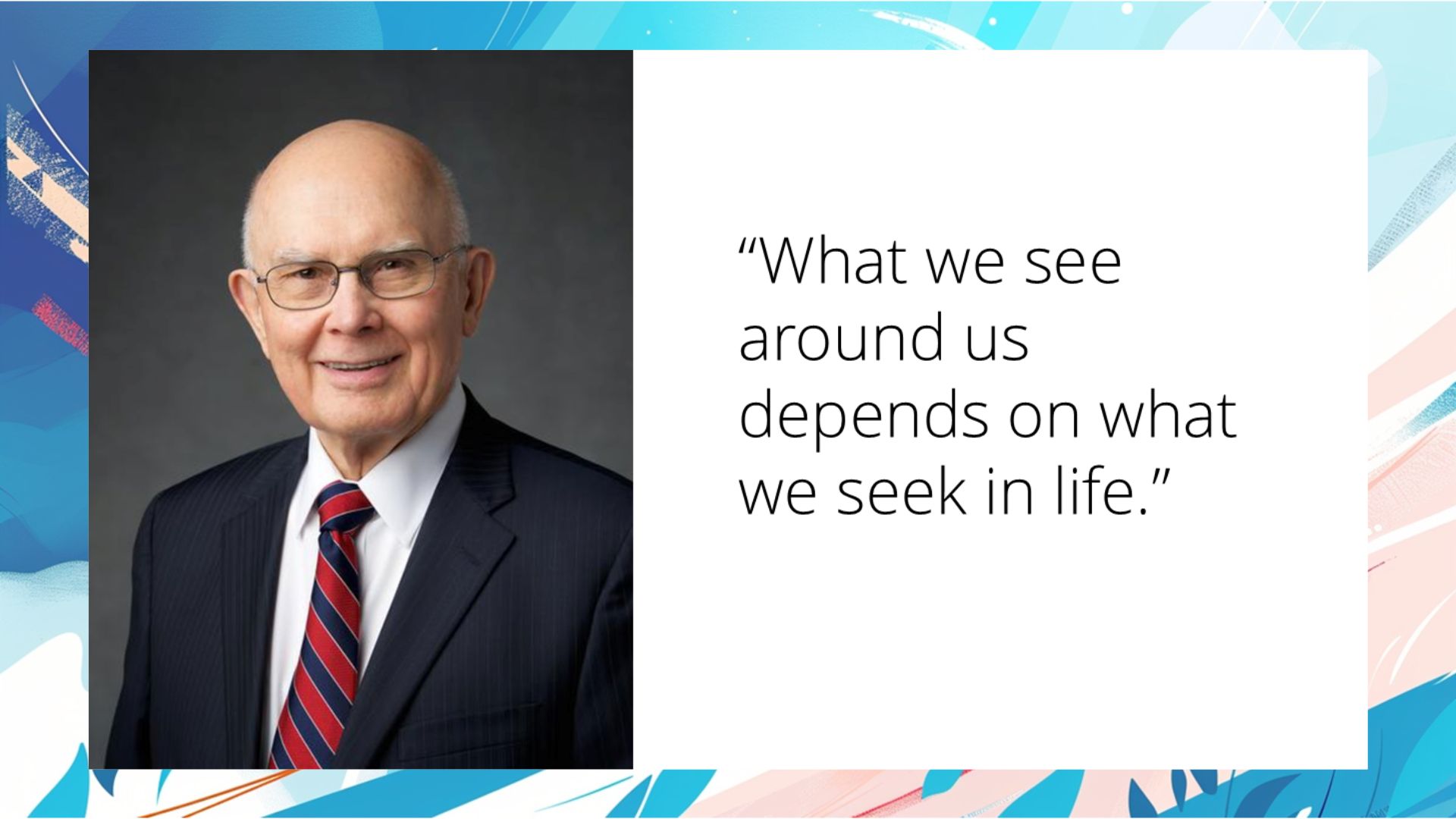
But what we find is that interpreting this ambiguous evidence is that if you already believe Joseph was a fraud, you will interpret it one way. If you believe he was a prophet, you will interpret it another way. In other words, the most important element, I think, at least with this data in interpreting it, is what your prior beliefs are as you’re going into it.
Cassandra: Your worldview drives your analysis.
Brain: That’s what you were saying though, right? And, and so it’s very prominent to me that, on the topic of, we call it polyandry, but it’s such a confusing word, like the plurality of husbands never happened. It would have been an explosive doctrine. And had Joseph even taught it, let alone practice it, somebody would have complained and nobody did. It’s the elephant in the room of these people who say Joseph practiced it.
But it’s very evident as we look at the topic and the evidences that the critics will cite, and it took me a few years, when I started to research that topic, I realized that every author that had published on Joseph Smith and plural marriage, up to my books coming out 10 years ago, had described Joseph Smith practicing polyandry. “Yeah, he wanted to be a second husband to these women and, yeah, everybody went along with it” was the way they told the story. It took me a while to realize that every one of these authors either stated or portrayed Joseph as a fraud and an adulterer. And so, the conclusion for me was, well, if you already believe Joseph is a fraud and an adulterer the idea that he would just add polyandry or a plurality of husbands to his already teaching of plurality of wives so he could expand his sexual opportunities, that didn’t take a lot of convincing because there was no unambiguous evidence.
And once that I realized that it’s like, okay, let’s go back to what the evidence is saying. And as I’ve mentioned, there, he didn’t do it, he wouldn’t have done it, it would have been adultery. And these people that are just too easily convinced because they already believe that that’s something that he would do because he was a fraud and an adulterer.

Outlandishness and Mormon Popularity in Media
Scott: You know, I think one other thing that drives our modern critics are clicks, because it’s a revenue stream, you actually get paid per view and so the more outlandish you can be, I think the expression for it, please forgive this term, is outrage porn. You want to get people outraged about something so that that way they watch it, they share with their friends. It’s a great missionary tool. Maybe we ought to, you know, try and do that.
Cassandra: Mormons are exotic and weird enough that they keep making TV shows about us because it sells.
Scott: Yeah, we’re suddenly very popular in television. There was a comic that said “why aren’t there more television shows that include Mormons?” “Oh wait, stop!” So it’s interesting.

The Book of Abraham: A Controversial Yet Integral Aspect
Scott: Let’s pivot slightly to one that Cassandra just mentioned in passing: the Book of Abraham.
Isn’t the Book of Abraham really the nail in the coffin against the Church about Joseph Smith being a prophet?
Sarah: No, no, I love the Book of Abraham. I think it’s fantastic and, there’s a ton of different areas you can study on it and there’s a ton of different questions, but I have not found anything in years and years of study on it that in any way is distracting or weakening my testimony at all.
Scott: But according to the CES letter, there are 12 Egyptologists that said it was false. Of course, that was in 1920 something.
Sarah: Yeah, well, when he was going through it in the CES letter and citing those Egyptologists, I think the youngest one was born around the time of the Civil War, so he goes on and on and on about what modern Egyptologists say and then doesn’t quote any of them.
Mike: Also, I have to point out that, you know, again LDS Scholars, I think there’s basically two different approaches on the Book of Abraham for believing Scholars. Dr. John Gee has done some wonderful work on it and Kerry Muhlesteinand others, point out that that there’s a lot of things that actually mesh very well with what we find from Joseph Smith from not only the narrative, the Abrahamic Narrative, but even sometimes with some of the iconography from the facsimiles.
So there’s things that are pretty hard to overlook that “Joe Smith guessed right on it.” The other one, and it’s interesting that on the Gospel Topics page, lds.org, it mentions this one and the other one, what many people call the pure Revelation Theory. And we know that Joseph Smith, I think most people know that are here, that Joseph Smith didn’t look at the characters of the plates to translate The Book of Mormon, that he used the Urim and Thummim, the Seer Stone to get the translation, and of course he received the Book of Moses and the parchment of John, and all these other things through revelation.
And so it’s very possible that the abrahamic papyri also served somehow as a catalyst or in some way to get revelation of actual text that might have existed previously or teachings or something along those lines. And so there are some really good arguments for both of these. And again they’re logical, they’re scholarly and they fit within a paradigm that still accepts belief in it as Cassandra and Brian already pointed out, that many times it’s the world view that drives us; it’s the tail that wags the dog. And so depending on what you choose to believe you’re going to find ways to get these things to fit either with belief or unbelief. So really, belief comes down to choice ultimately, it’s where our heart is, and so if we want to follow the spiritual path, we can find that there are very logical, rational, scholarly answers for all of these challenges.
Brian: Let me just add, as I’ve studied the origin of the Book of Mormon, Joseph Smith generated over 400,000 words that he considered to be revelation. 270,000 were the Book of Mormon, and the Book of Abraham is about 5,200 words. So, it’s less than one and a half percent of all of the revelatory words Joseph Smith generated.
The question, of course, is what’s the relationship between this—I call it a revelation—and the papyri that he had. And I’m not going to explore that. The only way Joseph would have known of a relationship is if God had told him, because he didn’t know the hieroglyphics; he didn’t know what they meant. But the point I would make is that here we have less than one and a half percent of all of his revelations, and people want to just reduce the question of Joseph as a prophet to this one little sliver of what he did as a prophet. And really, this reductionist mentality is inadequate if the explanation doesn’t expand to tell us how did he generate the Book of Mormon or all of these other things that he did that are just as much a revelation as the book of Abraham.

Responding to Doubts and Questions of Loved Ones
Scott: So, I’m going to ask a very hard question here. In the last five minutes, let’s say your spouse, your child, grandchild, best friend, somebody came to you and said, “I’ve been seeing things on the internet, and I just don’t think the Church is true anymore.” What would you say? How would you respond or what would you do?
Mike: Well, I mean, number one, the greatest laws are to love our fellow man and God. So, “we never give up. We never surrender,” to quote from Galaxy Quest. But, you know, I have people in my family that no longer believe in the Church, and I don’t love them any less. And everybody has to find their own happiness, make their own peace. And I don’t know what’s going on in somebody else’s head, you know? Why is it that I see logical arguments for belief, whereas they see logical arguments against belief? I can’t get in their heads; I can’t get in their hearts. And so, I have to accept that that’s the path that they’re deciding makes them happiest. And I hope that they find the greatest happiness in that.
I wouldn’t surrender my beliefs by saying, “Yeah, I think you’ve made the best choice.” Like I said, I see the arguments, and I would try to provide options if they wanted to read those or watch those or find some sort of support.
Everything that we’re involved in with the gospel and the pre-mortal existence and the hereafter is about unity, and it’s about becoming one with each other. And I think that’s part of the mortal testing ground, and we’re going to have these challenges. But definitely, never give up that love and support for anybody.
Sarah: I was gonna say something similar. I think that just showing each other love and respect and if they do have questions that they want answered, do your best to help out. But otherwise, you know, just keep loving them, keep praying for them, and just let them know that doesn’t change anything.

Parental Perspectives/Eternal Perspectives
Cassandra: This is an answer to a slightly different question, but my point of view right now is very colored by being the mother of small children, and Mike’s the one who wrote this article years ago about inoculation. And there is a lot of value in being the first one to bring up the challenging questions when you’re teaching kids, when you’re a teacher at Church or of youth.
And you don’t have to be afraid of it, just do your homework and present it in a truthful but faithful context, and that can really go a long way to head off later problems.
Scott: My thought always is that life is eternal, and we too often mistakenly go back to life is just what we see here. And so what choices people make now we may feel are unfortunate, but there’s a lot of time for repentance, so on our part and on theirs, so I think for me, it makes it easier to accept whatever decisions they make now by thinking, that’s gonna be their decision for now, but things may change at some point.

Final Words of Encouragement
Scott: Hey, I want to thank all of you for your time. Any last minute words or are you good?
Cassandra: So, one more thing from President Nelson again, that devotional: “If family and friends should step away from the Church, continue to love them. It is not for you to judge another’s choice any more than you deserve to be criticized for staying faithful. And so, don’t let it become a point of acrimony. I mean don’t sit there and take it if they make accusations that you’re a terrible person for continuing to believe in this terrible Church, but also, just, “I love you. You are a grown-up and a rational being who can make this choice for yourself. Let’s find a way forward to still be loving and have a good relationship.”
Scott: Thank you very much. Thank you, everybody.
Audience Q&A
coming soon…
Endnotes & Summary
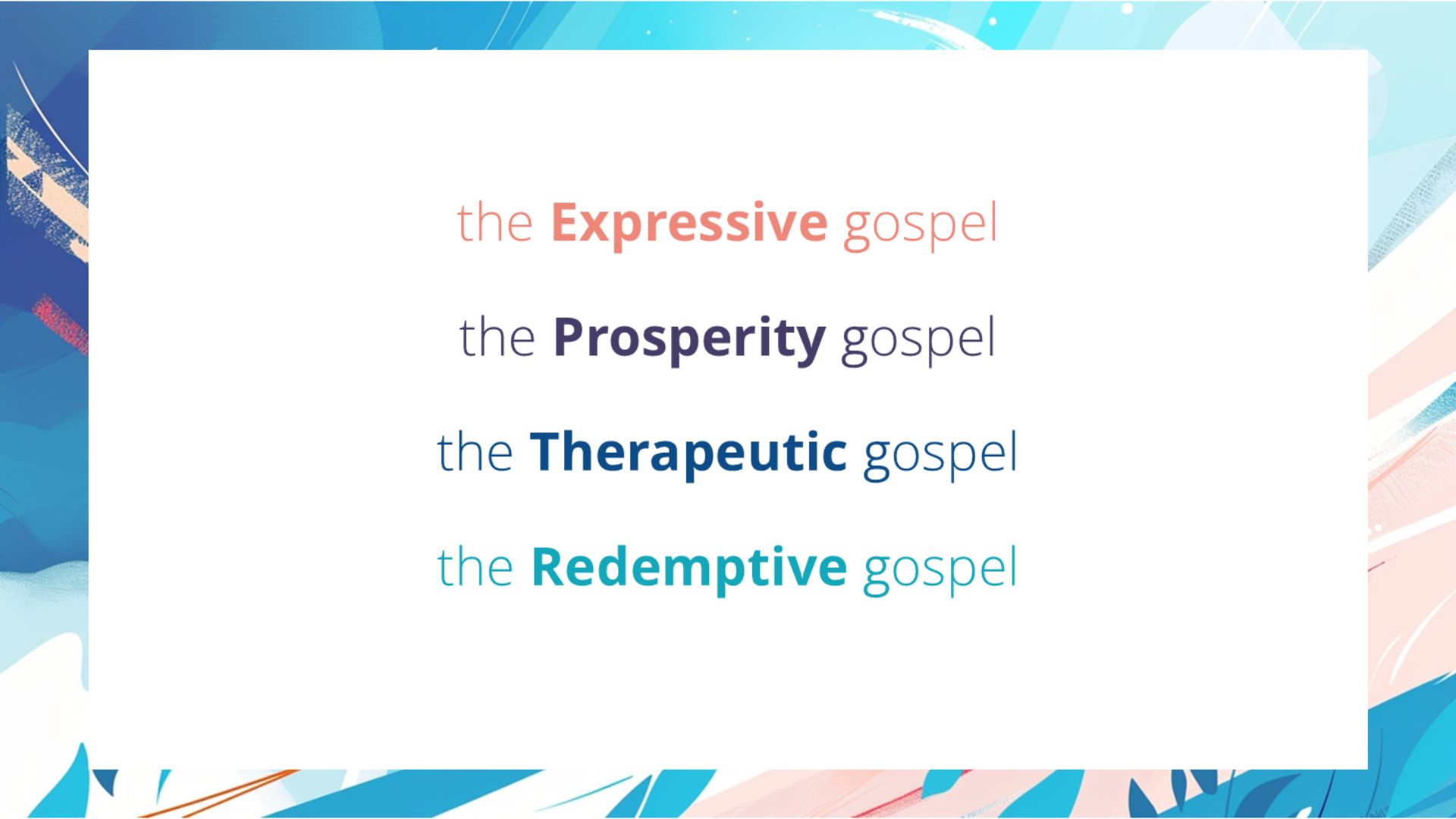
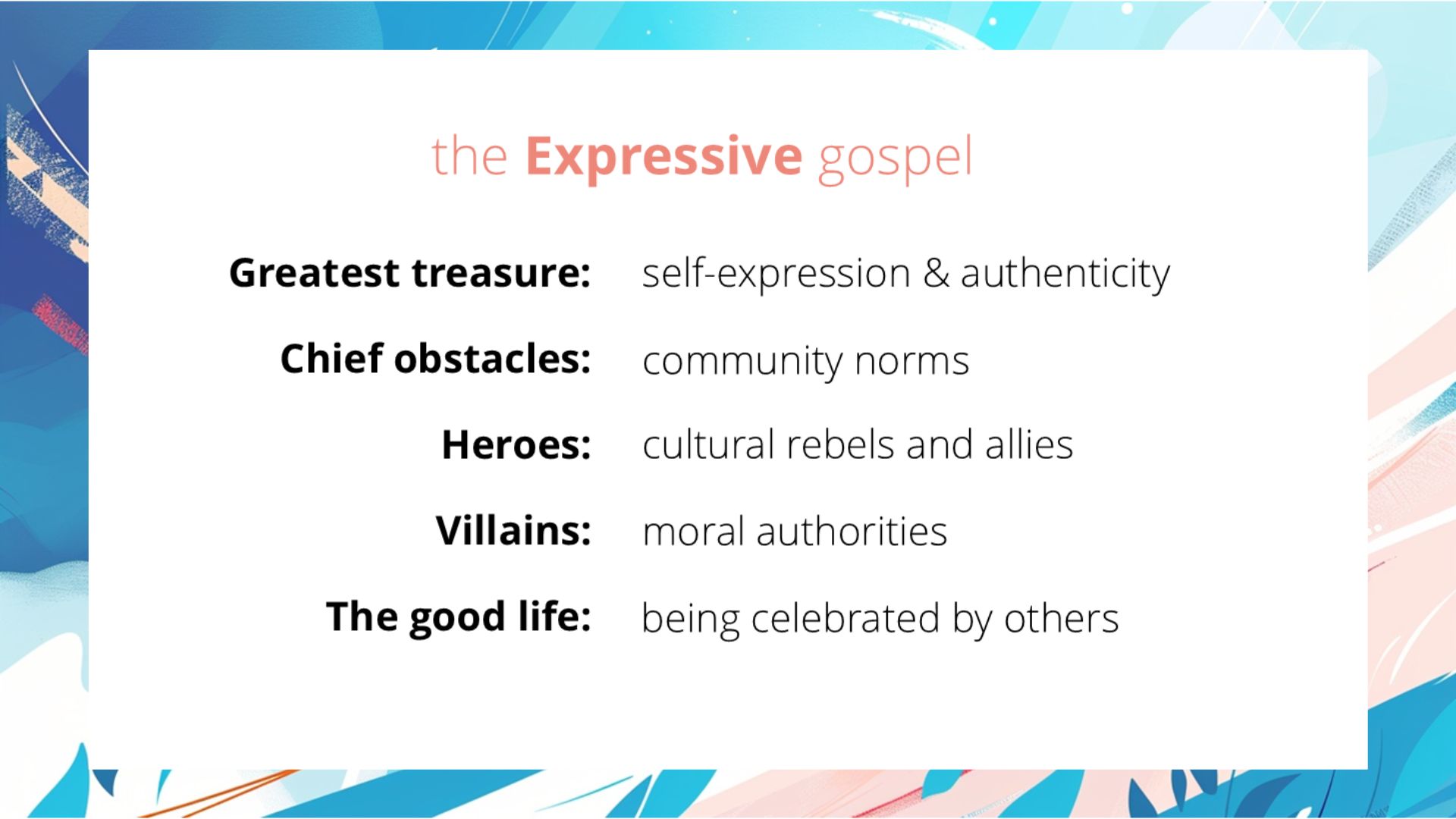
Jeffrey’s talk, What Do We Treasure?, explores how different worldviews shape our understanding of the gospel and influence what we see as the “good life.” He identifies four primary worldviews—the Expressive Gospel, Prosperity Gospel, Therapeutic Gospel, and Redemptive Gospel—each defining success and fulfillment in different ways. While Expressive Gospel prioritizes self-expression, Prosperity Gospel equates righteousness with financial success, and Therapeutic Gospel emphasizes emotional well-being, the Redemptive Gospel teaches that true success is found in reconciliation with God. By examining these perspectives, Jeffrey warns that misplaced values can lead people to misunderstand the gospel’s true purpose.
The talk highlights how Gospel Counterfeits arise when cultural influences subtly redefine gospel vocabulary and shift the focus away from Christ. He provides examples of how phrases like non-judgmental love and authenticity take on different meanings depending on the worldview, leading to confusion and potential spiritual drift. Many individuals, even those originally converted to the Redemptive Gospel, gradually adopt cultural values while still using gospel language. This process results in a faith that, while still appearing religious, may no longer align with the teachings of Jesus Christ.
Jeffrey concludes by emphasizing the need for spiritual discernment and doctrinal clarity. While Gospel Counterfeits persist because they offer comfort, validation, or worldly success, the Redemptive Gospel calls for transformation through Christ. Faithful discipleship requires prioritizing God’s values over societal expectations, measuring spiritual success by personal sanctification rather than external achievements. By recognizing and rejecting distorted versions of the gospel, believers can ensure their faith remains rooted in eternal truths rather than cultural trends.
All Talks by This Speaker
coming soon…
Talk Details
- Date Presented: August 9, 2024
- Duration: 26:31 minutes
- Event/Conference: 2024 FAIR Annual Conference
- Topics Covered: Redemptive Gospel, Prosperity Gospel, Therapeutic Gospel, Expressive Gospel, gospel counterfeits, authenticity, covenant-keeping, LDS worldview, personal fulfillment, character transformation, reconciliation with God, faith crises, gospel vocabulary, Maslow’s hierarchy, LDS apologetics
Common Concerns Addressed
Does our worldview shape our perception of the gospel?
Yes. The talk explains how different worldviews—such as the Expressive Gospel, Prosperity Gospel, Therapeutic Gospel, and Redemptive Gospel—shape what we see as the “good life.” If we prioritize self-expression, material success, or personal fulfillment as our highest values, we may misunderstand the gospel’s true purpose. Only by aligning our values with what God values can we accurately see and measure our lives.
How does the Prosperity Gospel distort our understanding of spiritual success?
The Prosperity Gospel promotes the idea that financial security, professional success, and life milestones (such as marriage or church leadership) are evidence of living the gospel correctly. However, the talk points out that this belief leads people to doubt their faith when they face financial struggles, health problems, or missed life milestones. The gospel’s true purpose is not material prosperity but reconciliation with God.
Why do people feel like the gospel is “not working” for them?
The talk shares an example of someone who, due to chronic illness, has been unable to serve a mission, marry, or pursue a career. She questioned, “Why is the gospel not working for me?” This question assumes that the gospel should bring temporal success, which is a Prosperity Gospel mindset. In contrast, the Redemptive Gospel teaches that gospel success is measured by becoming Christlike through repentance, covenant-keeping, and enduring hardships with faith.
How does the Therapeutic Gospel define human flourishing?
The Therapeutic Gospel frames personal fulfillment as the ultimate goal, prioritizing emotional well-being, self-esteem, and relational security. While these are good things, the talk emphasizes that they do not automatically lead to moral transformation or reconciliation with God. The gospel’s purpose is not merely to meet our psychological needs but to refine us spiritually through Christ’s grace.
Does suffering mean the gospel has failed us?
No. The talk highlights that Jesus Christ did not fulfill any level of Maslow’s hierarchy of needs, yet He fulfilled the greatest purpose—overcoming sin and death. Likewise, gospel living may involve suffering, sacrifice, and trials, but these experiences bring us closer to God. The Redemptive Gospel teaches that the ultimate goal is not a comfortable life but transformation into Christlike beings.
What are “Gospel Counterfeits,” and why are they dangerous?
The talk defines Gospel Counterfeits as worldviews that mimic the gospel’s language while subtly distorting its purpose. Examples include:
- The Expressive Gospel, which values self-expression over covenant-keeping.
- The Prosperity Gospel, which equates success with righteousness.
- The Therapeutic Gospel, which prioritizes emotional well-being over spiritual transformation.
These counterfeits lead people to abandon the gospel when their expectations are not met, believing it has failed them, when in reality, they were following a distorted version of it.
How does redefining gospel vocabulary create confusion?
The talk explains that when different worldviews use the same words but assign different meanings, it leads to misunderstanding and conflict. For example, non-judgmental love in the Redemptive Gospel means “not condemning people”, while in the Expressive Gospel, it means “never evaluating actions.” Similarly, authenticity can mean either “being true to my desires” or “being genuinely Christlike.” When core gospel terms are redefined, people may think they are embracing the gospel when they are actually following a counterfeit.
Can people drift away from the Redemptive Gospel without realizing it?
Yes. The talk warns that even those who were originally converted to the Redemptive Gospel may, over time, absorb the values of the world through media, social influences, and personal priorities. This gradual shift can cause people to unknowingly embrace a counterfeit gospel while still using gospel language. The result is a faith that no longer aligns with Christ’s teachings, even though it may still feel religious.
Why do Gospel Counterfeits persist?
The talk explains that Gospel Counterfeits persist because they align with cultural values. They offer comfort, validation, or personal success, which makes them appealing. People often prefer a gospel that promises material blessings, self-fulfillment, or cultural acceptance over one that requires self-denial, sacrifice, and faith in Christ’s grace. This is why Prosperity, Expressive, and Therapeutic Gospel narratives continue to be popular, even when they ultimately fail to deliver lasting spiritual growth.
How can we protect ourselves from Gospel Counterfeits?
The talk encourages cultural vigilance and spiritual discernment. Respect and kindness remain important, but so does clarity in doctrine. The best way to avoid counterfeit gospels is to:
- Prioritize reconciliation with God over self-fulfillment.
- Recognize when gospel language is being used to promote worldly values.
- Measure gospel success by spiritual transformation rather than external achievements.
By maintaining a Christ-centered perspective, we can ensure that our faith remains rooted in the true Redemptive Gospel, rather than cultural distortions.
Apologetic Focus
Jeffrey’s talk provides a theologically grounded apologetic response to misconceptions about the gospel and its role in shaping personal faith. By examining different worldviews and their influence on gospel understanding, he demonstrates how modern distortions—such as the Prosperity Gospel, Expressive Gospel, and Therapeutic Gospel—lead individuals to misunderstand or abandon the true gospel of Jesus Christ. This talk challenges the notion that material success, personal fulfillment, or social acceptance are measures of gospel success and instead reaffirms that reconciliation with God is the core purpose of the gospel. Additionally, Jeffrey exposes how cultural influences subtly redefine gospel vocabulary, leading people to embrace gospel counterfeits while believing they are still following Christ. His message highlights the importance of spiritual discernment and doctrinal clarity in maintaining faith amid societal pressures.
1. Defining Gospel Success
Criticism: The gospel should make life easier, bring financial success, or ensure personal happiness.
Response: The talk refutes this Prosperity Gospel mindset by emphasizing that gospel success is measured by spiritual transformation, not material or emotional rewards. By citing Christ’s suffering and the trials of faithful individuals, Jeffrey shows that God’s greatest blessings are not financial security or social status but rather reconciliation with Him and the refinement of our character.
2. Faith and Life Challenges
Criticism: If the gospel is true, why doesn’t it work for everyone?
Response: Jeffrey provides an example of someone who, due to chronic illness, has missed key life milestones such as missionary service, marriage, and career success. She asks, “Why is the gospel not working for me?” This question assumes that the gospel’s purpose is to ensure external achievements, rather than develop Christlike attributes. The talk clarifies that true gospel living is about endurance, faith, and covenant-keeping, regardless of external circumstances.
3. The Danger of Gospel Counterfeits
Criticism: Different interpretations of the gospel are equally valid as long as they bring fulfillment.
Response: The talk warns against Gospel Counterfeits, which mimic gospel language but redefine its purpose. These include:
- The Expressive Gospel, which elevates self-expression over covenant-keeping.
- The Prosperity Gospel, which equates financial or professional success with righteousness.
- The Therapeutic Gospel, which prioritizes emotional well-being over moral transformation.
These distortions lead people to lose faith when their expectations are unmet because they were following a counterfeit gospel rather than the Redemptive Gospel of Christ.
4. The Redefinition of Gospel Vocabulary
Criticism: Non-judgmental love means never evaluating choices or actions.
Response: The talk explains that cultural influences have redefined gospel vocabulary, causing confusion. For example:
- In the Redemptive Gospel, non-judgmental love means “not condemning people”.
- In the Expressive Gospel, non-judgmental love means “never evaluating actions”.
Similarly, authenticity in the Redemptive Gospel means “becoming Christlike and genuine”, whereas in the Expressive Gospel, it means “asserting one’s unique desires over moral teachings.”
By recognizing these subtle distortions, believers can defend the true gospel and avoid falling into cultural traps.
5. Cultural Influence on Faith
Criticism: Faith should evolve with social and cultural values.
Response: The talk warns that many drift from the gospel without realizing it due to social media, cultural expectations, and shifting priorities. People may continue using gospel language while absorbing secular worldviews, leading them to unconsciously embrace a counterfeit gospel while believing they are still following Christ.
By maintaining doctrinal clarity and spiritual vigilance, individuals can protect themselves from gradual apostasy.
6. The Endurance of Gospel Counterfeits
Criticism: If certain gospel interpretations don’t work, why do they persist?
Response: The talk explains that Gospel Counterfeits persist because they align with cultural values—offering comfort, validation, and self-fulfillment. People often prefer a gospel that promises social acceptance, prosperity, or emotional well-being over one that requires self-denial, sacrifice, and faith in Christ’s grace.
The endurance of these counterfeits demonstrates the need for a firm doctrinal foundation to resist cultural distortions.
7. Defending the True Gospel
Criticism: Why does defining the gospel matter so much?
Response: The talk emphasizes that a distorted gospel leads to disillusionment, while the true gospel of Christ leads to eternal reconciliation with God. To defend the true gospel, believers must:
- Prioritize reconciliation with God over personal comfort.
- Recognize when gospel language is being used to promote worldly values.
- Measure success by spiritual transformation rather than external achievements.
Through doctrinal clarity and spiritual vigilance, believers can ensure that their faith remains rooted in the true Redemptive Gospel rather than cultural distortions.
Explore Further
coming soon…
Share this article
