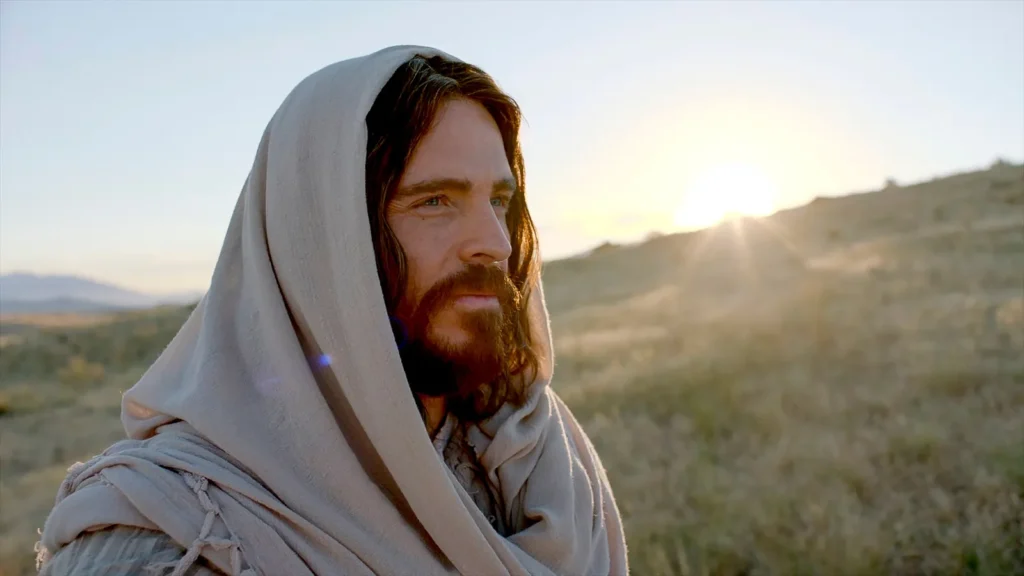
FAIR Resources for Come, Follow Me – Restoration Scripture
Week 1: December 29 - January 4: "The First Testament of Jesus Christ"

Introduction to the Old Testament

Doctrinal Focus

  • Key doctrines addressed in this week’s reading
  • Christ taught that “all things must be fulfilled…written in the law of Moses, and in the prophets, and in the psalms, concerning me” (Luke 24:44). The stories, prophecies, and ordinances of the Old Testament point forward to Him as the Redeemer. Recognizing these connections deepens our testimony that He has always been at the heart of God’s plan.

Sacrifices, priesthood ordinances, and prophetic promises foreshadowed the Atonement. When we see Christ in these patterns, the Old Testament becomes not just history but a witness of His divine mission.

The parables of the treasure in the field and the pearl of great price teach that discipleship requires sacrifice but offers eternal blessings. When Christ is our foundation, our lives gain stability and eternal purpose (Helaman 5:12).

In a world filled with distractions, Christ invites us to “lay up…treasures in heaven” (Matthew 6:20). Choosing Him over temporary pursuits transforms how we use time, talents, and resources.

  • From Adam to Abraham to our day, the Lord establishes covenants to bind His people to Him. These covenants are not temporary but everlasting, pointing to Christ as their fulfillment (Genesis 17:7).

The Savior fulfills the covenant promises to Abraham, extending salvation to all who come unto Him (3 Nephi 20:25–27). This shows that covenants are not exclusive but inclusive, designed to unite God’s family under Christ.

Historical & Contextual Insights

  • Insights in this week’s study
  • The Old Testament was written over many centuries, beginning with Moses and extending through the prophets before Christ’s coming. Ancient Israel was a covenant people called to witness of God among surrounding nations that worshiped many gods.

Israel’s history was marked by cycles of covenant faithfulness and apostasy, with prophets continually calling them back to the Lord. Throughout, God pointed them to the Messiah who would fulfill the promises made to Abraham, Isaac, and Jacob.

  • Recognizing the Old Testament as the first great witness of Jesus Christ helps us see continuity between ancient Israel and our discipleship today. It shows that God’s covenant plan has always centered on Christ.
  • Understanding this history strengthens our ability to see Christ in all scripture, not just the New Testament, and helps us trust that God’s plan of salvation is consistent and everlasting.
    • Ancient ordinances, sacrifices, and prophetic teachings were designed to point Israel to the Savior. Though the fullness of the gospel was not yet restored, God still prepared His people with symbols that foreshadowed the Atonement.
    •  
    • The law of Moses was not an end in itself but a schoolmaster to bring Israel to Christ (Galatians 3:24). The rituals taught spiritual truths, such as the need for a perfect sacrifice to overcome sin.
    •  
    • By studying these patterns, modern disciples can better appreciate the Savior’s role as the Lamb of God. This helps us avoid dismissing the Old Testament as “outdated” and instead see it as an inspired witness of Christ.
    • God promised Abraham that through his seed, all nations of the earth would be blessed. This covenant was reaffirmed throughout scripture and is fulfilled in Jesus Christ, who makes the blessings of salvation available to all.


    • The Abrahamic covenant was not just about land and posterity—it was about preparing the way for the Redeemer. Christ is the ultimate fulfillment of those promises, extending salvation to both Israel and the Gentiles.
    •  
    • For us today, entering into covenants through baptism, the sacrament, and temple ordinances ties us directly into that same everlasting covenant. It emphasizes our role as heirs of Abraham and disciples of Christ.

If you have questions on this week’s reading, please email your questions to us here.

Apologetic Application

  1. Claim: “The stories in the Old Testament are made up and can’t be trusted as scripture.”
  2.  
  3. Response:
  4. Historical Evidence: Archaeological discoveries (such as ancient cities, cultural practices, and inscriptions) consistently support the historical framework of the Old Testament. While not every event is archaeologically verifiable, the broader historical context aligns with ancient Near Eastern realities.
  5.  
  6. Eyewitness Support: Ancient Israel kept sacred records that were passed down and preserved with great care, which later formed the Hebrew Bible used by Christ and His Apostles. Their reverence for scripture suggests they believed these writings were authentic.
  7.  
  8. Spiritual Confirmation: Modern prophets and the Holy Ghost testify that the Old Testament is the word of God. Personal study and prayer confirm its divine witness of Christ, beyond what archaeology alone can prove.
  9.  
  10. Logical Analysis: If the Old Testament were purely myth, it would be unusual for Jesus Christ and His Apostles to so heavily rely on it as the foundation of their teachings. Its prophetic witness of Christ makes better sense if it is inspired scripture rather than folklore.
  • Claim: “God in the Old Testament contradicts the loving Jesus of the New Testament.”
  •  
  • Response:
  • Historical Evidence: Ancient Near Eastern societies were violent and harsh; God’s commands often reflected the need to preserve a covenant people in that environment.
  •  
  • Eyewitness Support: Prophets like Moses, Isaiah, and Jeremiah bore testimony that God was merciful, slow to anger, and abundant in lovingkindness, even when delivering judgments.
  •  
  • Spiritual Confirmation: The Spirit teaches that God is the same yesterday, today, and forever. Apparent differences between the Old and New Testaments are reconciled through deeper study and personal revelation.
  •  
  • Logical Analysis: A consistent reading shows that both Old and New Testaments portray a just and merciful God. Justice and mercy are not opposites but complementary attributes of a perfectly balanced divine character.
  • Claim: “Christians force Jesus into the Old Testament when He isn’t really there.”
  •  
  • Response:
  • Historical Evidence: Numerous Old Testament prophecies (Isaiah 7:14; Micah 5:2; Psalm 22) find direct fulfillment in Christ’s birth, ministry, and Atonement.
  •  
  • Eyewitness Support: The resurrected Christ Himself declared to His disciples that “all things” in “the law of Moses, the prophets, and the psalms” testified of Him (Luke 24:27, 44).
  •  
  • Spiritual Confirmation: The Spirit helps readers discern Christ in symbols such as the Passover lamb, the brazen serpent, and the Day of Atonement rituals. These foreshadow His redeeming work.
  •  
  • Logical Analysis: The unity of scripture points to Christ as the central figure of salvation history. The Old Testament makes far more sense when seen as preparing the way for the Messiah.

Practical Applications

Practical solutions for someone in faith crisis:

Action Step: As you study, look for symbols, prophecies, and patterns that point to the Savior.

This changes the Old Testament from a collection of ancient stories into a personal witness of Jesus Christ. It strengthens faith by showing that God’s plan has always centered on His Son.

  1. – Begin study with a prayer asking, “Help me see Christ in these verses.”
  2. – Mark or note any references, symbols, or phrases that remind you of Him.
  3. – Record how each story or law connects to Christ’s mission.
  4. – Share one insight with a family member or class.

Encouraging Thought:

“Every page of the Old Testament testifies of Jesus Christ.”
The First Testament of Jesus Christ, p. 1

Action Step: Identify one area of life where you can choose Christ over a competing distraction.

Putting the Savior first provides eternal joy and peace. It anchors us against fleeting pursuits that cannot satisfy our deepest needs.

  1. – Reflect on where you spend your time, energy, or resources.
  2. – Choose one daily or weekly adjustment to show you value Christ most (e.g., daily scripture study, temple worship, family gospel discussions).
  3. – Track how this change affects your peace and priorities.
  4. – Share your experience in testimony or journal.

Encouraging Thought:

Jesus promised, “Where your treasure is, there will your heart be also” (Matthew 6:21).

  • Action Step: Renew commitment to keep your baptismal and temple covenants.

Living covenants brings protection, purpose, and the companionship of the Holy Ghost. It ties us directly into the blessings promised to Abraham and fulfilled in Christ.

  1. – Review the promises you’ve made in baptism and temple ordinances.
  2. – Identify one covenant duty (sacrament, service, family history, temple worship) you can improve.
  3. – Set a specific and realistic goal to live it more fully.
  4. – Pray daily for strength to keep your promises.

Encouraging Thought:

Ideas for Teaching

Objective: Help learners recognize that Jesus Christ is the central figure of the Old Testament.

Paper hearts, pens/markers, scriptures.

Activity Steps:

  1. Introduction (5 min): Give each learner a paper heart and ask them to write or draw something they treasure. Discuss how treasures shape choices.
  2.  
  3. Scripture Discussion (5 min): Read Luke 24:27, 44. Invite learners to highlight how Christ is found in the law, prophets, and psalms. Brainstorm symbols (e.g., lamb, manna, serpent).
  4.  
  5. Application (5 min): Have learners flip their hearts over and write one way they can better “see Christ” in their personal scripture study this week.

Follow-Up Question: How does finding Christ in the Old Testament change the way you approach these ancient stories?

Objective: Teach that following Christ is the greatest treasure we can seek.

Small “treasure” items (coins, wrapped candy, or paper slips with scriptures), hidden around the room.

Activity Steps:

Introduction (5 min): Invite the group on a mini “treasure hunt.” After items are found, ask: “What makes something valuable?”

Scripture Discussion (5 min): Read Matthew 13:44–46 and Helaman 5:12. Discuss why discipleship requires sacrifice but leads to eternal treasure.

Application (5 min): Have learners write on a slip of paper one “earthly treasure” they could give less time to in order to seek Christ more fully. Collect in a box labeled “Heavenly Treasures.”

Follow-Up Question: What sacrifices are worth making for the treasure of Jesus Christ?

Objective: Strengthen understanding of covenants as a living connection to God.

Rope or string (to symbolize binding), index cards with covenant blessings/promises.

Activity Steps: 

Introduction (5 min): Show a rope and ask: “What does it mean to be bound to something?” Have learners share thoughts.

Scripture Discussion (5 min): Read Genesis 17:7 and 3 Nephi 20:25–27. Place covenant blessings (on cards) along the rope as symbols of God’s promises through Christ.

Application (5 min): Invite learners to choose one blessing and discuss how keeping their covenants allows them to access it today.

Follow-Up Question: How can you strengthen your bond with God through the covenants you’ve made?

QUICK REFERENCE

  • The Old Testament is the first great witness of Jesus Christ, filled with types, shadows, and prophecies of His mission.


  • The Abrahamic covenant connects ancient Israel, modern disciples, and the mission of Jesus Christ.


  • Jesus Christ is the greatest treasure, worth every sacrifice and the foundation of eternal joy.


  • God’s dealings with His covenant people in the Old Testament show His consistency and mercy, not just justice.


  • Through study and the Spirit, we can see Christ in all scripture, strengthening faith and discipleship.
  • Why trust modern prophets?
    • Modern prophets, like ancient ones, are called by God to guide His people. Just as Israel needed Moses and Isaiah to interpret the covenant, we need living prophets to help us apply eternal truth to current challenges. Prophets provide continuity between ancient scripture and modern revelation, confirming God still speaks today.
    •  
    • Why does God allow mistakes?
    • God respects agency, even of His covenant people and leaders. Old Testament history shows prophets and nations sometimes faltered, yet God’s purposes were not frustrated. Mistakes remind us that salvation depends on Christ, not human perfection, and that His mercy is sufficient to work through imperfect people.
  • Luke 24:27 – Christ explains that the law and prophets testify of Him.


  • Genesis 17:7 – God establishes His everlasting covenant with Abraham.