FAIR Resources for Come, Follow Me – Restoration Scripture
Week 10: March 2 - 8: "Let God Prevail"

Genesis 24-33

Doctrinal Focus

  • Key doctrines addressed in this week’s reading
  • Covenant marriage was essential for the Abrahamic covenant to continue. This principle highlights the eternal importance of marriage and family as God’s ordained pattern for receiving and transmitting covenant blessings. (Genesis 24:3–4)

Her faith, generosity, and service prepared her to become part of the covenant family. This teaches us that God blesses marriages and families built upon selflessness and discipleship. (Genesis 24:18–20)

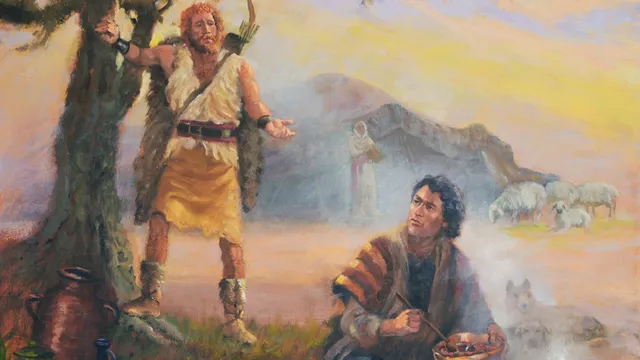
This tragic exchange teaches that prioritizing temporal desires over eternal blessings leads to regret and loss. God calls His covenant people to treasure eternal things above fleeting satisfaction. (Genesis 25:29–34)

His “ladder” dream symbolized the ascent toward God through covenant faithfulness. Like Jacob, we draw nearer to the Lord by valuing His covenants and worshiping in His holy house. (Genesis 28:16–17)

  • His persistence in seeking God’s favor led to a new name, Israel, meaning “let God prevail.” This moment reflects the truth that blessings come when we humbly yield our will to God’s. (Genesis 32:24–30)

Jacob’s prayer and Esau’s forgiveness illustrate the power of God to heal family wounds. When we let God prevail, He can bring reconciliation, peace, and unity into broken relationships. (Genesis 33:4)

Historical & Contextual Insights

  • Insights in this week’s study
  • These chapters take place in the patriarchal era of Abraham’s family, when inheritance, covenant, and marriage arrangements were central to family and tribal survival. Marriage alliances were negotiated within extended kinship groups to preserve religious identity and secure covenant promises.

Jacob and Esau’s rivalry reflected cultural expectations that the firstborn son would receive the birthright, which included both property and spiritual leadership. Yet Esau’s disregard for the birthright (selling it for food) and Jacob’s later vision at Bethel showed that God’s covenant purposes are not bound by cultural norms but by faithfulness.

  • These stories emphasize that covenant blessings are not automatically passed by birth order or culture but by divine appointment and righteous desire. Jacob’s wrestle with God and name change to Israel underscored this divine principle.
  • God’s promises are extended to those who let Him prevail in their lives, regardless of family position or worldly status. His blessings flow to those who value eternal things over temporal gain.
  • Esau traded his spiritual inheritance for a single meal, revealing a short-sightedness that is still a human weakness today. His decision symbolizes the consequences of placing immediate comfort above eternal commitments.
  •  
  •  The birthright represented both material and spiritual blessings, including leadership in covenant responsibilities. By despising it, Esau demonstrated disregard for God’s promises.
  •  
  • In modern life, “selling our birthright” can take the form of neglecting covenants, skipping worship, or choosing worldly pleasures over discipleship. This teaches us to evaluate whether our choices align with eternal priorities.
  • The story of Jacob wrestling until he received a blessing illustrates the spiritual struggle required to let God prevail in one’s life. It highlights the need for persistence, humility, and willingness to change.


  •  Jacob’s new name, Israel, represented a covenant identity: one who prevails with God. This identity was not inherited but earned through faith, endurance, and reliance on divine help.
  •  
  • Our own spiritual “wrestles” may involve unanswered prayers, ongoing trials, or the effort to surrender personal will. Like Jacob, we can emerge transformed, with greater faith and a stronger covenant relationship.

If you have questions on this week’s reading, please email your questions to us here.

Apologetic Application

  1. Claim: “The account of Jacob wrestling until morning is symbolic fiction, not real history.”
  2.  
  3. Response:
  4. Historical Evidence: Ancient Near Eastern texts often use physical struggle as a metaphor for divine encounters, but Genesis presents Jacob’s wrestle as a transformative spiritual and physical event.
  5.  
  6. Eyewitness Support: Jacob himself bore testimony of the event, naming the place Peniel (“face of God”) to preserve the memory of his encounter (Genesis 32:30).
  7.  
  8. Spiritual Confirmation: Many readers feel the Spirit while studying this account, learning that persistence in prayer brings divine blessings. This witness affirms the truth behind the story.
  9.  
  10. Logical Analysis: Even if the wrestle had symbolic elements, the outcome (a new name and covenant identity) demonstrates the transformative reality of Jacob’s experience with God.
  • Claim: “This account exaggerates to make Esau look bad.”
  •  
  • Response:
  • Historical Evidence: In ancient cultures, meals and oaths were often tied to covenants. Trading away rights for food, though reckless, reflected known cultural practices.
  •  
  • Eyewitness Support: The record preserved by Jacob’s descendants highlights Esau’s attitude, showing that he “despised his birthright” (Genesis 25:34). This eyewitness emphasis gives credibility to the story.
  •  
  • Spiritual Confirmation: The Holy Ghost testifies of the warning in Esau’s story—that valuing temporary gratification over eternal blessings leads to loss.
  •  
  • Logical Analysis: Modern parallels prove the principle: people often sacrifice spiritual commitments for temporary pleasures. The account is realistic because it mirrors ongoing human weakness.
  • Claim: “The covenant promises were unfairly taken from Esau.”
  •  
  • Response:
  • Historical Evidence: The Old Testament shows repeatedly that covenant blessings are based on faithfulness, not birth order (e.g., Isaac over Ishmael, Jacob over Esau, Joseph over Reuben).
  •  
  • Eyewitness Support: The record highlights Esau’s disregard for sacred things (Genesis 26:34–35), showing why God honored Jacob’s faith instead.
  •  
  • Spiritual Confirmation: The Spirit confirms that God’s blessings are just and are given to those who seek Him with real intent. Jacob’s persistence demonstrates such faith.
  •  
  • Logical Analysis: God does not operate on favoritism but on principle: His covenant blessings are extended to those who value and pursue them. Esau forfeited them by choice, not by injustice.

Practical Applications

Practical solutions for someone in faith crisis:

Action Step: Identify one “worldly distraction” that competes with your discipleship and choose to fast from it this week.

Esau’s choice to trade his birthright for a meal warns us against prioritizing short-term comfort over eternal promises. Choosing to step away from distractions helps us refocus on God.

  1. – Make two lists: eternal blessings you seek and worldly distractions you face.
  2. – Pray for strength to put eternal blessings first.
  3. – Commit to fast from one distraction this week (media, habits, unnecessary spending, etc.).
  4. – Record how the change impacts your spiritual focus.

Encouraging Thought:

Elder M. Russell Ballard taught, “Remember what matters most… Do not lose sight of eternal truths by being distracted by things that matter less.”

Action Step: Set aside one extended prayer session this week where you wrestle with God over a specific question, trial, or desire.

Jacob’s wrestle teaches that blessings often come after persistence and sincere effort. Wrestling with God strengthens faith, deepens humility, and brings greater spiritual clarity.

  1. – Choose one spiritual question or trial to bring to God.
  2. – Set aside 20–30 minutes for focused prayer and reflection.
  3. – Be specific in your petition, asking for guidance or strength.
  4. – Write impressions afterward and act on them.

Encouraging Thought:

God is the source of all truth. You can learn for yourself—right now—how to receive personal revelation.

  • Action Step: Reach out to a family member or loved one where there is distance or conflict, offering a kind word, apology, or act of service.

Jacob and Esau’s reconciliation shows that God can heal broken relationships when we approach others with humility and forgiveness. Allowing God to prevail brings peace and unity.

  1. – Pray for guidance on which relationship to focus on.
  2. – Identify one small act of reconciliation (call, message, note, or service).
  3. – Follow through with humility and without expectation.
  4. – Continue praying for God’s help to soften hearts.

Encouraging Thought:

  • President Nelson invited, “Are you willing to let God prevail in your life? Are you willing to let God be the most important influence in your life?”

Ideas for Teaching

Objective: Teach learners to value eternal blessings over temporary gratification.

A bowl of stew (or picture), slips of paper, pens.

Activity Steps:

  1. Introduction (5 min): Show the bowl of stew. Ask: “What’s the most ridiculous thing you would trade for this?” Connect the silliness to Esau’s trade.
  2.  
  3. Scripture Discussion (5 min): Read Genesis 25:29–34. Discuss what the birthright meant and why Esau’s choice showed misplaced priorities.
  4.  
  5. Application (5 min): Invite learners to write down one “eternal blessing” they want and one “worldly distraction” they sometimes prioritize instead. Compare it to Esau’s trade and encourage better choices.

Follow-Up Question: What helps you keep eternal blessings at the top of your priorities?

Objective: Help learners see how persistence in prayer brings transformation and blessing.

A rope (for a light, safe “tug-of-war”), chalkboard/whiteboard.

Activity Steps:

Introduction (5 min): Have two volunteers do a brief tug-of-war. Ask: “What does it feel like to struggle with all your strength?” Relate it to spiritual struggles.

Scripture Discussion (5 min): Read Genesis 32:24–30. Discuss Jacob’s wrestle and the significance of his new name, Israel (“let God prevail”).

Application (5 min): Write “struggles” on the board (fear, unanswered prayers, doubts). Ask how persisting in prayer might invite God’s blessing in these areas.

Follow-Up Question: What does it mean for you personally to “let God prevail” in your wrestles?

Objective: Teach that God can help us reconcile and heal family relationships.

Two puzzle pieces or objects that fit together.

Activity Steps: 

Introduction (5 min): Show two puzzle pieces apart and ask, “What keeps people from fitting back together after conflict?”

Scripture Discussion (5 min): Read Genesis 33:1–4. Discuss Jacob’s humility, Esau’s forgiveness, and how God prepared both hearts.

Application (5 min): Invite learners to think of one relationship where reconciliation is needed. Brainstorm possible steps to show humility, kindness, or forgiveness.

Follow-Up Question: How can the Savior help you take the first step toward healing a strained relationship?

QUICK REFERENCE

  • Covenant marriage is central to God’s plan and ensures the continuation of His promises (Genesis 24).


  • Eternal blessings should be valued above temporary desires, unlike Esau who despised his birthright (Genesis 25:29–34).


  • God reveals Himself through sacred experiences and covenants, as shown in Jacob’s vision at Bethel (Genesis 28:16–17).


  • Persisting in prayer and wrestling with God transforms us into covenant disciples (Genesis 32:24–30).


  • God can heal broken family relationships when we let Him prevail (Genesis 33:4).
  • Why trust modern prophets?
    • God has always revealed His will through prophets (Amos 3:7). Modern prophets, like Jacob of old, guide us in covenant living. Their fruits, unity, and testimony of Christ confirm their divine call.
    •  
    • Why does God allow mistakes?
    • Agency is essential to His plan. Even prophets and covenant families make mistakes, but God works through imperfection to accomplish His purposes. His wisdom and mercy prevail when we repent and yield to Him.

President Russell M. Nelson, Let God Prevail (Oct. 2020 General Conference).