
FAIR is a non-profit organization dedicated to providing well-documented answers to criticisms of the doctrine, practice, and history of The Church of Jesus Christ of Latter-day Saints.
FAIR › Scripture Study Resources: Supplement Your Come, Follow Me Study › Study Resources for the Doctrine & Covenants and Church History › Week 17 All That the Lord Hath Spoken We Will Do
Exodus 19-20; 24; 31-34
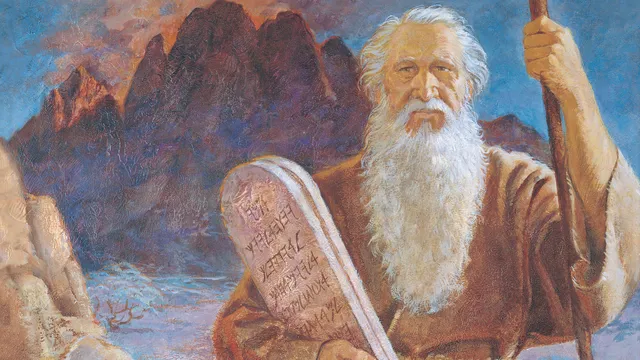
In Exodus 19:5–6, the Lord told Israel they would be a “kingdom of priests, and an holy nation.” The Hebrew word segullah—translated as “peculiar”—means treasured possession. This shows that God’s covenant with His people is deeply personal and rooted in love, not merely obedience. President Russell M. Nelson taught that being identified as God’s peculiar people is “a compliment of the highest order.”
When Israel declared, “All that the Lord hath said will we do” (Exodus 24:7), they showed a desire to live by divine law. Although they later faltered, their covenant commitment became the pattern for discipleship. Likewise, modern covenant keepers show their devotion through obedience, repentance, and enduring faithfulness.
The Ten Commandments, given audibly by God to all Israel (Exodus 20:1–17), served as the moral foundation of their covenant. They were not restrictive but protective, outlining principles of love toward God and neighbor. Jesus later affirmed these same laws when He summarized them as two great commandments—to love God and to love others.
As Elder Dallin H. Oaks taught in “No Other Gods,” God’s laws help us prioritize eternal values over worldly distractions. When we put God first, we experience peace, clarity, and joy. Obedience transforms commandments from duty into devotion, creating a covenant relationship rooted in trust.
After Israel’s sin with the golden calf, the Lord initially declared judgment, but Moses interceded in behalf of the people. God responded with compassion, declaring Himself “merciful and gracious, longsuffering, and abundant in goodness and truth” (Exodus 34:6). His mercy demonstrates His commitment to redemption over rejection.
Despite Israel’s idolatry, God commanded Moses to hew new stone tablets (Exodus 34:1–2), symbolizing restoration. This teaches that repentance opens the way for renewed covenants and divine companionship. God never abandons His people—He invites them to return and be made whole again.
Moses ascended Mount Sinai multiple times (see Exodus 19–34), acting as mediator between God and Israel. During these visits, God revealed the Ten Commandments, detailed laws, and instructions for building the tabernacle. Meanwhile, the Israelites—still heavily influenced by Egyptian culture—struggled to abandon idolatry. Their crafting of the golden calf occurred while Moses was on the mountain receiving further revelation from God.
If you have questions on this week’s reading, please email your questions to us here.
Practical solutions for someone in faith crisis:
Action Step: Set aside time each day to prepare your heart and mind before spiritual experiences such as prayer, scripture study, or temple worship.
Preparation opens the heart to revelation and transforms routine worship into sacred encounter. Just as the Israelites had to sanctify themselves before approaching Mount Sinai (Exodus 19:10–11, 17), we must also prepare spiritually to feel God’s presence.
Encouraging Thought:
President Russell M. Nelson taught, “Sacred experiences require preparation.” The Lord’s presence is not accidental—it comes to those who come prepared to meet Him.
Action Step: Identify one worldly distraction or habit that may be competing with your devotion to God, and replace it with a daily act of worship or service.
Modern “idols” can take many forms—work, entertainment, materialism, or status. Re-centering our priorities restores spiritual balance and peace. Keeping the first commandment deepens our covenant loyalty and aligns our desires with God’s will.
Encouraging Thought:
Elder Dallin H. Oaks taught, “Our greatest priority should be to love the Lord. If we truly love Him, everything else will fall into its proper place.”
Like Israel, we all “turn aside quickly” at times (Exodus 32:8). Yet God’s response to their failure—renewing the covenant and giving new tablets—reveals His patient mercy. Repentance restores our confidence in God’s love and allows His Spirit to dwell with us again.
Encouraging Thought:
Objective: Help learners understand that sacred experiences require preparation of heart, mind, and action.
Small mirrors or reflective paper, marker pens, and scriptures (Exodus 19:10–11, 17).
Activity Steps:
Follow-Up Question: What does it mean for you personally to “be ready” to meet God in your daily life?
Objective: Inspire learners to examine modern “idols” that may compete with their devotion to God.
Activity Steps:
Introduction (5 min): Draw a large heart on the board and invite participants to list modern distractions or “gods” people sometimes put first (e.g., career, entertainment, social media). Tape paper hearts over the list as symbols of giving our hearts back to God.
Scripture Discussion (5 min): Read Exodus 20:3–5 together and ask, “Why do you think this was the first commandment?” Share a brief quote from Elder Oaks: “Our greatest priority should be to love the Lord.”
Application (5 min): Invite participants to choose one “false god” in their life to set aside this week. Encourage them to fill that time or focus with something that draws them closer to the Savior.
Follow-Up Question: What helps you recognize when something good is beginning to replace what’s most sacred?
Objective: Teach that repentance is renewal—a divine opportunity to begin again, not a punishment.
Two sets of stone or paper “tablets” (one set whole, one torn or crumpled), scriptures (Exodus 32:19; 34:1–2, 6–7).
Activity Steps:
Introduction (5 min): Hold up the “broken” tablets and explain that Moses shattered the first set when Israel turned to idolatry. Ask: “What might broken tablets represent in our lives?” (broken promises, mistakes, lost faith).
Scripture Discussion (5 min): Read Exodus 34:1–2, 6–7. Discuss how God asked Moses to make new tablets and renew the covenant. Highlight His mercy and willingness to start again.
Application (5 min): Give each participant a paper “tablet.” Invite them to write one area where they need a new start, fold it, and take it home as a reminder of God’s mercy.
Follow-Up Question: When have you felt God give you a “new tablet” in your own life? How can you help someone else feel that renewal?
Exodus 34:6–7 – The Lord is “merciful and gracious, longsuffering, and abundant in goodness and truth.”
Teaching in the Savior’s Way — “Help Learners Act in Faith” and “Invite the Spirit to Teach” (sections on preparing hearts for revelation).
FAIR is a non-profit organization dedicated to providing well-documented answers to criticisms of the doctrine, practice, and history of The Church of Jesus Christ of Latter-day Saints.
We are a volunteer organization. We invite you to give back.
Donate Now