
FAIR is a non-profit organization dedicated to providing well-documented answers to criticisms of the doctrine, practice, and history of The Church of Jesus Christ of Latter-day Saints.
FAIR › Scripture Study Resources: Supplement Your Come, Follow Me Study › Study Resources for the Doctrine & Covenants and Church History › Week 49 The Vision of the Redemption of the Dead
DOCTRINE AND COVENANTS 137-138
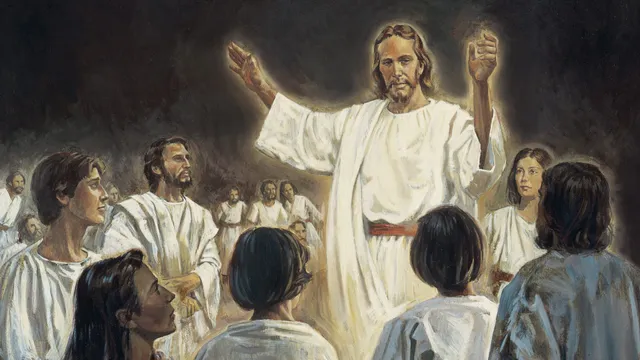
Joseph Smith’s vision of the celestial kingdom reveals his brother Alvin—who died without baptism—was present there. This vision teaches that the Lord’s judgment considers both actions and intent, extending mercy beyond traditional mortal constraints (D&C 137:5–8).
Doctrine and Covenants 138:30–34 describes how the Savior visited the spirit world after His crucifixion and organized righteous spirits to teach the gospel to those who had died without knowledge of it. This highlights the scope of God’s mercy and the ongoing work of salvation beyond this life.
President Joseph F. Smith’s vision expands our understanding of the spirit world. The Lord’s concern for every soul, including those long deceased, reinforces the eternal nature of missionary work and the importance of temple ordinances (D&C 138:57). This doctrine motivates Latter-day Saints to participate in family history and temple work as vital aspects of gathering Israel.
As we perform proxy ordinances, we act as saviors on Mount Zion (Obadiah 1:21; see also D&C 138:56). This role invites every member—young and old—to be part of something eternal. It cultivates humility and gratitude as we recognize our dependence on Christ and our connection to those who came before.
If you have questions on this week’s reading, please email your questions to us here.
Practical solutions for someone in faith crisis:
Action Step: Submit one family name and perform an ordinance in the temple or prepare a name for proxy work.
Engaging in temple work allows us to actively participate in the redemption of the dead, just as taught in D&C 138. It connects us to our ancestors and deepens our testimony of eternal families and Christ’s mercy.
Encouraging Thought:
“The work of salvation is one eternal round—it is not just for the living but also for the dead. The veil is thin, and our efforts matter more than we realize.” —Inspired by D&C 138:56
Action Step: Identify a situation where you feel uncertain or judged, and pray for peace in God’s timing and fairness.
Doctrine and Covenants 137:9 teaches that the Lord judges us by our desires as well as our deeds. This perspective brings peace in situations where we or others fall short due to circumstances beyond our control.
Encouraging Thought:
God sees your intent. When your heart leans toward Him, He lifts what you can’t finish.
These sections offer profound comfort to those mourning the loss of loved ones or fearing what comes after death. Sharing these truths can bring peace and open opportunities for gospel discussions.
Encouraging Thought:
The gospel of Jesus Christ brings hope to the living and the dead. Every soul matters, in every realm.
Objective: Help learners understand that God judges us by our hearts, not just outward circumstances.
Whiteboard or paper, marker, printed quote from D&C 137:7–9
Activity Steps:
Follow-Up Question: How does knowing God sees our hearts change the way we see ourselves—and others?
Objective: Help learners visualize the ongoing work of salvation in the spirit world.
Paper strips or cards with names of ancient prophets (e.g., Adam, Eve, Isaiah, etc.), a picture of Christ preaching
Activity Steps:
Introduction (5 min): Ask, “Who do you think were the first missionaries in the spirit world?” Create curiosity around what Jesus did after He died.
Scripture Discussion (5 min): Read D&C 138:36–39 and 57 aloud. Place the name cards in a circle on a board or wall to represent the team Christ organized.
Application (5 min): Compare this effort to modern missionary and temple work. Discuss how we can be part of that “same team” now through family history and proxy ordinances.
Follow-Up Question: Who in your family or community might be waiting for someone like you to help them receive the gospel?
Objective: Help learners appreciate the connection between the living and the dead through temple work.
Two large paper cutouts of people, a “veil” made from fabric or a line across the room, notecards and pens
Activity Steps:
Introduction (5 min): Set up the two cutouts on opposite sides of the “veil.” Ask: “What separates us from our ancestors? What connects us?”
Scripture Discussion (5 min): Read D&C 138:47–51. Place cards with words like “baptism,” “temple,” “covenants,” and “desire” across the veil to represent bridges.
Application (5 min): Invite learners to write the name of one ancestor they want to learn more about or do temple work for. Share one way to act on that this week.
Follow-Up Question: What can you do to strengthen your connection to your family on both sides of the veil?
God’s plan of salvation is inclusive and eternal, offering all His children a fair opportunity to accept the gospel.
Doctrine and Covenants 138:36–57 – Preaching the gospel in the spirit world.
Teachings of Presidents: Joseph F. Smith – Insight into the background and depth of D&C 138.
FAIR is a non-profit organization dedicated to providing well-documented answers to criticisms of the doctrine, practice, and history of The Church of Jesus Christ of Latter-day Saints.
We are a volunteer organization. We invite you to give back.
Donate Now