
FAIR is a non-profit organization dedicated to providing well-documented answers to criticisms of the doctrine, practice, and history of The Church of Jesus Christ of Latter-day Saints.
FAIR › Scripture Study Resources: Supplement Your Come, Follow Me Study › Study Resources for the Doctrine & Covenants and Church History › Week 45 A Voice of Gladness for the Living and the Dead
DOCTRINE AND COVENANTS 125-128
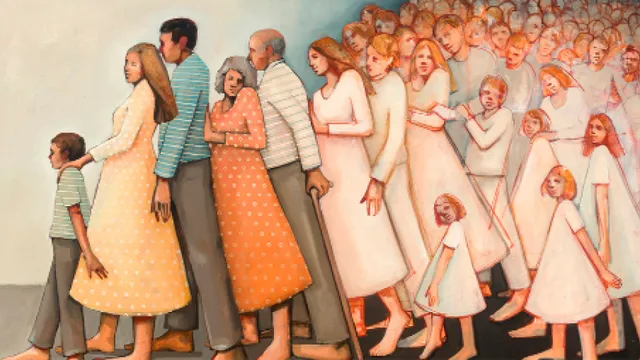
Doctrine and Covenants 128:18 describes this work as creating a “welding link” between generations, preventing the earth from being “smitten with a curse.” This “binding power” is possible through priesthood ordinances performed in temples and mirrors the unifying and healing power of Jesus Christ’s Atonement.
The Lord revealed that ordinances for the dead must be carefully recorded by those with proper priesthood authority (D&C 128:6–7). These records are not just administrative but sacred, ensuring order and accountability in God’s kingdom.
By recording our spiritual experiences and participating in family history, we reflect the same principle the Lord gave regarding temple ordinances (D&C 127:7). Elder Dale G. Renlund taught that these efforts not only bless our ancestors but also bring healing to our own lives.
Gospel service sometimes requires sacrifice, but God does not overlook the needs of those closest to us. As outlined in the article Take Special Care of Your Family, fulfilling our divine roles as parents, siblings, or children is central to our discipleship.
If you have questions on this week’s reading, please email your questions to us here.
Practical solutions for someone in faith crisis:
Action Step: Identify one ancestor who needs temple ordinances and begin their work using FamilySearch.org.
Engaging in family history deepens your understanding of God’s plan and brings joy to both the living and the dead. It invites the Spirit of Elijah into your life and helps fulfill the commandment to bind families together for eternity.
Encouraging Thought:
“What a glorious and wonderful provision the Almighty has made through His revelation to His Prophet.” —President Gordon B. Hinckley
Action Step: Begin (or renew) the habit of recording spiritual impressions, blessings, and experiences in a journal.
Doctrine and Covenants 127–128 emphasizes that records made on earth matter to heaven. Keeping a personal spiritual record preserves your testimony, reinforces faith, and provides inspiration for you and future generations.
Encouraging Thought:
“Whatsoever you record on earth shall be recorded in heaven” (Doctrine and Covenants 128:8).
The Lord instructed Brigham Young to shift his focus toward his family after years of public service (D&C 126:3). Caring for family is not secondary to discipleship—it is central. Making time for connection, instruction, and presence strengthens your home as a sanctuary of faith.
Encouraging Thought:
“Our homes are the ultimate setting for learning, living, and teaching the gospel” —Teaching in the Savior’s Way, p. 9.
Objective: Help learners understand the joy and eternal significance of baptism for the dead.
A picture of a temple baptismal font, copies of D&C 128:15–18, paper and pens
Activity Steps:
Follow-Up Question: Why do you think this doctrine brings so much joy to those who understand it?
Objective: Help learners understand the importance of prioritizing family care in their discipleship.
Family photo or drawing materials, D&C 126:3, whiteboard or paper
Activity Steps:
Introduction (5 min): Ask: “What’s something small someone in your family has done recently that showed love or care?” Invite 2–3 responses.
Scripture Discussion (5 min): Read D&C 126:3 aloud. Briefly summarize Brigham Young’s missions and what this verse meant. Ask: Why would the Lord emphasize caring for family?
Application (5 min): Have learners draw or write one way they will “take especial care” of their family this week. Share as appropriate.
Follow-Up Question: How can taking care of your family be a way to serve the Lord?
Objective: Teach learners the eternal value of recording sacred experiences and ordinances.
Journal pages or notebooks, D&C 127:6–7; 128:8, optional example of a family history record
Activity Steps:
Introduction (5 min): Ask: “If you could preserve one story or memory forever, what would it be and why?” Invite brief answers.
Scripture Discussion (5 min): Read D&C 127:6–7 and discuss why God commanded that records of baptisms for the dead be exact. Point out that Joseph taught these would be recorded in heaven.
Application (5 min): Give everyone a journal page and invite them to record a spiritual experience, prompting them with questions like: “When did I feel God’s love recently?” or “What prayer was answered?”
Follow-Up Question: Why do you think God cares so much about what we record?
Doctrine and Covenants 127:6–7 – Sacred ordinances must be recorded on earth and in heaven.
“The Great Things Which God Has Revealed” – President Gordon B. Hinckley (May 2005)
FAIR is a non-profit organization dedicated to providing well-documented answers to criticisms of the doctrine, practice, and history of The Church of Jesus Christ of Latter-day Saints.
We are a volunteer organization. We invite you to give back.
Donate Now