FAIR Resources for Come, Follow Me – Restoration Scripture
Week 49: December 1 - 7: "The Vision of the Redemption of the Dead"

DOCTRINE AND COVENANTS 137-138

Doctrinal Focus

  • Key doctrines addressed in this week’s reading
  • In Doctrine and Covenants 137:9, the Lord says, “I, the Lord, will judge all men according to their works, according to the desire of their hearts.” This principle is especially comforting for those who, due to timing or lack of opportunity, could not fully live the gospel in mortality. It assures us that sincere intent and effort matter greatly in God’s eyes.

Joseph Smith’s vision of the celestial kingdom reveals his brother Alvin—who died without baptism—was present there. This vision teaches that the Lord’s judgment considers both actions and intent, extending mercy beyond traditional mortal constraints (D&C 137:5–8).

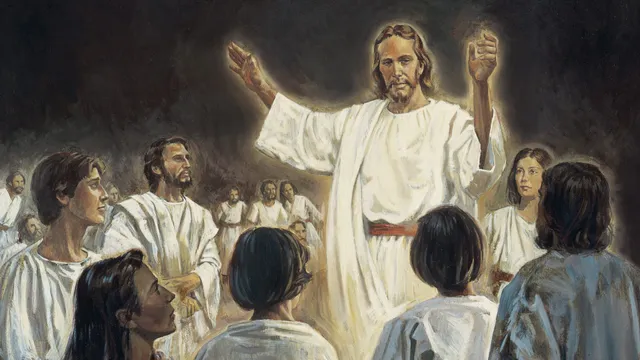
Doctrine and Covenants 138:30–34 describes how the Savior visited the spirit world after His crucifixion and organized righteous spirits to teach the gospel to those who had died without knowledge of it. This highlights the scope of God’s mercy and the ongoing work of salvation beyond this life.

President Joseph F. Smith’s vision expands our understanding of the spirit world. The Lord’s concern for every soul, including those long deceased, reinforces the eternal nature of missionary work and the importance of temple ordinances (D&C 138:57). This doctrine motivates Latter-day Saints to participate in family history and temple work as vital aspects of gathering Israel.

  • Doctrine and Covenants 138:48–51 teaches that the faithful in the spirit world are anxiously engaged in the same mission of gathering and redeeming souls. This echoes Malachi’s prophecy that the hearts of the children will turn to their fathers. Family history and temple ordinances are not peripheral but foundational to the gospel of Jesus Christ.

As we perform proxy ordinances, we act as saviors on Mount Zion (Obadiah 1:21; see also D&C 138:56). This role invites every member—young and old—to be part of something eternal. It cultivates humility and gratitude as we recognize our dependence on Christ and our connection to those who came before.

Historical & Contextual Insights

  • Insights in this week’s study
  • Doctrine and Covenants 137 was received in 1836 in the nearly completed Kirtland Temple; Doctrine and Covenants 138 was received in 1918 during a time of global upheaval.
  • In D&C 137, Joseph Smith received a vision of the celestial kingdom during a period of personal and communal spiritual growth in Kirtland, just before the dedication of the temple. In D&C 138, President Joseph F. Smith received his vision while grieving the death of his son Hyrum and suffering personal illness. His vision came in the closing months of World War I and during the 1918 influenza pandemic, when death was a constant presence.
  • These visions were given in sacred, solemn settings where divine comfort and direction were needed. Joseph Smith’s vision clarified God’s mercy in salvation. Joseph F. Smith’s vision greatly expanded the Church’s understanding of work for the dead.
  • Revelation often comes in response to sorrow, struggle, or questions. God provides greater light and knowledge not only for the individual prophet, but for the Church as a whole, especially in times of need.
  • Before this revelation, many early Saints—including Joseph Smith—struggled to reconcile God’s justice with the fate of those who died without hearing the gospel. The vision of Alvin in the celestial kingdom was unexpected, as Alvin had died without baptism. This revelation helped to lay a doctrinal foundation for future teachings on vicarious ordinances and the redemption of the dead.


  • It showed that God does not condemn the uninformed but judges the heart. Joseph saw that Alvin had received the celestial reward because he would have accepted the gospel if given the chance (D&C 137:7–8).
  •  
  • This principle later became the basis for proxy ordinances in temples. It reflects a just and merciful God who honors agency and righteousness, even beyond the veil.
  • For centuries, Christians debated what Christ did between His death and resurrection. D&C 138 reveals that while Christ did not personally teach the spirits in prison, He organized missionary work among the dead through righteous messengers. This insight broadened the understanding of God’s redemptive plan and underscored the eternal nature of missionary work.


  • Joseph F. Smith saw that faithful spirits like Adam, Eve, Isaiah, and many others were appointed to preach to those who had died without the gospel (D&C 138:38–49). This vision brings unity to God’s work across all dispensations.
  •  
  • It also gave doctrinal clarity during a time of great loss and death. Members mourning loved ones during the pandemic and war could find hope in the assurance that salvation was still possible after death.

If you have questions on this week’s reading, please email your questions to us here.

Apologetic Application

  1. Claim: “Christianity is unjust because it excludes people who died without knowing about Jesus.”
  2.  
  3. Response:
  4. Historical Evidence: Doctrine and Covenants 138 (1918) clearly records a vision where the gospel is preached to the dead, revealing how God offers salvation to all, regardless of earthly opportunity. This aligns with early Christian ideas (1 Peter 3:18–20) and deepens our understanding of them.
  5.  
  6. Eyewitness Support: President Joseph F. Smith described his vision with prophetic clarity and had a lifetime of spiritual service and respected leadership. The Church has accepted this as canonical revelation.
  7.  
  8. Spiritual Confirmation: Latter-day Saints testify of personal revelation and temple experiences that affirm the fairness and mercy of God’s plan for all His children, living and dead.
  9.  
  10. Logical Analysis: If God is perfectly just and merciful, then a provision for those who never heard the gospel must exist. D&C 138 presents a coherent solution that harmonizes justice and mercy in a divine plan.
  • Claim: “The practice of proxy ordinances is an invention without scriptural foundation.”
  •  
  • Response:
  • Historical Evidence: Proxy baptism was practiced in early Christianity (1 Corinthians 15:29) and restored in modern revelation as early as 1840, aligning with ancient tradition.
  •  
  • Eyewitness Support: Joseph Smith taught this doctrine consistently over years, and numerous early Saints recorded their experiences with baptisms for the dead in the Nauvoo period.
  •  
  • Spiritual Confirmation: Many members report profound spiritual impressions while participating in temple work, affirming to them the divine origin of these ordinances.
  •  
  • Logical Analysis: If God’s justice requires that all have the opportunity for salvation, and ordinances are essential, then providing a way for them to receive those ordinances postmortally is not just logical—it is necessary.
  • Claim: “Salvation without baptism contradicts clear biblical teaching.”
  •  
  • Response:
  • Historical Evidence: Joseph’s vision of Alvin in D&C 137 shows an early restoration-era expansion of God’s plan of salvation, revealing that judgment includes desire and potential, not just outward performance.
  •  
  • Eyewitness Support: Joseph’s personal relationship with Alvin and his grief at Alvin’s death added emotional weight and authenticity to this vision. He had no earthly reason to invent a comforting doctrine without divine cause.
  •  
  • Spiritual Confirmation: This revelation has brought comfort to countless families mourning unbaptized loved ones, and many testify of the Spirit confirming its truth.
  •  
  • Logical Analysis: If God is omniscient and perfectly just, then it follows He would not damn someone for lack of opportunity. This vision provides a loving and reasonable alternative to exclusivist interpretations of salvation.

Practical Applications

Practical solutions for someone in faith crisis:

Action Step: Submit one family name and perform an ordinance in the temple or prepare a name for proxy work.

Engaging in temple work allows us to actively participate in the redemption of the dead, just as taught in D&C 138. It connects us to our ancestors and deepens our testimony of eternal families and Christ’s mercy.

  1. – Log in to FamilySearch.org.
  2. – Review your family tree and look for individuals who need ordinances.
  3. – Use the Ordinance Ready tool to find a name, or research ancestors needing temple work.
  • – Schedule a temple visit or submit the name for proxy ordinances.

Encouraging Thought:

“The work of salvation is one eternal round—it is not just for the living but also for the dead. The veil is thin, and our efforts matter more than we realize.” —Inspired by D&C 138:56

Action Step: Identify a situation where you feel uncertain or judged, and pray for peace in God’s timing and fairness.

Doctrine and Covenants 137:9 teaches that the Lord judges us by our desires as well as our deeds. This perspective brings peace in situations where we or others fall short due to circumstances beyond our control.

  1. – Reflect on any lingering guilt, grief, or questions about fairness—especially involving loved ones.
  2. – Read D&C 137:7–9 and ponder how God’s mercy applies.
  3. – Write a short prayer asking for increased trust in God’s understanding of your heart.
  4. – Record how that principle brings peace over time.

Encouraging Thought:

God sees your intent. When your heart leans toward Him, He lifts what you can’t finish.

  • Action Step: Share one principle from D&C 137138 with someone who is grieving or curious about life after death.

These sections offer profound comfort to those mourning the loss of loved ones or fearing what comes after death. Sharing these truths can bring peace and open opportunities for gospel discussions.

  1. – Identify someone in your circle who may be grieving or spiritually searching.
  2. – Prayerfully select a verse or teaching from D&C 138 (e.g., verse 57 on the ongoing work of salvation).
  3. – Send a thoughtful message, talk in person, or share a related Church video or article.
  4. – Invite them to learn more if they are open.

Encouraging Thought:

The gospel of Jesus Christ brings hope to the living and the dead. Every soul matters, in every realm.

Ideas for Teaching

Objective: Help learners understand that God judges us by our hearts, not just outward circumstances.

Whiteboard or paper, marker, printed quote from D&C 137:7–9

Activity Steps:

  1. Introduction (5 min): Ask: “Do you know someone who never had a chance to learn about the gospel—what happens to them?” Briefly introduce Alvin Smith and explain that he died before baptism.
  2.  
  3. Scripture Discussion (5 min): Read D&C 137:5–9 aloud. Emphasize the Lord’s statement about judging by the “desire of their hearts.”
  4.  
  5. Application (5 min): Invite learners to write a private list of things they desire spiritually—especially things they are trying but struggling to accomplish. Testify that God sees and honors those righteous desires.

Follow-Up Question: How does knowing God sees our hearts change the way we see ourselves—and others?

Objective: Help learners visualize the ongoing work of salvation in the spirit world.

Paper strips or cards with names of ancient prophets (e.g., Adam, Eve, Isaiah, etc.), a picture of Christ preaching

Activity Steps:

Introduction (5 min): Ask, “Who do you think were the first missionaries in the spirit world?” Create curiosity around what Jesus did after He died.

Scripture Discussion (5 min): Read D&C 138:36–39 and 57 aloud. Place the name cards in a circle on a board or wall to represent the team Christ organized.

Application (5 min): Compare this effort to modern missionary and temple work. Discuss how we can be part of that “same team” now through family history and proxy ordinances.

Follow-Up Question: Who in your family or community might be waiting for someone like you to help them receive the gospel?

Objective: Help learners appreciate the connection between the living and the dead through temple work.

Two large paper cutouts of people, a “veil” made from fabric or a line across the room, notecards and pens

Activity Steps: 

Introduction (5 min): Set up the two cutouts on opposite sides of the “veil.” Ask: “What separates us from our ancestors? What connects us?”

Scripture Discussion (5 min): Read D&C 138:47–51. Place cards with words like “baptism,” “temple,” “covenants,” and “desire” across the veil to represent bridges.

Application (5 min): Invite learners to write the name of one ancestor they want to learn more about or do temple work for. Share one way to act on that this week.

Follow-Up Question: What can you do to strengthen your connection to your family on both sides of the veil?

QUICK REFERENCE

  • The Lord will judge us according to our desires, not just our actions (D&C 137:9).


  • The gospel is preached to the dead in the spirit world, showing God’s justice and mercy (D&C 138:30–34).


  • Temple and family history work is a vital part of gathering Israel on both sides of the veil.


  • Christ organized missionary work among the dead, sending righteous spirits to teach others (D&C 138:36–57).


God’s plan of salvation is inclusive and eternal, offering all His children a fair opportunity to accept the gospel.

  • Why trust modern prophets?
    • Modern prophets, like Joseph Smith and Joseph F. Smith, received visions (D&C 137138) that expanded eternal doctrines. Their revelations are consistent with scripture and have brought comfort, doctrinal clarity, and spiritual confirmation to millions. Prophetic teachings align with the character of a just and merciful God and are verified through spiritual witness and consistent fruit over time.
    •  
    •  
    • Why does God allow mistakes?
    • God honors agency, allowing people—including Church leaders—to learn, grow, and correct errors. The restoration is ongoing; truth is revealed “line upon line” (D&C 128:21). Even prophets receive new understanding through experience, pain, and revelation, which reflects divine patience rather than error in doctrine.