
FAIR is a non-profit organization dedicated to providing well-documented answers to criticisms of the doctrine, practice, and history of The Church of Jesus Christ of Latter-day Saints.
FAIR › Scripture Study Resources: Supplement Your Come, Follow Me Study › Study Resources for the Old Testament & Pearl of Great Price › Week 27 If the Lord Be God, Follow Him
1 Kings 12-13; 17-22
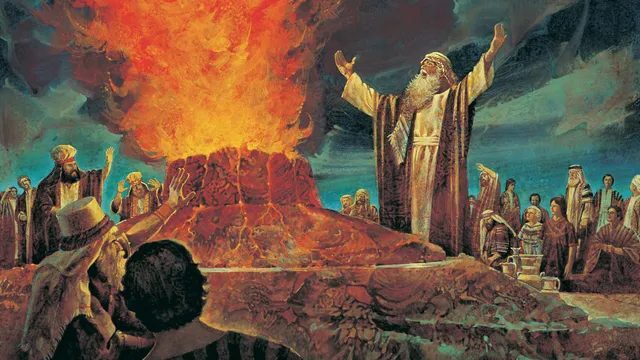
In 1 Kings 18:21, Elijah asks the people how long they will “halt between two opinions,” showing that neutrality in faith is not true discipleship. This moment highlights agency and accountability, helping learners see that daily decisions shape spiritual identity and direction.
After witnessing the Lord’s power, the people declared their allegiance in 1 Kings 18:39, acting on truth revealed to them. This teaches that spiritual experiences invite response and commitment rather than passive observation.
In 1 Kings 17:13–16, the widow of Zarephath obeys Elijah’s counsel despite scarcity, and the Lord sustains her household with unfailing provisions. This illustrates how faith precedes miracles and encourages learners to trust God during sacrifice or uncertainty.
Elijah’s prayer and the restoration of the widow’s son in 1 Kings 17:21–23 demonstrate divine compassion and authority in desperate circumstances. Exploring this account helps students see that reliance on God builds resilience and testimony through hardship.
Jeroboam’s establishment of false worship practices in 1 Kings 12:28–30 shows how leadership decisions can turn communities from covenant faithfulness. This encourages learners to evaluate their influence and responsibility toward others when exercising agency.
When Ahab humbles himself after prophetic warning in 1 Kings 21:27–29, the Lord acknowledges his repentance and delays judgment. This teaches accountability alongside hope, helping students understand that sincere humility opens the way for mercy.
Politically, rulers such as Jeroboam and Ahab established or promoted alternative religious practices to secure loyalty and national identity, often introducing idol worship. This created tension between covenant faithfulness and political expediency, prompting prophetic intervention to call the people back to worship of the Lord.
If you have questions on this week’s reading, please email your questions to us here.
Practical solutions for someone in faith crisis:
Action Step: Identify one daily choice that reflects devotion to God and act on it intentionally.
Elijah’s challenge to the people to stop wavering shows that spiritual strength grows through consistent commitment, not occasional effort. Practicing deliberate choices builds habits of discipleship and clarifies priorities when competing influences arise.
Encouraging Thought:
Decisive faith brings clarity — choosing God in small moments prepares us to stand firm in larger tests.
Action Step: Show faith by sharing or serving even when resources feel limited.
The widow who trusted prophetic counsel experienced provision beyond what she expected, demonstrating that faith often precedes blessings. Acting in trust builds confidence in God’s ability to sustain and strengthens resilience in difficulty.
Encouraging Thought:
Faith is not waiting until abundance appears — it is acting with trust that God sees and provides.
Humility invites growth and softens consequences, as shown when repentance changed outcomes in the narrative. Learning to receive correction strengthens character and deepens spiritual maturity.
Encouraging Thought:
Objective: Help learners recognize the importance of intentional spiritual commitment.
Activity Steps:
Follow-Up Question: How can making small daily choices strengthen your ability to choose wisely in bigger moments?
Objective: Show how trust and action often precede spiritual blessings.
Activity Steps:
Introduction (5 min): Give each learner a limited number of beans and ask how they would respond if asked to share them despite scarcity. Discuss reactions.
Scripture Discussion (5 min): Study the account of the widow helping Elijah and discuss what her actions teach about faith and provision.
Application (5 min): Invite learners to identify one way they can act in faith this week even if they feel limited.
Follow-Up Question: Why can acting in faith before seeing results be challenging — and rewarding?
Objective: Encourage humility and growth when receiving guidance or correction.
Activity Steps:
Introduction (5 min): Present short scenarios where someone receives correction and ask learners to role-play responses.
Scripture Discussion (5 min): Examine how Ahab responded when confronted by prophetic warning and discuss the outcome.
Application (5 min): Have learners identify practical ways to respond constructively to feedback in school, family, or church settings.
Follow-Up Question: How can humility change the direction of our future decisions?
God’s power and compassion extend to life’s crises — revealed through prophetic ministry (1 Kings 17:21–23)
For the Strength of Youth — Applying gospel principles in daily decisions
Gospel Library — Access to scriptures, manuals, and study tools for personal and family study
FAIR is a non-profit organization dedicated to providing well-documented answers to criticisms of the doctrine, practice, and history of The Church of Jesus Christ of Latter-day Saints.
We are a volunteer organization. We invite you to give back.
Donate Now