FAIR Resources for Come, Follow Me – Restoration Scripture
Week 28: July 6 - 12: "There Is a Prophet in Israel"

2 Kings 2-7

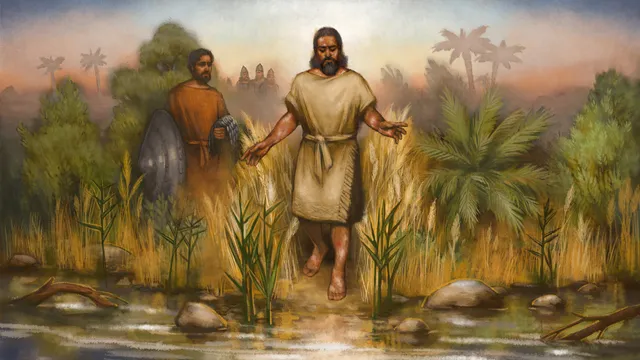
Illustration of a prophet teaching followers about faith and divine guidance

Doctrinal Focus

  • Key doctrines addressed in this week’s reading

Elijah passing his mantle to Elisha and the miracles that follow show prophetic authority in action (2 Kings 2:9–15). Additional examples, such as prophetic healing and divine intervention, reinforce that God guides His children through chosen servants (2 Kings 4:33–36). These accounts invite learners to recognize prophetic leadership as part of His pattern of revelation.

When Elisha’s servant feared surrounding enemies, the prophet prayed that his eyes would be opened to heavenly help, illustrating how divine perspective replaces fear (2 Kings 6:15–17). This supports encouraging learners to seek understanding through faith and follow inspired direction, even when circumstances seem uncertain.

The widow’s oil being multiplied demonstrates that obedience and trust enable divine abundance (2 Kings 4:1–7). Likewise, feeding many people from a small offering shows the Lord’s power to provide beyond human limitation (2 Kings 4:42–44), helping learners see that He is mindful of both temporal and spiritual needs.

Naaman was healed only after setting aside pride and following simple prophetic counsel (2 Kings 5:1–14). This account teaches that blessings are often conditioned on humility and willingness to act on God’s direction, even when expectations differ from reality.

Accounts such as the recovery of the lost axe head illustrate that the Lord is mindful of both small and large concerns (2 Kings 6:1–7). Reflecting on these experiences can help learners develop remembrance and confidence in God over time, aligning with principles of steady spiritual growth taught in supporting materials.
28 The Power of Spiritual Momen…

The lepers who moved forward despite uncertainty discovered miraculous provision and deliverance (2 Kings 7:1–16). Teaching this principle encourages learners to act in faith, trusting that consistent reliance on the Lord builds spiritual momentum and deeper discipleship.

Historical & Contextual Insights

  • Insights in this week’s study
  • The events take place in the northern kingdom of Israel during the prophetic ministry of Elisha in the 9th century BC, a time of political instability and frequent conflict with neighboring nations such as Aram.

Israel was experiencing spiritual decline marked by idolatry and inconsistent covenant faithfulness, yet God continued to send prophets to guide and protect His people. Prophetic miracles occurred among everyday challenges—warfare, famine, poverty, and disease—showing divine involvement in both national crises and personal struggles.

  • Understanding this setting helps readers see that the miracles recorded were not isolated stories but responses to real historical pressures and cultural conditions. It highlights the role of prophets as mediators of divine help in times of uncertainty and demonstrates how God worked within complex social and political realities.
  • Recognizing the historical backdrop helps modern learners relate these events to their own lives by seeing how God’s guidance applies during instability and hardship. It reinforces the principle that divine help is not limited to ideal circumstances but extends into everyday challenges today.
  • The accounts show prophets interacting directly with families, soldiers, laborers, and foreign leaders, addressing practical needs like debt, illness, and safety. This demonstrates that prophetic ministry was not only theological but also social and relational, embedded in the lived experience of the people.

  • For example, Elisha’s assistance to a widow facing debt reflects the economic vulnerability common in ancient agrarian societies. Loss of a husband often meant loss of financial security, and prophetic intervention addressed tangible survival concerns, illustrating God’s awareness of daily realities.
  •  
  • Similarly, interactions with military threats and civic crises show that prophets influenced national as well as personal outcomes. This underscores how divine guidance extended across social layers, shaping community trust in God’s involvement in collective welfare.
  • The healing of Naaman, a commander from Aram, shows that divine power was recognized across national and religious boundaries. This highlights how prophetic experiences served as witness events that communicated God’s sovereignty to surrounding peoples.

  • In the ancient Near Eastern world, national identity and religious loyalty were closely tied, so a foreign leader seeking healing from Israel’s prophet was culturally significant. It challenged assumptions about territorial gods and illustrated the broader reach of divine authority.
  •  
  • For modern readers, this emphasizes inclusivity in God’s purposes and the universal relevance of faith principles. It encourages learners to see spiritual influence as outward-reaching and to consider how personal discipleship can affect others beyond their immediate community.

If you have questions on this week’s reading, please email your questions to us here.

Apologetic Application

  1. Claim: “Accounts such as multiplied oil, healings, or supernatural protection were invented or embellished over time.”
  2.  
  3. Response:
  4. Historical Evidence: The narratives appear within broader historical records of kings, wars, and geography that align with known ancient Near Eastern contexts. Their placement within historical frameworks suggests they were preserved as part of cultural memory rather than detached legend.
  5.  
  6. Eyewitness Support: Many events are described as occurring before groups of observers, such as servants, community members, or military participants. This narrative style indicates shared witness rather than private visionary claims, strengthening their credibility as communal tradition.
  7.  
  8. Spiritual Confirmation: Believers often report that studying miracle accounts strengthens faith and invites personal spiritual impressions confirming God’s power. Such confirmation does not replace scholarship but complements it as a form of experiential validation.
  9.  
  10. Logical Analysis: Rejecting miracles solely because they are supernatural assumes a naturalistic worldview beforehand. If one allows for divine intervention, then the accounts are internally consistent with the theological framework of scripture.
  • Claim: “Prophetic authority was socially constructed rather than divinely given.”
  •  
  • Response:
  • Historical Evidence: Prophets often challenged rulers and prevailing practices, which undermines the idea they acted only to maintain power structures. Their recorded confrontations with authority suggest independence rather than political convenience.
  •  
  • Eyewitness Support: Communities repeatedly sought prophetic counsel during crises, implying observed patterns of reliability or perceived divine connection. The preservation of these interactions reflects collective recognition of their influence.
  •  
  • Spiritual Confirmation: Readers who apply prophetic teachings frequently report increased clarity and moral direction, experiences interpreted as evidence of divine origin. Such outcomes align with scriptural invitations to test teachings through lived practice.
  •  
  • Logical Analysis: If prophets were inventing authority, their frequent risks and lack of material gain would be difficult to explain. The personal cost associated with prophetic roles supports the plausibility of sincere conviction.
  • Claim: “Events like dramatic healings or restorations were misattributed to divine action.”
  •  
  • Response:
  • Historical Evidence: Healing stories are embedded in structured narratives describing timing, instruction, and observable outcomes, suggesting intentional documentation rather than vague folklore. Their specificity indicates they were remembered as significant events.
  •  
  • Eyewitness Support: Many healings occur in social settings where multiple participants could verify changes, strengthening the communal aspect of testimony. Such shared witnessing reduced the likelihood of purely private misinterpretation.
  •  
  • Spiritual Confirmation: Individuals today often interpret experiences of healing or comfort through prayer as echoes of scriptural patterns. These parallels reinforce faith in divine compassion and responsiveness.
  •  
  • Logical Analysis: While natural explanations are possible in some cases, dismissing all healing accounts requires assuming coincidence in every instance. A balanced approach allows for both natural processes and potential divine involvement.

Practical Applications

Practical solutions for someone in faith crisis:

Action Step: Intentionally ask for divine direction before making an important decision this week.

The scripture block repeatedly shows individuals receiving protection and clarity when they trusted prophetic or divine direction. Practicing this habit builds reliance on God rather than fear or impulse, strengthening long-term spiritual confidence and discernment.

  1. – Identify one decision or concern you’re facing.
  2. – Pray specifically for guidance and clarity.
  3. – Study relevant scripture or teachings for insight.
  4. – Record impressions or thoughts that come.
  5. – Act thoughtfully on what aligns with faith and wisdom.

Encouraging Thought:

Trust grows when exercised. As learners act on guidance, they begin to see evidence of God’s awareness in their lives, reinforcing continued faith.

Action Step: Choose one simple spiritual instruction (service, scripture study, prayer) and follow it consistently this week.

The readings illustrate that blessings often came after individuals accepted simple direction without pride or resistance. Small acts of obedience cultivate humility, preparing the heart for deeper spiritual growth and receptiveness.

  1. – Select one manageable spiritual habit to emphasize.
  2. – Set a specific time each day for it.
  3. – Approach the practice with sincere intent rather than routine obligation.
  4. – Reflect on how it affects your perspective or attitude.
  5. – Continue or adjust the habit based on what you learn.

Encouraging Thought:

Growth rarely comes from dramatic gestures alone — steady, humble effort invites meaningful change over time.

  • Action Step: Keep a brief daily record of moments where you notice guidance, provision, or gratitude.

The accounts in this scripture block show divine involvement in both large crises and small needs. Recording such moments trains attention toward gratitude and awareness, building spiritual momentum and resilience during challenges.

  1. – Set aside a few minutes each evening.
  2. – Write down one or two meaningful experiences from the day.
  3. – Note what you learned or felt.
  4. – Review entries at the end of the week.
  5. – Offer gratitude through prayer or reflection.

Encouraging Thought:

  • Remembering past blessings strengthens faith for future trials and helps individuals see their lives as part of an ongoing relationship with God.

Ideas for Teaching

Objective: Help learners recognize God’s presence and support even when circumstances feel uncertain.

Activity Steps:

  1. Introduction (5 min): Ask learners to describe a time they felt worried or overwhelmed. Write responses on the board and discuss how perspective influences emotions.
  2.  
  3. Scripture Discussion (5 min): Read the passage about the servant seeing heavenly protection. Discuss how perspective changed his reaction and what that teaches about faith.
  4.  
  5. Application (5 min): Invite learners to write one current concern and one way they might seek spiritual perspective about it this week.

Follow-Up Question: How can we train ourselves to notice spiritual help even when we don’t immediately see it?

Objective: Demonstrate how humble obedience and small efforts invite meaningful outcomes.

  1. Small containers/cups
  2. Water
  3. Printed scripture excerpt (2 Kings 4:1–7)

Activity Steps:

Introduction (5 min): Show a small container and ask learners what they think could be accomplished with something that limited.

Scripture Discussion (5 min): Read about the widow’s oil and discuss how following simple instructions led to unexpected provision.

Application (5 min): Invite learners to identify a small action they could take this week (service, prayer, encouragement) and discuss possible impacts.

Follow-Up Question: Why do you think God often works through simple, humble actions instead of dramatic ones?

Objective: Encourage learners to act courageously even when outcomes are uncertain.

  1. Index cards
  2. Pens
  3. Printed scripture excerpt (2 Kings 7:3–5)

Activity Steps: 

Introduction (5 min): Present a scenario where someone must choose between staying comfortable or taking a risk. Invite brief responses.

Scripture Discussion (5 min): Read about the lepers deciding to move forward and discuss their reasoning and results.

Application (5 min): Have learners write one positive step they could take this week despite uncertainty, then share voluntarily.

Follow-Up Question: What helps you find courage to move forward when you don’t know what will happen?

QUICK REFERENCE

  • Why trust modern prophets?
  • God’s pattern of guiding His people through prophets is consistent across scripture, suggesting continuity rather than interruption. Followers test prophetic teachings through study, application, and spiritual confirmation, observing moral guidance and personal growth as practical evidence. Trust ultimately develops through experience—seeing alignment between prophetic counsel, scriptural principles, and personal spiritual impressions.
  •  
  • Why does God allow mistakes?
  • Agency and mortality involve imperfection, allowing individuals to learn through growth and repentance rather than compulsion. Scripture shows that God works through flawed people and situations to accomplish purposes, emphasizing redemption over perfection. This perspective reframes mistakes as opportunities for refinement, accountability, and increased reliance on divine grace.

For the Strength of Youth — Applying gospel principles in daily decisions

Gospel Library — Access to scriptures, manuals, and study tools for personal and family study