
FAIR is a non-profit organization dedicated to providing well-documented answers to criticisms of the doctrine, practice, and history of The Church of Jesus Christ of Latter-day Saints.
FAIR › Scripture Study Resources: Supplement Your Come, Follow Me Study › Study Resources for the Old Testament & Pearl of Great Price › Week 30 Our Eyes Are upon Thee
2 Chronicles 14-20; 26; 30
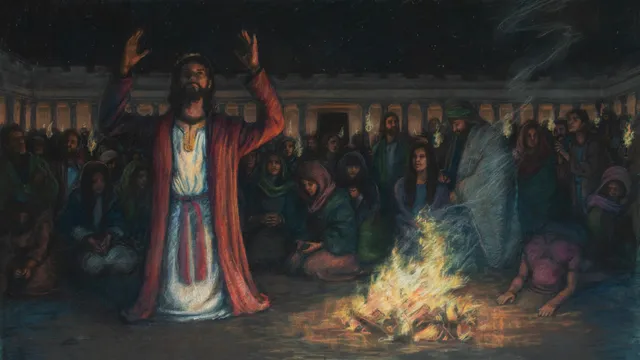
King Asa taught Judah to “seek the Lord God of their fathers” and to keep His commandments. Because they sought Him, “the Lord gave them rest round about” and helped them prosper (see 2 Chronicles 14:4–7). This account teaches that spiritual strength and stability come when individuals and communities deliberately turn to God and follow His commandments.
The prophet Azariah taught Asa, “The Lord is with you, while ye be with him… if ye seek him, he will be found of you” (2 Chronicles 15:2). This principle shows that our relationship with God requires effort and faithfulness. When we actively seek Him through prayer, covenant keeping, and worship, He reveals His presence and guidance in our lives.
When Judah faced a vast invading army, King Jehoshaphat prayed, acknowledging that the people had no power against their enemies and declaring, “Our eyes are upon thee” (2 Chronicles 20:12). This humble reliance on God demonstrates that prayer is an act of faith that invites divine intervention when human strength is insufficient.
Through a prophet, the Lord told Judah, “The battle is not yours, but God’s” (2 Chronicles 20:15). As the people exercised faith and praised God, He miraculously delivered them from their enemies (see 2 Chronicles 20:21–22). This account teaches that trusting the Lord allows His power to work in ways that surpass our own abilities.
Although Asa began his reign faithfully, later he relied on political alliances rather than the Lord for help. The prophet Hanani warned him that because he relied on the king of Syria instead of God, he had “not relied on the Lord thy God” (2 Chronicles 16:7–9). This story illustrates how trusting worldly solutions instead of God can weaken faith and spiritual strength.
King Uzziah was blessed with success while he sought the Lord, but when he became strong, “his heart was lifted up to his destruction” (2 Chronicles 26:16). His pride led him to overstep sacred boundaries and ultimately lose his position and blessings. This example warns that humility and continued dependence on God are essential for maintaining a faithful relationship with Him.
After the kingdom split following Solomon’s reign, Judah frequently faced military threats, political instability, and spiritual decline. Some kings encouraged faithfulness to God—removing idols, restoring temple worship, and calling the people to repentance—while others struggled with pride or misplaced trust in alliances rather than in the Lord.
If you have questions on this week’s reading, please email your questions to us here.
Practical solutions for someone in faith crisis:
Action Step: When confronted with a problem or decision, pray and seek the Lord’s guidance before relying on your own solutions.
In times of uncertainty, it is easy to rely only on our own understanding. The example of King Jehoshaphat shows that sincere prayer invites God’s help and brings clarity and strength during difficult situations (see 2 Chronicles 20:3–12). Seeking the Lord first aligns our perspective with His will and opens the way for divine guidance.
Encouraging Thought:
“Our eyes are upon thee” (2 Chronicles 20:12) expresses humble trust in God. When we place our focus on the Lord, we invite His wisdom and strength into our circumstances.
Action Step: Make time periodically to evaluate your spiritual habits and recommit to living the gospel more fully.
The people of Judah strengthened their relationship with God when they renewed their covenant to seek Him with all their hearts (2 Chronicles 15:12–15). Spiritual renewal helps us realign our priorities and restore focus when distractions or complacency weaken our devotion.
Encouraging Thought:
The people “sought him with their whole desire; and he was found of them” (2 Chronicles 15:15). God is always ready to receive those who sincerely return to Him.
King Uzziah was blessed with strength and success while he sought the Lord, but pride eventually led to his downfall (2 Chronicles 26:16). Remembering that blessings come from God helps maintain humility and keeps us spiritually grounded.
Encouraging Thought:
Objective: Help learners understand how trusting the Lord during difficult situations invites His help and guidance.
Activity Steps:
Follow-Up Question: How can turning to God first change the way we face difficult situations?
Objective: Help learners understand the importance of actively seeking the Lord and renewing their commitment to Him.
Activity Steps:
Introduction (5 min): Ask learners to think about something in life that improves with consistent effort (such as exercise, music practice, or studying). Discuss how relationships also require effort to stay strong.
Scripture Discussion (5 min): Read 2 Chronicles 15:2 and discuss the principle that if we seek the Lord, we will find Him. Then read 2 Chronicles 15:12–15 and talk about how the people renewed their covenant and rejoiced in seeking God together.
Application (5 min): Invite learners to write one small action they could take this week to strengthen their relationship with God (for example, more focused prayer or deeper scripture study). Encourage them to reflect on how these efforts can bring them closer to Him.
Follow-Up Question: What are some practical ways we can “seek the Lord” more intentionally in our daily lives?
Objective: Help learners recognize the dangers of pride and the importance of remaining humble when blessed with success.
Activity Steps:
Introduction (5 min): Show two cups—one upright and one turned upside down. Pour water toward both cups to illustrate that only the open cup can receive it. Ask learners what the illustration might represent.
Scripture Discussion (5 min): Read 2 Chronicles 26:15–16 about King Uzziah’s success and how pride led to his downfall. Discuss how humility allows us to continue receiving God’s guidance and blessings.
Application (5 min): Invite learners to share ways people can remain humble even when they succeed or receive recognition. Encourage them to identify practices such as gratitude, service, and remembering God’s role in their blessings.
Follow-Up Question: What habits help us stay humble when things are going well in our lives?
Gospel Library — Scriptures, manuals, talks, and study tools.
FAIR is a non-profit organization dedicated to providing well-documented answers to criticisms of the doctrine, practice, and history of The Church of Jesus Christ of Latter-day Saints.
We are a volunteer organization. We invite you to give back.
Donate Now