FAIR Resources for Come, Follow Me – Restoration Scripture
Week 31: July 27 - August 2: I Am Doing a Great Work"

Ezra 1; 3-7; Nehemiah 2; 4-6; 8

Doctrinal Focus

  • Key doctrines addressed in this week’s reading

The Lord “stirred up the spirit of Cyrus king of Persia” to allow the Jews to return and rebuild the temple (Ezra 1:1–3). This shows that God can influence leaders and events to fulfill His promises. Even those who may not belong to the covenant people can be instruments in the Lord’s hands to bless His children.

As the Jews returned to Jerusalem, they received resources and support to rebuild the temple (Ezra 1:4–6). This demonstrates that when God gives a commandment, He also prepares a way for it to be fulfilled. Trusting His direction allows us to see His hand providing what we need.

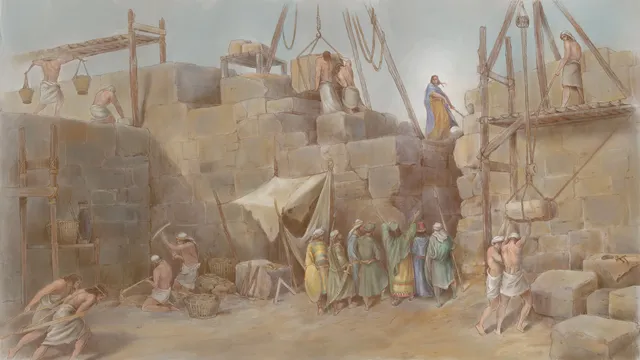
As the temple was being rebuilt, adversaries attempted to discourage and weaken the people of Judah (Ezra 4:4–5). Similarly, Nehemiah faced mockery and threats while rebuilding Jerusalem’s walls (Nehemiah 4:1–3). These examples show that opposition is not a sign of failure but often accompanies righteous efforts.

Nehemiah responded to opposition with faith, declaring his commitment to continue the work and trusting God for protection (Nehemiah 4:14–15; 6:3). The people pressed forward, and the wall was completed. This teaches that when we remain focused and rely on the Lord, obstacles cannot stop His purposes.

When Ezra read the law to the people, they listened attentively and were taught to understand it (Nehemiah 8:2–3, 8). As they recognized how far they had strayed, they were moved to repentance. This shows that sincere engagement with scripture invites the Spirit to teach and transform hearts.

After hearing the law, the people were encouraged to rejoice, for “the joy of the Lord is your strength” (Nehemiah 8:10). Their sorrow turned to joy as they embraced God’s word and acted on it. This demonstrates that true and lasting joy comes from aligning our lives with divine truth.

Historical & Contextual Insights

  • Insights in this week’s study
  • These events take place after the Babylonian captivity, as the Jewish people begin returning to Jerusalem under Persian rule to rebuild the temple and the city walls.

The Persian king Cyrus allowed the Jews to return to their homeland and rebuild the temple (see Ezra 1:1–3). However, the returning exiles faced discouragement, opposition from surrounding groups, and internal struggles as they worked to restore both their physical city and their spiritual identity.

  • This period represents both a physical and spiritual rebuilding of God’s covenant people. The restoration of the temple and Jerusalem symbolized renewed worship, covenant commitment, and identity as the Lord’s people after years of displacement and hardship.
  • Just as the Israelites had to rebuild their lives and faith step by step, we are often engaged in our own process of spiritual rebuilding. The Lord strengthens and guides us as we remain committed to His work, even when progress feels slow or opposition arises.
  • The efforts led by Ezra and Nehemiah were not just construction projects—they were acts of worship and covenant renewal. Rebuilding the temple restored a central place for worship, while rebuilding the walls reestablished protection and identity for the people. These efforts symbolized a deeper restoration of faith and commitment to God.


  • When the foundation of the temple was laid, the people responded with both joy and weeping (Ezra 3:10–13). Some rejoiced at new beginnings, while others mourned what had been lost. This shows that spiritual rebuilding can involve mixed emotions, including gratitude, humility, and remembrance.


  • Nehemiah’s leadership in rebuilding the walls required both faith and action. The people worked with determination while also remaining watchful against threats (Nehemiah 4:17–18). This balance illustrates that spiritual progress often requires both trust in God and diligent effort.
  • Much of the opposition faced by Nehemiah and the builders came in the form of distraction, discouragement, and deception rather than outright force. Enemies attempted to lure Nehemiah away from the work or spread fear among the people. This highlights how opposition to good works can be subtle and persistent.


  • Nehemiah refused repeated invitations to leave the work, responding, “I am doing a great work, so that I cannot come down” (Nehemiah 6:3). His focus and clarity of purpose helped him avoid being sidetracked. This teaches the importance of prioritizing God’s work over distractions.


  • The enemies also used fear tactics, trying to make the people feel unsafe and discouraged (Nehemiah 6:9). Nehemiah responded with prayer and determination, showing that spiritual strength comes from turning to God rather than giving in to fear.

If you have questions on this week’s reading, please email your questions to us here.

Apologetic Application

  1. Claim: “The return of the Jews from exile was purely political, not divine.”
  2.  
  3. Response:
  4. Historical Evidence: Ezra 1:1–3 records that the Lord “stirred up” Cyrus, king of Persia, to allow the Jews to return and rebuild the temple. This event also aligns with earlier prophecies that Jerusalem would be restored after captivity. The timing and outcome suggest more than mere coincidence.
  5.  
  6. Eyewitness Support: The decree of Cyrus was written and publicly proclaimed, and many Jews responded by returning to Jerusalem (Ezra 1:2–5). The collective experience of an entire group responding to this decree adds credibility to the account. It was not a private claim but a national movement.
  7.  
  8. Spiritual Confirmation: Believers often recognize God’s hand in events that align with His purposes, even when they involve political or worldly systems. Many testify that God can influence leaders and circumstances today just as He did anciently. This invites individuals to seek personal confirmation of God’s involvement in their own lives.
  9.  
  10. Logical Analysis: If God is sovereign and interested in His people, it is reasonable that He would work through historical events and leaders to accomplish His purposes. Political actions and divine influence are not mutually exclusive. The narrative demonstrates how God can use existing systems to fulfill His will.
  • Claim: “If a work were truly from God, it would not face resistance.”
  •  
  • Response:
  • Historical Evidence: The rebuilding of the temple and Jerusalem’s walls was consistently opposed by surrounding groups (Ezra 4:4–5; Nehemiah 4:1–3). Despite this, the work continued and was eventually completed. This pattern shows that opposition did not prevent God’s purposes from being fulfilled.
  •  
  • Eyewitness Support: The builders themselves experienced ridicule, threats, and attempts at deception (Nehemiah 6:1–4). Their firsthand experiences of both opposition and eventual success would have reinforced their belief that God was sustaining them. The completion of the wall stands as evidence of perseverance.
  •  
  • Spiritual Confirmation: Many individuals today experience resistance when striving to live faithfully or accomplish good works. These challenges often strengthen faith rather than diminish it. Personal experiences can confirm that opposition is part of spiritual growth, not a sign of error.
  •  
  • Logical Analysis: Good and meaningful efforts often face resistance because they challenge opposing interests or values. If God’s work seeks to bring about righteousness, it would naturally encounter opposition. Therefore, resistance can be consistent with, rather than contradictory to, divine purpose.
  • Claim: “Ancient religious texts no longer have practical value.”
  •  
  • Response:
  • Historical Evidence: When Ezra read the law to the people, they gathered attentively and sought to understand it (Nehemiah 8:2–3, 8). The people were deeply moved and changed their behavior in response. This shows that scripture had immediate, practical impact even in ancient times.
  •  
  • Eyewitness Support: The gathering described included men, women, and children who listened and responded together (Nehemiah 8:3). Their collective reaction—repentance followed by joy—demonstrates that the teachings resonated across the community. This shared experience strengthens the credibility of the account.
  •  
  • Spiritual Confirmation: Many people today find guidance, comfort, and direction through studying scripture. Personal experiences often show that scriptural teachings apply to modern challenges and decisions. This ongoing relevance supports the belief that God’s word is timeless.
  •  
  • Logical Analysis: Truths about human nature, morality, and our relationship with God do not change over time. Therefore, teachings that address these core aspects of life can remain relevant across generations. The enduring influence of scripture suggests that it continues to meet real human needs.

Practical Applications

Practical solutions for someone in faith crisis:

Action Step: Identify one important spiritual priority and commit to not letting distractions pull you away from it this week.

Nehemiah faced repeated attempts to distract him from rebuilding the wall, yet he remained focused and declared, “I am doing a great work, so that I cannot come down” (Nehemiah 6:3). Staying focused on what matters most helps us make steady progress and avoid losing momentum. It also strengthens our ability to discern between what is urgent and what is truly important.

  1. – Identify a meaningful spiritual goal (prayer, scripture study, service).
  2. – Write it down and schedule time for it daily.
  3. – Recognize common distractions that pull you away.
  4. – Set boundaries to protect your time (limit distractions if needed).
  5. – Remind yourself daily: “This is a great work.”

Encouraging Thought:

When we remember the importance of God’s work, it becomes easier to say no to distractions and stay committed to what matters most.

Action Step: When you feel prompted to do something good, act on it with faith—even if it feels difficult or beyond your ability.

The Jews were able to rebuild the temple because the Lord provided direction, resources, and support (Ezra 1:4–6). Trusting that God prepares a way gives us courage to act and move forward. It helps us rely less on our limitations and more on His power.

  1. – Pay attention to promptings or impressions to do good.
  2. – Pray for help and strength to follow through.
  3. – Take one small step forward, even if you feel unsure.
  4. – Look for ways God provides help along the way.
  5. – Reflect on how He has supported you.

Encouraging Thought:

If God has given you a work to do, He will also provide the means to accomplish it.

  • Action Step: Set aside dedicated time each day to read and truly understand the scriptures.

When Ezra read the law to the people, they gained understanding and were spiritually strengthened, leading to both repentance and joy (Nehemiah 8:8–10). Scripture study invites the Spirit, helping us see clearly and make better decisions. It transforms not just our knowledge, but our hearts.

  1. – Choose a consistent time and place for scripture study.
  2. – Read slowly and look for key principles.
  3. – Ask questions about what you read.
  4. – Write down impressions or insights.
  5. – Apply one thing you learned that day.

Encouraging Thought:

  • “The joy of the Lord is your strength” (Nehemiah 8:10)—as we understand and live God’s word, it brings lasting joy and spiritual power.

Ideas for Teaching

Objective: Help learners recognize and resist distractions that pull them away from important spiritual priorities.

  1. Paper and pens


  2. Small slips of paper (with distractions written on them, e.g., fear, busyness, social pressure)


  3. Scripture: Nehemiah 6:1–4

Activity Steps:

  1. Introduction (5 min): Give each learner a slip of paper with a common distraction. Ask: “What kinds of things pull us away from what matters most?” Briefly discuss how distractions can seem urgent but are not always important.
  2.  
  3. Scripture Discussion (5 min): Read Nehemiah 6:3 together. Discuss how Nehemiah responded to repeated distractions and why his response was powerful. Ask learners what made his focus so strong.
  4.  
  5. Application (5 min): Invite learners to write down one “great work” in their life (spiritual goal, responsibility, or relationship). Then have them identify one distraction they will avoid this week to stay focused.

Follow-Up Question: What helps you stay focused on what matters most when distractions arise?

Objective: Help learners understand how faith and teamwork help overcome challenges in doing God’s work.

  1. Building materials (blocks, cups, or simple objects)


  2. Scripture: Nehemiah 4:17–18

Activity Steps:

Introduction (5 min): Divide learners into small groups and give them materials to build a simple structure. While they build, introduce small “challenges” (time limits, restrictions, or interruptions) to simulate opposition.

Scripture Discussion (5 min): Read Nehemiah 4:17–18 and discuss how the people worked while also staying prepared for opposition. Talk about how they balanced faith, effort, and vigilance.

Application (5 min): Discuss real-life challenges learners face when trying to do good. Invite them to share ways they can rely on God and work together with others to overcome difficulties.

Follow-Up Question: How can we support each other when we face challenges in doing what’s right?

Objective: Help learners feel the joy and strength that come from understanding and applying scripture.

  1. Scriptures for each learner


  2. Paper and pens


  3. Scripture: Nehemiah 8:8–10

Activity Steps: 

Introduction (5 min): Ask learners: “When have you learned something that really changed how you felt or acted?” Discuss how understanding brings clarity and confidence.

Scripture Discussion (5 min): Read Nehemiah 8:8–10 and discuss how the people reacted when they understood God’s word. Emphasize the phrase “the joy of the Lord is your strength.”

Application (5 min): Invite learners to read a short scripture and write one insight or feeling they receive. Encourage them to think about how they can apply that truth in their life this week.

Follow-Up Question: How does understanding God’s word bring joy and strength into your life?

QUICK REFERENCE

  • God directs His work through individuals and nations — The Lord stirred up Cyrus to begin the restoration of Jerusalem (Ezra 1:1–3).


  • When God gives a commandment, He provides a way — The people were supported with resources to rebuild the temple (Ezra 1:4–6).


  • Opposition often accompanies righteous efforts — Adversaries tried to stop the work, but it continued (Ezra 4:4–5; Nehemiah 4:1–3).


  • Focus is essential to accomplishing God’s work — Nehemiah refused distractions, declaring his commitment to the work (Nehemiah 6:3).


  • God’s word brings understanding, joy, and strength — The people rejoiced as they understood the law (Nehemiah 8:8–10).
  • Why trust modern prophets?
  • God consistently calls prophets to guide His people, as seen with Ezra and Nehemiah, who taught, warned, and directed the people according to God’s will (Ezra 7:10; Nehemiah 8:8). Their leadership brought spiritual renewal and helped the people stay aligned with God’s covenant. This pattern supports the belief that God continues to guide His children today through living prophets.
  •  
  • Why does God allow mistakes?
  • Even in this scripture block, progress was not perfect—there were delays, fears, and moments of discouragement among the people (Ezra 4:4–5). God allows individuals to act and learn, which includes making mistakes. Through these experiences, people grow, repent, and become better aligned with His will.
  • Ezra 7:10 — Preparing the heart to seek, do, and teach God’s law.


  • Nehemiah 6:3 — Staying focused on God’s work despite distractions.
  • Gospel Library — Access scriptures, study guides, and general conference talks.


  • Come, Follow Me — Official lesson materials and additional study helps.