
FAIR is a non-profit organization dedicated to providing well-documented answers to criticisms of the doctrine, practice, and history of The Church of Jesus Christ of Latter-day Saints.
FAIR › Scripture Study Resources: Supplement Your Come, Follow Me Study › Study Resources for the Old Testament & Pearl of Great Price › Week 32 Thou Art Come … for Such a Time as This
Esther
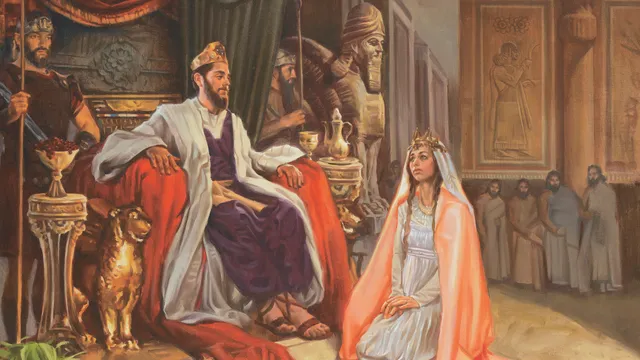
In Esther 4:14, Mordecai teaches that Esther may have come to her royal position “for such a time as this.” This suggests that God works through circumstances and timing to place His children where they can bless others. Recognizing this can help us trust that our own lives are guided by divine design, even when we don’t immediately see the purpose.
Esther responds to Mordecai’s counsel by choosing courage, saying she will go before the king despite the risk (Esther 4:15–16). Her decision shows that understanding divine purpose invites action, not passivity. When we act in faith, we align ourselves with God’s purposes and allow Him to work through us.
Esther’s willingness to risk her life demonstrates deep trust in God’s power to deliver (Esther 4:16). Her example teaches that courage is not the absence of fear, but the choice to act despite it. As we rely on God, He strengthens us to face challenges we could not overcome alone.
The Jews are ultimately delivered through Esther’s actions and the unfolding of events (Esther 7:3–6; 8:5–8). While God’s name is not explicitly mentioned in the book, His influence is evident throughout the story. This reminds us that God is actively involved in our lives, even when His hand is not immediately visible.
Before approaching the king, Esther asks the Jews to fast with her for three days (Esther 4:16). This unified act of devotion shows their dependence on God’s help. Fasting today likewise invites spiritual power, clarity, and alignment with God’s will.
The Jews fast together and later rejoice together in their deliverance (Esther 9:20–22). Their unity amplifies their faith and gratitude. As we unite in righteousness with others—family, wards, or communities—we create conditions where God’s blessings can be poured out more abundantly.
The Jews living in Persia were a minority people under foreign rule, often vulnerable to prejudice and political manipulation. Haman’s rise to power and his decree to destroy the Jews reflect the real dangers they faced in exile (Esther 3:5–10). Esther, a Jewish woman, becomes queen in a setting where her identity is initially hidden.
If you have questions on this week’s reading, please email your questions to us here.
Practical solutions for someone in faith crisis:
Action Step: Reflect on where God has placed you and ask how you can bless others there.
Esther came to understand that her position was not accidental but divinely appointed (Esther 4:14). When we see our lives through this same lens, we gain confidence and direction. This perspective helps us act with greater purpose and trust in God’s plan.
Encouraging Thought:
You are where you are for a reason—God can use you right now to accomplish something meaningful.
Action Step: Choose one situation where you need courage and take a faithful step forward.
Esther faced real fear but chose to act anyway, saying, “if I perish, I perish” (Esther 4:16). Courage rooted in faith invites God’s power into our lives. When we act despite fear, we grow spiritually and become instruments in God’s hands.
Encouraging Thought:
Faith doesn’t remove fear—but it gives you the strength to move forward anyway.
Esther invited her people to fast before she acted, showing dependence on God (Esther 4:16). Fasting helps us focus spiritually, increase humility, and invite divine guidance. It aligns our will with God’s and strengthens our ability to receive answers.
Encouraging Thought:
Objective: Help learners recognize that God places them in specific situations to bless others.
Small slips of paper, pens, a container or bowl
Activity Steps:
Follow-Up Question: How can recognizing God’s timing in your life change the way you act in everyday situations?
Objective: Help learners practice choosing courage and faith in difficult situations.
Scenario cards (peer pressure, standing up for beliefs, helping someone in need)
Activity Steps:
Introduction (5 min): Ask: “What makes it hard to do the right thing?” List responses and briefly discuss fear and pressure.
Scripture Discussion (5 min): Read Esther 4:16 and discuss what gave Esther courage. Emphasize her willingness to act despite fear.
Application (5 min): Divide into small groups and assign each a scenario. Have them role-play how they could respond with courage and faith.
Follow-Up Question: What helps you choose courage when you feel afraid?
Objective: Help learners recognize God’s influence even when it is not obvious.
Dominoes or a simple chain-reaction object (optional), whiteboard
Activity Steps:
Introduction (5 min): Set up a simple domino chain (or describe one) and knock it over. Ask learners what caused the final result—highlight how small actions lead to big outcomes.
Scripture Discussion (5 min): Review key moments in Esther (Esther becoming queen, the king’s sleepless night, Haman’s downfall). Write them on the board and discuss how they connect.
Application (5 min): Invite learners to reflect on times when something small led to an important outcome in their life. Discuss how God may have been involved.
Follow-Up Question: How can you better recognize God’s hand in your life, even when it’s not obvious?
FAIR is a non-profit organization dedicated to providing well-documented answers to criticisms of the doctrine, practice, and history of The Church of Jesus Christ of Latter-day Saints.
We are a volunteer organization. We invite you to give back.
Donate Now