• Skip to primary navigation
  • Skip to main content
  • Skip to primary sidebar
  • Skip to footer

FAIR

  • Find Answers
  • Blog
  • Media & Apps
  • Conference
  • Bookstore
  • Archive
  • About
  • Get Involved
  • Search

Testimonies

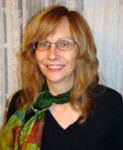
Vanessa C. Fitzgibbon

The first thing I have to admit is that writing a testimony for me is like stepping on sacred ground that has been kept in a very sacred place in my heart. So when I started wondering how to express the testimony that I gained about my Savior, Jesus Christ, through so many years of prayers, trials, and wonderful spiritual experiences, I understood it has been a very long process, of which the foundations were laid many years before I became a member of The Church of Jesus Christ of Latter-day Saints.
The first thing that comes to my mind is that I did not know how to pray expressing my own feelings. I was raised in a very traditional Catholic home, in the industrial city of Santo André in Brazil, and the only form of prayer I had learned was the Hail Mary and the Lord’s Prayer, repeated at home and in regular church meetings. But my parents always taught us two important values: the value of knowing that there is a living Father in Heaven who listens to our prayers, and the value of education. So my first question was how could God answer a prayer that was just a daily repetition? How could we express intelligently our feelings to Him? After considering my prayers’ restrictions, my second concern was about how to be educated and at the same time keep the faith in things that I did not know and that, many times, we were not even allowed to talk about. The two values learned at home took me to make my own decision to look for a religion that could fulfill my spiritual needs and teach me not just the answers to my existential questions, but also the way to communicate with my Father in Heaven. Deep in my heart I felt that “the glory of God is intelligence,”1 but somehow I could not reconcile religion and secular knowledge.

Being of a young age, I did not put a lot of thought into these questions, believing that time would take care of them—until one day when I found a magazine in my parents’ library, something called The New Era, dated 1966. I had never seen such a publication and my English reading knowledge was not enough to understand what it was about. For some unknown reason, I did not ask for my parents’ help in translating its content. All I knew was that some missionaries from the “American Church” had brought it to my family once, with the promise that they would come back to teach our family about their church. But they never came back. I found inside the magazine some interesting pictures of a campus. I had no idea where or what it was, but I immediately knew that, one day, I wanted to go there. This was around 1975; I cut the pictures out, taped them in my closet door, and set a goal to find out where such a magnificent place was. I was familiar with several other similar university grounds, but this one had something different that attracted me. For years these pictures haunted me, and my interest, or maybe curiosity, kept increasing. It was in 1977 that some missionaries from the “American Church” knocked again on our door and talked to my parents. One more time, they promised to come back, but again, they never did. Until one day, a friend from São Paulo invited me to visit her and to go to hear and see the prophet and apostles from her church. At that time, to go from my hometown to São Paulo meant something like two hours in a very crowded commuter bus. I got the permission to go from my mom and I took the bus to meet my friend. When I got there, instead of a man with a long beard wearing a long mantle and holding a long staff, I saw the friendly and calm face of an old man in a very nice suit, soft-talking and acting as if he knew each person in the audience. On this same occasion, I met the two missionaries who had talked to my parents a few weeks before, but this time I made sure that they would come back to answer all the questions I had had for such a long time.

It took me four months to receive the lessons from the missionaries and change my life forever. Meanwhile I learned about Brigham Young University, the place in the mysterious pictures that I had had in my room for years. More than solving a puzzle, I felt a peace in my heart telling me that I had finally found a purpose in life through a living religion that could combine faith and education, a religion that could teach me about prayer, about a Father that does listen to our prayers, and a religion that could value treasures not from this world. At that time, I did not measure the consequences of my decisions. But, today, I can certainly see and understand the long and straight path I took, covered by unforgettable events and many tears.

Because I was the only member of my family to join the Church at that point, one of the greatest challenges I faced throughout my conversion was getting other people surrounding me to accept and understand Joseph Smith’s sacred mission in restoring the gospel. Because our family valued education so much, we were always surrounded by books, scholars, and lectures that would enhance our intellect and worldly knowledge. So it was natural always to be questioned on many aspects of Mormonism by inquiries like, “How can you believe in a man like Joseph Smith?” or “Don’t you know that Mormons are racist?” or even “How can you believe in somebody who says he saw the Father AND the Son?” “How can someone believe that God and Jesus Christ have bodies of flesh and bones?” For many years, all I could do was to put my eyes down and be quiet. Nothing would come from my mouth. I had a testimony in my heart, but I felt I did not have the secular knowledge to rationally give an answer, nor enough courage to express it. As years went by, I learned how to trust in the Spirit more than in the books, and instead of just letting words come out of my mind, my way of living became a vivid testimony for many who knew the struggles I had gone through in life.

However, one of the main aspects of my personal testimony came from Joseph Smith and the lessons he taught us through his faith and example. It was this man who had only a few years of formal education who was chosen by God to restore His Gospel in the later days. Like Moses, who had limited speech skills but was chosen to lead Israel, a man with very limited writing knowledge was chosen to translate a book which became another testimony of Jesus Christ. Joseph Smith gave us much more than the Book of Mormon. Through his example, we come to learn that God does answer our prayers when we ask Him in faith. More than that, Joseph Smith never asked us to blindly believe in his words, but, instead, he opened the possibility to all of us to find the answers for ourselves and to know Our Lord Jesus Christ by ourselves. More than that, through Joseph Smith’s example of faith I learned to appreciate even more the education and the awareness my parents gave me, which created in me the desire to search for the Church of Jesus Christ and the roots of the testimony I have today.

After coming to BYU for my master’s and earning my PhD in Portuguese from another prestigious university in the United States, I understood how limited my secular knowledge is. I still have so much to learn and to understand about language, literature, poetry, people, history, and the things related to my field of research. But despite my professional achievements and schooling I also understand how little we are and how limited is our knowledge of eternal matters. I still have so much to learn about my Savior and I truly believe that “God so loved the world, that he gave his only Son, that whoever believes in him should not perish but have eternal life.”2 Each day for me is a living proof of the Lord’s love for me, and it is my honor to be a witness of his love for us in these latter days.

Notes:
1 Doctrine and Covenants 93:36
2 John 3:16

—————————————————

Vanessa C. Fitzgibbon is a Brazilian native who has lived in the US for the past nineteen years. She is an Assistant Professor of Portuguese at Brigham Young University-Provo. She received her master’s degree in Luso-Brazilian Literature from Brigham Young University and her PhD in Portuguese from the University of Wisconsin-Madison. Her main area of research is contemporary Brazilian literature and film, with emphasis on racial discrimination and resentment in the establishment of the Brazilian identity. Some interests also include poetry and theater as well as cultural and historical studies in Brazil and Latin America.

Posted January 2011

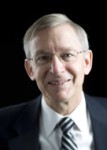
John E. Clark

As a believing Mormon and practicing Mesoamerican archaeologist, I’m frequently questioned by strangers and neighbors about physical evidence and proofs of the Book of Mormon. I try to dissuade both friends and foes alike from going down this path, because absolute proof is a logical and philosophical impossibility. I have frequently made three claims that may at first glance appear at odds: (1) archaeological evidence will never prove or disprove the truth or falsity of the Book of Mormon, (2) the amount of physical evidence that potentially corroborates claims in the Book of Mormon has increased as a function of more and better archaeology, and (3) evidence gets interpreted according to one’s prior belief or disbelief in the book. Belief is sight, and disbelief is blindness. This is a well-known social and psychological phenomenon not limited to religious, political, or scientific topics, and I will not explore it further. Antecedent beliefs account for most of the shouting about the Book of Mormon I have read or heard (except for that by disgruntled or excommunicated Mormons). Belief of some sort precedes any parade of evidence, and believers of all stripes tend to see what they look for.
My own belief is primitive in the sense that it long preceded any knowledge of archaeology and was not based on analysis of external evidence. My belief is visceral rather than inferential. It came from reading the book and living principles it expounds. I was raised in the LDS Church, so a compelling argument can be made that my beginning belief was more cultural than logical. I accept this as likely the case. My initial immersion in Mormonism, however, does not account for my persisting beliefs after having been subjected to the skepticism of philosophy and science for three decades. Everything about the Book of Mormon still feels good to me, down to my bones. Intellectually, I am aware of most arguments against the book’s veracity, and I accept them as interesting challenges but not as proofs against it. I have extensive experience with how archaeologists recover, manufacture, and interpret evidence, so I am not concerned with their claims against the book. Again, it is not the evidence that matters most with this question but the assumptions the arguments begin with.

I have acknowledged in print that many items mentioned in the Book of Mormon have not been found by archaeologists and may never be found. Other things have been found. The situation that confronts the logical empiricist is that the evidence is a mixed bag, and will forever be a mixed bag, so it becomes a matter of deciding how to weigh positive and negative evidence, specify default assumptions, decide who will bear the burdens of proof, and delimit the degree of proof needed. This is where my upbringing comes in. As someone who believes in the Book of Mormon, I have not seen anything in my extensive studies of archaeology to dissuade me of my belief. Legalistically, this is about the strongest claim I could make under oath. It is appropriate to say here that I have not been looking for contrary evidence, or ignoring evidence. Belief is not an excuse for ignoring issues or for applying lax standards of logic to arguments. Archaeological evidence does not make me at all uncomfortable with my faith and confidence in the Book of Mormon. My message to fellow members is that archaeological evidence should not make them uncomfortable either. On the other hand, it should not give them a false sense that evidential matters have been decided in the book’s favor. The physical evidence simply cannot decide the matter of the book’s truth. I urge those interested to pray to God about the matter. I suspect that many of my colleagues are more upset with my belief in God than with my belief in the Book of Mormon—but the beliefs are inseparable.

My archaeology does not concern the Book of Mormon and never has. I would never attempt to prove the book’s message by science, and I think such efforts are a foolish waste of time—not because there is no evidence, but because the evidence cannot make a difference in the ways imagined. I tell Mormon friends that if I found an artifact that would make a significant difference, such as the golden plates, I would bury it and keep my mouth shut. This is rhetorical exaggeration, of course, to drive home the point that, as a practicing Mormon, I would have no credibility on the matter. I would be the last one in the profession to be believed if Book of Mormon related artifacts were found. In reality, I would not dream of spinning the data found in my archaeology even if confronted with such an artifact. This hypothetical example does make the point that having an object is not the same as having a fact or having a legitimate argument. Those interested in these issues should investigate how artifacts get transformed into acceptable facts.

It is not my intent to write a treatise on Book of Mormon arguments and philosophical approaches. My message to those who might be interested is the simple one that I know the Book of Mormon well and the archaeological data from Middle America very well. The juxtaposition of the two causes me no intellectual heartburn or loss of faith. For those interested in such things, it would be useful to keep a couple of facts in mind. First, the lands of the Book of Mormon have not been securely identified, and, second, archaeology keeps adding facts to stories of what happened in particular pasts. This is to say that Book of Mormon lands are an unfixed target and that archaeological claims are a moving object. The two are like two unknowns in a binomial equation. One has to nail down one to evaluate the other in making arguments about physical evidences of the Book of Mormon. Such arguments require one to be in the right place at the right time. Time is specified in the book, but place has not been established. The best arguments have settled on Mesoamerica as probable Book of Mormon lands, but it should be realized that all such arguments are circular and should not be taken as definitive.

Mormon colleagues have argued with me, vehemently, that, with enough of the right kind of evidence, objective seekers of truth will be persuaded of the book’s truth and cover story. I tell them that their model of science and objective seekers does not approximate my experience with scientists. My closest non-Mormon academic colleagues accept or tolerate my Mormonism; others are annoyed with it. They think I must be doing something nefarious on the side. To deny such a charge would be to give it credence. The issue at stake is whether I can be an “objective” scientist and Mesoamerican archaeologist if I believe in the Book of Mormon. I try my best to be. Since I’m not selling Mormonism, and they’re not buying it, there has been no reason to attempt discussion of personal biases or to explore the parameters on which such a discussion could even occur. Some colleagues think that I must compartmentalize my religious beliefs and my archaeological queries and avoid mixing them for fear of explosion. This explanation comes close to accusing me of double-mindedness. My own cognitive model for how I think is that I treat both topics in the same way, and with the same logical standards. I don’t tolerate nonsense from Mormons or non-Mormons, whatever their credentials. I have not attempted a rigorous self-analysis of my belief à la Descartes or C. S. Lewis. I know what I believe, but I can’t recover the steps leading to the beliefs arrived at so long ago. Nor can I prove through logic that my beliefs are correct, and I would never attempt it. My belief goes beyond deduction or induction. I can say that living by faith is harder than living by skepticism. I am not convinced that being eternally suspicious of everything is a sane way to live. My faith and belief in the Book of Mormon brings me joy, and it makes me want to work at becoming a better person. I’m hard enough to get along with as it is. Without the Book of Mormon’s constraining influence, I’m afraid I could be a beast.

————————————————–

John E. Clark earned his B.S. and M.A. in archaeology from Brigham Young University, and his Ph.D. in anthropology from the University of Michigan in 1994. He is currently a professor in the Department of Anthropology at Brigham Young University where, for many years, he directed BYU’s New World Archaeological Foundation. At BYU, he was awarded the Karl G. Maeser Excellence in Research Award in 2005 and, in 2008, was chosen to deliver the Martin B. Hickman Outstanding Scholar Lecture for the College of Family, Home, and Social Sciences.

Among his numerous publications are, with Michael Blake, “El origen de la civilizacíon en Mesoamérica: Los olmecas y mokaya del Soconusco de Chiapas, México,” in El preclásico o formativo: Avances y perspectivas (1989); “A Key for Evaluating Nephite Geographies,” Review of Books on the Book of Mormon (1989); “Olmecas, olmequismo, y olmequización en Mesoamérica,” in Arqueología (1990); “The Beginnings of Mesoamerica: Apologia for the Soconusco Early Formative,” in The Formation of Complex Society in Southeastern Mesoamerica (1991); with Michael Blake, “The Power of Prestige: Competitive Generosity and the Emergence of Rank Societies in Lowland Mesoamerica,” in Factional Competition and Political Development in the New World (1994); as editor, Los Olmecas en Mesoamérica (1994); “Los olmecas, pueblo del primer sol,” in Los Olmecas en Mesoamérica (1994); “Antecedentes de la cultura olmeca,” in Los Olmecas en Mesoamérica (1994); “Mesoamerica Goes Public: Early Ceremonial Centers, Leaders, and Communities,” in Mesoamerican Archaeology (2004); “The Birth of Mesoamerican Metaphysics: Sedentism, Engagement, and Moral Superiority,” in Rethinking Materiality: The Engagement of Mind with the Material World (2005); with Michelle Knoll, “The American Formative Revisited,” in Gulf Coast Archaeology, the Southeastern U.S. and Mexico (2005); “Archaeological Trends and the Book of Mormon Origins,” BYU Studies (2005); “Archaeology, Relics, and Book of Mormon Belief,” Journal of Book of Mormon Studies (2005); as editor, with Mary E. Pye, Olmec Art and Archaeology in Mesoamerica (Washington, D.C.: National Gallery of Art, 2006); with Mary Pye, “The Pacific Coast and the Olmec Question,” in Olmec Art and Archaeology in Mesoamerica (2006); with Michael Blake, Richard G. Lesure, Warren D. Hill, and Luis Barba, “The Residence of Power at Paso de la Amada, Mexico,” in Palaces and Power in the Americas: From Peru to the Northwest Coast (2006); with David Cheetham, “Investigaciones recientes en Cantón Corralito: Un possible enclave olmeca en la costa del Pacífico de Chiapas, México,” in XIX Simposio de Investigaciones Arqueológicas en Guatemala, 2005 (2006); “Mesoamerica’s First State,” in The Political Economy of Ancient Mesoamerica: Transformations During the Formative and Classic Periods (2007); “Who’s Minding Production?” in Archeological Papers of the American Anthropological Association; “In Craft Specialization’s Penumbra: Things, Persons, Action, Value, and Surplus,” in Archeological Papers of the American Anthropological Association (2007); “La Alba de Mesoamérica,” in Procesos y Expresiones de Poder, Identidad y Orden Tempranos en Sudamérica (2007); “The Arts of Government in Early Mesoamerica,” in Annual Review of Anthropology (2007); with Arlene Colman, “Time Reckoning and Memorials in Mesoamerica,” in Cambridge Archaeological Journal (2008); “Teogonia Olmeca: Perspectivas, Problemas y Propuestas,” Olmeca, Balance y Perspectivas: Memoria de la Primera Mesa Redonda (2008); “Las Sociedades Complejas del Occidente de México en el Mundo Mesoamericano,” in Homenaje al Dr. Phil C. Weigand: El Origin del Estado en Mesoamérica (2009); “Hands and Hearts: How Aztecs Measured Their World,” in Mesoamerican Voices (2009).

Posted January 2011

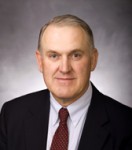
Douglas J. Henderson

I am writing this at the invitation of Dan Peterson. Evidently, he has had contact with “cultured” gentlemen, and ladies, who regard the Gospel and all religions as “cults.” I find this attitude to be amusing since the words cultured and cult have the same root.
I testify that the Gospel is true. This is not because God or Jesus have visited me but because I have had some powerful experiences that have testified this to me.

But what is truth? Because of Newton’s work, scientists originally thought that everything was determined by the initial positions and velocities of a system. As a result, some thought that we had no free will. Our life was determined by the solution of a complex set of second order differential equations. Such thoughts were overturned a century ago by quantum theory and the uncertainty principle. Einstein was repelled by the uncertainty principle, saying that God did not play dice with the universe. However, dice or no dice, the uncertainty principle is still with us. Einstein talked about “God,” but there is no evidence that he was thinking in terms of a personal God. Rather, he meant the essence of the universe.

Most early scientists thought of the universe as an infinitely divisible continuum. The rules of chemistry suggested otherwise but it was not until the beginning of the twentieth century that all scientists accepted the existence of atoms. Atoms were first thought to be hard billiard balls that were indivisible. Shortly thereafter, it was decided that atoms were composed of “elementary” particles—electrons and protons and then neutrons and then a large family of elementary particles—and that these were the building blocks of the universe. More recently, the elementary particles have come to be believed to consist of even more “elementary” particles: the, as yet, unobserved quarks. Will this analysis go on, perhaps infinitely? This would not surprise me.

I do not doubt that the universe and the earth are billions of years old. Life is very old. Man is a primate and evolved over millions of years. Where does Adam fit into this picture? Perhaps he was the first man to whom God revealed Himself. In any case, the book of Genesis is not a manual for creating worlds or life. I accept that there was a flood. The story of the flood persists in too many cultures to be dismissed. But is there enough water to flood the entire earth? Can all the species of life (or at least those that would drown) be placed in a relatively small vessel? On the other hand, can life be explained by a random process? I think not. If the universe is, as I believe, infinitely complex, could it develop in a finite length of time unless creation were guided by an infinite personage? I do not believe that life is possible without God.

Can science, as practiced by humans, find the truth? I believe that science finds only an approximation to the truth that needs continual refinement. The scientific method gives us a self-correcting method of seeking the truth. I believe that scientists observe what can be thought of as an exceedingly complex multi-dimensional chess game, whose rules are unknown to them. A subset of the rules must be determined by observation of the game and are continually subject to revision. How closely these empirically determined rules correspond to the actual rules is really not known.

One might think that since it is a human construct, mathematics is fully understandable. Unfortunately, this is not so. Gödel showed that logically undecidable propositions exist. One might say “Fine, but let us stick to numbers. They, at least, are clear.” Well yes, if we stick to a finite set of numbers. However, numbers are infinite. The counting numbers, or integers, continue indefinitely. Whatever the value of the integer that we create, we can always add one more. Mathematicians say that the integers are infinite but countable. The total number of integers is given a name, aleph-null (aleph is the first letter in the Hebrew alphabet). What about rational numbers, or fractions? Rather obviously, there are more rational numbers than integers. Yet Cantor showed that the rational numbers can be ordered in a one-to-one relation to the integers and the rational numbers are still countable. This sounds strange but this is so because the integers and rational numbers are infinite sets. However, the real numbers (integers, fractions, square and higher order roots, transcendental numbers, such as pi, …) are not countable. Amusingly, the source of this uncountability seems to be the set of numbers for which an algorithm to create such numbers cannot be given. Is there a relation between aleph-null and the number of real numbers? Probably there is, but it has not been established although the relation is believed to be exponential. The integers and real numbers are but two of an infinite set of infinities. Is the set of all infinities countable? Mathematicians seem to think so as they index the set of infinities, aleph-n with an integer, n. However, the countability of the alephs is not known, at least not by me. It is claimed that thinking about infinities drove Cantor insane. He died in a sanatorium. Do you understand this? I don’t. An infinite mind is required.

I subscribe to the view of my friend and mentor, Henry Eyring, that the Gospel is the totality (countable?) of truth. Whatever is true is part of the Gospel. However, it will take us a very long (infinite?) period of time to know all the truth. Is it even possible to know all (infinite) truth? The Gospel gives us the portion of the truth that is sufficient to bring us to God. That is sufficient for me.

Let me close by relating an experience of mine that occurred not quite twenty years ago. I was sitting in the chapel of the Lomas Ward of our Church in Mexico City. The young man in the row in front of me had a recently inflicted wound in the lower part of the back of his skull that had been closed with many stitches and that literally extended from ear to ear. He was a missionary for our Church. A stranger had come behind him with a machete and attempted to decapitate the missionary. However, the man’s aim was poor and he struck the missionary’s skull, not his neck. The combination of this poor aim, the presumably blunt machete and insufficient force, and the Lord’s protection left the young man with a huge scar but with his head attached. The missionary might have said that enough is enough and he wanted to return home. Instead, he said that he would remain and complete his mission. If the missionary’s name was Elder Superman this would not be remarkable. However, he is typical of the young missionaries who are sent out by our Church. The faith and courage of these young men is what is remarkable. What is the source of this faith and courage?

Recently, I saw a sign on the internet, “You Know It’s a Myth. This Season (Christmas), Celebrate REASON.” Unfortunately, reason is insufficient.

————————————————–

Douglas Henderson was born in Calgary, Alberta, and grew up in Vancouver, British Columbia (both in Canada). He obtained a BA in mathematics from the University of British Columbia and a PhD in physics from the University of Utah under the direction of Henry Eyring. An Alfred P. Sloan Foundation Fellow (1964-69); a visiting scientist at the CSIRO Chemical Research Laboratories in Melbourne, Australia (1966-67); a visiting professor at the Universidad de la Plata in Argentina (1973) and the Korea Advanced Institute of Science (1974); Manual Sandoval Vallarta Professor of Physics at the Universidad Autonoma Metropolitana, in Mexico City (1988); and honorary professor of chemistry at the University of Hong Kong (1992-present), he has also taught physics and mathematics at the University of Idaho, Arizona State University, and the University of Waterloo (in Canada). The bulk of his career (twenty-six years) was spent at the IBM Research Laboratory in San Jose, California. The final two years of his tenure at IBM were spent on leave, teaching physics as the Juan de Oyarzabal Professor at the Universidad Autonoma Metropolitana (Iztapalapa campus) in Mexico City. After retiring from IBM, he taught chemistry at Brigham Young University for ten years, during which time he received a John Simon Guggenheim Fellowship. He won the Joel Henry Hildebrand Award for Contributions to the Theory of Liquids and Liquid Mixtures from the American Chemical Society in 1999. Dr. Henderson is now nominally retired, but he continues to be active in research. Most recently, he was made a Fellow of the Royal Society of Chemistry (2009) and awarded an honorary doctorate in Condensed Matter Physics by the Ukrainian Academy of Sciences (2010).

Posted January 2011

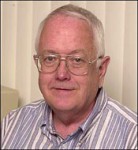
Brian D. Stubbs

What I Know From Experience

Not claiming to be a model of Mormon mantra, I have, nonetheless, tried learning and doing God’s wisdom enough to feel His loving kindness, to see His tender mercies in my life, and to benefit from His two-by-four tutoring when I need growth, perspective, or attitude adjustment. For that is how one gets acquainted with God and His Son, the Messiah: by learning about them (in scripture) and then doing what one learns, which brings regular witnesses of their love for us and their involvement in our lives—if we live for it, and that is the key.

Still in recovery from being a math major before turning linguist, I periodically figure probabilities. When prayers are answered whose probabilities of happening by chance range from 1 in 2 to 1 in millions, and several such answers to prayer happen in succession, I multiply the fractions and feel depths of gratitude in the impossibility of all such happening by chance. Is that not comparable to the scientific method? The hypothesis—God lives, loves us, and answers prayers, or He does not—is a supremely important question, if not quest, of life. So why not do the experiments on His word? He invites us: “Prove me now herewith, saith the Lord of hosts, if I will not open you the windows of heaven and pour you out a blessing” (Malachi 3:10); “if any man will do His will, he shall know of the doctrine, whether it be of God, or whether I speak of myself” (John 7:17), et cetera. Do the experiments, abide in His will, then the witnesses follow, and after so many hundreds of evidences have been experienced, doubts vanish, one feels God’s love from time to time, one’s faith becomes unshakeable, and one’s heart is blessed and changed to a degree that there is no desire to do evil or to do life any other way than God’s way. Of course, many are not interested in God’s way; they assume that the fun and thrills are elsewhere, and after doing life contrary to God’s way, it sometimes becomes more comfortable to conclude that there is no God, grasping at straws of the not-yet-answered questions (like creation’s timeframe) as presumed evidence of His absence.

Of course, we know not all things and not all prayers are answered as we expect, for which we should be grateful. He protects us from ourselves at times, as we might pray our own destruction or lesser potential if all prayers were answered. But when 90% are answered, that aspect of life alone has me being as sure of God’s existence, love, and care for us as I am sure of anything I can see, touch, or feel. Then add to that many other witnesses and life experiences, and I must conclude that pursuing any other course than God’s pattern for blessings ever increasing upon me is foolishness.

Besides mathematical probabilities, witnesses of the spirit are sure witnesses directly from God that cannot be explained away. Skeptics may try to explain them as emotionally moving by-products of our thoughts, psyche, or something within us, but whoever says that has not experienced them. And whoever experiences them knows they come from outside of oneself, from God. Such experiences vary in strength. More often the still small voice speaks comfort and peace to our souls, but is still unmistakably from outside ourselves. However, once in a while, according to God’s will and timing and assessment of need and merit, a sweetness, joy, and love—feeling like a fire or burning within—is experienced that is impossible to produce oneself. Such experiences seem to me more miraculous than seeing an angel. Miracles are things not explainable by everyday experience. Seeing another person happens every day, and the mechanisms of light and eyes are understood, and, although not many see angels, the mechanism is at least understandable if an angel should appear to and speak to a person, because we do that to each other all the time. But God’s Spirit burning within us, filling with sweetness, love, and joy unspeakable, involves mechanisms not remotely understood by us mere mortals, though the experiences are as real as any, if not more real. Yet one cannot gain such witnesses from God flippantly. Only to those humbly and sincerely seeking to do good and to abide in His will does He, on occasion, send witnesses that He is pleased with our efforts. The greater our diligence in seeking Him and His ways, the more regular the witnesses. The better we get to know Him, from experience, as with mortal parents, the higher is the percent of our answered requests/prayers.

Besides probabilities in prayer and witnesses from Him to our spirits, the whole world and universe are filled with thousands of evidences of a Supreme Intelligence and unfathomable designer. Regardless which mortals do or do not want to come to Him, to glory, and to rewards presently incomprehensible, the evidence lies all about that He exists, and if He exists and knows all things, as His creations suggest He does, then reason suggests His understanding of life and how to do it is as great, or so much greater than ours that to ignore what He offers us of knowledge and understanding and guidance would make rejecting His offering as supremely stupid as He is supremely intelligent. Skeptics latch onto a handful of flimsy lines like ‘evolution and radio-active measurements of earth’s age prove the creation story false, and thus the Bible too, and thus all religious belief in God, as well.’ Whoever believes that may as well reject what every field of science knows, for in every field, scientists know that there are unexplainables not yet understood, ambiguities not yet clarified, and apparent contradictions to other parts of the science. Every language has ambiguities and unexplained exceptions to otherwise consistent rules and lexical histories. Relativity upended everyone’s security in Newtonian physics. And for scientists to assume that time and nature have always happened as they happen now is an assumption, and you know what they say about assumptions.

So in contrast to yet unanswered questions relevant to evolution and creation’s time line, what about the eye—a rotatable hollow sphere with the right-sized hole, perfectly placed at one end, the front; with focusable lens, thanks to hundreds of zonules (string-like fibers allowing it to change shape for focusing), and protective cornea; and 126 million photoreceptor cells (in the right place, on the back side), which give us accurate vision, and in color no less; and a few other details left out to simplify matters; and an optic nerve that carries all the info to where a brain can get it all right? An accident of evolution? Probabilities don’t say so. What about the similar complexities of every other organ of the human body? We can live without eyes, but most organs are necessary for life, and we die when one stops working. If each organ evolved into existence one at a time, how did our ancestors do life before the liver existed, or the kidney, or the stomach and other parts of the digestive tract to provide us with nourishment, the lungs, the heart, et cetera? Were the forebears with only the first half of life-necessary organs tougher than we are? Or what mechanisms would have enabled life before each of those organs evolved into existence, without which we cannot live? Each is a miraculous creation, but their complementary interaction is even more so. Man being created with all of them initially is understandable; other routes into existence test reason so much more. The availability of nourishment is a miracle, and so is each plant. Reproduction is a miracle. How did plant seeds begin? How did bi-gender human procreation come about by evolution when the sexes are so different and uniquely designed? What are the probabilities that sperm and egg, by random routes into existence, could produce people? No other two known substances even come close to such a miracle. Even if those routes were possible, probabilities would have one gender coming into existence so long before the other that it would likely have phased out before the other wonderfully unique gender got around to such a marvelous accident. And the organs of the two are so different, and produce substances so different, and the substances are inside the bodies, not on the outside where contact is more likely, yet the mechanisms are in place that the two inner substances can meet? And make people? How cool is that? And it’s a wonderful experience! Er, rather, what I meant was that the probability of each of those steps or features is one in zillions, and taken together the probability of bi-gender reproduction coming about by chance is one over a few zillion raised to the power of the total number of steps/features, such that I ask: is it feasible that male and female could come into existence, independently, by chance evolution, and about the same time, in order to continue, and be such a perfect match for each other, all by accident? I don’t think so.

As well, the series of theories for our solar system is far from finalized. So while the minds presumably in the know multiply theories, I hope they consider these probabilities. The law of gravity states that mass attracts mass proportional to the amount of each mass and inversely proportional to the distance. So how did the sun, 330,000 times the mass of the earth, end up with the lightest gases (hydrogen and helium), and the earth, puny by comparison, end up with mostly heavy rock and metals? We fill balloons with helium, and when the toddler lets go, it goes up because helium is lighter than air. And hydrogen is even lighter than helium. So whatever directions and speeds the elements were flying when a group of them decided to become this solar system, would not the greater masses end up with the heavier stuff? And what is the probability that one of the masses could become a beacon of combustion to burn a few billion years by a random coming together of elements, if not by design? And there are a whole bunch of those suns all over the universe!

Consider also circular orbits. Though an orbit must necessarily be slightly elliptical, the nearly circular orbits of all the planets (Pluto has been demoted, no longer a planet) combine for another huge improbability. Again, the theories (in two general categories) have varied over the years, but whether the planets are presumed to be offshoots from the sun or coagulations of solar debris, the probability of the resulting direction and speed of such an offshoot or coagulation ending up as a circular orbit is miniscule, so very small compared to the infinite number of all the possible elliptical orbits (like comets). Add to that the probability that the first eight planets all have circular orbits—one over something less than infinity raised to the 8th power! Sometimes I wonder how it is possible to think things through thoroughly and be an atheist. And the above are only a handful among millions of awe-inspiring details of design.

Then, as a linguist, I consider language and the Book of Mormon. After returning from a Navajo-speaking mission, I was interested in possible language evidence for Lehi in America, so I began studying Hebrew, Egyptian, Arabic, and a variety of Native American languages, with looks at Chinese, Japanese and other East Asian languages. Naturally, I first considered Navajo, yet even before I became a linguist and before I knew that linguists knew it, I could see that Navajo and the rest of the Athapaskan language family suggested a Bering Strait crossing for that group. Did I conclude that the Book of Mormon was false? No. Other factors, mentioned above, were the sources of my surety. That search result only meant that the search was still on. As I looked at many Amerindian language families, a few offered interesting parallels. After studying for an M.A. in linguistics and a PhD (ABD) in Near Eastern languages/linguistics (Hebrew, Arabic, Aramaic), I could see more things and see them more clearly. I daresn’t say yet all the parallels that I see, for even the one language family (Uto-Aztecan) in which I am an authority, have written “the book” for, and for which I have published only the first 10% of evidence for Lehi in America—even that has spawned enough warm debate that I see little sense in further vexing non-believers until I can write up the whole of the matter well enough to eliminate much need for debate. Even now, linguists, LDS or otherwise, who look at the data with an open mind are usually overwhelmed by the strength of the case, and it’s only the tip of an iceberg that may provide some ripple effect for the Titanic of conventional wisdom regarding some Amerindian origins—as soon as I can find the time to finish figuring it out, put it all together, and publish it more fully.

Besides the language dimension, hundreds of other internal, external, and circumstantial evidences for the Book of Mormon leave no doubt in my mind that it is the word and work of God, and thus highly relevant to us for this life and our eternities.

In summary, when I consider the probabilities of answered prayers, the heart-changing witnesses of His Spirit to mine, the thousands of miracles in the workings of the world, the body, the universe, and the evidences for the Book of Mormon—I am as sure of a Heavenly Father as I am of my earthly father’s existence, whom I can see and talk to every day. For my Heavenly Father also talks or communicates to me, by His Spirit on occasion, and I see His workings in my life and in nature every day.

Having proven to my own satisfaction, many times over, the validity of His words which I can test, I have no reason to doubt the rest of His words regarding eternal life and things I am in no position to test. And the best part is that He is mighty and merciful to us mortals so weak: we only have to come unto Him and do our best, and He makes up the rest.

Some say that reason dismisses God and religion as superstition. But I and many say that reason speaks overwhelmingly in favor of God, not against. To let a handful of temporary ambiguities offset thousands upon thousands of evidences of Him would be foolish—especially when the results are eternal and only depend on what we do with what He openly offers to all.

———————————————–

Brian D. Stubbs (MA in linguistics and coursework toward PhD in Near Eastern languages and linguistics, both at the University of Utah) is a linguist who teaches at the College of Eastern Utah and who has studied scores of Native American languages, as well as Hebrew, Arabic, Egyptian, and Aramaic. His book Uto-Aztecan: A Comparative Vocabulary is the latest and largest in the field, double the size of previous works on comparative Uto-Aztecan studies. Other works include a White Mesa Ute dictionary, three articles in the International Journal of American Linguistics, a website (www.uto-aztecan.org/uanist/), and other articles in the Journal of Book of Mormon Studies and with FARMS and the Neal A. Maxwell Institute for Religious Scholarship. Coming publications on a linguistic tie for Uto-Aztecan with Egyptian and two dialects of Northwest Semitic may emerge as his most controversial and valuable contributions.

Posted January 2011

Wade E. Miller

A Believing Scientist

From early boyhood I had a strong curiosity about nature. My first grade teacher in Los Angeles, Mrs. Cunningham, sent a note home to my parents to this effect. It’s one I now possess. It seems that I was born with an inquiring mind. This apparently annoyed some people, as I was told, “Why do you question everything?” I soon stopped, or at least curtailed my questioning. Then a college professor said in a class of his that I was taking, that the only foolish questions, in his opinion, were those not asked. I felt vindicated. Years later when I first started teaching in college, I did all I could to encourage thinking and questioning. This helped me become more aware of what students understood (or didn’t) and were actually saying. This same attitude of mine has been applied to the teaching I’ve done over the years in the LDS Church wards I was in—from Primary to Gospel Doctrine classes.

During my non-questioning period as a youth, I basically accepted all my teachers taught, both in Church and in school. Should teachers ever be challenged? I didn’t think so at the time. But as I started college in southern California things were being taught, especially in science, that seemed to conflict with what I was taught in Church. These seeming conflicts had to do with the age of the earth, with Noah’s Flood, with evolution and many other subjects. Who was right on these issues, Church or science? It took many years, but the more I studied both science and religion, the more I realized that the conflict was more apparent than real. The more I studied the more I became aware that most of the problems concerned man’s interpretations. For example, Galileo with his telescopic observations confirmed Copernicus’ earlier concept that it was the sun and not the earth that was the center of our Solar System. Galileo was a devout Roman Catholic but was branded a heretic for speaking out against church teachings. The real problem was not Galileo’s findings and conclusions, which were accurate, but a false interpretation of Biblical scriptures held by church leaders of the time.

Although a Sunday School teacher taught our class many years ago that the earth was only several thousand years old, science taught it was a few billion years in age. Who was to be believed? Again, it was a matter of interpretation that was involved. While some Latter-day Saint Church leaders have thought our earth was only 11,000 or so years old, others, especially those knowledgeable in science, accepted a very ancient age for the earth. They saw no conflict with the scriptures in what science had revealed. The problem arises when some people make an interpretation of the scriptures on this matter. When the scriptures state that a thousand years on earth is as one day to the Lord (e.g., 2 Peter 3:8; Abraham 3:4), they have mistakenly taken this to mean that the days of earth’s creation were each a thousand years in duration. But nowhere in the scriptures does it say that the equating of the Lord’s time to ours has anything to do with the length of time of earth’s creation. It does not contradict scriptures to believe that the earth is indeed billions of years old. It has been determined with very good evidence that our earth is 4.6 billion years in age.

Our universe is a marvel to behold. In our present mortal state we cannot fully comprehend it. Even though our earth is but a speck when compared to the universe, it, too, is a marvelous creation. The Hubble space telescope has revealed that even at present, solar systems are being created in the universe. Many now have been observed to contain planets. A few hundred exoplanets are now known. Since the Lord has created so many worlds that they cannot be numbered by man (Moses 1:33), it seems to me that He works through natural laws in His continual creating of worlds. Concerning time involved in creations, it says in the Book of Alma (40:8) that “all is as one day with God.” Time certainly is not a factor—only with man. Working through natural laws seems to me to be a much more efficient way for God to create worlds.

One of the issues that had greatly bothered me when I was going through college happened in a Historical Geology class I took. The professor as well as our text book taught that evolution was a fact. This greatly bothered me, as I thought this could not possibly be true. Didn’t LDS Church leaders speak out against it? Yes, some have. However, as I began to do more study on this issue, I found that some Church leaders did in fact accept the principle of evolution. Since he was a geologist by training, the works of James E. Talmage (the same apostle who wrote Jesus the Christ) became very important to me. He indeed is on record as accepting the concept of evolution regarding life on earth. There are others of the Twelve and the Seventy who have also accepted it. In recent years, however, Church leaders have been advised not to discuss their ideas on science that might be considered controversial. For many years I have personally studied evidences that show evolution has taken place throughout the history of life on earth. This has not affected my testimony of the truthfulness of the Gospel of Jesus Christ. Scientific truths are compatible with Gospel truths.

As has been stated by a number of scientists, as well as some religionists, the scriptural record and the record of the earth and its life forms (i.e., its geology) are not in conflict. I believe this. Years of study have taught me this. Both the scriptural record and the strata of the earth are two elements of God’s record. The earth is His, He made it through His Son, Jesus Christ, as scriptures testify (e.g., John 1:1-3; Moses 1:32-33). The more I’ve studied the scriptures and teachings of the prophets, as well as studying and teaching about our earth, the more harmony I see between them. God is a God of order. His two different types of records have to be compatible. They cannot fundamentally contradict each other. All the study I have done over the years confirms this, and I have no doubt that they are contained within God’s eternal plan for His children

Many critics over the years have tried to refute the Book of Mormon and Joseph Smith as a prophet of God. I’ve noted that most of these criticisms relate to matters of science. From the beginning critics have stated that there were no ancient writings on gold plates anywhere in the world. They have now been found in several places—including in the Middle East – dating back past 600 B.C. It was also related by scoffers that some of the materials mentioned in the Book of Mormon, such as silk and linen, were not in the New World until after the time of Columbus. These materials have now been found or can logically be explained as being part of the Nephite culture. Wheat and barley were said by critics to be absent in America before Columbus and those that came after him with these grains. There are now records showing that these grains were in the New World long before Columbus (it should be noted that part of the problem is in name recognitions that have to do with word translations). Metals, for example, have been called by different names, with iron sometimes referred to as steel—which is just iron that has been hardened with the presence of carbon. Steel has been discovered in various ancient civilizations dating back many thousands of years. A steel sword was discovered at a site not many miles from Jerusalem that dated to at least 600 years B.C. A steel pick-head was found in Israel that was even older.

Horses, cattle, swine, sheep, and other animals have all been cited by Book of Mormon critics as not being present in the New World before being introduced by the Spaniards in the late 1400’s. The mention of elephants, too, was given as an additional “proof” that disproved the authenticity of the Book of Mormon. As a geologist/paleontologist I can testify that all these animals existed in Book of Mormon lands for many tens of thousands up to millions of years before Columbus discovered America. I have found and studied their fossils. The horse actually had its origin in North America!

More recently, some Book of Mormon critics have argued that DNA testing of Native Americans has “proved” that they have a genetic code which shows they came from Southeast Asia and not from the Middle East where Book of Mormon peoples (People of Lehi) were located before coming to the New World. However, these critics are not sufficiently well versed in population genetics. If they were they would realize that present DNA testing is not capable of either proving or disproving Nephite/Lamanite origins as based on current Native American populations.

Over the years of my teaching, especially at Brigham Young University, numerous students would ask me how I reconciled science—especially concepts in geology—with statements given in the scriptures and by Church Authorities. Much of this had to do with the creation of our earth. Many students at BYU also asked about matters concerning the Book of Mormon. After discussing such issues with students, many being controversial in their minds, I was repeatedly asked to write a book about these topics. After retirement from teaching at BYU I did just that. Actually two books came about—Creation of the Earth for Man, and Science and the Book of Mormon.

How could Joseph Smith, who had received essentially no real formal education have given us the Book of Mormon, which has stood the test of time, unless he truly was inspired of God to translate the gold plates containing the record of its peoples? His translated work has shown that the items relating to science alone contain solely truthful information. The details in this Book are ones that he could not possibly have known on his own. In fact the Book of Mormon contains some truths of science not even known to the scientists of his day. Only Joseph Smith’s being inspired of God can explain it. I testify as a scientist, and as an active Latter-day Saint, that the Book of Mormon, another testament of Jesus Christ, must be true. I further testify that Joseph Smith was truly a prophet of God.

———————————————-

Wade E. Miller earned his M.S. in geology from the University of Arizona and his Ph.D. in paleontology from the University of California at Berkeley, and is a retired professor of geology at Brigham Young University. He served as Chairman of the Geology Department for three terms and as Director of the Earth Science Museum at BYU. Additionally he was Sigma Xi lecturer in recognition of his achievements in science at the University.

For more than forty years Dr. Miller has done extensive research in geology and paleontology. This has taken place in the field as well as in the laboratory. He is currently active on a number of field projects in the western United States, as well as in Mexico. He has also been involved in research at museums in the United States, Canada, Mexico, England, Germany, and Japan, and has been a paleontological advisor to several museums, as well as to the Bureau of Land Management in the United States. Additionally he has served on various committees for professional organizations, including the National Science Foundation, and on the Governor’s board for paleontology in the state of Utah.

Wade Miller is a noted writer of more than seventy-five articles on paleontology and geology. He has also appeared on a variety of television programs, including Good Morning America and The Today Show, in addition to participating in several documentaries about fossils. One of these was A&E’s Dinosaur! narrated by Walter Cronkite. As an internationally recognized authority on life of the past, Dr. Miller has been an invited lecturer in the United States, Mexico, Brazil, Italy and Japan. He has also presented many firesides and lectures on life of the past and the creation of the earth to LDS church audiences in the United States, Mexico, and Italy. In the area of Book of Mormon research, Dr. Miller has made a special study of items mentioned in the Book of Mormon that have caused several critics to question its veracity. His book Science and the Book of Mormon: Cureloms, Cumoms, Horses and More (2010) is intended to put to rest many of the arguments posed by these critics.

As a member of the LDS Church, Brother Miller has held a number of callings, including serving in three bishoprics, one of them as a bishop. He and his wife, Patricia, have three sons and five grandchildren.

Posted January 2011

Rachel Cope

In my eighth grade English class, we had to write an “I am” poem: this particular style provides a rather simple formula for composing self-reflective verse. In the first line, for example, the author lists two personal characteristics; they are followed by the identification of desires, dreams, beliefs, hopes, and so forth.
At the risk of revealing my lack of literary genius, as well as my inherent nerdiness, I will confess that my composition began as follows: “I am a Mormon girl who hates to be late.”

While my peers talked about being dancers, singers, athletes, and friends, I saw my religiosity and my precision as central to my identity. The subsequent lines revealed my love of reading and writing and hinted at my explicit and implicit academic goals. As a thirteen-year-old girl I had woven believing and thinking, the sacred and the secular, into a single worldview.

Five years later, as I entered the academy, I was introduced to the dichotomies of intellectual and spiritual life: many proposed either/or scenarios. Was I going to stand on the fringes of scholarship or on the fringes of belief? Although determined to cultivate academic and spiritual integrity, I had to wrestle with whether or not a woman of faith could also be a rigorous scholar.

During this time I became increasingly familiar with the nuances of Mormon historiography and the different conceptions of faith and history that spanned over one-hundred-seventy-years of interpreting what I believed to be a sacred past. On occasion, I found myself perplexed by the divisions I sensed: again, did I have to choose between intellect and faith? As I saw it, some implied that “objectivity”—to the point of ignoring faith claims, at least in a professional setting—was ideal. They suggested that scholars could not approach questions of faith; history, they seemed to say, could not be viewed through one’s personal lens of belief. But that didn’t work for me, at least not entirely. Others seemed to suggest that interpretation and analysis were secular tools, and that historical narrative should drip with the author’s testimony, and that every experience recounted should be positive and ideal. I wondered if claims of human perfection could really promote faith. That didn’t work for me, either. How could I claim a history that did not require a Savior? It was not LDS doctrine—and thus it seemed essential to not write accounts that crossed that line.

As I continued to reflect upon my choice to be a religious historian, on occasion tempted to choose a less complex path, I concluded that I wanted to be both intellectual and faithful. But, I didn’t want to define intellect or faith in the either/or ways I had observed; it seemed important to learn from and then improve upon past approaches.

Graduate study in religious history and women’s history made it ever clear to me that “objectivity” is unrealistic, and that secularizing the sacred is, in many cases, inaccurate. I cannot understand the lives of religious individuals without taking their spiritual experiences seriously. How they worshiped, what they read, how often they prayed, what they wrote in their journals, whom they interacted with, to what extent they shared their beliefs and served others—these things mattered to them. The daily as well as the weekly, the private as well as the public, the mundane as well as the momentous, impacted all aspects of their lives.

By studying nineteenth-century women, then, I finally recognized—really recognized—that I don’t have to compartmentalize my life, just as they did not compartmentalize theirs. Perhaps for the first time, I realized my intellectual queries are connected to my spiritual curiosity. My research interests are an outgrowth of my faith, and, in many cases, an answer to my prayers. God teaches me through the lives I study, through the topics I reflect upon, and through the questions I ask. Simply stated, my intellectual journey is an important part of my spiritual pilgrimage.

For example, because my research is focused on the lives of women who were spiritual seekers, my academic queries taught me to seek. When I entered my doctoral program, I was a believer, a doer, a participator. I understood and studied the gospel of Jesus Christ. I lived my religion. I abided by the rules, and repented when I fell short. But when I began to study the religious lives of nineteenth-century women (something some people warned me could lead me astray), I recognized the importance of constant change. The journals I read revealed beautiful examples of spiritual seeking, discovery, growth, and conversion. I saw myself in the experiences of other women; I felt connected to a group I had once known so little about. I was, in fact, discovering my own roots!

As a result, I came to see personal conversion in a different way: I recognized more completely that a testimony is the beginning rather than the end, that righteous living is about more than following all the rules in their most literal sense, and that the gospel is about continuous becoming. The Atonement became more meaningful and real. Life became more powerful and purposeful. My heart and mind aligned in ways I had never experienced before. Prayers that had been uttered for over a decade were finally answered. As I see it, academic study influenced the continuation of my own conversion process. Learning confirmed, enriched and deepened my understanding of truth; it didn’t obliterate it.

As I continue to move forward as a believing academic, I intend to grapple with questions about faith and history. It is possible to look through the lens of faith and rigorous academic inquiry simultaneously, and I must allow this combination to shape the types of questions I ask. I believe it is essential to focus on the personal and collective pilgrimages of the Mormon people, and to seek to understand how they viewed and grew into their relationships with God as they embraced their quests for salvation. I want to consider how those in the past understood what they believed to be true, and then analyze how that shaped and influenced their spiritual and secular lives. I think that story—just like my story—can and must become richer and deeper, more faithful and more scholarly.

Although I certainly did not know it at the age of thirteen, my “I am” poem was also an “I will be” poem. Indeed, the things I proclaimed still hold true: I am a Mormon, I am a woman, I am a scholar, and, perhaps less importantly, yes, I still hate lateness. Although I have encountered paradoxes along the way, I believe that the two aspects of my own consciousness, that of the believer and that of the scholar, have finally fused.

———————————————-

Rachel Cope received her PhD in American history (with an emphasis in antebellum American religious history and American women’s history) from Syracuse University, after having earned an MA and a BA in American History from Brigham Young University. Her dissertation, titled “‘In Some Places a Few Drops and Other Places a Plentiful Shower’: The Religious Impact of Revivalism on Early-Nineteenth-Century New York Women,” won the Outstanding Dissertation Prize from the Maxwell School of Citizenship and Public Affairs at Syracuse University. Rachel was the Research Editorial Fellow at BYU Studies from 2009-2010, and was a visiting fellow at the Manchester Wesley Research Centre during the Spring of 2010. She has also been the recipient of a New England Regional Fellowship Consortium, a Frederick B. Artz Summer Research Grant from Oberlin College, a Bridwell Library Fellowship from Southern Methodist University in Dallas, Texas, the Ruth R. and Allison L. Miller Fellowship from the Massachusetts Historical Society, and a Gest Fellowship from Haverford College. Each of these fellowships has enabled her study of women and conversion in the first half of the nineteenth century. At Brigham Young University, she teaches courses on the Doctrine and Covenants, Church History, and Mormon Women’s History, and pursues research into women’s religious experiences, conversion, revivalism, lived religion, print culture, sanctification, Methodism, and the connections between faith and history.

Posted January 2011

David Grandy

Although I took a philosophy of science class as an undergraduate, my first real exposure to the history and philosophy of science occurred several years later when I was in the army and stationed at Fort Devens, Massachusetts. With my evenings free I signed up for a graduate course on the Scientific Revolution (Copernicus to Newton) taught by I.B. Cohen at Harvard University. After the first class period I was hooked, and over the next two years I took several more history of science courses. I also began applying to full-time graduate programs, and when Indiana University offered me a scholarship to study in its History and Philosophy of Science Program, I jumped at the chance. The scholarship was much appreciated. My wife Janet and I had five children at the time and our sixth and last child was born while I was still in graduate school.

Although I had been a mediocre student in my younger years, science had always fascinated me. My first brush with scholarship occurred when I was about nine years old and I began to read the science-related “Wonder Questions” in The Book of Knowledge, a set of encyclopedias in our home. I told myself at the time that I would be a scientist when I grew up. That didn’t happen, but my study at Harvard University and Indiana University allowed me to learn about science in a different but very interesting way. My first surprise came as I studied the founders of early modern science. Contrary to my expectation, none were atheists! Indeed most were, as Johannes Kepler expressed it while describing his own quest, “trying to re-think the thoughts of God at the creation of the world.” Having long been told that science militated against religious faith, I was surprised that the foundation for this supposedly atheistic enterprise had been laid by deeply religious men. The greatest of them all—Isaac Newton—lived with an “overbearing sense of a divine presence,” according to John Hedley Brooke.

Eventually I learned that, after the Scientific Revolution, Enlightenment thinkers managed to evacuate God from scientific thought. To follow Peter Gay, they “gave us Newton’s physics without Newton’s God.” This, however, was not altogether a bad development. To function properly, science must leave God out of the explanatory picture, or, as Steven Weinberg says, “the only way that any sort of science can proceed is to assume that there is no divine intervention and to see how far one can get with this assumption.” Since scientists vary in their belief and definition of God, to bring God into scientific theory would be to turn science into a metaphysical free-for-all. But this is just a tacit admission that science cannot pronounce for or against God and that it works best when it sticks to that aspect of existence all people, regardless of ethnicity or culture, have in common—material reality.

Philosophers call this stance “methodological materialism.” The methodology of science is geared to the material world that engages our physical senses. Confusion occurs, however, when methodological materialism is mistaken for metaphysical materialism, the extra-scientific stance that nothing exists but lifeless physical matter. This stance, as the word “extra-scientific” suggests, involves a metaphysical leap of faith.

This was the second surprise in my study of science—that science, like religion, entails leaps of faith. Such leaps are egregious and misinformed when people naively insist that science proves or disproves God’s existence—as if science had the wherewithal to do that. But they also occur in a perfectly natural way at the foundational stages of theory construction. As science—particularly quantum mechanics—has taught us so well, we are not magisterial spectators of nature. By the time we get around to theory construction, our observations have long been theory-laden, and since no map or model of reality can be as rich as reality itself, we invariably fudge the gaps and simplify the complexity by inventing unseen entities and processes. A case in point is the electron. It was “discovered” or posited in 1895 and hence has been around for well over a hundred years. Many would say that its longevity is evidence of its reality, but today it is a very different entity than it was in 1895, and it continues to resist whatever conceptual box we try to stuff it in. Because we still do not know quite what it is, we are yet required to imagine it one way rather than another, and now we say that it is neither just a particle nor just a wave but an entity that can behave as either under different circumstances. It has become more complex over the decades, and the prevailing theory (the Copenhagen Interpretation) indicates that it is, to some extent, constitutionally impervious to human understanding. Hence, science, like religion, is not propped up by perfect knowledge but proceeds according to human faith and imagination.

Upon learning that I am a philosopher of science, a few scientists have told me that they eschew philosophy altogether while sticking to known facts and the scientific method, which they evidently regard as a sure-fire algorithm for the generation of scientific truth. In my judgment, this is scientific positivism at its best (or its worst), and most scientists—and certainly Einstein, Darwin, and other scientific luminaries—realize that their theories are philosophically grounded and therefore, to some extent, beyond the reach of empirical verification. As E.W. Burtt famously insisted while arguing against logical positivism, “there is no escape from metaphysics.” This puts all of us—scientist, religionist, believer, and non-believer alike—at precisely the same starting point: we all must make a leap of faith one way or another. No one knows exactly what reality is like, and so we find ourselves in a situation where we are all obliged to leap into the unknown according to our best judgment. Science may aid in the deliberative process, but it is does not exempt us from choosing to believe—from performing what the prophet Alma called “an experiment of faith.” Faith of some sort informs all human endeavor, but faith in Jesus Christ alone brings salvation.

My faith persuades me that there is a bigger story unfolding than that described by the metaphysical materialists who insist—rather incoherently, it turns out—on the non-existence of God. In the same breath they argue that life does not continue after physical death, and then point out that no scientific evidence exists for resurrection. For me this is like Venus—the morning star—trying to outshine the rising sun. Life after death cannot be any more wondrous than life here and now, and since life is what I know firsthand, its self-luminosity far eclipses secondhand arguments to the contrary, all of which, like Venus, borrow their light from the transcendent reality they seek to deny.

————————————————

David Grandy teaches history and philosophy of science at Brigham Young University. He holds Ph.D. and M.A degrees in history and philosophy of science from Indiana University. His most recent books are Everyday Quantum Reality (2010) and The Speed of Light: Constancy and Cosmos (2009), both published by Indiana University Press.

Posted January 2011

A. Scott Howe

As a sixth-generation Mormon I have enjoyed the poetic language we have developed in our LDS culture, but still find myself translating everything I hear into my own technical language so that I am able to internalize it. Some folks like to compartmentalize their belief, keeping the spiritual separate from the secular. I don’t know how they can do that—isn’t Heavenly Father Lord of all things? For me it is either all or nothing, where no concept is immune to that null hypothesis. Many religious terms have been inherited from ages past, where sometimes highly complex and technical subjects had to be described in the language of the time. Also, much of the language we use today has a great deal of baggage attached dating from early-fourth-century Nicaea and similar tumultuous historical events—no wonder some folks have come to think that religion is associated with mysticism and superstition. I’m so thankful that Joseph Smith, Brigham Young, and latter-day leaders have set a foundation that restores plainness, order, and lawfulness to where it was in the beginning. The Gospel is simple, but people try to overlay their own versions of complexity and vagueness on it. Therefore, the following is a tentative list of terms, and their working definitions, that I have found useful to help me understand some LDS concepts. I make no apology that these descriptions show my own engineering bias.

Faith: In the LDS mind, ‘faith’ is not a belief system, but a process for gaining knowledge. The word faith is used as it was in the primitive Christian church. Faith is never the ultimate goal—for any particular concept, one would use faith to attain knowledge, but once the knowledge is attained faith becomes dormant or is unneeded for that concept. Faith is a motivator to do work, and connects back to any variety of causal methods for getting it done. In the LDS mind, ‘faith to move a mountain’ may simply mean the person has hope that he can get in the bulldozer, turn the key, and move all that dirt one shovel full at a time until it is all moved. Beforehand it was hoped for, but once it is completed faith is unneeded. In this respect all of us need faith to simply walk across the room—beforehand we only have a high expectation that it can be done, and are motivated to do so—but once it is done we then have a perfect knowledge that we got across the room and faith is not needed anymore. Beyond what we ourselves can do, the LDS believe the powers of heaven can be called upon through faith, but if you translate that back to a technical understanding, any ‘divine intervention’ is where God (described below), through lawful, natural means, interacts with the environment and provides a causal solution. It’s literally as simple as that. All knowledge and truth is attained through faith. Alma eloquently described the faith process around 74 BC:

  1. Base assumptions / paradigm (Alma 32:39)
  2. Observation (Alma 32:28)
  3. Hypothesis (Alma 32:28)
  4. Null hypothesis (Alma 32:32)
  5. Experiment (Alma 32:27 & 36)
  6. Analysis (Alma 32:33)
  7. Knowledge created (Alma 32:34)

Truth: The scriptures define truth as “knowledge of things as they are, and as they were, and as they are to come” (D&C 93:24). We become aware of things by an excitation of our senses, by way of electromagnetic energy or, in other words, light. Although it may appear that the objects around us are static constructions of unchanging metal, stone, and other materials, in actuality there is a lot of activity constantly occurring at tiny scales. Author Ray Kurzweil explains that a one kilogram rock contains approximately 10^25 atoms that are “in continuous motion, sharing electrons back and forth, changing particle spins, and generating rapidly moving electromagnetic fields” (Kurzweil 2005). The activity occurring in the particles that make up the rock is identical to the computation that occurs in a computer, even if it is not meaningfully organized. Research has shown that “1,024 bits can be stored in the magnetic interactions of the protons of a single molecule containing nineteen hydrogen atoms” (Bennewitz, et al 2002, also referred to by Kurzweil). Therefore, the state of the rock at any one moment represents at least 10^27 bits of memory. Considering the electromagnetic interactions, there are at least 10^15 changes in state per bit per second going on inside the rock, which represents about 10^45 calculations per second. According to Kurzweil, that is “about ten trillion times more powerful than all the human brains on Earth.” By all accounts, in spite of the tremendous supercomputing capacity contained in this one kilogram rock, all of it is random and not of much use to us—or is it? What could all that processing power be calculating that is so important? The rock is calculating truth about itself. It is literally the Lord’s electronics. All objects around us are calculating truth, and broadcasting their current state to the rest of the universe. Objects in the universe are participating in the generation of reality.

Spirit: According to LDS belief, light = electromagnetic energy = intelligence = truth = spirit. “For the word of the Lord is truth, and whatsoever is truth is light, and whatsoever is light is Spirit, even the Spirit of Jesus Christ” (D&C 84:45). This is no metaphor—the light that is discussed in the scriptures is the same light that is defined by physics. “And the light which shineth, which giveth you light, is through him who enlighteneth your eyes, which is the same light that quickeneth your understandings; Which light proceedeth forth from the presence of God to fill the immensity of space—The light which is in all things, which giveth life to all things, which is the law by which all things are governed, even the power of God who sitteth upon his throne, who is in the bosom of eternity, who is in the midst of all things” (D&C 88:11-13). We also read that intelligence is equivalent to light and truth. “The glory of God is intelligence, or, in other words, light and truth” (D&C 93:36).

If intelligence, light, truth, and spirit are equivalent, then the effects of it are visible to us every minute of the day using our naked eyes. It also means that every interaction we have with the environment is spiritual; the very act of touching other objects requires the transfer of light in various forms. I can command a pot of water to boil by turning up the heat (since heat is another form of light), and the particles of water will understand the command by way of light and become agitated to the point of boiling. In the same way I can command two boards to be attached together by nailing one to the other—friction energy (another form of light) between the metal nail and the wood creates a bond that tends to stay together. Everything we create or do comes back down to this basic fundamental spiritual language.

Inspiration: a mechanism for discovering truth and novelty, experienced by all in one form or another. Inspiration likely never comes in big chunks but takes a lot of work; one must painstakingly study all concepts out, and research them as far as we can go. When all research is exhausted and we balance precariously on a tipping point, inspiration gives us that last leap where novelty is the ante up in the connection of already established concepts in an ‘aha’ moment. Sometimes inspiration produces complete novelty, and other times it just nudges us into ideas of where to look next. Anyone can receive inspiration if they have done all the work. If you haven’t done the work, don’t fool yourself into thinking you’ll get inspiration—you’ll just have to have faith in others who have done the work. I believe all inspiration comes from somewhere, and no novelty can spontaneously create itself; the tipping point can’t be crossed without some sort of shove. I also believe that the novelty comes from a communication pipeline that was engineered into the structure of our neurons right from the start, whether through electromagnetic or quantum processes I don’t know. The source of that communication may be from God (as discussed below), and if we had the right instruments and knew where to look we could detect it. I believe that from the very beginning all cells were engineered with some sort of back door for communication and control—perhaps it is through quantum effects in microtubules of ribosomes and mitochondria, in neurons and all cells where control is right where the factory needs it. I believe it is only a matter of time before science finds this back door, perhaps by learning how to use it in the field of genetic engineering.

god (in lower case): a title given to a class of humans who have reached perfection and proven themselves worthy of all power and access to all knowledge, and who have the right to use that power and knowledge in creative and engineering works. The title of god is awarded through much effort and work—one would begin with simple steps and master concepts along the way, each time choosing actions that are constructive. Destructive choices set one back, and the very causal nature of the universe could result in consequences that lead to self-destruction. A god is a person who has been able to overcome destructive decisions without falling into a self-destructive cycle, and is experienced in enough real-world situations to achieve the capacity to make constructive decisions no matter the circumstance; the very righteous attributes that bring forth correct decisions every time without fail are completely burned into that individual through much trial and experience. The concept of humans becoming gods (I hesitate to use the terms deification or apotheosis because those terms have their own baggage) was known in Old Testament times, and was taught by Jesus and his disciples in the New Testament. Unfortunately a committee in fourth-century Nicaea rejected those brilliant concepts and many folks today don’t even know it is an underlying basic tenet of Christianity.

All humans are progressing toward godhood, but not everyone will go that far. One simply needs to project our human culture into the future to understand that some day we will understand all laws and be capable of using all technology for whatever engineering purpose—in effect being omnipotent and omniscient. However, this unfortunately will not be universal for all; if one is not willing to get one’s act together in the small things, one cannot be trusted with the more powerful technologies. Some will sell themselves short because they don’t understand their full potential. Others will try to hedge themselves from work, seeking recreation, and will find themselves bored to death in eternity (learn instead to be creative, and always have projects to keep yourself busy with—as you obtain greater tools and technology to work with there will be no end to things that will keep you occupied). The good news is that we are each in control of our own destiny, but the bad news is that many will not choose to put forth the considerable effort required to reach that potential. The laws that need to be understood not only include those that govern particles, chemistry, or biology, but also those that govern society and human behavior. Will we be able to overcome all without destroying ourselves? If the answer is yes, we will eventually and inevitably be gods.

God / Heavenly Father: The LDS believe there is a culture of perfected humans that outdate the age of this earth who have come before us—a civilization of advanced engineers who have achieved godhood (see above), and who are interested in populating other worlds to spread themselves throughout the universe. Life on earth is a result of that terraforming activity, and all the geologic and fossil record is the evidence of it (perhaps evolution is one mechanism of that terraforming process). We as humans are literally offspring of that race. There is one representative of that race who prepared the earth from pre-existing materials and went through all the time-consuming steps to make it habitable for His children. This is the person we call God (in capitals) or Heavenly Father, and He is intimately interested in our personal welfare because He is literally our father. I don’t know how he has the capacity to personally engage (see ‘inspiration’ above) with all the billions of people who are His children, but you can bet technology has something to do with it.

Power of God: The power of God is technology. In my mind there is literally no other way to put it. Technology is the capacity through causal means to influence, control, or convince particles to coordinate with each other and achieve some purposeful outcome that otherwise would not have been possible without that coordination. All aspects of the LDS religion are based on technology, since every interaction we have with the environment is spiritual (see ‘spirit’ above). For example, to heal someone one would need to first apply available medical remedies that will help the body heal itself, and in parallel, one might pray, have faith (see above), or call upon the powers of heaven to provide additional curing power—through whatever back door of control exists, God is then able to, through purely causal means influencing the exchange of light and electromagnetic energy between particles, push the cells to order themselves as He sees fit and hurry up the healing process (or not). There is no magic or supernatural process about it. Other technical processes include immortality (reordering various aspects of the cells and organs to counteract aging, a process we will understand and be capable of soon enough), and resurrection (re-creation of the body using the mechanical means available in the cells through DNA coding, another process we will learn how to do soon enough as a natural eventual step of our genealogy work), etc.

In the LDS church we understand this era we live in to be the ‘Dispensation of the Fullness of Times’ where all blessings ever provided for us will be ‘dispensed’ during this one era. In other words, all knowledge will be given to us through inspiration (see above), and a great many inventions that are for the blessing of the entire human race will come about. I believe all inventions and technology that come to us in the Dispensation of the Fullness of Times are not merely incidental to the LDS religion but are core to the building up of the Lord’s kingdom (though some may not realize it); computer advances are indispensible to genealogy work, medical advances will eventually facilitate resurrection and immortality, space technologies will allow us to populate other worlds as described as the Lord’s core purpose of providing a place for His children to reside (see Moses 1:38-39), etc.

Body: an extremely advanced machine optimized as an instrument whereby the spirit can both experience and manipulate the causal structure of the universe.

Sin: a destructive action that sets back progress. It is easiest to think of sin as an action that creates entropy in the universe. The greater the entropy, the greater the damage and consequences will be. Some sins are reversible, and don’t have a destructive causal chain rippling through society if we catch it early enough and reverse the damage. Other sins have great consequences. On the other hand, working toward creativity it is possible to reduce the entropy of the environment. Perhaps it may even be possible to be so creative, and provide so much service, order our environment so much, that entropy becomes negative or highly controlled.

Veil: a temporary barrier (whether real or conceptual) beyond which we cannot yet observe. Through experience, we know that when a less-advanced race N comes into contact with a more advanced one A, either A will destroy N, or N will not yet have the discipline to handle A’s technology and will prove to be a menace to itself and to A, destabilizing economies and/or using the technologies for destructive purposes. A, having learned all those lessons by themselves in a painfully slow experiential process, cannot simply hand everything over to N wisely. Therefore a truly advanced race of engineers would not reveal themselves to us until we are ready and have gone through our own mistakes. However, they can still influence us to keep us out of unseen pitfalls, technical or societal, simply by making us go through the painstaking research process and giving us the shove over the tipping point (see ‘inspiration’ above). Early on, if behavioral codes and morals are the first things we work on before we even have access to the advanced technologies, then through the laboratory of ages our society can evolve a set of norms so that destructive fringes can be dealt with by society before we are even exposed to powerful, potentially destructive technologies. If we cannot see our advanced patron race, it’s because we are not ready.

Testimony: It is no small thing to be a witness or to bear testimony. We should give testimony every bit of importance, as would a court of law, assigning accountability to the person for what is being claimed. One of the things that excite me about our church is that it is an evidence-based church. In our evidence-based system, there are three important characteristics that set us apart from other religions. Those are, 1) artifacts that can be examined, 2) witnesses who claim personal knowledge of facts or events, and 3) the opportunity for anyone who is interested to become a witness themselves. Another aspect of an evidence-based system is that no single proof or method for verifying the evidence is relied upon, but multiple methods are available for every piece of evidence.

Artifacts: Not all facts or evidences are necessarily available to us at all times. There are several reasons for this, such as that some evidences have not been preserved, some artifacts need to be protected, we are not ready to view or accept some evidences, and we need to build up our faith before we can see some evidences. This being said, the Lord has required that the most important evidences and artifacts should remain for all to hold, examine, and witness for themselves. These artifacts include tools, possessions, journals, and accounts from history. But the most important artifact for us is the Book of Mormon, which can literally be owned by anyone who desires to have one. The Book of Mormon was translated from ancient records, and, even though those ancient gold plates are not available to us to examine freely, the circumstances of its translation and witnesses, and the actual content of the Book of Mormon provide multiple evidences for its truthfulness.

Witnesses: The Lord does not rely on single isolated individuals to convince others, but requires multiple witnesses. “In the mouth of two or three witnesses shall every word be established” (2 Corinthians 13:1, Matthew 18:16, D&C 6:28). There are three types of witnesses: first-person, where someone actually witnessed the event or examined the evidence; second-person, where someone hears and trusts a first-person account and tells others about it; third-person, where you don’t particularly know the quality of the source, or necessarily trust it. The first-person witness is the most reliable, where third-person is the least reliable. It is healthy to be skeptical of all witnesses, while striving to be a first-person witness yourself. There are very few instances when only one person was present at important events, visions, and heavenly visitations in Church history, and in each case those were personal events that the witness provided for our benefit. For example the First Vision was an experience expressly given to Joseph Smith in answer to his own research and supplication. He was the only one present when it happened, but later he wrote of it in his personal testimony as one of the evidences that convinced him of the importance of revelation and supplication. Events that were meant for the Church as a whole were always attended or witnessed by two or more other persons.

Becoming a Witness: The vast majority of knowledge we have of the world consists, surprisingly, of third-person sources. For example, how many of us know the Earth orbits around the sun, and not the other way around? If we haven’t had access to the instruments that would tell us otherwise, we probably just trust that it is so because we heard it from somewhere; from a first-person witness point of view, it appears to us that the sun moves around the Earth. For matters of high importance, it is critical that we have faith in the words of others but seek to become a witness ourselves. The beauty of our evidence-based Church is that everything is set up to encourage a person to research things out themselves and find out for themselves it they are true. The experiments and procedures are all explained step-by-step, and if anyone performs the experiment with all the steps intact, they will always get the same result.

Here is my witness: As one who is trained at both engineering and reverse-engineering sophisticated systems, I find that most weak theories fall apart or are not well thought out in the material handling stage—‘somehow’ we get from configuration A to configuration B without delineating the processes and paths by which all those configurations have to be manipulated to become one another. For me, it takes much more faith and effort to think that somewhere, somehow, some series of mindless processes happened to result in the incredible diversity of life, than if someone actually engineered it and nudged the system along the way. Coming up with a few types of modular, self-replicating building blocks that can be programmed to become a whole suite of machines to fill out a biosphere seems like a logical engineering task, and in fact we are already doing some aspects of it—I personally am developing similar, albeit crude, modular systems that can reconfigure into a variety of tools, where physical robotic modules (body) are controlled by virtual CAD representations of themselves (spirit). Knowing that what I engineer today may eventually influence the foundation for nano self-replicating building blocks helps guide the decisions that I make regarding the system.

For me the proof is not in the past but the future. It takes very little effort to consider the literal ‘material handling’ causal chain that will get us from the current state of technology in genetic engineering, robotics, and nanotechnology that will eventually allow us to reprogram DNA into whatever species we like (trees that grow into houses, legged draft animals with enclosed cabins and seats, or whatever). It is easy to imagine there will come a day when we cannot differentiate between what we assume has naturally grown, and what we ourselves have invented. Also, in NASA we are exploring the idea of permanent outposts, colonies on Mars, and even theories of how to terraform another world using engineered organisms. These are serious studies, with lots of hardware to prove feasibility. I’m always curious about when the turning point will be when folks stop creating an artificial boundary between biological organism and machine. I can’t help but think that a few hundred years from now the kids will incredulously ask, “Wait, you mean some machines spontaneously emerged out of the mud?” No manner of explanation that the emergence process took billions of years and baby steps will convince those future children that in this case Occam doesn’t really mean the most obvious, simple process was at work, because the evidence will overwhelmingly point to life technology having come out of the laboratory as the most simple explanation.

The question of where it all began is less interesting, and seeing how our perspective is yet confined to the vicinity of earth in a vast universe, just asking it might be a bit silly, even though cosmology may have a few possible answers. How can we fool ourselves into thinking that our narrow perspective could allow us to glimpse the whole universe?

My religion, The Church of Jesus Christ of Latter-day Saints (Mormon), says that I can grow, progress, and eventually become a god with immortality, eternal life, and unlimited opportunities to exercise my creativity, if only I can work on decreasing destructive behavior and increase constructive, creative, righteous attributes. I can easily see the ‘material handling’ causal chain all the way to the end of this, even if it requires a few thousand years to accomplish. When we overcome aging and figure out how to rebuild bodies of those who have passed on, each of us will have all the time we need to work these things out. The world becomes a bright, wonderful place. All the problems around us seem to go away and what is left are hungry opportunities to roll up our sleeves and get to work. It is so obvious to me—can any other philosophical system, science, or religion give me that? Anything less than that great promise is darkness to me.

And finally, I have experienced the ‘shove over the tipping point’ (see ‘inspiration’ above) too many times not to recognize it for what it is—a pure information pipeline guaranteed to produce novelty. If I’ve done my homework, I can recall it at will and open up the pipeline when needed. The most creative of my colleagues experience it, even if they can’t really explain what it is. I know there are skeptics, but strange how the skeptics have lots of time to talk and make wind but never seem to produce any real novelty. The inspiration is real. There is a Heavenly Father out there who is deeply interested in our wellbeing. And even if things get worse before they get better, there is a bright future in store for us. I guarantee it.

References:

R Kurzweil (2005). The Singularity is Near. New York, New York, USA: Viking.

R Bennewitz; JN Crain; A Kirakosian; J-L Lin; JL McChesney; DY Petrovykh; FJ Himpsel (2002). Atomic Scale Memory at a Silicon Surface. Nanotechnology 13, pp499-502.

—————————————–

A. Scott Howe has a PhD in Architecture from the University of Michigan, and a second PhD in Industrial and Manufacturing Systems Engineering from Hong Kong University, focusing on self-assembling structures and modular robotic construction systems.

Dr. Howe served as a faculty member at the University of Oregon for three years, and at Hong Kong University for six years. He has extensive experience creating curriculum, chairing peer-reviewed conferences, and organizing special workshops, in both domestic and overseas programs. He has served as a licensed practicing architect emphasizing modular compact buildings, habitats, and deployable structures, and has twenty-one years’ experience engineering robotic construction systems with significant skills in configuration, structures, and hands-on hardware assembly. Dr. Howe has ten years’ experience living and working in Japan on building design, kit-of-parts modular building systems, and automated construction research with Kajima Corporation, Shimizu, and Hazama. He is widely published in journals, conferences, and has contributed to book projects as editor and chapter contributor. Selected projects and publications can be viewed on his webpage: http://www.plugin-creations.com/us/ash/

Dr. Howe is currently located at the Jet Propulsion Laboratory (JPL) as a Senior Systems Engineer in the Mission Systems Concepts Section, Exploration Systems Concepts group. He currently serves in the NASA Exploration Mission Systems Office (EMSO) on the Habitation Team; as Design Integration Lead for the NASA Habitat Demonstration Unit (HDU) project; and as a member of the All-Terrain Hex-Limbed Extra-Terrestrial Explorer (ATHLETE) robotic mobility system development team at the Jet Propulsion Laboratory. Dr. Howe has extensive experience on site supporting field analog and prototype studies including NASA Desert Research and Technology Studies (D-RATS).

Posted January 2011

James A. Holtkamp

Before he died at the ripe old age of eighteen, my dog led me on daily walks around the block and through the universe. Sometimes, I stopped to look at a teeming colony of tiny black ants filling a sidewalk crack or at Venus gleaming next to a new moon in the darkening sky. I thought often of the men and women through the ages who labored incessantly to connect their observational dots to try to make sense of the world. Darwin, Newton, and Einstein are just three of the countless humans whose legacy still enriches our understanding of life and the cosmos in countless ways.

I reflected on life itself—an inexorable force that conquers the worst planet earth can throw at it through countless years of adaptation. I remembered the history of the Enlightenment, which brought mankind out of darkness and superstition and began to bring a measure of order to the chaos of life. And I considered what I know of my own faith—of a God who presides over this glorious existence, whose adherence to law and utter absence of arbitrariness is elegant perfection itself.

I have a close friend who is not of my faith who turned to me one day and asked, “Do you really believe in that Book of Mormon stuff?” I told him that I did, and I acknowledged that there is no stone carving in Central America or elsewhere that says “Nephi was here.” I also told him that I do not think that God wants us to believe in the Book of Mormon because of some archeological evidence, but that he wants us to learn of its truth by asking God about it and having the faith that God will tell us. I also acknowledged that the experience of having the spirit speak to us is both intensely personal and impossible to describe in words. I said that reason could not convince him of the truthfulness of that book; he had to find out by asking God himself.

How do I reconcile my faith with my European if-I-can’t-see-it-or-touch-it-it-doesn’t exist heritage? By understanding that spirit and empirical truths are not mutually exclusive. By having the humility to admit that there is more that we do not know than we can even imagine. By talking with God and listening and watching for his answers. By listening to my heart when I need to know things of the spirit and using my head when I need to pick my way through the environment I live in.

My faith as a Latter-day Saint has enriched my understanding of the world around me. Knowing that a human being is comprised of a physical body, a spirit, and intelligence does not diminish in the least my sense of awe at the intricacies of the physical world. My life is deeper and fuller for it.

———————————————–

James A. Holtkamp received his B.A. with honors (1972) from Brigham Young University and his J.D. cum laude (1975) from the George Washington University Law School, where he served as Articles Editor of The George Washington Law Review. He has taught as a member of the adjunct faculty at the University of Utah College of Law since the mid-1990s. He also served on the adjunct faculty at the Brigham Young University J. Reuben Clark Law School from 1978 to 2001. He is the recipient of the 2008 Peter W. Billings Excellence in Teaching Award from the University of Utah College of Law, where teaches in the areas of air pollution control and climate change.

Professor Holtkamp is the Climate Change Practice Team Leader at Holland & Hart and resident in the Firm’s Salt Lake City office. He represents industry and government clients in various environmental, natural resources, and energy project development issues throughout the United States and overseas. He has spoken and published widely on air quality and climate change in the United States, Canada, and Europe. He has been honored by various legal publications and organizations, and most recently was selected as the 2010 Utah Environmental Lawyer of the Year by Best Lawyers.

Professor Holtkamp served on the staff of the U.S. Senate Select Committee on Presidential Campaign Activities (Watergate Committee) and as an attorney for the U.S. Department of the Interior before entering private practice. He is a past president of the Rocky Mountain Mineral Law Foundation and currently serves as chair of the Board of Adjustment of Cottonwood Heights City.

Among his recent scholarly publications are “Transmission Siting in the Western United States: Getting Green Electrons to Market,” 46 Idaho L. Rev. 379 (2010); “Capture of Ventilated Methane from Mining Operations: Ownership, Regulation, and Liability Issues,” 55 Rocky Mtn. Min. L. Inst. 26-1 (2009); “Models Studied for Long-Term Liability Risks in CCS,” 24 Natural Gas & Electricity 12 (May 2008); “Dealing with Climate Change in the United States: The Non-Federal Response,” 27 Journal of Land, Resources & Environmental Law 79 (2007); “North American Approaches to Climate Changes: Greenhouse Gas Emission Control Strategies,” 51 Rocky Mtn. Min. L. Inst. 2-1 (2005); “GHG Emissions Trading, Tracking and Monitoring,” 13 Environmental Liability 3 (2005); and Harnessing Farms and Forests in the Low-Carbon Economy: How to Create, Measure, and Verify Greenhouse Gas Offsets (The Nicholas Institute for Environmental Policy Solutions, Duke University [2007]), to which he was a contributing author.

Professor Holtkamp served a full-time mission to Central America for the Church of Jesus Christ of Latter-day Saints and currently presides over a Hispanic congregation in Salt Lake City.

Posted January 2011

J. Ward Moody

[Click to read Japanese version.]

My father once told me as a lad that regardless of what I studied, I would always, always, reach a place in my learning where I would have to take a leap of faith. Whether considering science, religion, or whatever, there would always come a point, he said, where people must act on faith if they are to progress in their knowledge.

I rejected that. Such an approach was for people without great reasoning capacity. Surely this “faith” he spoke of was an excuse for the unskilled, uneducated, or lazy. I did not want to “confess faith,” I wanted to know truth! So I became a scientist, an astronomer. But I remained a religious scholar too, testing its tenets constantly in my mind, trying to separate faith from fact and reason. I have approached science the same way, always trying to separate speculation from that which is truly known. Along the way a few simple truths have emerged, and not always ones I expected.

I was wrong. Like it or not (and I did not like it), faith is the foundation of all progress in this world, scientific progress included. We have faith in what others have discovered. We have faith in what we are taught. We have faith in what our senses perceive. We have faith in reason itself. Everyone in this world walks by faith, even if they are not aware of it. At the moment called birth we awoke to discover we were living, sentient beings, but ones that knew nothing. Learning from scratch from that moment on, we have had no choice but to have faith. The only choice we have is where we place it.

I have not always had the amount of faith I should have had in both science and religion. One example is black holes. Black holes seem so unphysical that I—and many astronomers—doubted their reality until science teams imaging the center of the Milky Way galaxy proved unequivocally that there has to be something of great gravitational strength and small size there. This does not prove that the current description of black holes is absolutely correct. But we are clearly on the right track.

Should I have faith in black holes? After all, I do not understand general relativity deeply enough to derive them nor did I obtain the evidence of their reality. Yes, I accept them as real because I have faith in the integrity of those who did the work and in the methods they used and in the results they obtained.

Astrophysics is learned only with effort and so is the gospel. As a young missionary getting ready to preach Jesus Christ to non-Christian Japan, I took a month before leaving to carefully read the New Testament. But I read it from the perspective of a Pharisee. “Who is this man Jesus Christ? How can I accept such a preposterous claim as his being the Son of God?” In this frame of mind I encountered Matthew 9: 5-7 and paused at the withering logic laid out in those verses. Confronting people who thought him a dangerous fool for saying that a crippled man’s sins were forgiven, the Savior simply states “For whether is easier, to say, Thy sins be forgiven thee; or to say, Arise, and walk? But that ye may know that the Son of man hath power on earth to forgive sins, (then saith he to the sick of the palsy,) Arise, take up thy bed, and go unto thine house. And he arose, and departed to his house.” What could be more plain than that?

Now should I have faith in Matthew’s account of this miracle and the notion that this one man, greater than us all, forgives sins? After all, I was not there and did not witness it and know little of how it was even recorded. Yes, I accept Jesus Christ as real because I have faith in the integrity of those who knew him and in the truthfulness of their witness. But further, I have tried to follow his teachings and learn for myself of the forgiveness of sins. I am amazed at what this continues to teach me.

I feel the same way regarding the Book of Mormon. No unskilled lad could have written it. The simplest explanation is that it was translated by the power of God. I feel the same way regarding modern prophets. I believe Joseph Smith spoke the truth. I believe modern prophets speak the
truth.

At this point in my life I no longer care to test the truthfulness of the restored gospel of Jesus Christ. The debate for me is over. I now only want to live it and reap the benefits from so doing.

———————————————–

J. Ward Moody received a B.S. in physics from BYU in 1980 and a PhD in astronomy from The University of Michigan in 1986. He spent four months as a research fellow at the University of Michigan Space Physics Research Laboratory and two years as a post-doctoral researcher at the University of New Mexico Institute for Astrophysics. After teaching for two years at Weber State University, he joined the BYU Physics and Astronomy faculty in 1990. An accomplished instructor, he coauthored the text book Physical Science Foundations and has received the Alcuin Award and the Karl G. Maeser General Education Professorship, both for excellence in general education instruction.

Dr. Moody is the author or coauthor of over 100 publications in astronomy and astrophysics, mainly on galaxy large-scale organizational structure in low-density volumes and active galactic nuclei. He is credited for pioneering the use of galaxies with emission as probes of larger structures. He is mainly known for his work in astronomical research publications, having served six years as the managing editor of the Astronomical Society of the Pacific Conference Series, the world’s largest publisher of astronomical conference proceedings. He currently serves on the publication board of the American Astronomical Society, which oversees the publication of The Astrophysical Journal and The Astronomical Journal, two of the most influential and prestigious astronomical research publications in the world.

Posted January 2011

  • « Go to Previous Page
  • Page 1
  • Interim pages omitted …
  • Page 21
  • Page 22
  • Page 23
  • Page 24
  • Page 25
  • Interim pages omitted …
  • Page 44
  • Go to Next Page »

Primary Sidebar

Faithful Study Resources for Come, Follow Me

Subscribe to Blog

Enter your email address:

Subscribe to Podcast

Podcast icon
Subscribe to podcast in iTunes
Subscribe to podcast elsewhere
Listen with FAIR app
Android app on Google Play Download on the App Store

Pages

  • Blog Guidelines

FAIR Latest

  • Come, Follow Me with FAIR – Exodus 1–6 – Part 2 – Autumn Dickson
  • Come, Follow Me with FAIR – Exodus 1–6 – Jennifer Roach Lees
  • Come, Follow Me with FAIR – Exodus 1–6 – Part 1 – Autumn Dickson
  • The Atoning Love of Jesus Christ
  • Come, Follow Me with FAIR – Genesis 42–50 – Part 2 – Autumn Dickson

Blog Categories

Recent Comments

  • Sister Truelove on Humble Souls at Altars Kneel
  • Antonio Moreno on Forsake Not Your Own Mercy
  • Wayne on Come, Follow Me with FAIR – Genesis 12–17; Abraham 1–2 – Part 1 – Autumn Dickson
  • Tanya Alltop on Be Reconciled to God 
  • Darci Larson on Adorned with the Virtue of Temperance

Archives

Follow Us

  • Facebook
  • Twitter
  • iTunes
  • YouTube
Android app on Google Play Download on the App Store

Footer

FairMormon Logo

FAIR is a non-profit organization dedicated to providing well-documented answers to criticisms of the doctrine, practice, and history of The Church of Jesus Christ of Latter-day Saints.

Donate to FAIR

We are a volunteer organization. We invite you to give back.

Donate Now

Site Footer