• Skip to primary navigation
  • Skip to main content
  • Skip to primary sidebar
  • Skip to footer

FAIR

My Account Search
  • Start Here
  • Find Answers
  • Scripture Study
  • Blog
  • Events
    • FAIR Conference
    • Virtual Conferences
    • Special Events
  • All Presentations
  • FAIR Books
  • About
    • Media & Apps
  • Get Involved

FAIR Conference

Appreciating Brother Brigham

Summary

Dan Peterson’s talk, Appreciating Brother Brigham, explores the life and leadership of Brigham Young, addressing common misconceptions about his role in LDS history, including accusations of racism, polygamy, and violence. Peterson offers a nuanced defense of Brigham Young’s spiritual and practical leadership, highlighting his dedication to Joseph Smith’s vision, his compassion, and his lasting legacy in settling the American West.

This talk was given at the 2024 FAIR Conference “FAIR and Valiant Voices”, on the campus of the American Heritage School in Salt Lake City, Utah, on August 8, 2024.

Daniel C. Peterson

Daniel C. Peterson is the president of The Interpreter Foundation, a retired professor of Islamic studies and Arabic at BYU, and an executive producer of the films Witnesses and Undaunted: Witnesses of the Book of Mormon.

Transcript

Q&A

All Talks by Speaker

Common Concerns Addressed

Apologetic Focus

Explore Further

Transcript

A movie trailer played before the talk began.
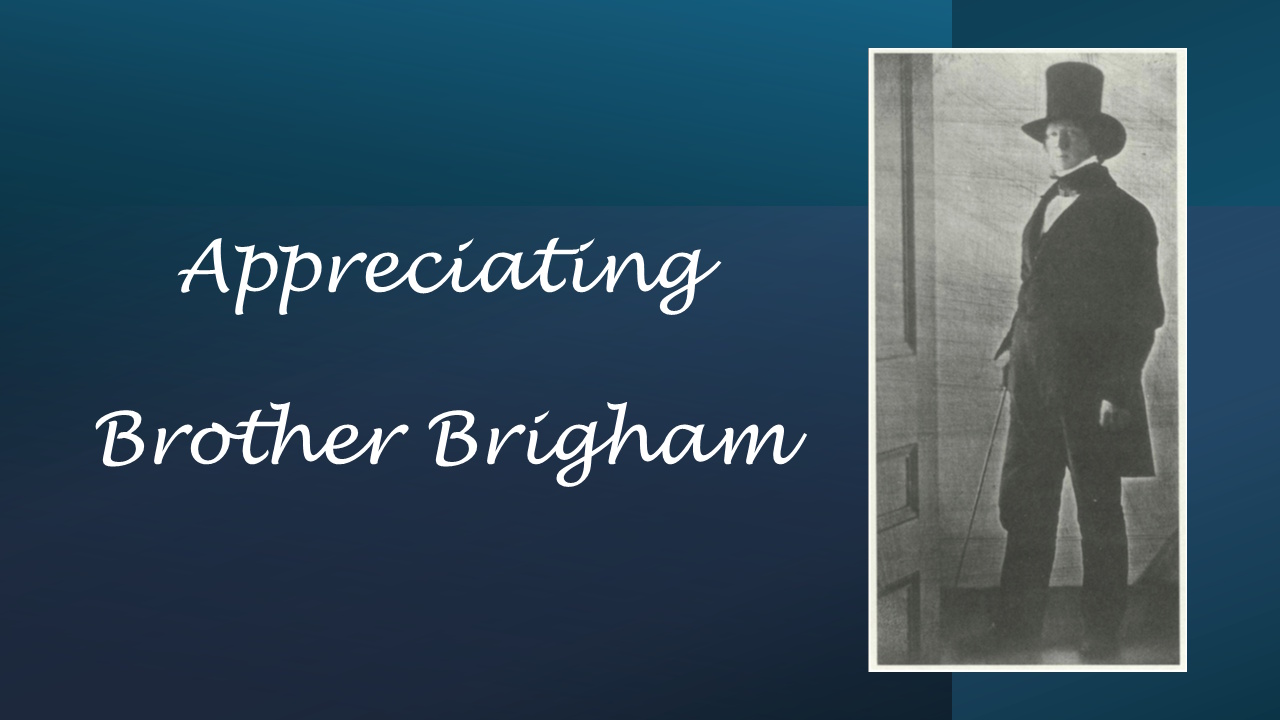
brigham young's leadership

Daniel Peterson:

Appreciating Brigham Young’s Leadership

You can see why Brigham Young has been on my mind a little bit lately. And so, I want to talk about him and appreciating Brother Brigham. As I grew up, I learned that Brigham Young was a practical man. He led the church westward, like Hebrew J. Grant, who’s a practical man. But I didn’t hear much about him as a prophet, as a spiritual man.

I had an experience on the Gospel Doctrine Writing Committee. I served on it for about ten years, and I could tell you some really funny stories about correlation involving that. I think I have sometimes. But one of those, okay, on one of those occasions, I was able to write the lessons for the Gospel Doctrine manual years ago on Brigham Young and on Heber J. Grant, and I decided in both cases I wanted to portray them as what I had not learned about them growing up.

These were presidents of the church. They were spiritual leaders. They cared about religious issues. I wrote an article entirely—or a lesson I should say—about Brigham Young that was focused very much on Brigham Young and temples and the dedication of the Saint George Temple, his commitment to completing the Nauvoo Temple. When it finally appeared, it had been absolutely gutted. I recognized two lines.
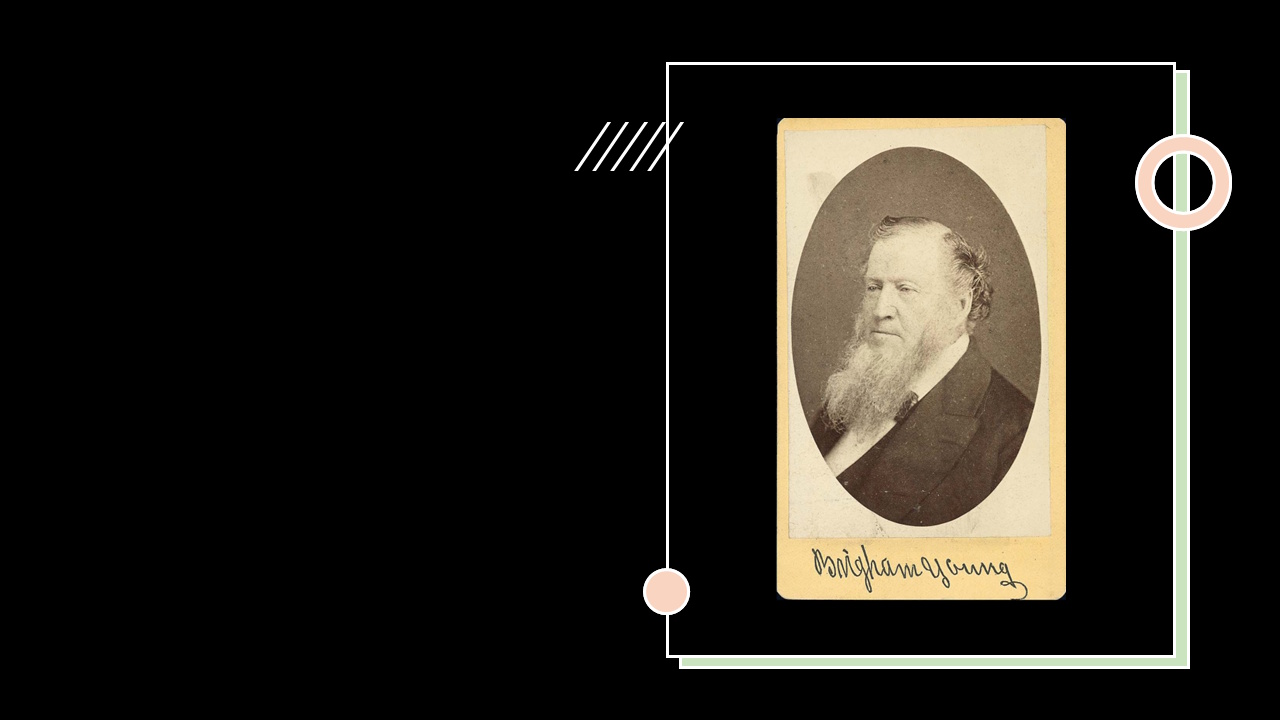
I’m going to be quoting a few people in my remarks today, very brief as they are, from people who you might not expect me to quote about Brigham Young. One is D. Michael Quinn. This is what he said:

One of the recurring themes in non-Mormon biographies of President Brigham Young is the idea that he was not a very spiritual man. Such interpretations, however, not only misrepresent his character, they also totally disregard the evidence, both published and unpublished, that refutes such a stereotype.”

Brigham Young’s Leadership and Public Image

Now, one of the images that we have of him is that he was an old and dour tyrant, and lately he’s been sort of thrown under the bus.
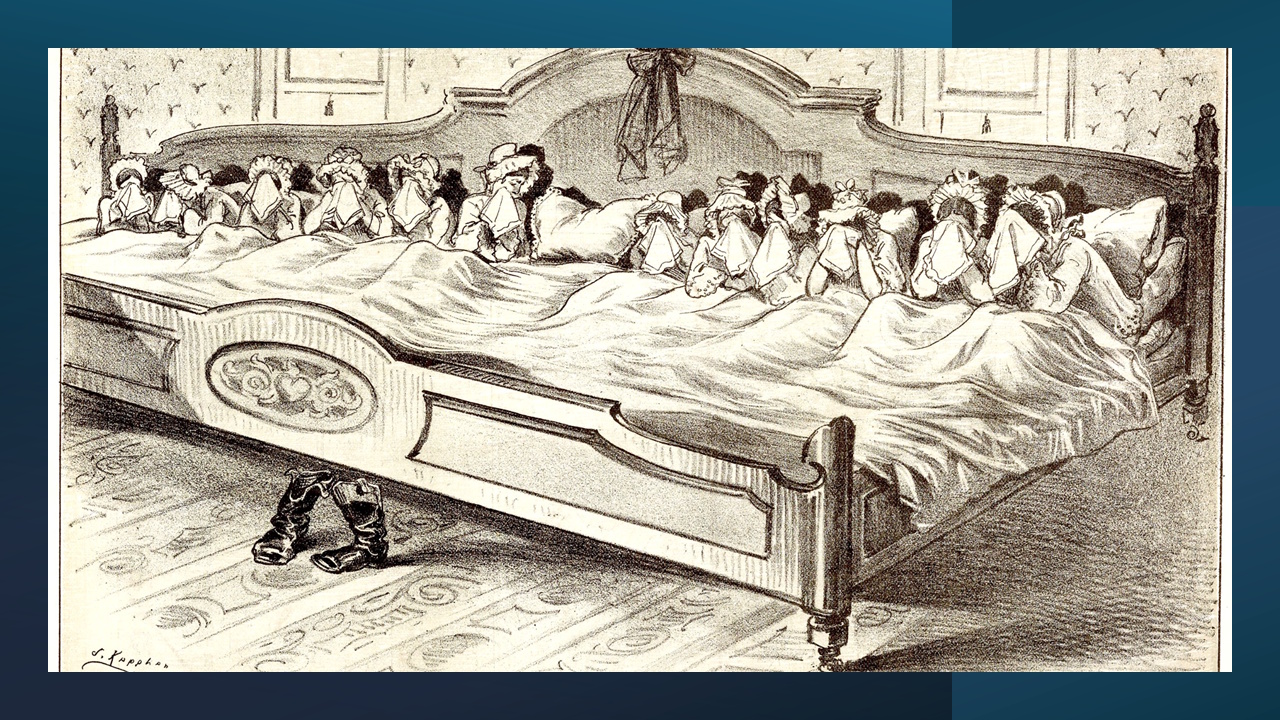
This is a scene of his wives mourning him from an eastern cartoon.

Contextualizing Racism Accusations in Brigham Young’s Leadership

There are those who claim he was a racist. And genuinely, he did say some things that are (in Elder Oak’s words) disappointing. I wish he hadn’t said them. There are those who’ve called for renaming Brigham Young University, for example. 
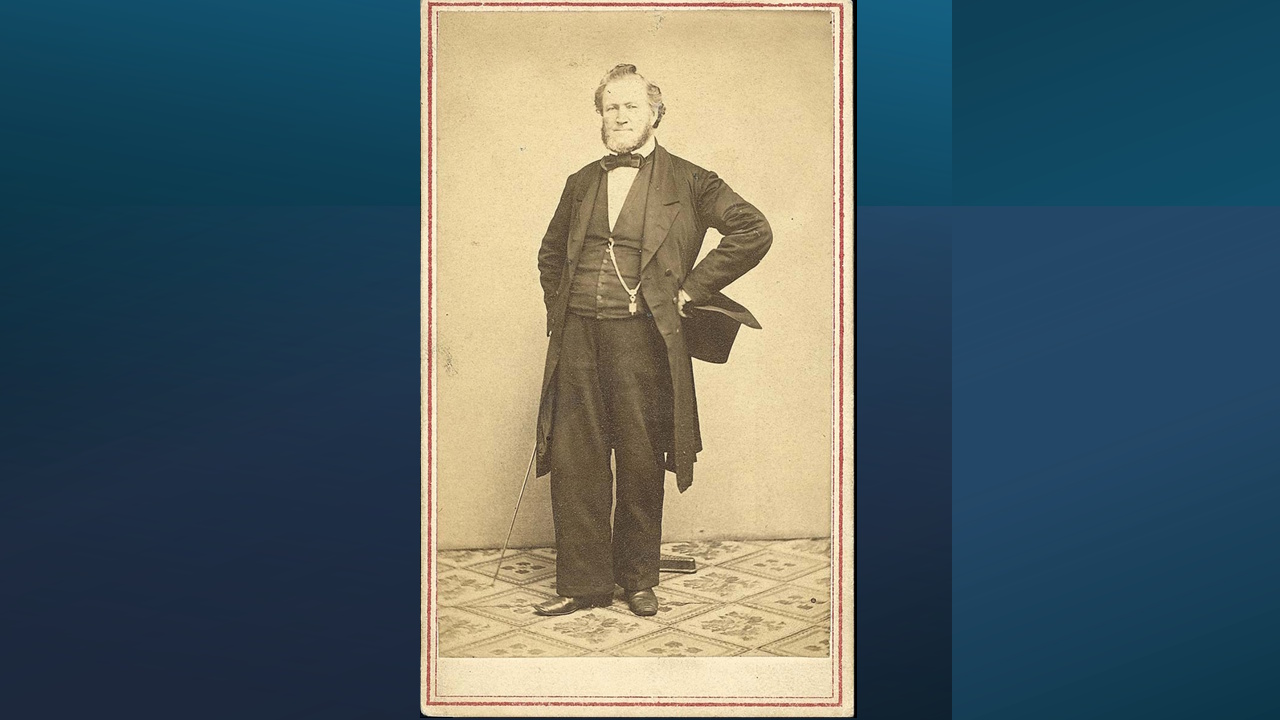
Brigham portrait

But I say, look, okay, by our standards today he was a racist—as was Abraham Lincoln, as was… I just finished a biography of Harry Truman (reading it, not writing it).  And Harry Truman integrated the military and pushed civil rights legislation that was way ahead of his time. And yet, he could say things that would make you blush today, having grown up in Missouri in the 1800s.
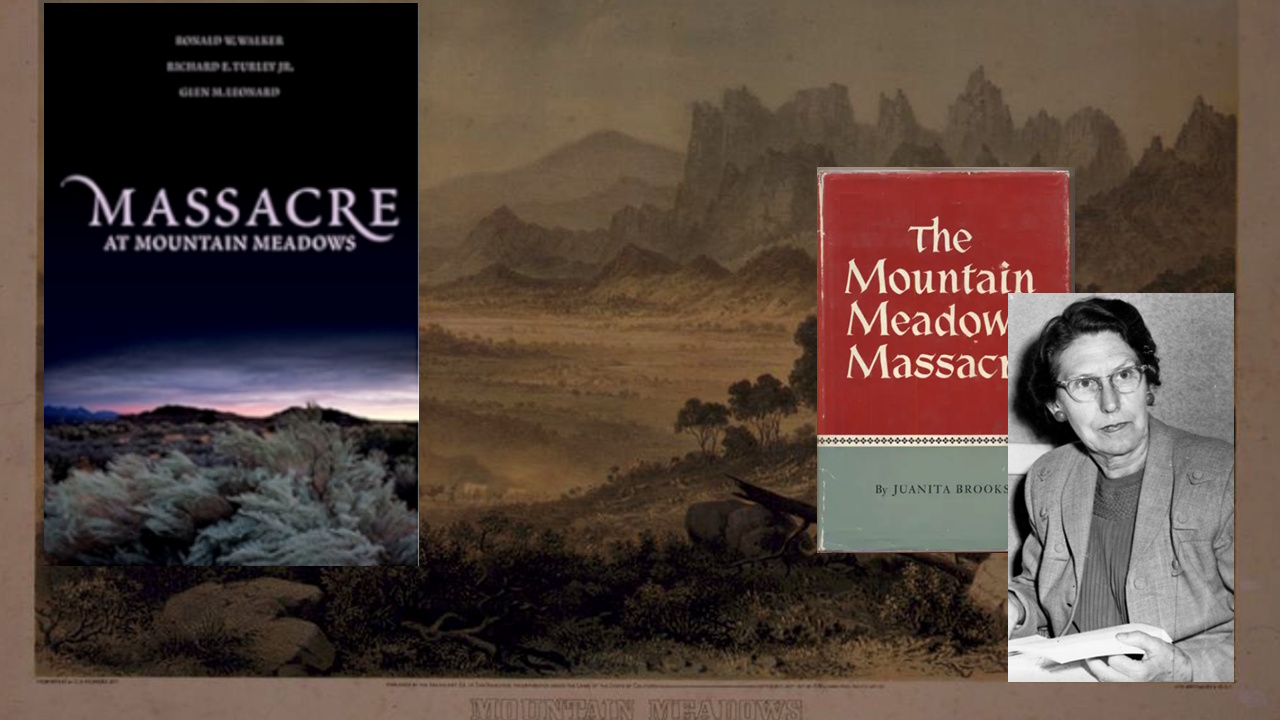
books about Mountain Meadows Massacre

Brigham Young and the Mountain Meadows Massacre

And of course, he’s routinely blamed for the Mountain Meadows massacre, despite the fact that one Peter Brooks said he wasn’t responsible. Ron Walker, actually Glenn Leonard, who said he wasn’t responsible.

There are still people out there who want to blame Brigham Young for the Mountain Meadows massacre. And I’ve always thought, look, Brigham was—whatever you think about it—no one has ever accused him of being stupid. And the Mountain Meadows massacre was stupid, among many other things.

It was stupid at a time when the Saints were in danger of being seriously persecuted by the federal government. That was the dumbest thing that they could have done. Brigham would not have done it for that reason alone. But there’s no evidence that he was involved in it—actually, evidence that he opposed and tried to stop it to the extent that he had heard of it.
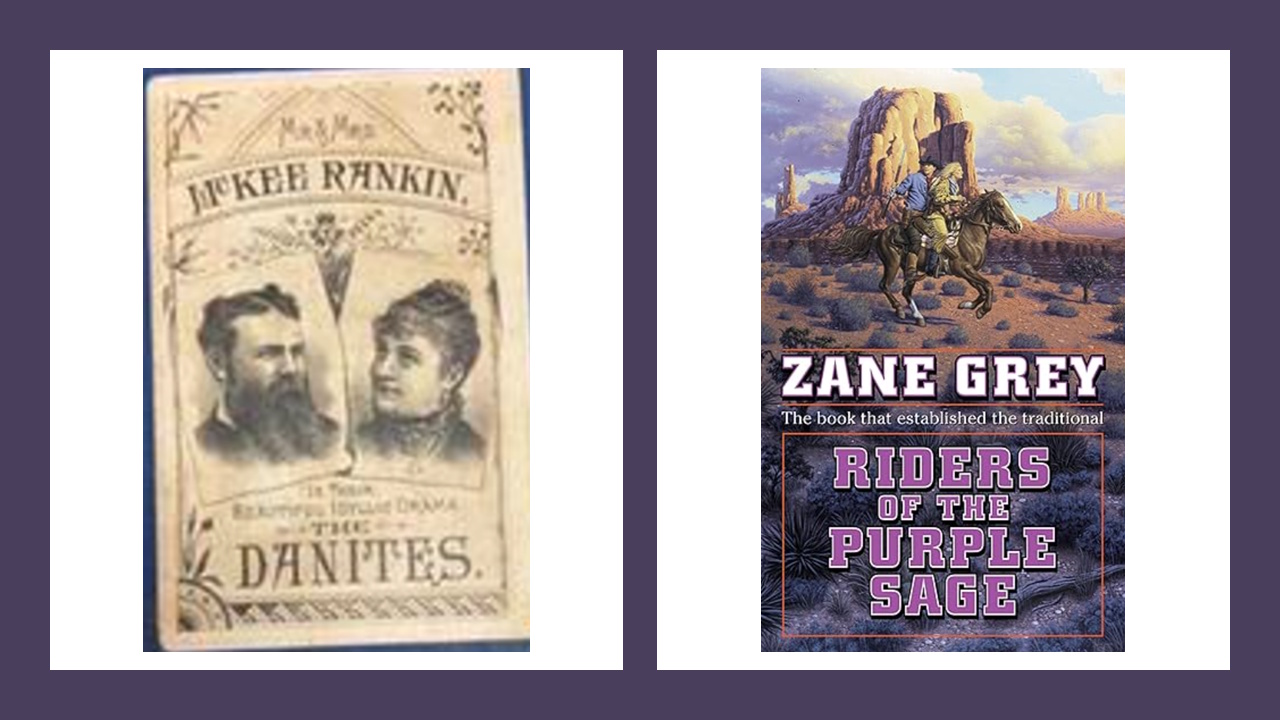
Defending Brigham Young’s Leadership from Misconceptions

He’s regarded regularly as a misogynist and as a murderer. Zane Grey, another dime novelist, portrayed him as the commander of the Danites, who would go out and massacre people on a routine basis. He was responsible for every violent death between the Mississippi River and the Pacific Ocean. It’s absolute nonsense.

He has lately been portrayed as an assassin. Some of you may be aware of this. Some of you may not know that there was (allegedly) an apostolic coup that got rid of Joseph Smith and Hyrum Smith, and that not only were they removed, it was Brigham Young who ordered their deaths by means of his loyal assistants, John Taylor and Willard Richards.

I can only imagine that the Carthage Grays must have been astonished when they got to the jail cell and said, Shazam, he’s already dead. How disappointing! And then, you know, in their defense, when some of them were tried for the murder, they never brought up the fact that he was already dead. “Gosh, we don’t know what happened.”

To me, this is obscene—that sort of accusation—beneath contempt. And, you know, there have been recent movies made about this. I hope they haven’t gotten a very wide showing.
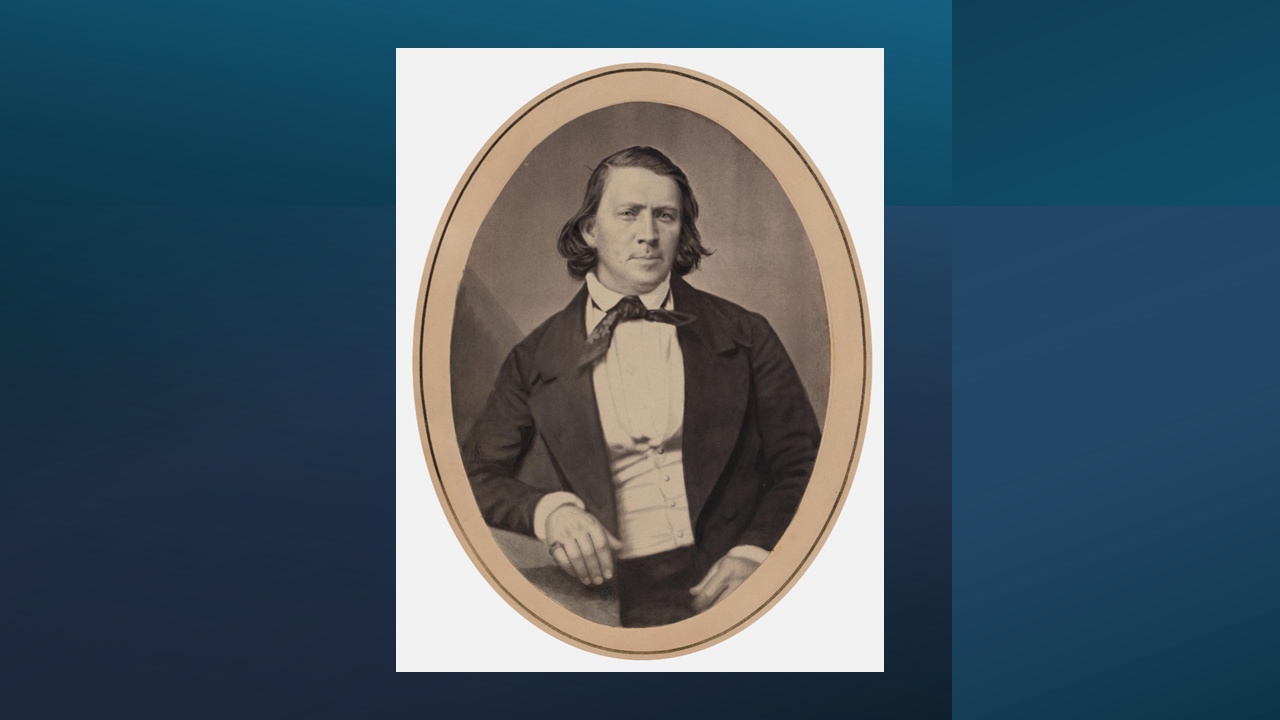
Round portrait of Brigham

Recognizing Brigham Young’s Leadership Beyond His Later Years

But I think one thing that we need to recognize about Brigham is that he was not always 77. Part of our image of Brigham Young is that he’s old, he’s unsmiling (he had tooth problems). And photography in the 19th century was a painful business anyway. But he didn’t always look like that. He wasn’t always old and relatively infirm. He was a relatively young man when he assumed the leadership of the church.
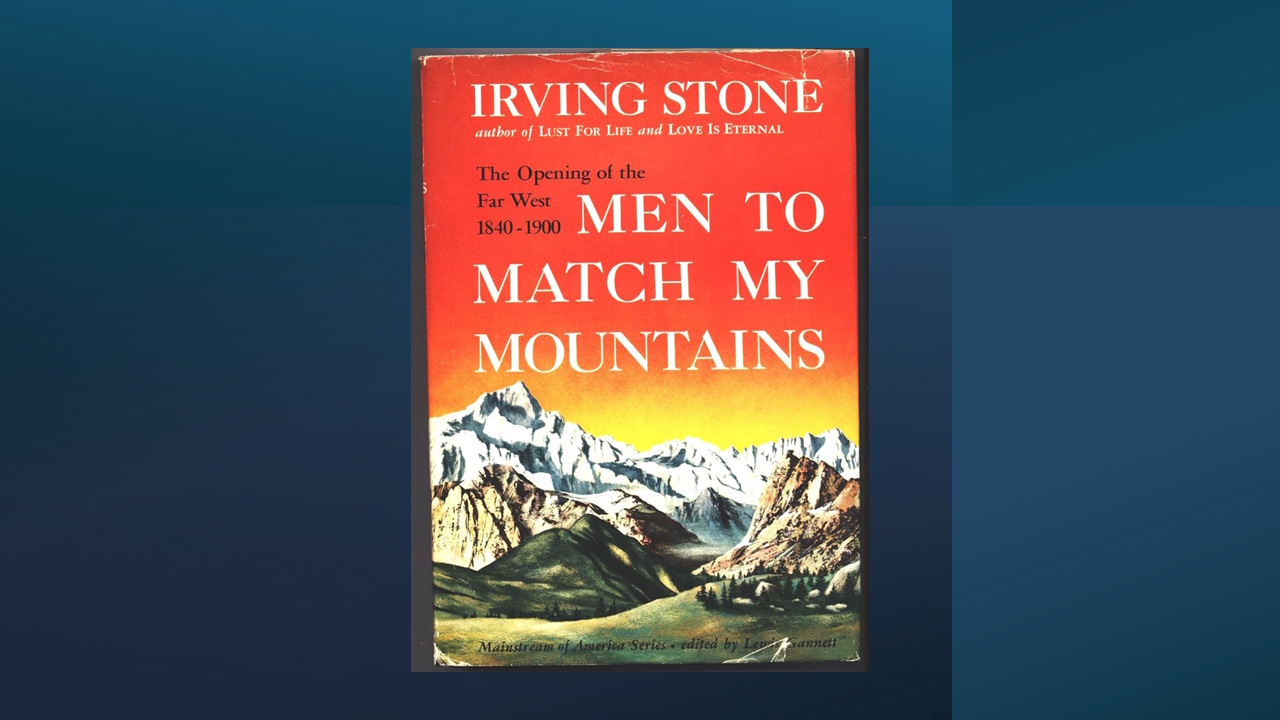
Men to Match my Mountains book

Brigham Young’s Practical Leadership

So, on that idea of the practical man – yes, he was practical. He was extremely gifted at the kinds of things that he did. I remember reading in a book by Irving Stone, Men to Match My Mountains. He said, “You know, people have faulted Brigham Young because he grew rich.” He said, “Well, he was so talented that he could not not have grown rich. He was just really good at all that sort of thing.”

And he grew far less rich than he could have been if he’d been seeking his own profit.

Everything he touched seemed to work out well. He was very, very good at that kind of thing. Irving Stone, the author of The Agony and the Ecstasy and a lot of famous books like that, really admired Brigham Young.

LaJean Carruth studies Bigham Young

Brigham Young as an “American Enoch”

I’m going to quote now from LaJean Carruth, from something she wrote to me. She’s here (at the conference today):

I’ve come to see,” she wrote in an email, “To me, the term American Moses is an unfortunate misnomer. Moses led a single large group of rebellious people to political freedom. He never entered the Promised Land, never established a city, could not establish the gospel among them. And the word Zion was not in his vocabulary. Brigham Young often compared his people to the people of Enoch and told his people how much better they were than the ancient children of Israel. (It’s clear you don’t want to lead that crowd.) He was an American Enoch. He put all his heart, mind, will, and effort into establishing Zion.”

Carruth presented on this at the Mormon History Association in 2023. That’s the view of Brigham Young that I want us to have.
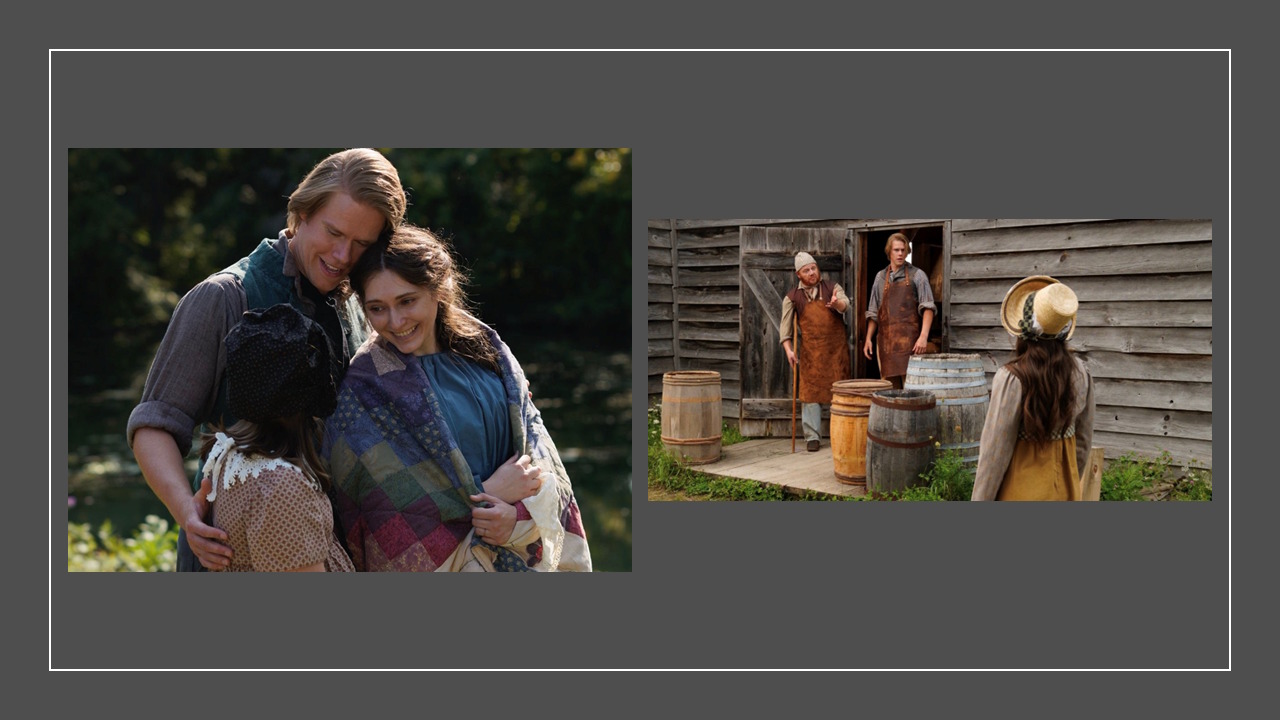
Personal Sketches of Brigham Young’s Leadership 

And so, I’m going to give you, if I may, some sketches from Brigham Young’s life. And I won’t develop them.

I think of Brigham in Port Byron, New York: his apprenticeship there and his courtship—long before he encountered the church. I’ve read a little bit about that. It’s a very, very interesting portrayal of him. He was an expert craftsman. He was well-respected.

And that’s where he married his first wife, who unfortunately, did not last long. We’ll show that in the movie. (This is not actually a commercial for the film, but we deal with some of these issues.) And then you see Brigham tending to Mirriam as she’s in her fatal illness. And it’s a picture of Brigham that you don’t get—is this Brigham the misogynist, Brigham the uncaring man? He is a doting husband and doting parent, a single parent eventually.

Eugene England on Brigham Young’s Leadership

This is Eugene England, another person you might not expect me to quote in praise of Brigham Young. I was sort of surprised myself as I began lining these things up, and I thought, okay, Mike Quinn, Gene England—these are people who are on the ‘liberal end of the spectrum,’ you would say, in a lot of ways. Here’s Gene England talking about him:

Together with the fairly large number of surviving holograph letters written after 1840, Brigham’s surviving diaries reveal a man of tenderness, spiritual warmth and insight, as well as the more commonly known Brigham of great energy and devotion.”
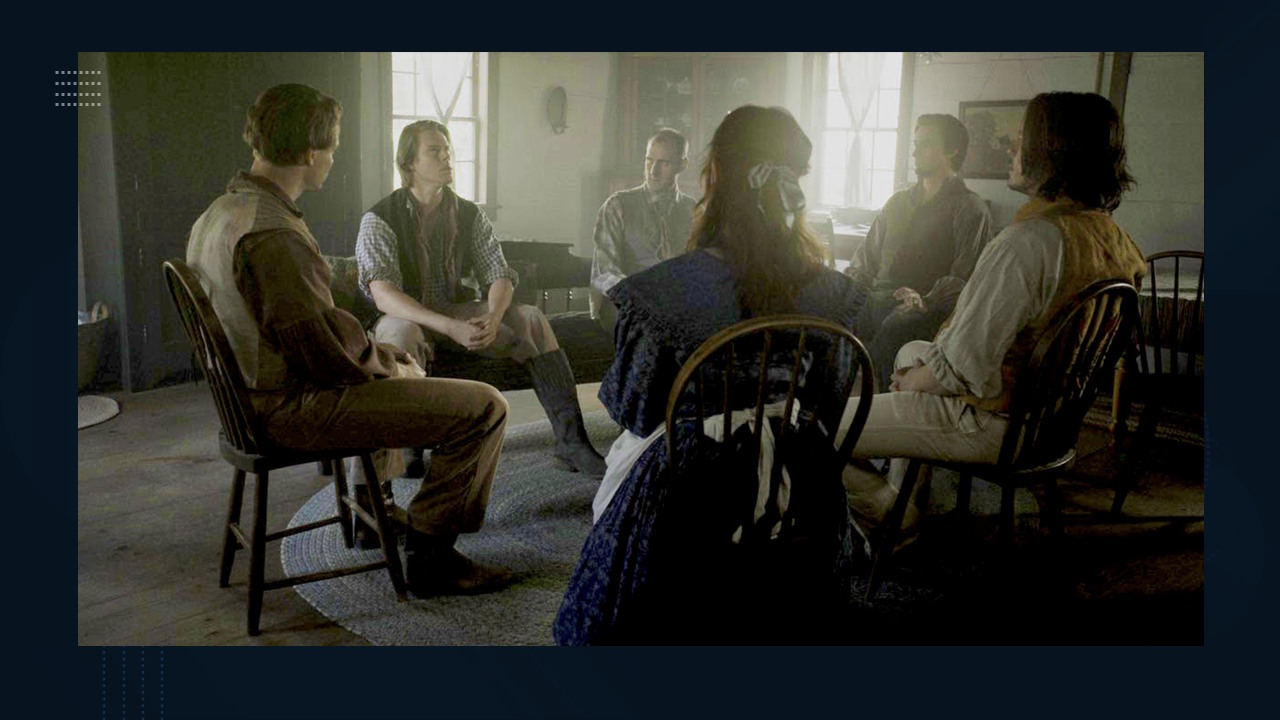
Brigham Young speaks in tongues

Brigham Young’s Spiritual Leadership and Speaking in Tongues 

There is the matter too of his spirituality and speaking in tongues (here’s a scene from the movie). On the day when he first met the Prophet Joseph in November of 1832, he surprised those who were there by speaking in tongues, and this happened several times in his life.
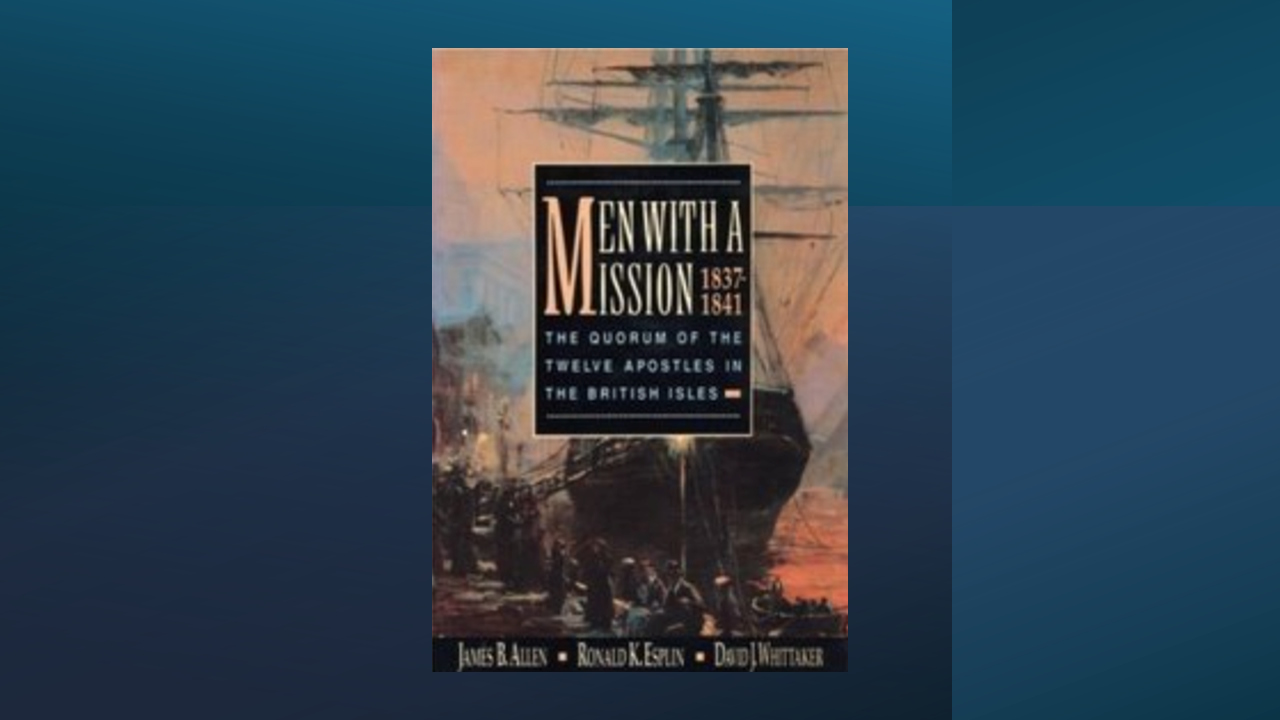
Book Men with a mission

Faithfulness to Joseph Smith and Revelation 

I talked last year about his mission in England and to Missouri, where he goes to Missouri to lay the cornerstone for the Far West Temple in obedience to a revelation from Joseph Smith. His dedication to following Joseph Smith was amazing.

And that’s the thing that I want to get across, among other things—his faithfulness to Joseph. Here’s a quotation from a book by S. Dilworth Young, a descendant, Here is Brigham (1964):
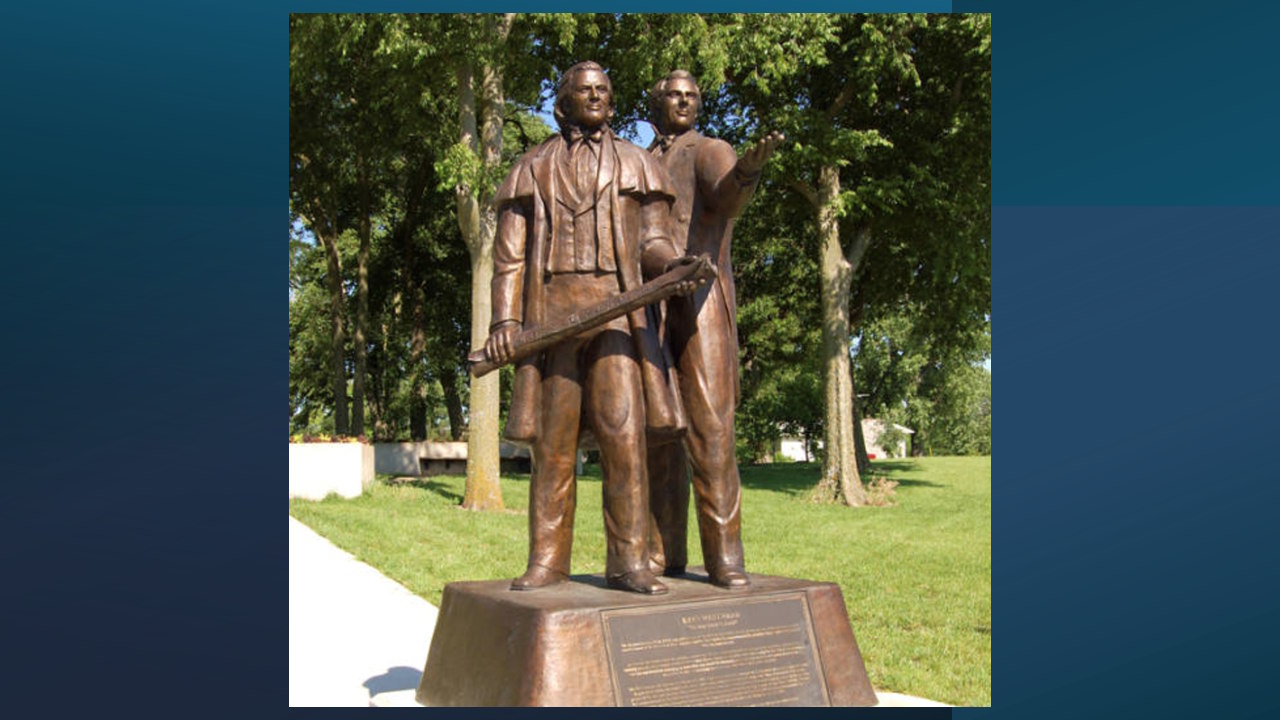
Brigham Young and Joseph Smith

It’s quite evident that after 1832, Brigham Young was moved by one motive: determination to obey the will of God as spoken through the prophet, and to support that prophet with all that he possessed of time, talent, and means.”

Now there’s one famous story of a time when the Prophet Joseph Smith severely rebuked Brigham Young – “the Lion of the Lord,” you may remember, he was sometimes called. This is a man who did not meekly submit to other people.

After the prophet’s chastisement, everyone in the room waited for Brigham’s response—he could have defended himself or been offended. But his reply was sincerely and simply:

“Joseph, what do you want me to do?”

That was one man that he would bend the knee to.

Brigham Young’s Leadership in City Planning 

Again, quoting Irving Stone Men to Match My Mountains:

Following Joseph Smith’s original design, Young, the city planner in Salt Lake, decreed that the streets were to be laid out enormously wide, each house set back so many feet, the fronts to be beautified with fruit trees and gardens, and four public squares of ten acres laid out in various parts of the city for public grounds.”

Salt Lake City is a monument to Brigham’s devotion to the vision of Joseph Smith.

Brigham Young’s Spiritual Leadership: A Dream of Joseph Smith

And now I give you an excerpt from a dream that Brigham related to the quorum of the 12 on the 17th of February 1847, as recorded in his own handwriting and his own inimitable spelling. He sees Joseph Smith in a dream:

I took him by the right hand and kissed him many times. He looked perfectly natural. I asked him why it was that we could not be together as we used to live. He had been from us a long time, and we wanted his society, and I do not like to be separated from him. He rose up from his chair and looked at me with an earnest and pleasant countenance, spoke in his usual way. ‘It is all right.’ I then said to him, ‘I do not like to be away from you.’ ‘It is right,’ he replied. ‘We cannot be together yet: we shall be by and by. But you will have to do without me a while, and then we shall be together again.’”

The love for Joseph that you see throughout Brigham’s life!

And on the 29th of August 1877, when Brigham Young lay on his deathbed, at least one report says that his last words were, “Joseph, Joseph, Joseph.”

I can’t help but think that Joseph came for him, and the reunion that he’d waited for over 30 years was finally taking place.
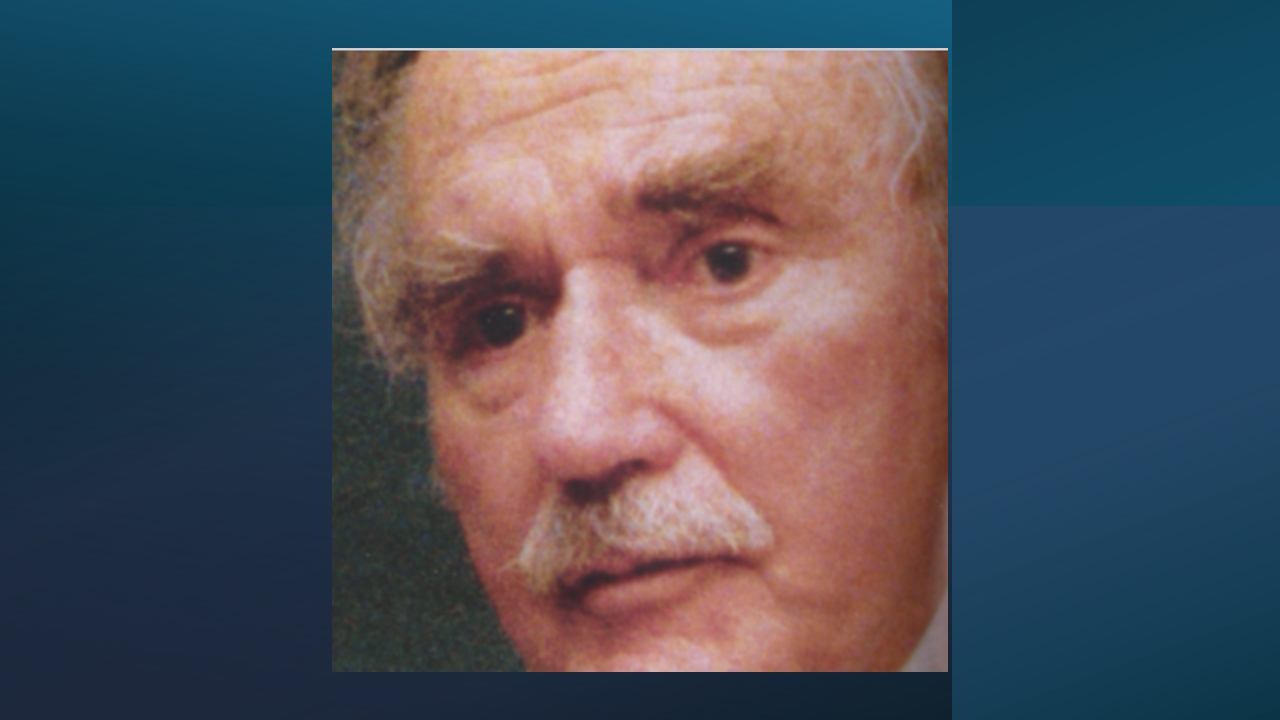
Brigham Young’s Leadership in Language and Prose 

Another sketch: Arthur Henry King, the beloved teacher from my days as a student at BYU, described Brigham Young as the greatest prose stylist in the history of the church. He said, “I’m bracketing Joseph Smith because I don’t really know how much of it’s Joseph and how much of it is the Lord.” But he said Brigham Young had a rugged, strong prose style, honest, that really appealed to him.

And here’s Gene England again, an English professor:

Brigham Young eventually became the most voluminous, wide-ranging and, in my judgment, the most conceptually powerful orator the Mormon Church has produced. And he is certainly one of the most original, entertaining, and personally expressive of all those who have used the English language.”

That’s pretty high praise coming from someone like that.
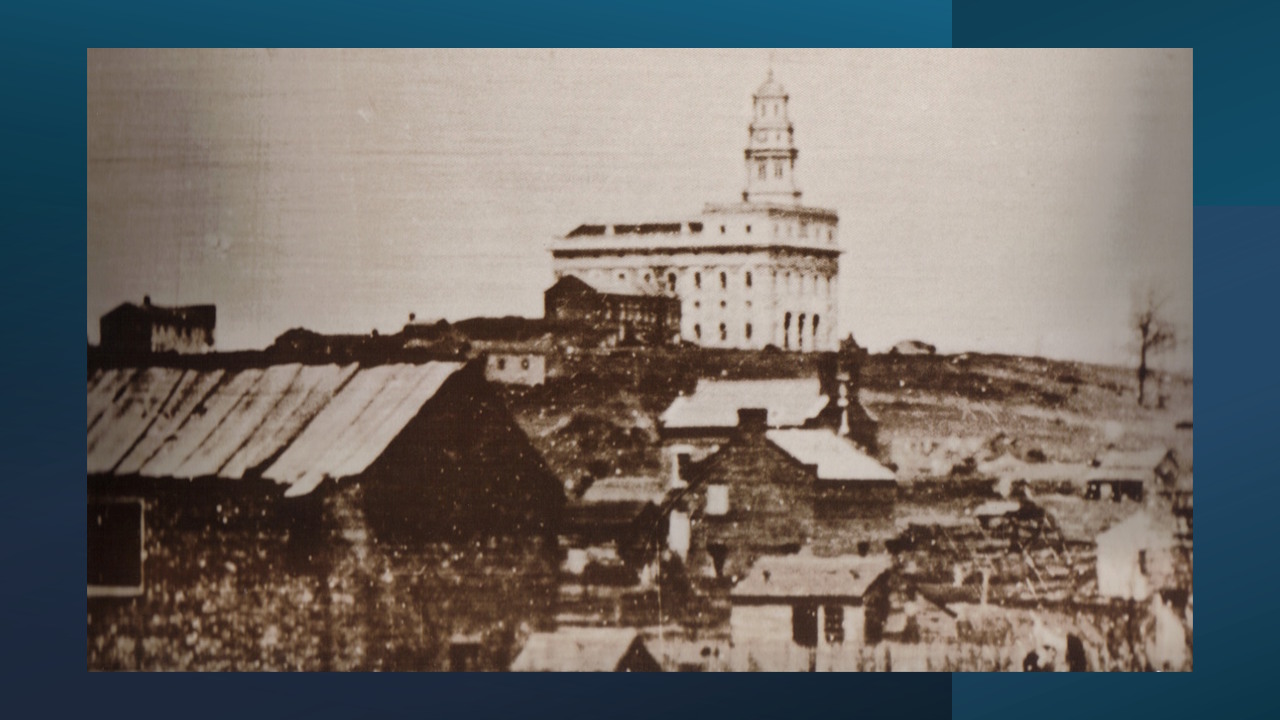
Brigham Young’s Leadership in Temple Building 

Brigham Young on the temple. I’ve already mentioned his commitment to going into Missouri—at a time when going to Missouri was dangerous for a Latter-day Saint—to lay the cornerstone, even though the temple couldn’t be built at that time. His commitment to building and finishing the temple in Nauvoo is amazing to me. And the ordinances conducted all night, so the saints could be prepared with an endowment of power for their trip westward.

I mentioned the speaking in tongues—you know, not very practical of any of this. He should have been getting ready for that trek westward instead of spending time in the temple doing temple ordinances. Where were his priorities? Well, you can see where his priorities were.
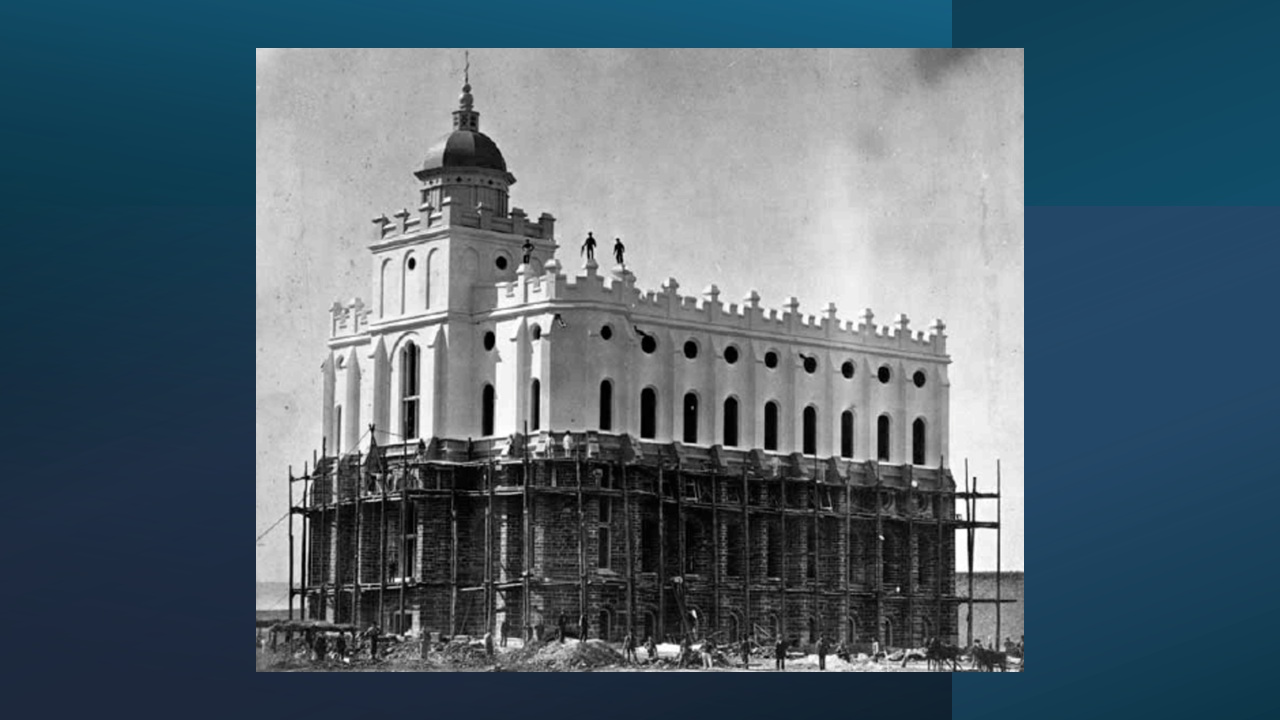
Brigham Young’s Role in Completing the Saint George Temple

And the Saint George Temple, his desire to finish – that was the one temple that he was allowed to dedicate. You see it here with the short, stubby spire.

Some of you know the story about that one—that Brigham did not like the short spire. After he died, it was hit by lightning, replaced by a taller spire. And the lore in Saint George was, “Well, we know he arrived.”

And by the way, that overturned some of the talk about his being a tyrant, that there were things that he wanted in buildings (like that spire, like the staircase and the pulpit in the Saint George Tabernacle) where he didn’t get his way. There were other strong personalities in Utah.

He wanted to get that temple done. In my lesson that I wrote for the Gospel Doctrine Writing Committee, he said, “Sometimes I want the tongues of seven angels to wake this people up! If they understood how important this is, this House,” he said, “Would be busy day and night, it would never close because of the urgency and the importance of this work.”

That’s not Brigham Young “the practical man,” in a way.
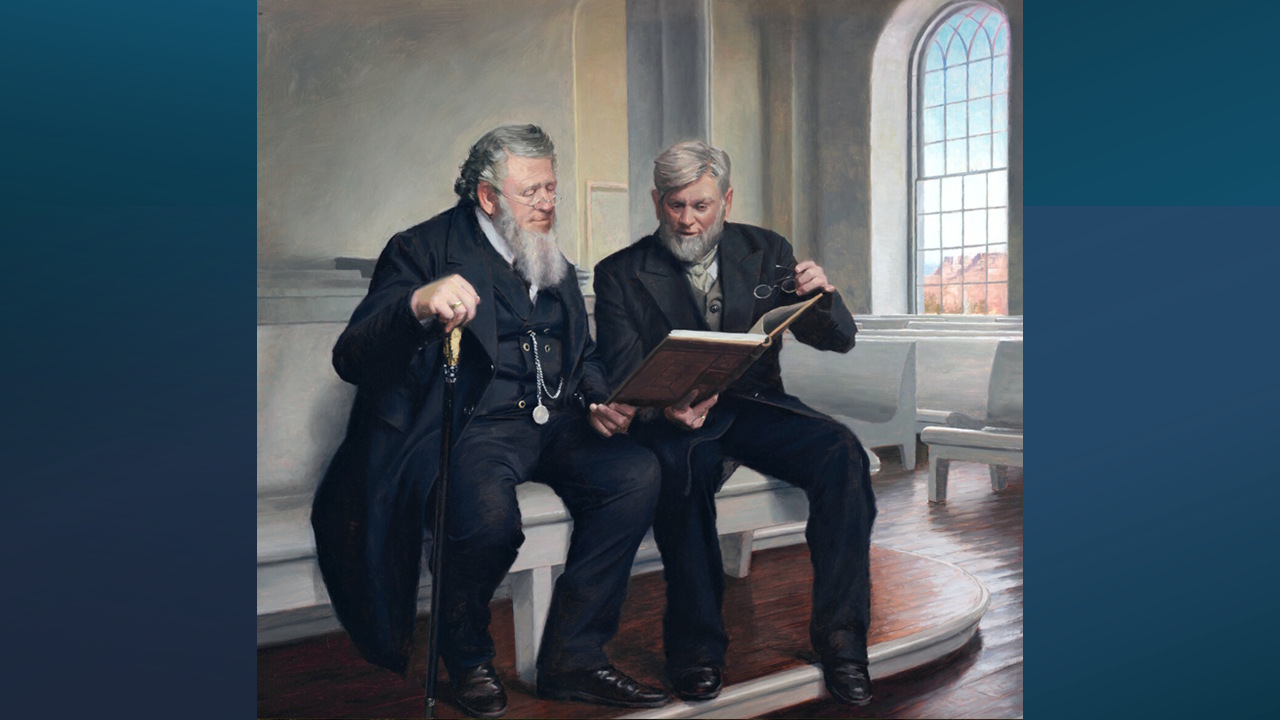
Brigham Young and Wilford Woodruff

Of course, there he is toward the end of his life, going over the revision of the endowment ceremony with Wilford Woodruff in the Saint George Temple. 
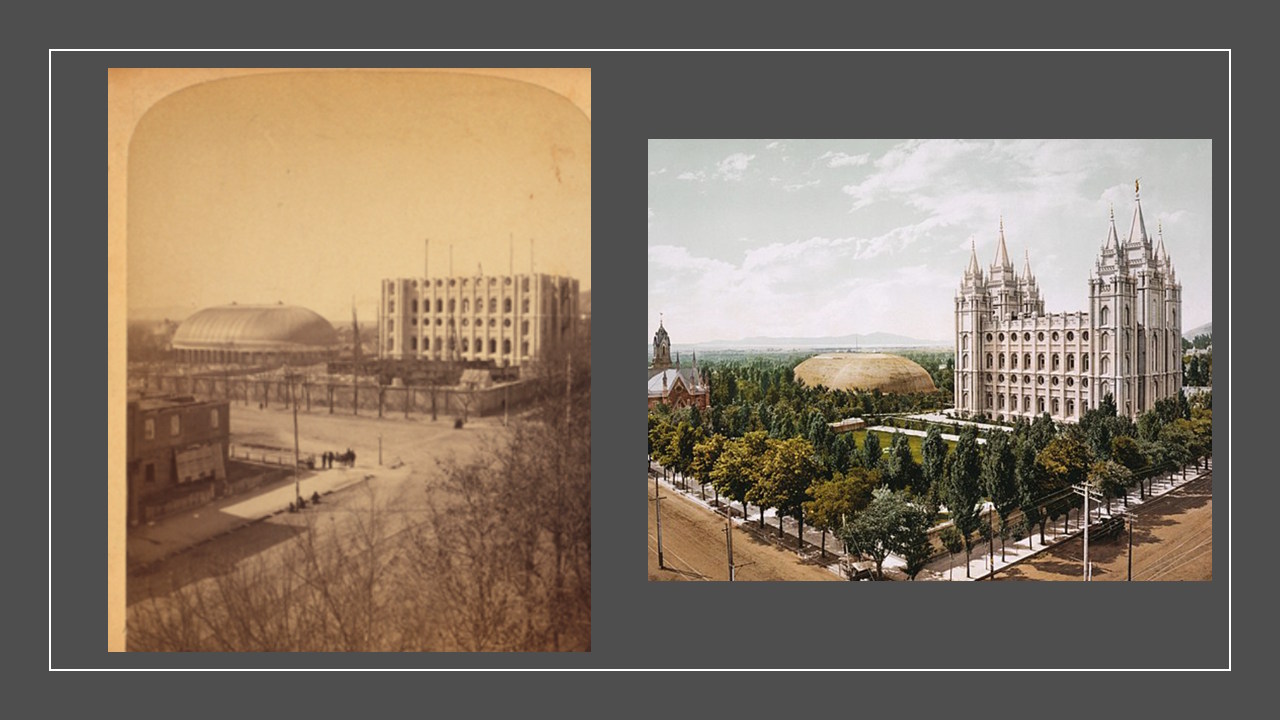
Salt Lake City

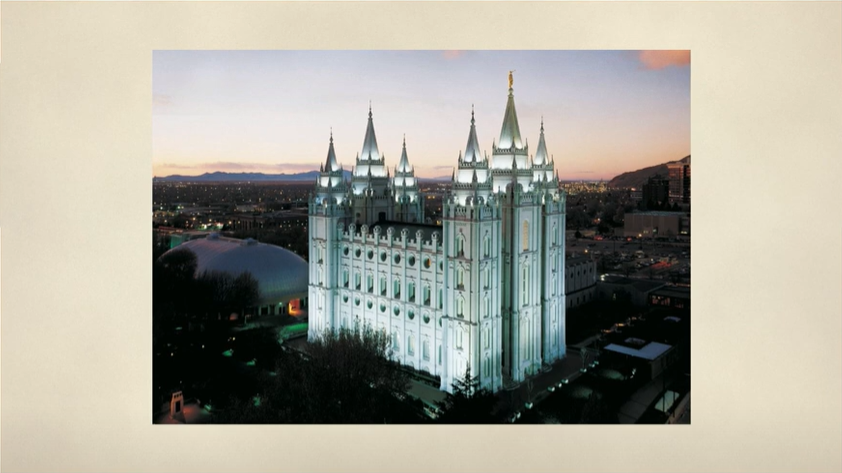
And then one of the first things he did, we all know, when he came to the Salt Lake Valley was to declare where the Salt Lake Temple would be. That was the important thing, that was the point of the gathering, was to build temples.
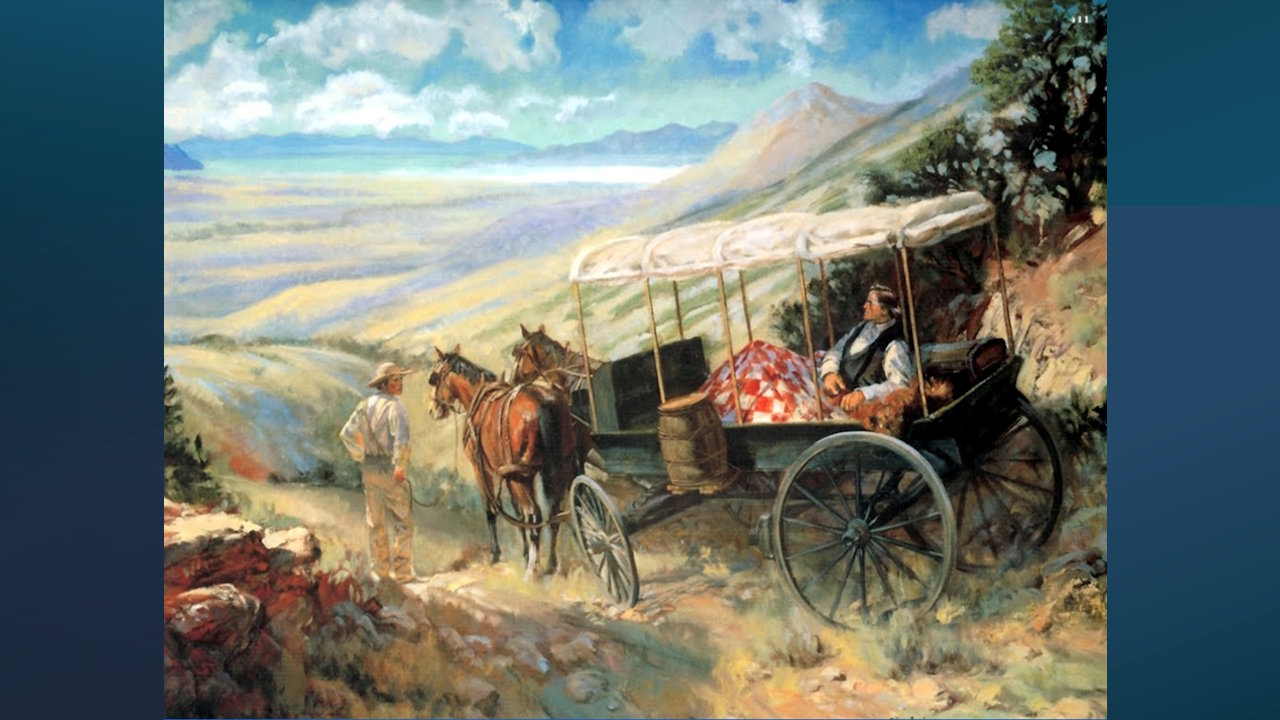
Brigham Young’s Near-Death Experiences

Another thing I want to mention in connection with Brother Brigham: near-death experiences. Quoting Brent Top, who used to be the Dean of Religious Ed at BYU.

I’m convinced, as are some other scholars, that Brigham Young had near-death experiences, one of which happened right before the Saints entered the Salt Lake Valley in July of 1847. That may be one of the reasons he talked so much about the spirit world.”

Now, I didn’t realize this until fairly recently. I had seen his quotations about the spirit world. I was not clear that he was doing it from personal experience, but this is what he says. I’ll just quote a little bit. I’ve got several pages here.

I can say with regard to parting with our friends and going ourselves that I’ve been near enough to understand eternity, so that I’ve had to exercise a great deal more faith to desire to live than I ever exercised in my whole life. The brightness and glory of the next apartment is inexpressible. It is not encumbered with this clog of dirt we’re carrying around here, so that when we advance in years, we have to be stubbing along and to be careful lest we fall down. But yonder, how different! Here we are continually troubled with ills and ailments of various kinds, but in the spirit world we’re free from all this and enjoy life, glory and intelligence.”

He said, you know, we’ll look back on death and think, this is the greatest blessing I’ve ever enjoyed. Here I am now in the spirit world, and it’s so wonderful here.

And I used to wonder, was he just speculating based on his reading of Scripture? And I think now, no: he knew.

A Personal Story on Brigham Young’s Leadership

Now here’s a story that I’ve not found in print. Maybe some of you know where to find it. This was told to me by Hugh Nibley, who’s another great admirer of Brigham Young, and he had heard it, he told me, from Brigham Young’s last surviving daughter when he was young. And I love the story because it portrays a really interesting character.

Brigham Young supposedly had—and I’ve heard variants of it or seen variants of it, but the way it was told to me was—he had a saddle: beautiful, hand-tooled, he loved this saddle. And he told his children, you may ride any of the horses here, put on any of the saddles, but not that one. Don’t touch that one because that’s just too fine. I don’t want it mucked up.

So, he came home one day, and they’d been trying to get it onto a horse they hadn’t been able to, and it was scuffed up and that sort of thing. And he really let them have it. He went into the Lion House and slammed the door behind him, slammed another door behind him—he was angry. And so this little girl followed him into the house, and she heard him through the door of his office saying:

“Down on your knees, Brigham, down on your knees.”

He was trying to get control of himself. I love that sketch.
Re-evaluating Brigham Young’s Leadership and Views on Slavery

Now I’d like to mention something else. And Elder Corbitt’s comments today were absolutely, perfectly, fitted to be a lead into this thing, which I will discuss for a couple of minutes. We all know that he said things that make us uncomfortable today. And then came the revelation on priesthood in 1978 in June.

But there’s some things that we’re learning about him, and I think there is value in looking at the historical record. We now see the slavery law in Utah in a slightly different light.

Slavery in Brigham’s Utah

There’s been some excellent work done recently where it shows that Brigham was actually maybe trying to mitigate slavery; that is, that slavery would be permitted within the territory, but it wouldn’t be passed on. The children of slaves would not be passed on. There would be requirements to educate slaves. There were requirements to provide a certain amount of care and so on for them. If not, they could complain before a court. And there was at least one case that I recall where a slave—a servant, the word was now going to be—could successfully complain to the state for treatment bestowed upon that person.

Brigham Young’s Compassionate Leadership Didn’t See Race

There are other things to mention. The relationship between Brigham and Green Flake, a famous black member of the church in Utah in Salt Lake Valley. Genuine affection and loyalty—definitely—on the part of Brother Flake toward Brother Brigham. When Brigham Young died, Green Flake was the one who wanted to dig the grave for his honored leader.

I think of a case that I know of where there was a black man in the valley who was probably mentally ill, and he’d been mistreated to a degree. And Brigham Young stepped forward and said, look, this is also a child of God, and he should be treated with respect. This is not what we see in the unnuanced view of Brigham Young as a racist.

Brigham Young’s Posthumous Influence: An Experience in Ghana

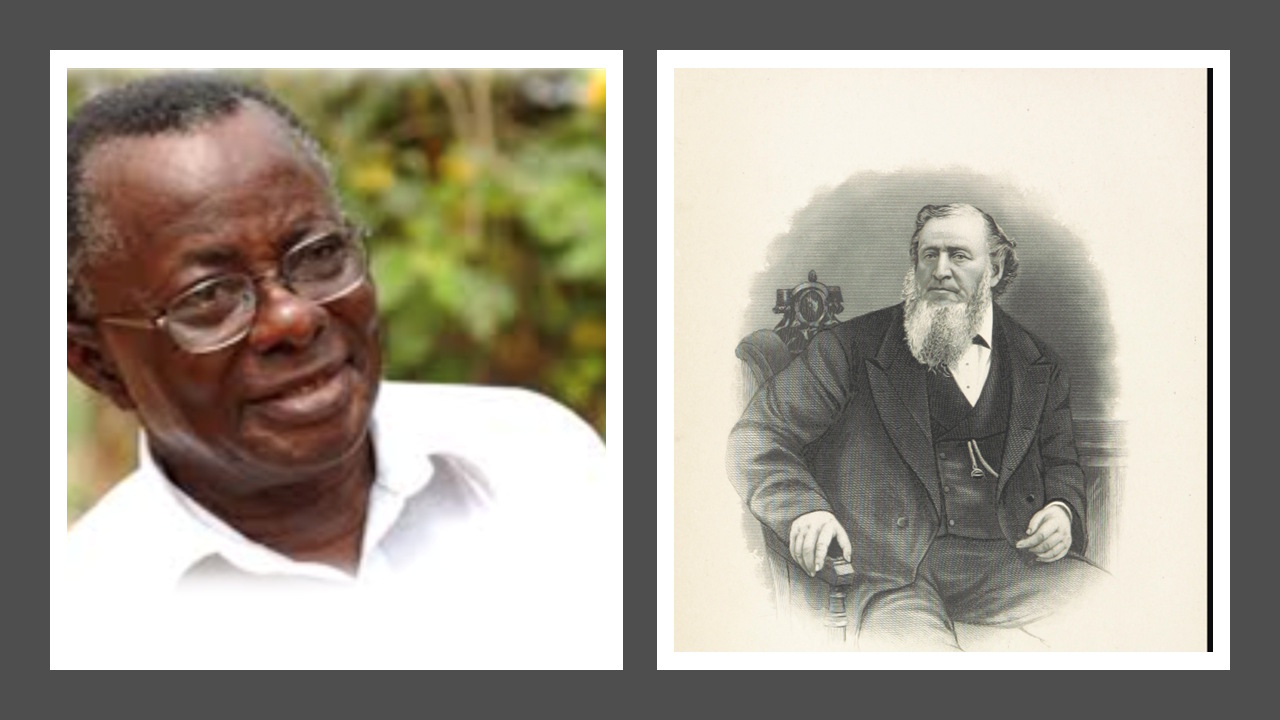
And I want to tell another story. There was a man by the name of Joseph William Johnson, Billy Johnson, in Ghana. He was one of the early leaders of the church there, died about ten years ago.

A filmmaker from Utah came over to do a film on the origins of the church in Ghana. And she interviewed him, and he said, “I want to take you and show you a place,” the place was in an industrial kind of building where he said, “This is where, when the missionaries had been withdrawn and I was having to lead the church and I didn’t know what to do, that I knelt and prayed.”

And he said, “Brigham Young appeared to me. And he said, among other things, ‘Buck up, Billy, help is coming.’” It sounds a bit like Brigham Young, I think. And Billy Johnson was so moved by that, that he named his son, Brigham Young Johnson. And he would still point out that place where Brigham appeared to him.

So, I think when we take Brigham’s alleged racism into account—as Brother Corbitt said—could he have changed? Has he grown since he departed this life in the 19th century? And if he has?

It’s interesting that of all the people who could have come to Billy Johnson, Brigham Young did.
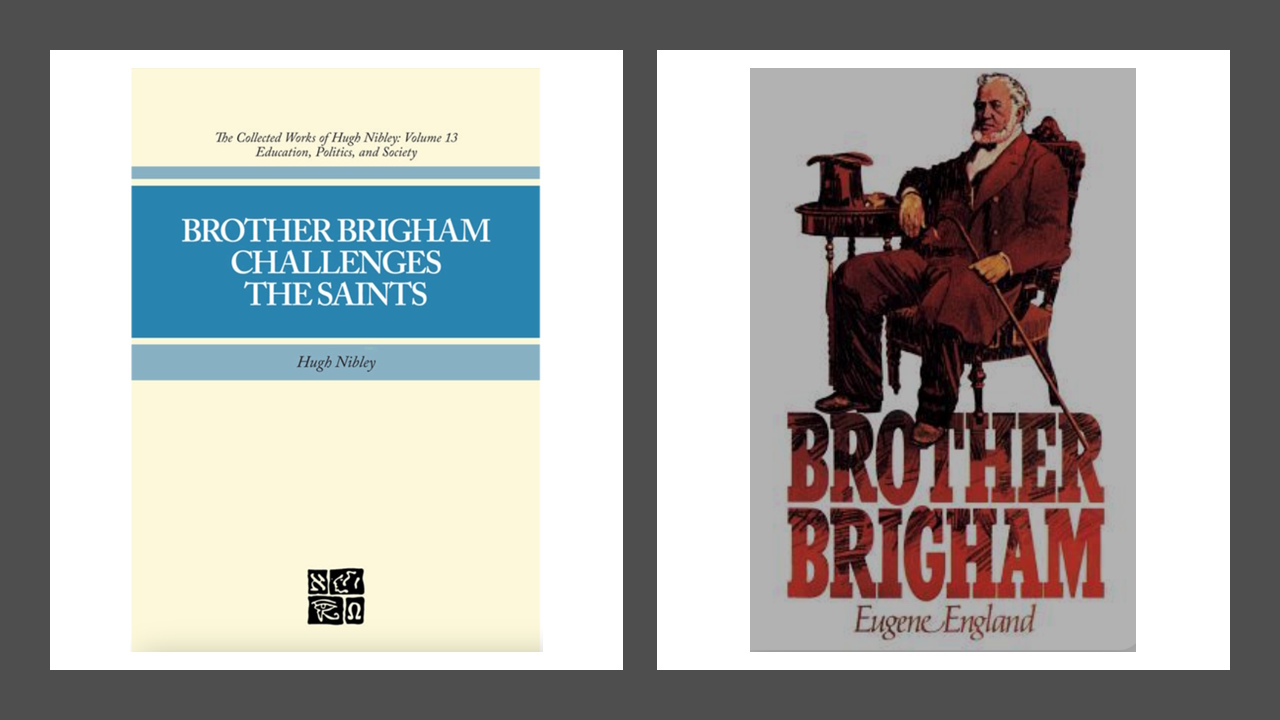
Books we like on Brigham Young and his leadership

Books Highlighting Brigham Young’s Leadership 

Now, these are a couple of the books that I’m fond of for getting a window on Brigham Young. Hugh Nibley, another very liberal (politically speaking) member of the church, loved Brigham Young and the teachings of Brigham Young. I recommend those.
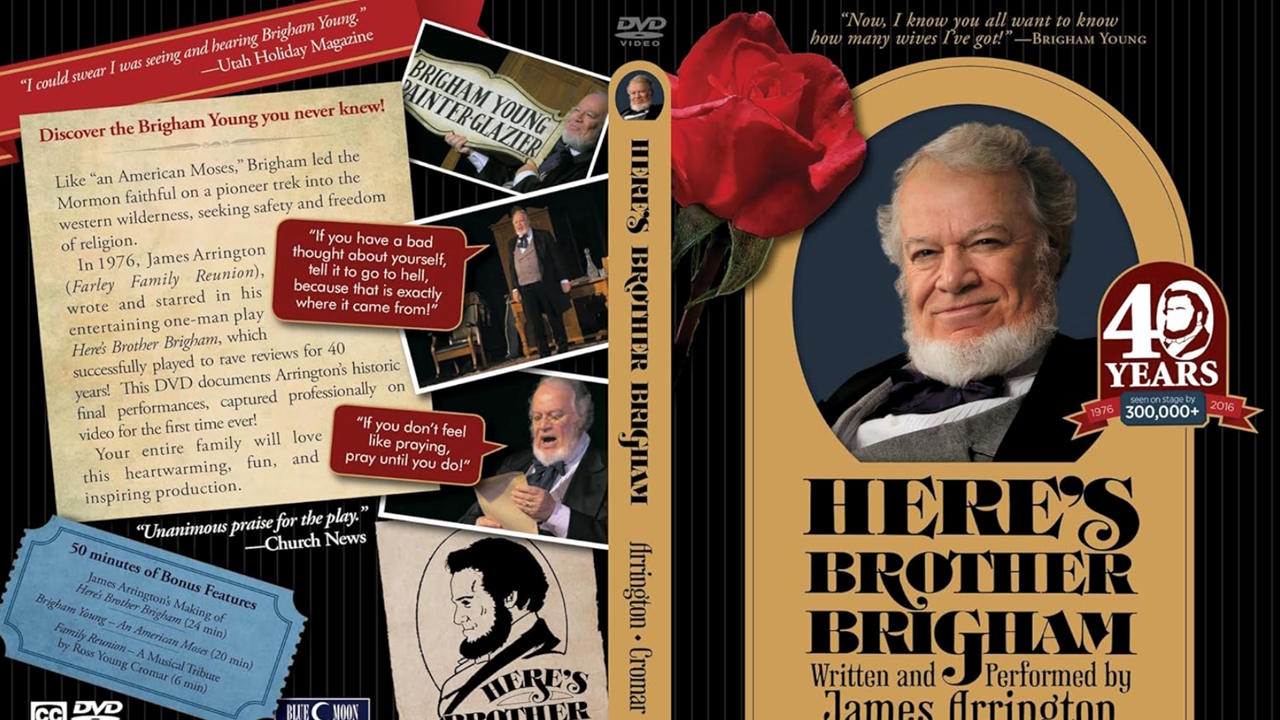
Arrington's one-man play about Brigham

A Personal Tribute to Brigham Young’s Leadership 

And then, of course, some of you may remember the old one-man show, that James Arrington, son of Leonard Arrington the historian, used to do, called Here’s Brother Brigham. There is a videotape version of it. This is James Arrington, son of the biographer, doing a one-man show for three decades.

I’ve come to admire and respect Brigham Young in a wonderful and personal way. He was simply one of the greatest Americans we’ve ever had. And I go so far as to say, one of the great men of the world. It’s hard to argue with his insight, capable management, powerful personality, and astonishing wisdom and knowledge, considering that he had only 11 days of formal schooling.”
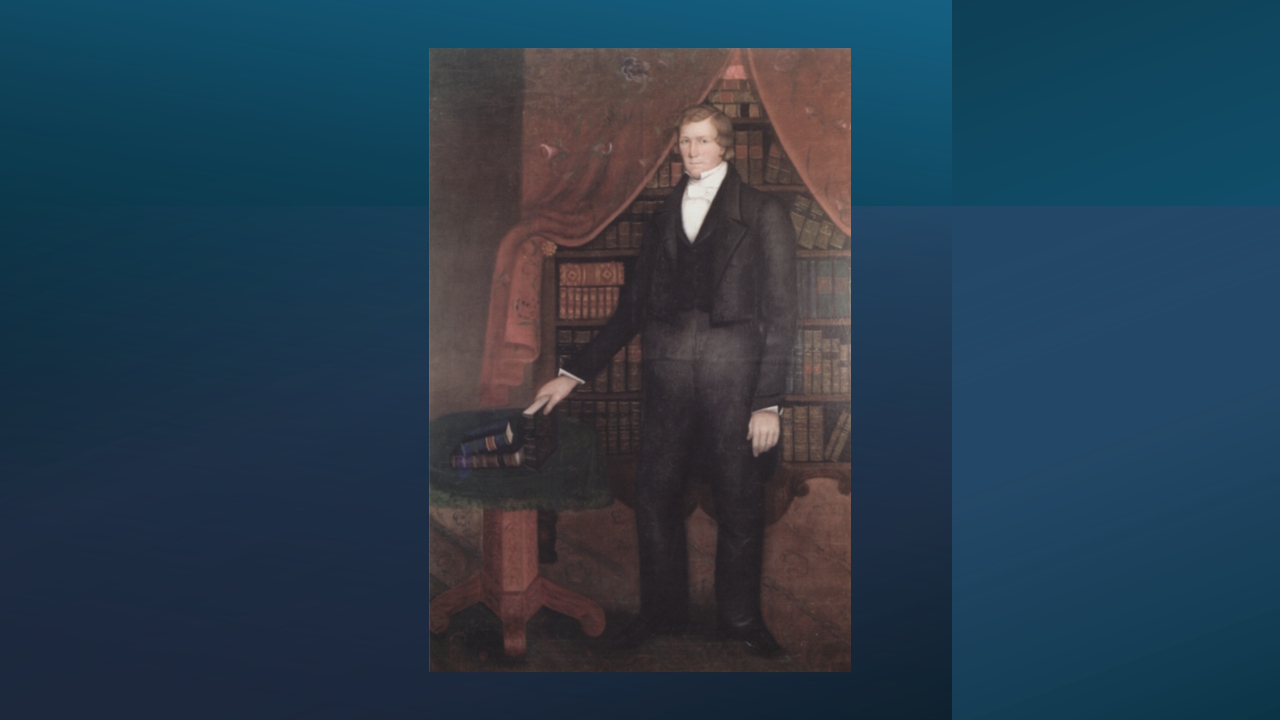
Mark Twain’s View on Brigham Young’s Leadership 

I will close with just a couple of things, just sort of out of the blue, I guess.

One is an account from Mark Twain’s Roughing It, where Mark Twain talks about going to visit Brother Brigham—Governor Young—in Utah when his brother (Mark Twain’s brother) was going out to be secretary to the governor of Nevada Territory.

Mark Twain’s Encounter with Brigham Young

Mark Twain – Samuel Clemens – was young at the time, and he had decided that he wanted to sort of needle Brigham. Pester him. See if he could get him to bristle, respond.

Brigham ignored him the whole time they were visiting. And at the end, he patted young Sam Clemens on the head and said to his brother, “Beautiful child you have here. Is it a boy or a girl?” And Mark Twain said, “I had to admit the Mormon prophet had bested me.”

Daniel H. Wells on Brigham Young’s Leadership

Now, here is something that came to me from Dick Lambert, who is a descendant of Brigham Young and a history aficionado and the prosecutor who got me involved in the Brian David Mitchell/Elisabeth Smart case. I still have to get even with him for that one.

He told me about something that Daniel H. Wells said. Daniel H. Wells was the not-LDS justice of the peace in Nauvoo who eventually joined the church, went west with the Saints, and became a counselor to Brigham Young.

At one point, he’s speaking to a group (I think) up in Cache Valley, and he said—and this will surprise you, it’s not what we expect—

Aren’t we fortunate that we have in our leader, Brigham Young, a man of such gentleness and kindness and softness of speech? He doesn’t have the rough edges that Joseph used to have.”

Now, is that turning things upside down a little bit? Does that sort of violate your image of Brother Brigham?

Defending Brigham Young’s Leadership

Well, there was that side to him. And so, I want to stand up on behalf of Brother Brigham and say, “Not so fast. Let’s not condemn him.”

I’m seeing members of the church who are condemning Brigham. I’ve heard people say, ‘I don’t think he was the Lord’s choice.’ You know, ‘The Lord wanted somebody else.’ So, I’m thinking, who? Sidney Rigdon? James Strang? Who’s your candidate?

I mean, seriously, think about this. To me, Brigham Young was the man the Lord chose, and I affirm him as a prophet, seer, and revelator, not merely as the great colonizer.
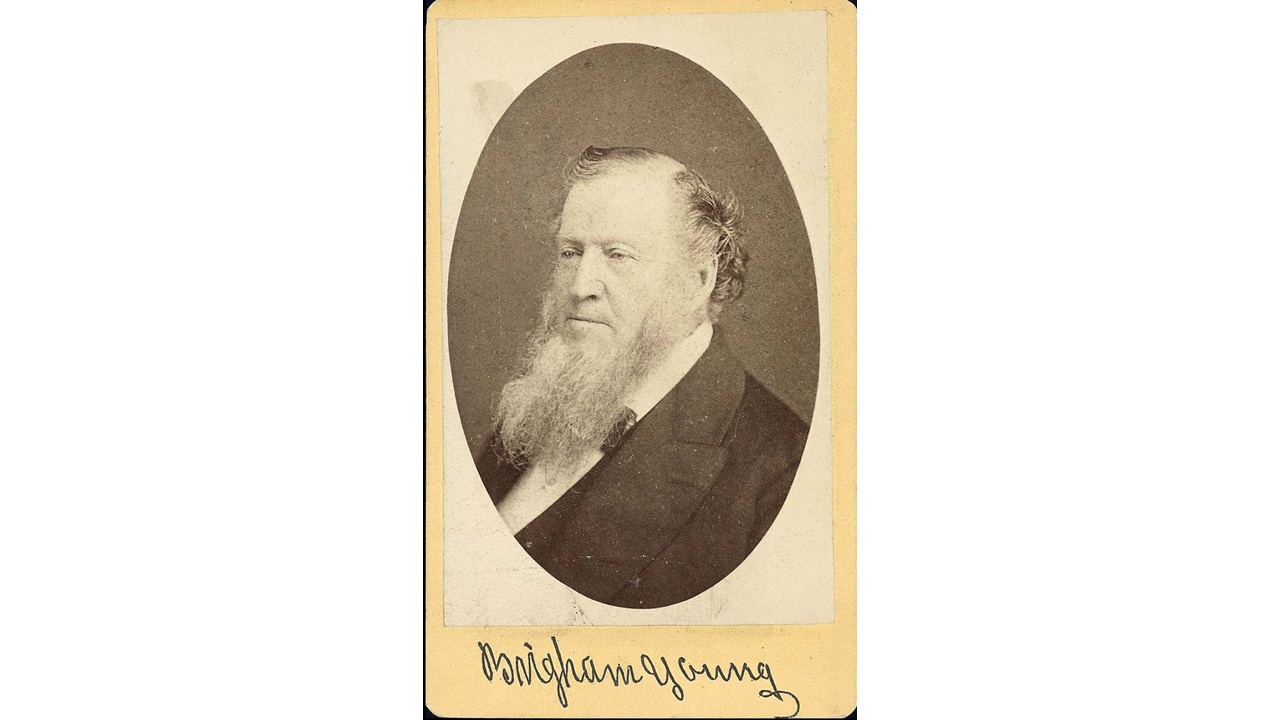
Brigham Young - prophet, leader

The Real Brigham Young

And so that’s one of the reasons we’ve wanted to do this, was to get a conversation going again about the real Brigham Young, not the Brigham Young of caricature.

Thank you.

Back to top
Audience Q&A

Q&A: Exploring Brigham Young’s Leadership

Scott: Okay. First question is I want to know more about why Brigham Young is criticized so harshly when he’s such an influential and iconic figure in the restored gospel.

Dan: That’s a really good question. Something of a mystery, I think. I think that one thing is I’ve seen this in some areas that some people who who find fault with the church but want to retain that belief in the church and remain loyal to Joseph Smith, find it convenient to blame everything they don’t like about the church on Brigham Young. And so he’s a convenient scapegoat for that sort of thing. So if you don’t like seeming LDS racism or seeming LDS misogyny or patriarchy, it’s all Brigham’s fault. And I think that’s one of the major factors – I may rile some feelings here – but I know some people who are very, very upset with the church’s seemingly assuming openness to taking vaccines and so on and so forth. I thought at first I’d say to these people, look, do you realize if you reject Brigham Young, you’re basically rejecting the authority of every president since Brigham Young, including Russell M Nelson? And with some of those, at least I got the impression that that wasn’t a bug in the thing. That was a feature. Yeah, yeah, they like that. President Nelson is also a fallen prophet or a false apostle or something. But Joseph Smith told the truth. So.

Scott: So what is the best book that discusses Brigham Young?

Dan: Well, it depends, I suppose, on what you want. I mean, there are biographies of Brigham, there’s Leonard Arrington’s large biography. There are others in the works, I understand. Tom Alexander, Thomas Alexander, wrote one that I quite liked. I’ve been surprised quite often, going back to my idea of Brigham Young, the practical man, how often in treatments of Brigham Young, his, his role as colonizer, economic leader of the Great Basin, so on and so forth has been emphasized, but his leadership of the church has not. And so I remember reading an article – of all people – by Jan Shipps many years ago where I thought, she’s a methodist, and it’s the first article about Brigham Young I’ve read in a long time that took him seriously as a religious figure. Why don’t Latter-Day Saints do that more often than they do?
But, you know, the Arrington biography is a good one. There are more things coming out on Brigham all the time. I liked the Brigham Young books that I mentioned by Hugh Nibley and Gene England. I wish Gene England’s were still in print. I mean, a lot of people think of Gene as a liberal and – well, not a dissident, he was active – but Gene and I had run ins, so I know how people would feel that way. But this book about Brigham Young is a loving, admiring portrait of Brigham where he’s poured through the letters and so on, and come up with a beautiful view of Brigham, I mean he really deeply admired and honored him. I like that book a lot.

Emily Snyder: What about that one by Irving Stone?

Dan: Irving Stone is about the settlement of the West. So, the Latter-day Saints, we play kind of a bit role, but it’s a very positive bit role. He he has a lot of positive things to say about Brigham in particular, and the Saints in general.

Scott: And I think the book that you mentioned illustrates to us that while we may not agree politically or may not agree even in historical research areas with fellow Latter-day Saints, it’s that that doesn’t mean that they don’t contribute to the overall knowledge.

Dan: You know, I always said about Gene England, when people criticized him and believe me, I could criticize him too. But, you know, as they used to say about Tommy Lasorda, if you cut him, he bleeds Dodger blue. Or Brigham Young said about Orson Pratt, if you cut him into pieces, every piece would cry out, Mormonism is true. And that was the case with him as well. So. And he loved Brigham.

Scott: How’s this question? How can we correct the narrative that Brigham Young killed Joseph Smith?

Dan: Laugh.
I’ve interviewed 2 or 3 historians, Tom Alexander, Jim Allen, the former assistant church historian. I brought that theory up to them. And both of them said things that I would not include in the film interview about that theory. Just the stupidest thing I’ve ever heard in my life. I mean, Brigham Young –and I tried to emphasize this — was absolutely devoted to Joseph Smith. The idea that Brigham would ever have lifted up his hand against the Lord’s anointed is just inconceivable to me, just doesn’t fit him at all. Besides of which, there’s no evidence. And again, I cite the response of the Carthage Grays and so on. Shouldn’t someone have mentioned, “well gee, he was already dead. What a surprise! We were going up to kill him and he was dead.”
That’s kind of an important fact, but nobody ever mentioned it — because it wasn’t true.

Scott: It falls right in line with some of the other arguments against the church with no evidence and such. Were there any angelic personages that visited Brigham Young that we know of?

Dan: Well, he seems to have had visitations and dreams where he saw into the next life. He saw into the next world. He had encounters with Joseph Smith past his death and so on. So, yeah, I’d say there are there seem to have been and so, you know, there’s that whole side of it which needs to be explored further, of his spiritual gifts and his spiritual, his connection with the other world.
Now, he was he was self denigrating, he would say of Heber C. Kimball, “He’s my prophet.” But everybody knew where the real authority was, and Heber C. Kimball did not confuse that. Heber was very good at prophesying future events and very accurate in many spectacular cases. But Brigham himself would call on revelation. You know, his his famous statement about the Salt Lake Temple.
He said, you know, people questioned me about why it’s going to have six towers. Joseph only built one tower, and he said, Well, I’ve seen it in vision. That’s the way it’s going to be. And he said, I never pass the spot but what I recall the vision that I had. So he had supernatural experiences. He tended to be somewhat reserved about them, I think.

Scott: So, there’s a widespread belief that Brigham Young started plural marriage, and Joseph had nothing to do with that. Could you comment on that? How widespread is that belief? Or have you seen a lot of it?

Dan: And I’ve seen it from, more people than I would like to see it from. And, the historical evidence just overwhelmingly against that idea. Brigham Young did not invent the idea. And again, that’s one of those where I think people sometimes say, well, Joseph Smith could not possibly have been involved in that so it had to be that dastardly Brigham Young.
In fact, that’s one of the motivations that led him to order the murder of Joseph and Hyrum in Carthage Jail, according to some of these theorists. And I’m sorry, the evidence is just well, it’s not only not there, it’s completely to the contrary. So. But I see a lot of people out there, and I think they’re they’re sincere members of the church. They really believe in the church, but they’re misguided, and I worry. I actually worry that when they finally find out they’re wrong, if you pinned your faith on a historically indefensible position, they’re going to be in trouble. Face the facts, cope with the facts, don’t invent. You know, it was Mark Twain who says, “everybody’s entitled to his own interpretation, but you’re not entitled to your own facts.” So.

Scott: I have other questions here, but unfortunately, our time is at an end and some people would like to actually take a break.

All Talks by This Speaker

coming soon…

Talk Details
  • Date Presented: August 8, 2024
  • Duration: 33 minutes
  • Event/Conference: 2024 FAIR Conference
  • Topics Covered: Brigham Young leadership, Mormon history, LDS apologetics, Mountain Meadows Massacre, polygamy and its origins, racism and slavery in Utah, Brigham Young’s spiritual experiences, temple building, Brigham Young’s compassion, Brigham Young as a colonizer, misconceptions about Brigham Young, defense of Joseph Smith, Brigham Young’s literary style, addressing criticism of Mormon leaders, American Primeval fact-checking, Latter-day Saint faith and scholarship
Back to top
Common Concerns Addressed
    • Racism and slavery: Brigham Young’s stance on race is often cited as problematic. The talk highlights that while Brigham said things that are uncomfortable by modern standards, his actions may have aimed to mitigate slavery rather than perpetuate it.
    • Mountain Meadows Massacre: The talk emphasizes that Brigham Young was not responsible for the massacre and actively opposed it.
    • Polygamy: A recurring misconception is that Brigham Young invented polygamy. The talk clarifies that polygamy was introduced by Joseph Smith, not Brigham.
    • Assassination of Joseph Smith: The idea that Brigham Young orchestrated Joseph Smith’s murder is labeled as an unfounded conspiracy theory.
    • Misogyny: The talk addresses portrayals of Brigham Young as a misogynist, highlighting his compassion and dedication to his family.
Apologetic Focus
  • Historical accuracy in Mormon leadership: Correcting false narratives about Brigham Young’s role in early LDS leadership.
  • Mormon polygamy origins: Clarifying that polygamy predated Brigham Young’s leadership and originated with Joseph Smith.
  • Accusations of violence: Refuting claims that Brigham Young commanded violent groups such as the Danites or ordered the deaths of Joseph and Hyrum Smith.
  • Brigham Young and race relations: Providing historical context for Brigham Young’s statements and policies regarding race.
  • Spiritual leadership and visions: Highlighting Brigham Young’s spiritual experiences, including his visions related to temple building.

Identify the Apologetic Focus of the Talk

Apologetic focus:
The primary apologetic focus of this talk is defending the character and leadership of Brigham Young. It seeks to clarify misconceptions about his role as a prophet, leader, and colonizer by:

  • Emphasizing his spiritual dedication and visionary leadership.
  • Correcting false narratives about his involvement in violence and polygamy.
  • Highlighting his compassion, leadership in temple building, and commitment to following Joseph Smith.

The talk also seeks to inspire thoughtful discussion on historical issues by acknowledging complexities while affirming Brigham Young’s prophetic role.

Explore Further

Fact-checking American Primeval: What’s Real and What’s Fiction?

  • Mountain Meadows Massacre Researchers Rick Turley and Barbara Jones Brown | Peace & Violence
  • “American Primeval: A Historical Fiction Series about 1850s Utah”
  • Craig L. Foster, “Murder, Mayhem and Mormons: Was the Church of Jesus Christ of Latter-day Saints Really a Violent Faith?”
  • The Mountain Meadows Massacre|300 Primary Sources
  • New Netflix series debuts Thursday about Brigham Young, Mountain Meadows. Is it accurate?  
  • Ronald W. Walker, Richard E. Turley, and Glen M. Leonard, Massacre at Mountain Meadows (Oxford University Press, 2011)
  • Richard E. Turley and Barbara Jones Brown, Vengeance Is Mine: The Mountain Meadows Massacre and Its Aftermath (Oxford University Press, 2023)
  • Janiece Johnson, Convicting the Mormons: The Mountain Meadows Massacre in American Culture (The University of North Carolina Press, 2023)
  • Lessons from the Mountain Meadows Massacre
  • American Indians and Latter-day Saint Pioneers
  • Brigham Young
  • Danites
  • Indian Slavery and Indentured Servitude
  • “Peace and Violence among 19th-Century Latter-day Saints,” Gospel Topics Essays, topics.ChurchofJesusChrist.org.
  • Richard E. Turley Jr., “The Mountain Meadows Massacre,” Ensign, Sept. 2007, 14–21.
  • What is the Mountain Meadows Massacre?
  • Was Brigham Young Involved in the Mountain Meadows Massacre?
Back to top

Share this article
Facebook
X
Email
Reddit

Lessons Learned from the Joseph Smith Papers

Presentation by Matt McBride

McBride

All talks by speaker

Publications by speaker

Dig Deeper

PDF
Slides

Transcript

Q&A

Sources

Endnotes

Transcript
Introduction

Scott Gordon introducing Matt McBride:

Our next speaker is Matt McBride. Matt is a longtime friend of FAIR—let’s put it that way—and has spoken before at our conferences. Without much further ado, I’m going to give as much time as I can, so I’m going to turn the time over to Matt.

Life Can Only Be Understood Backward

Thank you. It’s good to be here. I know some people advise starting talks with a joke, but as I glance at my notes here, I see that the first two words are ‘Søren Kierkegaard,’ so I’m not sure how funny this is going to be.

Nevertheless, Søren Kierkegaard once observed that while life must be lived forward, it can only really be understood backward. Occasionally, we become conscious of this in our day-to-day experiences. For example, we might find meaning in a severe trial months or years after it happened—meaning we failed to see in the moment of crisis. Meaning grows from memory. The act of looking back can be a sacred endeavor: ‘Turn your hearts to your fathers,’ ‘Search the scriptures,’ ‘Remember how merciful the Lord has been unto the children of men from the creation of Adam, even down to our time.’ As Latter-day Saints, we are urged repeatedly to gaze back beyond the confines of our own lives and stand on the shoulders of others, giants or not.

The corollary to all this is that someone needed to keep a record in the first place, to preserve it and work to make its insights accessible. Records of the past enlarge our memory—they make sacred remembering possible. Restoration scripture is replete with commands to record things: Adam’s descendants kept a book of remembrance, Nephi kept records for a wise purpose, and the Lord commanded the Saints at the first meeting of the Church in this dispensation to keep a record. Joseph Smith and his scribes and associates kept a magnificent record, indeed.

Time to Take Stock

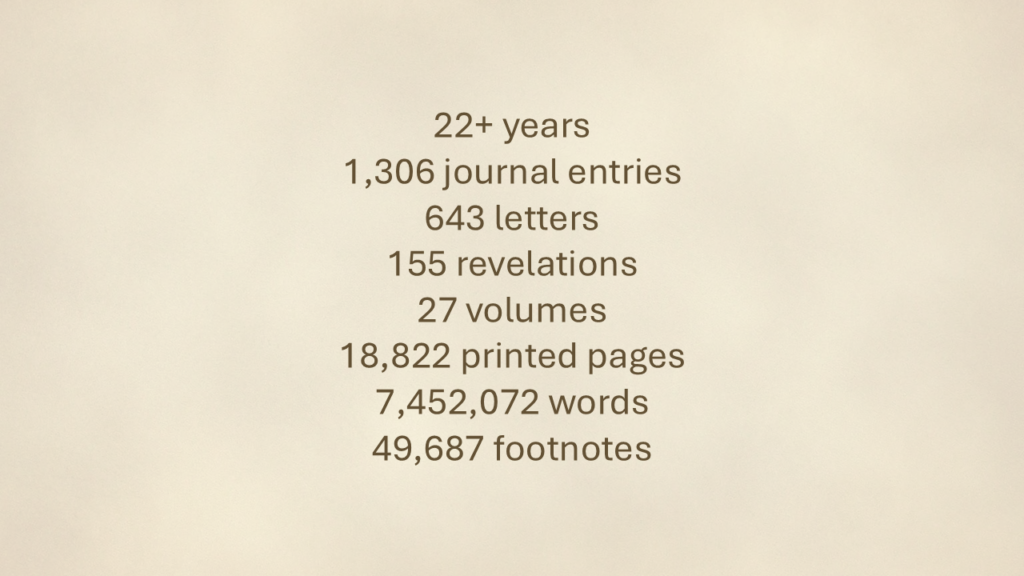
As the Joseph Smith Papers team, my colleagues and I stand near the end of a 23-year period of sustained remembering—of scrutinizing the record that Joseph kept. We’ve endeavored to create a complete and open publication of his ‘large plates’ record, to borrow a phrase from the Book of Mormon. As we look back on this effort, it’s natural to try to take stock—to assess, even to quantify.

So, here’s one attempt:

  • 22+ years
  • 1,300-some odd journal entries
  • 643 letters
  • 155 revelations
  • 27 print volumes
  • 18,820 printed pages
  • Almost 7.5 million words
  • Nearly 50,000 footnotes (and as some of our team members like to point out, toe notes as well, which I think we might have invented).

It’s exhausting to create, and some might argue that it’s exhausting to consume and read. The question our team is often asked is: Can you distill this all down? Where is the meaning in all these thousands of documents? Who is the Joseph that emerges from an up-close examination of his corpus? In short, people want to know: What have we learned from the papers?

What Have We Learned?

If you were to ask each of my colleagues this question, they would probably answer it in completely different ways than I would. Each of them has their own approach because this historical publication, unlike most others, is not the work of a solitary scholar or the product of a few collaborators—hundreds of people have now contributed to it, each bringing their own perspective based on the small slice they worked on. So, today, I’ll make my own modest attempt to answer these questions and share a few thoughts about what I’ve learned from the papers.

We’ve certainly learned many new facts about Joseph Smith’s life. New documents have given us new vistas on early Latter-day Saint history, and I’ll mention a few of those during my remarks. At the same time, much of the value of the papers comes not in the form of startling new discoveries, but in how they confirm what we already understood in part, or allow us to speak with greater confidence, clarity, and authority than we could before about the Prophet’s life. I would argue that this is one of the most important legacies of the papers.

Coming Into Focus

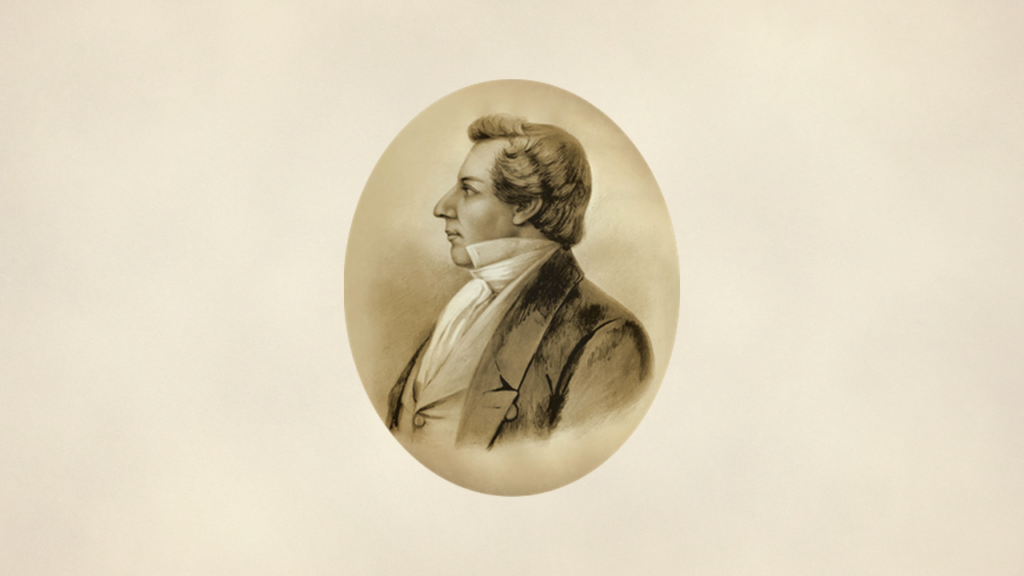
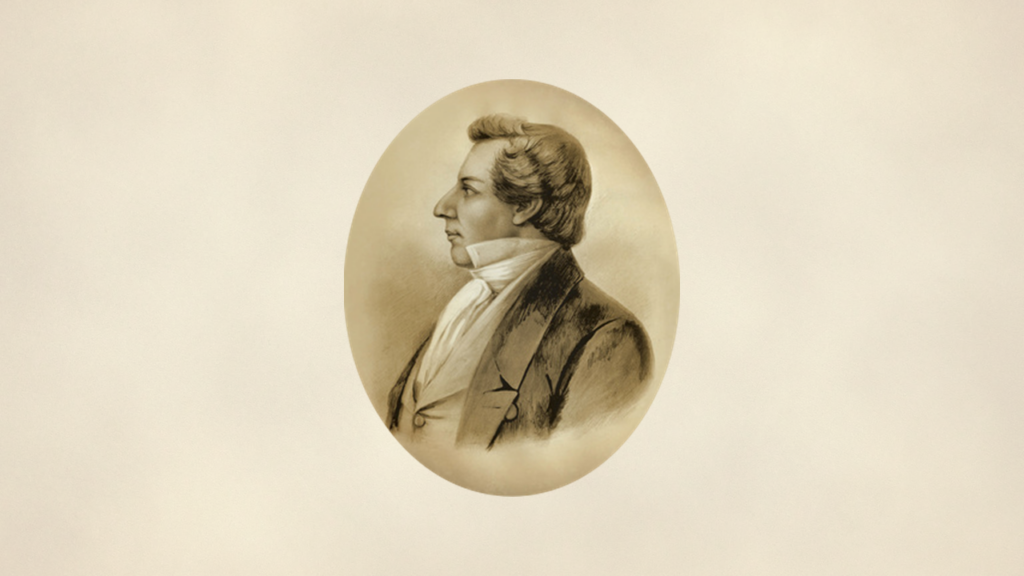
Now, let’s see if I can advance my slide here… there we go. How many of you recognize the subject of this photograph? Hopefully, everyone.


Examining and contextualizing Joseph Smith’s papers closely over the years has done something like this for us. Now, I don’t want to exaggerate or claim that we now know everything there is to know about Joseph Smith or that we have a perfect picture of his life—far from it. But, as with this photo, we can now see the beloved subject of our study so much more clearly, as if we’ve put on corrective lenses after so many years of squinting. The papers clarify the surrounding landscape; they help us take in the nuances, and they show us how the smallest details contribute to the whole.

One example that stands out in my mind is the last volume of the Documents series, which was released just last summer. It chronicles the final six weeks of Joseph Smith’s life. It’s not the individual documents in this volume that stand out so much as the way the incessant stream of setbacks, threats, lawsuits, and frankly, missteps, causes the pressure on Joseph to build and build. You almost have to read through it blow-by-blow, or document-by-document, and let the effect of it all wash over you, getting inside of Joseph’s headspace during those tumultuous months by means of an extremely detailed documentary record, sometimes with 5, 6, 7, 8, 10, or 12 documents produced every day.

This detail makes the Nauvoo Municipal Court’s use of the city charter’s expansive habeas corpus provision to shield Joseph Smith from arrest look less like a power grab and more like an act of desperation. Again, we knew the pressure was on Joseph, but the dozens of letters, pleas, mayoral orders, military orders, warrants, and affidavits open wide a window on Joseph’s interior world in the final weeks leading up to his murder.


Never-before-published Sources

Much of what we have learned comes from never-before-published sources, and I want to highlight a few of those for you. With the gracious support and encouragement of the First Presidency, we published a number of previously unavailable records.

The Book of Commandments and Revelations

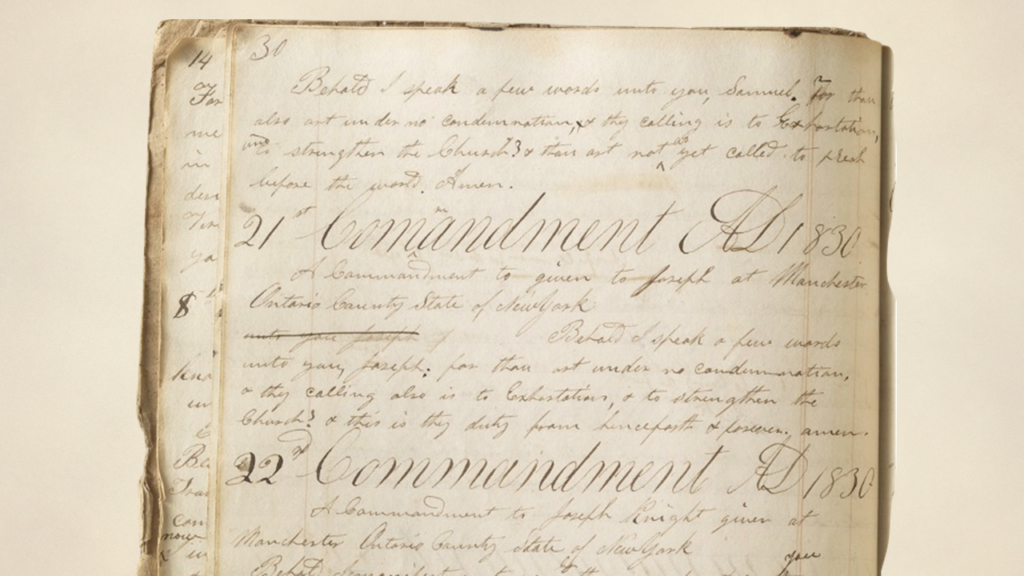
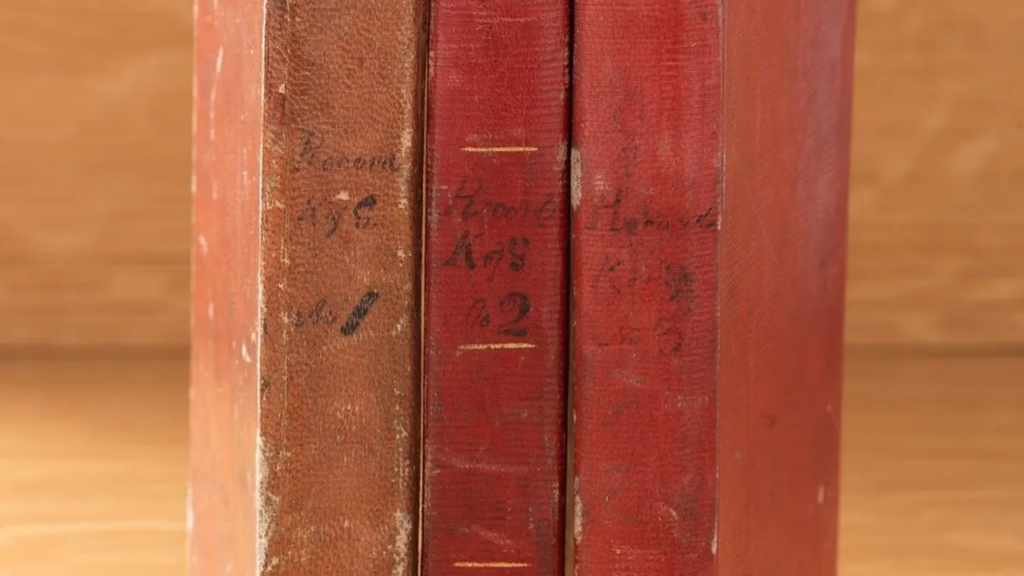
Notable among these is a record called The Book of Commandments and Revelations. This precious record served as the manuscript source for the publication of Joseph Smith’s revelations in the Book of Commandments and in the Doctrine and Covenants. It contains the earliest extant texts of many of Joseph’s revelations, and in some cases, it contains the only surviving manuscript copy that we have.

It also contains unpublished revelations, some of which were basically unknown. There’s a revelation commanding Joseph Smith to seek copyright for the Book of Mormon in Canada. There’s a sample of pure language, which was known previously only in part through a mention by Orson Pratt. I’ll talk more a little bit later about what this manuscript revelation book and other early records teach us about Joseph Smith’s revelations. But I want to highlight another new record that came to light through the Joseph Smith Papers, and that’s the Council of Fifty Minutes.

Council of Fifty Minutes

For so many years, there was mystique surrounding these minutes—what did they contain? Why had they not been published? Many supposed that the minutes harbored some explosive or embarrassing information about Joseph Smith or Brigham Young. Not so. The minutes do reveal the intense frustration and even anger experienced by Latter-day Saint leaders in Nauvoo toward state and federal governments. They detail both Joseph’s efforts to work within existing legal and political frameworks to improve the Saints’ situation, as well as his willingness to imagine a new theocratic constitution and explore places outside the sway of the U.S. government to carry out the commandment to build Zion.

Oh, it looks like I don’t have the most updated version of my slides. I had this really cool Lord of the Rings meme I added earlier, and I feel bad you’re missing out. For those of you who have seen The Lord of the Rings, imagine Elrond telling Isildur to throw the ring into the fire and destroy it. Mental picture.

Revelation and Scripture

William Clayton, who was the person who kept the minutes of the Council of Fifty, was directed to destroy those minutes, perhaps because they would appear treasonous. But he chose instead to bury them, and later he retrieved them and brought them to Utah. This is one of those instances in which, as historians, we’re grateful that Clayton chose to disregard the counsel of his leaders.

In the Council’s meetings, Joseph Smith shared teachings that ought to become classics, such as these statements on the workings of councils: He said, “The reason why men always failed to establish important measures was because in their organization they never could agree to disagree long enough to select the pure gold from the dross by the process of investigation.” On another occasion, he declared that he wanted all the brethren to speak their minds, to say what was in their hearts, whether good or bad. He didn’t want to be forever surrounded by a set of “doughheads.” If they didn’t rise up, shake themselves, and engage in discussing these important matters, he would consider them nothing better than deadheads. This may sound harsh, but it’s designed to provoke them—and us—to engage in the process of counseling together.

So, what have the papers taught us about revelation and scripture? In many respects, the volumes of the Revelations and Translations series of the Joseph Smith Papers are the crown jewels of the project. Together with the detailed historical context provided for each of Joseph’s revelations in the volumes of the Documents series, they provide a critical baseline for understanding the Restoration canon through Joseph Smith’s papers and the careful reconstructive work done by the project’s historians.

For example, we learn more about the context in which the revelations were given. We learn the questions that William McLellin asked the Lord, which were answered in Section 66 of the Doctrine and Covenants. We learn that Sidney Rigdon and Leman Copley eagerly left to share the revelation to the Shakers on the very day it was given. We also learn that other Christian reformers had established a Temperance Society in Kirtland, Ohio, at the time the Word of Wisdom was given. We gain insight into the financial challenges the Saints faced in the mid-1830s as they tried to fund the construction of cities and temples through a banking institution and other efforts. All of this serves as a backdrop for the revelations on tithing given in Far West in 1838.

We also learn in greater detail how Joseph’s translation of the Bible prompted new understandings of priesthood and church ecclesiastical structure. These are just a few examples, but what’s the big takeaway? What do these contextual clues tell us about the Latter-day Saint concept of revelation? Well, we see its dialogic nature. Revelation often comes in response to questions—so many questions. Joseph’s queries arose from his circumstances, his culture, his study of scripture, and his own spiritual yearnings. The revelations given in response did not come in a vacuum. Most of them weren’t divorced from the churn and turbulence of life in the world; rather, they were designed both to help the Saints navigate the ever-changing culture in which they lived and to cheer them along the way with glimpses of a glorious rest.

The papers also open a window on the “here a little, there a little” nature of revelation as experienced by the Prophet. Examples include Section 20 of the Doctrine and Covenants, known as the Church’s constitution. In our scriptures today, it appears as a flat text, giving the impression that it was received and dictated whole. But using the Joseph Smith Papers, we can trace its textual history to see that it was not only painstakingly edited for publication but also substantively amended by further revelation.

We believe that the earliest extant text of Section 20 was a surreptitious copy made and then published in the Painesville Telegraph. This copy lacks the texts of the baptismal and sacrament prayers, which most of us refer to in Section 20 frequently, asking, “Where are the sacrament prayers?” It’s not there. Instead, it simply refers to relevant passages in the Book of Mormon. By the time the revelation was copied into the Book of Commandments and Revelations months later, Joseph had not only added relevant excerpts from the Book of Mormon but also clarified other details, such as how frequently the Church’s elders were to meet in conference.

Joseph’s contemporaries seemed to understand that the revelation was still in a state of becoming. In one early copy, they labeled it “thus far the Church Articles and Covenants.” We could walk through similar analyses of Sections 27, 107, and others—these revelations came in pieces. We’re reminded of the verse in 2 Nephi about how the Lord giveth more to those who hearken to His earlier counsel, dispensing revelation line upon line according to the understanding of its recipients.

2013 Edition of the Standard Works

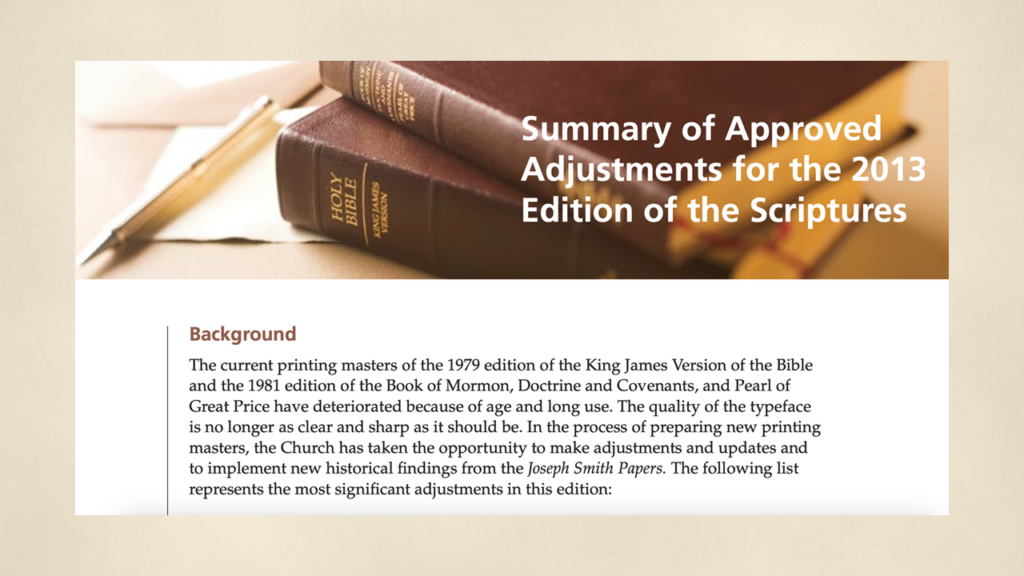
Many of the insights about scripture that arose from the project team’s research were incorporated into the 2013 edition of the Doctrine and Covenants. These changes include expansions and refinements to the introduction of the book, a few spelling changes in the text itself, and revised headings for 57 sections that correct dates, locations, and improve context relating to the circumstances in which the revelations were given. This, at least as I see it, is one of the most visible and lasting legacies of the papers.

How Joseph’s Experiences Shaped Him

At least as I see it, what have we learned about the way Joseph Smith’s experiences shaped him? There is a lot you could say on this topic, and I have time to give basically one example. The papers reveal the depth to which Joseph’s views later in life were shaped by the crucible of persecution. He and his family, along with his faith community, suffered acutely as a religious and cultural minority in a political and social climate that was frequently hostile to the Saints. This experience deeply attuned Joseph to the need to protect the rights of marginalized people, especially their right to worship how, where, and what they may.

Joseph developed an almost fierce distaste for how people in power trampled on religious freedom. His teachings on this topic from the Council of Fifty minutes help us understand what Joseph hoped a new constitution or a more just government would look like.

Every Man Acts For Himself

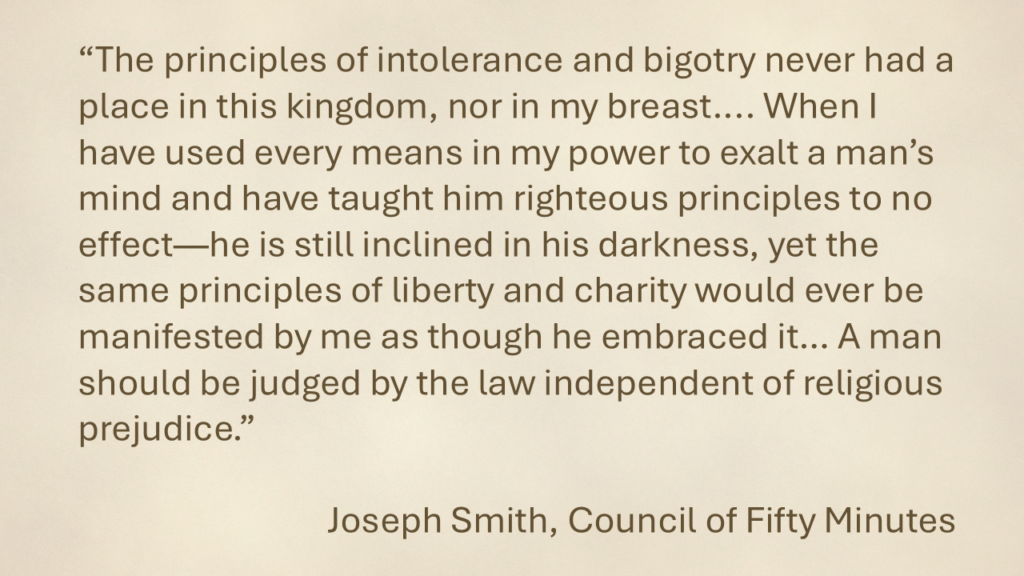
He said, “God cannot save or damn a man only on the principle that every man acts, chooses, and worships for himself.” Hence, the importance of “thrusting from us every spirit of bigotry and intolerance toward a man’s religious sentiments.” Joseph appealed to every man in the council, beginning with the youngest, that when he arrived at the years of maturity, he would be able to say that the principles of intolerance and bigotry never had a place in the Kingdom nor in Joseph’s own heart. Joseph said that after using every means in his power to exalt a man’s mind and teach him righteous principles, even if that man still inclined toward darkness, Joseph would continue to manifest the same principles of liberty and charity as though the man had embraced them.

A man, Joseph taught, should be judged by the law independently of his religious prejudice. Religious freedom had to be for everyone, not just for people who believed the way Joseph did. This was more than rhetoric for the Prophet. We know that he put his money where his mouth was. For example, when he learned that a Catholic priest from Iowa wanted to administer last rites to a dying parishioner but lacked the means to cross the river and make the trip, Joseph paid his passage on a ferry and loaned him a horse.

Joseph’s Character

What have we learned about Joseph’s character from his papers? Well, here we learn—but mostly relearn—things we already knew. We relearn that Joseph was quick to forgive, that he was generous with his time and means, and that he was prone to see the best in people, which often meant that he felt the sting of betrayal. He cared deeply for the plight of the poor, and he turned to God in almost every aspect of his life. Again, the cumulative effect of the thousands of small details in the papers is the project’s most important contribution to our understanding of Joseph’s character.

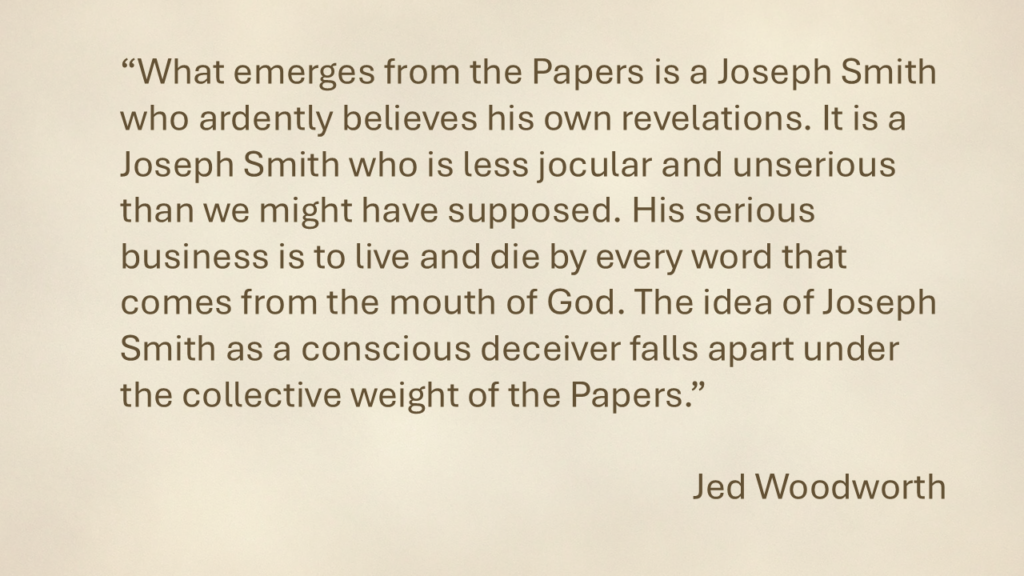
One accusation that has dogged Joseph, going back almost to his boyhood, was that he was a deceiver or a charlatan. It’s extremely difficult to maintain this assessment in the face of thousands of documents—public and private—that portray an earnest belief in the revelations he received. He shaped his life around them, risked financial ruin to carry them out, and died defending them.

An Ardent Joseph Smith 

One of my colleagues put it this way: “What emerges from the papers is a Joseph Smith who ardently believes his own revelations.” It is a Joseph Smith who is less jocular and unserious than we might have supposed. His serious business was to live and die by every word that came from the mouth of God. The idea of Joseph Smith as a conscious deceiver falls apart under the collective weight of the papers.

At the same time, the papers show us more clearly than ever just how human Joseph was. He was somewhat hapless as a businessman—I’m trying to be generous here. His ideas about race and gender roles were deeply informed by his surrounding culture. He had a temper, and he sometimes engaged in violent altercations with people he believed had wronged him. It’s easy to get the impression from a few of Joseph’s sermons that he had an overinflated sense of self and that he was given to bravado. Indeed, he had his moments. He once said, “I have more to boast of than ever any man had. I’m the only man that’s been able to keep a whole church together since the days of Adam. The followers of Jesus ran away from Him, but the Latter-day Saints never ran away from me yet.”

But we can read these rhetorical flourishes in a different light, or as carrying a different tone, when we place them in context—first of all, in the sometimes hyperbolic preaching culture of the day, but also in the context of Joseph’s own willingness to publish revelations in which God chastised him for his failings. Even more so, when we consider statements by new converts and non-Latter-day Saints who found Joseph’s lack of pretension striking enough to comment on frequently. For example, one person said, “He does not pretend to be a man without failings and follies; neither is he puffed up with his greatness, as many suppose, but on the contrary, he is familiar with any decent man.” Another said, “I found Joseph familiar in conversation, easy, and unassuming.” His non-Latter-day Saint attorney noted, “He was very courteous in discussion and would not oppose you abruptly, but had due deference to your feelings.”

One instance in which Joseph’s self-awareness shines through is the only time he was unambiguously convicted of a criminal offense. This happened in 1843. Joseph had visited a city lot in Nauvoo that he believed had been unfairly seized by a county tax collector. The discussion between Joseph and the tax official escalated from a verbal argument to a physical confrontation, and Joseph got the better of his rival. Immediately afterward, Joseph voluntarily submitted to a local justice of the peace, confessed his guilt, and insisted on paying a fine for his actions.

Well, there’s a lot more that we could say.

Keeping A History

Dr. Laurie Maffly-Kipp noted at a recent conference that one of the significant contributions of the Joseph Smith Papers has little to do with Joseph himself but rather the way it illuminates the lives of those around him. While the papers project centers on the lifespan of Joseph Smith, the portrait it paints is of an entire community at work. It brings to life the everyday labors of many of the early Saints, naming many whose names would otherwise not make it into synthetic histories. Indeed, we have made an effort to highlight the contributions of the thousands of men and women whose faith in the revelations profoundly shaped the history of the Church but who are little known.

“I think of the efforts of one of our team members, Elizabeth Kean, to understand the material culture and day-to-day life of those who lived in frontier communities, using details found in Joseph Smith’s financial records. Or the work that Brent Rogers has done to flesh out the biography of Vienna Jaques. The papers have theological and devotional implications as well. In them, we learn more about the development of Church organization, about priesthood, about the Saints’ efforts to build a Zion community, and about the origins of our temple doctrine.

But I want to close by reflecting on what we’ve learned about our efforts as a Church—specifically as a Church History Department—to keep and share a record of Church history. The project has taught us that our history can withstand the most intense scrutiny. By deciding to be fully transparent about Joseph Smith’s life, we hoped, in Richard Bushman’s words, that there would be no rocks we would turn over and find a scorpion. The Church essentially said, ‘We’re going to turn over all the rocks,’ and as Richard quipped, ‘It proved a marvelous gamble.’

We have learned, or relearned, that a habit of historical transparency strengthens trust in the Church. We have learned, or relearned, that faithful people can produce rigorous scholarship and have their faith strengthened in the process. We have also learned, or relearned, that aspects of Church history are challenging for many Latter-day Saints to reconcile and that we need to give our best efforts to minister to them, particularly those with sincere questions about Church history.

In addition to learning from new sources—oh, excuse me, yes—yeah, I’m sorry. In addition to learning from new sources, we also learn from the papers’ consistent application of rigorous standards of analysis. This has spiritual consequences. In today’s world, one of the challenges of the digital age is a sustained assault on truth. As the internet has democratized publishing, it has become more difficult than ever to sift through the many voices and arrive at reliable conclusions about even simple matters. Latter-day Saints are vulnerable to distortion and exaggeration about aspects of our history, even from well-meaning people, and this puts at risk our ability to engage in the kind of sacred remembering that we’ve been encouraged to do.

The Joseph Smith Papers tries to model what a reliable source of historical information looks like. It considers all the sources, assesses their creative motives carefully, weighs them against each other, places them in context, and is measured in its conclusions. This approach to history is not the least important thing we can learn from the papers.

A ‘Lunar Mission’

Former Church historian Steven E. Snow was fond of calling the Joseph Smith Papers the Church History Department’s ‘lunar mission.’ Just as NASA’s lunar program yielded technological advancements far beyond the original intent and scope of the program, the Joseph Smith Papers project has done more than just illuminate the life of the founding Prophet; it has helped change the way we do history.

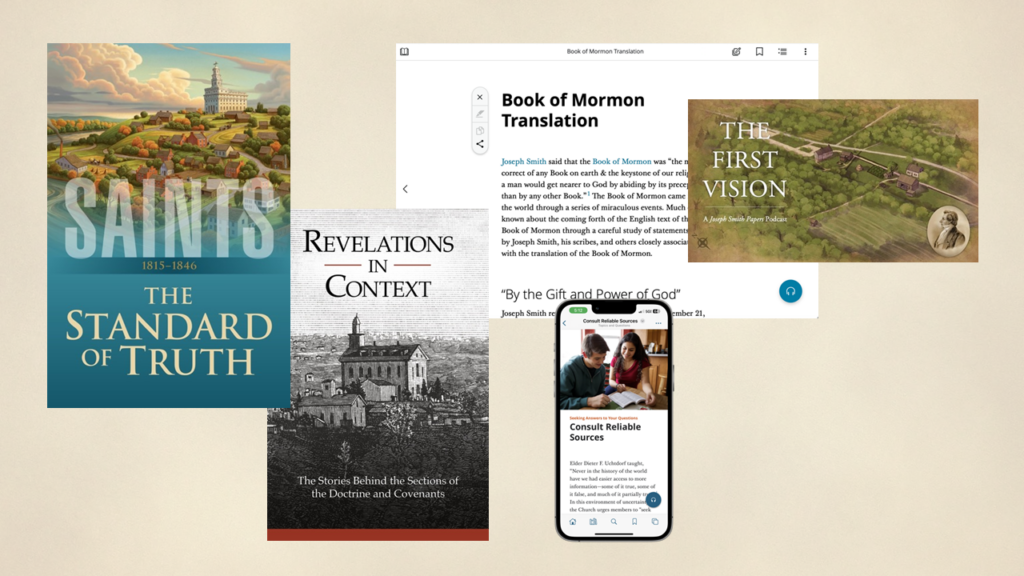
Most Saints won’t read the volumes of the Joseph Smith Papers, but we work hard to make insights from the papers as widely accessible as we can. We’re currently working on a revised and updated compilation of Joseph Smith’s teachings. It will distill many of the most important sources from the papers, present them in an easy-to-read edition, and ensure that they’re widely translated. And, as President Oaks announced at our Joseph Smith Papers conference last summer, the First Presidency has commissioned a new biography of Joseph Smith to be authored by Richard Turley Jr. Our Joseph Smith Papers team is excited to be involved in supporting that effort and thus to continue building on the foundation of the papers.


Other Projects

As you can see here, there are other examples of the kinds of projects that we have produced that build on the work done by the Joseph Smith Papers team. 

Millions Shall Know Brother Joseph Again

In the end, we hope that our efforts will not only help millions to ‘know Brother Joseph again’—in the sense that we may be able to reach more people than ever through products such as these—but also because we now have the resources to know him more completely.

Back to top
Audience Q&A

Scott Gordon:

“He said he’d be happy to take some questions. So, uh, I can… we can either take them from the floor, or I could… Should we just take them from the floor? Anybody have any questions?”

Audience Member:
“Yes. So, make sure you repeat the question they ask.”

Scott Gordon:
“So, the question is: How was the papers project funded, and why? And why was it funded that way?”

Matt McBride:
“Ah, it’s a straightforward question with a somewhat complicated answer, but I’ll try to keep it fairly simple. The Larry H. Miller family were a key funder of the Joseph Smith Papers. But it’s not true to say that the Church didn’t fund the papers—it was funded jointly by the Church and by the Miller family, and has been for quite some time, since the papers moved from BYU up to the Church History Department, about more than a decade and a half ago.

Part of the reason it was funded this way is that Larry H. Miller had a vision for this project. He was aware of the work that Dean Jesse had done in the 1970s, 80s, and 90s to recover and publish Joseph Smith’s papers in various publications, and he was eager to see that continue. Larry felt, he said, prompted by the Lord to come forward with an offering of support. So, we are very, very much indebted to Larry and to Gail and their family for the tremendous amount of support they provided to the project for many, many years.

And I think that’s the short version of the story. Hopefully, that’s helpful.”

Audience Member:
“Yeah, how’s Ron doing?”

Matt McBride:
“He’s hanging in there. He’s doing okay. Ron—oh, I apologize, I didn’t repeat the question. The question was about Ron Esplin, who is one of the key early members of the project team and kind of a driving spirit of the project for many years. Ron is doing okay. We still talk to him. He’s spending a lot of his time working and focusing on scholarship related to Brigham Young through the Brigham Young Center. You may have noticed that the first volume of the Brigham Young Papers—one of the volumes with some of his journals—was published last year. That effort is something Ron oversees, with the support of scholars, some of whom are on our Joseph Smith Papers team, and some of whom come from other institutions or backgrounds.”

Scott Gordon:
“Next question, right here.”

Audience Member:
“What’s the future of the project? And perhaps, what’s the future of the team you’ve assembled to work on it?”

Matt McBride:
“That’s a great question. As I suggested in my remarks, many members of the team are working on building a layer of scholarship that grows out of the foundation of the papers right now—scholarship that we think and hope will be helpful to Rick Turley as he works on his biography. There are some ongoing discussions with Rick about that.

Many members of the team are busily engaged in continuing to figure out what it looks like to build on that foundation. When we released the final volume of the project, our advisors, Elder Bednar and Elder Gong, said something at the press event that stuck with me. They said, ‘This is chapter one—you ain’t seen nothing yet!’ And I thought, ‘Oh my goodness, what’s chapter two?’ That’s something we’re working on and thinking about right now.

Aside from further work on Joseph Smith’s life, our team is also engaged in other approved projects within the Church History Department, and we will continue to publish important works of historical scholarship going forward. Two of them will come out next year. One is a rather unique history that tells the story of the Young Women’s organization within the Church. It’s a really remarkable work of scholarship by some of our women’s history specialists.

Then, as Elder Snow announced several years ago, we’re working on preparing the William Clayton journals from Nauvoo for publication, and we hope that will appear next year as well. There are other things down the road, but we’re busy!”

Audience Member:
“There’s clearly some difference between how the Church is handling history now versus how they handled it in the past. Can you shine a light on what differences there might be, say, between Arrington’s team in the 1970s and what you’ve been doing in the last 20 years? Is it more than just professionalism? Is it the size of the team, record access, things like that? I’m curious.”

Matt McBride:
“That’s a great question. You captured some of the really important things I might have shared. It’s certainly about the size of the investment in staff and historical expertise, which I think we owe in part to Larry and Gail Miller and their efforts to ask, ‘What can we do to help this particular project go forward?’

The historical profession has also changed a lot since the 1960s and 70s, just as those decades were very different from the early 20th century. The kinds of questions you ask, the kinds of sources you interrogate, and the approaches you take are different.

So, we’ve got a really spectacular, well-trained, but somewhat younger team in terms of their training and approach than perhaps what Leonard Arrington and his team might have taken. And then, yes, I think there’s been an increasing willingness and amount of support and encouragement from Church leaders. Sometimes that takes the form of expanded access to records, as you suggested. In other instances, it’s just our ability to examine everything with the Joseph Smith Papers project and do a fully open publication.

There are a number of things I’d point to as differences, but what Leonard and his team did was an incredibly important foundation. All of us consider our work to be building on what he did.”

Scott Gordon:
“Where’s the mic headed next? Right in the back, okay.”

Audience Member:
“How has this influenced thoughts about future prophets or their papers? For example, the Russell M. Nelson Papers—has this influenced how records are kept for future generations, or informed how they might better keep a record? I’m curious about that.”

Matt McBride:
“This is a really good question, and you touched a little nerve there. If we had archivists here, they’d be twitching. It’s actually something we are worried about all the time—what does the record look like? Records are kept differently in the 21st century than they were in the past, if you haven’t noticed.

We often wonder what that will look like, and we spend a fair amount of time thinking about it. As a department, we’re working with other Church departments and Church leaders at various levels to make sure there’s a records plan in place that will be adequate for the future.

And I think, implicit in your question is, ‘What about the papers of other presidents?’ The Brigham Young Center is doing a fantastic job working their way through the Brigham Young Papers right now—that’s a project we didn’t decide to take on. They’re brave souls! The Wilford Woodruff Foundation has also done a phenomenal job with the Wilford Woodruff Papers. They’re working on an open and accessible publication of his papers, which we’re excited about and enjoy watching. We use their work in the Church History Department. So, in some ways, those are another kind of outgrowth or legacy of the papers. We were kind of on the sidelines as cheerleaders for those projects, but we’re very invested in them and excited about them.”

Scott Gordon:
“Who has the mic next? Oh, over here.”

Audience Member:
“You said Joseph Smith scuffed up a tax collector. Did he have it coming?”

Matt McBride:
“(Laughing) I don’t know! That’s a tough question to answer. Joseph certainly thought he did. But, judging from the way Joseph behaved in the wake of that incident, it appears that he thought better of it and decided that whether the tax collector had it coming or not, Joseph needed to maybe not respond quite the way he did.”

Scott Gordon:
“So, he submitted to due process.”

Matt McBride:
“I’m not sure where the mic is now. Do you want me to call on someone? Oh, over here.”

Audience Member:
“You mentioned two upcoming publications. I’m curious about the biography you mentioned, by Turley, as well as the teachings of the Prophet Joseph Smith. What kind of time frame are we looking at for both of those? Any idea?”

Matt McBride:
“Years… many years, okay. Oh, I don’t know… I don’t know about many. Wait—okay, I don’t know about many, but it’s not coming… it’s not coming in a matter of months. I’m hoping the Teachings volume could be done in the next couple of years.

And I feel bad for this side; I haven’t called on enough people over here. Maybe you—right here, this hand, thank you.”

Audience Member:
“Was there a particularly inspiring or memorable moment for you while working on the project?”

Matt McBride:
“Yeah, I shared part of this earlier. Let me help you understand the involvement of all of our historians. We are each assigned specific documents to work on, and I have this bizarrely deep expertise in a handful of documents. But those are just a drop in the pond compared to all of the material that’s there.

One of the things I’ve enjoyed over the past five years has been my role as a reviewer of the work of my colleagues. I tried to touch on this in my remarks, but one of the most powerful experiences I had was reading the last volume of the Documents series. There were moments when I felt—well, I know my life can be stressful at times, but trying to put myself in Joseph’s shoes and understand what it was like for him during the final weeks of his life—it reduced me to tears on more than one occasion because it was just overwhelming.

Another experience I’d point to is the privilege of being able to pick up the volume that contains the facsimiles of the pages of the original manuscript of the Book of Mormon. You know, we tried to make the experience of handling that volume better than someone might have had holding the pages themselves, partly because the pages have deteriorated over time and the text isn’t very legible anymore. We went to great lengths with multispectral imaging and other efforts to represent the document and artifact in an incredible way.

So, to have that book in my hands, to open it up and see those pages, and to know that I’m having an experience with an artifact that was in the room as Joseph Smith dictated the Book of Mormon and as Oliver Cowdery wrote it down—that was moving to me. If there’s one volume in the entire papers that I think you might want to invest in, it’s that book. Not trying to sell books here! But it’s maybe the closest experience you can have with what most of us here would consider a very sacred artifact.”

(Laughing)
“Oh, see? I told you I wasn’t a very good salesman! It’s Volume Five of the Revelations and Translations series. The one story I can share about it is that when we took a copy over to deliver it to the First Presidency, they picked it up and noticed how heavy it was. From what I understand, they went around the Church Administration Building to find a scale so they could weigh it. We didn’t know how much it weighed until they weighed it for us—and it was heavy. I don’t remember the exact weight, but it’s a hefty book. It’s incredible.”

Scott Gordon:
“Let’s see… maybe here, for the average Church member who doesn’t do anything more than listen to General Conference and attend Sunday School, how will the Joseph Smith Papers affect their understanding of the Church and the gospel?”

Matt McBride:
“Yeah, and my thought on that is… and I tried to point out a few things, but it influences their study of the scriptures, especially with the work we’ve done to improve the study aids around the Doctrine and Covenants. That seems like an important thing that’s going to reach a large audience of Church members.

The insights we’ve learned from the papers could come to Latter-day Saints in the form of some of these products here—some of which have been read by millions of people—and they’re deeply informed by the scholarship done for the papers. So, while the papers are a scholarly product designed for a particular audience, we’ve gone to great lengths to distill the insights and present them in a way that benefits a much wider audience of Church members.”

Scott Gordon:
“Maybe one more question. Over here.”

Audience Member:
“At what point did the General Authorities decide to open up the archives of the Church? Was there any particular event or philosophy that brought that about?”

Matt McBride:
“Well, that might be a little above my pay grade! I don’t think there’s a very straightforward answer to the ‘when’ question because there’s been an ebb and flow that’s gone on for decades. I do think the Joseph Smith Papers themselves represent an important inflection point in that story.

The beginning of the work on the papers—when the team was able to work through interesting and challenging material and publish it in a way that earned the respect of scholars—was important. The work on the early volumes of the papers ended up having a snowball effect. As we went along, there were key moments over the course of 22 years where further records and materials were made available.

So, it’s not like there was just one moment. It’s been a long story, and one that continues.”

Scott Gordon:
“Well, thank you for your questions. It’s been good to be here with you. I appreciate it.”

Back to top
Dig Deeper

Knowing Brother Joseph: How the Historical Record Demonstrates the Prophet’s Religious Sincerity


Sources
Endnotes
Back to top

Abraham and the Stranger at Sodom and Gomorrah

Stephen O. Smoot
August 2021

The account of the destruction of the sister cities Sodom and Gomorrah in Genesis 19 has proven to be one of the most exegetically contested passages of Scripture. Couched in the Abraham narrative cycle of Genesis 12–25, the destruction of Sodom and Gomorrah and the “sin of Sodom” provoking the cities’ obliteration has proven especially delicate, even distressing, for many modern readers who encounter the increasing visibility and acceptance of LGBT identity in mainstream culture. (By way of quick parenthetical comment, for this paper I use “LGBT” as my quick, offhand descriptor to speak of those persons who identify as gay, lesbian, bisexual, “queer,” or otherwise “same-sex attracted” with respect to their sexual orientation. I exclude self-identifying transgender persons from present consideration since gender identity is a conceptually related but distinct phenomenon from sexual orientation. Although I include the “T” in the acronym, this is simply for conventionality. I also appreciate that modern conventions continue to further nuance these categories and labels, and that those within the LGBT community individually may prefer certain nomenclature, but it is not within the scope of my paper to parse these nuances. I am satisfied that the widely accepted acronym “LGBT” will suffice for my present purposes.) Writing for a conservative Evangelical Christian audience who grapples with questions and concerns about the Hebrew Bible (the Old Testament), biblical scholar Tremper Longman III acknowledges that,

Perhaps the most controversial issue [among those raised about the Hebrew Bible] has to do with sexuality, in particular homosexuality. Until the past few decades, the Bible was pretty much universally understood to prohibit homosexual activity, and even today the vast majority of the global church holds that view. However, some evangelical scholars in the Western church have reconsidered their opinion. Civil society recognizes same-sex marriages, and many churches, typically non-evangelical churches, welcome openly gay people into membership and even the clergy.[1]

Longman’s observation about the increasing tensions within the Evangelical Christian faith community over LGBT matters should strike a chord with members of The Church of Jesus Christ of Latter-day Saints who observe similar concerns rising within our own ranks.[2] But why has the story of Sodom and Gomorrah caused so much contemporary angst? As Longman reminds us, Genesis 18:20–21 speaks of a sin (ḥaṭṭāʾ[t]) so outrageous on the part of the inhabitants of these two infamous cities that the Lord himself rhetorically signifies his own incredulity at the reports (“outcry”; ṣaʿăqātā) that he is hearing. This grievous sin ultimately justifies the utter destruction of the cities and their inhabitants. “But what exactly is the sin of Sodom here?” Longman asks. “[T]he story of Sodom and Gomorrah . . . over the years has often been cited as a text relevant to the issue of homosexuality,” and so “to many, the answer is obvious, and they point to the sexual nature of the sin,” he answers (referring to Genesis 19:5).

This understanding of the text was infamously captured in Jack Chick’s 1989 sensationalist comic tract Doom Town, in which an evangelical Christian cameraman covering a gay rights rally for the news attempts to proselytize a young gay man by recounting to him the horrors of Sodom and its downfall. The tract ends with the ominous message that “[God] destroyed an entire city because of the sin of homosexuality.”[3] As prevalent as this reading of the story might be among fundamentalist and ultra-conservative Christians, however, Longman urges us that “we should not jump too quickly to that answer.”[4]

This final caveat is what I wish to explore in this paper.[5] The thesis I offer here is that because Latter-day Saints, like other contemporary Christians, do not share the ancient Near Eastern cultural knowledge assumed by the biblical authors, they have often misunderstood the “sin of Sodom” in the book of Genesis to concern what we today call sexual orientation. As I will elaborate below, this is an anachronist reading of the story that misses the primary theological and moral point. My purpose is not to elaborate on sexuality in the Bible or the modern day, although some explicit discussion will be required to explain the Sodom narrative. Rather, I intend to demonstrate that the primary concern of the story is to model and contrast Abraham’s hospitality and care for the stranger and the foreigner with the deliberate and extreme mistreatment of the stranger and the foreigner by the inhabitants of Sodom. The abusive sexual nature of the mistreatment, in the ancient mind, would have been subsumed under the crime of inhospitality.

This reading may not be culturally logical for Latter-day Saints or other Christians today, but it accomplishes two important purposes. First, it accounts for the broader textual and cultural context of the story, and explains why descriptions of it elsewhere in the Hebrew Bible do not explicitly associate the sin of Sodom with sexuality, but rather with “pride, excess of food, and prosperous ease” and with failing to “aid the poor and needy” (Ezekiel 16:49).[6] Second, it realigns perceptions of the story so that neither “conservatives” who misread it as a direct commentary on the modern notion of sexual orientation nor “progressives” who misread it as having nothing whatsoever to do with sexuality both find themselves having to rethink their approach. With this approach to the text, I thus hope to problematize these polarized (and polemical) readings of the narrative and redirect Latter-day Saint readers towards a positive application of care for the stranger and foreigner as well as care for their LGBT siblings in and out of the Church.

Homosexual Behavior and Sexual Orientation in the Ancient Near East

Most Latter-day Saints living in the twenty-first century are probably at least somewhat familiar with the concept of sexual orientation. As explained by Latter-day Saint licensed marriage and family therapist Ty Mansfield, “Given that we feel different kinds of [sexual or romantic] attraction toward different people for different reasons, and given that various attractions or even patterns of attraction may either change over time or remain more stable, the idea of ‘sexual orientation’ refers to those patterns of attraction that tend to be persistent.” As Mansfield elaborates, a “variety of individual factors and experiences have influenced and shaped the nature of sexuality, sexual desire, and our personal sexual identity,” and so the categories that are assumed under the concept of sexual orientation (straight, gay, bisexual, and potentially others) are not universally delineated or recognized across cultures and subcultures.[7]

What’s more, in contemporary understanding there is often, but not always, a distinction made between sexual orientation (how one orients their self-conceived identity relative to their sexual and romantic attractions) from sexual behavior (the pattern of behavior or habits that is enacted through sexual or romantic relationships). These and other factors play together in complicated ways as the individual constructs a personal identity, which is why “being gay” or “being straight” are not “scientific idea[s], but rather a cultural and philosophical one[s], addressing the subjective concept of identity.”[8]

Although this all may seem straightforward and logical, it is, in fact, essentially an entirely modern construct. As scholars of the ancient Near East have pieced together how the ancients understood human sexuality, they have stressed two points. First, ancient Near Eastern cultures widely acknowledged and understood that homosexual behavior was a real phenomenon, but second, they did not really seem to imagine the existence of sexual orientations or identities the way we do today.[9] “In the ancient Near East one cannot speak either of uniform approval or uniform disapproval” of homosexual behavior, writes one scholar. “Viewpoints varied among different population groups (ethnic, socioeconomic, religious) and during different periods of history.”[10] However, what does appear to be constant across ancient Near Eastern societies is that there was not really any sense that engaging in homosexual behavior made one a “homosexual” as a categorical identity. Writing in 1998, the Finish theologian Martti Nissinen perceptively framed the problem thus:

The essential question is how ancient texts, whether biblical or other, pertain to today’s understandings of same-sex interaction. Mechanical paralleling of the modern and ancient worlds often results in distorted perspectives in which modern questions are carelessly put into the mouths of ancient speakers. Not only are the ancient sources culture-bound, reflecting the values of their own environment, but so also are modern readers. To achieve a meaningful comparison and to avoid anachronism and ethnocentricity, it is necessary first to outline modern questions and then to see how these questions correlate with the old texts and their particular issues.[11]

Nissinen himself provides just such an analysis on Mesopotamian, Hebrew, and Classical (Greco-Roman) sources, concluding after his study that “the biblical material that relates to same-sex eroticism is sparse, scattered, and ambiguous. What the texts have in common is their negative attitude toward sexual contact between people of the same sex.” Elaborating further, Nissinen explains how “no single passage in the Bible actually offers a specifically formulated statement about same-sex eroticism. The topic appears as a secondary theme in a variety of contexts, with different texts answering different questions.”[12] Because of this, Nissinen concludes that, on its own, the Bible actually offers little in addressing the various factors that interplay with each other in the formation of “sexual orientation” in the modern sense.[13]

The image of homosexuality in the Bible and other ancient sources differs basically from modern images in that no distinction is made in the ancient sources between gender roles (man/woman), sexual orientation (homosexual/bisexual/heterosexual), and sexual practice. In those sources, erotic-sexual interaction on the part of people of the same sex is not considered a question of individual identity but a question of social roles and behavior. “Identity,” like “sexuality,” is an abstraction that became conceptualized only in modern times. . . . The biblical authors, like other Jews, could obviously not think of homoerotic behavior as arising from any particular identity or orientation.[14]

This explains why there is no word in biblical Hebrew for “homosexual” (either as an adjective or a noun),[15] and indeed why there is no citable example from the Bible of any individual, good or bad, who is so described. What the Hebrew Bible condemns as an “abomination” (tôʿēbāh) are acts of homosexual behavior between two men (Leviticus 18:22; 20:13). However one understands the intent underlying this condemnation and its applicability to modern same-sex relationships,[16] there remains the fact that it does not categorize the participants in these acts as “homosexuals” the way we might today. Richard B. Parkinson comes to a similar position in describing the ancient Egyptians, arguing that the Egyptians clearly recognized sexual behavior between members of the same sex (especially men), but they never appeared to have conceived of those who participated in this behavior as “being gay.”[17] “Textual evidence shows that Egypt did not witness any sense of categorisation by sexuality,” writes Parkinson, “but that sexual acts between men were acknowledged to occur.”[18]

Hospitality in the Ancient Near East

Besides acknowledging the lack of a concept like “sexual orientation” in the ancient Near East, to best understand what is being depicted in Genesis 18–19 it is also important to know something about hospitality norms in the biblical world. The reason for this is because when most modern, Western readers of the Bible think of “hospitality,” they likely imagine not much more than being courteous to house guests or putting up with the in-laws when they visit during Thanksgiving. This, however, misses what was a crucially important ancient Near Eastern social convention. As Latter-day Saint biblical scholar Ben Spackman explains, “The ancient Near East was a harsh environment. Consequently, extremely strong taboos and duties arose . . . requiring you to provide for the traveler [and] the outsider passing through” your place of residence, be it your village, city, countryside, or, in the case of Abraham, your pastoral lands.[19] Hospitality was, as another scholar has written, “one of the most highly praised virtues in antiquity. In nomadic societies, hospitality was an unwritten law, and the stranger was regarded as divinely protected.”[20]

Typically, ancient hospitality included a host providing food, water, shelter, and protection to the stranger (defined as one who was outside the immediate kinship or communal group), who in turn reciprocated by showing deference, loyalty, and graciousness back to the host for as long as they remained. This brought with it an unspoken but mutually understood structural hierarchy between the host and the guest. The stranger was, basically, subservient to and at the mercy of the host, and lacked many of the privileges enjoyed by members of the host’s communal or kinship group. However, being in the position of greater power, the host was burdened with enormous responsibility to ensure the needs of the stranger were met and to avoid any wanton disregard for what limited rights the stranger might claim. The visitor, for example, might refuse some of the host’s hospitable gestures, although this brought with it risk of offending the host. Certainly, too, the stranger or visitor had rights to personal privacy as well as bodily autonomy and safety (which, we will see, factors into the Sodom narrative in a pronounced way). Reciprocity and mutuality was an integral part of ancient hospitality norms, and if both the host and the guest played their roles well, the outcome would be mutually beneficial, since, on the one hand, it “meant that the traveler had a greater chance of survival on the road,” while on the other it “lessened the instances of theft, raiding, and murder that might have occurred” in the host’s country or village.[21]

Showing proper hospitality and care for the stranger and alien could quite literally be a matter of life and death in the ancient world, which is why Israel was commanded in the law of Moses not to abuse or neglect the needs of such persons in the land (Exodus 22:21; Leviticus 19:34). Having themselves once been a vulnerable, oppressed minority, ancient Israelites codified hospitality norms to make it a moral imperative that the safety of aliens was ensured (Deuteronomy 1:16–17; 16:11, 14; 24:14, 17–18; 26:12–13; 27:19; Leviticus 19:10; 23:22; 25:6). All of this cultural background must be kept in mind as we proceed to our reading of Genesis 18–19.

Reading Genesis 18–19

Chapter eighteen of the book of Genesis opens with Abraham being visited by three mysterious men, who appear to him at his tent near the oaks of Mamre in Hebron (vv. 1–2; cf. 13:18).[22] Upon seeing these men, whose identities are a secret to Abraham, the patriarch immediately brings them under his hospitality by providing water for their feet and preparing food for their consumption (vv. 3–5). Despite his feigned modesty in wanting to give his guests merely “a little water” and “a little bread” (vv. 4–5), Abraham turns around and urgently directs Sarah his wife to prepare cakes out of “choice flour” and commands a servant to dress a fatted calf (vv. 6–8). As Robert Alter has noted, it is precisely Abraham’s outlandish effort to accommodate the strangers that has immortalized the patriarch as an “exemplary dispenser of hospitality” in the Western tradition. “Extending hospitality,” writes Alter, “is the primary act of civilized intercourse,” and Abraham shines in the story for going above and beyond.[23] After a brief exchange with the mysterious men (vv. 9–15), the narrative shifts focus toward Sodom, which has been looming in the scene since chapter thirteen of Genesis when Lot and his family relocated there (13:10–12). It is here, in the Lord’s words at verses 20–21, where the momentous pronouncement against Sodom and Gomorrah is made: “How great is the outcry against Sodom and Gomorrah and how very grave their sin! I must go down and see whether they have done altogether according to the outcry that has come to me; and if not, I will know.” Afterwards, the mysterious men depart from Abraham and enter Sodom, leaving the patriarch behind to famously attempt his bargain with the Lord in a vain attempt to save the city (vv. 22–33).

The opening of chapter nineteen sees the men—now only two, and now identified as malʾākîm, “angels,” but not necessarily of an otherworldly, glorious type—entering Sodom “in the evening,” setting a foreboding tone for the scene and signaling the liminal, uncertain narrative space the readers are about the enter (v. 1). Immediately we encounter a perceptible contrast with the depiction of Abraham in the previous chapter. Whereas Abraham encountered the men in the middle of the day with the blazing hot sun illuminating the scene, in Sodom the men are greeted by Lot as the sun is setting, thereby literally and figurative “setting the sun” on Sodom and foreshadowing its demise. The darkened atmosphere of the scene also evokes a sense of dread or apprehension absent in the previous chapter. Lot, like Abraham, offers his hospitality to the men, bidding them to enter his home for the night and, like Abraham, offering them food (vv. 2–3). Like Abraham, he offers them a little water and bread, but unlike Abraham, that is all he gives them. Missing are the fatted calf and other delicacies that Abraham brought out for his guests. Again, the contrast between the two figures is clear. Abraham goes overboard, while Lot provides the bare minimum.

Before the men could rest for long, however, the text narrates how “the men of the city, the men of Sodom, both young and old, all the people to the last man, surrounded the house” and demanded Lot surrender his guests to the mob (vv. 4–5). Their illicit purposes are made clear with what is now a notorious euphemism: “Bring them out to us, so that we may know them” (v. 5). Lot’s equally notorious response, to offer up his virgin daughters as a substitute for the Sodomites’ ghastly intentions, is rejected by the mob, who again demand the strangers and now begin to threaten Lot and his family (vv. 6–9). Suffice it to say, the morality of Lot’s increasingly desperate actions could not stand in sharper contrast to those of Abraham’s in the preceding chapter.

The men of Sodom eventually attempt to force their way into Lot’s home, an act of violence that the narrator uses effectively to rachet up the tension of the scene and to show that the mob means business (vv. 9–10). Whereas chapter eighteen had passed in a scene of tranquil conversation between Abraham and the mysterious men, now the stage is jolted with violence and turmoil. At just this moment the strangers reveal their identities to the characters within the story—to Lot and his family—by striking the men of Sodom blind and warning Lot to flee the city, pronouncing, “Up, get out of this place; for the Lord is about to destroy the city” (vv. 11–14). In a farcical display of deep irony that highlight’s his folly (in contrast to Abraham’s coy wisdom of chapter eighteen), Lot delays his escape, despite, incredibly, the impending destruction of the city, which the readers are anticipating at this point. So the angels are forced to drag him, his wife, and his two daughters out of the city, leaving behind the stubborn sons-in-law who, like the rest of the wicked men of the city, are left to perish (vv. 15–23).

The pericope ends in a terrible display of the Lord’s fury, as was divinely promised: “Then the Lord rained on Sodom and Gomorrah sulfur and fire from the Lord out of heaven; and he overthrew those cities, and all the Plain, and all the inhabitants of the cities, and what grew on the ground” (vv. 24–25). For good measure, in one of the most memorable moments in the Bible, the Lord turns Lot’s wife into a pillar of salt when she looks back at the city (v. 26). Where was Abraham during all of this? Keeping his safe distance by overlooking the Jordan valley from Hebron, which from his vantage point looked like “the smoke of a furnace” (vv. 27–28). The concluding lines of the account enshrine both its moral and narrative climax, “So it was that, when God destroyed the cities of the Plain, God remembered Abraham, and sent Lot out of the midst of the overthrow, when he overthrew the cities in which Lot had settled” (v. 29).

The “Sin of Sodom” Revisited

With the story fresh in our minds, and with a bit of broader ancient Near Eastern cultural background, we can revisit the question of what, precisely, was the sin of Sodom. “God destroyed [the city of Sodom] because of the terrible things that were being done there—but what exactly were those things?”[24] As James L. Kugel reminds us, the biblical authors themselves answer this question differently (compare Jeremiah 23:14; Ezekiel 16:49–50), to say nothing of biblical interpreters since Antiquity who have gone back and forth over whether the sin was primarily “sexual profligacy” or “pride or stinginess, [and] an unwillingness to help the unfortunate of this world.”[25] In either case there is little reason to argue with Nahum Sarna’s succinct description of the sin of Sodom as a “heinous moral and social corruption, an arrogant disregard of basic human rights, [and] a cynical insensitivity to the sufferings of others.”[26] Indeed, I believe my reading of the text offered here can satisfactorily harmonize these two interpretations.

On the one hand is the sexual nature of the sin. This cannot, and indeed should not, be minimized by readers of the text. As both historical and contemporary interpreters have stressed, an act of homosexual sex, or at least an intended act of such, was a clear component to the sin of Sodom.[27] But what many interpreters, including many Latter-day Saints, have failed to appreciate about this sexual component to the sin of Sodom is that it does not involve notions of sexual orientation (homosexual or otherwise) as such. The men of Sodom were not “gay” in even the remotest sense of contemporary LGBT identity if for no other reason than the ancients did not share modern conceptions of sexual orientation. This point has been argued persuasively by Ken Stone in a recent exegesis of the passages under consideration.[28] Stone, along with other scholars such as Tikvah Frymer-Kensky,[29] rightly recognizes that, to use indelicate but necessarily blunt language, the men of Sodom basically attempted to gang rape Lot’s guests.[30] “The men of Sodom demand[ed] access to Lot’s guests in order to rape them,” Stone writes. “Although this demand contributes to the negative characterization of the city of Sodom as an evil place, any application of this characterization to contemporary forms of homosexuality ignores the connotations of same-sex sexual violence in the ancient world. Within that context, sexual penetration is understood not in terms of sexual orientation but rather in terms of social submission.”[31]

I hasten to add that this does not negate the fact that the Hebrew Bible elsewhere deems homosexual acts an “abomination” (tôʿēbāh). The Mosaic law condemns such acts, an attitude undoubtedly shared by the author of Genesis 18–19 and his ancient Israelite audience. “[T]he inherently degrading quality of same-sex intercourse [in an ancient Israelite mindset] plays a key role in the narrator’s intent to elicit feelings of revulsion on the part of the [ancient] reader/hearer.”[32] The ancient Israelite audience for which this text was intended certainly would have agreed that the homosexual acts of the men of Sodom were wrong, and in that sense, the modern conservative Judeo-Christian understanding of this passage that recognizes homosexuality as (sinful) behavior matches up with the cultural assumptions of the author. Notwithstanding, “We should not consider the city of Sodom to be filled with men who have same-sex attraction. Rather, these men want[ed] to humiliate their foreign visitors” through a heinous act of sexual violence.[33]

This brings us to the second component of the sin of Sodom. As noted already, biblical texts responding to the Sodom narrative describe the “guilt” (ʿăwôn) of Sodom as being “pride, excess of food, and prosperous ease,” and, above all, failing to render “aid the poor and needy” (Ezekiel 16:49). This failure to provide Lot’s strangers the expected hospitality dictated by ancient Near Eastern custom, as explored earlier, was detected by the evangelists, who quote Jesus as using the example of Sodom in his own condemnation of those who refuse to show hospitality and care to his disciples (Matthew 10:14–15; cf. Luke 10:10–12). But what, precisely, did this inhospitality look like? Here we see the interplay with the sexual component of the sin. The intention of the men of Sodom was nothing less than to violently rape Lot’s guests, which is, to say the least, “the antithesis of hospitality—it turns guests into victims and strips them of honor and humanity.” With such an appalling portrayal the narrative “graphically depicts the social and moral disintegration of Sodom.”[34]

Crucial to this depiction of such a horrendous violation of hospitality norms and basic human decency is the utter depravity of the men of Sodom. “The stress is entirely on the mob’s horrible plans for mistreating the seemingly helpless visitors—not just that they wanted to mistreat them but the way in which they chose to mistreat them.”[35] The ancient audience of this text would thus have seen the “abominable”/tôʿēbāh sexual acts of the men of Sodom as the culmination of gross inhospitality, not as sexual desire per se, and certainly not as a signifier of any kind of underlying LGBT sexual orientation. This is to say that the sin of Sodom has both a non-sexual and a sexual component, but it is not focused on sexuality the way many contemporary readers lacking this ancient cultural context might otherwise assume. Attempts to reductively define the sin of Sodom as either concerning only homosexual acts or concerning only aggressive inhospitality towards visitors are thus both problematic.[36]

Caring for the Stranger Today

The issues discussed in this paper are unavoidably sensitive, and I have spoken frankly about what is depicted in the Sodom narrative. I have not done this to intentionally shock anybody, but rather to fully lay out what is and is not at stake with the moral and theological claims being made by the author of this account. I believe it is important to take scripture seriously even when it is uncomfortable and does not easily resonate with modern sensitivities. It is imperative that we frankly confront this undeniably hard text and understand it, to quote Nephi, “in plainness” so that there is no misunderstanding (cf. 2 Nephi 25:4). I hope that my exegesis of the text and analysis of the context has been helpful in that regard. But before I conclude, I wish to offer a few words on how we as Latter-day Saints today might “liken” this passage of scripture “for our profit and learning” as it pertains to present societal and cultural concerns (1 Nephi 19:23).

First, from my reading of this text we find Abraham as a role model for righteous hospitality and care for the vulnerable. In this way the patriarch can be seen as a type of Christ, as he selflessly sacrificed to ensure the needs of others, even strangers, were met before his own. As Hugh Nibley has perceptively noted, Abraham is upheld in both the Hebrew Bible and in Restoration scripture as a leading example of one who, through sacrifice and covenant, was able to secure the blessings of eternal life. “The history of Abraham is a story of contrasts and extremes. If meanness and inhospitality reach an all-time high in Sodom and Gomorrah, Abraham holds the record for charity and hospitality.”[37] The patriarch’s unhesitating concern for the wellbeing of the stranger and the foreigner can serve as a model for Latter-day Saints today who witness the displacement and forced migration of peoples in the wake of war, famine, or economic disorder. The example of Abraham thus nicely complements Elder Patrick Kearon’s urging of members of the Church to be mindful of how they can reach out and assist refugees and other displaced persons in Christlike ways.[38]

In trying to untangle the vexatious issue confronting us of LGBT identity and expression in the contemporary Church, Latter-day Saints should exercise the utmost caution not to carelessly brandish scriptural texts such as Genesis 19 in a misguided attempt to defend the Church’s position on the morality of homosexual behavior. It does nobody any favors (not the Church, not its moral teachings, not those who sincerely want to know how they can love and help their LGBT friends and family, and certainly not LGBT Latter-day Saints themselves) to misuse scripture in what might otherwise be a sincere attempt at balancing the two great commandments.[39] As I have taken pains to demonstrate, the sin of Sodom does not pertain to sexual orientation as conceptualized today. The men of Sodom were not sinful by “being gay,” but for attempting to commit an appalling crime—the humiliation of vulnerable foreign guests through an act of sexual violence. Despite the ugly caricature in Jack Chick’s Doom Town, the men of Sodom are emphatically not representative of loving, consensual same-sex couples today. To be clear, this is not to say that consensual homosexual behavior is therefore morally permissible in the eyes of God, but rather that the Sodom narrative is not useful in buttressing the Latter-day Saint doctrine of eternal marriage between heterosexual couples. Rather than misapply old proof-texts, Latter-day Saints who seek to affirm and defend the Church’s teachings on marriage are better positioned to do so by grounding themselves in the teachings of modern prophets as captured effectively in the Family Proclamation and subsequent discourses by Church leaders.

When ministering to their LGBT friends and family members, members of the Church would do well to heed the counsel of Elder M. Russell Ballard when he instructed, “We need to listen to and understand what our LGBT brothers and sisters are feeling and experiencing. Certainly we must do better than we have done in the past so that all members feel they have a spiritual home where their brothers and sisters love them and where they have a place to worship and serve the Lord.”[40] Listening to and understanding their LGBT siblings and offering them a spiritual home in the Church of Jesus Christ cannot be accomplished by thoughtlessly wresting scripture or by being more interested in winning an argument than trying to sincerely understand the plight of the gay Latter-day Saint. Consider, then, in this light, the following way in which a Latter-day Saint today might “liken” the story of Sodom and Gomorrah to him or herself. Imagine that an LGBT Latter-day Saint comes seeking refuge and a spiritual home in the Church. Imagine that this Saint has endured feelings of loneliness and alienation in the Church because they do not feel like they belong, or perhaps because they have, regrettably, endured bullying among their peers. Non-LGBT Church members have a choice. They can, like Abraham, respond with love and work hard to help this weary traveler; or, they can, like the men of Sodom, subject this poor soul to further abuse. Since the plainly obvious moral point of the story in Genesis is to praise Abraham’s behavior and condemn the behavior of the men of Sodom, the choice should be clear enough.

Hopefully my analysis has shown that even difficult passages of scripture can be profitably applied to the faith of the Saints when carefully interpreted. Although discomfort or unease with this text will undoubtedly linger, I nevertheless hope that I have provided an example of how Latter-day Saints can reclaim and reapply the “hard sayings” (or, we might say, “hard narratives”) of scripture in a productive, worthwhile manner. In this case, the important truths taught by the story of Abraham and the destruction of Sodom and Gomorrah run much deeper than might otherwise be detected with superficial or purposefully polemical readings.

[1] Tremper Longman III, Confronting Old Testament Controversies: Pressing Questions about Evolution, Homosexuality, History, and Violence (Grand Rapids, MI: Baker Books, 2019), xvii.

[2] Besides the creation of the formerly-named “Mormon and Gay” website (now called “Same-Sex Attraction:

Kindness, Inclusion, and Respect for All of God’s Children”), an official project of the Church intended to offer support and resources for LGBT Latter-day Saints, their families, and local church leaders (see https://www.churchofjesuschrist.org/topics/gay/), two recent academic treatments are representative of how LGBT matters continue to generate discussion in contemporary Latter-day Saint discourse. See Gregory A. Prince, Gay Rights and the Mormon Church: Intended Actions, Unintended Consequences (Salt Lake City, UT: University of Utah Press, 2018); Taylor G. Petrey, Tabernacles of Clay: Sexuality and Gender in Modern Mormonism (Chapel Hill, NC: The University of North Carolina Press, 2020).

[3] Jack Chick, Doom Town (Ontario, CA: Chick Publications, 1989), 18, emphasis in original. See the analysis offered in Cynthia Burack, “From Doom Town to Sin City: Chick Tracts and Anti-gay Political Rhetoric,” New Political Science 28 (2006): 163–179.

[4] Longman, Confronting Old Testament Controversies, 235.

[5] A number of points of interest within these chapters are outside the scope of this paper: the number and identity of the angels who appear to Abraham and Sarah; the promise of a child to Abraham and Sarah; the implicit comparison with Judges 19:22–25; Lot’s wife and the pillar of salt; and Lot’s daughters’ incestuous seduction.

[6] Interestingly, Joseph Smith is recorded to have commented on the sin of Sodom in at least one public discourse where he taught that the nature of the sin was not connected to sexuality, but rather with the rejection of God’s prophets. See “Discourse, 22 January 1843, as Reported by Wilford Woodruff,” The Joseph Smith Papers Project, online at https://www.josephsmithpapers.org/paper-summary/discourse-22-january-1843-as-reported-by-wilford-woodruff/1. This understanding of the sin of Sodom evidently held currency among the early Latter-day Saints. The 1833 Book of Commandments published a March 1829 revelation (cf. Doctrine and Covenants 5) that warned, “[I]f this generation do harden their hearts against my word, behold I will deliver them up unto satan [sic], for he reigneth and hath much power at this time, for he hath got great hold upon the hearts of the people of this generation: and not far from the iniquities of Sodom and Gomorrah, do they come at this time: and behold the sword of justice hangeth over their heads, and if they persist in the hardness of their hearts, the time cometh that it must fall upon them.” A Book of Commandments, for the Government of the Church of Christ (Zion [Independence], MO: W. W. Phelps & Co., 1833), 11. Curiously, the reference to Sodom and Gomorrah was dropped in the 1835 first edition of the Doctrine and Covenants (section XXXII). Doctrine and Covenants of the Church of the Latter Day Saints: Carefully Selected from the Revelations of God (Kirtland, OH: F. G. Williams & Co., 1835), 159. John Corrill reported Sidney Rigdon making similar use of the Sodom narrative. See John Corrill, A Brief History of the Church of Christ of Latter Day Saints (St. Louis, MO: “Printed for the Author,” 1839), 8, online at https://www.josephsmithpapers.org/paper-summary/john-corrill-a-brief-history-of-the-church-of-christ-of-latter-day-saints-1839/1. By the 1850s and well into the present age, however, the predominant Latter-day Saint understanding of the sin of Sodom was that it was primarily, if not exclusively, sexual in nature. See D. Michael Quinn, Same-Sex Dynamics among Nineteenth-Century Americans: A Mormon Example (Urbana and Chicago, IL: University of Illinois Press, 1996), 269–270, 276, 373–383, 392n45. Quinn’s work is not without its own problems (see for instance the critiques raised in George L. Mitton and Rhett S. James, “A Response to D. Michael Quinn’s Homosexual Distortion of Latter-day Saint History,” FARMS Review of Books 10, no. 1 [1998]: 141–263), but his summary of the evidence on this particular matter is sufficient to illustrate our basic point about the apparent evolution of the Latter-day Saint understanding of the sin of Sodom.

[7] Ty Mansfield, “Homosexuality and the Gospel,” in A Reason for Faith: Navigating LDS Doctrine and Church History, ed. Laura Harris Hales (Provo, UT: Brigham Young University, Religious Studies Center; Salt Lake City, UT: Deseret Book, 2016), 208.

[8] Mansfield, “Homosexuality and the Gospel,” 211, emphasis in original.

[9] For overviews, see Harry A. Hoffner, Jr., “Incest, Sodomy and Bestiality in the Ancient Near East,” in Orient and Occident: Essays Presented to Cyrus H. Gordon on the Occasion of his Sixty-fifth Birthday, ed. Harry A. Hoffner, Jr. (Kevelaer: Verlag Butzon and Bercker, 1973), 81–90; Robert A. J. Gagnon, The Bible and Homosexual Practice: Texts and Hermeneutics (Nashville, TN: Abingdon Press, 2001), 44–56; Martti Nissinen, Homoeroticism in the Biblical World: A Historical Perspective (Minneapolis, MN: Fortress Press, 1998); “Are There Homosexuals in Mesopotamian Literature?” Journal of the American Oriental Society 130, no. 1 (2010): 73–77.

[10] Gagnon, The Bible and Homosexual Practice, 54–55.

[11] Nissinen, Homoeroticism in the Biblical World, 4.

[12] Nissinen, Homoeroticism in the Biblical World, 123.

[13] Nissinen, Homoeroticism in the Biblical World, 126–134.

[14] Nissinen, Homoeroticism in the Biblical World, 128.

[15] Hoffner, “Incest, Sodomy and Bestiality in the Ancient Near East,” 81, suggests the presence of dysphemisms for “homosexuals” in the Hebrew Bible, citing Deuteronomy 23:18 and the qadešîm of 1 and 2 Kings as examples, but even he remains unsure of the latter.

[16] For varying interpretations, see Gagnon, The Bible and Homosexual Practice, 111–146; Saul M. Olyan, “‘And with a Male You Shall Not Lie the Lying down of a Woman’: On the Meaning and Significance of Leviticus 18:22 and 20:13,” Journal of the History of Sexuality 5, no. 2 (1994): 179–206; Theodore W. Jennings Jr., “Same-Sex Relations in the Biblical World,” in The Oxford Handbook of Theology, Sexuality, and Gender, ed. Adrian Thatcher (New York, NY: Oxford University Press, 2014), 207–209. We are personally in agreement with Gagnon, The Bible and Homosexual Practice, 113, that, whatever else, the use of tôʿēbāh to describe this behavior signals a “degree of revulsion associated with the homosexual act” on the part of the author. “[I]n the entire Holiness Code—indeed, in the entire priestly corpus of the Tetrateuch—the only forbidden act to which the designation ‘abomination’ is specifically attached is homosexual intercourse.”

[17] Richard B. Parkinson, “‘Homosexual’ Desire and Middle Kingdom Literature,” The Journal of Egyptian Archaeology 81 (1995): 57-76.

[18] Parkinson, “‘Homosexual’ Desire and Middle Kingdom Literature,” 76.

[19] Ben Spackman, “Lesson 08- Genesis 13; 14:1-2, 8-24; 18:16-33; 19:1-29,” online at https://benspackman.com/2018/02/24/lesson-08-genesis-13-141-2-8-24-1816-33-191-29/.

[20] Abraham J. Malherbe, “Hospitality,” in The Oxford Companion to the Bible, ed. Bruce M. Metzger and Michael D. Coogan (New York: Oxford University Press, 1993), 292.

[21] Victor H. Matthews, “Everyday Life (Customs, Manners, and Laws),” in Near Eastern Archaeology: A Reader, ed. Suzanne Richard (Winona Lake, MN: Eisenbrauns, 2003), 161–162.

[22] Biblical citations from this section of the paper come from the New Revised Standard Version.

[23] Robert Alter, The Hebrew Bible, Volume 1: The Five Books of Moses, Torah: A Translation with Commentary (New York: W. W. Norton, 2019), 56.

[24] James L. Kugel, Traditions of the Bible: Guide to the Bible As It Was at the Start of the Common Era (Cambridge, Mass: Harvard University Press, 1998), 331.

[25] Kugel, Traditions of the Bible, 331–334, cites numerous examples from the Second Temple and Rabbinic periods of biblical interpreters wrestling over the nature of the sin of Sodom. His examples demonstrate how exegetically contested this passage has been in the Judeo-Christian tradition for nearly two millennia. See also Gagnon, The Bible and Homosexual Practice, 79–91.

[26] Nahum Sarna, The JPS Torah Commentary: Genesis (Philadelphia, Penn: The Jewish Publication Society, 1989), 132; cf. Understanding Genesis (New York, NY: The Jewish Theological Seminary of America, 1966), 144–146.

[27] Kugel, Traditions of the Bible, 331–334; Gagnon, The Bible and Homosexual Practice, 71–78; Longman, Confronting Old Testament Controversies, 236.

[28] Ken Stone, “Queer Criticism,” in New Meanings for Ancient Texts: Recent Approaches to Biblical Criticisms and their Applications, ed. Steven L. McKenzie and John Kaltner (Louisville: Westminster John Knox Press, 2013), 155–176, esp. 163–171.

[29] Tikvah Frymer-Kensky, Reading the Women of the Bible: A New Interpretation of Their Stories (New York: Schocken Books, 2002), 124.

[30] Ronald Hendel, Chana Kronfeld, and Ilana Pardes, “Gender and Sexuality,” in Reading Genesis: Ten Methods, ed. Ronald Hendel (Cambridge: Cambridge University Press, 2010), 84.

[31] Stone, “Queer Criticism,” 167.

[32] Gagnon, The Bible and Homosexual Practice, 71.

[33] Longman, Confronting Old Testament Controversies, 236.

[34] Hendel, Kronfeld, and Pardes, “Gender and Sexuality,” 78.

[35] Gagnon, The Bible and Homosexual Practice, 78, emphasis in original.

[36] Gagnon, The Bible and Homosexual Practice, 75.

[37] Hugh Nibley, Abraham in Egypt, 2nd ed. (Provo, UT: FARMS; Salt Lake City, UT: Deseret Book, 2000), 197; cf. Eloquent Witness: Nibley on Himself, Others, and the Temple, ed. Stephen D. Ricks (Provo, UT: FARMS; Salt Lake City, UT: Deseret Book, 2008), 175–176.

[38] Patrick Kearon, “Refuge from the Storm,” Ensign, May 2016, 111–114.

[39] See Russell M. Nelson, “The Love and Laws of God,” BYU devotional speech, September 17, 2019, online at https://speeches.byu.edu/talks/russell-m-nelson/love-laws-god/; Dallin H. Oaks, “Two Great Commandments,” Ensign, November 2019, 73–76.

[40] M. Russell Ballard, “Questions and Answers,” BYU devotional speech, November 14, 2017, online at https://speeches.byu.edu/talks/m-russell-ballard/questions-and-answers/.

Answering Historical Questions with Church History Topics

Matthew McBride
August 2019

Well, it is great to be here with you. Not only are there a lot of Matts on the program at FAIR this year. We have many more Matts to offer at the Church History Department. We joke about this frequently, that maybe we have kind of an affirmative action program for Matts.

It’s good to be here. I’m going to talk to you today about a project that I’ve had the pleasure to be involved in over the past few years at the Church History Department. Most members of the Church History Department work here in this building that you see. It’s the Church History Library. If you haven’t had the opportunity to go to the Church History Library, I suggest you take that opportunity the next time you’re in Salt Lake City. It’s west of the Conference Center. Of course it’s an archive and a library and has a reading room and all of the kinds of things you might expect of such an institution. But we also have some display cases that are available to you, so that you can go see some of the treasures that are a part of the Church’s collection. Those collections are housed in this facility. If you look at it you can see all the offices of course wrapped around the front. But if you look at the top you can see on the roof that light-colored bump. That’s the vault that’s in the back of the building. It’s the large multi-storied vault, and it contains the Church’s historical collections. Since most of you will probably not ever have the opportunity to go into that vault and see what it looks like, I brought a picture of my team and me in the vault, just to give you a sense of what it looks like. It’s actually much more boring than that. Here’s an actual picture from the inside of that vault, and it just is full of rich historical treasures and documents and that’s one of the pleasures that we have as members of the department, is to be able to work with those collections to try to write and produce histories, both for scholarly audiences, such as the Joseph Smith Papers, and for member audiences, such as the Saints series of books of which we released the first volume last year.

Saints

I want to talk just for a few minutes about Saints. You’ll hear about this project from others or have already heard about this project from others at the conference. But my topic relates to it in a very direct way. The Saints volumes are as you know are our latest attempt as a Church to produce a history, to fulfill the scriptural mandate to keep a history. How many of you have read some of those volumes? So a good number of you have read parts of those. You know that these volumes, which are the heart of the Saints project, are written in a narrative style. This was done with the intent of hopefully reaching a much broader audience than we might otherwise have reached if we had taken a different approach to writing this history. They’re very readable and engaging and fun to get into.

But we also knew that as we published this history, in addition to making it very readable and checking off a number of different boxes and objectives for this history, that among those was an obligation to be as complete as we can to allow those who want a deeper dive to learn more about history than what is in the narrative that’s presented in the books themselves, that we would give them recourse to more resources.

And so, what I hope to do is help you understand the Saints project, not as just what’s between the covers of those four books, but it has been a much larger effort that really spiders out to connect with a lot of the things that you see pictured here, including our catalog, the efforts that have been made to digitize the materials in our collection, make them available to you, to publish the Joseph Smith Papers, to publish these other materials. We have videos that we have produced in conjunction with Saints that tell some of the key stories and answer some of the questions that are raised in the text of the books. We have a podcast. We’ve published a series of global histories, short histories about the Church and the establishment of the Church in eventually over one hundred countries when the series is complete.

A lot of these efforts, including the global histories and including the Topics that I’ll talk about with you today and the videos, were produced as a part of the Saints project and can be understood properly as part of Saints.

We deliver most of these resources via the Gospel Library app. It would not be inappropriate if you haven’t looked at the Church History section of the Gospel Library app for you to take your phone out and pull up the Gospel Library app and go to the Church History section just to take a quick look. I’ve got it here on the screen for those of you who want to just follow along up here. But you can see in the top left corner Saints Volume 1 and then Volume 2. Right next to those you will see the Church History Topics that I’m going to talk a little about today, and a whole host of other resources. You can see the global histories there. I hope you’re all downloading all of these as I’m listing them off: the Gospel Topics essays, The First Fifty Years of Relief Society, and so forth.

These Topics are an effort that we have made to do some of the things that we really know are important to do, that we know as historians we need to do in any history project that we are going to undertake, because of the decisions we made about how to approach writing the narrative volumes we couldn’t do in the volumes themselves. And so, in conjunction with the publication of each volume, a number of Topics will be published to this resource, and taken as a whole, they at the end of the day provide almost a nice alphabetical listing and encyclopedia of different historical topics that you can access in the app as well as the way that they’re connected to Saints, which I’ll show you in just a minute.

Each one of these Topics addresses some issue or question or the life of a person or a place. As I mentioned, they are connected to the footnotes of Saints. So as you encounter one of these issues or questions in the narrative, as the narrative raises a question, we’ve hopefully done a good job of providing in the footnotes a reference to one of the Topics that can help answer that question.

Many of the Topics are illustrated with photos, so if there is a character in the books that you really enjoy reading about and you would like to know the rest of the story and see a photo, connect with this person visually, you can see their photos. Many of them have videos that either tell stories in a documentary film-making style or address questions or attempt to provide answers to historical questions that you might have. And all of the Topics contain additional readings and resources that you can use. We recommend a lot of Church resources that have been published. Many of them might be things that we’ve published as a department and are some of the things that you saw there in the Gospel Library app. And others might be references to scholarship on this particular historical point.

What is the point?

So why publish all of these Topics? These are questions that people often have. Did they introduce any new information? For the most part, the Topics represent a brief synthesis of a vast historical literature that already exists, so in that sense, not doing any particularly new work. But there are instances that I’ll show you where they do introduce some original research. But as we developed our plans for Saints and the Church History Topics we identified several jobs that these Topics needed to do. Some of them relate, as I’ve said, specifically to the way that they dovetail with and supplement the Saints books.

But as I looked at that list of jobs that we’ve always used as we’ve developed the Topics, in preparation for my presentation, it occurred to me that in some ways this list of jobs amounted to kind of a statement of philosophy, a philosophy of public history, at least as it pertains to the Church, writing the history of the Church for members of the Church. And so I wanted to talk about what some of these jobs are with you that we identified as we scoped this project, and then with each one articulate an underlying belief that explains why we felt it was important to write something along these lines, and then give you a few examples from the Topics themselves.

Be Transparent

One of the objectives of these Topics is to build on our efforts that we have been making for some time now in the Church History Department to be more transparent about the history of the Church. This of course is following in the example of the Joseph Smith Papers. It’s an extension, this project is in many respects, of the Gospel Topics Essays project that we were engaged in several years ago.

When we worked on the Gospel Topics Essays that we were given somewhat limited charter to address some specific topics and in the Church History Topics themselves, we’ve taken the opportunity to expand on that list and to write on a much wider array of historical questions. These tend to be briefer than the Essays, but do some similar work along these lines. Examples of this might be Topics that relate to plural marriage, rather controversial aspects of Church history.

Supply Context

One of the things that we try to do with the Topics is to supply historical context. We are mindful that the past is a foreign country, that they do things differently there. And we remember that all of us are prone to view the past through a presentist lens. Presentism of course is the tendency to interpret the past in terms of modern cultural values. Historian Lynn Hunt said that,

Presentism, at its worst, encourages . . . moral complacency and self-congratulation. Interpreting the past in terms of present concerns usually leads us to find ourselves morally superior. . . . Our forbears constantly fail to measure up to our present-day standards.

The underlying belief that animates our efforts here to provide context is that by giving context we’re able to prevent this kind of thinking. That’s not to say that we cannot or should not reject aspects of past cultures as we encounter them and discover them, but we owe it to historical actors to attempt to understand their actions in terms of their time and place.

So a couple of examples of this in the Topics. I’ll reference Topics, some of which have been published and some of which are forthcoming with Volume 2. With Volume 2 of Saints we produced a Topic that deals with the question of Indian slavery and indentured servitude in Utah. For many years before the pioneers arrived in Salt Lake Valley in 1847, American Indians in the region had trafficked women and children that they captured from rival groups. White American and European traders also acquired and sold American Indian captives as slaves or indentured servants, building a slave trade in the West. Within weeks of entering the valley the Saints encountered Indian tribes who had captured children from other bands, and some Saints bought Indian children from these slave traders, in some instances after seeing the traders kill or torture those the Latter-day Saints did not purchase. In March of 1852 the legislature in Utah Territory passed an act for the relief of Indian slaves, a law that regulated the acquisition and care of Indian children. These children could be indentured as household servants for up to 20 years under this law. But those who acquired servants were required to process an indenture agreement with county officials to clothe the children in a comfortable and becoming manner and to provide them with education.

This is a challenging and a difficult thing for us to think about. One of the questions a lot of times that comes up when you encounter this is, why did they not just adopt the children? Why make them indentured servants? In an effort to provide a little bit of context that helps us understand the situation that the Latter-day Saints were in in that moment, we’ve written this:

Adoption was a relatively new type of family relationship in 19th century America. The first adoption statute was passed in Massachusetts in 1851. Until 1884 there was no legal provision for adopting children in Utah Territory. Prior to these laws, indenture and apprenticeship were common ways for children of working class poor or disrupted families to gain the benefits of living in a middle-class home, including education and vocational training, and many scholars view adoption laws as an outgrowth of the practice of indenture.

So we felt like this historical context is helpful to a reader in understanding this somewhat troubling fact that they encounter as they study Church history.

Another example would relate to Martin Harris. He comes under attack frequently for some of the ways that he chose to describe his encounter with the Book of Mormon plates, referring to that experience as having seen the plates through spiritual eyes in some instances. We’ve attempted to help understand Martin Harris’s point of view and his use of that language in this way:

Many Christians in Harris’s day believed that it was dangerous or impossible to witness the divine with the physical senses. This belief was rooted in stories from the Bible. For example, in the Old Testament Israelites who peered in the Ark of the Covenant without proper authorization were destroyed. God’s presence was typically hidden behind a veil, or a cloud of smoke, to shield the eyes of those who were not spiritually prepared. And one of Joseph Smith’s early revelations affirms similarly that humans cannot see God with their natural eyes without being consumed. They could however witness His glory with spiritual eyes if they were changed or quickened by the Spirit of God. It’s clear that Martin Harris considered his witness experience with the plates as just such an encounter with the divine. Conscious of the stern warnings of scripture, he often spoke of the inadequacy that he felt at the time he witnessed the plates. Over the years he employed a variety of phrases to describe his extraordinary encounter, and when pressed by various interviews to clarify whether he actually saw the plates, he spoke both of seeing them with a spiritual eye, emphasizing the unusual and sacred quality of the experience, and also with his physical senses. “As sure as you are standing there and see me,” he insisted on one occasion, “just as sure did I see the angel with the golden plates in his hand.”

And we know that David Whitmer similarly described both the spiritual and physical dimensions of the Witnesses’ experience when he said, “Of course we were in the Spirit when we had the view, for no man can behold the face of an angel except in a spiritual view,” he explained, adding, “But we were in the body also, and everything was as natural to us as it is at any time.”

So those are some examples of how context can help us avoid presentism and make better sense of some of the unusual things that we encounter.

Tell the Rest of the Story

So the next one we call “tell the rest of the story.” The origin of that is just the fact that as those of you who read Saints know, we have point-of-view characters, and we come, and we’re with those point-of-view characters for a short period of time, and then we move on to other point-of-view characters who witnessed other events. Frequently as we tested the volumes with readers, we had people asking questions about what ever happened to these people. And so they fell in love with Amanda Barnes Smith, for example, when we told her story about Haun’s Mill, and wanted to know the rest of the story. And so many of the Topics are an attempt to fulfill this need. But the statement of belief or philosophy behind this is that learning to see the world through another person’s eyes and to understand their choices as they understood them in the moment promotes charity, promotes patience. It allows others the dignity they deserve as God’s children.

A couple of examples that I thought of along these lines include our forthcoming Topic on Brigham Young. Sometimes Brigham Young’s reputation suffers due to his record on race or the violent incidents that occurred during his administration. But in assessing Brigham Young, these issues alone provide a skewed portrait. They need to be considered along with many other factors, including the clarity of his vision around the building of a Zion society in which the poor are cared for and the tenacity and creativity with which he pursued this vision, the tenderness with which he treated his family, his honesty about his own weaknesses, and his persistence in trying to overcome them. Brigham Young was a complex figure by any measure.

Another example would be our Topic on Fanny Algier Custer. Fanny is often objectified in a sense. She is used as a stick that defenders and critics of Joseph Smith alike use in their debates to kind of beat each other up. It’s one thing to try to make sense of the sources about her marriage to Joseph Smith in Kirtland. It’s a different thing to sit down, we found, and to write a biographical sketch of Fanny. We wanted to show her as a complete person, to allow her to have a complex personhood. She had a life after her time in Kirtland that was full, and it deserves to be part of the story that we tell about her. I just wanted to give you a quick glimpse of some of the things we learned as we studied Fanny’s life, things that many of you may not have known. Some of this was new, original research that arose out of our effort to write these Topics.

She was born in 1816 to Samuel and Clarissa Algier. She joined the Church with her family in the early 1830s and worked in Joseph Smith’s household in Kirtland, Ohio. Of course several Latter-day Saints who lived in Kirtland in the 1830s later reported that Fanny Algier married Joseph Smith, becoming his first plural wife. The marriage was evidently of short duration.

She left Ohio with her parents in 1836 for Missouri, apparently staying at a tavern along the National Road, one of the most widely traveled roads in the country. This tavern was owned by the family of Solomon Custer. It was in Dublin, Indiana. Within a few months Fanny married Solomon, and she remained in Dublin for the rest of her life, when her parents continued on to Far West, Missouri, and later Nauvoo, and then finally Utah and St. George. Fanny’s family followed the main body of the Saints from Missouri to Illinois and ultimately to southern Utah, and when Fanny’s father, a patriarch, passed away in the 1870s, his obituary celebrated his family’s faithfulness.

Fanny and Solomon Custer had nine children, only two of whom survived Fanny. The Custers maintained a grocery store in Dublin, Indiana. They invested in a sawmill in nearby Louisville. The family moved to Louisville briefly during a time of financial difficulty, and Solomon attempted to sell the sawmill, but ultimately declared bankruptcy. Fanny and Solomon then moved back to Dublin, where they remained until Solomon’s death in 1885.

The two of them attended the local Universalist Church that Solomon’s father had helped establish, and during Fanny’s later years she became interested in spiritualism. A lot of people across a wide spectrum of Christian denominations became interested in this phenomenon, this movement of spiritualism that in its most recognizable form involves spirit mediums that claim to receive communications from departed spirits. This is a little newspaper article that was published about the time of her death, and it alerts us to the fact that Fanny herself was not only interested in spiritualism, but was a spirit medium, and that she received communications, several of which were on record, and we were able to even find one of these communications, which was a revision of a Calvinist hymn that made it feel a lot more Universalist.
So after Solomon’s death, Fanny moved to Indianapolis to live with her son Lafayette, and then she died in 1889 and was buried in Dublin next to Solomon in a plot of ground that he had cleared as a child. So this is Fanny Algier Custer. She lived a long life, and she is a complex person. I’ll leave it to another place, another time, for somebody to address the interesting questions that this history raises about Fanny’s relationship to the Church and her interest in the Latter-day Saint movement as a young woman. But we felt like it was important to provide and do our best to provide a record that tells the complete story, instead of focusing so incessantly on one controversial moment.

Show Change over Time

The next one would be we want to show change over time, and we have a lot of Topics that do this. You’ll see some of these, or many of them tend to be Topics about different organizations within the Church, whether it’s the Relief Society, or it’s the Young Women’s organizations, or others, where we are able to trace institutional history and show how the Church’s institutions and policies have evolved over time.

But the thing that animates us here is that we believe that understanding how revelation comes line upon line is important, and it helps us to sustain Church leaders with patience, and it brings enduring principles into relief. Revelation almost always comes in response to questions that are brought forward by the cultural milieu in which the prophets lived. On this revelatory dynamism is one of the striking features of the restored Church, and if we really believe that God’s hand has helped direct the history of the Church through revelation, then in one sense we can read the Church’s vast historical record as one way that God communicates His will. Examining changes in Church history helps us put enduring principles in relief against a backdrop of almost constant flux in terms of organizational change.

One example of this might be just the way we’re able in the Topics to trace . . . So there’s a series of Topics, one on consecration and stewardship, one on tithing, one on cooperatives, one on united orders, and one on the Church security plan. We’ll continue to carry that forward in later volumes, but one of the things that we can see here is various attempts by the Latter-day Saints to implement principles that remain constant, that endure, but take on different institutional incarnations over time.

Another example of this would be our Topic on the restoration of the Melchizedek Priesthood. We do have one narrative of that event, if we want to call it an event, that says that Peter, James, and John came, and the Melchizedek Priesthood was restored. What the Topic does for us is show that restoration of priesthood as a process that took years, even decades, and maybe even longer. Some of the things that it notes include the fact that early on Joseph Smith and Oliver Cowdery understood this restoration not in terms of Melchizedek Priesthood, but in terms of what the Baptist told them when he appeared to restore authority to baptize, which is that they now had the power to baptize, but that the power of laying on of hands for the Gift of the Holy Ghost should be conferred hereafter. And so this becomes to be understood as a greater authority. So there is a lesser and a greater authority, rather than Melchizedek Priesthood. And during the first few years that the Church was organized, they didn’t use the terms Aaronic Priesthood or Melchizedek Priesthood to describe the authority they received. Their understanding of priesthood developed over time and with the aid of continued revelation. I won’t take too much more time on this.

The offices were in constant flux as well. There were more keys, more ordinances that were revealed as time went by, and near the end of his life, Joseph Smith spoke with exultation of the Lord’s blessings in restoring the fullness of the priesthood. He described this restoration not as a single event, but rather a series of episodes spanning his ministry. He noted that the priesthood had been restored line upon line, precept upon precept, here a little, there a little. He recounted the miraculous appearance of diverse angels, each restoring their dispensation, their rites, their keys, their honors, their majesty and glory In the power of their priesthood.

So I’m not going to go through very many more. I’ve got one more I’d like to conclude with. Some of the others things that we do with the Topics are to clarify or update well-known stories based on more recent research to interrogate sources more closely, in particular the sources that we use in Saints. We try to be as careful as we can to help readers understand the strengths and weaknesses of the sources that we use in Saints. But that’s not something we can do in the narrative of the books. We do that in the Topics. We try to encourage further reading by pointing you to additional resources.

Provoke Pondering

This last one I wanted to just touch on briefly. We want to provoke pondering, because we believe that we don’t have to treat historical issues or difficult questions like sideshows that we need to hurry past to get on with other matters. We do this frequently when we teach. But sometimes looking at these difficult and challenging events more squarely has some benefits and can teach us. I wanted to show a very brief video clip. It’s just about two minutes long – a video that will be imbedded in the Topic on the Mountain Meadows Massacre, to help you see why we think this is possible and how we might do it.

This isn’t a subject that we often talk about in Sunday School, and yet this video, I think, does a successful job of juxtaposing the handcart rescue of 1856 and the Mountain Meadows Massacre in 1857, and in so doing brings to the surface some important lessons that we can learn. I’ll just show you the end of this clip.

So what do we do with circumstances that are like this? I think the best and really the only way that we can deal with circumstances like this is to look at them in their entirety and look at them honestly and then see what we can learn from them both individually and as a community.

And what lesson do you think we should learn from this?

On the individual level, I think how we react to others, how we consider them in our minds is extremely important. If we choose to act in a Christ-like manner and reach out to people, even in a spirit of self-sacrifice, that creates an upward spiral that eventually takes us to where we are not only benefiting others, but we ourselves are being strengthened in the process.

If we go the opposite direction and spiral downward by beginning to treat people with suspicion, beginning to treat them as though they are the other, then that suspicion eventually leads to a confirmation of suspicion and becomes a self-reinforcing prophecy. And then once you begin to see another person as an enemy, you begin to treat them as an enemy, and the result ultimately is that you end up in conflict, in the case of the Mountain Meadows Massacre, in a horrible conflict that led to complete destruction of people who never should have been hurt.

So what should we learn about this as a group, as Latter-day Saints in general?

One thing I think we can learn is the importance of councils. When it came to rescuing the handcart pioneers, people got together; they counseled together on the best way to send supplies and people out there to help them. In the case of the Mountain Meadows Massacre, each time a council met and considered the details and included the collective wisdom of the group, the decision that was made was generally good. When people then left those councils and tried to operate independently or in small groups that didn’t like the consensus of the council, then the circumstances tended to get worse.

So we can celebrate their handcart rescue and learn valuable lessons from it. But we should also remember the Mountain Meadows Massacre so we learn important lessons from that as well.

Exactly. The Massacre has things to teach us about the past, and I also think that just as we grieve for Latter-day Saints of the past who were killed through persecution, I think we likewise need to grieve for those who died senselessly in the Mountain Meadows Massacre. We need to remember them. We need to honor them.

So this is an example again of not making a side show and dismissing too quickly something that we’re uncomfortable with, but taking a moment to address it squarely and think about the implications of that event or series of events for our faith, for our understanding of who we are and where we are.

Just in conclusion, there are 115 Topics that were published with Volume 1. There will be 68 more published with Volume 2, and others that will be released in conjunction with the third and fourth volumes. You can see here on the screen a sampling of some of what is available, but there are many more, and we just hope that this is a helpful resource to you as you read Saints and go through your own process of discovery about Church history and also as you talk to others who encounter questions or struggle that this will be a resource that you have recourse to.

Thank you.

Q&A

1. So here’s a good one. Do Church leaders control what you bring into transparency, as Leonard Arrington alluded to?

Absolutely, in a sense. We are publishing for the Church, and all the work that we do is correlated. What I would say, though, in response to that question is that I’ve been unceasingly impressed and in some ways pleasantly surprised as somebody who has come to the department in recent years, at the willingness of Church leaders to allow us to address various topics. I think in some respects the record of what we have been able to publish speaks for itself in that regard. We have a lot of support in this work. Elder Snow, who is becoming emeritus this month has been a phenomenal support and an advocate, and just as we have been able to do with the Joseph Smith Papers, with the Gospel Topics Essays and Church History Topics and other efforts, there is widespread support and an understanding of the Topics, a willingness to have us move ahead and be transparent on almost every topic that we have approached them on.

2. Are there any topics that you have not been given permission to work on?

I can’t think of any that we have said we need to talk about this and gone and asked and told no way.

3. How much of the archives have been read/looked at since the Church has become more transparent?

Looked at and read by whom? The collection is enormous, and there are archivists who have very good understanding of an intellectual control over portions of it, but working within their field of specialty. I wouldn’t know how to answer that in a quantitative way, but we have very extensive access to the materials in the work that we do, and the Church is doing a lot to open up those archives. So if someone from our digital preservation team were here they could speak to this in more specifics, but we are digitizing millions of images every year, and that collection is becoming more and more accessible to you as time goes by.

4. I have one here that will maybe let me answer a broader question. There is a question about how/whether the essay on the Book of Abraham in Church History Topics disagrees with the Gospel Topics Essay.

What I would say is that in each instance when we publish a Church History Topic on one of those topics that is already been addressed in the Gospel Topics Essay, we simply excerpt a short portion of the Gospel Topics Essay and then refer to that essay. So there should be no disagreement.

[This transcript has been lightly edited for clarity and readability.]

“Idle Tales”? The Witness of Women

Daniel Peterson
August 2019

[Opening video, a trailer for the Witnesses film project.]

Voice 1: “Imagination has the shape of a large rock in the middle of a river against which we are thrown and we have to go one way or the other.  Its claims are so audacious, it’s text is so massive and complex and convoluted.”

Voice 2: “If we think that there is a God who intervenes in human lives, then all kinds of things become much more plausible than they were before.”

Voice 3: “Why would the Lord pick somebody like Martin Harris or Oliver Cowdery or David Whitmer to be witnesses, to see the angel, to see the plates and their engravings, and to hear the voice of God from heaven declaring that they’re true?”

Voice 4: “We can’t access the experience of other individuals directly.”

Voice 5: “I think that he was a very good story teller.  You can interpret that in a lot of ways.”

Voice 6: “Well, they don’t think that they were deceived. They think that Joseph falls away from his prophetic mission and leadership.”

Voice 7: “If there was a conspiracy, Oliver Cowdery was in on it.  He was part of it. He was the co-conspirator.

Voice 8: “Oliver you’re incredible. He’s the second elder of the church, he becomes an assistant to the first presidency.  And then you say, ‘Oliver. What happened?’”

Voice 9: “I would argue both that he believed what he was saying and that there were no ancient golden plates in the archeological sense of plates that were hundreds or thousands of years old.”

Voice 10: “In order to make them disappear, you have to erase all this evidence of a variety of people feeling them, touching them, observing where they were, and just forget all that.”

Voice 11: “Critics today are starting to say that it was just ‘spiritualized’ and that they really didn’t see anything and perhaps they even hallucinated about this.  And I’m like, ‘Are you kidding me?’”

[End video.]

Daniel Peterson: As you can tell, this is a project that I’m involved in and that has occupied a lot of my time recently, and so the witnesses are very, very much on my mind.  I’m going to be talking about the witness of women today particularly, as just part of this, because one of the commitments that I’d made and one of the things that I’ve insisted on is that this project that we’re working on will pay attention to the unofficial witnesses to the Book of Mormon as well as to the official eleven. So today I’ll talk about the women.

Let’s start with the biblical origin of the gender.

And the Lord God said, It is not good that the man should be alone; I will make him an help meet for him.

And out of the ground the Lord God formed every beast of the field, and every fowl of the air; and brought them unto Adam to see what he would call them: and whatsoever Adam called every living creature, that was the name thereof.

And Adam gave names to all cattle, and to the fowl of the air, and to every beast of the field; but for Adam there was not found an help meet for him.

That’s from Genesis, of course. Now one of the things that’s given rise to in the church is a folk expression help meet. Now I have to confess this is one of my pet peeves.  I really hate the term help meet because it doesn’t make any sense. So we sometimes correct it to help mate which makes a little more sense. But when it’s talking about making a help meet for Adam it’s talking about making a help suitable for Adam.  The scriptures also talk about bringing forth fruits meet for repentance. Well we don’t talk about fruit meets. At least I don’t think we do.

So this is how it probably should read.  This is in the English Standard Version. “Then the Lord God said it is not good that the man should be alone. I will make him a helper fit for him.” (Gen 2:18 ESV)

The NIV, “a helper suitable for him.” The Septuagint, “a helper according to him.” Boethon kat alton (βοηθὸν κατ᾽ αὐτόν- Greek). It means according to his nature.

You remember that what happens right after this is there’s a parade of animals brought before Adam, and he looks at all of them, and he comes up with names for them. But you know, the giraffes, the dinosaurs, none of them quite fit.  They’re not the help suited for Adam, and so that’s when the woman is created. The man gave names to all livestock and the birds of the heavens and to every beast of the field, but for Adam there was not found a helper fit for him. An adiutor similus ayus (Latin), “Similar to him” the Vulgate says, and then Eve is created because she is suitable for him.

You see here what I call the parade of the animals, but the woman is not among them.  She has to be specially created and especially suited to Adam and fit to be with him. But then, of course, Eve’s arrival signals some other changes, and here you see the expulsion from the garden. I’m going to recite a little minor poem from A.E Housman.  I didn’t clear this with my wife. I recited this to her before we were married, and still we got married. This isn’t as funny today, and I take this seriously; it’s the “Me too” moment and spouse abuse is not exactly in, if it ever was.  A.E Housman, by the way, never married, so he didn’t actually do this, but here’s a little piece of poetry that didn’t make it in to his collected works. It’s in a letter to his brother.

When Adam day by day woke up in paradise
he always used to say, “oh this is very nice.”
But Eve from scenes of bliss transported him for life.
The more I think of this the more I beat my wife.

Anyway… you remember the story when the woman saw that the tree was good for food and that it was a delight to the eyes and that the tree was to be desired to make one wise.  She took of its fruit and ate and also gave some to her husband who was with her, and he ate, then the eyes of both were opened. Importantly, the first step is taken by the woman and the woman is punished.  And the way in which she is punished is interesting. “Unto the woman he said I will greatly multiply thy sorrow and thy conception. In sorrow thy shalt bring forth children and thy desires shall be to thy husband and he shall rule over thee.”  Or as the English Standard Version puts it, “To the woman, He said, I will surely multiply your pain in childbearing, in pain you shall bring forth children. Your desire shall be contrary to your husband but he shall rule over you.”

There’s a long and dishonorable history that has followed from this, which is a legacy in too many cases of submission and very often of oppression of women.  That will play a role in the story that I’m going to try to tell now, but I’m going to jump far forward in scriptural history and talk about another important case where a woman plays a crucial role: the enunciation in the birth of Jesus. “And in the sixth month the angel Gabriel was sent from God unto the city of Galilee named Nazareth to a virgin whose name was Mary.”

And then you have the story a little bit later on. Mary here is the first who knows that a new dispensation is beginning. Something really, really important is about to happen: the Christ will be born. And then after all the spectacular events, the shepherds and so on, “all they that heard it wondered at those things which were told them by the shepherds. But Mary kept all these things, and pondered them in her heart.” [Luke 2:18-19] Mary plays a really crucial role in the story and Luke probably interviewed her or interviewed people who knew her, because it’s quite clear that in many points he’s talking about how she responded, how she reacted. She’s not showing outward signs of it.  She keeps and ponders these things in her heart. She’s not just a passive observer. She’s someone who actually knows, before the men know in many cases, what’s about to happen.

Now that is not the main focus of what I’m going to say.  I’m trying to set up the case.

The first principal case I want to look at, where women are pivotal witnesses to the story of the unfolding of the gospel, is the testimony of the women at the tomb of Jesus.

But on the first day of the week, at early dawn, they went to the tomb, taking the spices they had prepared.  And they found the stone rolled away from the tomb, but when they went in they did not find the body of the Lord Jesus. While they were perplexed about this, behold, two men stood by them in dazzling apparel. And as they were frightened and bowed their faces to the ground, the men said to them, Why do you seek the living among the dead?  He is not here, but has risen. Remember how he told you, while he was still in Galilee, that the Son of Man must be delivered into the hands of sinful men and be crucified and on the third day rise. And they remembered his words, and returning from the tomb they told all these things to the eleven and to all the rest. Now it was Mary Magdalene and Joanna and Mary the mother of James and the other women with them who told these things to the apostles, but these words seemed to them an idle tale, and they did not believe them. [Luke 24:1-11 ESV]

Or as the King James puts it, “and their words seemed to them as idle tales and they believed them not. Liros ta reimata, “nonsense” the NIV says, “madness” the Wycliffe Bible says, “sheer imagination,” JB Phillips, “a fairy tale,” the Living Bible, “idle talk and nonsense,” the Amplified Bible, The Message: “but the apostles didn’t believe a word of it, thought they were making it all up.”

Now, we’ll come back to that concept in a minute.

Here’s another story connected with the resurrection of Christ and his post-resurrection experiences.  Mary Magdalene saw Jesus standing and knew not that it was Jesus. Jesus saith unto a woman,

… why weepest thou? Whom seekest thou? She, supposing him to be the gardener, saith unto him, Sir, if thou have borne him hence, tell me where thou hast laid him, and I will take him away. Jesus saith unto her, Mary. She turned herself, and saith unto him, Rabboni; which is to say, Master. Jesus saith unto her, Touch me not; for I am not yet ascended to my Father: but go to my brethren, and say unto them, I ascend unto my Father, and your Father; and to my God, and your God.” (John 20:15-17)

Now that’s an interesting passage, and you see the image that’s given rise to this particularly clear example. She has this yearning look on her face. She’s wanting to touch Him, and He’s waving her off.  Stay back, don’t touch me.

But that, I submit to you, is not the way this passage should be read. The NIV and the NRSV translate this as “do not hold on to me.”  It’s a little different. “Halt mich nicht fest” say several German translations. “Don’t hold me fast.” “Hold me not,” says the JST, which very clearly gets it right here.  The Mé mou haptou of the Greek is in the present imperative tense. Present tense is used for expressing continued action, so this is a prohibition or “stop touching me.” Prohibition in the present demands that an action, already in progress, be stopped.  So she IS touching Him. But a better translation still of that verb is not just “touch.” She’s not just reaching out her index finger just to touch and say “are you real” or something like that. Now here’s another translation of it: “stop touching, stop holding on, stop grasping me.”  The verb can have the meaning of “adhering to something.” So my image of this is something like what the NASB translation says: “stop clinging to me.” Very, very different. She had thrown herself at Him and you can imagine the emotional scene. She is so astonished to see someone that she’s loved and venerated and so on, who is alive after being clearly dead.  She saw Him on the cross. He was dead. Dead in a horrible way. She has thrown herself on Him and He’s trying to peel her off, basically, and saying “look I can’t stay, you know I’m not back permanently. Stop holding on to me, stop grabbing me like that, you’ve got to let me go. I’m going to my Father and your Father” and so on.

At a crucial scene here, it’s women who bear testimony, women who are the first witnesses. Women who bear, in a sense, the first apostolic testimony of the resurrection of Christ. We’ve been hearing before about how women share priesthood responsibilities in some ways with men. Here they are holding an almost apostolic role, if you will.  It’s their testimony that comes first.

The ancient world was not fond of the testimony of women, and to illustrate that, I’m going to make a point from a text that doesn’t belong to the New Testament, and some of you may say, “Well of course, we’d expect it from this culture.”  Here’s the second Surah of the Quran; it’s a 7th Century Middle Eastern text so it still kind of illustrates my point. “Oh you who have believed, when you have contracted a debt for a fixed term write it down. And let a scribe write it down between you in justice. Let no scribe refuse to write it down as God has taught him to do. So let him write and let the one who has the right to do so dictate. And let him fear God, his Lord, and omit nothing. And if the one who has the right is feeble of intellect or weak or unable to dictate himself, let his guardian dictate in justice. And take as evidence to two witnesses from among your men. But if there are not two men, then take a man and two women from those who are acceptable as witnesses – so that if one of the women errs, then the other can remind her.” Now that is plainly sexist right? You know, two men or one man and two women, because women are kind of flighty and so on and so forth.

Women had no legal status. Their testimony was inadmissible in court.  Not only among Muslims but earlier in first century Judaism. “But let not the testimony of women be admitted on account of the levity and boldness of their sex.”  This is from Flavius Josephus.

Women were put in the same category as slaves who were not allowed to testify due to the “ignobility of their soul.”

“Market places and council chambers, and courts of justice, and large companies and assemblies of numerous crowds, and life in the open air full of arguments and actions relating to war and peace are suited to men.  But taking care of the house and remaining at home are the proper duties of women. The virgins having their apartments in the center of the house within the innermost doors and the full grown women not going beyond the vestibule and outer courts.” That’s Philo Judaeus, both of these from the 1st century.  The Talmud took its final form probably in the 400s, although it commenced in the 200s, and it says, “Any evidence which a woman gives is not valid to offer.”  This is equivalent to saying that one who rabbinically accounted a robber is qualified to give the same evidence as a woman.

Then it says, the Tanna or tanaim taught us an unattributed misna here as we learn the misna “such and such.” “These people are disqualified from bearing witness as they are considered wicked and guilty of monetary transgressions, one who plays with dice,  those who lend money with interest, those who fly pigeons, and merchants who trade in produce of the sabbatical year. And Canaanite slaves are disqualified. This is the principle. For any testimony for which a woman is not fit, these too are not fit.”

Although, in certain cases, a woman’s testimony is accepted.  For example, testimony concerning the death of someone’s husband.  That’s nice! The woman can testify “my husband is dead” right? In most cases, her testimony is not valid.

Sir John Polkinghorne is a very noted British physicist and Anglican priest, a fellow of the Royal Society. He says this:

Perhaps the strongest reason of taking the stories of the empty tomb absolutely seriously lies in the fact that it is women who play the leading role. It would have been very unlikely for anyone in the ancient world who was concocting a story to assign the principal part to women since, in those times, they were not considered capable of being reliable witnesses in a court of law. It is surely much more probable that they appear in the gospel accounts precisely because they actually fulfilled the role that the stories assigned to them, and in so doing, they make a startling discovery.

The point here is that this is actually an argument for the credibility of the story because had the author been simply inventing a fictional story, he wouldn’t have chosen women. He would have chosen somebody else, somebody respectable, like a man.

And you see that really clearly in Paul’s formulation of the evidence for the resurrection.  You remember Paul’s recitation of the witnesses in 1 Corinthians 15, a chapter that we often look to for baptism for the dead and doctrine about the resurrection. But he starts the chapter off this way in verse 3 (chapter 15 in 1st Corinthians),

… I delivered unto you first of all that which I also received, how that Christ died for our sins according to the scriptures; And he was buried, he rose again the third day according to the scriptures: And he was seen of Cephas, (or Peter) then of the twelve: After that, he was seen of above five hundred brethren at once; of whom the greater part remain unto this present, but some are fallen asleep. After that, he was seen of James; then of all the apostles. And last of all he was seen of me also, as of one born out of due time. For I am the least of the apostles, that am not meet to be called an apostle, because I persecuted the church of God.  But by the grace of God I am what I am.

Now that’s a really impressive list. You’ve got various mentions of the apostles, 500 brethren who saw him or who saw the resurrected Christ, but who’s missing from the list?  The women aren’t there. Paul is a trained Pharisaic lawyer, and by the standards of his day, they didn’t count, so he leaves them out. It’s all men. All of his witnesses.

So at this pivotal moment, one of the most important moments in history of the gospels, the history of humankind, the resurrection of Christ, the crucial witnesses, in many ways the first witnesses, are women. But there’s a prejudice against allowing them to testify formally.

I’m just going to kinda take a detour here.  Just as I began throwing this together, there were a couple of other women whose witnesses, even though they’re not Latter-day Saints and not in the scriptures, appeal to me, and I wanted to mention them.  One is Julian or Julianna of Norwich in England. She was an English Anchorite who died very early in the 15th century.  The earliest surviving book in the English language to be written by a woman is by her.  It’s called The Revelations of Divine Love, and the classic line from that is her sense, above all the doctrinal things and so on, that everything is going to be okay with the gospel.  This is what she writes: “All shall be well and all shall be well and all manner of things shall be well.” That’s the concluding line of her book. It’s like the end of the hymn “Come, Come Ye Saints” right?  That for the faithful, everything in the end will turn out all right.

I’m going to surprise you with maybe another choice.  While I was thinking about women and their witnesses, I thought about this one, Saint Joan of Arc.  In the early 15th century, late in the Hundred Years’ War, Jean d’Arc (Joan of Arc) claimed to have received visions: the Archangel Michael, St Margaret, and St Catherine of Alexandria telling her to support the as yet uncrowned Charles the 7th of France, and thereby free France from English domination.  Now I’d always thought that this was a nice story until a saw a play at BYU, written by Leilani Larson, called Angels Unaware, a story of Joan of Arc in 2006, in which she took those angels as serious from a Latter-day Saint perspective, post death, post mortem people — the real St Catherine of Alexandria and so on, who’d been called upon to help this French girl and make things work for her. And I thought, “You know, could this story be true?  I mean God does things that we don’t always know about. Could this be a true story of angelic intervention on behalf of this French girl?”

Let me tell you who was impressed by her.  There’s a young boy by the name of Coley Taylor who told this story late in his life.  He approached the aged Mark Twain one day, after noticing the author, very famous, standing alone on a stone bridge in Redding, Connecticut.  Twain was a familiar figure around the town and young Coley had always wanted to talk to him to express his admiration for him. “I was glad,” he says, “that he was alone.” He wrote an article about this. “I had wanted to tell him how much I had enjoyed Tom Sawyer and Huckleberry Finn.”

But Twain’s response to the young boy’s was shocking. “I had never seen him so cross. I can see him yet, shaking that long forefinger at me,” Taylor recalled. “You shouldn’t read those books about bad boys!” Twain scolded him. “Now listen to what an old man tells you. My best book is my recollection of Joan of Arc.” This is his last novel. “You are too young to understand and enjoy it now, but read it when you are older. Remember then what I tell you now. Joan of Arc is my very best book.”  Now most literary critics have not agreed with him but he made that same comment at other settings. “I like Joan of Arc best of all of my books,” he said shortly before his death, “and it is the best; I know it perfectly well. And besides, it furnished me seven times the pleasure afforded me by any of the others; twelve years of preparation, and two years of writing. The others needed no preparation and got none.”

Now this is very odd.  She was a visionary and he was a notorious religious skeptic, very likely an atheist.  His background was Protestant, anti-Catholic, and he hated the French. Couldn’t stand them.

She was French, died a Catholic martyr, and in 1920 became a Catholic Saint, but he was really, really impressed with her story, and if anything tempted him to abandon his religious cynicism, I think it was Joan of Arc.  In his epigraph to the novel, Twain wrote, “The only person, of either sex, who has ever held supreme command of the military forces of a nation at the age of seventeen.” That’s a pretty remarkable story however you look at it.   Now Twain was almost certainly unaware of the prophet Mormon. Mormon had become the leader of his people’s army in his 16th year. That is at 15. Almost certainly because of his lineage and, like Saint Joan, because of his religious stature.

I want to talk about women’s testimony in America.  This is where I’m coming to my real theme.

The great 18th English barrister and jurist Sir William Blackstone—you see his Commentaries of the Laws of England here that Abraham Lincoln studied by firelight to become a lawyer; classic, classic book. He was a major proponent of the idea of women’s exclusion from jury service. Propter defectum sexus, that is, “based on the defect of sex.”  It’s the same attitude. Can’t trust them, they’re not competent to serve on juries. Until 1919, women were automatically disqualified from serving in trial juries in England and Wales.  And even after 1919, gender prejudice had the practical effect of keeping women from service as jurors even when they were legally permitted to.

I want to give you some examples of how women jurors were regarded.  Here’s an illustration of how ridiculous a women jury would be. Look at the way they’re dressed.  Can you take anybody like that seriously? (This is a 1902 cartoon.)

Blackstone’s beliefs were integrated in to the legal systems of the US and other English heritage jurisdictions.  The notion of female jury service was resisted because of their supposed lack of intelligence, their emotional instability and need to tend to domestic duties. Women it was contended were too sensitive, too incompetent to be jurors.

Here’s an example of it.  They’re swayed by non-intellectual issues, right?

I want to give you a brief timeline of suffrage and admission to jury service.  You’ll be astonished, I was, at how late these things changed. 1869, Wyoming territory grants women the right to vote on the 10th of December 1869.  1870, Utah territory grants women the right to vote on the 12th of February, only about two months later or thereabouts.

This is how women and their children would be distractions to the serious nature of the deliberations of a jury.

In 1870, remember Wyoming territory given women the right to vote. In 1871 they’re disenfranchised.  In 1870, they’re removed from jury duty. 1879, the Supreme Court Scotter vs. West Virginia, it says that States have the right to bar women from juries.  1883, Washington territory grants women the right to vote and the right to serve as jurors. 1887, the right to serve as jurors is taken away. 1887, Utah territory congress disenfranchises Utah women by the 1887 Edmunds-Tucker Act, taking away their right to vote and any legal rights they have in that regard.  1895, Utah has a proposed state constitution and ratifies it, granting women the vote, but it’s very much against—this seems wrong for Utah, which seems a very patriarchal and sexist state—but Utah grants women the vote very, very early after the Federal government has taken it away from Utah women. 1896, President Cleveland claims Utah a state so Utah women can vote.

Now here’s an example of what juries would be like if men behaved like women.  They’re all so emotional. They just can’t make a rational decision.

1898, the Utah state legislature grants women the right to serve on juries.  It’s the first state in the Union to grant that right to women. 1898, this is pretty late.  1917-1919, Canada gives most women the right to vote in Canada. The Native American women are excluded.  1918, the United Kingdom, women gain the right to vote, but only if they own sufficient property in their own names or if they’re university graduates and they’re 30 years of age. 1920, the U.S gives women national women’s suffrage finally.  1928, the United Kingdom gives women full suffrage. 1942, though, Glasser vs the United States, the Supreme court rules against defendants, that all-male juries are acceptable.

Think of this film, some of you may remember it, 1957, Twelve Angry Men.  Think about the title. This is about a jury do you remember? Not the Twelve Angry Men and Women; Twelve Angry Men. There are only men on this jury in 1957. A classic court room drama and it still shows its sexist presuppositions.

The last state in the Union to grant women the right to serve on a jury was Mississippi.  Maybe that’s not a surprise, but in 1968. 1968! In 1971, Switzerland gave women the right to vote in national elections.

So this is an amazingly recent development in many countries. Can there be any serious question that I would ask is to why there are no women among the official 1830 witnesses to the Book of Mormon. How seriously would they have been taken?

Most Latter-day Saints are aware of the testimonies of the Three Witnesses and the Eight Witnesses to the Book of Mormon, and they are a pretty powerful thing. That’s what this movie is going to be to a large degree about.

Let me tell you an experience I had years ago. I was debating in a group of five Latter-day Saints against five evangelicals before the Evangelical Philosophical Society. The national meeting was in Denver that year. I remember at one point William Lane Craig. That name will mean something to a few of you anyway. He is probably the leading evangelical philosopher in the United States – very, very bright guy. I really do admire him. He at one point said, “Look, the difference between Christianity and Mormonism”—that’s the way he put it—”the difference between Christianity and Mormonism is that Christianity has eleven credible witnesses for its central event, the resurrection of Christ. And Mormonism has got nothing like that. I was the one to respond to him, and I thought, oh, thank you, thank you! You just painted a target on your back.

Of course, not only do we have reputable witnesses, we have eleven of them, right? So that was fun. I could see as soon as he said that, Richard Mouw, who was an evangelical, the head of Fuller Theological Seminary, who was the moderator for the debate, was sitting out in front of me, and he just looked at me, and he knew that Craig had just put a target on his back. And I’m not one to pass it up.

These eleven men, impressive as they are, were not the only people besides Joseph Smith who had direct encounters with the gold plates. There are the official witnesses, all male, as you see.

I want to give you a few examples of the women whose testimonies we can call upon.

I’ll try to be quick here. First of all is a Mrs. Palmer. That’s as well as we know her. She gives a rather naïve account. She grew up not far from the family of Joseph and Lucy Mack Smith, and she speaks with simple eloquence of the Prophet’s character, but also the enmity that his claims aroused, even among people of otherwise good will. I’m quoting her now:

My father owned a farm near that of the Smith family in New York. My parents were friends of the Smith family, which was one of the best in that locality – honest, religious, and industrious, but poor. My father loved young Joseph Smith and often hired him to work with his boys. I was about six years old when he first came to our home. I remember going into the field on an afternoon to play in the corn rows while my brothers worked. When evening came I was too tired to walk home and cried because my brothers refused to carry me. Joseph lifted me to his shoulder and with his arm thrown across my feet to steady me and my arm about his neck, he carried me to our home.

I remember the excitement stirred up among some of the people over Joseph Smith’s First Vision and of hearing my father contend that it was only the sweet dream of a pure minded boy. One of our church leaders came to my father to remonstrate against his allowing such close friendship between his family and the Smith boy, as he called him. My father defended his own position by saying that Joseph was the best help he had ever found.

Not until Joseph had had a second vision and began to write a book, which drew many of the best and brightest people of the churches away, did my parents come to a realization of the fact that their friend the churchman had told them the truth. Then my family cut off their friendship for all of the Smiths. For all of the family followed Joseph, even the father, intelligent man that he was, could not discern the evil he was helping to promote. My parents then lent all the aid they could in helping to crush Joseph Smith, but it was too late. He had run his course too long. He could not be put down. There was never a truer, purer, nobler boy than Joseph Smith before he was led away by superstition.

That’s an interesting kind of witness to the character of the family as opposed to the rumors that circulated about them elsewhere.

Martin Harris’s first wife, Lucy Harris, is typically remembered among Latter-day Saints for her opposition to her husband’s involvement with the Book of Mormon, and most dramatically, as the chief suspect, the leading suspect in the case of the lost 116 manuscript pages. The story is a bit more complex than that, however. Lucy Harris was ill. It’s likely that her severe deafness left her insecure and even perhaps somewhat paranoid. So she deserves some charity. Moreover, her apparent fear that Palmyra’s boycott of the Book of Mormon would lead to financial ruin for both her husband and herself was plainly not groundless.

More to my point here, though, Lucy Mack Smith recalled that early in the process of recovering the Book of Mormon, Lucy Harris offered to help Joseph publish it, but “only if I can get a witness that you do speak the truth.” Joseph reminded her that only God can bestow such a witness, and Mrs. Harris went away “highly displeased.” But Lucy Smith’s narrative goes on to recount that on the very next day Mrs. Harris returned with a very different attitude. She said that a personage had appeared to her during the previous night, who told her that inasmuch as she had disputed the servant of the Lord and said that his word was not to be believed and asked him many improper questions, that she had done that which was not right in the sight of God, after which he said, “Behold here are the plates. Look upon them and believe.” She then described the record very minutely. Lucy Harris gave Joseph 28 dollars, worth somewhat more than 750 dollars in 2019, which appears to make her perhaps the very first donor toward the publication of the Book of Mormon. Maybe we haven’t thought of her in that light, but there she is.

Here’s another one – Lucy Mack Smith. She’s an important witness to the official witnesses. She had, for example, seen the chosen three leave their encounter with the angel and the plates. And years later she recalled the scene that ensued at their return:

When they returned to the house it was between three and four o’clock p.m. Mrs. Whitmer, Mr. Smith and myself, were sitting in a bedroom at the time. On coming in, Joseph threw himself down beside me, and exclaimed, “Father, mother, you do not know how happy I am: the Lord has now caused the plates to be shown to three more besides myself. They have seen an angel, who has testified to them, and they will have to bear witness to the truth of what I have said, for now they know for themselves, that I do not go about to deceive the people, and I feel as if I was relieved of a burden which was almost too heavy for me to bear, and it rejoices my soul, that I am not any longer to be alone in the world.” Upon this [she says], Martin Harris came in: he seemed almost overcome with joy, and testified boldly to what he had both seen and heard. And so did David and Oliver, adding that no tongue could express the joy of their hearts, and the greatness of the things which they had both seen and heard.

Martin Harris particularly, she recalls in a variant account, seemed altogether unable to give vent to his feelings and words. He said:

I have now seen an angel from heaven, who has of a surety testified of the truth of all that I have heard concerning the record and my eyes have beheld him. I have also looked upon the plates and handled them with my hands and can testify of the same to the whole world. But I have received for myself a witness that words cannot express, that no tongue can describe, and I bless God in the sincerity of my soul that he had condescended to make me, even me, a witness of the greatness of his work and designs in behalf of the children of men. [She says] Oliver and David also joined with him in solemn praises to God for his goodness and mercy.

But Lucy Mack Smith had, with her two sons Hyrum and Samuel, joined the Presbyterian Church. By the way, the account was mentioned the other day of Joseph’s response when he comes in from the First Vision. You remember, she says, “Are you all right?” as he looks a bit tired. He says, “Oh, I am well enough off. I’ve learned for myself that Presbyterianism isn’t true.” And I thought, that is such a teenage response. “You all right?” “Yep, I’m OK.”

No [expansion]. With some of my kids at certain points, “So where have you been?” “Somewhere.” “Who were you with?” “Oh, somebody.” “What were you doing?” “Something.” “Are you OK?” You just had the most colossal vision in human history maybe.  “Yeah, I’m OK. But I’ve learned for myself that your church isn’t true.” That just seems really, really authentic to me.

So she’s a member of the Presbyterian Church, and then, though, when the Book of Mormon is being printed, a delegation comes from the Presbyterian Church intending to persuade them to disavow the book. The spokesman for the group addressed the mother, but he received no satisfaction from Lucy Mack Smith.  “Deacon Beckwith,” Lucy said, “if you should stick my flesh full of faggots and even burn me at the stake, I would declare as long as God should give me breath, that Joseph has got that record. And I know it to be true.” The spokesman for the group turned his attention to Hyrum, asking if he didn’t think it possible that he had been deceived. “No sir,” Hyrum responded, “I do not.” Finally, when Samuel (younger brother) rather defiantly quoted a passage from Isaiah about blind watchmen and shepherds that cannot understand, the church leaders left. But they didn’t leave the Smith family alone. They suspended them as members of the Presbyterian Church, and this is just the beginning of worse things.

But here is the thing: Lucy Mack Smith is not simply operating on the basis of hearsay. She may herself have even viewed the plates uncovered. Henry Caswall, who is a normally unreliable witness, a British clergyman, is quite hostile, visited Nauvoo in 1842. And he quotes her as saying:

I have seen and handled the golden plates. They are about eight inches long, about six wide. Some of them are sealed together and not to be opened. Some of them are loose. They are all connected by a hole which passes through a ring at the end of each plate and are covered with letters beautifully engraved.

But his quotation is an outlier. No one else quotes her as saying that. There is collaboration in other sources. So I’m inclined to agree with Larry Morris that he got it wrong, but that’s not all there is. She definitely claims to have examined (that’s her word) the Urim and Thummim and

found that it consisted of two smooth three-cornered diamonds set in glass, and the glasses were set in silver bows, which were connected with each other in much the same way as old-fashioned spectacles.

She also encountered the breastplate:

It was wrapped in a thin muslin handkerchief so thin that I could see the glistening metal and ascertain its proportions without any difficulty. It was concave on one side and convex on the other and extended from the neck downwards as far as the center of the stomach of a man of extraordinary size. It had four straps of the same material for the purpose of fastening it to the breast, two of which ran back to go over the shoulders, and the other two were designed to fasten to the hips. They were just the width of two of my fingers, for I measured them. And they had holes in the ends of them to be convenient in fastening.

That is, there is a real artifact there. She’s not hallucinating. She’s touching and holding a real, tangible object.

Now Emma Smith. Moroni told Joseph Smith to bring his oldest brother Alvin when the time came to recover the plates. But Alvin died young at the age of only 25 in 1823. So Joseph was told at that point that a replacement would be given for Alvin. And he was told, “You will know her when you see her.” Well that person turns out to be Emma Hale. At midnight on the appointed date, Joseph and his new bride Emma arrived at the Hill Cumorah with Joseph Knight Sr.’s wagon. That’s my claim to fame. That’s an ancestor of mine. So we go back pretty early. We haven’t done well since then, but we go back early – Joseph Knight Sr.’s wagon. Joseph goes off alone to retrieve the plates and returns with them under his coat. When the plates arrive at the Hale home in Harmony, Pennsylvania, Emma serves as her husband’s first scribe taking dictation.

Joseph Smith III interviewed his mother in February 1879, two months before her death. She was 74. Before leaving, he read his transcript to her, and she confirmed its accuracy, so we can rely on this one. She was already at the point that she marries Joseph an experienced schoolteacher, and she said that at the time the Book of Mormon was translated, her husband “could neither write nor dictate a coherent and well-worded letter, let alone dictating a book like the Book of Mormon.”

During an interview with Edmund C. Briggs, 1856, she recalled that when Joseph was dictating to her and came to proper names, “if I made a mistake in spelling, he would stop me and correct my spelling, although it was impossible for him to see how I was writing them down at the time.” And again in that interview with Joseph III two months before her death, she testified to her eldest son:

The Book of Mormon is of divine authenticity. I have not the slightest doubt of it. I am satisfied that no man could have dictated the writing of the manuscripts unless he was inspired, for when acting as a scribe your father would dictate to me hour after hour, and when returning after meals or after interruptions, he would at once begin where he had left off [this has been quoted earlier, but it’s worth repeating] without either seeing the manuscript  or having any portion of it read to him. This was a usual thing for him to do. It would have been improbable that a learned man could do this, and for one so ignorant and unlearned as he was, it was simply impossible.

But what about the plates themselves? Emma Smith moved them from place to place on the table “as it was necessary on doing my housework,” she says. At times she had to “lift and move the covered plates” when she swept and dusted. Now that doesn’t sound to me like a spiritual experience revision. I’ve tried it on my wife. I’ve told several of you, when she complains, “Look at all those papers and books that are piling up by your side of the bed,” I’ve told her, “You’re having a vision. You’re just seeing them with your spiritual eyes. You should be grateful to be having this kind of revelation. They’re not really there.”

This is very matter-of-fact stuff. She’s moving the plates around, and she says they were heavy.

So, Joseph III’s questions and her answers:

Question: Had Joseph not a book or manuscript from which he read or dictated to you?

Answer: He had neither manuscript nor book to read from.

Question: Could he not have had and you not know it?

Answer: If he had had anything of the kind he could not have concealed it from me.

Question: Are you sure that he had the plates at the time you were writing for him?

Answer: The plates often lay on the table without any attempt at concealment, wrapped in a small linen tablecloth which I had given him to fold them in. I once felt of the plates as they thus lay on the table, tracing their outline and shape. They seemed to be pliable like thick paper and would rustle with metallic sound when the edges were moved by the thumb as one does sometimes thumb the edges of a book.

So I’ve said before that she seems to be spending quality time with the plates. I mean, Joseph isn’t there, and she’s feeling through the cloth, and I’ve always wanted to ask her, “Come on, Emma. There’s no one in the room. They’re covered by a thin cloth. I know what I would have done and probably been stricken dead on the spot, but I would have looked. And she says, “I know he had the plates,” and you can tell, according to one description, she feels the rings, she feels the edges of the plates. She moves them, and she can feel the top plates scrape along the one below. She’s really devoting some attention to this. So here you have a witness to the very matter-of-fact existence of a tangible object that is there. This is not in some sort of spiritual ecstasy. It’s while cleaning the house, which for most of you, I’m willing to bet, is not spiritual ecstasy.

Now on to his sister, of whom we could not get a good picture. Here she is when she is very, very old. This is Catharine Smith, or Catharine Smith Salisbury. She, Catharine, hefted the covered plates on several different occasions. She seems often to have emphasized what Chris Heimerdinger calls their physicality. She said they were very heavy, recalled her grandson Herbert Salisbury. He also said that “she told me while dusting up the room where the Prophet had his study, she saw a package on the table containing the gold plates on which was engraved the story of the Book of Mormon. She said she hefted those plates and found them very heavy, like gold, and also rippled her fingers up the edge of the plates and felt that they were separate metal plates and heard the tinkle of sound that they’d made.”

This may be a duplicate of the Emma story. We’re not sure. But this is how her grandson remembers. If it’s accurate, though, and including the night on which the plates were first brought to the Smith home from Cumorah, Catharine was able to heft the plates on at least three distinct occasions, minimally two.

Other elements of a transmitted testimony are much more secure. In her article entitled “An Angel Told Him,” Joseph Smith’s aged sister tells about Moroni’s talk. The 11th of April 1895 Kansas City Times reported a speech given by Catharine Smith Salisbury about that same event:
Mrs. Salisbury [the newspaper’s correspondent told his readers] is a very old woman now, 83 years of age. But she claims to recall the time of the wonderful vision as vividly as though it were but yesterday. [She would have been 10 years old when Moroni came.] I can remember, she said, the time that this work commenced, my brother had the vision, that he saw the angel and talked with him. After he’d had his first vision he lay in bed one night studying what he had seen. And his room became light, and it grew lighter and lighter until an angel descended and stood at the side of his bed. He had not touched the floor, but he stood in the air. He was dressed in white raiment of whiteness beyond anything Joseph had ever seen in his life and had a girdle about his waist. He saw his hands and wrists, and they were pure and white, and he talked with him.

Of all the accounts of the visitation, only Catharine’s mentions the angel’s “girdle.” And only Catharine mentions that Joseph had been reflecting that evening on his earlier First Vision. These facets of a narrative may well reflect what he himself told her but never committed to writing. But very much as in Joseph’s own account, she mentions the unparalleled character of the light in which the angel was enveloped. You’ll recall how Joseph struggled to express the brightness and glory of the light he perceived, limited as he is to images taken in from his experience in a world that was still, in the title of William Manchester’s book about 14th century Europe, Lit Only by Fire. He had no electric comparisons to make. Recalling the first visit of Moroni, Joseph said,

The room was lighter than at noonday. He had on a loose robe of most exquisite whiteness. It was a whiteness  beyond anything earthly I’d ever seen, nor do I believe that any earthly thing could be made to appear so exceedingly white and brilliant. Not only was his robe exceedingly white, but his whole person was glorious beyond description and his countenance truly like lightning.

Or this account of his First Vision:

I saw a pillar of light exactly over my head above the brightness of the sun, which descended gradually until it fell upon me. When the light rested upon me I saw two personages whose brightness and glory defy all description.

He repeatedly says, “I couldn’t describe it. It was brighter than anything I can compare it to.” And Catharine picks up that same idea, brighter than anything, any comparison that can be made.

Now William, who was about 12 ½ years old at that time, remembered that Moroni told Joseph to call his father’s house together and communicate to them the visions he had received. Both Joseph’s sister Catharine and his mother remember that Joseph was afraid that his father wouldn’t believe him, and the angel assured him that his father would believe every word. And so it turned out: “I obeyed. I returned to my father in the field and rehearsed the whole matter to him. He replied that it was of God.” Now his sister Catharine remembering the day more than 70 years later recalls the sequence of events somewhat differently, having Joseph go to the house and ask his father and two brothers to come to him there. And very understandably, given the nature of the news, the discussion of the father and his three sons may have been a lengthy one that carried over from the harvest field into the house. Whatever the case, the 10-year-old girl was struck by the seriousness of the conversation that day:

He went to the house and sent for father and my two brothers. And they came to the house and sat and talked quite a spell. I wondered at it. I was young, and I didn’t know what they were talking about, because I knowed they were so busy with their harvesting.

This is important enough they’re taking a break from crucial, urgent work that has to be done. And Catharine remembered Joseph’s arrival home in 1827 when she was 14 and that the plates were wrapped up in his frock.

When he got to the door he said, “Father, I’ve been followed. Look and see if you can see anyone.” He then threw himself on the bed and fainted, and when he came to he told us the circumstances. He had his thumb put out of place, and his arm was very lame.

Catharine’s grandson, Herbert Salisbury, remembered his grandmother relating that when Joseph came in the house, he was completely out of breath. She took the plates from him and laid them on the table temporarily and helped revive him until he got breathing properly and also examined his hand and treated it for the bruises on his knuckles. In striking the last mobber, who was trying to take the plates (this is Lucy Mack Smith speaking):

he dislocated his thumb, which however he did not notice until he came within sight of the house, when he threw himself down in the corner of the fence in order to recover his breath. As soon as he was able he rose and came to the house. He was altogether speechless from fright and the fatigue of running.

And Mary Salisbury Hancock, Catharine’s granddaughter, remembered Catharine relating the same episode when Joseph, with the plates in his possession, had been chased by a mob:

Hearing an unusual commotion outside, Catharine flew to the door, threw it open just as Joseph came rushing up, panting for breath. He thrust a bundle into our arms and in a gasping voice whispered hoarsely, “Take these quickly and hide them.” Then he disappeared into the darkness. Closing the door, Catharine ran hurriedly to the bedroom where she and Sophronia slept. Sophronia threw back the bedding, and Catharine put the bundle on the bed, quickly replacing the bedding. Both of them lay down on the bed and pretended to be asleep. The mob, failing to find Joseph outside, returned to the house to search, but they didn’t disturb the girls since they appeared to be sleeping.

What kind of a witness is she? Is she credible? The Illinois Senator Orville Berry, not LDS in any sense, wrote a tribute to Catharine Smith Salisbury not long after her death in her late 80s on the 2nd of February 1900:

There resided in this country until her death Catharine Smith Salisbury, sister of the Prophet. The writer knew her personally, has been in her house many times, has grown up from boyhood days with her sons and grandsons, and the world would be wonderfully well-off if all women were as good as Catharine Smith Salisbury.

So her testimony should be taken very, very seriously.

And now another. You’re familiar with this painting, which made its debut here last year. David Whitmer, one of the Three Witnesses, related that his mother, Mary Mussleman Whitmer, saw the plates quite independently of anybody else and under the most matter-of-fact of circumstances, again not in a state of religious ecstasy or spiritual transport, but very matter-of-factly. The entire of family of Peter Whitmer Sr. had become acquainted with Joseph Smith in 1828 through David, who was the fourth of nine Whitmer children. Eventually a substantial part of the translation of the Book of Mormon occurred at the Peter Whitmer farm near Fayette, New York, and later of course on April 6, 1830, the Church was organized there. During that period, the place was a hive of activity. Joseph Smith and his wife Emma and Oliver Cowdery were boarding with the Whitmers, and other people, including curiosity seekers, were constantly coming and going. Much of the burden of coping with them fell upon Peter’s wife Mary, and some of you women will sympathize with this:

My father and mother had a large family of their own [David later explained]. The addition to it therefore of Joseph, his wife Emma, and Oliver very greatly increased the toil and anxiety of my mother. Although she had never complained, she had sometimes felt that her labor was too much, or at least she was perhaps beginning to feel so.

A granddaughter’s account, as published by Royal Skousen in The Interpreter a while back, adds some very specific and very human details of the story, relating that Mary Whitmer was irritated when Joseph and Oliver took breaks from translating and “skated rocks on a pond.” She thought they might just as well carry her a bucket of water or chop a bit of wood, and she was about to order them out of her house. Now we know that he used to do that. Martin Harris talks about going down to the river when Joseph needed a break and skipping a stone on the river or on the lake. So it’s very human. But you know, Mary Whitmer’s question, “Well why can’t they just fetch me some water while they’re doing this?” It’s understandable. So one day though, probably in June 1829, when she is going to milk the cows in the family barn and where David happened to know the plates were concealed at the time, she met an old man, as she described him, who said to her in David’s account of the story, “You’ve been very faithful and diligent in your labors, but you’re tired because of the increase of your toil. It is proper therefore that you should receive a witness, that your faith may be strengthened.” Thereupon, David said, “He showed her the plates.” And this unexpected encounter “completely removed her feeling of being overwhelmed,” said her son, “and nerved her up for her increased responsibilities.”

Afterwards Mary was able to describe the plates in detail. John C. Whitmer, her grandson, reportedly himself heard his grandmother tell of this event several times. He summarized her experience in more detailed fashion as follows:

She met a stranger carrying something on his back that looked like a knapsack. At first she was a little afraid of him. But when he spoke to her in a kind, friendly tone and began to explain to her the nature of the work which was going on in her house, that is the translation of the Book of Mormon, she was filled with unexpressable joy and satisfaction. He then untied his knapsack and showed her a bundle of plates which in size and appearance corresponded with the description subsequently given by the witnesses to the Book of Mormon.

So she is actually the first witness. Did you notice that? The other witnesses come later.

This strange person turned the leaves of the book of plates over leaf after leaf and also showed her the engravings upon them, after which he told her to be patient and faithful in bearing her burden a little longer, promising that if she would do so, she should be blessed and her reward would be sure if she proved faithful to the end. The personage then suddenly vanished with the plates, and where he went she could not tell.

Five of Mary Whitmer’s sons became official witnesses to the Book of Mormon. Oliver Cowdery, one of the Three Witnesses and the principal scribe during its dictation, baptized her into the Church of Jesus Christ of Latter-day Saints in Seneca Lake on April 18, 1830, when the Church was less than two weeks old, and he married her daughter Elizabeth Ann in December of 1832. The Whitmers gathered to Missouri with the Latter-day Saints, and there Mary died at 78 years of age in 1856, still a faithful believer in the divine origin of the gold plates and the book that had been translated from them—another really important witness and the witness of a woman.

Here’s what Royal Skousen has to say:

The most interesting aspect of this story is that Mary Whitmer’s difficulty with the household situation was more than just being tired from all the extra work. She was irritated by Joseph and Oliver’s indifference to all the work she was doing, but they’re not helping out, instead skipping rocks for relaxation. So she was about to order them out of her home. Thus Moroni’s intervention was perhaps more purposeful than we might have previously thought. Undoubtedly many others exerted much effort on behalf of providing help to Joseph and Oliver, such as Emma Smith had just done in Harmony, Pennsylvania, for the previous three months. Here however, Moroni needed to deal with a more difficult situation, one that could have forced Joseph to find another place and a secure one, to do the translating. Moroni and the Lord weren’t in the habit of just showing the plates to people to encourage them to act as a support team for the work of the translation. But this was a crisis, and it had to be dealt with, and so Mary Whitmer has a vision or a showing of the plates.

It’s a remarkable thing. So here we have, although they’re not among the official witnesses, we have a number of unofficial witnesses whose stories I insist must be told in this film that we’re doing and in the products related to it that we’re going to be producing, because they’re in some ways just as important, and they are very tangible. You can’t dismiss them as visionary experiences. Moving plates in order to clean the kitchen is not a visionary experience. Going out to milk the cows and encountering an old man who has a knapsack with golden plates in them is not a visionary experience. She didn’t pray for hours to get into a state to experience that. She was just going out to milk the cows, which my father, who had to do that when he was growing up on a farm in North Dakota, assured me was not a spiritual experience at all.

In fact I might close on a very unsolemn note. My father was concerned growing up as a Lutheran boy in North Dakota and having to milk cows. His mother, a Norwegian immigrant, had taught him that he was not to swear. But he said when you’re milking cows, and just when you get the pail full of milk and the cow sticks his incredibly filthy hoof in your milk pail, or the cow hits you in the face with its incredibly filthy tail, he says you just have to swear. And so his concern was that his city cousins, who didn’t have to milk cows, were going to go to heaven, and he was not. It raised the question of divine justice in a really acute way for him. And so I’m just suggesting based on what my father tells me about milking cows, and some of you have firsthand experience with this, that you don’t go out to milk the cow in the mindset that it will bring you a divine vision.

These are I think extraordinarily important witnesses because they come from a different perspective than an official witness’s. They are unofficial witnesses who saw things and experienced things under very matter-of-fact, very tangible, sort of mundane situations. And that to me is evidentially powerful. Of course, we can’t prove the Book of Mormon true, but my word, the witnesses are hard to get around. They seem to me—and there probably about twenty of them or more if you put them all together who had these experiences with the plates and the angel and so on and so forth—they are very difficult to get around. Fawn Brodie can do no better than to say of, if I remember right, Mary Whitmer’s own experience, “Joseph must have marveled at his ability to induce visions in others.” Well, that’s no kind of explanation. That’s just brushing it aside, and she can’t be brushed aside that easily, nor can the others. In the name of Jesus Christ, Amen.

Q&A

Daniel Peterson: I’m not sure this is a question.  It’s a command. “Imagine how long it would have taken the world to know of the resurrection if left to men.” I’d better not comment on that one.

“I’m wondering if the man in that cartoon that the women were calling handsome was Ted Bundy?”   I have no answer for that one either!

Q: “How can we work with millennials to better understand these concepts and disregard presentism?” 

Well, I think part of the problem is that many people aren’t hearing this story of the witnesses. I can’t tell you how many conversations I’ve had and how many interactions online I’ve had with people who have told me, “Well, when I realized the witnesses never claimed to have actually seen the plates with their actual eyes or to have held them with their actual hands then I just dismiss them.” But in order to say that you’ve got to ignore what the witnesses actually said.  When Hyrum Smith was quoted the other day as saying, “I have only two eyes and only two hands, I held the plates with these hands, I saw them with these eyes,” I don’t know how much more clearly he could have said that.

So I think one of the reasons that I want to do this film is I want to tell the story as powerfully as I can to get it right out there. People can still reject the testimony of the witnesses but I don’t want them to reject that testimony on the basis of a misunderstanding of it.  I want them to know what it is they’re rejecting. The witnesses did claim to hold the plates, the Eight did, they did claim to see them with their actual eyes.  There’s nothing metaphorical about this. David Whitmer pounding the table when a man says to him, “Well, maybe they were far away and he didn’t see them very clearly?” “Young man,” he bangs the table and says, “the angel was closer to me than you are.  I was not deceived, I know what I saw, it was no hallucination!” Somehow, we have not told that story as well as we should have, I think, in the last few decades and so people are spiritualizing it and allegorizing it and dismissing it as imagination and the witnesses refused to be dismissed that way.

Q: “Why have the plates, or the Urim and Thummim at all, if they were never used by Joseph Smith to translate the Book of Mormon?”

I think partly because of their evidentiary value. Joseph could have been making this up, right, but there are these solid objects made out of gold. They’re a gold alloy and they’re there. You can’t fantasize that into existence. And you have other people who can testify that they were there.

Also, speculative, but I think it was Royal Skousen who suggested to me that Joseph, if he didn’t have to have the plates in his presence to translate, nevertheless they had to be close.  They could be covered in the next room, or something like that, but they had to be close. And he, sort of laughingly, compared it to the idea of an iPhone hotspot or something like that.   I have no idea of how the Lord does this but it seems to me that that would have reassured Joseph too if you’re ever wondering, “Am I hallucinating this?” Well, then you remember you’ve got a 40 or 60 pound metal object in the next room and you think, “No… I’m not! This is real.  This is as tangible as it gets. In fact, it’s downright heavy, so you’re not making it up.” He knows he didn’t make the plates, he couldn’t have made the plates.

Q: “Can you elaborate why the Queen of Sheba and Esther’s stories are in the Bible despite the culture at the time?”

I have no idea why. Well the Queen of Sheba I think was designed to illustrate the wide extent of Solomon’s rule and his fame. That even Sheba, which is about as far away as you could go, even she took him seriously, his empire was that big.

And the story of Esther is to illustrate a moral point. By the way, I should probably tell you that I’m not sure that Esther is true history.  It’s the only book of the Bible, or Old Testament, that doesn’t show up in the Dead Sea Scrolls and there are some real problems with it, historically speaking. For one, the king of Iran at that time was forbidden to marry anybody who wasn’t a member of certain Persian royal family or aristocratic family lines. So the idea that he married Esther is problematic.  Even today, Jews don’t take it very seriously on the whole. They have the festival of Purim, which is done with parties and it’s like Halloween. They reenact the story of Haman, Mordecai, and Esther, and it’s all for fun.  It’s the only book in the Old Testament where the word “God” doesn’t appear, so there are a lot of reasons for wondering how seriously to take Esther. But it’s a great little novella. It’s a fun story. The Jews are almost destroyed and then rescued and it’s a great account.

[Lightly edited for readability and clarity.]

Fear Leads to the Dark Side – Navigating the Shallows of (Mis)Information

René Krywult
August 2019


Two short disclaimers:

1) My native tongue is German, so if my English sounds foreign, that’s because it’s only my second language.

2) If you tend to suffer from motion sickness, you might want to close your eyes for parts of my presentation.

Back in the  7th century BC, the prophet Jeremiah bemoaned that the written documents of his day were not trustworthy:

When Samuel the Lamanite proclaimed the signs for Christ’s birth and death, the wayward Nephites thought that the believers would serve them alternate facts:

When Jesus was resurrected, the critics claimed: “His disciples came by night, and stole him away while we slept.” Matt. 28:13

And don’t get me started about the different versions of who Joseph Smith was and what he did. Fake news is as old as one guy telling another his version of a story. Nevertheless, some things have changed. In the early days of Christianity, the book scroll was substituted by the codex.

This meant that books, though still tedious in production and expensive to obtain, became available to more people, and novels became far more widespread than they were before. For early Christianity, the switch to the new medium became a selling argument, but also apocrypha and pseudepigrapha, or as we would say today, “historic novels” became a rave, though less than 10% of the population could read.

In those days, the precursors of newspapers were the Acta Diurna, which were government bulletins carved in metal or stone and posted in public places.

Writing books was something for the learned and wealthy. Written news only came through the government. That didn’t make them true, but at least they were consistent. In the 16th century, the first weekly news were handwritten, but they, too, only were for the intelligentsia.

This changed, when Gutenberg invented the printing press, and book production became far cheaper and easier. Not only was the world flooded with bibles, also the first printed newspapers where published in Germany. For a hundred years, those news were heavily censored by the government.

And we know that for many families, the only book they ever owned was the bible.

With the invention of the high speed press in the early 19th century, information became cheap for the first time. And late that century, lots of people went into publishing their own magazine or newspaper. While the early newspapers had targeted the intelligentsia, the New Journalism was made for the masses.

This led to a rise in propaganda.

In our days, we are inundated in a mass of blogs, advertisements and partisan texts published almost without cost via the internet. There are hoaxes that are believed to be real, and real information that people claim are fake news. Academic studies and research are published on the fast track, and often the real quality is doubtful.

My motivation for this presentation came last year, when someone copied the look and feel of mormonnewsroom.org, used a URL that differed from the official one by only a dash, and there published the fake news that President Nelson had apologized for the priesthood ban. Though this was against what I personally believe, I was fooled, because I trusted the source, and I hadn’t noticed the slight difference in URL.

It was the first time in 20 years that I fell for an internet hoax. And it made me think. How do we know if an information we receive is trustworthy or not?

A few years ago, someone claimed that modern genetics had proven that the Book of Mormon was true. Another case is that of apostates who claim to be the new prophets, and that the First Presidencies and the apostles have lost the way in the past, and that they have to set the church straight. Cassandra Hedelius talked about those a few conferences ago.

Before the spring General Conference this year, the ‘net was full of speculations about changes in the church. One rumor, which really got traction, was about missionary callings, whose duration would be announced after General Conference, firing up the imagination. People thought that this would mean shorter mission periods.

The majority of the Baby-Boomers, millennials and students cannot discern advertisments from real information, and a majority cannot discern news from fake news.

With Pilate, we may ask: “What is truth”?

How do we discern, how do we evaluate, how do we understand?

Faster decision making

We live in the so-called information age. Information is the most important resource of our era. And it grows exponentially. The sum of all facts available has never been larger than in our days. On the other hand, this mass of data is impossible to manage let alone know for one person alone.

We live in an era of specialists. And every specialist only knows a small area of the wider academic picture.

Now, if some new information comes in, the best thing would be to value it on its own, to get to the bottom of things and then decide. But of course, with the mass of information being that vast, most of us cannot do that. So we use shortcuts.

Those shortcuts help us separate the wheat from the chaff and to focus on the important.

For instance, there’s the thing called “peer-review”. What do other experts in the area say about this claim?

If I am not an expert, it is very helpful for me to know if some claim is state-of-the-art and accepted fact, or if it is a minority position and the one promoting it is seen as a quack by accepted experts.

The alternative would be to become an expert myself, which is not possible on every given issue.

And yet, those shortcuts are not fool-proof.

  • An article that didn’t go through peer review may contain very good information.
  • Albert Einstein reviewed Quantum Mechanics with the famous words “God does not play dice.” And it seems he was wrong.
  • In fact, there is a logical fallacy called Argumentum ad populum. It means that something is considered to be true because a majority of relevant people accept it. Which is basically what peer-review is all about, right?
  • One could even argue that peer review is a heightened form of an ab autoritate argument : We accept what the majority of peers say, because we believe them to be authorities, not because of their arguments.

Nothing of this has anything to do with the information or argument brought forth itself.

Nevertheless, peer review gives us an indicator to discern quality in an area we are not experts in.

Hoaxes

When emails came up, chain email hoaxes came, too. And with time, some indicators were promoted to discern the truth value of them. For instance, an eMail is most likely a hoax, if:

  • Only relative dates are mentioned in the text (yesterday, last Monday,…)
  • No contact address is given
  • it contains technobabble obviously not intelligible for most of the audience
  • A prominent player is called as source, but no details are given

Even with shortcuts, this takes time, and we need to be able to not be “tossed and blown about by every wind“, while finding our way through the shallows of information.

So today, I will focus on these issues: How can we assess sources on the internet, what impact can this have on us, and how to deal with it.

Manipulation

It is well known that it is hard work to lie consistently. There are many markers that show up when someone tells a lie face to face. Some will exaggerate their mimic and gestures, others will reduce those nonverbal signs. But in all cases, they want to be believed.

It is a common fact that emotions have a much bigger part in our decision making than most of us feel comfortable with, and often we rationalize our emotional decision after the fact.

That’s why those who try to sell their lies will try to circumvent our logic as quickly as possible, so that we can be brought to an emotional decision without realising it.

Those  people are like stage magicians who try to spotlight their right hand, so that we do not see what they do with their left.

To make this more clear, let me share a personal story.

My story

I was baptized in the Lord’s Church at age 8, and by 9 my mother made us leave the church and I had First Communion as a Catholic, attended altar boy school and so on. Having read the New Testament earlier, at age 10 I read the OT from cover to cover for the first time.

At the age of twelve, I started to investigate religion on my own. I met with Lutherans and JW, read the Talmud and the Qu’ran. I found a Book Mormon when I was 13.

My father was very philosophically inclined agnostic who taught me that we need to experiment, in order to check, if theories hold water or not. So I was impressed, when I read Moroni’s promise, as this was clearly an experiment! And I learned by it, that God is really there. That He answers prayers. That Jesus is the Christ, and that I needed to return to the Restored Church. I did.

Six months later, my parents were away for a week. It was night, I was bored, and searching for something to do. I found my very first antimormon book.

I would neer have found it, if my father had kept it in his library of 3000 books. But he had hidden it his wardrobe, under the slide projector.

The author claimed he was an expert, a former priest of the Church.

I read it from cover to cover within two hours.

I was devastated.

There was so much in the book that I had never heard of before. And it was all bad. Reading, I felt my heart start to race, I couldn’t breathe, my thoughts raced in circles. Was my new life of faith all built upon lies? Basically, I was in panic.

Before I tell you how I dealt with all this and came out stronger, let me show you a few indicators that would have helped me back then, but which I did not know.

Proposed Indicators 

Overstating of credentials

Einar Andersen claimed to be an expert in all things Latter-day Saint. As a proof for his expertise, he claimed to have been a “Mormon priest.” Now, if we are talking about a Catholic priest, we know that this is a person who has studied theology at university and holds a degree. We are talking about a well-informed person who, aside from his theological studies, has also attended a Catholic priest seminary for several years. But in a Latter-day Saint context, an adult who claims he was a priest, is a person who left the church before his 18th birthday! No university study of theology, no priest seminary! In fact, he probably was already not very active before he left. It is a lie.

Overstating the credentials is also commonly done, think, for instance, of Doctor Philastus Hurlburt or “Dr.” Walter Martin.

A million pin pricks

The book was full of claims I had never heard of before. Also, it was full of accusatory questions.

This is a favorite technique to make someone panic in order to get an emotional reaction. Do you remember when in school or university you had to read a ton of text so massive that even looking at the pile of paper you automatically went into dummy mode, where you didn’t understand anything anymore, not because the text was a problem, but because you were overloaded with the sheer amount of information? I couldn’t find an English word for it, but in German we call it Dokumentenschock: Document Shock.

The same overload happens in good old email hoaxes, when technobabble is used. If there are enough words in a text that we can hardly understand, it leads us to accepting the author as an expert, because he sounds so knowledgeable and intelligent and we know nothing. Dummy mode.

This can also be accomplished by feeding the reader a large number of totally unimportant but unknown “factoids”, thus bypassing the rational brain and directly accessing the emotions.

Ex-Mormon anthropologist Manuel W. Padro commented about this on Quora, saying:

_This tactic_ of intentionally luring Latter-Day Saints into a situation where they are _bombarded with questions_ they don’t know how to _answer is a documented tactic_ used by these groups [..] and even before it was documented it was clearly going on.

[..]

When I was a kid, the Lighthouse Ministry and CARM were the two big groups using this strategy. Now Mormon Stories, the Life After Ministry, Mormonthink and a number of other groups are all relying on the same abusive tactic. They are trying to coerce you into a situation where they can bombard you with so many doubt-provoking questions that they can *cause your resolve to collapse* and your *identity to fall apart.* Inside of that vacuum, created by an *act of psychological rape*, they hope to impregnate you with their own belief system.

*If that sounds abusive, it’s because that’s what it is.* It’s an extension of the cultural legacy of the inquisition. They can’t torture you, but they can humiliate you and pressure you with questions you don’t have an answer to yet. They try to hit you up with too many of these questions to answer, because if they don’t it wouldn’t work. That’s how the CES Letter works. It’s garbage but it’s a common strategy in the anti-mormon ministry.

Factoids

I once listened to an Italian radio broadcast. The announcer talked extremely fast, and I wondered, how he could manage that. But on listening carefully, I heard that after every sentence, he would simply say “lalalala”. If you only had the radio as a background noise, you would not notice that there was nothing behind it all.

If you want to overwhelm someone with mass, each argument per se is irrelevant. As long as you have the word count and enough question marks, you will reach your goal. But if the reader really takes apart one argument after the other, nothing remains. This smoke without fire, these “lalala” arguments I call “factoids”.  My first antimormon book was full of factoids.

Let me give you an example from the factoid omnium-gatherum of our days, the CES Letter.

For instance, one critique is that the Book of Mormon, when quoting Isaiah, incorporates italicized words as if they were part of the original language, which they are not.

The following example is given:

Fascinating! Joseph incorporated words in his so-called translation that were not in the text to begin with!

Let’s try to read the first sentence of this verse, and let’s omit the italicized words:


Nevertheless the dimness not such as in her vexation

That’s not English! Those italicized words are not in the original language, because they are not necessary there, but to have a grammatically correct and intelligible translation, we have to add them! And Joseph did just that. He could not not incorporate them!

So, all Runnells does here, is throw out accusations in the hope that the reader will go into dummy mode.

Tables, charts and visualisations

We live in a time where a picture is easy to produce, and a picture says more than thousand words. When a table is produced, many people count the items on the table, but they do not read the words anymore. We see checkmarks in columns, and we count the checkmarks, but we do not try to understand what the table or the chart really tells us. I mean, why would someone do the effort of producing a visualization and then not be careful and honest with the contents, right?

Right.

So, usage of tables, charts and other visualizations per se is not of the devil, so to speak, but whenever you see such a thing, don’t skim over it. Go into detail. Take it as an invitation to be more careful with the information, and not to accept it, simply because it is visualized.

Onesidedness

We heard about onesidedness yesterday.

If a text is onesided for no good reason, be careful to accept the picture painted.

A good example from the CESLetter is Book of Mormon Geography. A critic of the church, Vernal Holley produced a book of Mormon map from the Great Lakes area in 1983. He claimed that not only does the Book of Mormon geography fit with this modern map, but also, that Joseph Smith derived the names of cities and landmarks from real towns and landmarks in the area.

This was debunked immediately. Runnells knows this. He even agrees that his argument is very weak and the replies are far stronger:

Yet he never mentions that. He presents a weak argument as if it was strong, painting a very onesided picture just for the sake of it.

By the way: I downloaded the CES Letter last week to see if it contains the disclaimer Runnells talks about. I could not find it.

If something is too good to be true, it most likely isn’t

Assume that someone claims to have found the following Mayan sign from the late pre-classic period:

What would be your gut reaction?

Mine would be: “This is too good to be true!”

Some people use this expression to show their glee at a bullsey they thought was never coming.

To me, this is a warning signal. If it is too good to be true, then it most likely is not true. It’s a sign to be careful with this information.

The claim I mentioned earlier that geneticists have allegedly proven that American Indians come from the Middle East at around 600 BC falls under this category.

Be careful, be wary, if something sounds too good to be true.

If something is too bad to be true, it most likely isn’t

I once read a claim that that the First Presidency is conducting secret satanic ceremonies with lizard aliens in the caves beyond the Salt Lake temple. That claim really seems out there. But there are people who believe it. Even though it is easily identified as too bad to be true.

A not so crazy example was the lead plate purportedly written by John D. Lee,claiming that Brigham Young ordered the Mountain Meadows Massacre? This would not be a sign of a derailed mind, like with the lizard aliens, but nevertheless, it felt too bad to be true. And it wasn’t true.

Emotions

One exmormon told me that when faced with antimormonism for the first time, he felt like the guy in the old R.E.M. song: “Losing my religion”.

It took me long to shake this emotional picture. Appealing to feelings alone is a very simple way to circumvent our logical brain and go directly to emotional decision making.

So, listen to your emotions. Are they being manipulated by the text you are reading? How? If you actively take away your emotions, is the text still compelling? Does the author try too hard to raise emotions?

First Vision

Time for another example from the CESLetter:

Despite knowing there is no smoking gun, while wanting to make his readers believe there were one, Runnells calls one of his chapters: „First Vision – Concerns & Questions“. But then he sets the stage by quoting President Hinckley as you can see here:

The reader now expects the smoking gun. Stakes are high, reader’s capacity to reason is reduced.

Next we are told, that there are 4 accounts the Church admits to, there could be more, and the Church did that not earlier than 2013.

The implication is that „the church lied“, until it could not uphold the lie anymore, but still it is portrayed as not open and honest.

While the Church actually has been publishing about the 1832 account at least since 1972 (the last of the 4 accounts to be known to the public), the reader goes away with the assumption that the Church is very late to the party.

Next, Runnells quotes only 15% of the 1832 account, and then writes conclusions and questions and concerns about it that are longer than the whole 1832 account itself.

The questions are designed to raise negative emotions, and Runnells provides the most damning answers possible. For instance:

Also, he only compares the 1832 and the official account, leaving the other two untouched, and then makes the following conclusion:

This is relevant, as he now links back the „rock in the hat story“ with the unsuspicious claim from the beginning („there are 4 accounts“). And he blames the Church for everything.

Now, obviously, it is only reasonable to teach an investigator the basics, and not every minutia of church history. But by the way the stage has been set, the reader is most likely already in awe about all that he did not know, and his rational abilities are already reduced.

He is set up to accept that logic disproves the First Vision. But nothing like this has happened.

Joseph’s Polygamy

Let’s look at another argument where Runnells tries to fool his readers.

While technically there is correct information here– two of the women sealed to Joseph were a few weeks short of 15 years, 3 of them were 19 and 3 were well over 17, the picture painted is wrong: All of this is shocking, while in fact, only two sealings could be shocking to modern sensibilities. In 1880, the age of consent was set at 10 or 12 in most states, with the exception of Delaware where it was 7. Most of the states didn’t have a minimum marriage age back then.

And Wikipedia tells us that such a marriage is not illegal today in the US:


And it happens. Between 2000 and 2015, 31 guys over the age of 60 married underaged girls.

Also, he leaves out the fact that Joseph Smith also was sealed to women who were older than he, the oldest being 78 years, which is double the age of Joseph at that time. Clearly, such a marriage would have been seen as equally shocking by today’s standards, but Runnells exclusively focusses on the sealings where the woman was a teen. Why? Because of the shock value.

Joseph being sealed to old women would destroy the carefully painted picture of Joseph’s interest in plural marriage for the sex alone. Thus, this fact is left out.

Runnels claims that Joseph coerced the women:

The story told is clear: Joseph, the sexual predator threatened the unsuspecting girls (from Runnnells claims we „know“ they were 14 year old) that Joseph would be killed by an angel with a drawn sword, if they would not marry him.

This manipulation is then likened to Warren Jeffs. Again, Joseph is shown to be a predator.

And the reader is left wondering: “How could Joseph convince them with such a phony argument?”

The thought processes in answer to that question usually include:

  1. He was very charismatic and therefore brainwashed his followers into doing whatever he wanted
  2. They were gullible idiots
  3. Possibly, it was because they were minors, and Joseph was a sexual predator, preying on the weak.
  4. The intelligent reaction would have been to vote with their feet.
  5. Thus, this is what I will do, because I am neither gullible nor an idiot.

This retelling does not do justice to the women in question.

I love what Mary Elizabeth Rollins had to add to this, as she is the main eye witness to the statement about an angel with a sword. In her retellings, she reacts like a normal human being:

  • “Well,” said I, “don’t you think it was an angel of the devil that told you these things?”
  • I did not believe.
  • I would never be sealed to him until I had a witness.
  • “If God told you that, why does he not tell me?”

So, these are reactions like any other woman would have. Perfectly healthy, perfectly normal reactions for a 24 year old married woman (Mary was no teenager).

And Joseph does not force her to accept his superior connection to God, but rather lets her know that she, too, will see the angel and can ask him.

She sees the angel, and that’s why she agrees. Because she personally knows, this is of God!

Now, in this retelling, one has to accept that there are angels. But the persons acting in this story are normal, intelligent beings, acting like any other would in this situation.

By the way, Mary is one of the cases where we have no evidence that there were sexual relations between her and Joseph.

In this retelling, there is no reason to vote with your feet, no reason to feel superior to Mary by leaving, and no reason to feel lied to. No reason to feel stupid for not leaving. Joseph did not prey on women, and especially not on a teenager,  anit was not about sex.

Our emotions can rest, and we can use reason to value the information.

Back to my story

As I already said, I was in panic. And everybody knows that panic is not the most contemplative state of mind. Only an emotional decision can come from panic.

Giles & Densley

Now, some of you may remember last year’s presentation „Barriers to Belief: Mental Distress and Disaffection from the Church“ by Geret Giles and Steve Densley.

For instance, an anxious person will react to information that endangers his world view in a different way than a non-anxious person will. Anxiety is detrimental to faith.

Further, they highlighted cognitive dissonance, saying,

Anxiety may also arise when new information conflicts with old.  This conflict may make it unclear how to proceed and result in inconsistent thoughts, beliefs or attitudes.  Such internal conflict is often referred to as cognitive dissonance.

This is cognitive dissonance, the panic I felt as a youth. One could say that cognitive dissonance is induced anxiety in an otherwise non-anxious person.

Wizard’s First Rule

In a well-known fantasy novel, the following rule is described:

People will believe a lie because they want to believe it’s true, or because they are afraid it might be true.

On one hand, this has to do with how I approach a text. If I fear that the text is right, I will be more gullible. If I hope for it, ditto.

So, if someone can get another to fear that something could be true, half of the battle of convincing him is already won.

Thus fear leads to the dark side.

In those cases I have to be doubly critical.

Panic

Let me tell you something about panic.

Among other things, I am a beekeeper. Last year, we had one hive that was aggressive. I worked on that hive, and every 2 seconds a bee would fly against the veil, searching for a source of carbon dioxide to sting: My nose.

Now, if you want to know what it looks like when a bee finds this intended mark, here you go.

So, this was me one month before the events I tell you about now.

So I was working on this hive, when suddenly I noticed that there was a bee inside of my veil, and I panicked.

Panic is not a very contemplative state of mind, not good for logic and reasoning. It is a state where immidiate action is everything.

And act I did.

I tore off my veil, right in front of this very aggressive hive in an attempt to get away from the one bee that was inside of my protection…

I ended up with 14 stings to the head. Had I not panicked but acted rationally, I would have walked away, risking one sting at most.

When faced with cognitive dissonance because of some new information we get, it is good to remember that at the moment one is able to make logically sound decisions based on facts. Rather, one will make a purely emotional decision. But we believe that we are rational beings, so after the decision, we will look for facts to justify the decision as the only logical.

From new information to panic

So, how does new information that is in conflict lead to panic?

The topic must be important to us. And honestly, our religion not only defines how we see the world, but also it defines who we are in relation to God and to our next of kin. It defines a large part of our daily and weekly usage of time and money. It affects what we eat, how we dress, what we watch. It affects our relationships and our very being. That’s fairly important. Naturally, if this is threatened, it has a very big impact on us. The stakes are high. If something threatens our faith, it threatens us. Thus panic.

On the other hand, the faith of Latter-day Saints is not brittle.

But with sleights of hands described above, like for instance the million pin pricks, it can be done.

I have been lied to

And this technique really is standard. It was used in „I was a Mormon“, it is the basis for „Letter to a CES Director“ and „Letter to my wife“. Usually, the sheer amount of perceived problems lets us exclaim: „I have been lied to.“

And isn’t this the standard claim we hear from those who left the Church?

I gave a fireside on the versions of the First Vision in Austria last year, and one guy claimed, „The church lied to us about this. I never knew that there was more than one version!“ So I asked him: „Who lied to you? Was it your primary teacher? Your Sunday School teacher? Your institute teacher? Your bishops?“ He agreed that none of them were the culprits.

I then showed him that in a book every long time church member in Austria owns,, two of the four versions are included, and the third was the canonical account. So the Church has published those accounts. Only the 1832 account had not been published in German, but it was published by church owned Deseret Books as early as 1972.

Nevertheless, this brother felt cheated. A natural reaction. If we do not know something we believe we are entitled to know, somebody needs to be blamed. And certainly it is not us.

But feeling cheated or having been lied to, is an emotional reaction.

Whenever we need a logical decision, we should monitor our emotions and make sure that they do not foreclose the decision.

In D&C 9:7-9 we are told to first study things out in our mind, and then ask God for confirmation, which often comes by emotions. So I am not saying: „Leave out your emotions when deciding something“, but rather, „use your rational mind first, and when you have done all you could, then it is time for emotions and then for revelation.“

Let me continue with how I did that back as a child and then close up with a few general rules.

How I kept my testimony

As I said, I was alone and in panic. There was no one to ask, I was all alone.

So I did the only thing I could do. I was certain that there is a God who answers prayers. So I knelt and prayed. „What shall I do, Father?“ and the answer was: „Read a chapter in the book of Mormon.“ – „Which one?“ – „Doesn’t matter.“

I did, and it calmed me down, but it didn’t solve the issue. So I prayed again: „What now?“ – „Take one chapter from the antimormon book, and look for things you know about. If the description is true, then the rest may be true, too. If not, why would you trust it?“

So that’s what I did. And I found the book wanting. For the moment this solved my problem, but I decided to study all those topics I knew nothing about, until I knew.

This situation and how I resolved it, started me on a life long journey of apologetics. I decided then to never again be caught unawares, not knowing things about my faith.

Here are my takeaways:

Calm down

While studying, monitor your emotions. Are you all calm? If not, do things that calm the stormy seas. Walk away from the topic for some time. Do things to get your equilibrium back. In my case, it was prayer and reading in the Book of Mormon.

Of course, you will stay calm longer and regain your equilibrium quicker, if you are in a good physical and mental situation to begin with. I do not read anitmormon material, when I am ill or when I am tired, hungry or angry.

Check what you can check

There was so much in the book I did not know about, but there were things that I knew. And I checked them. This gave me a feeling for the overall trustworthiness of the book.

This includes checking the sources. What sources are named? Are they all biased in the same direction? If possible, how does the text deal with those sources? Is it a fair quote/representation of the source?

One point at a time

This is one of the most important steps.

When faced with too much information, when in document shock or dummy mode, we will be unable to really appreciate good answers. So we need to make sure to counteract the one million pinprick technique.

Instead of „looking at the whole picture“, take one claim at the time.

Evalutate it: What if it is true/not true? What does it mean for me? Is it important, does it even change a thing?

Sort the claims by priority, and deal with the most important issue first.

Analyze it: What is the claim, what are the known facts? Get to the bottom of it.

Only after resolving this one issue go to the next in importance.

I once had an issue, and it took me three years to solve it. So patience is necessary here.

Don’t become consumed

It is easy to become overwhelmed. It is easy to forget to eat over some topic. It is easy to act oppressive-compulsive and dig your heels in. You have all the time in the world to analyze, to learn and understand. Don’t neglect your duties. Don’t neglect yourself. Don’t neglect your family. Studying all those things takes time. Give it time.

This journey has taken a large part of my adult life so far. I have learned more about the Book of Mormon than I had believed possible as a 13 year old. I have learned about history and to appreciate the giants on whose shoulders I now stand, the prophets, their wives, and my personal heroes of apologetics and scholarship.

Studying with diligence and keeping my emotions in check has broadened my understanding of the Gospel, of history and of doctrine. It has brought me to my knees in prayer and strengthened my testimony.

I wish you a safe journey through the depths of information and the shallows of misinformation.

Thank you for listening.

Audio and Video Copyright © 2019 The Foundation for Apologetic Information and Research, Inc. Any reproduction or transcription of this material without prior express written permission is prohibited.

CES Letter: Proof or Propaganda?

Scott Gordon
August 2019

Today, I’m going to address a publication known as the Letter to a CES director, or The CES Letter, My search for Answers to my Mormon Doubts. Hereafter, I will simply call it “The CES letter,” “the letter,” or “the book.” Additionally, I may refer to the author of the CES Letter as simply “The author”. It is with some hesitation that I address this topic as I know that it is near and dear to some people’s hearts. Like politics, it has become a polarizing document. I hope that no one who sees, hears, or reads my comments believes I have anything but love and respect for those who struggle with issues of remaining in the Church or leaving. If I try to interject some humor from time to time, which my wife has repeatedly told me not to do, please know that it isn’t directed at any individual as I know these things are real struggles.

Of course, the best answer for finding the truth is found in the Book of Mormon, Moroni, chapter 10 verse 5 which says, and by the power of the Holy Ghost ye may know the truth of all things. Obtaining an answer from God is the ultimate way to discern truth.

So, why talk about the CES letter at all? Why not just direct people to pray and read the scriptures?

This is also answered in the scriptures where the Lord says in D&C 109: 7 “And as all have not faith, seek ye diligently and teach one another words of wisdom; yea, seek ye out of the best books words of wisdom, seek learning even by study and also by faith.”

We all have times when for whatever reason our faith waivers. Sometimes it is sin, sometimes it is trials, sometimes it is pride, and sometimes it is prosperity. There are as many different reasons as there are different people. During those times, we are vulnerable to other influences, and just like in Alma 32 where a seed of faith can be planted and grown, a seed of doubt can likewise be planted and grown.

The CES Letter is an attempt to create an alternate narrative for the truth claims of The Church of Jesus Christ of Latter-day Saints.

I watched the early creation of the CES Letter in 2013 as the author scoured the internet crowdsourcing other like-minded people to contribute questions that they would like to see answered. It has been published online and in book fashion and translated into Spanish, Portuguese, Swedish, Japanese, German, and they are working on Finish and other languages.

It has become a proselyting tool in attempts to draw people away from the Church and it has been very successful.

Some in the former Latter-day Saint community have posted pictures of writing the link to the document into Book of Mormons in Churches, Marriott Hotels, in Hymn books, and other locations.  In April 2014 it was spam emailed to hundreds of students at the LDS business college in Salt Lake City.[1]

It even showed up on Spiderman in a Marvel comic.

Pass-along cards have been created to spread the news.

Many have gone to great lengths to spread the gospel of the CES letter. While it isn’t the first publication to take a long list of old criticisms of the Church and present is as if it is new, it has become the one with the most unified backing behind it. I hear from people on a regular basis that they have been asked to read this book from their disaffected spouse, child or friend. I must say that disaffected members seem to be much more excited about passing out this book, then some faithful members seem to be in passing out copies of the Book of Mormon.

The CES Letter is 13 chapters long with a conclusion at the end. I count 77 official listed questions in the letter although some branch off into other side questions and some of them are repeats.

The book challenges the reader to have answers to the long list of questions right now. But most normal people won’t have a list of answers at their fingertips that counter the list of claims. Each one of the questions requires research and time that most people simply don’t have.

This is one talk that will last less than one hour. I can’t possibly cover the entire subject so I would like to refer you to other resources on the CES Letter list on this PowerPoint slide.

Much ink has been spent on replying to this book. I reread all of those responses in preparing the talk. I also reread the response given by the author of the CES letter regarding the criticisms of his letter.

So, what does the Letter itself say? What is it that people read that brings them out of the Church? And to get to the heart of the matter, is the CES Letter proof the Church is false, or is it just propaganda?

The theme of the Book is that the Church has lied to you about its history, and about Joseph Smith as a translator and prophet, so there is no way it can be true.

It adds on to this that people who have looked at these issues and given answers for them, such as FairMormon, The Interpreter, Book of Mormon Central, and many individuals, are just unofficial apologists so their opinions can’t be trusted.

As I have said, I can’t cover the contents of the entire book in less than one hour. So I will only focus on Chapter 1. As I cover each claim, stated as a question, I will be quoting directly from the book and calling each claim point 1, point 2, and so on.

So, here we go.

The first three points the letter makes are all interrelated. They all center around the translation process of Joseph Smith and the Book of Mormon.

  1. Why are King James Version errors in the Book of Mormon?
  2. Why are italicized words in the Book of Mormon?
  3. Why doesn’t the Book of Mormon follow the Joseph Smith Translation?

While reading the entire book, I noticed that the translation concerns came up repeatedly. So, this seems to be a really big deal for the author.

The first claim – using the words from the CES Letter is– What are 1769 King James Version edition errors doing in the Book of Mormon? A purported ancient text? Errors which are unique to the 1769 edition that Joseph Smith owned?”[2]

That’s all it says. There is no support, explanation, or examples given in the book for this assertion.

Luckily, there is a footnote that links you back to the author’s Website.

The impression I get from reading the linked-to webpage, is that the Book of Mormon must exactly match the earliest known documents. The words are directly from God, so if they deviate from what they should be, it proves Joseph Smith isn’t really a true prophet.

The problem with this position is that translation between languages doesn’t work that way.

Also on that linked-to page I found a chart of what the Book of Mormon gets “wrong.”[3]


The chart helpfully gives a Quote “Correct translation” column.

As I look at the first 4 items in the chart, two of them have incorrect scriptural references – probably typos – and one of them incorrectly quotes the Book of Mormon. It then states that the translation is identical to the King James Version, which it is not, and gives us the alleged correct translation which ironically is exactly what the Book of Mormon says.

Given this is the first argument, we aren’t off to a very good start.

In spite of that, I would like to test that first claim anyway using one of the other examples. This comes from Isaiah 2:16 and 2 Nephi 12:16.

The alleged mistake in the Book of Mormon verse is the word “Pictures.” The so-called Correct translation should be image, or ships, or craft. So, my first question is which ONE? Which one is the correct one? Forging ahead I go to www.biblestudytools.com, an excellent resource by the way, I looked at several versions of the Bible I get

American Standard “Imagery”

Bible in Basic English “fair boats”

Darby “Works of Art”

English Standard “Beautiful craft”

Young’s Literal “all desirable pictures”

There seems to be disagreement. I think we can agree that pictures, Imagery and works of art are pretty much the same concept. I think it is an interesting variation talking about beautiful boats, but I can see that being pretty pictures as well.

I will freely admit that I am not a Bible scholar, but pictures seems to fit as an acceptable translation. But this doesn’t fit the CES Letter “correct translation” theory.

These differences in translation are often referred to as variations.

Who is to say which variation is correct, unless you have a direct pipeline to God?

And that seems to be exactly the argument that is being made. If Joseph Smith is a prophet, he DID have a direct pipeline to God and therefore, he would have used the translation I think is correct. My response is that while translation variations are interesting, we don’t have enough information to use this as evidence that Joseph Smith was or was not a prophet.

This unfamiliarity with moving between languages continues in point #2.

“When King James translators were translating the KJV Bible between 1604 and 1611, they would occasionally put in their own words into the text to make the English more readable. We know exactly what these words are because they’re italicized in the KJV Bible.”

“What are these 17th century italicized words doing in the Book of Mormon? Word for word? What does this say about the Book of Mormon being an ancient record?”[4] Let me try to explain this concept.

If I want to express the idea that I want to go for a walk in German, I would say, Ich möchte spazieren gehen.

It takes four words. But, to translate this presents some challenges.

The first challenge is the word möchte with that o with two dots over it. Not only do we not have that letter, we don’t have that word. There is no single word that translates as möchte. The closest single word would be “want”, but there is a different word for that in German “wollen” which would be conjugated as “will”, so want doesn’t really work.

The best translation into English would be “would like” which is two words.

But, our problems are not over. We can’t say, “I want walk go”, or even “I would like walk go.” That would make us sound like two-year-olds.

To make it work in English, you change the 4-word sentence from German and translate it into an 8 word sentence, “I would like to go for a walk.”

In the King James Version of the Bible, they simply took those extra 4 words and italicized them to let you know that those words are there to help it read smoothly in English.

So, to answer the original question. What are these 17th century italicized words doing in the Book of Mormon? Word for word?

Because it is English. It shouldn’t surprise us that the Book of Mormon includes these words too, since they are necessary for the translation to be readable.

What does this say about the Book of Mormon being an ancient record?

Nothing at all. It’s a translation.

This brings us to point 3.

“The Book of Mormon includes mistranslated biblical passages that were later changed in Joseph Smith’s translation of the Bible. These Book of Mormon verses should match the inspired JST version instead of the incorrect KJV version that Joseph later fixed.”[5]

What is the Joseph Smith Translation? Is it a more accurate translation of ancient records as the CES Letter seems to say?

In the 1997 Ensign church magazine, it says:

“The Prophet did not “translate” the Bible in the traditional sense of the word—that is, go back to the earliest Hebrew and Greek manuscripts to make a new rendering into English. Rather, he went through the biblical text of the King James Version and made inspired corrections, revisions, and additions to the biblical text.”[6]

From History Topics on the Church website we learn “… Joseph Smith also made many smaller changes that improved grammar, modernized language, corrected points of doctrine, or alleviated inconsistencies. As he worked on these changes, he appears in many instances to have consulted respected commentaries by biblical scholars, studying them out in his mind as a part of the revelatory process.”[7]

D&C 1:24 Behold, I am God and have spoken it; these commandments are of me, and were given unto my servants in their weakness, after the manner of their language, that they might come to understanding.

In D&C 128:18 referring to the Biblical text in Malachi, Joseph Smith says: “I might have rendered a plainer translation to this, but it is sufficiently plain to suit my purpose as it stands.”

The entire premise of the question appears to be flawed. Despite that, I am going to discuss the evidence the CES Letter uses to make its point.

In the CES letter, the author shows 3 Nephi 13:25-27, Matthew 6:25-27 and Matthew 6:25-27 from the Joseph Smith Translation.

Then he makes the following claim: “Christ’s Sermon on the Mount in the Bible and the Book of Mormon are identical. But Joseph Smith later corrected the Bible. In doing so, he also contradicted the same identical Sermon on the Mount passage in the Book of Mormon.”[8]

There are two problems with this. The first problem is that the two verses are NOT identical. Let’s take a look at this. Here are the Matt 6:25-27 verses in the King James Version.

Here are the 3 Nephi 25-27 verses in the Book of Mormon. They do look identical in the CES Letter.

But, even though the author of the Letter claims they are, you can see the verses are not identical because the ellipses, the …, that comes at the beginning of verse 25.

That … means that words are missing as you can see.

Then the CES Letter argues that in the Joseph Smith Translation, Joseph Quote “contradicted the same identical Sermon on the Mount passage in the Book of Mormon”[9] As evidence he shows Matthew 6: 25-27 from the Joseph Smith Translation.

This presents the second problem. The CES Letter gives us chapter 6 verses 25-27 because that is where that passage is found in the King James Version. The fact that the verse numbers are the same in the Book of Mormon is simply a coincidence. Remember, that there was no verse numbering in the original edition of the Book of Mormon.

This same passage is also found in the Joseph Smith translation, but in verses 28-31[10], not verses 25-27. By comparing verses 25 through 27 in all three texts, he makes it appear that Joseph Smith has changed the passage in the Joseph Smith Translation, when the author is actually comparing the wrong passage. I would not have a problem if Joseph Smith had changed the passages. We can look at Jeremiah chapter 36 for an example of that. That is what Prophets do. They add to and expound on the Word of God. But, in this case, it is simply an incorrect comparison.

The next three points in the letter have to do with DNA, Anachronisms, and Archeology. In the interest of time, I’m going to refer you back to the many articles on the FairMormon Website and to Matt Roper’s discussion on anachronisms at this conference on Wednesday. But, I would like to make just a few quick points.

We know that Vikings were in America. There is native American DNA in Iceland and we have historical records, but, as of yet, we have found no Viking DNA among Native Americans. Leading geneticists who study these things say that DNA neither proves, nor disproves the Book of Mormon.

Regarding anachronisms and archaeology. Anachronisms are often artifacts of translation as translators are attempting to convey thoughts and ideas to the understanding of their contemporaries using words and items that are familiar to them. The Bible contains anachronisms such as its use of candles instead of the oil lamps that were common in ancient times. Additionally, some things appear to be anachronisms because archaeologists have not found physical evidence as yet of items that are mentioned. But that continues to change as work in the field expands.

The CES letter also complains of the lack of Book of Mormon archeology around the current Hill Cumorah area in upstate New York. Many Book of Mormon scholars have a much larger geographical idea of where the Book of Mormon peoples might have lived. This includes the great civilizations of the Americas and Mesoamerica. Certainly, we haven’t found a freeway exit sign to Zarahemla, but we have made some exciting discoveries in the old and new world alike.

This takes us to point 7: “Many Book of Mormon names and places are strikingly similar to many local names and places of the region where Joseph Smith lived.”[11]

The Book of Mormon contains 345 names, 86 of which are related to geographic locations. In 1983, a man named Vernal Holley brought up the idea that Joseph Smith got the place names in the Book of Mormon from his surrounding area. He then showed 28 names on what he claims to be a Book of Mormon map.

Holley’s map was dismissed because many of the communities did not exist at the time of Joseph Smith. It appears Holley had looked at a modern map.

The Letter to a CES director author, recognizing that some of the names didn’t make any sense, pared that list down to about 20 names.

Here is the map which he claims is the “proposed map,” constructed from internal comparisons in the Book of Mormon.[12]

As I look at that map, my first thought is “….no it isn’t.” It isn’t constructed from internal comparisons in the Book of Mormon. Nothing is in the right place from internal directions. This is not a Book of Mormon map. This is a map of upstate New York and Pennsylvania with some Book of Mormon names pasted in on locations that start with the same few letters. It doesn’t even include Zarahemla or Bountiful.

When confronted with this, the author of the letter justified on his website, “The point of the map is not whether or not it matches exactly. The point is that it matches mostly. There are a striking number of names around the location in which Joseph Smith grew up, similar versions of which are in the Book of Mormon.”[13]

I disagree that the geography matches at all. But, let’s look at the names.

The following 7 names he listed simply didn’t exist in 1830.

The first city is Alma. Alma, West Virginia, was the city that Holley placed on his original map. But it was called Ripley until it was changed to be named after a woman born in 1884. The author of the CES Letter recognized this was a weak argument, and suggested another community named Alma. But Alma, Ohio, and Alma, New York, also didn’t exist until after 1830.

Looking to the next cities, Antioch and Boaz. They also didn’t exist in 1830.

As for the next city which also didn’t exist yet, Jerusalem, Ohio, the author of the Letter argues that while Jerusalem wasn’t incorporated, the area did have a house in 1825. But, the second house wasn’t built until 1838 and it didn’t become a town until 1893. This town is 395 miles away from Joseph Smith in Palmyra. If Joseph Smith were copying names, I would think the Jerusalem in the Bible would be a better source for the name Jerusalem in the Book of Mormon.

The name Shiloh can also be found in the Bible. The community of Shiloh wasn’t named until about 1907. I would like to thank the people with the York County Historical Society, York College of Pennsylvania, and Penn State who all helped me with that date. Research often takes more than a quick Google cut and paste.

Noah Lake is a modern reservoir and Sodom, Ohio, didn’t exist and is a Bible name.

This next list of names is places that possibly could have been used, but I find it unlikely.

We have Ripple Lake in Ontario 324 miles away which is allegedly the source for the name Ripliancum. Ripple Lake is a tiny lake surrounded by many other tiny lakes. It is only about 700 meters long by 200 meters wide. For us Americans, remember that a meter is just slightly longer than a yard.

Next we have Jacobsburg, which has the Biblical name Jacob in common with Jacobugath. It wasn’t a town yet but did have a post office a tavern and two stores. That tiny hamlet was also 373 miles away.

The other 4 names here are equally as unlikely with them being a long distance away, and not being incorporated towns. But they did show up on a post office guide as a post stop. That’s why, as unlikely as they are, I put them into the “Maybe” category.

The last 6 names on the next two slides could be claimed to be hits because they were in existence. With some of them proximity may still be an issue.

Why do I say 6 when 7 names are listed here? Because the last name is simply a repeat of name number 6. Of those 6 names, the Bible is likely a better source for the name Jordan, so we should take that one off the list.

So, this whole map theory of Joseph-copying-local-names argument isn’t very strong with only about 5 names. And that is only if you believe things like Antrim is the source of the name Antum and Moraviantown, Ontario, CA is the source for the name Morianton.

Even if we decide to include the unlikely locations from our “maybe” list like Ripple lake, after we take out the clear Bible references, the most we can get is 10 names. That leaves only 76 Book of Mormon names to go!

The CES Letter gives us a possible source of two more of those names from 8000 miles away and tells us how Joseph Smith learned those names.

Quoting from the CES letter:

Off the eastern coast of Mozambique in Africa is an island country called “Comoros.” Prior to its French occupation in 1841, the islands were known by its Arabic name, “Camora.” There is an 1808 map of Africa that refers to the islands as “Camora.”[14]

The CES letter goes on to assert:

The largest city and capital of Comoros (formerly “Camora”)? Moroni. “Camora” and settlement “Moroni” were names in pirate and treasure hunting stories involving Captain William Kidd (a pirate and treasure hunter) which many 19th century New Englanders – especially treasure hunters – were familiar with.[15]

There are problems with this statement, the first being that Moroni did not become the capital of Camora until 1876. It was at most a tiny village that wasn’t even mentioned on any contemporary Gazetteers, or map indexes, I could find. But for the sake of discussion we will accept the general premise and move on.

What does this have to do with Joseph Smith? The CES Letter quotes from Pomroy Tucker in a book critical of Mormonism written in 1867, 23 years after the death of Joseph Smith.

Joseph … had learned to read comprehensively … [reading] works of fiction and records of criminality, such for instance as would be classed with the ‘dime novels’ of the present day. The stories of Stephen Buroughs and Captain Kidd, and the like, presented the highest charms for his expanding mental perceptions.
– Mormonism: Its Origin, Rise, and Progress, p.17[16]

Well, that quote pretty much contradicts what everyone that knew Joseph Smith said about him. Even his own mother said he didn’t read much. But, let’s go with it. Let me try to summarize the argument.

  • Comorah and Moroni are Arabic names from an Island near Mozambique.
  • These names were repeated in stories involving Captain William Kid.
  • A lot of people in the area read Captain Kidd stories.
  • In fact, Pomeroy Tucker remembers 40 or 50 years later that Joseph Smith read these stories as a boy.
  • Therefore, that is where Joseph Smith got the names Cumorah and Moroni for the Book of Mormon.

The problem is that Captain Kidd stories don’t mention Camora or Moroni. At all. Even Pomeroy Tucker doesn’t claim they did. If there IS a reference I’ve missed, it means Joseph Smith managed to find something that a 21st century researcher with Google couldn’t find. For those really interested, Comoros is mentioned in literature in 1844, 1863, 1864 and 1885. But that wouldn’t be relevant as that was all after the martyrdom of Joseph Smith.

In his letters, Kidd himself refers to the nearby islands of Madagascar, Johanna, and Mahala, but he says nothing of Camora or Moroni.

And Moroni in the Book of Mormon doesn’t seem much like a Pirate story with swashbucklers, romance, treasure, and fighting ships.

This takes us to the next three claims, the original source for the Book of Mormon. One of the arguments made is that the Book of Mormon was cribbed, stolen, or plagiarized from another book. These arguments are popular because the people who knew Joseph Smith also believed that there was no way he could have written the Book of Mormon.

The first problem with this argument, is that 3 different books are given for the source of the Book of Mormon. To me, that says that no argument for any of these is particularly compelling. And as we get into detail, you will understand why.

Let’s talk about The View of the Hebrews.

Point 8 “There was a book published in 1823 Vermont entitled View of the Hebrews.”[17] It contains around 57,000 words. In contrast, the Book of Mormon contains 268,163 words.

But the Letter to a CES director fills 3 and a half pages of parallels showing how similar the books are.

It starts with the location of the publication, Vermont Poultney, Rutland County. [18] Then it gives the Location for the Book of Mormon publication of Vermont Sharon, Windsor County. [19] Then we are given a really helpful note tying the books together that says: NOTE: Windsor County is adjacent to Rutland County.[20] This could be the smoking gun. Published in a neighboring county!

But, no.

Joseph Smith moved from Sharon, Vermont, when he was 10. The Book of Mormon was published in Palmyra, New York, by E. B. Grandin. You can visit the publishing house when you visit Palmyra. It is quite a tourist attraction

But, again – giving the benefit of the doubt, assuming an innocent mistake, lets move along to the list of parallels. Here are the first 4 listed.

Both books talk about:

  • The destruction of Jerusalem √ √
  • The scattering of Israel √ √
  • The restoration of the Ten Tribes √ √
  • Hebrews leave the Old World for the New World √ √

The View of the Hebrews begins with a discussion of the destruction of Jerusalem in 70 AD. Then it goes on to describe the evils of all the Romans leaders.

The Book of Mormon talks about the destruction of Jerusalem at the time of the Babylonians in 600 BC when the Israelites were captured and says nothing about Romans.

The view of the Hebrews talks about the 10 lost tribes crossing over to America via the Bering Strait and being restored here as Native Americans, and the Book of Mormon talks about a boat and doesn’t really get into the 10 lost tribes that much.

There just isn’t a match.

Going down the entire list point by point you will find:

  • The books aren’t even remotely alike except in the most superficial manner.
  • There is no story line in View of the Hebrews.
  • There are no prophets in the View of the Hebrews, as Ethan Smith – a devout Protestant – didn’t believe in non-Biblical prophets.
  • There is no new scripture in the View of the Hebrews, as Ethan Smith believed the Bible to be a closed canon.
  • The books have a completely different purpose. This book appears to be historical commentary while the Book of Mormon is inviting us to come unto Christ.

Most of the early Saints learned about this book when Joseph Smith himself quoted from the book in 1842 in the Church newspaper, the Times and Seasons. If he had plagiarized from that book, I doubt he would try to bring it to everyone’s attention. This would be, in the words of one reviewer, the Joseph Smith was a brilliant con man AND a blithering idiot theory.

You can find View of the Hebrews online with a simple Google search. I invite you all to read it. The CES Letter author seems to be hoping that you won’t. Because once you do, you will immediately recognize how nonsensical this claim is.

Which brings us to Point 9.

From the CES Letter we read, “The Late War Between the United States and Great Britain: This book was an 1819 textbook written for New York state school children. The book depicted the events of the War of 1812 and it was specifically written in a Jacobean English style to imitate the King James Bible.“[21]

Where does the Book of Mormon Plagiarism claim come in? In October of 2013 two researchers presented at an ExMormon Foundation meeting in Salt Lake City that this book could be the source of the Book of Mormon. The researchers put the book into a computer and had the computer find parallel phrases between the two books. Much has been written on why this method doesn’t really work because Computers can’t read context. We see this in the 75 parallels that came from the copyright page alone! But, let’s look at it anyway.

First of all, the Late War is NOTHING like the Book of Mormon

  • This is a textbook on the War of 1812.
  • The storyline is different.
  • The characters are different.
  • There are no common themes.
  • There is no religion in the text.
  • And in the Book of Mormon, I don’t read about any attempts to invade Canada, engage in long naval blockades, or to burn down the American White House.

But the book gives us a list of parallels. To give you a flavor of those parallels, let me give two examples.

Objects made “partly of brass and partly of iron, and were cunningly contrived with curious works, like unto a clock; and as it were a large ball.”[22]

  • Is it the Liahona?
  • No it’s a Torpedo!

How about the “rod of iron”?

  • Is it to guide us to the tree of life?
  • No it’s a weapon. It says “Then will we rule them with a rod of iron.”

The rest of the so-called parallels are equally as bad, although I will admit that both books mention elephants and boats.

But, using a Google search for elephants and boats, the book “The Life of Horatio Lord Viscount Nelson and his Glorious Achievements under the British Flag” also comes up. Yet so far, nobody brings that up as a possible source of the Book of Mormon.

The author of the CES Letter seems to be hoping that you won’t read this book either. And of course, you won’t. Who has time? Also, we – as readers- generally trust what authors write in books. We trust that they have done the research for us. But, in this case, it would be a mistake to do so.

So, there is one more book that is brought up as a source. Let’s see if that one holds up better than the last two.

The CES letter says: “Another fascinating book published in 1809, The First Book of Napoleon”[23]

The following is a side-by-side comparison of selected phrases the Book of Mormon is known for from the beginning portion of the Book of Mormon with the same order in the beginning portion of The First Book of Napoleon (note: these are not direct paragraphs).[24]

I look at these lines and think…Hmmm. That’s an odd thing to say. Why is he saying the same order, and these are not direct paragraphs?

Let’s take a look. Here is a paragraph given from the First Book of Napoleon:

Condemn not the (writing)…an account…the First Book of Napoleon…upon the face of the earth…it came to pass…the land…their inheritances…their gold and silver and…the commandments of the Lord…the foolish imaginations of their hearts…small in stature…Jerusalem…because of the perverse wickedness of the people.[25]

Here is the paragraph given from the Book of Mormon:

Condemn not the (writing)…an account…the First Book of Nephi…upon the face of the earth…it came to pass…the land…his inheritance and his gold and his silver and…the commandments of the Lord…the foolish imaginations of his heart…large in stature…Jerusalem…because of the wickedness of the people.[26]

Well, the first problem is with the Book of Mormon quote and the word “writing.” This phrase comes from the title page where it says wherefore, condemn not the things of God.

It has nothing to do with writing.

To continue the paragraph you have to go back to the top of the page to pick up the words “an account” then skip down to 1 Nephi 1:11 for the next phrase and then turn BACK to 1 Nephi 1:5 for the next one, and then skip forward to 1 Nephi 2:11 for the next phrase. And on it goes. Cherry picking a few words here and a few words there. It takes 3 chapters plus the Title page to construct this false paragraph.

And what about the paragraph from the First Book of Napoleon. It takes 25 pages to create that paragraph. Those red dots are where the words came from.

No wonder that the author of the CES letter said Quote “these are not direct paragraphs” because even he seemingly felt uncomfortable with it. And he is wrong about the phrase “with the same order.” They are not all in the same order.

Can anyone really believe that Joseph Smith Copied from the First Book of Napoleon to create the Book of Mormon? If it was such an obvious copy, one has to ask why someone felt the need to painstakingly create these two fictitious paragraphs.

The reality is that here again these two books have nothing in common. Where is the great French cavalry charge in the Book of Mormon? And where is the testimony of Christ in the First Book of Napoleon?

The First Book of Napoleon, the Late War, the View of the Hebrews – None of these have anything to do with what is written in the Book of Mormon. So why would they be in the CES Letter with descriptor words such as “Stunning”, “fascinating,” “I was floored” and “how phenomenally unlikely it is that so many common rare phrases and themes could be found between these books”?

I will let you decide.

There is one more claim in chapter 1 of the CES letter, which says, “The Book of Mormon taught and still teaches a Trinitarian view of the Godhead …”

My response is, no, it doesn’t.

We know as members of the Church of Jesus Christ of Latter-day Saints that to get a full understanding of a topic, we should read all the various related verses.

For example, if you look at Alma 11:44, or 3 Nephi 28:10 and 11, the passages clearly identify the Father, Son and Holy Ghost as distinct beings, but remind us that they are one in purpose and one God. It is a consistent teaching of Joseph Smith and the Church.

So, let’s review the 11 claims.

In points 1,2 & 3 we covered: translating scripture, italicized words, and the Joseph Smith Translation. The CES letter appears to show a lack of understanding of translating between languages, of what the Joseph Smith translation is, and a pattern of poor or misleading research, used to promote his narrative.


In points 4, 5, and 6 the letter covers DNA, Anachronisms and Archeology. In these three points, the pattern of unsubstantiated or poorly researched claims continues.

Point 7 is that Book of Mormon names come from the local area and Captain Kidd novels. This idea is a big stretch and, additionally, Captain Kidd novels didn’t mention any Book of Mormon names.

Point 8, 9, and 10. The View of the Hebrews, the Late War, and the Book of Napoleon are clearly not the source of the Book of Mormon and

Finally, Point 11: the Book of Mormon teaches a trinitarian view of the Godhead. My response is, if you believe that, you are in the minority. The general membership of the Church, the church leadership, as well as all the Christian churches that attack us for being non-trinitarian certainly don’t believe the Book of Mormon teaches that.

What is left out from the discussion in the CES letter are all of the internal evidences, plus the external discoveries that support it as an ancient document such as:

  1. The ancient Spice Trail that matches the travels of Lehi in the old world
  2. The Land of Jershon meaning the Land of our Inheritance
  3. Rameumpton meaning high standing places
  4. Evidence of Chiasmus, Psalms, and other Hebraisms throughout the Book of Mormon, particularly in 2 Nephi chapter 4 and Alma 36.

I can go on and on. If you don’t know about these things, you can find them on the FairMormon Website, and many other Websites such as Book of Mormon Central and Interpreter.

Going back to my initial question: Is the CES letter proof or propaganda?

Based on the first chapter alone, I believe the “proof” claim is weak at best. His pattern of poorly supported research and misleading facts used in these first eleven points make me skeptical about his claims in the remainder of the book. Given his track record, no claim can be taken at face value. Each must be investigated individually and thoroughly.

There is a quote on the back cover of the CES Letter from President J. Reuben Clark which says, “If we have the truth, no harm can come from investigation. If we have not the truth, it ought to be harmed.” I know this was meant to be talking about the Church of Jesus Christ of Latter-day Saints. But we have just spent time investigating the points from the first chapter of the CES letter, and the claim of truth in that chapter cannot be supported.

If this is the best that can be given, it reinforces my testimony of the Book of Mormon. I am grateful to be a member of the Church of Jesus Christ of Latter-day Saints. I appreciate that I can not only receive a spiritual witness of the Book of Mormon, but that this sacred book can also withstand intellectual criticisms.

Thank you.


[1] “Anti-Mormon spam email targets LDS Business College students,” Salt Lake Tribune (Apr 30, 2014)

[2] CES Letter pg 14

[3] https://cesletter.org/1769-kjv-errors/

[4] CES Letter pg 14

[5] CES Letter pg 15

[6] https://www.churchofjesuschrist.org/study/ensign/1997/08/the-joseph-smith-translation-plain-and-precious-things-restored?lang=eng

[7] https://www.churchofjesuschrist.org/study/history/topics/joseph-smith-translation-of-the-bible?lang=eng

[8] CES Letter pg 15

[9] CES Letter pg 15

[10] http://centerplace.org/hs/iv/iv-mat.htm

[11] CES Letter pg 18

[12] CES Letter pg 18

[13] https://cesletter.org/debunking-fairmormon/book-of-mormon.html#8

[14]CES Letter pg 20

[15] CES Letter pg 20

[16] CES Letter pg 21

[17] CES Letter pg 21

[18] CES Letter pg 22

[19] ibid

[20] ibid

[21] CES Letter pg 26

[22] CES Letter pg 27

[23] CES Letter pg 29

[24] ibid

[25] CES Letter pg 29-30

[26] CES Letter pg 30

Audio and Video Copyright © 2019 The Foundation for Apologetic Information and Research, Inc. Any reproduction or transcription of this material without prior express written permission is prohibited.

Women of the Global Church: Stories on history.lds.org

Matt McBride
August 2018

I understand that I was given this slot so that those who slept in or had to come late to the conference wouldn’t be missing out on anything. So to reward all of you for being here with your smiling faces this morning, I thought I’d start with what I hope will be ten of the best minutes that you’ll have here today, and luckily for you and for me that doesn’t involve me speaking to you. I’m going to go ahead and start with a short video that I think will set the tone for the rest of my remarks.

I’m Matt McBride. I’m going to be talking today about women of the global Church, and who better really to talk on this topic than a white man from Salt Lake City. Now, the irony is not lost on me. That’s why I felt like it would be important. You may have wondered why I would start with this somewhat long video presentation. I felt it was important to start off this morning by letting Julia and her family speak to you first.

I’ve had the privilege of working on a couple of projects for the Church History department over the past few years that have opened my eyes and my ears to the voices and the stories of women in the global Church, Latter-day Saint women from various parts of the world.  I obviously can’t speak for Julia and I can’t speak for these other women, but what I can do is tell you how these women have spoken to me, and what they’ve taught me about the world that I live in, about the Church, about the work that I do, and about myself and my family. So I’d like to begin by introducing you briefly to these projects that I’ve had the blessing to work on and share some of the stories that our team has tried to tell. And then along the way, point out some of the lessons that I’ve learned, the things that I’ve learned as I’ve listened to the voices of Mormon women from Africa, from Europe, from Asia, and the Pacific, and from Latin America. So first off, I want to call your attention to our little corner of the big sprawling jungle that is lds.org and that is history.lds.org and it’s on history.lds.org that you can find all of the stories that I’ll share with you today. Some of them are written up in stories; some of them are videos that have been produced. There’s one video series in particular that we’re very proud of, and it’s called Pioneers in Every Land. You can see some of the stories represented here and that is the series in which the story of Julia Mavimbella  is told. I would just say that these videos make a great starting point for a family home evening or for a lesson. I think they have some important uses.

The second project that I’d call your attention to is the more recent project that we’ve begun to create global histories. These are short, about eight page histories of the Church in over 100 countries or regions of the world and they are also available on history.lds.org. They have statistical overviews and chronologies, but the heart of each one really is a series of short stories about individuals, members of the Church, both men and women who are local to that area and who have made a difference in the presence of the Church there. These stories are also available in the Gospel Library App. And I’ll just take a minute here to introduce the Church History Section of the Gospel Library App, where you’ll find a lot of the publications that you’re going to hear about, not only from me, but I think from a couple of the other presenters today.  If you scroll down past the scriptures and the manuals and toward the bottom of the Gospel Library App, you’ll see a Church history section. And then it pulls up a screen that looks somewhat like this. And you can see in the top left there, Saints Volume One, which you’ll hear about more; you can see At the Pulpit and the Gospel Topics Essays and a whole variety of different resources relating to the history of the Church that our department has helped to prepare and publish. And then you can see there the global histories that I’m referring to.

And when you click on that, you see a list of those histories and then [are] able to read the stories. And I’ll hasten to point out for those of you [I can see a few of you that are all looking at the app already], not all of these histories are published yet. So we’ve just begun this effort and the first few have [been] published over the past few weeks and more will be added every week and every month for the next little while.  These are a great resource for someone who’s called on a mission to a country, to give them an opportunity to get to know the culture and the people in the Church that they’ll be serving. And they have a variety of other uses as well.

So with that introduction to these projects, that’s hopefully explained why I’m here and why we started with the video, and what this is all about. I’m going to go ahead and talk you through a few of the stories that have made an impact on me, and there are a lot of women’s stories in those global histories and in the series of videos. I can only highlight a few of them today, but I’d encourage you to read others.

The first one is the story of Carmen O’Donnal in Guatemala. One evening in the fall of 1942, Carmen Galvez and her friends were playing table tennis at a club. “Hey Carmen, come here. This gringo wants to meet you,” a friend told her, pointing at John O’Donnal, who was a young American man who was working for the US Department of Agriculture in Guatemala. “Why in the world should I have to go to the man? If he’s a gentleman,” she said in Spanish, thinking that he wouldn’t understand, “he can come and meet me.” O’Donnal surprised her by walking across the room and replying in perfect Spanish, “Where in the world have you been?” The two soon fell in love, but because John was Mormon rather than Catholic, Carmen’s friends and family were opposed to their marriage. After overcoming their objections, John and Carmen were married in June of 1943 and the two hosted in their home the first missionaries to Guatemala. Carmen wanted desperately to understand her husband’s dedication to his faith, so she read the Book of Mormon. When she found it difficult to understand, “It doesn’t mean anything to me,” she complained to John, and he patiently asked her to continue to pray for understanding. One evening while he was away, Carmen prayed. She felt surrounded by evil spirits who she said were laughing at her and mocking her.

For some reason she thought, Satan is trying to destroy me in this. So she ran to the missionaries’ room and she asked for their help and the missionaries gave her a blessing that helped to calm her fears. Just a short while later, in November of 1948, Carmen O’Donnal became the first Guatemalan to be baptized a member of the Church. A few days later, the first sister missionaries arrived in Guatemala. These sisters were instrumental in helping Carmen become involved in the Relief Society. And then in December she was called as the Relief Society president for the Guatemala City Relief Society. And as president, she began to put together and to compile simplified lessons about gospel principles that she could use to help teach new members of the Relief Society and to teach investigators and friends.  This was something that she did because of her experience trying to understand this new religion so recently herself.

In 1976, John was called to be the president of Guatemala City mission. And later they presided together over the Guatemala, Quetzaltenango Mission. And in Quetzaltenango  they developed programs that would have an impact on the worldwide Church. They proposed the now familiar three hour meeting schedule, a consolidated schedule to reduce the need for frequent travel for members that had to cover long distances each Sunday.  They oversaw the construction of small, less expensive local meeting houses and then notably they developed a series of simplified Sunday School lessons that were designed for new members, and they were based on Carmen’s earlier efforts as a Relief Society president. And these lessons actually ended up becoming the basis for the Church’s Gospel Principles Manual. So that’s Carmen.

Priscilla Sampson Davis. As a young woman, Priscilla attended an Anglican college in Nkoranza [?], Ghana. One day she had a dream when she met Jesus, while he was carrying the cross. His face and eyes were covered with blood and tears, and he asked for a handkerchief to wipe his face so he could see. “I will do that, my Lord,” she promised. Priscilla and her husband, John Sampson Davis, were later among the first to be baptized when missionaries came to Ghana in 1978. One Sunday morning in 1980, Priscilla was relaxing at home after Church when she had another visionary experience. She saw herself in sacrament meeting and she was approached by a figure in white who told her to look around and tell him what she saw. She noticed that many in the congregation had bowed heads and did not join in the singing.  When he asked her why, she replied that they did not speak English. He asked if she’d be willing to help her brothers and sisters, “…so that they too could join in singing praises to our Heavenly Father.” And when this vision ended, she immediately took out paper and pencil and began to translate the hymn Redeemer of Israel into her native language of Mfantse. And she soon read an article in an Ensign magazine about how The Book of Mormon had been translated into another language recently and she heard a voice whisper, “Couldn’t you do that, too?” And so she began to work on her own early translation of The Book of Mormon and some other Church materials into Mfantse. And she said, “I always have an eraser with me, because the Spirit is always teaching me.” She felt that by translating hymns and scriptures so that the people of Ghana could “see” as she put it, she was fulfilling her promise to give the Lord a handkerchief.

Francisca Brodilova could hardly have foreseen the role that she would play in Church history when a missionary knocked on her door in Vienna, Austria, in 1913. She was baptized, and then, within a year of her conversion, World War I engulfed the Austro-Hungarian Empire and missionaries returned home. Many male members were called into military service. And this left Francisca and a few other sisters to meet on their own. It actually turned out to be the most contact that Francisca would have for the Church for many years, because after the war, her husband Frantisek was promised a post in the new government of Czechoslovakia. They moved to Prague where Francisca was the only member of the Church in the country. Frantisek passed away a few years later and Francisca was left with two young daughters, Frances and Jane. She had to provide for them, raise them alone, and she kept the faith as a Latter-day Saint mother in isolation for more than 15 years.

You can imagine how hard it would be to help her children appreciate her prior experience as a member of the Church. She would say, “I was raised in the Church. The Church was our home.” Francisca wrote to Church leaders asking that missionaries be assigned to Czechoslovakia. And they were reluctant at first, because the last missionary in Prague, some 40 years earlier, had been first jailed and then banished from the city. But undeterred, she continued writing her letters and praying for a mission to be established. Then finally in 1929, Elder John A Widtsoe of the Quorum of the Twelve arrived in Prague with a group of missionaries. And that evening, Francisca joined the group who climbed a hill near Karlstejn Castle where Elder Widtsoe dedicated Czechoslovakia for the preaching of the gospel and formally organized the mission. Her 15 years of isolation were finally at an end. “Few people can realize the joy we experienced,” she wrote, “We had been praying for years for this day.” And for nearly six months after that, the branch met in her home. She eventually assisted her daughters in translating The Book of Mormon into Czech and in laying the foundation for the Church in what is now the Czech Republic.

Carol Gray is a housewife, a mother of seven and a Relief Society president in Sheffield, England, and she wept in 1992 as she watched the television news coverage of the civil war in the former Yugoslavia and the suffering of refugees displaced by the hostilities. She wanted to help, so she wrote a check, but she felt prompted to do more. As a Relief Society president, she put out a call for supplies, diapers, formula, sanitary supplies, clothing, blankets, food. She found a charity that could help deliver the goods. Little did she realize that this was only the beginning of a decade-long pursuit that took her on dozens of journeys deep into war-torn Bosnia to distribute the supplies. In the end, she helped deliver over 38 tons of aid. On one occasion, she drove one of 110 trucks in a large convoy deep into dangerous territory with one of her daughters. When the convoy would pull up to a refugee settlement or village, at first the people would be afraid to come out. But Carol’s hugs brought trust and restored light to their eyes. The relief workers would unwrap the children’s feet blue with cold and give them socks and shoes to keep them warm. On one occasion they found an old couple in the ruin of a dwelling, too afraid to answer the door. All of their children and grandchildren who lived in houses surrounding them had been killed. As they opened the door a crack, Sister Gray said the only thing she knew how to say in their language, “I love you.” They wept and embraced her. “What a wonderful challenge it is to take both the good and the bad things in life,” Sister Gray said, “and create something out of them that brings about the renewing power of hope.”

Rigmor Heistø was a 43 year old mother of three. She lived in a comfortable home. She was married to a well known physician and she began to meet with LDS missionaries. Her husband, influenced by the negative writings of a Norwegian theologian named Einar Molland, opposed her conversion, though he grudgingly agreed to her baptism. Unfortunately, her conversion caused additional stress on their already strained marriage, and they divorced three years later. Rigmor enrolled in college at that point and studied education, and during one class, the professor, Inge Lønning, asserted that Norwegians have freedom of religion. Rigmor disagreed. “That applies only to members of the state church,” she said. “Just try and believe some other religion.” After class, she recounted to the professor her experiences and explained the negative impact that the misinformation in  Einar Molland’s book had had on her marriage.

Her professor turned out to be a personal friend of  Einar Molland and arranged for her to meet him.  Einar Molland told her he could not understand how anyone could convert to Mormonism. “Well, if I hadn’t known any more about the Church than you do,” she replied, “it would be the last thing I would have done. Where did you get the nonsense in your book?”  Einar Molland explained that the information was gathered from sources in his university library. Rigmore countered that these sources were biased. She suggested that he could have found correct information simply by contacting the mission president, whose office was less than 100 meters down the road from his. At the end of the meeting,  Einar Molland promised to correct the errors in the next edition of his book and to allow members of the Church to review the changes. “I’d never felt the Spirit move me so much,” Rigmor later recalled. In 1994, she served as the editor to a book entitled This We Believe, a collection of essays written by representatives of 37 faiths in Norway, discussing their religions on their own terms.

Now, I don’t have time to relate more stories like this in depth. We could talk about Jean Kirshbaum from the Netherlands, who organized cultural nights for the elderly in her city for over 20 years and led an aid project for the people of Poland involving representatives from 17 different religions. We could talk about Evelyn Kleinert in France who kept the Church alive in Paris during World War II via a ministry of letters. Tsune Ishida Nachie in Japan, who served as a second mother to missionaries for years and then later helped to preach to expatriate Japanese in Hawaii, or Elsie Damerashi [?], whose faith was instrumental in opening portions of India for the preaching of the Gospel. Even a woman named Telii who welcomed Addison Pratt and the other missionaries who were the first to arrive in Tubuai  in the Austral Islands, and who converted, taught hymns to new members of the Church and administered healing blessings to the sick and afflicted.

These are just a few of many of the stories and I hope that you’ll take time to read more of these stories and incorporate them into your work, to your family devotion and your teaching. Now, if I could just take a moment and reflect with you on some of the things that I’ve learned as we as a team have researched these stories, interviewed these women, and come to appreciate their lives and their faith. The first is an awareness of the biases and the blind spots that we often have. People are biased. Their biases are persisted through cultures and the products of those cultures, including historical archives. Those biases most often privilege the accounts of men, and of North Americans, particularly in a Church context, and those in positions of institutional power, and it takes work to write history that doesn’t reflect this bias.

My colleague James Goldberg often uses the metaphor of gravity. He reminds us that sources have gravity that will pull us in a certain direction unless we resist the pull. Sometimes this requires new research. Sometimes it’s as simple as deciding to recast an episode from a different point of view. So for example, Carmen O’Donnal’s story, as I told it to you today, is actually derived almost entirely from the autobiography of her husband, John, but with a little bit of additional research and just kind of that shift in perspective, we were able to foreground Carmen’s experience, and you get a different kind of story as a result. The second is–I’ve kind of just used these little two word pairs to describe what I’ve learned–private and public. We’ve long had a habit of celebrating the public contributions of men and the private or domestic contributions of women, Jean Kirshbaum’s community organizing, Rigmor Heistø’s book on religions in Norway and Carol Gray’s humanitarian trips demand that we celebrate also the public contributions of LDS women. To paraphrase Joseph Smith, a woman filled with the love of God is not content with blessing her family alone, but ranges through the whole world, anxious to bless the whole human race.

Inside and outside. Julia Mavimbella’s activism in South Africa that you saw in the video. It leads me to think more carefully about the ‘us versus the world’ dichotomy that is so easy to embrace, and that often leads us to discount the tremendous good that comes to the Church and its members through the actions of other people of goodwill. There’s undoubtedly evil in the world, but I think of Joel’s prophecy reiterated by Moroni to Joseph Smith, that “The Lord will pour out his spirit on all flesh in the last days.” The prophets undoubtedly decry the evil in the world. Sometimes though we neglect to see how they also embrace the good that’s out there. There’s much truth and good in the world that comes to us from outside of Church channels, and we when we hear Julia’s story, we want to be able to claim her goodness somehow for the Church, and yet she was fighting injustice and healing youth in Soweto for years before she encountered the missionaries. So her story helps me to see the Church differently, to see it as a beacon that can attract people like Julia and other people of goodwill, to work together.

Institutional and individual. We routinely undervalue the power of individuals as compared to the power of institutions. The stories of Carol Gray and Julia Mavimbella urge us not to wait for a program to tell us to do good, but to do many things of our own free will and to bring to pass much righteousness as agents. The stories of Francisca Brodilova and Evelyn Kleiner show us how the faith of one Relief Society President or one faithful mother can sustain families and branches even when they’re isolated from the organized Church geographically or by war. They help us appreciate all the more of the communion we enjoy in our wards and branches.

Top down and bottom up. We emphasize, and rightly so, the priority of revelation through prophets flowing from the head down through the body, but even the revelations given to Joseph Smith didn’t come in a vacuum, and the stories of Carmen O’Donnal and others remind us that revelations comes to all of us. Sometimes the Lord uses humble vessels. Carmen didn’t agitate for simplified instruction in the Church. She just went to work using the light that the Lord gave her, and that light eventually became the spark for a new initiative. She reassures us of the wisdom of the Church’s emphasis on councils and the importance of humility in Christ-like leadership.

Charisma and structure. These women are a constant reminder of the more radical spirituality of the early Latter-day Saints. The visionary experiences of Telii and Priscilla Sampson Davis and Carmen O’Donnal , force those of us who live in a skeptical world who have come to rely on routines and structures, even those of the Church and certainly of our of our culture, that there’s something more. Dreams, visions, other miracles are sought for and experienced. An awareness of this flowing back from periphery to center can have a revitalizing effect on our faith, just as resources and experience of history historically flowed outward from the center here.

And finally, to borrow an analogy for mission studies, I want to talk for a second about the idea of the kernel and the husk, the idea that there’s a transcendent transcultural core to the message of the Gospel, but that it’s always carried by and nurtured in a husk of culture. The stories of these women impress this concept on my mind constantly, and even though this kernel-husk metaphor is often contested as a model for understanding transculturation, I think it’s helpful because it forces us to think more critically about what is essential or universal, and which of our beliefs and practices may be contingent or ephemeral. A greater awareness of these stories might help us realize that our own faith as individuals sometimes becomes captive to other philosophies, or it might make us blush at some of the awkward ways we attempt to translate and re-contextualize the gospel for people whose cultural backgrounds are so different from our own.

In conclusion, let me just say how much I respect the women whose stories I have shared today. They have done remarkable things in their families, their wards and their communities while working against obstacles I can’t fully understand and appreciate because of my privileged circumstances. I hope you’ll accept the challenge to read more of their stories and let the women of the global Church speak to you, and through you to those you teach and influence. Thank you.

Q&A

Q 1: Will your focus include minority communities inside the US and Canada?

A 1: Absolutely. I know that’s a short answer. We’re still in the middle of working on these projects and we fully intend to.  When we say the global Church, we don’t mean everywhere except for here.  I think we fully intend to address and hopefully tell the stories of people from the US and Canada, both members of minority communities in those countries and others as well.

Q 2: Would you cite the quote from Joseph Smith about a woman with faith?

A 2: That was a paraphrase of Joseph Smith. I should have been very clear about that. That wasn’t meant to be a sleight of hand, but Joseph Smith said that a man filled with the love of God is not content to bless his family alone. And I paraphrased that to say a woman. I felt like that helped make that point. And if you’re hoping for a citation, what I would do is go to the Joseph Smith Papers website. I am a good history department soldier. The Joseph Smith Papers website really is going to be the best place to find out anything about Joseph.

Q 3: Are the global histories available also on lds.org in addition to the Gospel Library?

A 3: Very soon. And I was hoping that the landing page on history.lds.org would have launched today. It may still launch today. I have my fingers crossed. So there will be a kind of a portal to be able to get to them. They are published online. But having that nice front door that gets you to them is the one piece that’s currently missing. And that should arrive, if not today, later this week.

Q 4: Will these stories ever be published in book form?

A 4: We’ve thought a little bit about this too. I can’t make any commitments on that yet today. I think I’d love to see those stories compiled and put together in that way.  Right now they’re designed as digital only content.  We felt like that was the most economical and the easiest way to deliver them to the membership of the Church. They’ll be translated, I should add, into Spanish, Portuguese, and then to the language of each of the countries or regions that we write on.

Q 5: Any histories about converts in Bangladesh?

A 5: I don’t have any for you today. That is currently on our list and we’re just kind of working through these. As you can imagine, it’s a little bit of a daunting task for a group of generalists. Really each of us has our specialty, but when it comes to trying to work out how you complete a project that involves writing about the history of the Church in a hundred different places, all of us are generalists, and so we’re just kind of working through them a few at a time, and also consulting with subject matter experts and specialists in each field for their input and their review, and Bangladesh will have its day.

Q 6: Many years ago in Relief Society, the sisters of the Church were privileged in our study curriculum to learn about sisters in other cultures. How can we get this back into our curriculum for Relief Society? It would bless many lives.

A 6: Well, hopefully somebody more powerful than me is listening to that. I love this idea and the only thing I could suggest is that we’ve got a lay ministry and we have a room full of people here, all who probably hold callings in your wards. Many of us teach. Take the opportunity to do what James, my colleague, suggested that I shared with you, to work against the gravity that exists because the sources not only in the archive, but even some of the sources that we publish and put out there in this more finished state, they all have a gravity and tend to exhibit some of these biases. It does take a little bit of work not only as historians who write or archivists who collect, but as teachers who share the gospel with their classes, whether in Young Women or Relief Society. I would say work against that gravity. Look for the stories and hopefully you’ll find that these resources that we are publishing in the Church history section of the app can be something helpful to you. They are Church publications and I think I’m safe in saying that they’re fair game for anybody who’s preparing a lesson or wanting to teach a gospel principle, to try to illustrate them with these stories. That’s probably the best advice I could give now.

Q 7: I as a man feel so unworthy when I see the amazing meek and humble things that women do in our lives and for God. What can we do better as men?

A 7: Oh my goodness. It’s no doubt a sincere question. I don’t have a good answer to it. Probably just we can do everything better.

One thing though that this experience has taught me to do better as a man and as a husband is to just be constantly aware and then consequently amazed at the good that my wife does, not only in our family but with the students that she teaches. That’s a hard question.

Q 8: The apps and pages on history.lds.org are great tools in building faith through accurate information, but [are] not well known. How can Public Affairs help raise awareness of what is available on a global level?

A 8: Is this a question coming from someone who works in Public Affairs? If so, we can talk afterward. Maybe this is just an opportunity to conclude with a call for everyone to just be more aware and to actually do that work that I’ve been talking about. To kind of cut against that grain and that gravity in that bias that’s there, not only specifically relating to women’s stories, but really relating to all of the stories that are out there that are Church history stories, but that are happening elsewhere. We tend to focus a lot on Joseph Smith and rightly so, and lavish a lot of attention on that early Church history, and sometimes even to devote a lot of our time trying to answer specific controversies or questions. One of the things that this has helped me to see is sometimes that prevents you from treating these other stories with the dignity that they deserve. Maybe one example, and this isn’t a woman of the global Church, but it is a woman who has been on my mind and the mind if some of my team members lately. Her name is Fanny Alger, and when I say that name that I know what popped into your head. There’s only one thing that popped into your head and that’s polygamy and Joseph Smith, but one of the things that these projects have helped me to see that I need to look at Fanny as a person, as a woman who had a life that went beyond just that one, perhaps controversial moment in the mid 1830s in Kirtland,. She has an interesting story and deserves to be understood and respected on her own terms as a person and a woman of faith. There are probably other examples, but hopefully that gives you something to think about along those lines, so thank you very much.

Selling Our Birthright for a Mess of Pottage: The Historical Authenticity of the Book of Abraham


Audio and Video Copyright © 2018 The Foundation for Apologetic Information and Research, Inc. Any reproduction or transcription of this material without prior express written permission is prohibited.

John Gee
August 2018

I’m very grateful to be here. I’m very grateful for the invitation to speak. It’s hard to believe that this is the 20th annual FAIR conference. Not many here will remember that I was at the first one. That’s because we could probably fit everybody at that conference in the first two rows here in the center section. It was a lot smaller room. It is amazing what has happened in the meantime, in the last 20 years, and I think that is due to a great extent to the hard-working effort of Scott Gordon and his fantastic volunteers. And I’m grateful to all of you for coming. It’s very nice of you to show up. This is about siesta time. I won’t blame you if you nod off. You can just think of me as the High Council speaker.

To get a scope of what a fantastic audience this is and how impressive it is, you need to go to academic conferences.  For example, this is easily three times the size of any academic conference I’ve been to, and that’s not counting those of you who are watching via streaming. So welcome to all of you.

The organizers of this conference have asked me to say something about my book that came out at the end of last year. It’s called An Introduction to the Book of Abraham. And then, rather than run scatter-shot through the entire book I thought I’d focus on a single chapter and I’m going to plagiarize myself a little bit here. Maybe a lot here. But I’m going to provide some additional commentary that we won’t find in the chapter. It covers the historicity of the Book of Abraham, and why it’s important. I’m actually going to throw in The Book of Mormon, too. Because there are similarities.

Now the advantage of living long enough to get gray hairs is that you can remember back a generation [when] the exact same issues were hashed out before. In a recent article one writer chides those who “…have almost universally assumed the ancient historicity of The Book of Mormon and so have staged their arguments by drawing on its ancient bearings”…since he claims that those particular features of the text like its genre “…would be all far more apparent to those uninterested in The Book of Mormon’s claim to an ancient origin”. Now I am going to quibble a little bit here. I grant that those who aren’t interested in The Book of Mormon’s claims to ancient origins may see things differently.  I’m not sure this is necessarily an advantage. And in the particular case of genre [which] this person is invoking, the first person to notice the genre in question was an ardent defender of the historical authenticity of The Book of Mormon, and no one else in the previous 120 years had noticed the particular genre – especially those who weren’t interested in The Book of Mormon as an ancient book. But while I think the argument is flawed, the important thing is that he’s arguing that believing that The Book of Mormon is ancient is a handicap to understanding the text, and those who don’t care about whether it’s ancient have an advantage in understanding.

Now moving on to a different case, one reviewer praises another author for disposing of “…the old bugbear of historicity in studies of LDS scripture by casting Joseph Smith as heir to a long tradition of anachronistic revision by allusion that includes the authors of second Isaiah and Deuteronomy.”

Another reviewer took a different view of the exact same author, exact same book: “It is over this point that some of the writer’s audience, assuming an audience composed at least partially of believing Latter-day Saints, may balk, because they may feel that his thesis hues too closely to themes of anti-LDS writings which for years have claimed that Joseph Smith, rather than ancient prophets, is the actual author of The Book of Mormon”.

A non-Mormon individual doing Mormon studies notes the perpetual issue of the Book of Mormon’s authenticity. “When it comes to the New Testament one might debate whether the Gospel of John dates to the late First Century or early Second Century, but no one questions that it is indeed an ancient text. With the Book of Mormon and the books of Moses and Abraham one debates millennia not decades.” He notes “The fact that the vast majority of my students do not accept The Book of Mormon as an ancient text makes many reluctant to even discuss the use of The Book of Mormon by both 19th century and contemporary Latter-day Saints.” This is only to show that the issue of historical authenticity has not gone away even if some wish it would. The subject has a long history in the Church because it was addressed in General Conference back in 1874 by Orson Pratt, and it still continues with us today.

Now to be sure some of the writers were children back when the historical authenticity of The Book of Mormon was a hot button issue but some of them have also bragged about how they have not bothered to read the previous scholarly work on The Book of Mormon. I’m not sure that’s something to brag about. A generation ago an apostle actually weighed in on the issue. At that time, he noted that “…some who termed themselves believing Latter-day Saints are advocating that Latter-day Saints should abandon claims that The Book of Mormon is a historical record of ancient people of the Americas. They are promoting the feasibility of reading and using The Book of Mormon as nothing more than a pious fiction with some valuable contents.” One difference now is that instead of openly advocating abandoning the historical authenticity of The Book of Mormon, some Latter-Day Saints are merely advocating that the issue is unimportant and can or should be set aside. Others praise “…attempts to disarm the contentious question of the book’s historicity through more audacious attempts to deconstruct the very premise of the question”.

Now the apostle who weighed in on the issue back in 1993, Dallin H. Oaks, now a member of the first presidency, termed “The historicity, historical authenticity, of The Book of Mormon to be a fundamental issue  related to faith in the Lord Jesus Christ. The term fundamental refers to the foundation of an intellectual position and thus something that is important and cannot be set aside. Whether it is wise to deconstruct a fundamental issue is an intriguing question.” Elder Oaks went on to say that “The issue of the historicity of Book of Mormon is basically a difference between those who rely exclusively on scholarship and those who rely on a combination of scholarship, faith, and revelation. Those who rely exclusively on scholarship reject revelation and fulfill Nephi’s prophecy that in the last days men shall teach with their learning and deny the Holy Ghost which given utterance.”

Since the issue is fundamental I think it may be worth exploring. Interest in the translation of the Book of Abraham or the relationship of the Joseph Smith papyri to the Book of Abraham are attempts to deal with a more basic question about the Book of Abraham. Is the Book of Abraham authentic? Did the events that are told in the text really occur? Did Abraham write it? Is it what is purports to be? These are different ways that the basic question can be asked. Most people would like a simple answer to the question. “Yes” or “no”. Others would like to find some middle ground between these simple answers.

Now for the purpose of clarification we can split the basic question into three specific questions.

  • First, is the Book of Abraham inspired?
  • Second, is the Book of Abraham ancient?
  • And third, is the Book of Abraham authentic, i.e., was it actually written by Abraham?

My take on the subject owes much to Bill Hamblin’s analysis of the historical authenticity of The Book of Mormon. Since the Book of Abraham is slightly different from The Book of Mormon, the 3 questions cannot be reduced to a single question – Is the book ancient? – the way of The Book Mormon can.

Now theoretically one could take each of these three questions as independent and assign a different yes or no answer to each question. There would then be eight different possible combinations of answers to the three questions. But the questions are not independent and thus some of the possible combinations are not logically coherent. For example, if the text were actually written by Abraham it cannot be modern. So there are only four logically coherent positions.

The first position: The Book of Abraham is a [modern] fiction and a fraud. It is not inspired, not ancient, not authentic. Joseph Smith made it up. This is largely the position taken by those were not members of The Church of Jesus Christ of Latter-day Saints.

Second position: The Book of Abraham is inspired fiction. It is inspired but neither ancient nor authentic. Joseph Smith was somehow inspired to write it, whatever that may mean. Or there might be some inspiring parts of it but it is not historical.

Third position: The Book of Abraham is ancient pseudepigrapha. It is inspired and ancient but does not relate to actual historical events. The theory presupposes that some ancient author later than Abraham wrote a story about Abraham – like The Testament of Abraham as an example – and this was then translated by Joseph Smith who would have to have been inspired since he at least started the translation of the Book of Abraham before he had studied any ancient languages.

Fourth position: the Book of Abraham is ancient autobiography. It is inspired, ancient, and authentic.

Now positions about the historical authenticity of the Book of Abraham, those four, are somewhat independent of theories about how the Book of Abraham relates to the Joseph Smith papyri. I can refer you to the chapter in my book about that. For example, those who think that the Book of Abraham is derived from the papyri that we currently have might disagree on whether the Book of Abraham is modern fiction or ancient pseudepigrapha or ancient autobiography. On the other hand, those who view the Book of Abraham as a translation of papyri in Joseph Smith’s possession, whether or not we still have them and those that view the Book of Abraham as inspired restoration of writings of Abraham that were lost and destroyed after he wrote them might both agree that the Book of Abraham is authentic ancient autobiography written by Abraham. So these two sets of theories are somewhat independent of each other.

While each of the four positions that I’ve covered on the historical authenticity of the Book of Abraham is logically coherent, not all of them are intellectually stable. This is a different concept. Historically, the middle ground positions, that is, inspired fiction and pseudepigrapha, have not been stable. Now let me explain what I mean by that. Sometimes individuals have held particular intellectual positions about the Book of Abraham but over the course of time, their own intellectual position has drifted. They are not stable that way. Or, they have been unable to pass their intellectual position on to their students or their children. So it might not be intellectually stable that way. In all these cases those in the middle ground positions have tended to move toward seeing the Book of Abraham as modern fiction. Because all the positions are internally logically coherent it may seem a little bit odd that middle ground positions have been incapable of being handed down to succeeding generations. Those intermediate positions may depend on too fine a distinction or too subtle a nuance than the simple yes or no answers to the question of historical authenticity of the Book of Abraham. Or it may be that once one has surrendered the idea that Joseph Smith received revelation of actual authentic ancient content there is no longer an anchor for one’s faith to keep it from drifting. Be that as it may, in the past, only the positions of ancient autobiography or modern fiction have proven intellectually stable and transmissible to the next generation. And so those are the major positions and the middle ground positions vaporize.

Now the lack of a coherent or stable middle ground on this issue like that of the historical authenticity of The Book of Mormon has proven difficult to those who would like some sort of rapprochement or dialogue between the two poles. A dialogue requires some common ground – something that can be agreed upon. And on the basic issues of historical authenticity there is no agreement whatsoever. For those who view the Book of Abraham as modern fiction the discussion of archaeological or ancient evidence for the Book of Abraham makes no sense. For them they are fictional and just never existed and it makes no sense to treat it as real, to go looking for ancient evidence, or to even consider it if someone brings it forward. Now non-believers might be willing to debate whether or not the works are inspired because the term is malleable. It can mean different things to different people. They might see its source of inspiration as God or the Devil or Joseph Smith’s imagination, his environment or something else. But the idea that the work might be ancient and that Joseph Smith’s inspiration could have some actual authentic content is usually something that non-believers are unwilling to consider or discuss. Consequently, debate on the Book of Abraham has always centered on the process of translation rather than on the text itself. In this area there’s a somewhat common set of facts and some feel they can settle the question of historical authenticity in the negative without ever having bother to read the actual text.

Now to those interested in discussion or dialogue with non-believers, discussions of historical authenticity of the ancient scriptures revealed through Joseph Smith are obstacles that get in the way of the common ground that they wish to cultivate. Some might prefer to bracket those issues – that is, they agree not to discuss them – or otherwise exclude them from discussion. Others wish to adopt or be seen as adopting a neutral stance. And others might just not be interested in them. And still others may have just tacitly surrendered. Now whichever position that those who wish for dialogue with non-believers take, the effective result is that discussion of historical authenticity of ancient scriptures is out of the question. Whether intentionally done or not, the historical authenticity of ancient scriptures is surrendered in the interest of dialogue.

Now sociologists have actually studied those who engage in inter-religious dialogue and have published some interesting results. They note that “Interaction with religious others results in dilution of traditional religious commitments or production of stronger boundaries.” The sociologists quote one participant in religious dialogue that claimed that he had very little in common with those of his own denomination. “I feel my real community to be among progressive-minded people. Really I would say the biggest defining issue among religion is not now Jew, Catholic, Protestant. It’s fundamentalist religion, or what I would call a status quo hierarchical vision of religion, versus progressive, non-hierarchical, non-fundamentalist. The differences are the most profound between those two camps, not between Jews and Muslims or Muslims and Christians. I can sit in a room with progressive religionists from whatever faith and feel like I’m perfectly at home with them because we share that common view of what religion should be.”

Now in this individual, identified as a rabbi, [who] has more in common with progressive religionists than with his fellow Jews, one might wonder if some sort of conversion has taken place. A number of years ago a prominent scholar actually used that term to describe what happens to graduate students enrolled in a program devoted to studying religion and religious texts. “Reading applications for the doctoral program whose faculty I had only recently joined, I was struck by the frequency on the autobiographical statements of a pattern that a form critic might call ‘the conversion narrative’. Sometimes this narrative assumed a doubled form. First the conversion into a robust but uncritical Christian faith, and then usually in college or seminary, a second conversion, marked by acceptance of the historical critical method, and an abandonment of the doctrines of inerrancy and the like, though never in Christianity itself. At other times candidates narrated only a conversion to the first sort or otherwise gave an account of their lives that showed no awareness of the nature of the historical criticism of the Bible, the only approach that our doctoral program utilized.

“Worried about the suitability of such applicants for the program I broached the issue to a senior colleague who immediately sought to allay my anxieties. ‘Don’t worry’, he said, ‘a lot of our students start out like that, but they change after they have been here two weeks.’”

So here we have a professor, who at the time of writing this was a professor in religious studies at Harvard, describing the adoption of a religious studies discipline in graduate school as a conversion, even though the individuals never formally abandoned their religion.

Sociologists noticed that “Movement activists may blur the boundaries between their individual faith traditions in the spirit of creating a shared culture that will support and advance their political goals without facing scrutiny from outsiders who may disapprove of these actions.” By ‘outsiders’ the sociologists mean not those outside of the denomination, but rather, those inside the denomination who are outside the interfaith relations process. Thus it is not surprising that one proponent of these inter-religious dialogues conducted under the auspices of religious studies warned “…against the tendency of some Mormon scholars to play the role of orthodoxy police within the faith.” Policing orthodoxy is, presumably, a bad thing. Those who wish to blur the boundaries see those who wish to maintain the boundaries as a threat. Nevertheless, there is a reason for the boundaries in the first place, and for those who police the boundaries.

I’ve long used a different metaphor. Defending the faith is a lot like having a job defusing land mines. The job is to protect others, but one never knows if a new bomb is instead going to blow up on the one trying to defuse it. Unfortunately, I know a number of casualties. From this perspective, those who think that participating in academia gives one a license to [experiment] with any and all pyrotechnics are dangerous – to themselves and to others. Continuing the metaphor, much as we might marvel at an individual’s abilities of seeing how many live hand grenades he can juggle, doing so is irresponsible. And the juggler almost never takes responsibility when the grenades start flying off and going off in the audience. Some even appear to enjoy the resulting chaos and carnage.

If that metaphor seems a little extreme, consider the following statement by Elder Boyd K. Packer: “One who chooses to follow the tenets of his profession, regardless of how they may injure the Church or destroy the faith of those not ready for ‘advanced history,’ is, himself, in spiritual jeopardy. If that one is a member of the Church, he has broken his covenants and will be accountable. And I want to say in all seriousness that there is a limit to the patience of the Lord with respect to those who are under covenant to bless and protect his church and kingdom upon the earth but do not do it.”

Or consider the more recent counsel of Elder Jeffrey R Holland: “To lead a child (or anyone else!), even inadvertently, away from faithfulness, away from loyalty and bedrock belief simply because we want to be clever or independent is license no parent nor any other person has ever been given. In matters of religion a skeptical mind is not a higher manifestation of virtue than is a believing heart, and analytical deconstruction in the field of, say, literary fiction can be just plain old-fashioned destruction when transferred to families yearning for faith at home. And such a deviation from the true course can be deceptively slow and subtle in its impact.”

The sociological dichotomy between those who dilute their religious commitment and those who produce stronger boundaries is useful on a very practical level, but I do not have time to explore the implications further here, because my subject is historical authenticity to which I return.

Because questions of historical authenticity interfere with finding common ground, those who prioritize engaging in dialogue sometime manifest hostility towards those who wish to support the historical authenticity of ancient scriptures. President Oaks noted this tendency:  “Those who deny the historicity of The Book of Mormon cannot settle for a draw. They must try to disprove its historicity or they seem to feel a necessity to do this. And in this they are unsuccessful because even the secular evidence viewed in its entirety is too complex for that.” The Book of Abraham provides an example of this tendency to manifest hostility. Abraham refers to the record of his “…fathers, even the patriarchs concerning the right of the Priesthood, [which had come into my hands, which I hold even to this present time]” [Abraham 1:31]. These records contain “…a knowledge of the beginning of the creation, and also of the planets, and [of] the stars, as they were made known unto the fathers….” [Abraham 1:31] From which Abraham could delineate the chronology running back “… from myself to the beginning of creation”. [Abraham 1:31]

So Abraham took these records to be historical, reliable, and true. Because of these records Abraham both “…sought for mine appointment unto the Priesthood according to the appointment of God unto the fathers concerning the seed” [Abraham 1:4]; and recognized that his fathers had “…turned from their righteousness and from the holy commandments which the Lord their God had given them, unto the worshiping of the gods of the heathen….” [Abraham 1:5] This worship was mandated both by custom and by the court of Pharaoh. Abraham sought to persuade his fathers of their errors. He found, however, that “…their hearts were set to do evil, and were wholly turned…” [Abraham 1:6] to the fashionable gods of the day, whom Abraham characterized as “these dumb idols” [Abraham 1:7].

He also found that his fathers “…utterly refused to harken to my voice.” [Abraham1:5] Instead they “…endeavored to take away my life by the hand of the priest of Elkenah,” [Abraham 1:7] who represented the civil power, and the civic religion as priest of Pharaoh. In Abraham’s case those who were more interested in getting along with the customs of those in power at the time, rather than following the historical records that testified otherwise, sought to kill Abraham.

Some claim that those interested in historical authenticity are trying to prove the scriptures are true beyond any doubt. This is not usually the case. Over half a century ago, Hugh Nibley dealt with the idea that establishing plausibility or arguing for historical authenticity was trying to prove the scriptures are true – something better left up to the Holy Ghost than to the scholars. He wrote: “The two greatest nuisances in the church are (a) those who think they know enough to disprove the claims of Joseph Smith, and (b) those who think they know enough to prove them.” Actually, nobody knows nearly enough either to prove or disprove the gospel. President Oaks concurred with this assessment: “…it is our position that secular evidence can neither prove nor disprove the authenticity of the Book of Mormon.”

So what was Nibley doing? Well, Nibley thought his project was “…the acquisition of basic knowledge, especially languages, for the avowed purposes of aiding the spreading of the gospel. At once, an agonized cry goes up from the faculty: ‘How can you be so narrow, so biased, so prejudiced as to begin your researches by assuming that you already have the truth?’ While on sabbatical I got a letter from a BYU professor who gave me to know that because I believe the Book of Mormon, I am not really qualified to teach history, and who ended his harangue with the observation that while I claimed to know the truth, the gentlemen of the history department, like true scholars, claim only to be searching for it. A noble sentiment truly, but a phony one. Are they really searching? For one thing they don’t believe for a moment that the truth of the gospel can be found and have only loud cries of rage and contempt for any who say they have found it. They are as sure that it doesn’t exist as we are that it does; which is to say that our dedicated researchers for the truth are dead sure that they have the answer already. As if to prove they have no intention of pursuing serious investigation, these people have conspicuously neglected to prepare themselves for anything but the most localized research. They are like a man setting out to explore a wonderful cavern without bothering to equip themselves with either lights or ropes. We respect our local [?] for that knowledge and proficiency which they have demonstrated for the world but when they go out of bounds and attack the Church with specious learning, they invite legitimate censure. They are like dentists who insist on performing delicate brain surgery because that is more interesting than filling teeth. Nice for them, but what about their patients?”

George McDonald warned that it is often incapacity for defending the faith they love which turns men into persecutors. No scholarly test can prove a suspect document authentic. Scholarly tests can show the document to be fake or it can be inconclusive, but it cannot show that it is authentic – something I try to tell every person who comes to me with an ancient artifact wanting me to authenticate it. This point was made clearly and explicitly by the forensic examiner who detected the Hoffman forgeries years ago. But you can also find it in Nibley’s writings or in the classicist Friedrich Blass years before.

The best that can be done is to show that a document is plausible in the setting that it claims for itself; this is called historical plausibility. This is done by comparing the document with other textual and archaeological evidence from the correct time and place to see if it fits within the setting that it claims for itself. To test the claims of the Book of Abraham one needs to compare what it says with other evidence from Abraham’s time and place. In this matter small details such as the form of names and the location of places become extremely important. Historical plausibility is established by showing that the details are correct. But it does not preclude the existence of alternative hypotheses or explanations.

In the course of the second half of my book, I touch on a number of cases where archeological evidence establishes the historical plausibility of the Book of Abraham. I do not have time to into all of these here, but the archaeological case for the Book of Abraham is much stronger than it was when I first started researching this subject. I mention here the fact that over a hundred years after Joseph Smith began translating the Book of Abraham another autobiography from approximately the same time and place was dug out of the ground – that began with the same four parallel phrases. I have another example which unfortunately I have not published yet, so there’s more to come. Now by comparison, there’s more archeological evidence for the Book of Abraham than there is for the documentary hypothesis which is so prevalent among Old Testament scholars.

Discussion of the ancient background of the Book of Abraham or other ancient scriptures requires some knowledge of the ancient world – something that not everyone possesses. People can only compare the scriptures against a background that they know, which for the modern person is, first and foremost, a modern perspective. If one is versed in 19th Century history then one will see 19th Century parallels. To recognize 19th Century BC parallels one would have to know something about the world in the 19th century BC, which is very different from the19th Century AD – a period much closer to the world in which we live. Those who look at a text only through a 19th Century AD background will thus only see 19th Century parallels and will tend to conclude that the text is from the 19th Century and thus modern by default.

Some argue that historical details are irrelevant and that the only important thing is the doctrine or teachings or theology of a book of scripture. Now while the doctrine or teachings may be the most important thing, they are not only important thing. And the theology is certainly not. The scriptures are a record of dealings of God with certain men and women who kept records. They contain some general statements or statements that can be made general about ways for us to become closer to God and to know what His will is that we can then apply in our own lives. But these statements are embedded in a historical context of how other individuals applied them in their lives. The story is thus part of the message and the details are part of the story. Part of the value in seeing general rules in the scriptures is seeing the actual application of those rules. The rules lose their validity if the stories in which they are said to apply did not occur.

For example, the Book of Mormon is another witness of Jesus Christ. It tells how Jesus Christ ministered to people in ancient America. If the Book of Mormon is merely fictional, then its witness of Jesus Christ is a false witness. One cannot trust or have faith in stories of God’s deliverance if those stories are not in fact true. Thus while the teachings of scripture may be the most important thing, those teachings lose their force if those teachings are not historical, if they are not true. Historical authenticity is thus not a minor issue or one that can be neglected. This is also the case with the Book of Abraham.

The Book of Abraham and its teachings are inextricably woven into the fabric of Latter-day Saint thought. Its veracity and historical authenticity cannot be rejected without major consequences. Surrendering the historical authenticity of the Book of Abraham or the Book of Mormon undermines teachings of vital importance to Latter-day Saints to help them navigate their way in the modern world. The Book of Mormon does not in fact permit itself to be considered as true but not historically authentic. Consider the following passage that Moroni wrote: “…the time speedily cometh that ye shall know that I lie not, for ye shall see me at the bar of God; and the Lord God will say unto you: Did I not declare my words unto you, which were written by this man, like as one crying from the dead, yea, even as one speaking out of the dust?… And God shall show unto you, that that which I have written is true.” [Moroni 10:27 & 29]

Now if Moroni was not an actual historical person who really lived and wrote these words, then he would not appear at the bar of God and the writer of the words was lying. The Book of Mormon is either ancient and historical or it is a lie. It does not leave the possibility of being pious, inspired, or inspiring fiction, open for itself. What happens when you bracket or consistently bracket or reject or refuse to deal with historical authenticity? Then you are bracketing or rejecting or refusing to deal with an issue that President Oaks has said is fundamental. This demonstrates a lack of integrity. Research indicates that lack of integrity is one of the two major causes of cynicism. The other is lack of competence. We have scriptural examples for each of these. For lack of integrity think of Alma’s rebuke of his son. “Behold, O my son, how great iniquity ye brought upon the Zoramites; for when they saw your conduct they would not believe in my words.” [Alma 39:11]  For competence, think of Solomon’s son Rehoboam. People came to Rehoboam and asked for relief from an oppressive tax burden. The older men advised Rehoboam to cut the taxes. Rehoboam, the entitled brat that he was, asked his fellow entitled brats their opinion and they responded he should ask for more. This I believe is referred to as the “art of the deal”.  and is typically a negotiating maneuver used by unions. Rehoboam followed this advice with predictable consequences. The ten tribes rebelled and Rehoboam ended up with less money to spend than if he’d cut taxes in the first place. This demonstrates gross incompetence not only of Rehoboam but his advisors. So that’s competence.

Now we can see in the Church sometimes the results of local leaders or other individuals who are either incompetent or lack integrity. The results can be a disillusionment resulting from failure of specific institutions to meet high expectations. When people trust and that trust is exploited, they become more cynical. Common to most definitions of cynicism is the belief that others lack integrity and cannot be trusted.

The observation of self-interested behavior on the part of leaders leads to a sense of betrayal and is also caused when someone perceives that the organization has failed to meet its obligation, such as the violation of organizational procedures, which leads to reactions such as anger, outrage, distrust and resentment. It can also be caused when an individual holds unrealistically high expectations which are subsequently unmet. Those who have lost trust often accuse the Church of failing to communicate important information. Honest and frequent communication generates perceptions of fairness and trust. Failure to communicate important information, in contrast, particularly during times of organizational unrest, violates the contract, resulting in unmet expectations, fear, distrust and ultimately cynicism.  Moreover, attempts by management to deny well-crafted rumors serve only to exacerbate individuals’ contempt and distrust toward management.

Although individuals may feel that the Church has been hiding something, in most cases it is not a matter of the Church failing to communicate, but the individual’s failing to pay attention. This is general – not specific. More prominent for members of the Church in loss of trust is taking offense. Individuals consider the nature of their treatment as a criterion for fairness. Honesty, ethicality, politeness, and respect in interpersonal dealings are prominent factors in perceptions of justice.  When these standards are not honored, perceptions of interactional injustice will result thus leading to negative attitudes such as dislike and distrust toward the purveyors of the discourteous treatment. Members of the Church and especially local leaders who are dishonest or who fail to live the teachings of the Church demonstrate a lack of integrity in their behavior and invite cynicism.  The Lord has warned that those who wish to exercise power and influence must be without hypocrisy and without guile. Some in the Church have tried to use various gimmicks or techniques to combat the effects of either their own or others’ breeches in integrity. These may not be particularly effective as “the goal of management techniques continues to be control and manipulation”.

Members of the church have been warned that attempts to exercise control or dominion or compulsion upon the souls of the children of men in any degree of unrighteousness are counterproductive.  Those who have demonstrated lack of integrity often contribute to others, who have integrity, lack of commitment.  They attribute this lack of commitment to obstinacy or some irrational resistance to change even though no compelling case to change has been presented to them. Presenting a compelling case is what the scriptures call persuasion.

Now I understand being offended by failures of integrity and competence. A number of Church members I have run across over the years have through lack of integrity or competence done a lot of things to offend me. But I do not have to shut myself out of heaven just because they want to go to hell. Although I find their actions extremely offensive, I refuse to allow their offensive behavior to interfere with my keeping my covenants. Covenants, after all, are not something that gets in the way of what we are trying to do – they are what we are trying to do. If the records of the covenants given to Abraham are not historically authentic, or the records of the keeping of covenants or God’s fulfillment of the covenants, what basis do we have for assuming that God will fulfill His promises to us?  If those who deny the historical authenticity of the scriptures really believe that, why on earth would they expect God to keep his promises to them?  This issue, as President Oaks has pointed out, is fundamental. If we consistently bracket, reject, or refuse to deal with historical authenticity in order to appeal to those in the great and spacious building, we legitimately invite the cynicism which will surely greet such efforts. In doing so we sell our birthright – scriptures that are historically authentic – for a mess of plaudits.  Elder Packer addressed this directly: “Do not yield your faith in payment for an advanced degree or for the recognition and acclaim of the world. For what profiteth it a man if he gain his degree and lose his soul?” Above all we should defend historical authenticity because the events in scripture actually took place. These are records of real people who really spoke with God and really saw God and really made covenants with God and really kept covenants with God and really received the promises of God. We should defend the historical authenticity of the Book of Mormon and the Book of Abraham because it is defending the truth.  Why would we want to bracket the truth?

Thank you.

Q&A

Q 1: At [FairMormon] five years ago you said you had a spiritual testimony of the Book of Mormon, but not of the Book of Abraham. How do you feel about your testimony of the Book of Abraham today? 

A 1: Yes, I have received a spiritual witness of the Book of Mormon – I don’t ever recall having received one of the Book of Abraham, but that doesn’t make it not true. And for most people, nobody gets up in testimony meetings and bears their testimony of the Book of Abraham. They bear their testimony of the Book of Mormon. Why? Because the Book of Mormon is instrumental in conversion and getting that revelation and that spirit of witness. The Book of Abraham has a different purpose. It’s not designed, as the apostle Franklin D. Richards said when he published it in the Pearl of Great Price the first time – it is not designed as an instrument of conversion. It’s designed for people who already have that witness. I don’t think that you particularly need one. I don’t think that it’s bad to have one. And the other thing is, okay, I’m a scholar, and an Egyptologist, I work in ancient history all the time. The Lord expects me to do a lot more homework on this than he does you. But the Book of Abraham is true, you don’t need to worry about that.

Q 2: What do we know about the source documents of the Book of Abraham? Have they been lost? And specifically about the papyri.

A 2: Well, I’m going to send you to my book. I discuss that issue. I’ve discussed it at [FairMormon] here a number of times. I thought I’d do something a little bit differently [this] time. The short story is in the remaining papyri fragments that we have of the papyri that Joseph Smith had, we don’t have the source of the Book of Abraham. That is missing. There are a couple of different theories about why that’s so. I go through them in my book. You can take whichever one appeals to you.

Q 3: To recapitulate, what is your opinion regarding the inspiration, ancient nature, and authenticity of the Book of Abraham?

A 3: Well, I take the fourth opinion.  It is inspired, ancient, and authentic. And I hope there’s no question about my opinion on that.

Q 4: (This is a good question, it’s a technical question. I’ll read the question and then maybe I’ll have to explain it.) How do we respond to investigators who note that the Church changed its position on the Book of Abraham in 2013 from literal translation directly from the scrolls to specifically as ‘not literal’?

A 4: I don’t think they did that.  Yes, you can read the introduction to the 2013 edition of the scriptures and the introduction to the Book of Abraham in that edition as saying that.  I don’t know for certain, but I suspect that there are many members of the Church who… so there are two positions you can take on… there are three actually, though one of them is the non-Mormon position largely, so we’ll talk about the two major positions. So one of them is that Joseph Smith translated the Book of Abraham from papyri that he had that we don’t. And the other is that Joseph Smith received it from direct inspiration from heaven. For a long time in my research I couldn’t find any evidence that allowed me to determine which of those theories most closely fit the evidence, because the evidence seemed to support either.  I did find one – this is discussed in my book – I think that translating from an actual papyrus is [a] better fit [with] the known evidence than the other one, at the current time. I think they may have changed that to allow both of those positions which are both held by faithful members of the Church to continue to be held by faithful members of the Church – anyway, that’s my speculation. That’s me talking, not Salt Lake. Salt Lake wrote that, I didn’t. And it says [that] despite the introduction of the book that says it was written by the hand of Abraham upon papyrus, which is still in the scriptures. The introductions are not scripture – the scriptures are. This is in scripture and I believe it. Did that answer the question?

Q 5: Do you or one of your colleagues plan on responding to Robert Ritner’s review of the gospel topics essay?

A 5: I can’t speak for my colleagues.  I don’t really have any intention of doing that.  I don’t know. Does a non-Catholic scholar really feel it in his purview to criticize a papal bull? Or something like that. I think Professor Ritner is out of line and why does he care? But I don’t really have any intent on responding because I thought his review was – besides being in poor taste – rather weak. If you want to, I guess you could suppose my book is a response. But that wasn’t why it was written. But I don’t have any plans on doing that formally. Because as far as I can tell, who cares?

Thank you very much!

Mormon Temples and Freemasonry

Scott Gordon
August 2017

As more temples are built around the world, questions have been raised about the impact that Freemasonry may have had on the temple ceremony. Indeed, there are several Websites and YouTube videos that bring this up. Invariably, those sites and videos bring up the topic in a way to make any possible connection seem unchristian or nefarious. Unfortunately, you can strip almost any topic of cultural and historical significance and make it seem sinister.

As I thought about how to address this issue, I realized that I have a difficult problem to overcome. I think I can safely assume that very few of you have participated in a Masonic ritual, and that not all of you have been inside of an LDS temple. Furthermore, we want to be respectful of both organizations and stay within the bounds of what is appropriate to talk about in public.

To help you understand the relationship between LDS temple ceremonies and masonic rituals, I need to give some background. I should also clarify that I am not a Freemason, so I will have to thank Master Masons Greg Kearney and Ned Scarisbrick for their input.

Freemasonry has been around a long time. You can trace it origins back to medieval stone masons guilds of the middle ages. The first reference to freemasonry goes back to York England in 975.[1] But the operative stone masons guilds started to collapse with the changing economy in the late 1600’s[2] and they started to open up their membership to others who didn’t directly practice the craft.  But, the explosion of information on modern Freemasonry really started when the grand lodge was formed in London in 1717[3]. Since that time, over fifty thousand books, pamphlets, and articles have been written on the subject.[4] There is so much written on it, and such a variety of opinions, it would be impossible to cover it all in the time I have. But, I’m going to try to get a few main points across.

Freemasonry is one of the world’s oldest and largest non-religious, non-political, fraternal and charitable organizations. It has about 4 million members worldwide. Its members are expected to be of high moral standing and are encouraged to speak openly about their membership in Freemasonry.[5] Only men are allowed to be Masons, and they meet together in a group known as a “lodge.”

The organization teaches moral and social virtues through participation in a series of ritual dramas. These dramas are a progression of plays which are memorized and performed within each Lodge. They use stone Masons’ customs and tools as allegorical guides, and are believed by many to follow ancient rituals.

The ceremonies demand a high degree of personal involvement. For example, one of the ceremonies dramatizes the murder of a man named Hyrum Abiff, who is claimed to be the architect for Solomon’s temple. The basis of this story comes from 1 Kings Chapter 7 which talks about Hiram of Tyre, a widow’s son of the tribe of Naphtali. In 1 Kings we read that he is tasked to make many of the features of Solomon’s temple, including the basin with the 12 oxen. In this dramatization, if you were the initiate, you would be playing the part of Hyrum Abiff in a dramatic play.

The Freemasons use this active participation to reinforce learning of the moral and social virtues. They literally put you in the play to teach you what they want you to learn and remember.

My father was a very successful biology teacher. He involved his students in a play to act out how DNA replicates. One day we got a phone call at our home from one of his former students who was attending Yale University. He excitedly related how he just passed his biology test by remembering what happened during that play.

Freemasonry instills in its members a moral and ethical approach to life: its values are based on integrity, kindness, honesty and fairness. Freemasonry teaches concern for all people, care for the less fortunate and help for those in need.

They have traditionally cared for widows and orphans and engaged in acts of charity. These activities were very important historically as government aid for the poor did not exist until fairly recently. Mozart’s widow is one of the most famous to receive such charity.[6]

In modern times they still participate in many acts of charity such as funding for children’s hospitals.

Freemasonry is not a religion, however. Masons make no claims to helping people obtain salvation. They accept members of every faith, the only requirement being a belief in God as no atheist can be made a Mason.

Freemasons are supporters of law and order, and have members who are considered to be people of high standing in the community. Notable Masons include several of the founding fathers of the United States, such as George Washington and Benjamin Franklin.

Many of the ideas of equal rights, elections, swearing on a bible, and majority rule found in constitutions of many countries, can be traced back to Masonic beliefs and practices.[7]

*Other famous Freemasons include nobility of Great Britain, the German Emperors William I and Frederick III, as well as nobility and government leaders of many European countries.

So with that short description of this altruistic and law-abiding group, why would anyone think there is a problem? Why are people concerned about the Freemasons, and how does that relate to Mormonism?

The first problem some people have with Freemasonry is the insistence on secrecy. Even Joseph Smith commented “The secret of Masonry is to keep a secret.”[8] While Freemasons are open about who belongs to their group, they make promises not to reveal the ceremonies that occur within their lodge.

You can read many of the rituals yourself in books you can find in Masonic libraries such as the 1866 Duncan’s Ritual of Freemasonry, but Masons believe that lessons learned through the rituals are best understood when personally experienced, so they don’t talk very specifically about them. Talking about them ruins plot twists in their plays. They don’t like spoilers.

The Masons have instances in their ceremonies where they remind the initiates about the importance of secrecy. These have historically been given with a description of what terrible thing you would rather have done to you than to reveal the rituals contained within Freemasonry. I remember as a child making promises of secrecy where we would recite the words, “Cross my heart and hope to die, stick a needle in my eye.” This gruesome child’s rhyme is very similar to the type of oaths within historic Masonry as well as historic LDS temple ceremonies. Many opponents of Masonry and Mormonism, however, have claimed that these oaths are not oaths of secrecy, but oaths of vengeance and calls for violence. They are not. Or at least, they are not intended to be such.

The second problem some people have with Freemasonry is its relationship with religion. Remember, there is no promise or expectation of salvation in Freemasonry and it is not a religion. They accept members of all faiths and encourage their members to attend the church of their choice. Many argue that Masonry developed as a secular way to deal with things in a hyper religious era. But, with an emphasis on morality and belief in God, some have argued that Masonry is a pseudo-religion and since it does not include Christ it must be an evil substitute.

The Catholic Church has historically had a particularly antagonistic relationship with Masonry. In the Eighteenth century, there were condemnations by Pope Clement XII in 1738 and Pope Benedict XIV in 1751. In addition there was a condemnation given by Cardinal Giuseppe Firrao, Secretary of State for the Papal States, in 1739.[9] Those condemnations cited the secrecy with which the Masons surrounded themselves, the oaths they swear, and suspicion of acting against the peace and good order of society.[10] It is probable that the Pope also suspected them of heresy due to their meetings where both Catholics and non-Catholics met together regularly, which at the time was frowned upon and could lead to possible church discipline.[11]

Andrew Michael Ramsay

It has been alleged that the first Papal condemnation in 1738 came about partially because of Andrew Michael Ramsay.

He was an English knight who moved to France and tried to get people involved in Freemasonry. The French didn’t seem interested in a group that focused around the work of stonecutters, so in 1738 Ramsey made a famous speech outlining a new and provocative history for Masonry. We don’t know if Ramsey was sharing the truth, his personal beliefs, or a story of fiction.

He put forward the claim that Masonry wasn’t born of stonecutters in Scotland, but instead came from ancient origins through the Crusaders to the Holy Land, that had made vows to restore the temple to the Christians.[12]   Suddenly there was a great flurry of interest in Freemasonry. It was alleged at that time, and many believe today, that the Knights Templar, many of whom had been imprisoned and excommunicated from the Catholic Church on Friday the 13th, 1307, had found sanctuary among the Masons in Scotland. It was further alleged that they had shared the secrets of the temple mount with the Masons. This narrative creates the tie the Masons have with the Knights Templar that we often see in books and movies today.

Allegedly, the Masons also offered sanctuary to some early protestant reformers, which certainly would not have made the Catholic Church happy.

In Italy, in the late 1800s, there was a nationalist movement which sought to take the secular power from the Catholic Church. Two of the leaders of the Nationalist movement, Camillo Benso, the Count of Cavour and Giuseppe Garibaldi, were both Freemasons, so that Pope also put out a string of Papal Bulls condemning Masonry in the hopes of weakening those two men and retaining the Catholic Church’s secular power in Italy.[13]

Propaganda Due Licio Gelli

In modern times, an Italian Masonic Lodge named Propaganda Due or P. 2. Lodge was headed by a man named Licio Gelli. Many high government officials belonged to this lodge. But several within the lodge were involved in government scandals including bank fraud involving the Vatican Bank, bribery, corruption, and possibly murder. The Mason Grand lodge of Italy took disciplinary actions against the members of this lodge and erased the Propaganda Due Lodge from its rolls. Its charter was revoked in 1976. The behavior violated Masonic values.[14]

From these examples, we can see why there might be a historical antagonism between Masons and Catholics.

Among Protestants there is a mixed view on Masonry. The anti-Masonic rhetoric comes from the fundamentalist evangelical Christians who believe that Freemasonry should be regarded as an “evil organization devoted to the occult.” This criticism started in the 1800s and continues to this day.[15]

We have to turn our attention to the German-speaking countries where there were problems with a non-Masonic group in Bavaria that many people confuse with the Masons. This group was known as the Illuminati. In 1776, Adam Weishaupt, the dean of the law faculty at the University of Ingolstadt, established the “Order of the Illuminati” and constructed a legendary history that traced the organization’s origins to Persia a thousand years earlier. By saying “Constructed a legendary history,” I mean he made up the story. Unlike Masonry, which tries to remain non-political, Weishaupt liked the political revolution that was going on in America and planned to utilize this new organization to overthrow the Kingdom of Bavaria and replace the monarchy with a form of republican government. A year later, Weishaupt was initiated as a Freemason in Munich and used that masonic relationship to recruit heavily among the Masons for followers to join the Illuminati. In 1784, eight years after their founding, the group was discovered and banned from Bavaria along with the Masons. The aggressive measures taken by the police destroyed the order, but rumors continued to persist. Since that time, the Order of the Illuminati have become the favorite bad guys in modern novels and movies and a staple among conspiracy theorists. Just think, if things had gone differently with the US revolution, the US founding fathers could have been the equivalent of the Illuminati in movies and books today. The important things to remember are they were never a Masonic lodge, and they were not what is portrayed in movies today.

In more modern times the Nazis, under Adolf Hitler, using an 1897 book titled “The Protocols of the Elders of Zion,” taught that the Jews secretly controlled the Masons and that the two groups together were working toward world domination.[16]  Anti-Semitism became closely tied to anti-Masonry. The irony of this is that there were very few Jews involved in Masonry at that time. The Freemasons were mostly Christians. The anti-Semitic and anti-Masonic “Protocols of the Elders of Zion” book was actually a forgery put together by the Russian secret police.[17]  Nonetheless it became a central part of Nazi propaganda and is still read in many countries today. When cities were captured, within 24 hours Nazis would burst into the Masonic lodges, gather up all of the books and records and send them to Berlin.[18]  The Nazis were hoping to learn the ancient mysteries of the Temple they believed the Masons were hiding from the world. When the Russian military invaded Germany, they captured the libraries and sent them back to Moscow. The libraries were not returned until the year 2000.[19] Scholars have looked at the books since that time and no great secrets of the Temple or scandals have been discovered.

William Morgan

In early America, Freemasonry was very popular for a time, but then fell out of favor. In 1826, in a high-profile case, a bricklayer named William Morgan threatened to expose the rituals of Masonry. Mr. Morgan disappeared and was presumed murdered. His publisher went ahead and published his book. There was a huge public outcry as people were sure that the Masons had killed Mr. Morgan. This lead to the Masons falling out of favor for a time, and a new political party known as the “Anti-Masonic” party was organized.[20]

W. W. Phelps was a member of that party. He edited a newspaper called the Lake Light, and then published the Ontario Phoenix, both anti-Masonic newspapers.[21] He later joined the LDS Church, becoming a scribe for Joseph Smith an editor of The Evening and the Morning Star, and the Times and Seasons as well as having various important Church callings.[22]

The widow of Mr. Morgan, Lucinda Morgan, later Lucinda Morgan Harris, also joined the Church and some believe she was sealed to Joseph Smith, although the evidence of this is uncertain.[23]

That brings us to the connection with the story of the Mormons.  The Saints had suffered much at the hands of the mobs of Far West, Missouri. They escaped back east across the Mississippi river to Illinois where they built the city of Nauvoo. Joseph Smith was looking for a way to protect the members of the Church from their antagonistic non-Mormon neighbors, and he became interested in Freemasonry. As part of their ceremony, the Masons take an oath to protect and care for each other. It seemed the perfect solution. The Saints would become Freemasons and fall under the protection of their Masonic non-Mormon neighbors, while at the same time learning the ancient rituals of Masonry, which at the time were believed to date back to the time of Solomon. Apostle John Widtsoe later wrote that Joseph Smith was initiated into the Masons to foster “the spirit of brotherhood” and to “lessen the mob persecutions to which the Church had been subjected in Ohio and Missouri.” Ultimately, Joseph’s “attempt to win sufficient friends through Masonry to stop persecution failed.” It is alleged that Joseph gave the Masonic cry of distress during his martyrdom, and yet his non-Mormon Masonic brothers did nothing to help. Some were likely among the murderers. This made Brigham Young later say, in reference to those Illinois Masons, that “Joseph & Hyrum were… put to death by masons…”[24] The Warsaw Lodge, which invited some of those men to participate in the lodge even after they had been indicted for the murders of Joseph and Hyrum, temporarily lost their charter for not following Masonic rules and standards.[25]

At this point many LDS members question how Joseph Smith and the Nauvoo Mormons could join the Masons when the Book of Mormon clearly states that secret combinations are of the devil. Masons keep their ceremonies secret, so therefore they must be a secret combination, right? Even Martin Harris, who was an anti-Mason himself, advertised the Book of Mormon as a new “anti-masonick [sic] Bible.”[26]

One of our Sunday School guides, “The Guide to the Scriptures,” defines secret combinations as “an organization of people bound together by oaths to carry out the evil purposes of the group.”[27]

In 2Nephi 9:9, speaking of the devil it says that he “stirreth up the children of men unto secret combinations of murder and all manner of secret works of darkness.”

In General Conference Elder Melvin J. Ballard said:

The Book of Mormon teaches that secret combinations engaged in crime present a serious challenge, not just to individuals and families but to entire civilizations. Among today’s secret combinations are gangs, drug cartels, and organized crime families. The secret combinations of our day function much like the Gadianton robbers of the Book of Mormon times. They have secret signs and code words. They participate in secret rites and initiation ceremonies. Among their purposes are to “murder, and plunder, and steal, and commit whoredoms and all manner of wickedness, contrary to the laws of their country and also the laws of their God.” [28]

If we compare these prophetic warnings with the Freemasons, they really don’t fit the definition of secret combinations.  Freemasons as a group do not plan murders. They plan how to fund hospitals. Freemasons do not plan the overthrow of governments. That would be groups like the Illuminati. Freemasons don’t plunder, steal and commit whoredoms, they in fact teach against those things and expel members who engage in those activities.

So on December 29, 1841, the Nauvoo Masonic Lodge was organized. On March 15, 1842, Joseph Smith was initiated as an apprentice and then was raised to the level of Master Mason.

On May 4, 4 months later, Joseph introduced the new endowment to nine men on the second floor of the red brick store in Nauvoo. He had the second floor prepared for the event  by having canvases hung, partitioning off the second floor space into 5 rooms representing creation, the garden of Eden, the earth after Adam and Eve’s expulsion, the present-day world, and the celestial room.[29] Nine of Joseph’s closest followers were first given their endowments here.

*At the conclusion of the endowment, Joseph told Brigham Young, “[T]his is not arranged right but we have done the best we could under the circumstances in which we are placed, and I wish you to take this matter in hand and organize and systematize all these ceremonies with the signs, tokens, penalties, and key words.” Brigham commented, “I did so, and each time I got something more, so that when we went through the temple at Nauvoo I understood and knew how to place them there. We had our ceremonies pretty correct.”[30]

So, if Joseph created the temple endowment ceremonies after becoming a Mason, did he just copy the ideas presented in the ceremonies from Freemasonry?

To address that, let’s first talk about what goes on inside an LDS Temple to the extent that it is appropriate in this setting.

The first and most familiar ordinance in the temple is baptism for the dead.

Baptisms are performed in a font that rests on the back of twelve oxen. The font is modeled after the basin described in Solomon’s temple in 2 Chronicles 4:4.

It stood upon twelve oxen, three looking toward the north, and three looking toward the west, and three looking toward the south, and three looking toward the east: and the sea was set above upon them, and all their hinder parts were inward.

After baptism, we confirm those baptized as members of the Church.

The second ceremony in the temple is the washing and anointing ceremony where one is symbolically washed and anointed. This is as recorded in the book of Exodus, Chapter 40, verses 12 and 13 where it says,

12 And thou shalt bring Aaron and his sons unto the door of the tabernacle of the congregation, and wash them with water.
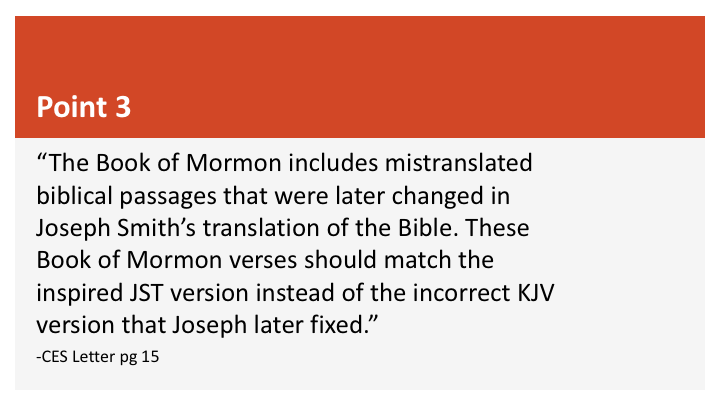
13 And thou shalt put upon Aaron the holy garments, and anoint him, and sanctify him; that he may minister unto me in the priest’s office

Third, there is an endowment ceremony where, through dramatization, one symbolically falls from the presence of God, makes covenants to follow God and Jesus Christ, and, eventually, returns back to the presence of God.

Fourth, there is a sealing or marriage ceremony where couples are sealed to each other and where parents and children are sealed to one another as families for time and all eternity.

How does this compare to Freemasonry? In Freemasonry, there is no baptism. In Freemasonry there is no confirmation. In Freemasonry, there is no washing and anointing, except perhaps in one very obscure rite that is unlikely to have been familiar to Joseph Smith. In Freemasonry there is no sealing. Only men are allowed in ceremonies, so the whole idea of sealings between men and women would be completely foreign.[31] In Freemasonry there is no concept of work for the dead. In Freemasonry there are no ordinances that relate to salvation through Jesus Christ. In Freemasonry things are done democratically and your relationship with your fellow man is taught, while in LDS temples all judgments and covenants are with God. Most of what is taught in the temple is not Masonic. The Gestalt, or entire concept is different.
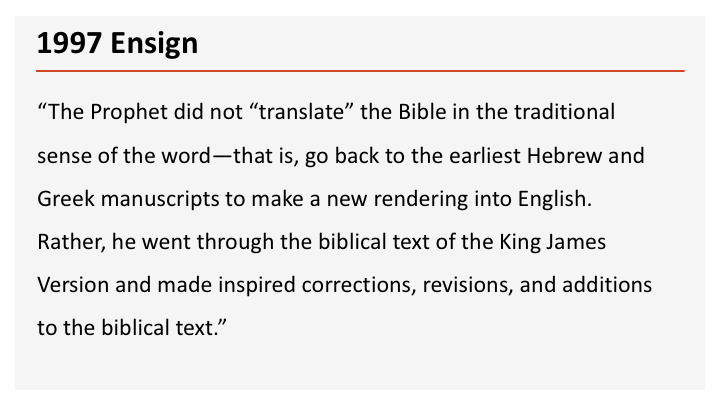

There are, however, a few similarities that create the questions. I will go over them later.

Many of the early saints who went through the Nauvoo temple endowment were already Freemasons. These included Brigham Young, Willard Richards, William Marks, Hyrum Smith, and Heber C. Kimball. They seemed to believe that Freemasonry was an apostate form of temple worship from Solomon’s temple. Just as they had no problem with Joseph receiving revelation on apostate practices in Christianity, they had no problem with Joseph receiving revelation on how the temple ceremony should be carried out. They didn’t seem to believe the temple ceremony was simply a Masonic ceremony.

W. W. Phelps and Lucinda Morgan Harris, both avid anti-Masons—Lucinda having had her first husband allegedly killed over Masonry—had no problems being endowed in the Nauvoo temple. They clearly didn’t believe the temple ceremony was a Masonic ceremony.

After the temple ceremonies were performed in Nauvoo, the Masonic lodge continued to operate.[32] So clearly the other Church members who were Masons also didn’t feel that the temple replaced Masonry.

Even anti-Mormon writer Fanny Stenhouse wrote, “It has always been commonly reported, and to a great extent believed, that the mysteries of the Endowment House were only a sort of initiation… of the rites of Masonry; but I need hardly say that this statement when examined by the light of facts, is altogether ungrounded and absurd.”[33]

So if knowledgeable Mormons and Mormon critics have indicated that the Mormon temple ceremony is not the Masonic ceremony, why does the question of a connection still exist?

It exists because there are a few similarities between masonic rituals and a few of the phrases and actions used in the endowment ceremony. It is only with the endowment ceremony there is confusion. There is no confusion relative to the other temple ceremonies such as baptism and sealing which are not masonic in nature. Additionally, there are some masonic-like symbols related to temples.

So let’s deal with those similarities, beginning with the symbols on the Salt Lake Temple. Before the Salt Lake Temple was built, Brigham Young sent architects all over Europe to look at many of the great cathedrals. It is likely they got many of their design and symbol ideas from those structures. We can see that the symbols related to temples and temple architecture have deep roots in Western Christian culture. On several structures in Europe, you can find handshakes, stars, pentagrams, and the all-seeing eye. Here are a few pictures of the all seeing eye from several different churches.

This first one is from the Capuchin Crypt in Rome.

These next few pictures are from various churches in Vienna Austria. I have also seen these in the Czech Republic and a YSA group from Sicily told me the symbol was common in their local churches.

This reinforces what Master Mason Greg Kearney stated to me that it is his believe that many symbols in freemasonry predate the modern masonic lodge.[34] You will also see this symbol on US currency. One large anti-Mormon website claims the phrase “Holiness to the Lord” that is on our temples has been copied from the Masons because it often appears in the wall of the lodge. But, it occurs several times in the Bible, usually in conjunction with ancient temples. There are other symbols within temples and within masonry, but we don’t have the time to go through each item.

Now let’s talk about the ceremonial similarities. The endowment ceremony is presented as a ritualistic drama. Masonic ceremonies are also ritualistic dramas, so in that general form, they are similar, even though they are totally different dramas. The endowment ceremony starts with the creation and the Garden of Eden, and moves us progressively through our return to God’s presence, while the Master Mason drama story line focuses on the murder of the master builder of Solomon’s temple and is designed to teach character and integrity. There are some critics who say there was one Masonic group in France that used the Garden of Eden in their rituals, but that was a renegade group that created a women’s ritual using the Garden of Eden.  Of course, women can’t be masons, so it was not authorized. The group only existed for a few years, so it is highly doubtful Joseph was even aware of those rituals. In any case, there are other sources for the Garden of Eden story—like the Bible and the Pearl of Great Price—other than a small group of women meeting in a secret lodge in France.

There are some short word phrases and actions used in the temple ceremony that are similar to word phrases and actions used in masonry, but the masonic word phrases and actions are not related to the themes, teachings, or covenants made in the temple. Even those places where actions are similar, they have completely different meanings. Joseph seems to have taken some of the actions and completely repurposed them. It is also interesting to note that the similar short phrases that are currently used are not critical phrases in the endowment ceremony. When the endowment ceremony was first performed in Nauvoo, it was much longer. As it has been shortened over the years, the Masonic-like phrases have been almost entirely removed.[35]

At this point we have to stop and talk about the nature of revelation. Brigham Young said “When God speaks to the people, he does it in a manner to suit their circumstances and capacities. …Should the Lord Almighty send an angel to rewrite the Bible, it would in many places be very different from what it now is. And I will even venture to say that if the Book of Mormon were now to be rewritten, in many instances it would materially differ from the present translation.”[36]

Revelation comes from God, but comes through men. Too often we think that whatever comes out of the mouth of an apostle or prophet must be exactly what God said, word for word. But, if that were true, we wouldn’t have so many wonderful airplane analogies coming out in General Conference. Our language becomes filtered by our experience. Joseph Smith, Brigham Young and many members of the Church in Nauvoo were familiar with the language of Masonry. So one would be very surprised if it didn’t crop up in their writings and teachings.

Catholic scholar Massimo Introvigene writes “Anti-Mormons … often read too much into [similarities between the endowment and Masonic ritual].” He goes on to say, “Smith had used the Masonic language of the rituals for the purpose of confirming his followers familiar with Freemasonry into a doctrine which had no ‘similarities’ with anything they had heard in the masonic lodges.”[37]

Masonic rites confer a series of “degrees” upon individuals. The three basic degrees are Entered Apprentice, Fellow Craft, and Master Mason. Each of these degrees has its own ceremony and are together known as the “Blue Lodge.”[38] As the initiate makes promises he shakes hands or performs other physical movements to signify his agreement.

If you think about it, there are a number of ways in our culture to represent making promises or covenants including signing our name on paper, shaking hands with another person, raising our right hand to the square, being immersed in water, eating bread and water or wine, or even the American TV cowboy custom of spitting on your hand and then shaking hands. All of these are tokens of the promises we are making.

Through time, God has also used various methods, or signs, to represent the making of covenants. In Genesis 17:11, talking about circumcision it says, “And it shall be a token of the covenant betwixt me and you.” In Genesis 9: 12, God talks about the rainbow and says, “This is the token of the covenant which I make between me and you.” In Exodus 12: 13 when the blood is put on the door posts, God says, “And the blood shall be to you for a token.” In the Book of Mormon, when Captain Moroni asks for people to follow God in Alma 46:21 the people rent their garments “in token, or as a covenant, that they would not forsake the Lord their God.”

So a token is a physical action that God asks us to do as we make promises. Remember, we make tokens of promises every day as we sign our names to important documents—even documents that may seem trivial, such as the pieces of paper in your checkbook. Signing our name is a physical action to represent the promises we are making. In 2 Kings, Naaman was asked to wash himself seven times in the river Jordan to be cured of his leprosy. We all know that the water in the river Jordan did not cure his leprosy, but rather it was Naaman’s willingness to humble himself before God that paved the way for God to cure him.

Whatever the physical action is that we do, the important thing is the covenant or promise we make and not how we symbolize that promise. It is important to note however, that the Lord has mandated to us certain ways to represent certain covenants just as he mandated to Naaman to wash seven times in the river. So we should not discount the divine source for those tokens.

There are other optional degrees in Masonry which are organized into two groups, the York Rite and the Scottish Rite. One of the ceremonies in the York Rite is called the Royal Arch Degree, and it has been singled out as a possible source for the Temple because of its similarities. The Royal Arch ceremony involves priestly robes and passage through a veil into a holy of holies. But, before we make too much of these similarities, we need to remember that Joseph Smith was a third degree Blue Lodge Master Mason and, as far as we know, never participated in or received the Royal Arch degree. There were a few members in Nauvoo who were members of the Royal Arch, such as Newel K. Whitney,[39] but we have no record of Joseph Smith taking those additional steps. Additionally, the similarities of having priestly attire, a temple veil, and the holy of holies are clearly referenced in the Bible.

Both Masons in their lodge, and the Mormons in their temple endowment, use aprons, but the aprons are different and have very different meanings and very different purposes. The green LDS apron can be traced to Genesis 3:7: “And the eyes of them both were opened, and they knew that they were naked; and they sewed fig leaves together, and made themselves aprons.” The Masonic white lambskin apron refers to aprons worn by stone Masons in quarries and represents to the Masons the honor of a pure life.

Early saints believed that both Freemasonry and the temple endowment came from ancient temple rituals. Hugh Nibley, Stephen Ricks, Matthew Brown, and Jeffrey Bradshaw have done work showing ties between what is done in modern temples and ancient temples[40]. As for the ancient origin of masonry, Greg Kearney simply states that many symbols within masonry predate Freemasonry.[41] Our modern temples match the theme of ancient temples symbolically moving man from his fallen state back into the presence of God. While this is not the purpose of Masonic rituals, it is possible that some aspects of the Masonic rites were fashioned after some ancient temple themes. There is still much disagreement on the source of Masonic rituals and whether they are ancient or relatively modern. Many historians today believe the rituals were created in the seventeenth century, but, there is clearly a biblical influence. One would expect that influence as early masons were devout practicing Christians surround by a devoutly Christian culture.

Let me summarize using a question and answer format.

Q. Did Joseph simply copy the temple ceremony from the masons?

A. No. There is too much in the temple that isn’t related to what goes on in masonry.

Q. Are there elements in the endowment ceremony that are found in masonry?

A.Yes. There are a few but they have been completely repurposed. Certainly the temple ceremony contains some of the phrases, wording, and symbols that exist within masonry. But, these things, both masonic and biblical, were part of the world Joseph Smith lived in. Just as we use movie language in our speaking, it is not surprising to have some masonic language in the world of Joseph Smith.

Q. Does freemasonry go back to the time of King Solomon, or is a modern creation?

A. We don’t know and we have no way of knowing. While members of the Church like the idea of masonry from the ancient temple, and it is what early church members believed and taught, current thought leans toward a more modern origin of freemasonry. Never-the-less, even if there was a more modern origin, masonry includes biblical temple themes and ancient symbols.

Q. Did Joseph Smith copy those similar elements from modern freemasonry, or do they stem from Solomon’s temple and other ancient temples?

A. We don’t know, and we have no way of knowing.

Q. Did Joseph Smith simply believe something was ancient that was really modern and copy that into a fake temple ceremony?

A. No, even if you stripped out all of the elements that overlap with masonry, the temple ceremony is surprisingly in alignment with ancient temples.

The Lord wanted to give us a gift or endowment. He directed Joseph Smith to create a ceremony where we would make covenants with God and receive promised blessings.  The teachings, covenants, and promises within that temple ceremony do not come from masonry.

Even if we were to take the position that Joseph Smith took the revealed covenants and designed a ceremony himself to remind us of those covenants on a regular basis, Joseph Smith would still be a prophet acting within his calling. We take the sacrament each week to symbolically reenact the last supper while we make covenants. In the temple, we are symbolically reminded of our purpose in life and how we should follow God. I know that theme comes from God and is ancient in origin.

In conclusion, Masonry focuses on man’s relationship to man while the temple endowment focuses on man’s relationship to God. While there may be some passing similarities between some Masonic rituals and the temple ritual of the endowment, the teachings, the covenants, and the purposes are completely different.

Did Joseph Smith use some words and symbols from Masonry to create the temple ceremony? Probably, but only a very small amount that he repurposed for a different meaning.

Did the Masons use words and symbols from Solomon’s temple to create their masonic ceremonies?

Or were they purely seventeenth century creations? I don’t think anybody knows that answer for sure. But, it really doesn’t matter. Because the claim Joseph Smith borrowed the endowment ceremony from masonry, whether created in the seventeenth century or not, is clearly false.

While there are a few similarities, the entire purpose and intent is different. Instead of believing that Joseph Smith copied the ceremony from the Masons, it makes much more sense to say that the Joseph Smith received the promises and covenants of the Temple from God and from the scriptures. But he also adapted and repurposed some things he was exposed to in Freemasonry to assist in that temple ceremony. Whether those few repurposed masonic elements are of ancient or modern origin, I will leave up to you.

I have personally witnessed the influence and miracles of God within the walls of the temple and the power that keeping the covenants that we make there has had in my life. The temple creates a sacred space for us to worship God. As we participate in temple ordinances we set ourselves on the path to return to Him blessing our own lives and the lives of our families.

Q&A

Q1: Does D&C 95:8 Kirtland 1833 “…build a house in the which house I design to endow those whom I have chosen with power from on high.” Does this verse not show that the temple ceremony is from the Lord?

A1: I believe the temple ceremony is from the Lord. I believe that. How much? How much came from the culture, Joseph Smith, or from Masonry or whatever I don’t know, but as far if you were to ask me does the temple ceremony come from the Lord I’d say, “Yes.” Is it designed exactly like the Lord put it there? I don’t know. I don’t know that. It could be like the brother of Jared in lighting the boat. I’m not sure and so I don’t have to take a position on that either way. But as far as temple ceremony endowment, is it from God? Absolutely it is.

Q2: Did Masonry play a role in the Kirtland bank collapse?

A2: That’s a great question. I think you should ask that of Elizabeth Kuehn.

Q3: Do we know Freemasonry being accepted by Joseph Smith Jr. contributed to W.W. Phelps’ apostasy from the early church?

A3: I don’t believe it did. Is it possible? It’s hard for us in hindsight to read the minds of people, but I think W.W. Phelps and all of the Masons within the church stayed faithful. Brigham Young tried to reestablish Masonry when he moved here to Utah. He contacted the Mexican Grand Lodge first and they turned him down, because of plural marriage that did not fall within the standards of Masonry. At least I believe that’s the reason they did. And then he also claimed he sent a letter to another Grand Lodge and but there’s no record of that Grand Lodge ever receiving that letter. I don’t know why. So he tried to continue Masonry even after they moved to Utah.

Q4: Do we know how high in Freemasonry Joseph Smith rose in its ranks?

A4: Well he was a Master Mason in the Blue Lodge, which is the…it’s not one of the optional rites, but it’s being a Master Mason. I know we have at least one Master Mason in our crowd here. [Speaking to a member of the audience] Yes, would you say that’s the highest?

[Member of the audience] Every degree above the third degree is still a Master Mason.

[Scott] Ok.

[Member of the audience] Although [in] the independent body, [in] both the York Rite, of which I am member, and the Scottish Rite, you are still a Master Mason even if you work your way through all of those degrees.

[Scott] Right.

[Member of the audience] I don’t believe York Rite or Scottish Rite were available in Illinois at the time Joseph… [indistinguishable]

[Scott] And I don’t either, Yes.

[Scott] Right. There is York Rite and Scottish Rite. People argue was it available/was it not available? I see no evidence it was available. Could it have been? If somebody says, “Here it was.” Then I’d say like, “Ok, maybe it was.” But we have no record of that. We have no record Joseph Smith was involved with it.

Q5: Do you think that Masonry was the energy behind the Crusades to fight Islam?

A5: That’s one of the theories, but I don’t know.

Q6: Are you aware of an ancient Chinese creation myth where the creative beings used the compass and the square as creative tools, predating Solomon?

A6: That’s over my head. You’ll have to ask somebody who’s more familiar with that. That’s interesting.

Q7: You mention the Masonic ceremonies have elements that are similar to the temple. Wouldn’t it be correct to say that some of the ritual actions involved in the two ceremonies are identical?

A7: Yes. That would be correct to say that some of the ritual actions involved in the two ceremonies are identical. But, again, they’re repurposed, so they have different meaning. It’s like if you sign a contract for your car or you sign a job contract, [in] both cases you’re signing a contract, but they’re different things. One’s for a car, one’s for a job. So they’re just different things. There’s a few actions.

Footnotes

[1] Kearney, Greg https://www.fairmormon.org/conference/august-2005/the-message-and-the-messenger-latter-day-saints-and-freemasonry, accessed 7/7/2017.

[2] http://www.masonicsourcebook.com/stonemasons_operative_masons.htm, accessed 7/31/2017

[3] http://www.grandlodgescotland.com/masonic-subjects/masonic-articles/381-operative-and-speculative-masonry-the-guilds-and-livery-companies Accessed 7/7/2017. There exists numerous other sources on the start of the Grand Lodge.

[4] Robinson, John J. (1990-10-25). Born in Blood: The Lost Secrets of Freemasonry . M. Evans & Company. Kindle Edition. p. 175

[5] http://www.ugle.org.uk/what-is-Freemasonry Accessed 4/26/2015

[6] Jacob, Margaret C, The Origins of Freemasonry, University of Pennsylvania Press, 2007 p. 72

[7] Jacob, Margaret C, The Origins of Freemasonry, University of Pennsylvania Press, 2007 p. 15

[8] J. Smith, Jr., Scriptural Teachings of the Prophet Joseph Smith, 19 December 1841, Book first published 1938 p. 329.

[9] Benimeli, Josè A Ferrer, “Freemasonry and the Catholic Church”, Handbook of Freemasonry, Brill 2014 p. 151.

[10] Ibid.

[11] Ibid.

[12] Robinson, John J. (1990-10-25). Born in Blood: The Lost Secrets of Freemasonry. M. Evans & Company. Kindle Edition. P. 183.

[13] Bodgan, Henrik and Jan Snoek, Handbook of Freemasonry, Brill 2014 p. 26.

[14] Many Latter-day Saints can relate to the idea of a splinter group whose behavior tarnishes the main group even though they threw them out or excommunicated them.

[15] Introvigene, Massimo “Freemasonry and the New Religious Movements”, Handbook of Freemasonry, Brill 2014 p. 312.

[16] Bodgan, Henrik and Jan Snoek, Handbook of Freemasonry, Brill 2014 p. 28, 214-215.

[17] https://www.ushmm.org/wlc/en/article.php?ModuleId=10007058 accessed 7/31/17 and https://www.adl.org/education/resources/backgrounders/a-hoax-of-hate-the-protocols-of-the-learned-elders-of-zion accessed 7/31/17.

[18] Jacob, Margaret, The Origins of Freemasonry, University of Pennsylvania Press, p. 7.

[19] Jacob, Margaret, The Origins of Freemasonry, University of Pennsylvania Press, p. 8.

[20] Bessel, Paul M. The Anti-Masonic Party, http://web.mit.edu/dryfoo/Masons/Essays/anti-Masonic.html, accessed July 11, 2017.

[21] http://www.josephsmithpapers.org/person/william-wines-phelps, accessed July 11, 2017.

[22] Ibid.

[23] Lucinda Morgan Harris is the person whom Elizabeth Marsh, wife of Thomas B. Marsh, allegedly got into a dispute with over a pint of milk strippings.  While it has been claimed there was no support for the milk strippings story, a second look at historical documents has found references that lend support for the event. The event is admittedly complicated. http://juvenileinstructor.org/thomas-b-marshs-reconciliation-with-george-w-harris/

[24]Woodruff, Wilford, journal quoted in “Journal of Mormon History Vol. 18, No. 2, 1992,” at:http://digitalcommons.usu.edu/mormonhistory/vol18/iss2/1.

[25] https://rsc.byu.edu/archived/selections-2006-religious-education-student-symposium/masonic-martyrdom-freemason Accessed July 7, 2017.

[26] “The Golden Bible”. 1831 The Geauga Gazette. Painseville, Ohio, March 15, 1831:1.

[27] https://www.lds.org/scriptures/gs/secret-combinations?lang=eng

[28] https://www.lds.org/general-conference/1997/10/standing-for-truth-and-right?lang=eng

[29] Lucius N. Scovil[le], Letter to the Editor dated February 2, 1884 as quoted in Homer, Michael W Joseph’s Temples, University of Utah Press, 2014 p. 205.

[30] L. John Nuttall, Diary, February 7 1877, Special Collections, Lee Library.

[31] Godfrey, Kenneth W http://eom.byu.edu/index.php/Freemasonry_and_the_Temple  accessed July 5, 2017.

[32] Brigham Young tried to start a lodge in Utah after he got there, but was unable to get a charter. Later, non-Mormons started the lodge and refused to admit Mormons. This violated Masonic rules, but persisted anyway for many years.

[33] Mrs. T. B. H. Fanny” Stenhouse, “Tell it All”: The story of a Life’s Experience in Mormonism. Hartford, CT: A. D. Worthington & Co., 1874 p. 354.

[34] Conversation with Greg Kearny on July 5, 2017.

[35] Introvigene, Massimo Freemasonry and the New Religious Movements, Handbook of Freemasonry, Brill 2014 p. 312.

[36] Brigham Young, Journal of Discourses 9:311. [13 July 1862]

[37] Introvigene, Massimo Freemasonry and the New Religious Movements, Handbook of Freemasonry, Brill 2014

[38] The blue lodge is a sort of short hand so named for the color of the covers of the ritual code books. The term blue lodge refers to lodges working the three degrees.

[39] Mackey, Encyclopaedia of Freemasonry, 1:327. And “Masonic,” Norwalk (Ohio) Reporter and Huron Advertiser, February 9, 1828.

[40]  See http://www.mormoninterpreter.com/jeffrey-m-bradshaw-on-what-did-joseph-smith-know-about-temple-ordinances-by-1836/ and the books Temple Themes in the Book of Moses, by Jeffrey M. Bradshaw, Hugh Nibley Temple and the Cosmos, by Hugh Nibley, and Exploring the Connection Between Mormons and Masons, by Matt Brown.

[41] Conversation with Greg Kearney on July 5, 2017.

  • « Go to Previous Page
  • Page 1
  • Page 2
  • Page 3
  • Go to Next Page »

Primary Sidebar

Faithful Study Resources for Come, Follow Me

Subscribe to Blog

Enter your email address:

Subscribe to Podcast

Podcast icon
Subscribe to podcast in iTunes
Subscribe to podcast elsewhere
Listen with FAIR app
Android app on Google Play Download on the App Store

Pages

  • Blog Guidelines

FAIR Latest

  • Come, Follow Me with FAIR – Isaiah 58–66 – Jennifer Roach Lees
  • Come, Follow Me with FAIR – Isaiah 58–66 – Part 1 – Autumn Dickson
  • Jesus Lives to Lift
  • Come, Follow Me with FAIR – Isaiah 50–57 – Part 2 – Autumn Dickson
  • Come, Follow Me with FAIR – Isaiah 50–57 – Jennifer Roach Lees

Blog Categories

Recent Comments

  • Willie Louise Truitt on The Joy of a Covenant Relationship with God
  • Katrina on In memory of Chandler “Chuck” Hendry
  • Nancy Farmer on Come, Follow Me with FAIR – Psalms 49–51; 61–66; 69–72; 77–78; 85–86 – Part 1 – Autumn Dickson
  • Nicko De Leon on In memory of Chandler “Chuck” Hendry
  • Becky Matson on In memory of Chandler “Chuck” Hendry

Archives

Follow Us

  • Facebook
  • Twitter
  • iTunes
  • YouTube
Android app on Google Play Download on the App Store

Footer

FairMormon Logo

FAIR is a non-profit organization dedicated to providing well-documented answers to criticisms of the doctrine, practice, and history of The Church of Jesus Christ of Latter-day Saints.

Donate to FAIR

We are a volunteer organization. We invite you to give back.

Donate Now

Site Footer

The use of the temple in past and current logos and the name "Mormon" are licensed for use by The Church of Jesus Christ of Latter-day Saints.