• Skip to primary navigation
  • Skip to main content
  • Skip to primary sidebar
  • Skip to footer

FAIR

My Account Search
  • Start Here
  • Find Answers
  • Scripture Study
  • Blog
  • Events
    • FAIR Conference
    • Virtual Conferences
    • Special Events
  • All Presentations
  • FAIR Books
  • About
    • Media & Apps
  • Get Involved

priesthood restriction

How to Reach African-Americans

TL:DR

TL:DR

This talk teaches that to effectively address concerns about race and priesthood in the Church, members must be honest about history, understand African-American perspectives, and rely on scripture rather than speculation.

It emphasizes that past priesthood restrictions were policy—not doctrine—clarified through the 1978 revelation and later scriptural updates. Passages about “skin” and “darkness” should be understood spiritually, not physically.

By teaching these principles clearly and compassionately, members can strengthen faith, improve missionary efforts, and help more people feel welcome in the Church.

Summary

Summary

The speaker begins by explaining that questions surrounding race and priesthood nearly prevented him from joining the Church, motivating years of personal study. He outlines a missionary-focused approach: understanding the language and culture of African-Americans, particularly the perception that the Church has a racist past.

He stresses the importance of acknowledging historical realities rather than denying them. Using statements from leaders such as David O. McKay, Dallin H. Oaks, and Bruce R. McConkie, he distinguishes between policy and doctrine and cautions against relying on speculative explanations for past restrictions.

The talk centers on the 1978 priesthood revelation as a turning point, accompanied by a “flood of light and knowledge” that reshaped understanding. The speaker points to 1981 scriptural updates—especially footnotes and wording changes—as key tools in clarifying previously misunderstood passages.

Focusing on scriptures such as 2 Nephi 5:21, 2 Nephi 30:6, and Jacob 3:8, he explains that references to “skin” and “darkness” should be understood spiritually rather than physically. This interpretation is reinforced through scriptural cross-references and teachings like 1 Samuel 16:7, emphasizing that God judges the heart, not outward appearance.

The talk concludes with practical outcomes: improved missionary efforts, increased retention, strengthened members, and greater inclusivity. The speaker testifies that teaching from scripture, combined with honesty and cultural understanding, can help bring more people—especially African-Americans—into and back to the Church.

Introduction

Introduction

Scott Gordon:

As a convert to the Church of Jesus Christ of Latter-day Saints, Marvin came to the Church after searching every religion he could find for over five years for what he called “the real Church.” Born and raised in Niagara Falls, New York, just 90 miles west of Palmyra, he had never heard of the Church or Mormons.

When one of his business associates wanted to see him perform, that desire set off the missionary experience that would lead to his baptism into the Church three months later.

Marvin, an MJM Records recording artist, has been singing professionally for over 18 years. He started as a studio vocalist, background and weather artist.

While doing a small showcase in Los Angeles in 1996, he launched his debut album, I’m So Glad. After many concerts, firesides, and conferences sharing the gospel, he slowed down long enough to put together a second musical project in 1997 entitled Hymns to Him, which was recently released.

As Director of African-American Relations on the Southern California Public Affairs Council, Marvin works closely with other religious leaders to bring service and support to those in need.

He was just recently called to serve as co-chair for Genesis Public Affairs, his responsibilities very similar to the calling of Director of African-American Relations on the national level. The Genesis Group is the branch of the Church designed to meet the unique needs of African-Americans.

He has also served as Gospel Doctrine and Seminary instructor and is well versed in the scriptures.

And we’re very, very pleased to have Marvin Perkins come and speak to us.

Opening Remarks

Good morning. (faint “good morning” echoed back from the audience) You guys learned a little bit from yesterday, President Darius’ talk. Good morning! (Good morning echoed back stronger.) There you go! I want to make sure you’re awake here. Aloha. Buenos dias and all that other stuff. O genkidesu-ka, for anybody Japanese.
I am grateful to be here today, especially to speak on this topic. This topic is one that actually almost kept me from joining the church. And I wanted to make sure that no one else left the church, would not join the church, or struggled in the church as a result of not having the information that I was seeking.

And so I thought, let me study this thing. So, I’ve been studying this subject for 17 years now. I am not by any means an expert on it. I just know what I know and what the Lord has guided me and directed me.

Purpose of the Study

I found that if we keep this talk to the scriptures, you get less people trying to refute what you’re saying. But the biggest reason that I study this is to help others into the gospel. There are many who won’t take the time to learn this information, and that’s all right for them.

But I want to help those who do want to have some of this information, and the church has given us plenty of guidance. So again, I’m no expert: I’m no scholar, I’m no scriptorian. I’m just a man who loves the Lord and will do anything he wants me to do.

And sometimes that finds me in trouble. But I’m willing to take it.

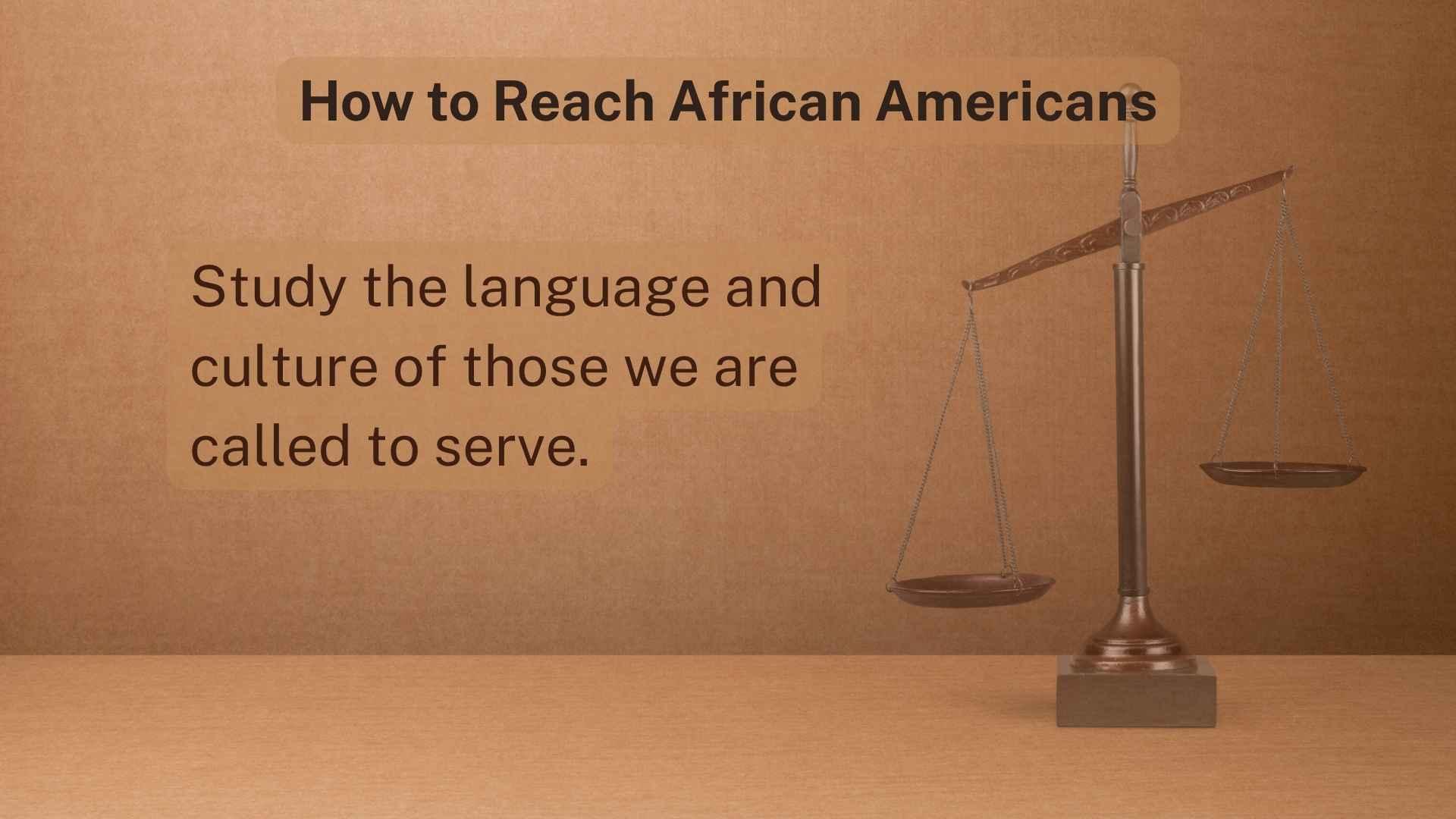
So, how do we reach African-Americans in and outside of the church? You have the formula down already, and you’re already doing it.
Understanding Culture and Language

You just have to apply it to this group of people. See, because when you go into the MTC, what do you do? You learn the language and the culture of the people you are going to serve. You learn Spanish. You learn a little bit about the Spanish culture.

You learn Japanese, a little bit about the Japanese culture. You go to an American or English-speaking mission, no language to learn, but you learn a little bit about the communication skills so that you don’t offend and turn people off from the church.

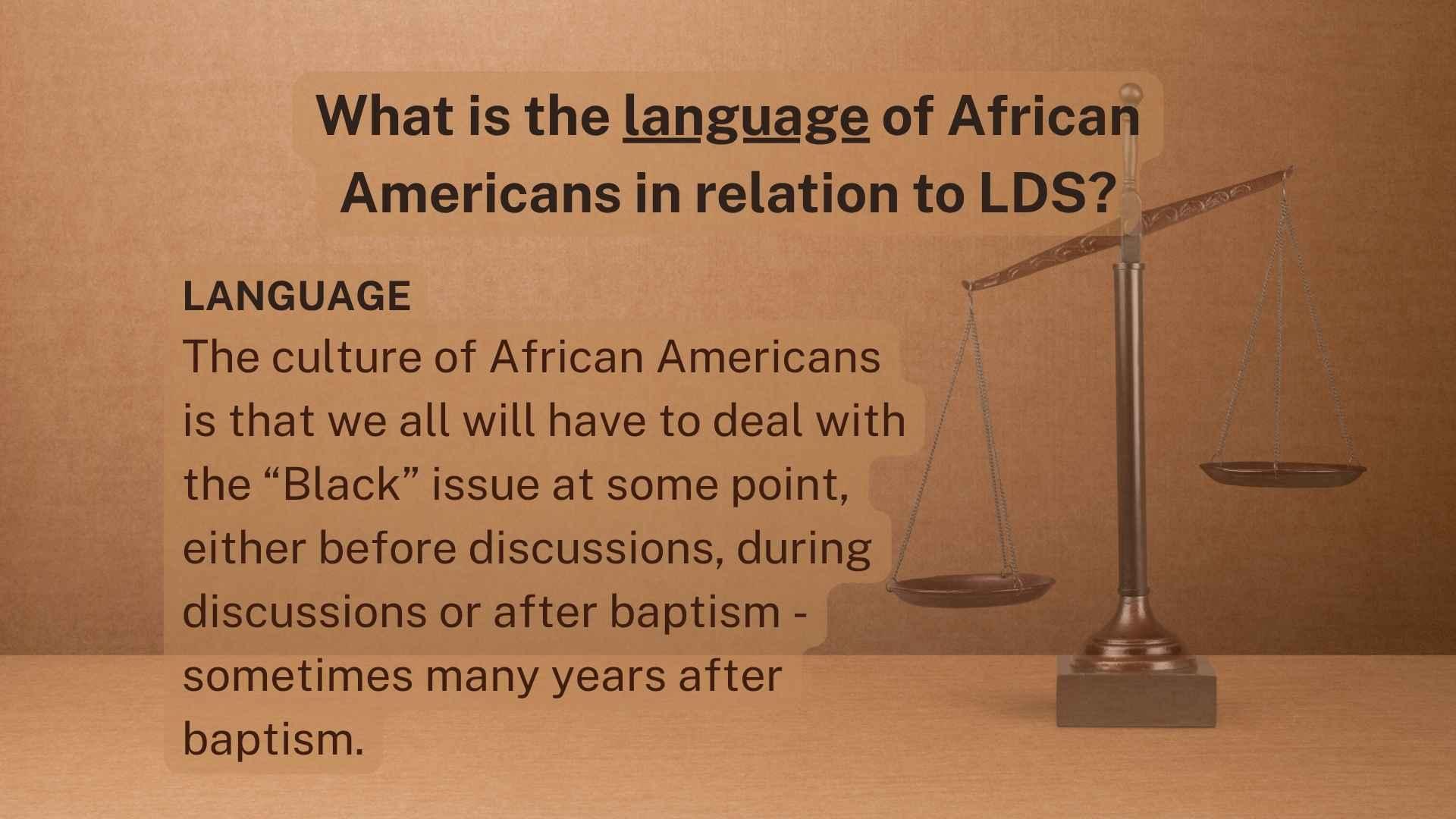
Well, that’s the exact same way that you would actually reach African-Americans. You need to learn and understand the language and the culture of the people. So, what is the language of African-Americans in regards to Latter-day Saints? Okay.
The Reality to Address

Now, the language—this is reality. This is what African-Americans feel and know. Most African-Americans believe:

  • that Mormons are racist
  • that they have a long history of racism
  • that they even have it built in the doctrine.

That’s what African-Americans feel.

If you want to reach them, you have to deal with that reality. You’ve got to get to the point where you can hear that. That’s what we feel.
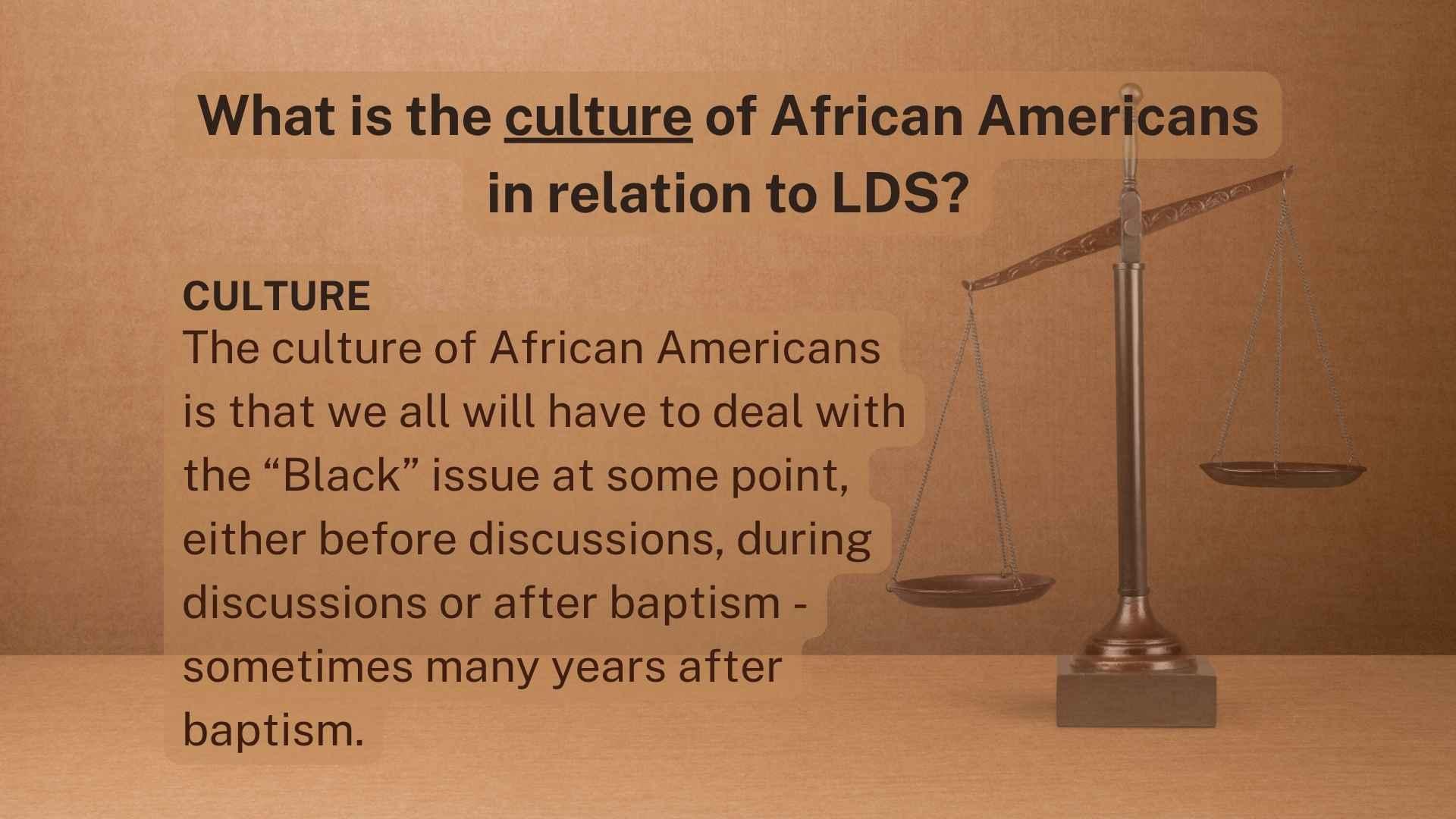
What is the culture? Well, the culture is every African-American, regardless, is going to have to deal with this issue at some point.

  • Some of us deal with it before discussions,
  • some during the discussions, and
  • some after baptism,
  • sometimes many years after baptism.

But we do have to deal with it.

Real-Life Impact

I’m just working with a brother now who has been a member of the church for seven years and is just now dealing with it. He’s been inactive for the last year over this issue. And now since we’ve shared with him what I’m going to share with you today, he is back in the church.

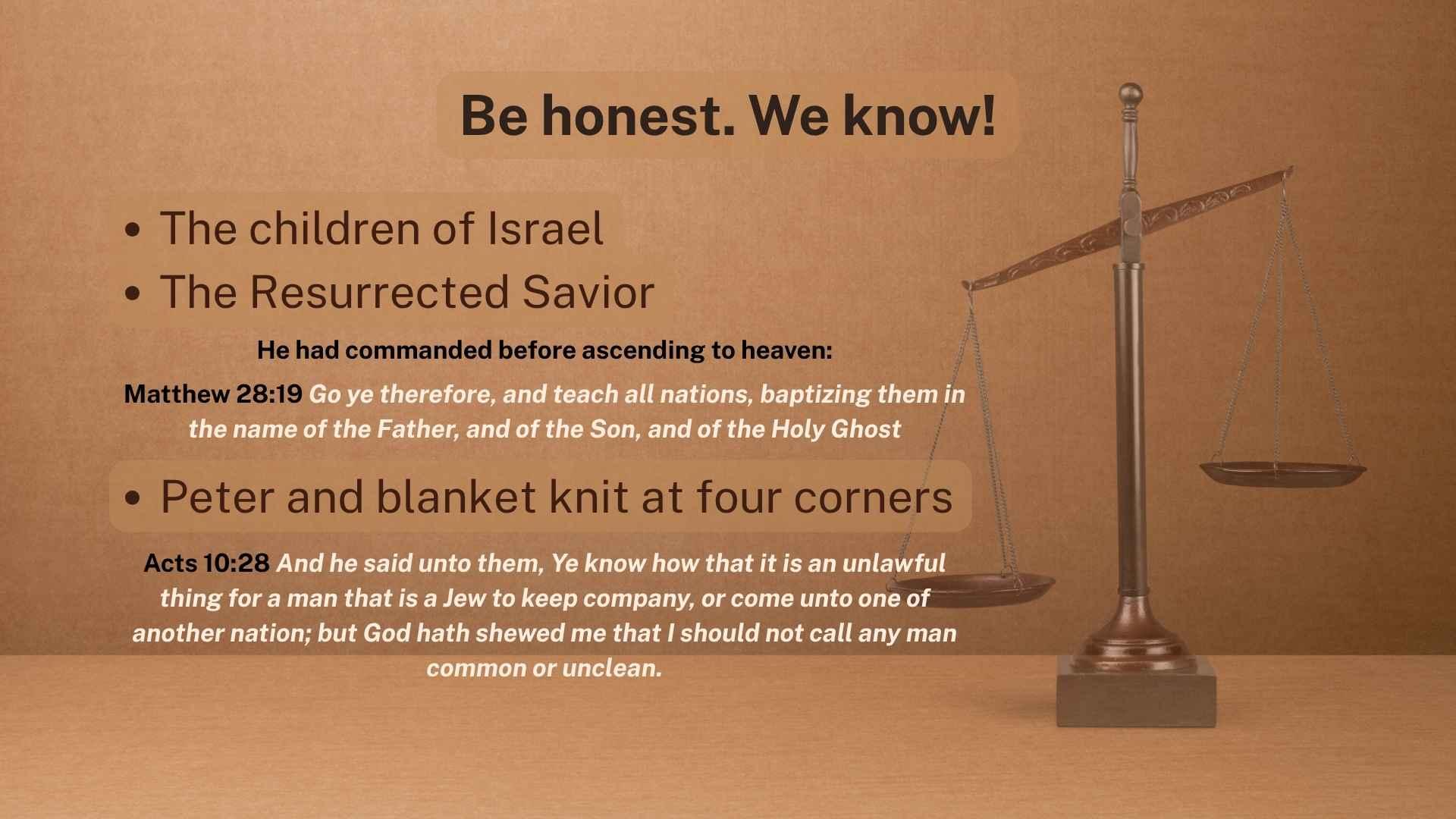
So the fruits—by the fruits you shall know them. First of all, be honest. We know the first thing we can do with this issue is admit—we try to deny the history that we have.

We have a history in this country of inequality, of racism, of prejudice – and that includes the church members as well. Church members, church leaders—we have that.
Being Honest About the Past

Until 1964 and The Civil Rights Act, the law of the land was discrimination. So, we only varied in our degree of it. So, be honest.

No one is going to believe you have the truth if you can’t be honest about the past or your involvement.

Scriptural Parallel

It reminds me of the children of Israel. They were in bondage for 400 years.

And when they got out of bondage – when Moses and Aaron freed them, the instruments of the Lord to free them out of bondage – the Lord wanted them to get to know Him. To start serving Him more.

And it was so difficult for them to do that. So they had this law of Moses given to them, this simple law to help them to be able to abide the entire law.

And it would take them many years to be able to do it before Christ would come and fulfill and give them a new way of doing things.

The Great Commission

Also, we see this with the resurrected Savior, with the last command recorded in Matthew. The resurrected Savior stood before them. Ate with them, met with them, and said, “Take the gospel to all the world.” Okay.
Early Priesthood History

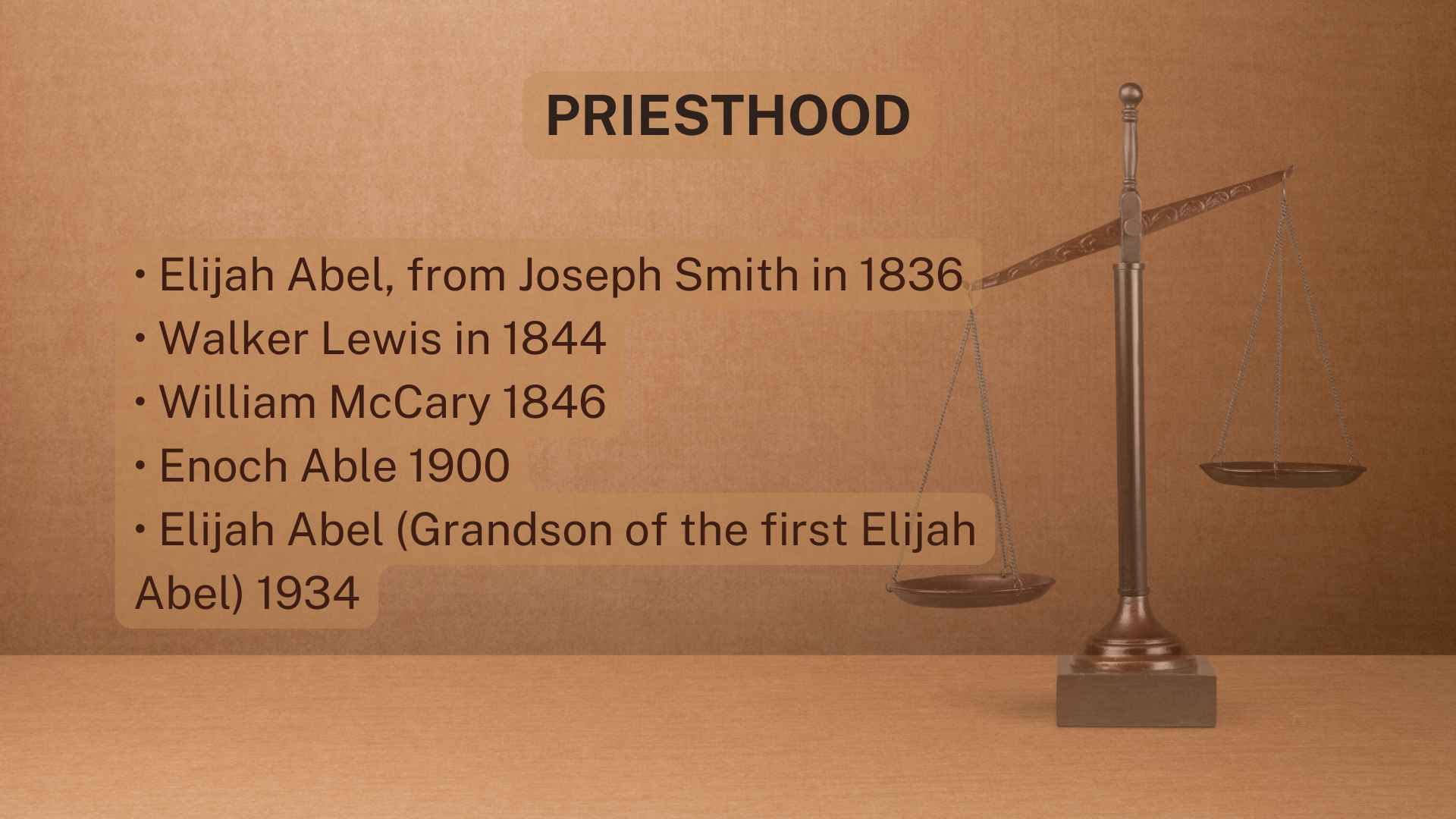
So, let’s talk a bit about priesthood. Many don’t know that when the church was first restored that anybody could hold the priesthood. And there were Black men holding the priesthood.

Joseph Smith gave it to Elijah Abel in 1836. Walker Lewis was ordained in 1844. William McCary. (Some people don’t like to mention William McCary because he didn’t do good things, but I’ll mention him.) William McCary got it in 1846.

William McCary might be the reason why Blacks didn’t hold the priesthood—and if you want to know about that, you go study it. William McCary or Black Pete. Enoch Abel received it in 1900. And that’s something.

And Elijah Abel, grandson of the first Elijah Abel, received it in 1934.

When Did the Issue Begin?

As a matter of fact, until about 1954, many people didn’t know there was an official policy on priesthood. I mean, many Blacks didn’t mix with the church, and it just wasn’t that much of an issue.

If Blacks are holding the priesthood, why was that? There wasn’t an issue. When did the issue begin? Well, let’s hear a few statements on priesthood that we have from our church leaders.
Statements from Church Leaders

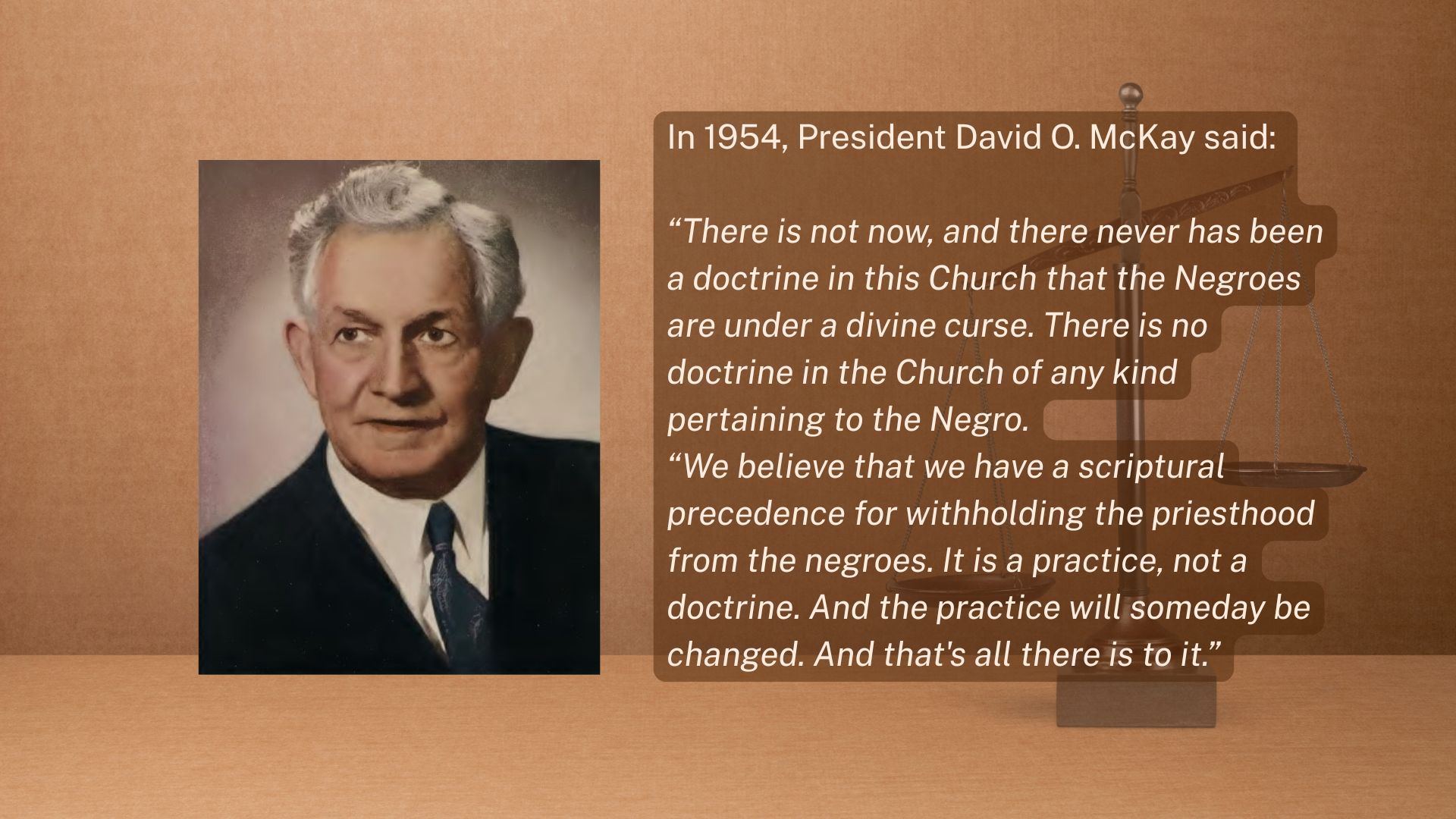
David McKay. In 1954, David McKay is quoted as saying:

“There is not now and there never has been a doctrine in this church that the negroes are under a divine curse.There is no doctrine in the church of any kind pertaining to the negro.”

I’m going to repeat that. There is no doctrine in the church of any kind pertaining to the negro.

“We believe that we have a scriptural precedence for withholding the priesthood from the negroes. It is a practice, not a doctrine. And the practice will someday be changed. And that’s all there is to it.”

President George Albert Smith is also quoted as having said the same thing.
On Reasons and Revelation

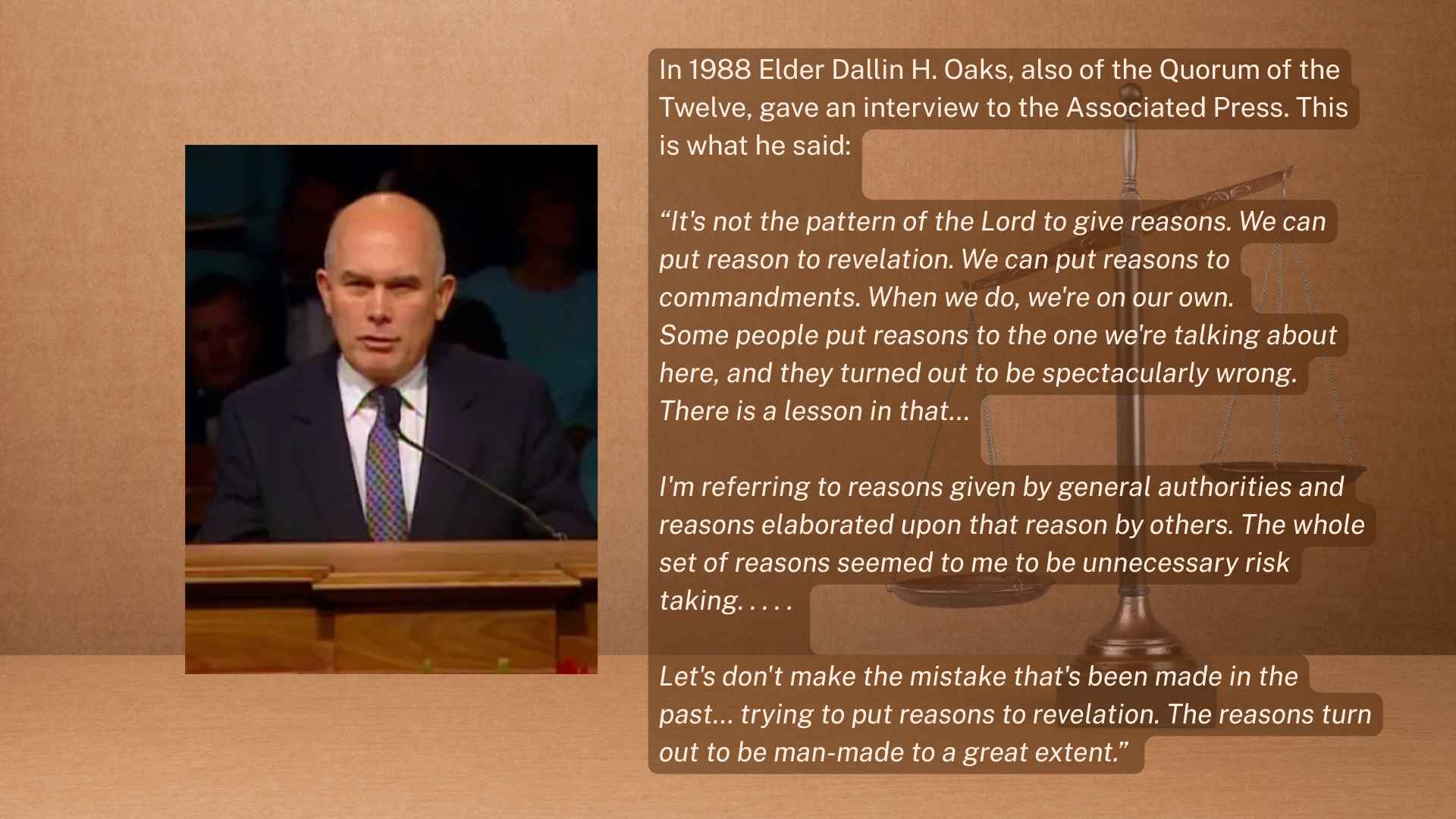
Elder Dallin H. Oaks said in an interview,

“It is not the pattern of the Lord to give reasons. We can put reasons to the commandments.”

“When we do, we are on our own. Some people put reasons to the ban and they turned out to be spectacularly wrong. There is a lesson in that… I am referring to reasons given by general authorities and elaborated on by others.”

“The whole set of reasons seem to be unnecessary risk taking… Let’s not make the mistake that’s been made in the past …here and in other areas trying to put reasons to revelations. The reasons turn out to be man-made to a great extent.”
A New Day — 1978 Revelation

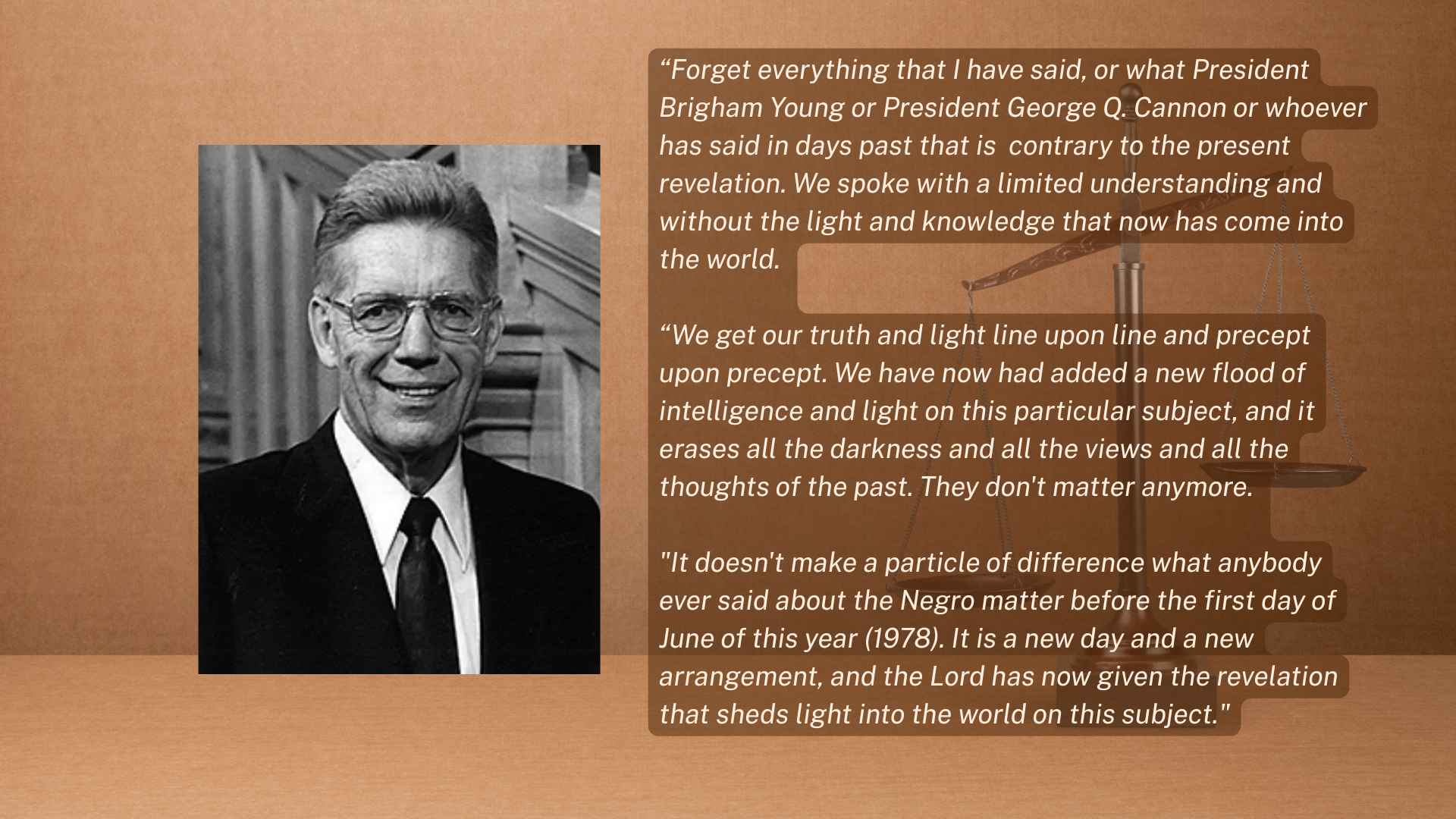
Elder Bruce R. McConkie, one of my favorite statements here:

“Forget everything that I’ve said or what President Brigham Young or President George Q. Cannon or whoever has said in the days past that is contrary to today’s revelation. We spoke with a limited understanding and without the light and knowledge that is now coming to the world. We get our light and truth line upon line, precept upon precept. And we have now had added a new flood of intelligence and light on this particular subject, and it erases all of the darkness and all of the views and all of the thoughts of the past. They just don’t matter anymore.”

So if you’re going to study this issue, you’ve got to forget everything you’ve heard and start from scratch. And where is the best place to start? Forget the philosophies of men and go straight to the scriptures.

Scripture Updates and Understanding

There’s enough guidance in the scriptures for you to understand this—for us to understand this.

“It doesn’t make a particle of difference what anybody has ever said about the negro matter before the first day of June of this year (1978). It is a new day and a new arrangement, and the Lord has now given revelation to shed light into the world on this particular subject.”

Now, we’re going to talk a great deal more about that light. Because with that light and that knowledge – that flood – it wasn’t just a revelation that reversed the priesthood. But it was a flood of intelligence that came, as Elder McConkie said, that helped correct the views and the thoughts of the past.

Continuing Revelation in Scripture

And the brethren actually did something with that flood. They actually updated our scriptures in 1981.

So if you look at an older version of your scriptures and then go to 1981, you’ve got a newer version with footnotes and word changes to help us to understand the issues that were misunderstood before, give us new guidance.

And every single scripture that I could find in the Book of Mormon and Doctrine and Covenants that we misunderstood regarding this issue, has a footnote. Giving clarification and new understanding.
Scriptural Foundation

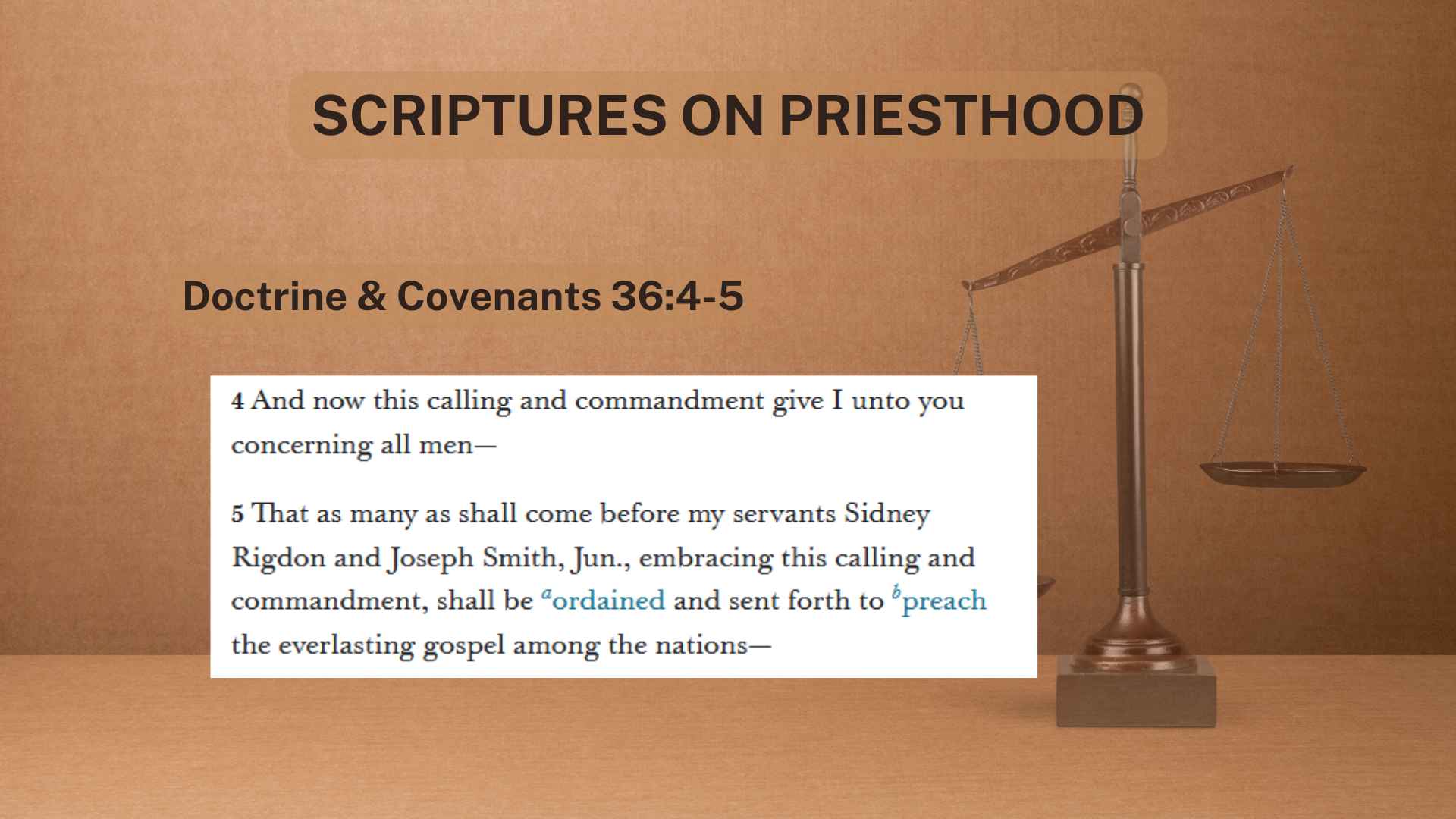
Let’s consider D&C 36:4-5.

“And now this calling and commandment give I unto you…”

Concerning who?

“concerning all men (emphasis added) that as many as shall come before my servants Sidney Rigdon and Joseph Smith Jr. embracing this calling and commandment shall be ordained and sent forth to preach the everlasting gospel among the nations.”
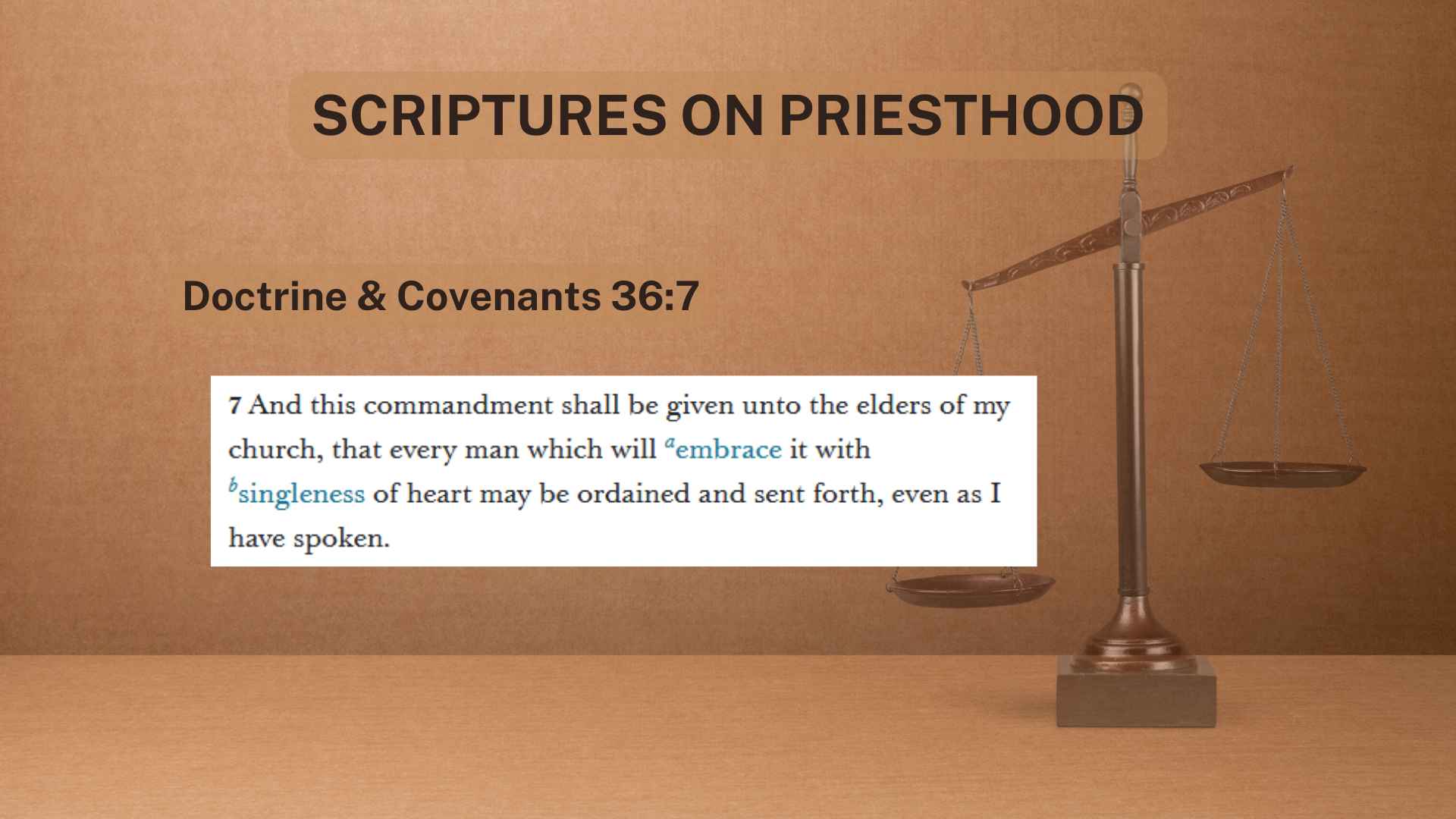
D&C 36:7

“And this commandment shall be given unto the elders of my church, that every man which will embrace it with singleness of heart may be ordained and sent forth, even as I have spoken.”
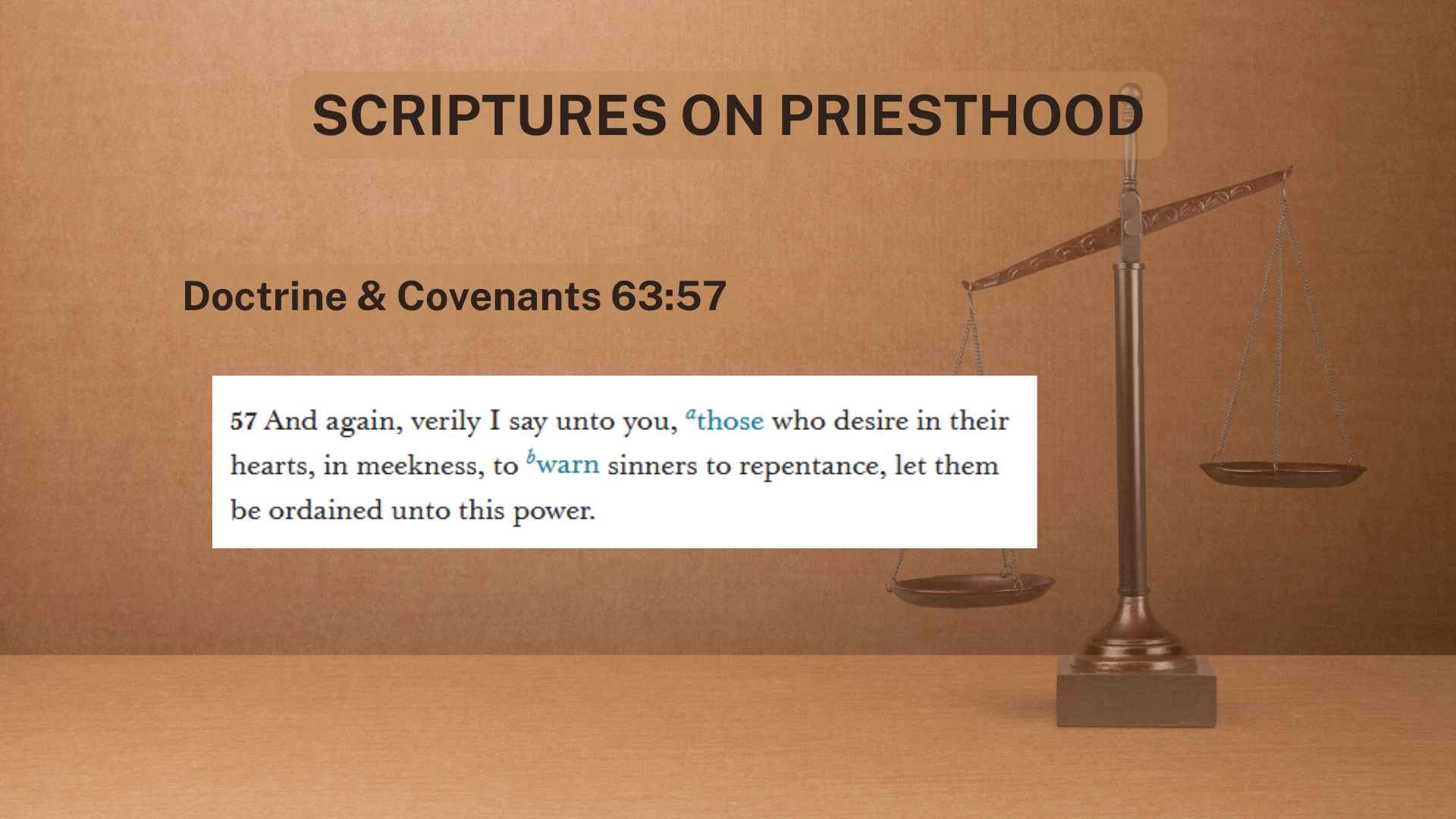
D&C 63:57

“And again, verily I say unto you, those who desire in their hearts in meekness to warn sinners to repentance, let them be ordained unto this power.”
The Inclusive Nature of Priesthood

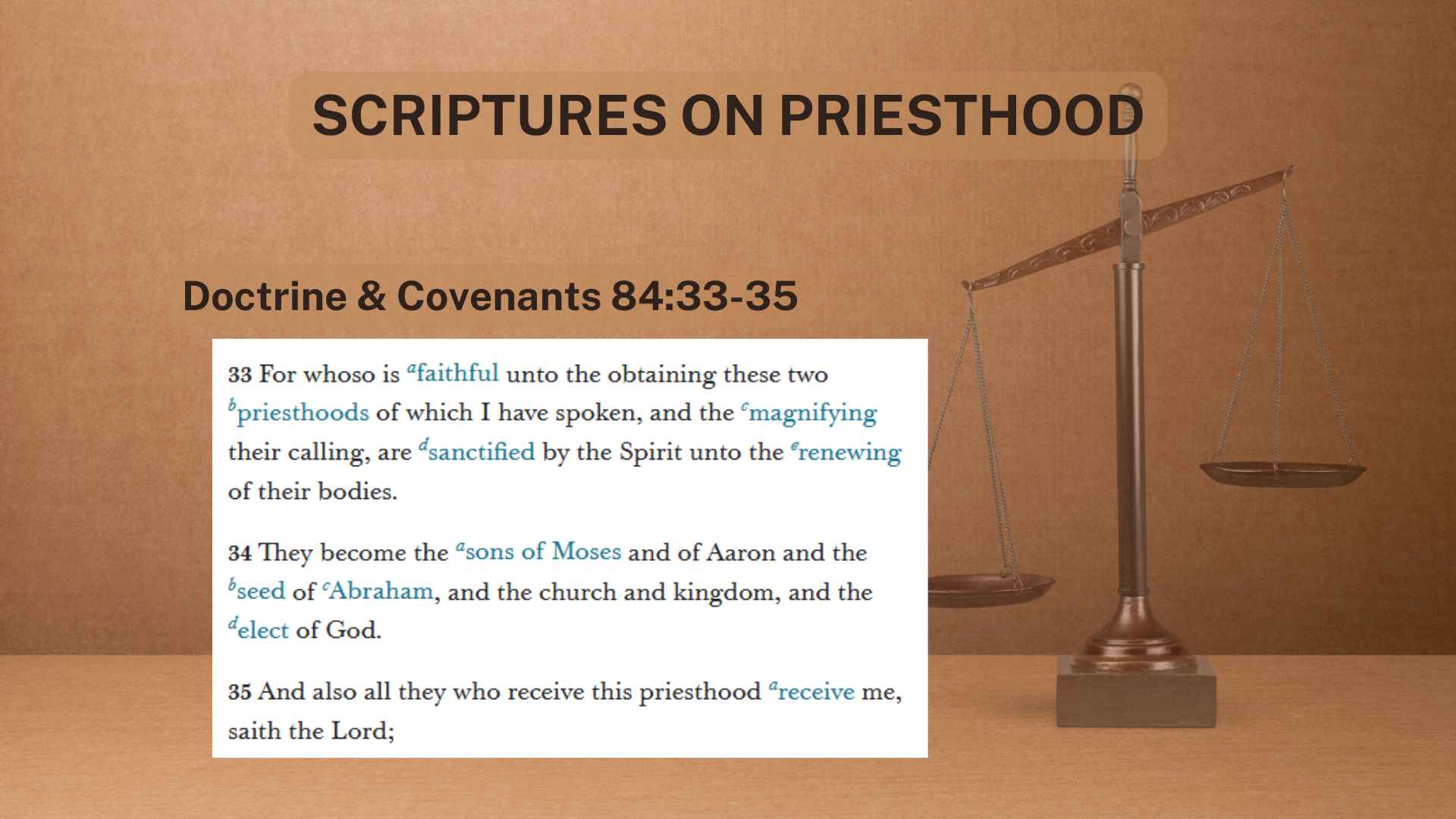
D&C 84:33–35

“And whoso is faithful unto obtaining these two priesthoods…

I mean, the Lord has plenty of time to give us a restriction, a division, but he doesn’t do it. He’s—it’s all inclusive. All right.

“And whoso is faithful unto obtaining these two priesthoods of which I’ve spoken and the magnifying their calling are sanctified by the spirit unto the renewing of their bodies.

“They become the sons of Moses and of Aaron and the seed of Abraham, with rights to the priesthood and the church and the kingdom and the elect of God.

“And also all they who receive this priesthood receive me.
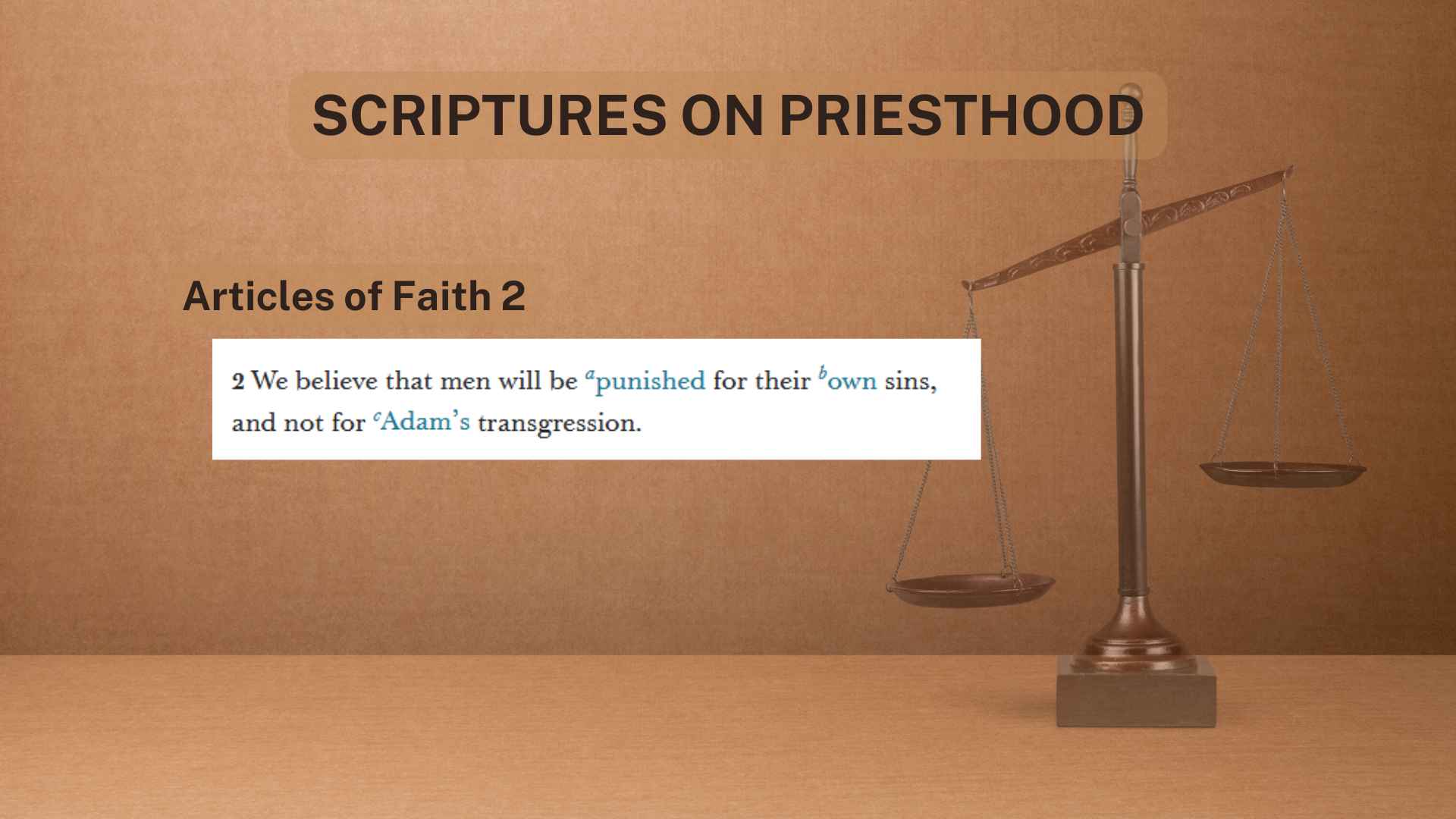
Accountability and Scripture Concerns

We believe that men will be punished for their own sins and not for Adam’s transgressions.

2 Nephi 5:21 is a big one because that’s when most blacks, African-Americans, and a lot of other cultures stop reading the Book of Mormon. Like, “okay, what? You can’t believe this.” Because it looks like it’s right in the doctrine.
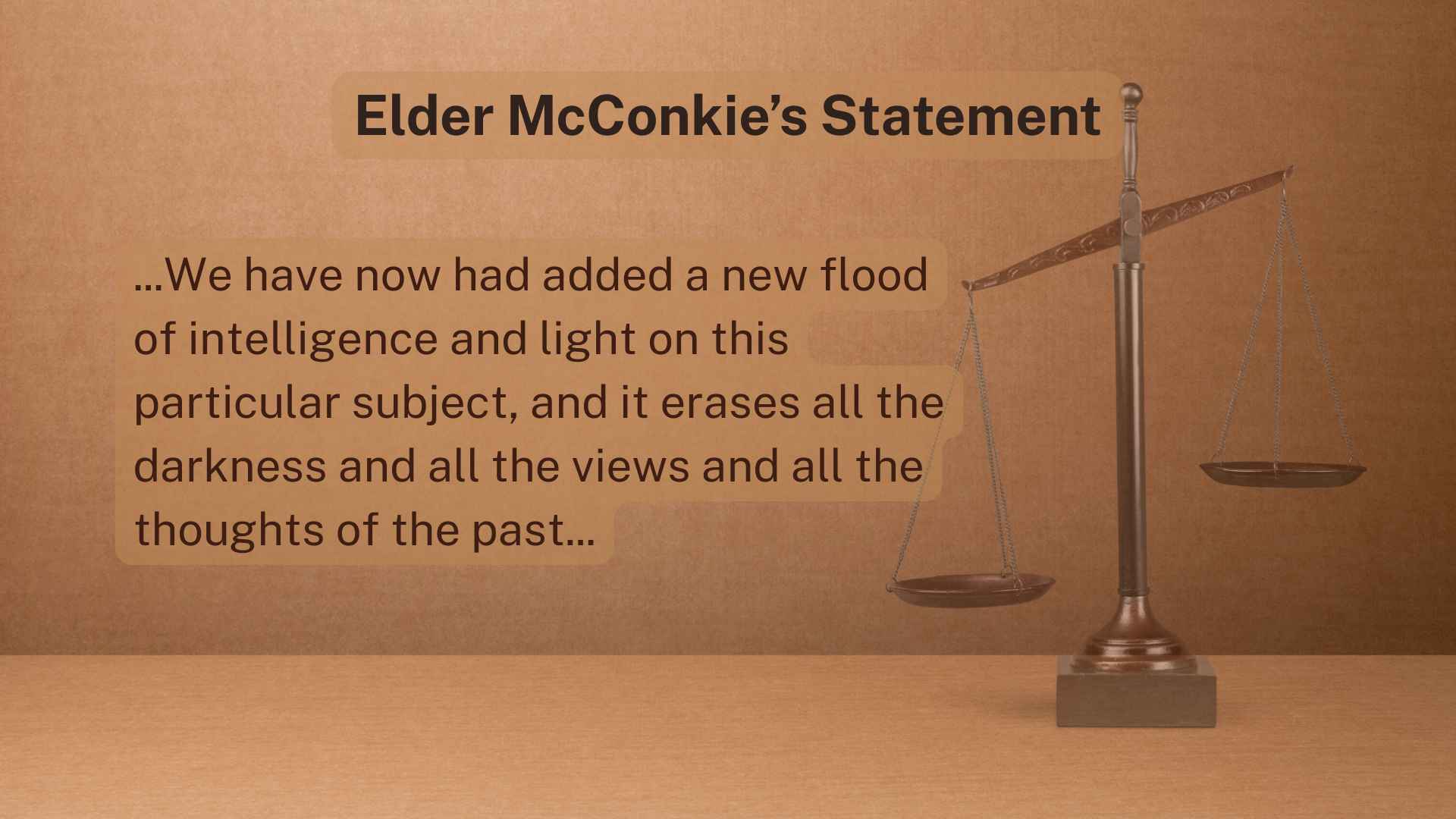
Understanding “Skin” and “Darkness”

And again, we’ll go back to Elder McConkie’s statement—that flow of light and intelligence on the subject. It’s going to help us to understand. They put new footnotes in here to help us to get past that.
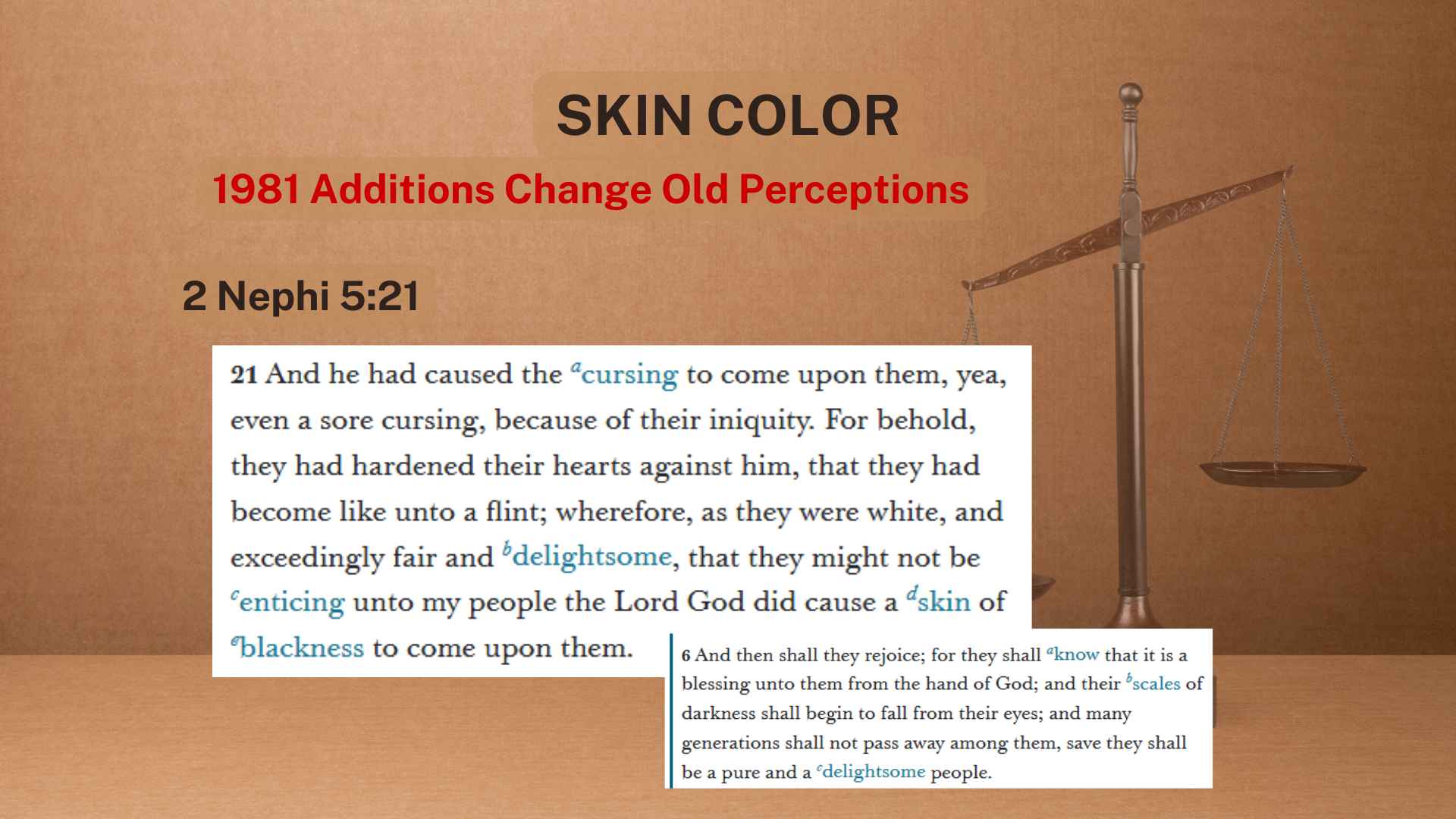
Second Nephi 5:21.

“And he had caused a cursing to come upon them…”

Now, we understand the cursing—a separation from God because they were sinners, they wouldn’t live the law of God—

“…to come upon them, yeah, even a sore cursing, because their iniquity. For behold, they had hardened their hearts against him, that they had become like unto a flint. Wherefore, as they were white and exceedingly fair and delightsome, that they might not be enticing unto my people, the Lord God did cause a skin of blackness to come upon them.

Now, before 1981, there was no footnote on the word skin. The brethren put one in there. What do they want us to understand about skin? They directed us to 2 Nephi 30:6.

Clarifying Through Footnotes

2 Nephi 30:6 reads,

“And then shall they rejoice, for they shall know that it is a blessing unto them from the hand of God, and their scales of darkness shall begin to fall from their eyes, and many generations shall not pass away among them, save they be a pure and a delightsome people.”

And so what do they want us to know from skin? Well, some of us can get an impression that they’re talking about more of a spiritual darkness. But if you follow the footnote—you don’t even have to guess at it. They made it crystal clear.

If you follow the footnote for “scales” down to the bottom of the page, it says clearly “topical guide darkness—spiritual, spiritual blindness.”

Changes in Language and Meaning

So this is the direction that they are giving us. And notice the word pure. Before 1981, that word read white. And they changed it to pure, saying that it actually closer fit the meaning of the phrase.

All right. So, let’s get a little more scriptural support. Now, every scripture in the Book of Mormon that made you think that the Lamanites had a darker skin than the Nephites, it actually has a new footnote on it.

Now, I don’t know anything about the DNA and what color they were when they got here. I don’t know anything about that. Okay.
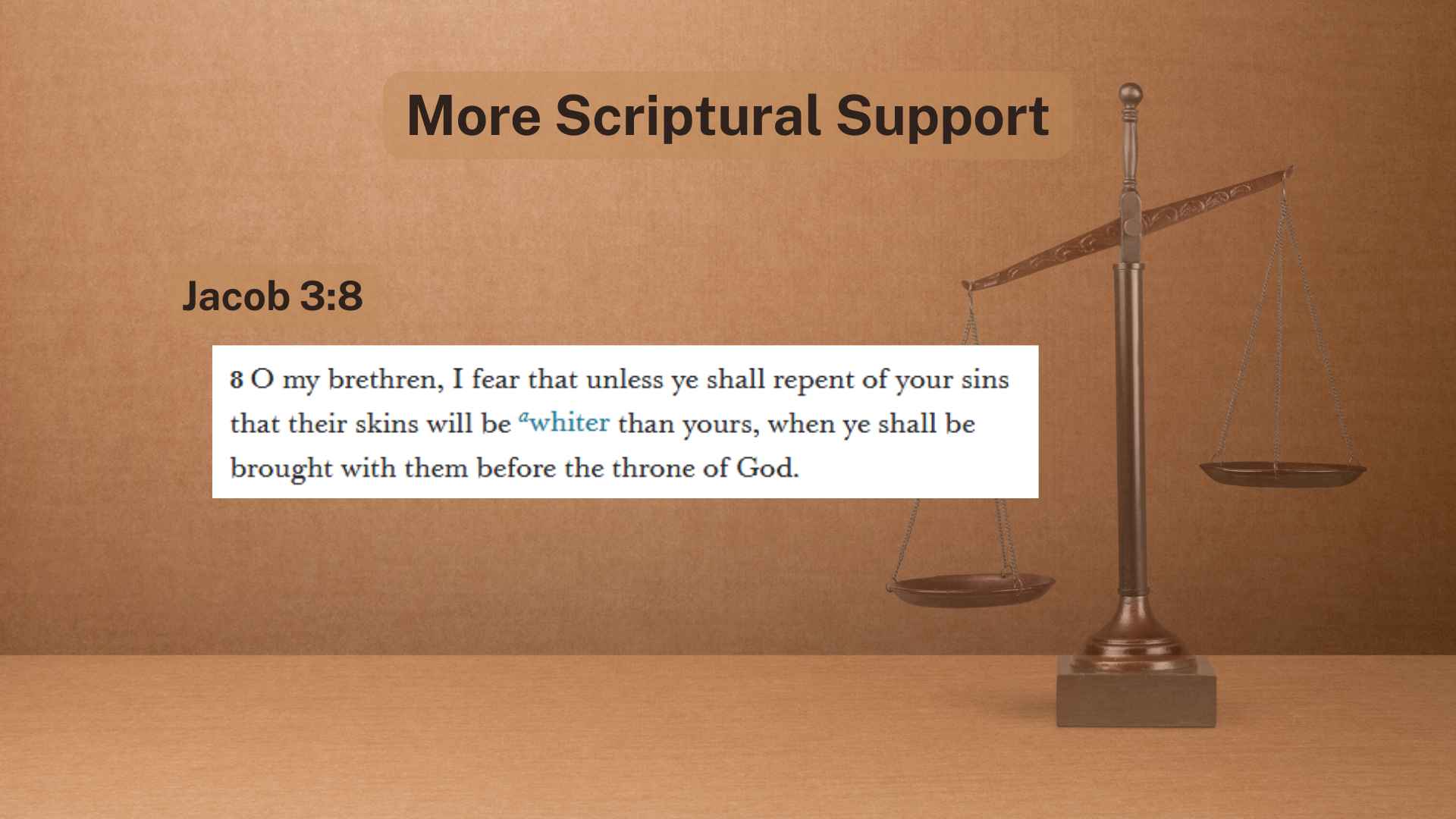
Judging by the Heart

All I know—and this is all I preach when we’re helping people in the church stay in the church—I just point to what the brethren have given us.

And in Jacob 3:8, you’ve got,

“O my brethren, I fear that unless you repent of your sins, that their skins,”

speaking of the Lamanites,

“will be whiter than yours when ye are brought before the throne of God.”

Brought before the throne of God to be judged. Here I am. What is he going to judge me on? Is he going to judge me on my physical appearance, my outer skin? Does that represent my righteousness? No. You know better than that.
The Lord Looks on the Heart

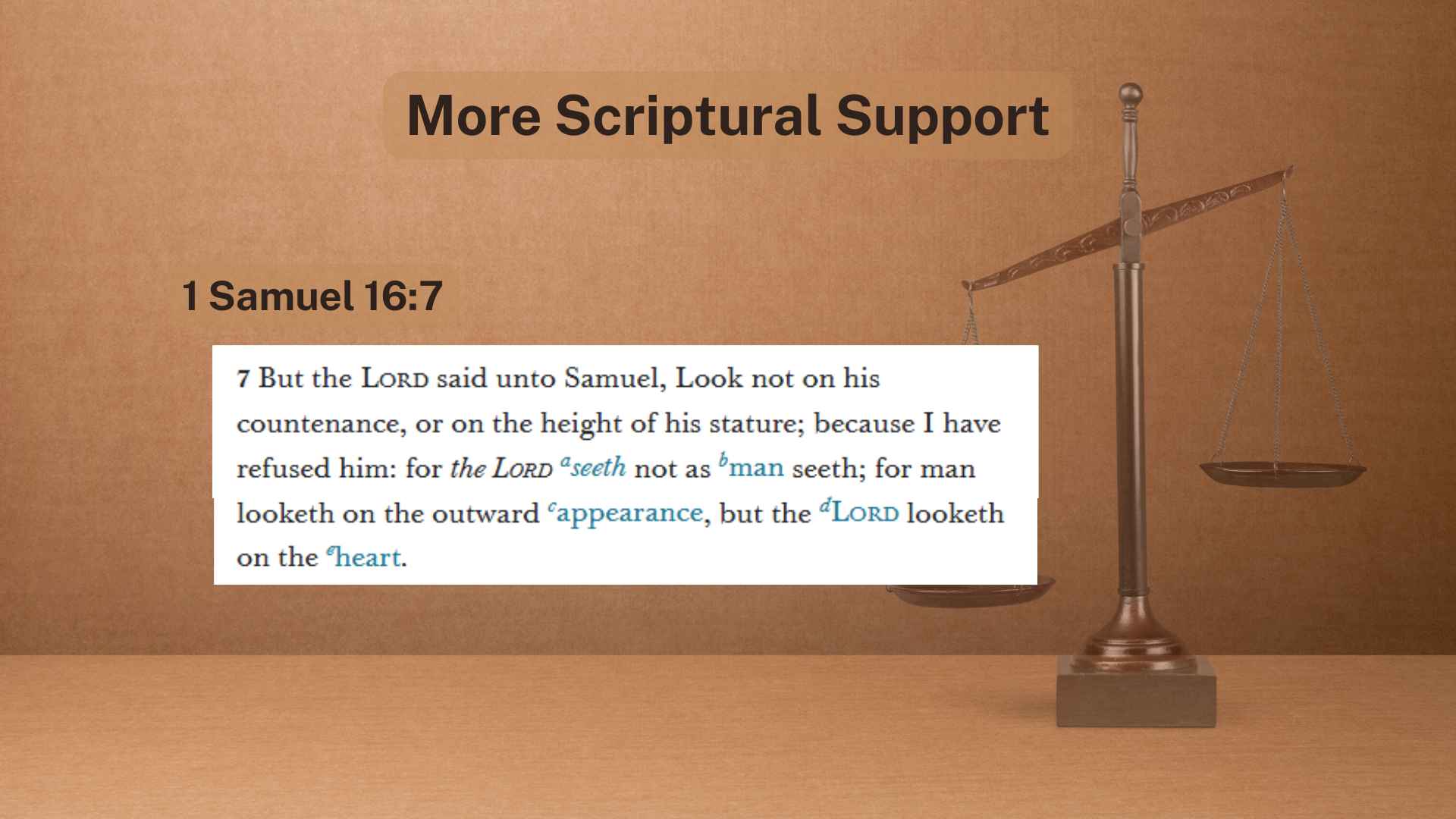
The Lord gave us, in 1 Samuel 16:7, direction on that.

“But the Lord said unto Samuel, Look not unto his countenance, or the height of his stature; because I have refused him: for the Lord seeth not as man seeth; for the man looketh on the outward appearance, but the Lord looketh on the heart.”

So if the Lord is going to judge us based on whiter and darker skins, it must be something other than a physical or literal skin.

And the guidance that the brethren have given us clearly in the scriptures is that they’re talking about a spiritual darkness.
Applying the Teaching

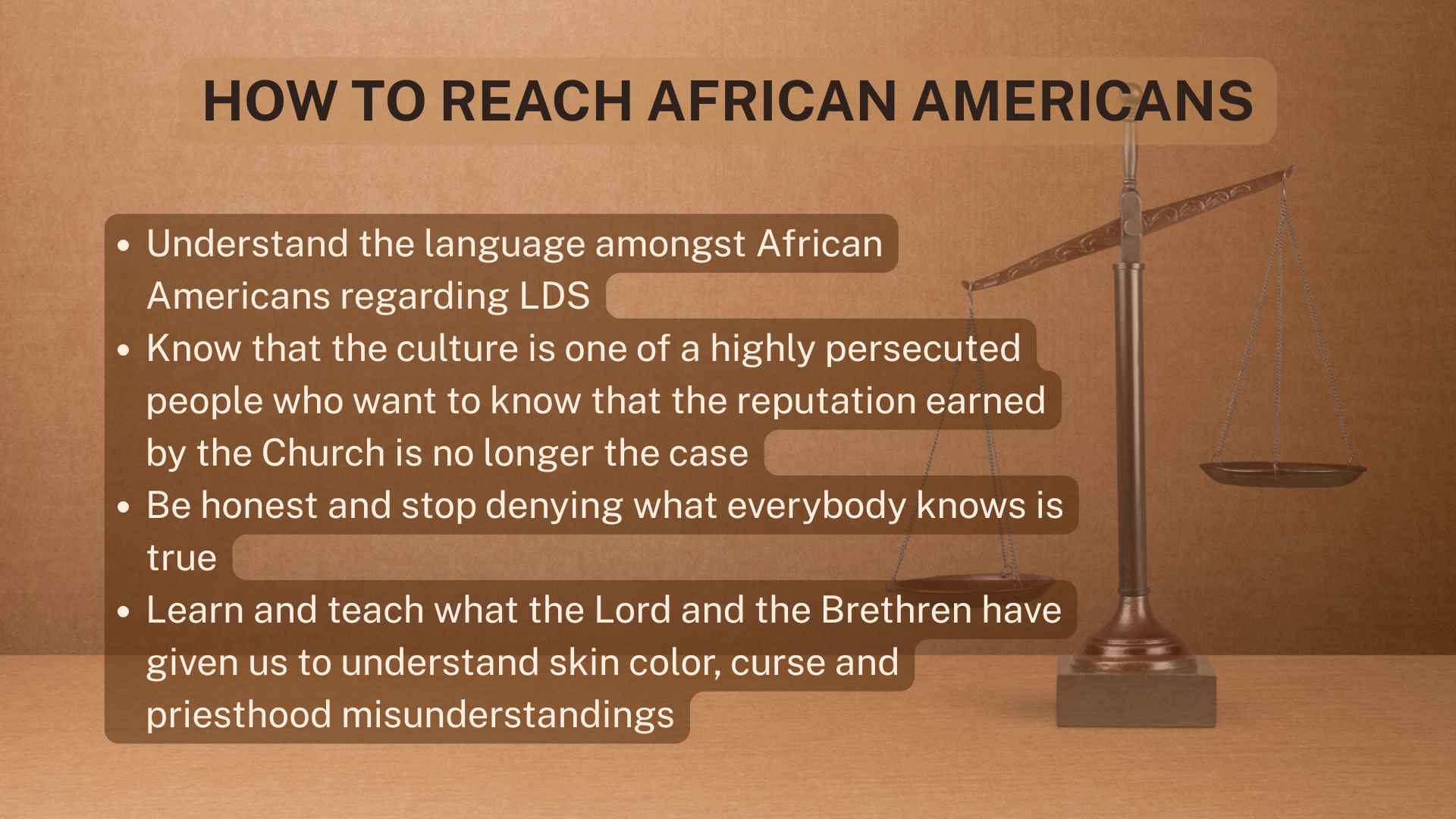
How do we reach African-Americans? We’ve got to understand the language and the culture of African-Americans regarding our LDS culture.

Number two, we need to understand that this is a culture of highly highly persecuted people that have plenty of written documentation that we need to explain somehow. We just can’t wish it away.

Teaching with Honesty and Scripture

We need to be honest and stop denying what everybody knows to be true. It’s like walking in with a milk mustache. “I didn’t have milk. I didn’t have any milk.”

Learn to teach what the Lord and the brethren have given us. You don’t need the philosophies of men on this issue.

You can go to the scriptures, study them out. I recommend that you don’t take my word for anything, but that you actually go to the scriptures and get on your knees for everything that you don’t understand. He’ll give it to us. He really will.
The Results of This Approach

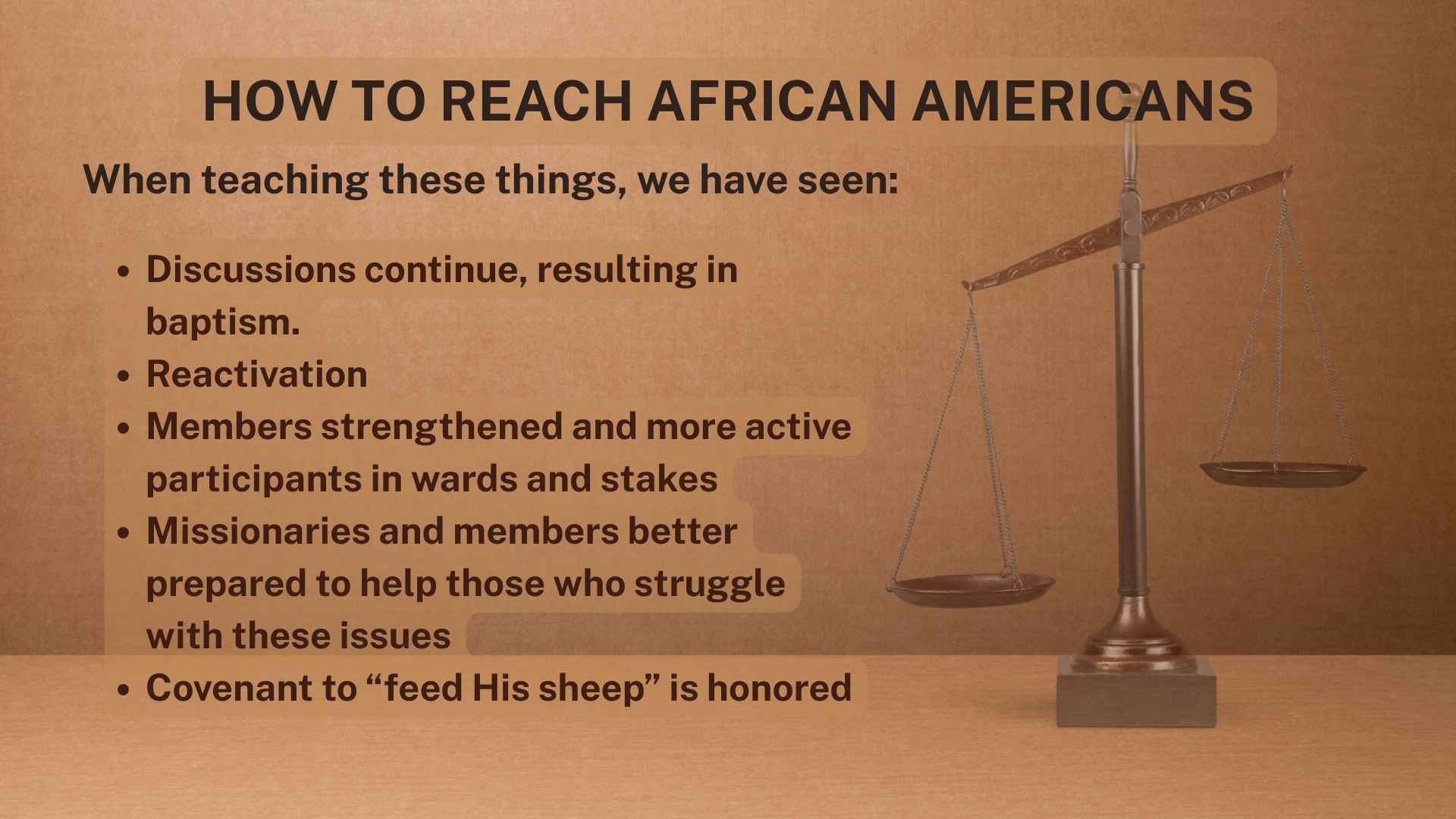
And as a result of learning this information, what happens? Well, this is what we’ve seen when we’ve taught from the scriptures this new direction that the brethren have given us.

The discussions continue resulting in baptism.

Brothers and sisters of color—of all colors—come back into the church as a result of now feeling more comfortable.

Strengthening the Church

Members are strengthened and more active participants in their stakes and their wards.

Missionaries are armed and members are armed. They go out with knowledge on how to deal with these issues, and now they can actually help someone.

And finally, you are able to keep your covenant to feed the Lord’s sheep.

Final Warning and Testimony

Woe unto the shepherds who feed not the sheep. How do you think the Lord would feel if we as a church ignored these people?

Especially when we have the pattern—we have the pattern of studying the language and the culture of people before we go out to try to reach them—but yet putting no effort forth for this group of people, I think that he would be very displeased with us.

But I know that if we do this, if we study these things and just only study the language and the culture of the people and what the brethren have given us, that we will see a flood of African-Americans come in the church.

And I leave these things with you in the name of Jesus Christ. Amen.
Download Marvin Perkin's Paper on this Subject
Search topics Race; Priesthood; African Americans; Race and the Priesthood; Priesthood restriction; 1978 Revelation; Continuing revelation; Elijah Abel; David O. McKay; Dallin H. Oaks; Bruce R. McConkie; LDS doctrine vs policy; Scripture interpretation; Book of Mormon skin of blackness; 2 Nephi 5:21; 2 Nephi 30:6; Jacob 3:8; 1 Samuel 16:7; Spiritual vs physical skin; Church history race; Inclusion; Missionary work; Cultural understanding CES Letter; Mormon racism; Mormon Church racism; LDS racism history; Black members LDS Church; Priesthood ban controversy; Race criticism LDS; Faith crisis race issues; Church reputation race; LDS Church criticism race

A Black Man in Zion: Reflections on Race in the Restored Gospel

Start Here

Question

How does Marcus H. Martins understand the former Latter-day Saint priesthood restriction and the 1978 revelation?

Short Answer

Marcus H. Martins argues that the former priesthood restriction was not part of the everlasting gospel but a historical Church policy whose origins remain uncertain. Speaking from his experience as a Black convert before 1978, he emphasizes that he still received baptism, the Holy Ghost, testimony, and other essential gospel blessings. He views the 1978 revelation as a major step in the worldwide restoration of priesthood and temple blessings and encourages Latter-day Saints to acknowledge the past while moving forward with faith in Jesus Christ.

Key Takeaways
  • Martins joined The Church of Jesus Christ of Latter-day Saints in 1972, six years before the priesthood restriction ended.

  • He describes both the genuine spiritual blessings he received and the burden created by racial teachings and explanations circulating among Latter-day Saints.

  • Martins states that, in his view, “the priesthood ban was never part of the everlasting gospel.”

  • He distinguishes the historical restriction itself from the “pseudo-explanations” developed to explain it, which he considers human attempts that were “way off mark.”

  • He sees the faithfulness of Black Latter-day Saints before and after 1978 as an ongoing demonstration of commitment to the restored gospel.

  • His “Nephi-Sam Continuum” illustrates that powerful spiritual manifestations are not required for genuine faith and faithfulness.

  • Martins views the 1978 revelation as a major development in taking priesthood and temple blessings to people throughout the world.

  • He encourages members to learn from painful history without perpetuating either racial prejudice or the wounds of the past.

  • The dedication of temples in Ghana and Nigeria represents for Martins the expanding fulfillment of promises concerning priesthood, temple worship, and exaltation.

  • He concludes with his testimony of Jesus Christ, living prophets, priesthood authority, temple ordinances, and the restored gospel.

Summary

Summary

In this 2006 FAIR Conference address, Marcus H. Martins examines race and the former priesthood restriction from the perspective of a Black Latter-day Saint who joined the Church in 1972. Martins describes the burden created by racial explanations surrounding the restriction while emphasizing that he continued to receive fundamental blessings of the gospel—including baptism, the gift of the Holy Ghost, testimony, and the promise of eternal life. He proposes a “typology of laws” through which he personally understands the priesthood restriction as a mortal rule rather than part of the everlasting gospel.

Martins places the 1978 revelation in a global context, viewing it as a major step in making the blessings of priesthood and temple ordinances available throughout the world. He encourages Latter-day Saints to acknowledge history without allowing its wounds or prejudices to define the present. Concluding with the expansion of temples in Africa and the biblical story of Joseph, Martins testifies that through faithfulness all of God’s children may ultimately receive the blessings promised through Jesus Christ.

TL;DR

TL;DR (Too Long; Didn’t Read)

Marcus H. Martins reflects on race, the former priesthood restriction, and his own experience as a Black Latter-day Saint who joined the Church before 1978. He distinguishes the priesthood ban and the racial explanations associated with it from what he understands to be the everlasting gospel, while emphasizing the spiritual blessings he received even before the restriction ended. His central message is one of faithfulness, reconciliation, and confidence that the blessings of the restored gospel are ultimately available to all of God’s children.

Reflections on Race in the Restored Gospel

I’m delighted to be here, and as I often say, the introduction was so good that for a moment I thought somebody else was going to speak! I don’t know why I never came to these conferences before. Maybe it’s the airfare, time zone, but I’m delighted, really and truly honored, for this opportunity to be here with you.

What I’m going to do this afternoon is present to you an essay that is sort of a synthesis of:

  1. What I have experienced and
  2. What I have concluded

in relation to race in the restored gospel of Jesus Christ. 1

This is sort of a combination of many e-mail messages of people who contact me thinking that I know something about it—which I don’t. It’s not one of my topics of research. It’s just that I have lived through the last 34 years in the Church, and so I get lots of questions, e-mails, letters.

And I’ve got a lot of frequent flyer mileage traveling around the country and speaking on the priesthood ban and race relations which, once again, is not my main research topic. But I enjoy visiting with the Saints everywhere, so it’s good.

The Issue of Race

To begin, I think it’s no surprise to any of us that few human traits throughout history have been used more persistently as a justification for so much hatred, brutality, inhumanity, and pain than race.

Since its beginnings in the 1830s, The Church of Jesus Christ of Latter-day Saints has also been affected by the issue of race. The Church is managed largely by a lay clergy—in many cases around the world a clergy composed of relatively recent converts. Because of that, The Church of Jesus Christ is not entirely immune to the predicaments found in the societies in which the members of the Church live.

My Experience as a Black Latter-day Saint

  • I am a Black man of mixed African and European ancestry.
  • I have been a member of The Church of Jesus Christ of Latter-day Saints since 1972.
  • I was the first member of my race to serve a full-time mission after the revelation that extended the priesthood to worthy men with Black African ancestry in 1978. 2
  • I was also among the first to be ordained a high priest in 1981 and quite possibly—at least outside of Africa—I may have been among the first to be ordained a bishop in 1987.

Since 1994 I have been the first of my race (or mixed race, whatever) to work as a religion professor in the Church’s universities: Brigham Young University; then Rick’s College; BYU-Idaho and BYU-Hawaii.

The Burden of the Priesthood Ban

As a researcher, I may have read every official or semi-official statement available to the public about the priesthood ban. Unfortunately, the truth must be told. After reading such documents, any reasonable person will agree that Latter-day Saints with some measure of Black African ancestry have carried a heavy burden – in addition to whatever they may have had to deal with in society.

Since I joined the Church in 1972, terms such as cursed; less valiant; fence-sitter; Cain’s lineage; and others too impolite to be repeated have been used from time to time by fellow Latter-day Saints to refer to me or those who share my racial background.

That’s part of the legacy, if you will. Or I would call it more of a burden that members of the Church with Black African ancestry have had to deal with. And notice I’m from Brazil—I’m talking about my experiences in Brazil, not just in the United States in the last 16 years.

Putting the Past “Behind Us”

Back in 1995 President Gordon B. Hinckley stated to CBS reporter Mike Wallace that such things are “behind us.”

One cannot help but wonder how far behind have Latter-day Saints as a people put this shameful tradition? Could it be that some in our midst have been carrying these ideas on their backs, instead of truly leaving them behind?

As for me, I am sure that the Board of Trustees of Brigham Young University—which includes members of the First Presidency and the Quorum of the Twelve—would not have approved my appointment as chair of the department of religious education at Brigham Young University-Hawaii if they believed that I was cursed, less valiant or whatever.

Focusing on the Gospel of the Prince of Peace

I decided a number of years ago to leave these matters to the judgment of Him who knows all things. There is enough war, needless contention, and tragic destruction in this world. I certainly don’t want to add to any of those.

Therefore, I have focused my attention on teaching the gospel of the Prince of Peace, the Savior Jesus Christ, according to the dictates of our conscience, and bring people to

  • faith,
  • repentance,
  • pure Christ-like love, and
  • obedience to the commandments of God

—the only way to peace and happiness in this life.

Still, every year I receive a number of e-mails and phone calls from people around the world asking me questions—most of the time politely—about race and the priesthood ban.

Remembering the Priesthood Ban Without Being Defined by It

A young African American sister once asked me whether it was “abnormal” to feel annoyed by the priesthood ban. I told her that all human beings have feelings, and we cannot fully stifle this important part of our humanity, which is race.

My only suggestion—and I have done this myself—is to not allow this issue to importune our children and grandchildren.

Whether we like it or not, the priesthood ban is an integral part of the history of The Church of Jesus Christ of Latter-day Saints in this dispensation. We can’t hide it. We can’t whitewash it. There’s nothing to do—it’s part of the history.

But just like the Mountain Meadows massacre and other unfortunate episodes, the ban may be remembered as an undeniable fact in history—but never as a significant factor to the present.

Therefore, for the benefit of those who never contacted me, I will share a few of my own insights on the priesthood ban based on my current understanding of the scriptures and doctrines of the Church.

The Priesthood Ban and the Everlasting Gospel

In my mind the priesthood ban was never part of the everlasting gospel. I have found peace in the idea that the Lord allowed the ban to remain in his Church in order to fulfill his inscrutable purposes, whatever they are.

That belief leads me to conclude that the ban never jeopardized my eternal salvation. There were a few significant privileges of membership in the Church that I could not enjoy before June of 1978; a few very significant things, but not very many.

I was able to:

  • receive the ordinance of baptism,
  • I received the Holy Ghost,
  • I could pay my tithing,
  • I could read the scriptures,
  • I could pray,
  • I could partake of the sacrament,
  • I could hold many callings as my parents and I did all those years between 1972–78, and also
  • keep the commandments of the Lord and
  • be blessed for doing so.

None of these privileges of membership was denied me. I simply could not:

  • officiate in priesthood ordinances like my peers, nor
  • enter a temple and receive my own endowment, nor
  • be sealed to my parents.

But other than that, all other privileges of membership were available to me.

An Ongoing Opportunity to Display Commitment

Actually, I would argue that the ban afforded me and other Black Latter-day Saints a still-ongoing opportunity to display the depth of our commitment to the Lord and his kingdom in a specific way that our fellow Latter-day Saints of other races will never be able to experience.

Let me illustrate what I mean by the expression “ongoing opportunity.” During the three years it took me to complete my Ph.D. at Brigham Young University, I was a part-time lecturer for both the Sociology and the Church History & Doctrine Departments.

I remember that every semester at least one African American student would come to my office with a major question because he or she would have heard somebody saying that since they were from the “cursed lineage” they would not enter the celestial kingdom.

Often I would respond half-jokingly that this was a very well-known false doctrine because it could not be found in the scriptures and had never been accepted officially by the Church. And then I would ask those students: Why were you baptized? What do we call baptism?

Baptism as the Gate to the Celestial Kingdom

Invariably they would respond that baptism is the gate to the celestial kingdom, to which I would reply, if baptism is the gate to the celestial kingdom how come after living faithfully your whole life you would not be allowed to go there?

And those students would see that that idea—that Blacks would not enter the celestial kingdom—was inconsistent with the true doctrines of the restored gospel.

Although they had been baptized long after the priesthood ban had disappeared, these young people still had to exercise the same faith as the early (i.e. pre-1978) Black converts in order to remain active in the Church. That’s what I meant by an ongoing opportunity to display the depth of one’s commitment to the restored gospel.

The Priesthood Ban and Its Associated Rationales

In my mind, the priesthood ban and its associated rationales were never part of the restored gospel. I would argue that they constituted educated responses to the social environment in which the Church existed in the late 19th and most of the 20th century.

Let me try to expand this insight by resorting to a typology of laws that I conceived a few years ago.

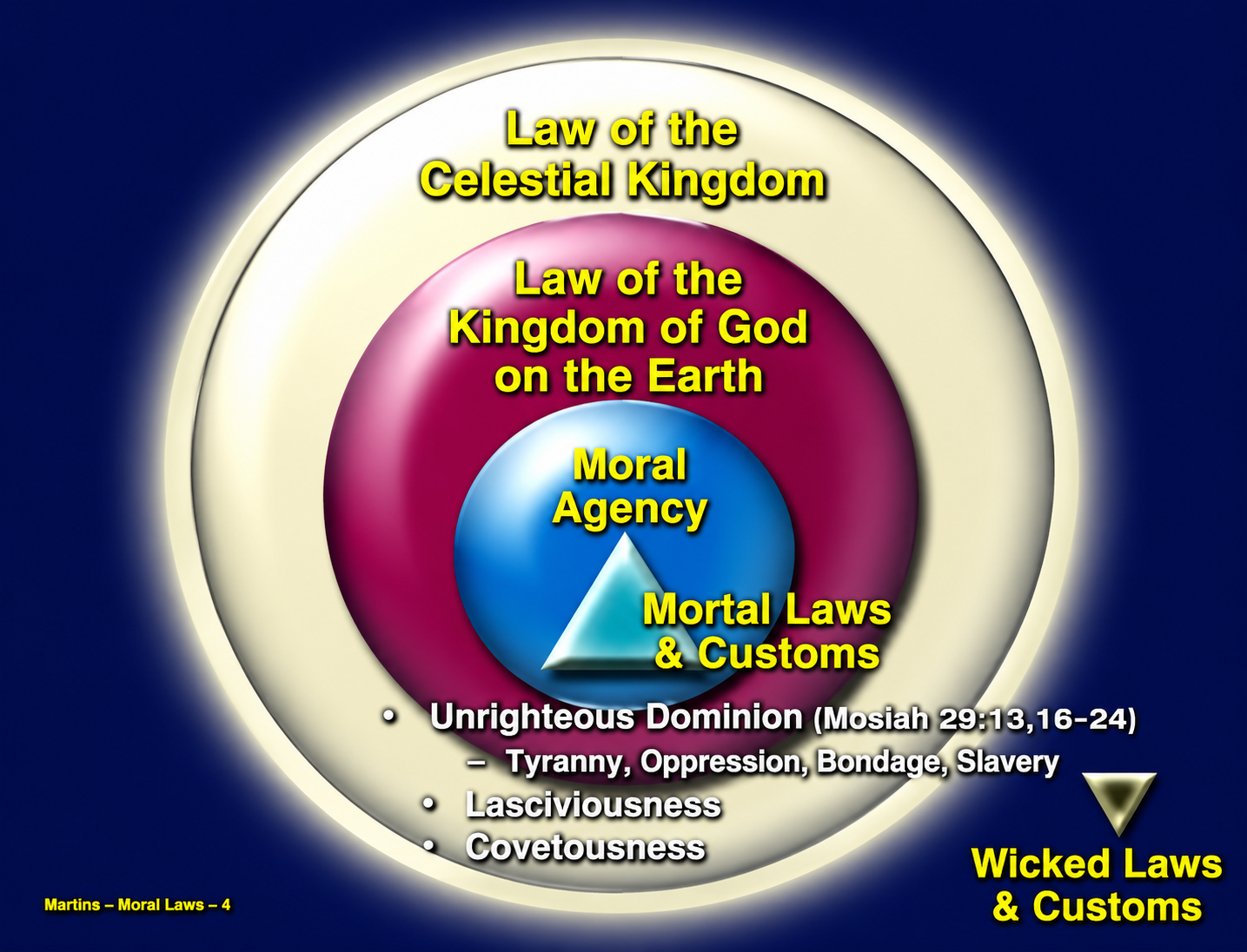
A Typology of Laws

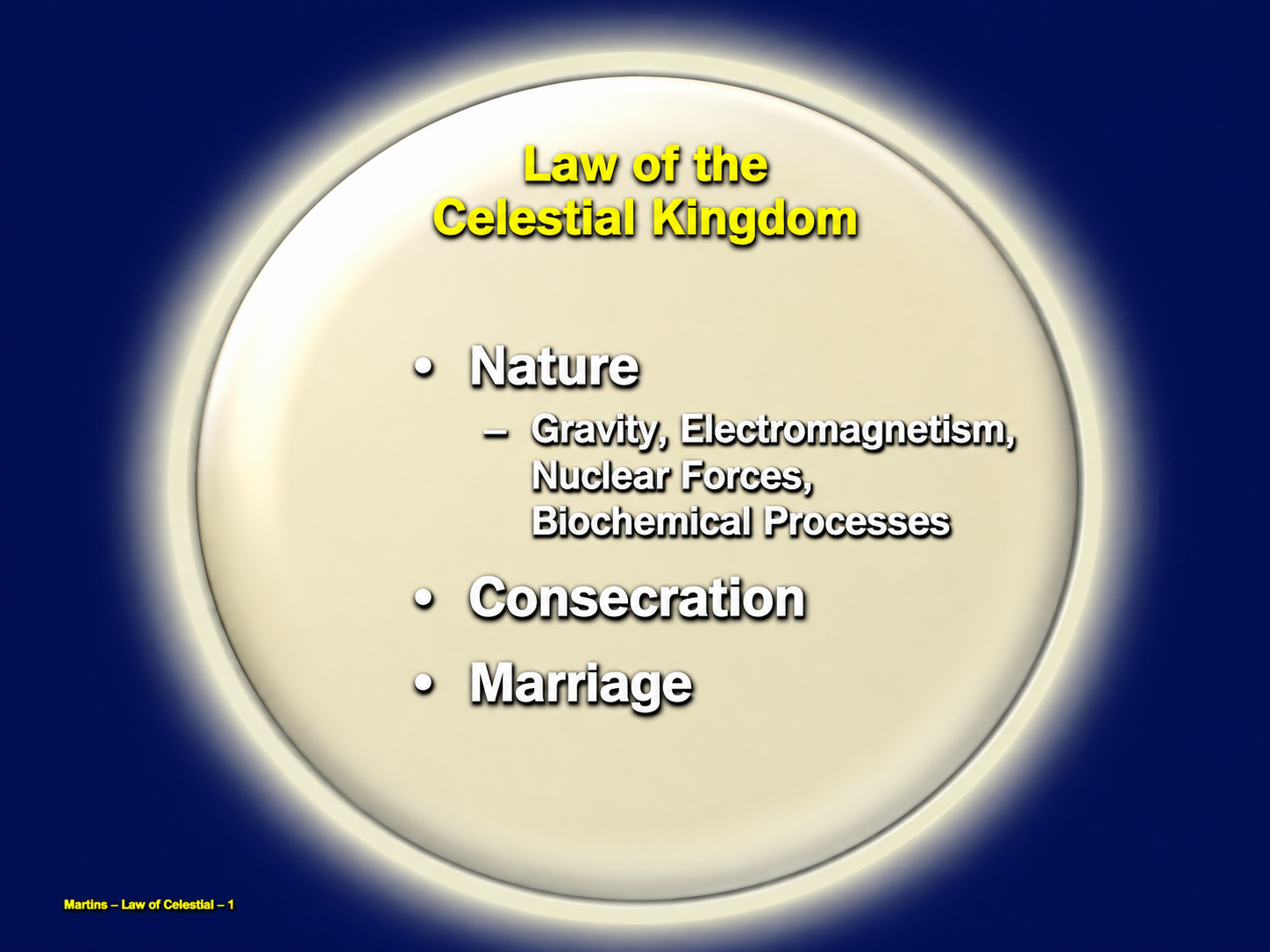
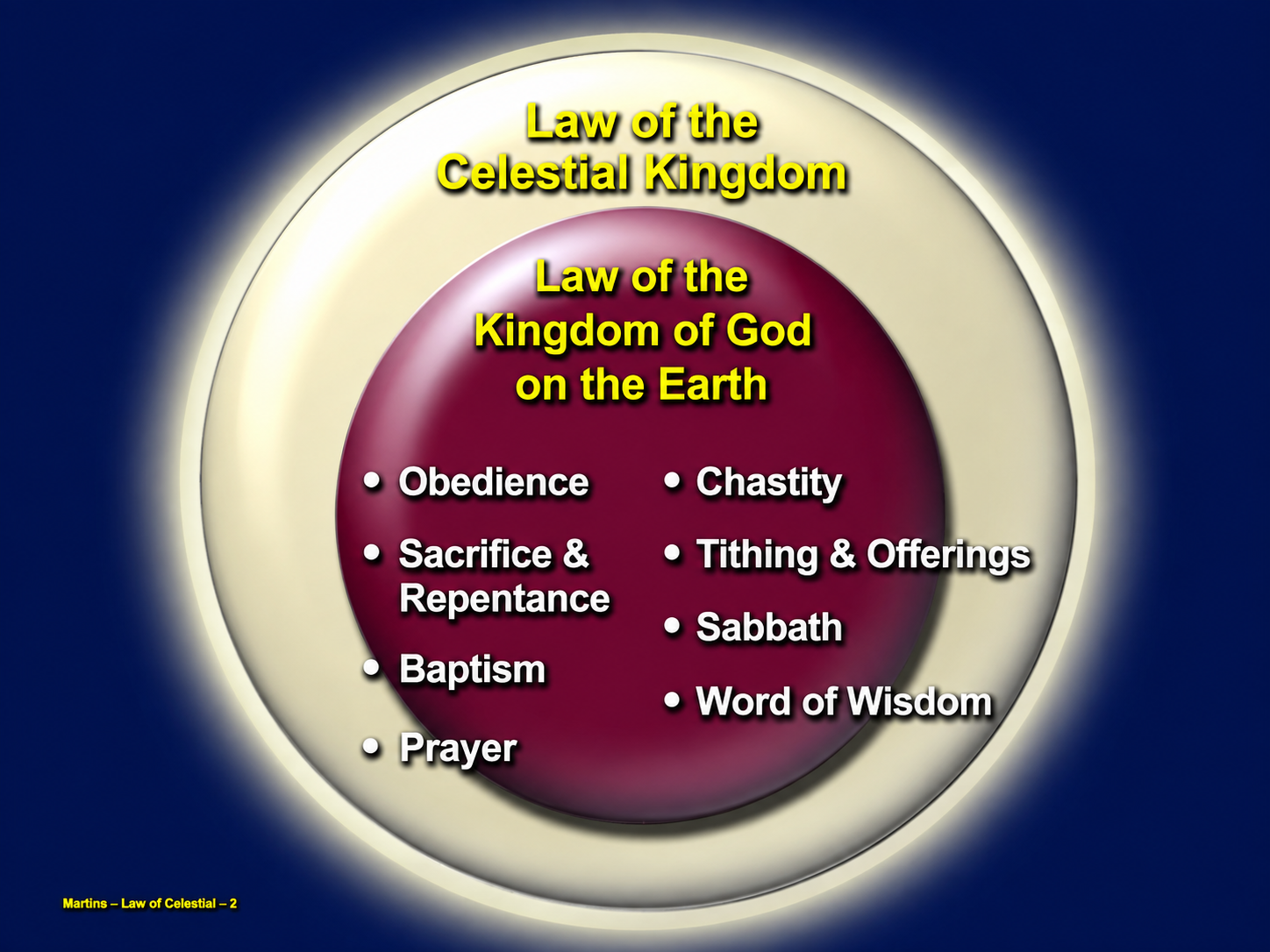
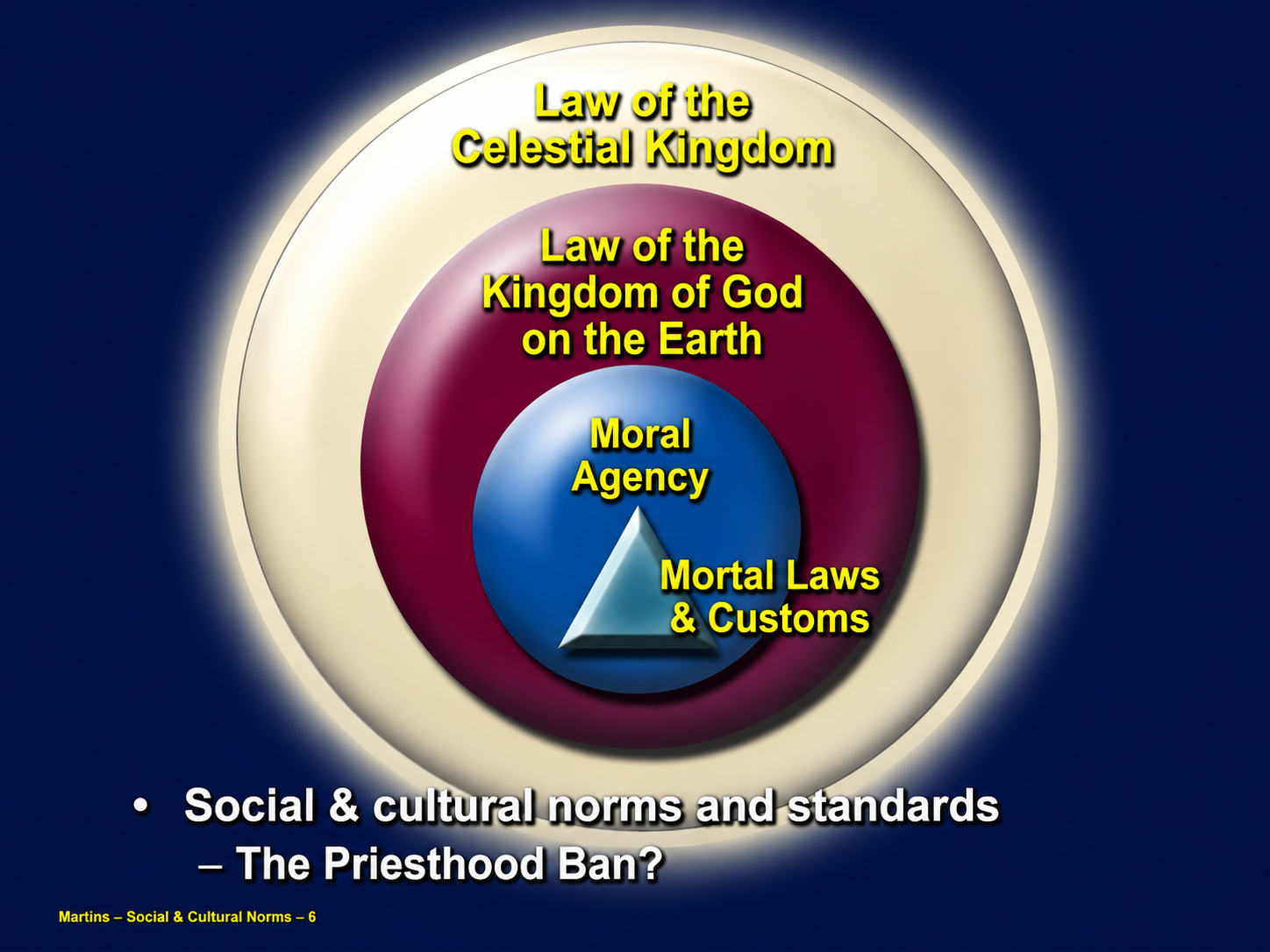
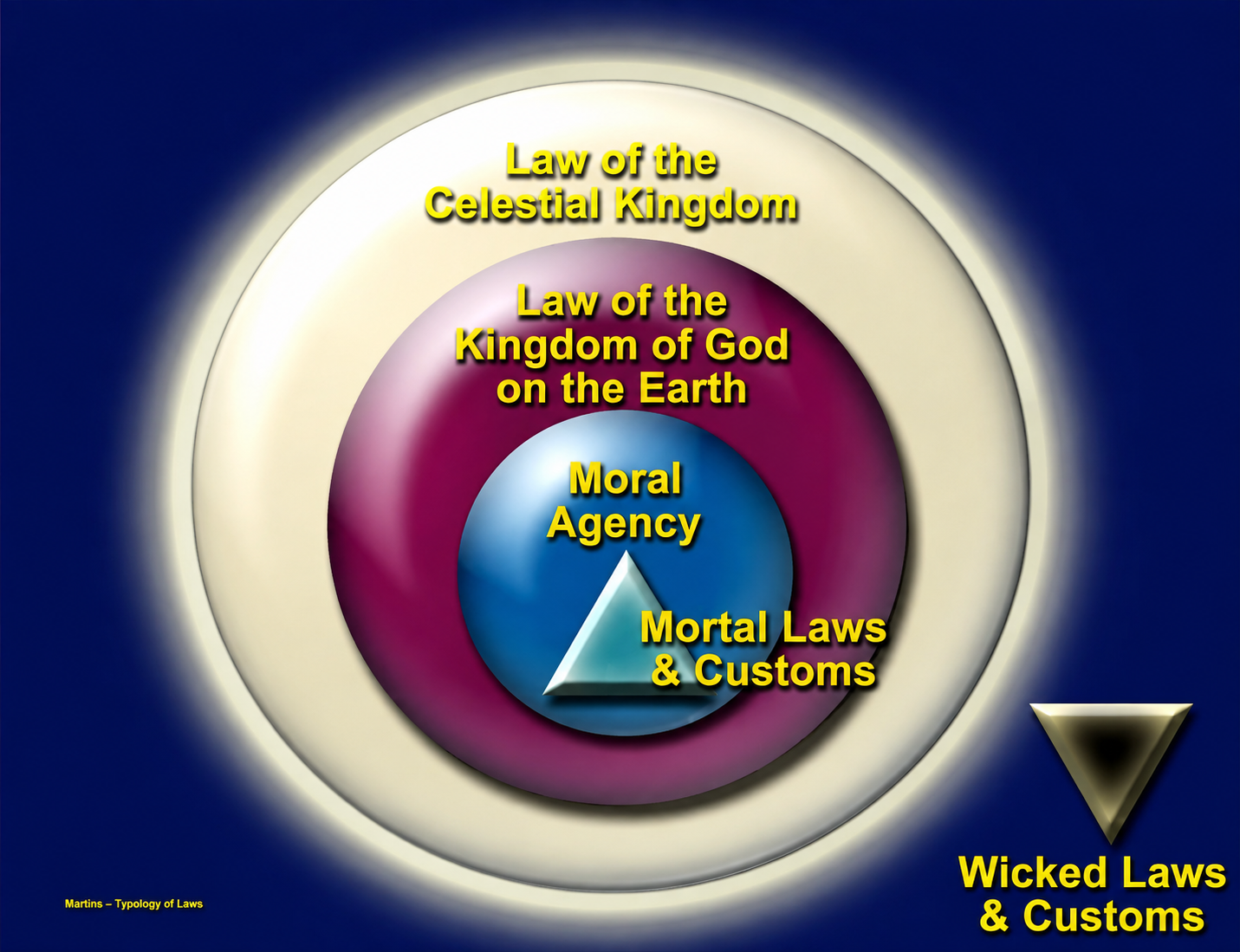
While attempting to categorize different laws we are subject to, I envisioned different “levels” which would begin with the eternal—the law of the celestial kingdom—and then after that the law of the kingdom of God on the earth.

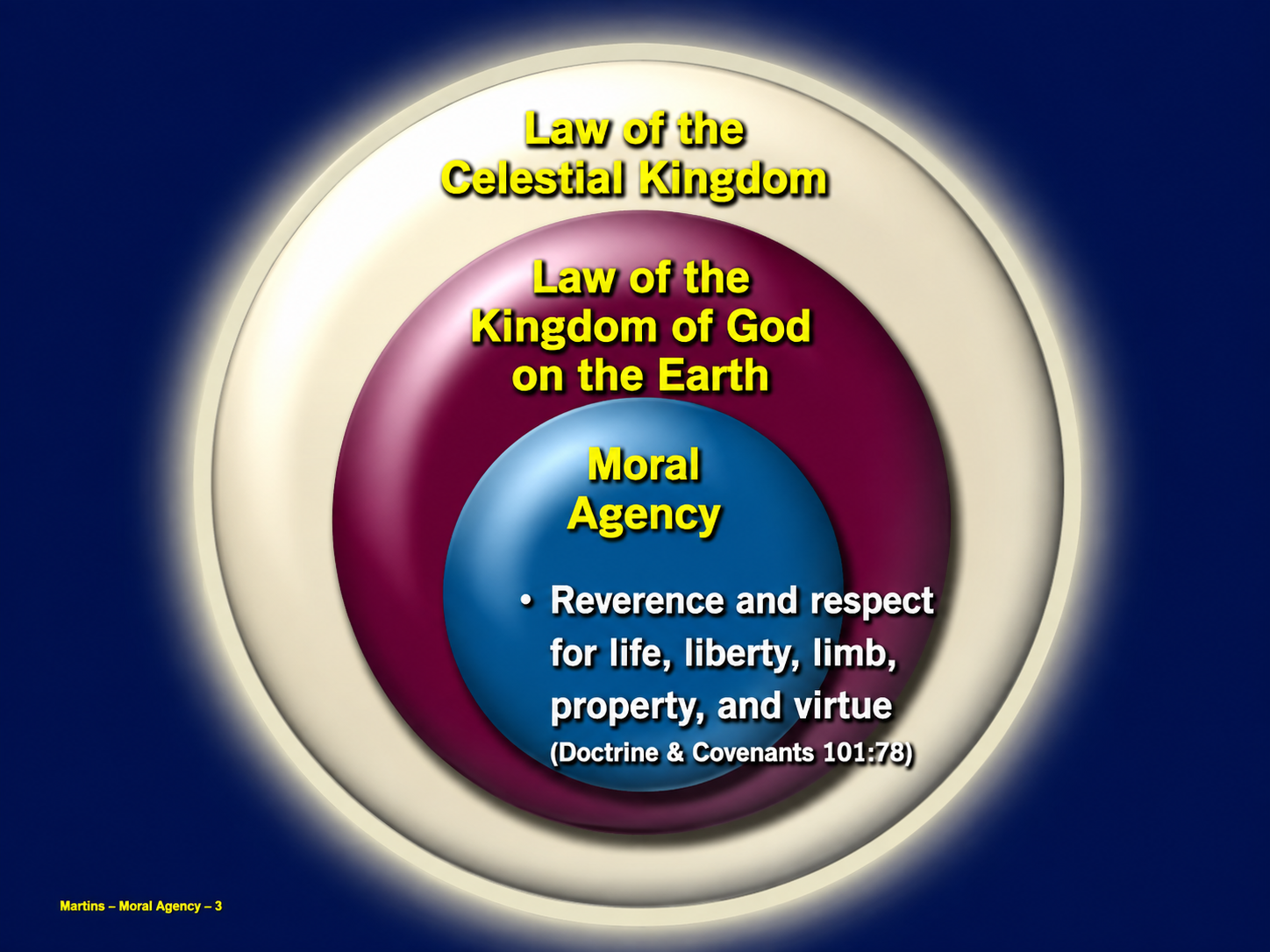
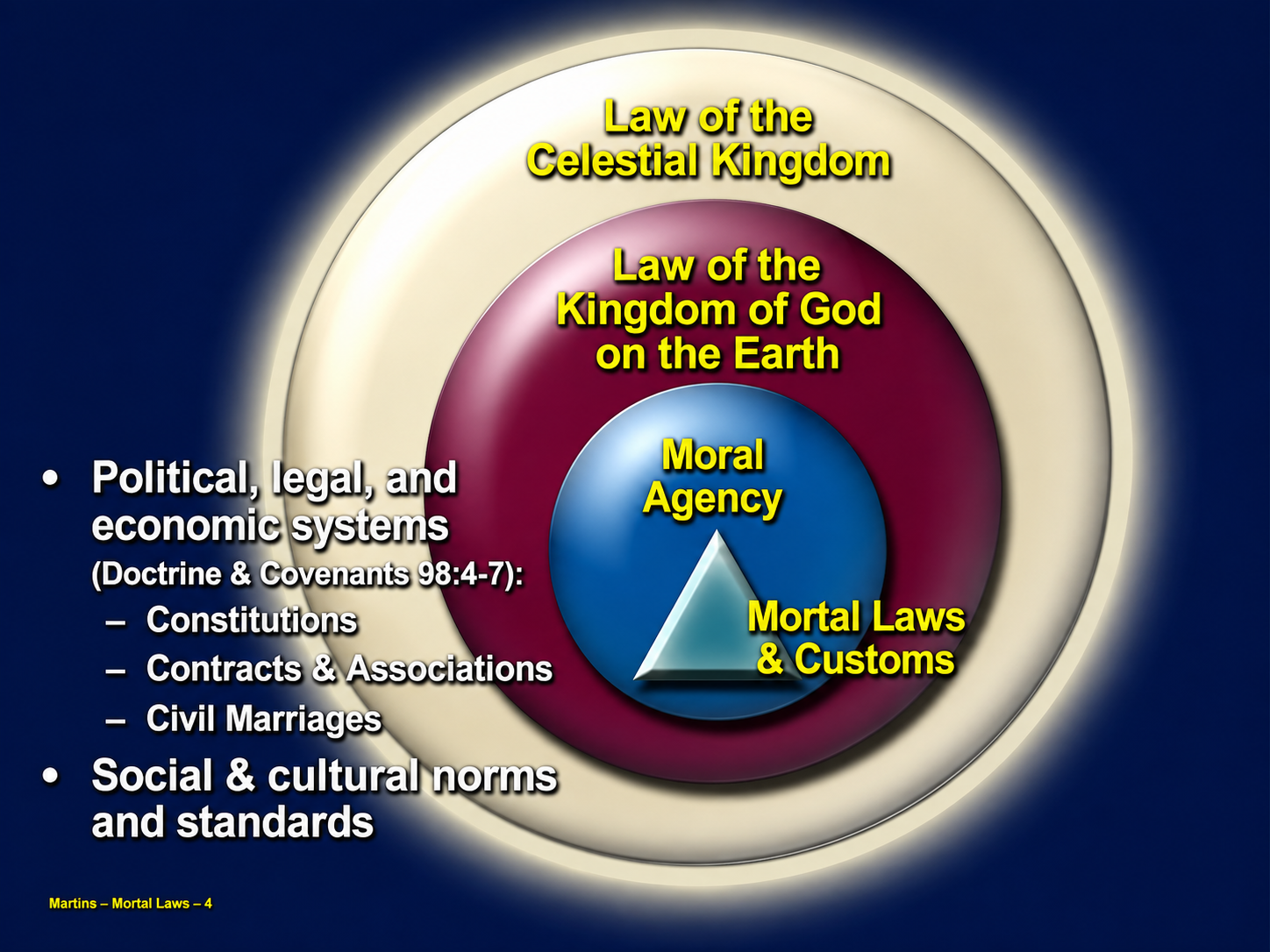
The next level would come from an expression used by Lord himself in the Doctrine & Covenants, moral agency. Growing out of our moral agency we have several mortal laws and customs, including cultural traits and social norms.

Of course this diagram, this model if you will, would be incomplete if we did not account for the opposite, that is, evil. So I added evil, outside of the diagram, meaning something that does not come from God. And for the lack of a better term I called it “wicked laws and customs”.


The Law of the Celestial Kingdom

We begin with the law of the Celestial Kingdom. Here we find the so-called “laws of nature.” Elder James E. Talmage proposed that the Holy Ghost, as the third member of the Godhead, controls the forces of nature—gravity, sound, heat, electricity, etc. 3 We may assume that electromagnetism and perhaps even the weak and strong nuclear forces might also be controlled by the Holy Ghost.

Therefore, I call “laws of nature” those laws that govern the creation or organization of worlds and the maintenance of these planets, solar systems, and galaxies and so on.

At that level I also envision the Law of Consecration, which is the law of the celestial kingdom as the Lord stated in a revelation contained in section 78 of the Doctrine & Covenants.

Next we find the new and everlasting covenant of marriage, as contained in sections 131 and 132 of the Doctrine & Covenants. These are laws that people everywhere, regardless of religious affiliation, aspire to live, even if their religious denominations do not officially subscribe to such beliefs.

Some may call it instinct. Call it whatever it is, these eternal laws are inescapable, overwhelming, and deeply ingrained in us.

Consecration and Religious Devotion

Many devout men and women around the world respond to this innate desire to consecrate themselves to the glory of God by dedicating their lives to religious or humanitarian service.

Some have chosen to become preachers and evangelists, while others have focused on different roles in assisting the poor and needy. Among those without the light of the restored gospel of Jesus Christ we find some who practice celibacy and other forms of physical self-denial as a means to demonstrate the depth of their commitment.

Even without current revelations coming through living prophets to guide them, these individuals try to do the best they can, and they will be rewarded by their good works.

The Law of Consecration Today

Today in The Church of Jesus Christ of Latter-day Saints we still have the law of consecration, in the sense that we give of our time and talents, but we don’t have the stewardship portion and the United Order, which was the organizational structure that managed the law of consecration.

The only remnants of the United Order that we have among us today are the elements of the welfare system of the Church which provides temporary assistance to the poor and needy.

Eternal Marriage and the Law of the Celestial Kingdom

The next component of the law of the celestial kingdom is eternal marriage. From the time we were little children we yearn for the type of close association provided by family life. Little girls, for example, play “house,” and “mother” with their dolls.

Everyone—I have faith in and a testimony of this—will have at some point a fair opportunity to find a good person who will be pleasing to him or her, someone whom that person will love with all of his or her heart, and who believe it or not will in return love that individual with all his or her heart as well.

Many of them will have a chance to go to the House of the Lord still in this life and enter into an eternal covenant, while others who leave this life without this blessing will no doubt be an opportunity in the future.

These laws I just mentioned—the laws of nature, consecration, and marriage—constitute the category that I called the law of the celestial kingdom.

The Law of the Kingdom of God on the Earth

Next we arrive at what I called the law of the kingdom of God on the earth. And this is where we would find the law of obedience, the law of sacrifice and associated with sacrifice we have repentance because in order to repent we need to sacrifice something—some appetite, some passion, some pleasure—in order to conform ourselves to the laws of God that we accepted and covenanted to obey.

In this level we would find baptism, prayer, chastity, tithing and offerings, the law of the Sabbath, and the Word of Wisdom.

Moral Agency

Next we arrive at moral agency. This characteristic, if you will, is another universal human trait. By nature—regardless of nationality, culture, religion, or philosophy of life—every human being has a natural disposition to respect and revere life, liberty, limb, property and virtue. Everybody has that naturally, although some may fight that influence until they no longer feel its effects.

Then, growing out of that moral agency we would have what I call moral laws and customs. This is where we would find our political, economic, legal, and social systems. These are human developments made in response to circumstances around us under the influence of the moral agency that the Lord gave us.

In this level we would include constitutions of nations, contracts, associations and civil marriages. We have eternal marriage in the law of the celestial kingdom, and here under mortal laws we have civil marriages for time only, or “’til death do you part.”

In this level of the diagram we would also find social and cultural norms, or what is considered right and wrong, appropriate or inappropriate, in specific social contexts, and in social interactions.

Wicked Laws and Customs

As I mentioned earlier, I also had to include wicked laws and wicked customs in this typology. Here we would find unrighteous dominion in all its forms—including tyranny and any form of oppression, and also bondage and slavery.

We should realize that there are many types of bondage. Bondage is not limited only to slavery itself, but there are also those who are in bondage to chemical dependency due to substance abuse, including drugs, perhaps even food. We also find people in financial bondage because of excessive debt.

Enjoying the Gospel Despite the Priesthood Ban

Considering our lack of additional information on the origin of the priesthood ban, I have used my typology to categorize the ban as a mortal law, or in other words, a rule or regulation established as an educated response to the social environment in which the Church existed in the late 19th and most of the 20th century.

This would have been what those Church leaders of 150-or-so years ago felt was the best approach at the time, and they used the keys of the priesthood in their possession to enforce it. And because of his inscrutable purposes, the Lord remained silent about the issue until June 1, 1978.

This categorization and hypothesis will be sufficient to me personally until evidence is presented of the existence of a revelation dated in the 19th century establishing the ban.

The main consequence of seeing the ban as a mortal law, and not part of the everlasting gospel is that in the things that matter most I was not losing anything. I could enjoy every blessing of the restored gospel—with the noted exception of the temple ordinances and officiating in priesthood ordinances. But I could enjoy everything else.

I could have a testimony through the power of the Holy Ghost, and indeed I received many testimonies of the truthfulness of the gospel and of the message of the restoration.

Spiritual Gifts and Testimony

Some individuals might claim that they were not so fortunate as I was, but for such cases, let me explain something about testimonies. In a revelation the Lord said something interesting about spiritual gifts.

“To some it is given by the Holy Ghost to know that Jesus Christ is the Son of God, and that he was crucified for the sins of the world. To others it is given to believe on their words, that they also might have eternal life if they continue faithful.” 4

To some it is given to know; to others it is given to believe on the testimonies of those who know. But those who just believe but did not feel or see anything will also have eternal life.

The Nephi-Sam Continuum

This is what I have called “the Nephi-Sam Continuum.” I created at BYU-Hawaii a course on Church organization and leadership in which I venture to prepare future members of Relief Society presidencies, Primary and Women’s presidencies, future members of Elders’ Quorums presidencies, Bishoprics, Stake Presidents and so on—a very lofty goal.

Actually one of my former students has already served as a Bishop after that. And so, I tell my students, some people among us are like Nephi and others are like Sam and so I term this “the Nephi-Sam Continuum.”

In the beginning of the narrative of the Book of Mormon we find Nephi enjoying powerful spiritual manifestations and visions of the future and so on, while his older brother Sam apparently does not experience any of these miraculous events.

He was not having the visions of eternity opened to him, but Nephi tells us: “I told all these things to my brother Sam and he believed me.” 5

And leaving his last blessing, Lehi blessed Sam and his posterity and said that they were also going to be blessed. 6

Faith, Obedience, and the Promise of Eternal Life

There are those among us who have very powerful spiritual experiences and come to the pulpit in testimony meetings already in tears. I believe they are really feeling something strong.

The really important question for those among us who may not as yet have been blessed with such powerful manifestations is this: “Am I faithful, obedient, loyal to God?” Those among us who might claim to never have felt these miraculous spiritual manifestations don’t need to worry.

So, until 1978 there I was, without the priesthood but having the power of the Holy Ghost and the promise of eternal life. And the question is, wasn’t that enough already?

Sure, it would have been wonderful to have enjoyed every available blessing prior to 1978, but we had solemn promises that one day we would enjoy every available blessing. That’s why I ask the question, “Wasn’t that enough?”

Nobody lost anything, no person with Black African ancestry lost anything, by becoming a member of The Church of Jesus Christ of Latter-Day Saints prior to 1978 without being able to hold the priesthood. A person could enjoy most of the blessings of membership in the Church.

But here we are, and the good news is that that’s past, and today all of us can enjoy those blessings. So that brings us the next question: “Where do we stand today?”

A Global Perspective on the 1978 Revelation

Reflecting on the long-term consequences of the revelation on the priesthood, President Gordon B. Hinckley stated that it created the conditions for the fulfillment of the scripture found in Doctrine & Covenants 1:20, which states: “… that every man might speak in the name of God the Lord, even the Savior of the world.”

In the known history of the dispensations of the gospel, this revelation from 1978—until we know more about past dispensations including in other places of the world that we may know nothing about—until we know more, this revelation stands next in importance with the revelation that extended the preaching of the gospel to the Gentiles in the Meridian of Times.

As the words spoken by President Hinckley suggest, the 1978 revelation represented an important step in the restoration of the fulness of the priesthood. The honors and privileges besought by ancient pharaohs and emperors are now available to all those who choose to come unto Christ.

This has opened the way for men and women on the entire planet to become one day priests and kings to the Most High by obeying the laws and ordinances of the restored gospel. 7

What a Wonderful Time to Be Alive

We just saw the end of the 20th century. The scriptures reveal that one thousand of our years is like one day for the Lord, so I don’t suppose he would care that much about our calendar and changes of years, centuries, and so on. “… all these are one year with God, but not with man.” 8

But for us these things are important. We just saw the 20th century come to a close, and it has been a phenomenal century. We saw the best and the worst in humanity.

Previously unimaginable heights and depths:

  • world wars,
  • violence and destruction beyond comprehension,
  • horrors that we would not see even in our worst nightmares did in fact take place in many parts of the world.

But when we consider also the achievements, the developments, the triumphs of the human spirit, and despite terrorism, drug trafficking, despite everything—when we see what looks like the beginning of a global renaissance, unprecedented, far-reaching, we have to exclaim, “What a wonderful time to be alive!”

Therefore, what befalls us now is to perpetuate whatever is good, and improve it if possible. Teach the people the lessons from the past without reliving or reopening old wounds. That is what I have been trying to do.

The Priesthood Is the Lord’s

I shared the personal perspective that I did not lose anything of eternal significance prior to 1978. The priesthood is the Lord’s. The Church is the Lord’s.

He allows his priesthood to be bestowed upon whoever he wants. He may take away the priesthood whenever he wants. It’s his church he can do whatever he wants, as far as I am concerned.

A Time for Activity, Not for Activism

This is a time for activity, not for activism. I consider myself and I hope to be worthy of the title of being a humble follower of Jesus Christ, and the honor of being a minister of his gospel.

All I want is to serve in his kingdom—to teach, to testify. And that is what I’ve been doing most of my life as a member of this Church.

Because of where my wife and I come from, we have had many opportunities to serve in many capacities in the Church. We don’t aspire to positions. We only aspire to be saved in the presence of the Father with our family and loved ones.

But the Lord found me at least sufficiently worthy to receive this priesthood, and he granted my wife and me the blessing of being sealed in the house of the Lord for time and all eternity.

Leaving Hatred and Prejudice in the Past

There is a lot of violence and war in this world. All over the world there are those who seem unable to let go of the hatreds and prejudices of the past, and others who cannot stop reliving the pains of the past.

My response to both groups today is still the same I have been giving for years.

For those who may still be unwilling or unprepared to leave the past behind, I only suggest that while they feel so they follow the Apostle Paul’s admonition to be “… an example of the believers, in word, in conversation, in charity, in spirit, in faith, in purity.” 9

People can over time prove through works—which will have a more powerful and permanent effect than any lingering prejudice—that they are indeed choice spirits kept in reserve for this era to testify to the world through deeds that “God is no respecter of persons: But in every nation he that feareth him, and worketh righteousness, is accepted with him.”10

Looking Forward with Faith

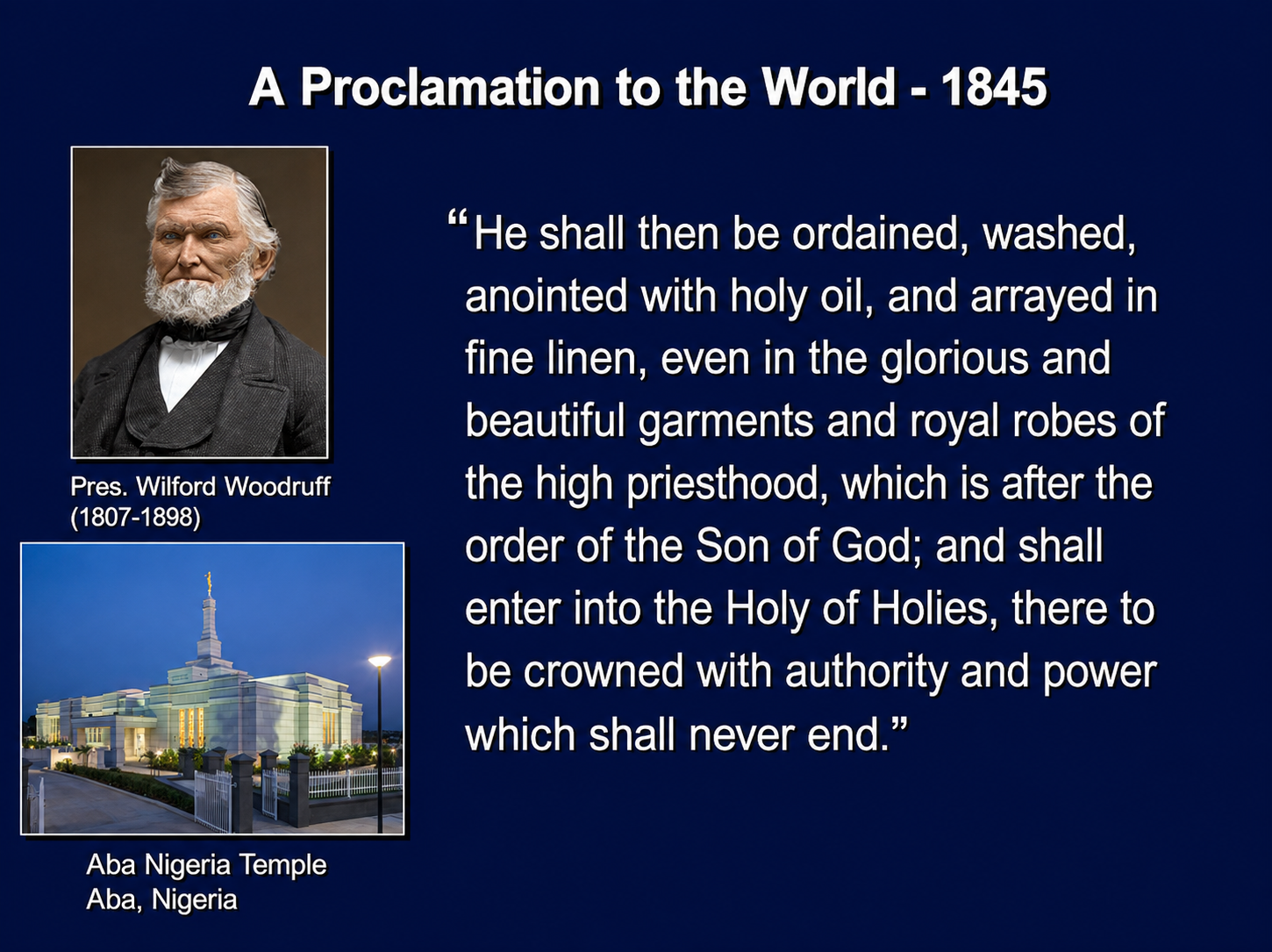
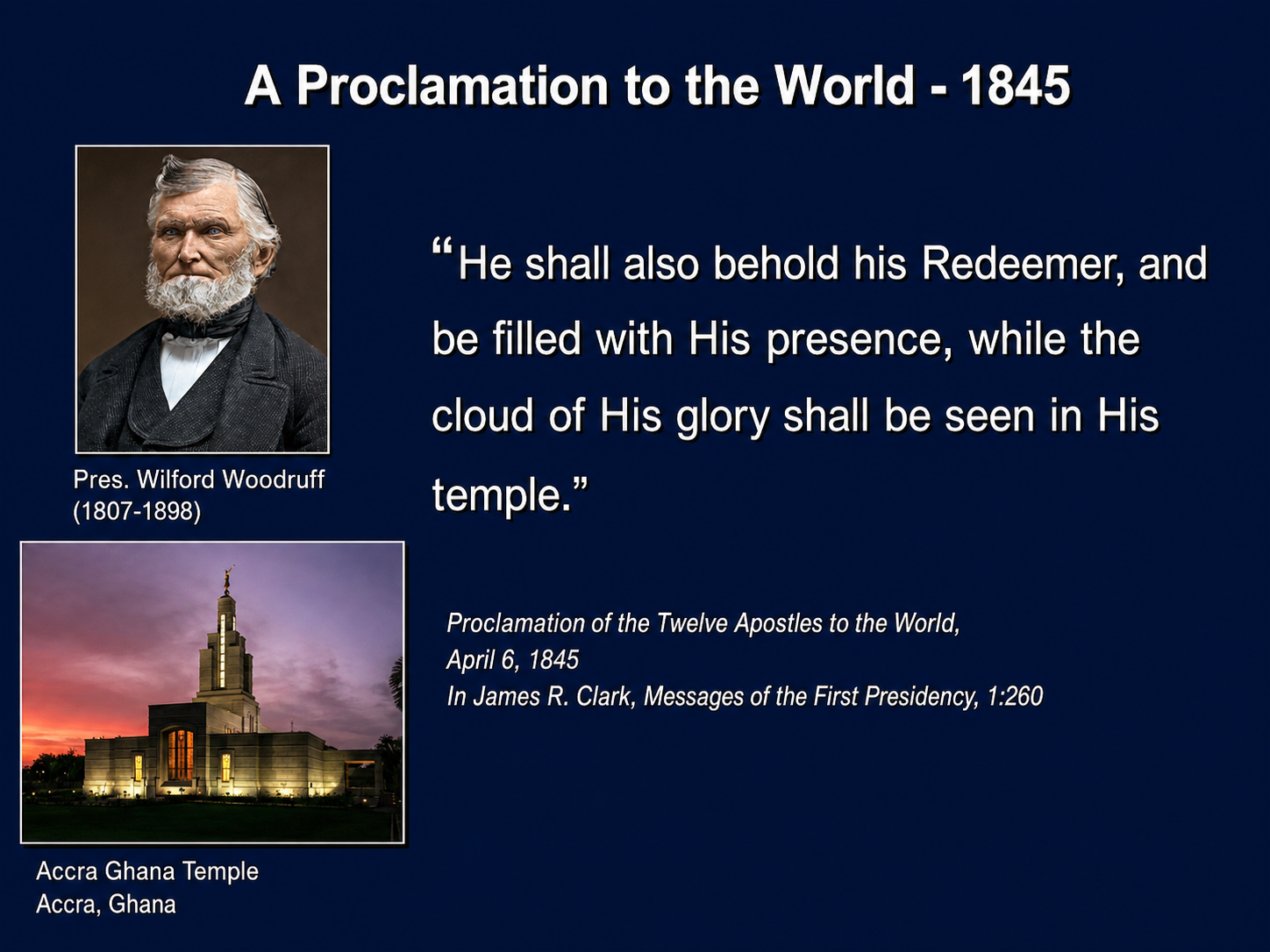
The first temple in West Africa was dedicated in Accra, Ghana, in January of 2004. The Aba Nigeria Temple followed in August of 2005.

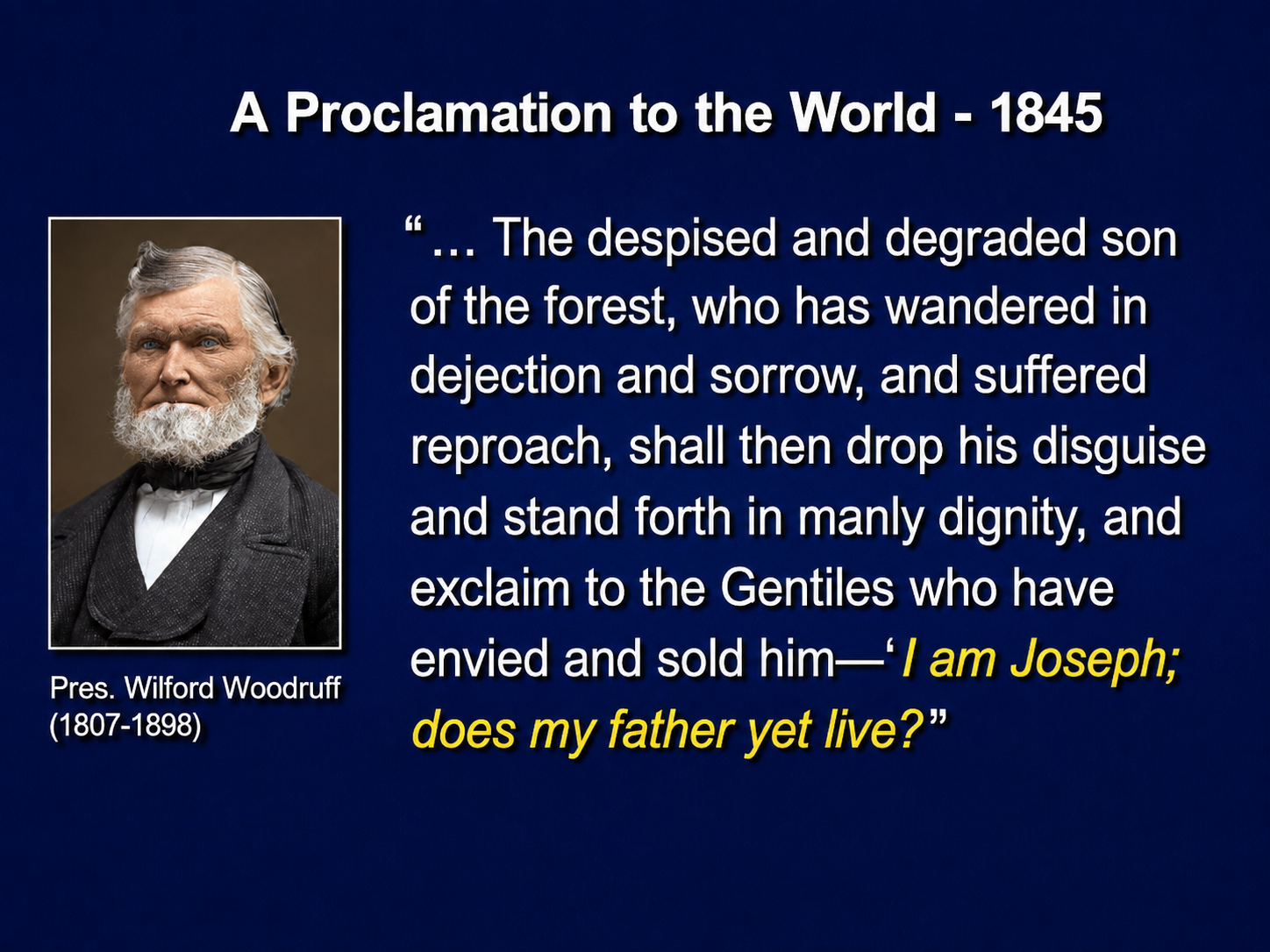
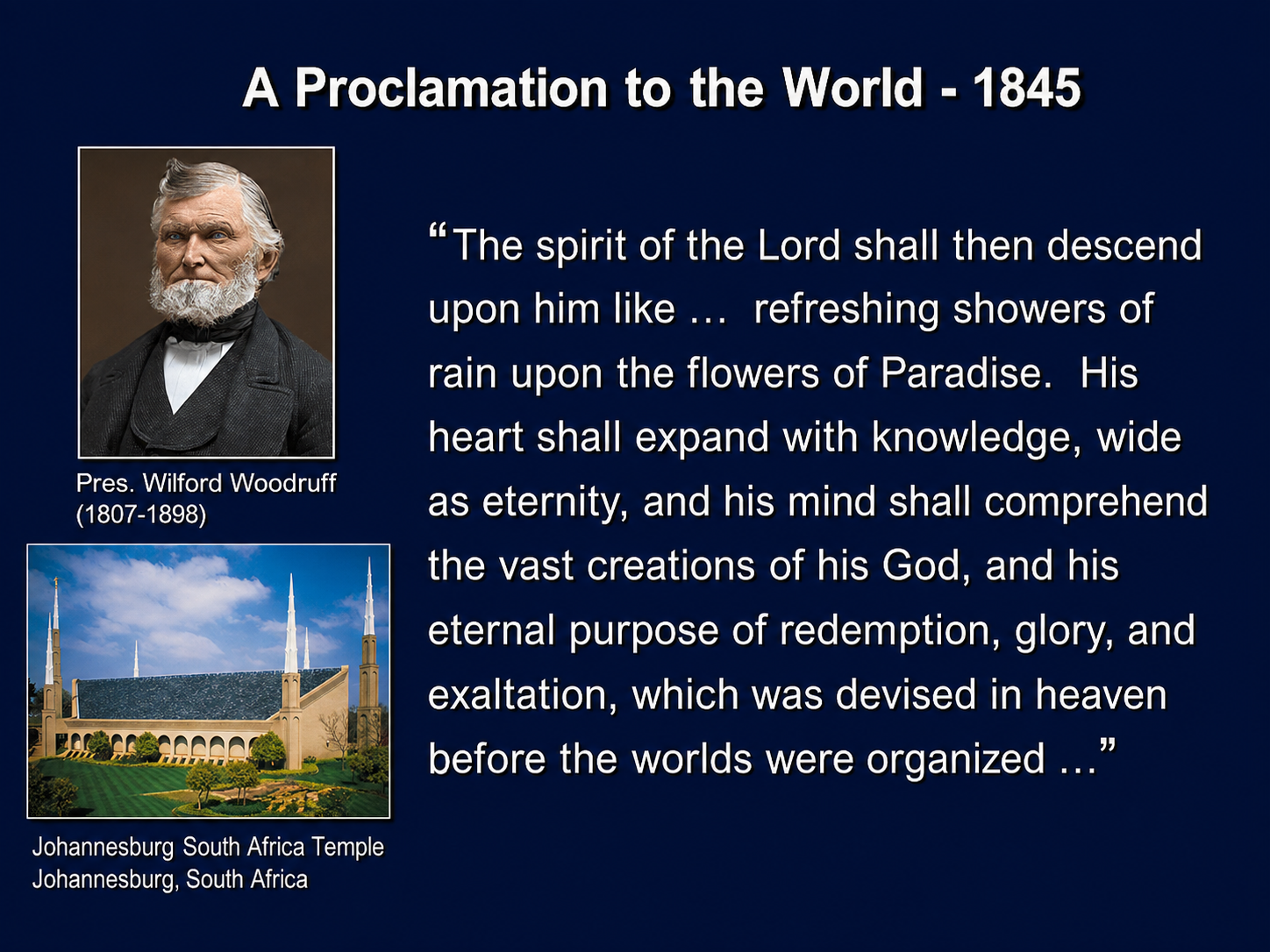
There is a great significance in having these temples operating in our days. Their presence in Equatorial Africa seem to expand the meaning and applicability of the beautiful prophecy included in a solemn proclamation to the world written by then-Elder Wilford Woodruff and endorsed by the Twelve Apostles in 1845:

“The despised and degraded son of the forest, who has wandered in dejection and sorrow, and suffered reproach, shall then drop his disguise and stand forth in manly dignity, and exclaim to the Gentiles who have envied and sold him—‘I am Joseph; does my father yet live?’

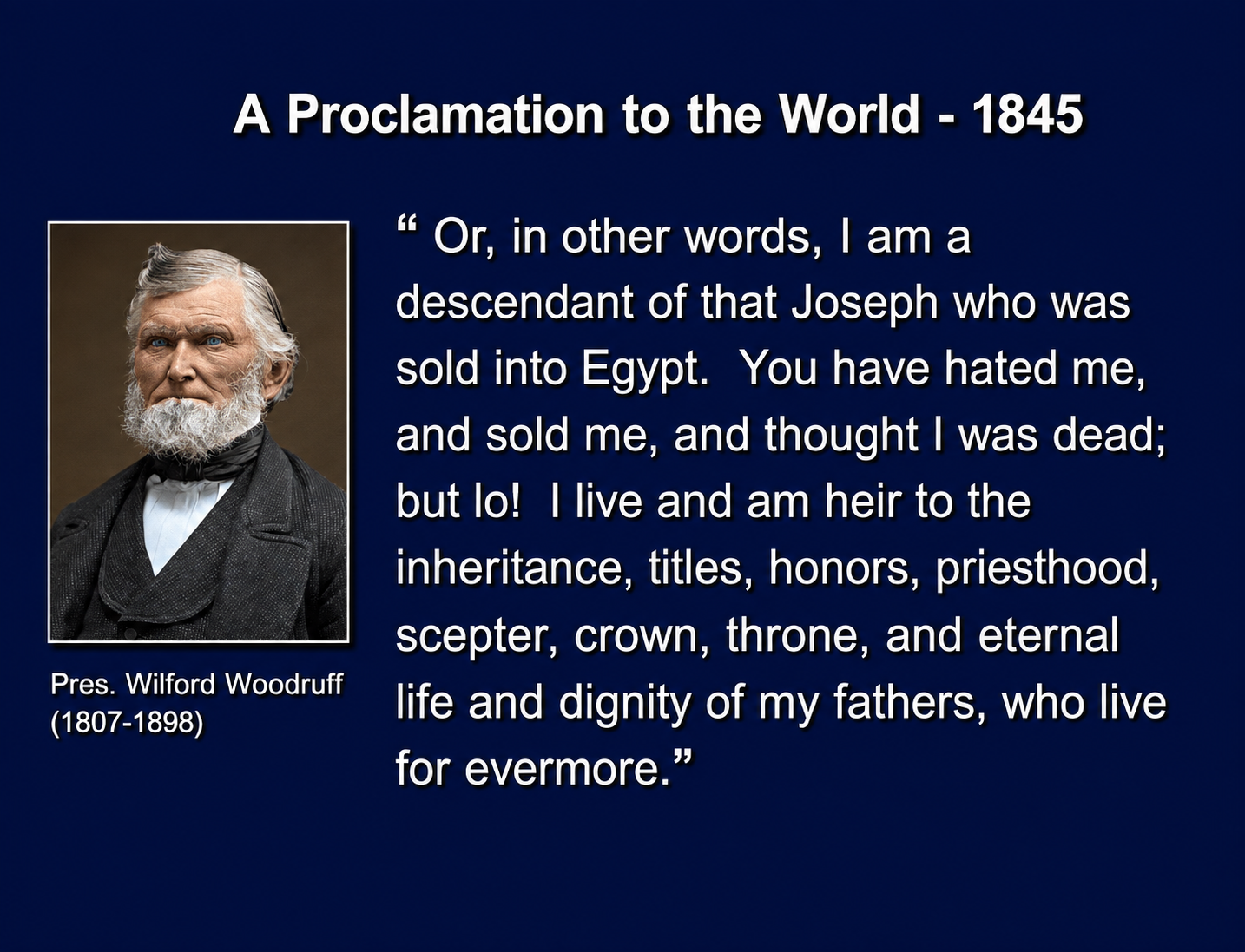
“Or, in other words, I am a descendant of that Joseph who was sold into Egypt. You have hated me, and sold me, and thought I was dead; but lo! I live and am heir to the inheritance, titles, honors, priesthood, scepter, crown, throne, and eternal life and dignity of my fathers, who live for evermore.”

Temple Promises

“He shall then be ordained, washed, anointed with holy oil, and arrayed in fine linen, even in the glorious and beautiful garments and royal robes of the high priesthood, which is after the order of the Son of God; and shall enter into the Holy of Holies, there to be crowned with authority and power which shall never end.

“The spirit of the Lord shall then descend upon him like the dew upon the mountains of Hermon, and like refreshing showers of rain upon the flowers of Paradise.

His heart shall expand with knowledge, wide as eternity, and his mind shall comprehend the vast creations of his God, and his eternal purpose of redemption, glory, and exaltation, which was devised in heaven before the worlds were organized; but made manifest in these last days, for the fullness of the Gentiles, and for the exaltation of Israel. He shall also behold his Redeemer, and be filled with His presence, while the cloud of His glory shall be seen in His temple.”11

“Our Father Joseph Was Also Sold as a Slave”

For many years I had a somber thought in my mind and I’m going to share something very personal with you, something I never disclosed in public before.

I have the thought, the somber thought, that my existence and all the blessings and privileges I enjoy today were the result of some of my ancestors being brought from somewhere in Africa as slaves to a life of horrible suffering and abuse by the hands of others of my ancestors.

But then one day I remembered that our father Joseph was also sold as a slave.

My recent ancestors were no different than Joseph. Joseph also suffered horribly when he was sold to the Midianites and later to the Egyptians. My father Joseph knows what it means to be a slave. But because of the blessings of God, and because of his faithfulness, the Lord placed him as the second in command in Egypt.

“I Am Joseph, Does My Father Yet Live?”

I don’t have any such expectations, of course, since I’m not running for political office or anything. But if I am faithful, I’ll have those thrones, principalities, dominions and exaltations promised to my wife and me when we were sealed in the temple almost three decades ago.

If my children and all of us do our part and live faithfully we will have those blessings as well. And together we will be able to stand and ask, “I am Joseph, does my father yet live?”

And then we will claim all our blessings, all the honors, all the prerogatives and privileges of the holy priesthood in the kingdom of heaven. Blessings we can’t fully understand at this time, but enough for all of us and billions and billions of our brothers and sisters.

A Testimony of the Restored Gospel

I don’t know if my words will make a whole lot of sense to some; I wish I had far more eloquence. But I can tell you this much, that I know that The Church of Jesus Christ of Latter-day Saints is the only true and living church on the face of the earth, that it is led by living prophets, that Joseph Smith was a prophet of God.

There are many things we don’t understand, and some may be hard to bear, but this is the place.

There are many good churches in the world, many great philosophies that provide varying measures of intellectual or spiritual satisfaction to billions of people.

But in The Church of Jesus Christ of Latter-day Saints

  • we have the power of the priesthood,
  • the oracles of the Lord, his living prophets,
  • the ordinances

That can prepare us to once again enter the presence of God, clothed in immortality and eternal life, to live forever with our fathers Adam and Abraham and Joseph.

I testify that these things are true and that this is part of the true gospel of Jesus Christ.


Questions and Answers

Q: Are you a son of Elder HelvÈcio Martins? If so, would you recount President Kimball’s promise to him repeated by President Faust.

Martins: Yes, I am the son of HelvÈcio Martins. The “H” stands for HelvÈcio. I am Marcus HelvÈcio Tourinho de Assis Martins. But even in Brazil it’s too long a name, so I go with Marcus H. Martins.

My father was a great man. One of the greatest men I’ve known. He passed away in May of last year. Days before I was going to visit him in Brazil we had a double whammy in our family.

My mother-in-law passed away when we were heading to Brazil for my in-laws’ Golden Anniversary. Their 50th wedding anniversary—and she passed away six days before that. And when we got there, and were visiting with my father-in-law, three days later my father passed away.

President Kimball’s Promise to HelvÈcio Martins

The promise that is being asked here, the first encounter my father had with President Kimball was in 1973. I don’t know if his autobiography is still in print—you have in greater detail in his autobiography—but Pres. Kimball told him that the keyword for him was faithfulness.

That if he would remain faithful he would receive all the blessings of the gospel someday; this was 1973. 12

That same promise was repeated by Pres. Kimball himself in 1977 at the time of the laying of the cornerstone of the Sao Paulo temple. In those days we laid the cornerstone about one year before the dedication of the temple and Pres. Kimball visited with my father.

It was kind of an interesting situation how it happened. My father gives details, a really neat experience, and Pres. Kimball asked,

“Do you remember what I told you years ago?”

My father said,

“Yes, President, I remember.”

Of course in 1973 when they met Pres. Kimball was the President of the Quorum of the Twelve. It was just a few months before Pres. Harold B. Lee passed away. So the second encounter, in 1977, Pres. Kimball was the President of the Church then.

Should the Church Apologize for the Priesthood Ban?

Q: Do you think the Church should admit the ban was racist and apologize so we can move on?

Martins:

I gave an interview to KSL in ’90-something. I told at the time, and I still feel, that nobody needs to apologize for anything.

You see, the Church as an institution is governed by revelation. A revelation was received on the priesthood in 1978. It was not received earlier.

We have, and I saw the book out there, David O. McKay and the Rise of Modern Mormonism by Gregory A. Prince and Wm Robert Wright. Take Pres. David O. McKay for example. The data that we have shows that he personally was inclined to get rid of the ban. But as a prophet he must inquire of the Lord and the answer was: “Not now.”

We have some evidence that Pres. Harold B. Lee himself, at one point as the President of the Church, also considered the issue. And also the answer to him was, “Not now.”

So no, I don’t think there should be any apology.

You see, I don’t have a problem with the ban. If the Lord were to tell Pres. Hinckley to take the priesthood away from Blacks or from Asians or whatever I would not have a problem. For one thing I wouldn’t have to go home teaching every month! (Laughter) I love home teaching! My father spoke about home teaching in General Conference.

The Ban and Its “Pseudo-Explanations”

The ‘pseudo-explanations’ for the ban were human attempts to try to explain the ban. I think they were way off mark. Now some among us, even today, harbor racist feelings.

You see, conversion is not really a destination, it’s a process. And we can be converted to a lot of things in varying degrees. So to be converted to the notion that

“We are all one worldwide family—that we are true literal brothers and sisters.”

Conversion to that may take a longer time with some people than with others. And I’m not here to judge anyone.

So, should the Church admit that the ban was racist? I don’t think the ban was racist. But unfortunately, it provided a pretty good cover to whoever harbored racist feelings. For them to continue to say “Well, I kind of have a religious justification for that”. Too bad, it happened. As I said, it’s a fact in history.

And no, I don’t think anybody should apologize. Yes, I would love to hear Brigham Young’s explanations. And John Taylor’s explanations. But they are not available for comment right now. (Laughter)

I mean, I’m in no hurry to go to the spirit world and have a nice old chat with them. So for me, I’m just moving on and this is past. It’s history—and it doesn’t hurt me at all.

Baptisms for the Dead Before 1978

Q: Were Black members able to do baptisms for the dead before June 1978?

Martins: Theoretically, yes. But if I had gone to any of my bishops or stake presidents at the time. I don’t think any of them in Brazil would have signed a temple recommend for me to do baptisms.

The first time I came to the United States was in 1976.  I remember being outside of the Los Angeles Temple and the Salt Lake Temple. I had no clue that people who were not endowed even could go do baptisms for the dead. So it was never a question.

Only many years later, looking at a number of sources, I realized theoretically it would have been possible. But a lot of it I think was a matter of interpretation by local ecclesiastical leaders. I don’t know how many of them would be in the mood.

The Influence of Local Admisitrative Details

And then, you know, I’ve been a temple officiator. And as I travel around the world, I see that some administrative details that vary from one temple to another.

So in those days, yes, a Black person with a temple recommend might even be admitted to one temple. And then, travel across state lines and not be admitted to another temple. Because the local presidency would say, “Well, we don’t think this is kosher”. 13

At least there was a possibility. I don’t know of any cases.

But what I remember from the Church is that we didn’t have the facilities for communication like we have today. (We would be talking about the mid-1970s.) So a lot of things were left to the local interpretation.

It doesn’t quite answer the question but that’s what I would say about it.

Thank you very much.

Search topics

Marcus H. Martins; A Black Man in Zion; race and the priesthood; 1978 priesthood revelation; priesthood restriction; Black Latter-day Saints; Black members of the Church; Blacks and the priesthood; race in the restored gospel; Official Declaration 2; history of the priesthood ban; Black Saints before 1978; revelation on the priesthood; Spencer W. Kimball and priesthood revelation; Gordon B. Hinckley and race; David O. McKay and priesthood ban; Harold B. Lee and priesthood ban; Helvécio Martins; Black Latter-day Saint history; priesthood and temple blessings; Accra Ghana Temple; Aba Nigeria Temple; temples in Africa; law of consecration; eternal marriage; moral agency; Nephi-Sam Continuum; spiritual gifts and testimony; faithfulness and priesthood; Wilford Woodruff 1845 proclamation; Joseph sold into Egypt; race and Latter-day Saint history

CES Letter race and priesthood; Mormon Church priesthood ban; Mormon Church racism; LDS Church racism; Mormon Church Black priesthood ban; Mormon priesthood restriction; Mormon Church race history; Mormon Church Blacks and priesthood; LDS priesthood ban explanation; why were Black members denied the priesthood; did Brigham Young ban Black priesthood; Mormon Church 1978 revelation; LDS Church apology for priesthood ban; Mormon racism criticism; Mormon Church racial teachings; Black Mormon history; LDS apologetics race and priesthood

Primary Sidebar

Faithful Study Resources for Come, Follow Me

Subscribe to Blog

Enter your email address:

Subscribe to Podcast

Podcast icon
Subscribe to podcast in iTunes
Subscribe to podcast elsewhere
Listen with FAIR app
Android app on Google Play Download on the App Store

Pages

  • Blog Guidelines

FAIR Latest

  • Come, Follow Me with FAIR – Isaiah 58–66 – Jennifer Roach Lees
  • Come, Follow Me with FAIR – Isaiah 58–66 – Part 1 – Autumn Dickson
  • Jesus Lives to Lift
  • Come, Follow Me with FAIR – Isaiah 50–57 – Part 2 – Autumn Dickson
  • Come, Follow Me with FAIR – Isaiah 50–57 – Jennifer Roach Lees

Blog Categories

Recent Comments

  • Willie Louise Truitt on The Joy of a Covenant Relationship with God
  • Katrina on In memory of Chandler “Chuck” Hendry
  • Nancy Farmer on Come, Follow Me with FAIR – Psalms 49–51; 61–66; 69–72; 77–78; 85–86 – Part 1 – Autumn Dickson
  • Nicko De Leon on In memory of Chandler “Chuck” Hendry
  • Becky Matson on In memory of Chandler “Chuck” Hendry

Archives

Follow Us

  • Facebook
  • Twitter
  • iTunes
  • YouTube
Android app on Google Play Download on the App Store

Footer

FairMormon Logo

FAIR is a non-profit organization dedicated to providing well-documented answers to criticisms of the doctrine, practice, and history of The Church of Jesus Christ of Latter-day Saints.

Donate to FAIR

We are a volunteer organization. We invite you to give back.

Donate Now

Site Footer

The use of the temple in past and current logos and the name "Mormon" are licensed for use by The Church of Jesus Christ of Latter-day Saints.