Introduction
Our next speaker, Barbara Morgan Gardner, is an associate professor of Church history and doctrine at Brigham Young University. She holds a master’s degree in educational leadership and foundation, a PhD in instructional psychology, and did post-doctral work at Harvard University.
She served as an institute director at Boston serving more than 100 universities and colleges in the area. She’s married to Dustin Gardner and enjoys family, learning, teaching, traveling, people, outdoor recreation, and life.
And so the next two sessions, this one and the next one, are with Barbara Morgan Gardner.
Opening Remarks
It’s been so great to be here this last couple of days and spend some time getting to know you and enjoying some of these presentations. So, thank you.
It’s been an interesting experience getting this presentation ready, to say the least. It’s an interesting audience, an interesting time of year, and an interesting time in the experience of Earth. I have taken this PowerPoint presentation and put it through the ringer multiple times.
So, I’m just going to work with you and talk with you and share some personal things. I’ll get into the scriptures a little bit and also look at some research that we’ve been working on.
 The Power of One
I want to start out with this slide, and this is maybe a little bit of a better one I’m going to put here.
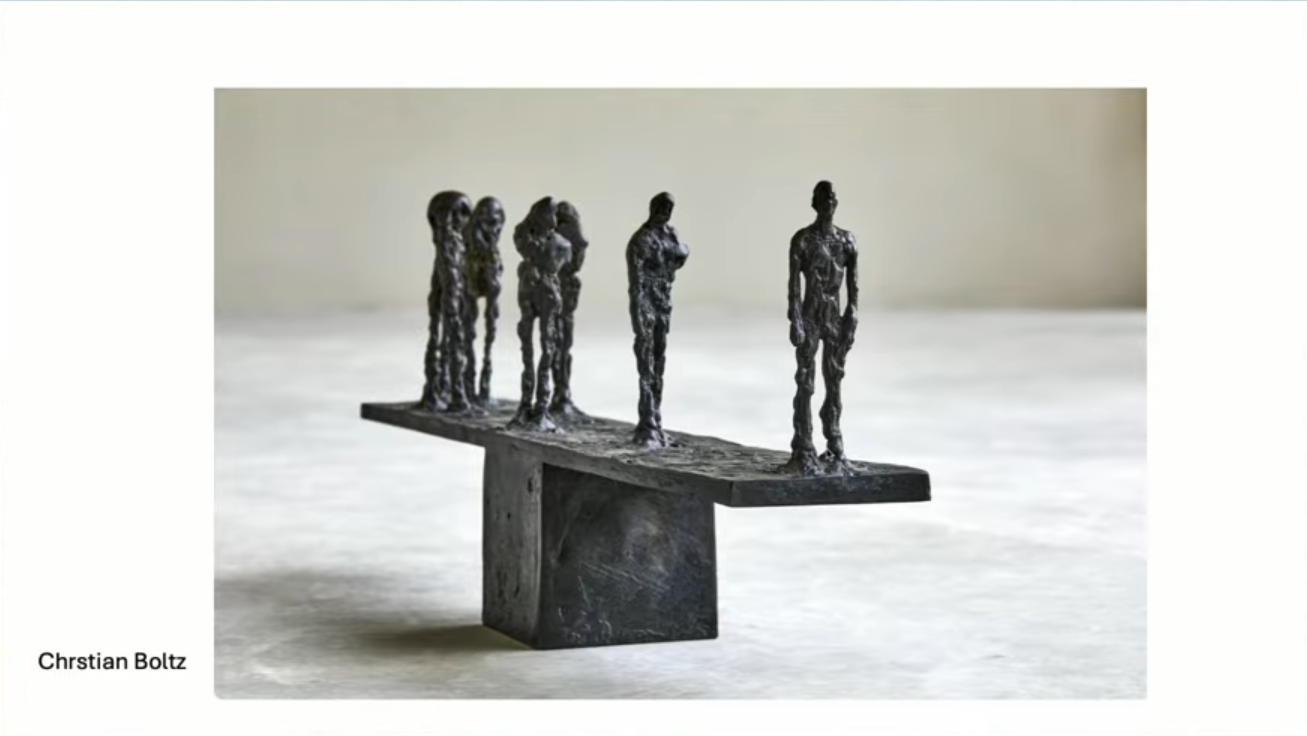
I was in Switzerland a couple of years ago, visiting a family. As I was walking by their table, I looked over and they had a statue by an artist who is also a stake president in the area. His name is Christian Boltz. He is the artist behind this.
It caught my attention. I asked him later what the title was and he said Equilibrium. But when I first saw it, my thought was ‘the power of one’. I was so impressed that it was one person on one side and it seemed to be—as he said—equilibrium and balancing the others.
To me, it was a representation of one woman and or one man who has made and kept sacred covenants with God, and the influence that individual can have on everyone else and in the world. And frankly, the arithmetic may not make sense, but in God’s arithmetic, it does.
Lived Mormon Women’s Experiences
I wanted to start off today with just a few individuals. This is lived Mormon women/Latter-day Saint women experiences.
I want to talk about some in a couple of different countries, and then some in closer times, and then some present today. And then I just want to talk about what we are also seeing in trends.
 Rosina Kun Morell (Switzerland)
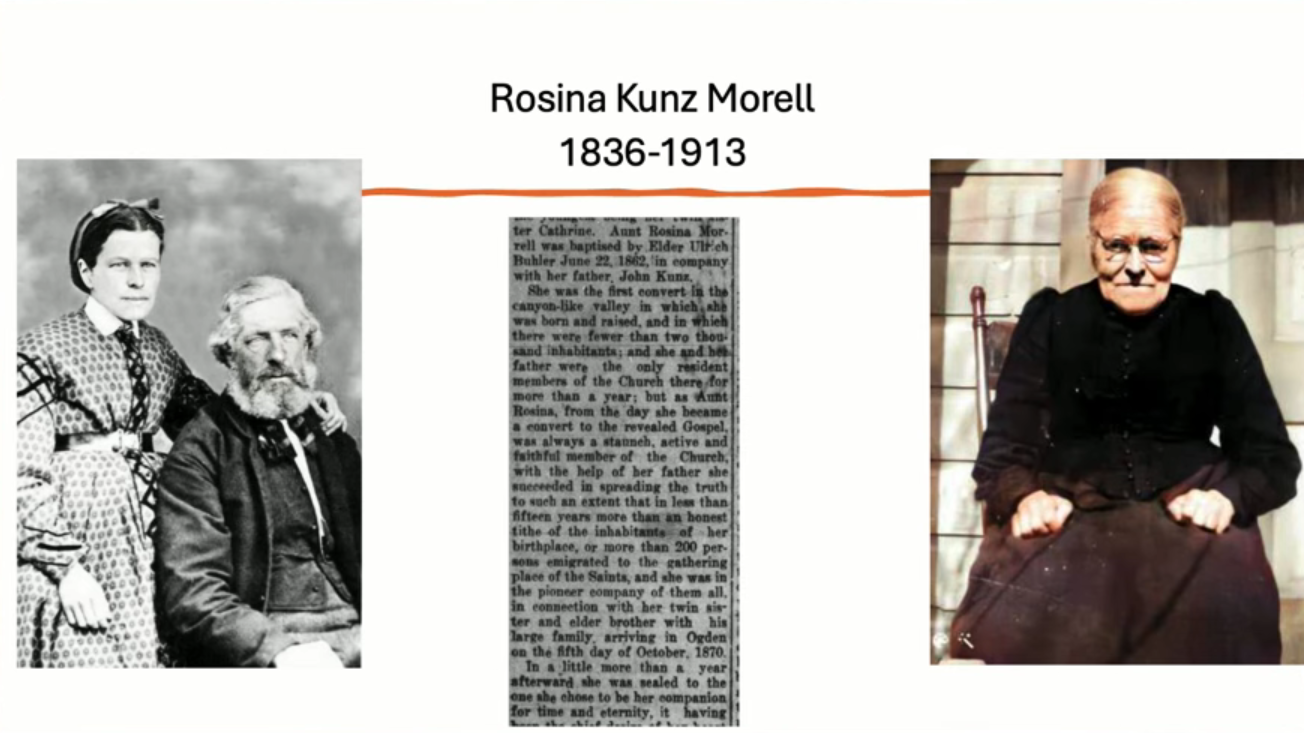
So first of all, this is a story of Rosina Kunz Morell. I’m not going to spend a lot of time on these individuals, but this is a woman who was actually born and raised in Switzerland. I studied this when I was there. This is actually my husband’s great great great aunt or great great aunt.
She was a woman who was a faithful person—praying, seeking truth. She had a spinal problem that made her so that she could not walk. So she was crippled. And she had heard that there were missionaries that were coming and they were in the Switzerland area, and for some reason she believed that these missionaries from the LDS church could heal her.
This is in the 1800s, Karl G. Maeser time. She had her father take her to this place where she found out that the missionaries were there and asked for a healing blessing. And they healed her and she walked. She left Switzerland and she walked across the plains to Utah and was one of the early settlers—the Kunz family—who helped settle Bear Lake.
This is a woman who could not walk who was healed and walked.
 Guadalupe Monroy Mera (Mexico)
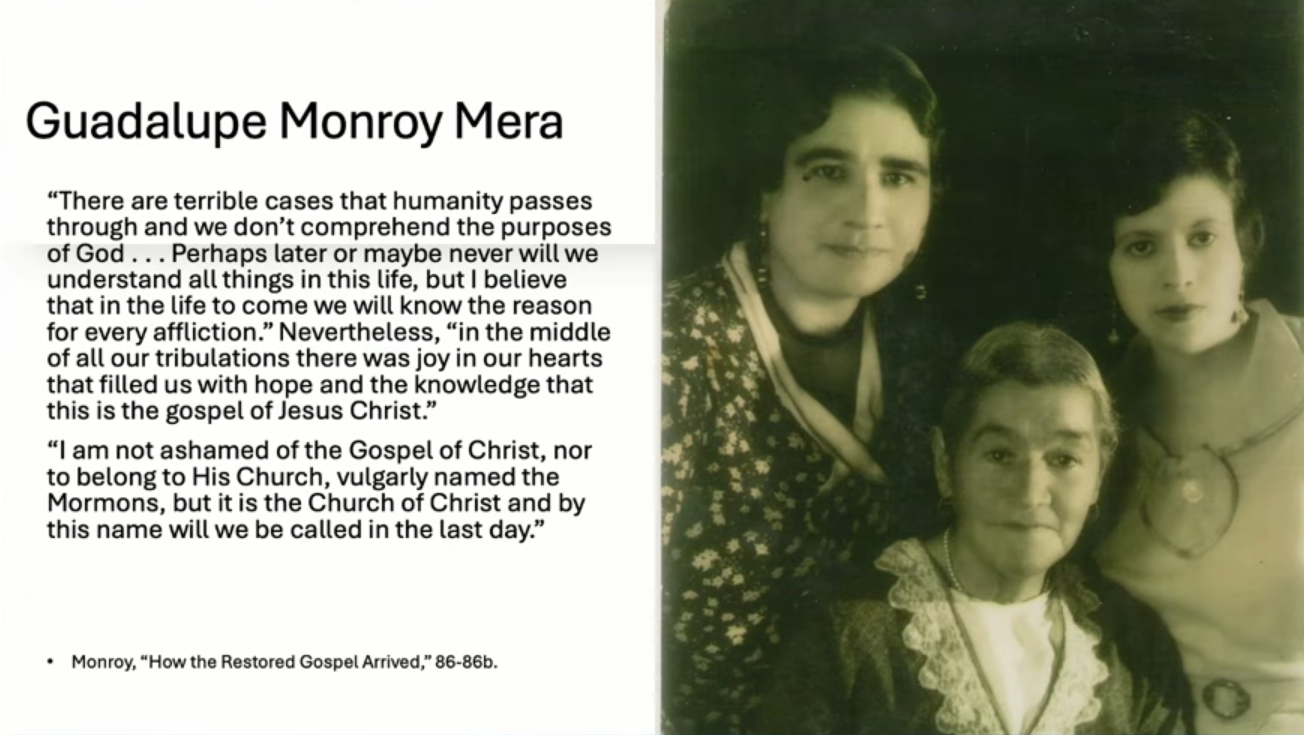
My next story is a story about a woman that I’ve come to love, Guadalupe Monroy Mera. Guadalupe was a woman in Mexico.
She found the missionaries with her sister. They were coming through. Guadalupe listened to a message that they were sharing and she felt that it was true. She and her sister invited the missionaries to their home. Her brother ended up listening to the missionaries, her mother as well, and they all ended up joining the church.
Her brother is more famous than she is. That’s no surprise. But in this case, her brother was the first martyr in Mexico, Rafael Montoya Monroy.
She was in prison when her brother was martyred. And she says this after the martyrdom of her brother. Her brother was martyred because he would not (from what we understand) deny, but also it was the turmoil of the Mexican Revolution.
She says this:
“There are terrible cases that humanity passes through and we don’t comprehend the purposes of God. Perhaps later or maybe never will we understand all things in this life. But I believe that in the life to come, we will know the reasons for every affliction. Nevertheless, in the middle of our tribulations, there was joy in our hearts that filled us with hope and the knowledge that this is the gospel of Jesus Christ.”
At the end of her life, she wrote this:
“I am not ashamed of the gospel of Christ, nor to belong to his church, vulgarly named the Mormons, but it is the church of Christ, and by this name we will be called in the last day.”
 Eliza R. Snow (United States)
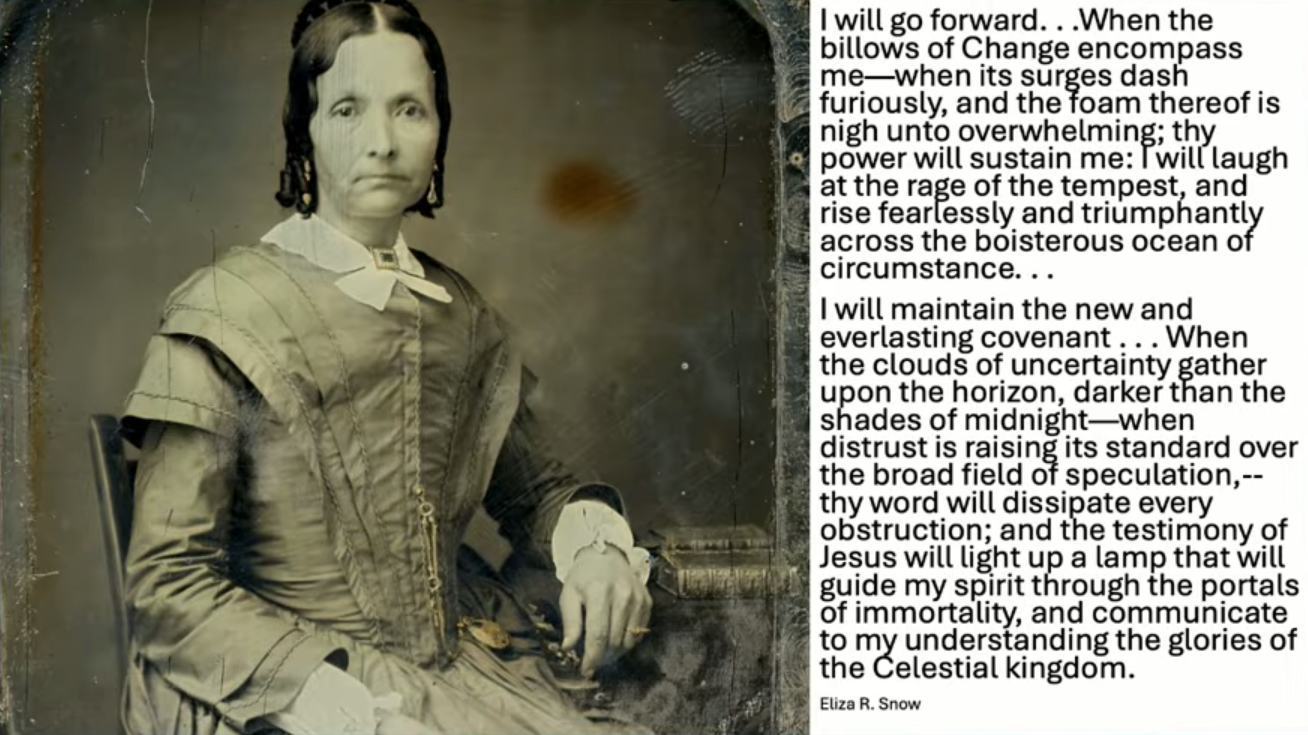
The next person that I would just like to remind us of is Eliza R. Snow. So we have Switzerland and we have Mexico; we have the United States. We have, again, the 1800s—Nauvoo era—and then coming across the plains.
We know enough about Eliza R. Snow that I won’t go into a lot of detail, but I want you to listen to what she says about the difficult trials she has in her life:
“I will go forward when the billows of change encompass me. When its surges dash furiously and the foam thereof is nigh into the overwhelming. Thy power will sustain me: II will laugh at the rage of the tempest and rise fearlessly and triumphantly across the boisterous ocean of circumstance.
I will maintain the new and everlasting covenant. When the clouds of uncertainty gather upon the horizon, darker than the shades of midnight, when distrust is raising its standard over the broad field of speculation—thy word will dissipate every obstruction.
And the testimony of Jesus will light up a lamp that will guide my spirit through the portals of immortality and communicate to my understanding the glories of the celestial kingdom.”
These are Latter-day Saint women. These Latter-day Saint women were early pioneers in their own right and in their own countries.
Rosina Kunz and Community Influence
I find it fascinating that Rosina Kunz was coming from a society where there were 2,000 people in her community. Two hundred of them followed her and her family to Idaho and Utah. Two hundred. As it says in her obituary, the tithing of the people was required of Rosena.
 My Own Story and My Mother
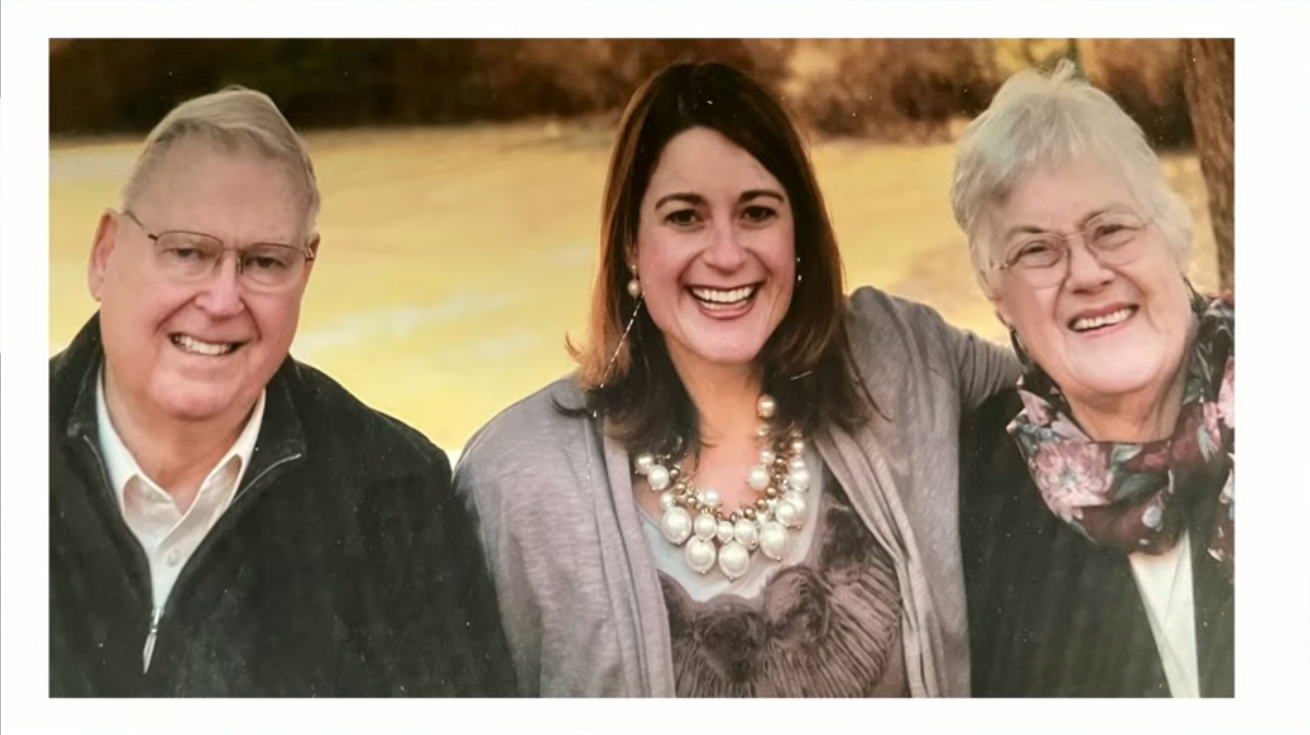
Now my own story perhaps. When my mom was dying of cancer, one day we were both asked to speak together just a couple of months before she passed away, and she was going to talk about—I’m sharing this story for context.
My mother was the woman who was in the airport with President Kimball, and President Kimball helped her and helped her get through a very difficult situation. It saved—frankly it saved—her life and it saved the life of my brother as well.
So, she was carrying this child. What many people don’t know about this story is she and my dad had sold everything. They were BYU students. They had no money. My mom was a music major at the time, went into elementary education. She sold all of her instruments. They sold everything they had and moved away because she had had five miscarriages and one stillborn child. And they felt like they needed to have a family. So, they left BYU.
My dad drove the junker and my mom got on an airplane and flew with the money that they had. They stopped in the airport. President Kimble helped them. Many of you know that part of the story, although there’s a lot more to it. And my mom went on her way.
“Was It Worth It?”
Long story short, at this moment before she passed away, I said to her, “Mom, was it worth it? Like, you gave up everything. You were a valedictorian. You were brilliant. Was it worth it?”
And I will never forget her such faithful and loving response: “I don’t know, Barb, are you?” so obvious! I hope you can see that—this is a picture of my mother shortly before she passed away of brain cancer. This is me the day after my (now-husband, but at the time) fiancé broke up with me. This is my dad.
We are three very happy people going through a very difficult situation. And how is it possible? And is it worth it?
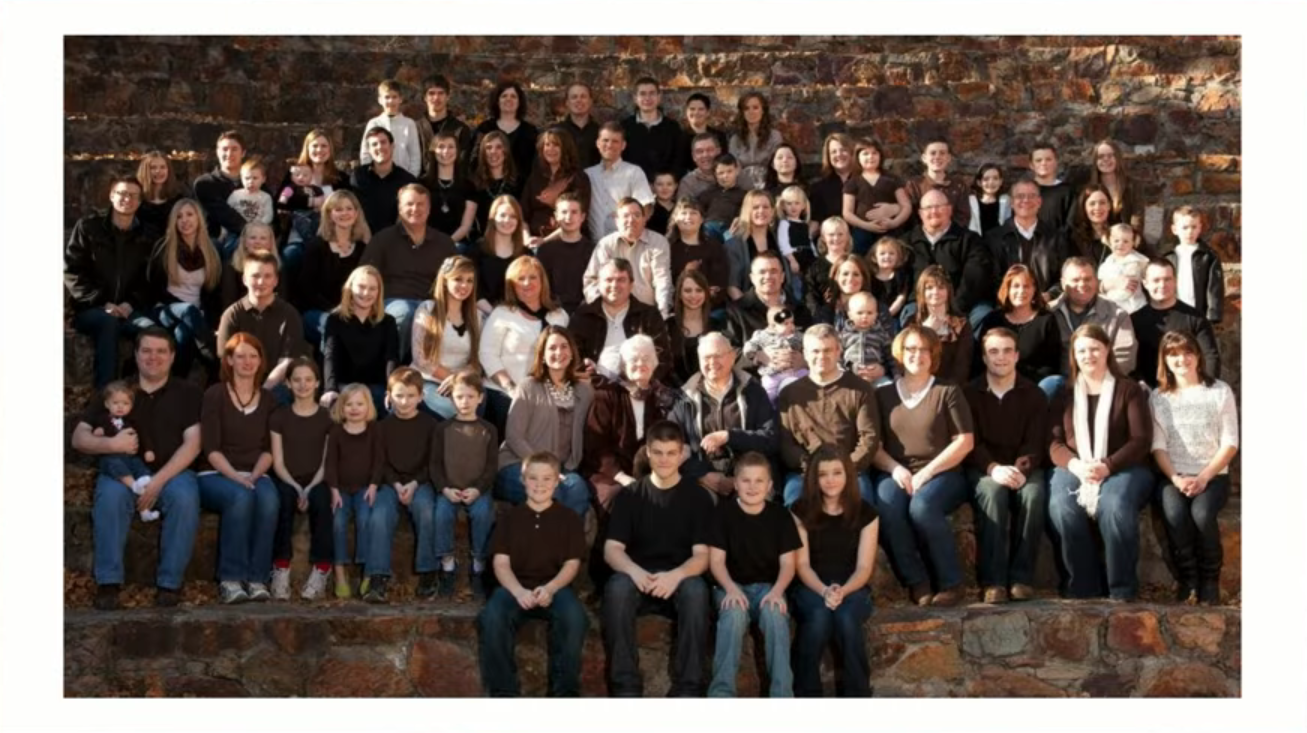 “I don’t know. Is it worth it? I think it is. I know it is.”
- And is this worth it? Yes, it is.
- And are there difficult times? Yes.
- And do we each have our own trials? Yes.
- And is life not fair for everyone? Yes.
A Conversation About My Future
I remember as my mother was passing away, I said to her, “Mom, just so you know, if I ever get married and I start having children, I’m going to quit my job and—and—and I’m just going to do everything that you did. I’m going to have my 13 children and I’m going to adopt 20 more from all over the world and I’m just going to do everything you did.”
And she looked at me, literally passing of brain cancer, and said, “Barb, I don’t think you’d be a very good mom if you’re staying at home all the time.”
And then she said, “But I need you to know something. I had a dream recently. You had two children. You were married and you were still happy. You were still happy.” Insinuating an understanding that she knew—as a single individual going through some difficult times—I was still happy.
She understood as she was passing away from cancer and I was there that we were happy. Happy because of the gospel of Jesus Christ and happy because of the Savior himself. We knew –both of us –in whom we had trusted.
Why Were They Happy?
There are so many women in the history of the church and so many women in the history of the scriptures that we could look to and say: Why were they so happy? Why did they keep going on? Why didn’t they quit? Why didn’t they give up? Why didn’t they disaffiliate? And that’s the word that it seems like we’re using today.
Women Disaffiliating from the Church
I have been doing a study right now—as well as I recognize many others are—on reasons why women are disaffiliating from the church. And yes, the numbers are painful.
As a religion professor at BYU, as I watch my students, I think constantly about their next few years. As the institute director in Boston, working with seminaries and working at MIT and Harvard and Wellesley, I looked at those girls carefully and recognized that we were losing a lot of them. A lot of these young women—but there were some who stayed, and they were powerful, strong, healthy, wise, brilliant women.
I was serving as a chaplain. I had a PhD. I had a responsibility to live up to my covenants, and I did, and I expected them to as well. But it was hard for many of them.
Current Trends
So, we’re seeing some current trends today. And I so appreciated what we heard from Aaron (Sherinian) on Wednesday night about these wonderful trends about how many temples are being built throughout the world, how many missions are going on missions, how many new convert baptisms, how great the educational system is.
And that is all wonderful and it’s fantastic. And I’m still concerned about the people who are leaving. And I think it’s healthy to see both sides. I think it’s fair to say we are losing a lot and it’s also fair to say that this is a time of glad tidings and we can be real to both.
What the Research Shows
For me personally, and some of the research that we have been doing, we see that there really are more women leaving the church than men currently. That’s a shocking experience. That’s a Pew Research—that is some of our data. And I’m not going to put all the data up here right now. I’m just going to simply state it.
We are finding a lot and recognizing that the research is based on education. It’s based on money. It’s based on societal trends. It’s based on a lot of things and why they’re leaving. There’s not one reason they’re all leaving.
As I have been in some ways almost a little bit discouraged by the reasons why women are leaving, I have been extremely encouraged and diving deeply into the reasons why women are staying.
Why Women Stay
Without going into too much detail, I will say out of the research that I’ve been looking at, it seems that many of the women—if not all of the women, but most of the women—who are staying are staying because of the sentence I heard from one woman in the airport who told me that her husband had left the church. Her son was practicing a gay lifestyle. Her daughter was angry with the church.
And I said to her, “Why are you staying?” and she said, “Because Jesus is the Christ and this is his church.” That’s why she’s staying.
And I hear that over and over and over again from women who stay and who align themselves with the Lord from all walks of life—their alignment with God.
Article With Jenet Erickson and Justin Dyer
I wrote an article with Jenet Ericson and Justin Dyer recently, and it was published in the Deseret News, and I wanted just to read to you in this case some of the research that we have found in this article.
So here it goes. I’m going to read parts of it.
Media Portrayals of Latter-day Saint Women
There is a reason the Washington Post called 2024 the year of the Mormon woman. You don’t have to look far to see a significant spike in media attention from Netflix to X to Hulu.
You also don’t have to look far to see the negative distortion—from portraying oppressed and abused sister missionaries in the Hollywood horror movie Heretic to the drama and dysfunction in The Secret Lives of Mormon Wives. All of this sells better, of course, if it appeals to the art of the tabloid and reinforces myths and misperceptions.
At best, it seems Latter-day Saint women are portrayed as somewhat weird, unhappy, oppressed women in emotionally distant marriages with little meaning, purpose, or decision-making in our lives. The image may seem unrecognizable to those of us who are Latter-day Saints.
What Is Going On?
But why the fascination and distortion? What is going on with Latter-day Saint women?
Pew Research recently made it possible to look more carefully at Latter-day Saint women, including both their experience with faith and their overall well-being. Using a nationally representative sample within the United States, Pew surveyed aspects of religious life previously unexplored. These data offer some insight into how Latter-day Saint women’s lives actually are.
What the Data Shows
Compared with these national portrayals, in a closer look at some of the data, here is what we learned.
First, Latter-day Saint women are significantly more likely than any other religious group to say that religion is very important in their lives. They are also more religious in terms of daily prayer and frequent church attendance, with rates at or above 80%.
The one exception is that Latter-day Saint mothers and Muslim mothers are equal in their percentage who pray daily.
The importance of religious faith appears to be linked to a meaningful outcome. Latter-day Saint women are significantly more likely to report that they consistently feel a deep sense of spiritual well-being. For Latter-day Saint mothers, this percentage is as high as 77%—significantly higher than all other religions except for the Muslim mothers at 75%.
Pew Research recently made it possible to look more carefully at Latter-day Saint women in other areas as well.
Spiritual Peace and Happiness
But this is not all that we have learned. Sixty-eight percent of single Latter-day Saint women indicate that they experience deep spiritual peace and well-being on a weekly basis—significantly higher than the single women of almost all other religions.
Now, on the other hand, only 6% of Latter-day Saint single women say they seldom or never experience deep spiritual peace, significantly lower than most other religious groups.
Latter-day Saints at 35% also have the highest rate of being very happy. In fact, only 5% of married Latter-day Saint women in the sample reported being not too happy—significantly lower than that of other religious groups.
The religiousness of husbands appears to make a difference. For Latter-day Saint wives who have said religion is very important to their spouse, the rates of being very happy are as high as 42%.
Disaffiliation Rates
Some may argue that Latter-day Saint women are doing better because those who are not doing well disaffiliate, but Latter-day Saint women actually have lower rates of disaffiliation than most other Christian denominations.
As I’m saying these and—and I continue to study this—I continue to study this topic. I am extremely aware of women who unfortunately do not follow this. I know that there are women who are struggling. I am extremely aware. There are women who hurt.
A Personal Acknowledgment of Pain
My own grandmother took her life through suicide and it was difficult. But that doesn’t mean that religion caused it. And it definitely doesn’t mean that the Church of Jesus Christ and the Savior made it happen.
In fact, the purpose for my grandmother’s taking of her own life was because my grandfather was forcing her to have an abortion. And rather than taking the life of the child, she took hers too.
It’s a societal problem. It’s not a church problem. It’s a human problem.
What Do We Do?
So then what do we do about it? What do we need to say? What do we—what needs to happen?
 Understanding the Zeitgeist
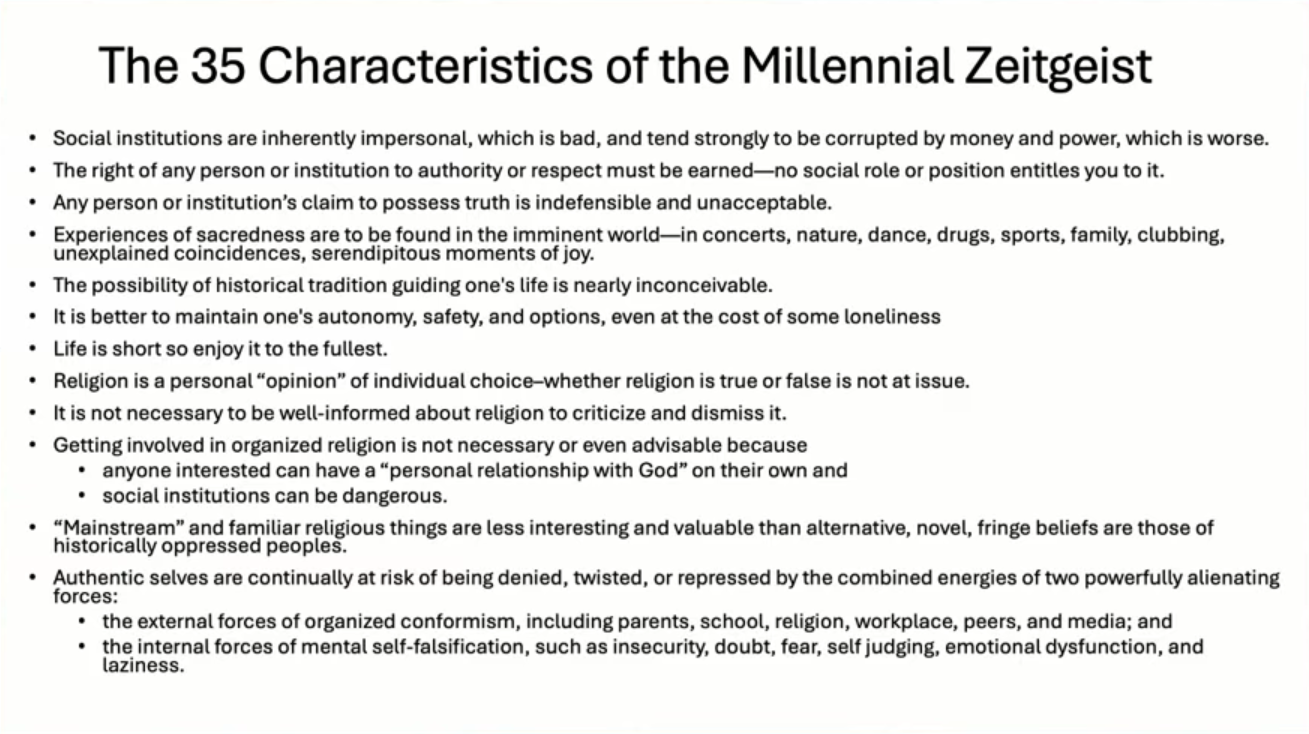
Well, first of all, I think it’s very important that we understand a little bit about the zeitgeist. I’m not going to go into too much detail about zeitgeist, but the general moral—and what is important to a generation of people—and specifically we’re looking at millennials today.
The millennials are leaving at the highest rate, especially millennial women. So what is being taught at this zeitgeist that we may not completely understand?
I just took a few of these points of the zeitgeist. So this is what the generation of millennials tend to and are usually encompassed in and believe and are soaked in. I just did a few of the 35.
Ideas Millennials Are Soaking In
Social institutions are inherently impersonal, which is bad, and tend strongly to be corrupted by money and power, which is worse. So this is the philosophy of the—this is the philosophy of the millennials for many of them today. They’re soaking in it. They don’t even know they’re soaking in it. It’s just who they are.
The right of any person or institution to authority or respect must be earned. No social law or position entitles you to it.
Any person or institution’s claim to possess truth is indefensible and unacceptable.
Experiences of sacredness are to be found in the immanent world—in concerts, nature, dance, drugs, sports, family, clubbing, unexplained coincidences, serendipitous moments of joy.
Do you see why this may be difficult for a woman and a young man living in this age, believing these things, to stay strong in the church if society is teaching these things and this is what everyone around them believes?
Additional Aspects of the Zeitgeist
The possibility of historical tradition guiding one’s life is nearly inconceivable. They believe that it is better to maintain one’s autonomy, safety, and options even at the cost of some loneliness.
Life is short, so enjoy it to the fullest.
Religion is a personal opinion of individual choice. Whether religion is true or false is not an issue. It is not necessary to be well-informed about religion to criticize and dismiss it.
Getting involved in organized religion is not necessary or even advisable because anyone interested can have a personal relationship with God on their own—and social institutions can be dangerous.
Mainstream and familiar religious things are less interesting and valuable than alternative, novel, fringe beliefs or those of historically oppressed peoples—including stories of women.
The Battle Millennials Feel
Authentic selves are continually at risk of being denied, twisted, or oppressed by the combined energies of two powerful, powerfully alienating forces:
- the external forces of organized conformism, including parents, school, religion, workplace, peers, and media,
- and the internal forces of mental self-falsification such as insecurity, doubt, fear, self-judging, emotional dysfunction, and laziness.
There is so much more to this. I just chose a few that perhaps might stand out so that you—and all of us together—can perhaps better understand why the battle, what’s going on in our society.
God’s Power, Satan’s Power, and Agency
One of the things that I love about Joseph Smith–History and the Doctrine and Covenants is that it shows God’s power. It shows Satan’s power. And it shows the ability and agency of mankind to choose which power and which society they’re going to follow.
I love in the Doctrine and Covenants—section one of the Doctrine and Covenants—we learn about God’s power and we learn about Satan’s power.
I love in the Sacred Grove, as Joseph Smith is going to the Father, how he talks about how there was this power that Satan had, that it was so strong that he could not talk—until the power of God overwhelms the power of Satan.
And then if you remember, what does he say? What does the Lord say? What is the problem with all these other religions? They deny the power of God.
The Ongoing Battle
It’s a battle that’s been going on since the premortal realm started: in mortality, in the days of Adam and Eve, and continues through today.
But Satan’s getting really, really good at it. And it’s extremely frustrating. But if Satan is getting good at it, then we need to be better.
As President Eyring once said, as the world expects less and less, we need to be expecting more and more.
 Covenants vs. the Zeitgeist
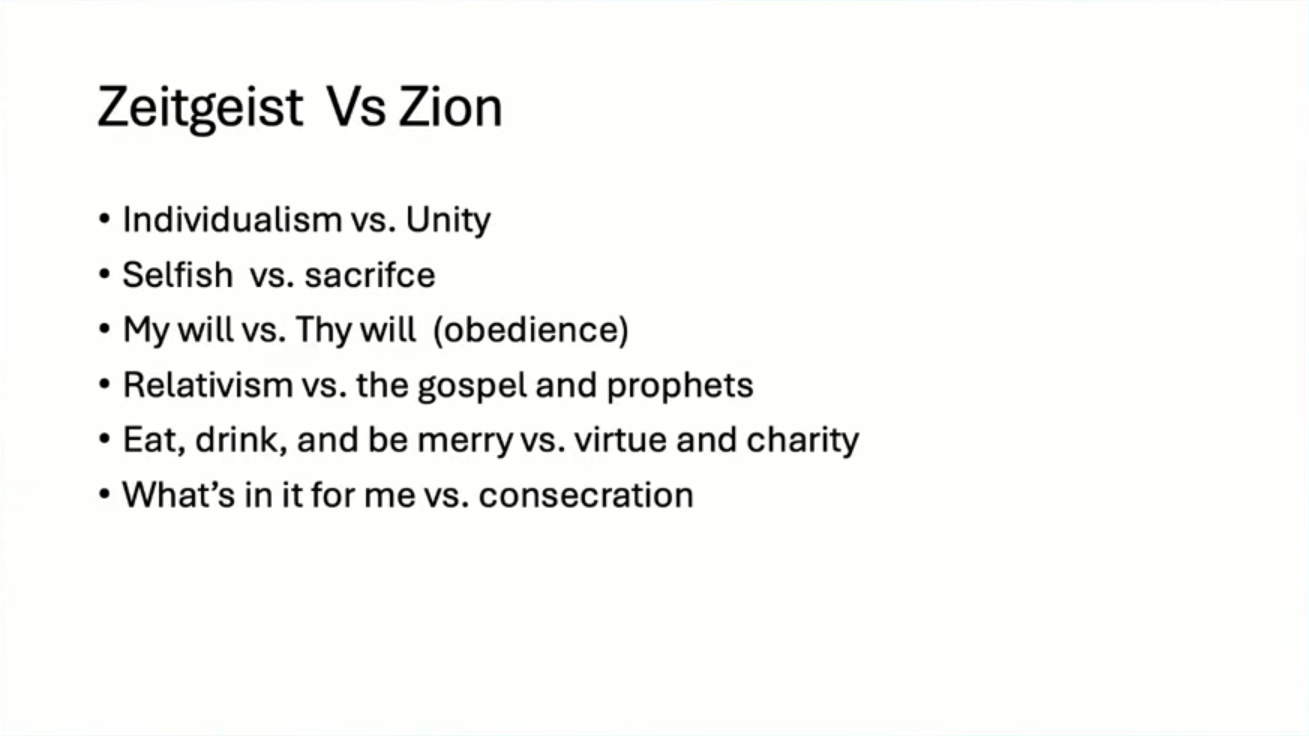
So I want you to think of this in terms of temple covenants:
- Individualism versus Zionism or unity.
- Selfishness versus sacrifice.
- My will versus Thy will.
- Relativism versus the gospel and prophets.
- Eat, drink, and be merry versus virtue and charity.
- What’s in it for me versus consecration.
Do we see that everything that the prophets are asking us to consecrate, to covenant, is literally in direct opposition to what is happening in the world in this generation?
These are the covenants. But yet this is society. There’s a reason it’s hard.
President Spencer W. Kimball’s Prophecy
So what do we need to do? What are we trying to accomplish?
Some of you have heard this video before and I’m going to see if it works here.
(Transcript of video)
In 1979, President Spencer W. Kimball was in the hospital and asked his wife Camilla to read his talk to a general women’s meeting.
Sister Kimball reading:
“Much of the major growth that is coming to the church in the last days will come because many of the good women of the world, in whom there is often such an inner sense of spirituality, will be drawn to the church in large numbers.
This will happen to the degree that the women of the church reflect righteousness and articulateness in their lives, and to the degree that the women of the church are seen as distinct and different in happy ways from the women of the world.”
President Nelson’s Words to the Women of the Church
“My dear sisters, you who are our vital associates during this winding up scene—the day that President Kimball foresaw is today. You are the women he foresaw.
Your virtue, light, love, knowledge, courage, character, faith, and righteous lives will draw good women of the world, along with their families, to the church in unprecedented numbers.
We need your strength, your conversion, your conviction, your ability to lead, your wisdom, and your voices. The kingdom of God is not and cannot be complete without women who make sacred covenants and then keep them. Women who can speak with the power and authority of God.
Whatever your calling, whatever your circumstances, we need your impressions, your insights, and your inspiration. We need you to speak up and speak out in ward and stake councils. We need each married sister to speak as a contributing and full partner as you unite with your husband in governing your family.
Married or single, you sisters possess distinctive capabilities and special intuition you have received as gifts from God. We brethren cannot duplicate your unique influence.
We know that the culminating act of all creation was the creation of woman. We need your strength. I thank you, my dear sisters, and bless you to rise to your full stature—to fulfill the measure of your creation—as we walk arm in arm in this sacred work. Together we will help prepare the world for the second coming of the Lord.”
A Plea to My Sisters
This is not just a feel-good video. This was titled a plea to my sisters. I strongly believe that one of the best things that we can do to help these women and men stay and find the happiness that they want –and find the joy that they want – is to step forward and speak up and speak out.
There was a moment not too long ago where I was sitting in my office and I was just pleading with the Lord. Help us. What do they need? And this simple impression: many of them don’t know where to find the truth because the voices on social media are so loud, and they are not grounded in the gospel of Jesus Christ. And they don’t know where to find the grounded, solid women of the Monroy and the Eliza. They’re not having their ‘mothers who know it’ sometimes.
Section 84 and Priesthood Understanding
Section 84 of the Doctrine and Covenants is a section that President Nelson has pled with the sisters and invited the sisters to study to better understand priesthood. He’s actually invited every sister in this church to study this section.
I just want to point out a couple of things that may help if we truly understood the power that women have on this earth.
We often think of section 84 as a section that is a ‘priesthood section’ and so therefore we tie it to men. I hope we are over that. We’re still working on it. Section 84 is a temple section. Section 84 is extremely important because the Lord has not yet built his temple, but he is building his temple.
The Patriarchal Order
I love—and I’m just going to point out a couple of things—that the Lord starts talking about the temple in section 84 and then he starts talking about the patriarchal order of the priesthood.
I love the patriarchal order of the priesthood. It is what lifts women and men together so they can be united and they can fulfill the purpose and measure of their creation. It helps women and men be on equal ground because both are making and keeping sacred covenants. A covenant-keeping man treats his wife like a queen and stands—as President Nelson says—when she enters the room.
The patriarchal order is not demeaning. It’s the order of godliness. And God is not demeaning. Our heavenly parents are righteous people. It takes two.
The Knowledge of God
I love, also, in this section where we learn in verse 19: “And this greater priesthood administereth the gospel and holdeth the key of the mysteries of the kingdom, even the key of the knowledge of God.”
I love in his talk What I Wish You Would Teach Your Children About the Temple, President Benson reminds all women and men that women have the key of the knowledge of God. This is not a presiding key. It’s a key, like a gift, of the knowledge of God. And what does that knowledge allow them to do? It allows them to know him and become like him. The knowledge of God.
Hardening Hearts and Golden Calves
But what happens to the people of Moses? He teaches them these things. And as you see in verse 23,
“Now this Moses plainly taught to the children of Israel in the wilderness and sought diligently to sanctify his people that they might behold the face of God; but they hardened their hearts.”
President Nelson is teaching these exact things today. And we do have some people that are hardening their hearts. We have some people that are building calves of gold. And some of them are wearing them around their necks and they’re forgetting that the Savior died on the cross. And he’s asking symbolically for us to put on the garment—not just the necklace.
We need his power. And that is what’s going to help people become strong. It’s making and keeping sacred covenants with God—and then shining the light to the entire world in the happiest of ways and using God’s power to help people come back and to help all of us return to live with him – equally.
Thoughts From Relief Society Leaders
So, finally, a couple of thoughts from our recent Relief Society president:
“Our greatest success will be in unleashing the power of our global sisterhood by unleashing the power of women as expressed through faith and conscience.”
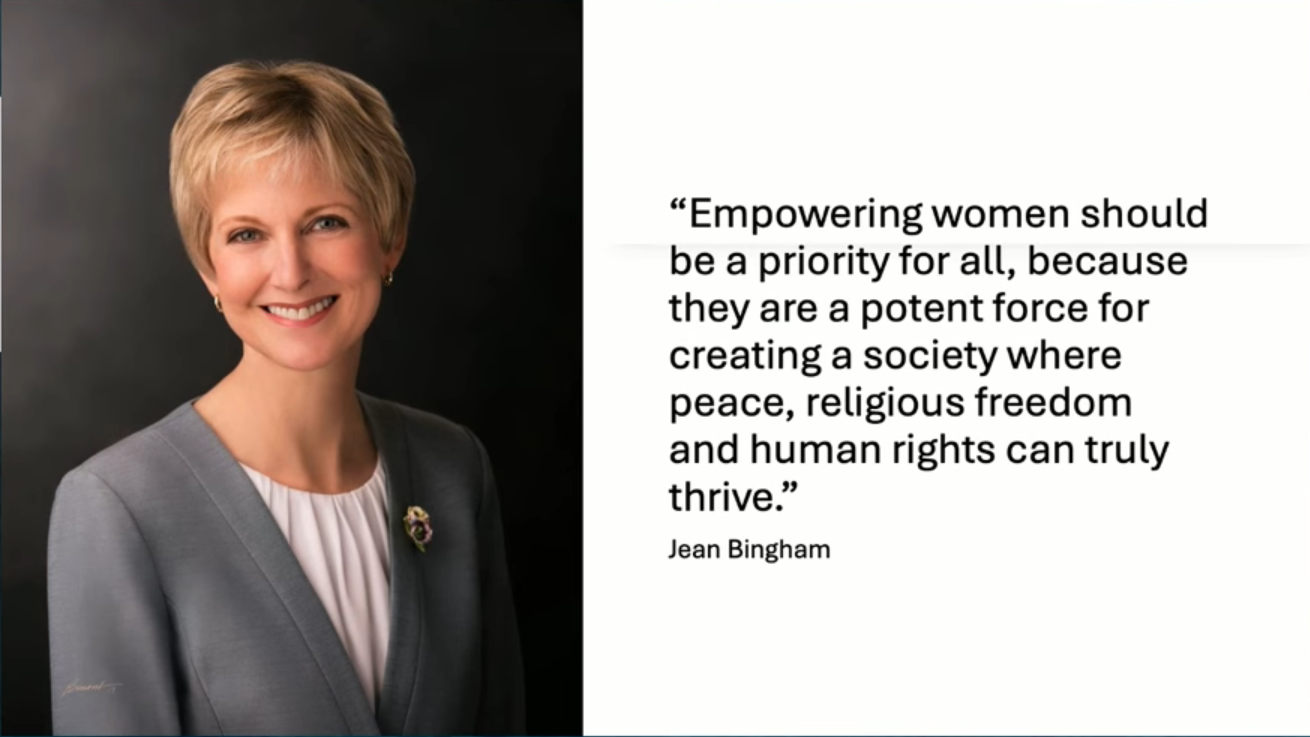 From Sister Bingham:
“Empowering women should be a priority for all because they are a potent force for creating a society where peace, religious freedom, and human rights can truly thrive.”
And then from Julie Beck, who I believe was a woman before her time because she saw things:
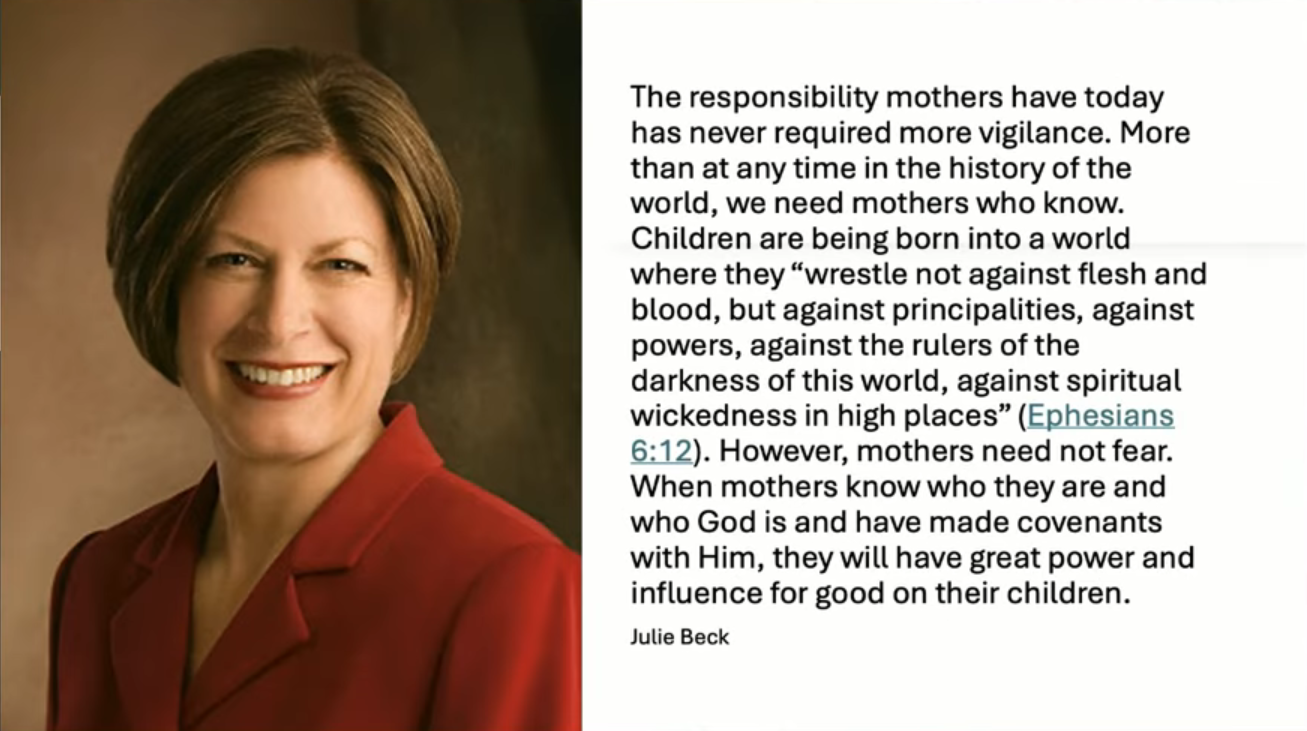
“I think mothers who know are leaders in equal partnership with their husbands. They lead a great and eternal organization. These mothers plan for the future—for their organization. They plan for missions, temple marriages, and education. They plan for prayer, scripture study, and family home evening.
Mothers who know build children into future leaders and are primary examples of what leadership looks like. They do not abandon their plan by succumbing to social pressures and worldly models of parenting.
These wise ‘mothers who know’ are selective about their own activities and involvement to conserve their limited strength in order to maximize their influence where it matters most.”
President Nelson’s Warning
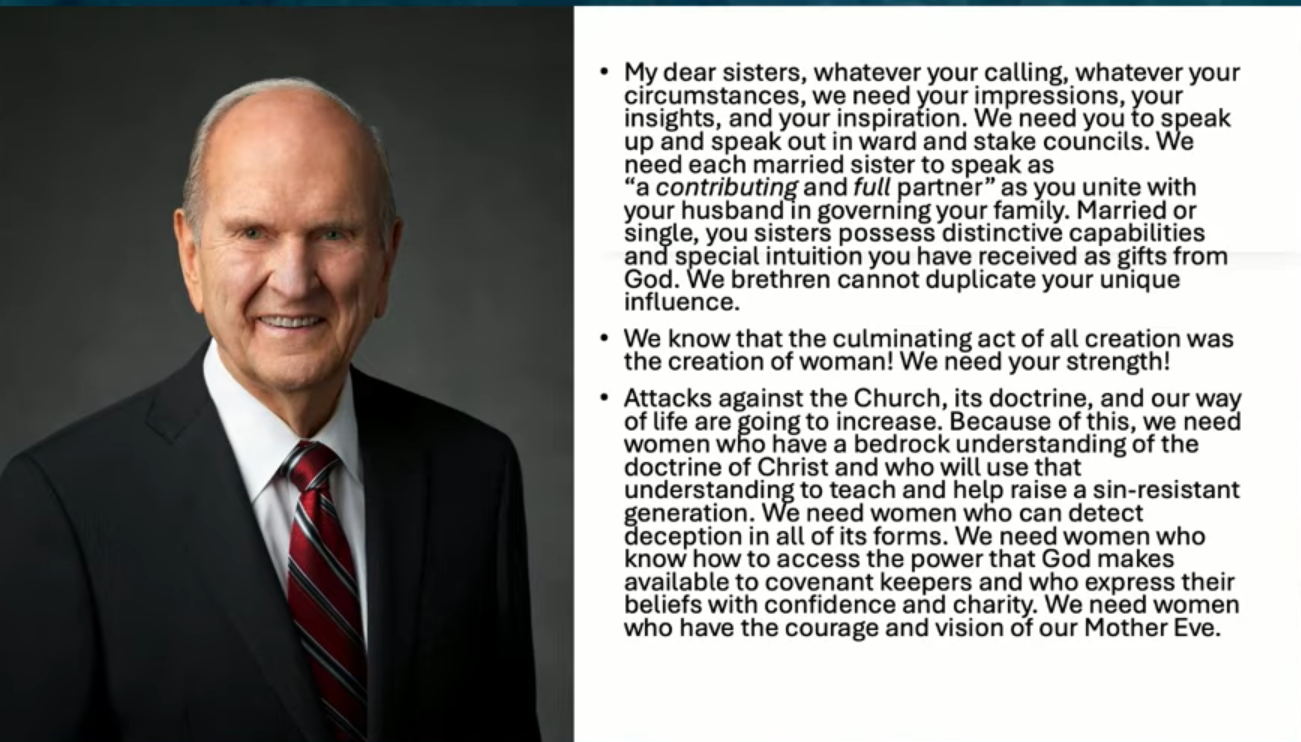 Finally, from President Nelson:
“Attacks against the church, its doctrine, and our way of life are going to increase.”
(He was right. This was 10 years ago.)
“Because of this, we need women who have a bedrock understanding of the doctrine of Christ and who will use that understanding to teach and help raise a sin-resistant generation.
“We need women who can detect deception in all of its forms.
We need women who know how to access the power that God makes available to covenant keepers and to express their beliefs with confidence and charity.
We need women who have the courage and vision of our mother Eve.”
