This guide is not meant to replace the Come, Follow Me curriculum by the Church of Jesus Christ of Latter-day Saints. This is merely a study tool and a helpful guide to aid in your study as you follow along the church’s curriculum. If there are any questions feel free to reach out to us.
We cover some frequently asked questions, include some criticisms that occur often, as well as the answers to them with some helpful resources from our website and of course, the Church’s website. While we cannot address every question and criticism and cannot provide every resource, we hope what we have included in this guide will be helpful to you.
WEEK 1 (December 30-January 5)
Week 1
December 30-January 5
The Restoration of the Fulness of the Gospel of Jesus Christ
“The Promised Restoration Goes Forward”

Today’s Assignment
The Restoration of the Fulness of the Gospel of Jesus Christ; paragraph 1-2
Today’s Assignment
The Restoration of the Fulness of the Gospel of Jesus Christ; paragraph 3
Today’s Assignment
The Restoration of the Fulness of the Gospel of Jesus Christ; paragraph 4
Today’s Assignment
The Restoration of the Fulness of the Gospel of Jesus Christ; paragraph 5
Today’s Assignment
The Restoration of the Fulness of the Gospel of Jesus Christ; paragraph 6
Today’s Assignment
The Restoration of the Fulness of the Gospel of Jesus Christ; paragraph 7-8
Weekly Questions
The Great Apostasy refers to the period after Christ’s apostles were killed, when priesthood authority and key doctrines were lost. These factors suggest a loss of divine guidance and the need for a restoration.
The concept of the Great Apostasy refers to the period after the death of Christ’s apostles when priesthood authority and essential doctrines were lost. This resulted in a widespread loss of divine guidance, which led to significant changes in both the doctrine and structure of the early Church. According to Latter-day Saint teachings, the Apostasy was prophesied by both Old and New Testament figures, including Jesus Christ, who warned of such a falling away (see Acts 20:29–30; 2 Thessalonians 2:1–4).
The evidence of the Great Apostasy can be seen in the lack of continued revelation and priesthood authority, as well as in the proliferation of differing doctrines and practices that did not align with the original teachings of Christ and His apostles. For instance, many of the ordinances of salvation, such as baptism and the conferral of the Holy Ghost, were either lost or altered. Without the priesthood authority, changes were made to the structure of the Church, and many doctrines were corrupted. Latter-day revelation, including the writings of Joseph Smith, affirms the reality of the apostasy and the subsequent need for a restoration.
The concept of the Great Apostasy is a central teaching in Latter-day Saint theology, signifying the period after the death of Christ’s apostles when the original Church and priesthood authority were lost. This loss, according to Latter-day Saints, necessitated a restoration, which is believed to have occurred through Joseph Smith. There is evidence for the Great Apostasy both in scripture and early Christian writings.
Many people have lived and died without knowledge of the gospel of Jesus Christ. The Plan of Salvation allows for those who had not heard of the gospel to be taught after this life in what is known as the Spirit World. Not to mention the Church sends out missionaries all over the world to help spread the gospel to those who haven’t had the chance to accept it yet.
While Joseph Smith’s First Vision answered foundational questions about God’s nature and the need for a restoration, the ongoing Restoration involves confronting and resolving complex questions about history, doctrine, and practice. This reflects the dynamic and unfolding nature of the Restoration, emphasizing continuous revelation, learning, and adaptation.
The Restoration does not claim to provide immediate answers to all questions but invites a process of inquiry and faith. For example, revelations often address immediate needs or concerns, leaving room for further clarification as understanding and circumstances evolve. This process mirrors how the early Church of Christ developed amidst challenges and growing understanding over time.
From a doctrinal perspective, unanswered questions encourage humility, reliance on faith, and the pursuit of divine truth. They reflect the principle that God’s work is vast and ongoing, requiring patience and trust in His timing. This framework supports a broader understanding of the Restoration as a process that integrates human learning, divine guidance, and the unfolding of God’s purposes in a world of complexity.
The Lord always works in continual progression not complete understanding. One example of this is the Word of Wisdom. Although the restoration technically started in 1820, the Word of Wisdom was not revealed to Joseph Smith until 1833. The Lord always has worked “… precept upon precept… line upon line… here a little, and there a little…”
The Restoration of the gospel, initiated by Joseph Smith’s First Vision, demonstrates a divine pattern: answers are given as part of an ongoing process rather than a single event. While the Restoration began with a profound answer to Joseph Smith’s question, the unfolding of further revelations teaches that the gospel is restored “line upon line, precept upon precept” (Isaiah 28:10; Doctrine and Covenants 98:12). This pattern mirrors our personal growth as disciples, emphasizing faith, patience, and continued learning.
Unanswered questions about Church history, doctrine, or practices are not signs of failure but rather invitations to seek further understanding.
This question is a crucial aspect of the Protestant Reformation and Restoration efforts, and many have debated it for centuries. Here are some points that may provide insight:
Both the Protestant Reformation and the Restoration movement in the 19th century claimed to be restoring the original Church of Christ. However, these efforts did not necessarily recover the original Church with all its doctrine, structure, and practices. For instance, the early Christian Church underwent many changes during the Great Persecution under Diocletian in the early 4th century and later evolved into various sects and denominations.
WEEK 2 (January 6-12)
Week 2
January 6-12
Doctrine and Covenants 1
“Hearken, O Ye People”

Weekly Questions
It can be challenging to trust prophets knowing they aren’t perfect, but understanding their role helps. In short, prophets are trustworthy because they are called by God. Their imperfections do not invalidate their divine role. The question of trusting prophets despite their human imperfections is an important one. Latter-day Saints understand that prophets, like all humans, are fallible. They are not considered infallible in their personal opinions or when acting outside of their prophetic calling. However, when prophets speak under the authority of their divine calling, their teachings are trusted as inspired by God. This distinction helps members understand that while leaders may make mistakes or express personal views that are not doctrine, their role as prophets ensures that the guidance they provide for the Church is spiritually sound and ultimately reflects God’s will.
As the First Presidency has taught, only the Lord is infallible, and while leaders may err in their personal opinions, their divine role remains reliable when they speak under inspiration. The Church affirms that the doctrine it teaches is carefully considered and not simply based on the personal views of its leaders. Thus, while mistakes may occur, they do not invalidate the essential role of prophets as messengers of God’s guidance.
The role of prophets in The Church of Jesus Christ of Latter-day Saints, including how to trust them despite their human imperfections, can be a topic of concern for some. However, understanding the nature of prophets helps clarify this issue. Prophets are called by God to guide His people, and their imperfections do not negate their divine role. In fact, the scriptures and teachings of the Church emphasize that while prophets are mortal and make mistakes, they are still chosen vessels through whom God reveals His will for His children.
The Church explains that even though prophets are not infallible, their teachings and guidance are critical for the spiritual welfare of the Church. Trusting in their role as prophets means having faith that God works through imperfect people to accomplish His purposes. The importance of following prophetic counsel, despite human flaws, is underscored by the fact that God’s plan is carried forward through these leaders, and He provides them with the necessary revelation to direct His Church.
The Lord’s call to prophets is rooted in His eternal purposes, and their teachings, when followed with faith, bring blessings and spiritual guidance to those who listen. Trusting prophets involves understanding that while they may err, God’s work continues through them, just as He used imperfect individuals throughout history to fulfill His purposes.
For further insights on trusting prophets, you can refer to the Church’s resources on this topic. Some key articles include “The Role of Prophets” and “Trust in the Prophet”. These offer deeper perspectives on the divine nature of prophetic guidance and how to trust the Lord’s servants.
Source(s):
If Prophets are Fallible, does this make spiritual epistemology unreliable?
This event’s impact on Latter-day Saint doctrine is far-reaching. It is a foundational event that directly informs our beliefs about the nature of God, the importance of the Restoration, and the role of modern prophets. It also shapes our understanding of divine communication, as it underscores the importance of personal revelation.
Joseph Smith’s First Vision holds deep significance for Latter-day Saint doctrine, as it directly impacts core beliefs regarding the nature of God, authority, and personal revelation. The event, which occurred in 1820, was pivotal in initiating the Restoration of the gospel, and it laid the groundwork for several key doctrines.
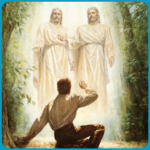
First, the First Vision clarified the nature of the Godhead. Joseph saw two separate and distinct beings, God the Father and Jesus Christ, which was a crucial revelation that corrected the confusion of the time about the nature of God. This understanding of a distinct Godhead—three separate beings in one purpose—remains foundational in Latter-day Saint theology, marking a departure from the traditional Trinitarian view common at the time.
Second, the First Vision established the necessity of restored prophetic authority. Joseph was directly called by God to restore His true priesthood authority, which had been lost after the Great Apostasy. This event set the stage for the restoration of the Church of Jesus Christ through Joseph Smith, establishing the principle that modern prophets are divinely called, just as the biblical prophets were.
The First Vision also highlighted the importance of personal revelation. It affirmed that God communicates with individuals and that personal guidance and direction from Him are available to all who seek it. This principle of ongoing revelation is integral to Latter-day Saint practice and doctrine.
Additionally, the First Vision emphasized Joseph Smith’s unique role as a prophet of the Restoration. He was chosen to bring back lost doctrines and ordinances, fulfilling a divine calling that shaped the future of the Church.
In sum, Joseph Smith’s First Vision is central to the beliefs of the Latter-day Saints, offering clarity on the nature of God, the necessity of restored authority, and the role of personal revelation. The vision is a foundational event that continues to inform the theology and practices of the Church.
The question of how the word of God can be perfect when conveyed through human prophets who are fallible is a nuanced one. Prophets, like all humans, have weaknesses and limitations, which is why divine revelation is expressed through the prophet’s language and understanding. The process involves the prophet’s personal interpretation, which is influenced by their human experiences and context.
In Latter-day Saint doctrine, the perfect nature of divine revelation stands in contrast to the imperfection of human messengers. The prophet is a conduit for God’s will, but their personal experiences and weaknesses inevitably affect the way the message is delivered. However, despite these human imperfections, the message itself is not corrupted. For example, President Joseph Smith acknowledged his imperfections but emphasized that there was no error in the revelations he delivered, which were directly inspired by God.
This distinction is also important when considering the role of modern prophets. They are not infallible, but the Church’s structure and divine guidance ensure that the core doctrines of the faith remain true and untainted by the personal weaknesses of leaders. In fact, the principle that God will not allow His prophets to lead the Church astray does not imply that they are flawless in every respect, but that the Church will not fall into complete apostasy as long as the prophet holds the keys of authority.
This idea is reinforced by scripture, such as Moroni’s counsel in the Book of Mormon to recognize human imperfection while still respecting the divine work carried out through fallible messengers.
WEEK 3 (January 13-19)
Week 3
January 13–19
Joseph Smith—History 1:1–26
“I Saw a Pillar of Light”
Weekly Questions
Different details were given according to the circumstances in which it was told. Looking at all the accounts together gives us a lot of information and makes it “the best documented vision in history.”
The four accounts of the First Vision may seem different, but they are not mutually exclusive. Each was written or dictated by Joseph Smith at different times, for different audiences, and with different purposes, leading him to emphasize certain aspects of his experience depending on the context.
All four accounts agree on the core elements: Joseph prayed for guidance, and through a miraculous vision, he encountered divine beings who revealed important truths. The variations add depth and richness to our understanding, but they do not conflict with one another.
Joseph Smith’s First Vision has significant impact on the Church’s doctrine. Overall, the First Vision is central to the Church’s doctrine, restoring key truths about God, authority, and revelation.
Week 4 (January 20-26)
Week 4
January 20-26
Doctrine and Covenants 2; Joseph Smith—History 1:27–65
“The Hearts of the Children Shall Turn to Their Fathers”

Weekly Questions
While it would have been challenging, Joseph’s strength and experience with physical labor made it a realistic task.
The repetition served to emphasize the message’s importance and prepare Joseph spiritually for his role. Each visit built upon the last, with additional insights provided to help Joseph fully understand his mission. This pattern mirrors scriptural principles where important doctrines are reiterated for emphasis and deeper comprehension.
Joseph’s experiences demonstrate a process of spiritual refinement, not disqualification. Moroni required him to develop humility and self-mastery before he could handle the sacred records. This period of preparation underscores the importance of purity and dedication in fulfilling divine assignments.
When Joseph first attempted to take the plates, he was reprimanded by Moroni for having thoughts of material gain. This moment emphasized that the plates’ purpose was spiritual, not temporal. Over the next four years, Joseph visited the Hill Cumorah annually, receiving further instruction from Moroni. This period served as a time of personal growth, enabling Joseph to develop the attributes necessary to fulfill his divine calling.
