
This guide is not meant to replace the Come, Follow Me curriculum by the Church of Jesus Christ of Latter-day Saints. This is merely a study tool and a helpful guide to aid in your study as you follow along the church’s curriculum. If there are any questions feel free to reach out to us.
We cover some frequently asked questions, include some criticisms that occur often, as well as the answers to them with some helpful resources from our website and of course, the Church’s website. While we cannot address every question and criticism and cannot provide every resource, we hope what we have included in this guide will be helpful to you.
WEEK 44 (October 22-November 2)
Weekly Questions
Historical Context and Challenges:
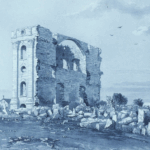
The Nauvoo Saints were under severe persecution, including mob violence, legal harassment, and public outcry. These external pressures made it difficult to raise the funds, labor, and materials needed for the temple and Nauvoo House. The Saints’ resources were drained by these threats and their constant need to defend their rights. Furthermore, after the assassination of Joseph Smith in 1844, the Saints were forced to leave Nauvoo in 1846, before either project was completed.
Despite these setbacks, the Saints demonstrated remarkable faith in their ability to build the temple. Even when facing seemingly insurmountable challenges, they worked fervently toward the completion of the Nauvoo Temple, which was partially finished and dedicated on May 1, 1846, before the Saints’ exodus. During that time, they were able to perform sacred ordinances like baptisms for the dead and initiatory rites, which were essential components of the temple’s purpose. While the building was unfinished, the Saints were able to fulfill the Lord’s command to provide a place for these ordinances.
Spiritual Fulfillment:
The Lord does not demand perfect outcomes from His followers but asks for sincere effort. The Saints’ attempts to build the Nauvoo Temple were seen as a manifestation of their obedience and faith. Even in imperfect circumstances, their work was accepted, and the Lord used the partially completed temple to begin a significant work of salvation for the dead.
This is reflected in other scriptures where the Lord asks for the effort, not the exact outcome (e.g., Mark 12:41–44, the widow’s mite). The Lord promised that as long as the Saints continued in faith, they would receive the blessings of temple ordinances, even if the full physical structure wasn’t completed by the time of their exodus.
Legacy and Continuity of Temple Work:
While the Nauvoo Temple wasn’t completed in the way the Saints initially envisioned, it was the beginning of a long legacy of temple work. After the Saints moved west, they were able to build the Salt Lake Temple, and today, temples are found worldwide. Each completed temple is a testimony that the work the Saints began in Nauvoo continues and has been expanded for the entire world.
Source(s):
The Nauvoo Temple: Destruction and Rebirth
Conditional Covenants and Obedience:
In this section, the Lord lays out a conditional promise, emphasizing that if the Saints do not build the temple, they will not receive the blessings He has promised. This reflects a consistent scriptural pattern in which God’s promises to His children are contingent upon their obedience. Many of the covenants in scripture, both in the Old and New Testaments, have similar conditions. For example, in the Book of Mormon, the Lord often promises blessings for obedience and warns of curses for disobedience (e.g., Mosiah 2:22; Alma 37:13).
The Nauvoo Temple was not just a building, but a key part of the Saints’ spiritual preparation. Without it, they would be lacking the ordinances that were necessary for their eternal salvation. In this sense, the Lord’s command was not arbitrary; it was about ensuring the Saints received the full blessings of salvation, including the performance of temple ordinances. The conditional warning was a reminder that the Lord’s promises, though certain, are given to those who are faithful.
Mercy and Patience in the Lord’s Warnings:
While the language of rejection in verses 31-33 can seem severe, it is important to recognize that it is a warning designed to encourage immediate action. The Lord is not a distant or harsh taskmaster but a loving Father who desires the very best for His children. The urgency behind the warning stems from the critical nature of the temple work and the fact that it is central to the salvation of the Saints.
In the scriptures, God frequently calls His people to repent and change course (see Mark 1:14-15). These calls are not the actions of a tyrant but of a loving God who desires to guide His children to a better path. The Lord’s threat of rejection should be understood as a loving invitation to align with His will, rather than a final condemnation.
Historical Perspective:
The Saints faced many challenges in Nauvoo, but they did not fail in their efforts. The warning did not come to fruition in the form of rejection. In fact, the Saints performed many ordinances in the partially completed temple, showing that even in difficult circumstances, God can still work with His people. The Lord did not reject them, even though the temple was not completed in its entirety. This shows His patience and willingness to work with imperfect efforts.
Source(s):
Alleged false prophecies by leaders of The Church of Jesus Christ of Latter-day Saints
Divine Revelation and Authority:
The role of Assistant President was established by revelation as part of the organization of the Church. The Lord needed a second witness to Joseph Smith, especially given the great responsibility of leading a growing Church. In this capacity, Oliver Cowdery had been called, but after his excommunication in 1838, it became necessary to appoint someone else.
The appointment of Hyrum Smith to this role was made by revelation. Hyrum was uniquely qualified as Joseph’s brother, a person who had been faithful and steadfast in his support of the Restoration. Despite his familial connection to Joseph, Hyrum demonstrated exceptional faithfulness, humility, and integrity, which made him a worthy successor in this role. Hyrum’s appointment is seen as the Lord’s will, not just a familial convenience.
The Principle of Agency and Repentance:
The Lord’s decision to replace Oliver Cowdery does not mean that He rejected Oliver permanently. It shows that the Lord’s work moves forward according to His will, even if individuals make mistakes or fall short. Oliver Cowdery’s excommunication was not a permanent condemnation; he was later invited to repent, and he did, eventually being rebaptized into the Church.
The Lord’s willingness to replace Cowdery with Hyrum illustrates the principle that He will work with anyone who is willing to repent and align with His will. The role of Assistant President was not about familial loyalty, but about spiritual worthiness and the need for effective leadership.
Temporary Role and Ongoing Leadership Structure:
The role of Assistant President, though essential in the early days of the Church, was not part of the long-term Church leadership structure. After Hyrum’s martyrdom in 1844, the role ceased to be used. However, the principle behind it—the necessity of having a second witness and a strong leadership structure—remained foundational to the organization of the Church.
Today, the leadership structure is more clearly defined, with the First Presidency and the Quorum of the Twelve Apostles as the presiding bodies. The temporary nature of the Assistant President’s role illustrates how the Lord adjusts the structure of the Church to meet its needs at different times in history.
Source(s):
Organizing the Church in Nauvoo
Question: What did Oliver Cowdery’s associates say about his character?
WEEK 45 (November 3-9)

Weekly Questions
Agency and Opportunity: The doctrine of agency (the ability to choose) is central to the gospel plan. In the premortal existence, every individual had the opportunity to choose whether or not to follow God’s plan. In this life, however, not everyone has had the opportunity to hear the gospel of Jesus Christ. Baptism for the dead offers a way for God’s justice and mercy to operate in harmony. He provides a means for all people—whether they lived in times of ignorance or were unable to hear the gospel—to choose to accept it in the afterlife through the ordinances performed by the living.
The Lord is not violating anyone’s agency. Instead, He is providing them an opportunity to choose salvation even after death, allowing them to accept the gospel if they desire. As stated in Doctrine and Covenants 137:7, those who would have received the gospel if they had been alive will have the opportunity to do so, and baptism for the dead is one of the ways that happens. This reinforces that God’s justice and mercy are perfectly balanced. Those who didn’t receive the gospel in their lives are given the opportunity in the next life, allowing them to exercise their agency and be judged fairly.
Biblical Precedent: Critics may argue that baptism for the dead is a novel concept, but 1 Corinthians 15:29 provides evidence that early Christians believed in it. Paul mentions that “else what shall they do which are baptized for the dead, if the dead rise not at all?” Paul does not explain the practice in detail but acknowledges that it existed. It is unlikely that Paul is referencing it as a practice he disapproves of, since (1) he doesn’t speak negatively about baptisms for the dead and (2) nowhere else in Paul’s writings does he cite a heretical practice in order to support his teachings (in 1 Corinthians’s case, the resurrection). This passage in Paul’s epistle supports the idea that it is a valid principle.
Additionally, in 1 Peter 4:6, it is written that “the gospel was preached also to them that are dead, that they might be judged according to men in the flesh, but live according to God in the spirit.” This verse suggests that God’s plan extends beyond the grave and that those who were deceased also have the opportunity to accept His message. This concept was brought to fullness in the Restoration, and baptism for the dead is an essential part of this doctrine in the restored gospel.
Source(s):
Background Explanation of Temple Baptism
Question: Does the practice of baptism for the dead have ancient roots?
The Commandment to Gather: The gathering of the Saints was a pivotal principle during the early days of the Restoration. While the gathering is not as central today as it was in the early 1800s, the reasons for it at the time were multifaceted. The Lord commanded the Saints to gather to Zion (a place of holiness and peace) and later to Nauvoo, Illinois, for several important reasons:
Protection and Support: The Saints were facing severe persecution, especially in Missouri and later in Nauvoo. The gathering of the Saints into a unified community helped them protect each other from external threats, offer mutual support, and strengthen their faith. At this time, Nauvoo was becoming a spiritual center where the Saints could live out the gospel principles in a supportive environment, build temples, and prepare for the coming of the Lord.
Spiritual Unity: Gathering together creates a more unified people, both spiritually and temporally. It allows the Saints to serve one another, share resources, and collectively build Zion. In this context, gathering was a form of spiritual preparation for the Second Coming. The Lord desired that His people become a unified force that could build Zion both in a temporal and spiritual sense, preparing for Christ’s return.
The Prophesied New Jerusalem: The gathering also fulfills prophecies about the building of the New Jerusalem (Zion) in the last days (see Moses 7:62). This gathering of Saints to specific locations like Nauvoo was a precursor to the larger gathering that will take place in the future. The Saints were called to gather for this purpose to literally build the city of Zion where Christ would eventually reign. In Doctrine and Covenants 84:2-5, the Lord explains that the gathering of the Saints will eventually culminate in the building of the New Jerusalem, which would serve as a holy city for the Lord’s people. While the gathering may have looked different then compared to today, its ultimate goal was to prepare for the establishment of the New Jerusalem.
The Gathering and Building Zion: Today, gathering doesn’t require physical migration to a specific place like Nauvoo. Instead, the gathering is now spiritual and focuses on temples, worship, and spreading the gospel globally. However, the principle remains the same: the Lord gathers His people to build Zion and prepare for the coming of Christ. This process is happening in different ways now, as members of the Church continue to gather spiritually and contribute to building Zion wherever they are, especially through the work of temples and family history.
Source(s):
Question: Where is Zion located since the Mormons were driven out of Missouri?
Divine Order and Accountability: The importance of record-keeping in performing baptisms for the dead is rooted in the need for divine order and proper accountability. In Doctrine and Covenants 127:6, the Lord instructs Joseph Smith and the Saints to keep accurate records of baptisms performed for the dead. This emphasis on order and documentation serves several purposes:
Ensuring Accuracy: Baptisms for the dead are sacred ordinances, and record-keeping ensures that they are performed for the correct individuals and that the ordinances are not repeated unnecessarily. Keeping records is a way to honor those for whom the ordinances are performed by ensuring that the work is done once and correctly. This avoids the possibility of doing the same ordinances repeatedly or mistakenly performing them for the wrong individuals.
Spiritual Responsibility and Reverence: The Lord has always required a high level of reverence and responsibility in the performance of sacred ordinances. Record-keeping emphasizes the seriousness of the work and the care with which it should be performed. It shows respect for the deceased and their opportunity to receive the gospel and allows the living to participate in God’s plan with the highest level of care and respect.
Connecting Generations and Family History: Another critical reason for the record-keeping emphasis is to facilitate the work of salvation for the dead and its connection to family history. The Lord’s plan of salvation is about uniting families. In Malachi 4:5-6, the Lord prophesied that the hearts of the fathers would be turned to the children and vice versa, referring to the importance of sealing families together for eternity. The records of baptism for the dead allow families to be involved in the process, ensuring that they can see the work being done for their ancestors and participate in it.
Angel Ministry and the Prophetic Role: Joseph Smith also links the importance of these records to the broader work of sealing families and the prophecy that Elijah would come to restore the keys necessary for binding families together (see Malachi 4:5-6, also referenced in D&C 110:13-16). The Lord emphasized that accurate records of these ordinances are necessary not only for order but also because heavenly messengers (like Elijah) play a role in assisting with this great work. These records also contribute to the spiritual preparation of the world for the coming of Christ, ensuring that everyone who has passed on without the opportunity to receive the gospel can do so through the ordinances performed in the temples.
Source(s):
WEEK 46 (November 10-16)
Weekly Questions
Section 129 provides a practical framework for discerning the nature of spiritual beings, emphasizing that physical interaction (such as a handshake) can reveal whether a being is a resurrected angel, a spirit, or a deceiver. Critics may view this as overly simplistic, but defenders argue that it is consistent with the tangible and embodied nature of Latter-day Saint theology, which stresses the reality of resurrected beings. This teaching is not intended to encompass all aspects of angelology but offers a specific tool for discernment.
Source(s):
Doctrine and Covenants 132 teaches that eternal marriage is essential for exaltation, which can raise concerns for those who cannot marry in this life. The Church addresses these concerns by emphasizing that all blessings, including eternal marriage, will be made available to the faithful in the next life. Modern teachings stress God’s justice and mercy, ensuring that no one will be unfairly denied exaltation due to circumstances beyond their control.
Source(s):
Temple sealings and exaltation
Question: Is marriage essential to achieve exaltation?
Joseph Smith’s Teachings about Priesthood, Temples, and Women
Plural marriage in Section 132 is a challenging topic, especially since the Church disavowed the practice in 1890. Critics argue that the revelation’s inclusion creates tension with contemporary teachings. However, defenders note that plural marriage was a specific commandment given for a period and was later revoked. They emphasize that the principle of revelation allows God to command and rescind practices according to His purposes, as seen in other scriptural precedents.
Sources:
Plural marriage as a requirement for exaltation
The Church of Jesus Christ and plural marriage today
Plural Marriage in The Church of Jesus Christ of Latter-day Saints
Section 132 includes language about a wife’s consent in plural marriage that has been criticized as undermining agency. Critics point to verses that seem to require submission to a husband’s authority. Supporters argue that the historical context of the 19th century shaped the revelation’s language and practice. Today, the Church strongly upholds gender equality and individual agency, distancing itself from the past practice of plural marriage while focusing on eternal principles of unity and partnership.
Source(s):
Joseph Smith hiding plural marriages from his first wife, Emma
An Act of Religious Conviction: Mormon Women and Nineteenth-Century Polygamy
Doctrine and Covenants 132 emphasizes the necessity of celestial marriage for the highest degree of exaltation. Critics have expressed concern that this teaching might lead to feelings of exclusion or anxiety about eternal separation from loved ones who may not qualify for exaltation. In response, Latter-day Saint teachings emphasize God’s perfect justice, mercy, and the eternal nature of family relationships. Modern leaders have reassured members that unresolved circumstances will be addressed in the next life, where God’s plan will provide every opportunity for unity and joy.
Sources:
Question: Do Mormons believe that there is there progression between the three degrees of glory?
Question: Do Mormons believe that everyone else will be “damned”?
WEEK 47 (November 17-23)

Weekly Questions
Section 133 emphasizes the gathering of Israel and the Second Coming of Jesus Christ, which some critics argue might seem exclusionary to those outside the covenant. However, the text also underscores the universal nature of Christ’s invitation, calling for all nations, kindreds, tongues, and people to come unto Him. Latter-day Saint theology stresses that the gathering is an inclusive process and that missionary work extends this invitation to everyone, reflecting God’s love for all His children.
Source(s):
Section 134:9 affirms the principle of separation of church and state, stating that religious institutions should not exercise civil power. Critics argue that this stance may seem inconsistent with the Church’s involvement in modern social and political issues, such as advocacy for moral legislation. Defenders clarify that while the Church avoids partisan politics, it engages in issues that align with moral principles central to its beliefs. This involvement is framed as exercising free speech and advocating for values rather than wielding governmental power. President Hinckley clarified this point at a news conference reported by the Deseret News:
“We try to follow a very strict course in political matters. We observe the principle of the separation of church and state. We do concern ourselves with matters which we consider of moral consequence and things which might directly affect the Church or our fellow churches. We try to work unitedly with other people of other faiths in a constructive way. We hope we can use our influence for the maintenance and cultivation of the good environment in which we live as a people in these communities.” (PRES. HINCKLEY ORDAINED PROPHET)
Source(s):
Latter-day Saints and California Proposition 8
Mormonism and involvement in politics
WEEK 48 (November 24-30)
Week 48
November 24-30
Doctrine and Covenants 135-136
He “Has Sealed His Mission and His Works with His Own Blood”

Today’s Assignment
Additional Study Your Choice
Weekly Questions
Section 135 presents the martyrdom of Joseph and Hyrum Smith as a pivotal moment in Church history, emphasizing their willingness to suffer for their testimony of Jesus Christ. Some critics might argue that the narrative could glorify violence or martyrdom in a way that encourages a martyr complex. However, defenders of the section argue that it focuses on the ultimate message of sacrifice for truth, love, and faith in Christ. The section emphasizes their commitment to the gospel and the sanctity of their deaths, which were the result of unjust violence, rather than any glorification of suffering itself.
Source(s):
Section 136 contains instructions from Brigham Young to the Saints about their journey to the West, emphasizing obedience and unity in following the Lord’s guidance. Critics may see the call for strict obedience and the unified effort as contradictory to the modern Latter-day Saint emphasis on individual agency and personal choice. Defenders point out that Section 136 addresses a specific historical context where collective action was necessary for the survival and success of the Saints. Today, while personal agency is emphasized, the principle of following prophetic guidance, especially in times of collective need, remains central to Latter-day Saint teachings.
Source(s):
Do Latter-day Saints Believe in Blind Obedience?
Question: For Latter-day Saints, when our leaders speak, has the thinking been done?
Section 135 highlights Joseph Smith as a prophet who was martyred for his faith, and it emphasizes his role in the Restoration. Critics might argue that such strong emphasis on one individual could lead to an unhealthy focus on a single leader, potentially overshadowing the broader principles of the gospel and the collective efforts of many individuals. Defenders argue that Joseph Smith’s unique role as the prophet of the Restoration should be recognized, but that the focus is on his obedience to God’s will and his efforts to establish the Church. Latter-day Saint teachings consistently remind members that while Joseph Smith was a great prophet, it is the gospel and the Savior that are central to their faith.
Source(s):
Question: Is it unchristian to have hymns honoring Joseph Smith?
