
This guide is not meant to replace the Come, Follow Me curriculum by the Church of Jesus Christ of Latter-day Saints. This is merely a study tool and a helpful guide to aid in your study as you follow along the church’s curriculum. If there are any questions feel free to reach out to us.
We cover some frequently asked questions, include some criticisms that occur often, as well as the answers to them with some helpful resources from our website and of course, the Church’s website. While we cannot address every question and criticism and cannot provide every resource, we hope what we have included in this guide will be helpful to you.
WEEK 36 (September 1-7)

Weekly Questions
Funnily, that’s the same kind of reasoning Judas Ischariot used to object against Mary using very expensive nard oil to anoint Jesus shortly before the atonement (John 12:3-8). The Church of Jesus Christ of Latter-day Saints doesn’t view its funds as its own, but as a sacred trust to be used for the Lord’s purposes. The Church has a commitment to providing for the spiritual and temporal welfare of its members, including the poor and needy. While the Church’s financial resources are significant, they are used to support the construction of temples, education, and humanitarian aid, among other priorities. The Church also has a long history of making generous donations to the poor and vulnerable. Ultimately, the question of whether the Church is morally obligated to use its funds to address global poverty requires a nuanced understanding of the Church’s values, mission, and priorities. The church could use up all the donated money to feed the poor, and it would be a one-time event. By wisely investing a part of the surplus, the Church makes sure that it will be able to make long-term commitments to feed the hungry.
Source(s):
The temple ordinances are not secret, they are sacred. It is not so much about not letting information out, but about me keeping the temple special and not talking about it lightly or in a setting that is not fitting for the topic.
Sources:
Question: Why is confidentiality associated with the temple ordinances?
Cornerstone: A FAIR Temple Preparation Podcast – Episode 3: Sacred or Secret? with Rene Krywult
In D&C 95, the Lord chastises the Saints for delaying the construction of the temple, a task that was central to His work. The chastisement was not punitive but rather corrective, aiming to refocus the Saints on their spiritual priorities. The Lord’s reproof emphasizes the importance of obedience and timely action in fulfilling God’s commands. The delay in the temple’s construction was seen as a result of a lack of preparation, faith, and unity among the Saints. By withholding certain blessings, such as the ability to receive the higher priesthood ordinances, the Lord urged the Saints to recognize the need for repentance and re-commitment to the tasks He had entrusted them with. This chastisement reflects the principle that God desires His people to act promptly and faithfully in carrying out His will, and that delays or lack of action have consequences in both spiritual and practical terms.
Additional Insights:
- The Lord’s warning about the consequences of delay is a clear message that spiritual goals and obligations should not be procrastinated. The construction of the temple was to be a unified effort, and the delay was a symptom of the Saints’ failure to act in concert with God’s timing.
- This chastening was also a reflection of God’s love; He corrects His people because He desires their growth and their ability to partake of the blessings He has prepared for them.
Sources:
Come, Follow Me Week 36 – Doctrine and Covenants 94-97
Temples Rising: A Heritage of Sacrifice
Lesson 110—Doctrine and Covenants 95: “The Building of Mine House”
WEEK 37 (September 8-14)
Weekly Questions
There are different reports concerning a prophecy about destruction in Jackson County. Some are more dubious than others, and it is hard to know if that “prophecy” has already happened and what should come to pass in the future.
Source(s):
Question: Will there be immense destruction in Jackson County before the second coming of Christ?
D&C 99 is a point in case: Some of the revelations in the D&C are mission calls. If every mission call worldwide would be recorded in the standard works, nobody could read them all in his lifetime. Another point has to do with the need for dictated and inscripturated revelations in current times. Many of the revelations (other than missionary callings) in the D&C came from either (1) vital questions for the welfare of the church, (2) doctrinal questions from the prophet and members, or (3) splitting issues in the church. While we could receive revelation, it’s likely that a situation requisite for receiving one for the whole church hasn’t arose yet.
Source(s):
The Blessing of Continuing Revelation to Prophets and Personal Revelation to Guide Our Lives
Doctrine and Covenants 87, often called the “Civil War Prophecy,” predicts the outbreak of a war beginning in South Carolina and escalating into widespread global conflict. Critics have questioned whether this prophecy was retroactively applied or coincidental.
The revelation was received on December 25, 1832, long before the Civil War began in 1861. It specifically mentions South Carolina’s secession and the division between the Northern and Southern states. While the prophecy’s initial fulfillment occurred in the American Civil War, its broader implications of “war poured out upon all nations” reflect the widespread conflicts of the twentieth and twenty-first centuries.
The Lord often reveals warnings and instructions through His prophets to prepare His people. This prophecy serves as a reminder of the consequences of rebellion against God and underscores the need for righteous living and preparedness.
Sources and Resources:
Joseph Smith’s prophecy of the Civil War
Prophecy of War, Prescription for Peace
Section 87, War in the Last Days
Lesson 99—Doctrine and Covenants 87: Joseph Smith Prophesied of War
WEEK 38 (September 15-21)
Weekly Questions
Some have asserted that the United Order was simply a form of “communism.” Marion G. Romney notes that,”The ‘Communist Manifesto’ drafted by Karl Marx and Friedrich Engels for the Communist League in 1848 is generally regarded as the starting point of modern socialism.” However, Joseph Smith’s implementation of the United Order predated Marx and Engels, so it would be impossible for him to have drawn upon their ideas.
Source(s):
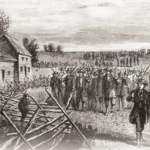
Joseph Smith reportedly found the bones of an individual named “Zelph” during the Zion’s camp march. According to the Manuscript History of the Church, Zelph was a white Lamanite.
Source(s):
Question: Does the story of Zelph have implications for Book of Mormon geography?
Question: How reliable are the accounts of the discovery of Zelph?
Mormon FAIR-Cast 145: Kinderhook Plates and Zelph
Zelph in relation to Book of Mormon geography
Question: What is the story of Zelph?
Fair Issues 96: Mapping Book of Mormon Lands
Zion’s Camp March from Ohio to Missouri, 1834
Book Review: The Joseph Smith Papers: Documents Volume 4, April 1834 – September 1835
Doctrine and Covenants Section 102 lays out the procedural framework for conducting Church disciplinary councils, known today as membership councils. Critics might see this formalization as overly rigid or harsh, potentially conflicting with the gospel’s emphasis on forgiveness. However, the purpose of these councils is rooted in Christ’s teachings and aims to uphold Church standards, provide a space for repentance, and protect the spiritual health of individuals and the community.
Purpose and Principles:
Church disciplinary councils serve multiple roles:
- Protection of the Church’s Integrity: They address actions that may harm the Church’s reputation or unity, ensuring that the Church continues to function as a community of faith and righteousness.
- Invitation to Repentance: These councils are designed to help individuals recognize their mistakes, seek reconciliation with God, and re-enter full fellowship. They are not intended as punitive measures but as steps toward spiritual healing.
- Guided by Love and the Spirit: Councils are led by prayerful deliberation and seek divine guidance to ensure fairness and compassion in decision-making.
The process reflects a balance between mercy and justice. While the Lord’s forgiveness is infinite, repentance requires acknowledgment of wrongdoing and a change of heart. Disciplinary councils provide a structured way for this process to occur, ensuring both accountability and fairness.
Modern Applications:
In today’s Church, these councils are less common and focus on serious transgressions such as criminal behavior or actions that threaten the Church’s unity. Emphasis is placed on maintaining dignity and confidentiality for all involved. The outcome is always geared toward helping individuals return to Christ through repentance and spiritual growth.
Connection to Forgiveness:
The scriptures repeatedly teach that forgiveness requires effort on the part of the transgressor (see Doctrine and Covenants 58:42–43). Membership councils align with this principle by offering a clear path to repentance. Rather than conflicting with forgiveness, they complement it by ensuring that repentance is deliberate and meaningful.
Example in Scripture:
In the New Testament, Paul counseled the Corinthians to forgive a member who had repented after a disciplinary action, emphasizing reconciliation and healing (see 2 Corinthians 2:6–8). This mirrors the approach outlined in Section 102, where the goal is to ultimately welcome individuals back into fellowship.
Key Insights:
- Disciplinary councils are rooted in divine love, justice, and mercy.
- They aim to provide structure and fairness, ensuring both accountability and spiritual healing.
- Forgiveness and repentance are not at odds but are intertwined in the path back to Christ.
Source(s):
Thoughts on the media and Church discipline
Best of FairMormon Conference 2015: Michael Otterson – On The Record
History scholars and Church discipline
Question: Is a Mormon disciplinary council really called a “court of love?”
Mormonism and Church discipline
Question: What specific transgressions might result in Church discipline?
WEEK 39 (September 22-28)

Weekly Questions
The exact date and place of the restoration of the Melchizedek Priesthood have not been recorded, and Joseph and Oliver didn’t share details for a few years. This leads critics to claim that the restoration of the Melchizedek Priesthood never took place. The timeframe where the restoration did happen was one of intense prosecution, and Joseph and Oliver simply didn’t have the time to make a proper record. Also, not readily talking about sacred events was part of the prophet’s style, as seen in his recollections and accounts of his First Vision years after it occured.
Source(s):
Question: What criticisms are put forth regarding the restoration of the Melchizedek Priesthood?
Question: In what manner was the Melchizedek Priesthood restored?
Joseph Smith’s Visions: His Style and his Record
Detailed response to CES Letter, Priesthood Restoration
Restoration of the Melchizedek Priesthood
Some may argue that this verse implies that believers are immune to hardships, but the context of Section 106 clarifies that it refers to spiritual preparedness rather than physical immunity. The “children of light” are those who live by the gospel and remain faithful, and their spiritual vigilance ensures they are not caught off guard by the Lord’s coming.
This protection is spiritual in nature, preparing individuals to endure trials with faith and remain steadfast despite adversity. It does not promise a life free from challenges, as tribulation often serves to refine and strengthen believers. This aligns with the broader scriptural principle that God provides strength to overcome trials rather than removing them entirely (see John 16:33).
Expanded Insight:
The metaphor of “light” emphasizes enlightenment through gospel knowledge and the guidance of the Holy Ghost (see Doctrine and Covenants 93:31-32). By walking in the light, individuals are spiritually prepared for the Lord’s return and can find peace despite external turmoil.
Key Takeaway:
Spiritual vigilance enables believers to navigate challenges with faith and hope, even in the face of adversity.
Source(s):
Chapter 42: Doctrine and Covenants 106–108
The hierarchical organization described in Section 107 reflects the principle of divine order, ensuring that the Church functions smoothly and in alignment with God’s will. The structure is not about privilege or superiority but about stewardship, accountability, and unity.
Priesthood leadership roles are meant to serve others, following Christ’s example of leadership through service (see Matthew 20:26–28). Each role in the priesthood has specific responsibilities, but all priesthood holders share the same ultimate purpose: to build God’s kingdom and bless others.
Expanded Insight:
Section 107 highlights the complementary roles of the Melchizedek and Aaronic Priesthoods, showing how each contributes to the Church’s overall mission. It also emphasizes that all actions in the priesthood must be guided by love, humility, and righteousness (see Doctrine and Covenants 121:41–46).
Key Takeaway:
The priesthood organization ensures accountability and unity while emphasizing leadership through service, reflecting the Savior’s teachings.
Source(s):
FairMormon Questions: How should we respond when we feel men and women are unequal at church?
