
This guide is not meant to replace the Come, Follow Me curriculum by the Church of Jesus Christ of Latter-day Saints. This is merely a study tool and a helpful guide to aid in your study as you follow along the church’s curriculum. If there are any questions feel free to reach out to us.
We cover some frequently asked questions, include some criticisms that occur often, as well as the answers to them with some helpful resources from our website and of course, the Church’s website. While we cannot address every question and criticism and cannot provide every resource, we hope what we have included in this guide will be helpful to you.
WEEK 5 (January 27 - February 2)
Week 5
January 27-February 2
Doctrine and Covenants 3-5
“My Work Shall Go Forth”
Weekly Questions
Joseph Smith was rebuked for allowing the loss of the 116 manuscript pages due to his yielding to the persuasions of Martin Harris. In other words, he listened to the desires of men rather than the desires of God. This teaches that even prophets must follow divine instructions and prioritize God’s will above human pressures. Despite his mistake, God reassured Joseph that His work would still go forward, highlighting God’s mercy and the resilience of the Restoration.
Joseph Smith’s rebuke in Doctrine and Covenants 3 highlights the principle that prophets, while chosen servants of God, are not immune to human weaknesses or mistakes. The loss of the 116 manuscript pages serves as a profound teaching moment, both for Joseph personally and for those who seek to be disciples of Jesus Christ.
The incident also reflects God’s desire to teach through experience. Joseph emerged from this trial with greater resolve to follow divine guidance strictly. His eventual success in translating the Book of Mormon and leading the Restoration demonstrates the power of repentance and God’s ability to refine His servants through challenges.
Sources and Resources:
The translation of the Book of Mormon, as described by Joseph Smith, is considered a miraculous event, central to the faith of The Church of Jesus Christ of Latter-day Saints. The tools used in this process were the Urim and Thummim and a seer stone, which facilitated Joseph’s ability to translate the ancient record.
The Urim and Thummim was a set of clear stones set in a frame, which Joseph described as “interpreters.” These were provided by God to assist seers in translating unknown languages. (See Mosiah 28:14-15.) In addition, Joseph used a seer stone, which he placed in a hat to block out external light. By blocking external light, he was able to read the English translation that appeared on the stone. Joseph would dictate the words to a scribe, who would write them. This process was described by witnesses such as Emma Smith and Oliver Cowdery.
Using devices such as the Urim and Thummim or the seer stone seems odd to many in today’s world. Such devices are, indeed, relics of a different age, but their use was instrumental in the translation process as described by numerous witnesses to that process.
While both devices were used in the translation process, the miraculous nature of this process was consistently affirmed by Joseph and others involved. They emphasized that it was not the devices themselves, but the divine power through which they were used, that enabled the translation.
Sources and Resources:
Statements on the Book of Mormon Translation method: 1846-1900
In Doctrine and Covenants 5, the Lord informs Joseph Smith that in addition to the witness of the Book of Mormon that Joseph bears, the Lord will select three witnesses who will bear testimony. They will “know of a surety that these things are true, for from heaven will I declare it unto them” (v. 12).
The Lord recognizes Martin Harris’s desire for a witness of the truth of the Book of Mormon, and the Lord promises him that if he humbles himself, repents, and sincerely prays, then he will be one of these three witnesses. Furthermore, his role was not only about witnessing physical artifacts but also about spiritually testifying to the truth of the Book of Mormon and Joseph Smith’s divine calling. The Lord’s choice of Martin as a witness reflects God’s capacity to see potential in individuals despite their imperfections.
Harris’s testimony is notable because, despite various trials—including his eventual estrangement from Joseph Smith and temporary departure from the Church—he never denied his experience with the plates. His unwavering witness, alongside the testimonies of Oliver Cowdery and David Whitmer, lends credibility to the authenticity of the Book of Mormon.
Sources and Resources:
Statement of the Three Witnesses
Lesson 15: Doctrine and Covenants 3-5
WEEK 6 (February 3 - 9)

Weekly Questions
Distinguishing between personal revelation and your own thoughts or feelings can be challenging, and even individuals like Oliver Cowdery, who was promised the gift of translation in Doctrine and Covenants 8, struggled with this. Here are a few principles that may help you in making this distinction:
- Preparation and Effort. As seen in Doctrine and Covenants 9, revelation often requires diligent preparation. The Lord told Oliver that he needed to “study it out in [his] mind” before expecting divine confirmation. This suggests that personal revelation is not a passive process but involves thoughtful consideration, effort, and study. If you feel that you’ve carefully studied an issue and sought clarity, revelation may confirm your thoughts.
- Peace and Clarity. Personal revelation is often accompanied by feelings of peace, light, and clarity (Doctrine and Covenants 6:23). If you’re feeling confusion, anxiety, or uncertainty, it may be more likely that these are your own thoughts rather than divine guidance. Revelation tends to bring an inner calm or understanding, even if the answers are difficult.
- Consistency with God’s Teachings. Revelation from God will align with His commandments and teachings. If you’re unsure whether something is personal revelation or your own thoughts, compare it to gospel principles. Does it encourage you to follow Christ, keep the commandments, and serve others? If so, it may be revelation. If it conflicts with God’s teachings, it is likely your own thoughts or desires.
- Patience and Timing. Sometimes revelation comes gradually over time, rather than as an immediate answer. If you’re feeling rushed or pressured to act, it may be your own feelings pushing you rather than revelation. Give time for answers to develop and pray for guidance.
- Confirmation. After you’ve pondered a question and studied it out in your mind, as Oliver was instructed, seek confirmation through prayer. The Lord can confirm or redirect your thoughts, and this spiritual communication can help distinguish between your thoughts and revelation.
Ultimately, learning to distinguish between personal revelation and your own thoughts is a process that improves with experience and spiritual sensitivity, as was the case with Oliver Cowdery. Be patient with yourself as you learn to receive and understand revelation.
Sources and Resources:
Question: How can you know if an answer to prayer, a personal revelation, is true?
The “burning in the bosom” in Mormonism as a method of determining truth
Those who handled the gold plates described them as being a set of thin metal leaves, about 6 to 8 inches wide and 6 to 8 inches long, bound together with rings like a book. The individual plates were described as thin, about the thickness of tin or thick paper, and the entire set was approximately 4 to 6 inches thick. Witnesses such as Martin Harris and William Smith estimated the weight of the plates to be around 40 to 60 pounds, and they were described as having the “appearance of gold,” though likely made from a gold alloy (like tumbaga) rather than pure gold and their texture was described as metallic, with the sound of rustling or clinking when moved. These accounts are consistent in describing the plates as heavier than a stone or wood, and quite solid.
As for other ancient objects with similar characteristics, many items have been uncovered that testify to the existence of each individual feature attributed to the gold plates. Metal plates used for writing, rings binding records together, and gold alloys such as tumbaga have all been documented in antiquity. What makes the gold plates unique, however, is the combination of these characteristics—a bound set of thin metal leaves, made from a gold-like alloy, with engravings and bound by rings, all together in a single record. This combination of features, while not unheard of individually, makes the gold plates distinct and unparalleled in ancient artifacts.
Sources and Resources:
Weight and size of the gold plates
Metal plates in ancient Israel
Oliver Cowdery, serving as Joseph Smith’s scribe, also desired the ability to translate. The Lord found no impropriety in Oliver asking for this ability (Doctrine and Covenants 8:11). Nor did Oliver seeking a spiritual gift mean that Joseph was somehow insufficient to the task. It is clear that both could be inspired by God in the completion of the tasks which he entrusted to them.
According to Doctrine and Covenants 9:1, Oliver was instructed by the Lord that he was not to work at translating the Book of Mormon “because you did not translate according to that which you desired of me” and Oliver had, again, started functioning as a scribe. This is not a condemnation of Oliver, but a moment for instruction (see Doctrine and Covenants 9:6-10).
Even though Oliver was no longer to translate, his experience was a critical part of his spiritual journey. As he worked with Joseph and listened to the Lord, he learned and grew. He also gained a lifelong testimony of the Book of Mormon—he would later be one of the Three Witnesses—and of Joseph’s divine calling to translate the book.
Further, the record of Oliver’s experience is instructive for all of us because it illustrates that the Lord uses us according to our desires and talents, even though we are imperfect humans. As is recorded in Doctrine and Covenants 6:4, “whosoever will thrust in his sickle and reap,” meaning, whoever will raise their hand and volunteer to help, “the same is called of God.”
Sources and Resources:
Desire and the Long Game: Doctrine and Covenants sections 6-9
In Doctrine and Covenants 8, the Lord instructs Oliver Cowdery about revelation and spiritual gifts. This was done in response to Oliver desiring the ability to translate, which was a specific spiritual gift. The Lord, in his instruction, indicates that the new spiritual gift was possible, but that Oliver also had “another gift, which is the gift of Aaron” (Doctrine and Covenants 8:6).
In the earliest versions of this revelation, the phrase “gift of Aaron” is not used. Instead, the versions use the phrase “working with the sprout” or the “rod of nature.” Most scholars agree that regardless of the wording, this is a reference to Oliver being able to work with a divining rod, a common occurrence in the early 1800s. (While not nearly as common today, it is not uncommon, especially in rural areas, for divining rods to be used.)
The Lord indicates that Oliver’s ability was a spiritual gift; “there is no other power, save the power of God, that can cause this gift of Aaron to be with you. Therefore, doubt not, for it is the gift of God” (Doctrine and Covenants 8:7-8). It is not evident from the scriptural record or any historical sources how Oliver may have used this spiritual gift. Therefore, the reference by the Lord in a revelation to Oliver seems to be a case of using Oliver’s experiences in a way that he would understand what the Lord was trying to teach him.
Sources and Resources:
WEEK 7 (February 10 - 16)
Week 7
February 10-16
Doctrine and Covenants 10-11
“That You May Come Off Conqueror”

Weekly Questions
While replicating a manuscript with changes might seem difficult to achieve undetected today, in the nineteenth century, it was much easier for enemies of the Church to alter a document and potentially discredit someone without immediate exposure. If altered portions of the manuscript were published, they could have caused serious doubt about the authenticity of the translation, especially given that some individuals had desires to discredit Joseph.
The Lord’s revelation in Doctrine and Covenants 10 instructed Joseph to not retranslate the lost pages because of the risk that they had been altered. The Lord knew that those with ill intent could twist the situation to undermine the work, so He provided Joseph with an alternative plan—translating the small plates of Nephi, which covered the same time period as was covered in the lost pages. By following the commandment of the Lord in Doctrine and Covenants 10, the integrity of the Book of Mormon was protected and it ensured that critics could not sabotage the unfolding Restoration.
Sources and Resources:
The lost 116 pages of the Book of Mormon manuscript
God allowed the loss of the 116 pages to respect the principle of agency, an essential aspect of the Plan of Salvation. Agency allows individuals to make choices and experience their consequences, which is essential for spiritual growth and learning. Both Joseph Smith and Martin Harris exercised their agency when they continued to ask the Lord despite having been previously answered. Rather than preventing their bad choices, God allowed them to act and face the consequences, enabling them to learn important lessons about obedience and forgiveness.
Furthermore, God’s foresight ensured that his work would not be thwarted. Long before Joseph Smith’s time, the Lord inspired Nephi to create the small plates and directed Mormon to include them in his record. This redundant record provided a spiritual safeguard against the adversary’s attempts to undermine the Restoration. By including the small plates, the Lord demonstrated his ability to accomplish his purposes despite human errors.
Sources and Resources:
The lost 116 pages of the Book of Mormon manuscript
In Doctrine and Covenants 11, Hyrum Smith is counseled to prepare himself by studying and gaining wisdom before being sent on a mission. This has been seen as emphasizing that spiritual readiness and patience are vital before taking on sacred responsibilities. The Lord’s guidance reflects the principle that spiritual maturity is necessary for effective service.
Hyrum was eager to serve, which indicates his faith and willingness to sacrifice for the Lord’s work. However, the Lord instructed him to first focus on studying his word, gaining wisdom, and nurturing spiritual strength. In verses 15–17, the Lord emphasizes the need for Hyrum to “obtain my word” and to “seek not to declare my word, but first to obtain my word.” This illustrates the principle that preparation precedes performance. Just as Christ’s apostles spent time being taught before embarking on their ministries, Hyrum needed a foundation of spiritual knowledge and experience before he could effectively preach.
The Lord’s counsel also underscores the significance of humility and patience in discipleship. By asking Hyrum to wait, God reminded him that being spiritually prepared was just as crucial as being willing to serve. Waiting provided an opportunity for Hyrum to grow in his understanding of gospel principles, develop his testimony, and refine the spiritual maturity necessary for missionary work.
Hyrum’s example is particularly inspiring because it demonstrates that waiting on the Lord is not about inactivity but about active preparation. He later became a powerful leader and missionary, whose service greatly strengthened the early Church.
Sources and Resources:
WEEK 8 (February 17 - 23)
Week 8
February 17-23
Doctrine and Covenants 12-17
“Upon You My Fellow Servants”
Weekly Questions
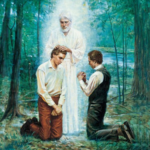
The restoration of the Aaronic Priesthood by John the Baptist is foundational to the Church. While certainty in religious events often involves faith, there is also a credible case to be made for the integrity and reliability of the historical accounts provided by Joseph Smith and Oliver Cowdery concerning the event.
- Witness Credibility. Both Joseph and Oliver were consistent and unwavering in their testimonies regarding the priesthood restoration. Despite facing intense opposition, persecution, and personal trials, neither ever denied the experience. Oliver, who temporarily parted ways with the Church, never renounced his testimony of the priesthood restoration, even after his return to the Church before his death. Their lifelong consistency in maintaining their accounts, even at personal cost, strengthens the case for their credibility.
- Corroborative Testimony. It’s also important to note that this event was not experienced by Joseph alone; Oliver was with him and bore witness to the same event. The corroboration between their accounts offers additional credibility. Two men of different temperaments and experiences shared the same extraordinary vision, providing a more solid foundation for the event’s historicity.
- Historical Context. The restoration occurred during a time when religious fervor and divine manifestations were topics of significant interest, yet no precedent existed for such a detailed claim. The precision of their account, down to the naming of John the Baptist, and the specific conferral of the Aaronic Priesthood, made it unique and bold, lending itself to scrutiny. Neither man wavered in their retelling of this event, which has been carefully recorded and passed down through Church history.
- Long-Term Effects. The significance of the Aaronic Priesthood restoration extends beyond their testimonies. The restoration set in motion the structure and authority of priesthood that continues in the Church today. The ordination of priesthood leaders, the performance of ordinances like baptism, and the overall organization of the Church all trace their authority back to this pivotal moment. The endurance and growth of the Church, which emerged from this and other restorations, further suggests that something extraordinary indeed took place.
In conclusion, while faith is always a part of religious conviction, the credibility and consistency of both Joseph Smith and Oliver Cowdery in their testimonies provide a compelling case for the reality of the Aaronic Priesthood restoration. The foundational nature of this event is supported not only by spiritual conviction but by the integrity and coherence of those who bore witness to it.
Sources and Resources:
Joseph Smith and Old Testament practices
Mormonism and priesthood/Manner in which the priesthood was restored
The Aaronic Priesthood keys restored by John the Baptist are significant because they provide the authority to administer essential ordinances such as baptism and the sacrament. These keys also give the authority to minister in outward, preparatory ordinances and oversee the temporal affairs of the Church. In the governance of the Church, the Aaronic Priesthood plays a crucial role in preparing individuals for the higher ordinances administered under the Melchizedek Priesthood. By overseeing baptisms, the sacrament, and other basic, temporal functions of the Church, the Aaronic Priesthood helps maintain the spiritual and organizational foundation of the Church, ensuring that members can receive the initial ordinances necessary for entering into further covenants with God.
Sources and Resources:
Question: What does the Bible teach about priesthood in the Church of Jesus Christ?
Priesthood authority in the Book of Mormon
Confidence in the testimonies of the Three and Eight Witnesses of the Book of Mormon stems from the fact that, despite some of them leaving the Church, none of them ever recanted their testimony of the Book of Mormon’s divine origins. The Three Witnesses—Oliver Cowdery, David Whitmer, and Martin Harris—consistently affirmed throughout their lives that they had seen the gold plates and an angel. Even during times of personal disagreement or estrangement from Joseph Smith or the Church, they held firm to their witness of the Book of Mormon.
Similarly, the Eight Witnesses, who handled the plates physically, also maintained their testimonies even when some later distanced themselves from the Church. The fact that these men upheld their testimonies, despite the personal and social consequences they faced, strengthens their credibility. Their unwavering commitment, even under duress, suggests that their witness experiences were deeply genuine and not based on coercion or deception.
Sources and Resources:
Statement of the Three Witnesses
Eleven official witnesses to the Book of Mormon
