
This guide is not meant to replace the Come, Follow Me curriculum by the Church of Jesus Christ of Latter-day Saints. This is merely a study tool and a helpful guide to aid in your study as you follow along the church’s curriculum. If there are any questions feel free to reach out to us.
We cover some frequently asked questions, include some criticisms that occur often, as well as the answers to them with some helpful resources from our website and of course, the Church’s website. While we cannot address every question and criticism and cannot provide every resource, we hope what we have included in this guide will be helpful to you.
WEEK 40 (September 29-October 5)
Week 40
September 29-October 5
Doctrine and Covenants 109-110
“It Is Thy House, a Place of Thy Holiness”
Weekly Questions
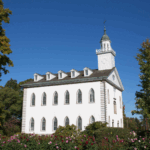
“Omnipresent” is a post-biblical word that doesn’t quite encapsulate the essence of God’s presence as described in the scriptures, which is primarily manifested by the presence of the Spirit. In that sense, God’s omnipresence through the Spirit allows Him to communicate with and bless His children anywhere. Temples in particular serve a distinct and sacred role as designated “houses of the Lord,” set apart from the world, where God’s Spirit can be felt more intensely. In Section 109, the dedicatory prayer for the Kirtland Temple emphasizes this unique purpose, asking for the temple to be a place where individuals can receive divine power, knowledge, and peace.
The physical nature of temples is symbolic of divine order, and are a reflection of the heavenly temple of God. Just as ancient Israelites built the tabernacle as a mobile sanctuary for God’s presence (see Exodus 25), modern temples fulfill a similar role in connecting humanity with heaven. The dedicatory prayer reflects the belief that entering holy places allows individuals to renew covenants, receive revelation, and focus their hearts on God without worldly distractions.
Examples from Section 109:
- The prayer petitions for divine presence in the temple (verse 12), emphasizing its role as a sanctified space.
- The blessings requested—spiritual strength, forgiveness, and protection—highlight the temple as a haven for divine guidance and empowerment.
Key Takeaway:
While God is not physically confined to temples, they are uniquely designated as spaces for sacred ordinances, spiritual growth, and communion with Him.
Source(s):
The restoration of priesthood keys in Section 110 underscores the LDS belief that these keys were lost during the Great Apostasy following the deaths of Christ’s apostles. According to LDS doctrine, the Restoration of the Gospel was necessary to reestablish the fullness of Christ’s Church, including the keys required to perform saving ordinances.
In Section 110, Jesus Christ appears to accept the Kirtland Temple and affirm its sanctity. Moses, Elias, and Elijah then follow to restore priesthood keys:
- Moses: Delivers the keys of the gathering of Israel, enabling missionary work and temple ordinances to unite God’s children worldwide.
- Elias: Restores the gospel of Abraham, emphasizing the Abrahamic covenant and blessings of posterity and priesthood.
- Elijah: Restores the sealing power, allowing families to be bound together for eternity.
These restorations fulfill prophecies such as Malachi 4:5–6 and align with the LDS mission to gather Israel and perform vicarious ordinances for the dead. These appearances show that the Restoration wasn’t simply to restore the elements of the early Christian church, but to gather all truths and keys from all dispensations (see Doctrine and Covenants 128:18). They also affirm the Church’s divine mandate to prepare the earth for Christ’s Second Coming.
Key Takeaway:
The restoration of priesthood keys in Section 110 reestablished the authority necessary to carry out God’s work in the latter days, fulfilling ancient prophecies and empowering the Church.
Source(s):
The Restoration of Priesthood Keys
The blessings petitioned in Section 109 reflect both immediate and long-term aspects of God’s promises. For example, the prayer sought peace, protection, and spiritual strength amid the intense challenges faced by the Saints. While they continued to experience persecution in Missouri and other locations, the spiritual outpouring at the Kirtland Temple served as a source of hope and divine assurance during these hardships.
Rather than eliminating trials, God often strengthens His children to endure them. The Saints’ suffering refined their faith and prepared them for eventual blessings, such as the establishment of Nauvoo and later Zion in the Salt Lake Valley. Similarly, the peace prayed for in Section 109 is not necessarily freedom from external conflict but an internal peace through faith and trust in God.
Spiritual Impact of Section 109:
- The temple dedication was followed by remarkable spiritual manifestations, including the appearance of Christ in Section 110, which affirmed the Saints’ efforts and sacrifices.
- The blessings of temple worship—revelation, strength, and unity—continued to sustain the Saints as they endured persecution.
Key Takeaway:
The blessings of Section 109 reflect both spiritual assurance and God’s timing. While immediate deliverance was not granted, the Saints were spiritually empowered to persevere and ultimately establish a foundation for the Church’s growth.
Source(s):
Section 109, Prayer of Dedication for the Kirtland Temple
The Kirtland Temple—a Place of Holiness
Spiritual manifestations at the dedication of the Kirtland temple
Section 109 does include pleas for protection and even for God to act against those who sought to harm the Saints (e.g., verses 24–33). Critics might see this as contradictory to Christ’s teachings in the Sermon on the Mount, where He instructed His followers to “love your enemies” and “pray for those who persecute you” (Matthew 5:44).
However, these pleas must be understood within the historical and doctrinal context. The Saints were enduring extreme persecution, including threats to their lives, property destruction, and legal injustices. The prayer reflects both a plea for justice and a desire for divine intervention to protect the faithful. Importantly, Section 109 does not advocate personal vengeance but calls upon God to judge righteously.
Expanded Insight:
Prayers for protection and justice are found throughout scripture. For example:
- David’s Psalms often include prayers for deliverance from enemies and divine retribution (see Psalms 69).
- Alma 14 recounts Alma and Amulek witnessing believers being martyred but restraining themselves, instead trusting in God’s justice.
This section shows a balance between seeking divine protection and trusting in God’s wisdom and timing to resolve injustices. The Saints were also reminded in other revelations to forgive their enemies and focus on spiritual resilience (Doctrine and Covenants 64:10).
Key Takeaway:
The requests in Section 109 for justice and protection reflect the intense trials faced by the Saints and align with biblical examples of seeking God’s righteous intervention. These prayers coexist with teachings of forgiveness, showing that seeking justice does not preclude showing mercy.
Sources:
Question: In the 1800s, did Latter-day Saints “glorify vengeance” through the singing of hymns?
WEEK 41 (October 6-12)
Weekly Questions
Doctrine and Covenants 11 is often misinterpreted, which results in questions like this one. Since the revelation was received after the trip to Salem and there is no mention of any commandment to go to Salem, it can be assumed that God never sent Joseph to Salem to look for treasure. This question therefore does not need to be addressed except as part of the larger context of the criticism of Joseph as a money digger and if that would keep him from being worthy to be called as a prophet of God.
The Bible has many examples of prophets doing things we don’t normally associate with prophets these days, including even Jonah running away from the calling God gave to him as well as being petty and bigoted when he became upset that the people repented instead of getting destroyed because he thought it made him look bad.
Many also use the test for false prophets in Deuteronomy to dismiss Joseph, alleging he made false prophecies. When one looks at the prophecies in detail, it can be seen that Joseph actually meets that test in the same way biblical prophets do.
Source(s):
Question: Does Joseph Smith fail the “prophetic test” found in Deuteronomy 18?
Joseph did not “prophesy” that they would find money in Salem, but instead made the trip because he became convinced that the story that the treasure existed might be true. Upon failing to locate the money, they spent their time preaching to the people in Salem. It became evident to the leaders of the Church that the “treasure” referred to by the Lord was the conversion of people in Salem to the Gospel. In 1841, five years after the revelation was given, Erastus Snow and Benjamin Winchester were called to serve a mission in Salem. Cannon notes that the elders were sent explicitly for the purpose of fulfilling the revelation:
[Hyrum Smith and William Law] gave Erastus Snow a copy of the Salem Revelation and requested to fulfill it. Snow and Winchester arrived in Salem in September of 1841. They preached at public meetings, published a pamphlet addressed to the citizens of Salem, and challenged the notorious Mormon apostate, John C. Bennett to debate. Their efforts bore fruit. By March of 1842 they had organized the Salem Branch with 53 members. By the end of that summer, the branch had 90 members. (Journal of Erastus Snow [1841–47], Historical Department, The Church of Jesus Christ of Latter-day Saints, Salt Lake City, pp. 3–5.)
These conversions were sufficiently noticed to have been commented on by two of Salem’s newspapers, the Salem Gazette on Dec. 7, 1841, and The Salem Register on June 2, 1842.
Source(s):
Section 111 involves a revelation to Joseph Smith and others during their visit to Salem, Massachusetts, where they sought financial relief for the Church. Critics may question why a revelation from God would involve searching for material wealth, as this might appear inconsistent with the Church’s spiritual priorities.
Contextual Understanding:
The revelation came at a time when the Church was deeply in debt, largely due to efforts to build the Kirtland Temple and other endeavors. While the revelation mentions potential treasures, it emphasizes spiritual lessons over material gain. For instance:
- Verse 2 reassures the leaders that God is aware of their challenges and their righteous desires.
- Verse 10 directs their focus toward individuals in Salem who are ready to receive the gospel, highlighting missionary work as a higher priority than financial relief.
Key Insight:
This section teaches that God is mindful of both temporal and spiritual needs, often interweaving the two. The “treasures” referred to in Section 111 can be understood symbolically, representing not just financial resources but also individuals prepared to embrace the gospel.
Broader Principle:
Throughout scripture, there are examples of God addressing temporal matters for His people, such as providing manna in the wilderness (Exodus 16) or instructing Nephi to build a ship (1 Nephi 17). These examples demonstrate that addressing temporal needs can support the overarching spiritual mission.
Key Takeaway:
While Section 111 acknowledges financial concerns, it redirects focus toward spiritual treasures, underscoring the principle that God’s ultimate purpose is the salvation of souls rather than material wealth.
Source(s):
Spiritual and Temporal Well-Being: Our Personal Responsibility
WEEK 42 (October 13-19)
Week 42
September 13-19
Doctrine and Covenants 115-120
“His Sacrifice Shall Be More Sacred unto Me Than His Increase”

Weekly Questions
Christ only instructed Joseph through revelation to change the name of the Church once, as described in D&C 115꞉3. Prior to that time, the Church was referred to by several different names, including “The Church of Christ,” “Church of Jesus Christ,” “Church of Christ of Latter Day Saints,” “The Church of God” and “The Church of Latter Day Saints.” The only name for the Church established by revelation was the one mentioned in D&C 115꞉3.
Some critics try to impose inerrantist ideas on the Church—they act as if such things as official names and procedures can never change. But, the Latter-day Saints have never held such ideas—they believe that God gives a fair amount of leeway to His children as they seek to learn and do His will. And, they remain confident that God will speak by revelation when necessary to ensure that His Church will not stray from His intentions.
Source(s):
Mormonism and church organization/Changes in the name of the Church
Question: What is the history of name changes of the Church?
No, Pres. Nelson pointed to the reemphasis of the actual name of the Church over the use of the nickname “Mormon” as a “correction”, not “a name change”:
“Many members immediately corrected the name of the Church on their blogs and social media pages. Others wondered why, with all that’s going on in the world, it was necessary to emphasize something so “inconsequential.” And some said it couldn’t be done, so why even try? Let me explain why we care so deeply about this issue. But first let me state what this effort is not:
It is not a name change.
It is not rebranding.
It is not cosmetic.
It is not a whim.
And it is not inconsequential.
Instead, it is a correction. It is the command of the Lord. Joseph Smith did not name the Church restored through him; neither did Mormon. It was the Savior Himself who said, ‘For thus shall my church be called in the last days, even The Church of Jesus Christ of Latter-day Saints.’”
Source(s):
The Correct Name of the Church
Zion is defined in scripture as “the pure in heart” and where they live is often given the name of Zion. Latter-day Saints are counseled to build up Zion whether they live. Thus God has given the name of Zion to many places. In the earlier revealed Book of Moses, Zion is described as both a people (Moses 7:18) and a place (Moses 7:19-21).
Zion as used by Latter-day Saints may mean the city of Jerusalem, any place where Saints gather, the entire Western Hemisphere, as well as a city that will be built in the future near Jackson County, Missouri in the United States.
Source(s):
Question: Where is Zion located since the Mormons were driven out of Missouri?
WEEK 43 (October 20-26)

Weekly Questions
Purpose of Suffering: In verses 7–10, the Lord reassures Joseph Smith that his trials are temporary and for his growth. Trials and suffering often serve as a means of spiritual refinement and preparation for greater blessings (see Hebrews 12:6–11). God allows suffering to strengthen faith and character, enabling individuals to better fulfill His purposes.
- Jesus Christ’s Example: The Savior Himself experienced unjust suffering and betrayal. The suffering of the Saints parallels the Savior’s path and reminds believers that discipleship often involves hardship (John 15:20).
- Free Agency of Others: God allows humans to exercise free will, which sometimes results in harm to others. However, His promises of justice and mercy provide assurance that wrongs will ultimately be corrected (D&C 121:11–25; Job 19:25, Romans 8:28).
- Eternal Perspective: Joseph Smith’s experiences at Liberty Jail remind us to look beyond present suffering to the eternal purposes of God. As the Lord states in verse 7, “Thine adversity and thine afflictions shall be but a small moment.”
Source(s):
October 18–24. Doctrine and Covenants 121–123: “O God, Where Art Thou?”
Standard for Priesthood Use: The section outlines clear principles: priesthood power can only be exercised with persuasion, long-suffering, gentleness, meekness, love, and pure knowledge. Any use of unrighteous dominion results in the loss of priesthood authority (v. 37).
Acknowledging Human Imperfections: The Lord acknowledges that “many are called, but few are chosen” (v. 34). This highlights the human tendency to misuse power and underscores the importance of personal integrity and accountability.
Ongoing Correction: The Church has instituted policies and training to ensure that priesthood authority is exercised in accordance with these principles. When abuses occur, they are not reflective of the gospel itself but of individual failure to live its standards.
God’s Justice: Even when leaders misuse their authority, D&C 121 assures believers that God’s justice will prevail. Unrighteous acts will not escape His notice (v. 24).
Source(s):
Mormonism and priesthood/Granting priesthood authority
Seeking Justice, Not Revenge: Section 123 emphasizes the importance of documenting injustices to seek legal redress and ensure that such atrocities do not go unnoticed. This was not a call for retaliation but for fairness and accountability.
Moral Responsibility: Joseph Smith teaches that it is a “duty we owe to God, to angels, with whom we shall be brought to stand, and to the generation that is now growing up” to record and share the truth (v. 7). This aligns with the principle of defending truth and righteousness while leaving ultimate judgment to God (D&C 98:23–48).
Advancing the Cause of Religious Freedom: Publishing accounts of persecution helped highlight the plight of the Saints and garnered public sympathy. While it may have aggravated some tensions, it also laid the groundwork for protecting religious liberty in the future.
Forgiveness and Resilience: Although documenting injustices was necessary, the Saints were also encouraged to forgive and rely on God for ultimate justice. The act of recording was not inherently incompatible with a spirit of reconciliation.
Source(s):
Peace and Violence among 19th-Century Latter-day Saints
Forgiveness Will Change Bitterness to Love
“Extract, from the Private Journal of Joseph Smith Jr.,” July 1839
