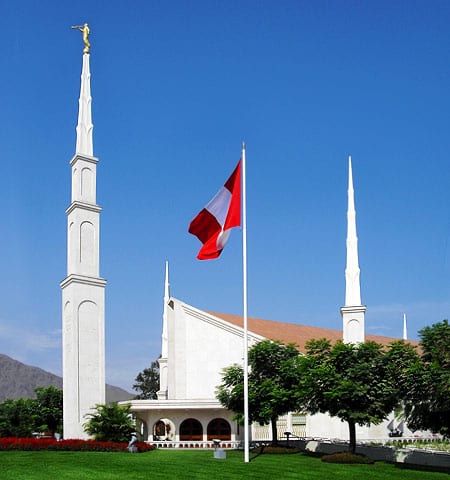
This week, critics of the Church of Jesus Christ of Latter-Day Saints have again been opining online on the extravagant furnishings inside LDS temples. The implication being that this is a dreadful waste of money on expensive edifices when the funds could be spent on assisting the poor. A first glance, this complaint appears reasonable. Why indeed should so much funds be devoted to building temples rather than to poverty relief?
We all know that poverty relief consists of two types, handling out bread and fishes, that can sustain a man and his family for a few days, or handing out a fishing pole and seeds, together with instructions on how to catch fish and grow grain, that will sustain the man and his family for months and years to come.
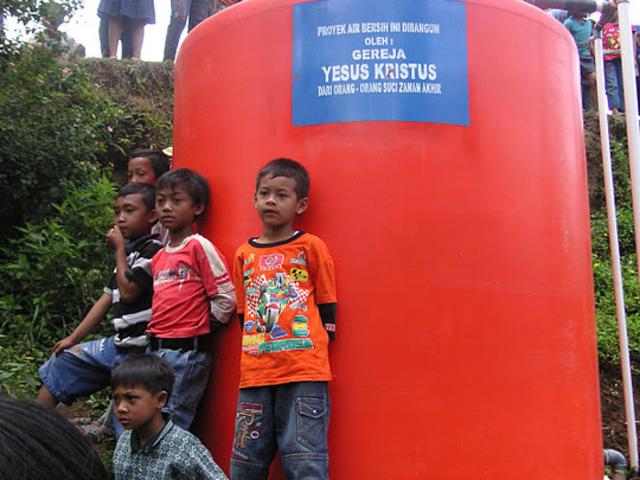
The Church does both of the above kinds of relief, in the form of emergency assistance, or in such wonderful programs as the Perpetual Education Fund. But there is another form of assistance that vastly exceeds either of these types. In countries like Peru (or Ghana, or many other places), the Church has built temples, to which any member holding a recommend may attend, no matter what his or her social status may be.
Inside the temple, no one can tell who is the Peruvian peasant or who is the banker from Lima. All are alike (even in dress), and all are treated the same.
Can you imagine what this does to the self-esteem of that Peruvian peasant (or, indeed, to the viewpoint of the banker)? The temple is the Great Leveler, and unlike the Marxist ideal where everyone is supposed to be leveled down to the proletariat, it levels everyone up, to become kings and queens.
No amount of poverty relief, no matter how lavishly dispensed, could possibly achieve such a remarkable outcome. When viewed from this angle, the amount the Church spends on temple construction could be considered more effective than any other outlay.
All this, even before considering the religious aspects of this work (ie, that God commanded it, or that temples are an essential element in LDS theology in the work of salvation for all mankind).
But this is not just an LDS theme. In my opinion, religious edifices have always elicited such responses. The great cathedrals of Europe were built at great expense, by the elite of society, but also with the enthusiastic participation of the lower classes, who saw these structures as their own. (This adoration does not extend to secular buildings, btw. When I toured Versailles back in 1991, my first thought was “Now I know why they had the French Revolution.”) The theme also holds true in non-Christian societies. The Great Buddha of Nara, constructed in the 8th century when Nara was the capital of Japan, was a project that encompassed all layers of society (it included raising a wooden structure to house the statue that is the largest purely wooden building in the world), and it is an awe-inspiring sight even now, more than 1200 years later.

And, of course, in the LDS context (as in the above non-LDS examples), the temples must be built of the highest quality materials possible. This serves to cement the leveling-up effect. Even the Church’s outlays for the downtown shopping mall in Salt Lake City, which has elicited such scorn from critics, is a part of this same effort, by upgrading the environment around the Salt Lake Temple (and Conference Center), so that members visiting from faraway places can feel safe and secure.
This entry was posted in Temples on 17 November 2014 by David Farnsworth
