
In his October 2026 General Conference address, “Courage Born of Our Faith in Jesus Christ,” Elder Neil L. Andersen taught that spiritual courage is not simply the ability to face difficult circumstances. It is the strength we receive through faith in Jesus Christ to choose what is right, even when fear, uncertainty, or opposition makes that choice difficult.
But some assume that genuine faith should eliminate doubt and fear. If someone struggles with uncertainty, does that mean their testimony is weak? Elder Andersen’s message offers a different perspective: faith is not measured by the absence of challenges but demonstrated through our willingness to follow Christ despite them.
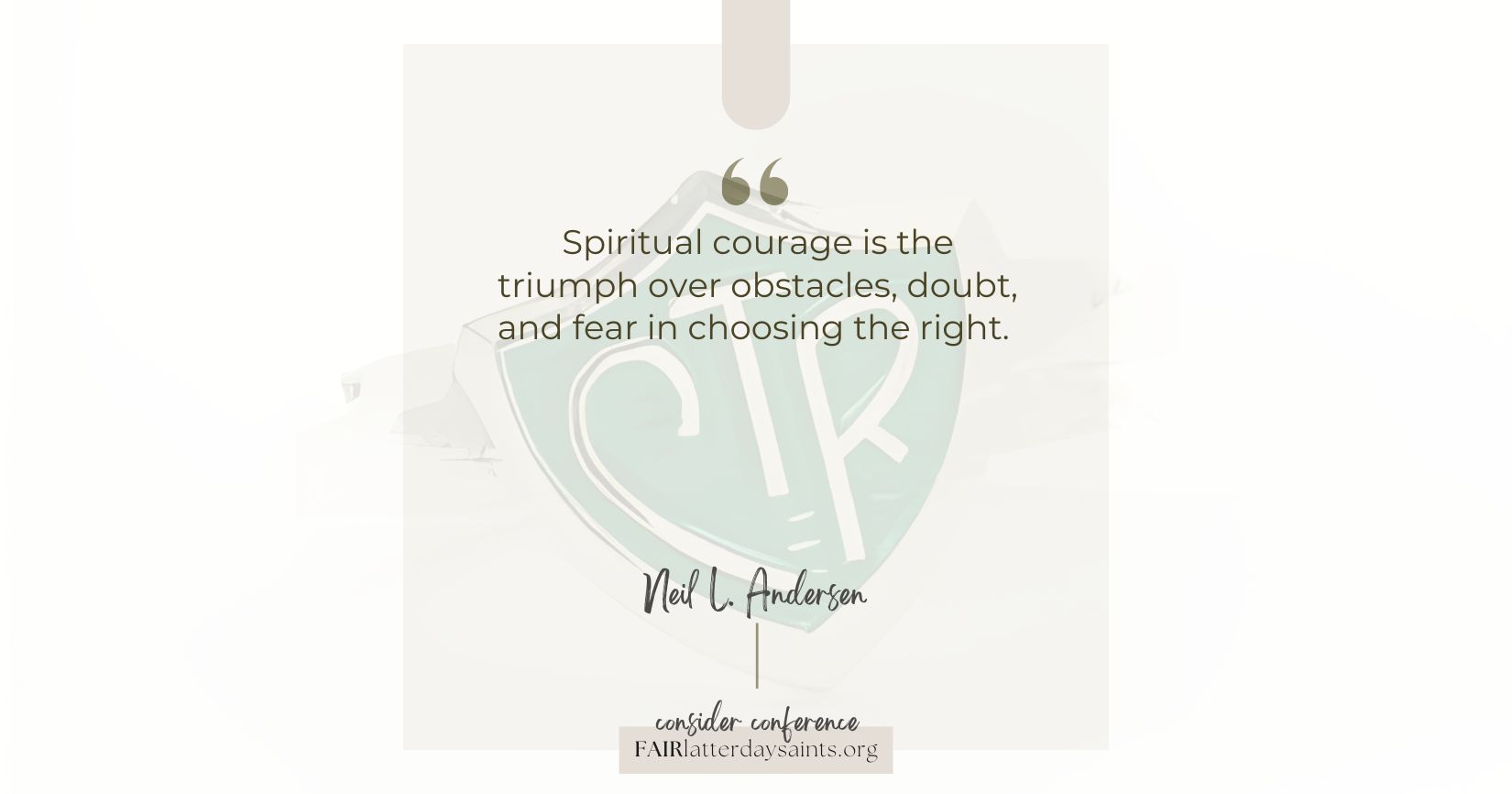
Spiritual courage is the triumph over obstacles, doubt, and fear in choosing the right.
This distinction matters because discipleship has never required a life free from opposition. Rather, it requires a willingness to trust the Savior as we face it.
Common Criticism: Strong Faith Should Eliminate Fear and Doubt
A common misunderstanding about religious faith is that truly faithful people should never struggle with fear, questions, or uncertainty. When believers experience doubt or difficulty, some interpret those struggles as evidence that their faith is insufficient or that their beliefs cannot withstand scrutiny.
Yet scripture consistently portrays faithful disciples facing extraordinary challenges. Moroni experienced isolation, danger, and devastating loss. Despite witnessing the destruction of his people and facing threats against those who believed in Christ, he declared:
“And I, Moroni, will not deny the Christ.” (Moroni 1:3)
Moroni’s courage did not come from comfortable circumstances. His faith sustained his determination to remain true to Jesus Christ even when doing so carried tremendous personal risk.
Fallacy at Work: False Dichotomy
A False Dichotomy occurs when two possibilities are presented as mutually exclusive, even though both can exist together.
In this case, the assumption is that a person must either possess genuine faith or experience fear and uncertainty. This overlooks the reality that faith and struggle frequently coexist. A disciple can have sincere questions, acknowledge genuine concerns, and still courageously choose to follow Jesus Christ.
Doctrine: Faith and Courage Strengthen One Another
The scriptures teach that faith is not passive belief but a principle that leads us to act. As James explained, “Faith, if it hath not works, is dead, being alone” (James 2:17).
Faith in Jesus Christ motivates us to make righteous choices, even when those choices require sacrifice or when we cannot see every outcome.
Elder Andersen’s Correction: Courage Grows Through Faith
Elder Andersen explains that faith and courage are not competing qualities but mutually strengthening principles:
As we choose faith in Christ, He blesses us with the courage, sometimes in very difficult situations, to choose the right, and as we manifest our courage to choose the right, our faith in Christ strengthens.
This relationship changes how we understand spiritual growth. We do not have to wait until our faith feels unshakable before acting courageously. Instead, our willingness to trust Christ and make faithful choices becomes part of how our testimony develops.
Elder Andersen illustrates this through the experience of President Dallin H. Oaks, who accepted a demanding Church calling while working long hours as a young attorney. Though uncertain how he would balance his responsibilities, President Oaks chose to move forward in faith. That decision became an important turning point in his life.
His faith strengthened his courage, and his courageous decision strengthened his faith.
Solution: Courage Is Faith Put Into Action
The restored gospel does not teach that faithful disciples will never experience uncertainty, disappointment, or fear. It teaches that Jesus Christ can strengthen us as we move forward with Him.
This does not mean dismissing sincere questions or refusing to examine difficult issues. Seeking understanding and exercising faith are not opposing pursuits. We can acknowledge what we do not yet understand while continuing to trust what we have come to know about the Savior.
Spiritual courage is not pretending the struggle doesn’t exist. It is refusing to let the struggle become the only thing directing our choices.
Living Apologetics: Finding Courage in a World of Constant Noise
Our modern world presents challenges that differ from those faced by Moroni, but the need for spiritual courage remains unchanged.
Elder Andersen described growing up on a dairy farm, spending long summer days tending cattle without phones, music, or constant communication. Those quiet hours provided space for reflection that can be difficult to find today.
He observed:
Times have changed, but our spirits have not changed. We need stillness to nourish our faith in Christ.
Today, information, opinions, and competing perspectives are available almost instantly. While access to information can support learning and understanding, constant exposure to conflicting claims can also create confusion, anxiety, and a sense that every question must be resolved immediately.
For someone navigating questions about faith, Church history, or doctrine, that pressure can feel overwhelming.
Elder Andersen’s invitation to stillness is not a suggestion to avoid difficult questions or ignore information. Instead, it reminds us that spiritual understanding requires more than consuming content. It also requires thoughtful reflection, sincere prayer, and opportunities to recognize the influence of the Holy Ghost.
He taught that in private moments of prayer, we receive increased courage to choose the right.
This is particularly meaningful when answers do not come immediately. We can continue studying, asking questions, and seeking understanding while also making space for the spiritual experiences that nourish our relationship with Jesus Christ.
 Practical Apologetic Use:
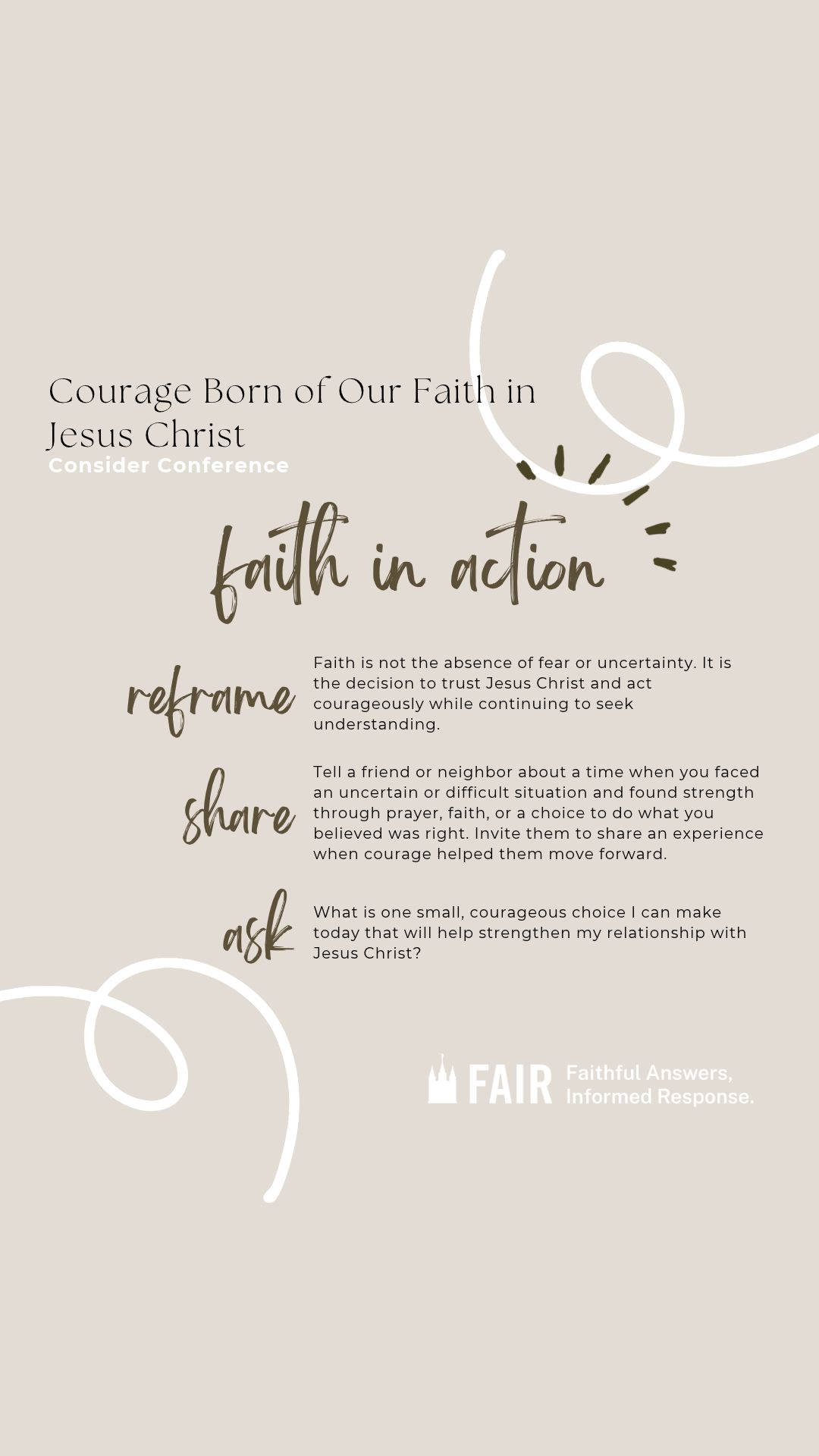
- If someone says: “If you really had faith, you wouldn’t struggle with so many doubts or fears.”
- You can respond: “Faith doesn’t mean I never experience uncertainty. It means I can continue seeking answers and choosing to follow Jesus Christ even when I don’t understand everything. I’ve found that making those choices helps my faith grow stronger.”
Ways to Apply Today:
1️⃣Recognize courage in small choices. Spiritual courage isn’t always dramatic. It may mean praying when answers feel distant, attending church during a difficult season, or choosing kindness when frustration would be easier. Recognize those decisions as meaningful expressions of faith.
2️⃣Create space for spiritual stillness. Set aside a few minutes each day without your phone, notifications, or other distractions. Use that time to pray, reflect on scripture, or simply consider how the Savior has guided your life.
3️⃣Approach questions with both faith and patience. When a difficult question arises, resist the pressure to resolve it immediately. Seek trustworthy information, consider different perspectives carefully, and invite the Holy Ghost into your search for understanding.
Keep This Talk With You
Elder Andersen reminds us that some of the most significant battles of discipleship are not fought publicly. They take place within our own hearts as we decide whom to trust, what to believe, and how to respond when life becomes difficult.
He recalled President David O. McKay’s teaching that the greatest battle of life is fought within the silent chambers of our own souls. Those private struggles may be invisible to others, but they are deeply meaningful to our spiritual development.
As Elder Andersen taught:
As we courageously win the battles of the soul, our faith in our Savior multiplies.
Sometimes courage looks like standing firmly for our beliefs. Other times it looks like quietly choosing to pray again, seek understanding, forgive someone, or remain faithful when we feel discouraged.
In each case, our strength comes not merely from personal resolve but from our relationship with Jesus Christ.
Elder Andersen concluded with a promise that as we strengthen our faith through believing in and following the Savior, our answers will come, our spiritual power will increase, and our courage in following Christ will help define who we become eternally.
This week, consider three small invitations:
- Identify one fear or uncertainty. Rather than allowing it to dictate your choices, prayerfully consider one faithful step you can take while continuing to seek understanding.
- Make room for quiet. Give yourself a few uninterrupted moments each day to strengthen your relationship with Heavenly Father through prayer.
- Notice how faith grows through action. At the end of the week, reflect on a choice that required spiritual courage and consider what it taught you about trusting Christ.
We do not need perfect confidence to begin following the Savior. We need a willingness to turn toward Him, trusting that He can strengthen us as we go.
What is one choice you can make this week that reflects your trust in Jesus Christ, even if you don’t yet have every answer or feel completely confident about the path ahead?
The Consider Conference series by FAIR offers an in-depth look at recent General Conference talks to help members of the Church of Jesus Christ of Latter-day Saints navigate common questions, misunderstandings, and criticisms. Each post provides doctrinal insights, historical context, and practical ways to apply gospel principles in everyday conversations. Through this series, we hope to equip readers with faith-promoting resources that encourage thoughtful reflection, respectful dialogue, and a stronger foundation in gospel truths, fostering both personal conviction and meaningful discussions with others.
Leave a Reply