By David W. Smith
Note: This is the first in a two-part series about solemn assemblies to sustain Presidents of the Church. Part 2 is here.
With the passing of President Russell M. Nelson in September 2025, members of The Church of Jesus Christ of Latter-day Saints will soon have the special privilege to participate in a solemn assembly to sustain a new Church president. Because this sustaining is a bit different than the normal sustaining process, it may be helpful to review the procedure and principles of the solemn assembly and sustaining Church leaders.
History of Solemn Assemblies
Solemn assemblies were held in ancient Israel to remember the Lord during special times.1See Leviticus 23:33–37; 2 Chronicles 7:8–9. In our dispensation, the first solemn assembly occurred in connection with the dedication of the Kirtland Temple. Today, members of the Church participate in solemn assemblies with temple dedications, to sustain a new Church President, and for other special occasions.2See “Solemn Assemblies,” Church History Topics, Gospel Library. This blog post focuses on solemn assemblies to sustain a new Church President.
Our current pattern for sustaining a new President of the Church originated with Joseph Smith during the Kirtland Temple dedication, when Church officers were sustained by a special method of voting. In its fundamentals, this procedure continues to be used today when we sustain a new Church President.
Note: A detailed history of the procedural developments of solemn assemblies to sustain a new Church President will be presented in the next blog post.
Method of Voting
Normally during a general sustaining, Church members sustain the First Presidency and Quorum of the Twelve Apostles, as well as any releases and callings for general Church leaders that have been made over the previous six months. When voting on the proposals, the person conducting will present some names and call for a vote, with those in favor raising their hands and then any opposing indicating their dissent.
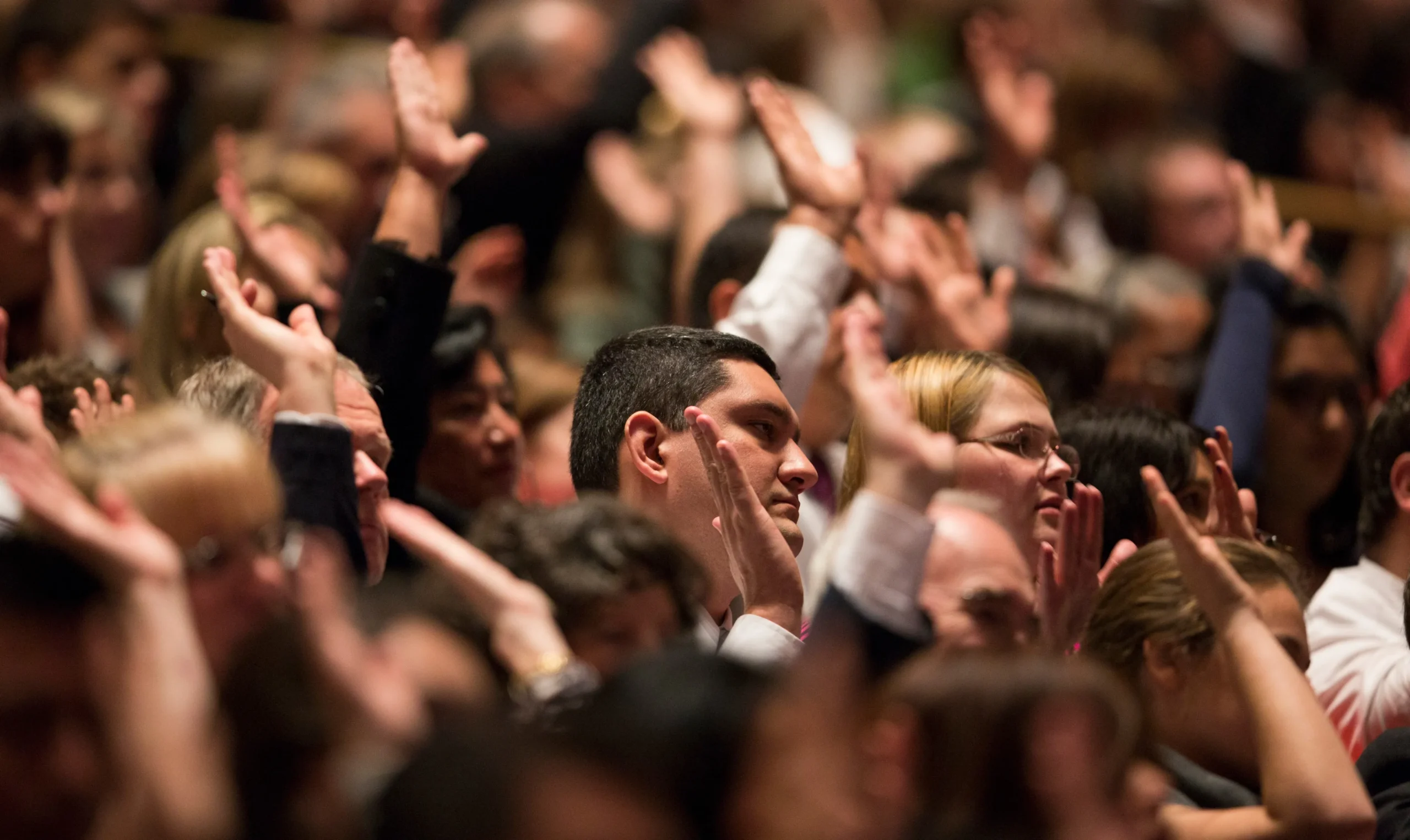
The method of voting in solemn assembly, however, is unique. A vote is conducted by priesthood quorums and groups, which stand when invited to give their vote. Assuming the procedure will be the same as when President Nelson was first sustained, the pattern for the solemn assembly to sustain Dallin H. Oaks as President of the Church will be as follows:
- The First Presidency will stand, and the members of the First Presidency will vote on the proposals for the new President of the Church, his Counselors in the First Presidency, the President of the Quorum of the Twelve Apostles, and the members of the Quorum of the Twelve Apostles. Once the First Presidency has voted on these proposals, they will sit.
- The Quorum of the Twelve Apostles will stand and vote on the proposals “as they have been presented and voted upon by the First Presidency.” The Twelve will then sit.
- The General Authority Seventies and the Presiding Bishopric will stand and vote just as the Twelve did, then be seated.
- All Area Seventies, ordained patriarchs, high priests, and elders will then stand and vote in the same pattern, then be seated.
- All members of the Relief Society—that is, all women 18 years of age and older—will follow in the same pattern.
- Those holding only the Aaronic Priesthood—that is, all ordained priests, teachers, and deacons—will follow in the same pattern.
- The young women will follow in the same pattern.
- Finally, the entire membership of the Church, including all of those who have previously voted, will arise and vote.
To better understand the procedure, you may consider watching the solemn assembly for President Nelson in the April 2018 general conference.
Principles of Solemn Assemblies
Beginning with the solemn assembly for George Albert Smith in 1945, the person conducting the assembly usually began by informing the congregation that they were gathered in “a formal solemn assembly of the body of the Church to express the voice of the Church.”3J. Reuben Clark Jr., Conference Report, October 1945, 3. In the solemn assembly in which he was first sustained as President of the Church, Harold B. Lee reviewed the importance of the Church participating in this event. He explained that Doctrine and Covenants 107:22 gives four instructions on establishing the First Presidency, the last of which is that the members of the First Presidency are to be “upheld by the confidence, faith, and prayer of the church.” President Lee then remarked, “Today, as never before, have I more fully realized the importance of that last requirement: that this president, in the Lord’s language, must be upheld by the confidence, the faith, and the prayers of the Church—which means, of course, the entire membership of the Church.”4Harold B. Lee, “May the Kingdom of God Go Forth,” October 1972 general conference.
In an article summarizing the solemn assembly to sustain Joseph Fielding Smith, one writer remarked that these solemn assemblies “are times of commitment and dedication, times identified with an outpouring of the Spirit upon those who participate, whether in person or through radio and television.”5Jay M. Todd, “The Solemn Assembly,” Improvement Era 73, no. 6 (June 1970), 20.
Reports of the early solemn assemblies all included comments on the significance of seeing quorums and groups and the entire congregation arise to their feet to sustain the First Presidency and the Twelve. During the 1898 solemn assembly, President George Q. Cannon remarked, “This is a very solemn occasion, and the spectacle from the stand is most impressive. It is difficult to repress emotion on seeing such an assembly.”6Conference Report, October 1898, 52. A report on the solemn assembly in 1901 noted:
The scene at the afternoon session, when the Priesthood occupied the stands and the main portion of the floor of the Tabernacle was one which will remain impressed upon the minds of every man, woman and child present as long as they live. A more imposing scene than that when each distinctive body of the Priesthood arose, in due order and to a man, lifted the right hand and sustained the general authorities, could not be found the world over.7“Authorities of Church Sustained,” Deseret Evening News 52, no. 303 (11 November 1901): 5.
When we understand the significance of the solemn assembly and its related procedures, we can also be spiritually edified as we observe and participate.
Principles of Sustaining the President of the Church
Elder David B. Haight of the Quorum of the Twelve Apostles explained the importance of the sustaining vote during a solemn assembly and how we should approach it:
When we sustain the President of the Church by our uplifted hand, it not only signifies that we acknowledge before God that he is the rightful possessor of all the priesthood keys; it also means that we covenant with God that we will abide by the direction and the counsel that come through His prophet. It is a solemn covenant.8David B. Haight, “Solemn Assemblies,” October 1994 general conference.
Regarding the importance of the sustaining vote, President J. Reuben Clark Jr. (then First Counselor in the First Presidency) explained, “When you vote affirmatively you make a solemn covenant with the Lord that you will sustain, that is, give your full loyalty and support, without equivocation or reservation, to the officer for who you vote.”9J. Reuben Clark Jr., Conference Report, October 1945, 3. This instruction has been frequently repeated over the years.
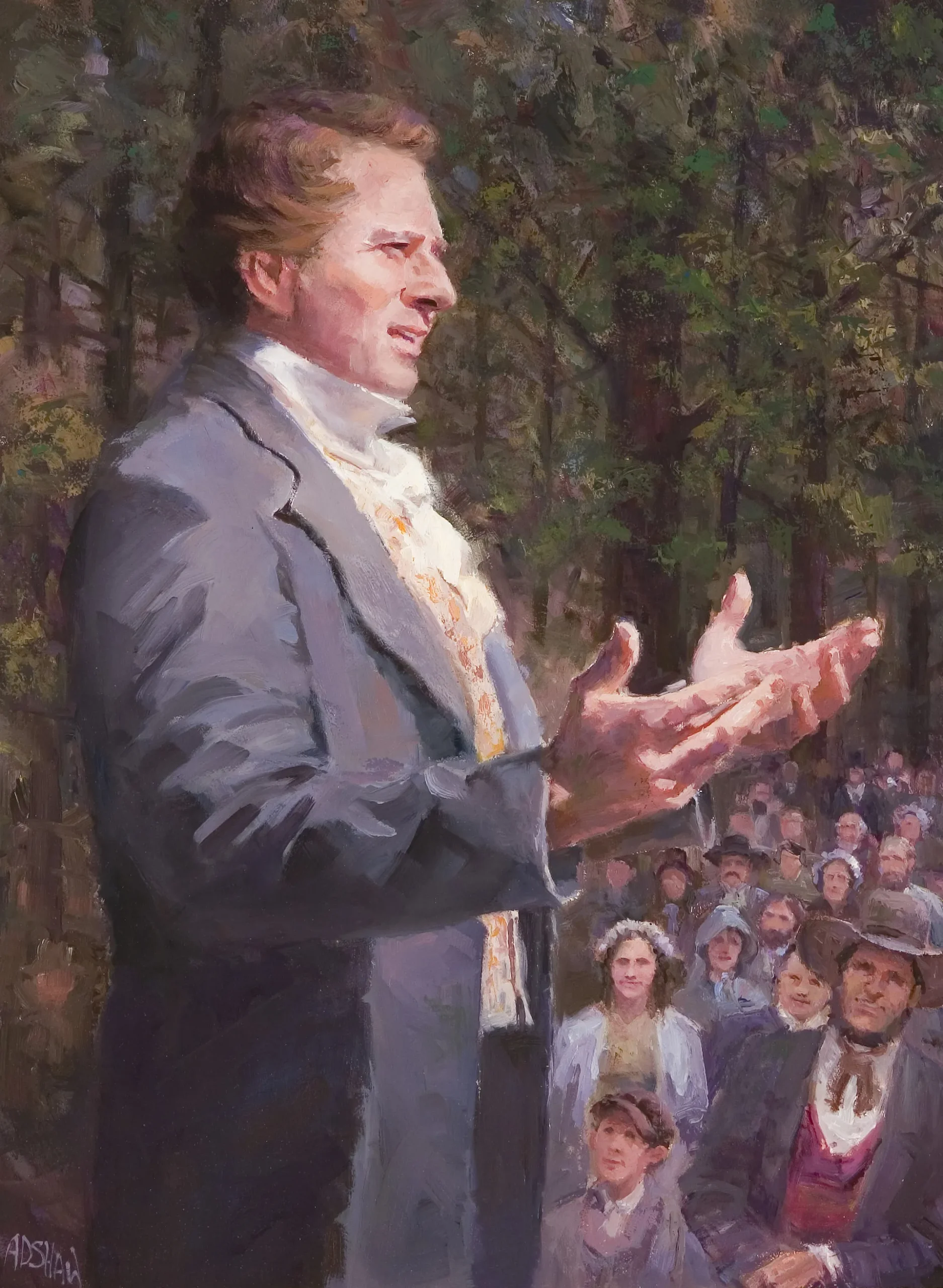
In the meeting when the Church was organized, Joseph Smith received a revelation from God in which the Lord instructed Church members regarding the place of the President of the Church:
Wherefore, meaning the church, thou shalt give heed unto all his words and commandments which he shall give unto you as he receiveith them, walking in all holiness before me; for his word ye shall receive, as if from mine own mouth, in all patience and faith.10Doctrine and Covenants 21:4–5.
The Lord also gave a promise if Church members follow this divine injunction:
For by doing these things the gates of hell shall not prevail against you; yea, and the Lord God will disperse the powers of darkness from before you, and cause the heavens to shake for your good, and his name’s glory.11Doctrine and Covenants 21:6.
Conclusion
To echo John Taylor when he was sustained as President of the Church in the First Presidency in 1880, a solemn assembly permits the Church to assent to God’s direction. In effect, vox populi (the voice of the people) unites with vox dei (the voice of God).12See Journal History, 10 October 1880, page 4.
The solemn assembly this conference will be a sacred occasion to participate in a unique method of sustaining our new President of the Church and thus renew with God our covenant that we will follow the direction of His chosen prophet, who holds and exercises all the priesthood keys. By so doing, the Lord will prosper our path.
 David W. Smith has volunteered with FAIR since August 2019, and was the recipient of the John Taylor Defender of the Faith Award in 2020. He has had an article published in BYU Studies, and he presented at the Joseph Smith Papers Conference in 2019. He has a bachelor’s degree in philosophy and a master’s degree in public administration, both from Brigham Young University.
