• Skip to primary navigation
  • Skip to main content
  • Skip to primary sidebar
  • Skip to footer

FAIR

  • Find Answers
  • Blog
  • Media & Apps
  • Conference
  • Bookstore
  • Archive
  • About
  • Get Involved
  • Search

Doctrine

Best of FAIR 15: The Temple as a Place of Ascent to God

July 10, 2013 by SteveDensleyJr

https://media.blubrry.com/mormonfaircast/www.fairlatterdaysaints.org/wp-content/uploads/2013/07/The-Temple-as-a-Place-of-Ascent-to-G.mp3

Podcast: Download (27.5MB)

Subscribe: RSS

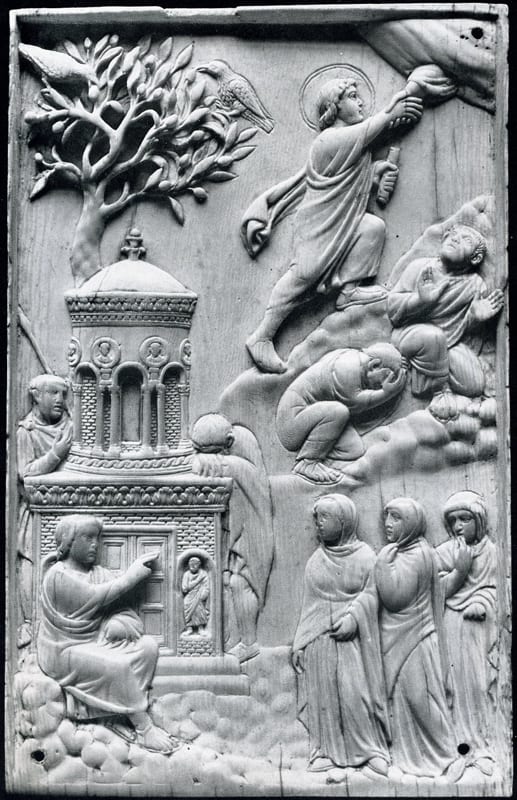
christ-ascension-munich-ivoryAside from what Joseph Smith taught, is there evidence that modern temples represent a restoration of ancient practices and beliefs? In this address from the 2009 FAIR Conference, Dr. Daniel Peterson discusses ascension motifs from around the world and talks about the temple as a place of ascent to God, as a model of reality, and as a reality of things to come. He notes that “the temple represents a model, which itself represents a cosmic reality, a reality that involves access to divine mysteries, access to the waters of life, access to cleansing and ascension, access to the presence of God. [The temple provides] a symbolic representation of admission into the presence of God, an endowment of power that goes with that, with the ultimate culmination of a blessing of exaltation in the presence of God.”

The text of his presentation, along with slides, can be found here.

Dr. Peterson is a professor of Islamic Studies and Arabic at BYU and founder and the editor-in-chief of the University’s Middle Eastern Texts Initiative (METI). He is a past chairman of the board of the Foundation for Ancient Research and Mormon Studies (FARMS) and, until very recently, served as Director of Advancement for its successor organization, the Neal A. Maxwell Institute for Religious Scholarship. From 1988, when he founded it, through mid-June of 2012, he edited the FARMS Review, which was renamed the Mormon Studies Review in late 2011. A former bishop, Dr. Peterson served in the Switzerland Zürich Mission, and, for approximately eight years, on the Gospel Doctrine writing committee for The Church of Jesus Christ of Latter-day Saints. He currently serves as a Gospel Doctrine teacher in his home ward. He the author of many books and articles, including Offenders for a Word, which is available, along with other talks by Brother Peterson, at the FAIR Bookstore.

The opinions expressed in this address do not necessarily reflect the opinions of The Church of Jesus Christ of Latter-day Saints, or of FAIR.

To purchase tickets to the 2013 FAIR Conference, visit this page. This short video clip also provides more information: FAIR Conference video clip.

Filed Under: Doctrine, Podcast, Temples

Mormon FAIR-Cast 151: God is a Spirit?

June 19, 2013 by SteveDensleyJr

https://media.blubrry.com/mormonfaircast/www.fairlatterdaysaints.org/wp-content/uploads/2013/06/2013_04_14_religion_today.mp3

Podcast: Download (8.7MB)

Subscribe: RSS

One of the primary reasons evangelicals give when they say that Mormons are not Christians is that Mormons believe in “a different Jesus.” They claim that the Jesus of Mormonism is not Biblical. In this episode of Religion Today, which originally aired on KSL Radio on April 14, 2013, Martin Tanner discusses the physical and spiritual natures of God.

This recording was used by permission of KSL Radio and does not necessarily represent the views of The Church of Jesus Christ of Latter-day Saints or of FAIR. Listeners will note that the first part of this recording is missing.

Filed Under: Anti-Mormon critics, Doctrine, Podcast

4th Watch 6: Presentism, Idiomsm, Homonyms and other Scams

May 24, 2013 by Ned Scarisbrick

https://media.blubrry.com/mormonfaircast/www.fairlatterdaysaints.org/wp-content/uploads/2013/05/4th_Watch_6.mp3

Podcast: Download (23.2MB)

Subscribe: RSS

hieroglyphics
Throughout the history of mankind we have endeavored to explain the world in which we live in through a variety of media.  Rather than pointing to something and saying ugh, ugh,  over time we invented language and the written word to communicate more effectively with each other.  In this podcast we will look at how the true meaning or original intent of a text can or has changed from generation to generation, and from an original source language to translations in other languages to express ideas, concepts, and principles. 
 

Filed Under: Doctrine, General, Hosts, Ned Scarisbrick, Podcast

4th Watch 5: The theology of John & Jacobus

April 5, 2013 by Ned Scarisbrick

https://media.blubrry.com/mormonfaircast/www.fairlatterdaysaints.org/wp-content/uploads/2013/03/4th_Watch_5.mp3

Podcast: Download (15.9MB)

Subscribe: RSS

4th Watch
4th Watch

The topic of predestination has been debated from the days of the early Church fathers and continues to energize gospel discussions regarding the level of responsibility and personal accountability for our behavior. In this podcast the teachings of John Calvin and Jacobus Arminius, two of the most prominent theologians of the protestant reformation, are compared  to the teachings of the Church of Jesus Christ of Latter-Day Saints.

Filed Under: Doctrine, Hosts, Ned Scarisbrick, Podcast

4th Watch 3: Salvation–Are Mormons Saved?

March 29, 2013 by Ned Scarisbrick

https://media.blubrry.com/mormonfaircast/www.fairlatterdaysaints.org/wp-content/uploads/2013/03/4th_Watch3.mp3

Podcast: Download (13.5MB)

Subscribe: RSS

4th Watch
4th Watch

In this podcast, Brother Scarisbrick illustrates the various stages of life and how our choices determine what we receive in the life to come from an LDS perspective.  From our entrance into the world of spirits when we pass from this life into the next, to the final judgment at the last day, Brother Scarisbrick uses common sense answers in a conversational style that makes this topic easy to understand.

Filed Under: Doctrine, Hosts, Ned Scarisbrick, Podcast

4th Watch 2: Testimony and Lifelong Conversion

March 22, 2013 by Ned Scarisbrick

https://media.blubrry.com/mormonfaircast/www.fairlatterdaysaints.org/wp-content/uploads/2013/02/4th_Watch_21.mp3

Podcast: Download (28.7MB)

Subscribe: RSS

4th Watch
4th Watch

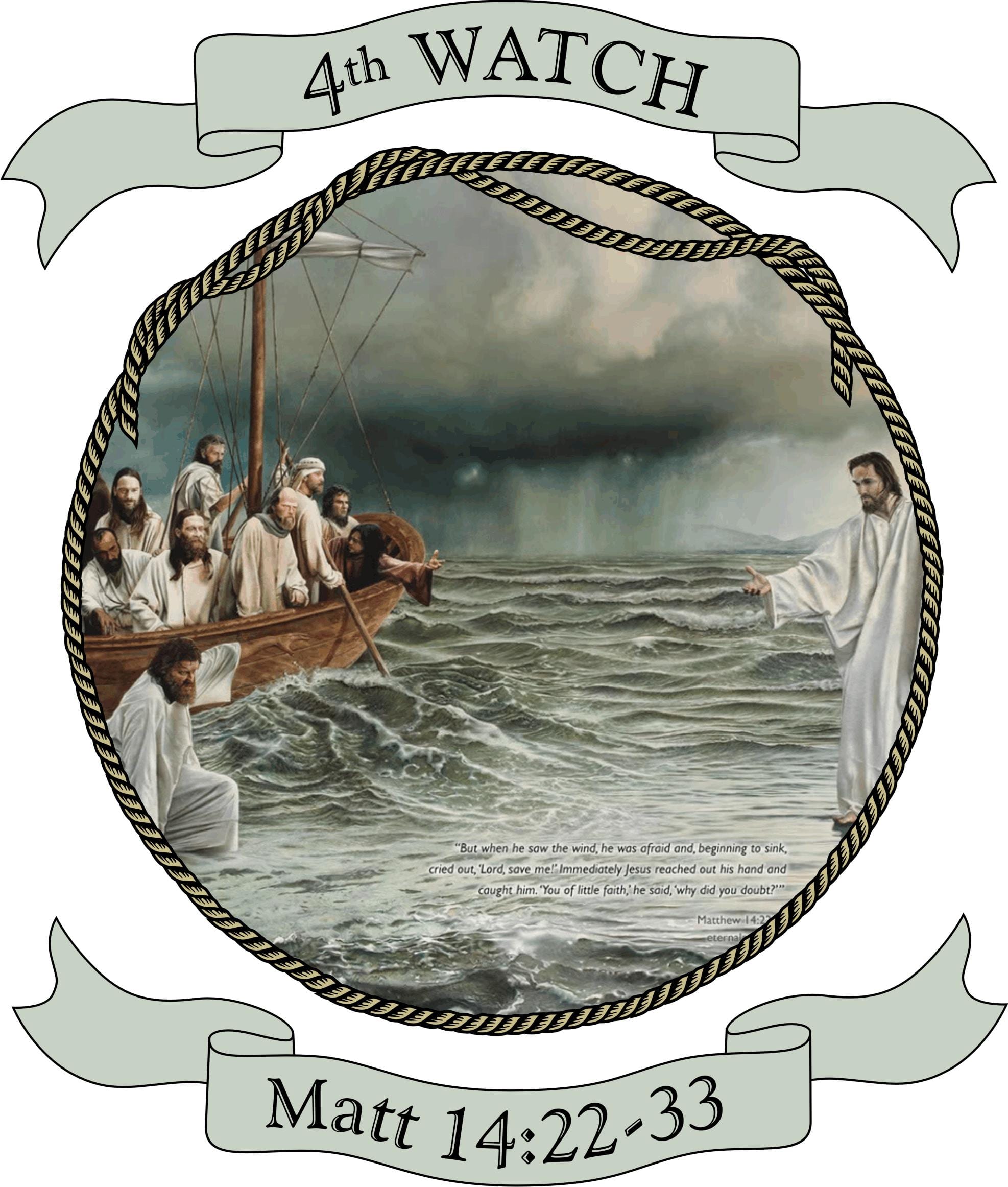
The 4th Watch is a new series of podcasts based on the 14th chapter of Matthew in which the Savior meets the apostles by walking on the water.  Brother Ned Scarisbrick talks about how he received his testimony while serving in the U.S. Navy in Vietnam.

Brother Scarisbrick also reviews an article written by Vicky Gilpin on the anti-Mormon website called “Mormonism Investigated UK,” regarding Chapter 3 of the Lorenzo Snow Manual, “Lifelong Conversion: Continuing to Advance in the Principles of Truth.”  Brother Scarsbrick’s discussion reveals a common set of misunderstandings and false assumptions regarding what we teach.  He uses a simple question and answer format to allow us to draw our own conclusions on what is being taught in this lesson.

Filed Under: Doctrine, Hosts, Ned Scarisbrick, Podcast, Power of Testimony

Mormon FAIR-Cast 124: Controversies Regarding the Nature of Christ

January 9, 2013 by SteveDensleyJr

https://media.blubrry.com/mormonfaircast/www.fairlatterdaysaints.org/wp-content/uploads/2012/09/2012_09_02_religion_today.mp3

Podcast: Download (8.7MB)

Subscribe: RSS

One of the primary reasons some claim that Mormons are not Christians is because the Mormon view of the trinity differs from that of most modern Christians. Mormons claim that their view of the Godhead is correct and that the view of God as set forth in various creeds, such as that which was proclaimed at the Nicean Council, is a corrupt version of the truth. Some modern Christians counter that the concept of the trinity as believed by most Christians today was already considered doctrine by the time of the Council of Nicea and the council was simply held to address other heresies. So what really happened? Why does the majority view of the nature of Christ differ from the view of members of the Church of Jesus Christ of Latter-day Saints? In this episode of Religion Today, which originally aired on KSL Radio on September 2, 2012, Martin Tanner discusses these issues.

This recording was used by permission of KSL Radio and does not necessarily represent the views of The Church of Jesus Christ of Latter-day Saints or of FAIR.

Filed Under: Doctrine, Early Christianity, Podcast

Trusting Imperfect Prophets

December 20, 2012 by Neal Rappleye

An important part of the mission of FAIR, as part of defending the faith, is to promote and defend the credibility of the Brethren in the First Presidency and Quorum of the Twelve Apostles as Prophets, Seers, and Revelators, authorized to lead and guide the Church in the Latter-days. For some, the notion that the prophets or apostles might at times be wrong is just too earth shattering. “They speak with God,” so the thinking goes, “and therefore cannot be wrong.” This leads them to the conclusion that since they are sometimes mistaken, they must not be prophets. Others may perhaps come away with a distorted view of prophets, with an inordinate focus on their imperfections that erodes their faith and confidence in them as men of God. Our hearts go out to those who have had, or do have, similar concerns and struggles.

With that in mind, I would like to offer a few suggestions that have helped me maintain faith in the prophets and apostles and other leaders despite my awareness of their imperfect and fallible status.

[Read more…] about Trusting Imperfect Prophets

Filed Under: Apologetics, Doctrine, General

Mormon FAIR-Cast 92: Deification as understood by the Greek Orthodox Church

June 13, 2012 by SteveDensleyJr

https://media.blubrry.com/mormonfaircast/www.fairlatterdaysaints.org/wp-content/uploads/2012/06/Religion-Today-for-Sunday-March-25.mp3

Podcast: Download (9.1MB)

Subscribe: RSS

Mormons have been criticized for believing that they can become like God. But are they alone among all the religions of the world in this belief? In this episode of Religion Today that originally aired on March 25, 2012, Martin Tanner interviews Dr. Tom Roberts, Academic Dean, St Elias Seminary and Graduate School. They discuss the way in which the Greek Orthodox Church views the concept of deification.

This recording was used by permission of KSL Radio and does not necessarily represent the views of The Church of Jesus Christ of Latter-day Saints or of FAIR.

Filed Under: Doctrine, Podcast

Review: No Weapon Shall Prosper: New Light on Sensitive Issues

May 29, 2012 by Trevor Holyoak

Review of No Weapon Shall Prosper: New Light on Sensitive Issues
Edited by Robert L. Millett
Published by BYU Religious Studies Center and Deseret Book, 2011

Rather than focusing primarily on the methods commonly used by critics as other recent books of this genre do (such as Michael Ash’s Shaken Faith Syndrome, which I also highly recommend), this book contains essays that address some of the most common issues that are used to attack the faith of members of The Church of Jesus Christ of Latter-day Saints. It is intended to help the reader gain a better understanding of these topics in a faith-promoting, but scholarly and honest environment, against the flood of misinformation available online today. Indeed, the editor notes that “The Internet is filled with thousands of pages of anti-Mormon polemic, and it is extremely difficult for people to receive an honest and fair appraisal of Mormonism without significant effort on their part” (page viii).

Besides those by the editor, Robert L. Millett, the book contains contributions by Daniel L. Belnap, J. Spencer Fluhman, Steven C. Harper, Brian M. Hauglid, Daniel K. Judd, Kerry Muhlestein, Ugo A. Perego, Brent L. Top, and John W. Welch. They are split into four categories: Restored Christianity, Latter-day Saint Church History, Scriptural Perspectives, and Doctrinal Teachings. The topics include what it means to be a Christian, the various accounts of the First Vision, the Smiths’ involvement in money-digging and the supernatural, the Kinderhook plates, Joseph Smith’s youngest plural wife, DNA and the Book of Mormon, the Book of Abraham, and Jesus Christ and salvation, among many others. Many of the topics are written by experts in the area – for example, a population geneticist discusses DNA and the Book of Mormon, two Egyptologists discuss the Book of Abraham, and an editor of the Joseph Smith Papers tackles the subject of multiple versions of the First Vision. I would like to concentrate on a few topics of particular interest to me in order to give an idea of the overall book.

Kent P. Jackson’s cleverly titled “Are Christians Christians?” discusses what it means to be a Christian from the point of view of mainstream Christianity and where it came from. He examines statements from the Presbyterian and Methodist churches that declare us to be unchristian. He explains why their definition is unbiblical, and happily admits that we should not be included in it. “We, of all people, should not be offended that other churches consider our baptisms invalid and do not recognize the authority of our priesthood holders to officiate in their ordinances. Since the first days of our church’s history, we have denied the validity of the authority and ordinances of all other churches (see D&C 22). We concede that we are not members of the historic Christian church that includes our Catholic, Orthodox, and Protestant brothers and sisters. But to consider us not Christians on issues of belief is another matter” (page 55). He then goes on to explain that our definition of the word Christian is scriptural (although we have no official statement of such), and that by that definition we would also include those of other faiths previously mentioned.

Steven C. Harper, an editor of the Joseph Smith Papers, wrote about the accounts of Joseph Smith’s First Vision, saying it “may be the best documented theophany (vision of God) in history.” He finds the five different known accounts in eight statements (plus contemporary hearsay) to be “rich documentation” and “a good reason to believe him” rather than being evidence of an inconsistent and evolving story as others contend. (Page 63.) He describes how Fawn Brodie and Wesley Walters shaped the criticisms that are popular today, and did not reconsider their interpretations even when new evidence against them came to light. He points out that “those who share the skeptics’ assumptions will likely arrive at the same conclusions as the skeptics. But those who are open to the possibility that Joseph told the truth can discover other meanings from the same facts” (page 71).

Ugo A. Perego, who holds a PhD in genetics and biomolecular sciences, handles the question of whether DNA proves or disproves the Book of Mormon. He goes into great detail explaining how DNA is used in research, the current theories about migrations into the Americas, and describes the various theories for and against the Book of Mormon based on available DNA evidence. He points out the problems with each of these theories (such as evidence showing up in the wrong time period, wrong assumptions being used, and misunderstandings of the limitations of DNA research) and arrives at the conclusion that DNA evidence can neither be used to prove nor disprove that the people in the Book of Mormon actually existed. (In fact, he points out that it can’t even be used to prove that Jesus existed.) He says that “I find no difficulties in reconciling my scientific passion about Native American history with my religious beliefs. I am not looking for a personal testimony of the Book of Mormon in the double helix. …Anyone using DNA to ascertain the accuracy of historical events of a religious nature – which require instead a component of faith – will be sorely disappointed” (page 208).

One of the essays on the Book of Abraham is by Kerry Muhlestein, who has a PhD in Egyptology from UCLA. He begins by explaining how he got interested in the Book of Abraham, and why Egyptologists outside the church dismiss it. He also found that many members of the church who struggle with the issues involved with the Book of Abraham aren’t looking for an excuse to leave the church, but have “encountered well-written (though not necessarily well-documented or researched) arguments…and did not know how to answer the questions posed by these arguments.” He found that those publishing critical information are generally unaware that it is “based on incorrect information and bad assumptions. They are misled by the mistakes, lies, and trash put out by a few, and they unwittingly pass the information along without really looking into their sources” (page 219).

He then goes on to debunk some of the misinformation, such as the idea that there was no human sacrifice in ancient Egypt. He also found that one of the words supposedly made up by Joseph Smith (Olishem) has been discovered in two ancient texts. He discovered that Egyptians had access to biblical stories by 200 BC (which was the right time period for the papyri), and were particularly interested in Abraham. He presented this information to a conference put on by the Russian Academy of Science and received positive reviews. He talks about evidence that what we actually have possession of today was a very small part of what Joseph had, and gives reasons why it likely was not the source of the Book of Abraham, other than Facsimile 1. He also briefly discusses the mystery of the Kirtland Egyptian Papers, which were not likely to have been used in the translation process, as some critics have claimed. Another important point he makes is that “written by his own hand, upon papyrus” does not mean that the actual papyrus we have was written by the hand of Abraham, but that it is a copy of the original that Abraham would have written on much earlier. He also devotes several pages to Facsimile 1, pointing out many evidences (and some possible theories) for the authenticity of the interpretations provided by Joseph Smith.

Overall, I thought the book was quite good, although some essays were better than others. Some of the more doctrinal ones, in particular, presented a few points as given that not all members would agree on. But such is the nature of Mormonism. The book could be used to answer questions for oneself, to help a member friend or an investigator, or for inoculation against misinformation and half-truths encountered in a hostile environment. It would be useful reading for those preparing to serve a mission, for families, and for any individual interested in learning more about these issues or defending the church.

This book is available at the FAIR bookstore here.

Filed Under: Apologetics, Book of Mormon, Book reviews, Doctrine, Early Christianity, Joseph Smith, LDS History, Polygamy, Science

  • « Go to Previous Page
  • Page 1
  • Interim pages omitted …
  • Page 16
  • Page 17
  • Page 18
  • Page 19
  • Page 20
  • Interim pages omitted …
  • Page 22
  • Go to Next Page »

Primary Sidebar

Faithful Study Resources for Come, Follow Me

Subscribe to Blog

Enter your email address:

Subscribe to Podcast

Podcast icon
Subscribe to podcast in iTunes
Subscribe to podcast elsewhere
Listen with FAIR app
Android app on Google Play Download on the App Store

Pages

  • Blog Guidelines

FAIR Latest

  • Come, Follow Me with FAIR – Exodus 35–40; Leviticus 1; 4; 16; 19 – Part 2 – Autumn Dickson
  • Come, Follow Me with FAIR – Exodus 35–40; Leviticus 1; 4; 16; 19 – Jennifer Roach Lees
  • Come, Follow Me with FAIR – Exodus 35–40; Leviticus 1; 4; 16; 19 – Part 1 – Autumn Dickson
  • Tithing—Putting God First 
  • Come, Follow Me with FAIR – Exodus 19–20; 24; 31–34 – Part 2 – Autumn Dickson

Blog Categories

Recent Comments

  • Guerry Green on Come, Follow Me with FAIR – Exodus 7–13 – Part 1 – Autumn Dickson
  • Antonio Moreno on Taking on the Name of Jesus Christ
  • productx ai vedio ads maker on Come, Follow Me with FAIR – Easter – Part 2 – Autumn Dickson
  • Sister Truelove on Humble Souls at Altars Kneel
  • Antonio Moreno on Forsake Not Your Own Mercy

Archives

Follow Us

  • Facebook
  • Twitter
  • iTunes
  • YouTube
Android app on Google Play Download on the App Store

Footer

FairMormon Logo

FAIR is a non-profit organization dedicated to providing well-documented answers to criticisms of the doctrine, practice, and history of The Church of Jesus Christ of Latter-day Saints.

Donate to FAIR

We are a volunteer organization. We invite you to give back.

Donate Now

Site Footer