• Skip to primary navigation
  • Skip to main content
  • Skip to primary sidebar
  • Skip to footer

FAIR

  • Find Answers
  • Blog
  • Media & Apps
  • Conference
  • Bookstore
  • Archive
  • About
  • Get Involved
  • Search

Uncategorized

Faith and Reason 22: Laban and his “Fifty”

October 3, 2014 by FAIR Staff

https://media.blubrry.com/mormonfaircast/www.fairlatterdaysaints.org/wp-content/uploads/2014/10/Evidence-26A.mp3

Podcast: Download (4.4MB)

Subscribe: RSS


From the book: Of Faith and Reason: 80 Evidences Supporting the Prophet Joseph Smith

by Michael R. Ash

When Nephi and his brothers asked Laban for the brass plates in trade for their silver and gold, Laban tried to kill them and he took away their possessions. After a narrow escape, Laman and Lemuel complained about the impossibility of their task because of Laban and his “fifty”:

“And after the angel had departed, Laman and Lemuel again began to murmur, saying: How is it possible that the Lord will deliver Laban into our hands? Behold, he is a mighty man, and he can command fifty, yea, even he can slay fifty; then why not us?” (1 Nephi 3:31)

To modern readers this sounds like a small army indeed, but to those of the ancient Near East, the size of Laban’s garrison fits neatly into Old World customs. According to Dr. Hugh Nibley, a permanent garrison in a big city of Lehi’s day consisted of thirty to eighty men. In a recently discovered letter of Nebuchadnezzar (a contemporary of Lehi,) the king speaks of a garrison of “fifty”. In Babylonia, a platoon in the army consisted of fifty men. This permanent unit was always called a “fifty” just as Nephi spoke of “Laban with his fifty”.

Michael R. Ash is the author of: Of Faith and Reason: 80 Evidences Supporting The Prophet Joseph Smith. He is the owner and operator of MormonFortress.com and is on the management team for FairMormon. He has been published in Sunstone, Dialogue: A Journal of Mormon Thought, the Maxwell Institute’s FARMS Review, and is the author of Shaken Faith Syndrome: Strengthening One’s Testimony in the Face of Criticism and Doubt.  He and his wife live in Ogden, Utah, and have three daughters.

Julianne Dehlin Hatton  is a broadcast journalist living in Louisville, Kentucky. She has worked as a News Director at an NPR affiliate, Radio and Television Host, and Airborne Traffic Reporter. She graduated with an MSSc from the Maxwell School of Citizenship and Public Affairs at Syracuse University in 2008. Julianne and her husband Thomas are the parents of four children.

Music for Faith and Reason is provided by Arthur Hatton.
Filed Under: Uncategorized

Faith and Reason 21: The Axial Period

September 25, 2014 by FAIR Staff

https://media.blubrry.com/mormonfaircast/www.fairlatterdaysaints.org/wp-content/uploads/2014/09/Evidence-252.mp3

Podcast: Download (4.7MB)

Subscribe: RSS

From the book: Of Faith and Reason: 80 Evidences Supporting the Prophet Joseph Smith

by Michael R. Ash

The Book of Mormon opens with Lehi prophesying to the unrighteous people at Jerusalem in about 600 BC. Modern research has since demonstrated that the sixth century BC was a time of unusual change and excitement. Some scholars have referred to the general era as an “Axial Period” in world history because it was a pivotal point around which history turns. Some of history’s greatest changes were taking place among the people and Lehi and his followers were right in the center of it. This was unknown, of course, in Joseph Smith’s own day.

Michael R. Ash is the author of: Of Faith and Reason: 80 Evidences Supporting The Prophet Joseph Smith. He is the owner and operator of MormonFortress.com and is on the management team for FairMormon. He has been published in Sunstone, Dialogue: A Journal of Mormon Thought, the Maxwell Institute’s FARMS Review, and is the author of Shaken Faith Syndrome: Strengthening One’s Testimony in the Face of Criticism and Doubt.  He and his wife live in Ogden, Utah, and have three daughters.

Julianne Dehlin Hatton  is a broadcast journalist living in Louisville, Kentucky. She has worked as a News Director at an NPR affiliate, Radio and Television Host, and Airborne Traffic Reporter. She graduated with an MSSc from the Maxwell School of Citizenship and Public Affairs at Syracuse University in 2008. Julianne and her husband Thomas are the parents of four children.

Music for Faith and Reason is provided by Arthur Hatton.

Filed Under: Uncategorized

Faith and Reason 20: “Without a Cause”

September 18, 2014 by FAIR Staff

https://media.blubrry.com/mormonfaircast/www.fairlatterdaysaints.org/wp-content/uploads/2014/09/Evidence-24.mp3

Podcast: Download (4.2MB)

Subscribe: RSS

Sermon

From the book: Of Faith and Reason: 80 Evidences Supporting the Prophet Joseph Smith

by Michael R. Ash

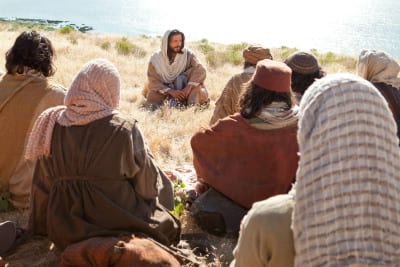
When Christ visited the Book of Mormon people in the ancient New World he gave a discourse that is nearly identical to the Sermon on the Mount in the New Testament. Critics claim that Joseph Smith simply plagiarized the New Testament sermon, however there are differences between what we find in the New Testament and the Book of Mormon. For example, in Matthew 5:22 Christ said: “But I say unto you, That whosoever is angry with his brother without a cause shall be in danger of the judgment”. In 3 Nephi 12:22 Christ said: “But I say unto you, that whosoever is angry with his brother shall be in danger of his judgment”. The astute reader will notice that in 3 Nephi the words “without a cause” are absent. When we examine the earliest Greek copies of the New Testament –documents that were discovered after Joseph Smith had died –we find that the phrase “without a cause” is also generally absent. As Professor John Welch notes, the verse in 3 Nephi discourages all anger whereas the verse in Matthew permits justifiable anger. Some non-LDS scholars believe that “without a cause” was added to Matthew 5:22 during the translation process, while the Book of Mormon more accurately reflects the likely original intention of the passage. The fact that Joseph Smith got it right, when no scholars in his world would have been aware of the later Greek insertion shouldn’t be amazing –but it is.

Michael R. Ash is the author of: Of Faith and Reason: 80 Evidences Supporting The Prophet Joseph Smith. He is the owner and operator of MormonFortress.com and is on the management team for FairMormon. He has been published in Sunstone, Dialogue: A Journal of Mormon Thought, the Maxwell Institute’s FARMS Review, and is the author of Shaken Faith Syndrome: Strengthening One’s Testimony in the Face of Criticism and Doubt.  He and his wife live in Ogden, Utah, and have three daughters.

Julianne Dehlin Hatton  is a broadcast journalist living in Louisville, Kentucky. She has worked as a News Director at an NPR affiliate, Radio and Television Host, and Airborne Traffic Reporter. She graduated with an MSSc from the Maxwell School of Citizenship and Public Affairs at Syracuse University in 2008. Julianne and her husband Thomas are the parents of four children.

Music for Faith and Reason is provided by Arthur Hatton.

Filed Under: Uncategorized

Faith and Reason 19: Deseret and Bees

September 11, 2014 by FAIR Staff

https://media.blubrry.com/mormonfaircast/www.fairlatterdaysaints.org/wp-content/uploads/2014/09/Evidence-22.mp3

Podcast: Download (4.7MB)

Subscribe: RSS


From the book: Of Faith and Reason: 80 Evidences Supporting the Prophet Joseph Smith

by Michael R. Ash

And they did also carry with them deseret, which, by interpretation, is a honey bee; and thus they did carry with them swarms of bees, and all manner of that which was upon the face of the land, seeds of every kind – Ether 2:3 in the Book of Mormon

In the Book of Mormon we find that the Jaredite word deseret means “honeybee”. Years ago, Dr. Hugh Nibley observed that the word deseret “or something very close to it, enjoyed a position of ritual prominence” among the early Egyptians and they associated the word with a symbol of the bee. He explained, “We know that the bee sign was not always written down, but in its place the picture of the Red Crown… If we do not know the original name of the bee, we do know the name of this Red Crown –the name it bore when it was substituted for the bee. The name was dsrt (the vowels are not known, but we can be sure they were all short”).

Michael R. Ash is the author of: Of Faith and Reason: 80 Evidences Supporting The Prophet Joseph Smith. He is the owner and operator of MormonFortress.com and is on the management team for FairMormon. He has been published in Sunstone, Dialogue: A Journal of Mormon Thought, the Maxwell Institute’s FARMS Review, and is the author of Shaken Faith Syndrome: Strengthening One’s Testimony in the Face of Criticism and Doubt.  He and his wife live in Ogden, Utah, and have three daughters.

Julianne Dehlin Hatton  is a broadcast journalist living in Louisville, Kentucky. She has worked as a News Director at an NPR affiliate, Radio and Television Host, and Airborne Traffic Reporter. She graduated with an MSSc from the Maxwell School of Citizenship and Public Affairs at Syracuse University in 2008. Julianne and her husband Thomas are the parents of four children.

Music for Faith and Reason is provided by Arthur Hatton.

Filed Under: Uncategorized

Faith and Reason 18: Names in The Book of Mormon

August 28, 2014 by FAIR Staff

https://media.blubrry.com/mormonfaircast/www.fairlatterdaysaints.org/wp-content/uploads/2014/08/Evidence-17.mp3

Podcast: Download (15.0MB)

Subscribe: RSS

From the Book: 80 Evidences Supporting the Prophet Joseph Smith

by Michael R. Ash

Critics typically contend that Joseph Smith either invented the names in the Book of Mormon or borrowed them from his surroundings. The first name mentioned in the Nephite record is Nephi. We find this name in the Apocrypha. The Apocrypha are part of the Catholic collection of scriptures, but are not included in the Protestant scriptures such as the King James Version Bible. Whether Joseph has access to the Apocrypha in 1829 is unknown.

Sariah was Lehi’s faithful wife who endured so much tribulation during their journey through the Arabian Peninsula. Dr. Jeffrey Chadwick, who holds a PhD in Archaeology and Semitic Languages, believes that a likely Hebrew spelling of Sariah would be s’ryh and would be pronounced something like Sar-yah. The name s’ryh has been found on ancient Aramaic papyri in Egypt, dating to the time of Lehi, which was not discovered until the twentieth century. Although the language of the document is Aramaic, the name, it has been shown, is Hebrew. Non-Mormon scholars have translated this part of the papyri as “Sariah daughter of Hoshea son of Harman”.

Many critics have laughed at the Book of Mormon for using “Alma” as a masculine personal name. In the United States, Alma is typically a female name of Latin origin. Alma-mater, for example, means “nourishing mother” and was used during medieval times to refer to the Virgin Mary. In the late twentieth century, however, it was found that some ancient Near Eastern documents –such as letters from Bar Kokhba and clay tablets from Ebla –contained the male name “Alma”.

With the exception of Alma, the few times that the critics have mentioned Book of Mormon names has been to ridicule them as strange and obviously created by Joseph Smith. One critic wrote: “It required something of a genius, it must be confessed, to manufacture some of the names of the Book of Mormon… names that at least have a certain syllabic jingle, if they have no meaning”. As light is shed on all areas of Book of Mormon studies, however, we gain new support for the names found in the Nephite scripture.

Many Book of Mormon names, we find, have Near Eastern parallels, several of which are Egyptian. Dr. Hugh Nibley wrote: “It should be noted that archaeology has fully demonstrated that the Israelites, then as now, had not the slightest aversion to giving their children non-Jewish names, even when those names smacked of a pagan background. Recently discovered ancient manuscripts who that many Jews in the days of Lehi names their children after Egyptian hero kings of the past.

For a time, Mormon scholars were confused as to why the Book of Mormon does not include a single name containing the element of Baal, which is so common in the Old Testament. The recent discovery of the Elephantine papyrus from Egypt shows that Israelites eliminated all names with Baal elements during Lehi’s day. Of the over four hundred names among the Elephantine manuscripts, not one is compounded of Baal.

“It is no small feat,” writes Nibley, “simply to have picked a lot of strange and original names out of the air. But what shall we say of the man who was able to pick the right ones?”.

Michael R. Ash is the author of: Of Faith and Reason: 80 Evidences Supporting The Prophet Joseph Smith. He is the owner and operator of MormonFortress.com and is on the management team for FairMormon. He has been published in Sunstone, Dialogue: A Journal of Mormon Thought, the Maxwell Institute’s FARMS Review, and is the author of Shaken Faith Syndrome: Strengthening One’s Testimony in the Face of Criticism and Doubt. He and his wife live in Ogden, Utah, and have three daughters.

Julianne Dehlin Hatton  is a broadcast journalist living in Louisville, Kentucky. She has worked as a News Director at an NPR affiliate, Radio and Television Host, and Airborne Traffic Reporter. She graduated with an MSSc from the Maxwell School of Citizenship and Public Affairs at Syracuse University in 2008. Julianne and her husband Thomas are the parents of four children.

Music for Faith and Reason is provided by Arthur Hatton.

Filed Under: Uncategorized

Faith and Reason 17: “Reformed Egyptian”

August 21, 2014 by FAIR Staff

https://media.blubrry.com/mormonfaircast/www.fairlatterdaysaints.org/wp-content/uploads/2014/08/Evidence-16.mp3

Podcast: Download (5.9MB)

Subscribe: RSS


From the book:  Of Faith and Reason: 80 Evidences Supporting the Prophet Joseph Smith

by Michael R. Ash

Near the beginning of the Book of Mormon, Nephi tells his readers that the record was written in “the language of my father, which consists of the learning of the Jews and the language of the Egyptians” (1 Nephi 1:2) Critics have asserted for years that there is no such thing as reformed Egyptian, and even if there were, devout Israelites such as Lehi would not have written scripture in a pagan Egyptian script but would have only used Hebrew.

Nearly fifty years ago, Hugh Nibley showed that the Egyptian culture played an influential role in seventy century BC Palestine –primarily in the area of culture and language. Modern studies verify that Nibley was right. Recently rediscovered writings from approximately Lehi’s day tell us that Jews and other foreigners were all instructed in the language of Egypt. We now know of other Hebrew and Aramaic texts –such as Papyrus Amherst 63 –that were written in Egyptian characters.

Also discovered a decade ago, were ancient potsherds from Lehi’s vicinity and time, that contained a script composed of a modified form of Egyptian hieroglyphics. This script was used almost exclusively by Israel and not any of the neighboring communities. Some Near Eastern scholars now believe that scribes and students in Lehi’s day were trained in both Hebrew and Egyptian writing systems.

Michael R. Ash is the author of: Of Faith and Reason: 80 Evidences Supporting The Prophet Joseph Smith. He is the owner and operator of MormonFortress.com and is on the management team for FairMormon. He has been published in Sunstone, Dialogue: A Journal of Mormon Thought, the Maxwell Institute’s FARMS Review, and is the author of Shaken Faith Syndrome: Strengthening One’s Testimony in the Face of Criticism and Doubt. He and his wife live in Ogden, Utah, and have three daughters.

Julianne Dehlin Hatton  is a broadcast journalist living in Louisville, Kentucky. She has worked as a News Director at an NPR affiliate, Radio and Television Host, and Airborne Traffic Reporter. She graduated with an MSSc from the Maxwell School of Citizenship and Public Affairs at Syracuse University in 2008. Julianne and her husband Thomas are the parents of four children.

Music for Faith and Reason is provided by Arthur Hatton.


Filed Under: Uncategorized

Faith and Reason 16: “It Came to Pass,” Part One

August 14, 2014 by FAIR Staff

https://media.blubrry.com/mormonfaircast/www.fairlatterdaysaints.org/wp-content/uploads/2014/08/Evidence-15.mp3

Podcast: Download (3.6MB)

Subscribe: RSS

From the Book: Of Faith and Reason: 80 Evidences Supporting the Prophet Joseph Smith

by Michael R. Ash

The Book of Mormon’s frequent use of the phrase “and it came to pass” has been the target of much ridicule. Mark Twain claimed this was Smith’s “pet phrase” and had Smith left it out, the Book of Mormon “would have been only a pamphlet”. Another critic asserted that the Book of Mormon, “is cursed with the clumsy, repetitious phrase ‘and it came to pass’ that appears hundreds of times in the book, on almost every page”. Neith Mark Twain nor Joseph Smith would have known in the nineteenth century just how important this phrase was to Book of Mormon authors.

The original manuscript of the Book of Mormon had no punctuation. Likewise, manuscripts prior to the tenth century typically had no punctuation. In both ancient Eqyptian and Hebrew, indicator phrases such as “it came to pass”, “and now”, “and thus”, were grammatically necessary to denote new thoughts or paragraphs. Since the Book of Mormon claims to be written in a modified Hebrew language and “reformed” or modified Egyptian characters it would be strange if it didn’t contain such phrases.

Michael R. Ash is the author of: Of Faith and Reason: 80 Evidences Supporting The Prophet Joseph Smith. He is the owner and operator of MormonFortress.com and is on the management team for FairMormon. He has been published in Sunstone, Dialogue: A Journal of Mormon Thought, the Maxwell Institute’s FARMS Review, and is the author of Shaken Faith Syndrome: Strengthening One’s Testimony in the Face of Criticism and Doubt. He and his wife live in Ogden, Utah, and have three daughters.

Julianne Dehlin Hatton  is a broadcast journalist living in Louisville, Kentucky. She has worked as a News Director at an NPR affiliate, Radio and Television Host, and Airborne Traffic Reporter. She graduated with an MSSc from the Maxwell School of Citizenship and Public Affairs at Syracuse University in 2008. Julianne and her husband Thomas are the parents of four children.

Music for Faith and Reason is provided by Arthur Hatton.


Filed Under: Uncategorized

Faith and Reason 15: The “Rent” Garment, Part 1

August 7, 2014 by FAIR Staff

https://media.blubrry.com/mormonfaircast/www.fairlatterdaysaints.org/wp-content/uploads/2014/08/Evidence-14.mp3

Podcast: Download (4.5MB)

Subscribe: RSS

From the book: Of Faith and Reason: 80 Evidences Supporting the Prophet Joseph Smith

By Michael R. Ash

In Alma 46 we read that Captain Moroni made a “banner of liberty” from his rent coat. In the original edition of the Book of Mormon we read: “And when Moroni had said these words, he went forth among the people, waving the rent of his garment in the air, that all might see the writing which he had wrote upon the rent, and crying with a loud voice…” (italics added).

For clarification and to improve the grammar, the current edition of the Book of Mormon reads: And when Moroni had said these words, he went forth among the people, waving the rent part of his garment in the air, that all might see the writing which he had written upon the rent part, and crying with a loud voice…” (Alma 46:19; italics added).

Critics have laughed at the original version for more than a century. To them, this was one more proof that the unsophisticated Joseph Smith wrote –rather than translated –the Book of Mormon. How can a “rent” be written upon?

In Hebrew, the word qera’ –which is translated as a noun for a “rent part” –derives from the Hebrew qara’ which is the verb form and means “he rent, tore”. This word also translates in a manner that makes “rent” a noun –just as we find in Alma 46.

Michael R. Ash is the author of: Of Faith and Reason: 80 Evidences Supporting The Prophet Joseph Smith. He is the owner and operator of MormonFortress.com and is on the management team for FairMormon. He has been published in Sunstone, Dialogue: A Journal of Mormon Thought, the Maxwell Institute’s FARMS Review, and is the author of Shaken Faith Syndrome: Strengthening One’s Testimony in the Face of Criticism and Doubt. He and his wife live in Ogden, Utah, and have three daughters.

Julianne Dehlin Hatton  is a broadcast journalist living in Louisville, Kentucky. She has worked as a News Director at an NPR affiliate, Radio and Television Host, and Airborne Traffic Reporter. She graduated with an MSSc from the Maxwell School of Citizenship and Public Affairs at Syracuse University in 2008. Julianne and her husband Thomas are the parents of four children.

Music for Faith and Reason is provided by Arthur Hatton.


Filed Under: Uncategorized

Faith and Reason 14: Chiasmus in The Book of Mormon

August 2, 2014 by FAIR Staff

https://media.blubrry.com/mormonfaircast/www.fairlatterdaysaints.org/wp-content/uploads/2014/08/Evidence-11.mp3

Podcast: Download (10.0MB)

Subscribe: RSS

From the book: Of Faith and Reason: 80 Evidences Supporting the Prophet Joseph Smith

by Michael R. Ash

Chiasmus was practically unknown in the United States when the Book of Mormon was published. However, if by chance, Joseph Smith had some sort of scholarly knowledge unavailable to the typical frontiersman, how did he find time –during the seventy or so days of translating –to create such complex chiastic structures? The presence of chiasmus in the Book of Mormon lends support to the claim that the book is based on an authentic ancient text.

Michael R. Ash is the author of: Of Faith and Reason: 80 Evidences Supporting The Prophet Joseph Smith. He is the owner and operator of MormonFortress.com and is on the management team for FairMormon. He has been published in Sunstone, Dialogue: A Journal of Mormon Thought, the Maxwell Institute’s FARMS Review, and is the author of Shaken Faith Syndrome: Strengthening One’s Testimony in the Face of Criticism and Doubt. He and his wife live in Ogden, Utah, and have three daughters.

Julianne Dehlin Hatton  is a broadcast journalist living in Louisville, Kentucky. She has worked as a News Director at an NPR affiliate, Radio and Television Host, and Airborne Traffic Reporter. She graduated with an MSSc from the Maxwell School of Citizenship and Public Affairs at Syracuse University in 2008. Julianne and her husband Thomas are the parents of four children.

Music for Faith and Reason is provided by Arthur Hatton.


Filed Under: Uncategorized

Faith and Reason 13: If/And Conditional Sentences

July 25, 2014 by FAIR Staff

https://media.blubrry.com/mormonfaircast/www.fairlatterdaysaints.org/wp-content/uploads/2014/07/Evidence-12.mp3

Podcast: Download (4.1MB)

Subscribe: RSS

From the book: Of Faith and Reason: 80 Evidences Supporting the Prophet Joseph Smith

by Michael R. Ash

Dr. Daniel Peterson and Dr. Royal Skousen recently discovered that the Book of Mormon contains odd sentence structures utilizing the conditions if and and. In the original Book of Mormon manuscript, as dictated by Joseph Smith to Oliver Cowdery we find several examples, such as the following:

…yea and if he saith unto the earth move and it is moved…

…yea if he say unto the earth thou shalt go back that it lengthen out the day for many hours and it is done…

…and behold also if he saith unto the waters of the great deep be thou dried up and it is done…

In modern editions of the Book of Mormon,  these phrases were edited to sound more grammatically correct to English readers.

The if/and conditional sentence structure is also found in ancient Hebrew and biblical Hebrew. It is not surprising that the if/and sentences in the King James Version of the Bible, were also modified to make it sound more palatable to English readers.

As far as the research of Skousen and Peterson have shown, this authentic Hebrew sentence structure was not available in any other English text in Joseph Smith’s lifetime, but is a strong evidence for the Hebraic background of the Book of Mormon text.

Michael R. Ash is the author of: Of Faith and Reason: 80 Evidences Supporting The Prophet Joseph Smith. He is the owner and operator of MormonFortress.com and is on the management team for FairMormon. He has been published in Sunstone, Dialogue: A Journal of Mormon Thought, the Maxwell Institute’s FARMS Review, and is the author of Shaken Faith Syndrome: Strengthening One’s Testimony in the Face of Criticism and Doubt. He and his wife live in Ogden, Utah, and have three daughters.

Julianne Dehlin Hatton  is a broadcast journalist living in Louisville, Kentucky. She has worked as a News Director at an NPR affiliate, Radio and Television Host, and Airborne Traffic Reporter. She graduated with an MSSc from the Maxwell School of Citizenship and Public Affairs at Syracuse University in 2008. Julianne and her husband Thomas are the parents of four children.

Music for Faith and Reason is provided by Arthur Hatton.

Filed Under: Uncategorized

  • « Go to Previous Page
  • Go to page 1
  • Interim pages omitted …
  • Go to page 3
  • Go to page 4
  • Go to page 5
  • Go to page 6
  • Go to page 7
  • Go to Next Page »

Primary Sidebar

Faithful Study Resources for Come, Follow Me

Subscribe to Blog

Enter your email address:

Subscribe to Podcast

Podcast icon
Subscribe to podcast in iTunes
Subscribe to podcast elsewhere
Listen with FAIR app
Android app on Google Play Download on the App Store

Pages

  • Blog Guidelines

FAIR Latest

  • Come, Follow Me with FAIR – Doctrine and Covenants 137–138 – Part 2 – Autumn Dickson
  • Come, Follow Me with FAIR – Doctrine and Covenants 137–138 – Mike Parker
  • FAIR December Newsletter
  • Come, Follow Me with FAIR – Doctrine and Covenants 137–138 – Part 1 – Autumn Dickson
  • Prophets of God 

Blog Categories

Recent Comments

  • LHL on Come, Follow Me with FAIR – Doctrine and Covenants 132 – Mike Parker
  • Stephen Johnsen on Come, Follow Me with FAIR – Doctrine and Covenants 132 – Mike Parker
  • Bruce B Hill on Come, Follow Me with FAIR – Doctrine and Covenants 124 – Part 1 – Autumn Dickson
  • Gabriel Hess on Join us Oct 9–11 for our FREE virtual conference on the Old Testament
  • JC on When the Gospel “Doesn’t Work”

Archives

Follow Us

  • Facebook
  • Twitter
  • iTunes
  • YouTube
Android app on Google Play Download on the App Store

Footer

FairMormon Logo

FAIR is a non-profit organization dedicated to providing well-documented answers to criticisms of the doctrine, practice, and history of The Church of Jesus Christ of Latter-day Saints.

Donate to FAIR

We are a volunteer organization. We invite you to give back.

Donate Now

Site Footer