
In his October 2025 General Conference address, “Encounter at the Empty Tomb,” Dieter F. Uchtdorf teaches that faith in Jesus Christ often begins not with perfect understanding, but with a willingness to move forward in devotion, even in moments of grief, confusion, or unanswered questions.
Like the women who came to the Savior’s tomb early that Easter morning, some may wonder: If I don’t fully understand or feel certain, does my faith still count?
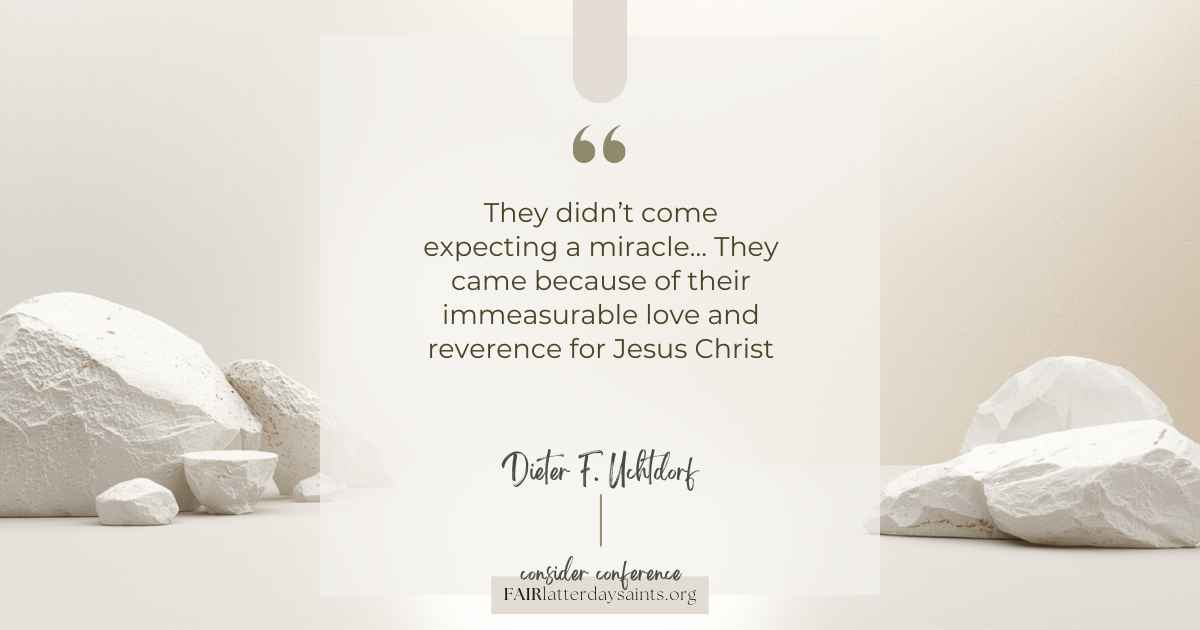
They didn’t come expecting a miracle… They came because of their immeasurable love and reverence for Jesus Christ.
Common Criticism: “I need full understanding before I can fully believe or commit.”
Some hesitate to move forward in faith because they feel unresolved questions, uncertainty, or incomplete understanding. They may assume that belief requires clarity first.
Fallacy at Work: Certainty Before Commitment
This mindset assumes that action should only follow complete understanding. It delays discipleship until all doubts are resolved.
But this overlooks a central gospel pattern: understanding often follows faith, not the other way around.
Doctrine: Faith Precedes Spiritual Clarity
The scriptures consistently teach that faith requires movement:
- “Faith, if it hath not works, is dead” (James 2:17)
- “Ye receive no witness until after the trial of your faith” (Ether 12:6)
President Uchtdorf illustrates this doctrine through the women at the tomb. They did not come because everything made sense. They came because they loved the Savior.
President Uchtdorf’s Correction
He teaches that even in darkness, uncertainty, and grief, disciples can choose to move toward Christ.
The women did not wait for answers. They acted in devotion. And because they came, they became the first witnesses of the Resurrection.
Solution
Faith is not waiting for clarity. It is choosing to move toward Christ even when clarity has not yet come.
“Even when things seem dark, we step forward in faith… and walk toward the Savior’s light.”
Living Apologetics: Moving Toward Christ in Uncertainty
At times, discipleship can feel uncertain. Questions may linger. Answers may feel incomplete.
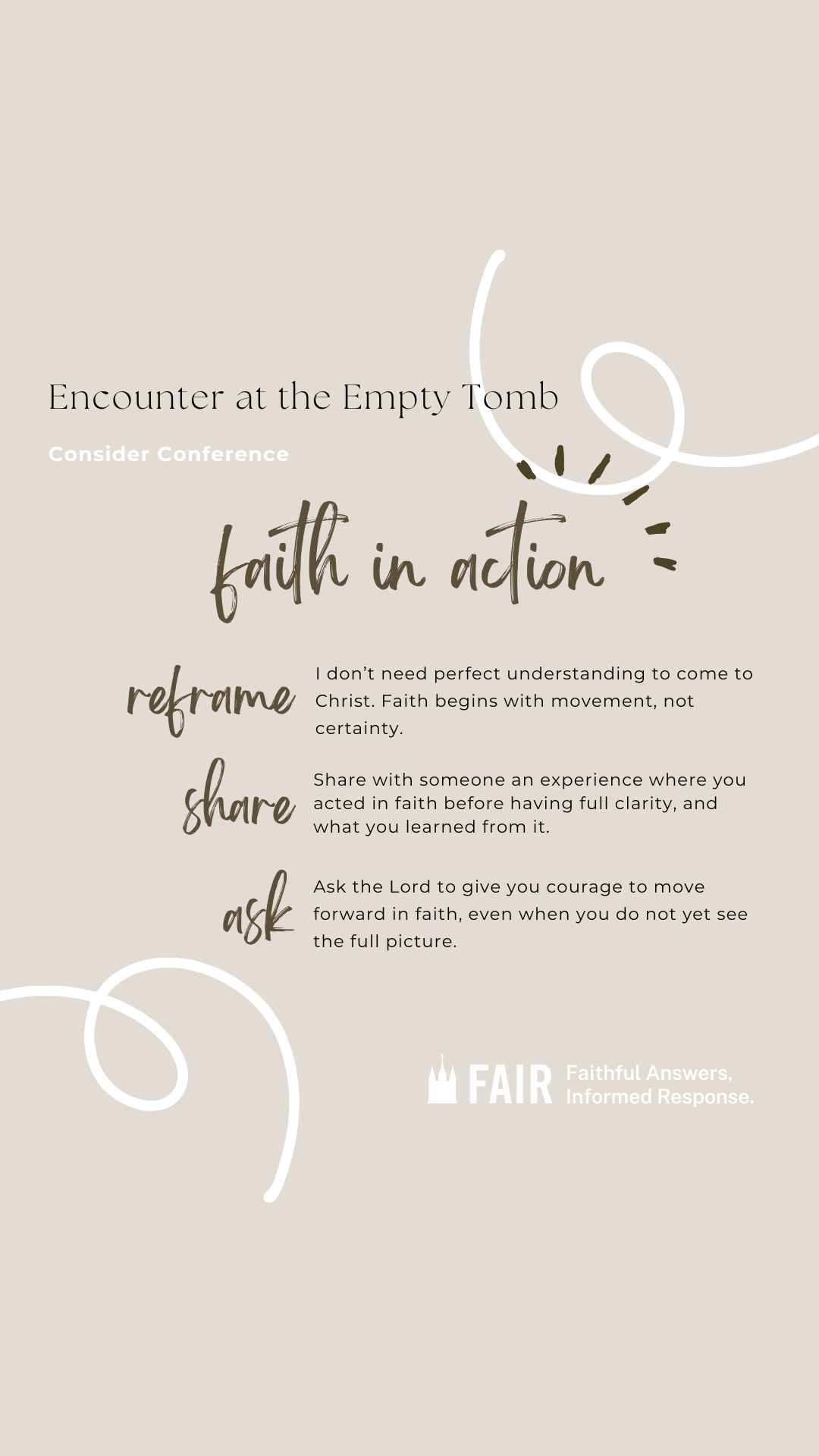
President Uchtdorf reframes these moments: You don’t need to understand everything to come closer to Christ. The women at the tomb did not come expecting resolution. They came because they loved Him.
And that simple act of devotion placed them in a position to receive one of the greatest revelations in history.
In the same way, small acts of faith today can lead to greater understanding tomorrow.
 Practical Apologetic Use
- If someone says: “I can’t move forward until I understand everything.”
- You can respond: “President Uchtdorf teaches that faith often begins with movement. As we come to Christ, even with questions, understanding grows over time.”
Ways to Apply Today
1️⃣ Take one step toward Christ today, even if you still have unanswered questions.
2️⃣ Choose devotion over delay. Act on what you do believe, not just what you don’t yet understand.
3️⃣ Reflect on a time when clarity came after you chose to move forward in faith.
Keep This Talk With You
President Uchtdorf reminds us that the journey of discipleship often begins in quiet, uncertain moments.
The women who came to the tomb did not arrive with answers.
They arrived with love.
And because they came, everything changed.
That same invitation remains. We, too, are invited to “encounter the empty tomb”—to come to know for ourselves that Jesus Christ lives and is actively guiding, comforting, and strengthening His followers today.
This week:
- Move toward Christ, even in uncertainty. Do not wait for perfect clarity.
- Act on devotion. Let love for the Savior guide your choices.
- Seek your own witness. Reflect on what you have felt, seen, and experienced.
As we do, the promise is sure: Darkness will give way to light. Questions will give way to understanding. And faith will become knowledge.
What step can I take today to move toward Christ, even if I do not yet see everything clearly?
The Consider Conference series by FAIR offers an in-depth look at recent General Conference talks to help members of the Church of Jesus Christ of Latter-day Saints navigate common questions, misunderstandings, and criticisms. Each post provides doctrinal insights, historical context, and practical ways to apply gospel principles in everyday conversations. Through this series, we hope to equip readers with faith-promoting resources that encourage thoughtful reflection, respectful dialogue, and a stronger foundation in gospel truths, fostering both personal conviction and meaningful discussions with others.
