
In his April 2026 General Conference address, “Come Unto Christ—Together,” Elder Taniela B. Wakolo taught that God’s plan of salvation is ultimately about bringing His children to Christ and uniting families eternally. Drawing from scripture and personal experiences, he reminded listeners that the Lord works patiently with individuals and families, honoring agency while inviting all to receive the blessings of the gospel.
One criticism frequently raised about Latter-day Saint teachings is that temple ordinances and eternal family doctrine create division between believing and non-believing family members. Elder Wakolo’s message offers a different perspective: the gospel is not intended to separate families but to help unite them through Christ.
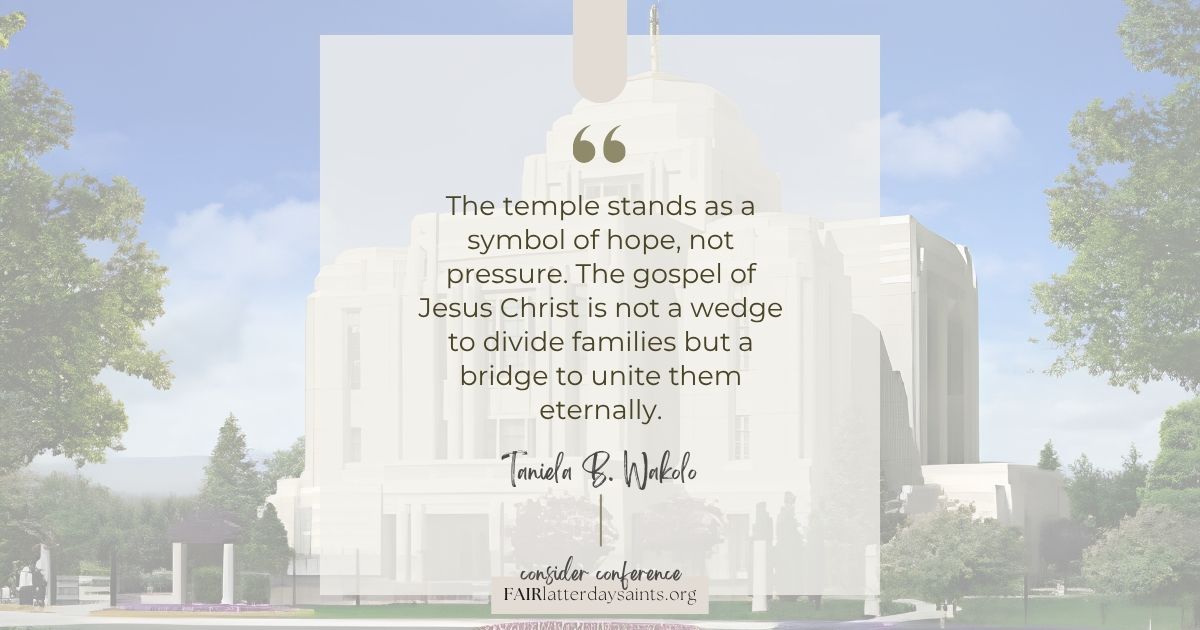
The temple stands as a symbol of hope, not pressure. The gospel of Jesus Christ is not a wedge to divide families but a bridge to unite them eternally.
Common Criticism: Eternal Family Teachings Divide Families
Some critics argue that teachings about temple marriage and eternal families create painful distinctions between family members who hold different beliefs. They see the doctrine as exclusionary and assume it places institutional loyalty above family relationships.
Fallacy at Work: False Dilemma
False Dilemma is the tendency to assume there are only two options when reality is more complex.
In this case, critics often assume a person must choose between loyalty to family and loyalty to faith. The gospel, however, teaches that discipleship and family devotion are not competing commitments. God’s plan is designed to strengthen both.
Doctrine: God’s Plan Centers on Eternal Families
When Moses asked God why He created the earth and its inhabitants, the Lord answered that His work and glory is “to bring to pass the immortality and eternal life of man.” Elder Wakolo connected this purpose directly to the doctrine of eternal families, teaching that through Jesus Christ all people are invited to receive eternal life and dwell in God’s presence as families.
This doctrine is rooted in scripture and reinforced through temple ordinances. Latter-day Saints believe that family relationships are not merely temporary arrangements for mortality but can continue beyond death through sacred covenants made with God.
Elder Wakolo’s Correction: Love, Patience, and Agency
Rather than portraying the gospel as something that divides, Elder Wakolo repeatedly emphasized patience, respect for agency, and Christlike love. The stories he shared—from New Zealand, Australia, Utah, and Fiji—demonstrated that conversion cannot be forced and that family unity often grows through years of faithful example rather than persuasion.
One of the most powerful themes in the talk is that God works according to His timing.
“The Lord honors patient faith. And it is never too late for miracles.”
Throughout these stories, believing spouses did not pressure, manipulate, or withdraw from loved ones. Instead, they loved, served, prayed, and trusted God. Their discipleship became a bridge rather than a barrier.
Solution
The criticism misunderstands the purpose of eternal family doctrine. The doctrine does not teach that some family members are more valuable than others or that relationships should be sacrificed for religious conformity. Instead, it teaches that God’s ultimate desire is to unite His children through Jesus Christ.
When viewed through the lens of Christlike love, the doctrine becomes an invitation rather than a threat. The gospel calls disciples to be patient, faithful, and hopeful while respecting the agency of every individual.
Living Apologetics: Building Bridges Through Faith
Many Church members have loved ones who do not share their beliefs. Elder Wakolo’s message provides a practical framework for navigating those situations.
Faithfulness does not require pressure. Testimony does not require arguments. Often the strongest witness comes through consistent love, service, and patience.
Practical Apologetic Use
If someone says: “Doesn’t your belief in eternal families create division between family members?”
You can respond: “Actually, the doctrine exists because God wants families to remain together forever. While individuals exercise their agency, the gospel encourages patience, respect, and Christlike love rather than pressure. The goal is unity in Christ, not division.”
 Ways to Apply Today
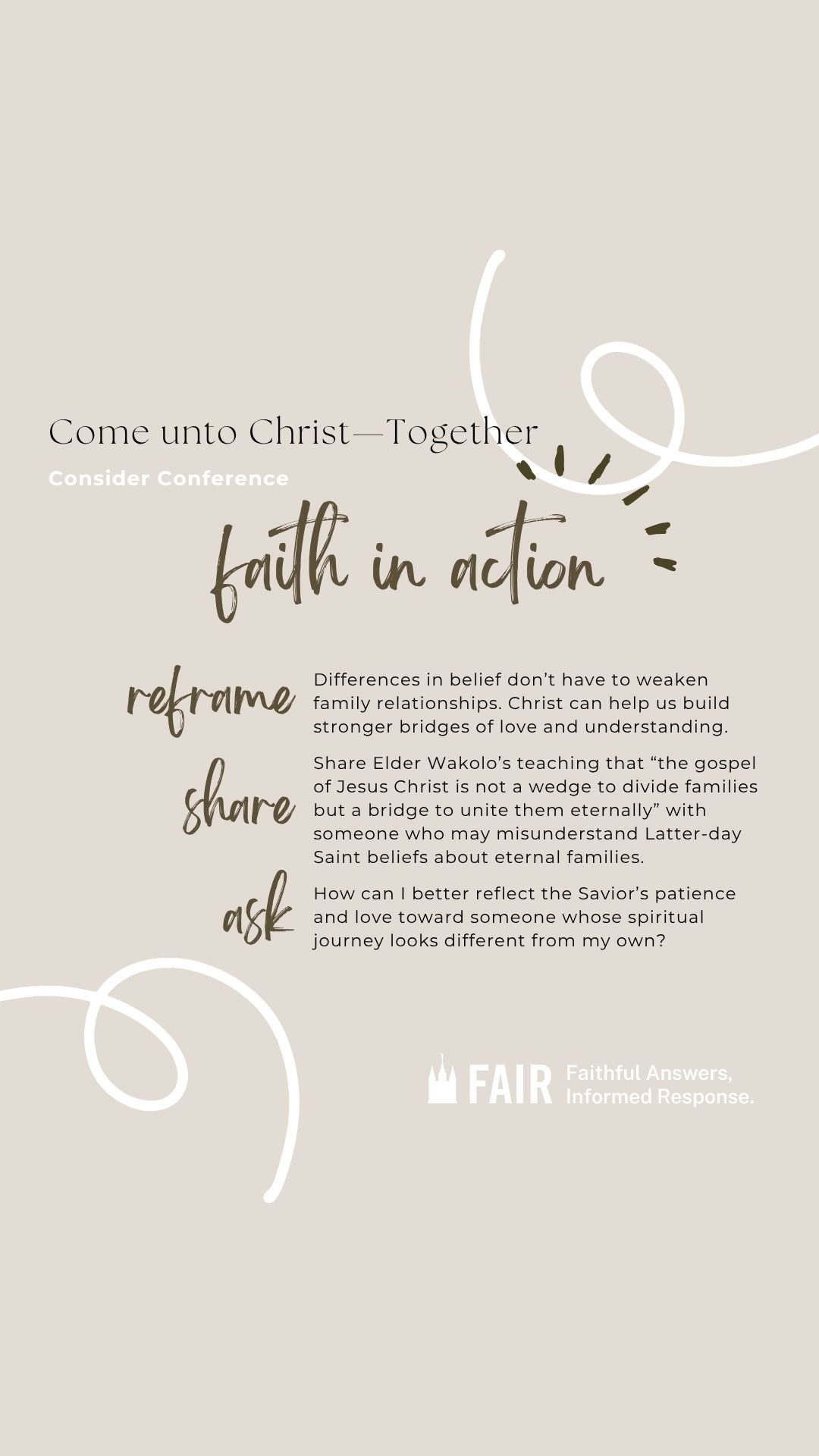
1️⃣Choose patience over pressure. Trust that God is working in the lives of those you love, even when you cannot see it.
2️⃣Respect agency. Remember that genuine conversion is personal and cannot be forced.
3️⃣Build bridges of love. Look for simple ways to strengthen relationships with family members regardless of where they are on their faith journey.
Keep This Talk With You
Elder Wakolo’s message reminds us that God’s work is deeply personal. He knows every waiting spouse, every praying parent, every hopeful child, and every family carrying unanswered questions. His timing may not always match our expectations, but His promises remain sure.
The temptation is to measure success by immediate results. The gospel invites us to measure success by faithfulness. As we follow Christ’s example of patience, gentleness, and love, we become instruments in His work of gathering and uniting God’s children.
This week, try one small step:
- Reach out to a family member or friend whose beliefs differ from your own and focus on strengthening the relationship rather than winning an argument.
- Pray specifically for greater patience in God’s timing.
- Look for one way to help ensure that, as Elder Wakolo taught, “no one sits alone.”
What relationship in your life could be strengthened this week if you focused less on changing someone and more on loving them the way Christ does?
The Consider Conference series by FAIR offers an in-depth look at recent General Conference talks to help members of the Church of Jesus Christ of Latter-day Saints navigate common questions, misunderstandings, and criticisms. Each post provides doctrinal insights, historical context, and practical ways to apply gospel principles in everyday conversations. Through this series, we hope to equip readers with faith-promoting resources that encourage thoughtful reflection, respectful dialogue, and a stronger foundation in gospel truths, fostering both personal conviction and meaningful discussions with others.
